Home Blog Page 815

Mercedes AMG GT Coupe Buyers Guide

0


The Mercedes AMG GT, introduced in 2015, brought a new chapter in the storied history of Mercedes-Benz’s high-performance division, AMG. This model was designed to succeed the Mercedes-Benz SLS AMG, known for its iconic gullwing doors and exceptional performance, setting a formidable standard for its successor.

Positioned as a more accessible yet equally exciting counterpart to the brand’s higher-tier offerings, the AMG GT quickly carved out its niche in the luxury sports car segment.

Featuring a handcrafted AMG 4.0-liter V8 biturbo engine, the AMG GT combines raw power with sophisticated engineering. This engine mated to a 7-speed AMG Speedshift dual-clutch transmission, offers a blend of rapid response and refined power delivery. The car’s rear-wheel drive layout ensures a classic sports car experience, with a focus on agility and driving dynamics.

The design of the AMG GT, with its long hood and sleek, flowing lines, is the essence of a modern grand tourer while maintaining an aggressive stance that hints at its capabilities.

It came with a bold front grille and sleek, narrow LED headlights that contributed to an aggressive yet sophisticated appearance, making it unmistakably a product of the AMG lineage.

Stepping inside the AMG GT, the cabin is filled with high-quality materials, including leather, carbon fiber, and brushed aluminum. The design is driver-focused, with a high center console and intuitively placed controls that create a cockpit-like feel, enhancing the driving experience.

In terms of technology and features, the AMG GT is equipped with a bunch of advanced systems. It includes a high-resolution multimedia display, a performance-oriented AMG instrument cluster, and a range of driver assistance features that elevate both comfort and safety.

 Combined with the car’s luxurious amenities, the AMG GT as a supercar is not just exhilarating to drive on the track but is also very comfortable and practical for everyday use.

Positioned alongside the Porsche 911 Turbo, Audi R8, McLaren 570S, and the Aston Martin Vantage, the Mercedes AMG GT marks its territory as a strong contender in the luxury sports car arena.

Model Changes (Breakdown by Year)

2015-2016 Mercedes Benz AMG GT

The 2015 Mercedes Benz AMG GT and its higher-performance variant, the AMG GTS, marked their debut year, stepping in to succeed the iconic Mercedes-Benz SLS AMG.

Both models are equipped with a handcrafted 4.0L V8 biturbo engine. The GT version delivers a powerful 456 hp, while the GTS ramps it up to an even more robust 503hp, showcasing AMG’s engineering feat.

The striking, low-profile designs command attention, reinforcing the presence on the road. The AMG GT starts at a base price of around $130,000, while the GTS, with its enhanced performance and features, commands a higher price. Both models position themselves competitively with the likes of the Porsche 911 Turbo and Audi R8, offering a distinctive blend of luxury, performance, and prestige.

2017 Mercedes AMG GT

In 2017, the Mercedes AMG GT family expanded with the introduction of new variants. The AMG GTC was released and it came equipped with a handcrafted 4.0L V8 biturbo engine, delivering an impressive 550 hp. This power, coupled with wider rear fenders, gave the GTC a more aggressive and bigger presence on the road.

Its enhanced performance features, like the rear-axle steering and an electronically controlled rear differential, increased the driving experience. This model was priced starting around $145,000.

At the same time, Mercedes introduced the AMG GT Roadster, catering to enthusiasts who want an exhilarating open-air experience without compromising on performance. The Roadster maintained the high standards of the GT series, offering the same dynamic driving and luxurious features as its coupe counterparts, but with the added charm of a convertible top.

Prices of the AMG GT Roadster started at approximately $124,000.

Additionally, the lineup was enriched with the Edition 50 GTC Roadster, a limited-production model launched to celebrate the 50th anniversary of AMG. This special edition combined the performance of the GTC with unique styling elements and exclusive features, making it a highly sought-after model for collectors and aficionados.

The Edition 50 stood as a tribute to AMG’s half-century legacy of crafting high-performance luxury vehicles, showcasing bespoke elements that highlighted its exclusivity and heritage. This special edition, price started around $157,000.

2018 Mercedes AMG GT

In 2018, the Mercedes AMG GT lineup saw further expansion and refinement, introducing new models and variants that continued to push the boundaries of the AMG GT. 

A significant addition to the Mercedes AMG GT lineup was the AMG GTR, a model specifically designed for track performance. Its exterior was immediately recognizable, not just for the striking “Green Hell Magno” color option, but also for its exterior enhancements, including a prominent front splitter, a larger rear wing, and active aero elements that improved downforce and stability at high speeds. 

Inside, the GTR featured a distinctive interior, with performance-focused elements such as AMG sports seats, a smaller diameter steering wheel for enhanced handling response, and lightweight materials throughout the inside. Under the hood, it came with the 4.0L V8 biturbo engine producing 577 hp. The starting price for the GTR was around $157,000.

Additionally, the 2018 lineup witnessed the facelift of the AMG GT and GTS models. These updates brought refreshed exterior styling, enhanced interior features, and technological improvements, ensuring that these models remained at the forefront of their class. The GT started at around $112,000, while the GTS, with its higher performance and additional features, was priced starting at about $132,000.

2019 Mercedes Benz AMG GT

In 2019, the Mercedes AMG GT lineup saw a few new variants that focused on even more hardcore track performance and luxury. 

The standout of 2019 was the introduction of the AMG GTR Pro, a limited-edition model in the AMG GT lineup. Priced at around $200,000, it retained the 4.0L V8 biturbo engine from the GTR, delivering an impressive 577 hp.

However, the GTR Pro distinguished itself with significant performance upgrades: a fine-tuned suspension featuring adjustable coilovers for optimal handling on the track, advanced aerodynamics for increased downforce, and exclusive design elements like racing stripes and carbon fiber bucket seats. 

This model was a nod to Mercedes-AMG’s racing pedigree, designed for enthusiasts who demand the pinnacle of performance in both engineering and aesthetics.

The AMG GT range, including the AMG GT, GTS, GTC, and GTR, all received facelifts in 2019. These updates brought refreshed exterior styling for a more modern and aggressive look and upgraded interiors equipped with the latest in technology and comfort, such as a new infotainment system and a fully digital cockpit.

The starting prices for these models were approximately $115,000 for the AMG GT, around $135,000 for the GTS, nearly $150,000 for the GTC, and about $160,000 for the GTR.

2020 Mercedes Benz AMG GT

In 2020, the Mercedes AMG GT Black Series was introduced, representing the most hardcore version of the AMG GT family. The AMG GT Black Series was focused on maximizing power and driving dynamics. Unlike the standard AMG GT models, the Black Series engine utilized a flat-plane crankshaft, a design choice that contributed to a higher rev limit and a rapid throttle response, resulting in a 720 hp output.

Externally, the Black Series featured extensive use of carbon fiber, reducing weight and enhancing strength. The car’s aggressive aerodynamics were not just for show; they included a larger front splitter, a new hood with dual air extractors, and a massive rear wing, all contributing to increased downforce and stability at high speeds.

Inside, the AMG GT Black Series set itself apart with a race-inspired interior, featuring special Black Series seats for enhanced support during performance driving. The cabin came with high-quality materials like Nappa leather and DINAMICA microfiber, offering luxury amongst its aggressive design. The extensive use of carbon fiber inside emphasized the car’s high-tech, track-focused character.

The steering wheel was equipped with additional controls for performance settings, highlighting the vehicle’s track capabilities. The starting price for the AMG GT Black Series was $325,000.

Additionally, the AMG GTR and GTC Roadster variants received facelifts in 2020. These updates included refreshed exterior designs for a more contemporary and aggressive look, as well as interior enhancements, ensuring these models stayed at the forefront of technology and luxury.

The GTR, known for its track-focused performance, started around $162,000, while the GTC Roadster, combining performance with the pleasure of open-top driving, was priced starting at approximately $157,000.

2021 Mercedes AMG GT

The 2021 Mercedes AMG GT lineup introduced several key updates and new variants, enhancing its appeal. The 2021 models saw an increase in power, with the twin-turbocharged 4.0-liter V8 engine now delivering 523 hp and 494 pound-feet of torque, an upgrade from the previous 469 hp.

This power boost reduced the car’s zero-to-60 mph time to 3.7 seconds, while also offering a top speed of up to 194 mph for the coupe and 193 mph for the convertible.

Additionally, the 2021 lineup included the introduction of the Stealth Edition, a blacked-out version of the AMG GT. This special model featured tinted headlights, black chrome trim on the grille, black brake calipers, and black wheels, enhancing its sleek and aggressive appearance. For the coupes, a carbon fiber roof was added, while the convertibles received a black soft top.

The interior of the Stealth Edition was also updated with sport seats, diamond-quilted leather upholstery, and black interior trim.

These enhancements, along with the added standard features such as adaptive suspension, a new driving mode called Race, an electronic limited-slip differential, and a lithium-ion starter battery were added for 2021. 

2022-2023 Mercedes AMG GT

For the 2022 and 2023 model years, the Mercedes AMG GT Coupe did not receive any significant updates or new variants, as the focus was on developing the new 2024 model.

2024 Mercedes AMG GT

The 2024 AMG GT Coupe marks a significant evolution in the AMG GT lineage. Not only does it have an updated exterior styling, but the engine now delivers 476 to 585 horsepower in its twin-turbo V8 engines. Inside, there’s an upgraded 11.9-inch touchscreen and improved visibility.

Additionally, Mercedes-AMG has responded to customer requests by adding rear seats and increasing trunk space, though the rear seats are best suited for individuals under 5 feet in height and primarily serve as extra storage.

Despite these changes, the car retains its distinctive and muscular exterior design, offering practicality and performance while incorporating modern MBUX technology and a sophisticated suspension system with adaptive dampers and rear-axle steering to ensure a remarkable driving experience that lives up to the brand’s iconic style and performance legacy.

Mercedes AMG GT Common Problems

The Mercedes AMG GT is often celebrated for its reliability, standing out in a category where dependability is not always a given. Numerous owners have reported using their AMG GTs for extended periods without significant issues, reinforcing its reputation as a reliable supercar.

However, it is essential to keep in mind that all cars, even supercars, can have issues and it is crucial to perform a Pre-Purchase Inspection (PPI) from an authorized dealer or experienced independent mechanic to reveal all issues.

Infotainment System Glitches: Some users have reported issues with the infotainment system in the AMG GT, including unresponsiveness or erratic behavior. This can be due to software glitches that may require updates or resets.

Suspension Concerns: Given its high-performance nature, the AMG GT’s suspension system is under significant stress. Wear and tear on suspension components such as bushings, struts, and shocks can lead to a less comfortable ride and reduced handling capabilities over time.

Brake Wear: The high-performance brakes in the AMG GT, while excellent for performance driving, can experience faster wear than those in more conventional vehicles. Regular checks and maintenance are important, especially for cars frequently driven in high-performance settings.

Electrical Issues: Some AMG GT models have been known to experience electrical problems, including issues with sensor failures or battery drainage. These issues can sometimes be traced back to software or require the replacement of specific components.

Engine and Transmission Concerns: While generally reliable, there have been instances of engine and transmission issues. This includes the potential for overheating in extreme conditions and occasional reports of transmission shifting irregularities. 

Recalls

2021-2024 AMG GT vehicles

Fuel system, gasoline: Delivery: Fuel pump (Recall no. 23V880000)

A loss of drive power can increase the risk of a crash. The fuel pump may shutdown, causing a loss of drive power.

2021-2023 AMG GT vehicles

Fuel system, gasoline: Delivery: Fuel pump (Recall no. 23V445000)

A loss of drive power can increase the risk of a crash. The fuel pump may shutdown, which can result in a loss of drive power.

2017-2022 AMG GT vehicles

Electrical system: Software (Recall no. 22V365000)

A disabled eCall system would prevent a vehicle occupant from contacting the emergency services call center in an emergency, potentially delaying emergency responders and increasing the risk of injury. An error in the communication module’s SIM card software can cause a mobile network connection failure, disabling the emergency call (eCall) system.

2021 AMG GT Black Series vehicles

Service brakes, hydraulic: Antilock/traction control/electronic limited slip: Wheel speed sensor (Recall no. 22V042000)

A damaged speed sensor wiring harness can impair dynamic control functions, such as stability and traction control, and anti-lock brakes, increasing the risk of a crash. The wiring harness for the front wheel speed sensor may be the incorrect length, which could result in damage to the harness during certain driving conditions.

2016-2018 AMG GT vehicles 

Power train: Driveline: Driveshaft (Recall no. 21V478000)

A separated driveshaft may cause a loss of drive power, increasing the risk of a crash. The bonding between the carbon-fiber driveshaft and the flange may be insufficient, which could result in driveshaft separation.

2016 – 2021 AMG GT vehicles

Electrical system: Software (Recall no. 21V058000)

Failure of the eCall system may result in emergency responders being dispatched to the wrong location, increasing the risk of injury following a crash. The software design of the communication module may fail to communicate the correct vehicle location for the emergency call system (eCall) in the event of a crash.

2020 AMG GT vehicles

Exterior lighting: Headlights (Recall no. 20V775000)

Incorrectly aimed headlights can reduce the visibility of oncoming traffic, increasing the risk of a crash. As such, these vehicles fail to comply with the requirements of Federal Motor Vehicle Safety Standard (FMVSS) number 108, “Lamp, Reflective Devices and Associated Equipment.”

2020 AMG GT vehicles

Communication (Recall no. 20V227000)

An inaccurate vehicle location or the inability to communicate with the call center may delay emergency responders, increasing the risk of injury in the event of an emergency. The emergency call system (eCall) communication module may be missing the wiring harness ground line, which may cause the system to relay an inaccurate vehicle location, and restrict the ability to communicate verbally with the call center.

2016-2017 AMG GTS and 2017 AMG GT vehicles

Power train: Driveline: Driveshaft (Recall no. 19V457000)

If the driveshaft separates, there may be a loss of drive, increasing the risk of crash. The bonding between the carbon-fiber driveshaft and the engine/transmission flange may be insufficient, causing the driveshaft to separate while in motion.

2018 Mercedes-Benz AMG GT Cabrio and AMG GT-C Cabrio vehicles

Air bags: air bag/restraint control module (Recall no. 18V724000)

If the air bags do not deploy as intended, it can increase the risk of injury. Due to a software incompatibility, in the event of a low speed crash, both stages of the frontal air bags may deploy instead of only the first-stage deploying as intended.

2018 AMG GT and AMG GT C vehicles 

Air bags: Frontal: Driver side: Inflator module (Recall no. 18V208000)

In the event of a crash involving driver air bag deployment, an improperly inflated air bag and/or an inflator rupture with sharp metal fragments might result in serious injury or death to the driver or to occupants. The housing for the driver side air bag inflator may have been made with defective steel. In the event of an air bag deployment, the defective steel may cause the inflator to improperly inflate the driver-side air bag and potentially rupture.

2018 Mercedes-Benz AMG GT, AMG GT R, AMG GT C and AMG GT S vehicles

Seat belts (Recall no. 17V826000)

If the seat belt binds, slack may develop through occupant movement which may lead to increased personal injury in the event of a crash. The seat belts may bind within the guidance loops possibly causing slack in the seat belts.

2017 AMG GT & AMG GT-C Roadster and 2018 AMG GT-S & GT Roadster vehicles equipped with AMG Performance Seats

Air bags: Sensor: Occupant classification (Recall no. 17V818000)

A passenger air bag that is incorrectly activated or deactivated in the event of a crash increases the risk of injury due to potential incorrect airbag deployment or non-deployment. The passenger occupant classification system (OCS) might not function properly, possibly causing the passenger frontal air bag to be incorrectly deactivated or incorrectly activated in the event of a crash.

2016 AMG GT-S vehicles

Electrical system: Software (Recall no. 17V177000)

If the air bags do not deploy as intended in the event of a crash, there would be an increased risk of injury in the event of a crash. Various control units on these vehicles may have been updated with incorrect software, potentially affecting the correct deployment of the air bags in the event of a crash.

2016 AMG GT S vehicles manufactured June 1, 2015 to July 24, 2015

Power train: Driveline: Driveshaft (Recall no. 16V308000)

If the adhesive bond fails and results in a loss of torque to the rear wheels, the vehicle operator may be unable to move the vehicle, or may experience deceleration if the vehicle is in motion, increasing the risk of a vehicle crash. In affected vehicles, the adhesive bond between the carbon-fiber driveshaft and the rear flange may fail, and as a result, there may be a loss of torque to the rear wheels.

Maintenance and Ownership Costs

Owning a Mercedes AMG GT, compared to other high-performance sports cars, is generally considered to have moderate maintenance requirements. However, regular maintenance and repairs are essential to keep it in top condition, and costs can vary depending on whether the car is serviced at a dealership or by an independent mechanic.

The following is a suggested service schedule for the Mercedes AMG GT, as per Mercedes-Benz guidelines:

1 YEAR or 10,000 MILES

  • Replace engine oil and filter at least once a year.
  • Comprehensive inspection to factory specifications.
  • Complete factory diagnostics.

2 YEARS or 20,000 MILES

  • Replace engine coolant.
  • Spark plugs.
  • Engine oil and filter.
  • Inspect and replace V-belt and tensioner if necessary.
  • Pollen filters.
  • Brake fluid.

3 YEARS or 30,000 MILES

  • Replace engine oil and filter.
  • Replace gearbox oil.

Here’s a rough estimate of typical service costs for the Mercedes AMG GT:

  • Oil Change – Around $250-$500, with independent mechanics generally being more affordable than dealers.

  • Minor Service – This often includes oil change, cabin filters, and engine filters, costing around $600-$1,200 at a dealership.

  • Major Service – Including all minor service items plus spark plugs, brake flush, transmission flush, with costs around $2,000-$3,000 at a dealership.

  • Tires – A set of high-performance tires, like those from Michelin, can cost about $1,500-$2,500.

  • Brakes – While the AMG GT doesn’t typically use carbon ceramic rotors as standard, brake pad replacements can cost around $800-$1,200 for a full set, depending on the type and brand.

  • Clutch – The AMG GT’s dual-clutch transmission is designed for longevity, so significant expenses for clutch or flywheel service are not commonly expected.

Mercedes Benz may offer maintenance packages for new vehicles, including the AMG GT, which cover service costs for a set period. These packages can be a cost-effective way to manage maintenance expenses and are often transferable with the car if it is sold, as they are tied to the vehicle’s VIN. Always check with a Mercedes-Benz dealership for the latest maintenance package options and details.

Options List

The Mercedes AMG GT offers an extensive list of options and packages, allowing customers to tailor their vehicles to what works best for them.

Some of the options can be further enhanced with a selection of highly desirable options. One such option is the panoramic roof, providing an expansive view of the sky, enhancing the sense of space and openness inside the cabin. The performance exhaust system is another sought-after addition, offering a more aggressive and sporty exhaust note that compliments the car’s character.

For the interior, the option of Nappa leather upholstery elevates the luxury feel, providing a plush, premium tactile experience that is both visually appealing and comfortable.

The adaptive suspension system is a crucial upgrade for those looking for a more dynamic driving experience, as it adjusts the damping to suit varying road conditions and driving styles, striking a perfect balance between comfort and handling.

Keyless entry and start add a layer of convenience, allowing for seamless access and operation, which is particularly appreciated in a car of this like. Finally, the performance steering wheel often finished with high-quality materials and featuring additional controls, enhances the driver’s connection to the vehicle, offering a more engaging and responsive driving experience.

The AMG GTR offers a wide range of options for further enhancement. Options include the exclusive AMG Green Hell Magno exterior paint and 19/20 inch AMG Performance forged wheels. The AMG Exterior Carbon Fiber Package II adds carbon fiber elements to the exterior, including the side mirrors and rear wing. Inside, there are multiple upholstery choices and a matte carbon-fiber trim package, with customizable seatbelt colors.

For added convenience, there’s a package featuring heated and power-folding mirrors and a HomeLink garage door opener. For performance enthusiasts, the AMG high-performance ceramic composite braking system is a must-have for optimal track performance. These options collectively elevate the AMG GTR’s luxury, functionality, and performance.

 In addition, when customers opt for upgraded paint finishes, including metallic, matte, or special Designo Mercedes options, which add a distinctive look, they can a premium to the car’s price.

2016 Mercedes Benz AMG GT Options List

2021 Mercedes Benz AMG GT Options List

2024 Mercedes Benz AMG GT Options List

Key Options

  • Performance Exhaust System
  • Panoramic Sunroof
  • AMG Dynamic Plus Package
  • AMG Ride Control Suspension
  • Carbon Fiber Exterior Trim
  • High-Performance Ceramic Braking System
  • Advanced Driver Assistance Systems
  • Front Axle Lift System

Mercedes Benz AMG GT Price and Values (GTR and Black Series)

The Best Mercedes Benz AMG GT To Buy

Picking the right Mercedes AMG GT involves carefully weighing factors that contribute to its long-term appeal and value. High-performance variants like the AMG GTR, especially those in the launch spec with the exclusive AMG Green Hell Magno exterior paint, and the Black Series, particularly the Edition 1, are highly sought after due to their rarity, making them likely to appreciate most in value.

These coveted models stand out not just for their performance but also for their uniqueness, making them particularly attractive to collectors and enthusiasts.

Conversely, the standard AMG GT and GTS models offer a blend of luxury and sportiness, making them popular choices for those who seek a balance of comfort and performance. While they might not match the raw power of the GTR or Black Series, their quality and driving experience are highly regarded.

The choice of exterior color and special finishes, such as metallic or matte paints, can significantly impact the car’s desirability and resale value. These unique finishes add a touch of personalization and exclusivity, enhancing the vehicle’s aesthetic appeal.

Newer models, particularly from 2020 onwards such as the AMG GTC, are expected to retain their value well due to advancements in technology, performance, and design. The AMG GT’s reputation for build quality and reliability is a consistent theme across all its models, bolstering its standing in the pre-owned market.

In the era of increasing electrification, the AMG GT’s naturally aspirated engines are becoming more sought after, adding to their potential as future classics. This trend is particularly relevant for models like the AMG GT Black Series, which offer a pure, driving experience.

When purchasing an AMG GT, the car’s condition and mileage are crucial factors. A well-maintained vehicle with low mileage is more likely to retain its value over time, especially compared to those that have been heavily modified or extensively driven.

Conclusion

In conclusion, the Mercedes AMG GT, with a starting price of around $130,000, stands as an excellent choice for those seeking their first high-performance sports car.

While competing with the likes of the Porsche 911 Turbo, Audi R8, McLaren 570S, and the Aston Martin Vantage, the AMG GT distinguishes itself with its blend of advanced technology, luxurious comfort, and reliable performance. Its range, from the standard GT to the high-performance GTR and the exclusive Black Series, offers something for every enthusiast.

In summary, if you’re considering a sports car that combines luxury with exhilarating performance, the Mercedes AMG GT is a compelling choice that is sure to fulfill your expectations.

When choosing an AMG GT, certain features can enhance its value and appeal. Opting for a model with a panoramic roof, performance exhaust, and adaptive suspension can greatly enhance the driving experience. Special editions like the GTR and Black Series are likely to become future collectibles. 

For a well-rounded choice, consider the newer models, particularly those equipped with key options and in well-maintained condition with low mileage.

Car Hacking Shortcuts

  • Special Editions: Look for models like the AMG GTR,  AMG GT Black Series or GTC Edition 50, which are likely future collectibles.

  • Seek Recent Models: 2020+ AMG GTs are preferable for their updated features and technology.

  • Prioritize Condition and Mileage: Opt for well-maintained AMG GTs with low mileage to ensure value retention.

  • Consider Performance Options: Features like the AMG Dynamic Plus Package and performance exhaust can enhance the driving experience.

  • Check for Exclusive Features: Vehicles with designo customization or upgraded interiors add exclusivity.





Source link

Is it REALLY always an ADVENTURE?

0


Yes!  The day has come.  Everyone is all packed.  You are going on an ADVENTURE!  Maybe you’re headed out to the Grand Tetons for some thrill-seeking hiking, or to the Outer Banks for some relaxing salt life beach sunbathing.  It doesn’t matter.  You’ve checked the weather, and you’ve packed everything you’ll need.  The vehicle is full of fuel, and even made sure it is up to date on all of the other maintenance.  Nothing is stopping you from an outstandingly epic adventure.  Until…

You have a flat tire…

rv hangersrv hangers

You hit a tire tread flying off of the semi-truck in front of you…

Your transmission coolant line blows off…

Our YouTube ChannelOur YouTube Channel
Doug repairing the transmission coolant line in a parking lot in OKC.Doug repairing the transmission coolant line in a parking lot in OKC.
Something is always Broken!

You find yourself in the path of a tornado…

The jack stops working on your camper…

Amazon FireAmazon Fire

The batteries keep dying…

When the Jack broke on the camper – Season 1 Episode 2

An unexpected cold front comes through and now the temps are in the negatives…

These are just a handful of the countless problems that can occur when you hit the road for your grand adventure.  Your once in a lifetime trip.  The one that you have thought about for years, and have been making plans about for just as long.  Now it’s ruined.  No more road trip.  No more outstandingly epic adventure. 

If you have read any of our previous articles, or followed any of our YouTube channel, then you know…  We have had every single one of these problems happen to us on at least one of our road trips.  Some of them on the same epic road trip that we are on today.  All of them.  Some more than once!  Like the tornado!  And the jacks.  And the batteries.  We have never taken a single road trip where SOMETHING didn’t go awry that could have stopped our trip in its tracks.  Or stolen that excitement about whatever adventure we were on.

Our adventure problems aren’t limited to our road trips either.  We write about and share our RV life, but we have had several problems when we traveled through the airports too.  On our honeymoon, we landed in Jamaica and we were missing a piece of our luggage.  On the same trip, we almost missed our plane for our return flight home.  On a trip to Las Vegas, we arrived at the hotel and were told that they didn’t have a reservation for us.  The first time we brought our son out of the country, we sat in the airport for several hours instead of the scheduled 30-minute layover because the flight for the next leg of our trip kept getting delayed. 

Jayden impatiently waiting for the return flight home.Jayden impatiently waiting for the return flight home.
Jayden waiting in an airport for our return flight home.

So, it is really an Adventure?

YES!!!!

Even when we lose a week in the middle of South Dakota to replace a fuel pump located inside the gas tank of the suburban with nothing more than a pair of vice grips in a gas station parking lot.  IT IS STILL AN ADVENTURE!!!  It may not be the same adventure that you set out for when you packed everything up and left the house.  But it IS still an Adventure!

Obviously, this is an attitude.  This is keeping that positivity flowing and desperately seeking the silver lining of a crappy situation.  Or maybe, it’s coming to terms with the fact that I can’t control the universe and shit does in deed happen.  That’s an adventure too. 

An adventure isn’t always good, it isn’t always grand.  That’s why we have always used the word ‘adventure’ to describe our trips.  It IS always an Adventure, good or bad is determined by how we handle it.  We make it epic…  Sometimes the epic doesn’t come until you are telling the story to friends and family and they can’t stop laughing at whatever crazy thing happen this time.  Still an adventure though. 

Doug and Loretta in the pool in Tampa Florida.Doug and Loretta in the pool in Tampa Florida.
Pool time in Tampa, FL remembering to smile and laugh and enjoy this epic adventure.

We have learned to laugh.  Personally, I laugh at everything… Doug has often teased that he could be stung by a scorpion and that my first reaction is going to be to laugh.  The truth is he isn’t teasing…  This really WILL be my first reaction.  But then we figure it out.  We assess the situation.  Is this something we can control?  Is it something one of us can repair (by one of us, I really mean Doug)?  Can we work around this, continue on, re-adjust timing, or do we need to turn around? 

When we’re little, grandma always said, “we don’t cry over spilled milk, coffee maybe, but never milk.”  If we just focus on the negative of the trip, we forget to remember the fun of the journey.

We literally sold our house, Doug sold his business, I resigned from my work, and we embarked on this crazy once in a lifetime adventure that many people only dream of doing.  We set out with a goal of living in our camper and traveling our magnificent country for two whole years.  Here we are, 2 months in, and we have had several issues.  Plenty of moments that have made us want to second guess the decision we made to head out on this grand adventure. 

We miss our friends.  We miss our family.  I know Doug misses’ access to all of his tools, and friends with the tools he doesn’t have, or help on a project.  Mostly we miss our support system.  But at the end of the journey, whether we make it the full 2 years, or we have to settle down in 6 months…  We are enjoying the Adventure.  We’re still doing this!  We are still checking bucket list items off the itinerary.  We are still seeing some of the things we always dreamed of seeing, and doing things that we’ve always wanted to do.  Even if there are some speed bumps along the route.

Group photo of our last house party before the house was sold.  Did it right with a Bonnie & Clyde theme.Group photo of our last house party before the house was sold.  Did it right with a Bonnie & Clyde theme.
Group Photo at our Bonnie & Clyde theme party.

So next time your car breaks down, or your holed up in an airport waiting for your flight that has now been delayed for 3 hours, or your beach vacation has been a complete rain out – take a moment to evaluate that.  The 3 hours in the airport, or the rain at the beach shouldn’t be allowed to define the entirety of trip.  They’re just little hiccups on the journey.  At the end of the day, the adventure is the part we need to continue to focus on.  It IS always an adventure. 

Life is a Journey wall art in our camperLife is a Journey wall art in our camper
Our Mantra – Life is a Journey. Enjoy the ride.


Source link

Next-gen tech at core of Toyota’s EV plans not safe or reliable, says battery giant CEO

0


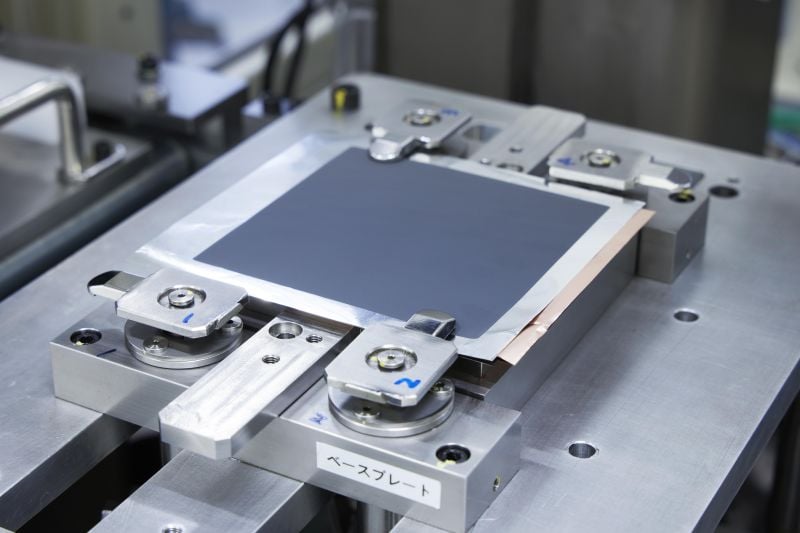
Solid-state batteries have been pitched by multiple carmakers as the next frontier in electric vehicle (EV) technology, offering benefits in range, energy density and packaging efficiencies.

However, the boss of the world’s largest EV battery manufacturer, CATL, says they’re not viable yet.

CATL founder and CEO (and physicist) Robin Zeng, whose company supplies the likes of BMW and Tesla, told The Financial Times the technology still has significant hurdles to overcome.

Solid-state batteries, as the name suggests, use a solid instead of a liquid electrolyte, such as those found in today’s EV batteries, to stimulate the transfer of electrons.

“We fully support solid-state, but I have been investing in this for 10 years,” Mr Zeng told The Financial Times, arguing CATL is “second to none” in the race to make this technology viable.

“I watch the development people working on solid-state almost every month, so I know all the progress, and somehow we still have these showstoppers.”

He said his team is prototyping sodium-ion batteries and condensed-matter batteries, the latter of which use a semi-solid material and are claimed to store around double the energy of typical lithium-ion batteries.

Mr Zeng said solid-state batteries only held advantages over existing batteries if they used a new type of chemistry along with pure lithium metal for the anode electrode.

He noted there are issues with lithium ions diffusing within solid material, and also cited issues with both durability and safety.

“[The battery] cannot last many [charging] cycles, maybe 10 cycles,” he said, explaining the expansion of lithium while charging and discharging can damage the battery. “So how can you make it commercially viable?”

Finally, he explained solid-state batteries can pose safety issues, as lithium would react with moisture in the air if a battery broke open during a car accident.

Mr Zeng isn’t the only battery executive to pour cold water on the idea of solid-state batteries in the short term.

“It’s crucial that leading battery developers like StoreDot give global automotive manufacturers a realistic and hype-free roadmap for the introduction of extreme fast-charging battery technologies,” said the CEO of Israeli battery startup StoreDot, Dr Doron Myersdorf, back in 2022.

“Right now, despite some of the bullish claims by our rivals, all-solid-state batteries are still at least 10 years away. They are certainly no silver bullet for any vehicle maker currently developing fast charging electric vehicle architectures.”

The CEO said his company would instead look to launch semi-solid-state batteries this decade.

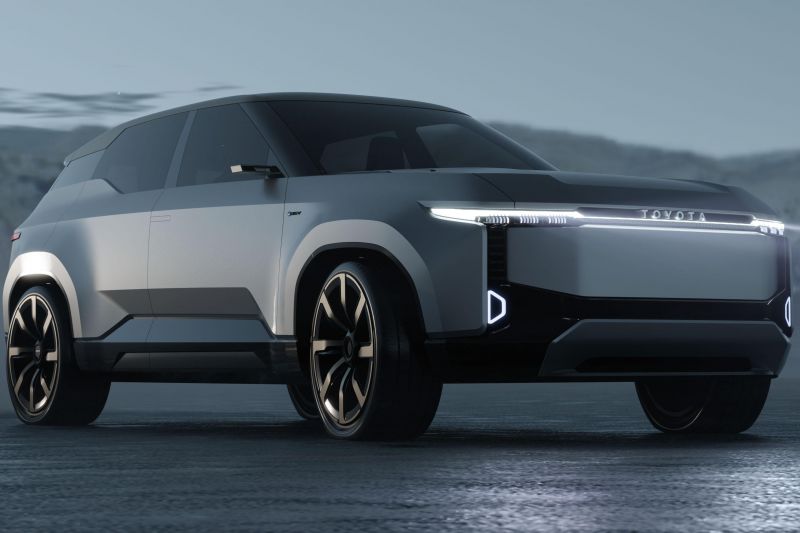
There are currently no mass-market EVs that make use of solid-state batteries, but BMW, Nissan and Toyota have all confirmed they’re working on deploying the tech.

Toyota says it has overcome issues with the shorter life of solid-state batteries, and aims for the technology to be ready for use in its vehicles by 2027-28.

It claims its first solid-state battery will offer 20 per cent more range than its next-generation ‘Performance’ lithium-ion batteries, while being able to be charged from 10 to 80 per cent in 10 minutes or less.

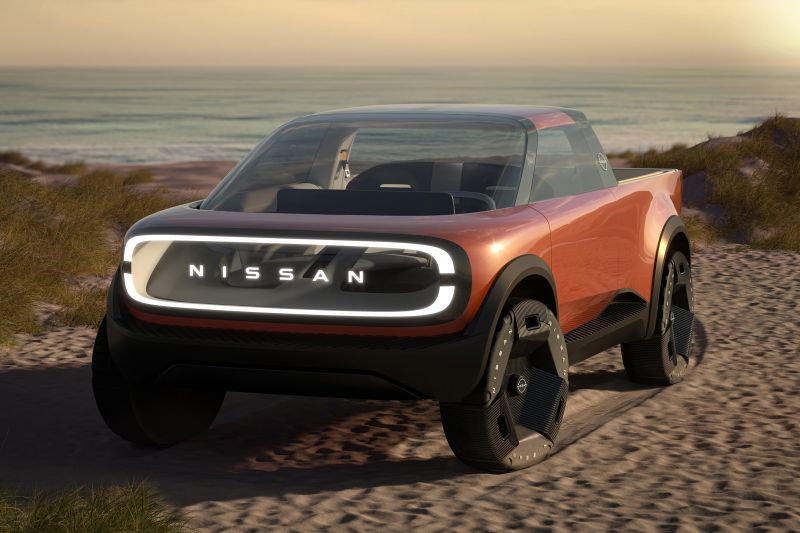
Nissan also plans for its solid-state batteries, developed in-house, to be launched in 2027/28.

It claims they’ll offer twice the energy density of lithium-ion batteries, superior charge/discharge performance, and lower cost through the use of less expensive materials. It also says it can deploy these across a wide range of vehicle segments, including utes.

US startup Solid Power has also established a solid-state battery production line, and has produced solid-state cells for BMW.

MORE: Solid-state batteries: What are they?


Source link

2025 Toyota 4Runner: Prado cousin revealed with hybrid power, Aussie influence

0


What comes after a new Toyota Tacoma? That’d be a new 4Runner, of course.

After 15 years, the legendary Toyota 4Runner off-roader has been given a total overhaul for North America.

As for Australia? “Toyota Australia is continually studying the market for new opportunities to offer exciting new products to Australian customers,” a spokesperson told CarExpert.

“At this stage however, we have no announcements to make on the Toyota 4Runner for the Australian market.”

Under the skin, it’s built on a version of the TNGA-F platform rolling out across Toyota’s range of utes, pickups, and off-road four-wheel drives, including the new LandCruiser Prado.

Gone is the 4.0-litre naturally aspirated V6 engine from the old model, replaced by a turbocharged 2.4-litre petrol four-cylinder engine making 207kW of power and 512Nm of torque.

A hybrid version of the same engine is also on hand, with a handy 235kW and 630Nm. Both are mated with an eight-speed automatic transmission, in place of the five-speed from its 15-year-old predecessor.

Rear-wheel drive, a simple four-wheel drive system (2H, 4H, 4L), and a more sophisticated full-time four-wheel drive system are all offered.

All models feature a limited-slip differential on the rear axle, with more off-road hardware available the further up the range you move. Approach angle starts at 32 degrees, and departure angle is 24 degrees.

Nine trim levels are offered, with the Trailhunter sitting atop the range. It rides on 33-inch off-road tyres, has Old Man Emu remote reservoir shocks, and features an ARB roof rack and light bar.

Inside, the 4Runner features an 8.0-inch touchscreen and 7.0-inch digital trip computer at the base level, while the range topper gets a 14-inch touchscreen and 12.3-inch digital cluster.

A full suite of active safety assists are standard range-wide.

In North America, the 4Runner slots in under the new Prado, sold there simply as the LandCruiser. However, Toyota has yet to confirm pricing of the new model.

Would you like to see the 4Runner in Australia?


Source link

East Meets West: The Asian Wonders of the Musée Guimet

0


The Louvre, the Quai d’Orsay, the Pompidou Center — and possibly the most recent addition — the Fondation Louis Vuitton, are the first museums that come to mind when considering Paris museums. At the Musée des Art Asiatiques Guimet in the 16th arrondissement of Paris, however, you may find the most extensive and most significant collection of Asian artefacts in Europe. The Musée Guimet provides a unique opportunity to embark on a meditative, artistic journey to uncover the essence of Asian art and culture, with a wide range of objects from the Buddhas of Afghanistan, the Zen monks of Japan, Samurai armour, Indian fabrics, fine Chinese art, and Khmer treasures.

Musee Guimet
Musée Guimet located at 6, Place d’Iéna, Paris. Image: Parisplusplus.com

“Illustrating the diverse cultures and civilisations of Asia, covering an area as vast in time (five millennia) as in space (from India to Japan)” is how the Musée Guimet portrays itself. You will never forget that this is an Asian art museum — you will be greeted with a big hall filled with statues, many of which are from Cambodia — as soon as you go through the library dome.

Impressive in quality and variety, the collections feature some 45,000 pieces dating back to the Neolithic era. Buddha, Amida, and Shiva statues coexist alongside calligraphy, Sumi paintings, and ornamental arts. They are arranged into sections so that you can examine and contrast the art of Southeast Asia, Central Asia, China, Korea, India, and Japan with that of Afghanistan/Pakistan, the Himalayas (where the Guimet has one of the best collections of Himalayan art in the West), and Southeast and Central Asia. You can also peruse the Library’s collection of historical photos and treasures, which includes works on Asian philosophy and religion in addition to art.

Musée Guimet
The museum’s library is under the giant dome. Image: Parisplusplus.com

Dedicated To His Work

Émile Guimet assembled the initial collection, which included hundreds of Chinese artefacts and Japanese works of art. Guimet (1836–1918), a prosperous businessman from Lyon, devoted his life to exploration and adventure. In the 19th century, the French government commissioned him to research Asian religions. He planned to create a museum dedicated to antiquity, ancient Egypt, and Asian faiths.

During his 1876 global tour, Guimet visited China, India, and Japan. Throughout the Silk Road, he collected many Asian artworks and artefacts. He was fascinated by modern works of art in addition to historical items. His collection was transferred to Paris in 1889, the year the Eiffel Tower was completed, from its original home at a museum in his city of Lyon.

The actual name of the museum, the Musée National des Arts Asiatiques Guimet, changed during Guimet’s lifetime from focusing on the religions of Ancient Egypt to Asian civilisations’ art. Encouraged by Guimet, other archaeologists travelled to Cambodia and Siam (then known as Thailand) to study the local cultures and acquire more artefacts for the expanding museum. In 1884, Guimet gave his enormous collection to France. The Department of Asiatic Arts of the Musée du Louvre was founded in 1945 after the Oriental art treasures housed at the Louvre were moved to the Guimet. The Egyptian artefacts from the Musée Guimet were sent to the Musée du Louvre in return and are currently on display there.

Since Tibetan art collections became religious icons in 1912, the museum has gradually reduced the number of religious artefacts to highlight other Asian treasures. Extensive collections from China and Central Asia were added to the Musée Guimet during colonial rule, which began in 1927 when the French Museums Directorate took over.

Since then, the collections have expanded and become more diverse while retaining the interest in and admiration for Asian art and the region’s historical adaptability and inventiveness. The contributions of Paul Pelliot and Edouard de Chavannes from their travels to China and Central Asia, along with the initial artefacts gathered by Louis Delaport that served as the foundation for the Trocadéro’s Indochinese Museum, helped to expand the collections in 1927. In 1965, the museum focused primarily on developing its holdings related to ancient India.

Antiquities Galore

Photo Credit: LUXUO

The Musée Guimet is a haven for artwork and artefacts during wars and conflicts. From December 2006 to April 2007, it housed items from the National Museum of Afghanistan, popularly known as the Kabul Museum. These included antiquities from the Indo-Scythian treasure of Tillia Tepe and archaeological artefacts from the Greco-Bactrian city of Ai-Khanoum. The “Bactrian gold hoard” comprised around 20,600 ornaments, including coins, jewellery, and other items crafted from gold, silver, ivory, and an astounding gold crown.

Photo Credit: LUXUO
Photo Credit: LUXUO
Photo Credit: LUXUO
Photo Credit: LUXUO

The 70 per cent of the 100,000 exhibits on display at the museum in Kabul were lost when the civil war in Afghanistan broke out in 1992 due to repeated looting and missile damage. Other organisations, such as museums in Germany and the United Kingdom, also successfully rescued numerous items. Since 2007, these organisations have assisted in recovering more than 8,000 stolen works and have returned the items in their custody to Afghanistan. Regretfully, since the Taliban have just returned, it is unknown what has happened to the items housed in the National Museum of Afghanistan.

Photo Credit: LUXUO
Photo Credit: LUXUO
Photo Credit: LUXUO
Photo Credit: LUXUO

Thanks to the extensive refurbishment work that began in 1996, Guimet now has access to the latest technological developments in museology to present and protect art items. The program’s inception dates back to 1991, when the museum relocated to the Buddhist Pantheon, a nearby structure, to make room for a more extensive renovation. The institution’s primary goal was to establish itself as a leading hub for information about Asian civilisations in the centre of Europe.

Photo Credit: LUXUO
Photo Credit: LUXUO
Photo Credit: LUXUO
Photo Credit: LUXUO

The permanent galleries also prioritised creating open viewpoints and letting in more light. These more extensive areas guarantee a relaxing experience in serene, wide spaces while helping visitors comprehend the connections and distinctions among the many Asian artistic traditions.

Highlights of the Museum

The ground floor houses artefacts from India and Southeast Asia, such as Hindu, Buddhist, and Khmer pieces. Notable exhibits include Indian art and textiles from the Jean and Krishna Riboud collection, which included beautiful works of art and jewellery from India from the 17th and 19th centuries, which were donated in February 2020

Musee Guimet
The Asian-themed cafe located at Musee Guimet.

The Greco-Roman glassware, lacquerware from the Han Chinese period, and some of India’s oldest known ivories are to be noticed. The astounding Chinese collections comprise over 20,000 objects spanning seven millennia of art. These include jade discs, ceramics and bronzes from the Shang and Zhou dynasties. There are also paintings from the Tang and Qing dynasties. Please don’t skip the Japanese section, a diverse and rich presentation of Japanese art from its origins during the third and second millennia BCE until the Meiji era (1868).

For the Korean exhibitions, the collection includes stunning celadon, alongside bronzes from the Koryo period and paintings from the 17th to 19th centuries. The Library on the third floor offers European and Asian books and journals for visitors to peruse.

After immersing yourself in these fantastic and rich visual cultures, you can head down to the cafe on the lower ground floor named Salon des Porcelaines, where the food predominantly focuses on an Asian theme. After refreshments, you can browse the books at the museum’s boutique bookshop. There is also a handful of beautiful merchandise, such as jewellery, silk scarves, and tableware.

Musée Guimet
The library-cum-boutique offers books and an array of museum-related merchandise. Image: Parisplusplus.com

Visitors to the Musée Guimet should expect an entirely different kind of cultural encounter than what they would often find in Paris. The building’s interior is highly contemporary, airy, and expansive, which beautifully highlights the treasures on display even if its exterior has maintained chiefly its original aspect. Despite the contrast, the outcome is a peaceful, enjoyable, and unwinding experience. Look for posters on the street announcing special exhibitions; these are usually excellent and should not be missed if you happen to be in Paris during that period.

Musée Guimet is open every day from 10:00 a.m. to 6:00 p.m. with the exception of Tuesday. It is situated in the 16th arrondissement at 6 Place d’Iéna. The closest metro stations are Boissière (Line 6) and Iéna (Line 9), directly across the street. You can reach the Eiffel Tower on foot in five minutes by crossing the Pont d’Iéna.

For the latest in art and culture reads, click here.


Source link

10 Best Coffee Shops and Cafes in Chiang Mai (Laptop Friendly!)

0


If I had to give a title to the best spot for digital nomads in the world, Chiang Mai would 100% be in contention for the top spot. This is a place packed with other remote workers, a low cost of living, a captivating culture, and an amazing food scene. It’s so easy to work here, with some of the best cafes in Chiang Mai offering a comfortable chair to top-notch coworking spots.

Having spent several months living and working in Chiang Mai, I grew to love the coffee shop vibe and preferred to go to the best coffee shops in Chiang Mai over a coworking space. It’s so easy to meet other people, be productive, and of course, enjoy the very best coffee in Chiang Mai while you’re working. I tried out many cafes during my time there and trust me, there’s no shortage.

SEE ALSO: 15 Pros and Cons of Living in Thailand

Best Cafes and Coffee Shops in Chiang Mai

coffee shop chiang maicoffee shop chiang mai

It’s very difficult to give the title of the best cafe in Chiang Mai because there are so many and they all have their own little quirks, but I rose to the challenge. In a bid to give you a selection of the best cafe working spots, I compiled my list based on the quality of coffee and food, service, location, customer reviews, and of course, my own personal experience. After plenty of deliberation, I narrowed my selection down to these ten cafes.

1. STORIES (Best Cafe in Chiang Mai Overall)

smoothie bowlsmoothie bowl

STORIES is one of the best cafes to work from in Chiang Mai, and it’s my personal favorite. I love to snack while I’m working and this place offers so many delicious things to eat, including healthy options, fantastic sandwiches, and cakes. Of course, the coffee is pretty high quality too and the menu is quite substantial.

From a working point of view, the chairs at STORIES are relatively comfortable. However, make sure you choose the chairs with the wicker back and not the regular “kitchen chairs” if you’re planning on staying a while. There are plenty of charging outlets, and I had no problem with the WiFi; I visited quite a lot, too.

This is a great cafe to beat the heat as they crank up the air-conditioning. Also, they don’t mind if you stay for a few hours, as long as you buy a proportionate amount of food/drinks for your time there.

STORIES Information

Address: 1, 3 Rachadamnoen Rd, พระสิงห์ เมือง Chiang Mai 50200, Thailand
Phone: +66 63 398 2888
Operating Hours: Mon – Sun, 7.30 am-10 pm
Must-Try Items: Iced latte, cappuccino, salad selection
Average Cost: $2-$3 per latte, $4-$5 per lunch dish, $2 for desserts

2. My Secret Cafe in Town (Best for Atmosphere)

laptop remote work coffeelaptop remote work coffee

If you’re looking for laptop-friendly cafes in Chiang Mai, I highly recommend My Secret Cafe in Town. It’s one of those places that everyone seems to know about, but it’s often considered a hidden gem. I visited here several times and loved the homely feel and how comfortable it was in general.

The WiFi at this cafe is fast and reliable, and there are plenty of charging points dotted around. The chairs are comfortable, but the tables are a little small, so don’t expect to spread out too much. The table size was the only downside I noticed, and although the cafe itself isn’t that big, it’s what makes it feel so comfortable.

I loved the coffee at this spot and the lunch menu is delicious. I tried several of the sandwiches and salads on the menu, and when I go back, it’s the first place I intend to head for lunch. The opening hours are convenient too – from 8:30 am until 8.30 pm – and it’s centrally located.

My Secret Cafe in Town Information

Address: 175 12 Rachadamnoen Rd, Tambon Si Phum, Mueang Chiang Mai District, Chiang Mai 50200, Thailand
Phone: +66 81 499 9911
Operating Hours: Mon-Sun, 8.30 am – 8 pm
Must-Try Items: Latte, sandwich menu, salads
Average Cost: $2 per latte, $3.5 per main, $2 for desserts

3. Cool Muang Coffee (Best for Quiet & Comfort)

laptop remote working10 Best Coffee Shops and Cafes in Chiang Mai (Laptop Friendly!)

I found some of the best coffee in Chiang Mai at Cool Muang Coffee, and I enjoyed sitting outside on the patio to work. I also spent some time happily watching the world go by, as there’s a great view over the street. The coffee here is ideal if you don’t like it too strong (like me), and they have a great selection on offer.

You can choose to sit inside if you prefer air-conditioning, and there are plenty of charging points whether you sit inside or outside. I also found the internet here to be very reliable and strong; I did a few video calls and had no issues whatsoever.

Many other digital nomads were working from this cafe when I visited, and there’s even a meeting room, which is ideal for collaborating and networking. Overall, this coffee shop is probably on par with some of the coworking spaces, so it’s a great choice if you prefer cafes to office-style layouts.

Cool Muang Coffee Information

Address: 81 Mun Mueang Rd, Tambon Si Phum, Mueang Chiang Mai District, Chiang Mai 50200, Thailand
Phone: +66 62 269 7889
Operating Hours: Mon – Sat, 8.30 am – 6 pm, Sun, 8.30 am – 7.30 am
Must-Try Items: Latte, macchiato, carrot cake
Average Cost: $2 per latte, $3-$4 per main, $2.50 for desserts

4. Ombra Cafe (Best for Lunch)

cafe laptop cafe laptop

Ombra Cafe is one of the best cafes for working on a laptop in Chiang Mai and the staff are super helpful and patient. I worked from this cafe for the entire day, and the staff never bothered me once; I simply bought a couple of coffees and lunch. This is a popular spot amongst digital nomads and that could have something to do with the very fast WiFi; I did a few video calls, and it worked like a dream.

The lunch menu here is a real seller, and the coffee menu is large and really delicious. The prices are very reasonable, and it’s a comfortable spot to spend a few hours. There are many different seating options and plenty of charging points if your laptop needs a top-up.

Located in Nimman, this cafe sometimes gets busy at the weekends but it never felt overly crowded when I was there. It has a very laid-back feel to it, and yet the design is modern and stylish at the same time. I was very productive when I worked from this spot, and I’d recommend it for a few hours before exploring the Nimman area.

Ombra Cafe Information

Address: ช้างเผือก 3/1 เมือง Chiang Mai 50300, Thailand
Phone: +66 98 815 7222
Operating Hours: Mon – Sat, 8 am – 6 pm, closed on Sundays
Must-Try Items: Latte, cold brew, salad menu
Average Cost: $2 per latte, $3-4 per main, $2 for desserts

5. Carrot Cafe (Best for Delicious Cake)

cake and coffeecake and coffee

I can easily be swayed by a cafe that offers great cake, but regardless, Carrot Cafe is still a great place to do a few hours of work. The layout makes it super easy to be productive, with large, open spaces, and a warehouse feel to the decor. There are plenty of charging outlets, and the WiFi is very reliable.

For me, this is one of the best cafes in Chiang Mai for menu choice, as they offer more than just coffee, with juices, flavored waters, and teas on offer. They serve some fantastic cakes – I went back there a few times just to work my way through the sweet menu.

This cafe is popular but not to the point where it’s loud; I found it quite chilled-out and quiet most of the time, except for weekends when it did get a little busier. Overall, I never had a problem working from here, and the central location is ideal.

Carrot Cafe Information

Address: ร้าน Carrot Coffee CNX เลขที่ 42/1 , 42/2 42/3 Ratchamanka Rd Soi 7, พระสิงห์ Mueang Chiang Mai District, Chiang Mai 50200, Thailand
Phone: +66 62 256 9415
Operating Hours: Mon – Sun, 8 am-6 pm
Must-Try Items: Cold brew, carrot cake, brownie
Average Cost: $2 per latte, $2 per juice, $2.50 per dessert

6. Thesis Coffee (Best for Espresso)

espressoespresso

Thesis Coffee is a really modern coffee shop in Chiang Mai that has a cool and stylish feel. I’m not sure whether it was designed primarily with digital nomads in mind, but it feels like it was, thanks to the comfortable seating, large tables, and plenty of power outlets. The WiFi is also high quality and never dipped once while I was there.

If you like your coffee strong, you’ll enjoy this coffee shop – I did ask the barista to make mine slightly weaker, and they were more than happy to help. They also have a great snack range, and the cakes are delicious.

If you want to collaborate with other digital nomads, it’s really easy to do so, thanks to the different types of seating, including high bar-style tables and stools and sofas. It did get quite busy while I was there, but it never felt loud or overwhelming, and I managed to get through few hours of productive work during my visit.

Thesis Coffee Information

Address: 237/1 Huay Kaew Rd, Don Kaeo, Mueang Chiang Mai District, Chiang Mai 50200, Thailand
Phone: +66 94 256 5600
Operating Hours: Mon-Sun, 8.30 am – 6 pm
Must-Try Items: Espresso, latte, pastry menu
Average Cost: $2.50 per latte, $3 per dessert

7. Wake Up Coffee (Best for Around-the-Clock Working)

couch laptop comfortable seatingcouch laptop comfortable seating

Wake Up Coffee is a cool coffee shop in Chiang Mai and there are a few branches you can choose from. I went to the B2 Riverside Premier branch and loved the modern vibe and how easy it was to get some work done in a comfortable environment. However, this branch isn’t all that central, so you could opt for the branch near Nimman, which although easier to find, isn’t as comfortable.

The great thing about this coffee shop is the opening hours; if you need to work late or you suddenly get inspiration in the middle of the night, it’s open 24 hours. It’s also got very fast WiFi, comfortable seating, large tables for easy productivity, and plenty of charging spots.

The coffee at this branch is the same as all the others and I really enjoyed the milder taste. They have a large menu to choose from, and I became slightly addicted to their espressos, which definitely helps if you’re working a little later than normal.

Wake Up Coffee Information

Address: 195, 1 Thanon Charoenrajd, Chang Moi Sub-district, Mueang Chiang Mai District, Chiang Mai 50000, Thailand
Phone: +66 52 009 161
Operating Hours: Mon – Sun, open 24 hours
Must-Try Items: Espresso, caramel macchiato, latte
Average Cost: $2 per latte, $3 for desserts

8. The Barisotel (Best for Coffee Range)

iced coffeeiced coffee

For the best coffee roasters in Chiang Mai and a stylish feel, it has to be Barisotel. This cafe is very centrally located in Nimman and offers a trendy vibe from the moment you walk in. They have a huge range of different coffees and other beverages to choose from, and although it’s slightly pricer than some other places, it’s a very pleasant place to work from.

I found the WiFi to be excellent at this cafe, and the seating was very comfortable too. Despite the slightly higher costs, it’s a popular place for digital nomads to base themselves, which is reflected in the design of the space. It never felt crowded to me; even when I visited on a Saturday afternoon. The air-conditioning was pleasant too and added to the overall comfort.

The Barisotel is a very modern choice, and it doesn’t feel very traditional, but in terms of productivity and comfort, this is one of the best in the Chiang Mai area.

The Barisotel Information

Address: 7, 2 Nimmana Haeminda Rd Lane 9, Tambon Su Thep, Mueang Chiang Mai District, Chiang Mai 50200, Thailand
Phone: +66 81 898 8998
Operating Hours: Mon – Sun, 8 am-6 pm
Must-Try Items: Cold brew, peach tea, latte
Average Cost: $3 per latte, $3-$4 per dessert

9. Akha Ama Coffee (Best for Fast Internet)

cold brew coffeecold brew coffee

Akha Ama Coffee is one of the most unique cafes in Chiang Mai because of its design and layout. It manages to remain very quiet, despite welcoming plenty of customers. It’s a great place to do some work and enjoy a good coffee without struggling because of noise or not being able to find a chair.

The only downside of this coffee shop is that there are very few charging points, so make sure you take a power bank or your devices are already full of juice. There aren’t any snacks available, but their coffee is very high quality, and I really enjoyed their cold brew; in fact, this is the cafe that got me into cold brew coffee and I haven’t been able to get enough since.

The location is another plus point as it’s right in the middle of the Old Town. Of course, that means there is plenty to see and do once you’ve finished your work for the day.

Akha Ama Coffee Information

Address: 175 2 Rachadamnoen Rd, Tambon Si Phum, Mueang Chiang Mai District, Chiang Mai 50200, Thailand
Phone: +66 88 267 8014
Operating Hours: Mon – Sun, 8.30 am-5 pm
Must-Try Items: Cold brew, iced latte, cappuccino
Average Cost: $2 per cold brew, $2.50 per iced latte

10. Artisan Cafe (Best for Meeting Other Digital Nomads)

digital nomads meeting networkingdigital nomads meeting networking

Hands down, Artisan Cafe is one of the best cafes in Chiang Mai if you want to be surrounded by other digital nomads. This is a very popular cafe and one that really does earn its stripes. I found it particularly easy to work from this cafe, thanks to its comfortable chairs, plenty of charging outlets, and large, coworking-style tables.

I’m not the biggest espresso fan, but this cafe won me over. They also have a range of other coffees to choose from as well as fruit juices and snacks. I also enjoyed the bright decor, with huge windows and plenty of greenery dotted around; they certainly understand the benefits of biophilic design!

The only real downside to working from this cafe is that they close at 5 pm, which is a little early compared to some other cafes. However, this can easily be overcome by simply arriving earlier – it’s an excuse to enjoy the evening sooner too!

Artisan Cafe Information

Address: 149, 153 Wua Lai Rd, Tambon Hai Ya, Mueang Chiang Mai District, Chiang Mai 50100, Thailand
Phone: +66 80 439 5635
Operating Hours: Mon – Sun, 8.30 am-5 pm
Must-Try Items: item 1, item 2, item 3
Average Cost: $2 per latte, $3-$4 per meal, $2.50 for desserts

Chiang Mai Cafes and Coffee Shops FAQs

Here are some answers to the most commonly asked questions about the best cafes and coffee shops in Chiang Mai.

What are the best cafes in Chiang Mai?

Chiang Mai is packed with fantastic coffee shops, including STORIES and My Secret Cafe in Town, where you’ll find some of the best coffee in Chiang Mai. Many digital nomads choose to work from coffee shops instead of coworking spaces. You’ll find most coffee shops are happy for you to use your laptop during your visit.

Do you tip in Chiang Mai?

Tipping in Chiang Mai, and Thailand in general, isn’t expected or customary, but it’s a nice thing to do if you feel you had good service. Tips will always be appreciated, and the general rule of thumb is around 10-15% of your total bill if you choose to do so.

What neighborhood has the best cafes in Chiang Mai?

The best Chiang Mai cafes can be found in the Old Town and Nimman areas of the city. These are two of the busiest spots, and there are countless cafes dotted around.

Does Chiang Mai have good coffee?

Many cafes in Chiang Mai serve fantastic coffee, especially espressos from the Arabica coffee beans which are grown in northern Thailand itself. You won’t struggle to find specialty coffee in Chiang Mai, and there are many upmarket coffee shops with large selections, especially in the Old Town and Nimman areas.

How much is an average coffee in Chiang Mai?

Coffee prices vary slightly depending upon the cafe you choose, but on average, a standard coffee in Chiang Mai costs around 70 THB/$2.

Is coffee popular in Chiang Mai?

The Arabica coffee bean is grown in northern Thailand and coffee in general is very popular across the country, especially in Chiang Mai. With the influx of international visitors, especially digital nomads, the coffee culture across the city has grown over recent years and you’ll see both tourists and locals alike sipping cups of coffee throughout the city.

Are laptops allowed at the coffee shops and cafes in Chiang Mai?

Most coffee shops and cafes in Chiang Mai have no problem with people taking their laptops inside to work as long as food and drinks are bought during their stay. So, whether you’re looking for the best cafe in Chiang Mai with a view or you simply want a quiet spot for an hour or so, you’ll be able to work quite easily in many cafes across the city.

What coffee is used in Thailand?

The Arabica coffee bean is grown in northern Thailand, so you’ll see locally produced espressos in most cafes across Chiang Mai. However, you’ll also find lattes, macchiatos, and many other coffee types in the larger coffee shops dotted around the city.

In Conclusion

If you’re like me and you prefer to work from cafes and coffee shops rather than coworking spaces, you won’t struggle to find an excellent spot in Chiang Mai. There’s a huge selection of cafes to choose from, and so long as you’re happy to purchase food and drinks proportionate to the amount of time you’re going to spend there, most places have no issue with you taking your laptop to work for a few hours.

Cafes and coffee shops are ideal places to meet other digital nomads, and I met many remote workers while I sipped on great coffee and got on with my work. It’s an ideal opportunity to collaborate, network, or simply meet new friends. You’ll also find a few dog-friendly cafes in Chiang Mai, such as Mingmitr Coffee, where you can mingle with other dog lovers while having a productive day on your laptop.

Enjoy!


Source link

£6M Private Collection of Rare Alfa Romeo Race and Sports Cars Are On Sale

0


Swiss Millionaire Gerald Bugnon’s incredible collection of race and sports cars, valued at an estimated £6 million (approximately USD 7.5 Million), will be auctioned on Sunday, April 21, at the French Osenat auction house. The collection includes an Alfa Romeo-powered race boat and eight cars from the 1950s, 1960s, and 1970s.

Gerald Bugnon

Motivated by an ardent love for the Italian brand, Mr Bugnon has meticulously curated this remarkable assortment of Alfa Romeos, and their auction is sure to generate considerable enthusiasm at the Osenat sale devoted to them. Every model, from the sleek and capable 1958 Giulietta TI sedan to the incredible 1965 Alfa Romeo Racer water sports vehicle and the magnificent 1969 Tipo 33/2 Daytona, epitomises passion, perfection, and invention. These rare classic cars have set performance, technology and timeless aesthetics standards.

Experts and enthusiasts concur that this is a significant collection with historical implications for Alfa Romeo. The cars’ glitz and appeal are increased because many have race victories.

Gerald Bugnon

Gerald Bugnon’s rare collection of Alfa Romeo sports cars. Image: Osenat.

A vacation to the Val d’Isère ski slopes marked the beginning of the Gérald Bugnon collection. An Alfa-Romeo Giulietta Ti passed the Bugnon family as they approached the station. As this stunning Italian automobile sped by them, the father and son David were enthralled by its thunderous sound.

David Bugnon explains, “From then on, I never stopped pestering my father to buy an Alfa Romeo. And that’s what he did, buying a Giulietta for himself and a GTV for my mother. He has remained loyal to the brand for many years throughout his professional career.”

When he was fifty years old, Gerald Bugnon decided to compile a Giulietta collection. He got an SS after first acquiring a Spider. After studying and learning about Alfa-Romeo’s past, he concentrated on the rarest and most exquisite vehicles as he built his collection. He took part in multiple rallies at the same time.

David opines, “My father combines two passions: Alfa-Romeos and his friends. When he signed up for the historic Monte-Carlo Rally, he lined up four or five cars, which he lent to his friends for the race. The Bugnon family has always maintained relations with Alfa Romeo from this, and my grandparents, my parents, myself and now my children have all driven Alfa Romeos.”

In addition, David further explains, “As my father was racing more and more in VHC (historic competition vehicles), he created a team engaged in VHC: Il Biscione Corsa Rossa. And as he didn’t do things by halves, he hired drivers (all ex-Swiss champions) to host the various championships. In these rallies, drivers like Romain Dumas and his dad Maurice or the famous Swiss tightrope walker Olivier Gillet, accompanied by his compatriot and sailor, Steve Ravussin, were able to defend the colours of Il Biscione Corsa Romand, a team he created for participants in the VHC European Rally Championship.”

This demand was also demonstrated by the need to supply spare parts and provide post-race servicing while maintaining the utmost regard for each vehicle’s history. That indicated that the team race stable was working very hard. Olivier Gillet, his mechanic, pilot, and right-hand man who handled transportation, administration, and everything else, helped him with this over the years.

Time To Sell

“But now the time has come to sell the collection. My father still has a passion for Alfa Romeos, but to a lesser extent now, as other activities prevent us from fully enjoying this incredible collection and maintaining it as it should be. For this reason, we decided to part with the “historical” part of the collection and keep only the latest cars acquired by the family,” enthuses David.

Alfa Romeo 33

Image: Osenat

The Alfa Romeo 33 represents the brand’s comeback to the top motorsport division. Alfa Romeo withdrew from all international competitions at the end of 1951, and the renowned Disco Volante, which was supposed to compete in the 1952 Le Mans 24 Hours, would never take the racecourse. Thanks to the amazing GTA, TZ, and TZ2, Alfa Romeo regained competitive success at the start of the 1960s with the help of Autodelta. Alfa Romeo will be compelled by these achievements to think about competing internationally once more. Therefore, project 105.33 was started in September 1964. The initial prototype with the TZ2 engine was manufactured in September 1965. The engineers decided on a two-litre V8 engine, which had been covertly built in the 1950s. With the Alfa Romeo 33, the company returns to its peak. The 33 is the second Alfa Romeo with an engine positioned rear centre, after the Tipo 512 in 1939, and was built to compete in the Sports Prototype championship.
(Est. EUR 2,000,000-2,500,000)

Alfa Romeo TZ

ALFA ROMEO TZ

Image: Osenat

Alfa Romeo started developing the sports Giulietta’s replacement at the start of the 1960s. Mechanically speaking, the new Giulia has a 1570 cm3 engine that has been significantly updated for the model year with an aluminium block and cylinder head. With two Weber 40 double-barrel carburettors, it can produce 170 horsepower in competition and 112 in civilian use. The bodywork is given to Zagato, who will assign the job to Ercole Spada after reviewing the work completed on the SZ Coda Tronca. It will provide an exceptionally aerodynamic line. The end product was one of its era’s most incredible race vehicles. Alfa Romeo produced 112 examples in total, assuming that 100 examples were planned initially. The history of the vehicle up for auction starts when Alfa Romeo GB LTD was given a TZ chassis 750071 in November 1964.
(Est. EUR 800,000-1,000,000)

Alfa Romeo SZ Tonda

ALFA. ROMEO SZ TONDA

Image: Osenat

Alfa Romeo’s comeback to the pinnacle of motorsport is symbolized by the 33. In 1960, as a reaction to Bertone’s Sprint Speciale, Zagato introduced the Zagato Sprint. Compared to its rival, the Sprint Zagato is far more sporty. With a maximum speed of 200 km/h, the Sprint Zagato’s weight of just 785 kg and around 115 horsepower made it an instant favourite among racers. The specimen under consideration was supplied brand-new to Jean Gonguet on February 16, 1962, by the Aix-les-Bains dealership. A semi-professional driver who raced primarily for AC Savoie, he participated in the Coupes du Salon in October 1962 and finished an honourable seventh overall and first in the 1000/1300 cm3 class.
(Est. EUR 400,000-600,000)

Alfa Romeo SZ Coda Tronica

ALFA ROMEO SZ CODA TRONICA

Image: Osenat

Without a wind tunnel, Zagato conducted highway tests with the devoted designer Ercole Spada sitting on the ground as a timekeeper and the cornerstones serving as a guide. After a few months, the outcome was ready, and Zagato drove the modified SZ to victory at the 1961 Monza Grand Prix, defeating Micheloti’s upgraded SZ in the process. In response to this success, the second series of SZ began manufacturing. The second series adopts all of the features of the first SZ mechanically. Interestingly, the automobile lost 15 kg and now weighs 840 kg instead of 850 kg after being longer. These upgrades have allowed the peak speed to comfortably surpass 200 km/h, with a slight flirtation with 215 km/h. On 7 December 1962, the example up for auction departed the Zagato workshops. The car was delivered on 15 January 1963, by Louwman & Parqui, a Leidschendam-based Dutch importer. This is one of the few chassis with front disc brakes installed from the factory.
(Est. EUR600,000-800,000)

Alfa Romeo Giulietta Spider

ALFA ROMEO GIULIETTA SPIDER

Image: Osenat.

Seeing the possibility of a roadster built from the soon-to-be-present Giulietta Sprint, the Hoffman Motor Cars company, based in New York, became the official importer of Alfa Romeo in the United States at the beginning of the 1950s. Alfa Romeo and Hoffman worked closely together to design a roadster based on the Giulietta Sprint chassis towards the end of 1953. Rudolf Hruska, the brand’s engineer overseeing the Sprint project, will be responsible for development. A motorised chassis is ready quite rapidly. The number on it is AR 1495 0000. This one is going to be kept from getting bodied.

Hruska contacted Bertone and Pininfarina, two Turin coachbuilders, asking them to take on two chassis apiece. They are responsible for implementing their suggestions for the upcoming “Giulietta Spider.” Chassis 003 and 002 will be sent to Pininfarina, who will use them to create two non-functional stylistic experiments. Following Max Hoffman’s design approval, chassis 0003 was once more transported to Turin to create a working prototype. This vehicle is the one up for auction. Its chassis will travel four times on a round trip between New York and Turin for final certification once it has been re-bodied. Pininfarina has thereby defeated Bertone in securing the contract.
(Est. EUR350,000-450,000)

Alfa Romeo 750 SS

ALFA ROMEO 750 SS

Image: Osenat

Thanks to its brilliant designer Franco Scaglione, Alfa Romeo and Bertone will work together to create extraordinary projects. The “Sprint Speciale” was first developed in 1957 as a prototype by the “BAT” (Berlina Aerodinamica Tecnica) and “Disco Volante” Projects, and it began to be produced in series in 1959. The automobile changed starting in 1960 to meet American regulations. About 100 units of the first series, the 750 SS, were manufactured to receive certification for use in competition. This particular series is identified by the “Muso Basso” snout and the lack of bumpers.

The 48th produced model up for auction was delivered brand new on August 19, 1959, by the Porto dealership in Portugal, with registration number OP 21-55. Manuel Nogueira Pinto, the renowned Portuguese pilot of the 1960s, was its original owner. He competed in multiple events as soon as he got his car. Entering under number 11, he finished second in the 1959 Vila do Conde event.
(Est. EUR300,000-350,000)

Alfa Romeo GTA

ALFA ROMEO GTA

Image: Osenat

The Giulia Sprint GT’s official competition version, the GTA, debuted in 1965 and was available in racing (corsa) and road (stradale) configurations. The Autodelta factory’s competition section was in charge of the latter. The GTA’s aluminium body panels, Plexiglas side and rear windows, and lightweight interior fixtures set it apart. As a result, the GTA weighs 200 kg less than a Sprint GT. Alfa’s iconic 1,570 cc twin-cam four-cylinder engine saw significant changes for the GTA. The valve angle was lowered from 90 to 80 degrees, and the valve size was significantly increased. They decided to use twin ignition because there was no more extended space for a central spark plug between them. The updated engine developed 115 horsepower in road trim and up to 150 horsepower in race trim. On March 20, 1966, at Monza, the GTA made its racing debut when Andrea de Adamich and Teodoro Zeccoli won the Jolly Club four-hour race.
(Est. EUR180,000-250,000)

Alfa Romeo TI

ALFA ROMEO TI

Image: Osenat

Alfa Romeo views the Giulietta, born in 1955, as the bright spot in the otherwise difficult post-war era for the Biscione company. This compact yet sophisticated four-door sedan was ideally suited for its intended use, as evidenced by its excellent driving characteristics and reasonably priced finish. 1957 saw the introduction of the Tourisme Internationale (TI) edition. A 1300 cc aluminium engine with double overhead camshafts powered it. Then, with 65 horsepower, it reached about 160 km/h.

It made a name in well-known competitions like the Tour de France Auto, the Mille Miglia, and Monte Carlo. The vehicle we are showcasing was shipped brand-new from France on April 24, 1958, to the brand’s Paris dealership in its current configuration: a Blue Elvezia with houndstooth trim and upholstery. Its registration as 188 QF 31 in Haute Garonne in 1970 is where we locate its trace. Up to 1990, it will stay in the Toulouse region. After that, a Charente Maritime enthusiast bought it and held it until 2001. It needed to be in better shape when Mr. Bugnon bought this Giulietta in July 2001.
(Est: EUR25,000-45,000)

Alfa Romeo-engined Race Boat

Alfa Romeo racing boat.

Image: Osenat.

Known for his outboard motor competition hulls, Angelo Molinari was also active in the inboard racer classes, especially in the 1300 cm3 class at the beginning of the 1960s. The yacht we are about to show you was purchased by the legendary racing driver Michel Barone in 1971. In 1971, the latter traded in his machine for this Racer to compete in the R2 class, using a 1300 cm3 racer. With an Alfa Romeo engine rebored to 1,500 cm3 for the R2 competition, Michel Barone could win the 1973 world championship with this boat. This boat is in good shape but has been out of use for about ten years. Before it can be used again in competitions, it needs to be maintained and restarted.
(Est. EUR20,000-30,000)

For more one the latest classic and luxury car reads, click here.


Source link

Quicker charging, range to 320 miles, lower price

0


Ford on Tuesday confirmed lasting price cuts on the Mustang Mach-E lineup, along with 20% faster road-trip charging and a boost in range of up to 20 miles for the new model year. 

The automaker has also substituted in a new in-house-designed motor unit and thermal changes that altogether will make top-performance versions quicker-accelerating than the Tesla Model Y Performance, it claims. 

The 2024 Ford Mustang Mach-E now goes up to 320 miles in its rear-wheel-drive form with the 91-kwh (usable) Extended Range battery pack, according to Ford, in numbers that haven’t yet been confirmed with the EPA, or up to 250 miles with the 72-kwh Standard Range pack—both up 20 miles versus 2023. Mach-E GT versions also get a 10-mile boost in their estimated EPA ranges for 2024, and the Mach-E Rally is expected to come in at 265 miles. 

2024 Ford Mustang Mach-E

2024 Ford Mustang Mach-E

When equipped with the larger pack, the 2024 Mach-E can now get from 10-80% in just 36.2 minutes according to Ford, which is 8.8 minutes quicker than when the Mach-E was launched. The smaller Standard Range Pack comes in at 32.3 minutes and a 5.7-minute improvement. 

In February, Ford cut Mach-E prices by thousands—on remaining 2023 models. While it made clear then that those prices wouldn’t carry over to 2024 models, it’s essentially held the line on them, adjusting those new, much lower prices upward only slightly for 2024. 

The most affordable Mach-E in the lineup is the Select, with the Standard Range battery, at $41,890, while the Premium model in Standard Range form starts at $45,890. 

The entry point for the Extended Range battery pack is the Select Extended Range AWD (dual-motor), or the Premium Extended Range (rear-wheel-drive), both at $48,890. The Premium range tops out with the addition of AWD, at $51,890. 

2024 Ford Mustang Mach-E

2024 Ford Mustang Mach-E

Sporty GT versions of the 2024 Mach-E cost $55,890. The Performance Upgrade costs $995 as a standalone option of $745 when bundled with a wheel-and-tire upgrade.  

The previous range-leading California Route 1 model appears to have dropped out of the lineup for 2024. 

The high-performance, rugged-rally-themed Mustang Mach-E Rally lands at a $59,995 entry price ($61,890 with destination)—about $5,000 less than originally anticipated—including the larger battery and all-wheel drive. That model, expected to arrive later this spring, rides an inch higher than the GT model and gets minor appearance changes to suit the mission.

Performance is much-improved thanks to the new rear motor. With the Performance Upgrade option, the Mach-E enables an additional 100 lb-ft of torque from the new motor unit, thanks to “innovative powertrain thermal modeling and control algorithms,” and allows a 0-60 mph time of 3.3 seconds and a quarter-mile time of 11.8 seconds at 114 mph—which Ford claims beats the Tesla Model Y Performance. 

GT models with the Performance Upgrade, as well as Rally versions, produce 480 hp plus 700 lb-ft of torque, according to Ford, up from 600 lb-ft in the GT otherwise. Performance and output numbers for the rest of the Mach-E lineup have Improved significantly, too. For instance, Ford quoted a 0-60 mph time of 6.3 seconds for the 2023 Mach-E Select with the smaller pack, but for 2024 it can do that dash in 5.6 seconds. Even the entry points for AWD, Extended Range Select versions, are listed at 4.1 seconds to 60 mph.

2024 Ford Mustang Mach-E GT

2024 Ford Mustang Mach-E GT

2024 Ford Mustang Mach-E GT

2024 Ford Mustang Mach-E GT

2024 Ford Mustang Mach-E GT

2024 Ford Mustang Mach-E GT

Ford first announced the Performance Upgrade for the Mach-E back in January, while previewing a Bronze Appearance Package for the 2024 Mach-E GT, including 20-inch bronze-painted alloy wheels, a bronze mesh grille, and more. It’s now detailed that it will cost $1,995 extra on the GT, and that it also includes Ford Performance front seats, active damping, and Brembo front brake calipers—items that were previously only included with the much higher-priced Performance Edition. 

Ford also touts that it’s now including more than 15,000 Tesla Superchargers through its aggregated BlueOval Charge Network and the use of complimentary Tesla charging adapters, and EV Routing functionality now works together with Google Maps via Android Auto or Apple Maps via Apple CarPlay. 

2024 Ford Mustang Mach-E

2024 Ford Mustang Mach-E

2024 Ford Mustang Mach-E

2024 Ford Mustang Mach-E

2024 Ford Mustang Mach-E

2024 Ford Mustang Mach-E

While Ford makes clear that the substantially new hardware enables some of the improvements, Ford has also said that Mach-E improvements will involve both that and over-the-air software updates, and with plans to “reengineer” the Mach-E it wouldn’t save improvements for a mid-cycle refresh. Green Car Reports has reached out to Ford to clarify whether any of these better numbers will be accessible to those with 2023 or earlier Mach-E vehicles. 


Source link

2024 Mustang Mach-E, Toyota diesel hybrids, states delay EV mandate: Today’s Car News

0


Toyota may be mulling a bigger role for diesel. Several states are stalling on adopting California’s EV mandate. And the Mustang Mach-E gets better in many different ways. This and more, here at Green Car Reports. 

The 2024 Ford Mustang Mach-E boasts more range and faster charging—as well as quicker acceleration for much of the lineup—at a price thousands less than when the 2023 Mach-E arrived a year ago. The Mach-E now offers up to 320 miles of EPA range, according to Ford. Top-performance Mach-E GT versions with the Performance Upgrade are also now capable of outperforming the Tesla Model Y Performance, Ford claims. 

Despite long-held plans to align with California emissions standards, Connecticut and Maine have delayed adopting California’s EV sales mandate with recent decisions. EV advocates, concerned this will push out adoption of the rules to later in the decade, point to misinformation campaigns from fossil-fuel-funded groups. 

Toyota had previously suggested that it would stop selling diesels in passenger vehicles. But it continues to sell diesel SUVs across most regions, even in Europe. And in recent remarks an Australian executive for the company insisted that diesel “is not going to die off anytime soon,” and hinted that diesel might be paired with hybrid powertrains “particularly for heavy vehicles.”

_________________________________

Follow Green Car Reports on Facebook and Twitter

Green Car Reports Newsletter

Sign up to get the latest green car and environmental news, delivered to your inbox daily!

I agree to receive emails from Green Car Reports. I understand that I can unsubscribe at any time. Privacy Policy.


Source link

BMW taps Rimac for EV batteries

0


BMW Group will rely on Rimac for the supply of batteries for its next-generation electric vehicles under a new partnership announced on Tuesday.

Full details will be announced at a later date, but the two companies in a joint statement said the long-term partnership will see Rimac deliver high-voltage batteries to BMW Group for EVs starting from the second half of the decade.

The timing points to the batteries likely ending up in BMW’s upcoming Neue Klasse range of EVs, though the batteries may also be for models from fellow BMW Group brands Rolls-Royce and Mini.

The deal is a major coup for Rimac which until now has only been supplying technology for niche applications, including its own line of electric hypercars. Rimac, whose founder Mate Rimac started the company almost two decades ago by converting a 1984 BMW 3-Series into an EV, is establishing new production lines for the batteries. The company said this will take up a significant portion of its headquarters, known as the Rimac Campus, located near Zagreb, Croatia.

Artist's impression of Rimac's new headquarters to built in Zagreb, Croatia

Artist’s impression of Rimac’s new headquarters to built in Zagreb, Croatia

BMW Group is also building its own battery plants and already sources batteries from other suppliers, including China’s CATL which has also been tapped to supply the new cylindrical cells that BMW will use in its Neue Klasse EVs. The cylindrical cells (instead of the current prismatic cells), together with other improvements, should result in a range improvement of 30% over BMW Group’s current battery technology, according to the automaker. Charging times are also expected to be significantly improved.

The first Neue Klasse vehicle, thought to be a redesigned iX3 based on the design of the Vision Neue Klasse X concept (shown main), will be built at a plant under construction in Debrecen, Hungary, starting in 2025. Neue Klasse vehicles will also be built at existing BMW plants in Germany and China, starting in 2026, and in San Luis Potosí, Mexico, starting in 2027.


Source link