Boodles, a renowned name in British jewellery design, and Mulliner, Bentley’s custom coachbuilding division, have teamed up to craft an exclusive Bentley Continental GTC.
The bespoke creation exemplifies the elegance and detail in craftsmanship, with a colour range from Anthracite to Linen, highlighted by Boodles’ signature Powder Pink. Inside, the car is adorned with accents of 24ct gold, natural stone veneer, and meticulous blind stitch embroidery, presenting a masterpiece in automotive design.The collaboration, which blossomed in 2023 when Boodles visited Mulliner’s workshops, merges understated colour themes, rare materials, and meticulous craftsmanship.
With its sunlit interiors best appreciated in an open-top setting, the Bentley Continental GTC was chosen for this unique customisation.This special edition Continental GTC, revealing the shared craftsmanship ethos of Boodles and Mulliner, is set to debut at Jack Barclays in London on 11th April. It exhibits an external colour palette marked by an Anthracite finish and light grey roof, further accentuated by Mulliner’s 22” wheels. A subtle nod to Boodles is found in the exterior’s Powder Pink pinstripe detailing and the ‘Boodles 1798’ exterior badge.
Internally, the car’s cockpit is a ‘jewel box’, with a colour scheme that’s both modern and elegant. The Linen upholstery is complemented by pale grey Porpoise secondary hide, with touches of Boodles’ Powder Pink. Details like the 278,566 stitches of the ‘Be Boodles’ motif and a bespoke ‘Be Boodles Bentley’ pendant in the console add to its exclusivity.
The Bentley features a blend of precious materials, including Piano Linen and Autumn Stone veneers, enhanced by Powder Pink pinstripe and 24ct gold-plated air vent controls. Technological sophistication is woven into the cabin, with dials and controls framed in Mulliner’s Knurling Specification, giving a jewel-like finish.
Mulliner and Boodles, both with rich histories in design and craftsmanship, have combined their centuries-old expertise to create this one-of-one Bentley Continental GTC, available for sale from 11th April. This collaboration symbolises a marriage of exceptional jewellery design with unparalleled automotive craftsmanship.
TravelCon is back! In 2022, after five years (through a pandemic), I ended TravelCon. However, my friends at FinCon offered to run it (thus reducing my workload) so we brought it back! If you’re media or PR in the travel industry, this is the best industry event for you to attend!
TravelCon is a three-day travel media event that focuses on helping you improve your craft, learn new business skills, network with your peers, and connect you with all the awesome brands and tourism boards that attend!
This year, TravelCon will be May 15-17th in Portland, Oregon and will feature pre- and post-event trips; meet-ups; dinner parties; and in-depth, actionable talks. The goal is to help travel creators go pro by turning their passion into a profession and then scale their online business.
At TravelCon, you can:
Improve your craft in the four major areas of travel: video, photography, writing, and blogging
Learn what’s hot, what works, and what doesn’t in the industry
Keep current on the best practices in digital travel publishing
Learn about new products and services in the industry
Meet destinations and travel brands
Learn from experts outside the travel industry
Make connections with other travel lovers
Have a ton of fun!!!
What can you expect this year?
TravelCon is the business event for travel creators. The TravelCon sessions this year are going to focus on two things: going pro and scaling.
“Go Pro” sessions will empower part-time creators to go full-time with topics such as:
Expanding your reach using advanced SEO, ads, & email marketing.
Discovering creator tools and services to streamline your workflow.
Diversifying how you monetize your content, including affiliate marketing and collaborations.
Building effective partnerships with CVBs, DMOs, travel boards, travel brands, and local agencies.
“Scale” sessions are for full-time creators who are ready to scale their brand, reach, content, and profit, with topics such as:
Equipping your brand with the right team members, tools, and services.
Diversifying your revenue streams, including product development, courses, or membership communities.
Maintaining balance to avoiding burnout as a full-time creator and digital nomad.
Leveraging AI & other emerging tech for content creation & business growth.
Networking Opportunities
Connecting brands and creators is at the core of our event. We provide lots of opportunities to “find your people” and do business in a way that feels natural and organic.
Expo – Featuring Travel Boards, Brands, CVBs, DMOs, creator service providers, and more — many with specially-curated offers, partnerships, and products to discuss with attendees. Over 40 brands and DMOs are attending this year!
1:1 Meetings – Schedule one-on-one meetings with brands, sponsors, and travel boards using our event software. All attendees can participate!
Meetups – Find your people in meetups tailored to your platform or niches. Our goal is to connect you with as many creators as possible!
Creator Conversations – These are a hybrid between a session and mini masterminds led by creators and focused on topics that are more niche than general. They provide an opportunity to connect with other like-minded travel creators and to learn from each other.
Evening Events – Who doesn’t love letting loose with your travel friends? Have fun at the Welcome Reception, Dinner Clubs, Late Night Meetups, and more.
Speakers
Like in previous years, we’re going to have a lot of incredible speakers. You can see a full list on the website, but some confirmed speakers are:
Me!
Jeff Jenkins, Chubby Diaries
Raime Iacofano, Raimee’s Travel
Rand Fishkin, SEO guru
Preethi Chandrasekhar, The Eager Traveler
Jessica Serna, My Curly Adventures
Katherine Fan, Badass freelance writer
Kemoy Martin, Travel & lifestyle creator
Kristin and Siya, Hopscotch the Globe
Rachel Rudwell, Rachel Roams
Come join me for the best travel show out there. Of course, I’m biased because I started it, but I made this the kind of event that I’d want to attend. One that focuses on business, networking, and improving your skills while having a good time doing it.
It’s going to be a blast! I hope to see you there!
Book Your Trip: Logistical Tips and Tricks
Book Your Flight Find a cheap flight by using Skyscanner. It’s my favorite search engine because it searches websites and airlines around the globe so you always know no stone is being left unturned.
Book Your Accommodation You can book your hostel with Hostelworld. If you want to stay somewhere other than a hostel, use Booking.com as it consistently returns the cheapest rates for guesthouses and hotels.
Don’t Forget Travel Insurance Travel insurance will protect you against illness, injury, theft, and cancellations. It’s comprehensive protection in case anything goes wrong. I never go on a trip without it as I’ve had to use it many times in the past. My favorite companies that offer the best service and value are:
Want to Travel for Free? Travel credit cards allow you to earn points that can be redeemed for free flights and accommodation — all without any extra spending. Check out my guide to picking the right card and my current favorites to get started and see the latest best deals.
Need Help Finding Activities for Your Trip? Get Your Guide is a huge online marketplace where you can find cool walking tours, fun excursions, skip-the-line tickets, private guides, and more.
Ready to Book Your Trip? Check out my resource page for the best companies to use when you travel. I list all the ones I use when I travel. They are the best in class and you can’t go wrong using them on your trip.
Find this post helpful? Learn how you can support Bearfoot Theory’s work here. You can also shop for gear through the affiliate links in this blog post where we get a small commission at no cost to you. It helps keep our team running and the lights on. THANK YOU! -Kristen
Looking for the best camp table for your outdoor pursuits? You’ve come to the right place! Here at Bearfoot Theory, we have years of experience testing out camping furniture, including tables, and we know what works and what doesn’t.
While part of the appeal of heading out into nature is to leave some of our daily conveniences behind, it’s also nice to be able to relax at camp with the right gear. The best camp tables allow you to easily prep food, prevent beverages from getting spilled, and enjoy a game of cards with friends, among other uses.
It can be easy to say that you’ll just ‘make do’ when heading out on a trip – after all, the top of a cooler does work as a table – but trust me, a good camp, sturdy table is well worth the precious space.
In this post, I’ve rounded my top picks for camp tables that will suit every outdoor adventure from gourmet camp chef kitchens to ultralightweight backpacking setups.
Download this FREE Car Camping Packing Checklist
Make sure you don’t forget anything on your next car camping trip! Enter your email below for access to this printable PDF.
Best Camp Tables at a Glance
1-on-1 Van Life Coaching
Ready to get over your analysis paralysis and put your van life dreams into action? Let’s make it happen together. Book a 1-on-1 van life coaching call now and take the first step towards a life of adventure, freedom, and unforgettable experiences.
1. GCI Outdoor Slim-Fold Cook Station
Best table for outdoor cooking
Key Features
Folded dimensions: 34.6″ x 21″ x 3.7″
Unfolded dimensions: 52″ x 21″ x 32.3″
Weight: 20 lbs
Weight capacity: 30 – 48 lbs depending on surface
Where to shop
Great for: Basecamp cooking
What we like: Lots of space to prep and cook food, has a heat-resistant top for your gas stove, very sturdy, the frame folds down slim and flat, quickly unfolds – no need to screw on any legs
What we don’t like: Heavy, not versatile, not as compact as other camp tables
I’ve used the GCI Outdoor Slim-Fold Cook Station for a number of years now when we take our van out on the road in the summer. Yes, we do have a kitchen inside our van, but we prefer to cook outside when we can because it’s nicer, saves battery power, and doesn’t leave our van smelling like food.
We use our 2-burner Eureka Ignite Plus stove on the heat-resistant top and prep our plant-based meals on the four fold-out side tables. There is plenty of room for sauces, spices, and cooking utensils, and it even has a place to hang a trash bag.
I first bought this table because of how easy it is to set up. You don’t have to screw on any legs (which is a time suck), and the table quickly unfolds and the shelves pop up.
In my second van, we fit the table right behind the driver’s seat in between the seat and the galley. It’s a bit heavy, but it has a sturdy, durable handle that makes it very easy to carry.
All of the shelves on the GCI Slimfold Cook Station. are so handy!
2. REI Co-Op Dining Table
Best camp dining table
Key Features
Folded dimensions: 49.4″ x 8.7″ x 5.3″
Unfolded dimensions: 48″ x 28.8″ x 26.8″
Weight: 20 lbs
Weight capacity: 120 lbs
Where to shop
Great for: Families, car camping
What we like: Can fit up to six people, packs away small, easy to put together, sturdy
What we don’t like: It can be hard to clean between the roll-top slats, numerous parts can be easy to leave behind
If you want a large dining table that you can set up at base camp for dining, playing games on, or spreading out a large map, the REI Dining Table is a great option.
It can fit up to six people and is sturdy enough so that you don’t have to worry about someone knocking a leg and sending the whole meal flying. I also love that it packs down small and can easily be stored in the trunk of a car or slipped into the back of a van.
After testing out several roll-top tables, though, I do find that it can be hard to clean in between the slats. That’s something to take into consideration. Messes are easily avoided, though, if you use a tablecloth or a picnic table cover.
3. Dometic Go Compact Camp Table
Best table with adjustable height
Key Features
Folded dimensions: 19.7″ x 25.6″
Unfolded dimensions: 39.4″ x 27.4″ x 25.6″
Weight: 20 lbs 10.2 oz
Weight capacity: Not specified
Where to shop
Great for: Families, car camping
What we like: Three adjustable heights, can fit four people, folds down flat, durable, no loose parts
What we don’t like: Heavy and expensive
Dometic is a pioneer brand for a lot of van life appliances like toilets, fridges, portable batteries, solar panels, and more. But more recently, they’ve branched into lifestyle van essentials like furniture.
The Dometic Go Compact Table is a great camp table for van life or car camping because it folds down flat and has three adjustable heights so you can use it for a variety of camp needs. I love having a big (classy!) flat surface for cooking and dining or using it as a snack table when I’m sitting in my camp chair.
I also love how easy it is to set up. You just unfold it, turn it upside down, pull the legs out, and then flip it right side up.
It is a bit heavy and awkward to carry, but you can purchase the carry case to make lugging it around a bit easier. Also, check out the other products in Dometic’s Go line for hassle-free camping.
The Dometic Go table and chairs set up at our camp in British Columbia
4. Helinox Table One
Most portable/lightweight camp table
Key Features
Folded dimensions: 15.7″ x 5″ x 4.7″
Unfolded dimensions: 24″ x 16″ x 15.4″
Weight: 2 lbs 1.6 oz
Weight capacity: 110 lbs
Where to shop
Great for: Limited space, hike-in campsites, beach camping
What we like: Lightweight and portable, packs down small, sturdy, no loose parts
What we don’t like: The tabletop isn’t as flat or supportive as a true hardtop camp table
For campers concerned about space and/or weight, the Helinox Table One is the perfect solution. Weighing just over 2 lbs, this camp table packs down small, yet it still performs as a reliable dining or card game surface.
The hardtop is crafted from a polycarbonate sheet that can support up to 110 lbs (that being said, it’s not designed to be a seat). If you want to go even lighter, you can opt for the mesh top Helinox Table One, which is perfect for beach days.
5. GCI Outdoor Compact Camp Table
Most compact camp table
Key Features
Folded dimensions: 18″ x 18″ x 2″
Unfolded dimensions: 20″ x 18″ x 24″
Weight: 4 lbs 13 oz
Weight capacity: 60 lbs
Where to shop
Great for: Limited space
What we like: Very lightweight, compact when folded down, perfect size for two people
What we don’t like: Can be hard to clean between the slats, smaller tabletop space compared to other options
The GCI Outdoor Compact Camp Table is a small, simple solution for those who don’t have a lot of extra space in their car or van. It’s extremely lightweight at just under 5 lbs and it’s the perfect size for two people to enjoy a meal or camp game.
I had this table in my first van and thought it was a great size for all my simple camp kitchen and dining needs. That being said, the 18 x 18-inch surface is smaller than the tables listed above, so think about how much table space you need or want before purchasing.
This GCI Table is super compact – just big enough for some drinks and snacks
6. NEMO Moonlander
Most sturdy camp table
Key Features
Folded dimensions: 14.5″ x 9.5″ x 1.5″
Unfolded dimensions: 19″ x 15″ x 16″
Weight: 4 lbs 14 oz
Weight capacity: 100 lbs
Where to shop
Great for: Versatility
What we like: Dual-height design, very sturdy, durable
What we don’t like: Heavy for its size, no locking mechanism when it’s in it’s low setting
I’m a fan of NEMO Equipment because they make high-quality gear that lasts and the NEMO Moonlander table is no exception. It may be a bit heavier than other tables of similar size, but it’s super durable and will last you many seasons.
Designed to be a side table, the NEMO Moonlander is perfect for holding beverages, playing a game of cards, or laying out a snack board.
It can also be used as a floor-level table in its ‘low rider’ setting. I don’t love it as much in this position because there’s no locking mechanism to prevent it from folding in the middle. It’s not quite as solid in the low position as it is with its legs on, but if you’re at the beach or sitting on the ground, it’s a nice option to have.
7. SOTO Outdoors Field Hopper Table
Ultralight backpacking table
Key Features
Folded dimensions: 11.7″ x 4.3″ x 0.7″
Unfolded dimensions: 11.7″ x 8.3″ x 3.1″
Weight: 13.9 oz
Weight capacity: Not specified
Where to shop
Great for: Backpacking trips
What we like: Very lightweight, sturdy, large enough to cook on, folds flat
What we don’t like: Not much!
A table may seem like a luxury item for backpacking trips – and it is! But, if you think you’ll be cooking inside your tent due to inclement weather or if you are cooking for a group, the SOTO Outdoors Field Hopper Table is a great addition to your backpacking gear. And it’s surprisingly inexpensive!
Made from lightweight aluminum, this table weighs just under 14oz and folds down flat so you can easily tuck it into your pack. It even comes with its own little cloth pouch.
The Field Hopper table makes cooking on uneven surfaces much easier and keeps all your cooking and eating ware clean and dirt or sand-free.
Planning a camping trip? Check out our car camping tips to make the most of your adventure:
Save this post to Pinterest
Do you have a favorite camp table? What is it and what do you love about it? Does one of the ones we’vepicked look like it would work for your camping adventures? Leave a comment below!
Amid high new car prices, high car insurance prices, and high interest rates, Americans are doing a wise and predictable thing – keeping their cars on the road longer than ever. More of us are driving cars out of warranty.
Related: Car Warranty Guide – Everything You Need to Know
The average car on American roads is now pushing 13 years old. No original equipment manufacturer (OEM) covers repairs on these middle schoolers.
Experian tracks the number of cars Americans register every year. That gives the credit reporting agency a helpful view into the 288.5 million vehicles currently in use somewhere in the country.
Experian reports that 82.7% of trucks, 85.1% of cars, and 67.1% of sport utility vehicles are past their manufacturer’s warranties, including the powertrain coverage that is typically longer than bumper-to-bumper plans.
Car repairs, as you likely know, if you drive an out-of-warranty car, keep growing more expensive.
This situation creates fertile ground for scammers.
Some reputable companies offer reliable warranties that can protect you from the cost of unexpected repairs. But at least as many, if not more, scammers seek to sell you a virtually useless extended warranty.
The FCC recommends that Americans take a few simple steps to protect themselves from scams:
Do not answer calls from unknown numbers. If you do so by mistake, hang up immediately.
Never give out personal or financial information to someone who calls you.
Always use caution if you are being pressured for information or money immediately.
The 2024 Mazda CX-90 and Ford Explorer are midsize 3-row SUVs with seating for the whole family and spacious cargo holds. Each can also be equipped with a second-row bench or two captain’s chairs for added comfort.
New for the 2024 model year, the CX-90 replaces the outgoing CX-9 SUV. The CX-90 makes a great first impression thanks to its handsome exterior and could easily be mistaken for a luxury-badged model.
The Explorer needs no introduction, with a history that dates back decades. Known for its rugged build, the Explorer can easily tackle off-road adventures as it can an arduous daily commute.
Want to see how these two compare? Let’s take a look at some highlights of the Mazda CX-90 and Ford Explorer.
2024 Mazda CX-90
The 2024 Mazda CX-90 is offered in a total of eight trims: Turbo Select, Turbo Preferred, Turbo Preferred Plus, Turbo Premium, Turbo Premium Plus, Turbo S, Turbo S Premium, and Turbo S Premium Plus. Pricing starts at $39,300 for the base variant (including destination fee) and tops out at $57,405 for the Turbo S Premium Plus.
Models with the “S” in their name come with a 340-horsepower turbocharged inline-6 coupled to an 8-speed automatic transmission. Otherwise, the base powertrain is a 280-hp version of this same 6-cylinder. All-wheel drive (AWD) is standard across the lineup. A plug-in hybrid (PHEV) variant is also available. The Mazda CX-90 can seat six, seven, or eight occupants, depending on trim.
Mazda CX-90 Highlights
Premium interior: One big advantage the CX-90 has over the Explorer, not to mention the majority of other mainstream midsize SUVs, is the layout and design of its cabin. Everything has a high-quality look and finish that reinforces this Mazda’s upscale image. Higher trims come with goodies like a panoramic sunroof, dual second-row captain’s chairs, leather seating, a 12-speaker Bose audio system, heated and ventilated first and second-row seating, and surround-view parking camera.
Agility: Considering this is the same automobile brand that builds the MX-5 Miata roadster, it’s not a surprise Mazda’s engineering team managed to instill some driving fun into its largest SUV. We can vouch for its excellent agility during day-to-day driving tasks.
AWD is standard: No matter your chosen trim, every version of the Mazda CX-90 comes with all-wheel drive. This provides added grip when roads are slick and boosts the already outstanding driving dynamics and sense of stability.
Now in its sixth generation, the only notable change to the 2024 Explorer is that a previously available hybrid powertrain has been dropped from the lineup. (An update is coming for the 2025 Explorer.) As with the CX-90, eight trims are available: Base, XLT, ST-Line, Limited, Timberline, ST, King Ranch, and Platinum. A punchy 300-hp turbocharged 2.3-liter 4-cylinder paired with a 10-speed automatic transmission continues to serve as the standard powertrain. Unlike most of its rivals that are based on a front-wheel-drive format, the Explorer has rear-wheel drive as standard, with all-wheel drive optional.
There is also the option to upgrade to a twin-turbo V6 that dishes out 400 hp. It’s found in the ST, King Ranch, and Platinum models. Pricing begins at $38,455 for the entry-level Explorer and rises to $56,365 for the Platinum, including destination charge. Max seating capacity for the Explorer is seven, or six if if you opt for the second-row captain’s chairs.
Ford Explorer Highlights
Timberline model: Go for the outdoorsy Timberline model if you want to take your Explorer off the beaten path. It comes with AWD, underbody steel skid plates, all-terrain tires, upgraded shocks, a limited-slip differential, and a carbonized gray front grille.
Optional twin-turbo V6: With its 400 horsepower and 415 lb-ft of torque, the twin-turbo V6 found in the ST, King Ranch, and Platinum models packs a lot of wallop. This engine scoots the Explorer from a standstill to 60 mph in less than six seconds. Hold on kiddos, you’re getting to soccer practice early!
Strong towing capacity: Opting for the twin-turbo V6 also means you get the Explorer’s maximum towing capacity of 5,600 pounds. This bests the 5,000-pound max rating of the Mazda CX-90.
The Mazda CX-90 and Ford Explorer are priced and sized very close to one another. They’re also packed with many driver aids like lane-keeping assist, a driver attention monitor, and automatic high beams. Each also earns the highest possible Top Safety Pick+ rating from the Insurance Institute for Highway Safety (IIHS).
Conclusion
The Mazda CX-90 is an excellent addition to the midsize 3-row SUV market. It has a head-turning shape that’s coupled with finely-honed driving manners. Having AWD standard is another sizable advantage, not to mention its strong safety scores. Higher trims do get pricey, and the third-row seating is best used by kids. Seating for up to eight is good for larger families.
Much the same can be said about the Ford Explorer, although its seating capacity maxes out at seven. The Ford boasts more horsepower and higher towing capacity, which could seal the deal for some SUV shoppers. Yet, overall, we think the recently introduced Mazda CX-90 is the more polished package of these two SUVs.
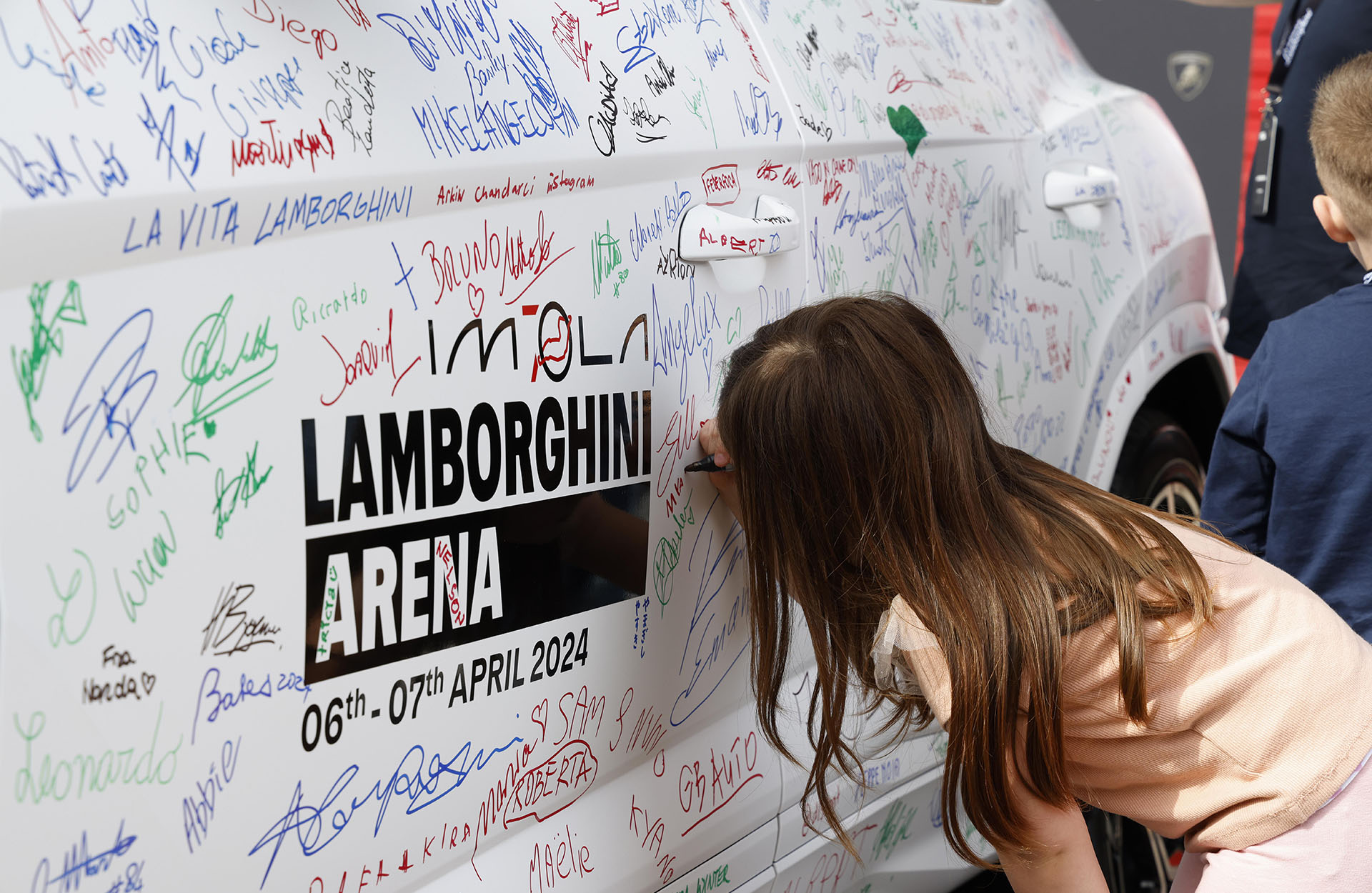
April 6 and 7, 2024 will go down in Automobili Lamborghini history. It was during these two days that the first edition of Lamborghini Arena took place at Imola Circuit, an event organized to celebrate the Sant’Agata Bolognese super sports car maker.
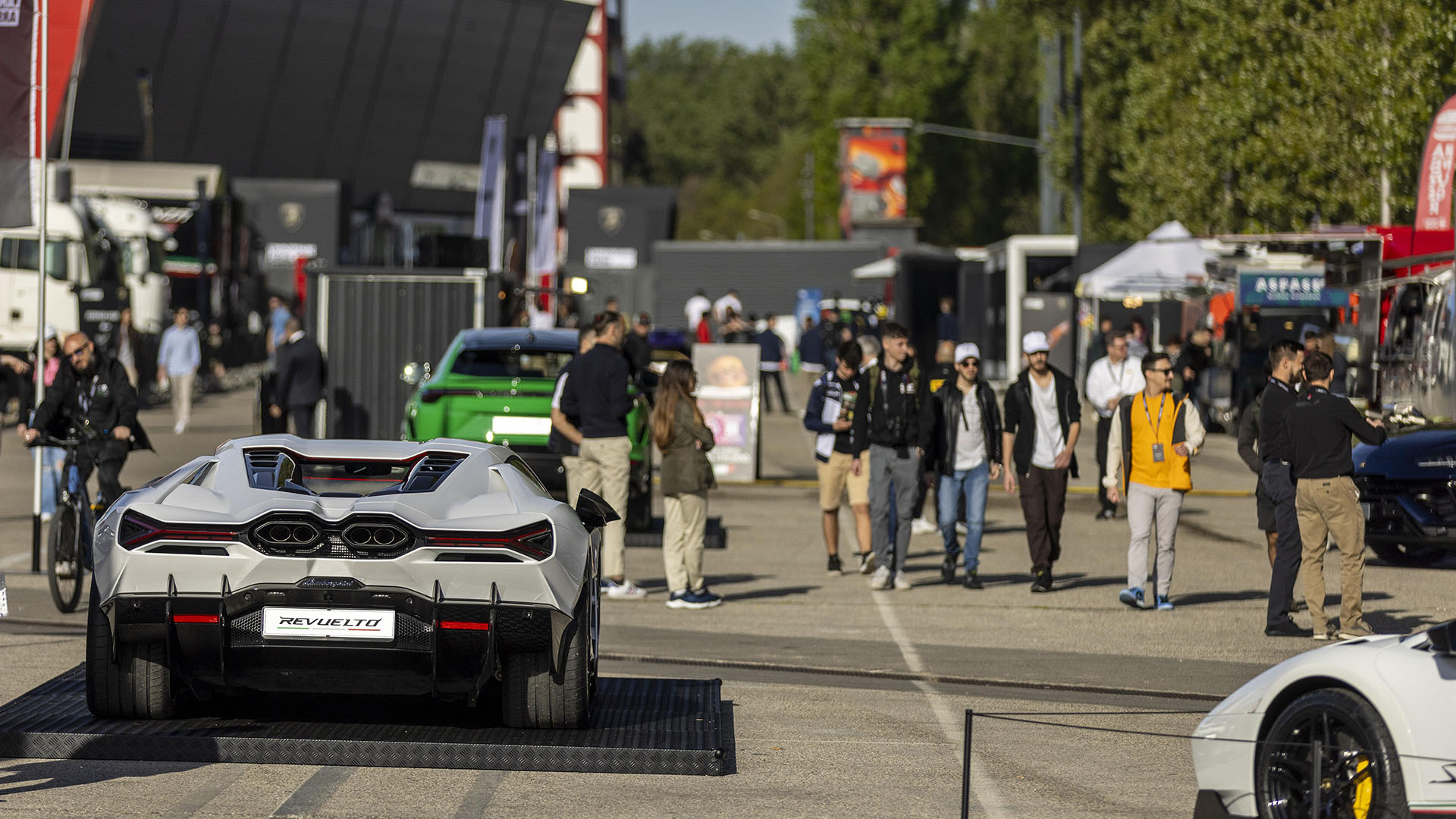
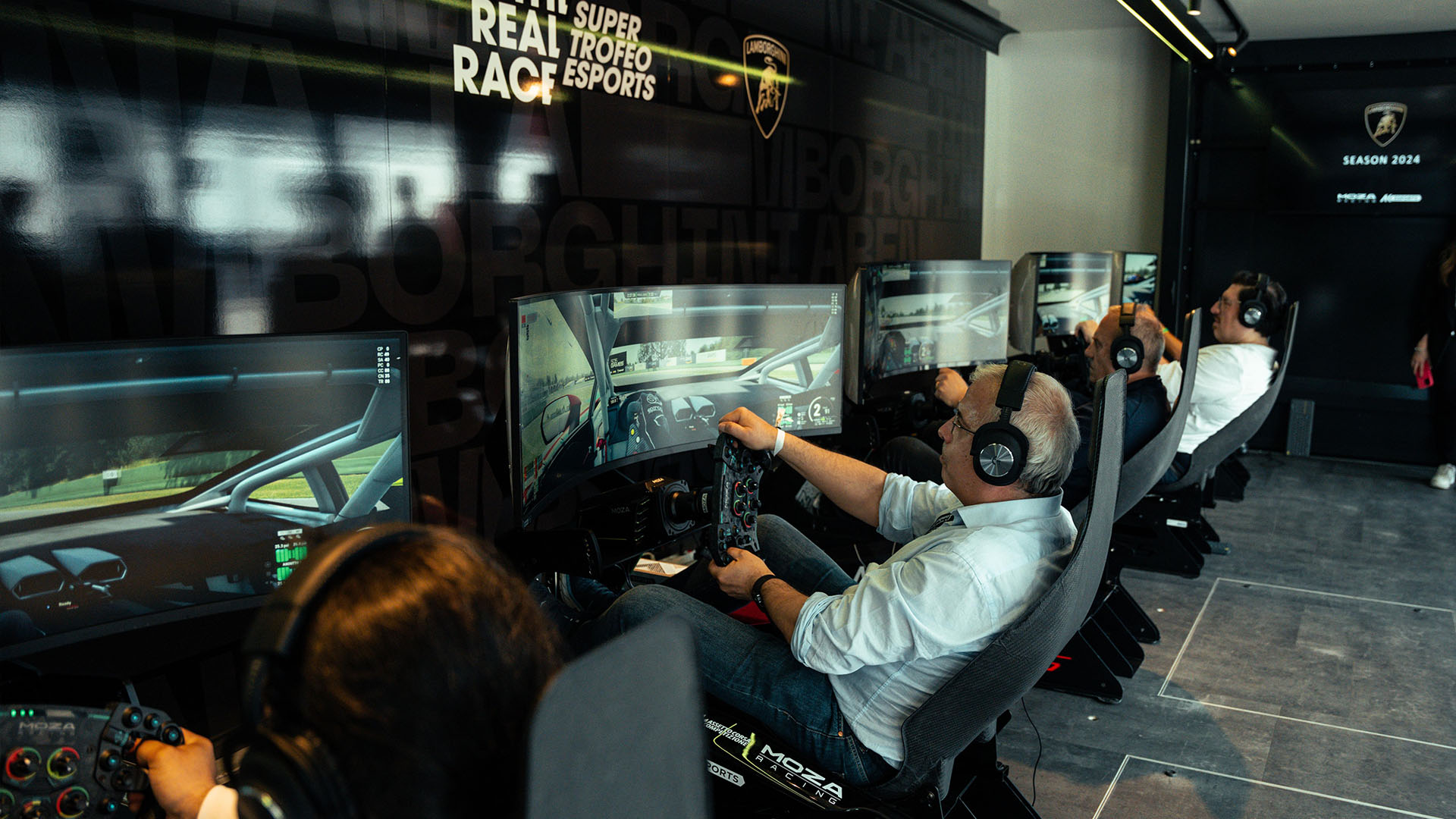
The event brought together the world of Automobili Lamborghini in one place at the same time, honoring the passion and successes of the brand and celebrating past and present, always with an eye to the future. During the two-day event, attendees were given the chance to interact with the carmaker’s innovations and challenge themselves by driving, both in reality and virtually, the many models that sped down the track of the Santerno circuit during the event, as well as the chance to meet some of Lamborghini’s partners at the stands within the circuit paddock.
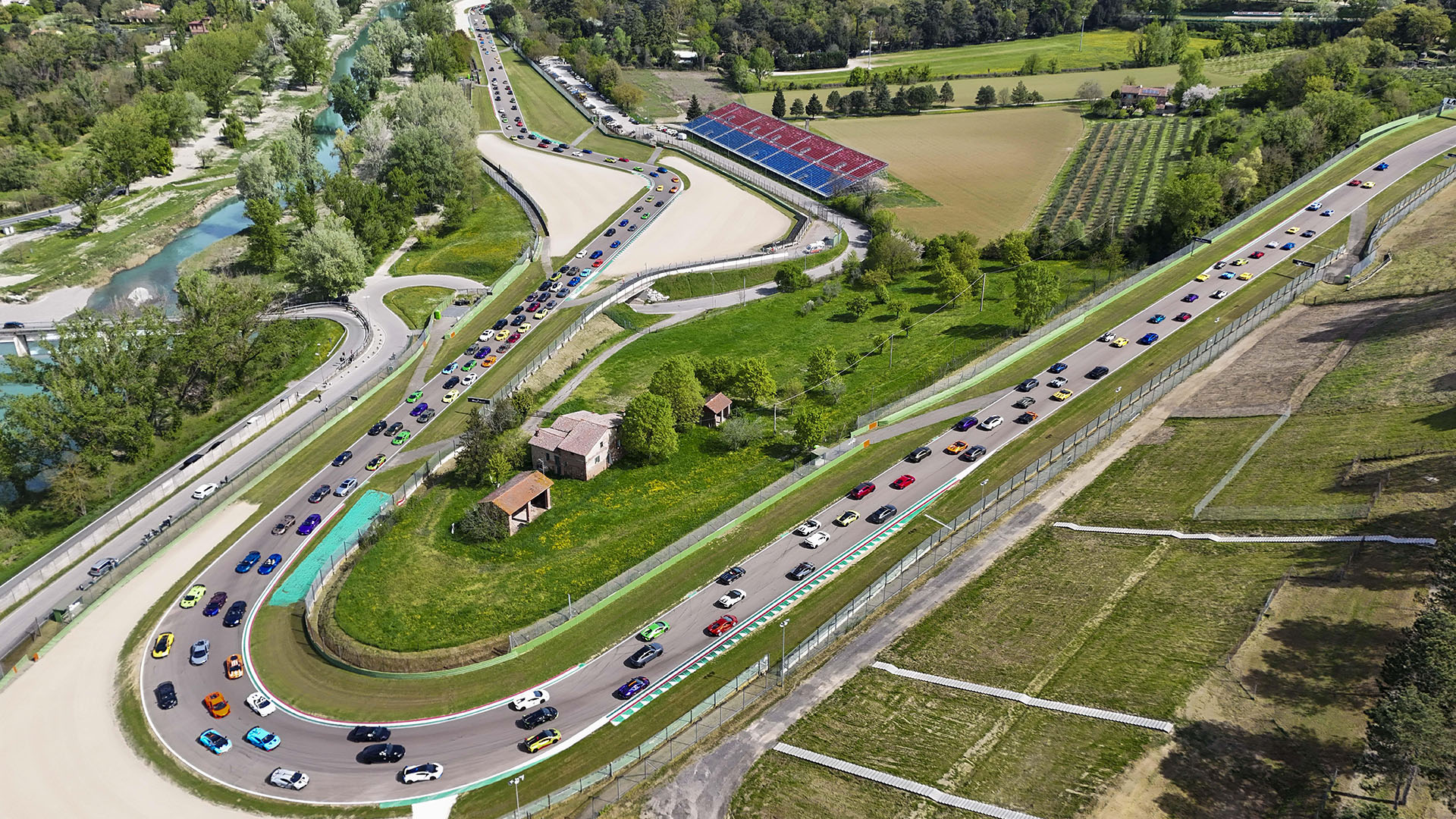
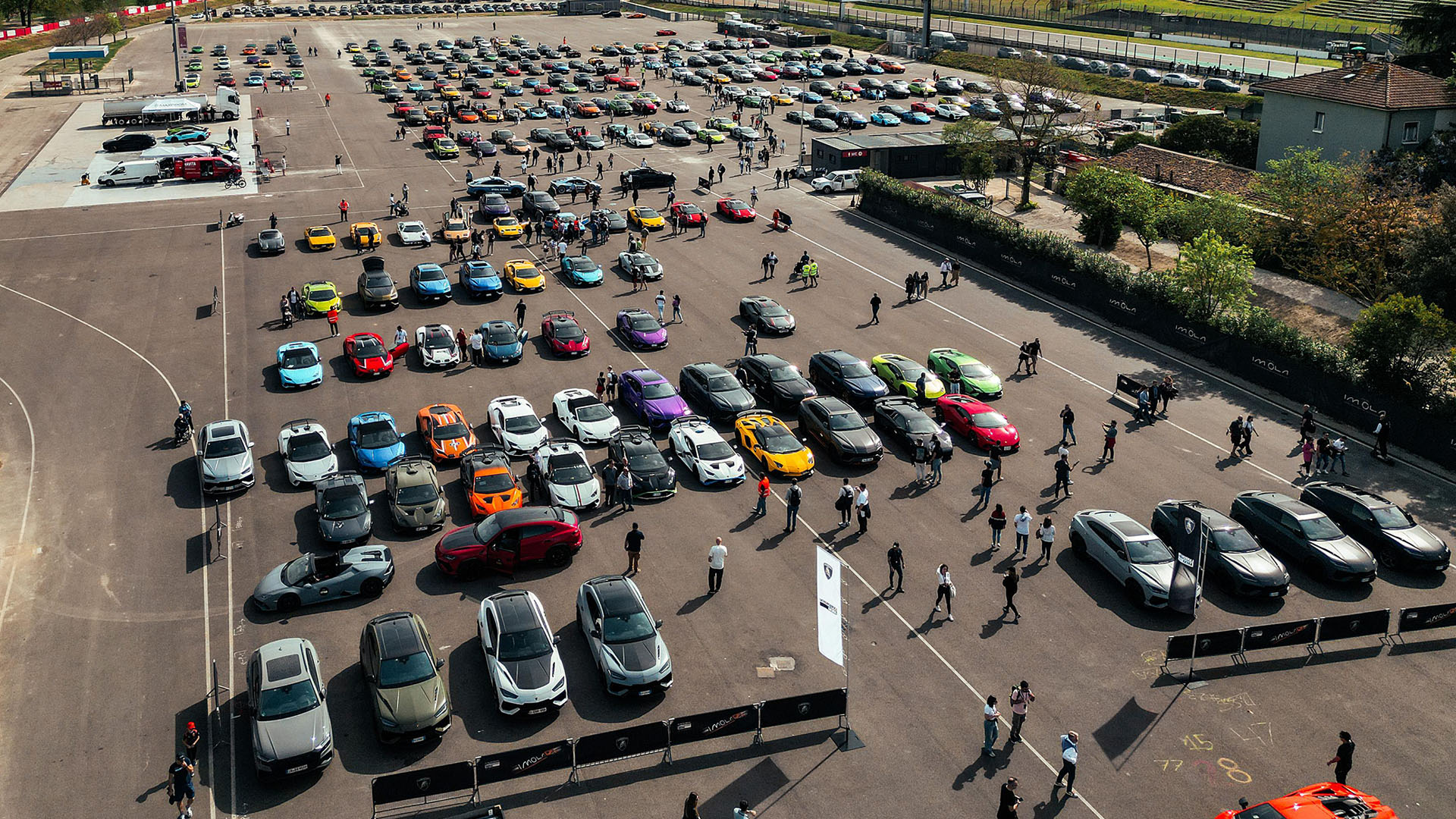
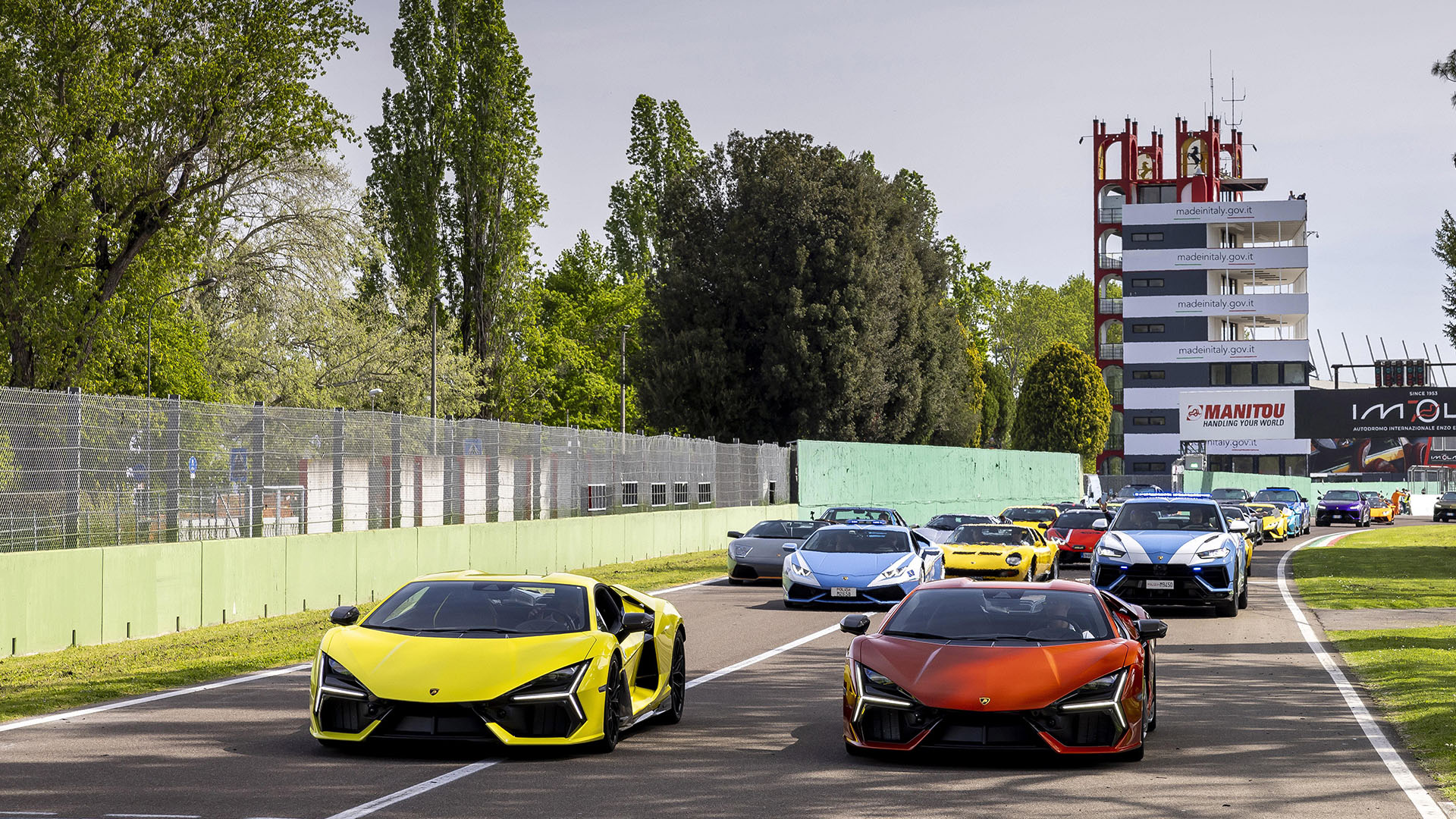
More than 6000 participants and 380 cars: just some of the numbers from the event, which was open to clients, fans, brand enthusiasts and employees to experience Lamborghini firsthand.
Stephan Winkelmann, Chairman and CEO of Automobili Lamborghini, remarked: “Lamborghini Arena is a celebration of the love and passion that people have for our brand. We are really proud to have staged such a unique event, which comes at a very special time for our company, following last year’s 60th anniversary celebrations and in the 2024 year that coincides with the hybridization of the whole range. We want to share moments that are so important to us with our fans, and the aim is to bring together the whole Lamborghini community in one place at an event that is truly open to everyone, from clients and enthusiasts to employees. These two days were entirely dedicated to Lamborghini style, something we are very proud of.”
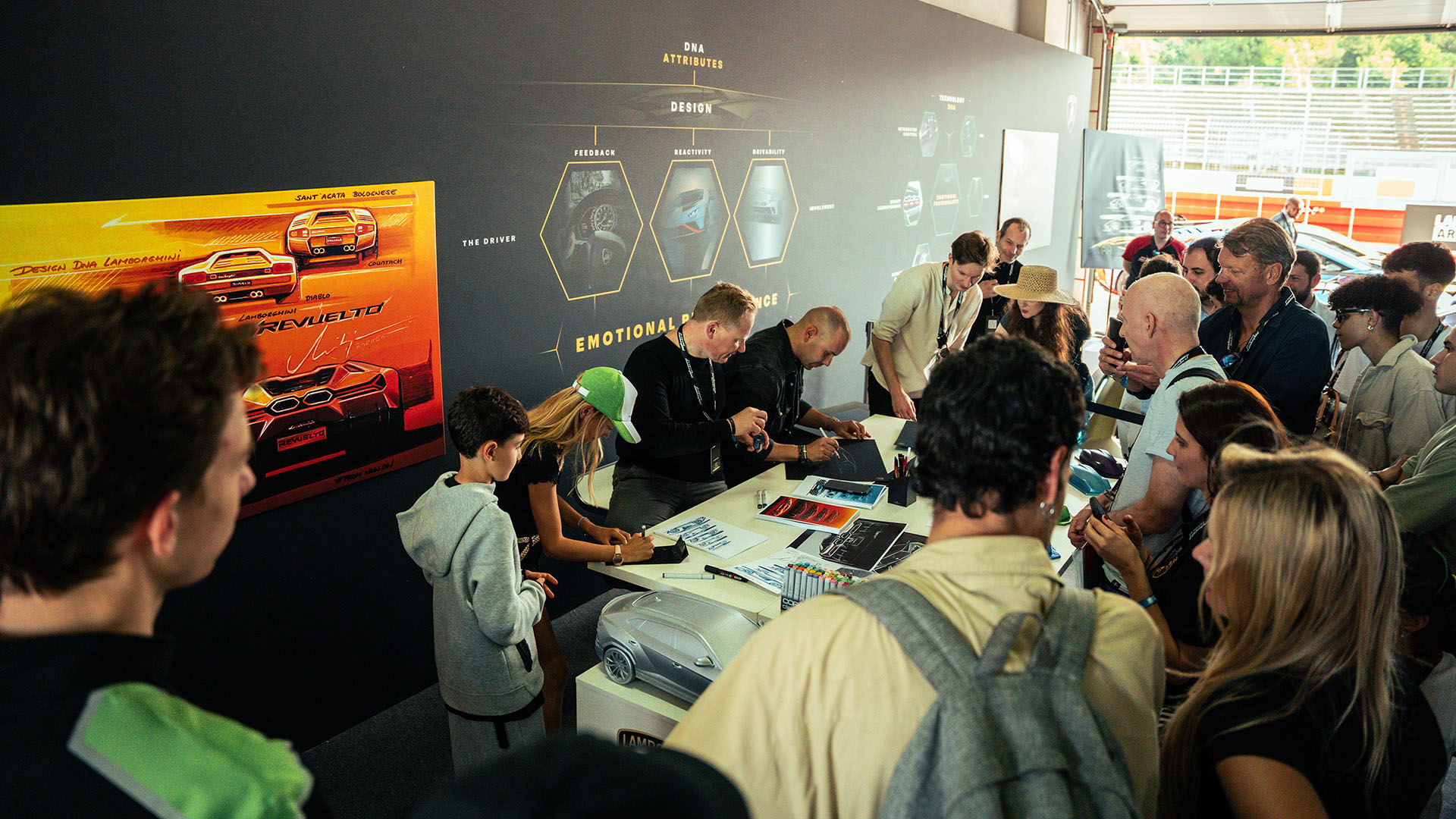
Lamborghini Arena was an event full of initiatives involving the whole company in all its parts, highlighting its commitment to innovation and excellence. In line with this tradition, the Sant’Agata Bolognese company has always been associated with state-of-the-art design, and so the festival had to have an area dedicated to Lamborghini Centro Stile. Here, visitors had the chance to admire the original sketches that gave rise to the most recent models and to appreciate the designers at work in creating the iconic lines and angularity typical of Lamborghini, starting from a simple blank page. On the subject of design, the Automobili Lamborghini Museum brought together a selection of artworks in the hospitality area, commissioned in 2023 from artists from all over the world, embodying the brand’s spirit and adrenaline and celebrating the company’s 60th anniversary.
Lamborghini Accessori Originali had a stand at the event and, together with Akrapovič, entertained visitors with a demonstration of car exhaust installation with the chance to listen to their unmistakable sound. The Automobili Lamborghini R&D department also offered an exclusive experience through its Garage Tours, during which technicians, together with enthusiasts, were able to delve into new technical details of the cars, as well as explore new and important insights into the Super Trofeo program. Of course, it was the cars that were the undisputed stars of the event, with a Parade of 352 Lamborghinis on the Imola Circuit track on Sunday, forming one of the most extensive and impressive parades in the company’s history.
Together with Automobili Lamborghini, the many partners of the Sant’Agata Bolognese carmaker offered numerous activities designed for all ages and needs. A kids’ area offered children interactive experiences developed in collaboration with LEGO Italy and the chance to “take to the track” on the Lamborghini and Ducati kids’ track. Activities for adults included the Ducati Desert X and Multistrada test drives along Imola’s city streets. Among the various activities offered by Lamborghini partners, Tod’s presented an area where it was possible to personalize the iconic Gommino loafer developed with Automobili Lamborghini and officially presented in January, thanks to the skills of an artisan from the Marche company.
Pirelli attended the event with a stand featuring a selection of its products homologated for the Lamborghini Urus, where an expert was on hand to provide information and guidance regarding the tires. O2H brought two cryo chambers to the circuit to try out, which involved total immersion of the body at temperatures of up to -140 °C / -220 °F. The hospitality area was enriched by an ambient fragrance dedicated to Automobili Lamborghini created by Culti Milano. Lavazza coffee offered moments of quality relaxation and refreshment, while MR Collection displayed 1:8 scale models of the most iconic cars. Gillette Labs was also present with a stand, where it showcased its products with gifts for guests, accompanied by an interactive challenge in keeping with the theme of the day: to park a radio-controlled truck between two Lamborghini model cars. Prizes were given to the successful participants.
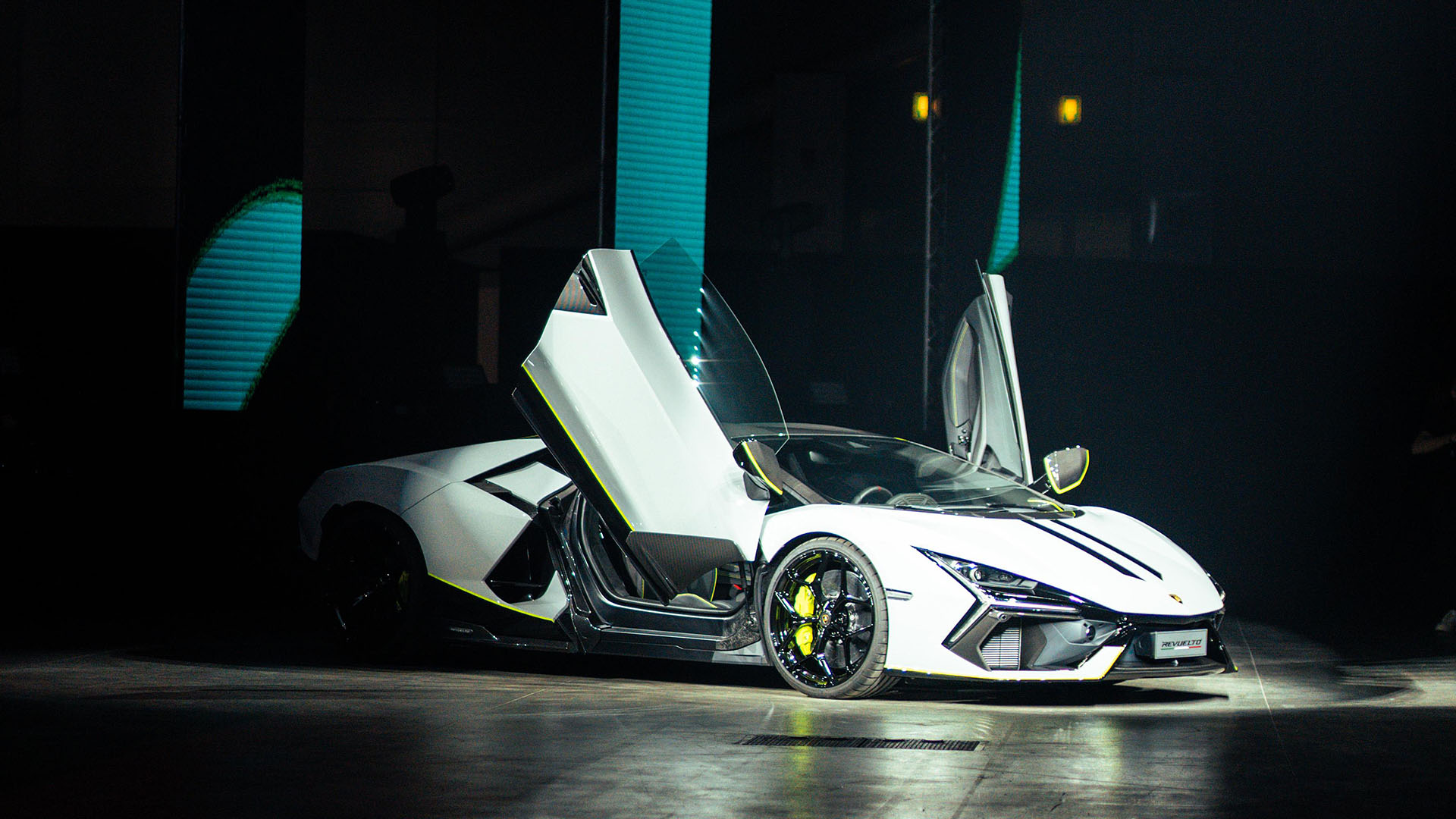
After the first day on the track, on Saturday 6 April Party Night was held at Bologna Fiere exhibition center: an evening of fun in full Lamborghini style, with music from the electronic band Planet Funk. As part of the evening, a symbolic car was presented which, as well as celebrating the event, once again focused attention on the Automobili Lamborghini personalization program: the Revuelto Ad Personam for Lamborghini Arena. This unique car stands out with its livery and special fittings, created through the exclusive Lamborghini Ad Personam department, which recently opened its new studio at the Sant’Agata Bolognese headquarters.
The exterior of this special car features contrasting colors with new carbon fiber elements that create a striking visual effect. The bodywork is painted in Grigio Hati (gray) with details in Verde Scandal (green) that accentuate the car’s lower line, roof, mirror caps and rear diffuser surrounds, all combined with the Verde Chiaro (light green) of the brake calipers. At the rear, the green, white and red colors of the Italian flag embellish the underside of the adjustable rear spoiler. The hood is crisscrossed by two racing-style stripes in Nero Noctis (black), bringing out the performance character of the V12 hybrid plug-in super sports car. The Ad Personam Studio had its own stand at the Lamborghini Arena event, where it showcased its innovations. Using Virtual Reality technology and a headset, clients enjoyed an immersive experience as if they were in the Ad Personam Studio in Sant’Agata Bolognese.
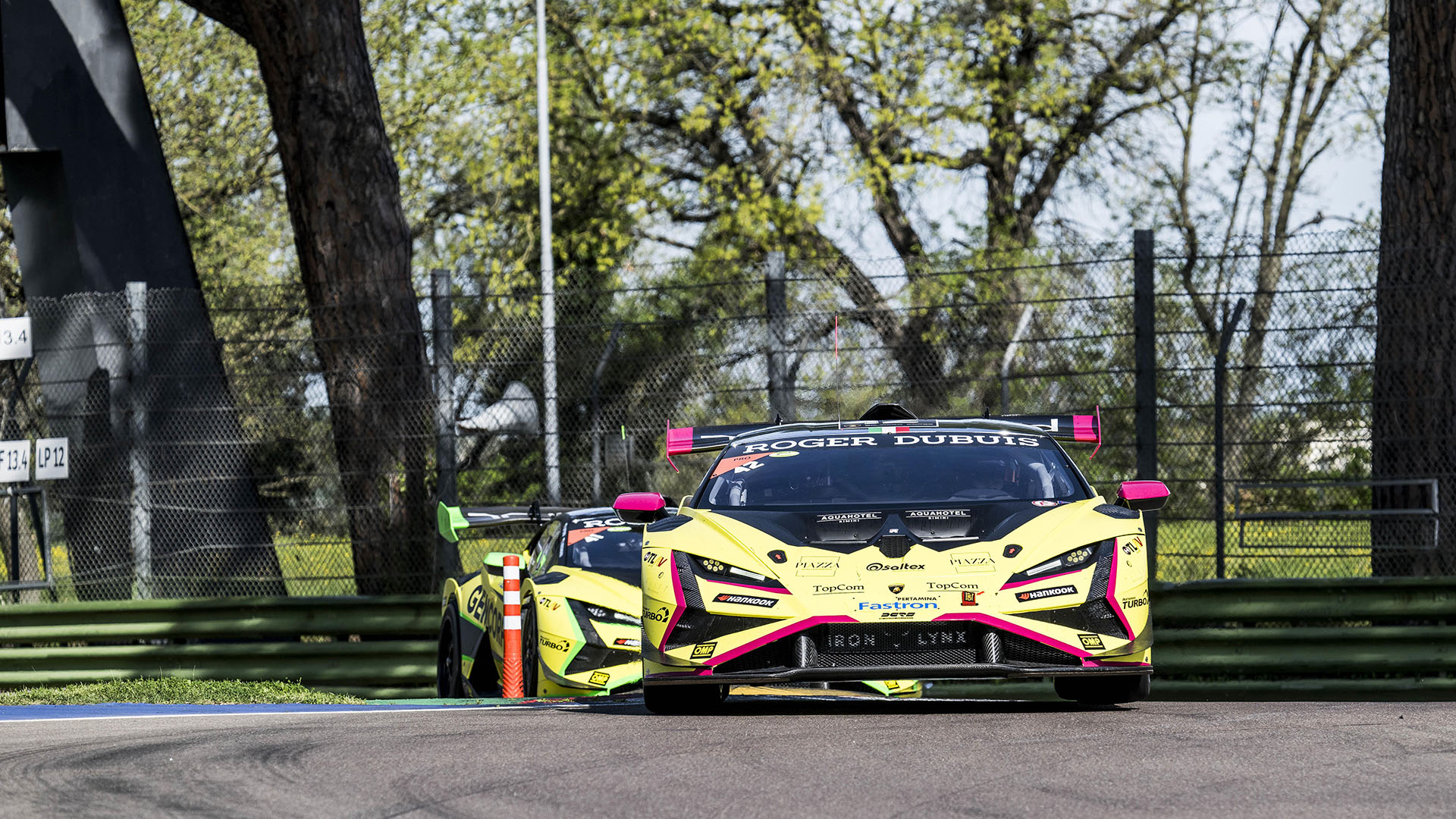
Lamborghini Arena also hosted the official tests for the 16th edition of the Lamborghini Super Trofeo Europe. More than 30 Lamborghini Huracán Super Trofeo EVO2 cars from every corner of the continent took to the Santerno track. Drivers and teams had the chance to perform tests on the same track that will host the first round of the season on 20 and 21 April, at the same time as the prestigious FIA WEC race weekend. Since the inaugural 2009 season, the Lamborghini Super Trofeo event has become one of the most popular and competitive international one-make championships, entirely managed and organized by Lamborghini Squadra Corse.
Derived from the road car of the same name, the Lamborghini Huracán Super Trofeo EVO2 is equipped with a 5.2-liter naturally aspirated V10 engine that delivers a power output of 620 CV. Essenza SCV12 hypercars also took to the tarmac at Imola Circuit. The most exclusive Lamborghini owners’ club was the star of four dedicated rounds on the track over the two-day event, creating a very special occasion for all fans of the brand to see and hear some of the 40 cars fitted with an 830 CV V12 engine designed by Lamborghini Squadra Corse.
One of the latest developments presented at Imola was the announcement of the recent partnership between the Sant’Agata Bolognese carmaker and Babolat, the French sports equipment supplier for tennis, padel, badminton and squash. The prototype of the first BL001 racket, which will be made as a very limited series of 50 units, was presented on the Saturday by Stephan Winkelmann, Chairman and CEO of Automobili Lamborghini, and by Éric Babolat, CEO of Babolat.
Spectators had the exclusive opportunity to watch an exhibition match on the padel court set up for the occasion between professional players, including Juan Lebrón Chincoa and Miguel Semmler. The technical concept and design of the BL001 was the result of almost six months of close collaboration between the Babolat and Automobili Lamborghini R&D teams. The BL001 is produced using an ultra-precise and entirely artisan process, with tests carried out on court and in the laboratory by experts from the French company. The racket was designed using the same tools, process and materials used for the production of cars at Sant’Agata Bolognese.
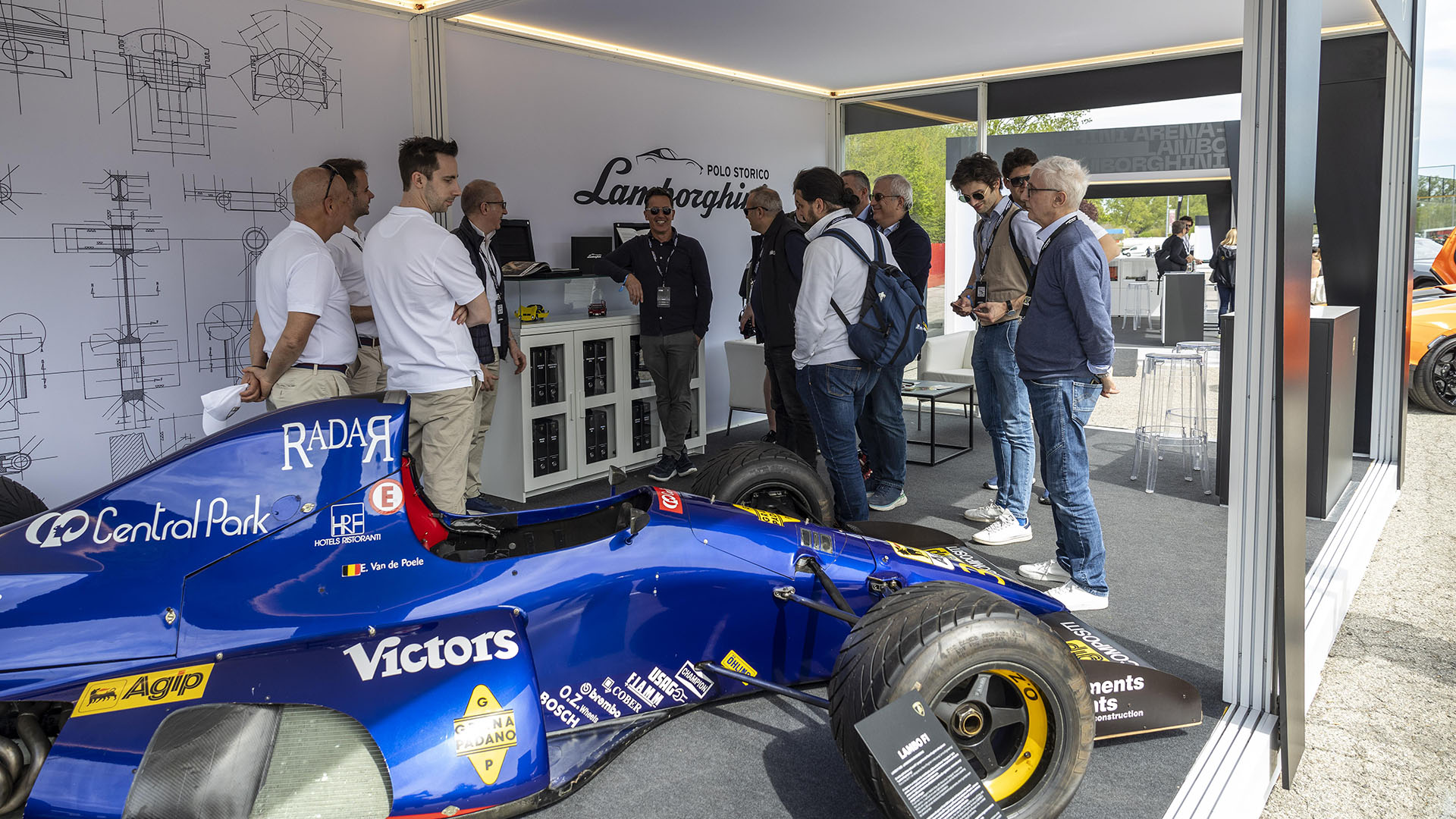
As well as being a celebration of the company’s present and future, Lamborghini Arena also provided an opportunity to showcase the glorious history of the brand through many of the Sant’Agata Bolognese carmaker’s most iconic models including the Miura, Countach and Diablo. Lamborghini Polo Storico, with its own stand at the event, is the department that preserves the company’s heritage through the management and study of the company archives, as well as restoration and certification of classic Lamborghini models up to the Diablo. As well as exhibiting a recently certified 1998 yellow Diablo VT Roadster with Nero Torpedo (black) interiors, Lamborghini Polo Storico exclusively showcased a Lamborghini Formula 1 car at the Imola Circuit, connecting the history of the Sant’Agata Bolognese carmaker and the circuit hosting the event.
Check out this video showing the entire parade of hundreds of Lamborghini cars on the track:
The Holy Grail: Bitcoin Quest for Digital Gold Status
Bitcoin aficionados are on a relentless quest for the Holy Grail: Bitcoin Quest for Digital Gold Status. In their eyes, Bitcoin is not just a cryptocurrency; it’s the modern incarnation of gold, a digital sanctuary for value in turbulent economic times. But how closely does Bitcoin truly align with this golden ideal?
This exploration seeks to unravel the truth behind Bitcoin’s claim to the throne as the new digital gold, scrutinising its potential as a haven in the digital age.
Common Financial Influences
Bitcoin and gold, two distinct assets, often draw comparisons. While their behaviors align under certain economic conditions, their differences are stark, especially regarding volatility.
Inflation: Both assets may gain value as inflation rises, seen as hedges against currency value erosion.
Currency Devaluation: They become alternatives when currencies weaken.
Market Uncertainty: Economic instability drives investors to gold and sometimes Bitcoin, seeing them as safer options.
Low Interest Rates: They become more attractive as low rates reduce the opportunity cost of holding them.
Regulatory News: Bitcoin is highly sensitive to this; gold, less so.
Technological Advances: Enhancements in blockchain can boost Bitcoin’s value.
Geopolitical Events: Global instability can increase their appeal.
Supply Constraints: Their limited availability can push prices up.
Bitcoin’s Unique Volatility Drivers:
Regulatory Actions: Country bans or regulations can quickly drop Bitcoin’s price, like China’s crackdown.
Security Breaches: Exchange hacks erode confidence and value, such as the Mt. Gox incident.
Technological Issues: Blockchain debates affect Bitcoin. The block size conflict led to the creation of Bitcoin Cash.
Market Manipulation: Scandals like Bitfinex’s affect its value.
Influential Opinions: High-profile comments, like those from Elon Musk, can sway prices instantly.
Environmental Concerns: Criticism of mining’s energy use can cause price drops, evidenced by Tesla’s Bitcoin rejection.
Bitcoin’s Growing Pains: The Chasm Between Innovation and Immaturity
Bitcoin, despite its growing acceptance, remains in a formative phase, often likened to its “teenage years.” The cryptocurrency market, despite its relatively short existence of around 13 years, has seen significant collapses and instances of fraud leading to substantial losses. These events are often attributed to factors uniquely characteristic of the digital asset space, including:
Hacks: The digital nature of cryptocurrencies makes them susceptible to cyber-attacks. High-profile hacks of exchanges and wallets have resulted in significant losses of funds.
Absence of Deposit Insurance: Unlike traditional banking systems in many countries, where depositors’ funds are insured up to a certain amount, most digital asset holdings do not have similar protections, amplifying the impact of losses.
Market Manipulation: The cryptocurrency market’s relatively lower regulation compared to traditional finance has made it more prone to manipulation, contributing to volatile price swings and investor losses.
This stage is marked by projects with questionable viability and entities plagued by mismanagement or deceitful practices. Notably, the collapse of FTX and the Terra (LUNA) debacle underscore these issues.
FTX, once a cryptocurrency exchange titan, fell due to alleged financial misdeeds, shaking investor confidence. Similarly, Terra’s collapse, spurred by its stable coin losing its peg to the dollar, highlighted the risks of innovative yet untested financial models.
Bitcoin Crossroads: Traditional Finance vs. The Unruly Teenagers
Bitcoin stands at a crossroads. There is a contrasting dynamics within the Bitcoin ecosystem.
On one side, giants like Goldman Sachs, JPMorgan, and Fidelity are making moves into crypto, showcasing its growing appeal to the traditional financial sector. Their entry signals a vote of confidence in Bitcoin’s future, hinting at a mature, integrated financial landscape ahead.
On the flip side, the space buzzes with the energy of newcomers—teenage gamers, ambitious startups, driven by passion but often short on experience. This mix breeds innovation but also volatility and unpredictability, challenging Bitcoin’s path to mainstream acceptance.
This sharp dichotomy highlights Bitcoin’s current state: a blend of potential and growing pains.The market’s maturity hinges on merging the innovation from its broad community with the stability and trust big institutions bring.
The journey ahead is about balance. Embracing the disruptive tech of startups and the solidity of heavyweights like BlackRock and Citigroup will be key. It’s this fusion that will shape Bitcoin’s destiny, carving its place in the financial world—or showing its limi
Despite its impressive strides and undeniable impact on the financial world, Bitcoin has not yet earned the moniker of ‘digital gold.’ This title implies a level of stability, security, and universal acceptance that Bitcoin, in its current state, falls short of achieving.
For Bitcoin to truly claim the title of ‘digital gold,’ it must overcome its current shortcomings, embracing both the stability that attracts traditional investors and the innovative spirit that has defined its rise. Until then, Bitcoin remains a promising but unfinished chapter in the story of digital finance.
Disclaimer: This exploration into the world of Bitcoin and its comparison to gold is presented from an impartial standpoint. LUXUO does not engage in cryptocurrency trading nor is LUXUO affiliated with any cryptocurrency traders or trading platforms. The insights and analyses provided are aimed at fostering understanding and dialogue, not serving as financial advice.
*The author Rene-Philippe Dubout is a Swiss lawyer that specialises in fintech licensing and fintech-related matters: Head to www.FintechSetUp.com For any inquiries or further information, or contact him at contact@swissfintechpro.com
For more opinion and business-related reads, click here.
Blancpain’s new perpetual calendar timepiece is, perhaps, the perfect microcosm of these efforts. If you happen to own a perpetual calendar, you just had the rare pleasure of watching the date switch from February 29th to March 1st because this year just so happens to be a leap year. In the digital age, such timekeeping idiosyncrasies are trivial but it took some effort to get here. By some, of course we mean a whole lot! Thus, although this story celebrates the new Blancpain Villeret Quantième Perpétuel (which is simply an archaic French term for perpetual calendar), we must set the stage properly for its grand entrance. The mechanical perpetual calendar is, after all, the very summit of what watchmakers have achieved over the course of millennia. Actually, given that digital timekeeping and even the atomic clock are merely the latest and most accurate technical measurements of time that humanity can manage, we posit here that any future measurement technique should be considered a descendant of the humble sundial.
Following on from this, we can say that horology’s key pursuit is timekeeping – to accurately measure and display the time. You may be surprised to hear that even the top executives at watch brands, including Marc A. Hayek over at Blancpain, always tell us that they are in the business of pursuing excellence in chronometry. While this seems straightforward, it is anything but. Instead, timekeeping is perhaps better approached as a multifaceted discipline that requires control over various interrelated factors; chronometry is a big word that encompasses many aspects of watchmaking.
A key challenge lies in the wildly varying scale of things. At one end, time is measured in the fractions of a second, as the balance wheel’s oscillations metre out the watchmaker’s desired interval with its tick-tock rhythm. This precisely regulated subdivision accumulates to count the passing seconds and, in turn, the minutes and hours. The name of the game here is regularity. It informs every aspect of timekeeping at this scale, such as the balance wheel and hairspring’s isochronism, which counteracts the unwinding mainspring’s decreasing torque, as well as the devices’ resistance to temperature and positional changes for improved precision.
”Long renowned for its calendar watches, Blancpain has deep expertise in this segment, extending even to the esoteric Chinese calendar”
In contrast, timekeeping at the largest scales – at least within the context of horology – involves patterns and events spanning months, years, and even centuries, most of them astronomical in nature. Predictable regularity falls away here as bewildering complexity takes its place, held together by myriad rules and exceptions.
Before we hurtle forward and dive deep, it should be noted that this is the second issue in a row that we are looking at calendar mechanisms. Regular readers should therefore expect a bit of a rethread here of the nuts and bolts of the calendar. In other words, here comes another lesson in science and history. As always with our cover stories, if you want to discover the particularities of the Blancpain Villeret Quantième Perpétuel, that bit is actually reserved for the Cover Watch section in the front of the book. That, for example, is where the specifications are. And now, with housekeeping matters and rules of engagement cleared up, on with the show!
Balance and Compromise
Here is the crux of the issue: horology at larger time scales is not just about marking the passage of time. Rather, it must balance society’s need for consistency and convenience with natural phenomena that are rarely so, if ever. Throw historical and cultural influences into the mix, and the watchmaker’s task to bridge these differences becomes clear.
Nowhere is this more apparent than in the perpetual calendar. Before diving into the complexity (and limitations) of this high complication, however, it is necessary to first understand the modern Gregorian calendar that it tracks, as well as the Julian calendar it was based on.
Proposed by Julius Caesar in 46 BCE, the Julian calendar was adopted by the Roman Empire on 1 January 45 BCE, and remained the de facto calendar in the western world for the next 16 centuries. Unlike the lunisolar Roman calendar it replaced, which incorporated both the solar and lunar cycles, the Julian calendar was a solar calendar that was solely based on the earth’s revolution around the sun. Well, it was a geocentric world at that time but you get the idea.
The Julian calendar introduced two crucial changes that remain in place today. The first is the number of days in each month – a curious sequence that sees the consecutive months of July and August having 31 days each, while leaving February with just 28. The reasons for this were complex, and boiled down to a mixture of historical, political, and religious considerations.
Related to the above is the second change: the practice of adding an extra day – the leap day – to February on every leap year. By the advent of the Julian calendar, astronomers had already known for around a century that the solar year was just under 365.25 days. A regular year of 365 days was thus some six hours “short”, which meant that the calendar would accumulate this error and deviate by around a day every four years. The Julian calendar accounted for the shortfall by designating a leap year every four years, when a day was added in February to help the system “catch up”. This mechanism removed the need for manual corrections, which also helped prevent abuse by pontifices who could, under the Roman calendar, lengthen a year to benefit themselves or their allies.
For all intents and purposes, the Julian calendar was accurate enough, hence its continual use for more than 1,600 years. Still, its definition of 365.25 days for a year was an approximation that was not quite right. As it turned out, the solar year’s actual length is 365.2422 days – neither elegant nor convenient, but still reality nonetheless. Consequently, the Julian calendar’s solar year was a tad too long, and the error was accumulating over time. In particular, this affected the observation of Easter; the religious festival’s date was based in part on the March equinox, which was gradually drifting from observed reality.
Things finally came to a head in 1582 with the Gregorian reform, which saw Pope Gregory XIII replacing the Julian calendar with the Gregorian calendar – the system we still use today. The single biggest improvement introduced by the Gregorian calendar was its spacing of the leap years. Rather than designating every fourth year as a leap year, a more complex set of rules was implemented to reduce the Julian calendar’s error.
Under the Gregorian calendar, years that are divisible by 4 are designated as leap years unless they are also divisible by 100, in which case they are regular years. The exception to this exception is if a year is also divisible by 400 – if so, then it is a leap year. 1800 and 1900 were thus regular years, while 2000 was a leap year. Looking forward, 2100, 2200, and 2300 are all regular years, and 2400 will be a leap year.
The Gregorian year’s tweaked algorithm offers an upgrade to the Julian calendar by averaging the solar year to 365.2425 days instead, which reduces the error to a nearly imperceptible 26 seconds a year. For civil use, it is essentially perfect.
Counting The Days
Where does this lengthy preamble leave us? Hopefully, with a better appreciation of how the modern calendar and its quirks came to be, as well as a glimpse at the challenges of engineering a device that can keep track of these peculiarities. But let us not get ahead of ourselves, and build our perpetual calendar up from the basics.
From a reductionist perspective, a calendar complication is simply a set of wheels and levers that advance its display(s) once a day at midnight to show the new date and, occasionally, other information such as the day of the week. Indeed, the simple calendar does exactly this with a 31-day date wheel. As its name suggests, however, the complication is fairly simple, and does not account for the differing lengths of the months. So, it requires a manual correction at the end of every February, April, June, September, and October, in order to advance the date from the 30th to the 1st of the following month.
The upgrade to this is the annual calendar, a complication that is so named because it only requires a correction once a year, at the end of every February. The annual calendar is built in different ways by different manufactures. The underlying principle is the same though: by adding a series of components, including a wheel with five longer teeth or a disk with five deeper notches, a mechanical computer that more closely models the same five months is created. The computer’s “input” here varies according to the length of the teeth or the depth of the notches, which engage differently with the fingers and gears they are connected with. As for the “output”? It is the crucial difference between advancing the date wheel by a single day, such as on the end of 31st August, versus a double jump that goes from the 30th in a “short” month to the 1st of the next.
Alas, February’s varying length is beyond the capabilities of the annual calendar’s mechanical computer. The next step up is the perpetual calendar, which goes further by accounting for February’s uneven number of days. Unsurprising, its complexity qualifies it as a high complication and a hallmark of haute horlogerie.
Like the annual calendar, the perpetual calendar functions like a mechanical computer, and can be realised in different ways. The very first one is attributed to English watchmaker Thomas Mudge, whose 1762 pocket watch is the first known example of this complication in any kind of timepiece. You can see it for yourself at the famed British Museum in London, as the editor has. The basic design of the perpetual calendar is evident in this very watch, which can be neatly summarised for most contemporary watches that follow the most traditional approach. Perpetual calendar mechanisms are built around the grand lever, which is an outsized, multi-pronged lever that “reads” the programmed “inputs” and translates them to “outputs” by advancing the date wheel.
There are variations on this theme, of course. The month wheel may have 12 notches, for instance, and rely on a separate wheel – or Maltese Cross-shaped component – to track the leap year. Alternatively, it may just have 48 notches instead, each corresponding to a month in the same 4-year cycle. This, as noted above, covers just the classic iterations of the complication; other mechanical designs for the perpetual calendar exist and we may come back to this complication in a more in-depth style later this year.
Whatever its design, the perpetual calendar represents a significantly bigger jump in technical complexity compared with the full calendar and even the annual calendar (although that complication as much newer but we digress). As you may recall, the Gregorian calendar excludes three leap years in every 400-year cycle, with the next ones being 2100, 2200, and 2300. Assuming that a perpetual calendar timepiece is kept running and requires no maintenance – one can dream – it will only need three adjustments every 400 years.
Mechanical considerations aside, how the various pieces of information are displayed on the dial is another challenge. Legibility and aesthetics are, after all, determined by the arrangement of components and displays, which is influenced to some extent by movement architecture, but also by design choices. The last major piece of the puzzle concerns wearability. Since the typical perpetual calendar is built as a module that is then stacked atop a base movement (the module is literally mounted dial-side, just as all conventional calendar indications are), finesse is necessary, lest an overly thick movement is created to yield a timepiece that is unwieldy on the wrist.
”Note how the main dial’s sunray finish serves as a background against which the snailed sub- dials sit – with the latter rendered in two layers”
A Verdant Touch
Long renowned for its calendar watches, Blancpain has developed a deep expertise in this segment that extends to even the esoteric Chinese calendar. Perpetual calendars, in particular, are well-loved staples within the brand’s line-up. Among them, the Villeret Quantième Perpétuel stands out and has existed in its current form since 2018, although the perpetual calendar has been making the rounds for the brand for years before that. Elegant, functional, and perfectly proportioned, the Villeret Quantième Perpétuel offers a masterclass in the execution of the high complication, from technical elements to design considerations and more.
This year, the Villeret model (no other Blancpain collection features a perpetual calendar) welcomes a new reference in red gold and, for the first time, a green dial. Inspired by the fir trees lining Blancpain’s native village of Villeret <there is an entire story about Villeret and La Brassus that we do not have the time to get into here but you can get a sense of this history – and the brand’s fascinating story – in our Spring cover story last on the Fifty Fathoms – Ed>, the new colourway does not just freshen things up by offering an alternative to the current references with white or blue dials. Instead, it also proposes a more contemporary style of refinement that connoisseurs will surely appreciate.
At first glance, what is immediately striking is the dial’s symmetric layout. Here, the various counters are spaced comfortably across the dial, with the respective displays presenting information according to their relative importance. To that end, the display of time is reserved for the three feuille hands sweeping across the dial. Meanwhile, the current day and date are each tracked on corresponding sub-dials – at nine and three o’clock. As for the less frequently used month and leap year indicators? These displays have been relegated to 12 o’clock, where they share a single counter that, nonetheless, offers at-a-glance legibility.
Familiar Phases
If the perpetual calendar tracks the date of the Gregorian calendar based on the earth’s orbit around the sun, then surely its counterpart – the moon, our closest celestial companion – deserves a place on the watch dial as well. Indeed, the moon phase display is an oft-included complication on timepieces with perpetual calendars, and it sits here at six o’clock.
A discussion of the lunar cycle is well beyond the scope of this story. Suffice it to say, however, that like Earth’s orbit around the sun, it is an unruly phenomenon that defies simple calculations, as the synodic lunar month is 29.530588 mean solar days long. So, the same game of approximation is played here: to display the phases of the moon on a watch, the lunar month is typically coded mechanically using a 59-tooth wheel to represent two lunar cycles. Advancing the wheel by one tooth daily creates a lunar month that is 29.5-days long, which is just 44 minutes and 2.9 seconds short of the actual lunar cycle. This deviation accumulates to an error of one day every 2.5 years and, by extension, a correction in just as long.
For Blancpain, this complication is especially dear. The reasons are historical: when modern Blancpain reemerged in the early 1980s, towards the end of the Quartz Crisis, the moon phase display was arguably its anchoring complication. Swiss brands had, until then, largely attempted to compete with quartz movements on price, by stripping away complications and simplifying their mechanical calibres. This strategy was, in hindsight, largely ineffectual.
Blancpain, on the other hand, took a contrarian approach by leaning into the complexities of mechanical watchmaking, and released its first watch with a moon phase display in 1983. The timepiece’s debut was a watershed moment; the complication harked back to the rich legacy of mechanical timekeeping, and showcased a romantic side of traditional watchmaking absent in quartz timepieces. This particular watch did more than just galvanise the wider Swiss watch industry. Rather, it also established the complete calendar (i.e. a simple calendar that shows the day, date, and month) with moon phase as a Blancpain signature, and introduced the manufacturer’s “man in the moon” design that remains in use today.
”Blancpain’s under-lug calendar correctors are invisible when the watch is worn, which also creates a more harmonious case”
Aesthetic Appeal
Despite needing to display multiple pieces of information from the perpetual calendar and moon phase, the Villeret Quantième Perpétuel is still eminently legible. Part of the credit should go to the movement designers, of course. Readability is also subtly enhanced with contrasting textures on the dial, which creates varied surfaces that light plays across differently. Note, for instance, how the main dial’s sunray finish serves as a background against which the snailed sub-dials sit – with the latter rendered in two layers, no less.
Other details abound if one knows where to look. Consider the design of the three central hands and how they are mounted to the cannon pinion. Eagle-eyed observers will note how they form a stepped pattern of concentric circles right at the centre of the dial – an attractive yet subtle touch that mirrors and complements the stepped bezel emerging from the case. In much the same way, the hands and appliqué indices have all been rendered in polished red gold to speak a uniform visual language.
High Calibre
The heart of every watch is its movement, and the one powering the Villeret Quantième Perpétuel is Blancpain’s self-winding Calibre 5954. Some of its technical features have already been discussed above, from its organisation of information on the dial to its inclusion of the moon phase display.
What is also important are the movement’s dimensions. At just 4.97mm high, Calibre 5954 can be considered an ultra-thin perpetual calendar movement. This feature translates to an equally svelte case, which enables the Villeret Quantième Perpétuel to clock in at just 10.80mm high – slim enough to slip under a shirt cuff effortlessly. Despite its diminutive dimensions, Calibre 5954 still manages to have a full-size rotor for greater efficiency when winding its barrel and has a longish 72-hour power reserve. A temperature- and shock-resistant silicon hairspring is par for the course here, naturally.
What is also of note here is how the watch’s indicators are adjusted. The usual implementation involves positioning recessed pushers around the case – to adjust a particular display, one simply uses a stylus or any similar tool to actuate its corresponding quick-set pusher. This presents two problems though. For one, making corrections is inconvenient as a tool must be on hand. The second issue concerns aesthetics: the pushers on the case interrupt its visual continuity.
Blancpain overcame this issue with an ingenious solution – under-lug correctors that can simply be actuated using one’s fingers, not unlike a chronograph pusher. These correctors are invisible when the watch is worn, which also creates a more harmonious case. Convenience and design aside, it is also worth noting that the correctors are blocked when the indicators are changing, which prevents the wearer from accidentally damaging the movement. Fans of the Blancpain system will recall it has been in action for almost 20 years now.
The overall result here is a timepiece that is complex under the dial, but easy to read and operate. Perhaps what makes things even more poetic is the fact that 2024, its year of release, is a leap year. What better way is there to mark the occasion, than with a new perpetual calendar?
This article first appeared on WOW’s Spring 2024 issue.
For more on the latest in watch reads, click here.
Report-card grades are derived from a consensus of test-driver evaluations. All grades are versus other vehicles in the same class. Value grade is for specific trim level evaluated, and may not reflect Consumer Guide’s impressions of the entire model lineup.
Big & Tall Comfort
Big Guy
B
Tall Guy
B
Big & Tall comfort ratings are for front seats only. “Big” rating based on male tester weighing approximately 350 pounds, “Tall” rating based on 6’6″-tall male tester.
Base price: $31,995 (not including $1295 destination charge)
Options on test vehicle: Luxury option package ($2270)
Price as tested: $35,560
Quick Hits
The great: Serious foul-weather ability, comfortable cabin
The good: Decent fuel economy, upscale amenities
The not so good: Limited rear-seat space
Tom Appel
Full confession: I am a two-time Subaru owner. The wife and I have owned a Forester, and still own a Crosstrek. Much of our attraction to the brand comes from its reputation for reliability, excellent foul-weather capability, and the promise of strong resale value. By these metrics, we have never been disappointed.
The quirkiness of the Subaru “boxer” engine also appeals to automotive geeks and weirdos, this in a way that is not easily explained to folks who don’t find charm in the term “pancake engine.”
I mention all this because the maker’s new Wilderness trim level, now available on the Outback wagon, Forester crossover, and the wee Crosstrek, hints at areas of performance mainstream Subaru products might have been somehow been deficient in. I bristle at this notion.
Conceptually, I sort of thought of the Crosstrek as the “Wilderness” version of the compact Subaru Impreza, but, Wilderness takes things up a notch…or two. For folks not in the know, the Wilderness trim level elevates standard Subaru models in terms of off-road prowess, and—and this is important—design intensity. You will know a Wilderness model when you see one.
That said, my defensive attitude aside, there is real value in the Wilderness trim level, and very little—save for an apparently fuel-economy hit, and any issues you may have with the styling—downside to its choosing.
More Subaru news and reviews
2024 Subaru Crosstrek Wilderness:
5 Cool Things
It’s still a Crosstrek
2024 Subaru Crosstrek Wilderness
And that’s a good thing. Ride, handling, and apparently build quality all play into the Crosstrek’s general sense of sporty solidity. And despite the special Wilderness tires and assorted off-road-oriented upgrades, the Wilderness feels very much like any other Crosstrek.
Test Drive: 2022 Subaru WRX Premium
It’s easier to get in and out of
2024 Subaru Crosstrek Wilderness
This may be a little thing to some, but the Crosstrek Wilderness’ elevated ride height—which should prove handy when plowing trough snow drifts, or navigating deeply rutted trails—also means that getting into and getting out of the Crosstrek will be just that much easier. If you’re not of empty-nester age, you probably don’t care much.
2025 Chevrolet Equinox: First Look
It’s better equipped for the rough stuff
2024 Subaru Crosstrek Wilderness
In addition to the aforementioned additional ground clearance, the Wilderness also boasts mission-specific wheels and tires, and hill-descent control. And with a bump in ground clearance from 8.7-inches to 9.3, traversing snow drifts just got a little easier. All available on the Wilderness is a ten-way power driver’s seat, a Harman Kardon premium audio system, and a power sunroof.
Test Drive: 2023 Toyota Corolla Cross Hybrid SE
It’s well equipped
2024 Subaru Crosstrek Wilderness
As the premium trim level in the Crosstrek lineup, the Wilderness is well equipped. Apart from the aforementioned sunroof, premium audio system, and ten-way driver’s seat, there is little than can be added to the Wilderness, which helps to underscore the value here.
Also standard is the larger of the two available Crosstrek engines. Powering the Wilderness is a 182-horsepower 2.5-liter 4-cylinder engine. A 158-horsepower 2.0-liter engine is available on other Crosstrek trim levels. All Crosstreks come with a CVT automatic transmission, and run on regular gas.
Coming Soon: 2024 Chevrolet Trax
It’s attention getting
2024 Subaru Crosstrek Wilderness
We don’t love color scheme seen here, but appreciate the sporty nature of the look. Were in not for the gold/copper accents that come as part of the Wilderness trim level, we’d be pretty cool with livery. Even so, it seems as the general consensus—the results of an entirely non-scientific poll—is that the Crosstrek Wilderness looks pretty cool. This is about as flashy as a Subaru gets, so if you’re looking for a little flash—and attention—we’ve got the Subaru for you.
…
We noticed that our fuel economy was down some compared to previously tested Crosstreks; we blamed the raised ride height, and the off-road oriented tires. That, and our general aversion to gold-tone trim, we can find little reason not to recommend the Crosstrek Wilderness. Slightly less extroverted Crosstrek shoppers will find much to like about on of the other trim levels.
2025 Hyundai Santa Cruz and Tucson: 2024 New York Auto Show
We have been lucky enough to gain incredible in depth insight into establishing a car brand when drive were invited to be design partners.
When the founders of Zenos Cars, Mark Edwards and Ansar Ali started, they went through a process of deciding what their approach was to be establishing and naming their a new car brand.
They considered several options including buying an established company, registering / purchasing a recognised but now dissolved marque or starting afresh with a totally new brand.
Looking at the pros and cons they decided that on balance it would be better if they started with a clean sheet and build from scratch.
They invested and went to such lengths involving brand advisors from the very start, to ensure they got it right, realising how important this aspect of their offering was.
They were able to create a strong brand proposition for their new company, to deliver an engaging (thrilling) experience focused around lightweight sportscars – “Experience the thrill of belonging”.
The brand values were to be defined by Accessible, Ingenious, True, Rigorous, Passionate and Attentive.
It would not necessarily be easy to establish themselves or the brand, however the problems of taking an existing or previously known brand far outweighed the benefits.
Namely that the baggage brands can carry could hold back the operation. Anything from die hard enthusiasts of the now defunct manufacturer, through to trying to get buy in from an existing workforce accept a new direction.
Perhaps the biggest obstacle being that it can be difficult to shake off any previous assumptions or negativity associated with an existing brand.
So when starting your company, getting everything right from the beginning is vital, from the name, product proposition and brand identity.
Get in touch and we’d be happy to share our experience.
The technical storage or access is strictly necessary for the legitimate purpose of enabling the use of a specific service explicitly requested by the subscriber or user, or for the sole purpose of carrying out the transmission of a communication over an electronic communications network.
Preferences
The technical storage or access is necessary for the legitimate purpose of storing preferences that are not requested by the subscriber or user.
Statistics
The technical storage or access that is used exclusively for statistical purposes.The technical storage or access that is used exclusively for anonymous statistical purposes. Without a subpoena, voluntary compliance on the part of your Internet Service Provider, or additional records from a third party, information stored or retrieved for this purpose alone cannot usually be used to identify you.
Marketing
The technical storage or access is required to create user profiles to send advertising, or to track the user on a website or across several websites for similar marketing purposes.



















 2024 Subaru Crosstrek Wilderness


