#EGPartner Every year, I like to put together a “travel bucket list” with inspiration for the coming year. @Expedia Group’s Unpack ’24 report was the perfect way to find out the latest travel trends for 2024 – thanks to @Expedia, @Hotelsdotcom, and @Vrbo! •••••••••••••••••••••••••••••••••••••••••••••••••• Most of these bucket list items are not destination-specific, so I encourage you to use them as a launching pad for ideas, essentially some “choose your adventure” inspo!
🌟 Be a “Tour”ist: In 2023, Taylor Swift’s Eras and Beyoncé’s Renaissance tours’ cultural impact was undeniable, driving ticket sales, travel, and tourism. Expedia predicts that Tour Tourism will continue to thrive in 2024. If you’ve got a major concert or cultural experience on your bucket list, make 2024 your year to experience it!
🏠 Rent a Vacation Home: Since becoming a family of four (yes, we count our furbaby), we prioritize vacation homes whenever we travel. Last year, we stayed in an 18th-century farmhouse in Tuscany and a modern beachfront unit in Malibu. There’s something for everyone on @Vrbo! With separate bedrooms, a fully-equipped kitchen, and living spaces, you can cook meals together, enjoy movie nights, and spend quality time together without feeling cramped or confined.
👯♀️ Take a Girls’ Trip: Are you itching to travel, but none of your friends are up for the adventure? Join @tbaescapes and go on a safari in South Africa, sail on a luxury Nile cruise in Egypt, witness the Petra in Jordan, go glamping in the Sahara Desert in Morocco, and discover one of the most remote wildlife destinations on earth, The Galapagos Islands!
🌏 Visit a Wonder of the World: Each of the wonders provides a unique and awe-inspiring experience, showcasing the ingenuity and creativity of humankind, and they are symbols of human achievement that stand the test of time. Make 2024 your year to visit the Great Pyramid of Giza or Machu Picchu! •••••••••••••••••••••••••••••••••••••••••••••••••• What’s on your 2024 travel bucket list? Comment below! #ad
It’s been more than two years since Chevrolet first revealed the 2024 Silverado EV, but retail customers are finally able to order the full-size electric truck in time for delivery this summer.
The first version on offer is a Silverado EV First-Edition RST, which Chevy on Wednesday announced with a price tag of $96,495, including a $1,995 destination charge.
That’s steep, but the price is roughly $9,000 cheaper than the original pricing announced when the vehicle was first shown.
Early build slots will go to reservation holders, and as a bonus for keeping their reservations, Chevy will add in a bidirectional GM Energy Powershift Charger with a 19.2 kw power-rating at no extra cost.
2024 Chevrolet Silverado EV with GM Ultium Home energy system
The Silverado EV First-Edition RST comes with a 200- or 205-kwh battery (GM won’t confirm the size) that Chevy estimates at 440 miles of range, or 40 miles higher than previously promised. It also packs a dual-motor all-wheel-drive powertrain rated at a peak of 754 hp when using a temporary Wide Open Watts mode. Towing capacity is 10,000 pounds and the maximum payload is 1,300 pounds, according to Chevy.
Standard features include air suspension, rear-wheel steering, 24-inch wheels, a glass roof, the Super Cruise highway driver-assist system with trailering, a head-up display, and a flexible mid-gate that increases the length of items that can be hauled.
The Silverado EV First-Edition RST is the flagship of the range. More affordable Silverado EV grades for retail customers will be announced at a later date.
2024 Chevrolet Silverado EV
A 2024 Silverado EV Work Truck aimed exclusively at fleet buyers went on sale last year with a starting price of $74,800, including an $1,895 destination charge. The Work Truck was originally promised with a starting price of about $40,000, and Chevy last year said a Silverado EV with this price tag is still coming, for both retail and fleet customers, though details on its timing, range, and features will be announced at a later date.
A related GMC Sierra EV is also coming for the 2024 model year.
Production takes place at General Motors’ Factory Zero plant near Detroit, where the GMC Hummer EV is also built. Production is scheduled to be expanded in 2025 to GM’s Orion Assembly plant in Orion Township, Michigan.
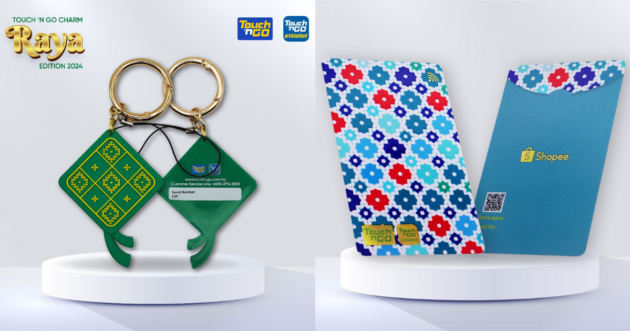
Touch ‘n Go has launhed two special edition TnG Enhanced NFC products for this year’s Hari Raya season.
The first is a TnG Enhanced NFC card with a Raya design. This is offered as an exclusive collaboration with Shopee so you cannot get it at their Lazada store.
The second product is a ketupat-shaped TnG Enhanced NFC charm. It is like a card but in a different shape, so you can use for public transport, parking and TnG lanes at tolls, but the downside is you cannot insert it into a SmartTAG because it is not shaped like a card.
TnG says with every purchase of the ‘ketupat’ charm, RM2 will be contributed to the needy.
TnG has offered various other charm designs in the past such as gingerbread man for Christmas, an ‘oyen’ cat likely just because Malaysians love oyens, and a dragon for Chinese New Year.
If you’re interested you can find the links below:
TnG Enhanced NFC Raya card on Shopee TnG Enhanced NFC Raya ‘ketupat’ charm on Shopee TnG Enhanced NFC Raya ‘ketupat’ charm on Lazada
For the vocal contingent who hate that modern vehicle interiors are filled with screens there’s good news and bad news.
The good news is Nissan’s design chief Alfonso Albaisa told Motor Authority at the 2024 New York auto show that the future isn’t more screens or even screens at all.
The bad news is the executive said eventually the “windshield will be your screen.”
Almost every automaker is working hard to cram as many screens on the dashboard and inside the vehicle as possible. It’s all in the name of content. Albaisa said “people are demanding content and the screen is the only window.” Albaisa said people’s desire for content won’t change. “What’s going to change is you don’t need a screen.”
In the future the entire windshield will be your screen, according to Albaisa. Eventually we’re going to be able to laminate the transparent display made of a thin LED panel right into the glass. The driver will still be able to see through the windshield, and everyone will still be able to consume their content.
While consumers might claim they want to revert to analog elements, the reality is Albaisa isn’t sure how to divorce consumers from their content.According to Albaisa, automakers are now competing with the Apple and Google connected services platforms, as well as content delivery provided by in-car infotainment software.The desire to create their own interfaces is there, but it’s time to just accept the reality. “We cannot compete,” Albaisa said.
Apple, Google, and other platforms can give consumers an experience automakers can’t, Albaisa admitted.
With current technology, we are in a moment in between, when the screen is still a necessary evil. Albaisa predicts it will be about a decade before screens can disappear from the dashboard and everything is just lamented into the windshield.
One challenge is brightness, according to Albaisa. An industry insider who wished to remain anonymous due to involvement with automakers told MA that the two largest hurdles today are cost efficiency and safety. “The windshield is a structural piece of today’s vehicles, and an embedded display would need to pass any of today’s crash and safety standards,” the person said. Albaisa noted some transparent display technology that could be built into windshields has already been shown at CES.
“God bless them, (the tech) might come out sooner,” Albaisa said. He noted that designers and engineers are watching the technology evolve closely as screens are “a bit cumbersome, they seem easy though, but no one really likes them.”
Alabaisa views screens as a wall between the car occupant, be it driver or passenger, and the outside. A transparent windshield with tech integrated right into the glass will eliminate that barrier.
The largest challenge with today’s screens is how to integrate them. According to Albaisa, that will no longer be a problem in the not-too-distant future.
Trip planning can be a daunting task. Flights, insurance, gear, itineraries, accommodation, and so much more all need to be considered and sorted out before you go.
After over close to twenty years of traveling the world, I’ve planned countless trips and vacations for myself, friends, and family, even group tours. In the beginning, it was trial by fire. I learned a lot of lessons the hard way. However, that helped me develop an efficient checklist that ensures I don’t miss anything important during the trip-planning process.
One big question I get asked a lot is when to start planning. To answer that question, this post breaks the planning process down into month-by-month steps so you can plan your next trip with ease.
Here’s how to plan a trip:
12 Months Out: Decide on Your Destination(s)
A lot of people talk vaguely about travel: they never say where they are going, just that they are going. They might talk about it for years before actually departing (if they go at all). But it’s much easier to reach and plan for the goal of “I am going to Paris for two weeks this summer” than “I’m going somewhere.”
If you already have a dream destination in mind, great! If not, here are some posts to help you get started:
But, this far out, the real thing you want to do is start saving money and figuring out your costs. Accommodation and flights are the obvious ones, but how much do restaurants, attractions, and other activities cost? Knowing these costs will allow you accurately estimate how much money you’ll need. Here is how to research costs:
Buy a guidebook
Check out my free travel guides (we break down all costs for each destination)
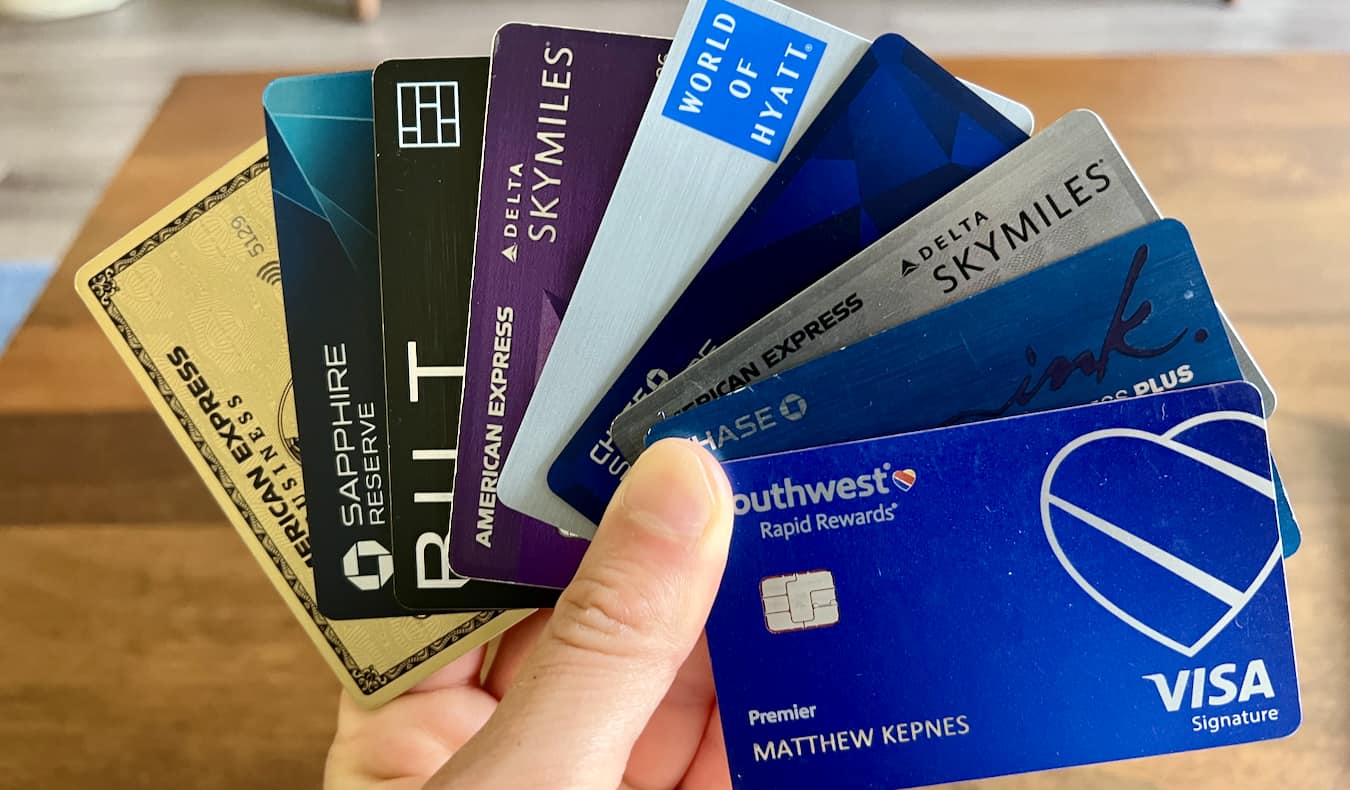
While you’re working to save money, get a travel credit card so you can earn miles and points for free flights and hotel stays. It’s what has kept my costs down and me on the road for so many years.
These days, most cards have welcome offers of 60,000-80,000 points (some can be as high as 100,000) when you meet their minimum spending requirement (generally $2,000-5,000 USD within a 3–6-month time frame). That’s enough miles for a free round-trip economy flight to Europe from the East Coast of North America.
For more information on this subject, check out these posts:
In addition, get a fee-free ATM card. I use Charles Schwab, but there are lots of other banks that don’t charge ATM fees (don’t forget to check your local banks and credit unions too). Here’s how you can avoid bank fees while traveling.
8 Months Out: Visa Requirements, Passports, and Vaccines
While you likely won’t need a visa to your desired destination, you should still check to make sure. If you’re a US citizen, use the State Department’s search tool to learn about your destination’s entry requirements. (Canadians can use this search tool.)
Additionally, make sure that your passport is valid for at least six months after your trip ends. Many countries require this for entry. Passport application and renewal wait times can be long (the standard is 6-8 weeks in the US), so do this as soon as possible.
Also, research if you need any vaccines for your trip as many countries require vaccines to enter (and I don’t mean COVID). You can learn more about country requirements and recommendations at the CDC’s website. They can help you find a clinic near you as well (if you’re in the US).
4-6 Months Out: Book Your Flight
The best time to book your flight is generally around 3-4 months before your departure, or 5-6 months before if you are going during a destination’s peak season. This isn’t a hard-and-fast rule, though, so use it as a guide.
Here are two articles on how to score a cheap flight:
If you’ve signed up for a travel credit card and received your sign-up bonus, use your miles to book your flight and/or hotel. The further out you book, the more availability there will be. Use tools like Point.me and Awayz to help you find the best redemptions on your points (for flights and hotels, respectively).
But even if you aren’t using miles or didn’t find a cheap flight deal, there are still many ways to avoid being the person on the flight who paid the most for their ticket. My two favorite sites for finding cheap airfare are Skyscanner and Google Flights.
3-4 Months Out: Book Your Accommodation
If you’re traveling for under two weeks and have a set schedule, book accommodation for the duration of your trip. If you’re visiting during the high season, it’s also a good idea to book everything in advance. For trips longer than two weeks, I suggest booking only the first couple of nights of your trip. Once there, you may end up wanting to change your plans based on insider advice from other travelers and/or hotel/hostel staff. I prefer having flexibility, so I always just book a few nights and go from there.
Here are my go-to sites when it comes to finding the best deals on accommodation:
Hostelworld – Hostelworld has the largest selection of hostels and is my go-to site for finding affordable hostels.
Booking.com – Booking.com is the best overall platform for finding budget hotels and guesthouses.
Agoda – Agoda has the best results if you’re heading to Asia (though it sometimes has good US deals too).
I recommend checking the cancelation policy of wherever you book. I like having the flexibility to cancel if something comes up.
If you’re on a tight budget or you want to connect with more locals during your travels, consider joining platforms like Couchsurfing or BeWelcome. These communities allow travelers to stay with residents for free as a sort of cultural exchange.
Long-term travelers can also try housesitting or WWOOFing as well, as they both offer free accommodation (in exchange for pet sitting or farm work, respectively).
2 Months Out: Plan Your Activities
Now it’s time for the fun part of travel planning! That means reading books about your destination, learning general travel tips, connecting with online communities, and pre-booking any necessary activities.
Pre-booking ensures you don’t miss out on things that you really want to do on your trip. If you’re going to a popular destination, tours and activities fill up quickly, and if you’re going to a smaller place, activities or tours might only run on certain days and have limited availability.
Either way, Get Your Guide the best place to search for and pre-book activities, tours, and tickets. Local tour operators and attractions can list their offerings on this online marketplace, so you can find tons of stuff here, from food tours to museum tickets with skip-the-line entry.
1 Month Out: Get Travel Insurance
Get travel insurance. That way, these purchases are protected should something happen that makes you cancel your trip.
A lot of people think, “I’m healthy. I don’t need travel insurance.” But travel insurance is much more than just medical protection. It covers you when your camera breaks, your flight is canceled, a family member dies and you have to come home, or something gets stolen. (That’s why you’ll also want to familiarize yourself with any common travel scams to look out for, as well as how to conduct yourself in order to blend in to avoid looking like a target for petty theft.)
Yes, it’s an added expense. But it’s always better to be safe than sorry. I never leave home without it, because I’ve seen firsthand just what can happen on the road.
I never thought I would pop my eardrum while I was scuba diving in Thailand, break my camera in Italy, or get knifed in Colombia.
Unfortunately, bad things can happen when you’re traveling. True, these events are few and far between. But they can cost tens of thousands of dollars. If you’re not prepared to pay out of pocket, buy travel insurance.
Here are some posts on travel insurance to get you started:
I never leave home without travel insurance. You shouldn’t either.
7 days out: Pack!
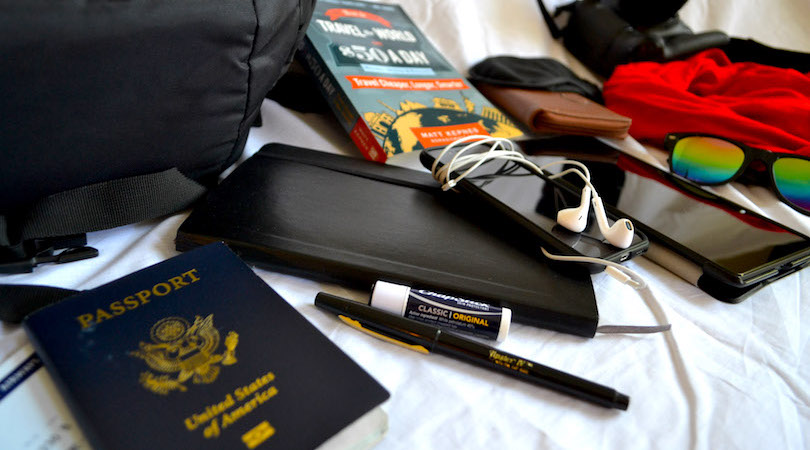
Your trip is almost here, and it’s time to pack! It can be tempting to want to bring everything with you “just in case.” But when it comes to travel, less is more. While what you pack will depend on where you are going, remember that you don’t need to take everything you own. You can buy things you need and do laundry on the road. At the end of the day, you have to carry everything you bring. So bring less!
Additionally, bring any prescriptions you need for the duration of your trip. Try not to rely on filling those abroad (though bring a prescription and doctor’s note just in case).
***
With everything taken care of, it’s time to go on your trip and have fun! Make a list of last-minute items you need to pack the day of (your toothbrush, glasses, phone charger, etc.) and check in online beforehand (you can do so 24 hours in advance). (If you’ve got lounge access through a premium travel rewards card, you might find yourself looking forward to getting to the airport early.)
If you’re feeling nervous, don’t worry. That’s perfectly normal. Feeling anxious or unsure is something every traveler experiences. But you’ve made it this far. Trust your planning and follow your instincts. You’re about to have the trip of a lifetime.
Book Your Trip: Logistical Tips and Tricks
Book Your Flight Find a cheap flight by using Skyscanner. It’s my favorite search engine because it searches websites and airlines around the globe so you always know no stone is being left unturned.
Book Your Accommodation You can book your hostel with Hostelworld. If you want to stay somewhere other than a hostel, use Booking.com as it consistently returns the cheapest rates for guesthouses and hotels.
Don’t Forget Travel Insurance Travel insurance will protect you against illness, injury, theft, and cancellations. It’s comprehensive protection in case anything goes wrong. I never go on a trip without it as I’ve had to use it many times in the past. My favorite companies that offer the best service and value are:
Want to Travel for Free? Travel credit cards allow you to earn points that can be redeemed for free flights and accommodation — all without any extra spending. Check out my guide to picking the right card and my current favorites to get started and see the latest best deals.
Need Help Finding Activities for Your Trip? Get Your Guide is a huge online marketplace where you can find cool walking tours, fun excursions, skip-the-line tickets, private guides, and more.
Ready to Book Your Trip? Check out my resource page for the best companies to use when you travel. I list all the ones I use when I travel. They are the best in class and you can’t go wrong using them on your trip.
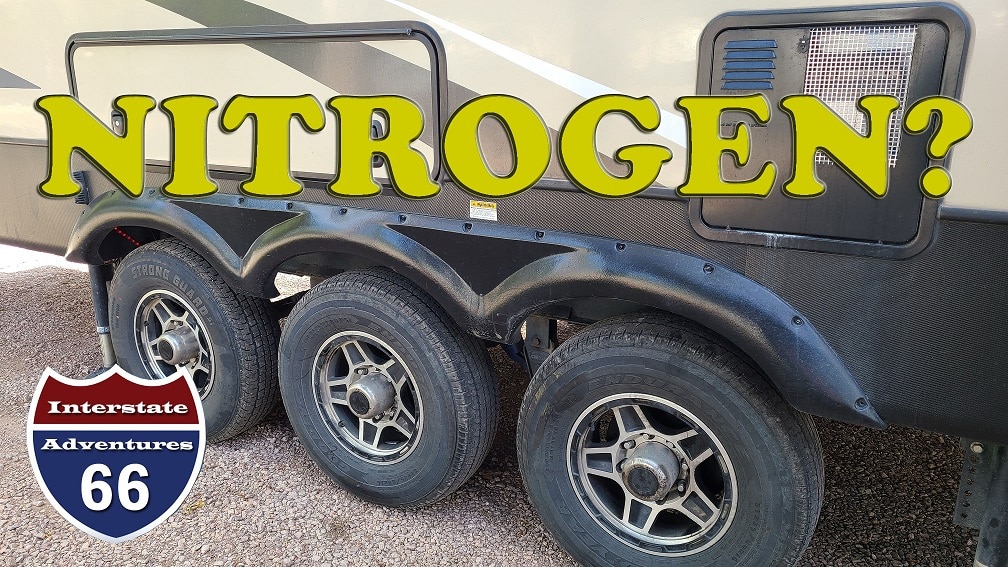
More and more frequently people are asking if we run nitrogen in our RV tires. I must admit, every single time someone would ask me it took me a second to process the question in my head before I could answer. The answer was always ‘No’, but then I got to thinking, ‘Should I be?”. Let’s dive into it.
The mixture of the normal air we breathe, and subsequently run through an air compressor and into our RV tires is around 78% Nitrogen, 21% Oxygen, and 1% other gasses. So no, It won’t cause any harm, but more and more people are paying an upcharge to have pure nitrogen put in their RV Tires.
Why Would You Put Nitrogen In RV Tires?
This trend got its start in the world of Motorsports like NASCAR, Indy, Formula etc. The reason behind it was consistent tire pressures throughout the race, since nitrogen does not escape through the rubber in the same way that regular air will when the tires are under severe temperatures, as well as a more consistent pressure change through the heat ranges.
So, for example if your tires are sitting in the Pit on an 80 degree day, and they get thrown on the fastest car on the super speedway, the pit crew knows exactly what the pressure in them is going to be when they get warmed up. Super critical math at 200 miles an hour in the Florida sun in August. Not so much on your half-ton towable RV.
How Do You Refill It When It’s Low?
There are going to be times when for absolutely no reason at all, or because you clipped a curb with the side wall, that your tire will be low on pressure. Some, not all tire shops will be able to refill the nitrogen in your tire for you, but how far away is it? I have been to all of the 48 Continental United States and can not for the life of me remember seeing one sign on the interstate that said the next gas station had a Nitrogen Filling Station.
You can’t drive it there on a ‘flat’ tire anyway, you’ll destroy it. If you pump that can of fix a flat into it, well, that is a mix of compressed air and green goopy stuff. Definitely not the pure nitrogen we are discussing here today.
What Do I Do?
In my honest opinion, and I am but a simple man, and I just run that good ole free air out of whatever air compressor I can find. No but seriously, this may sound like a ‘my daddy and his daddy before him did it this way’ kinds of logic, and maybe it is, but this is one of those times that those old timers were right.
The best thing you can do is check your tire pressure regularly. If checking your tire pressure is something that you just simply aren’t going to do, you can always get a Tire Pressure Monitoring System that will alert you when one of them is low on pressure.
I actually bought one myself over a year ago when we started living in the RV full time. It still hasn’t been installed. I just added Check Tire Pressures to my ‘Leaving Day Checklist’ and while I’m drinking my coffee in the morning, walk around the RV and pop the tire gauge onto the tires. The added benefit of this, you actually look at your tires so if there is a weird wear pattern on the tread, or a gash in the sidewall, you’re going to know about it before trying to beat the pace car up the entrance ramp onto the freeway.
What’s The Verdict?
I would honestly say the answer is a solid No.
You do not NEED to be running nitrogen in your RV Tires. If the tire shop is going to throw it in for free with the 6 new 10 ply tires you just bought, then sure, why not. It isn’t going to hurt anything to have it in there. But if you are going to have to pay 10 or 20 bucks a tire to have it put in, I personally would save that money for the fuel bill at the gas pump. Or, use it to pick up a good quality tire pressure gauge.
Fans of Ken Block can now purchase an assortment of items linked with the late racing driver and entrepreneur, and it’s all for a good cause.
Items like clothing, signed posters, phone cases, and even parts from cars driven by Block during his rally career and in various Gymkhana videos are up for grabs, with all proceeds going to benefit the foundation 43 Institute, which was founded by Block’s family following his death in a snowmobile accident last year.
The foundation continues support for programs backed by Block, such as providing opportunities in motorsports, action sports, and creative arts for talented individuals, regardless of their financial means.
Popular automotive auction website eBay Motors is handling the sale via its From the Collection program, which typically sells items from prominent designers and influencers. The auction starts today and runs through April 13, 2024.
Ken Block pilots the Audi S1 E-Tron Quattro Hoonitron in Electrikhana 2
Among the highlights are some wheels from the Hoonicorn that starred in Gymkhana 10 and the Hoonitron that starred in Electrikhana 1 and its sequel, which was Block’s final Gymkhana video. Also available are a hood, front fascia, and race suit from Block’s 2015 Global RallyCross Championship campaign, plus a trike with a custom livery.
In addition to Block’s former items, there are also some limited-edition clothing designed in collaboration with Block House Racing, the racing team run by Ken Block’s family and friends.
Previously, a Subaru rally car piloted by Block and a Ford F-150 Raptor riding on tracks that he commissioned were also put up for sale, though both vehicles were sold by private individuals.
After 12 hours in the air, Melbourne, Australia beckoned. Despite the jet lag, my excitement propelled me forward. With the taste of a hastily devoured burger still lingering, I set my sights on SouthernBM. No time to waste – the Speedhunting begins now.
This journey all started with a Bimmer buddy of mine, who bombarded my social media feed with images of SouthernBM’s Andrew Brien showing off a jaw-dropping green E92 BMW M3 racer and a vintage BMW 3.0 CSL. After enduring what felt like endless shares and messages, my curiosity was thoroughly piqued. I knew I had to make a pilgrimage from my home in Shanghai, China to the Southern Hemisphere’s ultimate independent BMW sanctuary.
The excitement kicked in as I turned onto Sullivan Street in Moorabbin. It might as well be dubbed ‘BMW Boulevard’ given the array of Bayerische Motoren Werke models parked roadside, many of the M variety.
Stepping through the gates of SouthernBM, I was warmly greeted by Eric Wang, who ushered me into the Southern Classic Garage for a tour.
Connected to the main workshop, this area housed an impressive array of M cars, Alpinas, and classic BMW models. These cars, some belonging the company heads, and others brought in by clients for maintenance, rebuilds and refurbishments, showcased the rich history and passion for craftsmanship within SouthernBM’s walls.
My eyes immediately fixed on the M3 racer and the iconic 3.0 CSL.
There was little time for prolonged admiration, though. My feet led me towards the M5 with its hood popped open. Just like the adjacent E92 in matte Frozen Grey, both cars boast an SBM-developed supercharger kit.
Thanks to impeccable lighting and a pristine environment, the seemingly haphazard arrangement of cars inside SouthernBM was nothing short of ingenious. Vehicles were strategically positioned on different levels, creating a captivating visual spectacle. Shootingthis dynamic space filled me with exhilaration.
It honestly made me feel like I’d been transported into a time-bending fusion of the 1970s and 2020s. The space exuded a charm that even surpassed that of the BMW Museum for me, evoking a sense of nostalgia and wonder.
As I stepped into the workshop, I saw Eric’s M2 Competition. This car, his daily track machine, even has its own dedicated Instagram account, a testament to his passion and dedication.
It may have been a real journey to get here, but visiting SouthernBM filled me with a renewed appreciation for the artistry and dedication that goes into every BMW creation. I left, eagerly anticipating my next Speedhunting adventure.
How To join the IATS program: We have always welcomed readers to contact us with examples of their work and believe that the best Speedhunter is always the person closest to the culture itself, right there on the street or local parking lot. If you think you have what it takes and would like to share your work with us then you should apply to become part of the IAMTHESPEEDHUNTER program. Read how to get involved here.
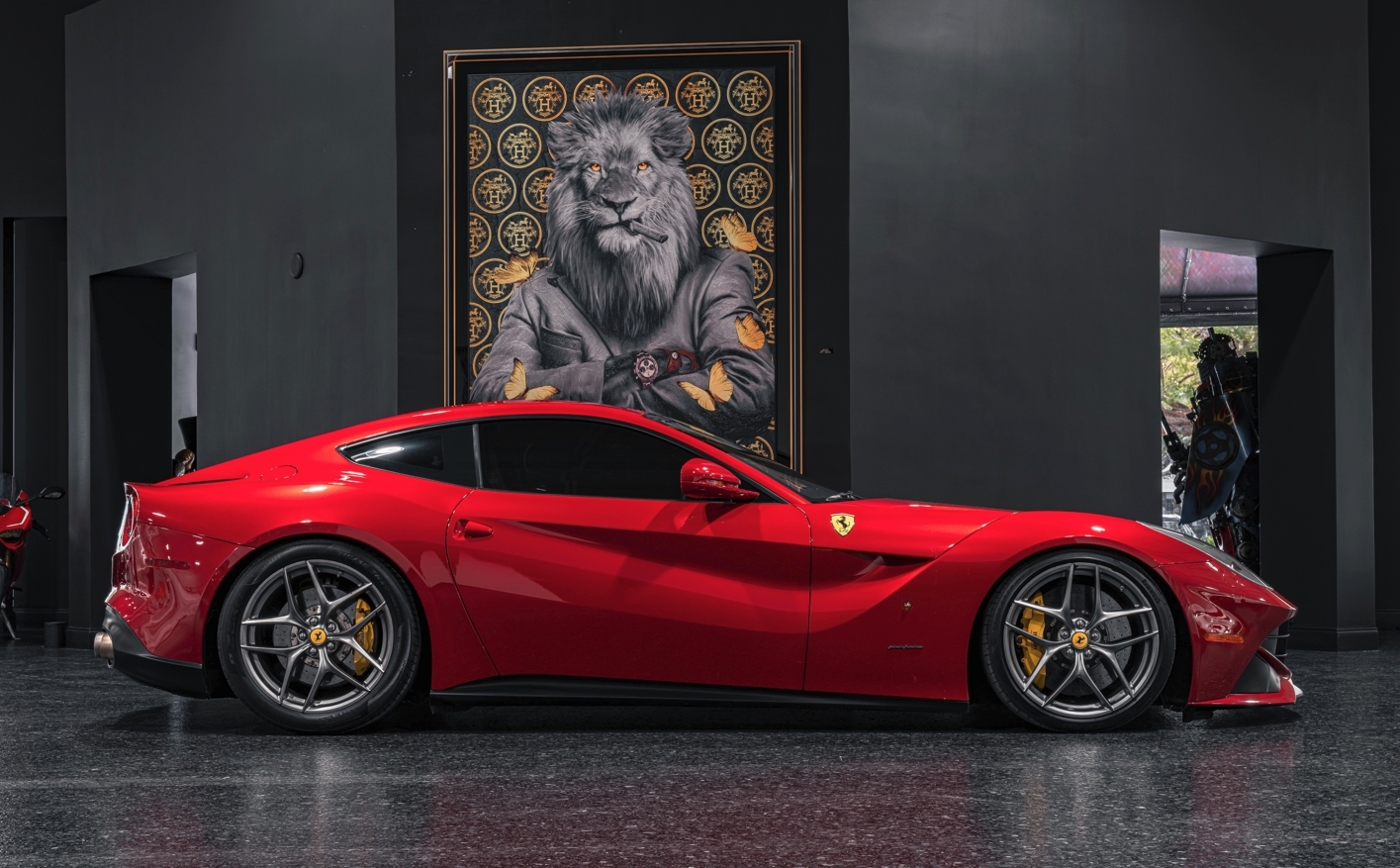
When the 2012 Ferrari F12 Berlinetta was introduced, it was a big deal for Ferrari, stepping in after the beloved 599 GTB Fiorano. This wasn’t just about bringing in a new car; it was about setting new heights for what a sports car with its engine in the front and power in the back wheels could do.
As the main star of Ferrari’s lineup at that time, the F12 mixed the latest tech with classic Ferrari looks. It had big shoes to fill after the 599, aiming not just to match but to wow, combining the best of new technology with that unmistakable Ferrari charm.
Beneath its elegant sculpted hood lies a powerhouse: a naturally aspirated 6.3-liter V12 engine, which was the most powerful road-going engine Ferrari had ever produced up to that point.
Delivering 730 hp, the F12 was capable of accelerating from 0 to 60 mph in just 3.1 seconds, with a top speed of over 210 mph, making it one of the fastest cars grand touring cars at the time.
Beyond its amazing performance, the F12 was praised for its handling dynamics, which were the result of meticulous aerodynamic design and advanced chassis development. This combination ensured that the car not only delivered straight-line speed but also the agility and precision on winding roads and race tracks.
The design of the F12 speaks the language of Ferrari’s rich heritage, with sleek aerodynamics, sharp lines, and the brand’s signature styling cues, making it unmistakably a Ferrari. The F12’s design merges form and function seamlessly, starting with its front bumper that proudly displays the Ferrari stallion emblem, encircled by slats that channel air straight into the engine lurking behind.
The car’s doors are subtly indented, a deliberate design choice to improve airflow and enhance aerodynamics. This thoughtful styling is brought full circle with the iconic circular taillights that hallmark its rear, creating the F12’s aesthetic and performance ethos.
Inside, the cabin reflects a balance between comfort and performance, incorporating ergonomic design and advanced technology that draws inspiration from Ferrari’s relationship with Fiat, enhancing its practicality for daily driving without compromising on the thrill of high-performance driving.
Throughout its production years, the F12 found itself in a competitive rivalry with the Lamborghini Aventador. However, despite its similar price point, the F12 stands out in its category with its naturally aspirated V12 engine and its grand tourer credentials. Additionally, the F12 appeals more to those who seek a more understated presence, preferring to attract less attention than the Aventador typically does.
Model Changes (Breakdown by Year)
2012 Ferrari F12
The 2012 model marked the debut of the Ferrari F12 Berlinetta, replacing the Ferrari 599 GTB Fiorano.
Powered by a 6.3L V12 engine that churns out an impressive 730 hp, it stands out for its remarkable performance.
Its low, sleek profile unmistakably asserts a dominant presence on the road. With a starting base price of approximately $330,000, it positioned itself competitively against the Lamborghini Aventador.
2013 Ferrari F12
For 2013, Ferrari carried forward the groundbreaking legacy of the F12berlinetta from its 2012 introduction, maintaining its brand’s prestige without significant updates in performance, design, or technology.
2014 Ferrari F12
In 2014, while the Ferrari F12 remained unchanged from the previous year, Ferrari introduced an element of exclusivity and personalization through its Tailor Made program. This initiative allowed owners to customize their F12 with bespoke touches, offering an array of personalization options that ranged from unique color combinations, interior materials, and trim details.
Though these customizations did not extend to mechanical changes, the program enabled F12 owners to create a vehicle that was uniquely theirs, further enhancing the allure and prestige of owning one of Ferrari’s most powerful and elegant models.
This move by Ferrari underscored the brand’s commitment to not only delivering unparalleled performance but also catering to the individual tastes and desires of its clientele, ensuring that each Tailor Made F12 was as distinct and unique as its owner.
Despite the absence of new variants or significant updates to the car’s performance or design, the introduction of the Tailor Made program in 2014 represented a significant enhancement to the F12’s appeal, offering an added layer of exclusivity and personalization to an already outstanding vehicle.
2015 Ferrari F12
In 2015, Ferrari introduced a significant update to the F12 lineup with the unveiling of the F12 TDF (Tour de France), a track-focused variant that took the already great F12 to new heights of performance and driving dynamics.
Limited to just 799 units, the F12 TDF was a tribute to Ferrari’s historical dominance in the Tour de France automobile race, embodying the spirit and performance that Ferrari cars exhibited on those legendary roads.
The F12 TDF boasted a large upgrade in power, with its 6.3-liter V12 engine now producing an astounding 769 hp, up from the 730 hp found in the standard F12. This increase in power, combined with a significant reduction in weight, allowed the F12 TDF to offer an even more exciting driving experience.
The weight savings were achieved through the extensive use of carbon fiber and other lightweight materials, both inside and out, which not only reduced the car’s overall mass but also improved its power-to-weight ratio dramatically.
Aerodynamically, the F12 TDF featured substantial enhancements over the regular F12. Ferrari’s engineers reworked the car’s exterior to include redesigned aerodynamic elements, such as a larger splitter, new aero blades, and louvers on the fenders, which increased downforce without significantly affecting the drag coefficient.
These modifications allowed the F12 TDF to achieve better stability at high speeds and more precise handling, especially on the track.
Driving the F12 TDF was described as an unparalleled experience, thanks to its performance upgrades and aerodynamic improvements. The car’s agility and responsiveness were significantly enhanced, allowing for tighter cornering and more aggressive acceleration.
The F12 TDF’s dynamic capabilities were further complemented by its revised suspension setup and the introduction of rear-wheel steering, which improved grip and stability during high-speed maneuvers.
In comparison to the regular F12, the F12 TDF was a more extreme, track-focused machine that pushed the boundaries of what was possible in a front-engined, rear-wheel-drive sports car. It retained the essence of the F12’s design but added a level of performance and exclusivity that appealed to the most discerning Ferrari enthusiasts and collectors, making it a fitting homage to the brand’s racing heritage.
Starting price for the F12 TDF was $490,500.
2016 Ferrari F12
In 2016, the Ferrari F12’s journey of refinement and excellence saw its focus shift towards offering clients more personalized customization options and enhancing the car’s interior luxury and comfort.
While the core mechanical specifications and the exterior design largely remained unchanged, Ferrari provided its clientele with an expanded palette of customization options, allowing for a more tailored and individual expression of style and luxury.
The minor updates in options included a broader range of exterior colors, new wheel designs, and perhaps more choices in terms of brake caliper colors, allowing owners to make their F12berlinetta distinctively theirs.
Ferrari’s Atelier program offers an extensive selection of materials, finishes, and details, enabling buyers to work closely with the manufacturer to create a vehicle that perfectly reflects their preferences and lifestyle.
Interior enhancements for the 2016 F12 focused on elevating the level of luxury and technological convenience within the cabin. This involved the introduction of new leather or Alcantara upholstery options, and more elaborate stitching patterns to keep the F12 at the cutting edge of automotive interior design.
Additionally, 2016 has seen updates to the F12’s infotainment system, offering improved navigation, connectivity, and audio system options.
2017 Ferrari F12
In 2017, marking the end of the Ferrari F12’s production and Ferrari’s 70th year in the business of creating some of the world’s most coveted cars, the company rolled out special liveries and editions for the F12. These 70th Anniversary Editions were a tribute to Ferrari’s rich heritage and its unbroken lineage of automotive excellence and only 70 of these F12’s exist.
The 70th Anniversary Editions introduced for the F12 featured unique customization options that went beyond the standard offerings. These included a range of specially designed liveries that paid homage to iconic Ferraris from the past, allowing owners to own a piece of Ferrari history.
Each livery was inspired by a story or a specific model that had left an indelible mark on the brand’s legacy, offering a blend of Ferrari’s racing heritage and its prowess in creating road cars that are as beautiful as they are powerful.
In terms of interior enhancements, these special editions included exclusive upholstery options, bespoke trim elements, and commemorative badging, emphasizing the uniqueness of the vehicle and the significance of Ferrari’s 70th anniversary.
Ferrari F12 Common Problems
Despite what one might assume about its mechanical intricacies, the Ferrari F12 stands as one of the most dependable V12 grand tourers ever produced.
Many people have driven their Ferrari F12s for extended distances, many with higher miles, proving its reliability.
However, it is essential to keep in mind that all cars, even supercars, can have issues and it is crucial to perform a Pre-Purchase Inspection (PPI) from an authorized dealer or experienced independent mechanic to reveal all issues.
Wonky Starter Motors: Some Ferrari F12 models have experienced issues with their starter motors, which can result in unreliable starting performance. This problem may manifest as difficulty in starting the engine or inconsistent start times, potentially due to electrical or mechanical faults within the starter system.
Rough-Shifting Transmissions: The F12’s 7DCL750 transmission, known for its quick and smooth gear changes under optimal conditions, has been reported in some cases to shift roughly. This issue can be particularly noticeable at low speeds or during downshifts. Additionally, there have been instances where this transmission may leak fluid, a condition that could lead to operational inefficiency and require professional repair to prevent further mechanical damage.
Peeling Paint: Aesthetic concerns have arisen with the F12 regarding its paintwork, with reports of paint peeling in certain areas. This issue detracts from the vehicle’s otherwise impeccable appearance and may be due to factors such as improper application during manufacturing, environmental stresses, or the quality of the paint used.
Leather Shrinkage on Dashboard and Rear Sunscreen: The Ferrari F12’s luxurious interior is not without its flaws. Owners have noted that the leather on the dashboard and the rear sunscreen can shrink over time. This shrinkage not only affects the visual appeal of the interior but can also lead to cracking and damage to these leather components, likely caused by exposure to sunlight and temperature variations.
Creaking from Torque Bolts in Rear Driveshaft: There have been reports of creaking noises emanating from the rear driveshaft area, specifically linked to the torque bolts. This noise can indicate that the bolts are not maintaining their proper tension, potentially affecting the driveshaft’s alignment and operational smoothness, and might require retightening or replacement of components to resolve.
Corrosion at Rear Mesh: Corrosion issues have been identified at the rear mesh of some F12 models. This problem can compromise not just the vehicle’s aesthetics but also the integrity of the mesh itself, which is crucial for protecting underlying components from debris while ensuring adequate ventilation. Corrosion in this area can be attributed to moisture accumulation and environmental exposure, necessitating regular inspection and maintenance to prevent deterioration.
Each of these issues highlights the importance of regular, comprehensive maintenance and prompt attention to any signs of wear or failure to ensure the Ferrari F12 remains in peak condition.
Recalls
2013-2017 F12 Berlinetta, 2017 F12 TDF vehicles
Service brakes, hydraulic (Recall no. 22V536000)
The brake fluid reservoir cap may not vent properly, creating a vacuum inside the brake fluid reservoir, and resulting in a brake fluid leak that may lead to a partial or total loss of brake function.
2015-2017 F12 Berlinetta, 2016 F12 TDF vehicles
Air bags (Recall no. 19V411000)
The air bag Electronic Control Unit (ECU) may malfunction, possibly causing the non-deployment or improper deployment of the air bags and/or seat belt pretensioners.
2017 Ferrari F12, 2016-2017 Ferrari F12 TDF vehicles
Air bags: Frontal: Passenger side: Inflator module (Recall no. 19V006000)
These vehicles are equipped with certain air bag inflators assembled as part of the passenger frontal air bag modules used as original equipment or replacement equipment. In the event of a crash necessitating deployment of the passenger frontal air bag, these inflators may explode due to propellant degradation occurring after long-term exposure to absolute humidity and temperature cycling.
2013 Ferrari F12 vehicles
Air bags (Recall no. 18V040000)
These vehicles are equipped with certain air bag inflators assembled as part of the passenger frontal air bag modules used as original equipment or replacement equipment. In the event of a crash necessitating deployment of the passenger frontal air bag, these inflators may explode due to propellant degradation occurring after long-term exposure to absolute humidity and temperature cycling.
Ferrari F12 Berlinetta vehicles manufactured December 19, 2014, to April 29, 2015
Air bags: Frontal (Recall no. 15V433000)
The affected vehicles may be equipped with a driver side air bag module that was improperly assembled. This can cause the air bag to deploy in a rotated orientation.
Maintenance and Ownership Costs
While historically, maintaining a Ferrari V12 has been quite costly, the F12 is regarded as having comparatively modest maintenance needs.
However, it is important to remember that regular maintenance and repairs will still be necessary, and the costs can vary depending on whether you take your car to a dealer or an independent mechanic.
Here is the suggested service schedule and intervals per Ferrari:
ANNUAL OR EVERY 6,000 MILES (Minor Service):
Replace Engine Oil & Filter
Replace Brake Fluid
Brake Inspection
Indicator Light check
Inspection of Transmission & Differential Assembly
Top-Up Power Steering Fluid if Necessary
Inspect Transmission Oil & Top-Up if Necessary
Inspect Front & Rear Suspension Systems
Inspection of Tire Wear
EVERY 3 YEARS OR 25,000 MILES (Includes 6,000 Mi Service Plus):
Replace Transmission Fluid
Replace Spark Plugs
Replace Air Filter
Replace Coolant
Tightening of Engine & Transmission Mounts & Fasteners
Replace Auxiliary Belts
EVERY 6 YEARS OR 50,000 MILES (Includes 25,000 Mi Service Plus):
Replace Water Pump
Replace Auxiliary Belts
Check for wheel bearing play, Replace if necessary
Here is a rough estimate of typical service costs associated with the Ferrari F12:
Oil Change – The Ferrari F12berlinetta requires a higher grade of oil and a more extensive labor process, costing approximately $800 for an independent specialist and upwards of $1,200 at a Ferrari dealership.
Minor Service – This service generally includes an oil change, replacement of the cabin air filter, and engine air filter. For the F12, due to its high-performance specifications and the quality of parts required, you can expect to pay around $3,000 at a Ferrari dealership.
Major Service – In addition to the items covered in a minor service, major service for an F12 typically includes the replacement of spark plugs, a brake system flush, and a transmission fluid flush. Given the Ferrari’s specialized needs and parts, this service can cost around $5,000 when performed at a Ferrari dealership.
Tires – A set of premium, high-performance tires suitable for the F12, such as the Michelin Pilot Super Sport, could cost in the region of $2,500 to $3,000 due to the car’s specific size and performance requirements.
Brakes – The Ferrari F12 uses carbon-ceramic brake rotors, designed to last the vehicle’s lifetime under normal driving conditions. However, the cost for a set of aftermarket OE-equivalent brake pads can run about $1,000 to $1,500.
Clutch – The F12 features a dual-clutch transmission engineered for high performance and longevity. It is designed to last the life of the car under normal use, so typically there would be no additional expenses for clutch or flywheel service.
Please note that these costs can vary based on location, the specific model year of the F12, and the extent of use it has seen. It is always recommended to have these services performed by qualified Ferrari technicians to maintain the car’s performance and value.
Options List
When it comes to purchasing a Ferrari used, it all comes down to three key points: Options, options, and options.
When considering the resale value of the Ferrari F12, certain features are highly sought after by potential buyers. Among these, the carbon fiber steering wheel, carbon bucket seats, and Scuderia shields are almost universally coveted. These items tend to stand at the top of the list for enthusiasts looking to acquire a pre-owned F12.
Further enhancing the appeal, options such as the carbon fiber interior and exterior trim, the aforementioned carbon fibre steering wheel, the Homelink mirror, a front lift system, and a parking camera are often the first checked boxes on a buyer’s wish list. These features not only contribute to the aesthetic and functional value of the vehicle but also signify a well-optioned F12.
In addition to these primary options, there are secondary features that, while not as critical, are still desirable for adding an extra touch of luxury or personalization. These include the iconic prancing Horse stitched on the headrests, black inserts for the outer mirrors, and a selection of optional wheel designs.
Thee details may not be deal-breakers but they do make the vehicle stand out and can tip the scales for buyers looking for a particularly well-appointed example of the F12.
Finally, a handful of F12 customers also went through the Atelier and Tailor Made program by Ferrari. The Atelier program offers an extensive range of additional customization options for the Ferrari F12 that go beyond what you might find in the standard dealer configurator.
These options allow for a higher degree of personalization and access to unique features that are not typically offered through the standard purchasing process.
On the other hand, the Tailor Made program takes customization to the highest level, providing an expansive array of personalization choices that stretch the boundaries of what’s possible. This program is akin to having a blank canvas where almost any vision of personal taste can be brought to life.
It offers an extensive selection of paints, fabrics, leathers, and other materials, enabling customers to create a truly bespoke Ferrari that reflects their individual style and preferences to the finest detail.
Because of the strict approval requirements, cars that went through the Atelier and Tailor Made program are considered highly desirable.
These cars usually command a higher premium in the market due to their exclusivity and uniqueness.
Here are some examples of option changes
Some of the more desirable options to look for include:
Carbon fibre package (interior, exterior)
Carbon fibre steering wheel
Carbon bucket seats
Scuderia shields
Front lift
Parking camera
Atelier or Tailor made options
2015 Ferrari F12 options list
Ferrari F12 Price and Values (F12 TDF)
The Best Ferrari F12 to Buy
When it comes to buying a F12, there are a few key factors to consider that can affect the car’s long-term value.
For F12s that will most likely continue to climb in value will be the special edition F12 TDF. Although they are already very expensive, they are extremely desirable and regularly traded for high dollar value with no sign of depreciation.
F12 70th Anniversary Editions are also quite rare and desirable, as every single one of the 70 cars built is all spec’d differently in unique heritage colors and interior options, they are a safe choice to purchase.
Despite the Ferrari F12 undergoing only a few minor updates and changes throughout its production years, each model released is considered a solid purchase. The F12 has consistently maintained a high standard of quality and performance, ensuring that every iteration, from its initial release to the final models, represents a robust and reliable choice for enthusiasts and collectors alike.
Whether early or later models, the F12 stands as a testament to Ferrari’s commitment to engineering excellence, making any of them a worthy addition to a connoisseur’s garage.
In the current market, as cars increasingly adopt hybrid technology, collectors and enthusiasts are developing a heightened appreciation for naturally aspirated V12s, making them highly desirable.
In addition, the condition and mileage of the car are also important factors to consider when buying an F12. The ones that are more likely to retain their value in the long run and will fetch the most money will be a well-maintained car with low mileage.
Therefore, it’s important to do your research, compare prices, and look for well-maintained cars if you are considering purchasing an F12 with the goal of not losing any money.
Conclusion
In summary, with a price tag starting at around $240,000, the Ferrari F12 emerges as an excellent contender for those seeking their grand touring supercar experience. It’s not only reliable but also impresses with its performance and the symphony of its engine. The F12 distinguishes itself as the supercar of choice for the discerning gentleman.
While the Lamborghini Aventador may be a viable alternative, the F12’s blend of exhilarating performance and refined elegance places it in a league of its own.
Ultimately, if you’re in the market for a supercar that offers both grand touring luxury and thrilling performance, the F12 should be at the top of your list, promising a decision that’s as rewarding as it sounds.
Car Hacking Shortcuts
Make sure the car has a front lift system.
Spec matters: Look for any F12 with Atelier or Tailor made options
Finally! For 15 years, I had been waiting for someone to take a Honda NSX and give it the engine orientation it should have always had.
At the 2009 Tokyo Auto Salon, Mugen unveiled the NSX-RR Concept – a wide-body, Super GT-inspired road version of the NSX-R. The ‘Double-R’ was 150mm wider, had contemporary design cues, and a redesigned cabin with modern switchgear and red Alcantara as far as the eye could see. But the defining aspect of the car was that Mugen turned its engine 90 degrees counterclockwise to mount it longitudinally, just as it did with its race cars.
I visited Mugen to shoot the NSX-RR, and ever since then it has remained in my mind as the best incarnation of the NSX. Ever.
However, there was one big problem with the car – it was nothing more than a mock-up. There was no transmission, let alone even exhaust headers. It was just a big old tease for a car show. This was a huge miss as far as I was concerned. Even with a stupid price tag, had Honda with Mugen built 30 NSX-RRs, I guarantee they would have sold out right away. But I digress.
Fast forward 13 years, and I find myself just outside of Ferrara in northern Italy to look at another unique NSX.
Alan Simoni, the owner of the automotive accessory company Simoni Racing and a European time attack racer, has done what Mugen could not do.
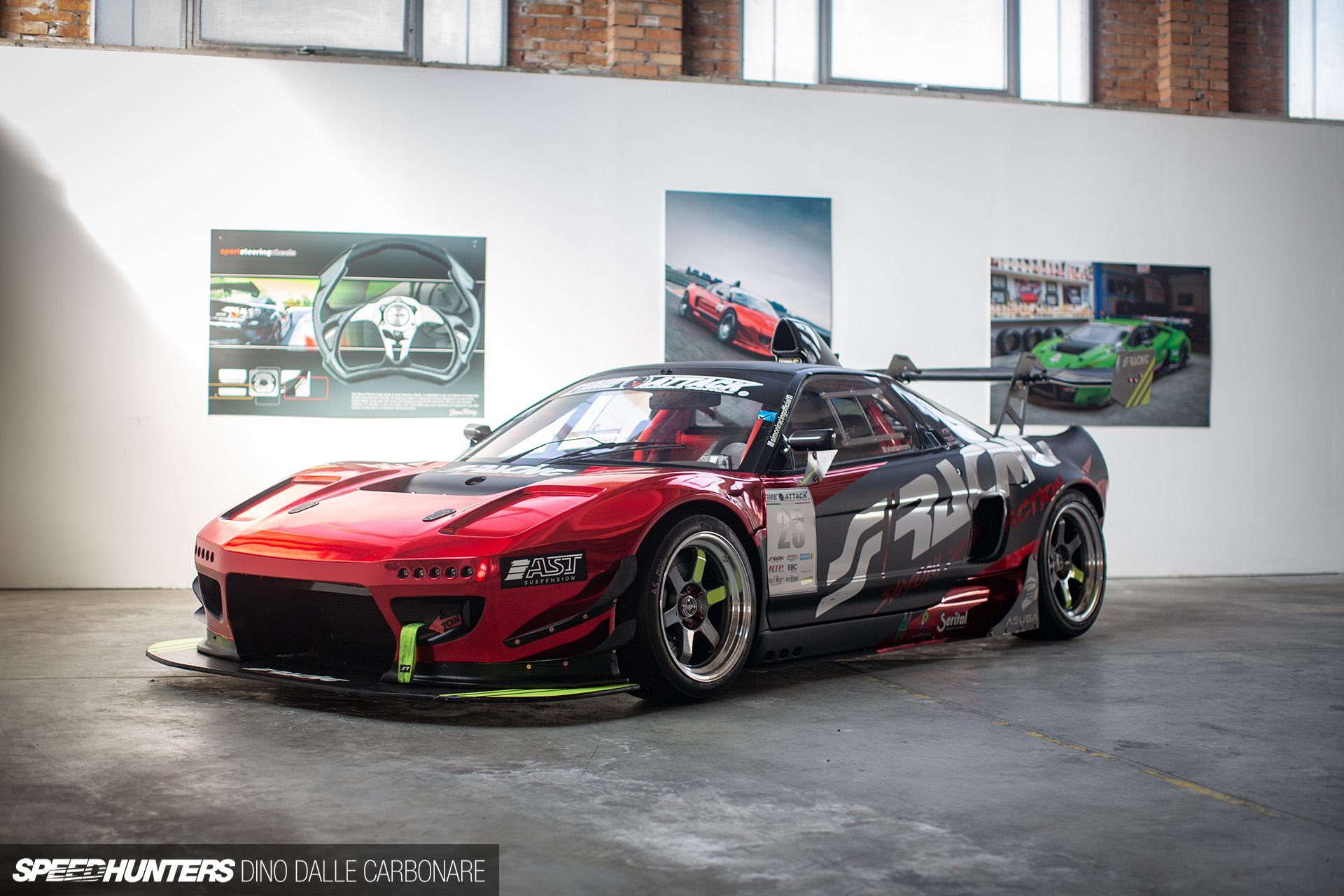
In his attempt to create the best possible interpretation of the original NSX – and following countless preceding build stages – Alan fitted a sequentially-shifted transaxle transmission and turned the engine 90 degrees to match.
Before anyone says that Esprit in Japan has already done this – which is true – remember that they opted for forced induction, which I feel takes away from what Mugen wanted to achieve with a potential NSX-RR.
Let’s break down what the NSX called La Rossana is all about…
Starting with a completely stock NSX donor car that Alan drove around for a while before starting the project, first up was the exterior makeover.
With his love for all things JDM, Alan opted for a complete Rocket Bunny conversion. This comprehensive kit replaces the factory front end with a one-piece cowl incorporating the bumper, hood and fenders. Surprisingly, the kit dictated that the rear end be shortened by cutting away a sizable section of the chassis/body.
Yep, there was no going back.
For balance, Alan went with a staggered wheel setup. The RAYS Volk Racing TE37Vs measure 17×9-inch up front and 18×10-inch at the rear, all shod in racing slicks.
The Time Attack series in Italy and Europe allow slicks, something that can’t be said for Japan. In the motherland, everyone still runs semi-slicks to remain connected with the motorsport’s street car origins.
The 17-inch front wheels dictated a more compact brake caliper, hence AP Racing 4-pots behind the 6-spokes. The rear end features 4-pot Brembos.
While the shorter rear end of the Rocket Bunny conversion does alter the NSX’s factory proportions, Alan has balanced it back up with a bespoke carbon fiber GT wing. The wing provides functional performance and the stays that prop it up a spot for a touch of branding.
Using Simoni Racing parts, Alan finished things off with a custom taillight setup using red LED strips.
Let’s talk about the engine, which visually starts with a GT-inspired intake that scoops up air from over the roofline and directs it right into the airbox on top of the velocity stacks. At speed, this setup creates a ram-air effect that forces air into the engine with positive pressure, resulting in more response and power.
At the heart of it all is a custom dry-sump C30A – one of the most heavily modified C-series engines I have ever seen. The build is based on a Brian Crower 3.5L stroker kit, which boasts forged pistons and titanium connecting rods. The cylinder heads were given a once over and fitted with Toda Racing cams, larger titanium intake valves and Inconel exhaust valves. Once scooped up by the snorkel, the air is forced into six 48mm drive-by-wire-controlled throttle bodies, where it meets fuel supplied by six 750cc injectors.
The ignition system features Audi R8 coils, while engine management is handled by a Life Racing F88RS ECU.
This highly refined setup pushes 423hp at 8,250rpm, with a hefty 407Nm hitting at 5,500rpm. Given the car weighs just over a metric ton, the performance is there.
The 90-degree rotated C30A has been mated to a Sadev SL-90 6-speed sequential feeding drive through an AP Racing clutch. A cradle/subframe had to be designed and fabricated to align and bolt the transaxle in place.
This is an NSX that means serious business.
The custom exhaust system has been routed to poke through the Rocket Bunny rear bumper.
On the handling side of things, Alan uses 3-way adjustable AST coilovers. Furthermore, the suspension links, bushings and sway bars have been swapped for race equivalents that provide crisp feedback through corners.
You might have picked up on a few nods to Ayrton Senna throughout the car. The late Formula 1 legend helped Honda refine the chassis and handling during the NSX’s development stage.
Let’s take a look inside the cabin to see another interesting angle of this project.
Swing the doors open, and it is obvious that no corners were cut with the roll cage. The bars stretch through into the engine bay to triangulate all critical points.
What impressed me the most was seeing the engine had been brought forward around 200mm for optimal weight distribution.
This called for a repositioned firewall, which you can see above with all the heat shielding.
The Sadev transmission is air-shifted, with the compressor mounted in front of the fire suppressant tank. The ECU has been programmed for flat shifting, allowing Alan to keep his right foot planted on the Tilton throttle pedal as he machine-guns through the gears.
The Sadev transmission is air-shifted, with the compressor mounted in front of the fire suppressant tank. The ECU has been programmed for flat shifting, allowing Alan to keep his right foot planted on the Tilton throttle pedal as he machine-guns through the gears.
A Simoni Racing full race bucket set, custom-molded to Alan’s body, provides support and safety.
Alan has reached the higher limits of what his NSX can achieve and is currently sitting at a bit of a crossroads. Does he push things even further with turbocharging, or just call it a day and start a whole new project?
It’s not an easy choice to be faced with, but whatever the outcome, La Rossana will go down in history as one of the most epic NSX builds ever.
Dino Dalle Carbonare Instagram: dino_dalle_carbonare dino@speedhunters.com
Simoni Racing ‘La Rossana’ NSX
Numbers: Max Power: 423hp at 8,250rpm, Max Torque: 407Nm at 5,500rpm, Weight: 1,050kg/2,315lbs
Engine: Honda C30A V6 DOHC VTEC, Brian Crower 3.5L stroker kit, CP-Carrillo aluminum forged pistons, titanium connecting rods, Toda Racing cams, Toda Racing cam pullies, 36mm titanium intake valves, AS Motorsport Inconel exhaust valves, ScienceofSpeed titanium LMA kit, aluminum airbox with Sprint Filter panel filter, six 48mm throttle bodies with custom Evosystem drive-by-wire control, Life Racing F88RS ECU, CTS Maranello headers and custom exhaust system with Simoni Racing exhaust tips, Manitor Sport silicone radiator Hose kit, Setrab oil cooler, oil pan baffle, AP Motorsport aluminum radiator, Autotecnica Motori pulley system, 750cc/min fuel injectors, lightweight battery kit, high pressure fuel regulator, 2x Bosch Motorsport 044 fuel pumps, custom 35L fuel tank, NGK Racing spark plugs, Audi R8 ignition coils, Autotecnica Motori custom dry sump
Driveline: Sadev SL-90 6-speed sequential transmission (air-shifted) with steering wheel paddles, AP Racing clutch, lightweight flywheel
Suspension/Brakes: AST 3-way coilovers, ScienceofSpeed toe Links and rear beam bushings, Cedar Ridge front pivot clamps, ScienceofSpeed adjustable anti-sway bars front/rear, Cedar Ridge sway Bar end links front/rear, Downforce front brake air deflector, AP Racing 4-pot front calipers with 330x28mm floating discs, Brembo GT 4-pot rear calipers with 328x28mm floating discs
Exterior: Full Rocket Bunny body kit – front hood conversion, front lip spoiler, twin front canards, side skirts, side canards, rear fenders, rear bumper, rear diffuser, Simoni Racing carbon GT Wing with swan neck pedestals, Simoni Racing red chrome wrap film, Route Ks GT air intake scoop, Kite rear fender side ducts, Simoni Racing front tow strap, Simoni Racing rear tow ring, Plastics 4 Performance full Lexan window kit, Craft Square carbon fiber side mirrors, Simoni Racing LED tail lights, Seibon carbon fiber doors
Interior: FIA-spec roll cage, Simoni Racing FIA bucket seats and mounts, custom carbon center console, Simoni Racing 6-point FIA harnesses, Simoni Racing leather and carbon 350mm steering wheel, Simoni Racing quick release, Simoni Racing hub kit, Plex Tuning display logger with GPS, OMP fire extinguisher system, Tilton 600 Series pedal box with drive-by-wire, remote brake bias adjuster, Simoni Racing rear view camera
The technical storage or access is strictly necessary for the legitimate purpose of enabling the use of a specific service explicitly requested by the subscriber or user, or for the sole purpose of carrying out the transmission of a communication over an electronic communications network.
Preferences
The technical storage or access is necessary for the legitimate purpose of storing preferences that are not requested by the subscriber or user.
Statistics
The technical storage or access that is used exclusively for statistical purposes.The technical storage or access that is used exclusively for anonymous statistical purposes. Without a subpoena, voluntary compliance on the part of your Internet Service Provider, or additional records from a third party, information stored or retrieved for this purpose alone cannot usually be used to identify you.
Marketing
The technical storage or access is required to create user profiles to send advertising, or to track the user on a website or across several websites for similar marketing purposes.