To get this done, two auxiliary channels were opened on April 1. One runs along the northeast section of the channel, and one runs along the south end of the channel, according to U.S. Coast Guard Captain David O’Connell, who spoke with CBS News. The north side would accommodate boats that need 10 feet of water or less to operate, while the south side would fit ships that need up to 14 feet. The Coast Guard is working to remove pre-existing debris along the south side of the channel.
One of the channels will be marked with government-lighted aids to navigate and will have a controlling depth of 11 feet, a 264-foot horizontal clearance and a 96-foot vertical clearance.
Right now, the two temporary channels will be used mainly for response vessels, commercially essential vehicles and those working on savage efforts. There are further plans for a third channel to be used by bigger ships, though, according to CBS News:
A deeper third channel is in the works that would require up to 25 feet of depth to operate, but more debris surrounding the striking ship, the Dali, needs to be removed.
“I anticipate smaller draft commercial vessels, maybe some small tugs in the next few days,” O’Connell said. “That’s that 13 to 14 foot draft, but that unfortunately, that’s not a lot of vessels. But it certainly is a start on our way to phase three, which will hopefully get us to 20 to 25 foot draft and that would be a lot more commercial vessels.”
A 200-ton piece of the bridge was removed from the crash site Saturday as crews continued to clear the debris from the bridge, which collapsed when it was struck by a cargo ship last week.
“This will mark an important first step along the road to reopening the port of Baltimore,” O’Connell said. “By opening this alternate route, we will support the flow of marine traffic into Baltimore.”
Right now, a 2,000-yard safety zone is in effect around what’s left of the Key Bridge. It’s intended to protect personnel, vessels and the marine environment. No vessel or person is allowed to enter without obtaining permission from government officials.
Named in honor of Louis Chiron, the renowned Bugatti racer, the Chiron embodies a legacy shared with its predecessor. It inherits the Veyron’s carbon-fiber framework, Haldex all-wheel drive, and W16 quad-turbo engine, but elevates performance through enhanced stability, road grip, passenger comfort, and power delivery, a testament to Bugatti’s decade-long refinement process.
The Chiron boasts advancements across its architecture, featuring an 8-percent stiffer monocoque structure, adaptive suspension, active aerodynamics, and enlarged clutches, setting new standards in hypercar engineering. Its design, with pronounced Bugatti “C” motifs, not only pays homage to classics like the Type 57SC Atlantic but also optimizes cooling and aerodynamics, marrying form with function seamlessly.
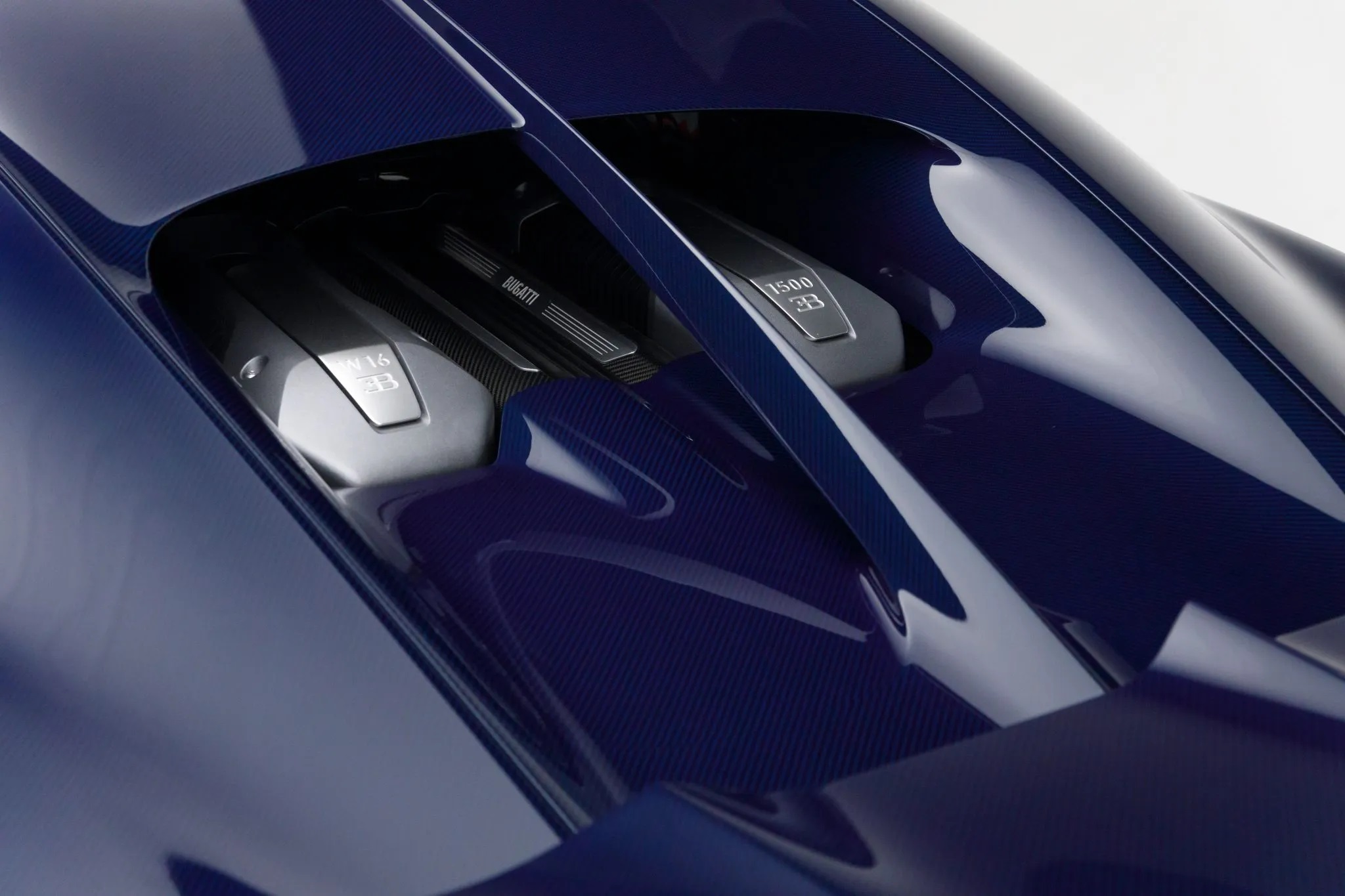
Power comes from the most potent Bugatti powertrain to date, delivering 1,500 horsepower and 1,600 Nm of torque in a linear fashion, thanks to larger turbos and enhanced fuel delivery systems. The meticulously crafted engine, now lighter and more robust, achieves remarkable acceleration, propelling the Chiron to 186mph in just 13.6 seconds.
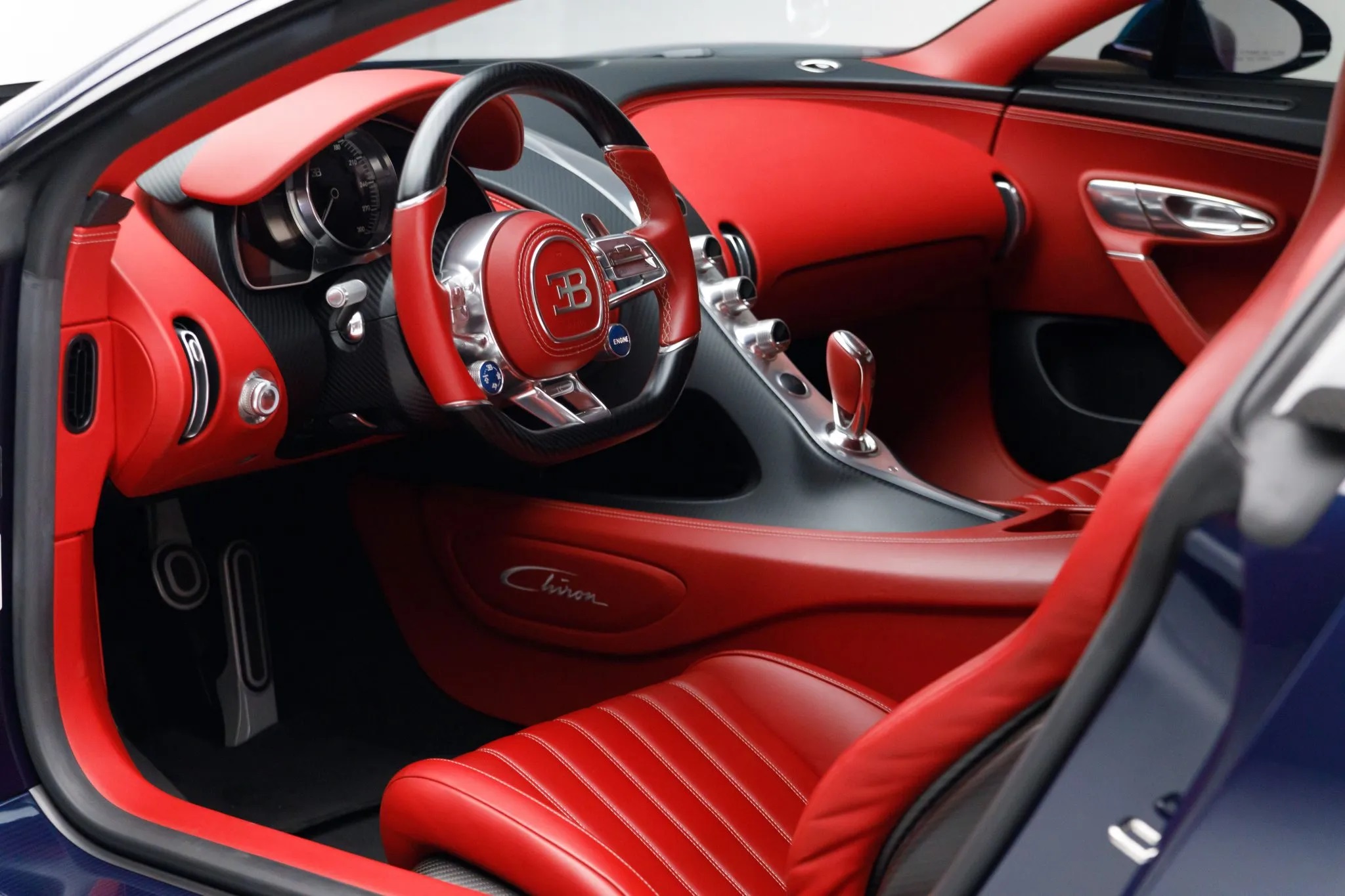
Behind the wheel, drivers experience a blend of luxury and performance, with a carbon fiber, leather, and aluminum cockpit featuring intuitive controls and high-resolution displays. With its combination of technological prowess and aesthetic refinement, the Chiron stands as a pinnacle of automotive engineering, poised to redefine the limits of speed and luxury.
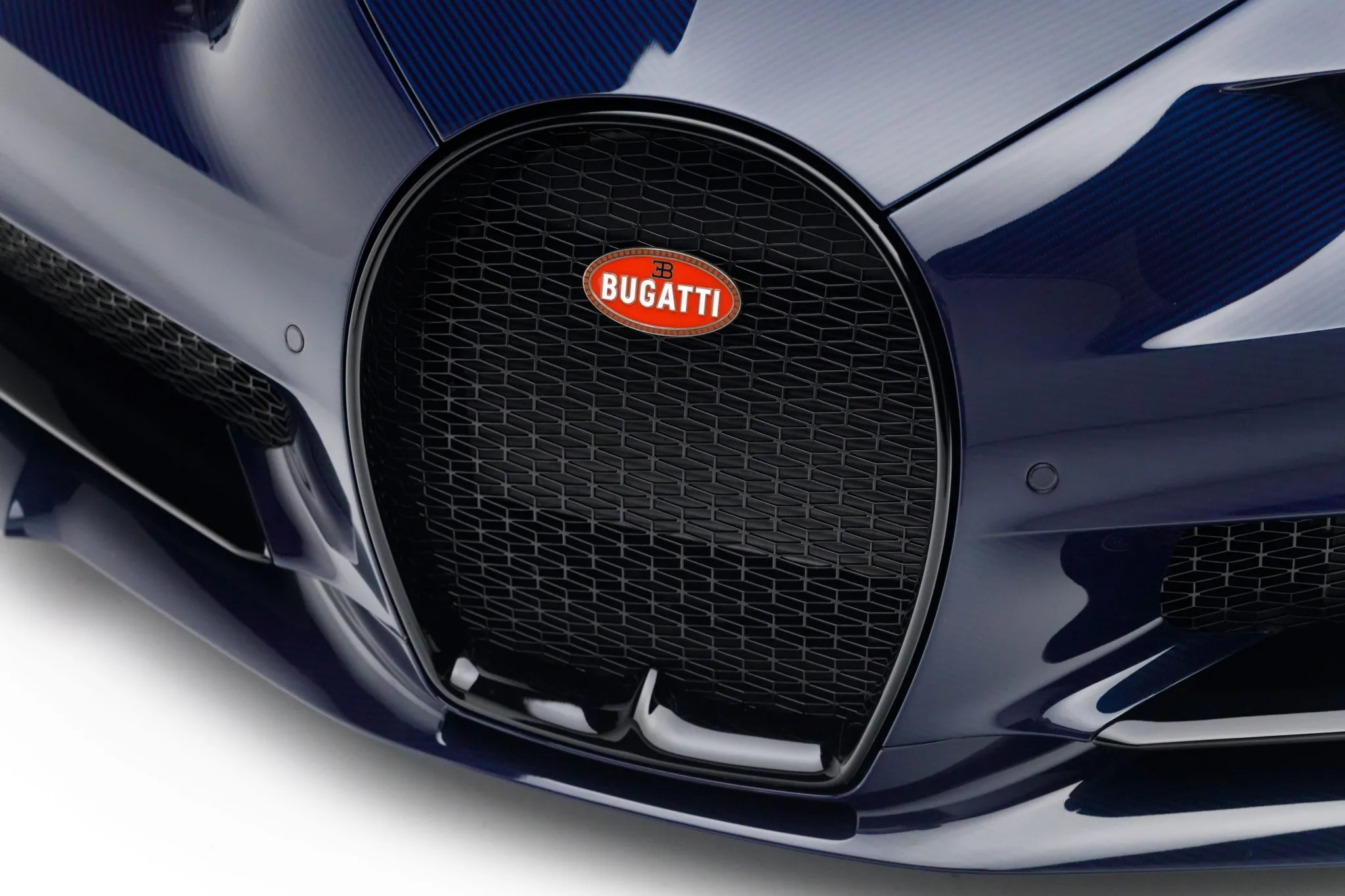
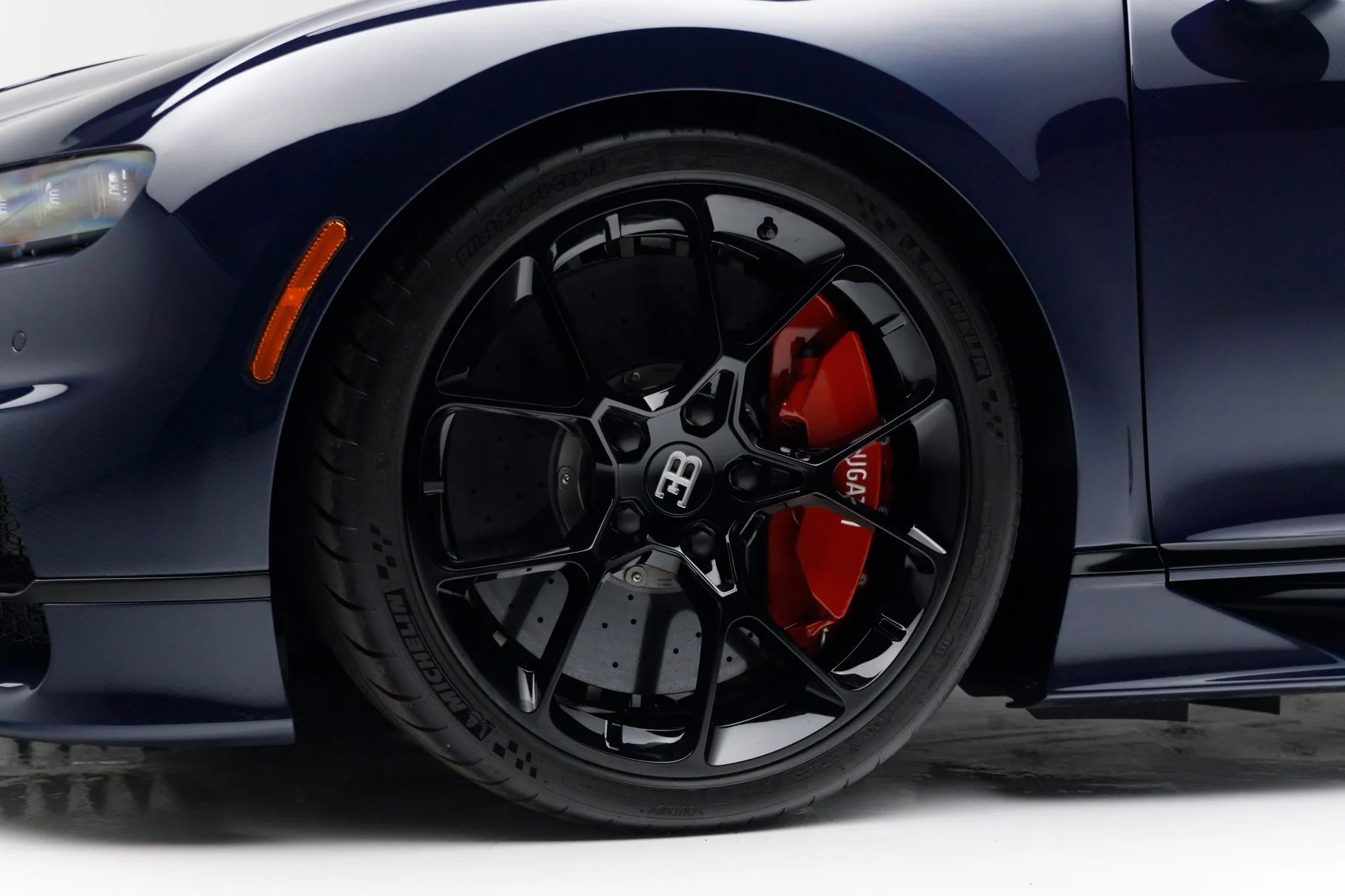
This particular 2018 Bugatti Chiron currently listed for sale on Bring A Trailer is one of only 500 examples produced between 2016 and 2023. It features an optional exposed carbon-fiber bodywork finished in blue at an additional cost of $315k.
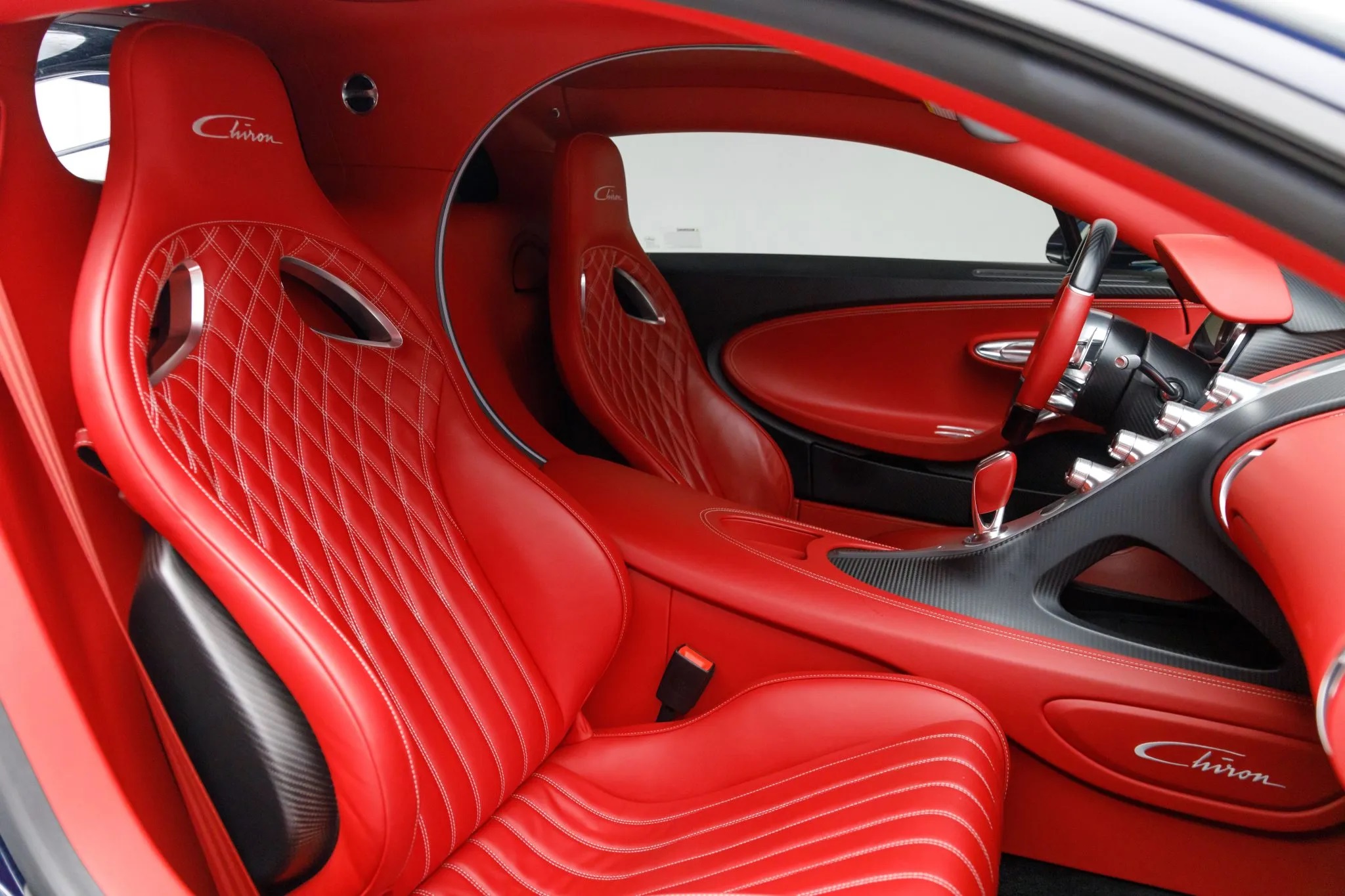
The interior is adorned with carbon-fiber sport seats upholstered in Italian Red leather, extending seamlessly to the dashboard, center console, door panels, and cockpit divider. Additional features include carbon-fiber and aluminum accents, automatic climate control, navigation, and a premium seven-speaker Accuton stereo system with satellite radio and Bluetooth connectivity.
With its array of premium features, including carbon-ceramic brakes, a dual-exit exhaust system, and distinctive Caractere wheels, this Chiron with just 1,900 miles is a prime example of automotive excellence in both performance and design.
The introduction of the Porsche 991 GT3 arrived in 2014, replacing the 997.2 GT3 on the brand new 991 chassis.
Known for its superb performance and Porsche’s legendary reliability, the 991 GT3 quickly became the benchmark for all high-performance sports cars.
The GT3 is designed as an entry-level GT, positioned below its more potent sibling, the GT3 RS. While it’s built with a focus on the driver and track performance, it doesn’t compromise on the ability to deliver comfortable road trips.
Unlike its RS counterpart, it isn’t a hardcore track-only machine.
The 991.1 GT3 comes with a 3.8-liter engine that cranks out 475 hp, a step down from the 4.0 liter, 500 hp beast in the GT3 RS. The engine has a quick rev, owing to its lightweight internals.
A signature central titanium exhaust system contributes to its audibly pleasing growl, particularly near its lofty 9000-rpm redline.
Only the PDK transmission was provided for the 991 GT3. However, in response to customer feedback, Porsche adjusted its approach.
With the introduction of the refreshed 991.2 GT3, they expanded the transmission options to include both the PDK and a new 6-speed manual. The manual version was roughly 37 lbs lighter than the PDK model.
But when it came to the 0-62 mph dash, the PDK’s speedy gear changes and 15 percent shorter ratios resulted in up to a half-second lead over the manual. It could complete the run in as little as 3.3 seconds, outdoing the manual’s 3.8 seconds.
With a bodyshell similar to the 911 Carrera S, the initial 991 GT3 did sit 25mm lower. Although it was 118mm longer and 44mm wider than its 997.2 predecessor, drivers didn’t appear to notice the size difference from the inside; the car still felt compact and agile.
With a new front bumper, updated door mirrors, and ducts at both the front and the wing in the rear, the GT3 really stood out.
In the GT3, the most desirable feature you’ll find inside is the carbon fiber racing seats, a high-end touch borrowed from the Porsche 918 hypercar. Although some models opted for comfort seats, the racing ones were the real draw. This model’s interior also stands out with its Alcantara steering wheel, despite sharing the same dashboard layout as all other 991 911s.
Once you’re behind the wheel of the 991 GT3, you’ll immediately feel its unique character, and how it stands out from the other non-GT 911’s. With the responsive steering the car corners with pure confidence.
There’s a rawness to the ride that’s unmistakable, a nod to the GT3’s track heritage, yet it doesn’t feel out of place on a regular road trip.
The engine’s sound is a symphony, getting louder and more intense as you rev up to the high 9000-rpm redline. It’s not just about the noise, though; the 3.8-liter engine provides a steady surge of power, making the car feel lively and quick.
The transmission is another highlight. If you’re driving the PDK version, you’ll appreciate the quick shifts and the intelligent mode that seems to always choose the right gear. For the purists who prefer a manual, the 991.2 GT3’s 6-speed gearbox is a joy to use.
Photo by Elferspot
All of this performance doesn’t come at the expense of comfort. The 991 GT3 is surprisingly practical for a high-performance sports car, with a reasonably compliant ride and enough creature comforts to make long journeys enjoyable. From the driver’s seat, the car doesn’t feel as wide or as long as it is, making it feel compact and nimble.
Among the rivals to the 991 GT3, you’d find the Mercedes-AMG GT R, Audi R8 V10, and the McLaren 570S. Out of this pack, it’s the Porsche that stands out as the most track-oriented, offering a driving experience that feels closest to a road-legal race car.
Overall, the GT3 is an outstanding sports car, and those who choose to own one are typically passionate about track performance. They certainly won’t regret making the decision to buy this remarkable vehicle.
Model Changes (Breakdown by Year)
2014 Porsche GT3
The 2014 model was the first year of the 991 GT3, which replaced the 997.2 GT3.
Featuring a 4.0-litre engine that produces 475 hp and 325 lb-ft of torque.
In typical Porsche fashion, the 991 GT3’s design prioritizes function, with features like improved downforce on the front wheels to enhance grip and handling.
The starting base price was around $132,000 slotting it very close to the Mercedes Benz-AMG GTR, Audi R8 V10 Plus, and the McLaren 570S.
2015 Porsche GT3
For the 2015 GT3, everything remained the same with no changes.
2016 Porsche GT3
In 2016, the Porsche 911 R was released. Technically it wasn’t a GT3 but realistically it was a cleanly styled, ‘heritage’ GT3 using the RS’s 4.0 liter engine. Porsche produced a total of 991 units of the 911 R model. This limited production run was part of what made the 911 R so special and sought-after among car enthusiasts and collectors.
The R is a nice mix of parts. It looks like a GT3 or GT3 RS, but without the flashy aerodynamics. It borrows a lightweight magnesium roof, carbon-fiber decklids, and carbon-fiber front fenders from the RS. Weighing in at 3021 lbs, it’s low and wide. Its large fenders barely fit the sleek 20-inch center-lock wheels.
The R uses the same dry-sump 4.0-liter flat-six engine found in GT3 models, tuned to the RS specification. At its 8250-rpm power peak, it sounds like the Porsche Cup race car. The redline is 8500 rpm, slightly lower than the 8800 rpm of the GT3 RS (and 9000 rpm in the GT3), due to the added centrifugal mass from its manual gearbox clutch.
Inside, you would find a similar interior as any other 991, but the main difference will be the race bucket seats that are also found in the 918.
Porsche has also added a dose of nostalgia to the R. The seats feature leather trims combined with houndstooth fabric inserts, reminiscent of vintage Porsche designs. The gauges have light green markings on a black background, just like old 911s.
The inside of the car looks like a regular 911, except there are no back seats. If you want a more old-school look, you can choose to have red or green stripes and Porsche stickers on the sides. The car comes in white and silver, but some people paid $6,000 more to get it in a different color.
You could drive an R without being noticed if you skipped the stripes. The 911 R is more low-key because it doesn’t have the big rear wing like the RS. The R has a special bottom rear diffuser, which is hard to see, and a small front splitter to add some downforce.
But, the R only makes about a quarter of the rear downforce of the RS. The exhaust is loud when the rpm is high, but it doesn’t have any extra, showy pops and crackles.
The 911R is a true collector car.
Base price started at $185,000 ($9,000 more than the standard GT3).
2017 Porsche GT3
No GT3 was produced for the year 2017.
That is because the 991.1 GT3 was in anticipation of the mid-life cycle update that came in 2018.
2018 Porsche GT3
In 2018, the updated Porsche 991.2 GT3 made its debut. Simply put, a great car was enhanced even further.
The 991.2 GT3 got a bigger engine, a 4.0-liter flat-six, which was an upgrade from the 3.8-liter in the 991.1. This new engine, which came from the 911 GT3 Cup race car and the GT3 RS, produced 500 hp, which is 25 hp more than the 475 horsepower in the 991.1 GT3.
Listening to the fans who missed the manual option in the 991.1 GT3, Porsche made a significant change for the 991.2 GT3. They reintroduced a 6-speed manual transmission as an alternative to the already available 7-speed PDK, providing drivers with a more hands-on, engaging driving experience.
With the 991.2 GT3, Porsche added a new front spoiler and back wing to improve how the car moves through the air, boosting downforce by 20%. They also updated the car’s style, changing the front look and adding new taillights at the back, giving the GT3 a newer and cooler look.
Inside the 991.2 GT3, Porsche made some updates, adding a new steering wheel inspired by the 918 Spyder and the latest version of Porsche Communication Management (PCM), which features a touchscreen and better options for connecting your devices.
Making it better to handle and smoother to drive, the 991.2 GT3 got a new chassis setup, which included a big improvement – rear-wheel steering. This was a big step up from the 991.1 GT3, as it made the car easier to steer and more stable, especially when going fast around corners or changing lanes, giving drivers a better feel and more control.
Base price started at $146,000 ($14,000 more than the 991.1 GT3).
2019 Porsche GT3
In 2019, Porsche introduced the manual-only 991.2 GT3 Touring. This variant opted for a more subtle look compared to the standard GT3, primarily by removing the rear wing. But retaining full performance capabilities.
In the 991.2, the tall carbon rear wing was swapped out for a more subtle spoiler that could be pulled back, similar to what you see on the Carrera GTS. The Touring also had a unique sound due to minor tweaks made to the intake.
For the engine, it still featured the 4.0-liter flat-six motor, pushing out a big 500 hp. This engine is the same one used in the 991.2 GT3. Because this model only came with a manual gearbox, it made it a joy for drivers who like to feel in full control of their car.
Photo by Rennlist
Even with its cool and quiet look, the 991.2 GT3 Touring did not cut back on performance. It’s perfect for those who want a fun, powerful drive without a lot of flash. If you want a car that’s great to drive every day and also has a lot of power under the hood, the GT3 Touring is a top pick.
Base price started at $143,000 ($3,000 less than the regular GT3).
Porsche 991 GT3 Common Problems
The Porsche 991 GT3 is regarded as one of the best sports cars around that is not only reliable but also fun to drive, with a track-ready performance that still manages to offer everyday usability and comfort.
Many people have driven their Porsche GT3 for extended distances, some even exceeding 80,000 miles, proving its reliability.
This breaks the traditional belief that supercars are inherently unreliable.
However, it is essential to keep in mind that all cars, even supercars, can have issues and it is crucial to perform a Pre-Purchase Inspection (PPI) from an authorized dealer or experienced independent mechanic to reveal all issues.
Engine Failure: The early models of the 991.1 GT3 had some engine issues that were serious enough to warrant a recall. The problem was related to the connecting rod fasteners, which could potentially fail and lead to catastrophic engine damage.
Transmission Issues: Some owners have reported issues with the PDK (Porsche Doppelkupplung) automatic transmission, including rough shifting or hesitation. However, these cases seem to be quite rare.
Tire Wear: Given the sporty nature and capabilities of the GT3, tire wear can be high, especially if the car is frequently driven hard or used on the track. This is not necessarily a ‘problem’ but rather a factor in the car’s performance orientation.
Suspension Wear: Like the tires, the suspension components can wear down more quickly due to the car’s performance nature. Again, this is more of a running cost issue rather than a specific defect.
Oil Leaks: Some 991 GT3 owners have reported oil leaks, particularly from the rear main seal and the oil pan.
Electronics: Like many modern cars, the GT3 has its share of electronic systems, and these can sometimes present issues. Some owners have reported problems with items like the radio, navigation system, or other infotainment components.
Recalls
2014 GT3 vehicles
Piston Connecting Rod (Recall no. 14V090000)
A damaged crankcase may allow engine oil to leak onto hot components in the engine bay which may result in a fire.
2019 GT3 vehicles
Air Bags (Recall no.19V179000)
The side airbag impact sensors may not have been properly tightened to the vehicle.
2019 GT3 vehicles
The Child Restraint System (CRS) instructions (Recall no. 19V875000)
The Child Restraint System (CRS) instructions within the Owner’s Manual may not provide enough specificity for proper installation.
Maintenance and Ownership Costs
In comparison to other supercars, the Porsche GT3 is known for its relatively minimal maintenance needs.
However, it is important to remember that regular maintenance and repairs will still be necessary, and the costs can vary depending on whether you take your car to a dealer or an independent mechanic.
Here are the suggested service schedule and intervals per Porsche:
Annual Maintenance or Every 6K Miles:
Vehicle Inspection
Change engine oil and filter
Update or replace maintenance items based on the inspection
Replace engine air intake filters (GT3)
Add the following maintenance items to the annual service, based on the time or mileage intervals shown below:
Additional Maintenance Every 12K or 2 years:
Replace Spark Plugs
Replace brake fluid
Replace the cabin pollen filter
Replace cabin pre-filter element
Replace engine air intake filters
Additional Maintenance Every 24K or 4 Years:
Additional Maintenance Every 48K or 6 years:
Replace PDK clutch fluid
Clean throttle body
Additional Maintenance Every 96K or 12 years:
Here is a rough estimate of typical service costs associated with the Porsche GT3:
Oil Change – As low as $300 for independent mechanics and $480 for dealers.
Minor Service – Typically includes oil change, cabin filters, and engine filters. The cost from a dealer is around $1,500
Major Service – Typically includes all the above plus spark plugs, brake flush, trans flush, expect about $2,500 from a dealer.
Tires – A set of high-performance tires like Michelin PS4 will cost about $2,000.
Brakes – Rotors are carbon ceramic which should last forever. Aftermarket brake pads that are OE equivalent will cost about $800 for a full set. Steel breaks would cost about $6,000 to replace.
Clutch – Dual clutch transmission should last the lifetime of the car so expect zero additional expenses for clutch or flywheel service.
Options List
Porsche has made a name for itself with its broad range of personalized features to pick from. In this section, we will spotlight some of the top preferences for customization that GT3 owners often opt for.
One much-liked add-on is the Sport Chrono Package, featuring integrated timers and the handy Porsche Track Precision smartphone app.
Using GPS, this app captures lap times and assorted driving metrics, such as speed, lateral movement, and changes in acceleration. It neatly organizes this data, facilitating drivers in exchanging and comparing their stats with fellow drivers.
Another preferred pick is the Porsche Ceramic Composite Brake (PCCB), particularly attractive for those who frequently experience their cars on the track.
These ceramic brakes are easily spotted by their distinctive yellow calipers, contrasting with the red calipers of standard steel brakes. This option proves especially beneficial for GT3 owners who take their cars to track day outings.
Several owners chose to skip the standard sport bucket seats in the GT3, leaning towards more cushioned and comfy seats. Porsche offered this different seat option at zero additional cost, making it an enticing pick for those desiring a mellower-driving feel. Still, this choice doesn’t boost the car’s resale value since many enthusiasts have a preference for sport bucket seats.
Also, a handful of GT3 customers also went through the PTS (Porsche to Sample) program which was a factory-in-house customization program, that allowed customers to personalize their Porsche with a unique exterior.
For individual unique interior colors, materials, and features that were not available on regular production models, you would have to go through the Porsche Exclusive Manufaktur department.
Because of the strict approval requirements, cars that went through the PTS and Porsche Exclusive Manufaktur program are considered highly desirable.
These cars usually command a higher premium in the market due to their exclusivity and uniqueness.
Here are some examples of option changes
2014 Porsche GT3
Porsche 991 GT3 Price and Values (991 manual, 991 Touring and 911 R)
The Best Porsche GT3 To Buy
When it comes to buying a GT3, there are a few key factors to consider that can affect the car’s long-term value.
Some of the criteria break down into 3 key points.
Without a doubt, the limited edition 911 R is the most desirable, simply due to the fact that it is very limited and sought after by many collectors. Right after it was released, the 911 R was trading for over double its MSRP value.
While the prices are now holding steady, it is a car that will not decrease in value but will continue to hold and increase in value in the coming years.
Meanwhile, the GT3 Touring that later debuted in the 991.2 generation adopted some elements from the 911 R’s playbook. However, it wasn’t a limited edition and instead became a popular option for those seeking high performance with a slightly more discreet profile.
It is one that is a good buy that will be desirable for appreciation, as it is considered to be a pure 911 GT3 for the gentleman.
For those looking to get into a GT3, the facelift 991.2 GT3 would be a good choice. It arrived with substantial improvements, offering more power, and a more engaging driving experience, and the much-desired manual transmission option, bringing it closer to an everyday track car.
Still, all versions of the GT3, starting with the first models before the facelift, are great buys due to how well they’re made and how reliable they are. These cars show off Porsche’s top-notch dependability, with only a few big issues ever reported.
Plus, NA cars, which are harder to find these days, will always have a special charm. There’s just something about NA cars that will keep people interested.
With more cars today moving towards hybrid and electric tech, fans and collectors are hunting down cars with naturally aspirated engines even more. They’re becoming quite the hot item in today’s car world.
In addition, the condition and mileage of the car are also important factors to consider when buying a GT3. There are many that have been driven hard on the track.
But the ones that are more likely to retain their value in the long run and will fetch the most money will be a well-maintained cars with low mileage.
Therefore, it’s important to do your research, compare prices, and look for well-maintained cars if you are considering purchasing a GT3 with the goal of not losing any money.
Conclusion
In conclusion, for around ($160,000+) the 991 Porsche GT3 RS is a great choice for a track-focused sports car that you can rely on.
While there are other cars in the segment of the 991 GT3, such as the Mercedes-AMG GT R, Audi R8 V10, and the McLaren 570S, none come close to the years of evolution and improvements made to the GT3 that make it a perfect everyday sports car that you can drive home after going to the race track.
The time is now to buy one of these before they start going up in price.
Car Hacking Shortcuts
Make sure the car has a front lift system.
Spec matters: Look for any PTS exterior color and Porsche Exclusive Manufaktur interior.
Stellantis, the parent company of Dodge, Alfa Romeo, and a host of other brands, has issued a recall for about 1,200 Dodge Hornet and Alfa Romeo Tonale SUVs from the model year 2024 — over a sticker.
The company tells the National Highway Traffic Safety Administration the cars “may have been built with a manufacturer label that is missing rim and tire size designation information.” This could leave owners unable to determine what replacement tires they need or perform certain towing calculations.
The fix is as simple as you imagine; dealers will replace the sticker with one that contains the missing information. Owners will need to bring the cars in for the repair, but it should be the quickest repair they’ve ever seen.
By law, dealers never charge for recall repairs.
Manufacturers try to reach every owner to warn them. However, some may fall through the system’s cracks and unknowingly drive recalled cars. Check our easy recall tool to determine if your vehicle has any outstanding recalls.
You might not have noticed the change, but Defender is now a stand-alone car brand. And every car brand needs an aspirational hero car. Meet the 2025 Defender Octa – a high-performance take on the Defender 110 that the company will market as a separate model later this year.
JLR, the company formerly known as Jaguar Land Rover, is spinning off several of its longstanding nameplates as separate brands. The plan has seen some Land Rover dealers rebranded as Discovery or Defender showrooms, though the Land Rover logo remains a badge on both vehicles.
A Fourth Model, but They All Look Quite Alike
Defender dealers currently have three models to sell – the Defender 90, 110, and 130 — all editions of the same car. That taxonomy will get more complicated when a fourth variant shows up.
Defender says the Octa name is inspired by “a diamond’s octahedron shape,” with “diamond being the hardest naturally occurring substance on Earth, renowned for its rarity.”
Twin-Turbo V8, Sophisticated Suspension
The Octa rides on the Defender 110’s chassis. However, it uses a twin-turbo V8 with a mild hybrid system for a power boost. Defender hasn’t released a power figure yet. But, to effectively hold down the flagship position, it probably needs to beat the already-robust 518 horsepower maximum available in the 110.
It uses a hydraulic interlinked air suspension Defender calls “6D Dynamics.” That “features an innovative pitch and roll control system that will enable Defender OCTA to maintain a near-level stance during acceleration, braking, and cornering on-road, while also maximizing independent wheel travel and articulation across the most demanding off-road terrain.”
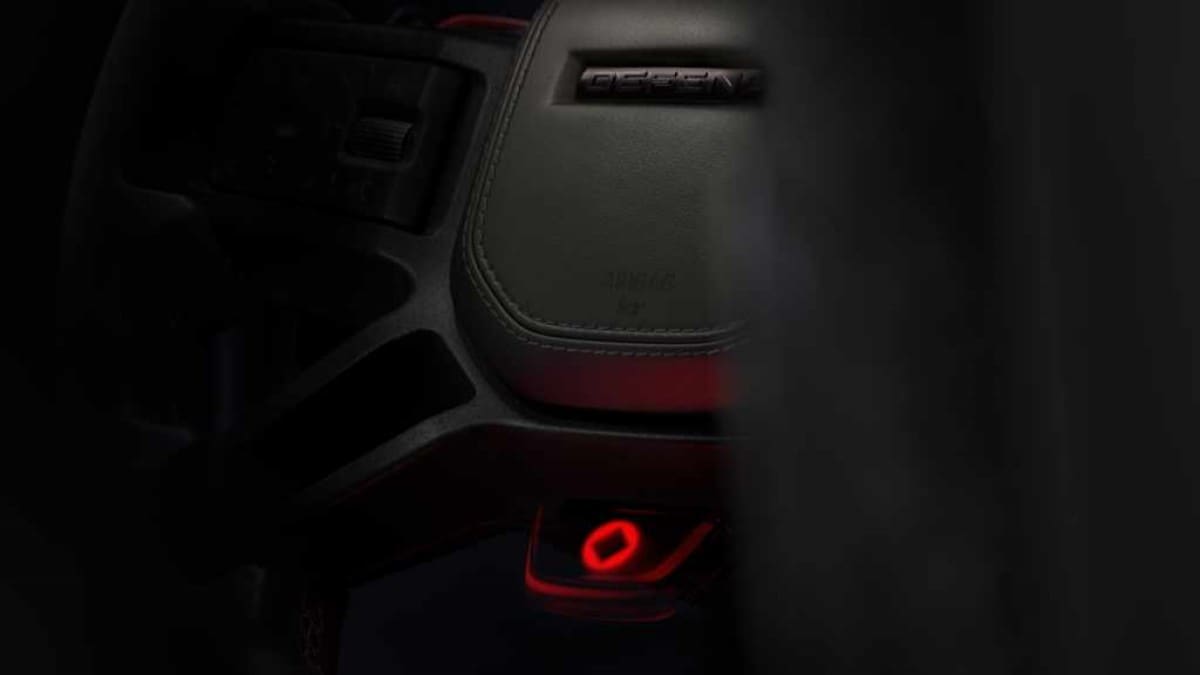
Teaser photos show Brembo brakes as well.
Buy by Invitation
That’s all anyone outside the company knows about the Octa for now. Defender released just a few teaser shots, strategically chosen to reveal little. The company says the model will revealed to the press later this year. But they’re inviting “prospective clients” to see the car before showing it to the media.
That early peek is a tactic Ferrari sometimes uses to create a sense of exclusivity – which may hint at the Octa carrying a price tag well above current Defender models.
Diversifying your portfolio is an intelligent approach to investing, as it reduces risk and helps protect against fluctuations in the market over time. By diversifying, investors can ensure they don’t experience losses due to market changes.
Fire suppression systems offer a safer, more advanced alternative to traditional fire extinguishers. Their designs prioritise human wellbeing while simultaneously safeguarding hardware and property.
The Role of Fire Suppression in Home Data Centers
Data centers form the backbone of the internet and face multiple threats. Small fires in these facilities can result in huge data losses and costly downtime; to minimize these risks, most data centers employ fire suppression systems to minimise damages to reduce downtime.
Local codes and insurance policies often mandate sprinkler systems to safeguard buildings with computer storage rooms, typically by activating an internal fusible link on a sprinkler head and dispensing water to douse fires when smoke or heat activates it.
Pre-engineered fire suppression systems employ clean agents such as halocarbon or fluorinated ketone that work by depriving flames of oxygen while using chemical and physical mechanisms to suppress fires. These types of systems don’t leave behind water or suppression residue, helping reduce costs associated with equipment replacement and cleanup.
Designing Fire Protection for Home Data Centers
Fire suppression systems in data centers must be designed to quickly extinguish fires and protect both equipment and people in case of an accident.
Local and state fire codes often mandate water-based sprinkler systems as an essential way of extinguishing fires, but such systems also cause irreparable damage to servers, computers and other electronics.
Many data centers opt for fire suppression systems using gaseous or chemical agents such as FM 200 and Novec 1230 as clean agent fire suppression systems, known as clean agent systems. They’re nonconductive and leave no residue behind when they evaporate – perfect for protecting sensitive equipment in data center rooms.
Types of Fire Suppression for Residential Data Centers
Fire suppression systems come in various forms, from basic sprinklers to advanced mist technology. Each works to detect and prevent fires within facilities by releasing an agent that both suppresses the flames or prevents their progression – in essence, suppressing or extinguishing them all together.
Inert gasses such as nitrogen and argon or chemical agents such as FM200 are used to remove heat and oxygen from the atmosphere, extinguishing fires quickly while stopping their spread and leaving no trace behind – ideal solutions for use in occupied spaces.
Residential data centers that house valuable electronic equipment should install fire suppression systems. Not only can these be an investment against property damage, but they may even save lives – which in an age when human life cannot be put a price on, can be invaluable.
Installing Fire Suppression at Home
If you are renovating or building new property, adding a fire suppression system may be worth your while. Such systems aim to prioritise occupant safety as well as safeguard valuable items should a fire break out.
Advanced fire protection methods like robotic fire extinguishers are safer and more advanced alternatives to conventional methods like blankets or extinguishers, which require human activation to activate them. They use Novec 1230 – an environmentally safe agent which balances human safety concerns with performance parameters.
Residential fire sprinkler systems often include concealed pendent systems; however, you can also choose high-pressure mist systems which use less water. Homes fitted with sprinkler systems experience nine times less damage than those without them.
Maintaining Home Data Center Safety
Data centers, housing critical equipment, face significant risks іn the event оf a fire. Installing fire suppression systems data center іs crucial tо swiftly contain and extinguish fires, safeguarding both the facility and its equipment from extensive damage.
Fire suppression systems that use water can damage hardware in data centers; to address this, there are water mist fire suppression systems designed specifically for data centers.
These systems employ a mist of water to put out fires much more rapidly than traditional sprinklers do, without incurring water cleanup costs afterward, making them much more cost-effective than their counterparts. There are even green agent fire suppression systems using inert gasses instead of halocarbon-based or fluorinated ketone clean agents which do not contribute to ozone layer depletion.
For more on the latest in home safety reads, click here.
England is an incredible country to explore, with a surprising amount of diversity, culture and charm for a relatively small island. Not only that, there are heaps of the best places for a staycation in Britain dotted all across the island.
From the beautiful coastline of Pembrokeshire in Wales, driving the NC500 in the Scottish Highlands to historic Roman cities like Bath; you’re going to be spoilt for choice.
Now, with any staycation in Britain, it will require a little planning to get the most out of your holiday. So, to help you prioritise the top places to visit, I’m sharing my favourite spots in Britain you can
1.) Pembrokeshire National Park
Nestled on the southwest coastline of Wales, Pembrokeshire is an absolutely beautiful place to visit for a staycation.
Once in the area, make sure to explore the coastline from the Blue Lagoon and head down the coast towards the beautiful beaches of Barafundle Bay and Freshwater West Beach.
Both are absolutely stunning and you might even spot some of the resident seals, too.
Oh, and just shy of Pembrokeshire National Park is Tenby, a historic fishing village that’s so quaint. Be sure to stroll around the town, take a visit to nearby Caldey Island and see the ruins of nearby Carew Castle. It’s so impressive to see.
Heads up, public transport can be a little slim here, so it’s best to explore by car. That being said, you can easily hop on local buses, with a bike, and cover lots of ground. Just be sure to plan as some bus routes operate infrequently.
The Scottish Highlands is one of my absolute favourite places for a staycation in Britain, especially if you’re already in Scotland. Now, for me, the best places in the Highlands are best explored by car. This allows you to explore some of the historic ruins, rugged coastline and local villages that are dotted across the route.
If you’re up for an adventure, drive the NC500 which is best explored over 5-7 days. We’ve done this route quite a few times and it’s so breathtaking.
Not only that, you can easily divert off the main NC500 route and explore some nearby areas, too. For instance, it’s well worth including a trip to the Isle of Skye and a drive down the Applecross Peninsular, too.
It might only be 60 miles, or so, from Central London, but the Cotswolds is one stunning area to visit for a staycation in Britain. You see, the whole area is filled with beautiful little villages, rolling hills and a quaint charm that’s second to none.
Once here, make sure to visit places like Bibury and Burton-on-the-Water. We love both towns and they’re filled with quaint houses, independent stores and tea houses that are perfect for scones and tea.
To make things easy, drive around the best spots in the Cotswolds. This way, you can control the pace of your trip; without any stress of timings.
That being said, don’t fret if you don’t want to drive. There are bus links within the Cotswolds between the villages and towns.
Wales has some of the best national parks to visit, with Snowdonia being one of the best. Not only is it a vast area to explore; but it also includes the tallest mountain in England and Wales; Snowdon (Yr Wyddfa in Welsh).
Now, if you fancy, you can book a ‘Red Rover’ train ticket that acts as a hop-on-hop-off train ticket between some of the coastal towns from Machynlleth (the ancient capital of Wales) to Pwllheli. Though, a heads up, there’s sometimes only 1 train an hour (or even less). So, plan your route in advance.
Alternatively, take a car and head to places like Mount Snowdon that’s incredible for a hike. The views from up here are breathtaking. Though, if you don’t fancy the hike, there’s also a small train that will take you right to the summit. It’s well worth it.
Oh, and don’t forget about Portmeirion. It’s a quaint Italian town that’s so picturesque to visit. Yes, there is a small fee to enter but it’s well worth it for an afternoon.
Look, we’re biased! We both lived in St Andrews whilst studying but I can honestly say it’s one of my favourite towns in Scotland to visit.
Around a 1 hour drive from Edinburgh (or a train to Leuchars, then a 15-minute bus ride), it’s the perfect place to visit for a day trip or even a long weekend.
Once here, make sure to walk the beautiful West Sands Beach that stretches the whole length of the peninsular. It’s totally beautiful and you’ll get some gorgeous views of the town from here.
Alternatively, book a round of golf on the Old Course. This is where golf was invented and it’s an institution. Best of all, it’s open to all; though, green fees can be pricey at certain times.
If you’ve got a car, and after visiting St Andrews, head down the coast of the Kingdom of Fife. There are so many beautiful places in Fife that you can easily visit when following the old coastal road. We love Anstruther, a small fishing village that is so quaint.
Plus, they have some of the best fish and chips in all of Britain at Anstruther Fish Bar.
A larger region in the north of England, Yorkshire is one great place to visit if you want to ramble the moorlands, see some of Britain’s largest waterfalls and explore the towns and cities. It’s got that lovely mix of everything.
Once here, make sure to visit the town of Whitby on the east coast.
It’s a lovely little town and you can even visit the ruins of Whitby Abbey whilst you’re there. Oh, and don’t forget to visit Robin Hood’s Bay whilst you explore the Yorkshire Coastline.
If you’re heading inland, follow. The hiking routes around Janet’s Foss Walk. This will get you right into the Yorkshire Moors and Dales which are breathtaking at any time of the year. However make sure to take some wellies, they can get a little wet.
Alternatively, head over to cities like Leeds which are great if you fancy a city break. Head to the Corn Exchange for the local stores and visit Kirkstall Abbey for a more chilled-out day on the fringes of Leeds. It’s one of the best places for a staycation in Britain whilst in the north of England.
Oh, and don’t forget York. It’s one of the best cities in Yorkshire that’s got heads of history.
You’ll get to walk down the Shambles, see the childhood home of Guy Fawkes and scale the likes of York Cathedral. It’s so impressive.
Known as castle country, Northumberland is an area that’s perfect for a staycation whilst heading up the east coast of England. It’s a pretty large area, that’s perfect to explore by car.
Now, if you’re anything like us, you’ll want to visit as many of the castles as possible. So, plan your trip ahead and include the incredible castles of Bamburgh Castle and Dunstanburgh Castle. The history dates back centuries and you can still go inside many of the castles here.
Afterwards, head over to Holy Island. This was the first place that Vikings set food in Britain and was considered the start of the ‘Viking Age’.
Once here, you can explore the ruined abbey and visit the small town to try some honey Meade (which is delicious).
Just be sure to check the tidal times. The road to Holy Island submerges under the sea at certain times of the day. Never take a risk if signs say not to drive.
Possibly one of the best places for a staycation in Britain, Cornwall is a pretty vast area of Southwest England that’s incredible in summer.
Heck, it’s a great time to visit at any time of the year, but the weather is much warmer in summer, which makes it a great area of England to visit if you love beaches.
Once here, you can explore the gorgeous little towns of St. Ives, or head for the lively towns of New Quay which is a surfers’ paradise. In fact, there are so many bays in Cornwall that are perfect for surfing. In fact, the beaches of Cornwall can’t be missed. We love them.
Alternatively, if that’s not your thing, head over to Port Isaac for the quaintest little town that’s so picturesque. You can easily spend a few slow hours exploring here and it’s so quaint.
Oh, and don’t forget to visit Tintagel Castle that’s a ruined castle perched on Cornwall’s northern shores. It’s like something out of Harry Potter and so incredible. Though, fret not, if you’re not in the local area; there are heaps of other castles in Cornwall to explore.
Oh, and be sure to visit St Michael’s Mount. It’s an incredible tidal island in Cornwall that has so much history. In fact, evidence has been found that people lived here around 6,000 years ago!
Now, once you’re here, make sure to get the castle and gardens ticket. It’s around £25(ish) and well worth it.
Bath is easily one of my favourite cities in England to visit. It’s incredible and the perfect place for a staycation in Britain if you’re short on time.
You see, you can easily get around the whole city in 1-2 days and it’s incredible.
Of course, you have to visit the Roman Baths and visit Bath Cathedral, which is amazing. Oh, and be sure to grab a toasted bun from Sally Lunn’s. They’ve been making buns for hundreds of years and they’re so tasty.
Another gem of a city in England to visit, Cambridge is the perfect staycation spot if you’re looking for a manageable city break. You see, you can head to cities like London and spend weeks exploring without even touching the sides. Cambridge is the opposite.
You really get a good taste of the city, even if you’re staying for a long weekend.
Once here, make sure to take a tour of Kings College and head around the historic town market which we loved.
Oh, and you have to try your hand at punting whilst in Cambridge. You’ll use a large stick to push your punt along the River Cam from the stern of the punt itself. It’s so much fun.
Honestly, Cambridge is easily one of the best places for a staycation in Britain; and it’s only 45 minutes by train from Central London.
There seems to be a shift in the market with how luxury fragrances are marketed to consumers. Scent, history, craft and narrative each come into play when a customer ultimately makes their choice. With the rise of appreciation for exclusive scents, luxury fragrance houses need to hone in on their brand identity to deliver a strong point of differentiation from their competitors. Enter the Geneva-based luxury fragrance atelier, AMAFFI. Crafted from the finest raw materials from around the world, Amalfi strives to achieve one of the highest standards in the art of perfumery providing customers with the royal treatment — from scent to bottle.
Maracoca for Women’s bottle is a lyrical sculpture crafted in high-quality frosted glass.
A scent can be as personal as an item of jewellery and as important as a piece of clothing in completing a look. The debut of AMAFFI’s latest range of scents, Maracoca, is inspired by the bold and sophisticated individuals who revel in the beauty and joy of life. Available for men and women, Maracoca’s blend of extremely rare and difficult-to-source ingredients is a testament to the dedication and precision required to create this truly sensorial work of art. Created by master perfumer Bertrand Duchaufour, Maracoca for Women is a seductive harmony of sensual jasmine, sweet white gardenia, spicy frangipani, and lively yuzu. This Maracoca scent is as driven in nostalgia as it is in fantasy, reminding its wearer of their deepest desires — “arousing rich associations that make her heart soar”, says the brand.
Maracoca for Men’s fragrance is a ravishing cocktail of emotions, joy, and delight.
Designed by master perfumer Nathalie Feisthauer, Maracoca for Men is an exciting, euphoric fragrance with an intoxicating combination of mystical sagebrush, calming lavender, and smoky notes of heady amyris. AMAFFI describes this scent as a bright and explosive fragrance that is the perfect companion to complement the character of “an audacious man who loves life”.
AMAFFI’s unique product packaging makes for the perfect gift for him or her.
Each of AMAFFI’s bottles tells the story of the perfume it holds even before its scent captivates the wearer. Embellished by gold and silver plating, hand-affixed crystals and other precious materials, these ornamental vessels, as treasured as their contents, reflect the character, mood and name of each fragrance.
When it comes to what’s inside the bottle, AMAFFI’s perfume house works in synergy with master perfumers. AMAFFI embodies the role of an orchestra’s chief conductor to guide these celebrated artists to sublime olfactory heights, merging creative freedom with respect for the centuries-old art of perfume-making to create exceptional perfumes, something that cannot be replicated by today’s mass market and modern niche perfumers.
Maracoca for Women and Maracoca for Men retail for SGD 9,700 and are sold exclusively in AMAFFI‘s Perfume House boutiques in London, Singapore, and New York, and online at amaffi.com.
AMAFFI’s Perfume House boutiques are located at:
Singapore: 2 Bayfront Avenue Unit# B2M-242/243, The Shoppes at Marina Bay Sands Singapore 018972
New York: 44 East 57th Street, New York, New York 10022 United States of America
London: 8 Sloane Street Knightsbridge, London SW1X 9LE United Kingdom
For more information, head to AMAFFI’s official website here.
For more on the latest in beauty and perfumery reads, click here.
A manufacturing plant near Hsinchu, Taiwan’s Silicon Valley, is among facilities worldwide boosting energy efficiency with AI-enabled digital twins.
A virtual model can help streamline operations, maximizing throughput for its physical counterpart, say engineers at Wistron, a global designer and manufacturer of computers and electronics systems.
In the first of several use cases, the company built a digital copy of a room where NVIDIA DGX systems undergo thermal stress tests (pictured above). Early results were impressive.
Making Smart Simulations
Using NVIDIA Modulus, a framework for building AI models that understand the laws of physics, Wistron created digital twins that let them accurately predict the airflow and temperature in test facilities that must remain between 27 and 32 degrees C.
A simulation that would’ve taken nearly 15 hours with traditional methods on a CPU took just 3.3 seconds on an NVIDIA GPU running inference with an AI model developed using Modulus, a whopping 15,000x speedup.
The results were fed into tools and applications built by Wistron developers with NVIDIA Omniverse, a platform for creating 3D workflows and applications based on OpenUSD.
A bird’s eye view of Wistron’s digital twin
With their Omniverse-powered software, Wistron created realistic and immersive simulations that operators interact with via VR headsets. And thanks to the AI models they developed using Modulus, the airflows in the simulation obey the laws of physics.
“Physics-informed models let us control the test process and the room’s temperature remotely in near real time, saving time and energy,” said John Lu, a manufacturing operations director at Wistron.
Specifically, Wistron combined separate models for predicting air temperature and airflow to eliminate risks of overheating in the test room. It also created a recommendation system to identify the best locations to test computer baseboards.
The digital twin, linked to thousands of networked sensors, enabled Wistron to increase the facility’s overall energy efficiency up to 10%. That amounts to using up to 121,600 kWh less electricity a year, reducing carbon emissions by a whopping 60,192 kilograms.
An Expanding Effort
Currently, the group is expanding its AI model to track more than a hundred variables in a space that holds 50 computer racks. The team is also simulating all the mechanical details of the servers and testers.
“The final model will help us optimize test scheduling as well as the energy efficiency of the facilities’ air conditioning system,” said Derek Lai, a Wistron technical supervisor with expertise in physics-informed neural networks.
Looking ahead, “The tools and applications we’re building with Omniverse help us improve the layout of our DGX factories to provide the best throughput, further improving efficiency,” said Lu.
Efficiently Generating Energy
Half a world away, Siemens Energy is demonstrating the power of digital industrialization using Modulus and Omniverse.
The Munich-based company, whose technology generates one-sixth of the world’s electricity, achieved a 10,000x speedup simulating a heat-recovery steam generator using a physics-informed AI model (see video below).
Using a digital twin to detect corrosion early on, these massive systems can reduce downtime by 70%, potentially saving the industry $1.7 billion annually compared to a standard simulation that took half a month.
“The reduced computational time enables us to develop energy-efficient digital twins for a sustainable, reliable and affordable energy ecosystem,” said Georg Rollmann, head of advanced analytics and AI at Siemens Energy.
Digital Twins Drive Science and Industry
Automotive companies are applying the technology to the design of new cars and manufacturing plants. Scientists are using it in fields as diverse as astrophysics, genomics and weather forecasting. It’s even being used to create a digital twin of Earth to understand and mitigate the impacts of climate change.
Every year, physics simulations, typically run on supercomputer-class systems, consume an estimated 200 billion CPU core hours and 4 terawatt hours of energy. Physics-informed AI is accelerating these complex workflows 200x on average, saving time, cost and energy.
For more insights, listen to a talk from GTC describing Wistron’s work and a panel about industries using generative AI.
Learn more about the impact accelerated computing is having on sustainability.
Many of the innovators behind this boom announced their latest AI-powered solutions at NVIDIA GTC, a global conference that last week attracted more than 16,000 business leaders, developers and researchers in Silicon Valley — and many more online.
Designed to make healthcare more efficient and help improve patient outcomes, these new technologies include foundation models to accelerate ultrasound analysis, augmented and virtual reality solutions for cardiac imaging, and generative AI software to support surgeons.
Shifting From Hardware to Software-Defined Medical Devices
Medical devices have long been hardware-centric, relying on intricate designs and precise engineering. They’re now shifting to be software-defined, meaning they can be enhanced over time through software updates — the same way that smartphones can be upgraded with new apps and features for years before a user upgrades to a new device.
This new approach, supported by NVIDIA’s domain-specific platforms for real-time accelerated computing, is taking center stage because of its potential to transform patient care, increase efficiencies, enhance the clinician experience and drive better outcomes.
Leading medtech companies such as GE Healthcare are using NVIDIA technology to develop, fine-tune and deploy AI for software-defined medical imaging applications.
GE Healthcare announced at GTC that it used NVIDIA tools including the TensorRT software development kit to develop and optimize SonoSAMTrack, a recent research foundation model that delineates and tracks organs, structures or lesions across medical images with just a few clicks. The research model has the potential to simplify and speed up ultrasound analysis for healthcare professionals.
Powering the Next Generation of Digital Surgery
With the NVIDIA IGXedge computing platform and NVIDIA Holoscan medical-grade edge AI platform, medical device companies are accelerating the development and deployment of AI-powered innovation in the operating room.
Johnson & Johnson MedTech is working with NVIDIA to test new AI capabilities for the company’s connected digital ecosystem for surgery. It aims to enable open innovation and accelerate the delivery of real-time insights at scale to support medical professionals before, during and after procedures.
Paris-based robotic surgery company Moon Surgical, a member of the NVIDIA Inception program for cutting-edge startups, is using Holoscan and IGX to power its Maestro System, which is used in laparoscopy, a technique where surgeons operate through small incisions with an internal camera and instruments.
Maestro’s ScoPilot enables surgeons to control a laparoscope without taking their hands off other surgical tools during an operation. To date, it’s been used to treat over 200 patients successfully.
Moon Surgical and NVIDIA are also collaborating to bring generative AI features to the operating room using Maestro and Holoscan.
NVIDIA Platforms Power Thriving Medtech Ecosystem
A growing number of medtech companies and solution providers is making it easier for customers to adopt NVIDIA’s edge AI platforms to enhance and accelerate healthcare.
Arrow Electronics is delivering IGX as a subscription-like platform-as-a-service for industrial and medical customers. Customers who have adopted Arrow’s business model to accelerate application deployment include Kaliber AI, an NVIDIA Inception member developing AI tools to assist minimally invasive surgery.At GTC, Kaliber showcased AI-generated insights for surgeons and a large language model to respond to patient questions.
Globalvisualization leader Barco is adopting Holoscan and IGX to build a turnkey surgical AI platform for customers seeking an off-the-shelf offering that allows them to focus their engineering resources on application development. The company is working with SoftAcuity on two Holoscan-based products that will include generative AI voice control and AI-powered data analytics.
And Magic Leap has integrated Holoscan in its extended reality software stack, enhancing the capabilities of customers like Medical iSight — a software developer building real-time, intraoperative support for minimally invasive treatments of stroke and neurovascular conditions.
The technical storage or access is strictly necessary for the legitimate purpose of enabling the use of a specific service explicitly requested by the subscriber or user, or for the sole purpose of carrying out the transmission of a communication over an electronic communications network.
Preferences
The technical storage or access is necessary for the legitimate purpose of storing preferences that are not requested by the subscriber or user.
Statistics
The technical storage or access that is used exclusively for statistical purposes.The technical storage or access that is used exclusively for anonymous statistical purposes. Without a subpoena, voluntary compliance on the part of your Internet Service Provider, or additional records from a third party, information stored or retrieved for this purpose alone cannot usually be used to identify you.
Marketing
The technical storage or access is required to create user profiles to send advertising, or to track the user on a website or across several websites for similar marketing purposes.