Six Key Things to Ask When Buying Your First Used Car
The used car market is soaring high after the demand for semiconductors to manufacture new cars. However, used cars are easily achievable dreams for the buyers and to enjoy the trendy features within the hard-earned money.
It’s common for brand new vehicles to lose their value as soon as they leave the showroom, so it’s not a cost-effective alternative if you’re looking for a long-term car.
Here are a few things you must ask the seller whilst negotiating.
Whether you choose to buy the car from a dealer or private seller, it is essential to know the used car value and its history. Ensure you walk away from the deal when you find something is not right.
Before that, you can ask the seller directly about its condition if you feel suspicious.
Has the vehicle been taxed and insured?
The important thing to check is if the vehicle has been declared statutory off-road (SORN) means the vehicle does not have paid tax and insurance. The car is not eligible to drive on the roads of the UK. If you bought the car without knowing its tax and insurance status, you have to pay the money for it.
Does it pass the last MOT test?
Every vehicle older than three years in the UK should pass an MOT. Some kind of minor faults and repairs leads to MOT failure. You have to analyse the vehicle’s MOT because you might end up spending a lot of money to buy that vehicle unknowingly. (Note: Don’t buy a vehicle in any circumstance if it does not have good MOT history.)
What was the exact mileage of the car?
If you are interested in the vehicle you saw, then the first thing you have to look for is its mileage. Look up the odometer to know the recorded mileage. Also, it’s free nowadays to verify if the mileage has been tampered with or clocked.
A vehicle’s mileage directly impacts its value on the road. Many cars are reported to be clocked and have hidden histories in the UK. Look for a cheap car data checker that will reveal the complete hidden history of a vehicle.
Is the logbook genuine?
There are chances that the seller tries to provide the fake logbook if the vehicle is stolen or financed, even if it is marked as high-risk.
Also, the V5C logbook is the only way to verify the number of owners and service history of the vehicle. Sometimes, the car might be under finance. It is crucial because if the car has any pending finance on it, then the registered keeper is the finance company. Then it becomes illegal to buy or sell without the finance company’s consent. (Note: If the vehicle has not got a V5C, don’t progress with the deal further.)
Did you take a car for a test drive?
After all, a test drive is the only way to know if the car is well maintained previously. If you don’t know much about cars, bring along a friend or family member who does. They will accompany you throughout the test and ask any questions that you might overlook if you were alone. Having a second opinion is always beneficial.
Seek a mechanic’s help:
Inspect the vehicle by hiring a trusted mechanic near to your location. It is the best way to know if the car has any damage, including each part including tyres, mirrors, bonnet, interiors, and exterior bodywork. You have to pay at least 200GBP for a full inspection, but it’s worth it.
Once you have purchased your ideal car and are looking for ways to maintain it, read the Car Care Tips For New Drivers for ideas on how to maintain and extend the life of your vehicle.
If you’re considering Ho Chi Minh for your next long-term destination, this article will highlight the pros of living in Ho Chi Minh City. For good measure, I’ll also be talking about the cons so you can decide fairly if the move is for you. I recently spent 6 weeks working remotely from Vietnam’s biggest city and had an amazing experience.
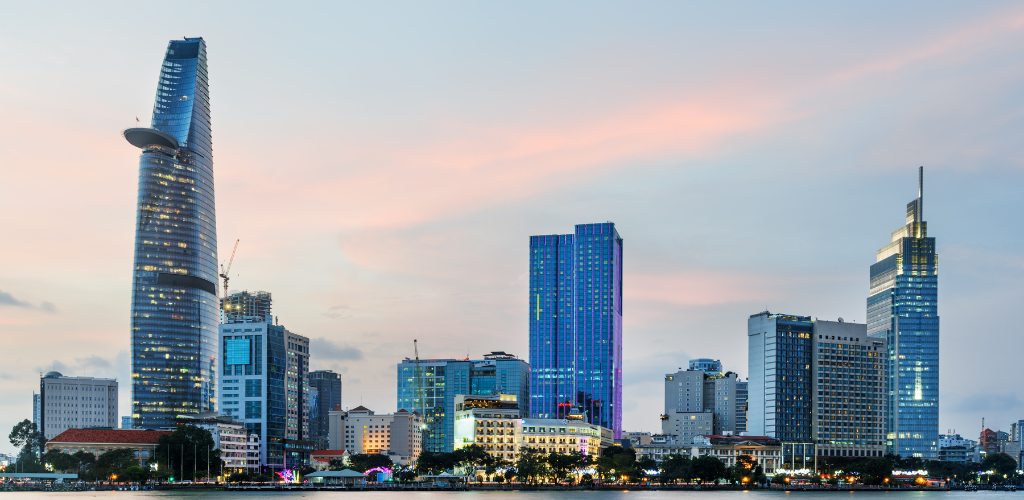
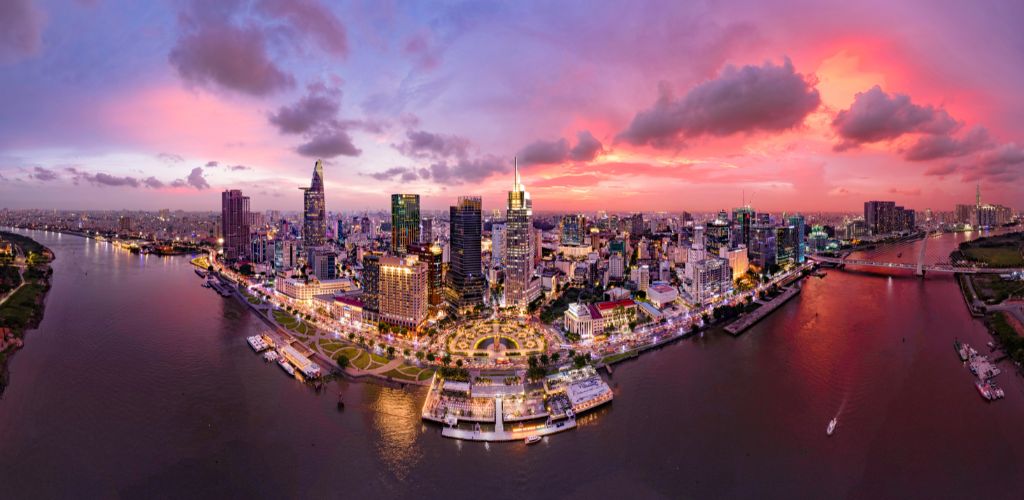
Ho Chi Minh has an enthralling vibe and is unlike anywhere I’ve ever visited before. The mixture of huge financial institutions and skyscrapers alongside the many traditional stalls, shops, and ways of life make it an exciting place to live. A fresh and developing tourism industry adds massively to the draw, too.
Having left the UK over two years ago, I now travel the world as a digital nomad. I’m always exploring new countries and cultures and weighing up where I might one day like to permanently call home. When I ventured to Asia for the first time, HCMC was my first stop and I enjoyed it so much that I’ve already booked my return.
I was lucky enough to secure a house sitting placement for 3 weeks in HCMC which added so much to my experience. I got to know a few particular neighborhoods well and experienced the city as a temporary resident rather than a tourist passing through.
After some time away from Vietnam, I’ve had the opportunity to reflect on the pros and cons of living in Ho Chi Minh. I look at each place I visit from the perspective of whether I can imagine it being my permanent home one day and have factored in things related to key aspects of my life; many are relevant to anyone looking for a potential home base.
Elements such as the social scene, the cost of living, and the climate are important factors that I considered. The ease of attaining visas, connectivity with the rest of the world, and some essential home comforts also find a place in this list. All bases are covered!
Where is Ho Chi Minh?
Ho Chi Minh is Vietnam’s most populous city. Formerly known as Saigon it is home to 9.3 million people and considered the financial powerhouse of Vietnam. Situated in the southern region of the country HCMC maintains strong connections with Hanoi, the capital city of the country in the north, as well as many other international destinations.
Let’s kick things off on a positive note and cover the top advantages of living in Ho Chi Minh. There’s so much to enjoy that I struggled to stop at just 10.
1. Cost of Living
Money talks, and when we get down to it, Ho Chi Minh has a major advantage over many other cities. Across the board, I found prices to be significantly lower than in the UK or many of the US states that I’ve visited. From food, accommodation, and transport, I was pleasantly surprised at the cost of everything.
A decent meal out will cost as little as $2-$5, and a good cup of coffee is around $1.50. Getting around using Grab (Vietnam’s Uber equivalent) is safe, reliable, and costs $1-$2 for short journeys. A large domestic beer is under $1 and gasoline at $0.90 a liter ($3.40/gallon) is certainly much cheaper than in the UK.
Accommodation, whether as a tourist or someone looking for a more permanent base, is also remarkably low. The average apartment goes from anywhere between $310 and $500 a month depending on your proximity to the city center. I found that many of the mid to higher-end apartments include a communal pool and often even a fitness room.
2. Climate
A big draw for Ho Chi Minh is the year-round warm climate. Temperatures on average stay between 22 to 34 degrees Celsius (72 to 94 degrees Fahrenheit). Despite the presence of a distinct rainy season, the pleasant climate is certainly an appealing proposition.
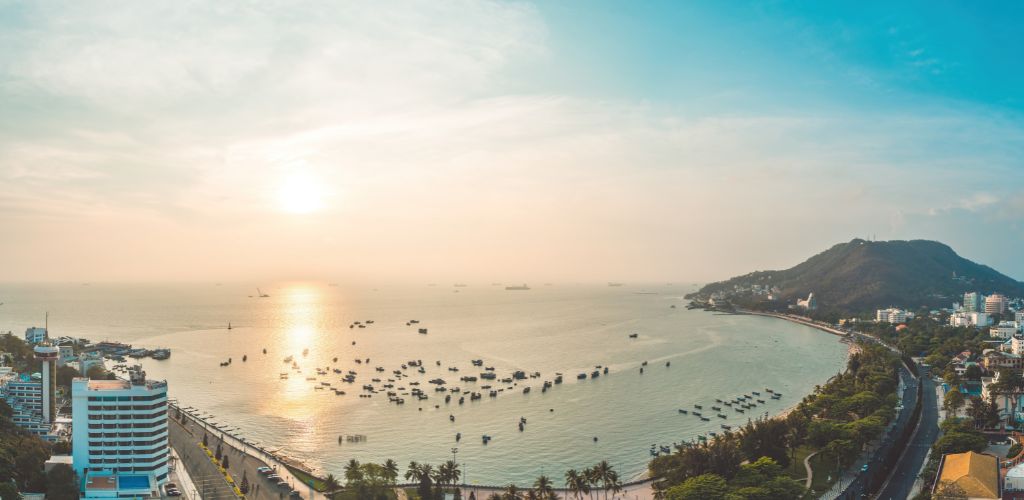
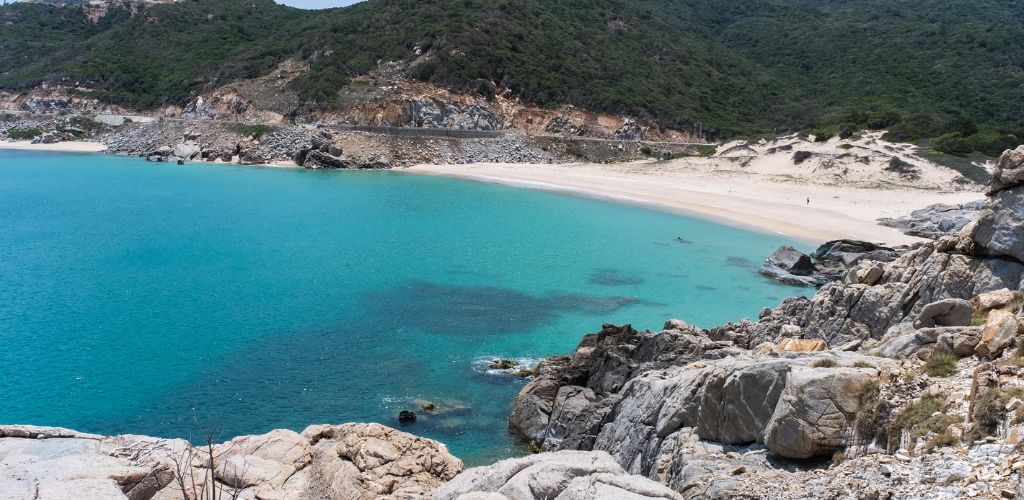
Many cafes and restaurants have outdoor seating throughout the year and air conditioning to keep them cool during the hotter months. The nearby beach town of Vung Tao is a beautiful coastal retreat around 2 hours away. It’s a popular year-round destination for locals and tourists alike.
I visited HCMC during the dry season months of December and January and the weather was simply perfect. During my 6 week stay it only rained once and every single morning was bright, warm, and sunny. Christmas Day by the swimming pool was certainly a different experience from being back in England.
3. Employment Opportunities
As a Communist country that’s going through somewhat of a Capitalist wakeup, Vietnam has many opportunities for those who have experience in Western vocations. As the country’s financial heart, Ho Chi Minh is a hub for banking and big business. There’s also a demand for those from tech and administrative backgrounds.
Permanent positions teaching English are abundant and the majority of the ex-pats I met in HCMC were teachers. Many schools adopt a British/Western approach to their education systems which means the structure and curriculum are familiar to those who have taught in the UK or US.
Programs such as TEFL are prominent in Vietnam with regular paid postings available. Volunteer websites like Workaway have listings for those seeking more casual, shorter-term language exchanges which are a great way to boost your teaching experience, and who knows, perhaps offer freelance English lessons if you choose to stay in the city for a longer period, later on.
4. Culinary Delights
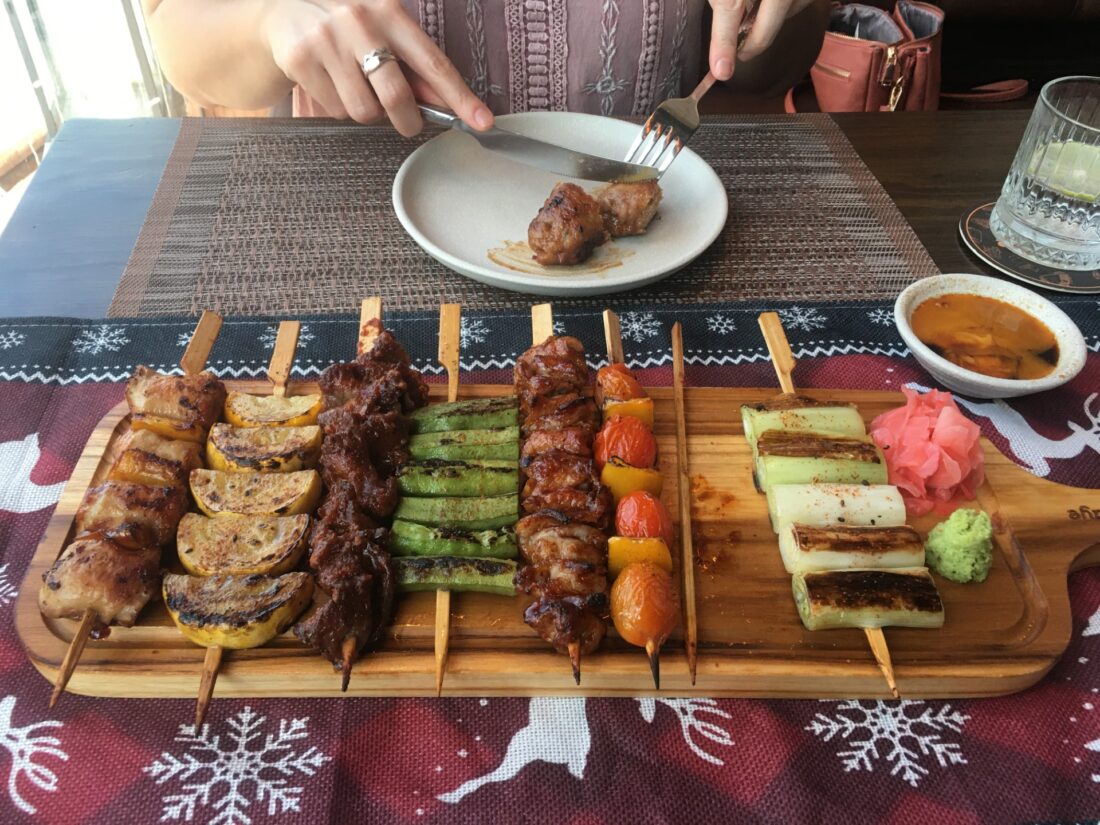
A very tasty meat and veggie platter for lunch in HCMC
One of my favorite parts of living in Ho Chi Minh was the food. It offers a great mixture of cuisine which allows you to experience the full spectrum of national and international delights. Immensely popular, affordable, and delicious, street food reigns supreme, while top-notch restaurants are scattered throughout the city.
Meat, veg, and fish platters are commonplace while Pho is a popular classic Vietnamese dish. It’s characterized by a flavorsome broth, rice noodles, and varying additional elements such as thinly sliced beef or chicken. You can find it everywhere; from the corner street food stalls to entire restaurants specializing in it.
If you’re a bit fussy with food, fear not! There’s an abundant culture of Western food available across the city. From delicious French-influenced bakeries to great American-styled barbecue joints and outstanding authentic Italian pizzerias. You’ll pay a little more for these food types, but they’ll still be cheaper than in the US or UK!
5. Coffee
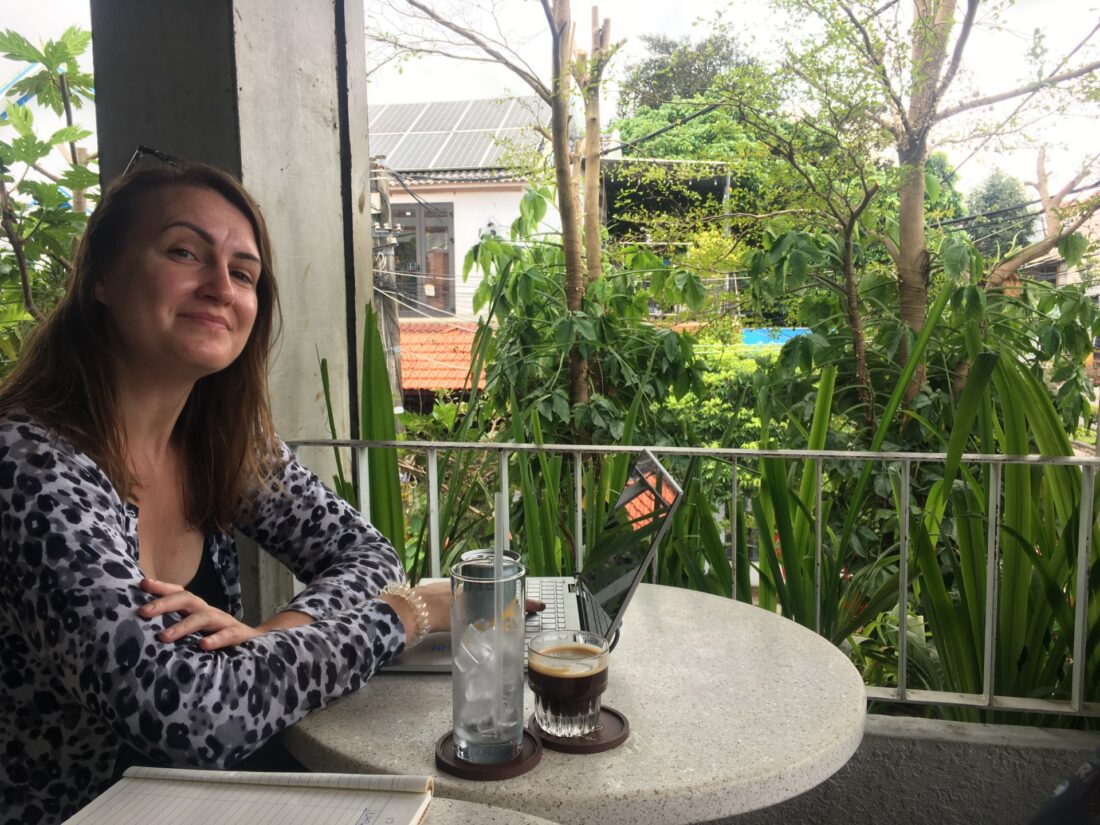
Enjoying a super strong Vietnamese coffee.
Coffee is a big deal in Ho Chi Minh. The abundance of cafes, coffee shops, and street stalls offering excellent coffee surprised me. Vietnamese coffee, served in small portions, is remarkably strong and incredibly inexpensive. I purchased a cup for as little as $0.40 on multiple occasions.
Be warned, as standard coffee usually comes iced with a sweet coconut cream, which is very tasty. But be sure to specify how you want it if this isn’t to your taste. Straight black is enough to knock your socks off. You might think you have, but trust me, you haven’t had a proper strong coffee until you’ve had one in Vietnam!
You can still find all your favorites—americano, cappuccino, and cafe lattes—but be prepared to pay extra and seek out larger coffee houses or chain cafes for these options. Starbucks does have locations in HCMC but the dominant chain of coffee shops is Highlands Coffee. They have over 200 stores in the Saigon region.
6. Social Scene
Happy hour at Belgo!
From rooftop bars and craft brew pubs to local happy hours and karaoke joints, Ho Chi Minh has everything you could ask of a social scene. It’s a really fun city to go out drinking in and serves up many opportunities to even out the work/life balance.
The explosion of the craft beer industry has not bypassed HCMC. I enjoyed many great bars and many delicious beers during my stay! Pasteur Street Brewing, Belgo, and The Heart of Darkness have numerous locations all over town and make some outstanding beer that’s sold across the country.
The concept of the ‘Happy Hour’ is something many HCMC bars fully embrace. In fact, it’s not so much a Happy Hour, but an entire Happy Afternoon in most bars! If you thought beers were cheap anyway, just wait until you see the offers available… 86 Proof in Xuan Thuy was one of my favorites – half-price everything from 4 pm-7 pm every day – what a deal.
7. Culture
A former US military chopper, one of many aircraft at the War Remnants Museum.
Living in Ho Chi Minh comes with the significant advantage of many cultural activities to explore. The city has excellent museums, theaters, memorial parks, and noteworthy iconic statues, that are truly worth visiting. There are so many things to do here and endless ways to spend your downtime.
The War Remnants Museum is a stunning display of American aircraft and artillery left behind after the Vietnam War. The museum’s accompanying exhibitions provide deeper insights as well as some graphic reminders of the horrors of war. I spent a few hours wandering the exhibits; it was a real learning experience. Be warned – some sections are not for the faint-hearted!
The Ben Thanh Market is an exhilarating, fun, and slightly chaotic way to spend an afternoon. The traditional Vietnamese marketplace is home to hundreds of stalls selling everything from specialist fabrics and designer clothing to bags of peanuts and fresh fish. It’s an experience not to be missed. If you see something you like, be prepared to haggle and get a bargain.
8. Connectivity
For digital nomads like me or anyone who seeks a reliable connection to the internet at all times of the day, Ho Chi Minh has got your back. Great WiFi is available pretty much everywhere, even in places you wouldn’t expect like smaller independent cafes and even some public areas.
SIM cards are easily purchased and are activated immediately to give visitors the benefit of extra data whilst out and about. I purchased a Vinaphone SIM for $5/month but many other options are available. I didn’t even use all the 6GB of data due to the availability of good free WiFi in most places I went. Having a SIM is useful, however, for booking Grabs when you’re about and about.
Coworking spaces are readily available for digital nomads or anyone who simply seeks an office space. From 1-day hot desk opportunities to month-long packages with tons of added benefits, you’re sure to find an affordable coworking space in Ho Chi Minh to suit your needs, whatever your work requirements.
Ho Chi Minh is a very welcoming place to live. Despite the bustling atmosphere and vibrant streets, the city feels safe and inviting. Locals are predominantly welcoming of visitors and there isn’t a culture of hassling tourists like in some countries.
There are many ex-pats living in HCMC which can lend itself to a more familiar environment and provide some home comforts to those who seek them. Australian, Irish, and US Sports Bars and British Pubs are quite commonplace. Many shops and grocery stores sell everything from English biscuits and HP Baked Beans to American Bourbon and Twinkies.
Ex-pat social media pages and groups are easy to locate and regularly host get-togethers, nights out, and local events.
10. Further Travel Opportunities
Vung Tao Beach
Tan Son Nhat International Airport is located within easy reach of all areas in Ho Chi Minh and is a major transportation hub. It maintains strong connections with countries across Asia and the world. Airlines such as Vietnam Airlines and Air Asia offer affordable options and regular flights to countries around Southeast Asia.
It’s even possible to take a bus to Cambodia, boat trips to other fantastic Vietnam locations like Vung Tau, and overnight sleeper trains to pretty much anywhere in the country. Ho Chi Minh is a gateway to many amazing places and travel opportunities.
I caught the river ferry along the Saigon River that took me from the center of HCMC to Vung Tau for around $15 each way. It only took a couple of hours and was very comfortable. There was free WiFi and snacks as well as a beer trolley. It was a beautiful ride down the river to spend a few days on the beach.
Cons of Living in Ho Chi Minh City
As with anywhere in the world, there are of course some disadvantages of living in Ho Chi Minh. Anyone considering a switch to living in HCMC must consider the following carefully;
1. Language Barrier
While many locals do have a basic understanding of English, it’s far from widely spoken. I met many Vietnamese people who didn’t speak or understand a word of English, and as my Vietnamese is beyond bad, it created some challenging situations.
Apps are widely available for helping with basic translation issues and for the most part as a visitor, it is easy to get by. But anyone planning to live in Ho Chi Minh on a longer-term basis should keep in mind that daily interactions or industry-specific conversations could be difficult.
2. Cultural Differences
Living in Ho Chi Minh presents a unique cultural experience, but it’s important to be aware of potential discomfort stemming from cultural differences. While many locals in HCMC are welcoming, there can be instances where cultural nuances might lead to misunderstandings or difficult situations for ex-pats.
Despite the increasing global influence in HCMC, there remains a substantial cultural gap for foreigners. Traditional customs, communication styles, and social etiquette differ significantly in numerous ways from Western norms. As an example, I learned to use chopsticks very quickly as many restaurants do not provide knives and forks.
While tools exist to help navigate these differences, visitors should anticipate a learning curve. I found that embracing the local culture, maintaining an open-minded approach, and actively seeking to understand and adapt to Vietnamese customs enhanced my overall experience of living in HCMC.
3. Adverse Weather, Rain, and Humidity
One of the downsides of living in Ho Chi Minh can be the weather. HCMC has a tropical climate, characterized by high temperatures, humidity, and distinct wet and dry seasons. The weather, particularly during the wet season, can be a real negative.
The tropical climate brings with it heavy rainfall which often leads to flooding in certain areas of the city. Navigating through flooded streets can be a huge inconvenience, with residents regularly needing to adapt their daily routines. The humidity levels can be particularly intense, and for those not accustomed to such conditions, it might take time to acclimatize.
While the weather can be a subjective aspect of daily life, being aware of the conditions can help mitigate the challenges associated with the weather in HCMC.
4. Chaotic Roads/Air Pollution
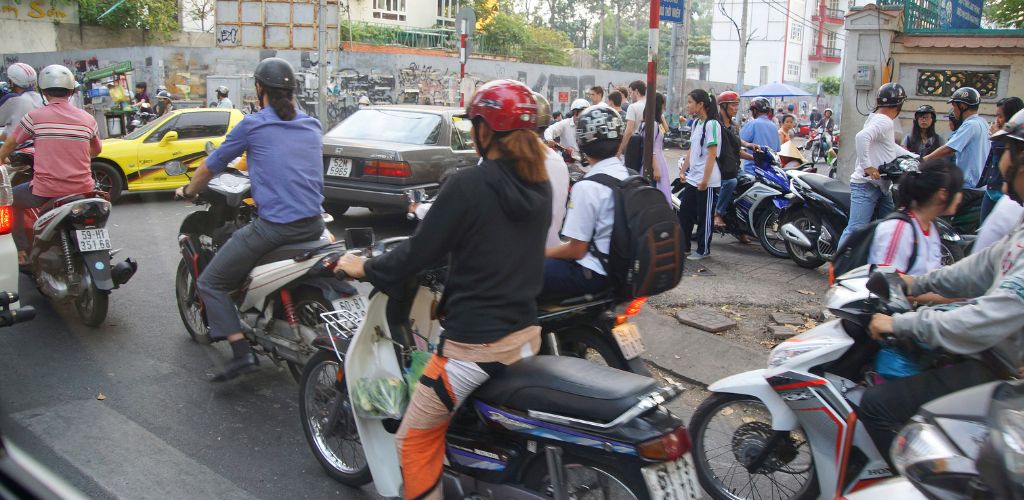
While Ho Chi Minh City’s energy and vibrancy are undeniable, the sheer volume of motorbikes and vehicles on the roads creates a chaotic traffic environment. Roads in HCMC often lack the organized flow seen in most Western countries, and traffic rules are interpreted, shall I say, quite flexibly…
Crossing the streets can be a daunting task, as pedestrians often need to navigate through a continuous stream of motorbikes and vehicles. This road chaos can be both overwhelming and challenging, particularly for those accustomed to more structured traffic systems. It’s not unusual to see vehicles driving down the wrong side of the street or using pavements to avoid traffic.
In addition to the traffic congestion, air pollution is a concern in HCMC, primarily due to vehicle emissions. The combination of high-density traffic and industrial activities contributes to high levels of air pollutants. Ex-pats, especially those with respiratory sensitivities may find this difficult to live with.
5. Visas
Navigating the visa process in Vietnam, particularly for anyone planning an extended stay in Ho Chi Minh, can be a complex and sometimes challenging aspect of ex-pat life. While Vietnam offers various visa options, including tourist visas and business visas, the requirements and regulations can change, and staying informed is crucial.
The visa application process can involve paperwork, fees, and periodic renewals, and it’s essential to adhere to the specific visa type and duration allowed. Overstaying a visa can result in penalties and seriously affect your legal status in the country.
Citizens of different countries are entitled to varying lengths of stay and being aware of the rules and lengths of your visa is crucial. Seeking guidance from local authorities, immigration services, or legal professionals is advisable to ensure compliance with Vietnamese visa regulations.
Is Living in Ho Chi Minh City Worth It?
Living in Ho Chi Minh is a brilliant experience and would suit those who seek cultural immersion, diverse job opportunities, and a more affordable lifestyle. The city’s rich history, excellent social scene, and easy travel access within Southeast Asia only add to its appeal. Plus, let’s not forget it rarely drops below 72 degrees Fahrenheit.
While there are certainly downsides to living in Ho Chi Minh, I found that these hurdles are outweighed by the positive aspects of living there. My time in HCMC was ultimately made more enjoyable by the cultural differences, crazy rain storms, and chaotic road crossings!
I’m already looking forward to returning to Vietnam. Is living in HCMC worth it? I say absolutely YES!
Since Covid-19 there has been an influx of first time camper owners. Prior to Covid the number of first time RV owners was already on the rise, and once the world came to a screeching halt, that number skyrocketed. Regardless of the reason for the addition in numbers, camping etiquette is something that should be addressed. Even if you’re not new to the RV Lifestyle, I think we could all probably use a little refresher sometimes.
Question Bubbles
What is Camping Etiquette?
A basic, and broad, definition is: Respect the regulations where you’re camping. This should also include respecting your fellow campers at your chosen location.
Who is Responsible for Camping Etiquette?
EVERYONE! If you’re camping, you’re responsible. None of us should require the security at the resort or the ranger in a park to notify us that we’re breaking the rules. When you checked in, you were likely handed a flyer with the campground rules. If you’ve opted to stay in a National forest or state park, those rules are posted on a sign. Make sure that you read all of the rules and adhere to them too. I know some of them can be inconvenient. But they’re there for a reason.
Where Do You Need to Worry About Using Camping Etiquette?
Everywhere. Again, it doesn’t matter where you’ve chosen to set up camp or how long you plan to stay, there are still rules that need to be followed. Just because you’re all alone in the middle of a National Forest and no one can see you, or what you’re doing, doesn’t mean you don’t have to follow the rules.
The view from our camp site at Glacier National Park
Why Do You Need to Worry About Camping Etiquette?
Because it makes the camping experience more enjoyable for everyone involved. If we all follow the simple guidelines for camping, we can all have an opportunity to enjoy the wonderful atmosphere and environment that camping provides.
What Are General Camping Etiquette Rules?
Rules and regulations can vary greatly depending on where you’re staying. However, there are a few that are consistent no matter where you go. Here is a quick reference…
1. Parking
Park all vehicles, including the camper, within the parameters of your site. You’ll have more freedom to spread out in some locations, but keep your things on your site. You need to treat your campsite like you live in a development. You don’t want your neighbors kiddy pool on your front lawn, and they don’t want your dog on theirs.
2. Pick up after your pet
I get it! Picking up poop isn’t fun for anyone. But stepping in it is far worse. And worse than stepping in it yourself, is when a child or pet through it and it is now tracking all through your camper.
Poop Bags and Leash
3. Leash your pets
Just because you love Fido, doesn’t mean everyone in the campground will. Dogs are scavengers. If your neighbors are cooking bacon for breakfast, you don’t want Fido going for a visit while you’re making pancakes. It doesn’t matter if Fido has never walked away from you and is perfectly trained to stay by your side. You still need to leash your pet.
4. Holding Tanks
Don’t dump your tanks on the ground. There’s a reason your toilet flushes into a sewer system. First, it’s gross. Second, it’s unsanitary and carries and promotes disease. The same holds true for your black tank. Keep it in the tank until you’re connected to a sewer dump. It’s easy to think that it would be OK to dump gray water on the ground. It’s sink water. Shower water. But the bottom line is that it’s still dirty water. You’re pasta water and soapy shower water attract animals, that puts everyone in danger.
5. Time to Leave
Don’t stay longer than you’re allowed. Respect checkout times when you’re in a campground. When you’re dispersed camping, don’t stay longer than the posted number of days allowed. Other people would like to enjoy the very same space that you are currently occupying. Give them that opportunity.
6. Trash
If there are receptacles, one unlucky person in your group is responsible for getting all of your trash to the proper receptacle. If there isn’t a receptacle, guess what!? That same unlucky person is responsible to get it to a proper receptacle when you leave. Don’t leave your trash out. Don’t leave your trash behind. Take it with you and dispose of it properly. This is the Leave No Trace that you keep seeing, hearing, and reading about. The best advise we can give is to leave the site looking better than when you arrived there. The only thing that should be there when you leave is your footprints and the tire tracks.
7. Campfires
These should only ever be in the designated campfire ring. If you are dispersed camping and a ring is not provided, you need to make one with rocks in the area. That being said, there are vast portions of the country that experience fire bans on a regular basis. Don’t burn when you’re not allowed to burn. Campfires should also never be too large. They need to be contained to your fire ring and never out of control.
8. Quiet Time
Quiet hours exist everywhere. You may not have been aware of these before you started camping, but a lot of towns have noise ordinances too. I get it, you’re on vacation and you’re hanging out with friends. Or you want to get up early tomorrow, pack up, and head out. You’re neighbors don’t want to hear it. If you’ve been out hiking all day and are looking to go to bed early tonight, chances are you don’t want to hear the rowdy couple across the campground kicking back a few beers. Same thing in the morning. Doug and I happen to wake up ridiculously early. We aren’t pulling out the impact gun to bring up the manual jacks and heading out at 5am. I’m willing to bet that our neighbors, on vacation, wouldn’t mind sleeping a little late today.
Stay in the Lines
Don’t camp where you aren’t supposed to camp. This is more for the boondocker than the RV resort camper. But still an important rule.
Are there Unwritten Rules to Camping Etiquette?
Yes! I’m so happy that you’ve asked!
As I stated before, each campground will have their own rules. Just like every boondocking location will have their own set of regulations. But there are other unspoken or unwritten things that you should be aware of.
1. Don’t cut through occupied sites.
That’s someone else’s current residency. It doesn’t matter if it’s only a temporary home, it’s theirs right now, not public space. Use the designated roadways to go from the pool to your camper.
2. Be mind of your neighbors.
RV’s are not sound proof. Your neighbors don’t need to hear you yelling at your kids in the middle of the day. And you don’t want to hear them having sex in the middle of the night.
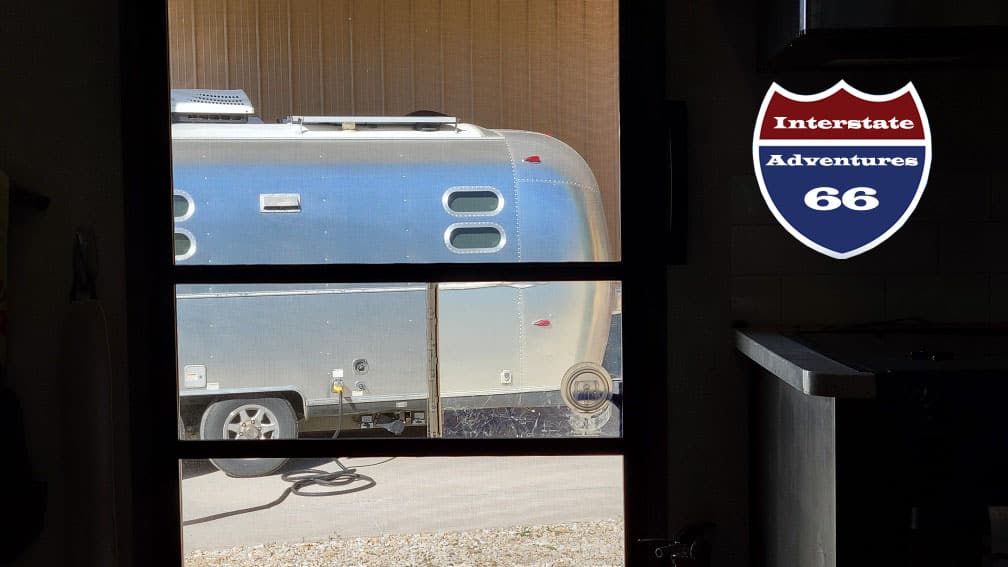
Our Neighbors ~ An Airstream parked right outside of our camper door.
3. Help each other out!
If you notice that your neighbor is having difficulty backing in their camper, go over and ask if they’d like a hand. Maybe it’s their first voyage in their new home away from home and they’re nervous. Remember, you were new once too.
4. Patience.
You’re schedule is not the campgrounds schedule. We’re all creatures of habit. It just is what it is. Get up. Go to the bathroom. Get coffee. Shower. Whatever! Do so with the understanding that patience are required. Every other camper that you see is going through their morning routine too. If you’re using the communal shower, there may be others that want to shower the same time as you. And maybe today is a big excursion day for their family. Be patient. You don’t need to be outside banging pots and pans to make breakfast at 7am because that’s when quiet hours are over. You should still do so with a little respect to your neighbors.
5. Only Take What You Need
There are several campgrounds that you self book online, and even some that you self pay at a kiosk. When you chose your site, only take what you need. If you are in a 20 foot mini van, don’t take the 100 foot site. Take the 20-25 foot site. When the 40 foot camper comes in, they can’t park in the 20 foot site. If we all only take what we need, more of us can utilize the campground at any given time. This same rule holds true for firewood. Don’t buy more than you need, and don’t scavenge for more than you need. Leave it for the next person to have available when they get there too.
6. Say Hi!
Yup! Say hi! We are all out here doing the same thing. You may meet you’re new best friend! Or a new place to go check out. I’m not saying that every ‘Hi’ will lead to an in depth conversation. But if it does, let it! Don’t over stay your welcome either though. Just because you’ve said ‘Hi’ to each other a few times, doesn’t mean that you’re besties for life.
7. If you don’t know how to do something, just ask
Especially of it’s something that will affect the people around you. For example – connecting your sewer line. If you aren’t 100% sure that you’re doing it correctly, ask. Your new neighbors will be happy to help you if it prevent that line from leaking all over their site.
8. If a fellow camper asks you for help, help
If a fellow camper asks you for help, and it’s within your wheelhouse of knowledge, Help Them! Like the guy backing in his camper, or the woman connecting the sewer line. If they’ve asked you for help or advise, give them a hand.
I know when you look at a list like this it can seem a little daunting. In reality, none of it is more than common sense courtesy. Do unto others as you want done unto you. Or something like that. The bottom line is to just be a good human. No one said that being a good human means that you can’t have an absolutely amazing and fun time! If we all just do our little part, we can ALL continue to enjoy the adventures out there in our RV.
There are a lot of exciting launches set for 2024.
There are plenty of new and updated versions of existing nameplates coming, but 2024 will also mark the year multiple brands will make their Australian debut (or return).
While new car launches can be subject to delays, this is our latest intel on what to expect to arrive this year and next. Each model is linked to our latest relevant content.
Let us know if you spot something missing!
Aion
Aion Hyper GT
Aston Martin
Aston Martin DB12 Volante
Audi
Audi Q7
BMW
BMW i5 Touring
BYD
BYD Seal U
Cadillac
Cadillac Lyriq
Chery
Chery Omoda E5
Chevrolet
Chevrolet Corvette E-Ray
Citroen
Citroen C5 X
Cupra
Cupra Tavascan
Ford
Ford Mustang
Genesis
Genesis GV80 Coupe
GMC
GMC Yukon Denali
GWM
GWM Cannon Alpha
Honda
Honda Accord
Accord – second quarter of 2024
Hyundai
Hyundai Santa Fe
Ineos
Ineos Grenadier Quartermaster
JAC
JAC T9
Jaecoo
Jaecoo J7
J7 – second half of 2024
Jaguar
Jaguar F-Type ZP Edition
Jeep
Jeep Avenger
Kia
Kia K4
Carnival update – mid-2024
EV5 – 2024
K4 – expected first quarter of 2025
Ute (potentially called Tasman) – expected in mid-2025
EV9 GT – expected in 2025
Lamborghini
Lamborghini Revuelto
Land Rover
Land Rover Defender 90 Pacific Blue Edition
LDV
Updated LDV D90 (Chinese-market model shown)
Lexus
Lexus GX
GX – first half of 2024
LBX – first half of 2024
Maserati
Maserati Grecale Folgore
Mazda
Mazda CX-70
Mercedes-Benz
Mercedes-Benz E-Class
MG
MG Cyberster
Mini
Mini Countryman JCW
Mitsubishi
Mitsubishi Pajero Sport
Nissan
Nissan Ariya
Peugeot
Peugeot E-3008
Polestar
Polestar 3
Porsche
Porsche Macan
Ram
2025 Ram 1500
Renault
Renault Kangoo E-Tech
Skoda
Skoda Kodiaq
SsangYong
SsangYong Torres EVX
Subaru
Subaru WRX Club Spec
Suzuki
Suzuki Swift
Toyota
Toyota LandCruiser Prado
Volkswagen
Volkswagen ID. Buzz
Volvo
Volvo EX90
EX30 – second quarter of 2024
EX90 – late in the fourth quarter of 2024
Zeekr
Zeekr 009
009 – second half of 2024
With reporting from Jordan Mulach, Jack Quick and William Stopford.
A man seen on camera being thrown dramatically from a vehicle rolling over on a beach has reportedly survived the ordeal.
Arab Times reports the incident, involving a Toyota FJ Cruiser, occurred near Abu Al-Hasaniya beach in Kuwait.
Video shared on social media shows the vehicle swerving recklessly on a beach, before flipping multiple times.
Shocking video shows the moment a 4WD loses control and rolls multiple times on Abu Al Hasaniya Beach in Kuwait, with the vehicle’s 34-year-old driver miraculously walking away from the wreckage with minor injuries. pic.twitter.com/bvPNSpVNtv
The driver is seen being ejected from the vehicle and landing in the water.
But he gets up almost immediately and appears to walk away to a group of people on the beach without any difficulty.
Authorities in the Mubarak Al-Kabeer Governorate have reportedly seized the damaged vehicle, which ended up being swept into the sea and had to be recovered by the fire department.
Fisker has slashed prices on its Ocean electric SUV as it looks to relieve a glut of unsold vehicles.
In a move that it calls “strategically positioning Ocean to be a more affordable and compelling EV choice,” the company on Wednesday announced significant price cuts on the 2023-model-year vehicles that represent the majority of the current Ocean inventory.
The U.S.-market MSRP for the 360-mile Ocean Extreme drops from $61,499 to $37,499. The lower Ultra grade now starts at $34,999—down from $52,999 before. And Fisker has reduced the starting price of the Ocean Sport grade from $38,999 to $24,999.
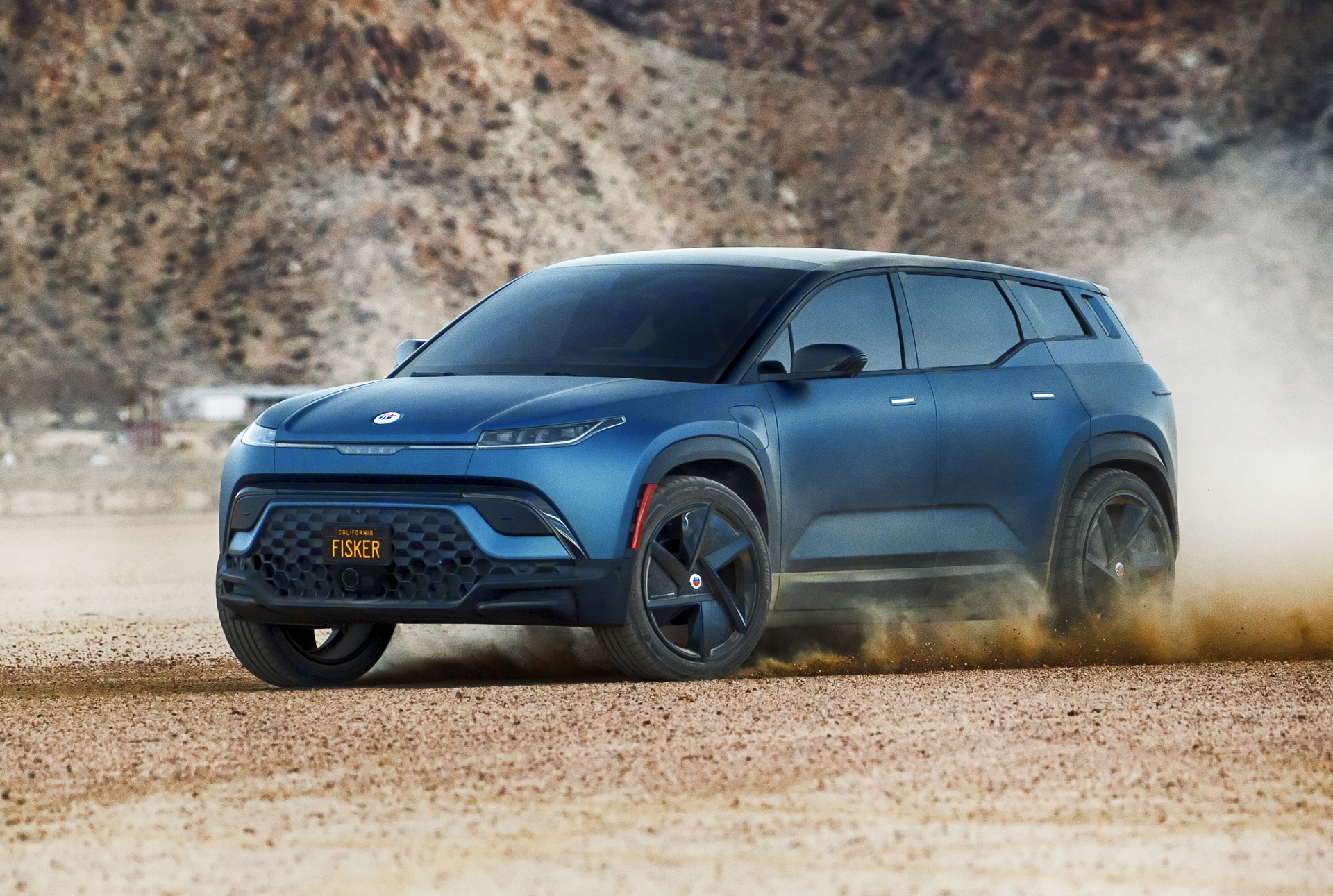
2023 Fisker Ocean
Fisker earlier this month announced a six-week production pause for the Ocean, which is assembled under contract by Magna at that company’s Graz, Austria, factory as undelivered vehicles piled up. Fisker is in the process of shifting to a dealer-based sales model to help speed up distribution, although some of its original dealers have already reportedly fled.
Existing owners having second thoughts may also have trouble unloading their Fiskers. In posts first spotted by Teslarati, users on the r/Fisker subreddit claim Tesla is also no longer accepting Oceans as trade-ins.
2023 Fisker Ocean
Fisker recently reported a potential EV partnership with a “large automaker”—reportedly Nissan—but that has since dissolved. That leaves the company in need of a financial lifeline. When it announced the Ocean production pause earlier this month, Fisker said it needed to secure additional funding to the tune of $150 million to keep operating.
Fisker has a future product plan that includes an urban EV, electric pickup, and flagship GT, but it’s hard to imagine it ever getting there without a new, very large investment.
Ahead of the release of preliminary Q1 2024 production and delivery figures, expected next week, it’s now official: Tesla has delivered more than 6 million vehicles since 2008, every one a battery-electric vehicle.
Its 5 million total last September got a lot of attention. But 6 million is more important, because it cements Tesla as the first company in all but 100 years to achieve a remarkable milestone.
Nearly 10 years ago, Green Car Reports suggested Elon Musk had to deliver 6 million Teslas to become the highest-volume startup carmaker in the U.S. since the 1920s. That number today equates to what was done by the last U.S. startup to achieve significant volume production—more than 60 years ago. That would be Kaiser, a name now all but forgotten. Starting in 1945, Kaiser-Frazer (later Kaiser, then Kaiser-Jeep) built more than 700,000 cars.
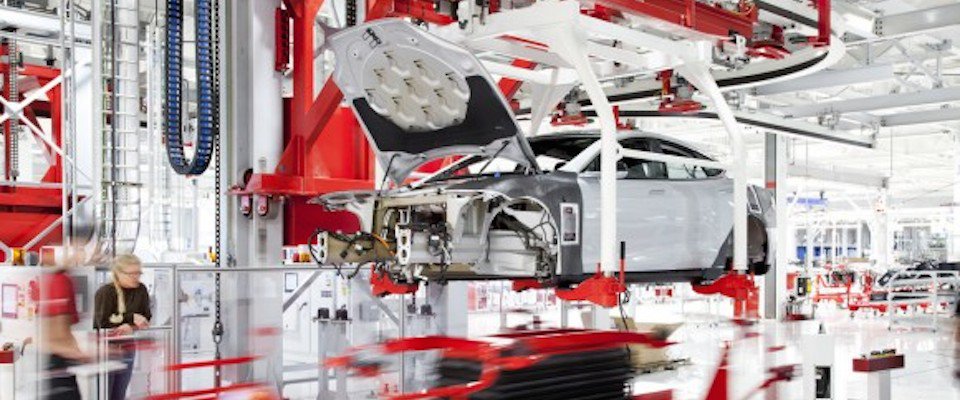
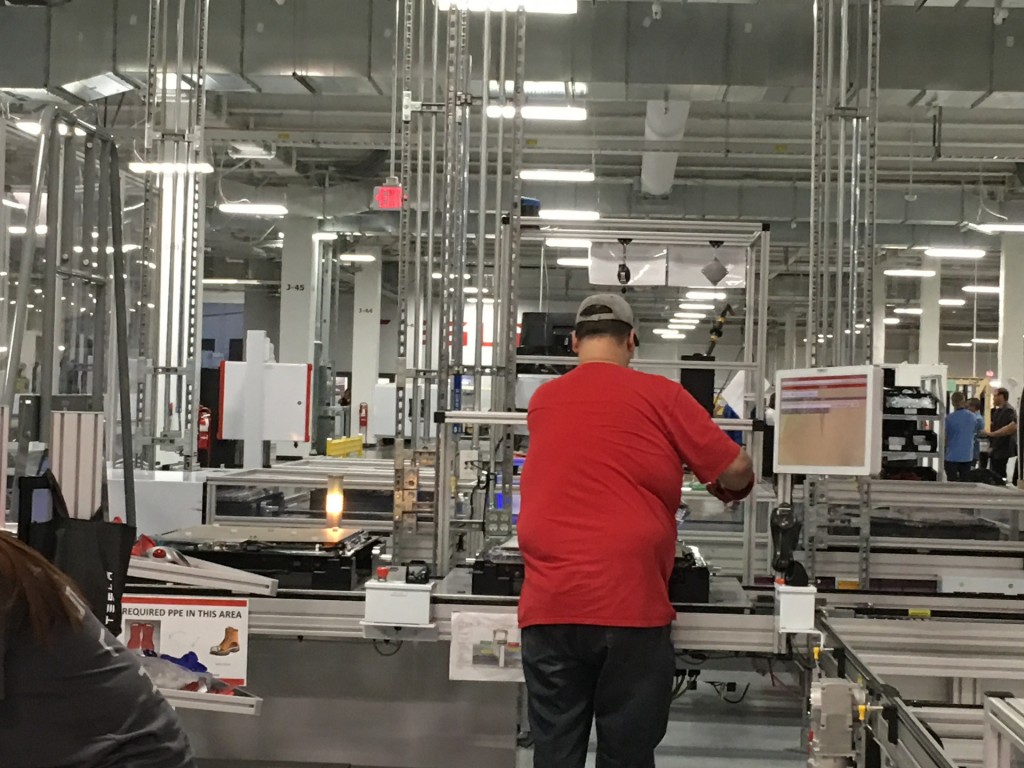
Tesla Motors production line for Tesla Model S, Fremont, California
Here’s how we got to that 6 million: In 1950, U.S. vehicle sales of 8 million cars represented 80 percent of total global production of just under 10 million. The market today is nine times that size—almost 90 million vehicles a year, according to J.D. Power. U.S. sales for 2023, at 15.6 million in 2023, are at just 17 percent of that total, with China far and away the world’s largest car market. So Kaiser’s 700,000-plus (over 10 years) roughly scales up to Tesla’s 6 million (over 15 years).
With this latest milestone ticked off, it’s a good time to look at the things that Tesla has accomplished since 2008—and some of the things it hasn’t.
Produced our 6 millionth car!
Thank you to our owners & teams around the world for your support & hard work—it truly matters.
The company has launched and built hundreds of thousands of its first two models (2012 Model S, 2015 Model X) and millions of its smaller, less expensive pair (2017 Model 3, 2020 Model Y). Its fifth model, the 2024 Cybertruck, is ramping up to what would widely be called mass-production levels. But beyond those products themselves, Tesla has logged other notable accomplishments that have transformed the world’s vehicle business.
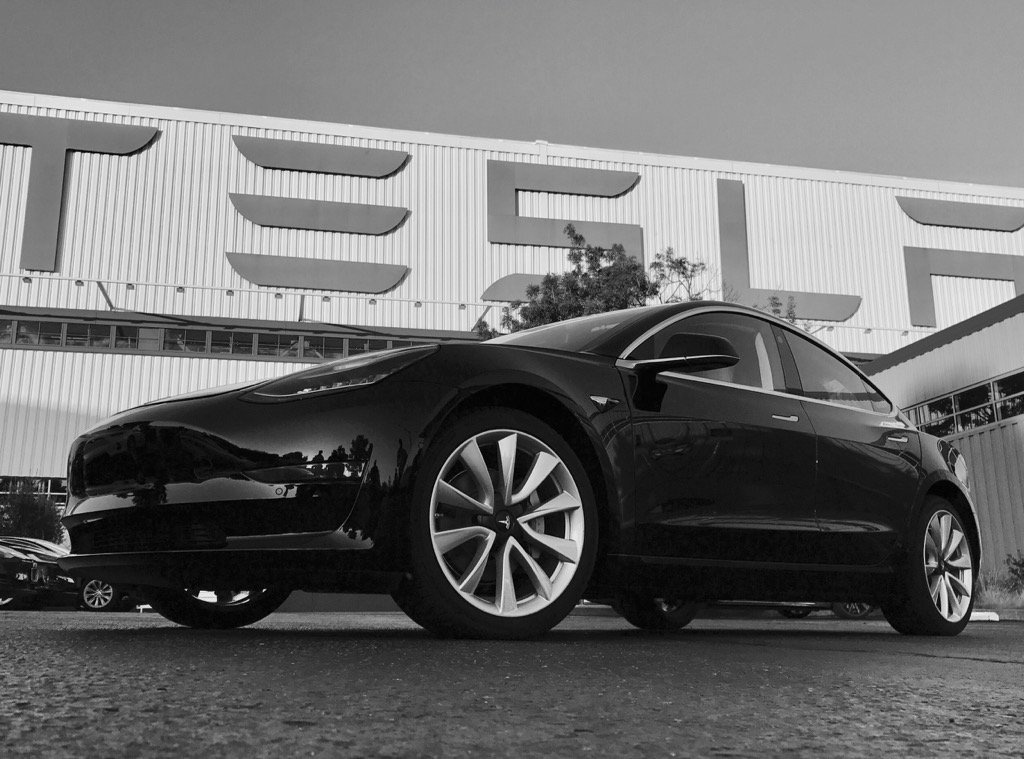
2017 Tesla Model 3
Tesla kicked the global auto industry in the backside, hard
The emergence of Tesla as a volume carmaker in 2013 and 2014 profoundly rattled most of the world’s automakers, who had viewed the limited-production, expensive 2008-2011 Tesla Roadster as an interesting science experiment.
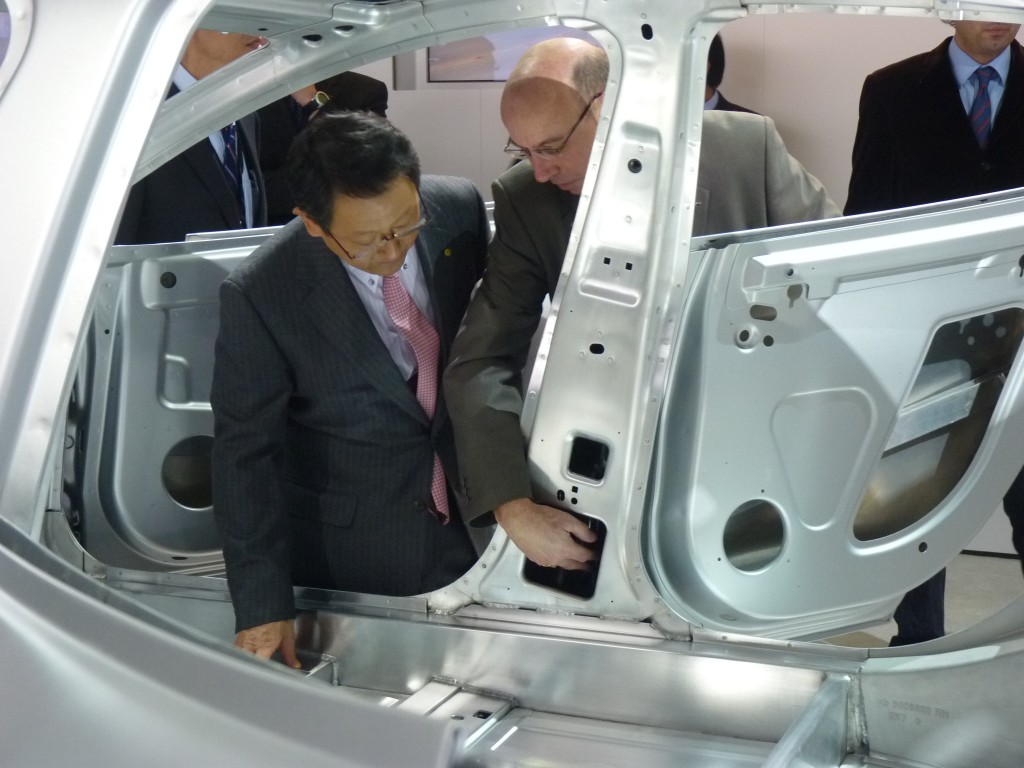
The nervousness started in 2011, when Tesla showed a stripped Model S body shell at that year’s Detroit auto show. It was impossible to photograph the shell given how many engineers and executives from other makers swarmed around it—including Toyota CEO Akio Toyoda.
Toyota Motor Corporation president Akio Toyoda, at Tesla stand, 2011 Detroit Auto Show
Ten years ago, a longtime insider in the German auto industry told us the story of what happened early in 2013, when one of the German prestige brands got its hands on a Model S. First, it took the Tesla to its test track and teardown facility, where the company’s test drivers hammered it around the track, recharged it, and hammered it again. Members of its product board were then told to come to the track and do the same. The Tesla was driven for several days at low speeds, high speeds, and everything in between; apparently it performed flawlessly.
Then the executives responsible for that maker’s future products convened a meeting. They concluded the Model S electric luxury sedan—a sexy all-aluminum vehicle from a carmaker that hadn’t existed 10 years before—provided a fast, comfortable, technologically advanced driving experience. No vehicle in their lineup, or even on the drawing board, could match the experience. That was deeply, profoundly unsettling to this particular maker of cars world-renowned for their brand image.
And that, kids, is how we came to have the Porsche Taycan.
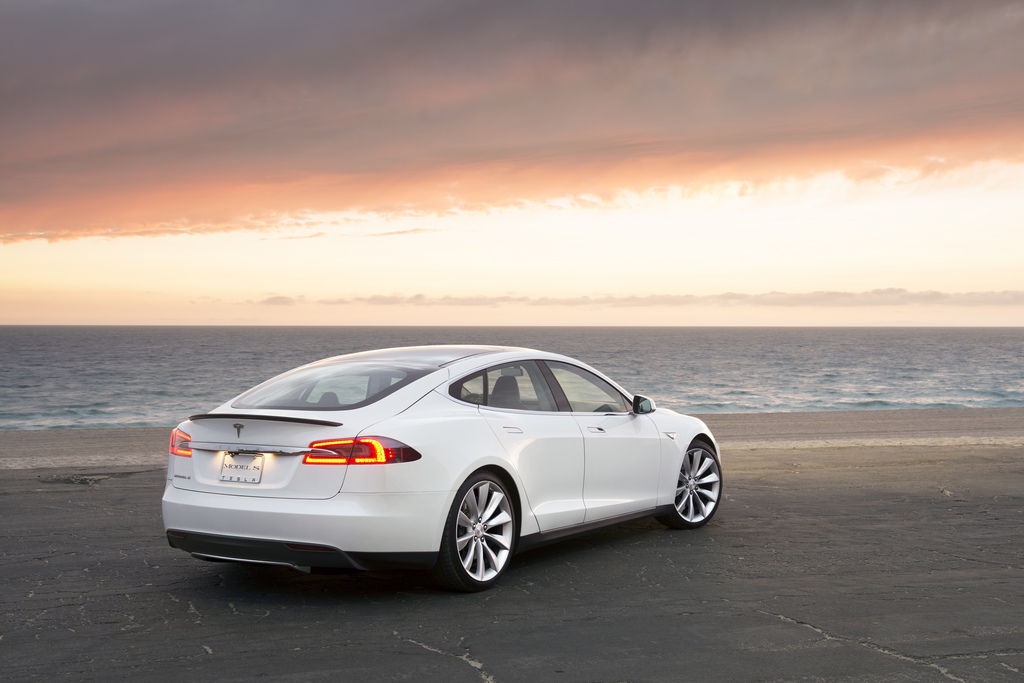
Tesla Model S
Tesla showed EVs could be fast, sexy, and desirable
In the late 2000s, when Tesla was struggling to get the Roadster into production, one auto reporter dismissed EVs out of hand. “The only people who care about electric cars,” this person said, “are annoying environmentalists and smelly hippies. And they don’t buy new cars.” That attitude, along with the image of EVs as glorified golf carts (not helped by low-speed neighborhood electric vehicles from the likes of GEM), presumed that EVs could never be alluring vehicles in their own right.
That was wrong, as the now-classic design of the Model S showed 12 years ago. That design, its startling performance, and the smooth, calm driving experience likely got some people to buy a Tesla despite its electric powertrain. It was the most tech-forward car on the market, sure, but more important, it was sexy and it was cool.
Tour of Tesla battery gigafactory for invited owners, Reno, Nevada, July 2016
Tesla scaled up battery plants long before others
Tesla CEO Elon Musk first used the word “gigafactory” more than 10 years ago, in November 2013, as he discussed the company’s plans to scale up production to tens of thousands of cars a year, then hundreds of thousands. He had done the math and realized huge factories that built gigawatt-hours of battery cells every year would be needed for that many EVs. The first Gigafactory, outside Reno, Nevada, opened in July 2016, with the company’s cell partner Panasonic starting cell production in January 2017.
Even so, it took roughly five years for Panasonic to turn consistent profits from that site—indicating the difficulty of producing a new cell format, with a new chemistry, in a new building, using a new workforce that had never worked on batteries before. How hard is that? According to a battery engineer, it’s “really, really, really, really, really, really, REALLY hard.”
Tesla has to build several of these plants globally, ideally one per vehicle factory. The industry as a whole has to build many dozens of them—and as GM’s very slow ramp of its Ultium cells and vehicles suggest, our battery engineer wasn’t kidding. Tesla was far ahead of that curve.
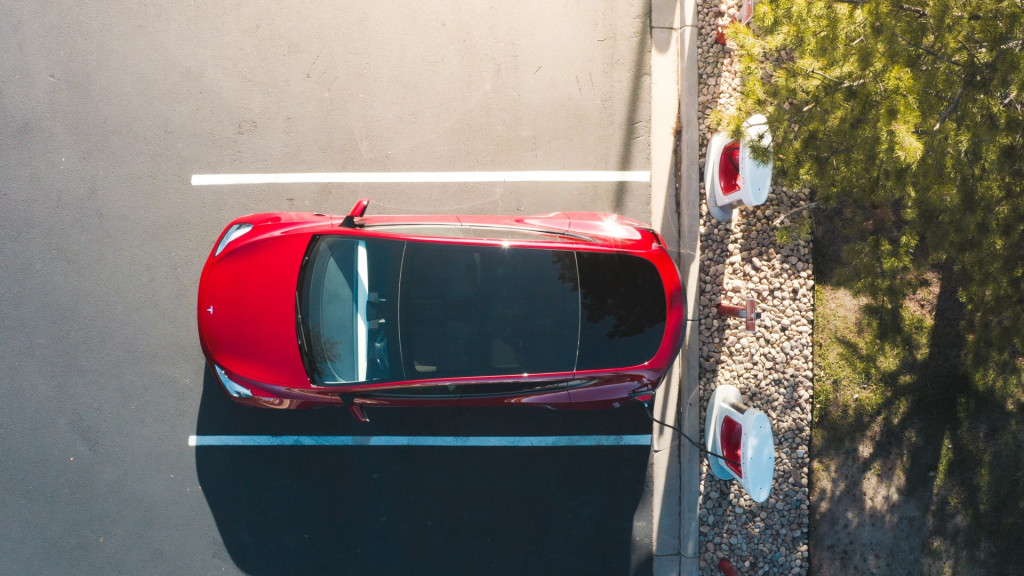
Tesla Supercharger
Tesla Supercharger network at 25,000 U.S. connectors!
With ranges of more than 200 miles, every production Tesla easily surpassed the driving range of EVs from other makers, which spanned from 60 to 125 miles. But Tesla always intended its cars to be driven wherever any other car could go, including cross-country trips, so in 2012 it began construction of its first Supercharger DC fast-charging stations. Last September, it reached 50,000 Superchargers globally, of which roughly 21,000 of those were in the U.S.—and just six months later now, the Supercharger network stands at 25,000, according to the DOE.
Tesla’s Superchargers are reliable, easy to use (plug in, walk away), and benefit from the company having designed and built the hardware and software for both the charging stations and the cars that use them. It’s the model for a ubiquitous, reliable, seamless DC fast-charging network.
Other makers had no intention of spending the tens of billions of dollars to create such a network, and 10 years later, the result is a confusing collection of money-losing regional and national charging networks of questionable reliability.
As EV production scaled up, carmakers’ frustration with their charging “partners” reached a boiling point in 2022. Ford, which had been the most proactive, already resorting to its own “charge angels” to do the in-person spot-checking the charging networks omitted, shocked the industry last May. Its deal with Tesla to provide charging adapters and adopt the latest Tesla charging connector, now standardized, will give owners of its current EVs—and all the brands that have followed—the ability to charge at Superchargers. As of yet, with Ford and Rivian owners already tapping into Superchargers, it’s working.
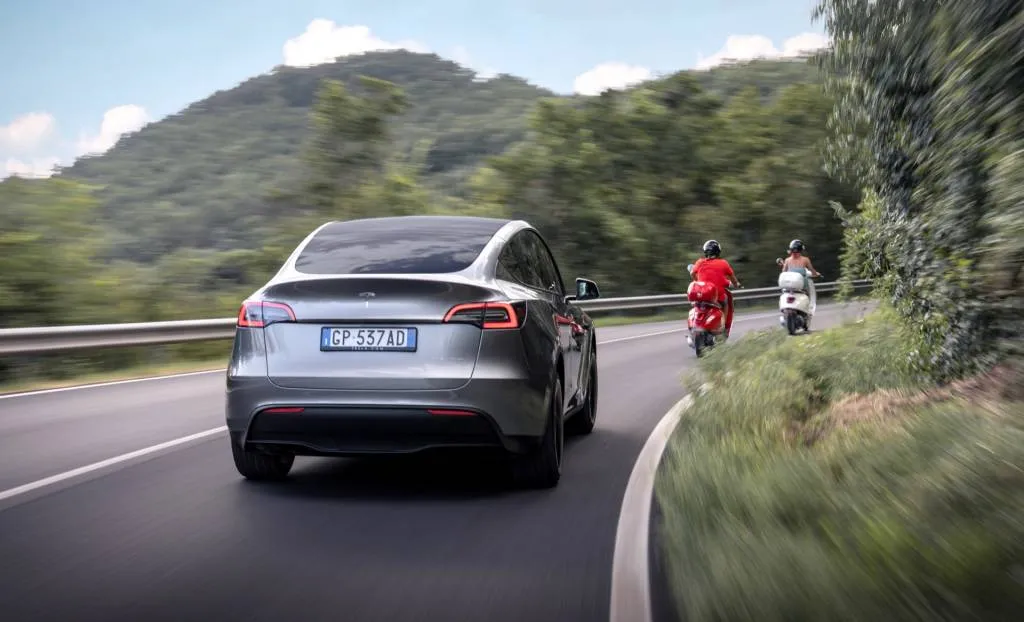
2024 Tesla Model Y. – Courtesy of Tesla, Inc.
Tesla has sold more EVs than any other maker in the world
The idea that a scrappy startup could sell more battery-electric cars than the world’s biggest makers was laughable to those makers’ executives—until Tesla simply did it. It took the company from July 2012 to March 2020 to build its first 1 million vehicles. Then it added a factory in Shanghai, and the rocket ship took off. In the three years that followed, it built 3 million more. It hit 5 million last September, just five and a half months after reporting 4 million total vehicles. Now 6 million, and … how soon 10 million? 20 million?
The Nissan Leaf, which began deliveries 18 months before the Model S, took 10 years to reach even half a million sales. Nissan said last summer it had surpassed 1 million global EV sales—a milestone that required 12 years. General Motors sold 160,000 thousand Chevrolet Volts in two generations before killing the car (plug-in hybrids are very hard to explain, and there’s no guarantee they’ll ever be plugged in). Meanwhile, its much-vaunted array of Ultium-based EVs is now far behind schedule amid production problems and product glitches.
Tesla may soon lose the EV portion of its title to China’s BYD, however. BYD said just last week that it had sold 7 million cumulative “new energy vehicles”—including plug-in hybrids. In sheer production of vehicles with plugs, BYD has surged ahead of Tesla. It reported sales of more than 3 million plug-in vehicles in 2023 alone, although it remained behind in battery-electric sales, at 1.6 million vs. Tesla’s 1.8 million.
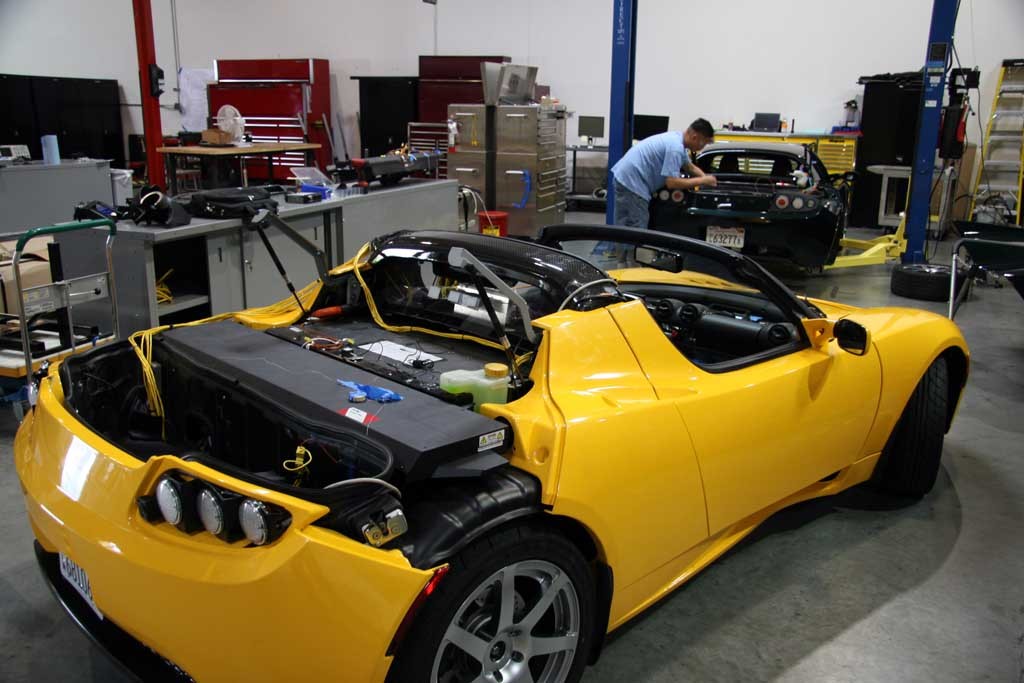
2007 Tesla Roadster Prototype
Tesla followed a traditional innovation path
Historically, almost every major advance in automotive technology has come at the high end of the market—either in luxury vehicles or performance cars. From Charles Kettering’s electric self-starter for combustion engines (Cadillac, 1912) through air conditioning (Packard, 1939) and automatic transmissions (Oldsmobile, 1948), more expensive brands and models pioneer new features because they deliver more profit margin to offset the cost of the new technologies. Things like disc brakes (Jaguar, 1952), fuel injection (Corvette, 1957), and turbocharging (Corvair Monza, 1962) came from the performance end of the scale—but all of these innovations gradually migrated down the lineup as they were made simpler, more reliable, and less expensive.
Tesla followed this path to a T, versus Nissan and Chevrolet, which launched their EVs as compact hatchbacks under $40,000. The first Tesla, really a proof of concept, was the low-volume, high-performance 2008 Roadster, carrying a six-figure price tag. Then came the Model S and Model X in 2012 and 2015, higher volume and somewhat lower-priced. The Model 3 cost under $50,000 when it debuted in 2017, as did the Model Y in 2020. Cybertruck aside, it’s spoken of a cheaper, $25,000 Tesla (often called the “Model 2”) to boost its volume even higher.
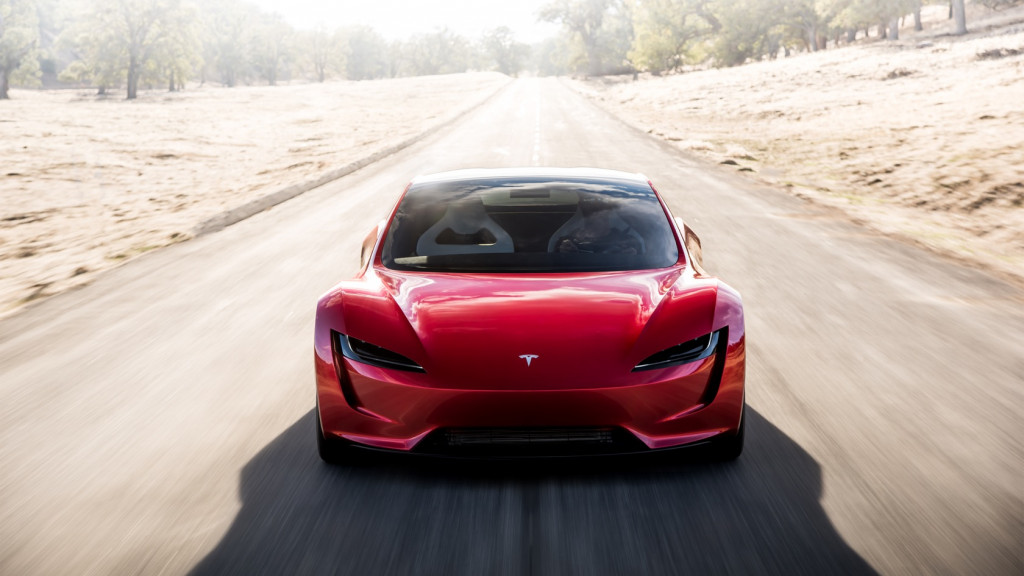
2020 Tesla Roadster
What Tesla Hasn’t Done
Tesla CEO Elon Musk says many things. Some are verifiably true when he says them. A few are verifiably false. And many may be true at some point in the future but remain, at best, aspirational on indefinite timelines rather than being actual features or products with defined launch dates.
Tesla hasn’t offered hands-off automated driving
The development history, extravagant marketing claims, and misleading titles of Tesla’s “Autopilot” and “Full Self-Driving” automated driving assist systems are their story, if not book or perhaps multi-volume series. But while both add active lane control to adaptive cruise control, they remain “hands-on” systems in which a driver must keep their hands on the wheel and pay attention to the road ahead. This is noted on Tesla’s website, but not widely appreciated by those who believe it sells “self-driving cars.”
Tesla may get there one day, but it’s not there now, while other makers are. As for the company’s claim that owners would get paid for letting their idle Model 3s act as robotaxis when not needed, we’ll just move right along. It’s several years overdue now … and counting.
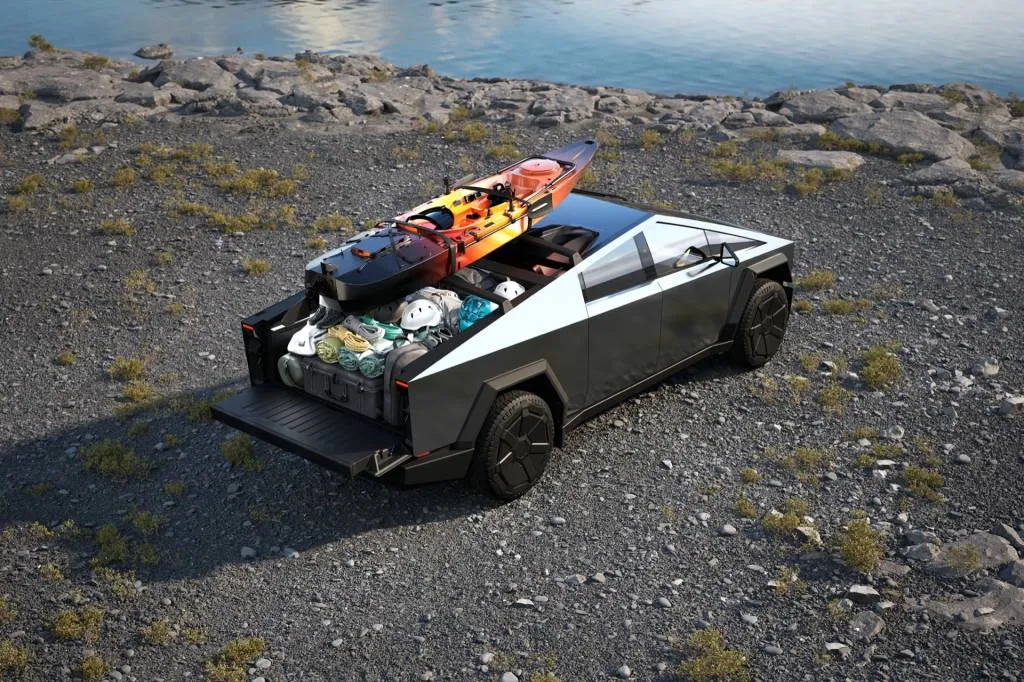
2025 Tesla Cybertruck – Courtesy of Tesla, Inc.
Tesla hasn’t proven it can compete in full-size pickup trucks
While North American full-sized pickup trucks are simply too large for much of the rest of the world, they remain the core source of profits for the two and a half surviving Detroit automakers. While the Cybertruck has innovative technology in multiple areas, even if Tesla can overcome the challenges of building a high-quality vehicle with angular stainless-steel body panels, it remains unclear whether truck buyers want a vehicle that looks like a prop from a dystopian movie.
Tesla didn’t eliminate franchised auto dealerships
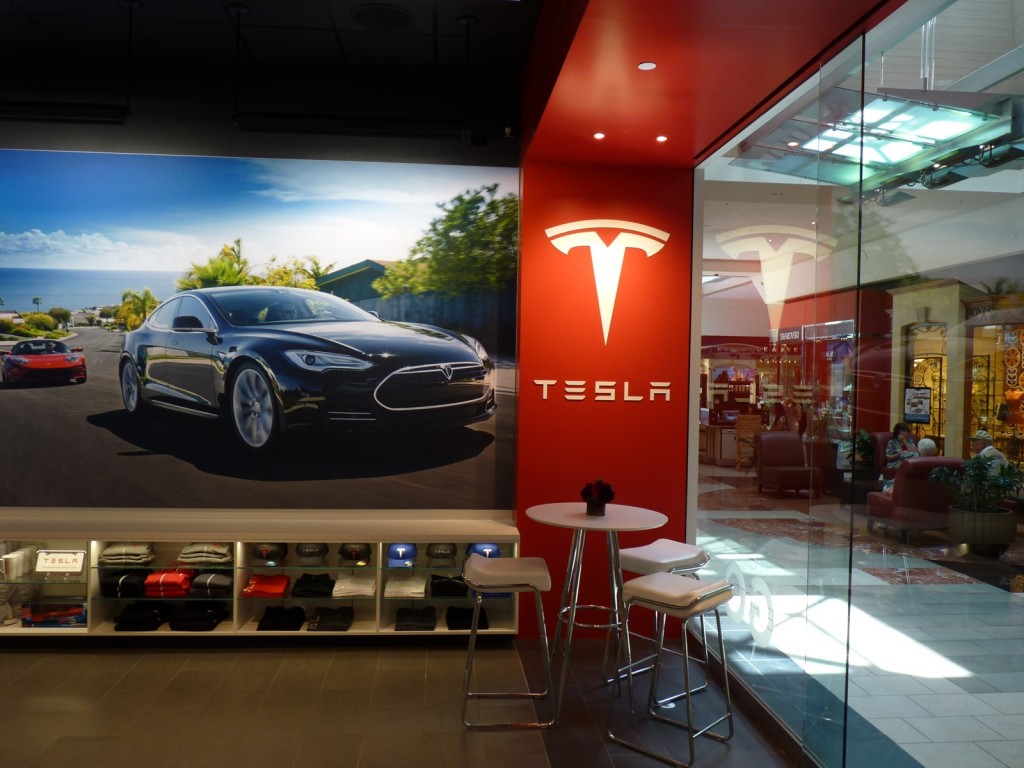
When Tesla started, franchise laws in most states banned automakers from selling cars to retail buyers if those sales competed with their existing franchised dealerships. Tesla had none of those, so it saw no problems setting up its own Stores to educate shoppers about EVs and assist them in ordering the cars online directly from the factory. State auto-dealer lobbyists saw this as an existential threat, and swiftly got laws changed to ban all direct sales, period.
Tesla Store – Portland OR
Fifteen years later, the result is a patchwork of different state laws on where Tesla can legally sell cars to customers and where it can’t. In Texas, where Tesla has its headquarters and where it built its second vehicle assembly plant, it is technically illegal for Tesla to sell cars to Texans. Workarounds exist, but it shows the enduring political power of auto dealers en masse and their lavish lobbying dollars.
Silicon Valley types often say dealers are unnecessary friction, intermediaries who serve no purpose beyond service and repairs, an anachronism that will inevitably fade away. Dealers have other ideas, and so far—despite their well-documented problems of knowledge, understanding, and ability to sell EVs—the dealers are still standing.
Tesla Motors battery-swapping station at Harris Ranch, California, Dec 2014 [photo: Teslarati.com]
Tesla hasn’t shown battery swapping makes sense
As of earlier this month, Nio claimed to have opened over 2,300 swapping stations in China and Europe, conducting over 40 million battery swaps to date.
But Tesla’s one foray into battery swapping—previewed with much hoopla in June 2013—never succeeded. The single swap station in Harris Ranch, California, was built by early 2015 but quietly shut down the next year, with Musk claiming customers weren’t interested.
EV advocates suggested it had been largely an effort to gain extra ZEV credits for Tesla under California laws that awarded more credits for faster “fueling,” largely intended to give hydrogen fuel-cell vehicles an advantage. Those laws were later changed.
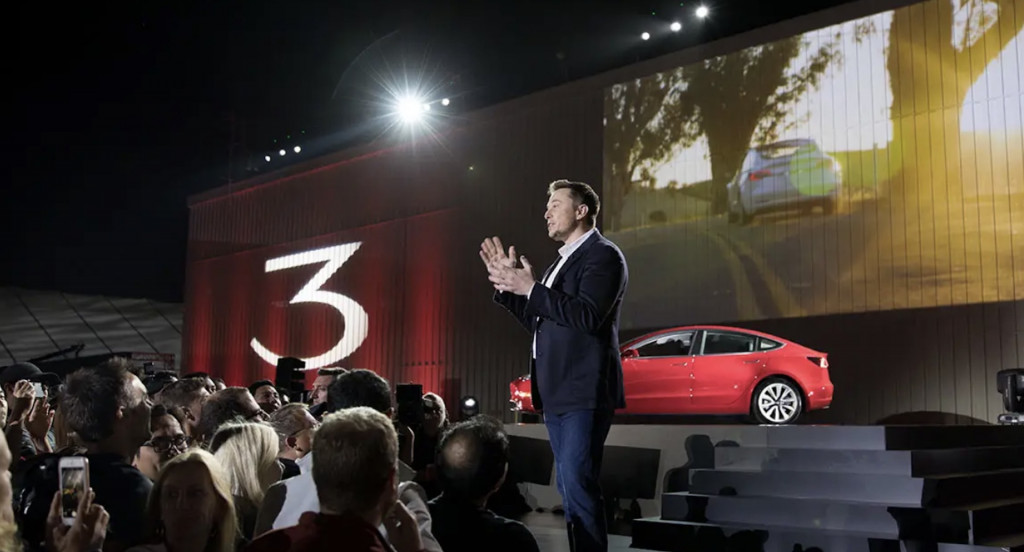
Elon Musk at Tesla Model 3 reveal
Tesla hasn’t moved beyond Musk
Elon Musk has always been the most public of CEOs, with huge followings on social media and in the news. He runs multiple companies simultaneously (Tesla, SpaceX, Neuralink, The Boring Company, and now X nee Twitter). His pronouncements are treated as gospel by his fans, and his political leanings seem to have become more extreme of late. He has been taken to court by numerous parties, from the Securities and Exchange Commission to a private citizen whom he called a pedophile in a tweet.
The question for Tesla, though, is what would happen to the company and its image for innovation, advanced technology, and general coolness if Musk were unexpectedly out of commission. It’s unclear when or even whether Musk will relinquish the reins—though his workload seems more suited to five separate CEOs—despite his off-hand mention on an investor call that he had internally identified a replacement. Companies the size of Tesla have considerable momentum to carry on with business as usual during executive transitions, but continuing to bank mainly on the Musk factor remains a major business risk, one its Board is surely aware of.
Bernardo Zuccon of Zuccon International Project drew the 57Steel
Combining an enormous volume with a 56.5m LOA and perfectly balanced proportions – as well as thoughtful customisations that set her apart from her sisters in the series – Virtuosity is the second hull in the new 57Steel range from Sanlorenzo.
Creating the new 57Steel line for Sanlorenzo was a careful balancing act between volume, length and proportions. The Italian builder sought to expand its range of steel-hulled superyachts with an offering that provided a generous volume exceeding 1,000GT without reaching an excessive length, and without looking too stocky or top heavy.
Ferruccio Rossi, Group General Manager and President of Sanlorenzo Superyacht, says: “One of the 57Steel’s strengths lies precisely in being able to provide extraordinary volumes and liveable spaces, while staying below 60m in length and maintaining a perfect balance in proportions.”
Virtuosity’s aft decks include a main-deck pool, alfresco dining and an outdoor party zone
It was a challenging brief for the yacht’s designer, but fortunately one that it was prepared for, as Zuccon International Project is one of Sanlorenzo’s longtime collaborators.
“My design has become almost second nature when it comes to drawing for Sanlorenzo,” Bernardo Zuccon says. “The integration and synergy with the shipyard’s style have made it almost spontaneous for me to incorporate the Sanlorenzo DNA into new designs. Starting from a general language, I introduced stylistic elements and details to make the 57Steel an extremely recognisable yacht.”
STYLED FOR THE OWNER
Zuccon sought to create a timeless exterior style that would be recognisable as part of the Sanlorenzo family while standing out among the current fleet. The designer achieved this with specific design elements, such as the signature handrails on the main and upper deck.
Zuccon is responsible for the exteriors of most Sanlorenzo yachts
In a different colour from the rest of the all-white Virtuosity, the dark-grey handrails lead the eye from their starting point aft to the next deck up. The handrails don’t merely end at the top of the bulwark, but continue at a 45-degree slope, connecting to the superstructure above. This seemingly subtle styling cue creates a sense of dynamism and forward motion.
Virtuosity was preceded by the first 57Steel, Alma. It’s obvious that the two are sisters, but Virtuosity stands out from grey-hulled Alma with a nearly all-white hull and superstructure.
The float-in garage and beach club shown on Alma, hull one
Rossi says: “Virtuosity flaunts a unique colour, giving the line a sportier appearance, as wished by the client. Another distinctive external element is the foredeck private pool on Virtuosity’s upper deck, located in front of the owner’s cabin.” Such personalisation speaks to Sanlorenzo’s quest, and company motto, to create ‘made to measure’ yachts.
DIFFERENT LEVEL
To strike a proper proportional balance in the 57Steel series, the yacht’s general arrangement was pored over and revised from what you might typically expect in a yacht of similar length. An innovative layout that bucks tradition was conceived.
The entrance to the main-deck saloon introduces guests to Virtuosity’s interior by Lissoni & Partners
The wheelhouse area, normally found forward on the upper deck, was moved up one level. Instead of an entirely open sun deck, this arrangement places the enclosed bridge area forward on the top deck. This is set forward of a chart room and captain’s cabin, while a corridor leads to a small interior lounge/DJ area that opens out onto an aft deck exterior party area.
“It’s a real bridge deck, like those found on much larger yachts, which made it possible to utilise the upper deck in a different way,” Rossi says.
A higher vantage point for the bridge is not only a benefit to the captain, but this shakeup in the general arrangement has allowed the upper deck to host a sprawling 54sqm owner’s suite like you might find on a yacht with a longer LOA.
The 580sqft owner’s suite on the upper deck looks out onto an enormous foredeck that includes a private pool
An owner’s office and walk-in dressing room at the entrance to the suite lead into the forward-facing bedroom. Surrounded by windows and set at a lofty height, this upper-deck haven enjoys expansive views, which can be further appreciated by stepping outside onto the connected private forward deck lounge with a swimming pool.
Zuccon says: “It’s challenging to pinpoint a single favourite space on board Virtuosity, but considering the typological characteristics of the yacht, the owner’s cabin on the upper deck with its exclusive external deck is perhaps the most fascinating space on board.”
One of the four guest cabins on the lower deck
On the main deck forward is a full-beam stateroom that would make for an enviable VIP cabin or a worthy second owner’s suite for dual charterers. A further four cabins are found on the lower deck below, including two doubles and two twin cabins, one of which can serve as a staff cabin.
STEPPING UP CUSTOMISATION
Though the build of Virtuosity began on spec, an owner was found only months after beginning carpentry work, allowing the clients to put their personal stamp on the vessel. Rossi explains: “One of the most interesting challenges was meeting the clients’ request for a ‘masterpiece’ within the boat, a situation that could create astonishment, a wow effect.”
The showpiece steel-and-aluminum staircase winds up and down all four decks
Lissoni & Partners created Virtuosity’s minimal yet chic interior, which includes a wow-feature of a staircase at its core. Designer Piero Lissoni, Sanlorenzo’s Art Director, is known for his utterly unique, architectural staircases, and the one found on Virtuosity is no exception. A study in organic shapes, this curvaceous staircase is certainly the piece de resistance that it set out to be.
“I couldn’t resist adding one of my staircases,” Lissoni admits. “It’s not a simple staircase; it belongs to a kind of twilight zone, something in-between different places. I hope that the owners keep on going up and down these stairs as if they were in a dream.”
The staircase, which features a steel and aluminum structure, spans all four decks, winding around itself and creating unprecedented perspectives in terms of pathways and passages. Natural light filters in through a glass skylight above, creating an interplay of light and shadows.
The lower deck of Virtuosity includes a gym, as well as the beach club
The challenge lay in achieving a sense of weightlessness and transparency while ensuring structural integrity. Precision engineering and innovative construction methods, overseen by Lissoni’s team, were employed to bring this exceptional staircase to life.
Rossi says: “It was a stimulating challenge not only from a formal and stylistic perspective but also from an engineering and craftsmanship standpoint due to the complexities arising from placing such a sculptural staircase in such a compact space with a complex structure.”
The clients are also very interested in onboard technology, particularly in audio/video systems, so Virtuosity has a DJ area at the aft of her bridge deck with a space for DJ decks and a bar, creating a dedicated space for celebrations. The party space, along with a main-deck pool area and a huge beach club on the lower deck, proves that Virtuosity is all about entertainment.
The upper-deck saloon includes an enormous sofa facing a large TV screen
Building a superyacht on spec can be a gamble, but it’s one that paid off for Sanlorenzo. Three more units of the 57Steel range are already in production. And Zuccon says that the owner’s satisfaction with Virtuosity has led to an ongoing collaboration on an even larger project.
The word Virtuosity, of course, means an impressive skill in an artistic pursuit, and it could be said that the yard and designers have showcased great virtuosity befitting of the yacht’s name in the creation of this well-balanced superyacht.
www.sanlorenzoyacht.com www.simpsonmarine.com
This article was first seen on yachtstyle.co
For more on the latest in yachting news, click here.
The High-Value Goods Tax (HVGT), which was supposed to be implemented from May 1, 2024, has been put on hold. It was reported that this is due to the finance ministry’s postponement in presenting the bill to parliament.
According to The Edge, the delay in the bill was due to disagreements over the definition of “high-value goods” and the price range of items that would be subject to the tax, this despite dialogues and consultations having been made with retail industry players and tax professionals.
The deferment of the new tax, which is to be imposed on luxury or big-ticket items at a rate of between 5% and 10% as announced during the tabling of Budget 2024, was confirmed by deputy finance minister Lim Hui Ying, who told The Star that the government will continue engaging with the industry to ensure the tax principles and legislation can be formulated and drafted carefully.
The ministry, she said, is in the final stage of refining certain matters related to the tax structure, especially the type of goods categorised as “high-value” as well as the threshold determination and tax rates.
“HVGT will only be imposed on certain goods categorised as high value. Fundamentally, low-income groups will not be affected by its implementation because they are unlikely to purchase high-value goods,” she said in a written reply to the news publication.
“The government will announce the new implementation date of the HVGT later,” she said. She added that the HVGT will not be imposed in designated areas including Labuan, Langkawi, Pangkor and Tioman, as well as special areas such as free zones and licensed warehouses. Langkawi is of course a haven for supercars, not always in a good way.
Initially, it was stated that jewellery over RM10,000, watches above RM20,000 and cars priced beyond RM200,000 would be subject to the HVGT. However, it was not detailed how this would be applied, and how the thresholds would be defined.
A total of three cars – all built on the Sustainable Experience Architecture (SEA) – are being showcased in the Land of Smiles, these being the Zeekr X, 009 and 007. The first two are already open for booking and will arrive in the country in the third quarter of the year, with the 007 being a little further out. All three show cars are left-hand-drive units, with the conversion to right-hand drive still ongoing.
Zeekr X
Let’s start with what will almost certainly be the most attainable of the lot, the Zeekr X. Based on the same SEA3 platform as the smart #1 (as well as the #3 and the Volvo EX30), it’s a fashionable compact SUV in much the same vein as the new MINI Countryman, being around the same size – 4,450 mm long, 1,836 mm wide and 1,572 mm, with a 2,750 mm wheelbase.
Zeekr was carved out of Lynk & Co, and the X still bears remnants of that brand’s design language, replete with split headlights (with H-shaped upper daytime running lights, first seen on the The Next Day concept), upswept window line, contrasting black roof and full-width taillight bar. Diagonal character lines on the bumpers and body side give the car a dynamic, youthful look.
Inside, you’ll find a minimalist cabin with a slim horizontal dashboard, “squircle” two-spoke steering wheel and a sliding centre console box similar to the Hyundai Ioniq 5 (replete with a refrigerator!). Of course, there are screens galore, including an 8.8-inch digital instrument display, a 14.6-inch infotainment touchscreen (which can be slid to the passenger side) and a massive 24.3-inch augmented reality head-up display.
Other notable features include power-opening doors, a 13-speaker Yamaha sound system and even a display on the B-pillar that can show the state of charging, plus a camera that can use facial recognition to unlock the door. The car you see here is dressed in a two-tone blue and white interior colour scheme and comes with rose gold highlights, which together look pretty swish. Unusually for such a small car, the X can be had as either a four- or five-seater; the latter is shown here.
The Zeekr X is available in single-motor rear-wheel-drive or dual-motor all-wheel-drive versions, the former producing 272 PS (200 kW) and 343 Nm of torque and getting the car from zero to 100 km/h in 5.8 seconds. Meanwhile, the AWD version makes 428 PS (315 kW) and 543 Nm, hurling the X to 100 km/h in 3.8 seconds. If those figures sound familiar, it’s because they’re exactly the same as the smart #1 Premium and Brabus.
Also shared with those cars is a 66 kWh nickel manganese cobalt (NMC) battery that provides a range of 560 km for the RWD model and 512 km for the AWD car. Those figures are on the rather optimistic CLTC cycle in China; expect real-world range to be closer to 440 km and 400 km respectively quoted for the smart #1 (both on the WLTP cycle). No charging details have been released, but expect the X to accept up to 150 kW of DC fast charging just like the #1, taking 30 minutes to charge from 10 to 80%.
Zeekr 009
Next up is the Zeekr 009, a massive land yacht of an MPV that’s much bigger than the already humongous Toyota Alphard and Vellfire. It’s built on the larger SEA1 platform and is essentially a twin to the Volvo EM90. Measuring 5,209 mm long, 2,024 mm wide and 1,848 mm tall, the 009 is 199 mm longer, 174 mm wider and 102 mm lower than the Alphard, while its 3,205 mm wheelbase is a staggering 205 mm longer.
The faintly ridiculous dimensions should not only afford the 009 with plenty of space but also a heaping amount of road presence, further emphasised by the bluff surfacing and a giant Rolls-Royce-style chrome-plated and illuminated “smart grille.” Step inside and you’re greeted with six luxurious seats (including the prerequisite business class-style captain’s chairs on the second row), wrapped in Nappa leather that even coats the second-row folding tables.
Adding to the sense of luxury are features like a massage function for the front passenger and second-row seats, 20 Yamaha-branded speakers (including in the headrests for the driver and second row) and double glazing that reaches all the way back to the third row. You also get a 10.25-inch instrument display, a 15.4-inch centre touchscreen and a separate 15.6-inch ceiling-mounted monitor for the second row, which also get one-touch meeting and theatre modes for the rear screen, seats and sunshades.
In China, all models get dual-motor all-wheel drive that makes an astonishing 544 PS (400 kW) and 686 Nm, flinging this behemoth to 100 km/h in just 4.8 seconds. Buyers get a choice of 116 kWh and 140 kWh NMC batteries that deliver a CLTC-rated range of 702 and 822 km respectively. Again, there are no charging details, only that the 116 kWh battery can be DC fast charged from 10 to 80% in 28 minutes.
Zeekr 007
Last but not least is the Zeekr 007, a sedan that shares not just its numerals with Britain’s beloved fictional spy but also his sharp suit. This is the first model to feature a completely separate design language from Lynk & Co, dominated by the Stargate front mask that houses 1,711 LEDs and can be customised to show different images or messages.
The clean, organic design features very little in the way of ornamentation – there aren’t even any door handles as the doors open automatically, like the Zeekr X (the car you see here is clearly a low-spec model with door handles and, criminally, no Stargate panel). Inside, the 007 shares a similar design with the X, albeit with a full centre console with Tesla-style dual Qi wireless chargers.
The tech, however, has moved on quite a bit – you get a 13-inch instrument display, a 15-inch OLED touchscreen and a 35.5-inch (!) head-up display. Other features include reclining rear seats, a glass roof, an in-house-developed 21-speaker sound system, magnetorheological dampers, a Tesla Model 3-style one-piece rear windscreen/glass roof panel and a roof-mounted lidar sensor to augment the car’s advanced driver assistance systems.
Like the Zeekr X, the 007 can be had either in single-motor RWD form with 421 PS (310 kW) and 440 Nm or in dual-motor AWD trim with an impressive 646 PS (475 kW) and 710 Nm. The century sprint is completed in 5.6 and 3.8 seconds respectively, although bizarrely there’s a performance version that can fling itself to 100 km/h in just 2.84 seconds (excluding rollout) – despite having the same amount of power.
Range figures are 688 km with the RWD model and 616 km with AWD, both with a 75 kWh lithium iron phosphate (LFP) battery. The performance model has a larger 100 kWh NMC battery and has a claimed range of 660 km. With an 800-volt architecture, a sufficiently high-powered DC fast charger will be able to provide 610 km of range with just 15 minutes of charging.
Aside from the Land of Smiles, Zeekr will also be sold in Singapore, the Philippines, Laos and Myanmar. No word on Malaysia yet, with the brand only saying it will be “studying different markets.” Could it arrive here one day under Proton subsidiary Pro-Net, alongside smart? Only time will tell.
The technical storage or access is strictly necessary for the legitimate purpose of enabling the use of a specific service explicitly requested by the subscriber or user, or for the sole purpose of carrying out the transmission of a communication over an electronic communications network.
Preferences
The technical storage or access is necessary for the legitimate purpose of storing preferences that are not requested by the subscriber or user.
Statistics
The technical storage or access that is used exclusively for statistical purposes.The technical storage or access that is used exclusively for anonymous statistical purposes. Without a subpoena, voluntary compliance on the part of your Internet Service Provider, or additional records from a third party, information stored or retrieved for this purpose alone cannot usually be used to identify you.
Marketing
The technical storage or access is required to create user profiles to send advertising, or to track the user on a website or across several websites for similar marketing purposes.