Home Blog Page 842

How much is my car worth?

0


You can remember how much you shelled out for your car all those years ago – even if you can’t quite remember what year it is anymore – but how much could you hope to get for it today?

By the time you’ve finished this article, hopefully you’ll have a pretty good idea.

The easiest way to know your car’s worth is pretend you’re shopping to buy the exact same vehicle. Go to online classifieds sites and simply search for your car. You’ll get a rough idea of the value range – upper, and lower.

The used car market is rapidly changing, with new car stock becoming more readily available and used car prices going down by the week, however the basics still apply.

If you want to sell your car, click here and receive a price quickly.

Your car will be worth the average of what is available. Note that just because Joe Bloggs has advertised his Holden ute for $50,000 – when the rest of them are more like $35,000 – doesn’t mean yours is worth that. It just means Mr Bloggs is thinking wishfully. Or that he might not be actively looking to sell at all.

Some sellers like to leave a baited hook in the water at all times – in case they get a bite for their optimistic price.

Note that it might be tricky to get a sense of the extreme lower end of the value range, because those vehicles sell the quickest.

Another method – if your car is comprehensively insured – is to call your insurance company and simply ask. Note that insurance companies are incentivised to slightly under-value your car.

You could also use third-party tools like this website here. Simply go the showroom of the vehicle you are intending to sell, scroll down to the bottom and find the year of your model and it will give you a rough estimate of what it’s worth based on recent sales.

Alternatively, If you want to sell your car, click here and receive a price quickly.

You could also get a formal valuation, but this costs money and isn’t strictly necessary – unless you have absolutely no idea what you’re doing, something this article hopes to solve.

Knowing the value of your car is the first step towards pricing it for sale.

Variables that affect vehicle resale value

Make and model.

It’s an unfortunate reality that some brands – and even models – hold their value better than others. You may have saved money up-front buying that Holden Captiva over the Toyota RAV4 five years ago, but now that it’s time to sell it, it’s probably best you don’t compare used car values as they stand today. Unless you want to weep.

Type of car.

Selling a dual-cab ute or a mid-sized SUV in Australia? You’re in a good place. Trying to sell a small city car or large sedan? Take a deep breath. It’s common sense that if you’re selling the type of vehicle that’s most popular in Australia, you’re going to have an easier time.

Kilometres

The lower the kilometres, the better. The average Australian does about 13,000km per year, so if your car is five years old and has around 65,000km, that’s about right.

If you’re thinking of selling your car and it’s approaching the 100,000km mark, seriously consider moving it on before it gets to that point. A car with 92,000km will be slightly easier to sell than one with 102,000km.

That said, there are vehicles where mileage doesn’t matter as much – 200,000km is low for an older Toyota LandCruiser. And there are circumstances where higher mileage isn’t as much an issue – like if the car has spent most of its life commuting between, say, Sydney and Canberra. (Highway miles are considered less taxing than city ones.)

Separate to all that, service history is more important anyway.

Location

Unless it’s a very rare vehicle, it’s much easier to sell your car in a major urban centre than it is a small, remote country town simply because one might have four million people, the other 5000. There are exceptions – a farm ute would be easier to sell in a rural area.

Service history

In theory, a car with 150,000km with a full service history should be worth more than one with 75,000km and no service history.

A full service history – meaning, you’ve had it maintained at the intervals recommended by the manufacturer, by an authorised service centre – does amazing things for your car’s resale.

Remaining warranty and fixed-price service agreement

If you bought your car brand new and it came with a seven-year warranty – and you’re selling after four years – the remaining term is very attractive to buyers. This also applies to any remaining capped-price services that came with the car brand new.

Condition

It pays to look after your car. If it’s in great condition inside and out, with no damage or blemishes, naturally it’ll be worth more.

Transmission

Australians are lazy, and so automatics hold their value better than manuals. Unless it’s a sports car, and even then some models might be considered more desirable as an automatic than a manual, like a PDK-equipped Porsche.

Colour and trim

Conservative colours such as white and grey hold their value better than bright, lurid ones like, say, fluro green. A silver car will simply appeal to more people than a coloured one. That’s why you see so many white and silver cars on the road.

The same applies to interiors – you might have loved the leopard-print-and-flames seat trim when you first bought the car, but sadly very few others do.

Again, there’s a reason most opt for a black trim: it has the broadest appeal come resale time. The opposite can be true for sports cars where bright colours might be more valued than dull ones.

Optional extras and aftermarket accessories

If you optioned the sunroof when you bought the car brand new, highlight this in any advertisement as it means you can price the car slightly higher.

The same applies if you’re moving on your Hilux and it has an expensive, quality bull-bar fitted with a brand-name LED light-bar – or any other aftermarket accessory a new owner might want to fit (that you paid for, brand new).

Note that if it’s a sports car you’re selling, often you’re better selling any aftermarket additions separately and refitting the stock items (like wheels or an exhaust).

Registration

Did you just put 12 months rego on the car? Include it in the price (and definitely the ad). Sometimes it pays to add a bit more rego as it increases the perception of value.

NSW, Victoria, SA, ACT and Tasmania offer three-month rego; while WA, Queensland and the NT offer one-month rego. It’s certainly better than no rego – unregistered cars are worth much less than registered ones.

Serviceable items

If you just shelled out for four new tyres, a new clutch, new brakes and new windscreen wipers – or just paid for a major service – it will push up the value of the car.

Roadworthy documentation

In Victoria, a car must be sold with a Roadworthy Certificate (RWC) – but that can be arranged by either the seller or the buyer. If you’re the seller and aren’t supplying the car with a RWC, it’s worth less as the buyer is taking on the risk of possible mechanical repairs.

It’s a similar story in Queensland and the ACT (if the car is over six years old). No other state or territory requires proof of roadworthiness in order to process a private sale.

If you’re in Victoria, Queensland or the ACT, it’s strongly encouraged to get your roadworthy documentation in place before selling – and provide it when selling the car. Note that in Victoria, a RWC is only valid for 30 days. In Queensland, the equivalent ‘safety certificate’ is valid for two months or 2000km, whichever comes first.

Crash history

If your car was once written off but repaired, it’s worth much less than a car that’s never been in a crash, even if it was put back together better than it was originally built brand new.

People are scared off by crash repairs as there are so many dodgy smash repairers rushing jobs out the door – and not repairing the car properly.

Number of owners

The fewer owners, the better. If you’ve owned your car for 20 years since new, and you’ve been the only owner, your car is worth more than if it had an unknown amount of owners.

Smoking

If you’ve smoked in the car – and you can smell it – the car is worth slightly less. Plus, smoking wrecks your health and costs a fortune, so you shouldn’t be doing it anyway. Listen to your mum.

If you want to sell your car, click here and receive a price quickly.


Source link

Porsche 911 GT3 RS with Manthey Racing upgrades looks wild!

0


Manthey Racing is testing a set of upgrades for the Porsche 911 GT3 RS. Looking at the latest spy images, it’s clear that the new GT3 RS MR will be an exciting proposition.

The Porsche 911 GT3 RS MR comes from a company that has raced 911s at multiple racetracks around the world for years, including the Nurburgring, which is said to be one of the toughest tests for a car. The new GT3 RS MR has also been developed at the Green Hell.

Porsche-911-GT3-RS-Manthey-Racing-Edition-3027-12

The Manthey Racing upgrade package for the 911 GT3 RS will be quite significant and will include both aero and chassis updates. The car is likely to get a massive rear spoiler with large end plates and a shark fin extending from the rear windshield. It will also get a tweaked front section with a large splitter and additional flicks on either side.

Under the skin, expect the GT3 RS MR to get a few suspension tweaks, with adjustable coilovers, lightweight magnesium wheels, improved brakes and more.

Porsche-911-GT3-RS-Manthey-Racing-Edition-3027-8

The stock GT3 RS is powered by a 4.0-liter, naturally aspirated flat-6 engine that makes 525 hp and 342 lb-ft of torque. The engine is mated to a 7-speed PDK, enabling the car to reach 0-60 mph in 3.2 seconds. Its top speed is 184 mph.

Source: Carscoops


Source link

Car Of The Day: 2007 Lamborghini Murciélago LP640-4

0


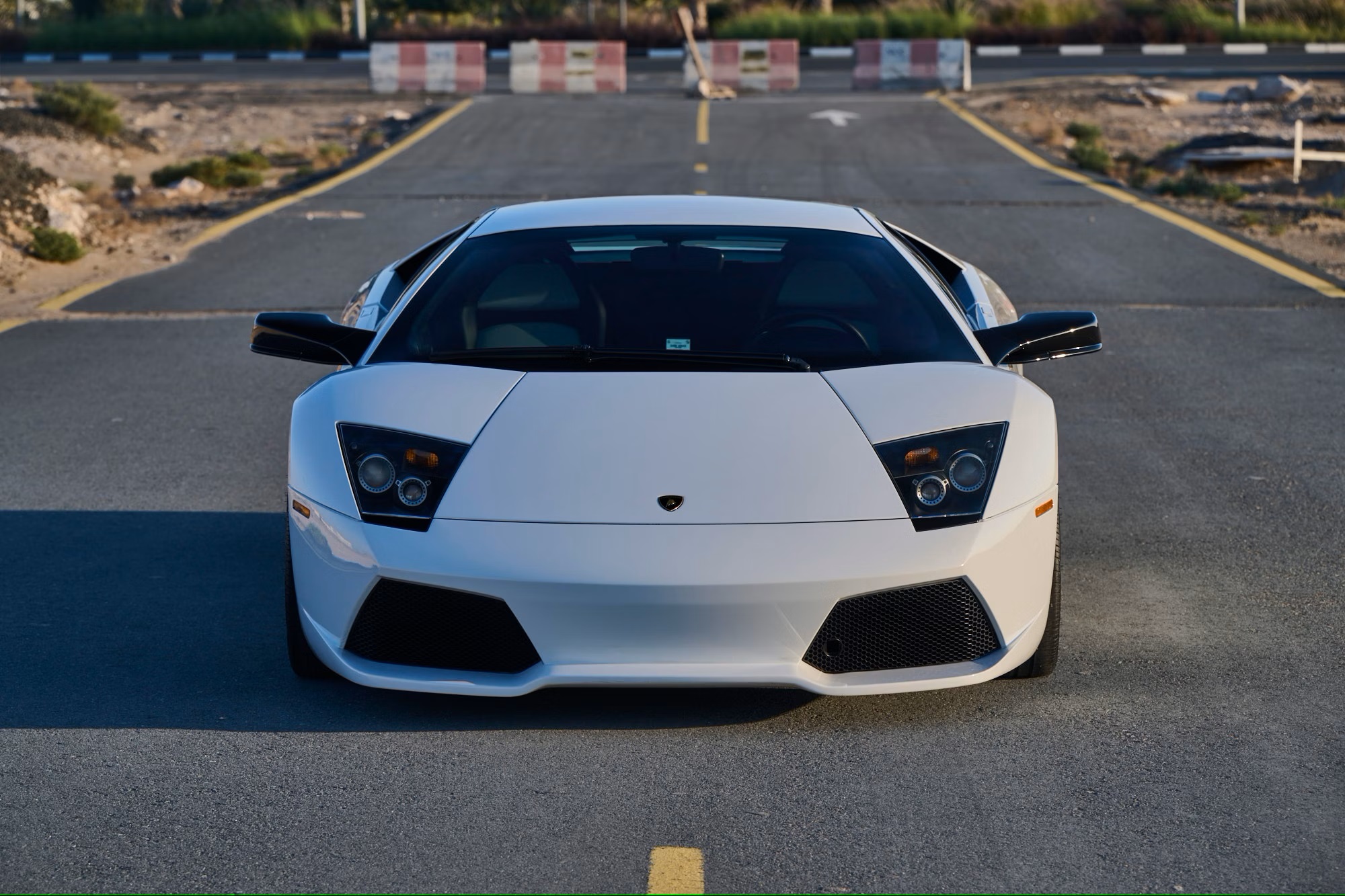
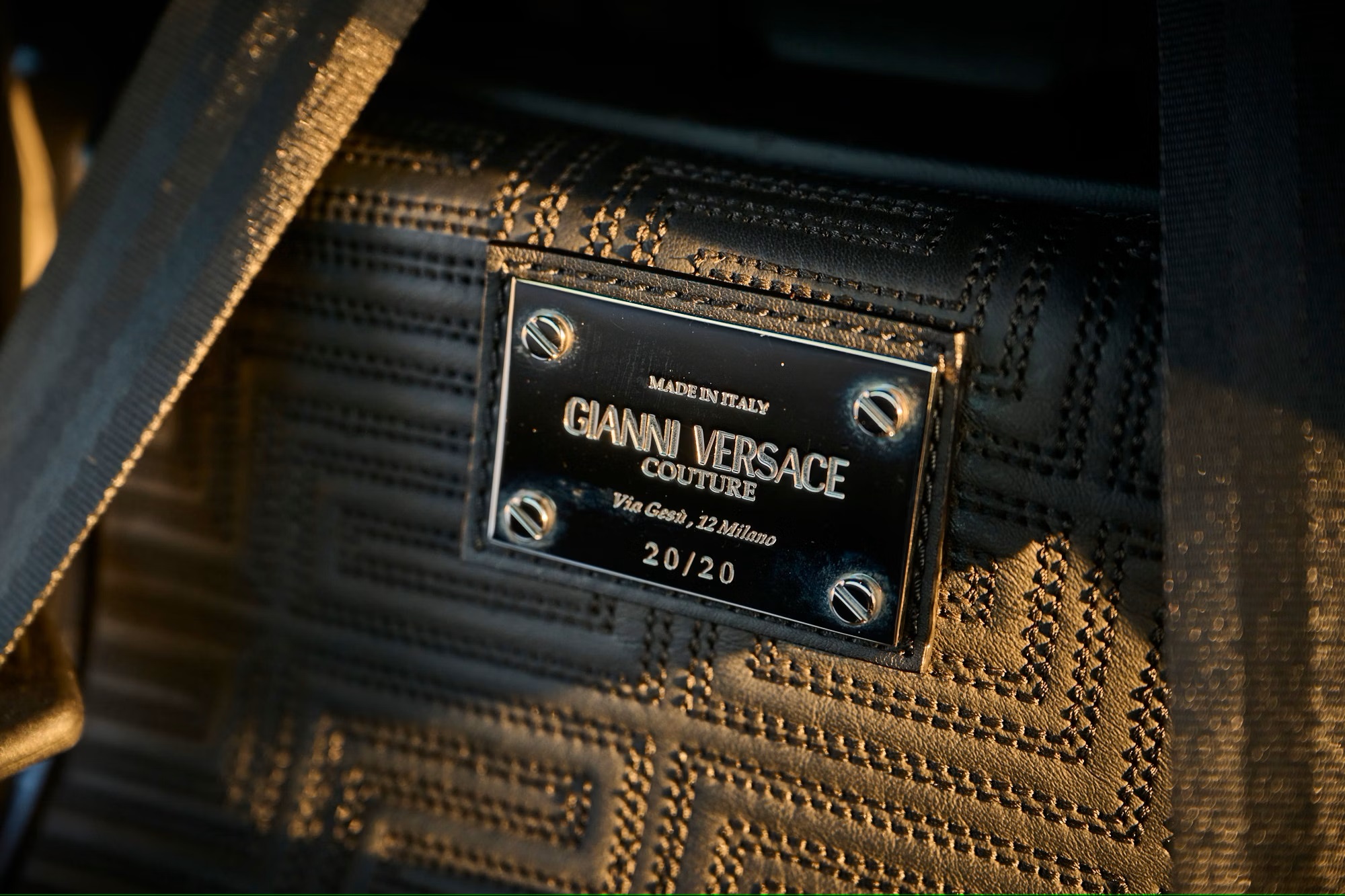
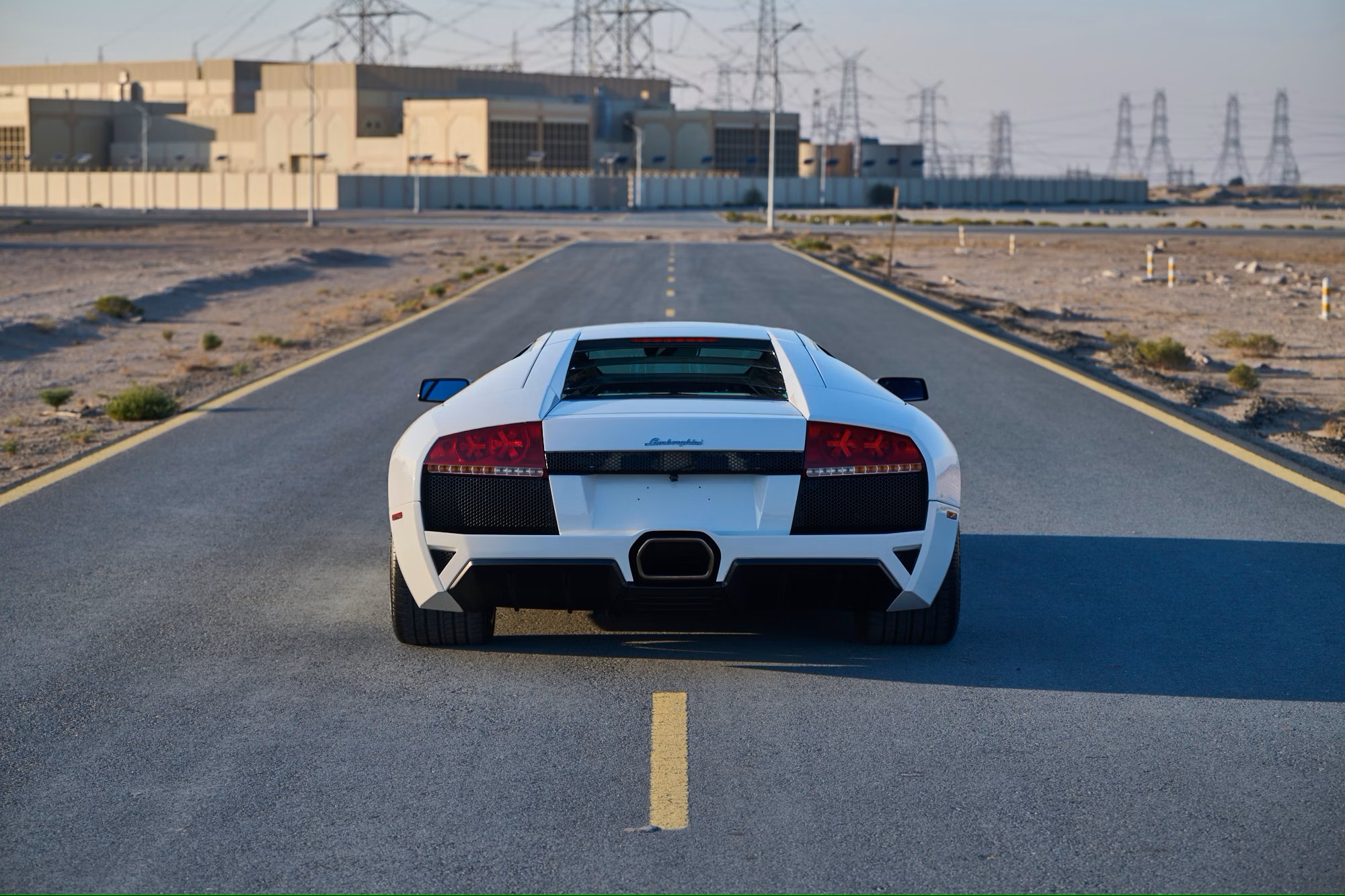
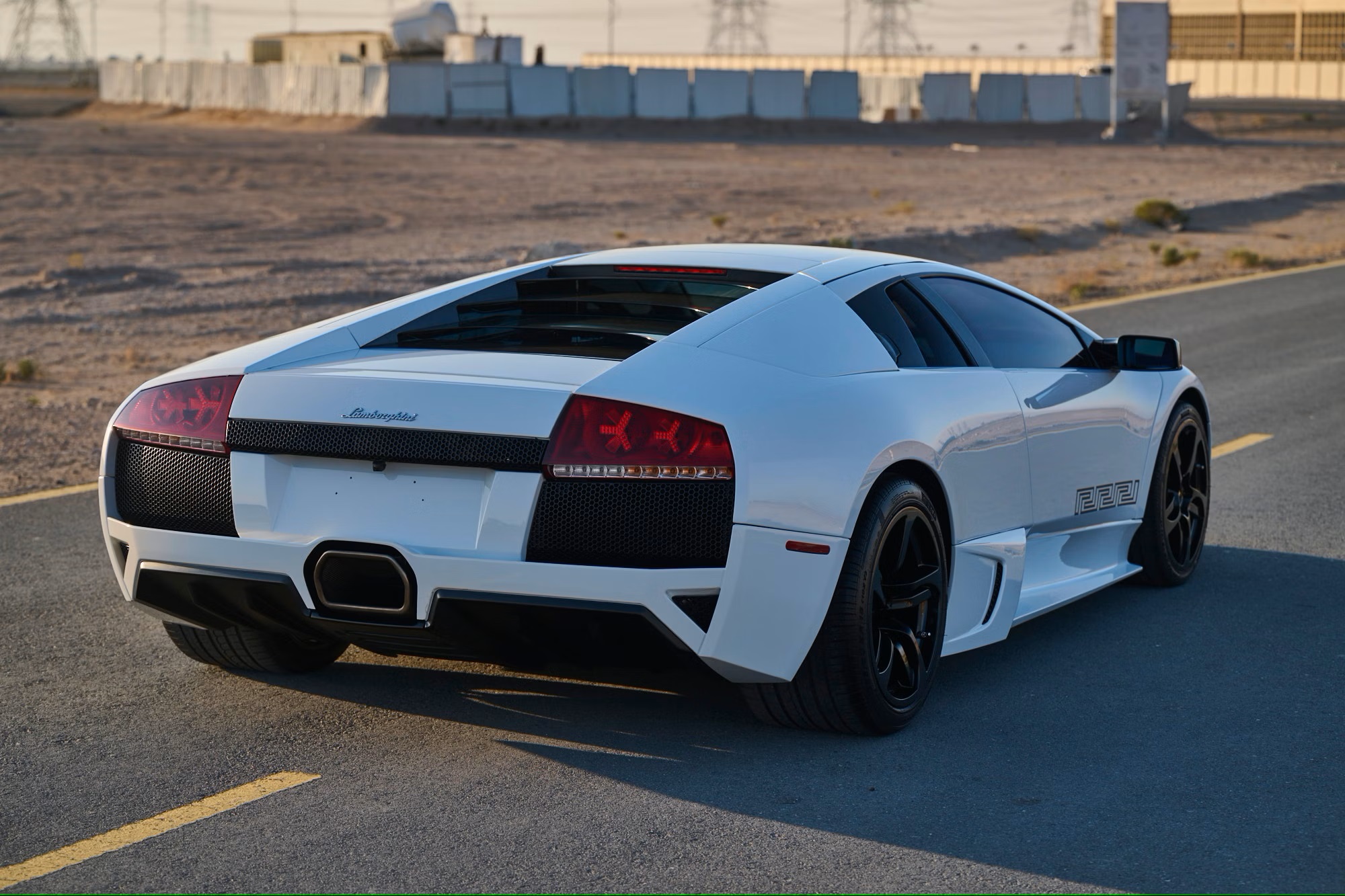
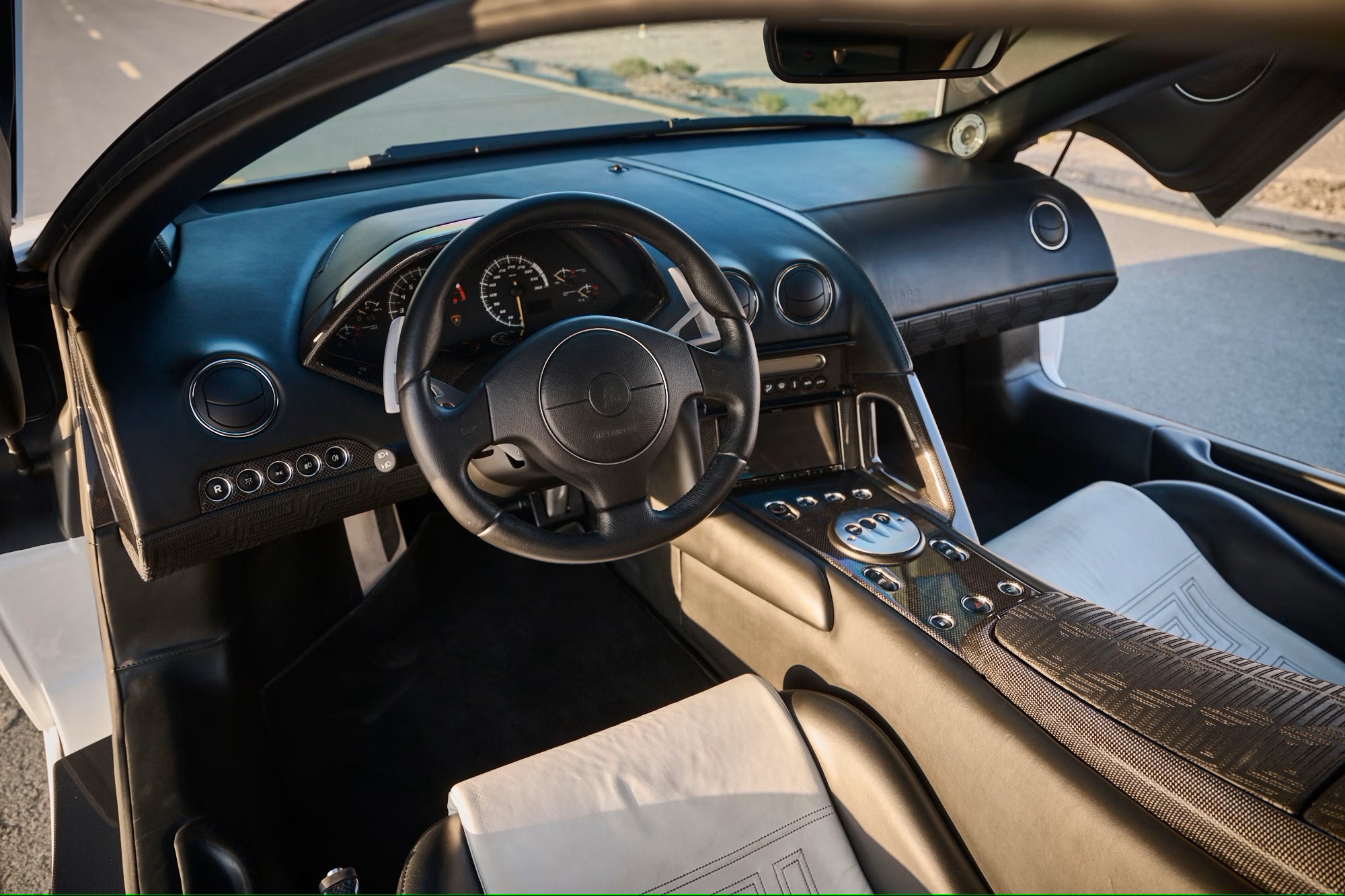
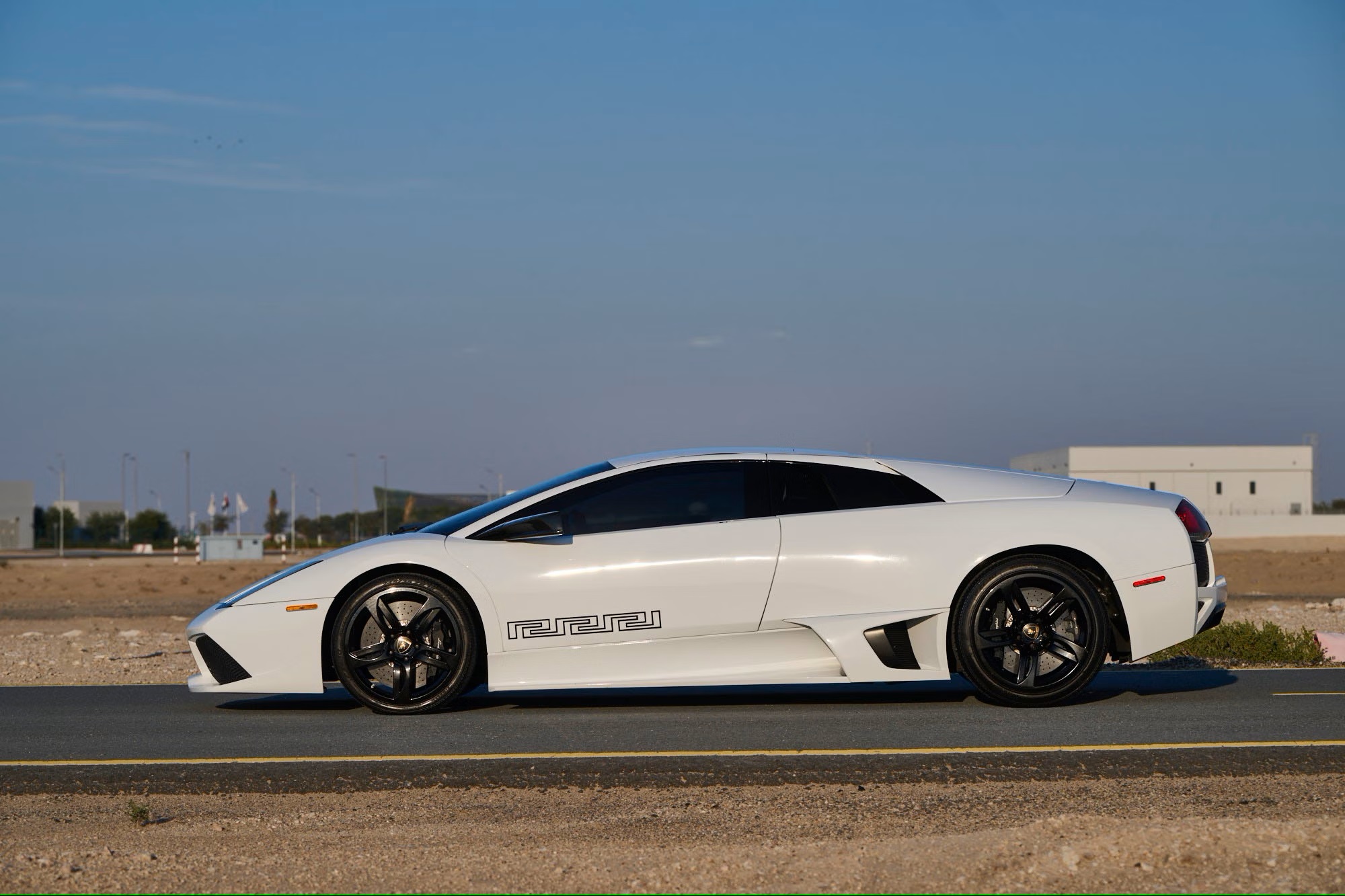
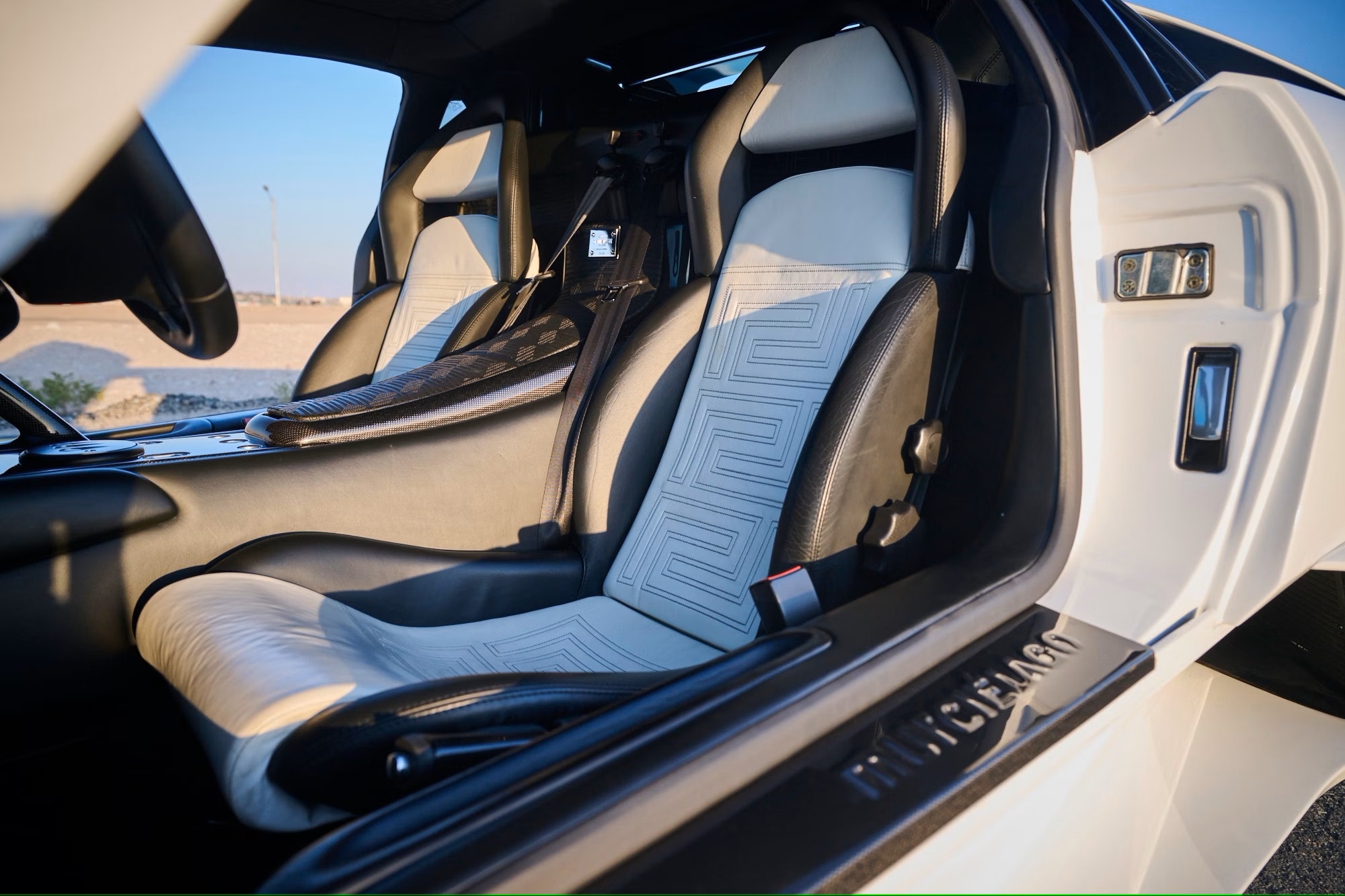
Versace and Lamborghini joined forces in 2007 to craft a limited series of Murciélago LP640 coupes and roadsters. These models retained the mechanical specifications of the standard LP640 but stood out with luxurious interiors. Adorned with Versace’s signature Grecian motif, the cabins boasted full grain Nero and Bianco nappa leather on the lower dashboard, center console, door panels, roof lining, and seats.

2007 Lamborghini Murciélago LP640-4 - Versace Edition2007 Lamborghini Murciélago LP640-4 - Versace Edition2007 Lamborghini Murciélago LP640-4 - Versace Edition

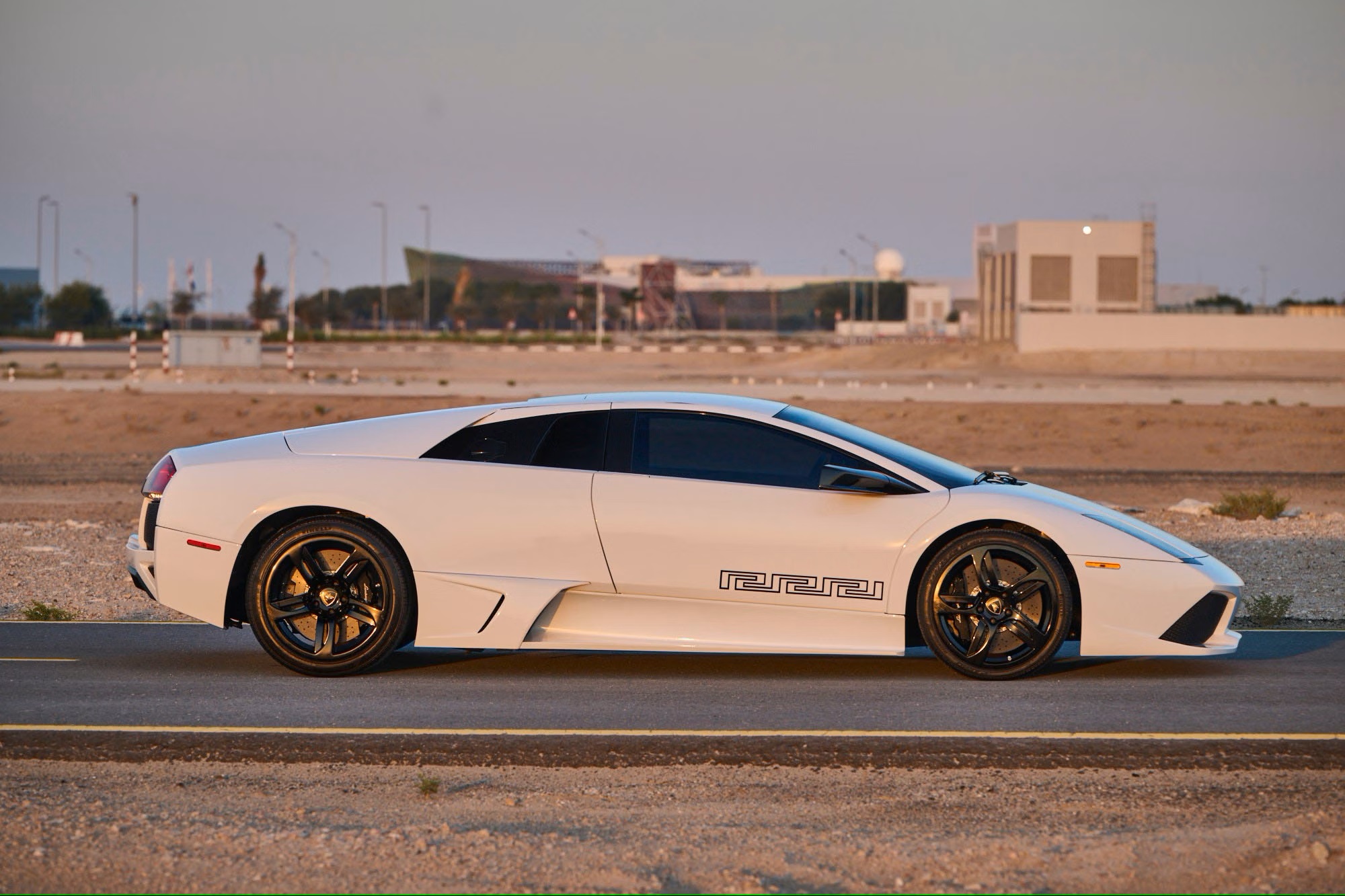
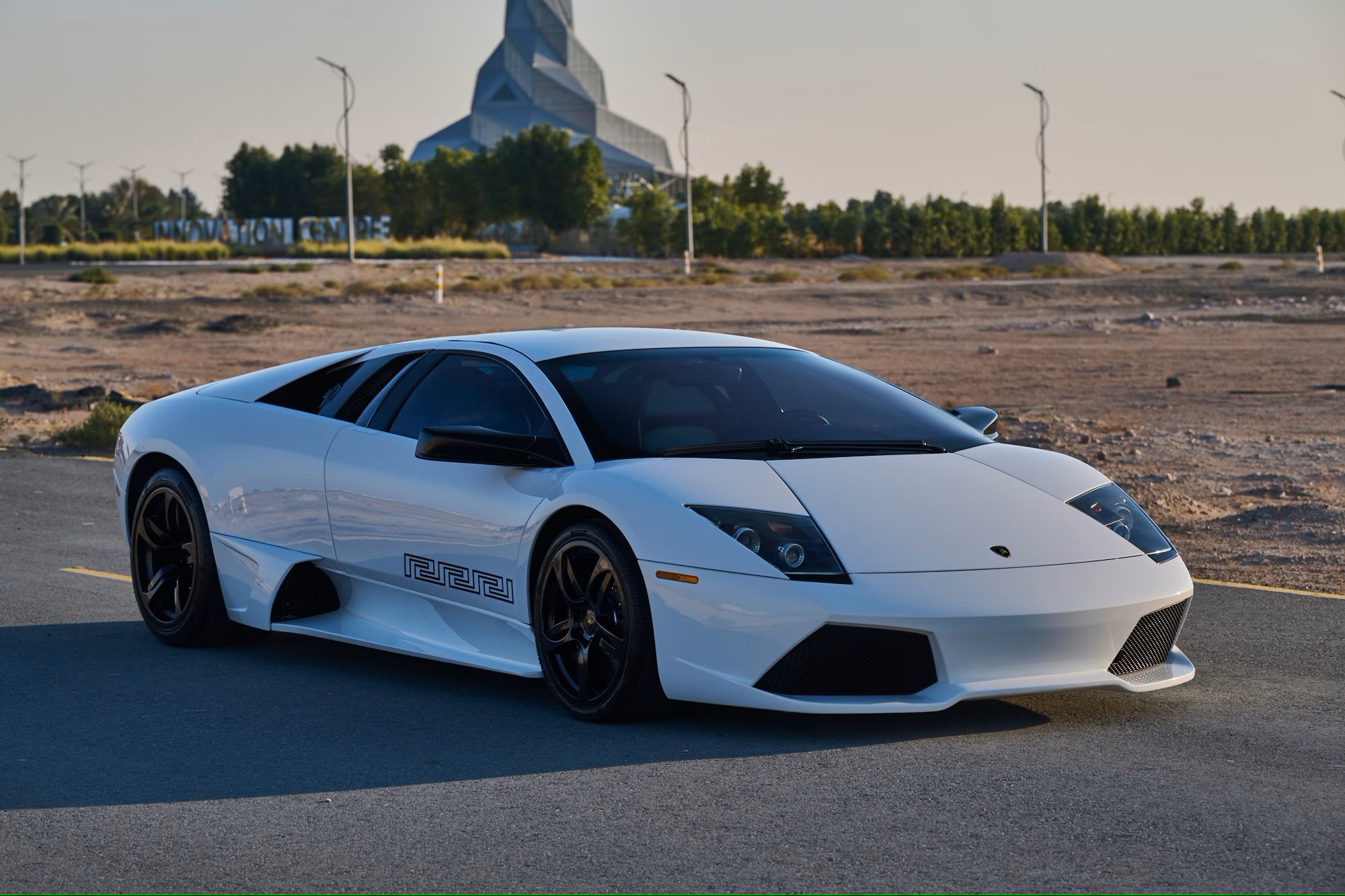
Each Versace edition LP640 featured black-painted Hermera wheels, a transparent glass engine cover, and Lamborghini’s optional E-Gear paddle shift gearbox. Buyers could opt for Nero Alderbaran or Bianco Isis paint finishes, along with a matching Versace motif on the doors.

2007 Lamborghini Murciélago LP640-4 - Versace Edition2007 Lamborghini Murciélago LP640-4 - Versace Edition2007 Lamborghini Murciélago LP640-4 - Versace Edition

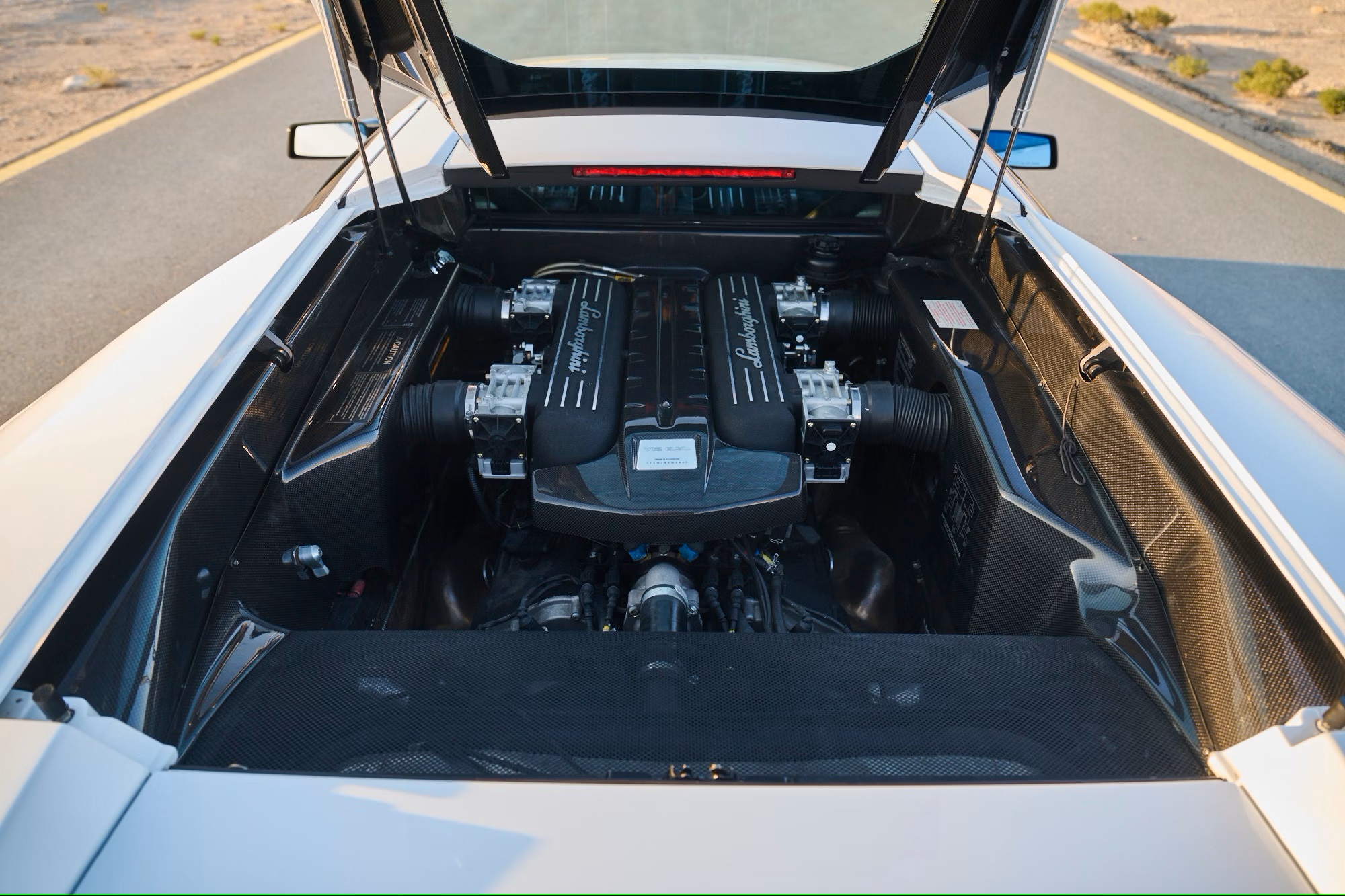
Limited to twenty units of both coupes and roadsters, these vehicles retained the Lamborghini hallmark elements like the 6.5L/632 HP V-12 engine, all-wheel drive, limited-slip differential, and iconic scissor doors, making them both stylish and exceptionally rare supercars.

2007 Lamborghini Murciélago LP640-4 - Versace Edition2007 Lamborghini Murciélago LP640-4 - Versace Edition2007 Lamborghini Murciélago LP640-4 - Versace Edition 2007 Lamborghini Murciélago LP640-4 - Versace Edition2007 Lamborghini Murciélago LP640-4 - Versace Edition2007 Lamborghini Murciélago LP640-4 - Versace Edition 2007 Lamborghini Murciélago LP640-4 - Versace Edition2007 Lamborghini Murciélago LP640-4 - Versace Edition2007 Lamborghini Murciélago LP640-4 - Versace Edition 2007 Lamborghini Murciélago LP640-4 - Versace Edition2007 Lamborghini Murciélago LP640-4 - Versace Edition2007 Lamborghini Murciélago LP640-4 - Versace Edition 2007 Lamborghini Murciélago LP640-4 - Versace Edition2007 Lamborghini Murciélago LP640-4 - Versace Edition2007 Lamborghini Murciélago LP640-4 - Versace Edition 2007 Lamborghini Murciélago LP640-4 - Versace Edition2007 Lamborghini Murciélago LP640-4 - Versace Edition2007 Lamborghini Murciélago LP640-4 - Versace Edition 2007 Lamborghini Murciélago LP640-4 - Versace Edition2007 Lamborghini Murciélago LP640-4 - Versace Edition2007 Lamborghini Murciélago LP640-4 - Versace Edition 2007 Lamborghini Murciélago LP640-4 - Versace Edition2007 Lamborghini Murciélago LP640-4 - Versace Edition2007 Lamborghini Murciélago LP640-4 - Versace Edition 2007 Lamborghini Murciélago LP640-4 - Versace Edition2007 Lamborghini Murciélago LP640-4 - Versace Edition2007 Lamborghini Murciélago LP640-4 - Versace Edition

Photo Source: Collecting Cars


Source link

Redesigned 2025 Toyota 4Runner teased

0


Toyota has provided the first evidence that a redesigned 4Runner is coming soon.

The automaker took to Instagram on Thursday to post a series of photos of each generation of the 4Runner.

The final photo in the series showed a portion of the redesigned 4Runner, the nameplate’s sixth generation.

Included with the photos was a challenge for fans to guess the model year each time the 4Runner was redesigned.

Instagram post by Toyota made on March 28, 2024

Instagram post by Toyota made on March 28, 2024

Toyota hasn’t said anything about the vehicle but like previous generations, it should be twinned with the Tacoma midsize pickup truck, which was redesigned for the 2024 model year around Toyota’s TNGA-F body-on-frame platform shared with the full-size Tundra and Sequoia SUV. Considering Toyota has started the teaser campaign for the new 4Runner, the SUV should arrive for the 2025 model year, meaning a debut later this year is likely.

The current 4Runner is available for the 2024 model year and comes exclusively with a 4.0-liter V-6 rated at 270 hp and paired to a 5-speed automatic transmission. Depending on the grade, it comes with rear-wheel drive or available four-wheel drive.

Given all the options available on the new Tacoma, it’s likely the new 4Runner will have more to offer than the current generation. The Tacoma offers a 2.4-liter turbo-4 with three power ratings, depending on the grade. The engine is also available in a hybrid configuration. Nearly every Tacoma comes with an 8-speed automatic transmission, but a 6-speed manual transmission with rev-matching is available on the base SR trim.

Expect the current 4Runner’s various grades to continue for the new generations, including the multiple TRD off-road grades. The starting price might see an uptick from the current $41,850 sticker, though.


Source link

Visiting Europe in April or May? Don’t miss these incredible events!

0


Looking for places to visit in the UK and Europe in April and May? Look for further- here are some of the events and destination ideas for all interests and budgets.

*We work hard to make this the best motorhome travel blog and road trip website possible, full of helpful content for you. The website is supported by our readers, so if you buy through links on this site we may earn a commission- at no extra cost to you. All opinions remain our own.

If you find this post useful, you can also treat us to a coffee – we promise to enjoy it while creating more useful content like this- we might even indulge in a biscuit (or two!)


April and May is one of my favourite times in Europe – the weather is getting nicer, but the kids are still at school so many of the busiest spots are still fairly quiet.

If you’re not familiar with UK and European school holidays, they generally get two week’s holidays around Easter, and then a later week half-term in May- and those times can be very busy!

If you’re able to enjoy a trip outside of the school holidays in April and May, here are some of my favourite places and events to visit at this time of year.


5 Awesome Events happening in April and May around Europe

Sure, it’s fine just to tour, but visiting a place for an event or purpose is fun too. Here are some of the best festivals and events happening in April and May around the UK and Europe.

Tulips in Amsterdam

(and indeed all over the Netherlands!)

Tulip Field in the Netherlands

Best time to visit: Mid April- Mid May

How to get there: Drive to Amsterdam, or fly from many international airports

Where to stay: There are plenty of hotels in Amsterdam!

If you want to see the tulip fields in full bloom, mid-April to mid-May are the best times. If you’ve never seen them before, the Netherlands is FULL of tulip fields, and driving past miles and miles of blooms of all colours is an absolute joy.

Even better, you can easily visit Amsterdam just for a long weekend- it’s not as long a drive from the tunnel as you might think! Read more about motorhoming in the Netherlands

And if you do visit Amsterdam in April, try to be there for the 27th April, which is King’s Day. Expect there to be orange. Lots and lots of Orange!


Scotland (and the Beltane Fire Festival)

Best free castles in England and the UK- Kilchurn, Scotland
Scotland in Spring is just magic!

Best time to visit: Anytime in April and May. Beltane is end of April

How to get there: Drive north! You can also fly to Edinburgh, Glasgow or Inverness

Where to stay: There are plenty of hotels in all the major cities. Personally, I recommend Edinburgh- it’s one of my favourite cities in Europe.

April and May are great times to explore Scotland. The weather is a little warmer (I said warmer, not warm!) but the midges haven’t started making life miserable yet.

There are plenty of incredible places to visit in Scotland- far more than just the famous NC500. At this time of year, I’d suggest the busier places like the Isle of Skye, Edinburgh and the Hebrides. Read more about the best scenic drives in Scotland

If you’re free-thinking and want to enjoy a bit of a spectacle, check out the Beltane Fire Festival, which happens on 30th April to celebrate the start of summer. (A friend of mine’s daughter is the May Queen, which is exciting!)


Jersey Liberation Parade

Best time to visit: Liberation Day is 9th May

How to get there: Ferry from England’s south coast, or plane from several airports in the UK (or ferry from France!)

Where to stay: St Helier is the capital and a great base to explore the island.

I was born in Jersey in the Channel Islands, and the Liberation Parade is one of the biggest events of the year.

The Channel Islands were the only part of the United Kingdom to be occupied in WWII, and they were liberated on 9th May 1945. Each year you’ll find a celebration of this freedom, including live music, historical re-enactments and plenty of food and othe entertainment. It’s a wonderful atmosphere and the weather is usually great too.


Madeira Flower Festival

Madeira Flower Festival is in April

Best time to visit: April or May. The flower festival starts 4 weeks after Easter.

How to get there: Flights are the easiest way

Where to stay: Funchal is the main area where the Flower Festival takes place, so you’ll want to stay near there.

Yep, we’re back to flowers (sorry, not sorry). The city of Funchal in Madeira burst with flowers every Spring.

The Madeira Flower Festival starts 4 weeks after Easter and takes place for the next 3-4 weeks. It’s centred in Funchal, but other events do take place around the island during this time.

You’ll find the Wall of Hope (where people place flowers) and blooms are strewn through the streets to create a carpet of flowers.

But one of the best sights is the Flower Float Parade, where you’ll enjoy over 1000 participants, plus numerous floats made of flowers.

If you stay a little longer, Madeira mixes the flowers with a classic car paradise as it hosts the Madeira Flower Classic Auto Parade.


Cheese-rolling, Gloucester

Gloucester Cheese Rolling is one of THE most crazy, insane, weird and fantastic events I’ve ever been to. In fact, it’s so insane I think only a video will do it justice, so here’s one I made from the event in 2023! (If you can’t see the video below, here’s the link)

So, to summarise, yes, there are a lot of crazy people who chase a wheel of cheese down one of the steepest hills you’ve ever seen… and risk losing life and limb… for street cred. But you can take a picnic and enjoy the craziness!

Best time to visit: The Gloucester cheese rolling always takes place on the late Bank Holiday Monday in May

How to get there: Drive to Cooper’s Hill in Gloucester, park as close as you can and walk. Be early- they close the roads off.

Where to stay: Gloucester or the surrounding area. Or, if you’re in a motorhome, park up and stay overnight 🙂


Other places I recommend visiting in April and May

Now is the time to visit some of the busier spots around the UK and Europe- before the busy tourist season really starts!

Cornwall, UK

Planning a Cornwall road trip? Want a map and itinerary to help guide your route and decide what to visit? No worries- we've shared our one week Cornish itinerary here, as well as 40 of the best places to visit in Cornwall- with a map!
Cornwall in April and May is wonderful!

I lived in Cornwall for a couple of years (my parents still live in Devon) and it’s beautiful, but getting anywhere near it in the summer is… not fun.

However, at this time of year, it’s beautiful. Sure, you might want a wetsuit to go in the sea, but you’ll find beaches fairly empty yet most of the attractions and shops have re-opened for the summer season.

If you’d like some ideas on where to stay and things to do, here are some of my favourite places in Cornwall.


Neuschwanstein Castle, Germany

Neuschwanstein Castle, Germany

I love castles- and this is one of my favourites. Neuschwanstein Castle in southern Germany is the castle which inspired Walt Disney and is one of the most beautiful castles I’ve ever been lucky enough to visit.

Even in April and May, it will still be very busy, so be sure to arrive early. If you’re limited on time, you’ll probably want to prebook tickets for the tour of your choice so they don’t sell out.

Find out more about how to visit Neuschwanstein Castle here


Sharing is caring!


Source link

FCEV plugs a benchwarmer into the grid

0


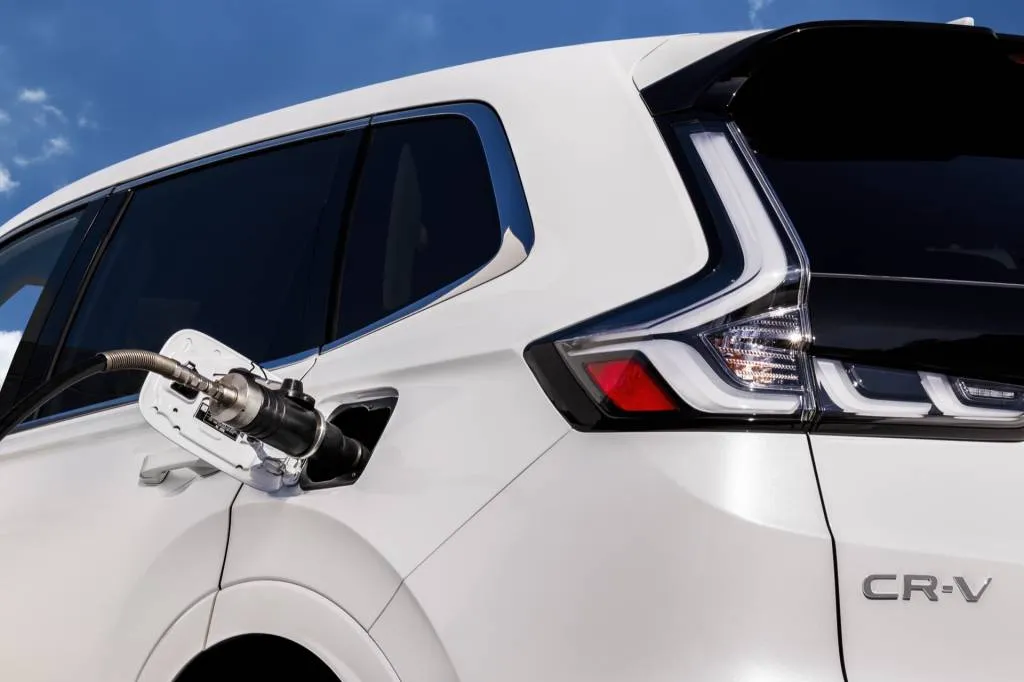
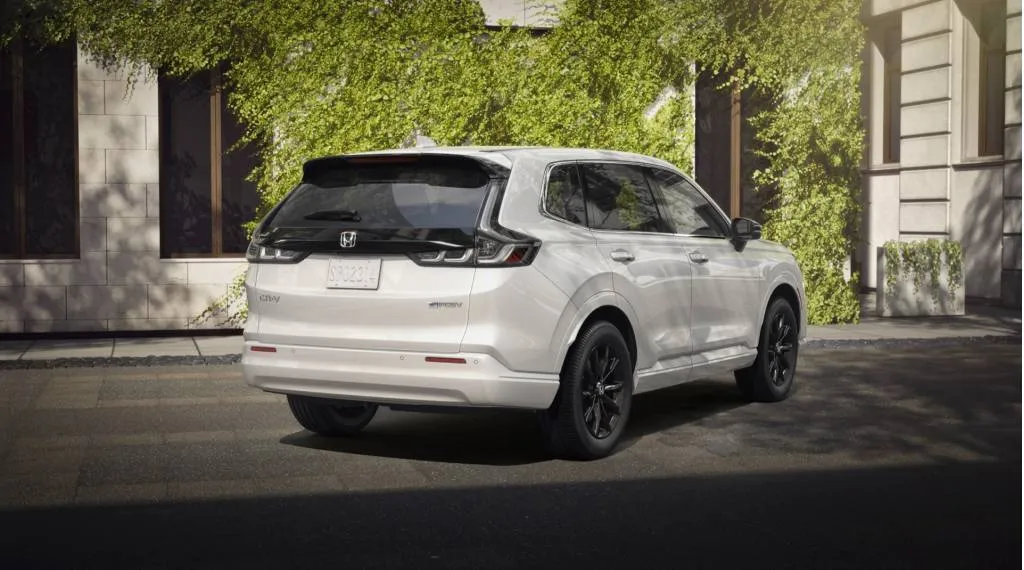
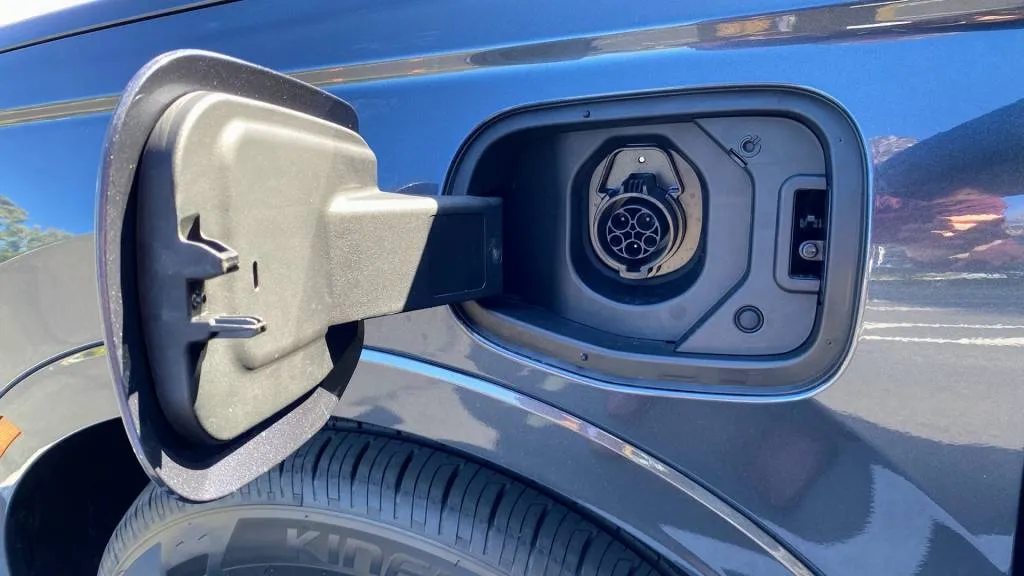
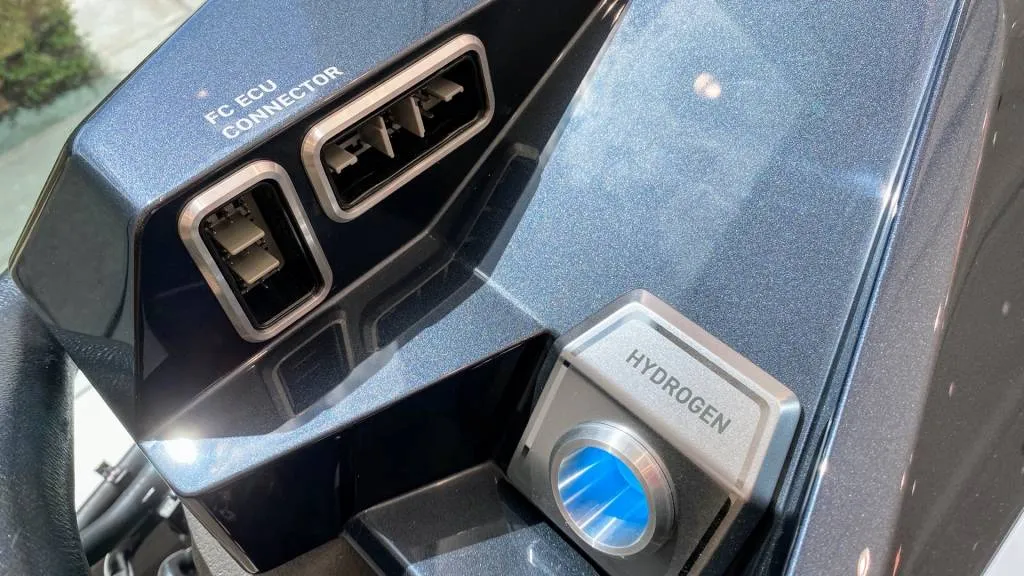
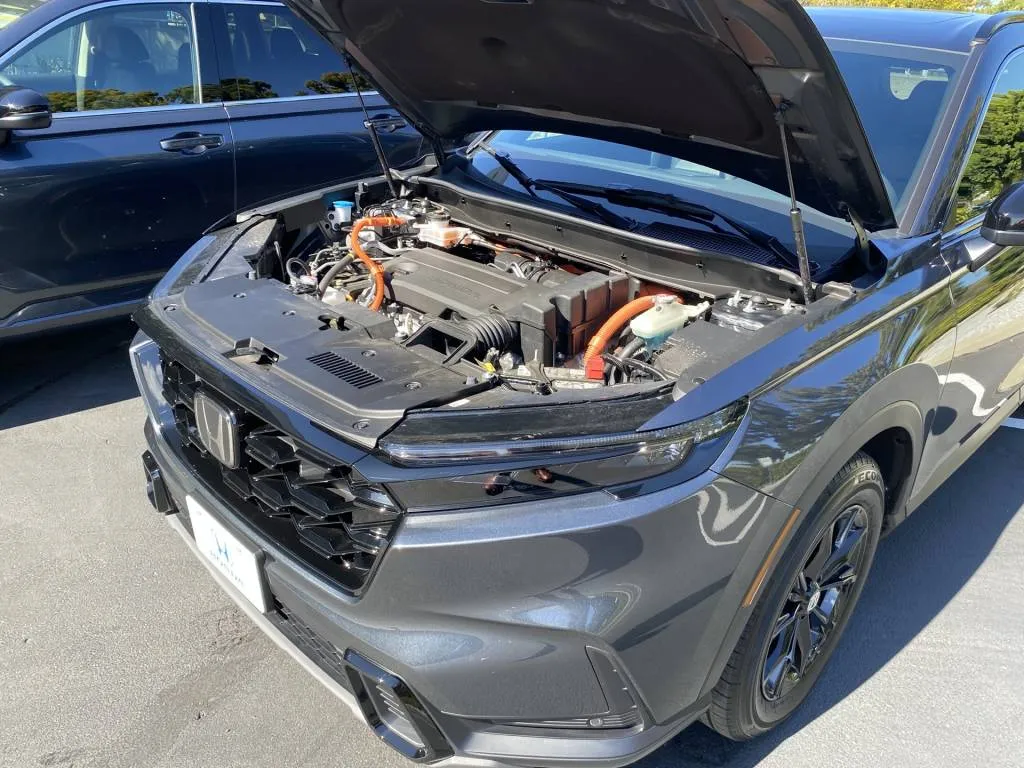
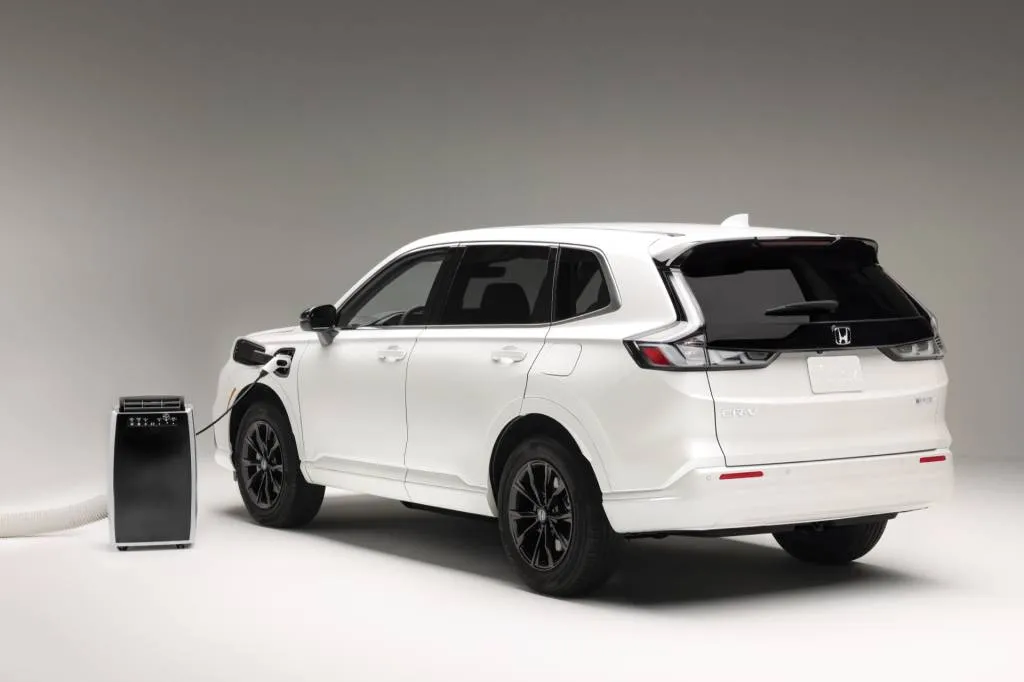
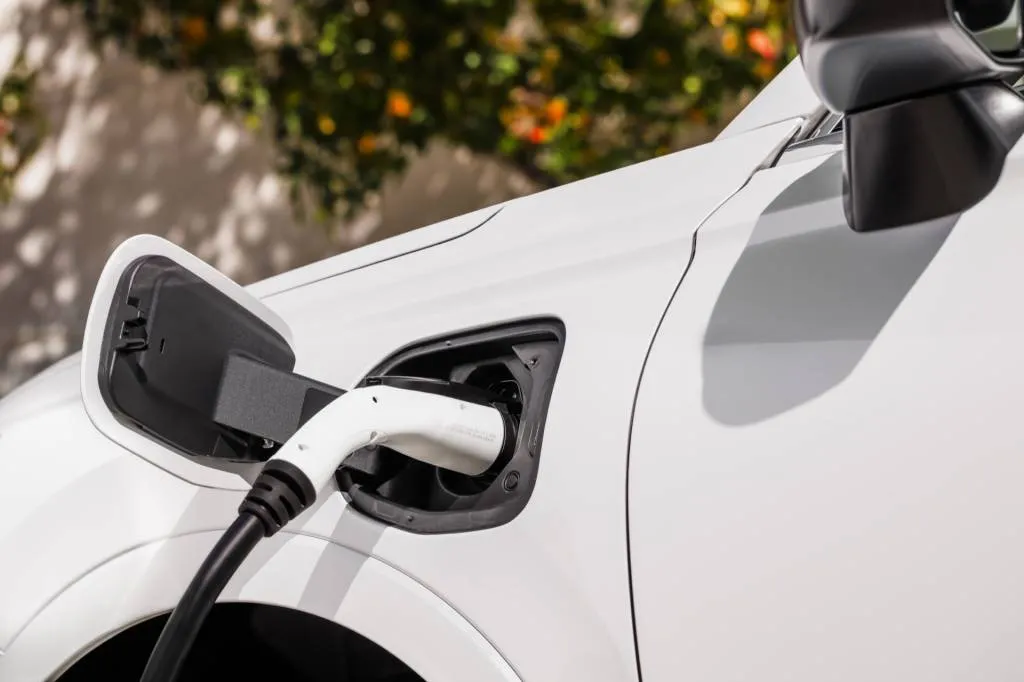
The charge port on the front fender of the 2025 Honda CR-V e:FCEV is, ironically, what may help keep drivers of this fuel-cell vehicle away from a state of range anxiety. 

It signals plug-in-hybrid-like electric range for the commute, without any need for hydrogen—a departure from the modest, hybrid-sized packs that have been typical in fuel-cell passenger vehicles up until now. 

Altogether, it’s a technology combo that on one hand has been a long time coming and on the other hand is a noteworthy concession to a series of present realities for fuel-cell vehicles. While the vehicles themselves have been swimming olympic laps of transformation and refinement, the infrastructure has barely been treading water. Hydrogen was supposed to provide gasoline-like driving range and quick fills, but several hydrogen supply pinches in recent years left even early adopters uneasy about fueling up. And where are the 50-cent-a-gallon-equivalent hydrogen prices that a federally funded study suggested a decade ago would be possible by now? Nowhere in sight. 

2025 Honda CR-V e:FCEV

2025 Honda CR-V e:FCEV

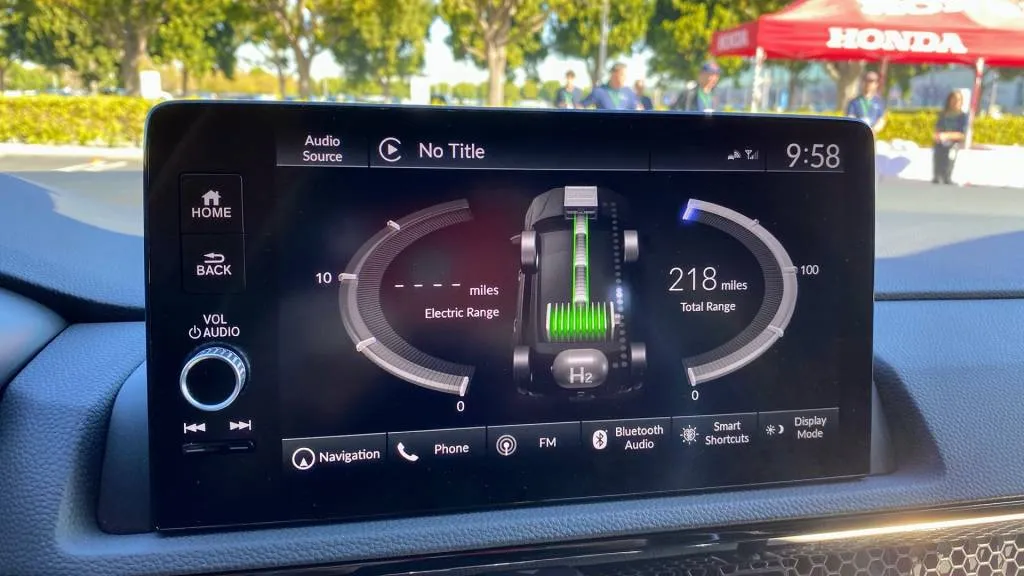
As of January, hydrogen prices were running a whopping $33.50 per kg—roughly the energy equivalent of a gallon of gasoline. That’s about $144 to fill its 4.3-kg tank with 10,000-psi compressed hydrogen gas, set to take you an EPA-rated 241 miles. Whenever you’re home, plug into a 240-volt home charger for a couple hours and with about $4.00 of electricity, based on California prices, you’ll get an additional 29 miles without using hydrogen. 

Honda won’t reveal how much of the battery’s capacity is set aside for charging, but it says that it dedicates at least as much as the Clarity Fuel Cell’s 1.6 kwh battery toward energy buffering for the fuel cell, which doesn’t ramp up instantly. For now we’ll estimate about 14 kwh dedicated to plugging in; but engineers cautioned that will vary.

Understanding what the powertrain’s like to live with will have to wait for a longer experience. But in a brief drive of the CR-V e:FCEV this past week with pretty much a full tank of hydrogen and a full charge, I found that this new fully electrified version of the popular CR-V drives with a hushed confidence, as if it were a battery-electric model. 

2025 Honda CR-V e:FCEV

2025 Honda CR-V e:FCEV

Fuel-cell tech overcomes some baggage

Creating a convincing hydrogen fuel-cell vehicle wasn’t the hurdle here, though. The previous Honda Clarity Fuel Cell sedan already presented that thesis. Like the rival Hyundai Nexo crossover and Toyota Mirai sedan—which I’ve suggested may be the best-driving sedan Toyota makes—it showed that fuel-cell tech could provide impressive drivability and performance. 

Fuel-cell vehicles have steadily gotten better over the past two decades, and I have driven nearly all of them. Hydrogen refueling has become quicker when and where it’s available; fuel-cell modules have become quieter and less obtrusive; packaging keeps improving; and drivability has improved by leaps and bounds. 

2025 Honda CR-V e:FCEV

2025 Honda CR-V e:FCEV

Why haven’t fuel-cell vehicles been given charge ports in the past? I’ve been told for previous fuel-cell vehicle efforts that adding extra battery capacity defeated the purpose of shifting to fuel-cell propulsion, adding unnecessary weight and more packaging challenges. I’ve also been told that it disincentivizes the buildout of hydrogen infrastructure. 

“The reason is, in order to improve the hydrogen infrastructure you need to use and consume it—so if you make it chargeable at home, then those people won’t consume the hydrogen,” Toyota Mirai chief engineer Yoshikazu Tanaka summed to Green Car Reports in 2020, explaining why a charge port had been considered for that model but ruled out. 

2025 Honda CR-V e:FCEV

2025 Honda CR-V e:FCEV

First fuel-cell model to arrive since hydrogen moved on

Four years later, in 2024, everything has changed. All automakers still talking the hydrogen talk have seen the light—that passenger vehicles will no longer be the main focus of the technology in the near future, and that the brighter, near-term application for fuel-cell tech is beyond passenger vehicles. Honda is embarking on multiple projects for electric trucks, tracking the results of a stationary fuel-cell concept for backup power at its data center, and even looking toward space applications. 

Seemingly relieved of this pressure to prove the tech versus EVs and plug-in hybrids, the e:FCEV gets the charge port. Honda also didn’t seem impassioned to make this fuel-cell vehicle a unique design or body style. From some paces away, it’s going to register as perhaps a different model year or trim level of the ubiquitous family crossover to the vast majority of the car-buying public. 


Honda fuel-cell module

Honda fuel-cell module

Honda fuel-cell module

Honda fuel-cell module

Honda fuel-cell module

Honda fuel-cell module

Rolling science experiment? Nope, not here

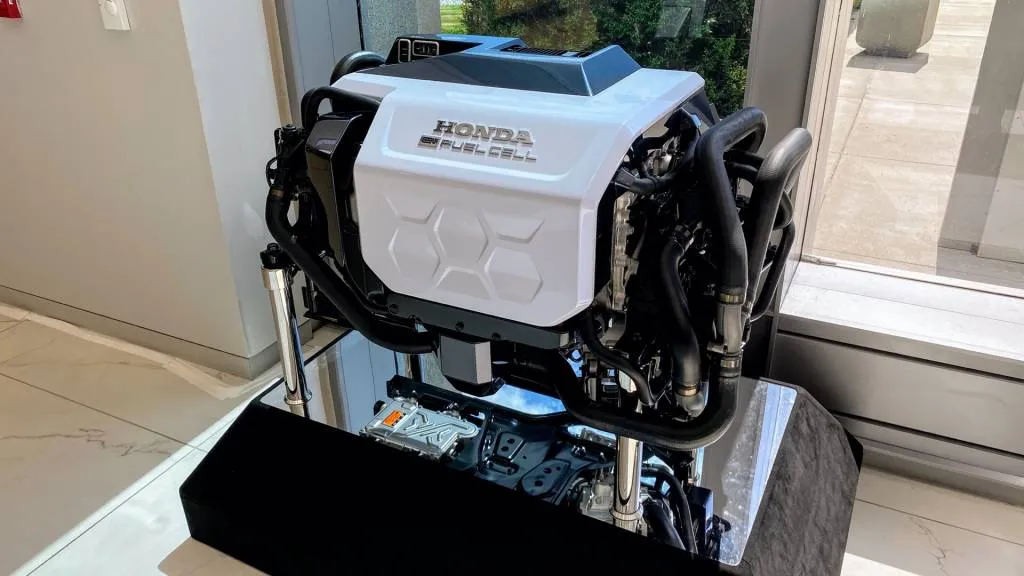
Like those other fuel-cell vehicles, this special CR-V no longer deserves to be called a rolling science experiment, as its fuel-cell stacks represent generations of development over more than 25 years. Simply put, wafer-like layers host and harness a chemical reaction between oxygen and hydrogen, producing electricity, waste heat, and some water vapor. 

The look might be plain, but the implementation is top-notch. The days of fuel-cell stacks sounding like a Dustbuster were left running under the seats are long gone. You can just barely register when the fuel-cell stack is running, but you have to know what to listen for. You won’t get your feet wet when loading the car either; Honda has relocated the drain for the fuel-cell to the inside the right rear tire rather than in the tailpipe position.

Amid these conflicting signals, this is the start of the second generation of what Honda is terming a “fuel cell module”—developed with GM and made in Michigan—as both companies pivot the tech toward those commercial vehicles, construction vehicles, agriculture, and stationary power sources.

Toyota has already announced that it’s considering using hydrogen fuel-cell-based power to manufacture cars. Honda says it isn’t quite there yet, but it’s already using the tech to back up its U.S. research and development offices with retired Clarity Fuel Cell systems. 

2025 Honda CR-V e:FCEV

2025 Honda CR-V e:FCEV

2025 Honda CR-V e:FCEV

2025 Honda CR-V e:FCEV

2025 Honda CR-V e:FCEV

2025 Honda CR-V e:FCEV

Less hydrogen range, all the passenger space

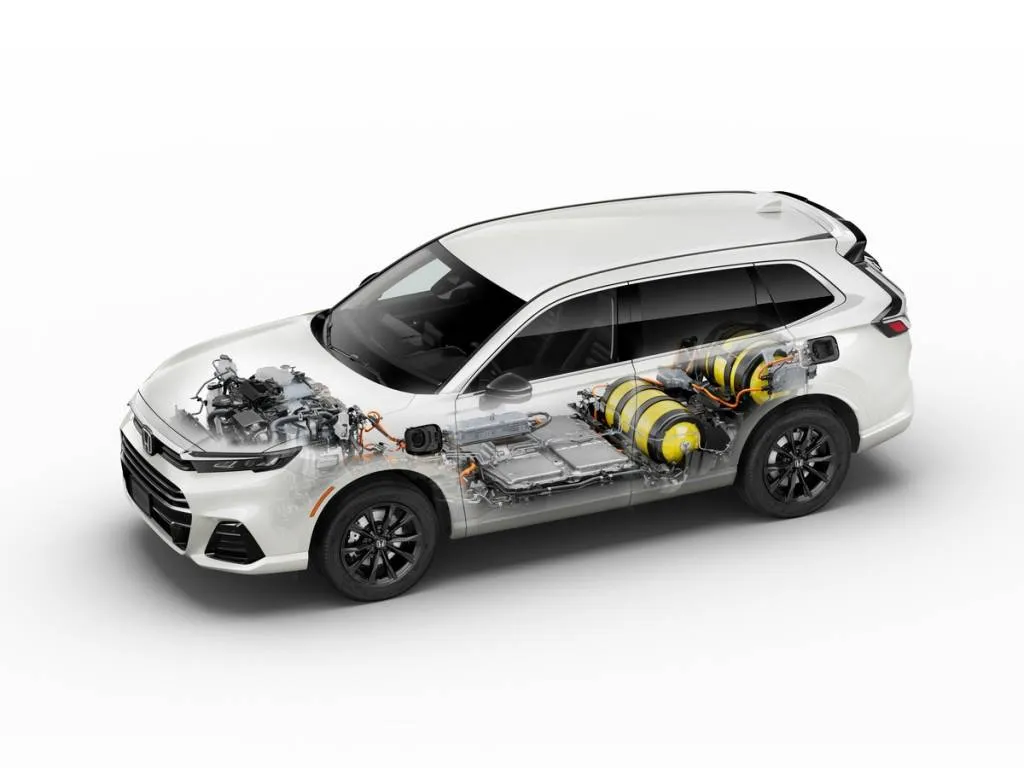
The CR-V e:FCEV’s fuel-cell module makes 92.2 kw—down from the previous generation’s 103 kw as installed in the Clarity Fuel Cell, related to efforts to make the unit more compact. Honda notes that cost has been reduced and durability has been gained, and it claims vastly reduced noise and vibration from the unit itself. With an air-to-air intercooler for the fuel-cell stack, rather than water cooling, the system can now start up in temps as low as -22 degrees F.

The toughest issue in fuel-cell models is typically where to store the hydrogen tanks, which need to be cylindrical, a shape that doesn’t pair well with seating, cargo space, or aero-savvy. While the Nexo, Mirai, and previous Clarity Fuel Cell all checked in at well over 300 miles of range but with a packaging pinch typically involving the trunk or rear seats, the e:FCEV seems to have prioritized that packaging over range.
 

Honda CR-V e:FCEV

Honda CR-V e:FCEV

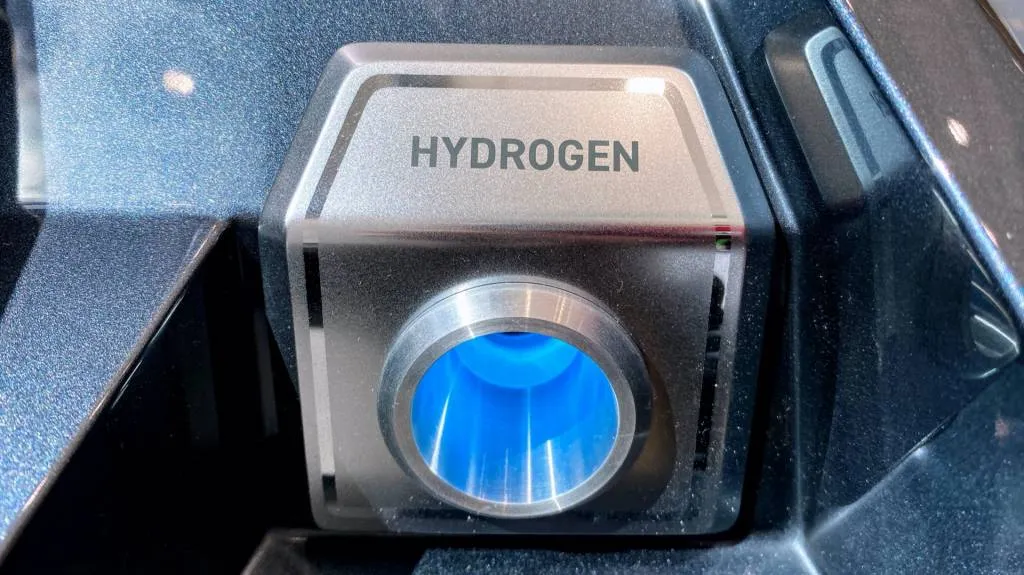
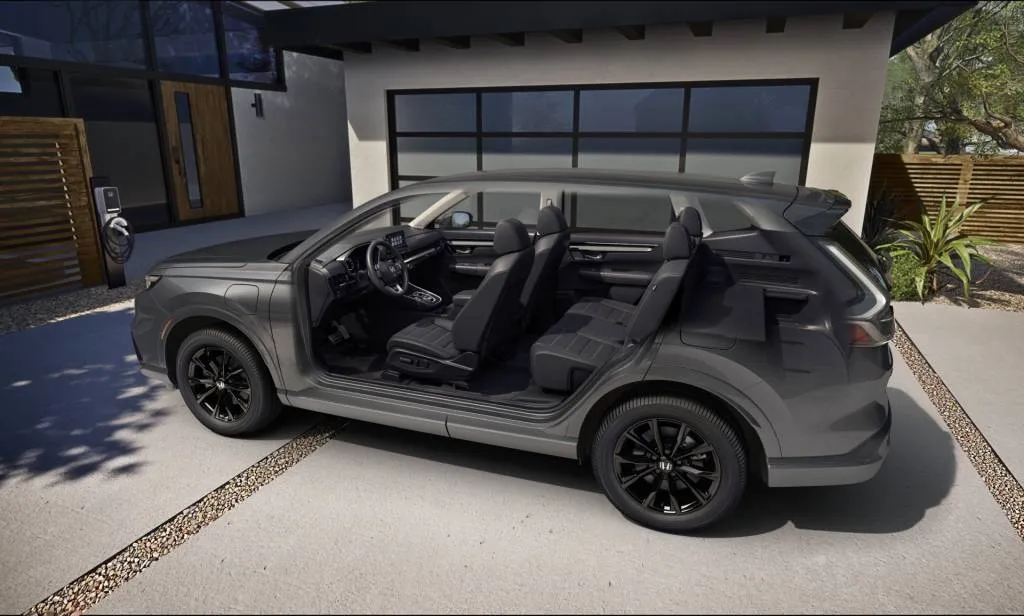
Hydrogen storage remains split into two cylindrical tanks, but total storage is 4.3 kg, down from 5.5 kg in the Clarity Fuel Cell. Various core components of the hydrogen system and powertrain have gone modular, with the EV battery under the floor in the middle of the vehicle. The two tanks lay across the width of the vehicle below and behind the back seat, so as not to impact passenger space at all versus the CR-V Hybrid.

2025 Honda CR-V e:FCEV

2025 Honda CR-V e:FCEV

2025 Honda CR-V e:FCEV

2025 Honda CR-V e:FCEV

2025 Honda CR-V e:FCEV

2025 Honda CR-V e:FCEV

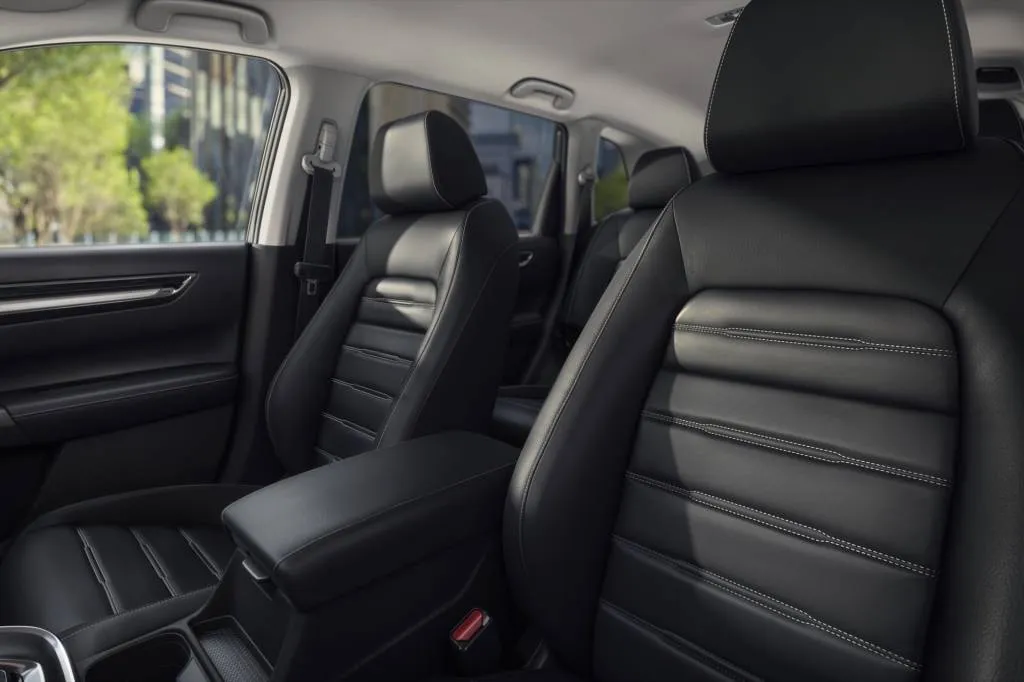
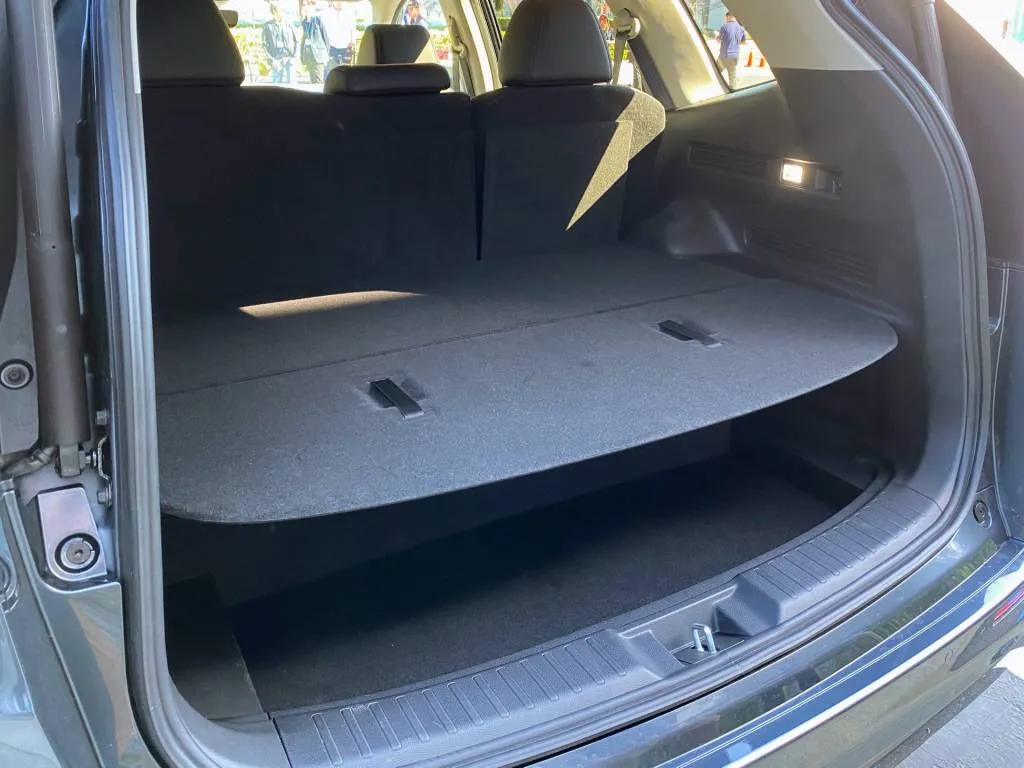
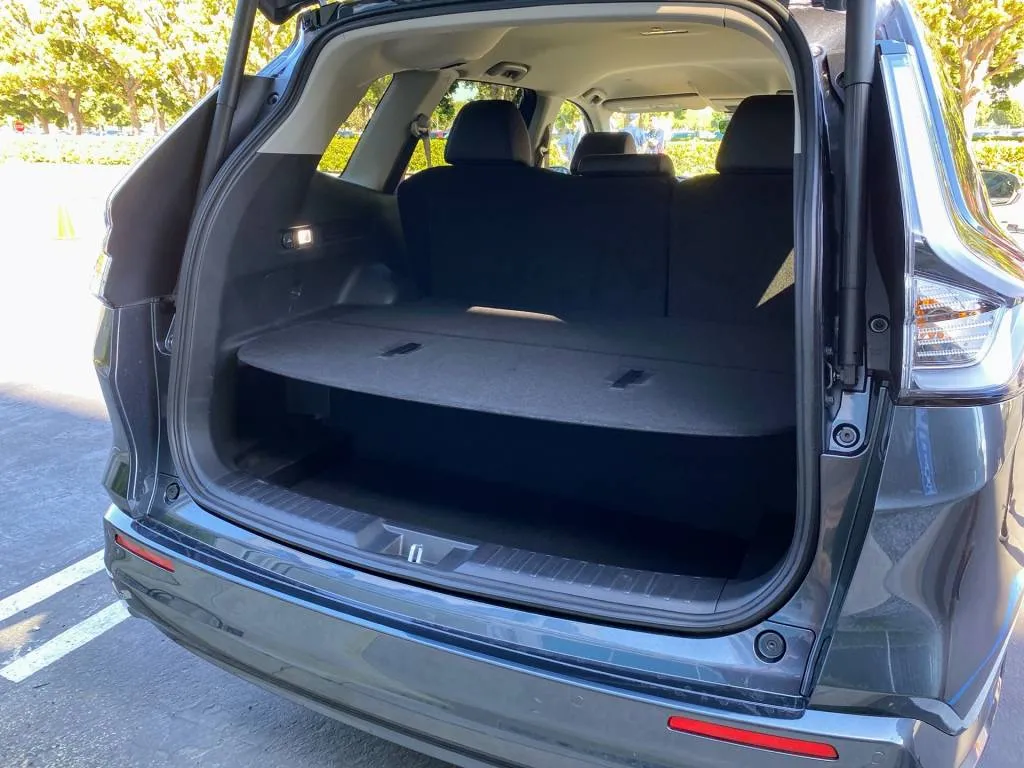
The e:FCEV feels packaged pretty much like any other CR-V from the front seat or rear seat. The only exception is that, if you fold down the rear seatbacks there’s a hump across the floor to navigate—although a two-position rear cargo shelf in back helps make the most of the compromise in day-to-day use. As in other CR-V models, you’ll find enough headroom and legroom in back, even if you’re sitting behind a taller driver, while seats don’t have a lot of side support but are soft and supportive otherwise.

2024 Honda CR-V Hybrid

2024 Honda CR-V Hybrid

2025 Honda CR-V e:FCEV

2025 Honda CR-V e:FCEV

2024 Honda CR-V Hybrid

2024 Honda CR-V Hybrid

2025 Honda CR-V e:FCEV

2025 Honda CR-V e:FCEV

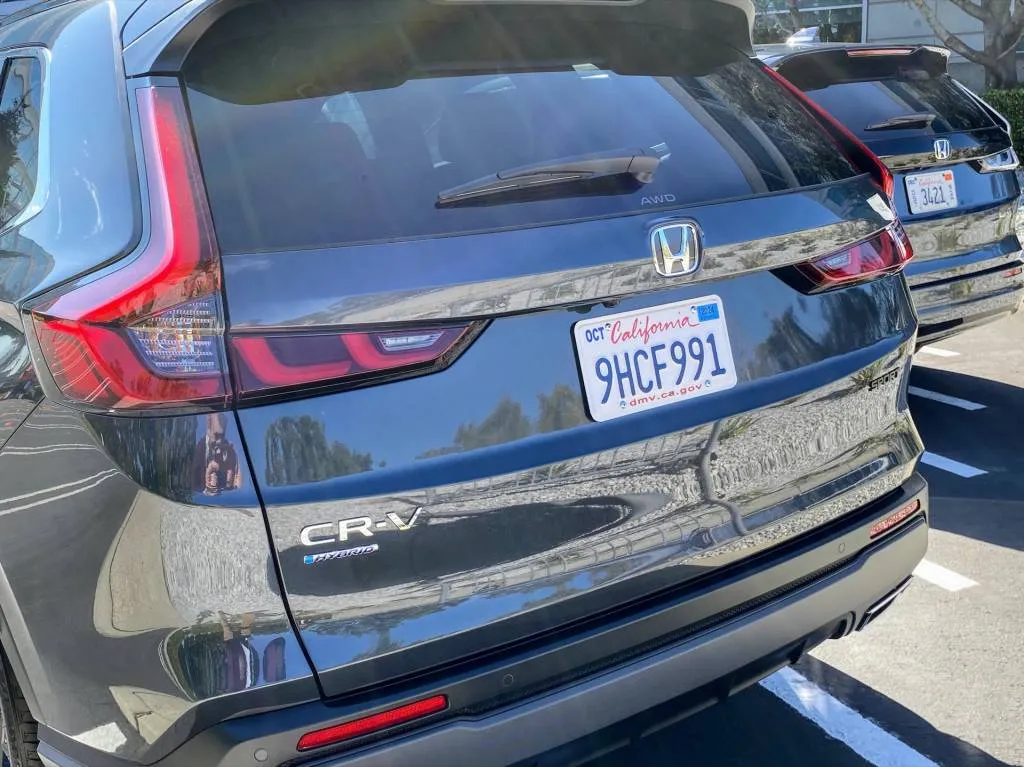
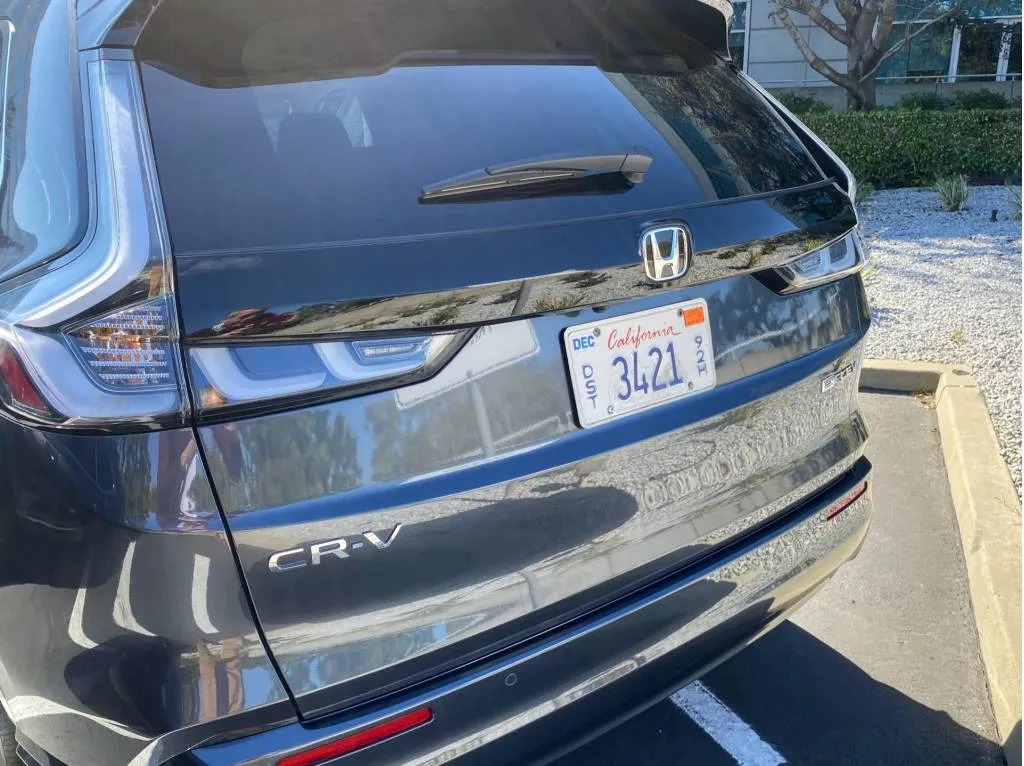
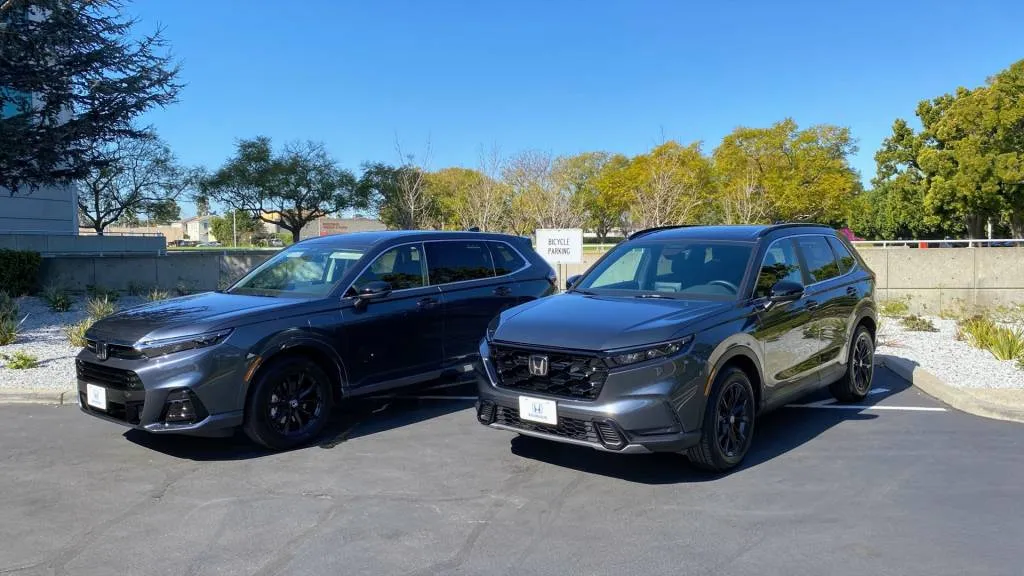
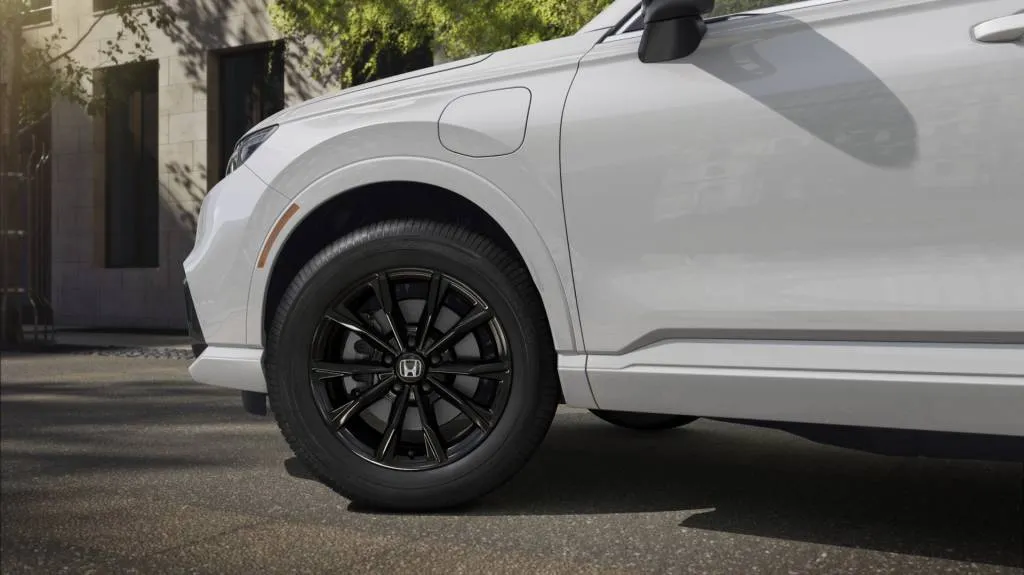
On the outside, a series of front and rear design tweaks soften the look somewhat, while 10-spoke, 18-inch alloy wheels look like they’d fit right into the rest of the CR-V lineup but are unique to this variant. There’s a larger grille opening (look lower); the front overhang has been extended about four inches; clear taillight lenses and lower body garnishes give it a somewhat different attitude, but even next to a Hybrid it seems subtle.

As in other CR-V models, a honeycomb mesh midline is probably the most striking aspect about the front-seat cabin area. The FCEV’s seats also get different, bio-based synthetic leather, plus synthetic leather for the steering wheel. 

2025 Honda CR-V e:FCEV

2025 Honda CR-V e:FCEV

e:FCEV is derived from a PHEV Americans can’t get

The CR-V e:FCEV is front-wheel driven and produces a peak 174 hp and 229 lb-ft of torque. Honda didn’t have a peak power figure for the vehicle if it’s out of hydrogen yet still driving on a full charge. Engineers confirmed that running the fuel cell module is needed for peak power.

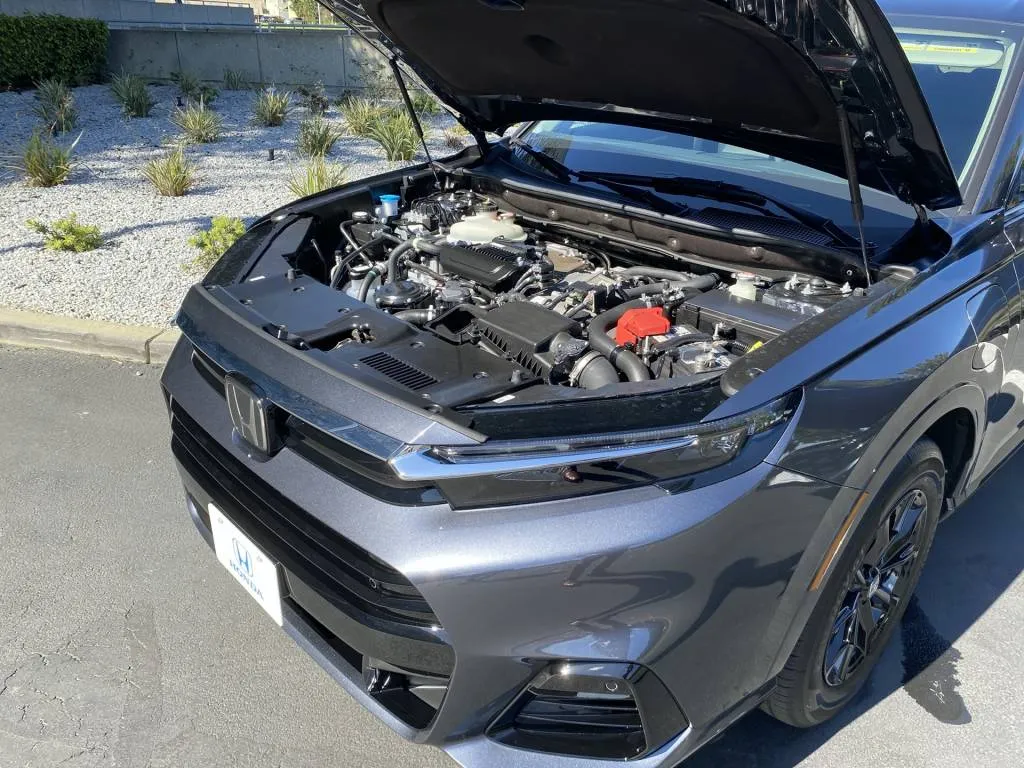
Honda explained that in conceiving the e:FCEV it borrowed as much as it can from the European-spec CR-V Plug-In Hybrid, including its thermally managed lithium-ion battery pack, its inverter, and its electric motor. In all, the plug-in fuel-cell version weighs essentially the same as the plug-in hybrid and about 500 pounds more than the CR-V Hybrid—likely around 4,300 pounds.

Honda indicates an official 0-62 mph acceleration time of 9.5 seconds for the CR-V PHEV, where the motor makes a higher 181 hp and 247 lb-ft of torque. Expect 0-60 mph in about 10 seconds here in the fuel-cell version. The CR-V e:FCEV chirps respectably off the line but without anything pinning you to your seat. My drive only took me to about 55 mph, and there I noticed the powertrain didn’t feel quite as perky. 

2025 Honda CR-V e:FCEV

2025 Honda CR-V e:FCEV

To fit impact zones with the fuel cell module’s different underhood space, the FCEV gets a new front bulkhead plus a new rear tank frame that’s utilized as a structural member. Only when you stand up right next to it do you notice the slightly longer nose. Rear roll rigidity has also been increased, with stiffer rear stabilizer bar mounts (stabilizers front and rear). 

I was able to drive the e:FCEV back-to-back with the U.S.-spec CR-V Hybrid, with handling limited to some L-shaped curves around warehouses and strip malls. I got the impression that the e:FCEV does drive heavier, as well as a bit stiffer, to control the weight, with more harsh bounding motions over large heaves and railroad tracks. Overall, it’s a smooth-riding vehicle but not inspiring in any performance sense.

2025 Honda CR-V e:FCEV and 2024 Honda CR-V Hybrid

2025 Honda CR-V e:FCEV and 2024 Honda CR-V Hybrid

EV-like regen modes, can power all sorts of gear

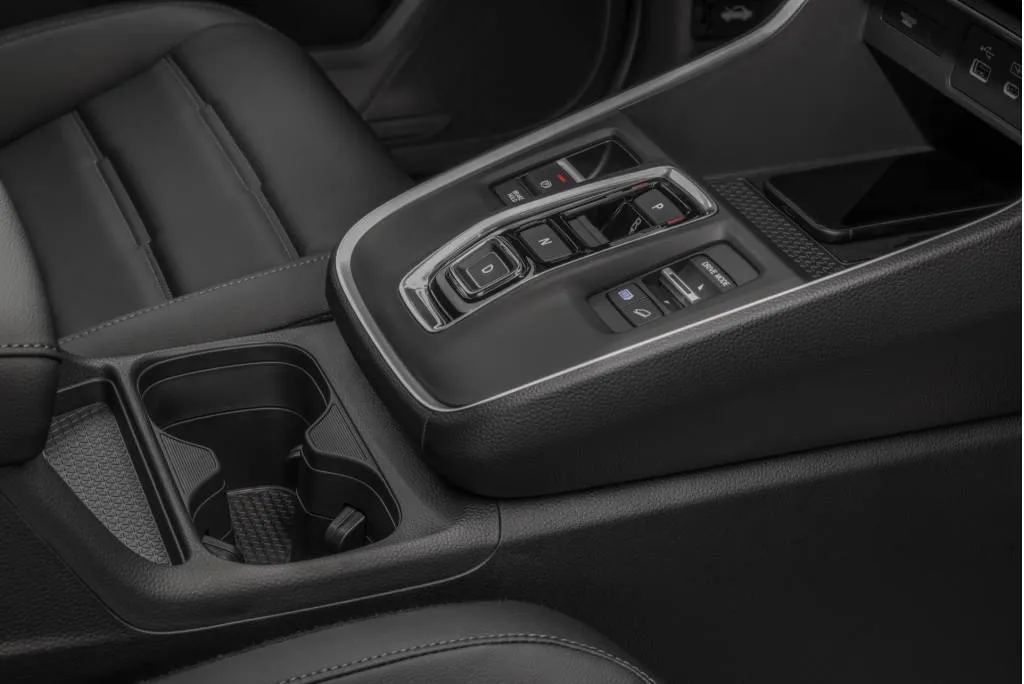
There are only a few key interface differences versus other CR-Vs. The shift lever is replaced by push-buttons, and the Drive Mode selector (Normal, Sport, and Econ) has been moved to the right side of the console, along with the powertrain mode button (Auto, EV, Save, and Charge). EV mode locks in plug-in charge until you use up that amount of the battery, while Save runs the fuel cell nearly all the time, using the buffer portion of the battery only. I quickly found that Sport and Save can’t be selected at the same time (because the fuel cell is required for max power). Four levels of deceleration can also be selected via zinc-alloy paddles—in the same way as Civic and Accord hybrids, and with the strongest regen not quite a one-pedal mode. 

2025 Honda CR-V e:FCEV

2025 Honda CR-V e:FCEV

The connector that’s included with the CR-V offers a 110-volt power outlet that can run appliances, power tools, camping equipment, or an air conditioner, at up to 1.5 kw. Honda has suggested that the CR-V e:FCEV has broader V2X ability baked in, potentially allowing the vehicle to share energy with the grid, the home, or other vehicles, but that functionality isn’t here yet. 

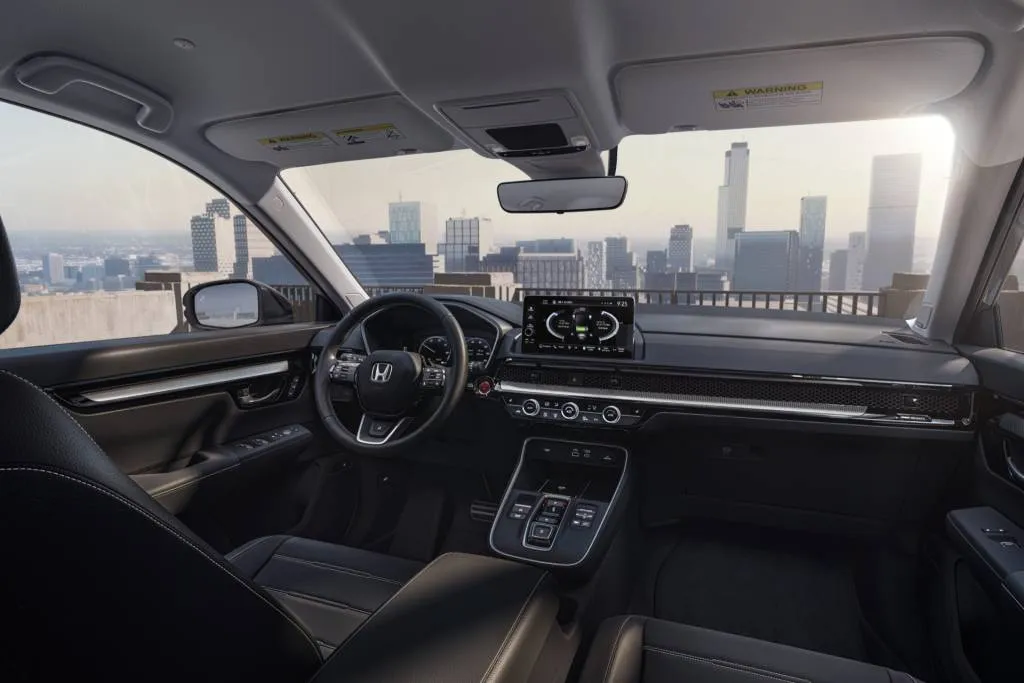
There are only two colors, and the FCEV is only offered in top Touring form with heated front seats, a heated steering wheel, wireless phone charging, 12-speaker Bose Centerpoint audio, a 10.3-inch gauge display, and a version of Honda’s 8.9-inch touchscreen system with wireless Apple CarPlay and Android Auto. I paired my iPhone very quickly and used CarPlay for the short driving route. You can very easily flip back and forth between that and the dynamic displays explaining the powertrain. 

2025 Honda CR-V e:FCEV

2025 Honda CR-V e:FCEV

An exotic in CR-V clothes

When the Clarity Fuel Cell arrived, Honda emphasized that while sales of that vehicle would be in the thousands, these next-generation models would be in the tens of thousands. 

Now Honda is aiming for 2,000 units per year of these FC systems, across all those applications, including just 300 CR-V e:FCEVs annually at first, with hopes for 600 of them annually. They’ll be offered only through a special lease, and Honda will be covering some of the hydrogen. It also flags that the e:FCEV qualifies for California single-occupant HOV lane use.  

2025 Honda CR-V e:FCEV

2025 Honda CR-V e:FCEV

The e:FCEV is effectively an exotic car masquerading as a CR-V. The few hundred Honda makes per year will be essentially handbuilt in Marysville, Indiana. Honda noted that this is no automated assembly line; it takes 20 days to build each FCEV. 

Honda is at last delivering hydrogen fuel-cell technology in a refreshing form—one that makes sense not with a hypothetical infrastructure that might arrive (and be reliable, and affordable) in a future scenario, but with a solid backup for today’s work-in-progress hydrogen reality. 

In the near term, battery electric has won, but fuel cells have promise over the long term, when all the issues with the infrastructure and hydrogen generation have been solved. For that, the CR-V e:FCEV is a very nice-driving bench-warmer. 


Source link

Fuel-cell Honda CR-V drive, Polestar 4 pricing, Ferrari and SK: Today’s Car News

0


The U.S. Polestar 4 has a price. Ferrari’s teaming up with the battery supplier SK On. And we review the fuel-cell version of the Honda CR-V. This and more, here at Green Car Reports. 

In a first drive of the 2025 Honda CR-V e:FCEV, we found it to be well-packaged, roomy, and refined, with a driving experience that’s virtually indistinguishable from that of a battery-electric model. While the vehicle is in top form, the fueling infrastructure is not. Good thing Honda, among other automakers, has moved on to prioritize other uses for hydrogen first—and put a charge port on the e:FCEV.  

At the New York Auto Show, 2025 Polestar 4 pricing was confirmed Wednesday. The curvaceous electric SUV with no rear window, sized closely with the Tesla Model Y, will start at $56,300 when it starts arriving in the fourth quarter of 2024. And that’s for China-built versions; those assembled in South Korea will arrive a bit later. 

Ferrari has already offered a few very performance-oriented plug-in hybrids, and it’s confirmed an EV is on the way. With its battery partner, SK On, it’s now confirmed more of a development partnership between Ferrari and SK that could help “advance cell technology.”

_______________________________________

Follow Green Car Reports on Facebook and Twitter


Source link

2025 Kia K4 sedan may spawn hatchback sibling in US

0


Kia used this week’s 2024 New York auto show to introduce the new K4 compact sedan, which will replace the Forte when it arrives in showrooms in the second half of the year as a 2025 model.

During the introduction, Kia presented a video that showed a hatchback version of the K4, a body style that Kia discontinued on the Forte in 2018.

The video is below and shows the hatch at the 10:15 mark, along with some comments from design chief Karim Habib.

Motor1 has learned that Kia plans to sell both body styles in the U.S. Habib referred to the hatch as the K4 five-door, a name it might carry into production. The previous Forte hatch was known as the Forte5.

The hatch will presumably feature the same specifications as the sedan, though likely with more storage space. The sedan measures 185.4 inches long, making it almost three inches longer than the Forte. Hatchback versions of the same vehicle tend to be shorter.

Kia confirmed two powertrain options for the sedan, both of them gas units. The standard engine is a 2.0-liter 4-cylinder rated at 147 hp, while a 1.6-liter turbo-4 rated at 190 hp will be available. The naturally aspirated engine comes with a CVT, while the turbocharged engine comes with an 8-speed automatic. Front-wheel drive is standard for both powertrains.

Kia will also offer an electric hatchback similar in size to the K4 hatch. It will go by the name EV4, and a concept of the same name that was shown last year hints at the design.


Source link

10 Best Coffee Shops and Cafes in Chiang Mai (Laptop Friendly!)

0


If I had to give a title to the best spot for digital nomads in the world, Chiang Mai would 100% be in contention for the top spot. This is a place packed with other remote workers, a low cost of living, a captivating culture, and an amazing food scene. It’s so easy to work here, with some of the best cafes in Chiang Mai offering a comfortable chair to top-notch coworking spots.

Having spent several months living and working in Chiang Mai, I grew to love the coffee shop vibe and preferred to go to the best coffee shops in Chiang Mai over a coworking space. It’s so easy to meet other people, be productive, and of course, enjoy the very best coffee in Chiang Mai while you’re working. I tried out many cafes during my time there and trust me, there’s no shortage.

Best Cafes and Coffee Shops in Chiang Mai

coffee shop chiang maicoffee shop chiang mai

It’s very difficult to give the title of the best cafe in Chiang Mai because there are so many and they all have their own little quirks, but I rose to the challenge. In a bid to give you a selection of the best cafe working spots, I compiled my list based on the quality of coffee and food, service, location, customer reviews, and of course, my own personal experience. After plenty of deliberation, I narrowed my selection down to these ten cafes.

1. STORIES (Best Cafe in Chiang Mai Overall)

smoothie bowlsmoothie bowl

STORIES is one of the best cafes to work from in Chiang Mai, and it’s my personal favorite. I love to snack while I’m working and this place offers so many delicious things to eat, including healthy options, fantastic sandwiches, and cakes. Of course, the coffee is pretty high quality too and the menu is quite substantial.

From a working point of view, the chairs at STORIES are relatively comfortable. However, make sure you choose the chairs with the wicker back and not the regular “kitchen chairs” if you’re planning on staying a while. There are plenty of charging outlets, and I had no problem with the WiFi; I visited quite a lot, too.

This is a great cafe to beat the heat as they crank up the air-conditioning. Also, they don’t mind if you stay for a few hours, as long as you buy a proportionate amount of food/drinks for your time there.

STORIES Information

Address: 1, 3 Rachadamnoen Rd, พระสิงห์ เมือง Chiang Mai 50200, Thailand
Phone: +66 63 398 2888
Operating Hours: Mon – Sun, 7.30 am-10 pm
Must-Try Items: Iced latte, cappuccino, salad selection
Average Cost: $2-$3 per latte, $4-$5 per lunch dish, $2 for desserts

2. My Secret Cafe in Town (Best for Atmosphere)

laptop remote work coffeelaptop remote work coffee

If you’re looking for laptop-friendly cafes in Chiang Mai, I highly recommend My Secret Cafe in Town. It’s one of those places that everyone seems to know about, but it’s often considered a hidden gem. I visited here several times and loved the homely feel and how comfortable it was in general.

The WiFi at this cafe is fast and reliable, and there are plenty of charging points dotted around. The chairs are comfortable, but the tables are a little small, so don’t expect to spread out too much. The table size was the only downside I noticed, and although the cafe itself isn’t that big, it’s what makes it feel so comfortable.

I loved the coffee at this spot and the lunch menu is delicious. I tried several of the sandwiches and salads on the menu, and when I go back, it’s the first place I intend to head for lunch. The opening hours are convenient too – from 8:30 am until 8.30 pm – and it’s centrally located.

My Secret Cafe in Town Information

Address: 175 12 Rachadamnoen Rd, Tambon Si Phum, Mueang Chiang Mai District, Chiang Mai 50200, Thailand
Phone: +66 81 499 9911
Operating Hours: Mon-Sun, 8.30 am – 8 pm
Must-Try Items: Latte, sandwich menu, salads
Average Cost: $2 per latte, $3.5 per main, $2 for desserts

3. Cool Muang Coffee (Best for Quiet & Comfort)

laptop remote working10 Best Coffee Shops and Cafes in Chiang Mai (Laptop Friendly!)

I found some of the best coffee in Chiang Mai at Cool Muang Coffee, and I enjoyed sitting outside on the patio to work. I also spent some time happily watching the world go by, as there’s a great view over the street. The coffee here is ideal if you don’t like it too strong (like me), and they have a great selection on offer.

You can choose to sit inside if you prefer air-conditioning, and there are plenty of charging points whether you sit inside or outside. I also found the internet here to be very reliable and strong; I did a few video calls and had no issues whatsoever.

Many other digital nomads were working from this cafe when I visited, and there’s even a meeting room, which is ideal for collaborating and networking. Overall, this coffee shop is probably on par with some of the coworking spaces, so it’s a great choice if you prefer cafes to office-style layouts.

Cool Muang Coffee Information

Address: 81 Mun Mueang Rd, Tambon Si Phum, Mueang Chiang Mai District, Chiang Mai 50200, Thailand
Phone: +66 62 269 7889
Operating Hours: Mon – Sat, 8.30 am – 6 pm, Sun, 8.30 am – 7.30 am
Must-Try Items: Latte, macchiato, carrot cake
Average Cost: $2 per latte, $3-$4 per main, $2.50 for desserts

4. Ombra Cafe (Best for Lunch)

cafe laptop cafe laptop

Ombra Cafe is one of the best cafes for working on a laptop in Chiang Mai and the staff are super helpful and patient. I worked from this cafe for the entire day, and the staff never bothered me once; I simply bought a couple of coffees and lunch. This is a popular spot amongst digital nomads and that could have something to do with the very fast WiFi; I did a few video calls, and it worked like a dream.

The lunch menu here is a real seller, and the coffee menu is large and really delicious. The prices are very reasonable, and it’s a comfortable spot to spend a few hours. There are many different seating options and plenty of charging points if your laptop needs a top-up.

Located in Nimman, this cafe sometimes gets busy at the weekends but it never felt overly crowded when I was there. It has a very laid-back feel to it, and yet the design is modern and stylish at the same time. I was very productive when I worked from this spot, and I’d recommend it for a few hours before exploring the Nimman area.

Ombra Cafe Information

Address: ช้างเผือก 3/1 เมือง Chiang Mai 50300, Thailand
Phone: +66 98 815 7222
Operating Hours: Mon – Sat, 8 am – 6 pm, closed on Sundays
Must-Try Items: Latte, cold brew, salad menu
Average Cost: $2 per latte, $3-4 per main, $2 for desserts

5. Carrot Cafe (Best for Delicious Cake)

cake and coffeecake and coffee

I can easily be swayed by a cafe that offers great cake, but regardless, Carrot Cafe is still a great place to do a few hours of work. The layout makes it super easy to be productive, with large, open spaces, and a warehouse feel to the decor. There are plenty of charging outlets, and the WiFi is very reliable.

For me, this is one of the best cafes in Chiang Mai for menu choice, as they offer more than just coffee, with juices, flavored waters, and teas on offer. They serve some fantastic cakes – I went back there a few times just to work my way through the sweet menu.

This cafe is popular but not to the point where it’s loud; I found it quite chilled-out and quiet most of the time, except for weekends when it did get a little busier. Overall, I never had a problem working from here, and the central location is ideal.

Carrot Cafe Information

Address: ร้าน Carrot Coffee CNX เลขที่ 42/1 , 42/2 42/3 Ratchamanka Rd Soi 7, พระสิงห์ Mueang Chiang Mai District, Chiang Mai 50200, Thailand
Phone: +66 62 256 9415
Operating Hours: Mon – Sun, 8 am-6 pm
Must-Try Items: Cold brew, carrot cake, brownie
Average Cost: $2 per latte, $2 per juice, $2.50 per dessert

6. Thesis Coffee (Best for Espresso)

espressoespresso

Thesis Coffee is a really modern coffee shop in Chiang Mai that has a cool and stylish feel. I’m not sure whether it was designed primarily with digital nomads in mind, but it feels like it was, thanks to the comfortable seating, large tables, and plenty of power outlets. The WiFi is also high quality and never dipped once while I was there.

If you like your coffee strong, you’ll enjoy this coffee shop – I did ask the barista to make mine slightly weaker, and they were more than happy to help. They also have a great snack range, and the cakes are delicious.

If you want to collaborate with other digital nomads, it’s really easy to do so, thanks to the different types of seating, including high bar-style tables and stools and sofas. It did get quite busy while I was there, but it never felt loud or overwhelming, and I managed to get through few hours of productive work during my visit.

Thesis Coffee Information

Address: 237/1 Huay Kaew Rd, Don Kaeo, Mueang Chiang Mai District, Chiang Mai 50200, Thailand
Phone: +66 94 256 5600
Operating Hours: Mon-Sun, 8.30 am – 6 pm
Must-Try Items: Espresso, latte, pastry menu
Average Cost: $2.50 per latte, $3 per dessert

7. Wake Up Coffee (Best for Around-the-Clock Working)

couch laptop comfortable seatingcouch laptop comfortable seating

Wake Up Coffee is a cool coffee shop in Chiang Mai and there are a few branches you can choose from. I went to the B2 Riverside Premier branch and loved the modern vibe and how easy it was to get some work done in a comfortable environment. However, this branch isn’t all that central, so you could opt for the branch near Nimman, which although easier to find, isn’t as comfortable.

The great thing about this coffee shop is the opening hours; if you need to work late or you suddenly get inspiration in the middle of the night, it’s open 24 hours. It’s also got very fast WiFi, comfortable seating, large tables for easy productivity, and plenty of charging spots.

The coffee at this branch is the same as all the others and I really enjoyed the milder taste. They have a large menu to choose from, and I became slightly addicted to their espressos, which definitely helps if you’re working a little later than normal.

Wake Up Coffee Information

Address: 195, 1 Thanon Charoenrajd, Chang Moi Sub-district, Mueang Chiang Mai District, Chiang Mai 50000, Thailand
Phone: +66 52 009 161
Operating Hours: Mon – Sun, open 24 hours
Must-Try Items: Espresso, caramel macchiato, latte
Average Cost: $2 per latte, $3 for desserts

8. The Barisotel (Best for Coffee Range)

iced coffeeiced coffee

For the best coffee roasters in Chiang Mai and a stylish feel, it has to be Barisotel. This cafe is very centrally located in Nimman and offers a trendy vibe from the moment you walk in. They have a huge range of different coffees and other beverages to choose from, and although it’s slightly pricer than some other places, it’s a very pleasant place to work from.

I found the WiFi to be excellent at this cafe, and the seating was very comfortable too. Despite the slightly higher costs, it’s a popular place for digital nomads to base themselves, which is reflected in the design of the space. It never felt crowded to me; even when I visited on a Saturday afternoon. The air-conditioning was pleasant too and added to the overall comfort.

The Barisotel is a very modern choice, and it doesn’t feel very traditional, but in terms of productivity and comfort, this is one of the best in the Chiang Mai area.

The Barisotel Information

Address: 7, 2 Nimmana Haeminda Rd Lane 9, Tambon Su Thep, Mueang Chiang Mai District, Chiang Mai 50200, Thailand
Phone: +66 81 898 8998
Operating Hours: Mon – Sun, 8 am-6 pm
Must-Try Items: Cold brew, peach tea, latte
Average Cost: $3 per latte, $3-$4 per dessert

9. Akha Ama Coffee (Best for Fast Internet)

cold brew coffeecold brew coffee

Akha Ama Coffee is one of the most unique cafes in Chiang Mai because of its design and layout. It manages to remain very quiet, despite welcoming plenty of customers. It’s a great place to do some work and enjoy a good coffee without struggling because of noise or not being able to find a chair.

The only downside of this coffee shop is that there are very few charging points, so make sure you take a power bank or your devices are already full of juice. There aren’t any snacks available, but their coffee is very high quality, and I really enjoyed their cold brew; in fact, this is the cafe that got me into cold brew coffee and I haven’t been able to get enough since.

The location is another plus point as it’s right in the middle of the Old Town. Of course, that means there is plenty to see and do once you’ve finished your work for the day.

Akha Ama Coffee Information

Address: 175 2 Rachadamnoen Rd, Tambon Si Phum, Mueang Chiang Mai District, Chiang Mai 50200, Thailand
Phone: +66 88 267 8014
Operating Hours: Mon – Sun, 8.30 am-5 pm
Must-Try Items: Cold brew, iced latte, cappuccino
Average Cost: $2 per cold brew, $2.50 per iced latte

10. Artisan Cafe (Best for Meeting Other Digital Nomads)

digital nomads meeting networkingdigital nomads meeting networking

Hands down, Artisan Cafe is one of the best cafes in Chiang Mai if you want to be surrounded by other digital nomads. This is a very popular cafe and one that really does earn its stripes. I found it particularly easy to work from this cafe, thanks to its comfortable chairs, plenty of charging outlets, and large, coworking-style tables.

I’m not the biggest espresso fan, but this cafe won me over. They also have a range of other coffees to choose from as well as fruit juices and snacks. I also enjoyed the bright decor, with huge windows and plenty of greenery dotted around; they certainly understand the benefits of biophilic design!

The only real downside to working from this cafe is that they close at 5 pm, which is a little early compared to some other cafes. However, this can easily be overcome by simply arriving earlier – it’s an excuse to enjoy the evening sooner too!

Artisan Cafe Information

Address: 149, 153 Wua Lai Rd, Tambon Hai Ya, Mueang Chiang Mai District, Chiang Mai 50100, Thailand
Phone: +66 80 439 5635
Operating Hours: Mon – Sun, 8.30 am-5 pm
Must-Try Items: item 1, item 2, item 3
Average Cost: $2 per latte, $3-$4 per meal, $2.50 for desserts

Chiang Mai Cafes and Coffee Shops FAQs

Here are some answers to the most commonly asked questions about the best cafes and coffee shops in Chiang Mai.

What are the best cafes in Chiang Mai?

Chiang Mai is packed with fantastic coffee shops, including STORIES and My Secret Cafe in Town, where you’ll find some of the best coffee in Chiang Mai. Many digital nomads choose to work from coffee shops instead of coworking spaces. You’ll find most coffee shops are happy for you to use your laptop during your visit.

Do you tip in Chiang Mai?

Tipping in Chiang Mai, and Thailand in general, isn’t expected or customary, but it’s a nice thing to do if you feel you had good service. Tips will always be appreciated, and the general rule of thumb is around 10-15% of your total bill if you choose to do so.

What neighborhood has the best cafes in Chiang Mai?

The best Chiang Mai cafes can be found in the Old Town and Nimman areas of the city. These are two of the busiest spots, and there are countless cafes dotted around.

Does Chiang Mai have good coffee?

Many cafes in Chiang Mai serve fantastic coffee, especially espressos from the Arabica coffee beans which are grown in northern Thailand itself. You won’t struggle to find specialty coffee in Chiang Mai, and there are many upmarket coffee shops with large selections, especially in the Old Town and Nimman areas.

How much is an average coffee in Chiang Mai?

Coffee prices vary slightly depending upon the cafe you choose, but on average, a standard coffee in Chiang Mai costs around 70 THB/$2.

Is coffee popular in Chiang Mai?

The Arabica coffee bean is grown in northern Thailand and coffee in general is very popular across the country, especially in Chiang Mai. With the influx of international visitors, especially digital nomads, the coffee culture across the city has grown over recent years and you’ll see both tourists and locals alike sipping cups of coffee throughout the city.

Are laptops allowed at the coffee shops and cafes in Chiang Mai?

Most coffee shops and cafes in Chiang Mai have no problem with people taking their laptops inside to work as long as food and drinks are bought during their stay. So, whether you’re looking for the best cafe in Chiang Mai with a view or you simply want a quiet spot for an hour or so, you’ll be able to work quite easily in many cafes across the city.

What coffee is used in Thailand?

The Arabica coffee bean is grown in northern Thailand, so you’ll see locally produced espressos in most cafes across Chiang Mai. However, you’ll also find lattes, macchiatos, and many other coffee types in the larger coffee shops dotted around the city.

In Conclusion

If you’re like me and you prefer to work from cafes and coffee shops rather than coworking spaces, you won’t struggle to find an excellent spot in Chiang Mai. There’s a huge selection of cafes to choose from, and so long as you’re happy to purchase food and drinks proportionate to the amount of time you’re going to spend there, most places have no issue with you taking your laptop to work for a few hours.

Cafes and coffee shops are ideal places to meet other digital nomads, and I met many remote workers while I sipped on great coffee and got on with my work. It’s an ideal opportunity to collaborate, network, or simply meet new friends. You’ll also find a few dog-friendly cafes in Chiang Mai, such as Mingmitr Coffee, where you can mingle with other dog lovers while having a productive day on your laptop.

Enjoy!


Source link

How Many RV Solar Panels Do I Need, Get It Right First Try

0


RV Solar systems can be anything from a single panel you aim at the sun while you’re parked somewhere, to a dozen or more panels mounted to your roof. How much solar is the right amount? Sizing your RV Solar system properly can save you time and money as well as make sure your system performs as expected. This article is focused on figuring out just how many solar panels you need.

RV Solar System Sizing

People have told us their only big road block to getting a system, is not knowing how much solar they need. I will even admit I didn’t know either, and purchased an all in one kit that works great, but isn’t quite as big as I needed. You can read my review of that kit here.

rv hangersrv hangers

It doesn’t matter if you’re living the Van Life or RV Life or rocking a School Bus Conversion, the way you pick the size of your system is the same.

The first step is to find out how much power you are going to be using. This is the most tedious part, but also the most important. You need to add up the total electricity used from every appliance you have. The easiest way to figure out the total power is to convert all of your calculations into watts. Don’t worry, there is an easy way to do this too!
Our YouTube ChannelOur YouTube Channel

RV Solar Power Math

All of your major appliances will have a sticker on them somewhere that says how many Amps its draws and how many Volts it runs on. For example, we have a residential fridge in our RV and inside the door I find the power rating sticker below.

RV Solar calculationsRV Solar calculations

Here you see that our fridge runs on 115 Volts and draws 3 Amps. To convert this to watts, we use the formula AMPS x VOLTS = WATTS. So doing 3 x 115 = 345, we know that our fridge is using 345 Watts per hour when it is running. I figure the fridge is only actually running half of the day, and in standby mode the other half, so we take our Hourly Wattage (345) and multiply that by the Run Time (12) per day and get 4,140 Total Watts Per Day.

Amazon FireAmazon Fire

Easy right? Now we just have to do that same thing for all the appliances in your RV, and write it down, so we can tally up the total watts per day for all of them. Once we have a total wattage for everything we are going to be running in our RV, then we can move on to the next step, which is picking a type of battery to store our RV Solar Power.

Flooded Lead Acid

When it comes to RV Batteries there are 3 main types you have to choose from. The most common one, and the one that is most likely in your RV from the factory, is a Flooded Lead Acid (FLA) Deep Cycle.

It is similar to the battery in your car, but designed to be able to drain down before being recharged. The FLA style of battery is capable of a 50% discharge without damaging it before it needs to be recharged.

A FLA Deep Cycle is good for an average of 5 years before they need to be replaced. While they do have the lowest up front costs, they do require some maintenance to maximize their life span. After an average of 200 discharge and recharge cycles, a FLA battery will start to have a decline in the amount of energy they can store.

FLA batteries also need to be in an exterior compartment, and that compartment needs to be vented to the outside air. During the charging cycle they produce gas emissions that could kill you if they are in an interior area of your RV or Van.

AGM Batteries

The next type of battery is called an Absorbent Glass Matt (AGM) Battery. An AGM battery is an advanced version of the standard FLA Battery. One major attraction to them is that they are completely sealed, so there is no danger of battery acid being spilled out of them.

AGM Batteries are also maintenance free and last on average twice as long than a standard FLA Battery. On the up front cost they are going to cost 20 to 50 percent more per battery depending on the size of the battery.

LiFePO4 Batteries

The last type of battery is a Lithium Iron Phosphate (LiFePO4). This is considered to be the holy grail in RV Solar systems. A LiFePO4 battery can be discharged 80 percent without loss of power or doing damage to the battery itself. Most LiFePO4 batteries will last through 5,000 charging cycles.

At a rate of one charge cycle per day with a solar system, it should last you around 12 years in your RV. Another advantage to the LiFePO4 is it can handle much larger sustained power usage than its lead acid counterparts. If you are planning on running an AC unit with your solar system, this is the way to go.

The LiFePO4 does have the highest up front cost, at an average of 3 times the price of a FLA battery, however they are also only one third the weight. Depending on the size of your RV Solar system you may need several batteries to store the power, so that weight can add up fast.

How Many Batteries?

Once you have decided which type of battery is the best fit for your budget and power needs, the next step is to figure out just how many batteries you need. For this we are going to refer to the Total Watts Per Day from step 1. So lets say that after you added it all up, you got a total of 10,000 watts per day.

You can convert the Amp Hours of the battery you choose into watts using the same formula to keep everything easy. For this example lets assume we are going to use a 200 Amp Hour LiFePO4 battery. So doing our math of 200 Amp Hours X 12 Volts = 2,400 Watts.

In order to run everything for 24 hours without a recharge, you would need 5 batteries. If you want to be able to run everything for 48 hours without a recharge, you would need 10 batteries. You are only limited on the number of days you go by your own budget and available battery space.

Many RV Solar professionals recommend being able to run for 48 hours on battery power alone in case of foul weather.

How Many RV Solar Panels Do I Need?

So here is where the math gets a little tricky, but not impossible. You need to know how much Peak Sun you are going to get each day to charge your batteries back to 100 Percent. Near the equator you get more, near Canada you get less. We are going to use Average US Irradiance of 5.3 to help figure this one out. Since we are going to be traveling all over the place, the number will change anyway based on your location.

To find out how much Total Solar Power you need, you divide your daily need by the 5.3 average Peak Sun time. Using our 10,000 watt example from above, we divide 10,000 by 5.3 for a total of 1,886 Watts Of Solar Panels Needed. To give yourself a cushion, and make your math easier, round it up to 2,000 Watts Of Solar Panels.

There are several combinations you can do to achieve the 2,000 Watts you need. You can do 20 One Hundred Watt Panels. Or you can do 10 Two Hundred Watt panels. You can do 5 Four Hundred Watt Panels. You see what I’m getting at.

The approximate RV Solar Panel size is 2 Feet by 4 Feet. How much available roof space you have, will determine how manel panels you can actually fit up there, which will tell you what wattage you need. For example, say you have enough room on the roof of your RV to only fit 4 panels. In order to get the needed 2,000 watts, you would need Four 500 Watt panels.

What Size Solar Charge Controller Do I Need?

The answer to this question will depend entirely on the Solar Panel Voltage, Solar Panel Wattage, and if you plan to wire your Solar Panels in Series, Parallel, or Series-Parallel. Your best course of action is to ask your RV Solar dealer what gauge wire you will need to go from the roof of your RV, which way the panels should be wired together, and which of their charge controllers mates with the rest of the system the best.


Source link