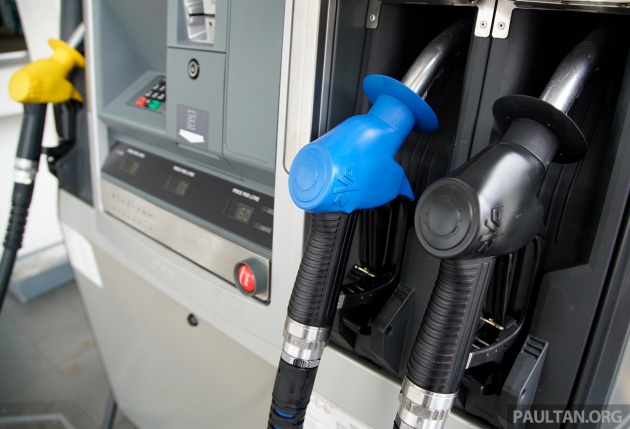
It’s Wednesday, which means it is once again time for the weekly fuel price update in Malaysia, as the ministry of finance has announced the retail prices of fuels for the coming week of 28 March to April 3, 2023.
No change, once again for the price of RON 97 petrol, which continues at its rate of RM3.47 per litre where it has been last week. Meanwhile, RON 95 petrol that is subsidised continues at its ceiling price of RM2.05 per litre as set by the Malaysian government in February 2021.
Similarly the prices of diesel fuels remain unchanged, with the Euro 5 B10 and B20 blends priced at RM2.15 per litre, while Euro 5 B7 is priced 20 sen more per litre, also unchanged at RM2.35 per litre.
These fuel prices will take effect from midnight tonight until Wednesday, March 27, 2024, when the next set of fuel price updates will be announced. This is the 13th edition of the weekly fuel pricing format for this year, and the 272nd in total since the format’s introduction at the start of 2019.
National carmaker Proton is expecting to release its electric vehicle model in 2025, and this will be an all-new model that is co-developed by Proton and Geely, and it will not be a rebadged version of an existing model, Proton deputy CEO Roslan Abdullah has said.
The upcoming, fully electric model from this joint development may spawn both a Geely version as well as a Proton version. This has completed its design and prototype stages, and it is currently undergoing testing, Roslan said. As for the segment of the EV, “We will let you know closer to the time of its launch,” the deputy CEO said, also not revealing the upcoming model’s bodystyle.
There will likely be a staggered release of announcements regarding Proton’s EV model, and the deputy CEO cites the smart brand’s introduction as an example, where announcements were made for the start of production, opening of bookings, and the like.
In this EV model’s joint development with Geely, Proton is contributing to the model’s R&D with input for its use in the Malaysian environment, Roslan said. Given the co-development between the two companies, there could be both a Geely version as well as a Proton version, the former being for other markets.
Regardless of the brand, all versions of the upcoming co-developed EV will initially be manufactured in China because manufacturing this model in Malaysia will require new facilities, said Roslan.
“The Malaysian government wants to expedite the release of this EV model, and the government currently still offers tax exemptions on fully imported (CBU) EVs, and at the same time we are planning for CKD local assembly,” Roslan added.
On the subject of China-based EV manufacturers which are offering products that are increasingly competitively priced in Malaysia, Proton is still evaluating pricing for this upcoming EV model.
“There needs to be a balance between battery range and price. There are many aspects which need evaluation, but we will offer the model at the best possible price. Our EV will be focused on affordability as well as functionality and practicality,” the Proton deputy CEO said.
Milan is a popular destination for travelers who are into fashion and design. But there’s a lot of history and culture here too. The city was both the former capital of the Western Roman Empire and influential during the Italian Renaissance. I consider it a must-visit stop on any trip around Italy.
As the country’s second largest city (over 6 million people live here), where you stay during your visit will have a big impact on your trip. While it’s pretty easy to get around the city, you don’t want to spend all your time in transit. Instead, you’ll want to pick an area that’s close to where you want to spend the majority of your time.
To help you do just that, here’s my list of the best neighborhoods in Milan for travelers:
Centro Storico
First-Time Visitors
Navigli
Nightlife & Foodies
Where to Stay for First-Time Visitors: Centro Storico
Milan’s historic center boasts architectural gems like the Gothic Duomo, the 15th-century Sforza Castle, and the Galleria Vittorio Emanuele II (a 19th-century shopping arcade). You’ll find plenty of art here too, from the huge Palazzo Reale (an 18th-century palace turned art museum) to the Church of Santa Maria delle Grazie (home to Leonardo Da Vinci’s The Last Supper).
The area is extremely walkable and filled with enchanting streets, quaint cafés, bustling piazzas, and fashionable boutiques (head to the subdistrict Quadrilatero d’Oro for the best luxury shopping). It’s the ideal place to stay if it’s your first time in Milan.
Best places to stay in Centro Storico:
BUDGET: Ostello Bello – Located just a few blocks from the Duomo, Ostello Bello is one of the best hostels in Milan. The facilities are extensive and include a guest kitchen with free food, a bar (where you get a free welcome drink), outdoor terraces, and an indoor lounge. There’s also a great breakfast in the mornings (7 EUR). The dorms are spacious, with comfy beds and en-suite bathrooms, and the helpful staff organizes tons of free events (like walking tours).
MIDRANGE: B&B Hotel Milano Sant’Ambrogio – This three-star hotel offers simple rooms in an excellent location. The rooms feature lots of natural light, desks, smart TVs, and bathrooms with walk-in showers and bidets. The breakfast buffet is quite varied for the price (9.50 EUR) and includes lots of pastries as well as fresh orange juice. Overall, this hotel offers great value for first-time visitors who want to stay somewhere central but not spend an arm and a leg.
LUXURY: Park Hyatt Milan – This five-star hotel located just off the main piazza seamlessly blends classic Italian architecture with contemporary design. Each room is spacious and elegantly furnished, with large luxurious marble bathrooms and all the amenities you’d expect from a hotel of this calibre. There are two restaurants on site, and one serves an exceptional breakfast buffet in the mornings. It’s a great place to redeem your Hyatt points too.
Where to Stay for Arts & Culture: Brera
While technically part of Centro Storico, Brera is a neighborhood that has a completely different feel than the more touristy area around the Duomo. Known for its artistic vibe, it was once a bohemian haven for Italian writers, poets, artists, filmmakers, and intellectuals in the 1960s (they all gathered at the legendary Bar Jamaica, which is still around). The neighborhood’s narrow cobblestone streets are filled with art galleries and studios, antique shops, boutiques, and trendy cafés. It’s also great for food (though what place in Italy isn’t?), with a diverse selection of eateries serving both traditional Milanese cuisine and innovative dishes from around the world.
While a lot of the charm of staying here lies in wandering these picturesque, pedestrianized streets, there are also attractions like the Pinacoteca di Brera, the city’s best art museum; and the tranquil, 18th-century Brera Botanical Gardens. Plus, the neighborhood is just a short walk from Milan’s most famous sights in Centro Storico.
Best places to stay in Brera:
BUDGET: As this area is quite high-end, there aren’t any hostels here. Your best bet is to stay at the aforementioned Ostello Bello in the heart of Centro Storico.
MIDRANGE: Brera Prestige B&B – This three-star hotel is in a perfect location on a quiet street in the heart of Brera, just a 10-minute walk from the Duomo. There are only a few rooms at this boutique property and all are decorated in calming, neutral tones and have chromotherapy lights that you can turn different colors. Each is newly renovated, with soundproof windows, a spacious bathroom with a walk-in shower, a small fridge, and a flat-screen TV. The staff are very friendly too. Overall, it’s a nice place to stay that’s quiet yet still central to everything.
LUXURY: Bulgari Hotel Milano – This five-star boutique hotel is a luxurious and peaceful oasis in the heart of the city. It’s right next to the botanical gardens, and the hotel has a huge private garden of its own (with a bar/restaurant). The overall design is sleek and elegant. The rooms feature deep soaking tubs, walk-in showers, comfy king-sized beds, and minibars. There’s a tranquil indoor swimming pool and spa too.
Where to Stay for Nightlife & Food: Navigli
While Venice is famous for its canals, Milan has several beautiful ones of its own. Picturesque bars and restaurants line the canals of Naviglio Grande and Naviglio Pavese, the heart of the city’s nightlife and the best place in town to enjoy aperitivo, the Italian answer to happy hour (a buffet of small bites that come included in the price of a drink at many bars). It’s also a great neighborhood for foodies, as there are many trattorias serving up delicious Italian cuisine, including traditional Milanese dishes, fresh seafood, and artisanal pizza and pasta.
Staying in Navigli offers a unique atmosphere that’s still within easy access to Centro Storico (it’s just a quick tram ride or 30-minute walk away).
Best places to stay in Navigli:
BUDGET: Combo Milan – Combo is a small Italian boutique-hostel chain. Its Navigli location offers both dorm beds and private rooms in an industrial-chic space. There’s a fantastic free breakfast spread, a beautiful inner courtyard (with a bar/restaurant), a co-working area, and a guest kitchen if you prefer to prepare your own meals. Dorm beds are comfy and have an individual outlet, reading light, and locker, though no privacy curtains. The showers have great pressure too, which is always a plus in my book.
MIDRANGE: Art Hotel Navigli – This four-star hotel is full of art, and walking down the halls almost feels like you’re in a modern museum. The rooms themselves are minimally decorated and a bit dated, but they’re spacious and all have a flat-screen TV, minibar, electric kettle, and Nespresso machine. I think the bathrooms are a bit small and dated but there’s great water pressure. The hotel also has a wellness center with a salt wall, sauna, and steam room, and there’s an expansive breakfast buffet.
LUXURY: Magna Pars l’Hotel à Parfum – This five-star hotel continues the tradition of the perfume factory in which it is housed, with a laboratory on-site and calming scents throughout the property. The spacious rooms are designed in soft tones, with modern art, floor-to-ceiling windows, desks, comfortable beds (you can choose your pillow from a menu), and luxurious bathrooms entirely made of marble. There’s an excellent complimentary breakfast buffet, a rooftop bar and restaurant, and a wellness center with a steam room and gym.
Where to Stay to Feel Like a Local: Isola
Historically, Isola was a working-class district, with factories and warehouses dominating the landscape. In recent years though, it has undergone a significant transformation, becoming one of Milan’s trendiest neighborhoods.
Today, the area is a hub for artists, designers, and creatives. There’s much colorful street art here, and the industrial spaces have been repurposed into galleries, studios, and creative workspaces. The neighborhood has a bohemian atmosphere, with boutique shops, vintage stores, third-wave coffee shops, and artisanal markets, including the covered Mercato Comunale di Isola, featuring fresh produce, meats, cheeses, and other local gourmet products.
Best places to stay in Isola:
BUDGET: L’Isola di Romy – This budget-friendly guesthouse offers private rooms with shared bathrooms (which are always kept nice and clean). The rooms are simply furnished but spacious and painted in bright, cheerful colors. Each room has a flat-screen TV, wardrobe, and desk, and some even have a terrace. It’s a good no-frills place.
MIDRANGE: BB Hotels Aparthotel Isola – This aparthotel offers spacious apartments with fully equipped kitchenettes that include a cooktop, dishwasher, and electric kettle. They are minimally decorated but have lots of natural light, thanks to the floor-to-ceiling windows. The bathrooms are spacious too, with a bidet, a walk-in shower, and complimentary toiletries. There’s a little supermarket right underneath the apartments, making this the ideal choice if you want to prepare your own meals.
LUXURY: Isola isn’t exactly the best choice if you’re looking for luxury, as there aren’t a lot of hotels in this more residential neighborhood. If you are seeking a five-star property, though, head to Excelsior Hotel Gallia in the next neighborhood over, which boasts beautiful, spacious rooms, an indoor swimming pool, an excellent breakfast buffet, and a rooftop bar/restaurant.
***
Milan blends historical grandeur and contemporary chic. But there’s a lot more to the city too, whether you want to explore the street art scene or enjoy the energetic nightlife. By choosing one of the neighborhoods and accommodations above, you’ll be sure to have a fun stay in Italy’s fashion capital.
Book Your Trip to Milan: Logistical Tips and Tricks
Book Your Flight Use Skyscanner to find a cheap flight. They are my favorite search engine because they search websites and airlines around the globe so you always know no stone is left unturned!
Book Your Accommodation You can book your hostel with Hostelworld as they have the biggest inventory and best deals. If you want to stay somewhere other than a hostel, use Booking.com as they consistently return the cheapest rates for guesthouses and cheap hotels.
Don’t Forget Travel Insurance Travel insurance will protect you against illness, injury, theft, and cancellations. It’s comprehensive protection in case anything goes wrong. I never go on a trip without it as I’ve had to use it many times in the past. My favorite companies that offer the best service and value are:
Looking for the Best Companies to Save Money With? Check out my resource page for the best companies to use when you travel. I list all the ones I use to save money when I’m on the road. They will save you money when you travel too.
Need a Guide? Rome has some really interesting tours. My favorite company is Take Walks. They have expert guides and can get you behind the scenes at the city’s best attractions.
McLaren has provided some insight on the design language that will shape the automaker’s next generation of supercars and hypercars.
The new design language, which has been formulated under current design chief Tobias Sühlmann, relies on elements inspired by six decades of racing heritage, as well as certain key models, namely the F1 supercar. These elements will be interpreted for the future, McLaren said, so don’t expect any retro designs.
A key trait is what McLaren calls the Performance Line. This is a signature shoulder line that has featured on most McLaren road cars in the past, including the F1, and results in cab-forward designs with short overhangs and a low front end.
For the front of the vehicles, the designs will feature two main symmetrical elements with a horizontal orientation in the lower fascia, likely serving as intakes. The headlights will also use the eye-socket style design with integrated intakes similar to what’s found on the 750S and its 720S predecessor.
2024 McLaren 750S first drive, Las Vegas, February 2024
At the rear, McLaren will stick with the open fascia design that was used on the F1 and has been transferred to all modern McLaren road cars. Also borrowed from the F1 will be a wraparound dash design that McLaren will use for its new interiors.
At a more high level, McLaren said the design language is built on five core principles: Epic, Athletic, Functional, Focused, and Intelligent. Most are self explanatory, but in the case of the Intelligent principle, McLaren is referring to the use of advanced materials, plus a deeper, more seamless integration of various design elements.
Crucially, McLaren said the design language is flexible enough to allow for an expanded lineup while also catering to future powertrain technologies.
McLaren hasn’t said when and where we’ll see the first application of its new design language, but a likely bet is the P1 successor rumored to debut later this year. A recent report suggested the new hypercar will stick with a V-8-based plug-in hybrid powertrain, à la the P1, but introduce a much lighter hybrid system and even roof-mounted gullwing doors.
A new generation of the Porsche Panamera hatchback starts sales this spring as a 2024 model, though only the base grade will be available initially.
More options will arrive shortly after as 2025 models, including a Panamera Turbo E-Hybrid which Porsche this week confirmed will carry a starting price of $192,995, including a $1,995 destination charge.
Other options available starting with the 2025 model year include a 4 E-Hybrid and 4S E-Hybrid, which were shown in February and are priced from $117,495 and $128,795, respectively. The base grade that will arrive first in showrooms is confirmed to start at $101,550.
All figures include destination.
2025 Porsche Panamera Turbo E-Hybrid
The Turbo E-Hybrid is the most badass grade in the range, though the jury is still out on whether Porsche adds a more extreme Turbo S E-Hybrid or perhaps even a Turbo GT à la the recently revealed 2025 Taycan Turbo GT.
For the Turbo E-Hybrid, Porsche has confirmed a peak output of 670 hp generated by a newly developed twin-turbocharged 4.0-liter V-8 paired with a single electric motor integrated with a standard 8-speed dual-clutch automatic transmission. Owners of this grade will enjoy 0-60 mph acceleration in just three seconds (with the Sport Chrono Package) and a top speed of 196 mph.
All electrified Panameras are plug-in hybrids, and with the new generation they feature faster charging, better throttle response, and a larger battery than in the previous generation. The battery grew from the previous 17.9 kwh to 25.9 kwh, and as a result owners can expect more electric range than the EPA-rated 20 miles of the current Panamera plug-in hybrids, though estimates for the new generation haven’t been published. A more powerful 11-kw onboard AC charger will also reduce charging times to about 2.5 hours.
2025 Porsche Panamera Turbo E-Hybrid
2025 Porsche Panamera Turbo E-Hybrid
The platform is an updated version of Volkswagen Group’s MSB platform that debuted in the outgoing Panamera. Among the key changes is a new dual-chamber two-valve air suspension that enables adjustment of both rebound and compression. Active dampers are available for the plug-in hybrid grades.
Also new is the use of gray accents on the Turbo E-Hybrid grade. The gray color, known as Turbonite, will be used on all future Turbo models to help them stand out from the rest of the fleet. The gray accent will even extend to Porsche’s famous crest logo. Panamera Turbo E-Hybrid buyers will also be able to select a set of center-lock wheels as an option.
Inside, the dash features a similar design to the one introduced in the updated 2024 Cayenne SUV, where the gear selector is mounted to the steering column. A 12.6-inch digital gauge cluster is joined by two touchscreen displays, one in the center of the dash that serves as the infotainment hub, and the second facing the front-seat passenger and mostly serving as a media hub. A fourth screen faces rear-seat passengers at the foot of the center console and controls media, navigation, and the ambient lighting.
The Ferrari F40, a celebrated icon in automotive history, emerged from Ferrari’s response to the Group B rally competition threat posed by Porsche’s 959. Despite the cancellation of Group B in 1986, Ferrari transformed the 288 GTO Evoluzione prototypes into road-worthy F40s, debuting in 1987. Pininfarina’s design, coupled with Scaglietti’s craftsmanship, resulted in a masterpiece boasting a striking blend of form and function with exceptional aerodynamics.
The F40’s specifications remain formidable even by modern standards, featuring a tubular spaceframe chassis, independent suspension, and lightweight Kevlar, carbon-fiber, and aluminum construction. Its 2.9L DOHC V-8 engine, mated to a 5-speed manual transaxle, produced 478 HP, facilitated by twin turbochargers and advanced fuel injection.
Performance figures, including a 4.7-second 0-62 MPH acceleration and a top speed of 199 MPH, coupled with exceptional handling and braking capabilities, solidified its status as a legend in automotive history. Market demand for the F40 surpassed expectations, leading to a production run of 1,315 units by 1991, including just 213 for the U.S. market.
This Ferrari Classiche certified F40 offered for sale on RM Sotheby’s, was completed in September 1990 and delivered to its first owner in Florida that same year. Acquired by the current owner two decades ago from California, it has resided in Texas ever since and has driven it for 4,000 miles, with the total mileage of this Ferrari F40 sitting just under 11,500 miles since new.
Service records reveal a timing belt replacement in 2007 before the current owner acquired it, followed by an oil change in 2010 at Ferrari of Houston, and subsequent maintenance in 2016 by a specialist in Houston. This included a clutch replacement, seat refinishing, air conditioning system refresh, and comprehensive engine bay detailing, among other tasks.
Because the car has been in storage for the last couple of years, it may require servicing before the car can be fully enjoyed by its next owner. Representing a rare gem in automotive history, this 1990 Ferrari F40 stands as a testament to Enzo Ferrari’s enduring legacy as the final Ferrari model commissioned under his visionary leadership.
Prestel & Partner understands the importance of family offices to ultra-high-net-worth individuals (UHNWIs). Together with his partners, Tobias Prestel created a safe space for these individuals or their Family Offices to get together and exchange ideas. Prestel & Partner’s Family Office Forums provide an exchange between family principals, family office C-suite executives, wealth owners, private investors, and a select few partners with topical expertise on best practices in family governance and investments. With over 40 years of international experience as an entrepreneur, publisher, and conference director — founding partner and CEO at Prestel & Partner, Tobias Prestel speaks to LUXUO on the impact of family offices on the world’s economy, the evolution of office spaces and how Asia’s family offices adapt to geopolitical power.
How important are family offices to the world’s economy?
Family offices play a critical role in the world’s economy. They manage significant assets, influence major investments, and support a range of philanthropic endeavours. Their decisions can lead to innovation, economic development, and social change, impacting various sectors globally.
Crucially, private investors don’t face the restrictions and limitations of institutional investors, making it much faster and easier for family offices to make things happen and to explore different opportunities. This is one of the many reasons why we feel honoured to bring these influential individuals together around the world at our events.
How many variations of the family office exist?
There are several variations of family offices, including single-family offices, which serve one family, and multi-family offices, which cater to multiple families. The services and structures of family offices can vary widely, depending on the needs and goals of the families they serve.
Our events are globally appreciated because they adopt a meticulous approach to participation. We go beyond merely identifying if an entity is a family office; we also scrutinise whether they intend to sell products or services to attendees. This is crucial as many family offices are also in the business of offering financial products and consultancy services to their peers. By doing so, we ensure that our events maintain a high concentration of genuine investors, emphasising the “pure buy-side”. This strategy aims to foster an environment more conducive to investment and collaboration rather than sales.
How have you seen the family office space evolve over the last decade?
Over the last decade, the family office space has evolved significantly. There has been a shift towards more professional management, with an emphasis on strategic investments and philanthropy. Additionally, there is a growing focus on sustainable and responsible investing, as well as a greater use of technology for managing assets and evaluating investment opportunities. We try to cater to the evolving needs of Family Offices at our events by introducing new themes and debates at our forums. For example, we started spotlighting hot topics like AI investments and longevity when they were not as widely discussed in the public discourse as they are now.
Tobias Prestel pictured with co-founder, Katja Mülheim, Founding Partner, and Managing Director.
Today’s wealth owners are far younger, how does this transition manifest itself in the family office space?
The transition to younger wealth owners has led to a change in the priorities and strategies of family offices. There is a stronger emphasis on sustainability, technological innovation,
and social impact. Younger generations are also more inclined to integrate their values and ethics into their investment decisions. It’s been so stimulating to witness this shift firsthand and to welcome more and more next-gen leaders into our network. They bring a breath of freshness and contribute immensely to each conversation. It’s also been very interesting to see how the new generation is focused on moving forward without ever forgetting their origins and remaining focused on heritage preservation.
How does geography play into the differences between family offices?
Geography significantly influences the operation and focus of family offices. Different regions have varying regulatory environments, economic conditions, and cultural attitudes toward wealth and philanthropy. This affects how family offices invest, engage with communities, and pursue their objectives.
Is there a particular reason why Singapore was chosen over other cities like Hong Kong, Jakarta, or Shanghai to be the hosting city?
Singapore was chosen for its strategic location, robust financial services ecosystem, and stable political environment. The city-state is a hub for wealth management in Southeast Asia and offers a conducive environment for discussions on wealth, investment, and family office management. It’s also important to note that around 60 percent of all firms listed on the Singapore Exchange, are family-led businesses.
What interests and topics do family offices have in common?
Family offices commonly focus on wealth preservation, estate planning, strategic investment, philanthropy, and intergenerational wealth transfer. They are also increasingly interested in sustainable and impact investing, as well as technological innovations that can enhance their operations and investment outcomes. It’s very important for FOs and their C-level decision-makers to have a safe space to discuss these topics and gain invaluable peer-to-peer perspectives.
Tobias Prestel founder of Prestel & Partner
Tell us more about the great return with sustainable, responsible, and ethical impact investment.
Sustainable, responsible, and ethical impact investments align financial returns with positive social and environmental outcomes. They allow family offices to contribute to global challenges such as climate change, social inequality, and healthcare while achieving competitive returns. This approach reflects a shift towards value-driven investment strategies. Over the years, we’ve seen countless UHNWIs aligning their investment goals with those of the United Nations’ Sustainable Development Goals.
What are family offices in the “new economy and tech” space looking for?
In the “new economy and tech” space, family offices are looking for opportunities that offer significant growth potential through innovation and disruption. They are interested in emerging technologies, biotech advancements, and startups that promise to redefine industries and contribute to a sustainable future. Many VC firms linked to major Family Offices have a tech-driven approach and review hundreds of start-ups every year.
Do you believe families have a responsibility to do something more with their wealth?
Yes, I strongly believe families have a responsibility to leverage their wealth in meaningful ways. Beyond wealth preservation and growth, there is an opportunity to impact society positively and invest in a way that reflects their values and contributes to the greater good.
How are Asia’s family offices adapting to the changing balance of geopolitical power?
Asia’s family offices are adapting by diversifying their investments geographically and across asset classes. They are also becoming more engaged in global discussions on wealth management, sustainability, and geopolitical risks, ensuring their strategies are resilient and aligned with changing global dynamics. Adaptability is crucial and family offices are advantaged as they are able to change strategies much quicker than many other realities.
What do you think will be the biggest takeaway for those attending the forum in Singapore?
The biggest takeaway will likely be the importance of adaptability, foresight, responsible stewardship in managing family wealth, and the ever-present need to combine wealth preservation, legacy, and innovation. Attendees will learn about the latest trends, strategies, and challenges in the family office space, enabling them to navigate the complexities of the modern financial landscape effectively.
For more on Prestel & Partner’s Singapore Office Family Forum, click here.
For the latest business reads and interviews, click here.
Ultimate Dubs 2024 was one for the books. By now you have probably seen Mario’s main event story and his spotlights on a slammed Mercedes-Benz 190 E 2.5-16, sublime Mk1 Volkswagen Golf, and stunning Audi Sport Quattro S1 E2 recreation. If not, I suggest you check them all out.
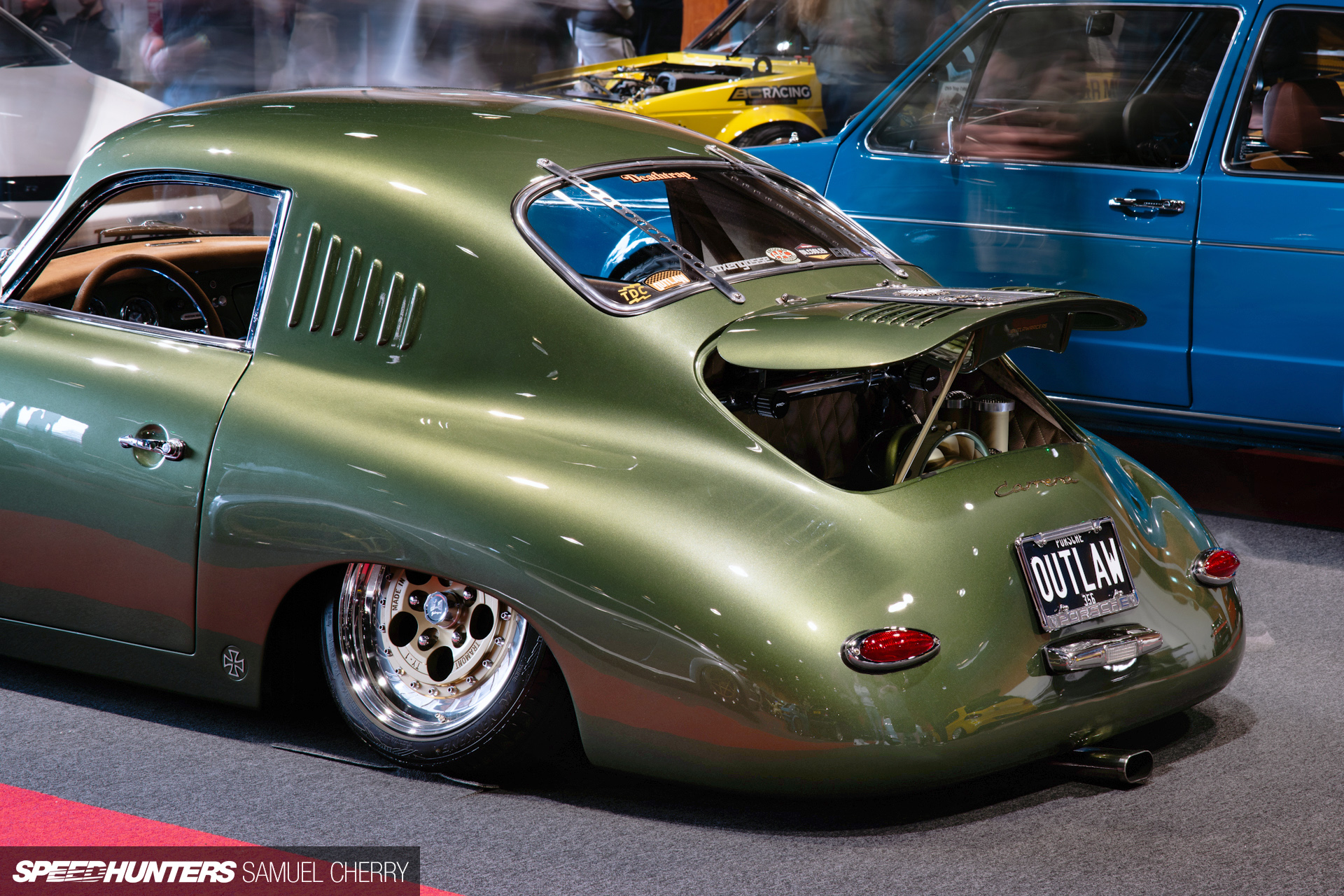
Today, I want to share one of my standouts from the show – a car that has been around for a few years but continues to impress and inspire wherever it goes. James Rudland’s Outlaw Racers Porsche 356 Coupé.
A 356 like no other, James’ car – which features a fibreglass body draped over a T1-based chassis – showcases immense attention to detail.
In creating this Outlaw-style 356, James didn’t rush the design process. He meticulously planned out each stage of the build, using his visual skills as a professional photographer to produce something that stands out in a sea of other Porsche builds and looks interesting from all angles.
From the moment James had the vision, there was no stopping him. Customised from front to back and top to bottom, his 356 Outlaw is a true statement piece.
Bodywork was entrusted to Specialist Paintworks, who laid down the custom green hue. It’s not a colour you would normally associate with an Outlaw Porsche build – they’re often silver or black – but it works so well.
From the yellow headlights with chrome mesh stone guards to the gold-centred wheels, every last detail is considered.
Speaking of wheels, Gekrenzert in Germany looked after their custom rebuild. Starting with French-made Tramont TY-1 centres, the specs now read 16×5.5-inch ET43 at the front with zero lips, and 16×6.6-inch ET30 out back with stepped lips.
Pulling the whole look together is a custom suspension setup from EvaResto. Along with a narrowed beam, an air ride system using Air Lift Performance management allows the 356 to lay right down on its belly.
It’s still low at driving height but can soak up the bumps with ease. That’s important too, as there’s a red-hot motor sitting out back.
The 2,276cc Volkswagen engine built by Herbert Performance Company in Nevada, USA features Superflow cylinder heads, an SLR XR310 cam, and modified 44mm IDF carburettors. All told the flat-four is good for 180hp, which is a lot for this small, lightweight coupé. Backing it up is a Pro-Street swing-axle gearbox running a 3.88 ratio.
That leaves the interior, which has been given the full custom treatment too. SJ Bowles Coach Trimming is responsible for a lot of the work, and lush diamond-stitched leather trim can be found wrapped all around the cabin, the fuel tank in the frunk, and even the engine bay.
I love the raw aluminium seats, which before being converted for use in this build with custom leather bottom squabs lived another life in a Westland Lynx military helicopter.
The twin Breitling stopwatches are a classy touch too, as is the custom steering wheel.
When this 356 isn’t commanding attention and winning awards at numerous car shows, you can sometimes spot it soaking up the miles on British roads – something James plans to do more often this year.
Looking back on the build and show appearances, a favourite moment that stands out to James was when his Outlaw 356 took one of the 10 main awards at the 2023 Risenation Hall Of Fame. Every year, that event attracts some of the best modified show cars in Europe, so winning is a real testament to the thought, work and attention to detail that has gone into this stunning build.
Samuel Cherry Instagram: samgcherry
IAMTHESPEEDHUNTER related stories on Speedhunters
How To join the IATS program: We have always welcomed readers to contact us with examples of their work and believe that the best Speedhunter is always the person closest to the culture itself, right there on the street or local parking lot. If you think you have what it takes and would like to share your work with us then you should apply to become part of the IAMTHESPEEDHUNTER program. Read how to get involved here.
Ford produced some incredible cars wearing the Cosworth badge in the mid-1980s and early 1990s, with Sierra and Escort variants dominating in racing and rallying – and on the street.
‘Cossies’, as they quickly became known, acquired a cult following almost as soon as the first Sierra RS Cosworth arrived in 1985. It wasn’t long before a massive tuning industry built itself up around the sub-brand, principally to extract maximum horsepower from the 2.0-litre turbo Cosworth YB engine. So much so that it soon became rare to come across an unmodified example.
The cars and the aftermarket industry around them shone brightly for many years. But as the saying goes, ‘you can have too much of a good thing’, and that applies to Steve Richardson.
These days, as SR Autobodies, Steve has built up an enviable reputation as a fine restorer of Nissan S and R-body cars. Many incredible examples have rolled out of his Lincolnshire, UK-based workshop – including Mark’s Project Thirty Four – but he began this journey messing around with Cossies.
“My dad was big on the scene back in the day, and I grew up helping out in his workshop at weekends surrounded by Cosworths and RS500s. I joined the army when I left school, but when I came out I decided to treat myself to a Sierra Cosworth,” Steve explained.
“The car I went to look at turned out to be a dog, but a mate of the seller, who happened to be there, mentioned he had an R33 Skyline GTS25t for sale and asked if I wanted to take a look. I had a test drive and was sold — it was a lot more car for half the money of the Cossie. To be honest, I thought I’d never drive a Ford again.”
Time heals all wounds, though, and 12 years on, when HJA Group – one of SR Autobodies’ regular customers – called to say they had just imported a T25 (aka small-turbo) Escort RS Cosworth from Japan and wondered if Steve would be able to carry out an underside and engine bay restoration, he jumped at the chance.
“We work on Skylines all day long, so it’s nice to do something different from time to time. The Escort Cosworth is a rare car in Japan and this one had only covered 19,000 miles. Even better, it appeared to be completely standard. It’s never been modified and, as far as we can tell, has had no bodywork or welding [repairs].”
HJA didn’t just want Steve to give this unmolested Escort the works though. They had already found the car a new home, and the UK owner was very specific with his requirements. It needed to be just as it would have come from the factory – overspray on the underside, liberally applied seam sealer and all.
“It’s important to point out that this car hasn’t been finished to a concours level,” says Steve. “Instead, it’s exactly — as far as we can get it — as it would have come out of the Karmann factory in Germany in 1995. Basically, we’ve made it messier.”
“I spent hours talking to my dad, as he knew these cars inside out when they were new, as well as staying up until 2:00am most nights researching specific items. I’ve been down some deep internet rabbit holes, let me tell you.”
A Clean One
Like many of Ford of Europe’s output in the 1990s, the Mk5 Escort platform that the RS Cosworth is based on is prone to rust, but once Steve and his team had stripped all of the running gear from the underside, it showed to be in remarkably good shape.
“Once we’d cleaned the anti-rust coating off, we found it needed no welding. The owner was adamant that it wasn’t to have any, so where one of the jacking points was damaged, rather than replace it, we had to pull it back into shape,” Steve explained.
That small matter out of the way, Steve could then concentrate on cleaning and stripping off the paint from the underside — before reapplying seam sealer in a slightly haphazard fashion — then preparing it for fresh paint before adding the distinctly ‘factory’ touches.
“I spent four days airbrushing in the various colours used by Ford on the underside — cream, baby sick green primer, black for the wheel arches and even beiges. We got a local paint company to come in and scan the original colours, then once they were mixed, tweaked them until they were exactly right.”
To give you another idea of the crazy lengths that SR Autobodies went to with this restoration, where the sills meet the floorpan they airbrushed a thin black line on top of the seam sealer to make it look like there was a gap. And where bolt holes were masked off on the production line to stop them getting clogged up with paint, again Steve was careful to approach this in a slightly slap-dash way – much like a slightly disgruntled worker keen to nip off for a tea break might have done.
“It sounds odd, but it took longer to do all this in a less-than-neat fashion rather than trying to make everything look perfect,” Steve says.
Bay Watch
With the underside well underway, Steve turned his attention to the engine bay.
“The car had been parked up for many years and YB engines don’t like that — there were oil leaks everywhere. We had no choice but to pull the engine out, strip it down to the block and go right through it.”
SR Autobodies’ vapour blaster was put to good use, with both engine and chassis components stripped right back, cleaned up and zinc-plated or powdercoated where necessary. The YBP-spec engine was then built up with fresh gaskets, seals, nuts and bolts – parts sourced from all over Europe by local Ford main dealer TC Harrison, where Mark photographed the car.
Engine and running gear fitted back up, Steve then reapplied the numerous production line touches the Escort would have come with, including decals — faithfully produced and applied in a slightly wonky fashion – and various paint blobs and markings that line workers used to denote a particular job was complete.
Was Steve tempted to add a few mods along the way?
“No way, this one had to remain standard. In fact, when it arrived, it came with a pair of strut braces that I thought were aftermarket. But my dad pointed out they’re genuine, dealer-fitted Ford Motorsport ones, so we put them back on.”
So good is the result, that when Steve took the car to TC Harrison for an MoT (vehicle roadworthy) test, they decided to PDI (pre-delivery inspection) it too, just like any new car arriving at the dealership. It scored 97%, meaning this Escort could, in theory, be sold with a new-car warranty.
Built To Be Used
Is this Escort destined to end up in yet another car collection? Not quite.
“The owner is determined to use it, so we’ve satin clear-coated the underside bodywork, so all they need to do is pressure wash it after a run. Yes, it won’t last forever, but it’s better protected than most modern cars,” says Steve.
“I’ve got good memories of working on this car. It was a real family affair getting it done, and even my four-year-old daughter helped out by paint-dipping the brake calliper bolts. We all really enjoyed it. So much so that we’ve got another Escort Cosworth lined up to do soon. Though, we’re not expecting much to come back from the blasters with that one…”
A Lamborghini Revuelto was recently presented at the brand’s Barcelona dealership. Instead of driving, the owner decided to tow it back to his garage. But why would you call the towing company when you have a V12 Lamborghini that’s more than capable of the task hand?
@edcarscollection fired up the Lamborghini LM002 when they had to transport their Revuelto back from the dealership. The V12 duo was captured as they left the showroom in Barcelona, Spain. A rare sight indeed.
The LM002 is one of the most unusual vehicles Lamborghini has ever produced. When you think of Lamborghini, the last thing that comes to mind is an off-road truck capable of traversing the Sahara desert. As it turns out, it’s also ideal for towing a V12 supercar.
The LM002 was produced between 1986 and 1993. This boxy, high-riding SUV is powered by a 5.2-liter V12 engine that makes 444 hp. The engine is paired with an all-wheel drive system, allowing it to accelerate from 0-60 mph in 7.7 seconds.
The technical storage or access is strictly necessary for the legitimate purpose of enabling the use of a specific service explicitly requested by the subscriber or user, or for the sole purpose of carrying out the transmission of a communication over an electronic communications network.
Preferences
The technical storage or access is necessary for the legitimate purpose of storing preferences that are not requested by the subscriber or user.
Statistics
The technical storage or access that is used exclusively for statistical purposes.The technical storage or access that is used exclusively for anonymous statistical purposes. Without a subpoena, voluntary compliance on the part of your Internet Service Provider, or additional records from a third party, information stored or retrieved for this purpose alone cannot usually be used to identify you.
Marketing
The technical storage or access is required to create user profiles to send advertising, or to track the user on a website or across several websites for similar marketing purposes.