Home Blog Page 846

Hennessey Venom F5 Revolution Sets A New Record At COTA

0


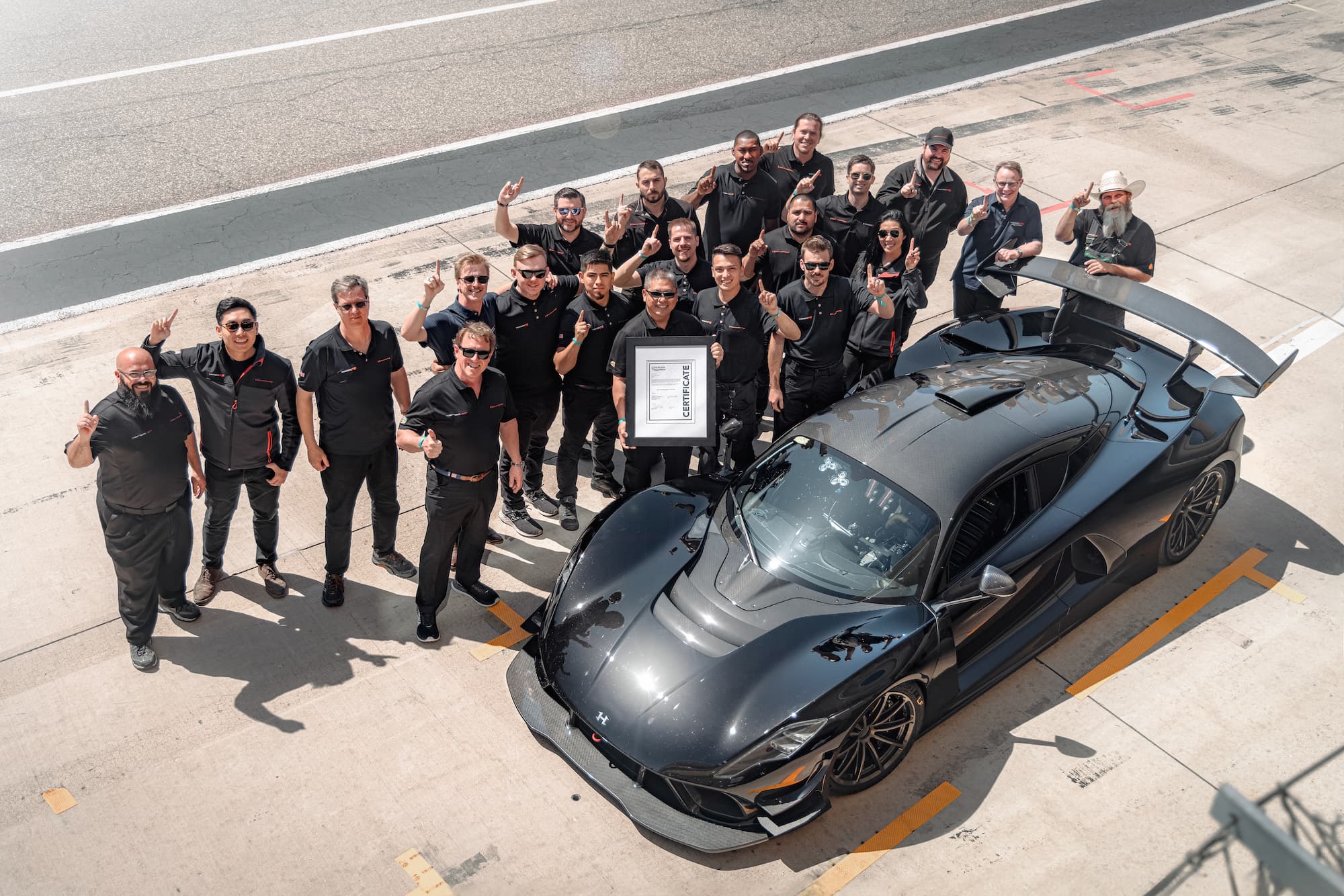
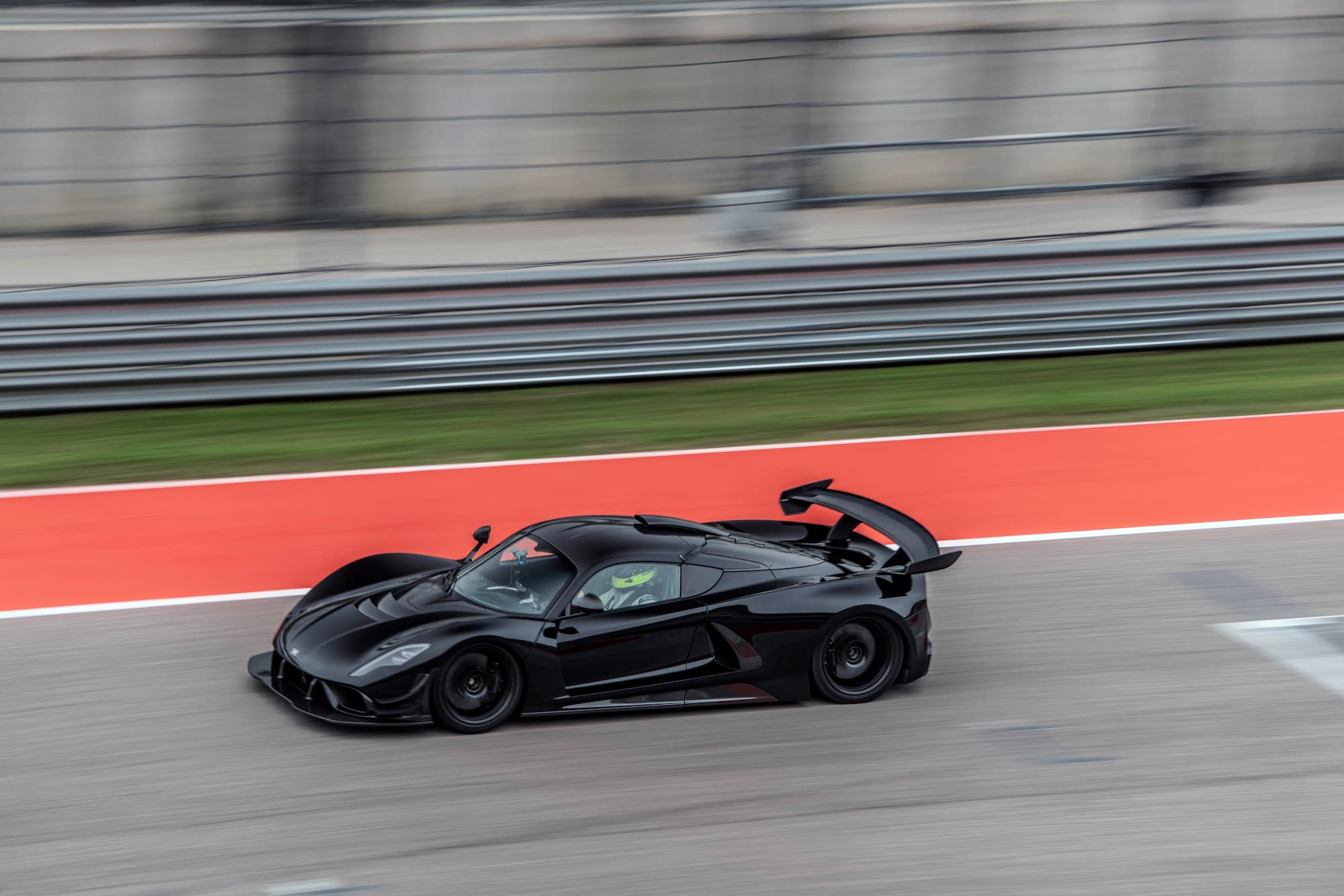
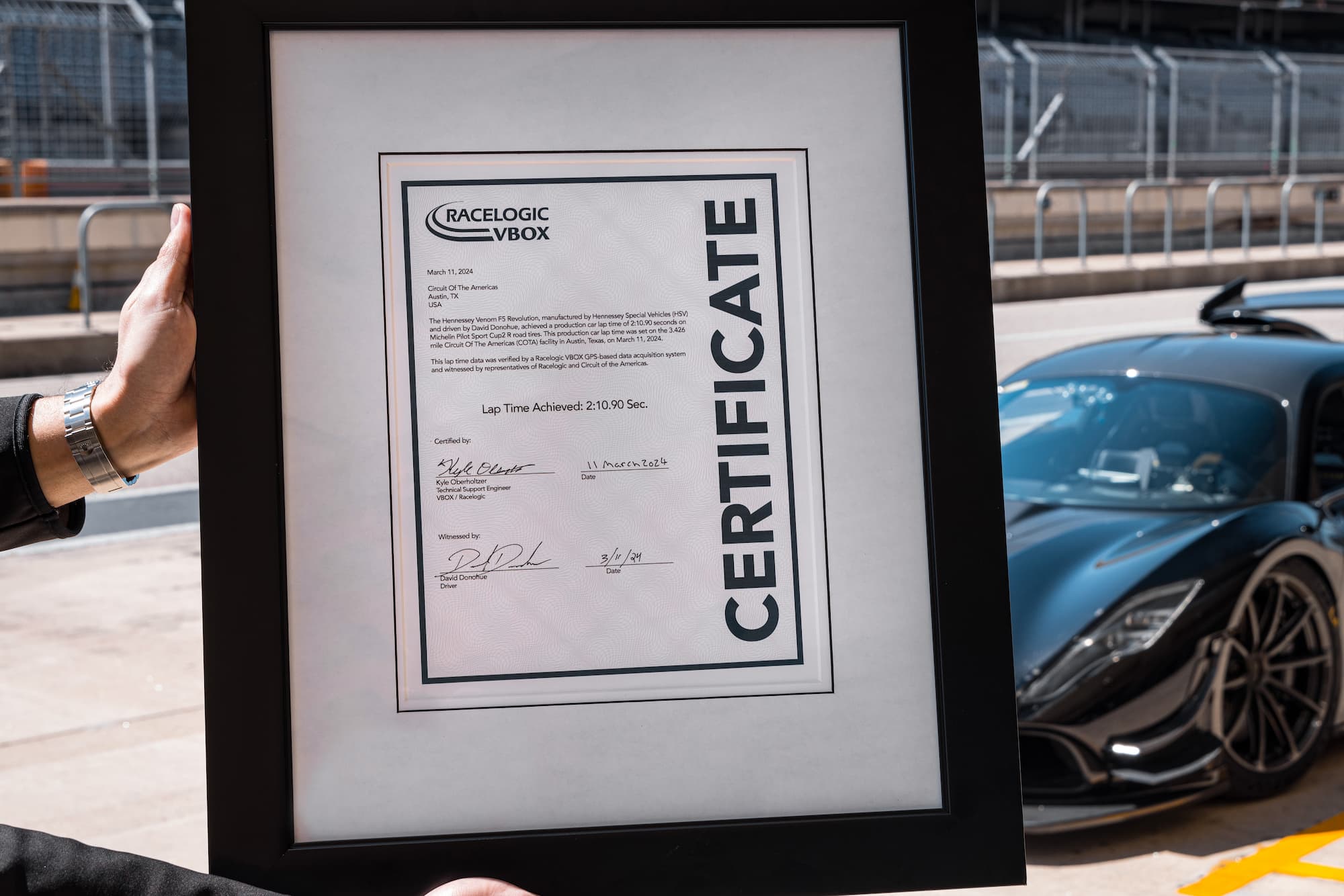
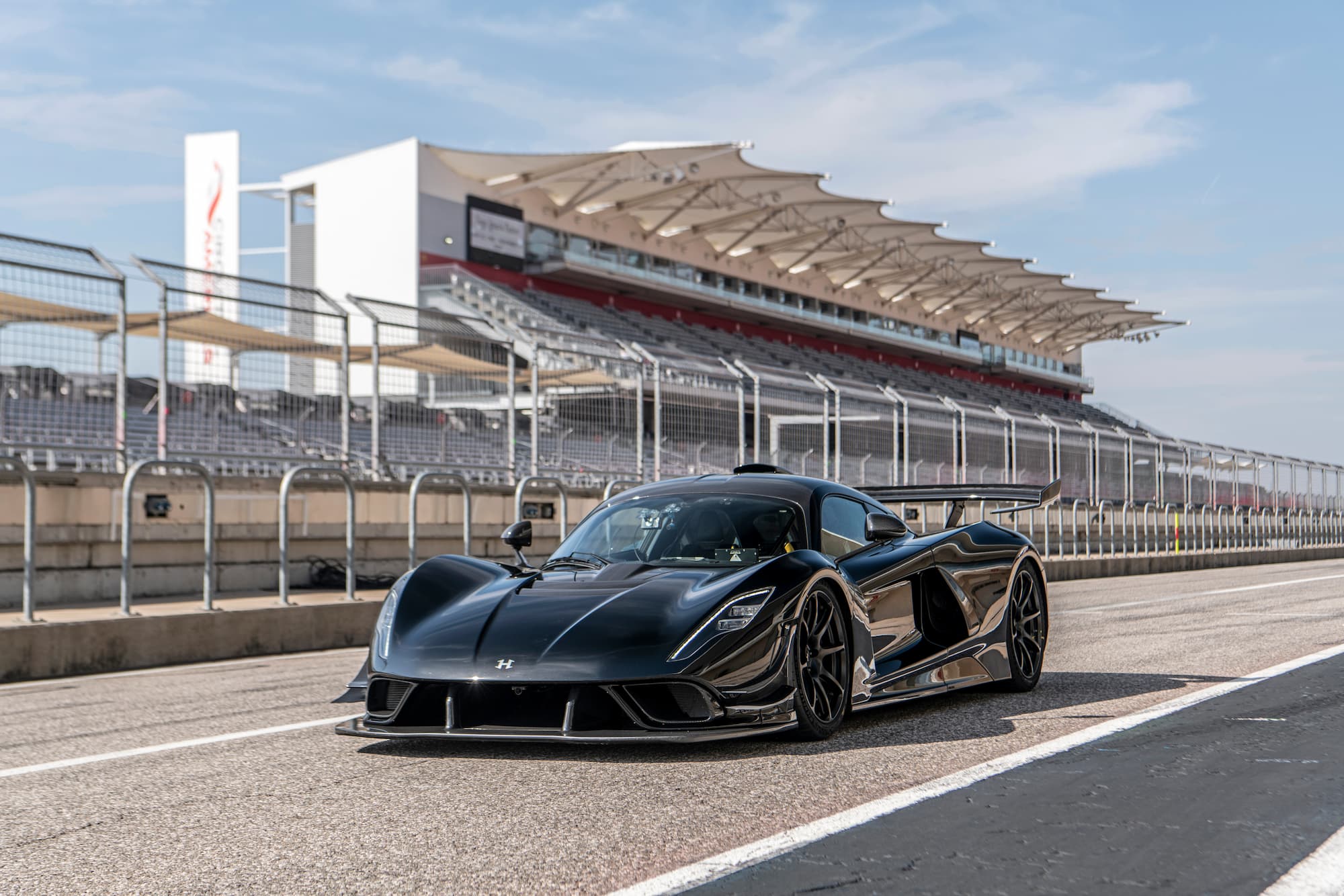
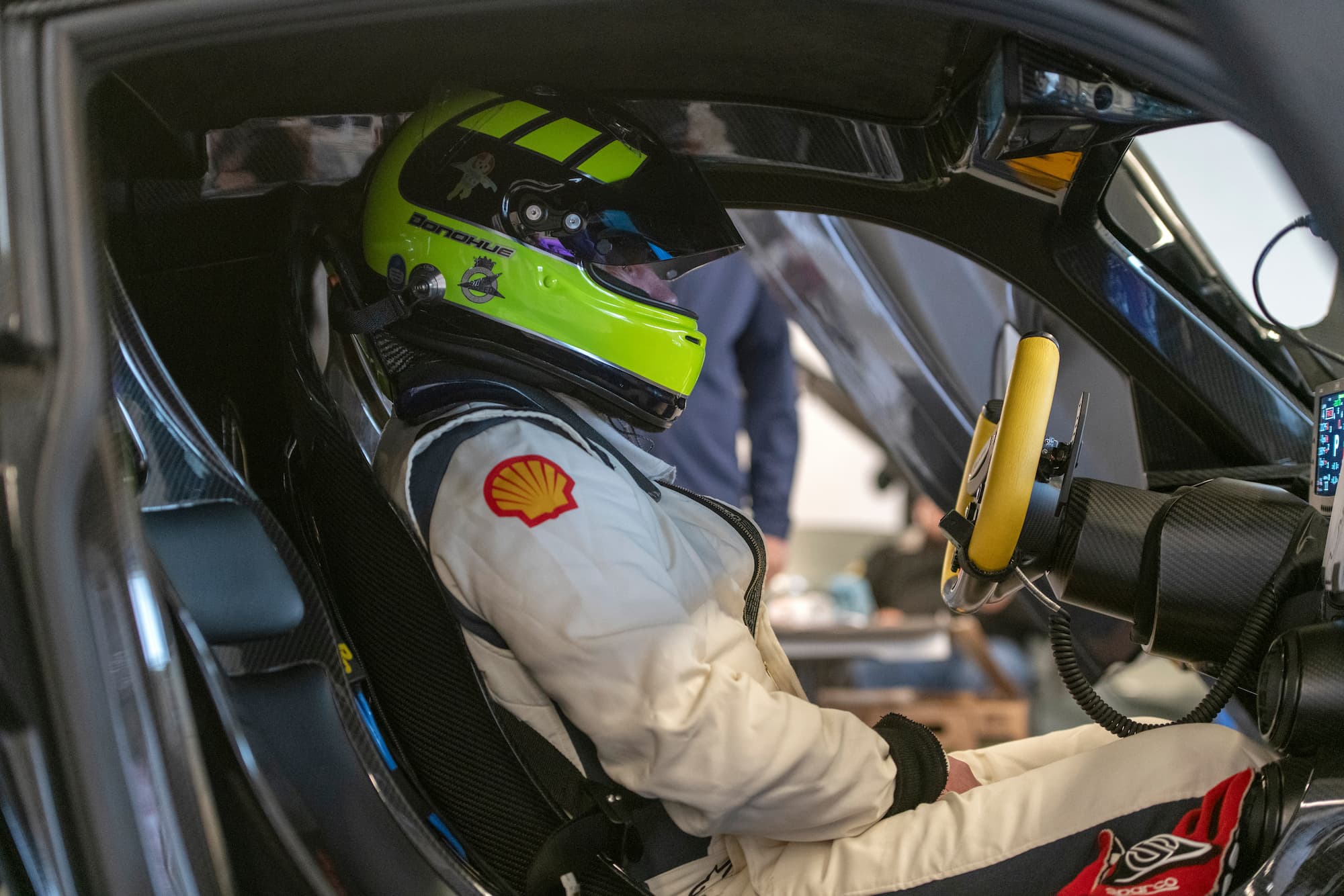
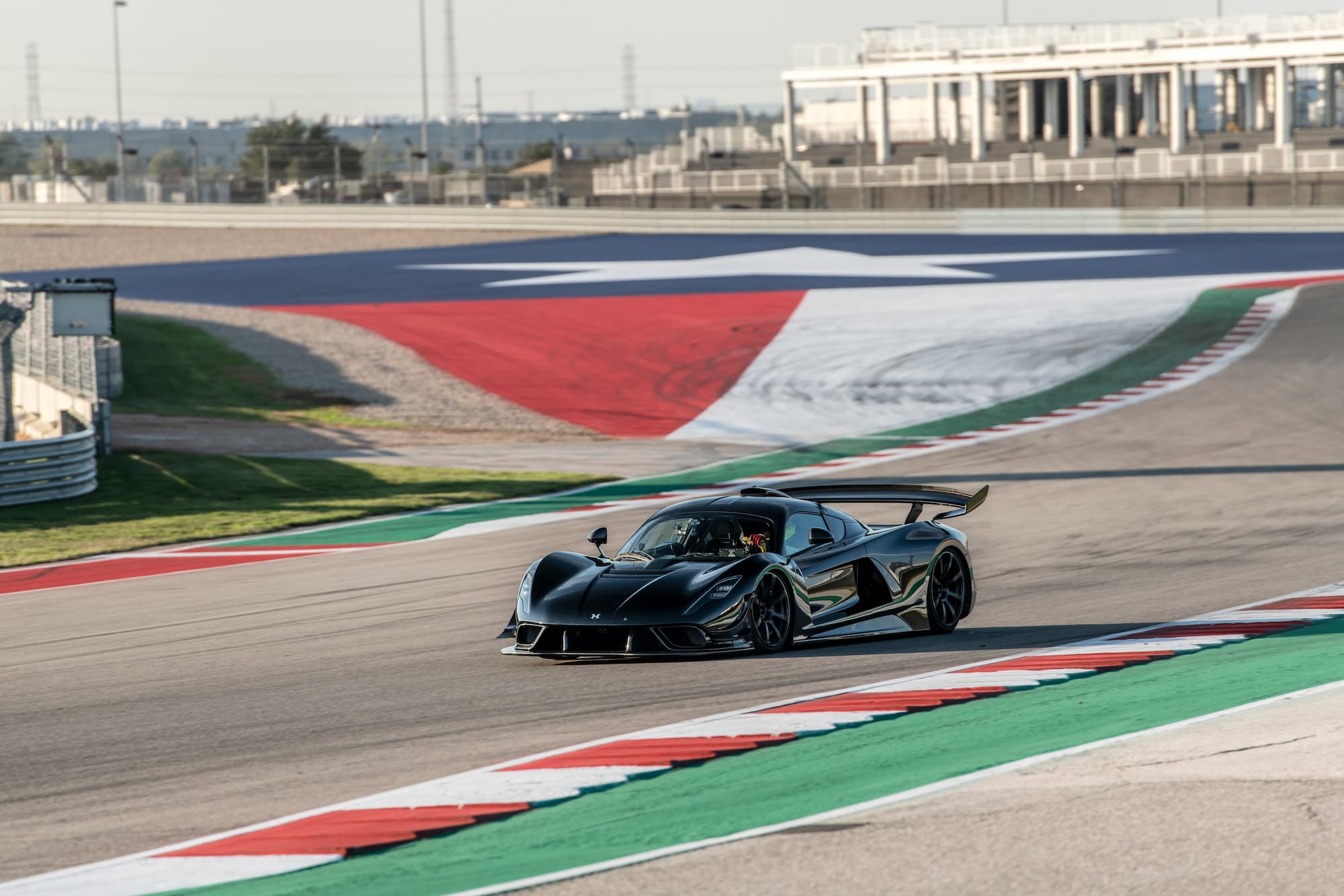
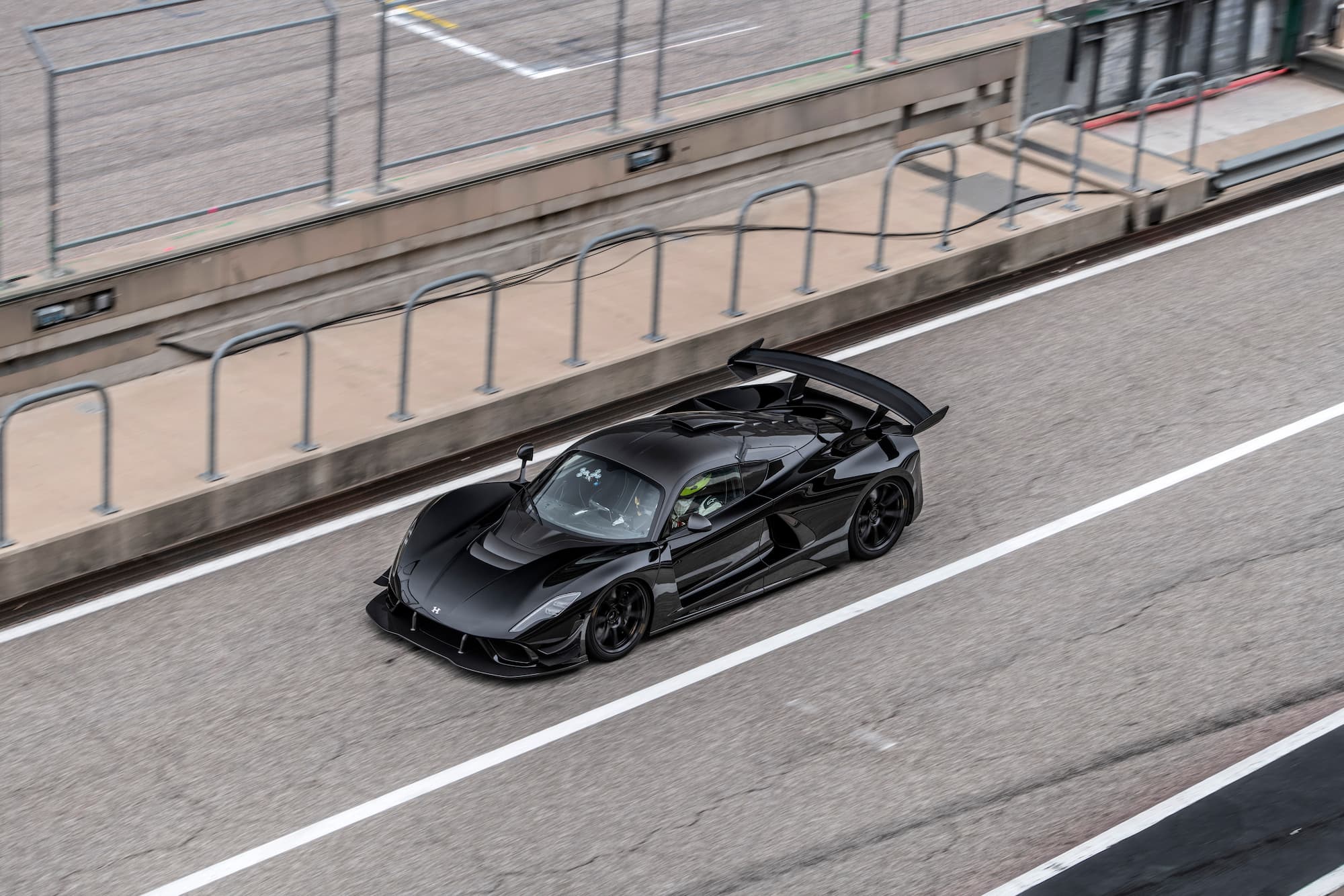
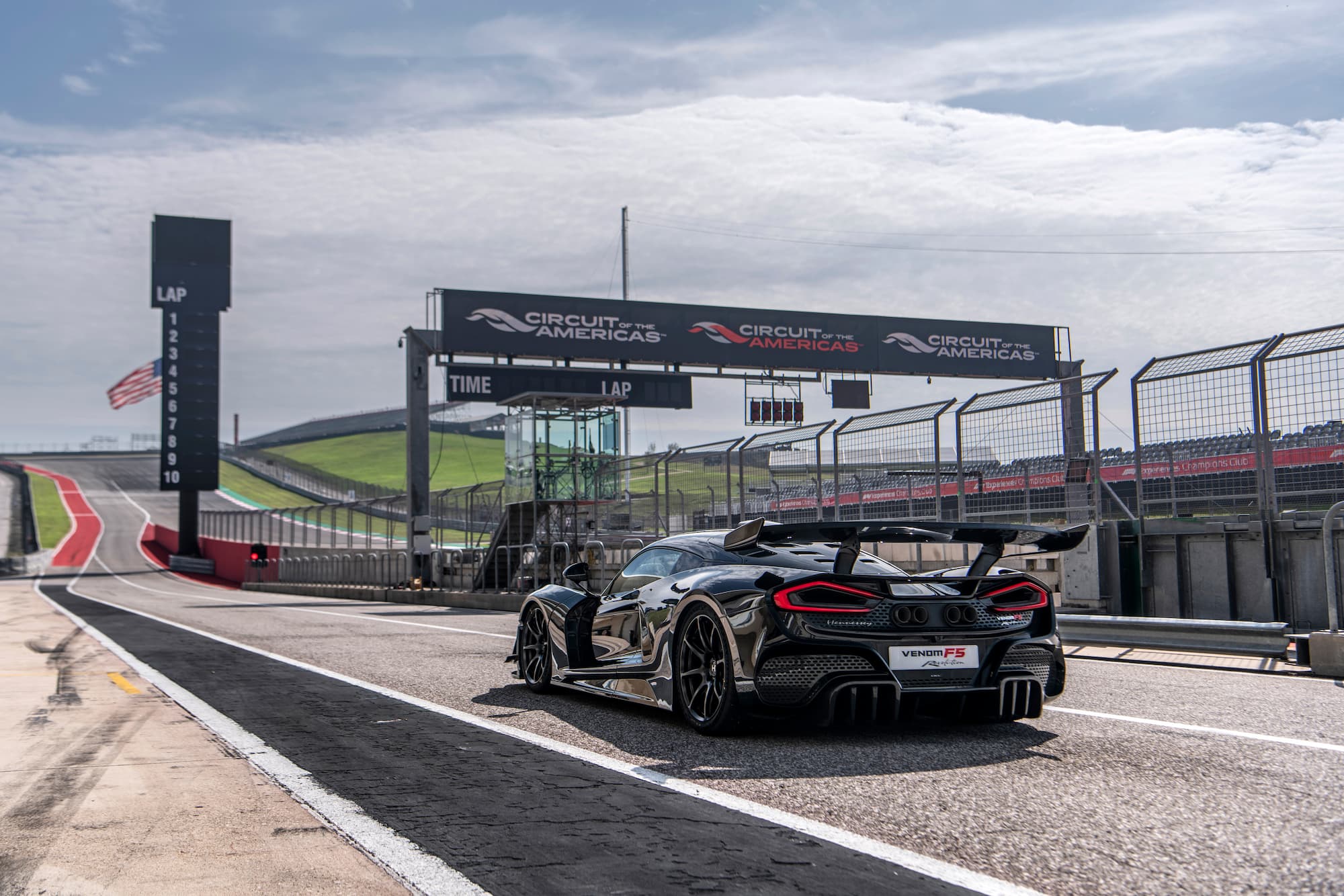
The Hennessey Venom F5 Revolution hypercar has made history by setting a new production road car lap record at the Circuit of The Americas (COTA), clocking in at 2 minutes and 10.90 seconds on the 3.41-mile-long track. Surpassing the McLaren P1 by 7 seconds and the previous record holder, the Czinger C21, by 0.34 seconds, the Venom F5 marks itself as one of the fastest American cars ever produced.

Power comes from a twin-turbocharged 6.6L V8 engine generating a staggering 1,817 horsepower and 1,193 lb-ft of torque, paired with a 7-speed single-clutch, semi-automatic transmission featuring paddle shifters.

Tested by their in-house driver, David Donohue, the Venom F5 demonstrated remarkable cornering and braking capabilities, achieving up to +1.59 G in corners and -1.61 G under braking, thanks to MICHELIN Pilot Sport Cup 2 R tires, Brembo brakes, carbon ceramic discs, and advanced Bosch ABS technology.

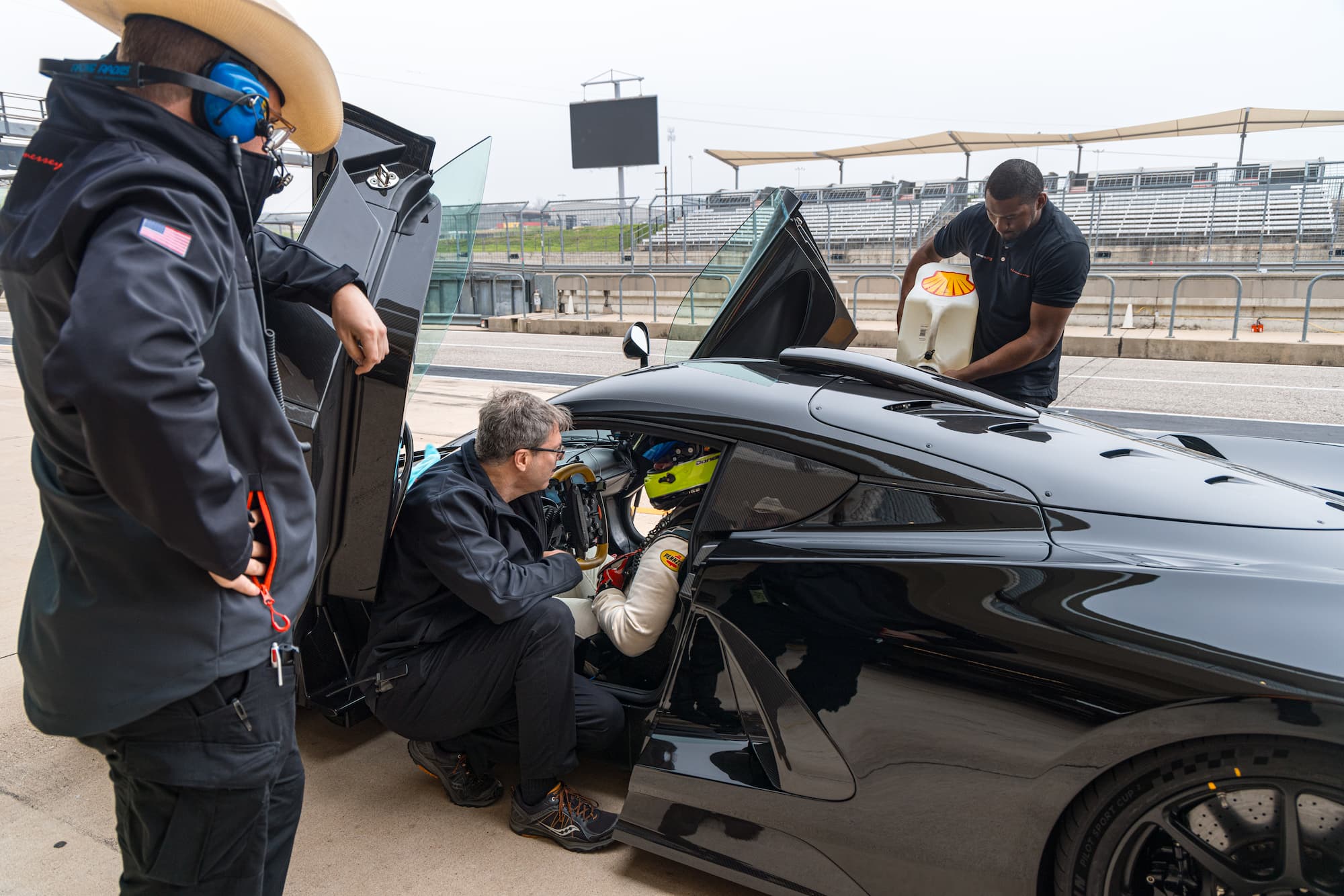
The record-breaking lap was timed by RACELOGIC using their VBOX satellite telemetry and data logging systems. Equipped with street legal tires and fueled by regular Shell pump ethanol, the Venom F5 ran on standard Pennzoil fluids during the lap.

Hennessey Venom F5 Revolution Sets A New Record At COTAHennessey Venom F5 Revolution Sets A New Record At COTA

Source: Hennessey, YouTube


Source link

VW to use Mobileye self-driving system for robotaxi service

0


Volkswagen Group last week announced a wide-ranging partnership with Mobileye, which covers the use of the Israeli company’s self-driving technology for a robotaxi service. VW Group will also rely on Mobileye technology for automated driver-assist features to be used across a variety of its brands, including at Porsche.

While the driver-assist features will only rank at Level 2 on the SAE scale of self-driving capability, meaning they will still require the driver to monitor the road and be ready to take back control when prompted, Mobileye will also supply VW Group with a self-driving system ranked at Level 4 on the SAE scale.

Level 4 means a system that can operate for extended periods without a human driver, though such systems are typically limited to pre-mapped areas. Level 5 is the ultimate goal, i.e. a system that can operate at the same level as a human.

Mobileye’s Level 4 system consists of various software and hardware components, including two independent high-performance computers as well as 13 cameras, nine lidar, and five radar sensors. The system also has a cloud connection, where it constantly gathers swarm data from other road users.

VW Group will initially integrate Mobileye’s Level 4 system in specially prepared Volkswagen ID.Buzz electric vans that will be used for a robotaxi service. VW Group has been testing prototypes for the robotaxi service in Hamburg, Germany, and in Austin, Texas, and anticipates the first commercial service starting around 2026. The automaker said it is also looking at using self-driving vehicles for delivery services.

For the U.S., VW Group doesn’t plan to offer its own robotaxi service. Instead, the automaker wants to offer just the self-driving vans and accompanying fleet management and remote guidance services to other firms specializing in mobility. VW Group hasn’t mentioned any firms, but its self-driving vans could conceivably be used in fleets operated by the likes of Uber and Lyft.

Separately, VW Group is developing self-driving technology via its Cariad software division and supplier Bosch, for privately owned cars. The technology will be available to all VW Group brands, but timing is uncertain.

VW Group was previously working with U.S. self-driving technology startup Argo AI on the robotaxi service. But the startup was shut down in 2022 after its two main backers, VW Group and Ford, ceased funding it.


Source link

Why nighttime EV charging is incentivized while daytime is cleaner

0


When it comes to overall carbon emissions, EVs are cleaner than internal-combustion cars, but how much cleaner can depend on when they’re charged, according to a recent Bloomberg New Energy Finance blog post.

A grid more reliant on renewable energy will shrink the carbon footprint of EVs charging from it. Emissions associated with charging can vary due to a number of factors, BNEF notes—including the time of day.

An EV driver in California charging during daytime hours will produce half as many grams of CO2 per kwh as a driver who charges at night, according to BNEF, which expects the gap between daytime and nighttime charging to grow wider by the end of the decade.

Carbon emissions from daytime vs. nighttime charging (via Bloomberg New Energy Finance)

Carbon emissions from daytime vs. nighttime charging (via Bloomberg New Energy Finance)


So while utilities currently incentivize nighttime charging with lower rates—largely an attempt to avoid surges in demand in the peak late-afternoon and early-evening hours—in the future they may want to switch to incentivizing daytime charging, during peak renewable hours, BNEF suggests.

BNEF also noted that most of the carbon footprint of an EV is associated with manufacturing, and that the breakeven point where emissions from manufacturing are cancelled out by avoiding “tailpipe” emissions from driving is shorter than ever. BNEF now estimates it at approximately 25,000 miles, or about two years of driving assuming average annual mileage.

That breakeven point also depends largely on the power generation mix for the grid you plug into, granted. But whether the average EV will reach it or not over its lifetime is no longer in question.

Gravity EV charging center in New York City

Gravity EV charging center in New York City

In the vast majority of the U.S., the Union of Concerned Scientists has pointed out, an EV produces fewer emissions than driving a 50-mpg gasoline vehicle. And electric pickups emit less CO2 than the average gas truck anywhere in the U.S., the organization has found.

It’s all but assured that the grid will keep getting cleaner, even despite some efforts within government to allow more carbon emissions. A 2022 ruling by the Supreme Court was at odds with U.S. infrastructure spending and may allow the generation mix of some utilities to get dirtier—although the EPA retains the power to regulate “criteria pollutants” that might make sources like coal increasingly cost-prohibitive. 


Source link

Nissan EV and hybrid plans, Genesis SUV concept, LFP for $25,000 Tesla: Today’s Car News

0


Nissan announces a three-row electric SUV due in 2028. Genesis rolls out a large electric SUV concept and a performance GV60. CATL might be making cells for the very affordable Tesla. And why are we having our EVs charge at night if we work from home? This and more, here at Green Car Reports.

Nissan talked through a roadmap for a new generation of affordable EVs, plus a three-row electric SUV due in 2028, and a pivot that will include U.S.-bound hybrids and plug-in hybrids. That includes Nissan’s e-Power hybrid tech, which it confirmed for a 2026 launch, when it sees those hybrids as being at cost parity with non-hybrids. 

Genesis has revealed its Neolun Concept electric SUV, which previews the upcoming flagship Genesis GV90 with a lounge-like interior and technology that includes radiant cabin heating. And it confirmed a go-fast version of the GV60, called the GV60 Magma Concept, as production-bound and part of a whole family of Magma performance variants. 

EVs are as clean as the grid from which they charge—and sometimes that can vary significantly by time of day. As Bloomberg New Energy Finance recently helped examine and underscore, that advice to plug in at night might be misguided. In many places, daytime EV charging is cleaner as utilities load up on renewables like solar.

And is the China-based battery supplier CATL working to make fast-charging LFP battery cells for the $25,000 Tesla? Comments recently made by CATL’s CEO suggest that’s a possibility. 

_______________________________________

Follow Green Car Reports on Facebook and Twitter


Source link

Bangkok 2024: Lotus Emeya EV – Taycan rival with 905 hp/985 Nm, 0-100 km/h in 2.78 secs, priced fr. RM778k

0


Bangkok 2024: Lotus Emeya EV – Taycan rival with 905 hp/985 Nm, 0-100 km/h in 2.78 secs, priced fr. RM778k

Six months after its global debut in New York City, and just weeks after it completed its final validation testing, the Lotus Emeya has arrived in Southeast Asia, with the four-door grand tourer – which is set to go up against the likes of the Porsche Taycan and Audi e-Tron GT – making its regional debut in Thailand at the ongoing 45th Bangkok International Motor Show.

Two power output configurations of the Type 133, which sits as the flagship model in Hethel’s line-up of luxury performance EVs, will be sold in the Kingdom, similar to China, where ‘+’ prefix variants are available. The first is the Emeya S, with prices starting from 5,990,000 baht (RM777,600), and the second is the range-topping Emeya R, for which the price starts from 6,890,000 baht (RM895,500).

In its standard guise, the Emeya comes as a five-seater, but there’s a four-seat option, which is the presentation seen on the display R variant in Bangkok. As highlighted before, much of the Emeya’s technical specs follows that seen on the Eletre, with a blueprint that includes a full-time all-wheel drive with twin motors and Lotus’ ICC intelligent torque distribution system.

Bangkok 2024: Lotus Emeya EV – Taycan rival with 905 hp/985 Nm, 0-100 km/h in 2.78 secs, priced fr. RM778k

On the Emeya S, the electric powertrain offers 603 hp (612 PS, or 450 kW) and 710, which is good enough to get the hyper GT from standstill to 100 km/h in 4.15 seconds and on to a top speed of 250 km/h. As for the Emeya R, its set-up delivers 905 hp (918 PS, or 675 kW) and 985 Nm of twist. This obviously brings the sprint time down, in this case to 2.78 seconds, while top speed increases marginally to 256 km/h.

Measuring in at 5,139 mm long, 2,241 mm wideth (including the side-view cameras), and 1,459 mm tall, with a 3,069 mm-long wheelbase, the Emeya sits on Lotus’ Electric Premium Architecture (EPA), which is also used for the Eletre, and as such features the same 800V architecture as that seen on the SUV.

At its global launch, the battery specifications quoted a 102 kWh capacity unit, which is less than the 112 kWh unit on the Eletre. The Chinese versions are listed as having a 102 kWh ternary NMC battery, but rather strangely, the accompanying literature for the Thai market states fitment of a 112 kWh lithium ion polymer battery for the car.

Whatever the case may be, maximum travel distance per full charge is quoted as 610 km (WLTP standard) for the Emeya S, while the higher output Emeya R can cover up to 485 km (again, WLTP) on a single charge. In terms of charging, the car has a 22kW OBC and also supports DC charging up to 355 kW. Charge times weren’t detailed, but during the global launch it was said that, connected to a 350 kW DC charger, an 18 minute charge gets the battery from a 10% to 80% state-of-charge in the case of the 102 kWh unit.

Styilng-wise, aside from the distinct dual-tier matrix LED headlight array as opposed to the Eletre’s single strip, the front end of the GT features aerodynamic elements as seen on the Eletre, including the active front grille that debuted on the SUV. Also present is an active air lip, which supports increasing downforce at high speeds.

The Emeya, which rides on 22-inch wheels with 265/35 front and 305/30 rear tyres, also features an active rear diffuser and an active dual-layer rear spoiler. The latter is 280 mm wide, which is 100 mm wider than the Eletre’s unit, and offers a net downforce of more than 215 kg. Other mechanical highlights include an electronically-controlled air suspension system similar to the Eletre.

Inside, the cabin largely mirrors the presentation seen on the SUV, including the large central floating full HD OLED screen and a 15-speaker KEF audio system (higher end options have up to 23 speakers), complete with Dolby Atmos-enabled 3D surround sound.

Aside from PVD aluminium, Alcantara, PU ultrafabrics and Nappa leather, the Emeya also utilises a new luxury thread that repurposes cotton scraps from the fashion and garment industries. Utilised for the cabin upholstery, the company says that the new fibre doesn’t just reduce the material carbon footprint, but offers weight savings as well compared to leather.

No word yet on when the Emeya will make its way here to Malaysia, but based on that mentioned last year during the car’s debut, local buyers can expect the first orders of the EV, which is built at the Lotus manufacturing plant in Wuhan, to arrive here sometime in late 2024.

GALLERY: Lotus Emeya R at BIMS 2024

Looking to sell your car? Sell it with Carro.

Learn more: 2024 Bangkok Motor Show


Source link

Triumph Trident Triple Tribute Special Edition unveiled

0


Triumph Trident Triple Tribute Special Edition unveiled

Commemorating one of its famous racing motorcycles, the 2024 Triumph Trident Triple Tribute Special Edition is priced at 7,895 pounds sterling (RM47,096) in the UK. The Triple Tribute is based on the Triumph Trident 660 (RM43,900 in Malaysia).

This special edition motorcycle is a tribute to the most famous Triumph Trident in the Hinckley firm’s history, ‘Slippery Sam’. That particular Trident is notable for being the only motorcycle ever to win five Tourist Trophy (TT) production races in five consecutive years, from 1971 to 1975.

Setting the Triple Tribute apart from the standard model Trident 660 is a white, blue and red ‘Union Jack’ paint scheme with colour-matched fly screen and belly pan. The colour-matching continues to the front mudguard, while the racing number ’67’ adorns the tank along with a ‘Triple Tribute’ decal.

Otherwise no other changes to the Trident 660, with power coming from a 660 cc, liquid-cooled DOHC inline-triple with Euro 5 compliance. Power is rated at 81 PS at 10,250 rpm with 64 Nm of torque at 6,250 rpm, going to the rear wheel via a six-speed gearbox and chain final drive with the Triple Tribute coming with an up-and-down quickshifter as standard equipment.

The Trident 660 has a seat height of 805 mm and a claimed wet weight of 189 kg with 14-litres of fuel in the tank. Brand name equipment is used extensively on the Trident 660 despite its intended design target of being a budget conscious bike for the beginner rider.

Triumph Trident Triple Tribute Special Edition unveiled

Nissin supplies the braking with a twin two-piston callipers in front on 310 mm brake discs and a single-piston calliper with 255 mm calliper on the rear wheel. The Trident 660 comes with two-channel ABS and Michelin Road 5 tyres in 120/70-17 and 180/55-17 sizes in the standard equipment list.

Suspension is done by Showa with 41 mm diameter upside-down separate function forks (SFF) and a preload-adjustable RSU monoshock in the rear. Suspension travel is 120 mm in front and 135 mm at the back.

Looking to sell your car? Sell it with Carro.


Source link

BMW Security Training: Every Second Counts

0


The demand for armoured cars is growing and growing. Even though terror against politicians and business leaders in Europe has taken a back seat, armoured vehicles are still a sought-after commodity. But the armoured car itself is only half the solution, because without specially trained bodyguards they are virtually ineffective. We took exclusively part in such a personal protection training.

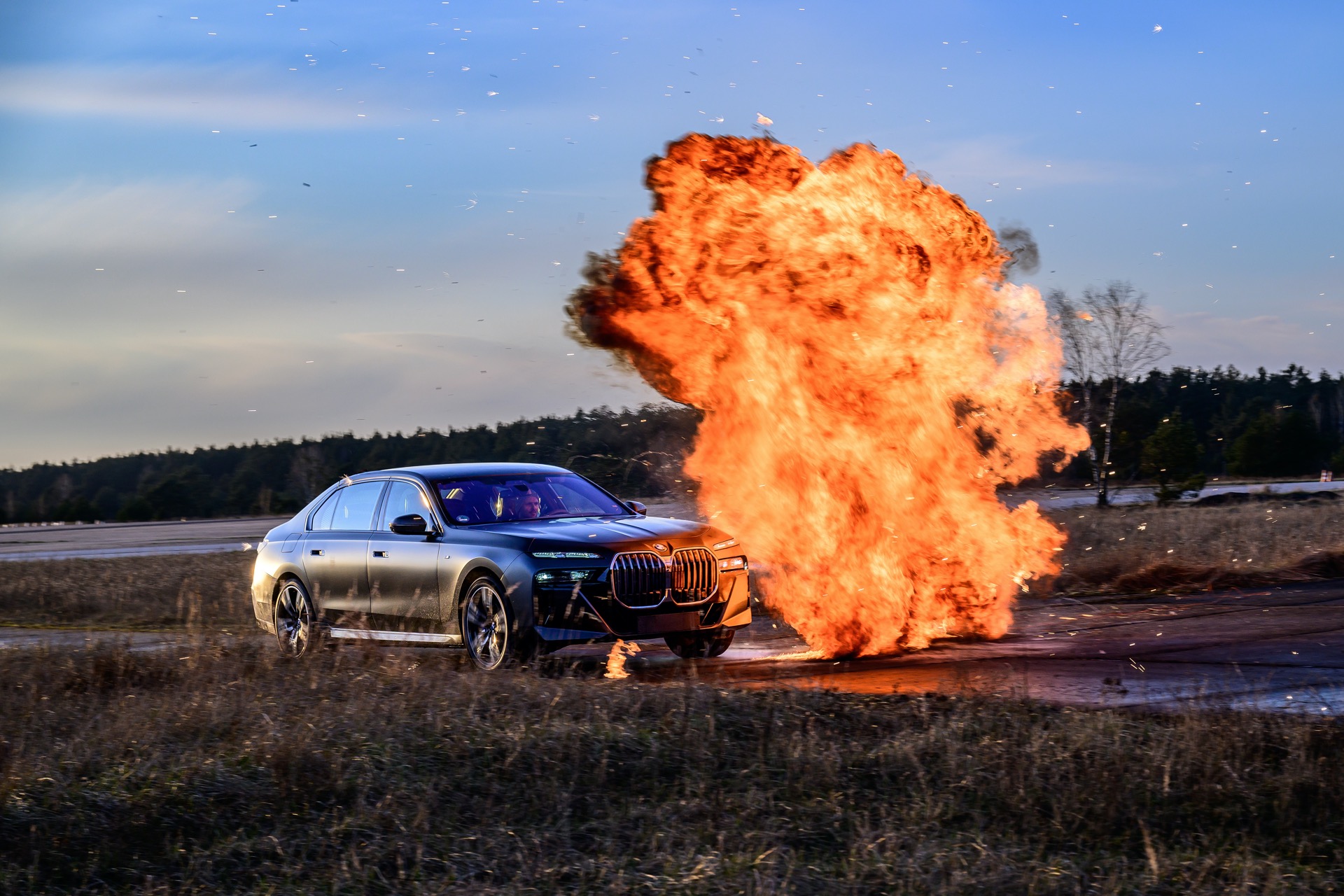
The explosion in the small, gloomy alleyway comes out of the blue. There is a loud bang to the left of the heavily armoured BMW 7 Series – fireball included. The driver hits the accelerator in a fraction of a second and thunders into the adjacent woodland. The guarded person in the back, called Princess, is unharmed. The two bodyguards in the front are visibly relieved after the test. Just another test – as has been the case for two days in the BMW personal protection training program. But instructor Reinhard Endreß hardly has a good word to say about the supposedly successful mission: “The bodyguards in the car were not frightened by the explosion, but they accelerated at high speed to get out of the danger zone,” the former police officer is emphatically serious, “but after an explosion like this, the road is destroyed in reality. Driving on or accelerating forwards doesn’t work. Full braking and then full throttle back – that would have been the right solution.” The course participants are now paler than when the explosion occurred.

Several times a year, BMW is one of the few companies to offer professional personal protection training. The list of participants is as secret as it is elitist, so lips are sealed when it comes to names and designations. It is no secret that state and federal special forces regularly train their operational practices here. The other customers are drivers for top politicians, ministries, ambassadors, royalty or large corporations. Their drivers are also bodyguards who have to ensure that the person they are protecting gets through traffic safely every day and that any attacks from outside can be fended off. Dangers lurk everywhere – every day – every night – on every journey – however short or recurring the daily routine may be. We are talking about vehicles being shot at with precision rifles, grenades, drones or even bombs. It can happen anywhere: Berlin, Beirut, Madrid or Sao Paulo.

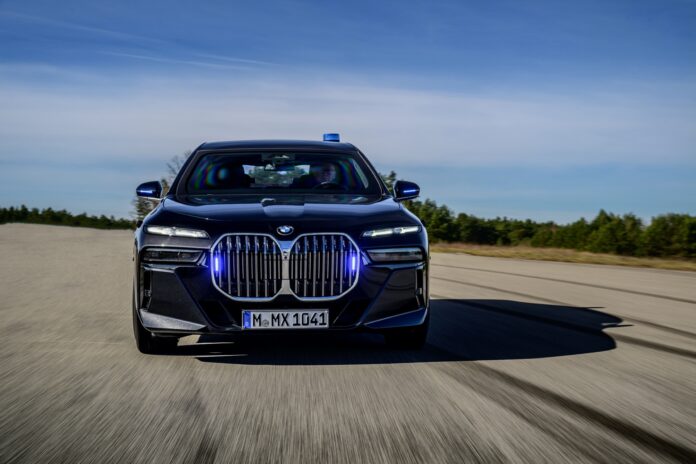
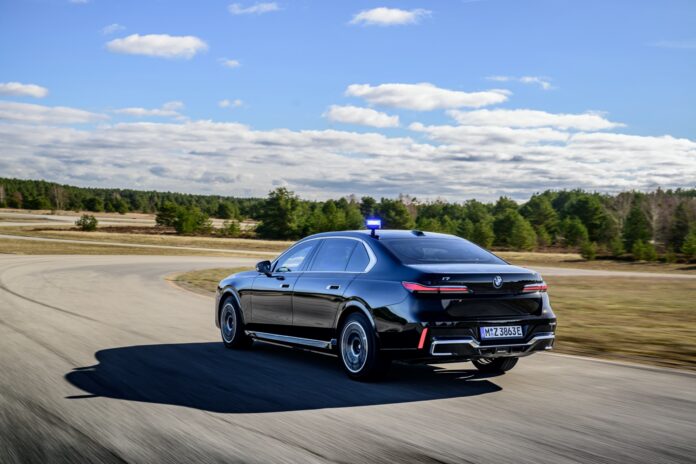
The training courses themselves take place away from the public at remote airfields or military training areas. “We offer these training courses not only in Germany,” explains Dieter Schöner, one of the trainers responsible, who also worked for decades in various roles in the police, “but of course we also offer such training courses for customers abroad.” The programs themselves have little to do with normal driver training, which is all about vehicle control at the limits, as the numerous exercises during the day and at night are carried out in armoured vehicles such as a BMW X5 VR6 or the new BMW i7 / 760i Protection. High-ranking politicians, business leaders or even special police units are on the road in such heavily secured models. Visually, the models are difficult to recognise, as it is only at third glance that the black frames of the centimetre-thick windows or the special tires, which allow the vehicles to get out of the danger zone even with shredded tires, become apparent.

While the armoured BMW X5 can be driven almost like a normal SUV in everyday life despite its extra weight of over 800 kilograms, the new BMW i7 xDrive60 Protection is a completely different story. The luxury saloon, which is classified according to protection class VR 9/10, is the first of its kind in the world to be equipped with an electric drive. 400 kW / 544 hp provide brisk propulsion despite the 4.5-ton unladen weight – up to a top speed of 160 km/h. The sister model with its 530 hp V8 combustion engine is more suitable for long-distance tours – it can easily reach 210 km/h for fast passages in the blue light protection column.

However, the next exercises are not about top speed, but about controlling the black behemoths. At 60 and then 70 mph, we enter a narrow passing lane – barely wider than the car itself. Full braking, swerving, counter-steering – again and again. Reinhard Endreß is more satisfied with his students this time. “Precise and fast steering – great. And stay fully on the brakes – that’s right,” the experienced instructor radios into the car. Over the past 23 years, he has made hundreds of participants fit for the dangerous tasks of everyday life. “It’s easiest to work with the special units,” says the Bavarian, “they know exactly what it’s all about, listen attentively and know their limits. This is where we as trainers benefit from our stable smell and these participants absorb the content differently.”

Tomorrow, the next international special forces will arrive to get up to speed once again in terms of vehicle control at the wheel of the BMW X5 and BMW 7 Series. “The teams also train some things among themselves, because this is about secret tactics of access or escape manoeuvres,” explains Dieter Schöner, “so of course we are left out.” The other exercises are all about repetition – the black armoured limousines thunder down the former runway again and again – testing the limits. Braking, swerving and full throttle backwards. The whole thing is also available as a night program with and without headlights switched on.

Again and again, the participants encounter unexpected surprises to put them under pressure – to build up stress. Stun grenades are set off as they enter the evasive lane or the armoured windows of the protection vehicles are shot at with paint guns – everything creates stress and distraction when every second counts and the protection person has to be brought out of the danger zone. None of the bodyguards should be afraid for their equipment.

However, even professionals have to overcome some mental hurdles. In between, they switch to older armoured vehicles and the gap between the wedged vehicle and the crash barrier is narrower than the escape vehicle itself. Nevertheless, its full throttle through the narrow passage – it crashes and rattles – but the escape succeeds – including a dented front end.

The whole thing is also available as a night program with and without headlights switched on. Again and again, the participants encounter unexpected surprises to put them under pressure – to build up stress. Stun grenades are set off as they enter the evasive lane or the armoured windows of the protection vehicles are shot at with paint guns – everything creates stress and distraction when every second counts and the protection person has to be brought out of the danger zone. None of the bodyguards should be afraid for their equipment. However, even professionals have to overcome some mental hurdles. In between, they switch to older armoured vehicles and the gap between the wedged vehicle and the crash barrier is narrower than the escape vehicle itself. Nevertheless, they drive through the bottleneck at full throttle – it crashes and rattles – but the escape is successful – including a dented front end.


Source link

Ferrari 488 Buyers Guide | Exotic Car Hacks

0


The debut of the Ferrari 488 GTB in 2015 marked a significant milestone for Ferrari, as it succeeded the 458 Italia, setting a new benchmark for the mid engine supercar. As the more approachable sibling to Ferrari’s top-tier V12 models, the 488 GTB has gone above and beyond, upholding Ferrari’s tradition of crafting some of the most coveted sports cars on the planet.

Marking Ferrari’s return to turbocharging for the first time since the legendary F40, the 488 GTB is powered by a 3.9-liter twin-turbocharged V8 engine. This shift from Ferrari’s traditional naturally aspirated engines to a turbocharged unit in the mid-rear-engine setup not only boosts performance but also enhances efficiency, setting a new standard for the brand’s engineering excellence.

This powerhouse is mated to a 7-speed dual-clutch transmission, delivering a blend of super fast acceleration and precise, smooth shifting that is unmatched.

The Ferrari 488 represents an evolution of its predecessor, the 458, blending familiar lines with new design enhancements. The car’s styling thoughtfully preserves its heritage while reworking elements to both aesthetics and functionality. This mid-cycle refresh not only refines the 488’s silhouette but also keeps the iconic shape of the 458 intact.

Key updates include an enhanced front fascia with larger air intakes, pronounced side air scoops for turbocharger cooling, a reimagined rear featuring an electronically controlled diffuser and a Formula 1-inspired blown diffuser, along with streamlined aerodynamic bodywork and updated lighting, all contributing to improved aesthetics and efficiency.

The interior of the Ferrari 488 undergoes a similarly thoughtful transformation, as this refresh introduces an updated dashboard design, featuring streamlined instrument clusters for improved readability and aesthetics.

Enhanced ergonomic seating provides superior support and comfort during high-speed maneuvers, while the latest in infotainment systems ensures seamless connectivity and entertainment.

The Ferrari 488 has several adjustable driving modes that you can select on the steering wheel, including:

  • Snow / Ice Mode for maximum stability and traction control.
  • Low Grip / Wet Mode for increased stability on wet and dry surfaces — a comfortable ride without impacting handling.
  • Sport Mode is the default setting, balancing safety, stability, and performance.
  • Race Mode is optimized for the track, with enhanced shifting times and minimal influence from stability and traction control.
  • Comfort Mode is engineered for the smoothest driving experience, though at the expense of peak performance.
  • ESC-OFF is for expert drivers, disabling the entire electronic stability control system.

Having these driving modes at the switch of your fingertips allows you to experience the most out of the Ferrari 488 depending on your mood, the driving conditions, or the performance demands of the moment, seamlessly blending agility, power, and control to suit any scenario.

Some of the competitors to the 488 over the years include the Lamborghini Huracan, Acura NSX, McLaren 720S, Audi R8 V10 and the Porsche 911 Turbo S.

The 488 is an excellent choice for those that want elegance, performance and the mystique of the Ferrari brand.

This combination of cutting-edge technology, breathtaking performance, and unmistakable styling has solidified the Ferrari 488 GTB’s position as a pinnacle of automotive engineering and a quintessential example of Ferrari’s racing heritage and craftsmanship.

Model Changes (Breakdown by Year)

2015 Ferrari 488

The 2015 model is the first full year of production for the 488, which replaced the Ferrari 458 Italia.

Equipped with a 3.9-liter twin-turbocharged V8 engine, the car produced 661 hp, a figure nearly matching that of the previous Ferrari hypercar, the Enzo.

The Ferrari 488 features an elegant profile that confidently asserts its presence on the road, all while preserving the classic and stunning design characteristic of a Ferrari. The starting base price was around $242,000 slotting it right with the Lamborghini Huracan, and McLaren 650S. 

2016 Ferrari 488

The year 2016 brought the debut of the 488 Spider, featuring a retractable roof that unfurls in just 14 seconds, operable at speeds up to 28 mph—a feat more challenging to achieve than one might expect. Ferrari ingeniously designed this top to fold away compactly, occupying a mere 3.5 cubic feet of space, blending performance with convenience seamlessly.

Mechanically, the 2016 Ferrari 488 Spider was consistent with the previous year’s model.

Recognizing that many Spider owners frequently have a passenger, Ferrari has incorporated an additional display screen for the passenger’s convenience. The rest of the cockpit, adorned in luxurious leather, emphasizes a driver-oriented design.

Within the instrument panel, a compact screen presents navigation and stereo options, while another display offers the driver the ability to customize settings, such as opting for a digital speedometer or monitoring other vital functions.

Starting price was $284,000 for the Ferrari 488 Spider.

In 2016, Ferrari expanded its customization offerings with the introduction of Tailor Made Options, significantly increasing the selection of bespoke choices available for the 488. This initiative allowed owners to personalize their vehicles, offering freedom to customize both the exterior and interior according to their exact specifications.

2017 Ferrari 488

In 2017, to celebrate its 70th anniversary, Ferrari decided to build 70 unique cars for each model in its lineup. Just like other models the 488 special edition was simply a livery modification inside and out.

However, each one was unique, commemorating a different Ferrari from history. New seats and accents in the interior were added, and the exteriors were sprayed in selected colors based on a theme. 70th Anniversary badges was on the interior and exterior.

For regular production Ferrari 488, the car saw no significant updates or changes, with the exception of a software upgrade for the gearbox in models from that year.

2018 Ferrari 488

For 2019, Ferrari unveiled the 488 Pista, a high-performance variant of the 488 to push the boundaries of what’s possible with a road-legal supercar.

Under the hood of the Ferrari 488 Pista comes a twin-turbocharged 3.9-liter V-8 engine, unleashing an impressive 711 hp (50 hp more than the standard 488) and 567 lb-ft of torque. This power is managed by a seven-speed automatic transmission, which efficiently distributes it to the rear wheels, ensuring an exciting driving experience.

The Ferrari 488 Pista exterior combines aerodynamics and visual allure. Its sleek lines and bold stance highlight a design built for speed, with the prancing horse emblem nodding to Ferrari’s racing legacy.

The car features innovative elements like the Formula 1-inspired S-Duct on the front, enhancing downforce and performance. Integrated LED headlights and muscular wheel arches with lightweight wheels underscore its dynamic profile, while aerodynamic side skirts and large air intakes further optimize stability and cooling.

At the rear, a combination of a large diffuser, active spoiler, and quad exhaust outlets combines function with style, contributing to the car’s impressive performance.

The interior comes with a one-piece racing seats crafted from carbon fiber, a manually adjustable tilt-and-telescoping steering column, dual-zone automatic climate control, and the convenience of keyless entry and ignition. The 488 Pista comes standard with carbon ceramic brakes and Michelin Pilot Sport Cup 2s tires.

But also offers a vast array of customization options, allowing owners to tailor their cars with a selection of upholstery, ceramic exhaust pipes, painted brake calipers, and more, making it possible to personalize the vehicle to their unique tastes. 

The 488 Pista started with a price of $331,000 ($89,000 more than the standard 488 GTB).

2019 Ferrari 488

The Ferrari 488 Pista Spider was introduced in 2019 was similar to the coupe but as an open top. 

The Spider variant boasts the identical twin-turbocharged 3.9-liter V-8 engine as the coupe, delivering a robust 711 hp. Among the distinctions for the Spider are a 20 percent enhancement in aerodynamic efficiency compared to a standard 488 Spider, thanks to new active aerodynamics beneath the car’s rear and the latest iteration of the 488’s blown rear spoiler.

Additionally, the engine’s air intakes have been strategically repositioned to the rear spoiler, which has been extended by both 30mm in height and 40mm in length.

Starting price was around $350,000 ($66,000 more than the standard 488 Spider).

Ferrari 488 Common Problems

The Ferrari 488 breaks the mold of past stereotypes, celebrated for its reliability and breaking the mold that Ferraris aren’t meant for high mileage, making it one of the most dependable supercars on today’s market.

However, it is essential to keep in mind that all cars, even supercars, can have issues and it is crucial to perform a Pre-Purchase Inspection (PPI) from an authorized dealer or experienced independent mechanic to reveal all issues.

Electronic Glitches: Some owners have reported occasional electronic malfunctions, including brief and incorrect error messages and temporary rear camera malfunctions. These issues seem to be rare and momentary, not affecting the car’s overall reliability.

Battery Problems: Battery issues have been highlighted, particularly the car failing to start, which has led some owners to keep a jumper device handy. This concern appears manageable, with some suggesting specific battery brands as replacements to mitigate the issue

Turbocharger Failures: There have been instances of turbocharger failures, especially after driving over potholes or similar impacts, leading to “limited performance” warnings and necessitating expensive repairs. Some owners have faced challenges getting these issues covered under warranty.

Alternator and Charging System: The Ferrari 488’s alternator has been identified as potentially inadequate for fully charging the battery under certain usage conditions. This has resulted in a practical recommendation for 488 owners to keep a power pack on hand for emergency situations, ensuring they can address any battery-related issues that may arise during use.

Despite these issues, the Ferrari 488 has been praised for its driving experience and reliability, with many owners reporting a lack of major problems. The issues mentioned are relatively specific and, in many cases, have workarounds or solutions, ensuring the 488 maintains its reputation as a reliable supercar. 

Recalls

2016-2019 488 GTB, and 488 Spider vehicles

Service brakes, hydraulic (Recall no. 21V833000)

The brake system may leak brake fluid, resulting in a loss of braking ability.

2016-2018 488 GTB, 2018 488 Spider and 488 Pista vehicles

Air bags (Recall no. 19V411000)

The air bag Electronic Control Unit (ECU) may malfunction, possibly causing the non-deployment or improper deployment of the air bags and/or seat belt pretensioners.

2018-2019 488 GTB, 488 Spider and 488 Pista vehicles

Fuel system, gasoline (Recall no. 19V090000)

The fuel vapor separator may crack and allow fuel to leak.

2016-2018 Ferrari 488 GTB and 488 Spider vehicles

Air bags: Frontal: Passenger side: Inflator module (Recall no. 19V006000)

These vehicles are equipped with certain air bag inflators assembled as part of the passenger frontal air bag modules used as original equipment or replacement equipment. In the event of a crash necessitating deployment of the passenger frontal air bag, these inflators may explode due to propellant degradation occurring after long-term exposure to absolute humidity and temperature cycling.

2016 488 GTB and 488 Spider vehicles

Service brakes, hydraulic: Foundation components: Disc (Recall no. 18V164000)

Due to a software error, the driver may not be warned that the brake discs are critically worn.

2016 488 GTB vehicles manufactured September 9, 2015, to November 6, 2016

Vehicles may be equipped with a low pressure fuel line connection that was not properly coated during manufacturing. This may cause a fuel vapor leak during engine start.

Maintenance and Ownership Costs

Compared to other high-performance supercars, owning a Ferrari 488 is considered to have relatively low maintenance requirements.

However, it is important to remember that regular maintenance and repairs will still be necessary, and the costs can vary depending on whether you take your car to a dealer or an independent mechanic.

Here is the suggested service schedule and intervals per Ferrari:

ANNUAL CHECKUP & 7-YEAR MAINTENANCE PLAN

  • Labor, original replacement parts, lubricants, engine oil, and brake fluid.
  • Service is linked to the car, transferring with ownership if sold.

FIRST-YEAR SERVICE

  • Engine oil and oil filter replacement.
  • In-cabin air filter replacement.
  • Indicator lights check.
  • Visual brake inspection (pads and discs).
  • Electric parking brake system inspection.
  • Gear oil check and top-off, if necessary.
  • Hydraulic fluid levels check.
  • Visual inspection for leaks.
  • Front and rear suspension components check.
  • Road test, hand wash, and vacuum.

SECOND-YEAR SERVICE OR 12,500 MILES

  • Repeat of the first-year maintenance.
  • Auxiliary belt replacement.
  • Engine and gearbox mounting fastener tightness check.

FOURTH-YEAR SERVICE OR 37,500 MILES

  • Includes all items from the second-year service.
  • Spark plugs replacement.
  • Auxiliary belt replacement.

Here is a rough estimate of typical service costs associated with the Ferrari 488:

  • Oil Change: The cost starts at approximately $300 from independent mechanic, or $699 from the dealer. This includes not just the oil change but also a series of checks and replacements such as engine oil filter, brake fluid, air filters (if necessary), and a thorough inspection of several components.
  • Minor Service: This service includes the items listed in the annual service plus additional inspections and replacements like the A/C belt (recommended every 30,000 miles or 2 years). The price starts at around $1,700, covering a comprehensive check and maintenance routine to ensure the car’s performance.
  • Major Service: For a major overhaul, which includes replacing spark plugs, air and fuel filters, among other things, prices start at about $3,500. This service is more extensive, aiming to thoroughly maintain the car’s systems and performance over the long term.
  • Tires: A set of high-performance tires like Michelin PS4 will cost about $2,000.
  • Brakes: Rotors are carbon ceramic which should last forever. Aftermarket brake pads that are OE equivalent will cost about $800 for a full set.
  • Clutch: Dual clutch transmission should last the lifetime of the car so expect zero additional expenses for clutch or flywheel service.

Also note, every new Ferrari has a 3-year/unlimited mileage factory warranty in addition to the 7-year free maintenance program. The factory warranty can be extended by two years with the bumper-to-bumper coverage. This added cost feature extends the warranty through the fourth and fifth year of ownership.

Options List

The Ferrari 488 has a list of options and packages that customers can choose from. 

Specifically for the 488 Pista, some options were packages featuring exterior upgrades that include aerodynamic and design enhancements such as carbon fibre center air splitter, side and central grill wings, front bumper lower wings (front and sides), side sills, side intakes, under rear spoiler, side rear bumper air exits, and the rear diffuser.

These options focus on improving performance through better aerodynamics while also offering a more aggressive and personalized look. And for the interior, options included carbon fibre door sills, door panels and steering wheel. In addition, Ferrari also offered Pista customers the option to spec their car with very expensive carbon fibre wheels. 

As for the 488, popular options included Scuderia Ferrari shields, carbon fibre interior, carbon bucket seats, AFS system (Adaptive Front Lighting System), front and rear parking sensor/cameras and optional wheels. 

Another common option that was equipped was the front lift system, this helped raise the front end of the car, so it can easier get through any driveway or speedbump. 

On the other hand, the Tailor Made program takes customization to the highest level, providing an expansive array of personalization choices that stretch the boundaries of what’s possible. This program is akin to having a blank canvas where almost any vision of personal taste can be brought to life.

It offers an extensive selection of paints, fabrics, leathers, and other materials, enabling customers to create a truly bespoke Ferrari that reflects their individual style and preferences to the finest detail.

Because of the strict approval requirements, cars that went through the Tailor Made program are considered highly desirable. 

These cars usually command a higher premium in the market due to their exclusivity and uniqueness.

Key Options

2016 Ferrari 488 GTB Options List

Ferrari 488 Price and Value (Pista)

The Best Ferrari 488 to Buy

When it comes to buying a 488, there are a few key factors to consider that can affect the car’s long-term value.

Some of the criteria break down into 4 categories. 

For 488’s that will most likely appreciate in value will be the performance variant such as the 488 Pista (coupe and spider). Although they are more expensive, they will also depreciate much less. 

The 488 70th Anniversary Editions are also quite rare and desirable, as every single one of the 70 cars built are all spec’d differently in unique heritage colours and interior options, they are a safe choice to purchase. 

On the other hand, all 488’s including coupe and spider with the right options will remain a strong purchase simply because of their reputation for being extremely well-built and reliable vehicles. These cars have a proven track record for being mechanically sound with few major issues.

As hybrid technology becomes more widespread among cars, internal combustion V8’s are becoming highly sought after by collectors and enthusiasts in the current market.

In addition, the condition and mileage of the car are also important factors to consider when buying a 488. There are many that have been driven hard. But the ones that are more likely to retain their value in the long run and will fetch the most money will be a well-maintained car with low mileage.

Therefore, it’s important to do your research, compare prices, and look for well-maintained cars if you are considering purchasing an 488 with the goal of not losing any money.

Conclusion

In conclusion, for around ($240,000+) the Ferrari 488 is a solid choice for an exceptional entry into the supercar ownership that you can rely on.

While the Lamborghini Huracan, Acura NSX, McLaren 720S, Audi R8 V10 and the Porsche 911 Turbo S are other options available, nothing beats the mystique of owning a car from one of the most iconic brands in the automotive industry. 

If you’re in the market for a supercar, you will love the Ferrari 488. 

Car Hacking Shortcuts

  • Ensure the car has a front lift system.

  • Spec matters: Look for any Tailor Made cars or optional colours. Carbon fibre exterior and interior is also desirable. 

  • 488 Pista is a future collectible.

  • Look for well-maintained, low miles 488.


Source link

RV Gift Ideas For The Happy Camper That Has Everything

0


This time of year gets everyone in a panic over finding just the right thing for that special someone. What do you do when that special someone lives in their RV? Coming up with RV Gift Ideas can be even more stressful. So what do you get that Happy Camper in your life that they will truly appreciate, and won’t take up too much space?

How Did These RV Gift Ideas Make The Cut?

RV Living is all about a simpler way of life, a more relaxed way of life. One where you take in the beauty of the area you are in, and just enjoy being one of the fortunate ones who gets to live like this every day. With that in mind Loretta and I sat down and talked about RV Gift Ideas over the last few days, and whittled our wish lists down as best we could.

rv hangersrv hangers

(Read: Our Top 10 Boondocking Essential Items)

RV Gift Ideas For Inside

Now I know a collapsible garbage can may not seem like a gift idea, or that it should even be on our list of gifts for Inside, but hear me out. This thing is the best laundry hamper my Wife and I have come up with yet. We keep it in the shower, unless we are using it of course. Just toss your clothes in, zip it up and no Laundry Stank before your next trip to the laundromat. We’ve also got a second one for outside.

Our YouTube ChannelOur YouTube Channel
RV Gift IdeasRV Gift Ideas

If you talk to any RV owner they will tell you air flow in them isn’t the greatest. In our bedroom we use a 10 Inch Fan to keep the air circulating and comfortable. The best part about this one is that it operates on a regular household plug or 6 D batteries. Battery operation mode comes in super handy for boondocking and it lasts for days on battery power. Come to think of it, I can’t remember ever changing the batteries in ours yet.

RV Gift Ideas For Outside

Bungee Cords Like this set pictured here are probably one of the most useful things to have in an RV. With all the different lengths, and styles, getting the camp site set up just the way you want it will be a breeze! The best part is they can pull double duty and help hold things in place while you’re travelling!

Amazon FireAmazon Fire

RV Gift IdeasRV Gift Ideas

A good set of binoculars can come in handy for the avid bird watcher, or to help settle the argument over if that’s a Bison or a Bear in the distance.

RV Gift IdeasRV Gift Ideas

Who doesn’t like to sit around the camp fire and make smores? Other than that one guy who is always getting chased by the smoke, I think it’s safe to say we all do right? The Solo Stove has created a ‘smokeless’ campfire! We have seen more and more of these in peoples rigs, but never any smoke coming from them!

RV Gift Ideas Solo StoveRV Gift Ideas Solo Stove

RV Gift Ideas For Mom

This one is in the Mom section because Loretta is such an avid reader, but it really does get used by everyone. Loretta had SO many books before we started RV Life that there was just no way to bring them all. Now she has her entire collection at the touch of her fingers with her Amazon Kindle.

RV Gift Ideas KindleRV Gift Ideas Kindle

Sometimes Mom just wants that nice long shower, so she is going to head to the campground shower. Make it even more enjoyable for her by making sure she has everything she needs for that spa like feel with a shower caddy!

RV Gift Ideas For Dad

RV’s are going to have stuff that breaks, and regular maintenance. A lot of it. Get Dad a tool kit that has everything he needs for those day to day repairs.

RV Gifts toolsRV Gifts tools

We all know who’s job it is to walk the garbage down to the dumpster, or go to the camp store to pick up fire wood. Make dads job easier with a collapsible wagon! The number of things you will use this for in RV Life is insane. It is by far our most used We didn’t know we need this item!

RV Gifts WagonRV Gifts Wagon

RV Gift Ideas For Kids

Making smores is part of camping. When you have to use a stick things can get a little messy. These extendable and easy to clean marshmallow roasters are a Must Have for every RV.

rv gift ideasrv gift ideas

When everyone is stuck inside because of a rainy day, you don’t want everyone sitting on their phones all day. Keep that family time fun with some board games to chase the blues away!

RV Gift Ideas For The Driver

Being the person responsible for the keys to the RV or Truck you tow it with can be stressful sometimes. I triple check the pocket we keep the keys in on our back pack every time we take something out of it. Do you know how nice it would be to not even have to worry about losing them when you are in the middle of a 12 mile hike to a Glacier? Now you can lock the keys in a Hitch Safe and never lose them! (Hint Hint Loretta)

RV Gift IdeasRV Gift Ideas

Wouldn’t it be nice if you could tell your GPS how big and heavy your vehicle is so it only sends you down roads you will fit on? Now you can with an Garmin RV GPS! There’s no more guessing if the turn will be too tight, or worrying about there being a low bridge. Tell it the type of RV you have once and be on your way. It even has a built in Dash Cam and is Voice Activated for hands free use!

RV Gifts GPSRV Gifts GPS

One of my favorite things to have in the door pocket of my truck is a good old fashion map. The Rand McNally Road Atlas comes in super handy when you are sitting still in traffic for finding an alternate route. I love the way I can see the entire state on the map instead of just the small screen on the dash.

A National Park Pass is an absolute must have in your Center Console if you have an RV. We affectionately call it our ‘Merica Membership Card in our YouTube Videos, because it gets us in to Every Single National Park For Free. That saves us around $30 every single time, and this “YouTube Season” alone we went to 6 of them without laying out any extra cash. Get One Here

RV Park PassRV Park Pass


Source link

Hardcore Defender OCTA SUV to debut in 2024

0


JLR (formerly Jaguar Land Rover) is no stranger to high-performance SUVs with beefy engines, and its next will be a hardcore Defender that will introduce the new performance sub-brand OCTA.

Previously thought to be called the Defender SVX, the Defender OCTA has already been spotted testing in prototype form and is due for a debut later this year. The timing points to the vehicle reaching the U.S. as a 2025 model, assuming it’s offered here.

Teaser photos released by JLR on Tuesday hint at some of the upgrades planned for the Defender OCTA, and also indicate the origins of the OCTA name. The teasers show the vehicle will feature diamond graphics inside out, and certain diamond shapes in geometry are known as octahedrons. Presumably, JLR wants to signify that the Defender OCTA is tough like a diamond, the hardest naturally forming material on Earth.

JLR is short on details for the Defender OCTA but said the vehicle will come with a twin-turbocharged V-8 and its 6D Dynamics suspension. Both features are found in the related Range Rover SV, which generates 626 hp from a BMW-sourced twin-turbocharged 4.4-liter V-8.

2024 Range Rover Sport SV

2024 Range Rover Sport SV

The 6D Dynamics suspension is a combination of hydraulic interlinked dampers, height-adjustable air springs, and pitch control, which according to JLR can keep the vehicle’s body at an almost level stance during hard cornering, or when traversing rough terrain at speed. That’s impressive considering the system also eliminates the need for conventional anti-roll bars.

The teasers also show Brembo brake calipers will be used on the Defender OCTA.

Prototypes spotted in the wild were seen with a titanium exhaust with quad tips, along with widened wheel arches, a raised suspension, mud flaps, and BFGoodrich all-terrain tires. The tires were wrapped around 20-inch wheels and measured 275/60 front and rear.

JLR said the Defender OCTA will serve as the flagship for the latest Defender, and that the same diamond graphics will appear on “all future flagship Defender models,” perhaps hinting at an expanded Defender lineup.


Source link