Home Blog Page 85

8 Lightweight Pants for Summer Travel, From $28

0


If you typically avoid wearing jeans in the summer, you’re not alone. While I usually live in jeans, once the weather turns warm, I almost always opt for shorts, skirts, or breathable linen pants. However, I’ve recently felt inspired to try out a pair of lightweight, summer-ready jeans, and I found the perfect pair at Amazon.

I live in NYC, and I’ve been spotting drawstring jeans all over the city. The laid-back style pairs well with breezy linen blouses, simple tanks, and swimsuits. After searching for the perfect pair to add to my summer wardrobe, I’ve finally spotted the ideal drawstring jeans—and they’re available at Amazon for under $50. Now, the Grapent Wide-leg Drawstring Jeans are at the top of my wishlist. 

Grapent Wide-leg Drawstring Jeans

Amazon


These jeans first caught my eye thanks to their stylish wide-leg silhouette. Not only does this cut give an elevated appearance to any outfit, but it also means the jeans will feel breezier than fitted styles. I love the elastic waistband and drawstring detail, which will ensure a comfy fit, whether I’m sitting for extended periods or walking the streets of a stylish destination. Plus, plenty of reviewers praise the “lightweight” feel of these jeans, and one shopper even wrote that they “feel like sweatpants.”

These jeans come in 13 different colors, including traditional blue hues, black washes, and even bubblegum pink. I’m adding a few different pairs to my cart, including dark blue and white options. I’ll pair them with sneakers, sandals, and summery flats depending on the occasion. For petite shoppers, they would also pair well with heels, although based on reviews, I anticipate them being a bit too short to do so at 5-foot-7. 

Grapent Wide-leg Drawstring Jeans

Amazon


While the Grapent Wide-leg Drawstring Jeans are currently holding the No. 1 spot on my summer wishlist, I’m eyeing a few more styles at some of my favorite retailers, including Madewell and J.Crew. Keep reading for more comfy and breezy jeans, trousers, and pants I’m adding to my cart. 

Skirt Bl Drawstring Flowy Jeans

Amazon


These drawstring jeans are even airier than the Grapent pair, thanks to the breathable lyocell fabric. This dark wash is so trendy and easy to style for summer, but these jeans are also offered in three other shades, including black. One reviewer called these jeans “perfect for late spring in Florida,” so they’re sure to withstand hot conditions, too. 

Anrabess Linen Palazzo Pants

Amazon


More than 1,000 shoppers purchased these linen-blend pants this month, and I think it’s about time I join them. The thick elastic waistband is “forgiving” and “comfortable,” and the fitted waist complements the flowy, wide silhouette of the pant leg. According to reviewers, these pants are breathable enough to keep you cool in hot weather, so they’re ideal for warm destinations. They come in 23 colors, but this natural shade is my favorite, since it’s versatile enough to style with anything in my travel capsule wardrobe.

Chartou Cotton-linen Palazzo Pants

Amazon


These breathable cotton-linen pants are effortless and timeless, so I know I’ll reach for them all summer long. While I don’t have any big vacations on the calendar, these pants would be ideal for tropical destinations. One reviewer purchased a pair for their trip to the Philippines and loved them so much they decided to buy multiple. Choose from eight different colors, but keep in mind the lighter colors may be slightly see-through thanks to the lightweight fabric. 

Qinsen Cotton Cargo Pants

Amazon


Cargo pants have been in style for years, and it seems like the trend is only growing. This pair puts a sleeker spin on the trend, with minimal pockets and traditional cargo stitching. They’re made of 100 percent cotton, so they’ll be lightweight and breathable enough for summer days. I also love the coffee bean color, which will pair well with sporty T-shirts and lacy blouses alike. 

Madewell Airy Denim Superwide-leg Jeans

Madewell


I love how these drapey Madewell jeans puddle at the floor, giving them a laid-back and elongated appearance. They feature a denim drawstring that looks slightly more sophisticated than typical drawstring jeans, but they provide the same adjustability to ensure the perfect fit. According to reviewers, the cotton-lyocell fabric is super soft and lightweight enough for summer.

J.Crew Soleil Linen Pants

J.Crew


These classic linen pants come in nine vacation-ready colors, and I couldn’t help but add a few to my cart. I especially love the butter yellow and navy color, although I’ll also snag a versatile neutral. The linen fabric is lightweight and breathable, making it the perfect summer staple. Plus, the pants come equipped with four pockets, which are perfect for holding essentials. 

Anthropologie Avery Pleated Linen Wide-leg Trousers

Anthropologie


Pleated trousers have been on my wishlist for a while, and I’m eyeing this linen version from Anthropologie. They feature a super wide leg, which will keep things breezy, along with the linen fabric. I plan on pairing these pants with fitted tanks, tube tops, and cropped tees for laid-back, vacation-ready outfits that still look put-together. 

Love a great deal? Sign up for our T+L Recommends newsletter and we’ll send you our favorite travel products each week.


Source link

Luxury Living Communities The Latest Trend Taking The Property World By Storm

0


Image Credit

Luxury living communities aren’t necessarily a “new” trend, but they’re certainly gaining attention at the present moment. They’re a unique approach to property developments that puts the focus firmly on a luxury lifestyle. More and more developments keep cropping up everywhere, but what is it about luxury communities that makes them so popular? 

Luxury Living Communities Explained: What Are They?

Before we proceed, let’s clarify what we mean by luxury living communities. In essence, these property developments consist of more than just houses or apartments. Amongst the living spaces, developers build various amenities, which can include: 

  • Five-star restaurants
  • Swimming pools
  • Fitness suites
  • Boutique shops
  • Clean park spaces

The goal is to develop a complete community that features all the luxuries you need in life. These communities also have an aura of exclusivity about them – anyone can technically join them, but house prices are very expensive, and you may even need to purchase a community membership.

There’s an argument that this exclusivity is what makes these communities so popular at the moment. People want to live in safe places around people they feel comfortable with. Being in a luxury community provides this level of comfort, so it’s not surprising to see more of these developments arise. 

Many Communities Are Designed For Specific Demographics

Another thing that sets apart luxury living communities from other property developments is the specificity of the developments themselves. You often come across ones that are designed for a particular demographic or group of people. 

A quick search will show you a luxurious senior living community in one location, then a luxury community designed for remote workers in another. Communities like these are built with the residents in mind, which means many of the amenities are unique to the target market. 

Luxury senior living communities are particularly popular because they allow people to live the good life in their retirement years. Older people can live in beautiful homes that come equipped with all the latest mobility aids and features to give them a higher quality of life. Residents within these communities can even request home visits from community staff to help with things like gardening, cooking, etc. 

Other themed communities may include things like co-working spaces that are only available to residents. This allows you to pop down to a bustling work area during the day and network with other like-minded people. The level of specificity is unique to luxury living communities – other community developments are more generalised. 

Access To The Latest Luxury Properties

The big lure from luxury living communities comes in the form of the luxury homes available for purchase. These communities are designed with one key thing in mind: to provide residents with a truly luxurious lifestyle. 

As a consequence, you will normally find all of the latest luxury property trends in these community developments. Houses and apartments are built using the newest interior design trends to make them a cut above the rest. 

Traditional living communities don’t do this. They usually contain lots of very standard houses or apartments that are built because they’re affordable to make. A luxury community brings a collection of the most incredible homes to one place; its purpose is to stand out and be visibly different. 

Individuals or families interested in luxury properties should look to these communities as the answer. You’re bound to find more unique homes here than you will anywhere else. 

Image Source

Taking Amenities To The Next Level

There’s a significant difference between a luxury living community and a group of luxury houses. You will find loads of luxurious neighborhoods across the country that contain collections of the finest homes. Mansions may adorn both sides of the street – but these don’t always count as communities because they’re missing one key element: the amenities. 

As mentioned, proper luxury communities will have various amenities, though they take this to levels never seen before. You might have lived in a nice apartment complex that had a concierge service or a gym; luxury communities will offer this to every resident, plus incredible things like: 

  • Massive private cinemas for residents
  • Luxury community centers
  • Genuine Michelin-star restaurants
  • At-home catering services
  • Private gardening services
  • Private cleaning services
  • Private taxi services

The list could go on for an unreasonable amount of time, but this simply demonstrates the sheer scope of the amenities in these luxury property developments. As also noted earlier, residents may be required to pay annual community fees or memberships because of these amenities. This only ramps up the exclusivity factor and makes the communities more desirable for people with a lot of money. 

Higher Levels Of Security For Residents

Owning a luxury home comes with some possible drawbacks. Primarily, your home is visibly very nice and expensive, which can lead to it being targeted by thieves. You must invest lots of money in good home security, though it’s not always enough to keep you – and your property safe. 

The beauty of luxury residential communities is their commitment to security and safety for residents. Because you’re living in an enclosed community, it means there are more layers of security before someone reaches your property. 24/7 security and surveillance keep the community safe, making it a much more secure place for anyone to live. 

This is also a big reason why luxury communities are popular for elderly or retired individuals. When you get older, it’s harder to keep an eye on things, and you’re prone to being targeted by bad actors. The additional security that comes from community development means the most vulnerable people are looked after. 

Luxury Community Developments Are Here To Stay

There’s more than enough evidence to suggest that luxury community developments are here to stay. People appreciate all the extras that come with a property development like this, and it’s a level above any other luxury living solution. The fact that you can find developments that cater to different demographics makes it even more enticing. 

Keep in mind, these communities are made to be exclusive, so they won’t be for everyone. But if you’re eager to live a luxurious lifestyle, then it could be worth learning more about the various options near you. 

For more on the latest in lifestyle, culture and travel reads, click here.


Source link

The Rise Of The Gentrified Luxury Bathroom

0


Pexels – CC0 License

Luxury bathrooms are no longer the preserve of the ultra-wealthy. Instead, they are increasingly making their way into modern homes. 

Many property owners want them as status symbols and to show how far they’ve come. Others are simply using them to create spa-like experiences in their interiors, without the constant need to travel to commercial alternatives. 

Previously, bathrooms were purely functional spaces. Family members would use them to wash and get dressed in privacy. By 2000, most were inside homes (even affordable accommodation), with only a handful of outhouses remaining. 

However, today the emphasis is changing. Many homeowners in gentrified spots are wondering how they can improve these rooms further, blending aesthetics with functionality and technology. 

“Luxury bathrooms are becoming more popular because of the desire for aesthetic excellence,” explains the Bathroom Design Center, which sells luxurious bathtubs. “Many property owners in the affluent classes want bathrooms made of opulent materials with designer-inspired sinks and vanities.” 

Because of these changes, the industry is witnessing a shift in materials. Marble and gold fixtures are becoming almost commonplace, with laminates and vinyls taking a backseat. Many owners believe these materials improve looks and boost their wellness. Solid, high-quality rock on the wall imparts a deep sense of well-being for a lot of people. 

Pexels – CC0 License

Furthermore, many affluent owners enjoy the spa-like experience these new bathrooms offer, including soaking tubs and aromatherapy systems. These allow them to slip into a deep sense of relaxation after a busy day or when they have nothing to do at the weekend. 

“Of course, it’d be naive to suggest that status didn’t appeal, too,” says the Bathroom Design Center. “People want bathrooms that increase their status and appeal to other affluent buyers who might be able to purchase their properties in the future. A well-designed bathroom with the right features is often irreplaceable.” 

What constitutes a luxury bathroom remains a topic of contention, and standards continue to shift. Over time, it’s clear that the threshold is increasing.

Most luxury bathrooms start with rare woods, natural stone, and some of the high-end materials discussed above. These immediately set them apart from the majority of bathrooms that use cheap, budget materials to keep costs down. 

However, a lot of owners are going beyond this. For example, many affluent individuals in gentrified areas are equipping their homes with smart technology, including heated floors and smart mirrors. These provide them with a more customised environment that doesn’t feel as unwelcoming. Voice-activated lighting and automated toilets are also playing a role, though these are less advertised in general. 

For some affluent individuals, sustainability is taking a central role. Many are demanding luxurious bathrooms that meet their ecological requirements, especially in terms of energy and material usage. Most want spa-like areas that reduce overall impact on the planet while impressing everyone around them. 

Spa-like elements are naturally making an appearance in these luxury bathrooms. Many wealthy people want to emulate the experience developed by spas over many years, allowing them to experience the benefits in their homes instead of having to travel outside of the home and pay high fees.

For example, much-touted rainfall showers are now exceptionally common. These differ from conventional versions and are supposed to feel like rain, with water droplets failing under the weight of gravity. 

Sauna rooms are also making an appearance. Most of these are infrared, dry heat saunas that raise air temperatures extremely high. Many wealthy people like these because they are convenient, invigorating, and improve health biomarkers substantially. Steam saunas are an alternative, often incorporated into the shower unit, offering a sauna-like effect, making users feel refreshed. 

Customisation is also playing a significant role in modern bathroom setups. Owners are seeking things like personalised storage for their towels and layouts that meet their requirements. These often require extensive building work or even knocking through into unused bedrooms to create more space. 

“The sheer range of bathroom options available to most owners is mind-boggling these days,” explains the Bathroom Design Center. “This level of choice means that a lot of people are more willing than ever before to make significant home modifications if it means getting the look and features they want.” 

These changes mean that many homeowners are options for things like handcrafted furniture and custom crown molding. These elements give bathrooms a traditional feel but also more of a sense of luxury. 

Market trends and consumer demand seem set to continue. Luxury bathroom renovations are part and parcel of many wealthy people’s spending plans, with high-net-worth individuals and millennials spearheading the movement. The bathroom is an opportunity for people to luxuriate themselves and their guests. 

Social media is also playing a critical role in this process. As more designers put their work online, more people are getting a sense of what’s possible with the right budget. 

“Social media has been a significant boon for us because it means more exposure to our products,” explains the Bathroom Design Center. “More people are becoming interested in what’s out there and seeing products for the first time in context, without just scrolling through images on retailer websites. The fact that people can shop for items on social media is driving the trend into overdrive. If someone wants a brand new solid onyx bathtub, they can click it on Pinterest and go to the website of a company that actually installs them.”

Of course, while luxury bathrooms might be aspirational, they also come with a high price tag. Financing options are available for many installations, but even these are often out of reach for the average person. 

Space constraints are also a problem. Many older homes and townhouses simply don’t have sufficient space to accommodate a luxury bathroom. Even with home extensions, many projects are impossible to build to a sufficient spec. 

“The future of bathroom transformation is likely to revolve around materials and technology,” says the Bathroom Design Center. “Customers will want the electronics to blend into the background so they can focus on the beauty of the interior design.”

For more on the latest in interior decor reads, click here.


Source link

The Best Ways to Travel Around in Tel Aviv

0


Tel Aviv is a vibrant and compact city with a terrain that makes it an incredibly walkable and bike-friendly place. However, the best ways to travel around in Tel Aviv include taking advantage of the city’s modern transport system, including buses, light rail, trains, taxis, and airport transfers.

Public transport is cheap, and the streets are vibrant with local culture. So, whether you’re a culture lover, beach goer, or food explorer, you won’t need a car to get around. We’ll break down everything you need to know.

Here is an overview:

Welcome Pickups Services for Visitors in Tel Aviv

Discover Tel Aviv effortlessly with Welcome Pickups, your go-to for seamless, visitor-friendly transport solutions.

Book with Welcome Pickups for:

Convenient Airport and City Transfers: Friendly, English-speaking drivers ensure a smooth ride from Ben Gurion International Airport or any city point to your destination, perfect for starting your Tel Aviv journey stress-free.

Efficient City Exploration: Pre-book transport to iconic sites like Jaffa Old City, Rabin Square, or the Tel Aviv Promenade, ensuring you experience the best of Tel Aviv with ease.

Comfortable and Reliable Rides: Modern, clean vehicles with ample space, ideal for solo travelers, couples, or groups exploring Tel Aviv.

24/7 Support: Round-the-clock customer service to assist with any last-minute changes or questions during your trip.

Reserve your transfer with Welcome Pickups today!

Best Public Transport Options in Tel Aviv for Tourists

Let’s start with a round-up of the best ways to travel in Tel Aviv.

Buses

Buses in Tel Aviv are efficient and affordable. There are three main operators:

  • Dan: Operates most of the routes within the city and surrounding areas.
  • Egged: Operates primarily intercity routes and a few local lines.
  • Metropoline & Kavim: Operates intercity and suburban lines.

They depart roughly every 30 minutes, except on Fridays between 17:00 and 02:00 and on Saturdays between 09:30 and 18:00.

It costs just 5.90 NIS for a single ticket. However, buses are completely cashless.

Therefore, you’ll need a reloadable Rav-Kav card to board.

Let’s quickly talk about Rav-Kav cards while we’re on the subject.

  • You can buy and top-up your Rav-Kav card at the airport, train station, or convenience stores.
  • Rav-Kav cards are valid on buses, light rail and trains.
  • You can store anywhere from 30-300 NIS on your card.
  • A day pass, including train journeys, is 23 NIS, whereas excluding train journeys is 17.50 NIS.
  • Fare prices don’t change from day to night.

Light Rail

The Light Rail extends through multiple neighborhoods across Tel Aviv, making the city more interconnected.

The Red Line is the only line in operation right now, connecting Petah Tikva to Bat Yam via Tel Aviv. Green and Purple lines are under construction at present.

To board, you’ll need to tap your Rav-Kav card on the validation machines at street level.

Trains (Israel Railways)

If you want to travel to other cities from Tel Aviv, taking a train is the way to go.

There are multiple convenient train stops in Tel Aviv, such as:

  • Merkaz (also known as Arlozorov): Close to the city center
  • Hashalom: By a shopping mall in the city center
  • Hahagana: Close to the central bus station which has intercity and suburban routes

Popular destinations include:

  • Jerusalem
  • Haifa
  • Ben Gurion Airport
  • Be’er Sheva

If you take a train from one of Tel Aviv’s stations to Jerusalem, you’ll get there in just 35 minutes on the high-speed train. That is way faster than taking a taxi or driving.

Train ticket rates depend on your destination, and you can pay for your travel at the kiosks at the train stations.

Note: No train service from Friday afternoon to Saturday night (Shabbat).

Free Shabbat Buses

You’ll begin to notice that not much happens in Tel Aviv during Shabbat, including much of the transport. Don’t worry! There are free Shabbat buses to save the day.

They operate from:

  • Friday: 5pm–2am
  • Saturday: 9:30am–6pm

These vehicles provide modern, comfortable and reliable service throughout the city.

Want to plan your travel? Try using the CityPass app or look at the info boards at the bus stops.

Walking and Cycling in Tel Aviv: Eco-Friendly Travel Tips

Two of the best transportation options in Tel Aviv are your feet! Tel Aviv is a highly walkable and cycleable city.

Here’s what you need to know:

Walking

Tel Aviv is compact. Most attractions are within 15–30 minutes’ walking distance.

Some popular walking paths for travelers include:

  • Rothschild Blvd
  • Allenby Street
  • Carmel Market
  • Jaffa Promenade

We recommend walking if you want to enjoy the café culture, soak in the architecture at a leisurely pace, and take in the city like a local.

Cycling

Tel Aviv has a very bike-friendly infrastructure. There are over 120 km of bike paths, many separate from main traffic. Therefore, Tel Aviv is also one of the safest places to cycle.

Some safe shaded parts include:

  • Ben-Gurion Blvd
  • Chen Blvd
  • Tayelet (seafront promenade).

Need to rent a bike in Tel Aviv? Tel-O-Fun Bike Rentals are a great choice. They have over 175 rental stations across the city and offer the first 30 minutes free. This is ideal for short trips or beach-hopping, and is one of the best ways of getting around Tel Aviv cheaply.

There are also private e-bike and scooter rental apps, in which you pay per minute. For example:

Before you hire a bike and start exploring Tel Aviv, here are some things to keep in mind:

  • Watch for pedestrians on shared paths.
  • Fines apply for riding on sidewalks, so ensure you stick to the cycle lanes.
  • Avoid the midday heat by cycling in the early mornings or late evenings.
  • During off-peak times, bicycles are allowed on trains.
Travel in Tel Aviv via bicycles
Tel Aviv bicycles

Budget-Friendly Travel: Free and Cheap Ways to Get Around

Getting around Tel Aviv cheaply is simple, even if you don’t want to walk or cycle. Here are your options:

Monit Sherut (Service Taxis)

Monit Sherut (Service Taxis) are minivans that typically hold 8-10 passengers. They run on three defined routes, but you can stop anywhere along the route.

Best of all? On Routes 4&5, you can buy a cheap ticket at just 6 NIS. Bear in mind that service taxis are cash only.

Locals use Monit Sherut for convenience and speed. They are also available on Shabbat, making them a rare option during the weekends.

You can spot them by their distinctive yellow coats and pay your fare as you board.

Off-Peak Travel

If you want to travel by train, we recommend avoiding rush hours, which are:

  • Morning: 07:00 – 09:00
  • Evening: 15:00 – 18:30

Not only are these times more rushed and stressful. If you travel around midday, you’ll pay the same fare as any other time and have a far more relaxing journey.

Getting To and From Tel Aviv Airport: Essential Tips

Ben Gurion Airport (TLV) is located about 20–25 minutes from the city center by taxi, transfer, or train.

Here’s a breakdown of the best ways to travel from Tel Aviv Airport to the city center.

Train

Taking the train from Tel Aviv airport to Tel Aviv is one of the most popular choices for travelers, as the Israel Railways line runs directly to the city.

The train station is located on the lower level of Terminal 3.

The route stops at several stops in downtown Tel Aviv, including:

  • HaHagana
  • HaShalom (unavailable after midnight)
  • Savidor Center
  • University (unavailable after midnight)

You’ll need a Rav-Kav card, and the fare will cost 11.50 NIS.

Note: there are no trains on Shabbat, so plan accordingly.

Savidor Station in Tel Aviv.

Bus

The Line 445 bus runs 24/7 from outside the Arrivals Hall at Terminal 3, including Shabbat.

However, the schedule is not defined, and buses are infrequent. Therefore, it’s one of the most inconvenient ways to travel, albeit the cheapest.

Tickets cost just 6 NIS per person. To board, you’ll need a valid Rav-Kav card, which you can get in the Arrivals Hall at the airport.

Taxis

Taxis are available 24/7 from outside of Terminal 1 and Terminal 3 at TLV Airport. They use taximeters to calculate their fares, but depending on your exact destination, you can expect to spend around 130-150 NIS.

A surcharge of 25% will be applied to your fare during night trips and public holidays.

Quick taxi tips:

  • Head to the official taxi stand to avoid scams.
  • Ensure your taxi driver resets the meter when you get into the taxi.
  • Write down your destination address to help with communication.

Private Transfers

Booking a private airport transfer, like with Welcome Pickups, in advance is a great option for families, first-time visitors, business travelers, and late-night arrivals.

You’ll get a fixed-price fare you can pay in advance, and your driver will meet you in the Arrivals Hall.

Welcome Pickups Services for Visitors in Tel Aviv

Discover Tel Aviv effortlessly with Welcome Pickups, your go-to for seamless, visitor-friendly transport solutions.

Book with Welcome Pickups for:

Convenient Airport and City Transfers: Friendly, English-speaking drivers ensure a smooth ride from Ben Gurion International Airport or any city point to your destination, perfect for starting your Tel Aviv journey stress-free.

Efficient City Exploration: Pre-book transport to iconic sites like Jaffa Old City, Rabin Square, or the Tel Aviv Promenade, ensuring you experience the best of Tel Aviv with ease.

Comfortable and Reliable Rides: Modern, clean vehicles with ample space, ideal for solo travelers, couples, or groups exploring Tel Aviv.

24/7 Support: Round-the-clock customer service to assist with any last-minute changes or questions during your trip.

Reserve your transfer with Welcome Pickups today!

Tips for Hassle-Free Travel in Tel Aviv

Now you know the best ways to travel in Tel Aviv, here are some more tips to make your adventure as hassle-free as possible:

  • Always carry your Rav-Kav card. You’ll use it for almost everything. You can purchase one at the airport.
  • English is widely spoken, but signs are in Hebrew. We recommend using an app for directions.
  • Avoid long walks midday in summer when temperatures are high.
  • Tel Aviv is generally safe, but follow local rules, especially for scooters/bikes.
  • Check local routes and real-time transport schedules in Tel Aviv using apps like Moovit, Google Maps, Transit, and CityPass.


Source link

Top 7 Usual Tourist MISTAKES in HONG KONG

0


Hong Kong is one of the most visited destinations for Pinoy tourists. It’s even the first-time international destination for many. Its accessibility is a huge reason since it’s only around two and a half hours away. There’s also no visa requirement in Hong Kong for Filipinos.

TPTKLOOK5
BlogDisclaimer

You’ll find a lot of things to do that you can include in your itinerary to make an incredible trip. Some of the most popular places to visit in Hong Kong are Mong Kok, Victoria Peak, and of course, Hong Kong Disneyland. You can even do a side trip to Macau!

We can all agree that every trip requires planning. While no trip is ever completely perfect, being prepared — especially if it’s your first time — can help things go more smoothly. Our team has been to Hong Kong several times, but on one of our recent trips, we were stopped by the police. They searched all our belongings, but it’s a good thing we’re prepared. What should you do in this situation? We’ll tell you more about that and other tips, including mistakes to avoid.


WHAT’S COVERED IN THIS GUIDE?

Hong Kong Travel Mistakes

1. Underestimating Hong Kong prices.

It’s true that Hong Kong can be pretty pricey, especially in terms of dining and accommodations. Even with its charm, the cost of living here has definitely increased over the years, making it one of the most expensive cities globally. Even we were shocked about this. We’ve been to Hong Kong multiple times before the pandemic, and as far as we can remember, it’s not that expensive. But on our last visit, we noticed how prices have skyrocketed, especially for hotels and restaurants.

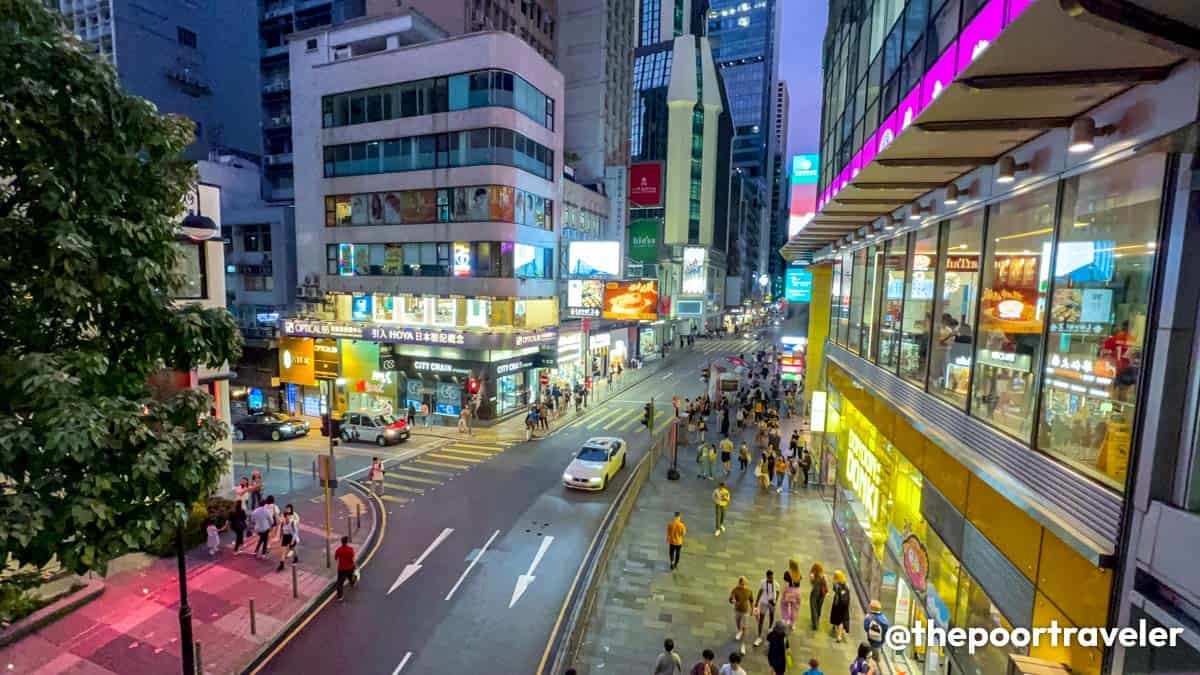
Central Hong KongTop 7 Usual Tourist MISTAKES in HONG KONG

  • Meals. To give you an idea and to make a comparison easily, let’s do the Big Mac test. Big Mac alone costs around HKD 28 (P200), but if you go for a full meal with fries and drink, it jumps to HKD 46 (P325). Meanwhile, their 2-piece chicken with fries and drink costs HKD 51.50 (P365).
  • Drinks/Beverages. Drinks aren’t cheap either. At a convenience store, a bottle of soda will cost around HKD 10.50 (P75), while a can of soda is slightly cheaper at HKD 8.50 (P60). As for bottled water, it can be anywhere from HKD 9-10 (P60-70), so be prepared to pay for hydration!
  • Accommodations. Mid-range hotels in the city center can go as high as P5000 per night, while budget options start from P3000 but tend to be farther from central attractions. If you’re staying closer to the city center, be ready for a more premium price tag, especially during peak travel seasons.
  • Attractions. If you plan to visit Disneyland, the basic entrance fee ranges from P4250 to P6066 per person, depending on the day and whether there are any promotions. Availing add-ons like early access would require a separate fee on top of the entrance fee.

NOTE: The HKD to PHP exchange rate used for this post is based on data from June 2025.


2. Picking the wrong area to stay.

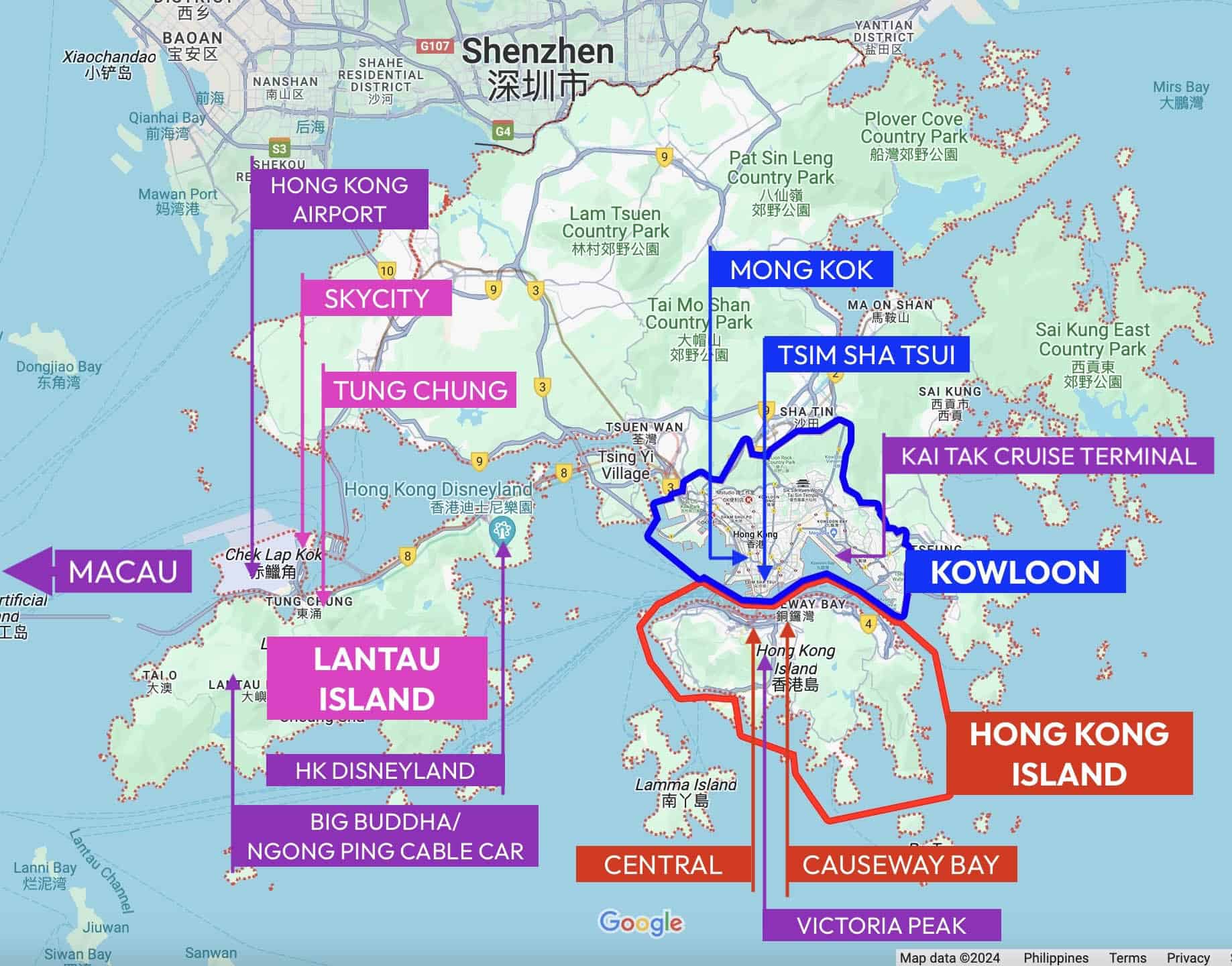
Hong Kong’s geography is unique and somewhat complicated. Attractions are spread out across different districts and even separate islands, so choosing the right place to stay is crucial. Picking a hotel in the right area can save you both time and money on transportation, making your trip much more convenient.

Hong Kong Tourism MapHong Kong Tourism Map

  • Lantau Island Area. If your itinerary focuses on Disneyland, Ngong Ping 360 Cable Car, or a day trip to Macau, it’s best to stay in Tung Chung or Hong Kong SkyCity. These areas provide easy access to Lantau Island’s major attractions, and many hotels offer free shuttle services to the airport and MTR stations. Staying in the city center, on the other hand, means longer commutes, which can be costly and time-consuming.
  • Shopping and Food Hubs. For those who love shopping and exploring night markets, Mong Kok is a great option. It’s home to some of Hong Kong’s most popular street markets, such as the Ladies Market and Sneaker Street. If food is a big part of your travel experience, Central and Sheung Wan are excellent choices. These areas are packed with authentic Hong Kong restaurants, local diners, and trendy cafés.
  • Affordable Accommodations. For budget-conscious travelers, Tsim Sha Tsui (TST) is worth considering. This district offers a mix of affordable and mid-range hotels while keeping you close to major attractions like the Avenue of Stars, Victoria Harbour, and Harbour City Mall.

The best area to stay really depends on your itinerary, but you can check out our Where to Stay in Hong Kong article for a more in-depth explanation.

For quick reference and recommendations, here are some of the top accommodations in Hong Kong based on online user reviews.

Search for more Hong Kong Hotels!

Hotel CodesHotel Codes

3. Expecting spacious rooms in the city center.

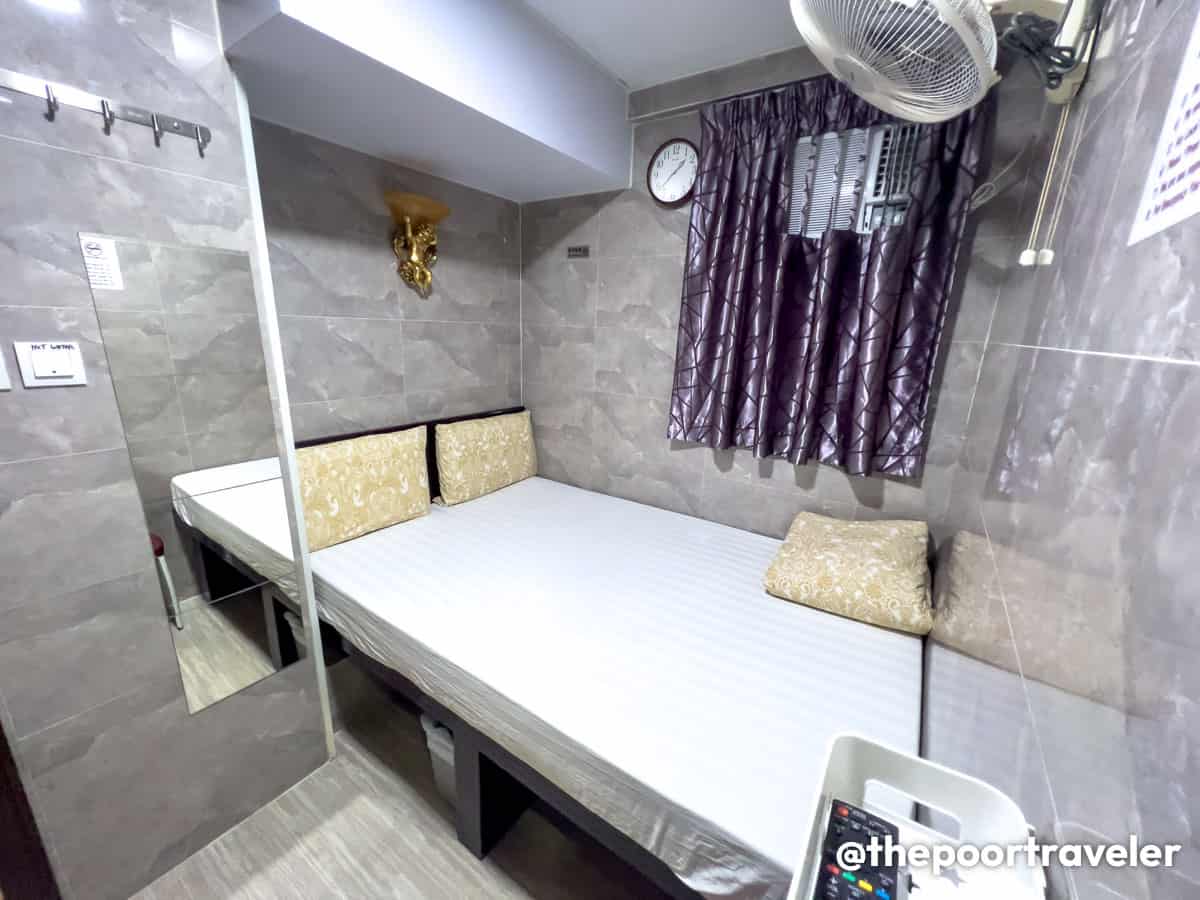
Hong Kong’s most urbanized areas — Kowloon Peninsula and Central on Hong Kong Island — are known for their limited space. Hotel rooms in these districts tend to be small and compact, with very little extra room to move around. While some hotels maximize their layouts with clever designs, most accommodations, especially budget guesthouses in places like Mirador Mansions or Chung King Mansion, can feel extremely cramped. In many cases, there isn’t even enough room to properly store luggage.

Victoria Inn Hong KongVictoria Inn Hong Kong
Victoria Inn at Mirador Mansion in Tsim Sha Tsui

If having more space is a priority, consider staying in other districts. The farther you go from the city center, the more spacious and affordable the accommodations tend to be. For example, while hotel rooms in Central are often quite small, nearby areas like Sheung Wan and Causeway Bay offer larger rooms at lower prices, providing a better balance between comfort and convenience.


4. Dismissing Central’s hilly terrain.

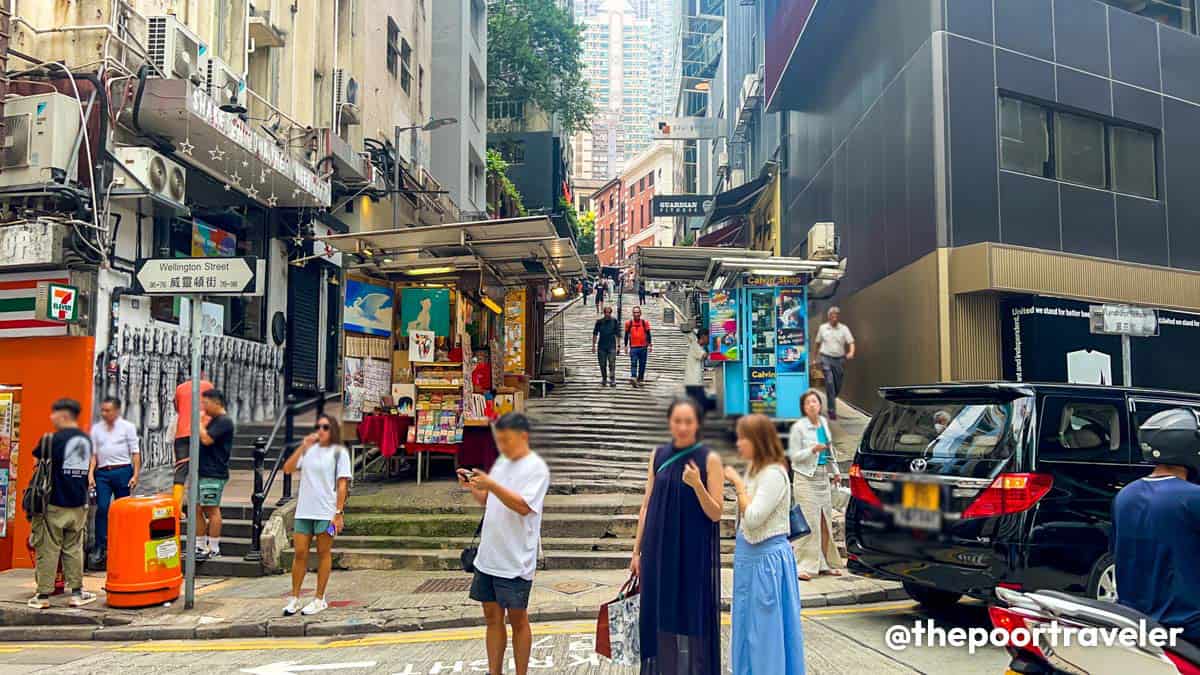
While Tsim Sha Tsui and Mong Kok are relatively flat, Central is more hilly, with many areas featuring steep inclines and stairs. This is why it’s home to the world’s longest outdoor covered escalator system — the Central Mid-level Escalators. However, not all areas have escalators, so getting around often involves uphill walks and numerous steps.

Central Hong Kong StairsCentral Hong Kong Stairs

This can be challenging if you’re traveling with seniors or those with mobility issues, as walking in Central can be more physically demanding. A good example is the route from Central Station to the Peak Tram, the starting point for Victoria Peak, which involves an uphill trek. Even when a destination seems close on the map, it’s often best to take public transportation to save energy and avoid unnecessary strain.


5. Leaving your passport at the hotel.

Some travelers prefer to leave their passports at the hotel, fearing they might get lost or damaged, especially in bad weather. However, in most countries, it’s best practice to carry your passport when you’re out. In Hong Kong, it’s especially important.

Stop-and-search procedures are common in Hong Kong, where police officers may approach individuals and request identification. For foreigners, this means presenting a passport. According to the official Hong Kong Police website, Section 17C states: “A police officer has power to inspect the proof of identity of any person. Any person who fails to produce this for inspection as required by the law will commit an offense.”

We’ve seen this firsthand while walking in Central, and we also experienced it ourselves. While at Tung Chung Station, returning from Disneyland, four police officers stopped us and asked for our passports. One officer entered our information into a device, two thoroughly searched our bags, and another questioned us about our purpose in the area, where we were from, and where we were headed. One of them was polite and even apologetic once it became clear we were just tourists.

To avoid any issues, always carry your passport while exploring Hong Kong. If you’re worried about it getting wet, store it in a waterproof case for protection.


6. Ignoring the weather.

Hong Kong is one of those destinations where the weather can significantly impact your experience. While this is true for many places, it’s especially noticeable here. Take Victoria Peak, for example. The panoramic view from the top is absolutely stunning on a clear day, making the tram ride up well worth it. However, on foggy days, you might see nothing but a wall of white, which can be disappointing if you came for the skyline. Although there are other attractions at the Peak, the main draw is the breathtaking view, and bad weather can completely change that.

Victoria Peak Different WeatherVictoria Peak Different Weather
One of the viewing spots at Victoria Peak: Foggy Day vs Clear Day.

The same goes for Disneyland. We’ve visited four times under different conditions — sunny, cloudy, and rainy — and the experience varies dramatically. While you can still enjoy the park in the rain, it’s not quite the same as a bright, sunny day when everything feels more magical.

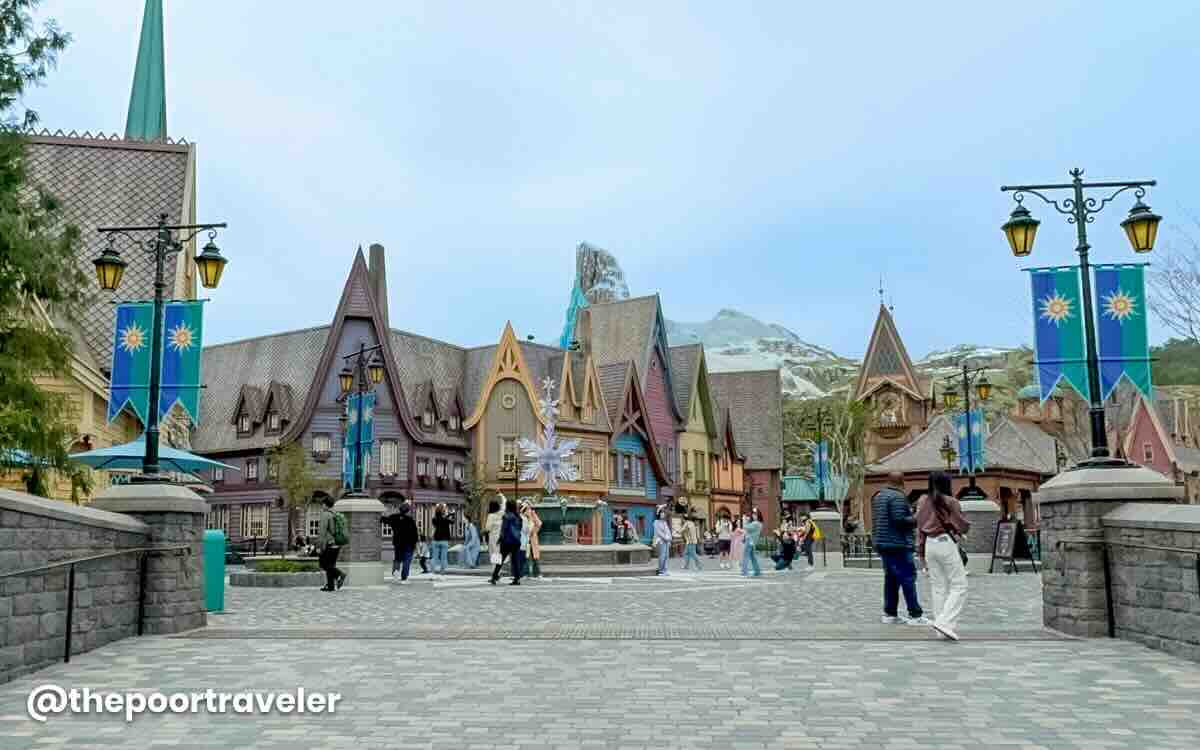
HK Disneyland World of FrozenHK Disneyland World of Frozen

To make the most of your trip, we recommend keeping your itinerary flexible. That way, if the weather doesn’t cooperate, you can adjust your plans and save weather-dependent attractions for a better day.


7. Forgetting to bring cash and get Octopus Card.

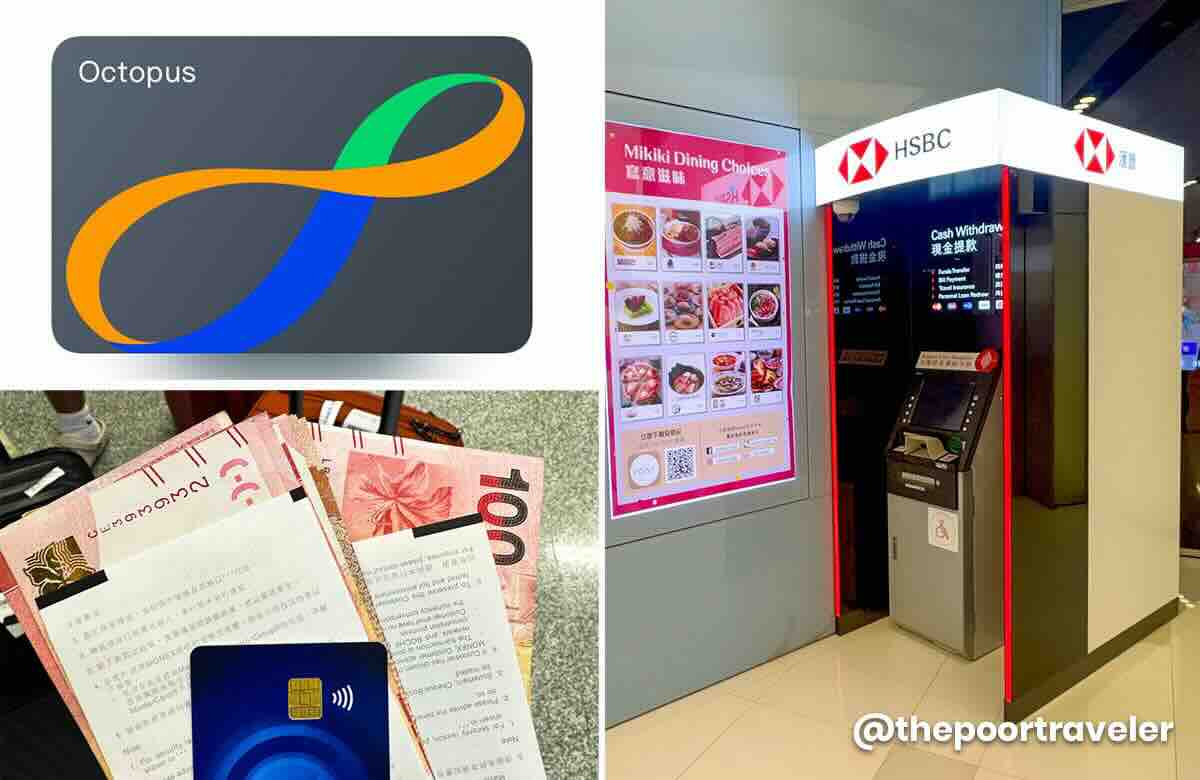
Hong Kong is rapidly transitioning into a cashless city, and the most useful tool for travelers here is the Octopus Card. It’s incredibly convenient. You can use it for MTR trains, buses, convenience stores, and even in many other establishments. There’s also a mobile version available through an app, but having a physical card is still the better option since it won’t run out of battery like your phone might.

Cash and Octopus Card Hong KongCash and Octopus Card Hong Kong

But, it’s still important to carry some cash. Many smaller shops and local eateries operate on a cash-only basis. Plus, as with any electronic system, technical issues can sometimes occur, and it’s always good to have a backup. If your Octopus Card runs out of credit, keep in mind that some top-up locations only accept cash, so having some Hong Kong dollars on hand will ensure you don’t get stuck.


Have Peace of Mind While Traveling!

Getting a travel insurance is optional, but we highly recommend this, especially when traveling abroad. Travel can be unpredictable, and though we hope we’ll never use it, having it gives us peace of mind in case of unexpected delays, cancellations, or emergencies.

For international destinations, consider PGA Sompo’s TravelJOY Plus insurance. You can GET IT HERE. Don’t forget to use WORTHIT for a special affordable rate.

TravelJoy PGA Sompo Code 2025TravelJoy PGA Sompo Code 2025


Updates Log

2025 6 5 – First uploaded


Source link

How Filipinos Can Travel Europe by Train With a Eurail Pass

0


Ever wondered how it feels to explore Europe hassle-free? Imagine waking up in Paris and enjoying a slow morning with croissants. Then hop on a train to spend a couple of days in Rome, tasting real pizza. Later, make your way to Munich for a relaxed evening with a cold beer. Sounds like a dream, right? But here’s a doable way to see Europe even if you’re traveling on a Philippine passport. Is Eurail Pass worth it?

Woman smiling while seated inside a double-decker train

It’s also a perfect chance to learn a new language. You can transform your train seat into a DIY mobile office. Train travel gives you space and time to be productive, curious, and connected. All while crossing borders with ease.

If you’re just starting out or curious about becoming a full-time remote traveler, check out my eBook The A-Z on Becoming a Digital Nomad. It’s packed with tips, tools, and real advice from my years of travel!

Let me show you how to travel across Europe for 30 days by local trains using the Eurail Global Pass, it is truly worth your money and time! You’ll also learn how to apply for a Schengen visa via the French Embassy. There’s a route that includes France, Italy, Germany, Spain, Austria, the Netherlands, and Luxembourg. There are also side trips to Romania, Bosnia, Switzerland, Norway, Sweden, Denmark, Finland, Portugal, Ireland, and Belgium.

Step 1: Start with the Schengen Visa — Apply via the French Embassy

Planning to begin your trip in Paris? Then, apply for your Schengen visa through the French Embassy. This visa is a must for traveling within most of Europe. Getting it early will save you stress.

Prepare your passport. It must be valid for at least three months beyond your trip. You also need round-trip flight tickets, hotel bookings, and a travel itinerary. Don’t forget to get travel insurance. It should have at least €30,000 in coverage. SafetyWing is a great option for digital nomads. You can also look into other travel health insurance providers for longer stays.

You’ll also need proof of funds. This could be your bank statements, payslips, or screenshots of your online income. Make sure to explain everything clearly. Your cover letter should state that you’re working remotely while traveling. You must also show ties to the Philippines. Examples include business permits, property titles, or an employment contract.

Book your visa appointment through France-Visas. Submit your documents via VFS Global. Apply at least one month before your trip. If you freelance or own a business, display your business permits and recent client work. You can also include PayPal or TransferWise records. For lodging, go for refundable options like those on Booking.com.

The visa fee is around €80 or PHP 4,800. Processing takes 15 to 30 days. In your cover letter, explain that France is your “main destination.” Say it’s where you’ll enter, exit, or spend most of your time.

Step 2: Buy the Eurail Global Pass (30 Days)

After you secure your visa, buy your Eurail Global Pass. It gives you access to trains in 33 countries for 30 straight days. This is ideal if you love freedom and spontaneity. You won’t need separate train tickets. Just hop on and go.

Some high-speed and scenic trains like the Bernina Express require seat reservations. Reservation fees can range from €10 to €35. The Eurail app makes booking easy.

You’ll need to choose between a 1st class pass or 2nd class. A first class pass costs more but gives you wider seats, fewer people, and more quiet time. A second class pass is cheaper and still very comfortable. Either option lets you ride most regional trains, specific trains, and even some trams.

The 30-day continuous pass is best for Filipinos visiting multiple countries. You can also consider the Interrail Pass if you are an EU resident or the One Country Pass if you’re only visiting one country.

Buy your pass at www.eurail.com. Activate it digitally with the app. The app helps you find train times and book seats. It also tracks your travel days. Bring small comforts like a portable neck fan to stay cool and relaxed while traveling.

Watch for point-to-point ticket prices if you’re only riding a few times. Sometimes, it can be cheaper than the rail pass. But if you plan to travel often and spontaneously, the pass offers better value.

Sample 30-Day Europe by Train Itinerary for Filipinos

Here’s a sample route I used. It blends fast-paced city visits with slow travel. You’ll cover France, Italy, Austria, Germany, the Netherlands, Luxembourg, and Spain.

Day 1–5: Paris, France

Arrive in Paris and activate your Eurail pass. Visit the Eiffel Tower, Montmartre, and the Louvre. Take a Seine river cruise. Try coworking at Anticafé or Hubsy Arts et Métiers. Budget stays cost around €40–60 a night. Coworking passes are about €5–10.

Day 6–9: Milan & Venice, Italy

Take the high-speed train from Paris to Milan. The ride takes about 7 hours. Spend 1–2 days in Milan. Then take a 2.5-hour train to Venice. The canals are picture-perfect. Reserve seats on high-speed trains (€10–15). Stay in Venice Mestre for cheaper lodging.

Day 10–13: Vienna & Salzburg, Austria

Ride from Venice to Vienna. It takes about 7 hours. Vienna is full of culture, coffee, and calm. Visit Salzburg for a day or overnight. It’s Mozart’s hometown and the setting of The Sound of Music. Try coworking at Impact Hub Vienna or Das Packhaus.

Day 14–17: Munich & Berlin, Germany

Go from Vienna to Munich in 4 hours. Then travel another 4 hours to Berlin. Munich has beer gardens and old-world charm. Berlin feels more modern and tech-friendly. Most ICE trains don’t need seat reservations. For work, check out Betahaus or Mindspace.

Day 18–21: Amsterdam, Netherlands

Take the train to Amsterdam. It takes about 6 hours from Berlin. Amsterdam is easygoing and fun. You can also stay nearby in Utrecht or Haarlem. That helps you save on hotels. Use Yesim (Code: KATRIN8414) to stay online as you move.

Day 22–23: Luxembourg

Travel from Amsterdam to Luxembourg in about 5 hours. It’s a small but lovely place to explore in two days. Public transport is free nationwide.

Day 24–28: Barcelona & Madrid, Spain

Take a long trip from Luxembourg to Barcelona, with a stop in Paris. The total ride is about 10 hours. Spain is affordable and full of flavor. After Barcelona, head to Madrid. Flamenco, tapas, and museums await. Reserve seats on Spanish trains (€10–20). Try coworking at La Vaca or Impact Hub.

Day 29–30: Return to Paris, France

Take the direct train to Paris. The ride is about 9 hours. Enjoy your last moments with a museum visit or picnic near the Eiffel Tower.

If you still have time, consider a side trip to Prague, Budapest, or even Bulgaria. These cities are train-accessible and rich in culture.

Woman in a floral jacket under Eiffel Tower

Practical Tips for Filipino Digital Nomads

  • Pack light. Bring a carry-on and a small day bag.
  • Coworking hubs are everywhere. They offer day passes and a good place to work.
  • Use the Eurail app. It shows schedules and lets you manage seat bookings.
  • Create content along the way. Blog, vlog, or post to document your trip.
  • Watch your belongings. Stick to daytime trains when you can.
  • Don’t forget to greet or ask help from a conductor if you’re confused about platforms or specific trains.

Why Train Travel Works for Filipino Digital Nomads

Trains drop you in city centers. You skip airports and long lines. Trains are also eco-friendly. They let you enjoy Europe’s views while moving. Missed a train? No worries. Just catch the next one.

Exploring Europe on a Philippine passport is possible. It’s also exciting and freeing. The Eurail Global Pass makes it simple. No need to book each ride. Just go where you want, when you want. If you’re still wondering Is Eurail Pass Worth it, this freedom and flexibility make it a big yes.

So pack your bags. Get your visa. Buy your Eurail pass. Your European train adventure is waiting. And remember to bring your travel health insurance. It keeps you covered for the unexpected.

Follow more of my adventures on Instagram @kach.umandap.

FAQ

Can Filipinos use the Eurail Pass?

Yes, Filipinos can buy and use the Eurail Global Pass. It is valid for non-European residents.

Is the Eurail Pass worth it?

If you plan to visit multiple countries within a short time, yes. It saves time and money compared to buying individual tickets.

Can I work online while traveling by train?

Yes! Many trains have Wi-Fi and power outlets. You can turn your seat into a DIY mobile office.


Source link

The Oyster Cart Founder Adam Loo on Singapore’s Favourite Fresh Oyster Experience

0


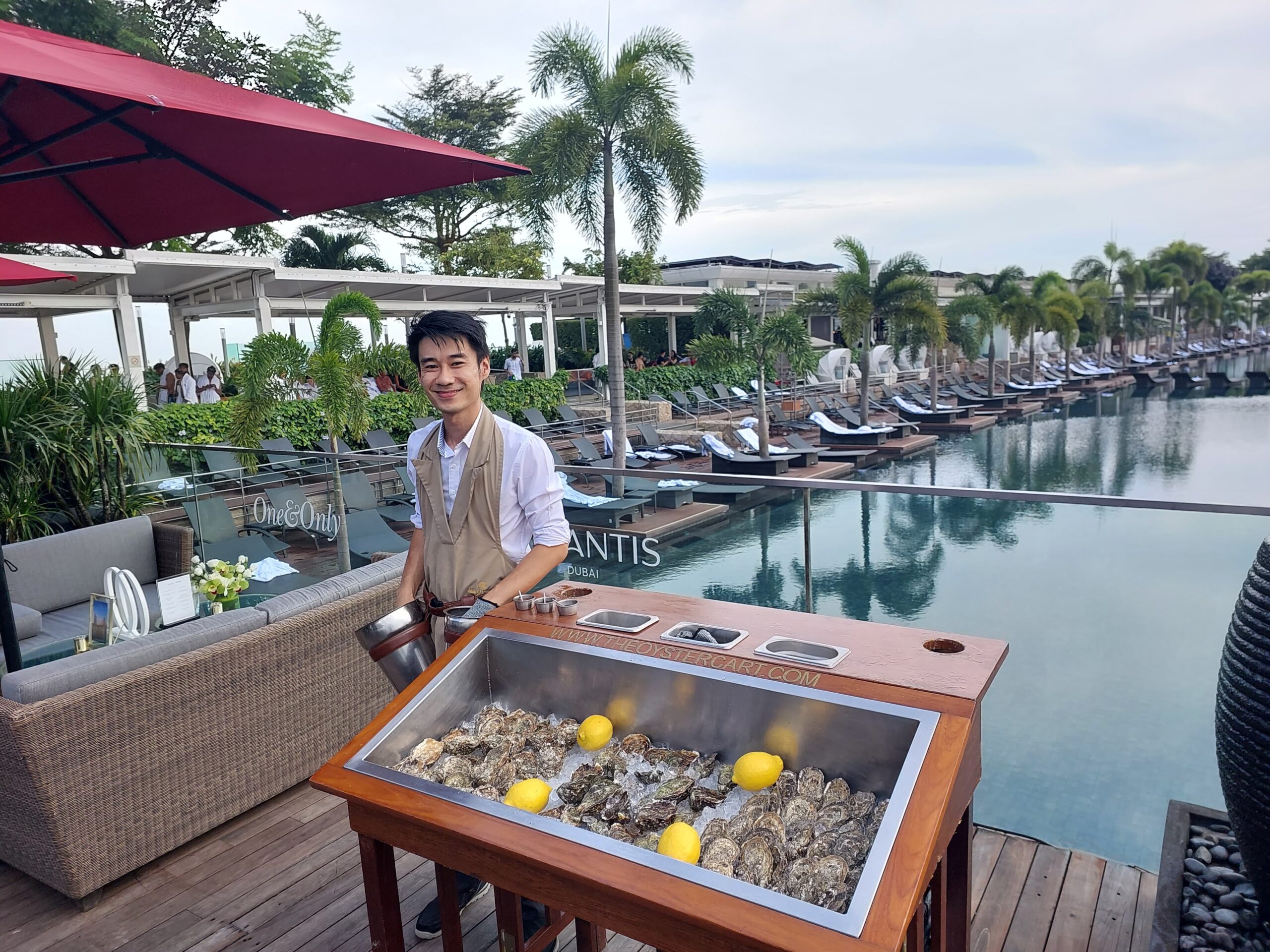
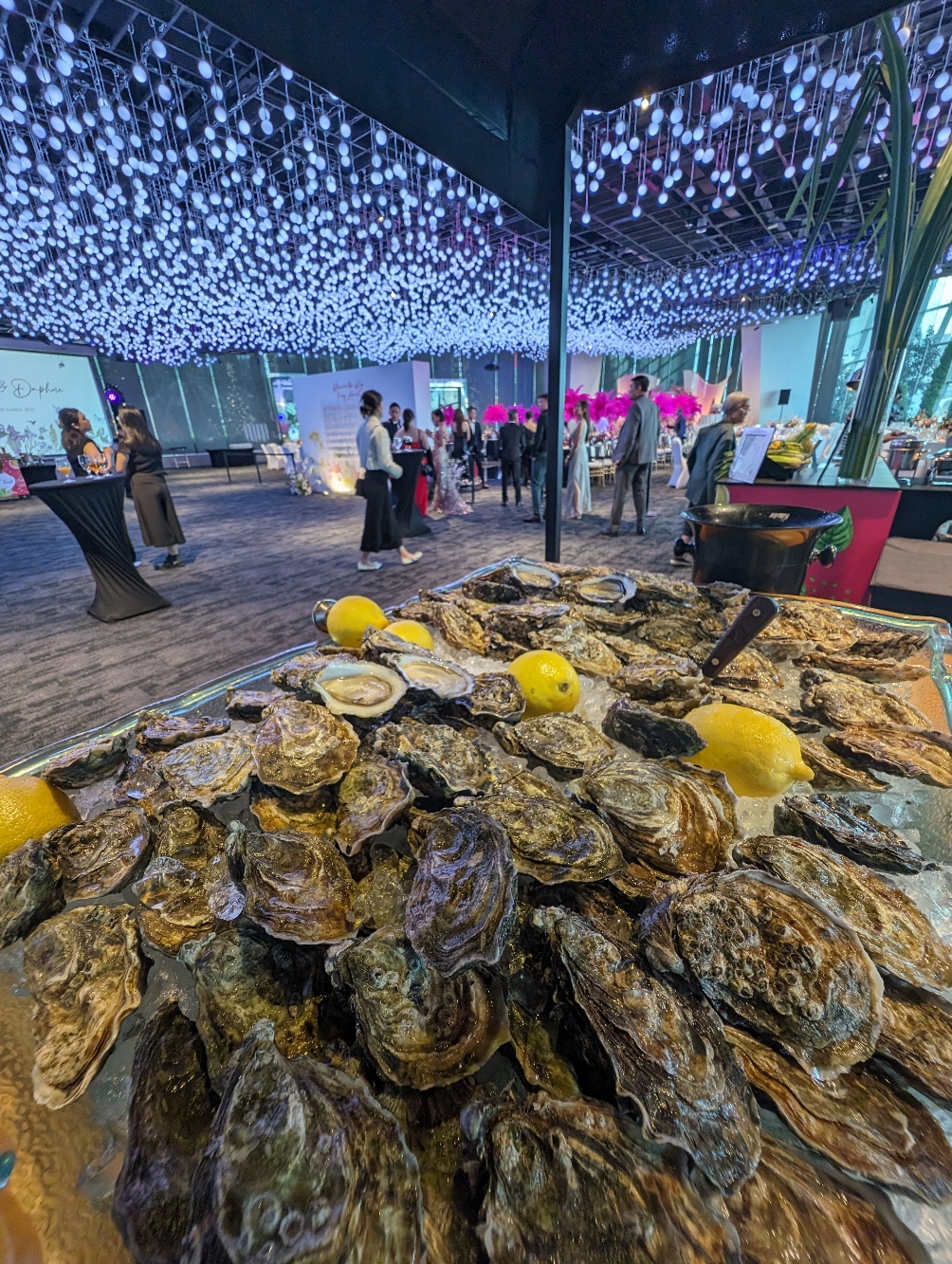
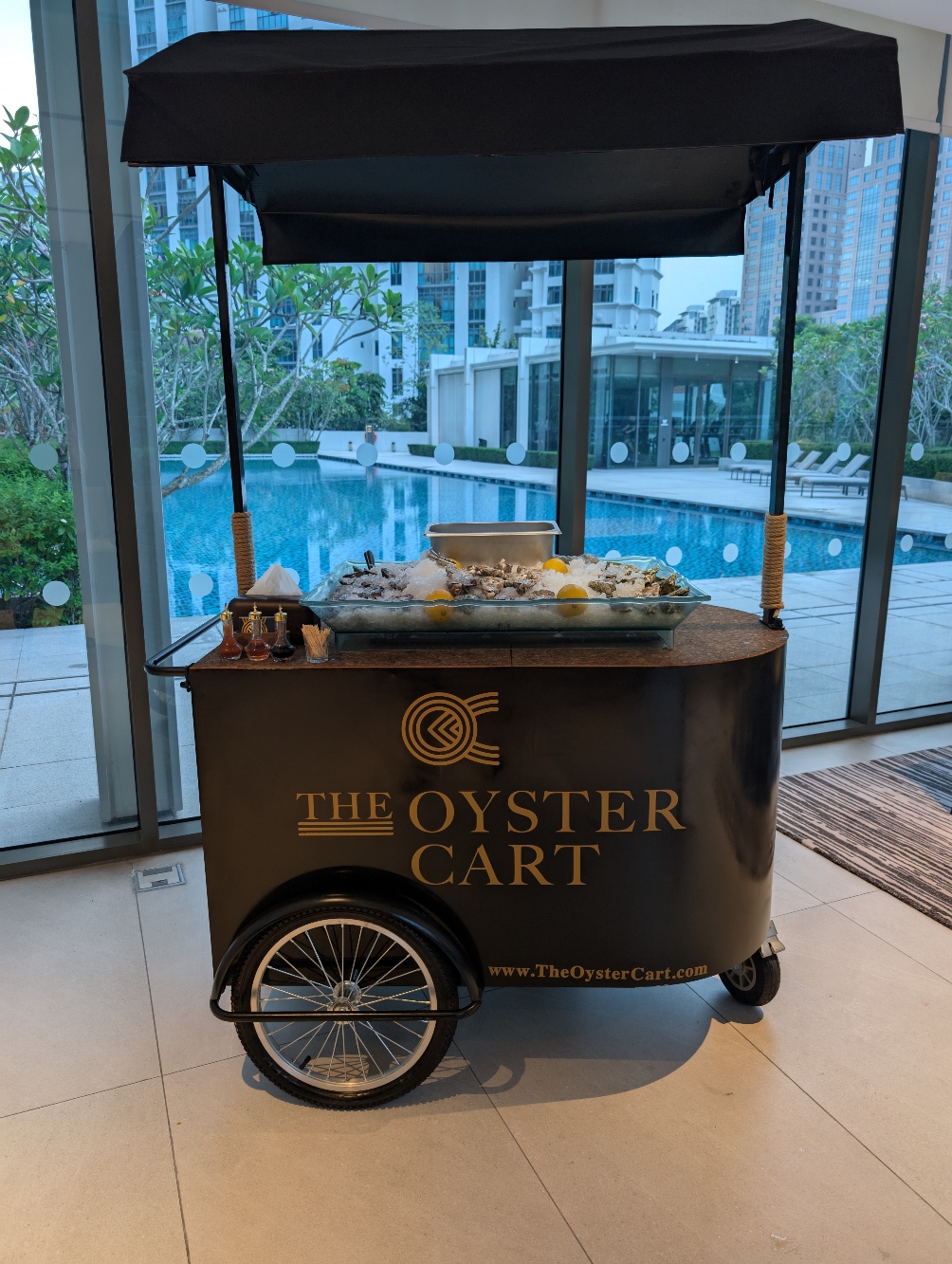
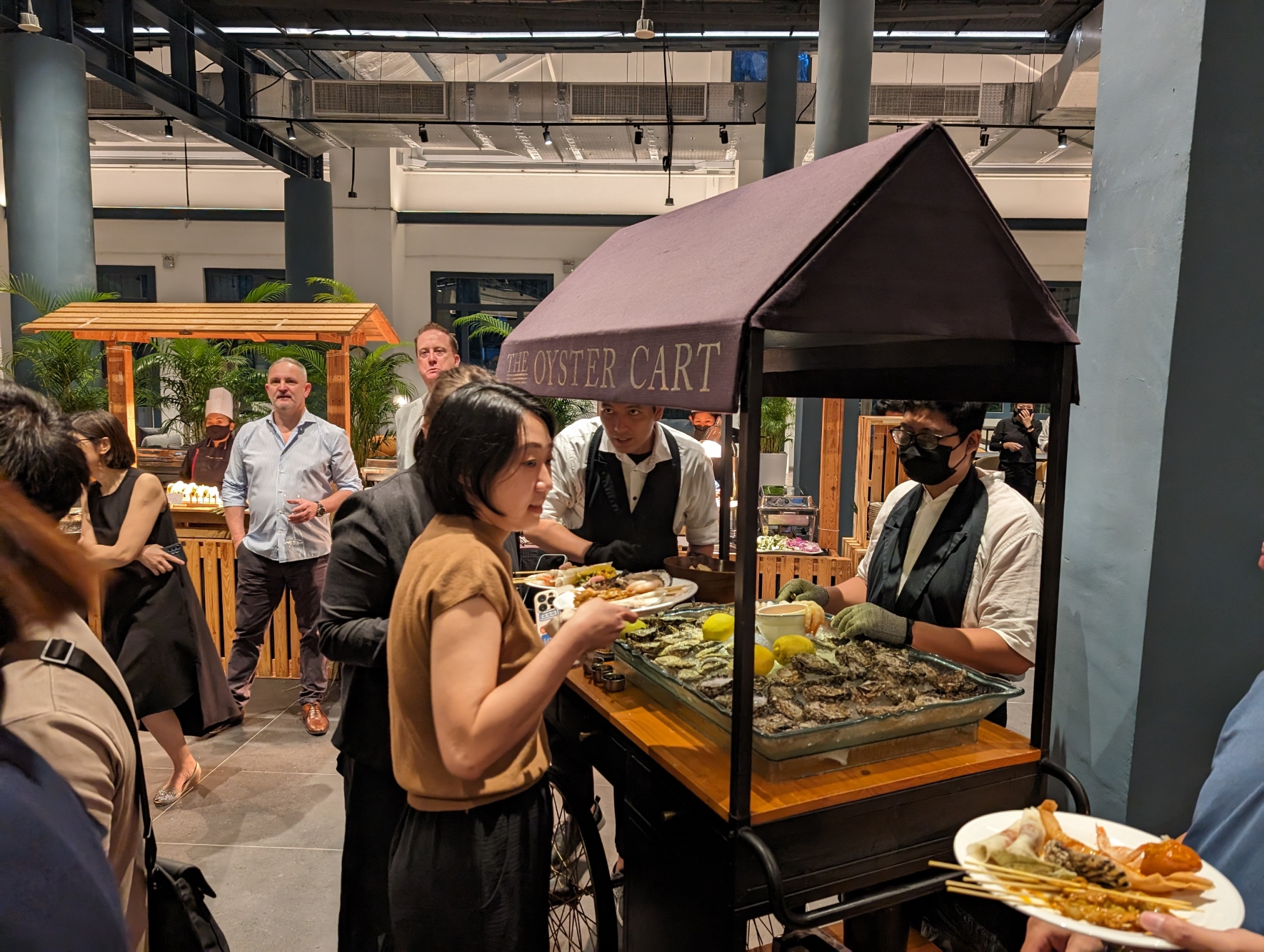
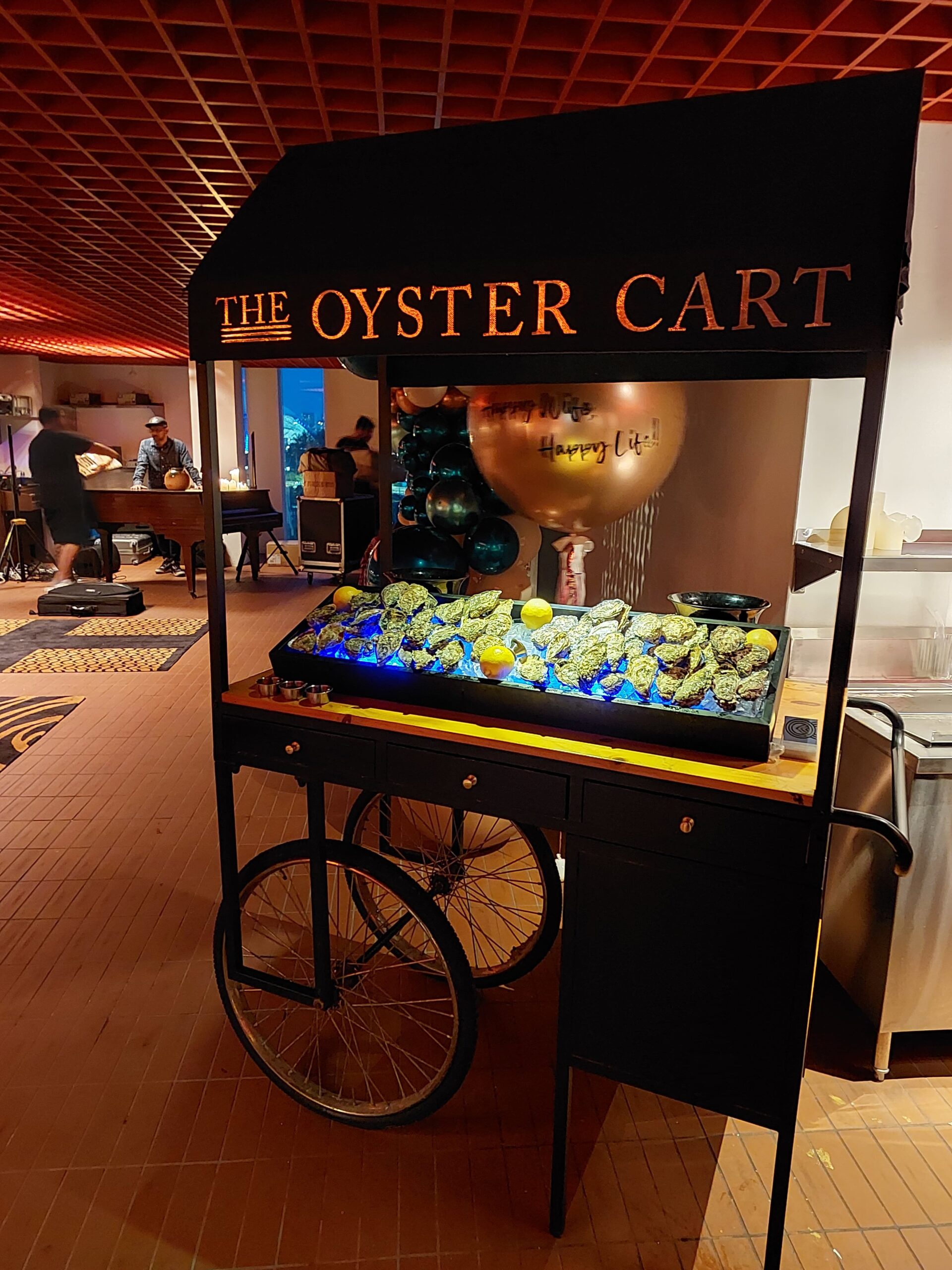
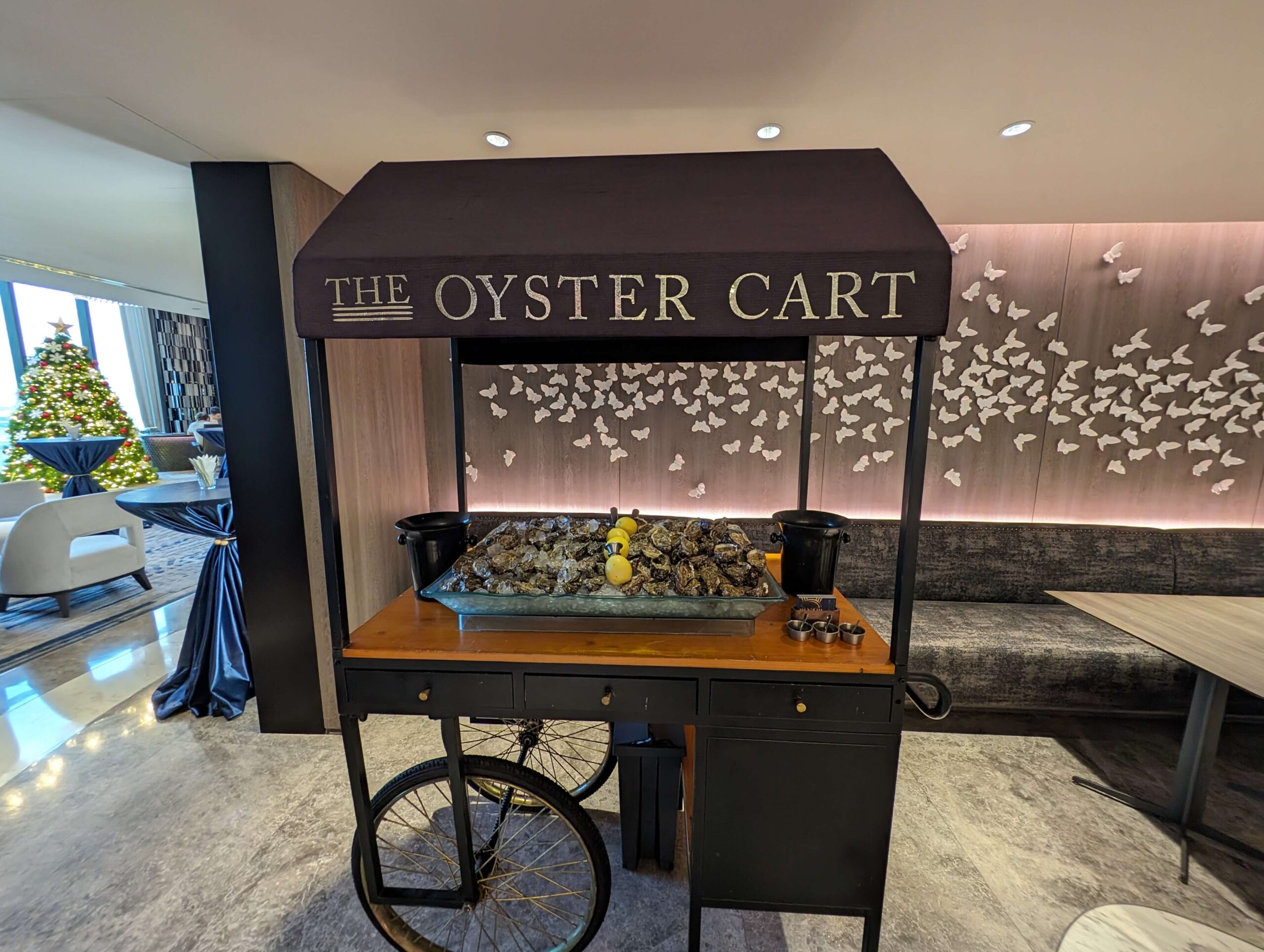
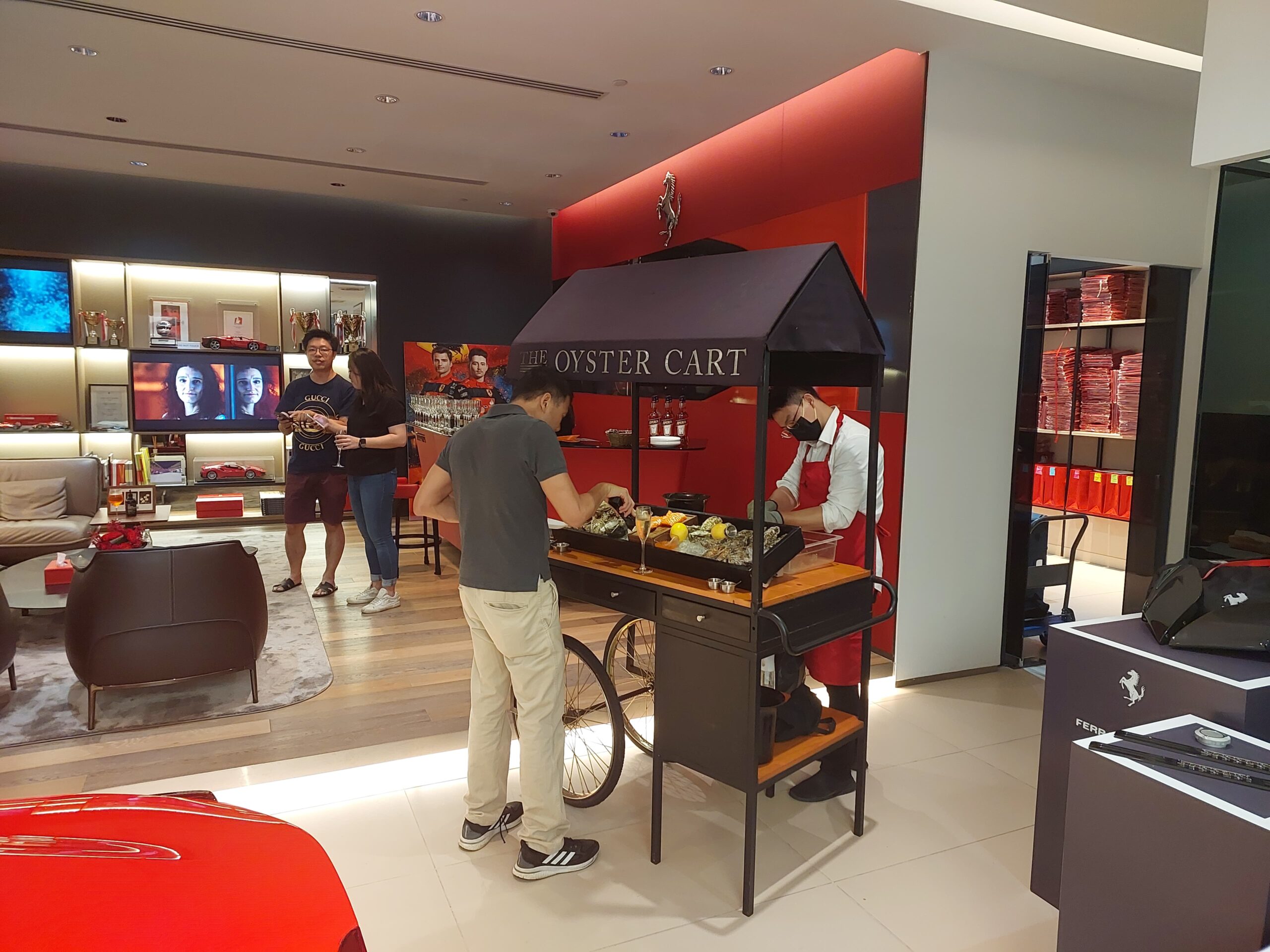
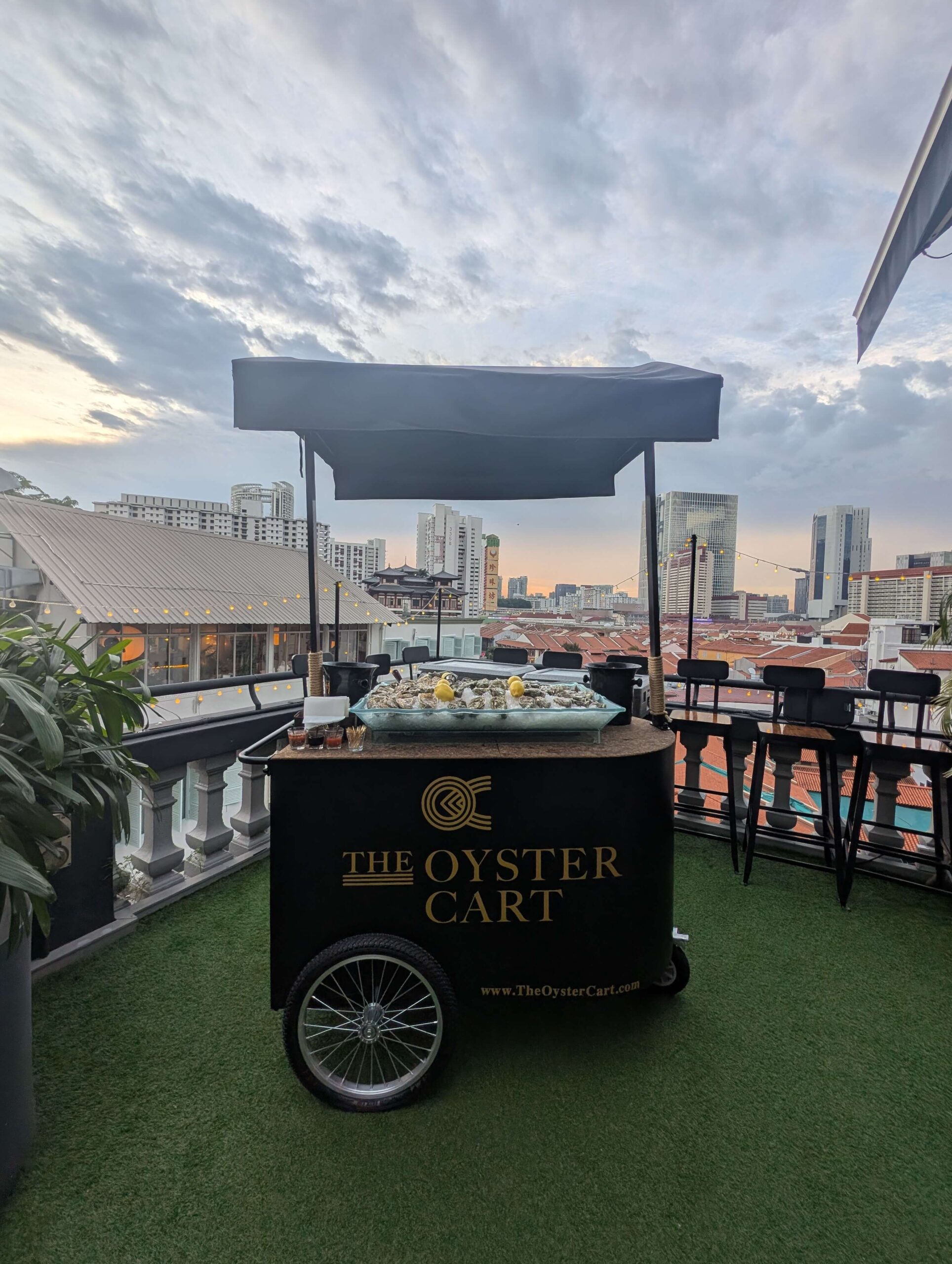
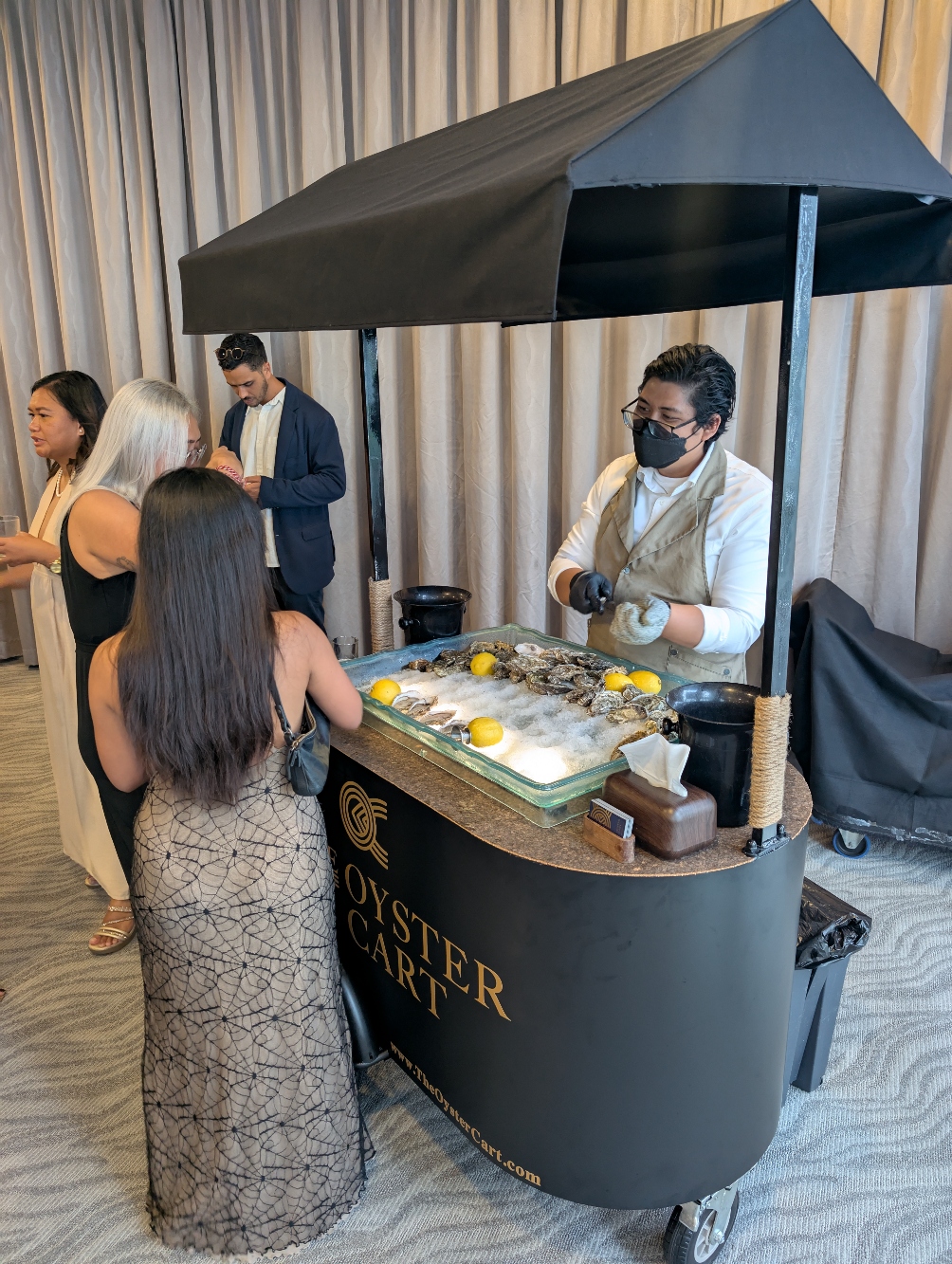
The Oyster Cart has been one of the leading purveyors of on-site oyster shucking and delivery services since 2013. The Oyster Cart caters to a range of events — from intimate at-home dinner parties to conference events with attendees that run into the thousands. The Oyster Cart aims to deliver a unique event experience that guests won’t soon forget by offering only the finest and freshest oysters for a fuss-free indulgence, paired with a service standard that is inimitable. Founder Adam Loo shares the story behind this unique concept, the brand’s commitment to freshness and sustainability and what lies ahead for this beloved purveyor of premium oysters.

As a Singapore-based brand, what inspired the creation of The Oyster Cart

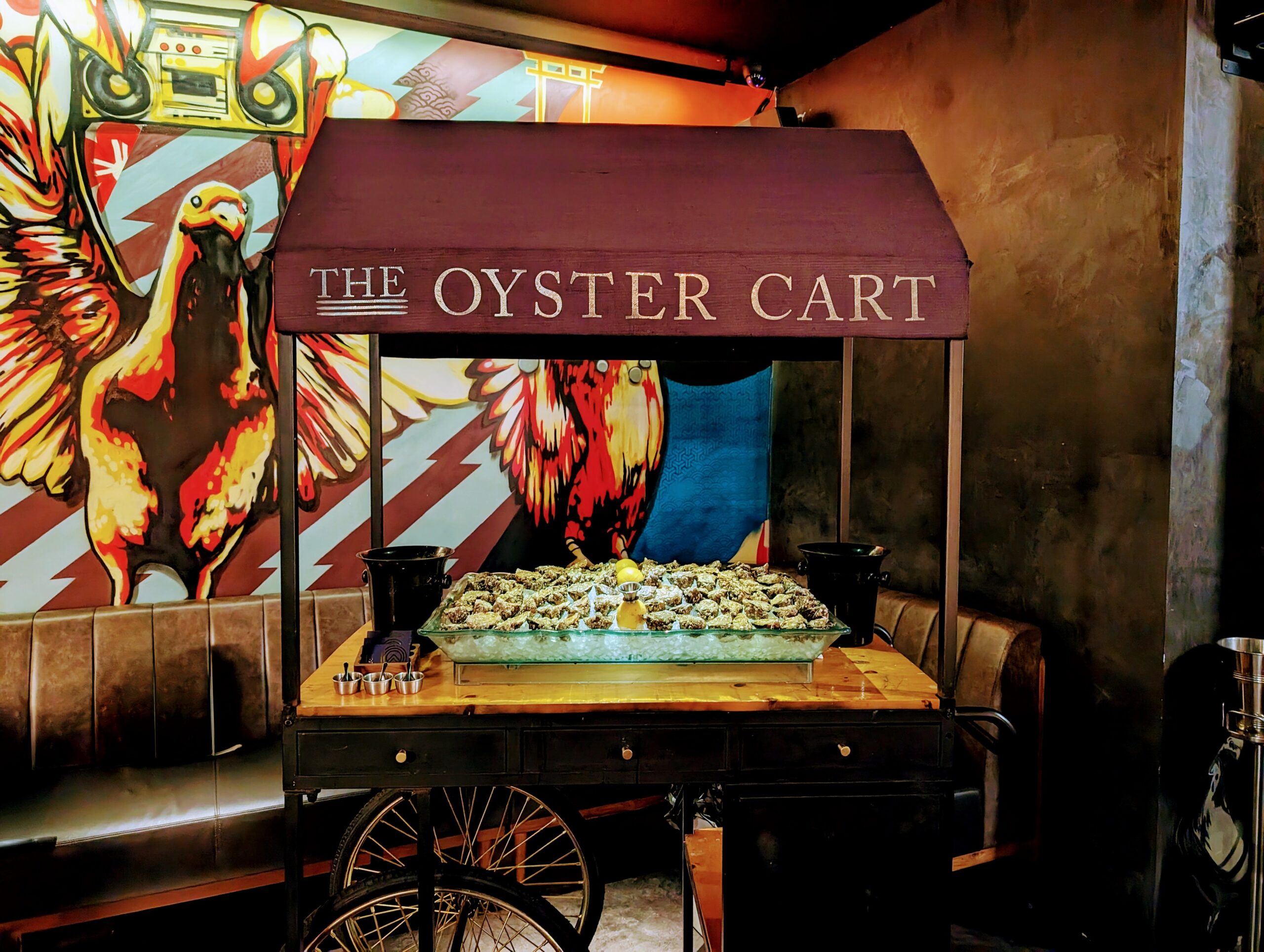
The Oyster Cart began with a simple idea: to bring fresh oysters and an unforgettable experience straight to people — wherever they were. Back in 2013, live oyster shucking at private events was virtually unheard of in Singapore. I started with a small pushcart, retrofitting an IKEA trolley into a mobile oyster station.

The inspiration came during a backpacking trip through Europe, where I saw vendors paddling oysters from carts along the streets. That image stuck with me, and when I returned, I decided to recreate that magic here — and name the company The Oyster Cart.

Starting out was a mix of fun and hustle. I cycled around neighbourhoods, handing out flyers and introducing the concept. What began as a side hustle has grown into a full-time pursuit — bringing oysters to events, offering same-day delivery, and now hosting dine-in experiences.

What are the main types of oysters found in nature?

There are five main oyster species commonly consumed worldwide: Crassostrea gigas (Pacific), Crassostrea virginica (Eastern), Ostrea edulis (European Flat), Crassostrea sikamea (Kumamoto), and Ostrea lurida (Olympia). Each species brings unique textures and flavours, which vary even further depending on their environment — much like wine grapes expressing terroir.

Where do oysters get their flavour or “merroir” from?

Oysters take on the characteristics of their growing environment — salinity, mineral content, water temperature, algae, and tidal movement. This distinct flavour profile is called merroir — the marine equivalent of terroir. That’s why the same species can taste completely different when grown in France, Japan, or Ireland.

What types of oysters are most commonly used by The Oyster Cart?

We predominantly serve Crassostrea gigas (Pacific oysters) from France and Ireland, selected for their versatility, clean finish, and broad flavour appeal. For discerning clients, we occasionally feature Ostrea edulis (European Flats), prized for their bold brininess and deeper complexity. Seasonal varieties are also rotated throughout the year to highlight unique merroirs and farming practices from around the world.

Our selection isn’t based solely on origin or species — it’s also shaped by continuous feedback from our customers. Many of them have exceptionally refined palates, and their preferences play a key role in guiding our curation. In that sense, the oysters we serve are not only a reflection of the farms we trust, but also of our clients’ exquisite taste.

Importantly, we never use frozen oysters. A good oyster should always be served live. Freshness is non-negotiable — and it’s a standard we uphold in every piece we serve.

How long can oysters remain fresh after harvesting?

Live oysters can stay fresh for up to seven days from harvest when stored properly in a cool, humid environment. Once shucked, freshness depends on technique. A properly shucked oyster — with the shell intact, meat unpunctured, and brine retained — is best consumed within 3 to 4 hours. That’s why we always shuck to order, even for deliveries.

What are the nutritional benefits of eating oysters?

Absolutely. Oysters are incredibly nutrient-dense. They’re low in calories and high in protein, zinc, vitamin B12, iron, and omega-3 fatty acids. They’ve earned their reputation as a superfood — delivering indulgence and health benefits in one shell.

How would you describe the flavour profile of an oyster? What tasting notes should one expect?

A great oyster starts with a clean burst of ocean brine, followed by layers of flavour — sweetness, nuttiness, minerality, or even hints of cucumber or melon, depending on its origin. Texture matters too — from plump and creamy to crisp and snappy. Every oyster is a little snapshot of the sea it came from.

How do you maintain consistent quality standards at The Oyster Cart?

We work exclusively with farms that have excellent safety records and traceability. We also prefer partnering with family-owned farms that take pride in the oysters they produce. Every batch is inspected upon arrival, and our team is rigorously trained in hygiene, cold-chain management, and professional shucking. For shucked oysters, we’re uncompromising — if something isn’t perfect, we discard it. We only serve oysters we’re proud to put our name on.

Is there an ideal method or etiquette when it comes to eating oysters?

Raw, freshly shucked, and ideally unadorned — perhaps with a touch of lemon or a splash of mignonette. But we always encourage our guests to try the first oyster plain, to appreciate its pure flavour. And always chew — slurping is only half the story; chewing unlocks the oyster’s full character.

Which beverage do you believe best complements the flavours of oysters — a crisp white, sake, or perhaps Champagne?

Champagne is the timeless classic — its acidity and bubbles beautifully complement an oyster’s richness. That said, a crisp Muscadet or a dry Junmai Ginjo sake can also pair exquisitely, depending on the oyster and the mood. It’s all about balance and harmony.

Given that your oysters are sourced from Europe, how do you uphold sustainability and biodiversity throughout your supply chain?

We work with farms that practise responsible aquaculture — no chemical feeds, minimal ecological disruption, and strong commitments to biodiversity. Oysters themselves are regenerative filter feeders: they clean the water and help restore marine ecosystems. For us, sustainability isn’t a trend — it’s the foundation of what we do.

Looking ahead five years, where do you see The Oyster Cart, and what key milestones do you plan to reach?

We’re aiming to grow beyond Singapore through strategic regional partnerships. At the same time, we’re developing more oyster appreciation experiences — like guided tastings and pairing sessions — to help people better understand merroir, seasonality, and the craftsmanship of shucking. Our goal is to build a deeper connection between people and the story behind every oyster.

Tell us more about your online oyster ordering service available to customers in Singapore.

Yes! Our website makes it easy to pre-order oysters for same-day or next-day delivery, or self-collection. Each order is freshly shucked just before dispatch, carefully packed, and delivered chilled — ready to enjoy. Whether it’s for a celebration or just a quiet indulgence, we make oyster enjoyment seamless, fresh, and fuss-free.

Which oyster variety is your personal favourite?

That’s like choosing a favourite child — but if I had to name one, it would be Louët-Feisser oysters from Carlingford, Ireland. They strike a perfect balance of salt and sweetness, with a nuttiness and that signature adductor crunch I personally love. Elegant, consistent, and deeply satisfying.

If you could name one mentor who has shaped your career, who would it be?

Mr. Robin Pho — a mentor whose heart is truly bigger than the ocean. His generosity, environmental leadership, and commitment to uplifting the community have left a lasting impression on me. He’s offered invaluable advice and opened many doors over the years. I deeply respect his values, both in business and in life.

For more on the latest in leader interviews and reads, click here.


Source link

15 Best Things to Do in Seattle (Must-See Places)

0


Known as the Emerald City, Seattle just might be the most scenic metropolitan area in the United States. The largest city in the Pacific Northwest offers visitors endless things to see and do. This is one of my favourite places to visit in the USA.

Seattle is surrounded by evergreen forests, mountains, and water. Even if you’re just in Seattle for a weekend trip, it’s enough time to enjoy many of the attractions in nature or in the city. There’s no shortage of great places to visit in Seattle.

I’ve been to cities all over my home country from coast to coast (including Denver, Detroit, Austin, Asheville, Boston, New Orleans and many more), and after living in Seattle for two months and visiting numerous times, the Emerald City is definitely among the best places to visit in the states.

In this guide, I’ll introduce some of the top things to do in Seattle along with lots of practical info to help you plan a great trip.

About Seattle, Washington

Space Needle in Seattle on a weekend tripSpace Needle in Seattle on a weekend trip

Seattle is located between Puget Sound and Lake Washington and has the Olympic Mountains to the west and Cascades to the east, making for some postcard-worthy scenery around every corner.

Unfortunately, it’s true that it rains quite often here. Don’t let it rain on your parade, though — there are tons of great museums and other indoor activities to keep you busy when it gets a bit wet. There are plenty of things to do in Seattle when it rains.

Seattle is also well-known for its music and sports. The grunge era started here with bands like Pearl Jam and Nirvana, and it’s now a hub for indie music and underground hip-hop.

Seattle sports fans are some of the loudest in the country as they show their unwavering support for teams like the Seahawks and Sounders. It really is amazing how you can enjoy all the amenities of a big city and yet so easily get out in nature.

15 Best Things To Do in Seattle

Here’s my list of the top 15 things to do and places to visit in Seattle. After living in the city for over 2 months and visiting there many times over the years, I’ve narrowed down my top picks for the best Seattle attractions.

1. See the Space Needle

Seattle Space Needle and the city skylineSeattle Space Needle and the city skyline

Without a doubt, the most iconic landmark in Seattle is the Space Needle. Built for the 1962 edition of the World’s Fair, it has been a fixture in the city’s skyline ever since.

The observation deck is 520 feet (158 meters) tall, so you get to enjoy 360-degree panoramic views. On a clear day, you can see the entire city along with natural wonders such as Lake Union and Mt. Rainier. Checking out this view is a must do in Seattle, and I can’t tell you how many times I visited during my time living there.

While the Space Needle has always been one of the top places to visit in Seattle, it’s even cooler now thanks to some serious renovations.

A recent multimillion dollar upgrade added the classy lounge The Loupe, the first rotating glass floor in the world. They also added wall-to-ceiling glass and the new Skyrisers, which are tilting glass benches that provide for some unreal views of the city.

The Space Needle is open daily from 8 AM-midnight, with the last entry at 11:15. Tickets range from $37-$70 for adults, tickets depend on which package you book. This is one of the best places to visit in Seattle and is included in the Seattle CityPass. See the Space Needle and the Chihuly Garden together with this ticket.

Address: 400 Broad St, Seattle, WA 98109, United States

2. Check Out the Seattle Center

This is a photo of Seattle City Center from above at dusk.This is a photo of Seattle City Center from above at dusk.

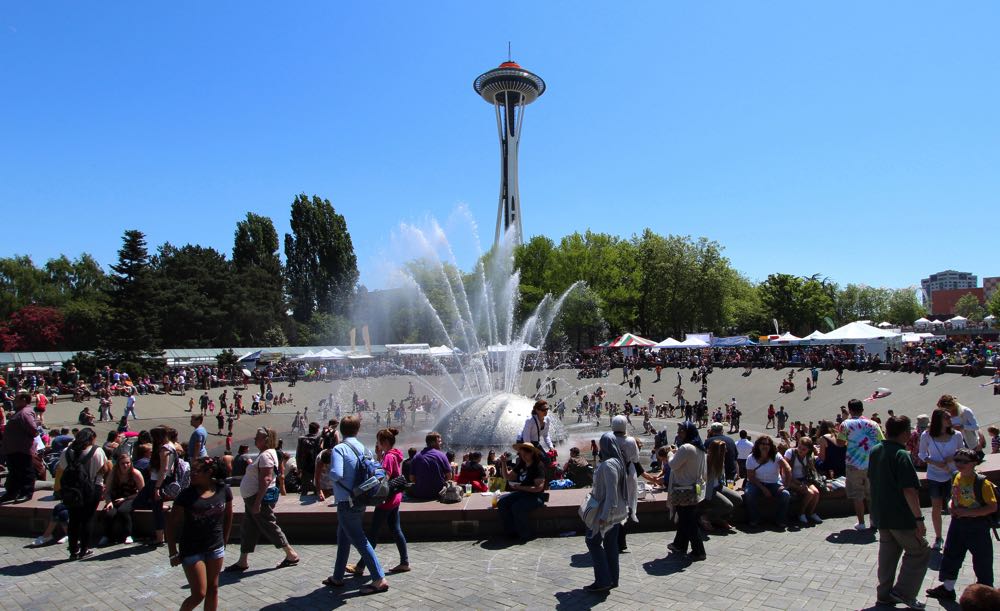
The Space Needle is just one part of the massive Seattle Center. This hub of education, art, and entertainment has so much going on that you could easily spend an entire day here and still not do it all.

One of the top Seattle attractions you’ll find here is the International Fountain. At different points throughout the day, the fountain is synchronized to music, making for a great show that’s fun for all ages. 

The Seattle Center is also home to Artists at Play — a funky playground designed by artists. There’s a climbing tower, labyrinth, carousel, and much more here. This is one of the best free things to do in Seattle and one of the first places I’d bring visitors while showing them around.  

There’s much more to see and do here, including several different museums. Don’t miss the excellent Bill & Melinda Gates Foundation Discovery Center. They run free group tours from Tuesday-Saturday at 2:00 PM and it’s always free to visit.

In addition to all the different attractions here, the Seattle Center also hosts thousands of events and programs throughout the year. Concerts, fitness classes, movies, festivals, and more are on tap here. Be sure to check their event calendar to see what’s going on.

Address: 305 Harrison St, Seattle, WA 98109, United States

3. See Chihuly Garden

Chihuly Garden, a top Seattle attractionChihuly Garden, a top Seattle attraction

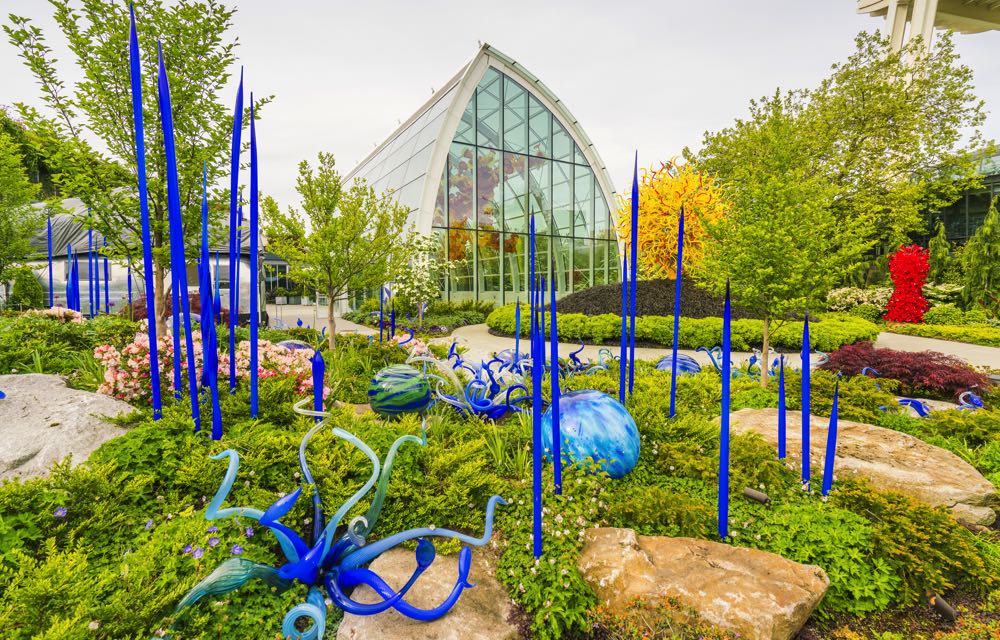
The Chihuly Garden & Glass Museum is one of the most popular places to visit in Seattle. It’s dedicated to the stunning glasswork of Dale Chihuly, whose work can be seen in over 200 museums around the world.

Located at the Seattle Center, the museum is split into three different areas: the Garden, Interior Exhibits, and the incredible Glasshouse. My personal favorite is the Glasshouse, but be sure to see them all.

There’s also a theater that’s constantly showing short videos of Chihuly and his work. You’ll definitely want to carve out a couple of hours to take it all in. 

The museum is open from 8:30 AM-8:30 PM Monday to Thursday and stays open an hour later on the weekend.

Tickets cost $35-$42.50 for adults and $30-$37.50 for kids. Entrance to the Chihuly Garden & Glass Museum is included in the Seattle CityPass, on this 3-hour “highlights tour” of Seattle, or this ticket which includes the Space Needle as well.

Finally, if you prefer to simply purchase your entrance ticket direct from the company, make sure to utilize the free audio tour on offer. 

Address: 305 Harrison St, Seattle, WA 98109, United States

4. Join a Food Tour

Hot dog with all of the toppings in Seattle, WashingtonHot dog with all of the toppings in Seattle, Washington

One of the most fun things to do in Seattle is to eat your way across the city on a food tour. My personal recommendation is the Pike Place Market Chef Guided Food Tour, which lasts two hours and includes numerous bites.

Along the way, you’ll learn all about the history and culture of the market, find some small businesses and enjoy sampling all of the amazing foods on offer. 

Another solid option that I’ve gone on several times is the Pike Place Market Walking Food tour which includes a guide, samples at seven artisanal food stalls, and more. Joining a food tour is one of the fun activities in Seattle for adults that should be on your list.

5. Visit the Museum of Pop Culture

Exterior view of the Museum of Pop Culture in SeattleExterior view of the Museum of Pop Culture in Seattle

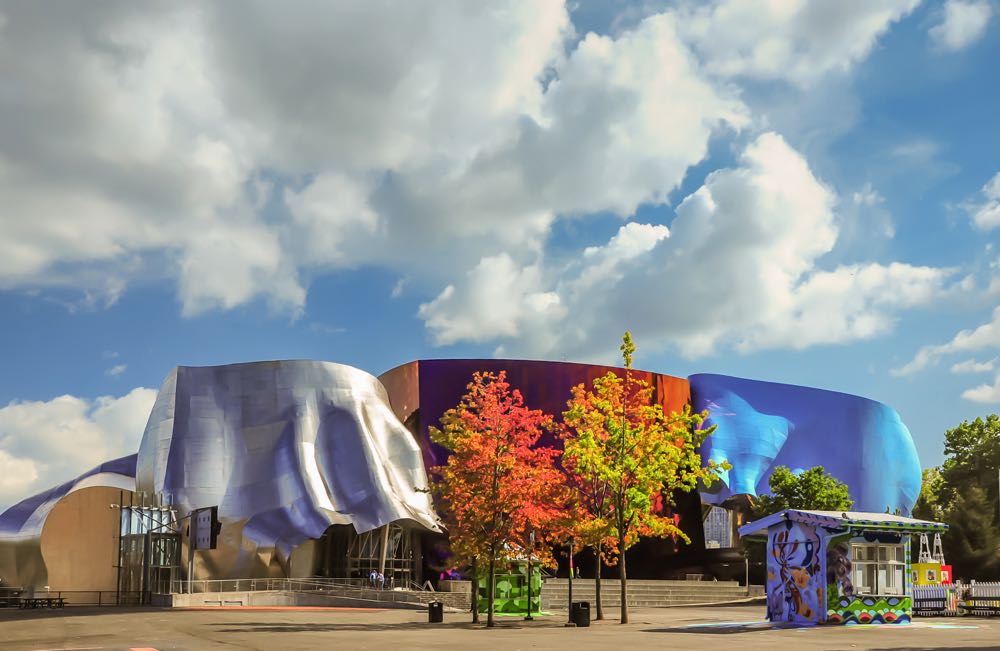
Formerly known as the EMP (Experience Music Project), the Museum of Pop Culture is one of the best Seattle attractions around. Before you head inside, you’ll want to take some time to admire the stunning building from world-famous architect Frank Gehry.

Once you step inside the museum, which also goes by MoPOP, you’ll notice the impressive guitar sculpture called “If VI Was IX.” There are over 500 instruments making up this tornado-like sculpture! 

Speaking of music, the museum has several permanent exhibits dedicated to Seattle’s most famous rockers: Jimi Hendrix, Nirvana, and Pearl Jam.

You can even channel your inner rockstar in their Sound Lab or take your picture in front of a packed audience in their On Stage area. 

That’s not all, though. MoPop also has exhibits on fantasy, science fiction, horror, video games, comedy, and much, much more.

I’ve been to a lot of museums in my travels, and this one is definitely my favorite. Be sure to add it to your list of cool things to do in Seattle.

MoPOP is open Monday-Friday from 10 AM-6 PM and Saturday and Sunday from 9 AM-6 PM. Tickets cost around $35 for adults and $21 for children.

Entrance tickets to MoPOP are included in the Seattle CityPass. Click here to get directions.

Address: 325 5th Ave N, Seattle, WA 98109, United States

6. Pike Place Market: One of the most famous Seattle attractions!

Exploring Pike Place Market is one of the best things to do in Seattle.Exploring Pike Place Market is one of the best things to do in Seattle.

The Pike Place Market is one of the best places to visit in Seattle. Dating all the way back to 1907, this is one of the oldest public farmers’ markets in the United States. 

By shopping at Pike Place Market, you’re doing much more than just checking off one of the best Seattle attractions. You’re supporting local farmers, artisans, and small businesses as well! 

There’s so much to see (and taste) here that you’ll want to make sure you come hungry and stay awhile. Each time I visited, I not only filled my stomach, but also several shopping bags to take home with me.

In addition to the farmers’ market and crafts market, there are 80 restaurants and over 200 unique shops. With so many options, it can be a bit intimidating, but for sure it’s a must do in Seattle. Don’t miss a food tour (listed above at #4) of this market. 

It’s much more than just a market, actually. It’s a community with lots of excellent initiatives, such as a senior center, food bank, and pre-school.

If you want to show some extra love, pay a visit to Rachel the Piggybank. Rub her snout and make a donation, and legend has it you’ll have good luck.

The market is only closed on Thanksgiving and Christmas. It officially gets going at 9 AM and closes at 6 PM, but you can come here as early as 6 AM for breakfast if you’re an early riser.

Head over to their website to plan your visit and browse all the various options. You can find Pike Place Market on the map here.

Address: 85 Pike Street, Seattle, WA 98101, United States

7. Enjoy Waterfront Park

Waterfront Park, SeattleWaterfront Park, Seattle

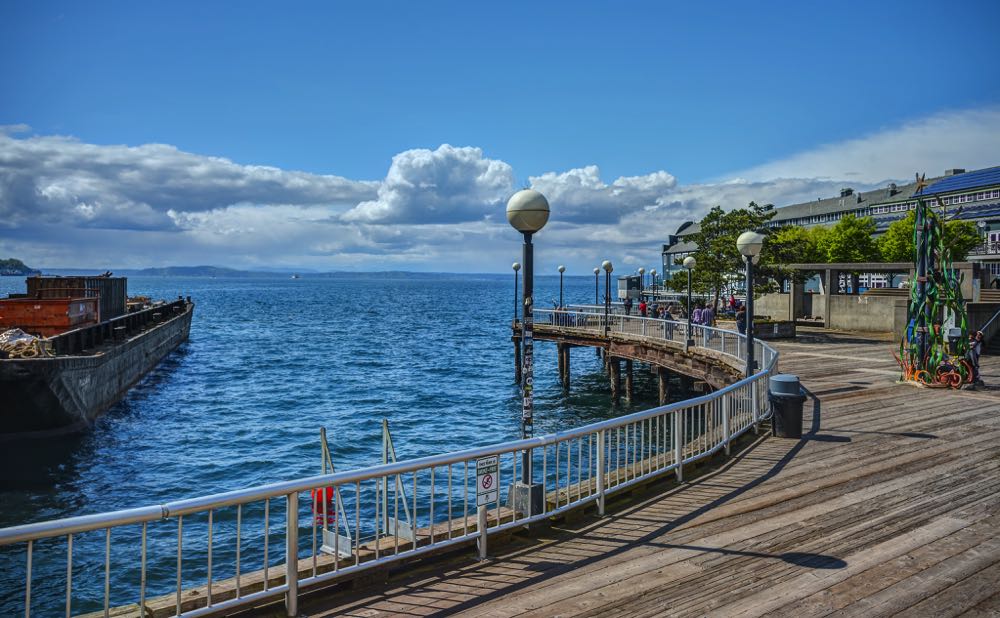
After exploring Pike Place, you’re just a short walk from Waterfront Park, the next spot on my list of Seattle attractions. There are several benches and picnic tables here, so it’s the perfect place to sit down and enjoy whatever delicious food you picked up at the market.

The park is home to two different platforms where you can enjoy some fantastic views.

On a clear day, you can even see the Olympic Mountains in the distance. There are coin-operated telescopes here to help you get an even better look at the surroundings. Be sure to check out the Waterfront Fountain as well.

One of the most fun things to do in Seattle is taking a ride on the Seattle Great Wheel. This giant Ferris wheel is open from Monday to Thursday from 11 AM-10 PM, Friday and Saturday from 10 AM-11 PM and Sunday from 10 AM-10 PM. 

Tickets cost $16 for adults and $11 for kids. You also have the option of splurging for a VIP ticket ($50) for their luxury gondola and a souvenir t-shirt.

Waterfront Park is a great spot to unwind after a big day of sightseeing in Seattle. It’s located between Pier 57 and 59. Click here to get directions.

Address: 1401 Alaskan Wy, Seattle, WA 98101, United States

8. Day Trip to Mount Rainier 

Mount Rainier National ParkMount Rainier National Park

If you have some extra time in Seattle, consider doing a day trip out to Mount Rainier, which is an active stratovolcano in the Mount Rainier National Park. This is my personal favorite spot for hiking in the area.

This towering volcano is 14,400 ft (4,390m), and in the national park, you’ll find numerous activities on offer, including hiking, camping and rock climbing.

For travelers on a day trip, hiking along one of the many trails is a top choice. During the winter months, you can trade your hiking boots for show shoes and still enjoy the trails. 

The highly-rated Evergreen Escapes runs full-day, small group tours to Mount Rainier, which are tailored to your fitness levels.

Included in the trip are transportation, a knowledgeable naturalist, lunch, snacks, and entrance fees. To learn more about this top trip from Seattle, click here.

If you’d prefer a tour to Mount Rainier with the hiking optional, check out this popular tour on a minibus.

9. Take a Cruise

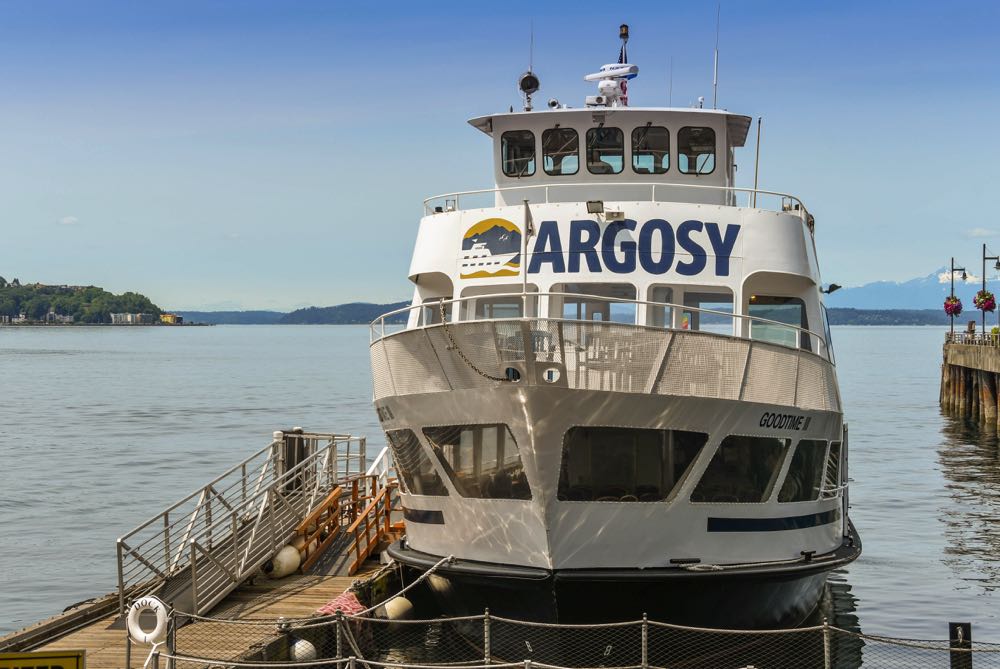
A boat in dock for a Seattle harbor cruiseA boat in dock for a Seattle harbor cruise

While Seattle looks great on land, it looks even better from the water! Taking a cruise around Elliot Bay and the Puget Sound is easily one of the most fun things to do in Seattle.

Your options for cruising range from a simple 1-hour harbor trip to overnight getaways. On these trips, I’ve spotted numerous sea birds, seals, and even dolphins.

On the budget end, you can simply take one of the local ferries to enjoy the views. The ferry to Bainbridge Island only costs $8.50 for adults and $4.25 for children, and the return trip is free. It’s a nice way to spend an afternoon without spending a ton of cash.

Argosy Cruises has been in business for 70 years and their tours are a great opportunity for Seattle sightseeing.

They have seven different options, including their one-hour cruise of Elliot Bay and the Seattle Harbor where you’ll enjoy a fully narrated trip, amazing views of the Seattle skyline, and on clear days, of Mount Rainier. A cruise with Argosy is actually included in the Seattle CityPass if you choose to go that route.

10. Walk Through Washington Park Arboretum

Washington Park Arboretum in SeattleWashington Park Arboretum in Seattle

The Washington Park Arboretum is definitely one of the most beautiful Seattle attractions to visit. It’s my go-to choice for a quiet afternoon.

This scenic park has miles upon miles of trails and is a living collection of plants. It’s a prime example of why Seattle is known as the Emerald City and a lovely place to spend a few hours.

Spring is a very popular time to visit the park thanks to the azaleas that are in bloom. Come here in the fall and you’ll see Japanese maples and strawberry trees, creating a vibrant tapestry of colors.

The arboretum is open daily from dawn to dusk and is one of the best free places to visit in Seattle. They also have several different tours and classes as well as options for birding and boating. Check their website for all the details. 

While you’re here, it’s well worth it to pay the entrance fee for the Japanese Garden ($8 for adults and $4 for children). They have free guided tours from April to October at 12:30, and you can also enjoy a traditional Japanese tea ceremony here for an extra $10.

It’s a little slice of Japan right here in Seattle!

Click here to get directions to the arboretum. The Japanese Garden is in the southwest corner of the park. Be sure to add a stop here to your list of places to visit in Seattle.

Address: 2300 Arboretum Dr E, Seattle, WA 98112, United States

11. Visit the Seattle Art Museum

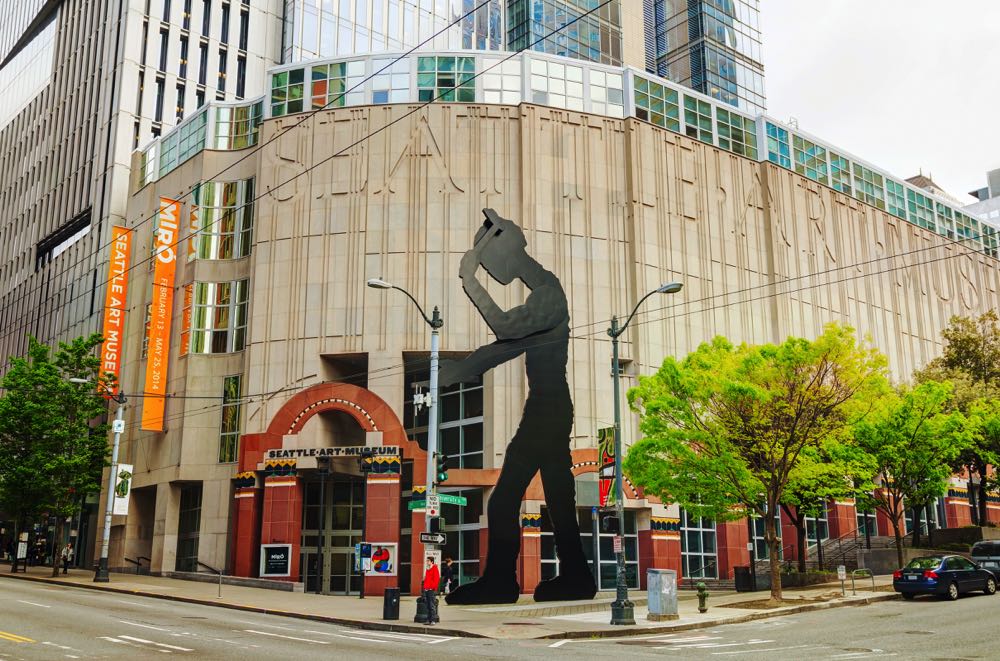
Seattle Art MuseumSeattle Art Museum

Art lovers will want to experience the Seattle Art Museum, which actually consists of three different facilities: the main museum, the Asian Art Museum, and the Olympic Sculpture Park.

At the main museum, you’ll find an impressive collection of art from all corners of the globe. It’s known for its extensive collections of Native American and Northwest Coast art. There are over 25,000 different works of art on display here, so take your time.

In addition to the main museum, you can also pay a visit to the Olympic Sculpture Park. It’s located just a mile away (click here for directions), so it’s easy to visit both. Once an industrial site, it’s now a free public park full of unique sculptures. 

The art museum is open from 10 AM-5 PM on Monday, Wednesday, and Friday-Sunday. It’s closed on Tuesday but stays open until 9 PM on Thursday.

Tickets are $29.99 for adults, $19.99 for students and teens ages 15-18, and free for kids 14 and under. If you happen to be in town on the first Thursday of the month, it’s free for everyone! Click here for directions.

Address: 1300 1st Ave, Seattle, WA‎ 98101, United States

12. Visit the Museum of Flight

Museum of Flight in SeattleMuseum of Flight in Seattle

If you’re interested in air and space, you’ll want to include the Museum of Flight in your Seattle itinerary. There are over 150 aircraft on display here along with thousands of artifacts and photos.

There’s enough to see and do to spend several hours here, so this is a great thing to do in Seattle when it rains (which happens quite frequently!).

A major highlight is the Aviation Pavilion, which features an impressive collection of rare airplanes. There are WWII bombers, the first Boeing 747, and even the first jet Air Force One. You can even board some of them!

In addition to all the aircraft, they have plenty of interesting exhibits to check out, which change frequently. Click here to view a list of current exhibits and see what’s coming up.

The Museum of Flight is open daily from 10 AM-5 PM. Tickets cost $25 for adults and $16 for children. On the first Thursday of every month, the museum remains open from 5-9 PM and it’s totally free to enter. Click here to buy your tickets online for one of the best Seattle attractions. You can find the Museum of Flight on the map here

Visit the Boeing Factory

For those airplane fanatics, you can also visit the Boeing Future of Flight at the Boeing Factory, which is about 30 miles (50 km) from the city and one of the best points of interest near Seattle, Washington. I had a great and informative time the day I went, far exceeding my expectations.

On the tour, you’ll check out the Boeing factory with a local guide and see planes at various stages of assembly. Plus, you’ll wander around the 28,000-square-foot Aviation Gallery and check out the exhibits and displays. Click here to book your tickets to the Boeing Factory and Future of Flight.

13. Watch Some Professional Sports

Seattle Seahawks stadiumSeattle Seahawks stadium

People in Seattle are crazy about their sports, and they express their love for their teams very loudly.

In fact, Seahawks fans have twice set the Guinness World Record for loudest crowd noise at a sporting event. The team refers to their passionate fans as the “12s,” as they basically act as the 12th player. My ears rang from days after a particular playoff game.

The Seahawks (NFL) play their home games at Lumen Field. The stadium is also home to the Seattle Sounders FC, which have been selling out home games since their debut in MLS ten years ago. If you can manage to score a ticket, you’re in for a good time.

During the summer months, you can catch the Mariners (MLS) at T-Mobile Park. With around 80 home games per season, there’s a good chance they’ll be in town if you’re visiting between May and September. 

Since the 2021-2022 season, Seattle finally has an NHL team, the Seattle Kraken, which plays at the newly renovated Climate Pledge Arena in the Seattle Center.

Fun fact: Way back in 1917, the Seattle Metropolitans were the first American team to win the Stanley Cup. The NHL wasn’t even a thing at that time, as it got started later that year.

14. Experience Discovery Park

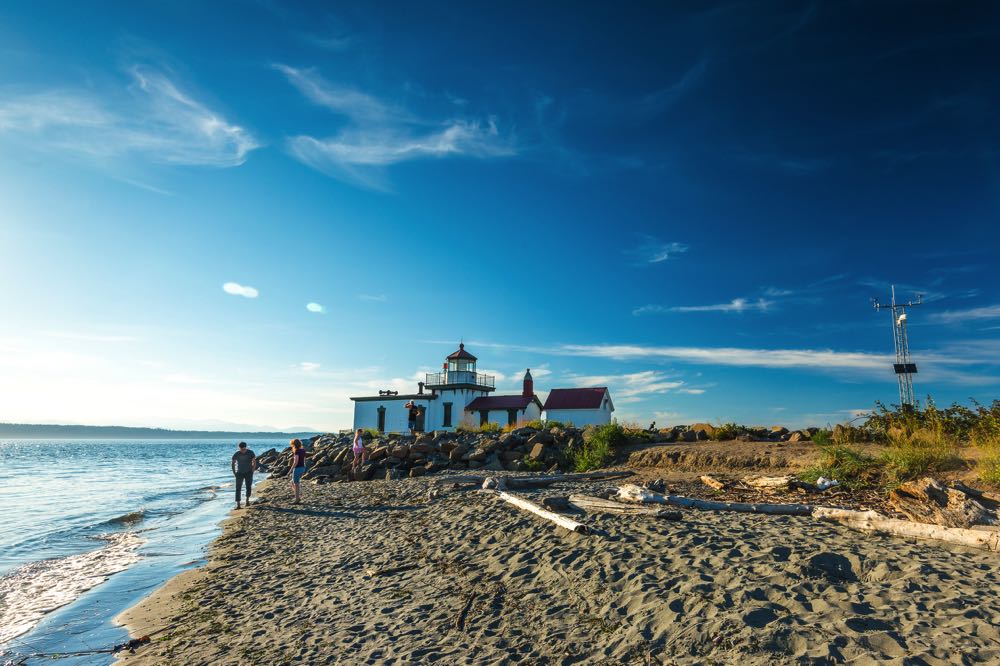
A beach in Discovery Park, SeattleA beach in Discovery Park, Seattle

While there are plenty of excellent green spaces in the Emerald City, Discovery Park really takes the cake. This is the largest park in Seattle and is home to around 12 miles of excellent trails. It also has beaches, sand dunes, cliffs, meadows, and much more.

If it’s your first time at the park, your best bet is to start out with the Loop Trail. This 2.8-mile-long trail goes through the center of the park and branches out to other trails if you feel like exploring further.

Try to make it all the way out to the West Point Lighthouse, where you can enjoy some incredible views of the mountains and water.

Discovery Park is located on Magnolia Bluff overlooking the Puget Sound. Click here for directions. It’s definitely one of the most picturesque of all the Seattle attractions and is well worth the effort to reach.

Address: 3801 Discovery Park Blvd, Seattle, WA 98199, United States

15. Join an Underground Tour

Stairs headed down to an underground tour in SeattleStairs headed down to an underground tour in Seattle

Rounding out my list of cool things to do in Seattle is taking an interesting underground tour. 

Beneath The Streets is one of the most popular Seattle attractions. On this fun and educational tour, you’ll explore subterranean sidewalks and storefronts that were built on top after the Great Fire of 1889

This one-hour tour takes you beneath Seattle’s streets to explore three underground passageways, dating back to the 1890s. I can still remember the feeling of being transported to another world while venturing into these dark spaces.

This highly-rated tour is fun for everyone and affordable at $29. This is one of the more unique things to do in Seattle when it rains that you won’t want to miss. Click here to learn more about the tour.

Nature Trips in Seattle

Sure, there are tons of fun things to do in Seattle city itself, but since the location is right on the water and there’s so much stunning nature nearby, you must leave the city to explore a bit further. Here are a few of the top trips:

  1. Snoqualmie Falls and Twin Falls: These stunning waterfalls are located just around an hour from Seattle, making it a great half-day trip. Of course, the falls are surrounded by stunning natural beauty as well – making it a great trip from the city. Click here to learn more and book your spot.
  2. Go Sailing: What better way to get out on the water than on a 70foot sailboat?! On this incredible trip, you’ll have epic views of downtown Seattle & Mount Rainier. Click here to learn more and enjoy Seattle the way the locals do.
  3. Enjoy Whale Watching: Orcas, humpback, grey and minke whales all frequent the waters here. This trip leaves from Anacortes…and 95% of the time, whales are spotted! Not only that, but you’ll see other wildlife during the trip. Click here for details.

FAQs About Visiting Seattle

Answers to some of your frequently asked questions about visiting Seattle.

What fun things are there to do in Seattle?

There are so many fun things to do in Seattle! Whether you’re into nature, museums, food, or sports, there’s something for you. The top fun activities are day-tripping to Mt. Rainer for some hiking and epic views, checking out the bustling Pike Place Market, and listening to live music at the Tractor Tavern, The Crocodile, or Dimitrou’s Jazz Alley

What is the number one tourist attraction in Seattle?

By far, the top attraction in Seattle for tourists is the Space Needle. This ticket includes the Space Needle and the Chihuly Garden and Glass.

How many days do you need in Seattle? 

I think that 3-5 days is a good amount of time for Seattle sightseeing. That way, you can spend a full day out at Mt. Rainer, and another day enjoying a lazy day on the waterfront and at Pike Place Market.  Other days could be spent checking out the main attractions (Space Needle, Chihuly Garden, museums, etc.), and finally, your last full day could be spent on the water taking a cruise, or joining a food tour. 

What food is Seattle known for?

There are so many foods you should try in Seattle, many of which are seafood due to the city’s location on the ocean. Don’t miss oysters, salmon, geoduck, and sushi. Plus, you have to try a Seattle Dog (hotdog, Seattle style!), coffee, and pho (Vietnamese soup).

Is Seattle a walkable city?

Absolutely Seattle is a walkable city, although to reach certain destinations, like beaches or neighborhoods outside of downtown, driving or taking public transportation is necessary.

Now You Know What to Do in Seattle

These are just some of the many interesting things to do in Seattle. There’s a lot more going on in the Emerald City, including plenty of other parks, beaches, museums, tours, and a whole lot more. 

With some more time in Seattle, you can also take advantage of the many amazing day-trip opportunities. Within a few hours, you can find yourself exploring Mt. Rainier or Olympic National Park. Or perhaps you’d rather go visit a waterfall and taste some wine. The options for adventure really are endless!

After two months living in Seattle and many subsequent visits, I believe I’ve experienced the best the Emerald City has to offer.

*Images in this post are courtesy of Shutterstock.

Like This Article? Pin It!


Source link

Concorso di Eleganza Villa d’Este 2025

0


Concorso d’Eleganza 2025: Alfa Romeo P3 Wins Big Amid Stunning Lake Como Showcase The 2025 edition of the Concorso d’Eleganza Villa d’Este once again affirmed its place as the pinnacle of automotive elegance. Held from the 23rd to 25th May on the serene shores of Lake Como, the event was a symphony of heritage, artistry, and performance culminating in a dramatic “Best of Show” win for the 1934 Alfa Romeo Tipo B (P3).

Presented by the Auriga Collection from Germany, the single-seater Grand Prix racer not only captivated the jury with its historic significance but its razor-sharp design, penned by Vittorio Jano, was one of the first true single-seater racing cars. The Alfa claimed the prestigious Trofeo BMW Group, presented by Helmut Käs, Head of BMW Group Classic, and Wilhelm Schmid, CEO of A. Lange & Söhne and, as tradition dictates, the winner also received a one-off 1815 Chronograph in white gold, custom-designed for the event.

A Celebration of Icons and Innovation
This year’s edition was rich in premieres and anniversaries. BMW marked the occasion with three world debuts: the BMW M2 CS, the BMW Concept Speedtop, a unique three-door touring study and the BMW Motorrad Concept RR, previewing the next-generation superbike. Rolls-Royce took the spotlight with a cinematic tribute to the Phantom Goldfinger, celebrating the centenary of the Phantom model line, while BMW showcased all surviving cars that contested the 1940 Mille Miglia in a special exhibit titled “BMW Mille Miglia Icons” — a crowd-puller on the public days at Villa Erba.

Gallery 1: Photos by Yaron Esposito


Public Favourite: The BMW 507
Among the many emotional highlights was the Coppa d’Oro Villa d’Este award, voted via public referendum. The people’s choice? A pristine 1957 BMW 507 Roadster owned by Dirk de Groen (USA), which also claimed the Trofeo Vranken-Pommery for best iconic car. With its flowing lines and V8 engine, the 507 reaffirmed its place as one of BMW’s most beloved classics — and this year, it also celebrated its 70th anniversary in fitting style. Class Winners and Mentions of Honour More than 50 historic vehicles competed across the following classes, with each winner telling a unique story:

• Class A: Duesenberg SJ (1933) – Thomas Maoli (USA)
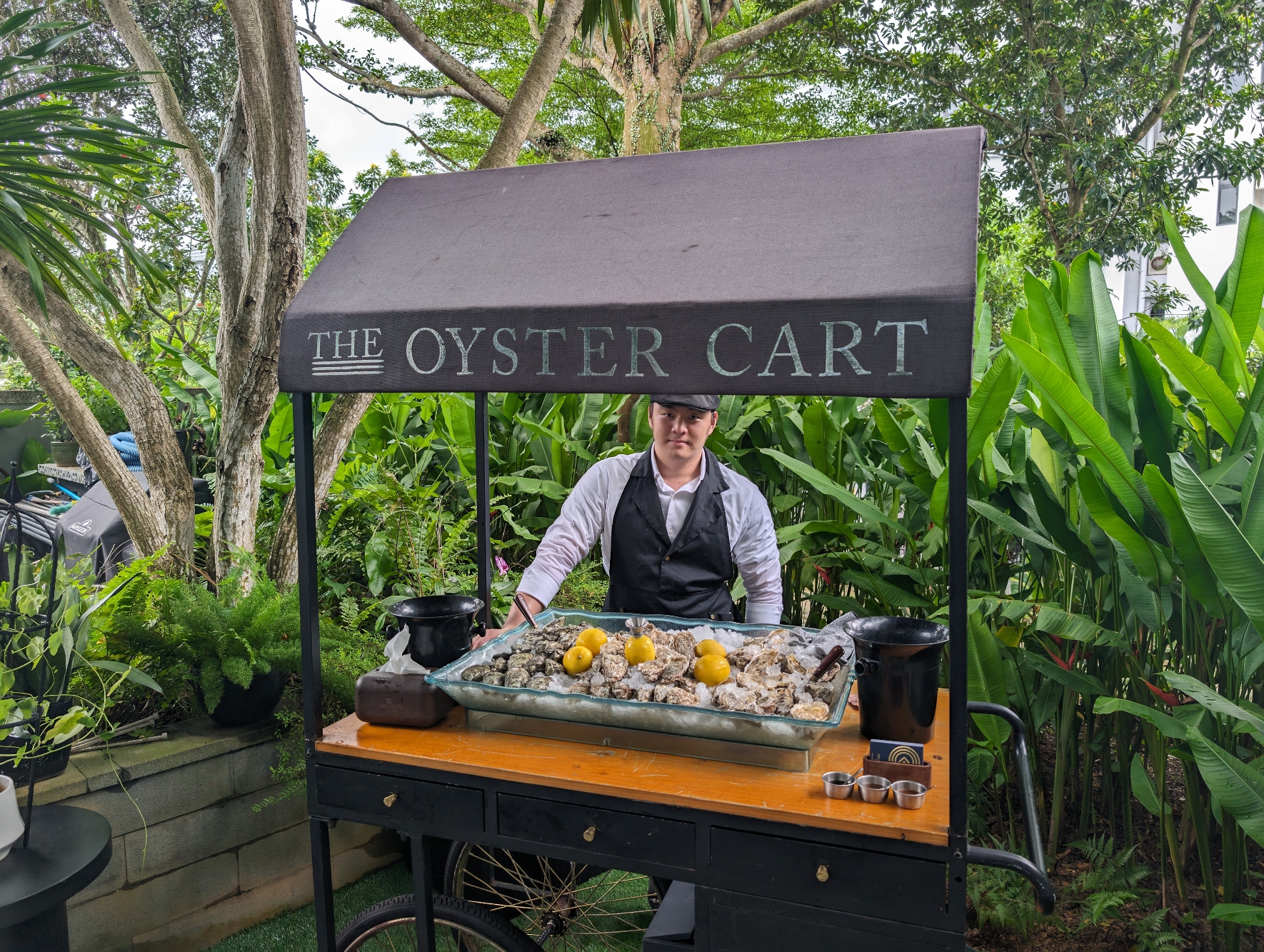
• Class B: Alfa Romeo Tipo B (P3) (1934) – Auriga Collection (Germany)
• Class C: Ferrari 212 Export Cabriolet Vignale (1951) – Michael Weisberg (USA)
• Class D: Ferrari 250 Monza Barchetta (1954) – Giuseppe Prevosti (Italy)
• Class E: Ferrari 330 GTC (1967) – Tony Owen (USA) — also recipient of the Trofeo BMW Group Ragazzi
• Class F: Bugatti EB 110 GT (1993) – Maurizio De Angelis (Italy)
• Class G: Talbot Lago T26 Grand Sport Saoutchik (1948) – Robert Kudela (Czechia)
• Class H: Ferrari 410 Superamerica Pininfarina Coupé (1959) – Sam Lombardo (USA)

Additional awards included the Trofeo del Presidente della Giuria, awarded to a 1930 Bentley Speed Six, and the Trofeo ASI for the best preserved post-war car, going to the ultra-rare 1965 Serenissima 308V Torpedo.

A Weekend of Community and Culture
Beyond the concourse, the spirit of the event was felt throughout Cernobbio. The “Amici & Automobili – Wheels & Weisswürscht” gathered car clubs and enthusiasts together at Villa Erba. The sold-out Public Day, the “Concorso d’Eleganza Villa d’Este Public Day – Il Festival” drew, on Sunday May 25th, thousands of people to enjoy the parade of all concours entrants, including standout concept cars like the Alfa Romeo 8C Doppia Coda Zagato, which won the Design Award by public referendum.

In a gesture of goodwill, BMW Group Classic donated proceeds from Saturday’s ticket sales to support two local kindergartens — reinforcing the event’s strong ties with the local community.

The Concorso d’Eleganza Villa d’Este 2025 delivered everything we’ve come to expect and more: breathtaking classics, contemporary design brilliance, and an atmosphere that blends sophistication with genuine automotive passion. As the curtain falls on this year’s concours, it’s clear that Villa d’Este remains not just a celebration of the automobile’s past, but a guiding light for its future.

Gallery 2: Photos by Tobias Kressman


Words by Yaron Esposito


Source link

This Amazon Golf Cart Fits 4 People and Goes 20 MPH

0


What says summer more than cruising around a beach town in a golf cart? If you frequent some of Florida’s communities or islands like Amelia, Anna Maria, and Captiva, where open-air low-speed vehicles (LSVs) seem to outnumber actual cars, you know this freeing feeling. Golf carts are not just legal to drive in parts of the Sunshine State, but they’re actually encouraged. The state’s Department of Highway Safety and Motor Vehicles says as long as they stay off the highways, golf carts provide a “great way to enjoy local communities and natural spaces.”

Some other locales across the U.S. are adopting this laid-back mindset and welcoming these “vehicles” on the streets: Highland, Utah; Monroe, Michigan; and Shelbyville, Indiana, are just a few places where golf carts are newly street-legal as of 2025. This summer, in addition to perfecting your beach packing list, why not get your own set of wheels? Cruise the neighborhood, take it to the campground, or bring it on your beach vacation (check the LSV laws, obviously)—we’ll save you a trip to the dealership with this golf cart we found at Amazon. 

Kandi America Electric 4-person Golf Cart

Amazon


Adding to the list of strange and unexpected things you can buy at Amazon (including entire homes), this electric-powered golf cart comes from Dallas-headquartered off-road recreational vehicle seller Kandi America and is just over $8,000. That’s on the lower end of the pricing spectrum, as new models can cost, on average, as much as $15,000 to $20,000. 

The cart seats four, thanks to the inclusion of a rear bench, and the hard-shell roof extends over the back to keep all passengers dry and shaded. It comes equipped with electric power steering and a backup camera that connects to the seven-inch LCD screen to make it easy to maneuver—you don’t want to end up on one of those “golf cart fail” compilations. The cart reaches a full charge in 6.5 hours, and it doesn’t need any special plug-ins—it’s compatible with a 120-volt outlet, which is the standard outlet in the U.S.

Fully charged, the 5,000-watt motor should be good for about 28 miles. If you were to drive only at its top speed—20 mph—you’d be able to go for almost an hour and a half without needing to charge.

Kandi America Electric 4-person Golf Cart

Amazon


Reviewers love how much quieter the electric motor is than gas-powered carts, which is an especially important feature in campgrounds. They’re impressed with the suspension and that it sits higher off the ground than other models, claiming it “rides like a Jeep” out on the trails. “It’s loaded up with incredible features, and the design is fantastic,” one wrote, deeming it a “head-turner.” There’s an even more jazzed-up version with a 28-inch soundbar and LED lighting system for an extra fee.

In case you’re wondering how your regular Amazon delivery driver will get this 1,500-pound package off the truck, the brand assures the cart will come to you via freight, and you can choose your own delivery time. In terms of brand reputation (because buying any vehicle on the internet raises questions), Kandi American is a well-known manufacturer you can find at Lowe’s and other big-name dealers.

Though it’s one of the more affordable golf carts we’ve found at Amazon, it’s surprisingly not the only option. We discovered alternatives ranging from a Kandi six-seater to a $14,000 solar-charging cart on sale for $11,000. Shop around for a fresh, new summer ride, below.

Kandi America 6-seat Electric Golf Cart

Amazon


For families and bigger groups, this six-seater version of the Kandi America golf cart might be more practical. It has most of the same features as the four-seater, but with an extra row of seats and a bit more range (37 miles on a single charge, the brand says). Despite the larger size, it still plugs into a normal electrical outlet.

Viplay Electric Golf Cart With Solar Charging

Amazon


Going for 56 miles on a charge, this is the cart with the highest range that we found at Amazon. The luxe cruiser has a slightly higher-powered 51.2-volt lithium battery and a 400-watt solar panel on the roof, which alone can charge the battery from zero percent to full in 48 hours. High-tech amenities include the 10-inch LCD screen, Bluetooth, and Apple AirPlay.

At the time of publishing, the price started at $8,099.

Love a great deal? Sign up for our T+L Recommends newsletter and we’ll send you our favorite travel products each week.


Source link