Home Blog Page 852

NVIDIA Celebrates Americas Partners Driving AI-Powered Transformation | NVIDIA Blog

0


NVIDIA Celebrates Americas Partners Driving AI-Powered Transformation | NVIDIA Blog

NVIDIA recognized 14 partners in the Americas for their achievements in transforming businesses with AI, this week at GTC.

The winners of the NVIDIA Partner Network Americas Partner of the Year awards have helped customers across industries advance their operations with the software, systems and services needed to integrate AI into their businesses.

NPN awards categories span a multitude of competencies and industries, including service delivery, data center networking, public sector, healthcare and higher education.

Three new categories were created this year. One recognizes a partner driving AI-powered success in the financial services industry; one celebrates a partner exhibiting overall AI excellence; and another honors a partner’s dedication to advancing NVIDIA’s full-stack portfolio across a multitude of industries.

All awards reflect the spirit of the NPN ecosystem in driving business success through accelerated full-stack computing and software.

“NVIDIA’s work driving innovation in generative AI has helped partners empower their customers with cutting-edge technology — as well reduced costs and fostered growth opportunities while solving intricate business challenges,” said Rob Enderle, president and principal analyst at the Enderle Group. “The recipients of the 2024 NPN awards embody a diverse array of AI expertise, offering rich knowledge to help customers deploy transformative solutions across industries.”

The 2024 NPN award winners for the Americas are:

  • AI Excellence Partner of the Year — Lambda received this award for its dedication to providing end-to-end AI solutions featuring NVIDIA accelerated computing and NVIDIA AI Enterprise across NVIDIA DGX and Lambda Cloud.
  • Enterprise Partner of the Year — World Wide Technology received this newly introduced award for its leadership, dedication and expertise in advancing the adoption of AI with NVIDIA’s portfolio of purpose-built systems, data center networking, software and accelerated computing solutions across machine learning, digital twins, NVIDIA Omniverse and visualization.
  • Canadian Partner of the Year — Converge Technology Solutions is recognized for its dedication and expertise in NVIDIA DGX systems and for its Canadian customer support services, leveraging training courses from NVIDIA, to further industry knowledge of the NVIDIA software stack.
  • Financial Services Partner of the Year — CDW received this newly introduced award for its ecosystem partnerships, strategic investments and targeted domain expertise serving financial customers seeking HPC solutions and customer experience solutions such as chatbots and agentless routing.
  • Global Consulting Partner of the Year — Deloitte is recognized for the fourth consecutive time for its embrace of generative AI and for leveraging the capabilities of NVIDIA DGX Cloud.
  • Healthcare Partner of the Year — Mark III is recognized for the second consecutive year for its utilization for the NVIDIA healthcare portfolio, which supports biopharma research, academic medical centers, research institutions, healthcare systems and life sciences organizations with NVIDIA infrastructure, software and cloud technologies.
  • Higher Education Partner of the Year — Cambridge Computer is recognized for the fourth consecutive year for its customer service and technical expertise, bringing NVIDIA AI solutions to the life sciences, education and research sectors.
  • Networking Partner of the Year — Converge Technology Solutions is recognized for its expertise in NVIDIA high-performance networking solutions to support state-of-the-art accelerated computing deployments.
  • Public Sector Partner of the Year — Sterling is recognized for its investment and achievements in developing a robust AI practice. This includes assembling a team of dedicated AI software engineers focused on the full-stack NVIDIA platform, establishing Sterling Labs — an AI briefing center near Washington, D.C. — and collaborating with NVIDIA to launch ARC, a 5G/6G platform targeted for next-gen wireless networks.
  • Rising Star Partner of the Year — International Computer Concepts is recognized for its growth in developing AI and machine learning solutions for cloud service providers and financial services customers to power machine learning training, real-time inference and other AI workloads.
  • Service Delivery Partner of the Year — Quantiphi is recognized for the third consecutive year for its commitment to driving adoption of NVIDIA software and hardware in the enterprise. Its AI Service Delivery team has demonstrated expertise in using LLMs, information retrieval, imaging and data analytics to solve complex business problems in the telecom, life sciences, retail and energy industries for its global customers.
  • Distribution Partner of the Year — TD SYNNEX is recognized for demonstrating its commitment to building its AI business on the NVIDIA AI platform, with year-over-year growth that underscores its operational excellence in distribution.
  • Software Partner of the Year — Insight is recognized for its leadership in NVIDIA AI Enterprise deployments, establishing cutting-edge innovation labs and certifications that cultivate expertise while seamlessly embedding generative AI into its operations.
  • Solution Integration Partner of the Year — EXXACT is recognized for its commitment and expertise in providing end-to-end NVIDIA AI and high performance computing solutions, including NVIDIA software and data center products across multiple industries.

Learn how to join NPN, or find your local NPN partner.


Source link

Toyota developing color-changing paint

0


Toyota has filed a patent application for color-changing paint, a technology that could let owners or dealerships quickly change the colors of cars.

As Toyota notes in the application—which was published by the United States Patent and Trademark Office (USPTO) on March, 19, but originally filed in 2022—owners may want to change paint colors to keep up with trends or just to switch things up. Dealers could also change colors to make cars easier to sell, Toyota suggests.

But instead of a complex repaint or vinyl wrap, Toyota claims to have developed paint that can alter its hues in reaction to heat and light. As described in the application, a car would be driven into a garage bay with tunnel-like heating elements that would surround it on all sides. As the paint surface is heated, a light-emitting “color modulator” device would be passed over the paint surface to complete the transformation.

The color modulator, which could be controlled by a human operator or a robot, Toyota suggests, would essentially serve as the controller for this process. It could communicate with a remote server as well as temperature sensors embedded in the vehicle’s bodywork to determine the correct settings for a specific color, according to the application.

Toyota color-changing paint patent image

Toyota color-changing paint patent image

Toyota admits that it isn’t the first automaker to experiment with color-changing paint. As noted by the automaker in the application, BMW demonstrated something similar at CES 2022 on its iX electric SUV.

Based on the electrophoretic technology used in e-readers, the color-change effect used by BMW was created by millions of microcapsules suspended in an exterior wrap. An electric current caused pigments to circulate within these microcapsules, changing the exterior from white to gray to black at the push of a button.

Toyota’s version seems a bit different, as it doesn’t use an exterior wrap as a medium. Whether that makes it more likely to reach production than the BMW design (which was for demonstration purposes only) remains to be seen.


Source link

Talk About Transformation — With NVIDIA CEO and Researchers Behind Landmark AI Paper

0


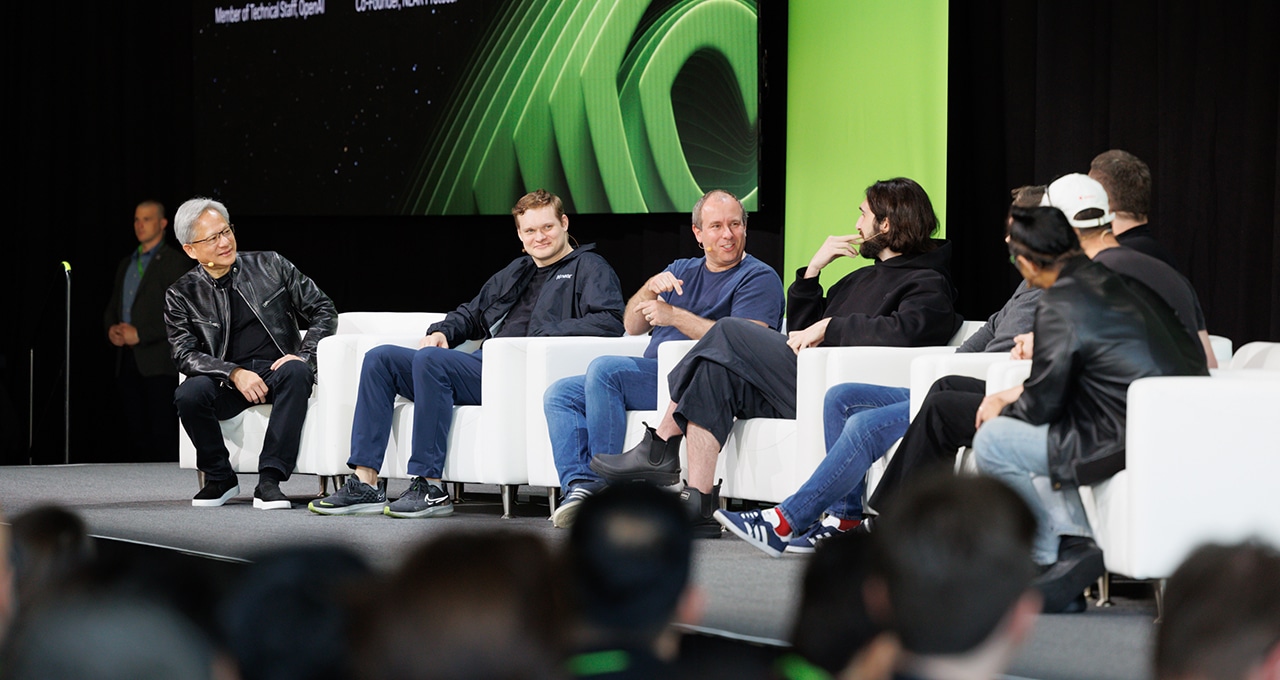
Of GTC’s 900+ sessions, the most wildly popular was a conversation hosted by NVIDIA founder and CEO Jensen Huang with seven of the authors of the legendary research paper that introduced the aptly named transformer — a neural network architecture that went on to change the deep learning landscape and enable today’s era of generative AI.

“Everything that we’re enjoying today can be traced back to that moment,” Huang said to a packed room with hundreds of attendees, who heard him speak with the authors of “Attention Is All You Need.”

Sharing the stage for the first time, the research luminaries reflected on the factors that led to their original paper, which has been cited more than 100,000 times since it was first published and presented at the NeurIPS AI conference. They also discussed their latest projects and offered insights into future directions for the field of generative AI.

While they started as Google researchers, the collaborators are now spread across the industry, most as founders of their own AI companies.

“We have a whole industry that is grateful for the work that you guys did,” Huang said.

From L to R: Lukasz Kaiser, Noam Shazeer, Aidan Gomez, Jensen Huang, Llion Jones, Jakob Uszkoreit, Ashish Vaswani and Illia Polosukhin.

Origins of the Transformer Model

The research team initially sought to overcome the limitations of recurrent neural networks, or RNNs, which were then the state of the art for processing language data.

Noam Shazeer, cofounder and CEO of Character.AI, compared RNNs to the steam engine and transformers to the improved efficiency of internal combustion.

“We could have done the industrial revolution on the steam engine, but it would just have been a pain,” he said. “Things went way, way better with internal combustion.”

“Now we’re just waiting for the fusion,” quipped Illia Polosukhin, cofounder of blockchain company NEAR Protocol.

The paper’s title came from a realization that attention mechanisms — an element of neural networks that enable them to determine the relationship between different parts of input data — were the most critical component of their model’s performance.

“We had very recently started throwing bits of the model away, just to see how much worse it would get. And to our surprise it started getting better,” said Llion Jones, cofounder and chief technology officer at Sakana AI.

Having a name as general as “transformers” spoke to the team’s ambitions to build AI models that could process and transform every data type — including text, images, audio, tensors and biological data.

“That North Star, it was there on day zero, and so it’s been really exciting and gratifying to watch that come to fruition,” said Aidan Gomez, cofounder and CEO of Cohere. “We’re actually seeing it happen now.”

Packed house at the San Jose Convention Center.

Envisioning the Road Ahead 

Adaptive computation, where a model adjusts how much computing power is used based on the complexity of a given problem, is a key factor the researchers see improving in future AI models.

“It’s really about spending the right amount of effort and ultimately energy on a given problem,” said Jakob Uszkoreit, cofounder and CEO of biological software company Inceptive. “You don’t want to spend too much on a problem that’s easy or too little on a problem that’s hard.”

A math problem like two plus two, for example, shouldn’t be run through a trillion-parameter transformer model — it should run on a basic calculator, the group agreed.

They’re also looking forward to the next generation of AI models.

“I think the world needs something better than the transformer,” said Gomez. “I think all of us here hope it gets succeeded by something that will carry us to a new plateau of performance.”

“You don’t want to miss these next 10 years,” Huang said. “Unbelievable new capabilities will be invented.”

The conversation concluded with Huang presenting each researcher with a framed cover plate of the NVIDIA DGX-1 AI supercomputer, signed with the message, “You transformed the world.”

Jensen presents lead author Ashish Vaswani with a signed DGX-1 cover.
There’s still time to catch the session replay by registering for a virtual GTC pass — it’s free.

To discover the latest in generative AI, watch Huang’s GTC keynote address:


Source link

A brain-rearranging ride in the electric Ford SuperVan

0


AAAaaarrrgghhh… That is what happened in the first 20 seconds of my passenger ride in the Ford SuperVan 4.2.

My brain was still parked on the start line but my eyeballs had jumped out on stalks as the battery-electric speed machine launched with the ferocity of one of Elon Musk’s Falcon space rockets.

We were at 240km/h in less than five seconds and that’s not the worst of it.

This thing – it’s the only word that works – was still accelerating with the punch of a Porsche Taycan Turbo S from a standing start at the corner shop.

“Stop. Please stop. Stop now,” I was pleading inside my crash helmet.

Then as my pilot stomped on the brakes, there is a split-second of weightlessness as the SuperVan wiped off speed, and then we were crashing over a set of S-bend curves that tossed me around in my full race seat despite a six-point safety harness.

It was full-on and flat-out craziness in a machine which challenges the laws of physics. But, wait, there’s more…

All this is happening with none of the traditional soundscape of a modern hypercar. There is none of the whelp of a V12 Lamborghini, or the syncopated thunder of an Audi R8, or the pop-bang-whistle-growl of a Mercedes-AMG GT.

The SuperVan is super in almost every way, but it still needs a warning beeper to tell people when it’s about to move.

On our flat-out laps at the Adelaide Motorsport Festival, its electric motors are whining like demented Dysons, and there is an occasional yelp from a tortured tyre, but otherwise the noise creates no more drama than sitting on my couch on a Sunday afternoon.

When it stops, I am left stunned. It takes minutes, not just seconds, to process what has happened and how it happened.

I’ve taken some wild rides in the past, from rollercoasters to a two-seater Formula 1 car, but this is something else.

Even Liam Lawson, who raced Formula 1 last year and is the reserve driver for Red Bull in season 2024, struggled to put the SuperVan into words.

“It accelerates like a Formula 1 car. And it’s pretty good through the corners,” he told me.

“The feeling of exhilaration is that it’s just completely instant. As soon as you start accelerating you’re already braking for the next corner.”

Lawson admitted he took time to adjust, even though my laps were his first flat-out sprint in Adelaide.

“You sit so high. That’s really weird. It’s a really weird feeling. It feels like driving a Transit van, but really, really fast.”

Imagine how it must have felt for Romain Dumas, the French racer who has starred at Le Mans, when he hustled SuperVan to a new benchmark lap time at Mount Panorama. He lapped the bulky beast around Bathurst in 1 minute 56.7647 seconds and went more than 300km/h – both up and down the mountain.

For perspective, on the same weekend the fastest Supercars qualifying lap was set by Broc Feeney in a Chevrolet Camaro at 2 minutes 5.322 seconds.

The SuperVan is so stupidly fast because it was developed for one job – to set the fastest time at the Pikes Peak hillclimb in the USA. It reset the mark for its class but missed the outright mark set – ironically, also by Dumas – in the Volkswagen I.D. R, another electric car.

SuperVan 4.2 is a further development of Ford’s flag waving program for electrification and the numbers are plain crazy.

It has four electric motors for a combined 1040kW of power and 2000Nm of torque. Its claimed 0-100km/h time is less than two seconds and it will only run flat-out for less than 15 minutes before it needs a big cool-down and recharging.

The bodywork, which is similar to a Ford Transit but only after extensive motorsport morphing, makes two tonnes of downforce at 240km/h.

The most ‘ordinary’ thing about SuperVan is the cabin. It’s easy to get in despite the serpentine roll-cage, there is plenty of leg and headroom, and the view is great.

But there are no infotainment screen and it looks more like a science experiment than a delivery truck.

Checking later, and discovering giant electrical cables snaking under the carbon-fibre skin and hand-made motorsport parts in every nook and cranny, it’s obvious that the SuperVan is much more ’super’ than ‘van’. I cannot even find enough space to carry a DHL box.

Does that matter? Of course not.

The SuperVan is all about headlining electrification technology and entertaining motorsport fans around the world.

It’s a spaceship, not a van, with the ability to bend time and turn journalists into gibbering idiots.

I know, because I’m still smiling and it’s been days since I thanked Liam Lawson and went to sit down to steady the world.

Right now I’m sitting and smiling. Probably because I know I don’t have to strap into the SuperVan again.

MORE: Electric van shatters Bathurst lap record – here’s what it beat


Source link

The Many RV Personalities, Which One Are You?

0


Owning an RV put’s you in a group of about 9% of all American’s. But did you know that there are several different RV Personalities out there? Some of us live in our RV. Some of us travel in our RV. Although we all own the RV, we are a completely different set of people. Everything from the way we pack our rig to the campgrounds we go to can be contrasting.

So I decided to take a look at all of these personalities and break them down. Pick them apart a little and help you decipher which one you best fit in. A Weekend Warrior doesn’t need the same community support as a Long Term RV’er. And the products they stock their rig with is going to be different too. So knowing which of these personalities you are will help you hone in on better information to suit your needs.

I’ve broke my list down to 5 major personalities, or types. Of course, each of these will have subcategories. But I believe there all RV’ers can place themselves into one of these. All but one of my categories here uses their RV for the primary purpose of travel. So let’s start with the odd ball out.

rv hangersrv hangers

# 1 The Stationary RV

This personality is different than everyone else. Most people buy an RV for the purpose of travel. But not here. This group of people has purchased a home that happens to stay at a campground. There are several reason someone may do this. But in our experience, this group tends to be Union workers who have been placed on a job site that is expected to last several years. Or members of our military who have opted for their own space over the military housing. In both of these cases, the people residing in their camper are far from “home.”

A Union Pipeline worker may be from Oklahoma, they may even have a stick and brick home there. But they could be working just about anywhere in the United States at any given time. Once they’ve been placed on an out of state job, having a place to call home is important. An RV is much more comfortable than staying in a hotel room for a year or more at a time. And having the RV means they have the luxury to take their whole house to their next location, whenever that may be.

Type of RV: Generally, this personality is in a 5th Wheel because of the additional space they provide over all of the other styles of RV.

Unique Equipment: Special to this personality of camper is larger propane tanks. You will often see 100# tanks outside of their camper. And there may even be a service provider that comes to fill it regularly instead of a smaller more portable tank.

Larger Propane Tanks mean more time between fills.

# 2 Active Retiree

The next 4 personalities on my list are all travelers. The RV was purchased with the intent of exploring the great outdoors in comfort. It’s important to not put an age in this group. Certainly people retire at all stages of life, not everyone waits until their 65 to do so. Doug and I like to think of ourselves in this category. But as we go further down the list, you’ll see that we kinda fit in another one too.

The Active Retiree is exactly what it sounds like. This personality enjoys the outdoors and all of the things that go with it. Hiking, Biking, Kayaking, and campfires sing to their soul. This group has worked hard to save money so they can have all of those things in lots of new places. Hiking Glacier National Park. Sitting on the bank of Lake Michigan. Or biking the rim of the Grand Canyon. Sometimes this group has a home base to go back to when needed. And other times, they’ve sold everything and they’re full time in the RV.

Type of RV: Usually this personality likes a Motorhome and has a small car or jeep in tow.

Amazon FireAmazon Fire

Unique Equipment: Automation. They don’t want to spend time and energy for set up and breakdown. Everything from the jacks, to leveling, and the awning and slides is done with the press of a button.

Bikes are Charged Up and Ready to Explore New Trails

# 3 Family RV’er

This personality ranges from the weekend warrior to the Full Timer. It’s a vast group and an ever growing one too. The RV Family is fastest growing sector on our list. Partly because of how many subcategories are in it. But this personality is seeking disconnect from the digital world, and they want their children to do the same thing. Life doesn’t have to be behind a computer screen all of the time. Learning to enjoy and navigate the outside world is important to them. As is quality family time where they can enjoy the same activities together like hiking and fishing and time around a campfire.

This was the personality that Doug and I initially started in. A lot of people will start here, going out for long weekends and extending their vacations more and more over time. Some eventually turning into Full Time Families. Here we see children being home schooled right through to the quick destination based weekend getaway. This group find their community in like minded people. Others rolling down the same road as them.

Type of RV: Anything. This personality will use anything from a luxury motorhome to a pop-up camper to a Van. The size of their family and their budget being big determining factors.

Unique Equipment: Outdoor Games and Comfort. Because this personality is looking for quality family time you can expect to find comfortable chairs for around the fire and games like Cornhole and Ladder Toss.

Fun Outdoor Ladder Toss Game

# 4 Enthusiastic Boondocker

People who are looking to escape and enjoy some quiet time in the wilderness are within this personality. For some, this is a personality that they will find themselves bouncing into from time to time. But for others, this is a way of life. The people in this group pride themselves on how long they can stay in one location without the need to find water or dump their tanks. They roll up on site prepared to stay off grid as long as possible.

Doug and I have found we really enjoy Boondocking. And like others with the same personality, we like to push our stays longer and longer. The Enthusiastic Boondocker enjoys seeing the parts of the country that very few others have. Not many would be willing to drive 20 miles into the desert. But these people will. And they do it for the serenity and quietness in the world. The funny part about this personality is you would expect them to always be alone. However, they seldom are. You can find a group of campers out there with you 20 miles into the desert. But they are all out there quietly doing the same thing and enjoying each others company.

Type of RV: The most common camper used for this enthusiast is Van or Class B camper.

Unique Equipment: Solar panels, generators, and larger storage tanks. Because they want to remain off grid for as long as possible, having solar and a generator for electrical needs is important. The same thing goes for the holding tanks, whether it be for fresh water or the black tank.

Boondocking at the Horse Prairie Site in Clark Canyon Reservoir

# 5 Wandering Teleworker

With the rise in remote work there has been an increase in Wanderers among us. Why stay stationary in one location when you can literally work from anywhere in the world? When Doug and I first started our Full Time life on the road, we didn’t think of ourselves as Wandering Teleworkers. However, we started our blog and our YouTube channel. Now we find ourselves working from wherever we are, and wherever we want to go. Being able to share our stories and experiences has become a passion for us!

Loretta Hard At Work on A New Article!

There is a combination of escapism and financial responsibility within this personality. Money certainly doesn’t grow on trees, and unless you’ve saved up your whole life like the Active Retiree, you will need to make more of it. Not just to continue to support the Wandering Lifestyle you’ve chosen to live. But also for basic necessities like food. Being able to Wander as you Work gives this personality to see friends and family all around the country.

Type of RV: Limited only by Budget. Some will wander the Van Life, while others will convert a Toy Hauler into office space.

youtube friendsyoutube friends

Unique Equipment: Internet Access. Anything from cell phone boosters and Wi-Fi routers their livelihood is dependent on the computer and having access to the internet.

Order This Router! You will NOT regret it!

Which of the RV Personalities Are You?

Determining your RV Personality within the RV Life can help you meet up with like minded people. Finding that sense of community in your chosen lifestyle can make the experience much more enjoyable. It doesn’t matter where your personality fits in the RV community, we all enjoy the freedom that it provides.

For our list of RV necessities, regardless of your category, check out 22 Must Haves.


Source link

What small SUV should you buy in 2024?

0


If you want a raised driving experience without taking up too much space in the car park, it’s likely a small SUV will be on your shopping list.

Almost 175,000 new small SUVs were sold in 2023, one of Australia’s fastest-growing segments thanks to a wide range of choice and competitive prices.

However, with almost 40 models to choose from and countless variants between them, it can be hard to choose what is the pick of the bunch in an otherwise saturated segment.

Using the VFACTS definition of a small SUV, we’ve picked what the best models on offer are and what you should consider if you want to step into new car.

Scott Collie: Nissan Qashqai e-Power

There’s a bit of recency bias here for me, because I’ve just hopped out of the car, but the e-Power is a really lovely little SUV. 

It’s quiet, comfortable, and nicely finished, and has enough space for a set of golf clubs in the boot. 

Is it as efficient as the all-conquering Toyota hybrid system? Not quite, but it’s smoother and arguably nicer to drive, more of the time. 

MORE: Buy a Nissan Qashqai

James Wong: Hyundai Kona Hybrid

This is a very competitive segment, and it’s one of the few in the Australian market that’s really brimming with hybrid options.

My pick would be the new Hyundai Kona Hybrid or HEV, preferably in the upscale Premium spec that offers a lot of luxuries you’d normally expect of a car costing tens of thousands of dollars more.

Even better, it has a super efficient hybrid drivetrain capable of doing 4.0L/100km and because it’s not an eCVT like a Toyota it’s actually a pretty engaging performer.

If you’re more budget conscious, there’s a base ‘Kona Hybrid’ that can be had in your driveway for $39,990 drive-away, and it’s already pretty well equipped. Bravo, Hyundai.

MORE: Buy a Hyundai Kona

Jack Quick: Mini Countryman

If I had to buy a small SUV in 2024 I know I’d want something that stands out from the crowd. For this reason I think I’d opt for a Mini Countryman after seriously considering a Hyundai Kona Hybrid or a Mazda CX-30 if I was forced to pick a more affordable option.

The new Mini Countryman which is due to arrive locally in petrol C and S guises is the largest Mini ever, and it’s produced in Germany alongside its BMW X1 and X2 platform mates.

Despite this it still somehow feels like a Mini. I recently drove the Countryman JCW, as well as the electric SE variant in Portugal and was pleasantly surprised with how the ‘Go-Kart feel’ translated.

I’m also a huge fan of the Countryman’s new 9.4-inch circular OLED touchscreen infotainment display. Colours really pop and the graphics are so funky and special.

Depending on which variant you opt for, the new Countryman is somewhat of a bargain too. It’s notably more affordable than the BMW X1 and offers a similar amount of standard equipment.

MORE: Buy a Mini Countryman

Josh Nevett: Volkswagen T-Roc R

I’ll have a Volkswagen T-Roc please, preferably in R specification.

Handsome looks and strong performance headline the T-Roc’s claim. A practical, comfortable and well-equipped interior space lifts the package even further.

There’s plenty of room in the boot, and you’ll pay a lot less for one of these than a Golf R.

All-in-all, the T-Roc R can do it all, which is exactly what buyers in this segment are looking for.

MORE: Buy a Volkswagen T-Roc

Jordan Mulach: Toyota Corolla Cross Hybrid

My heart wants an Audi RSQ3. The five-cylinder engine is one of the leading causes of conversion to the petrolhead church (probably).

But if I was told to be sensible, I’d be hard pressed to go past the Toyota Corolla Cross Hybrid.

It’s a little bit smaller than the all-conquering RAV4, but with a much newer cabin, the brand’s rock solild hybrid tech, and looks that aren’t polarising.

MORE: Buy a Toyota Corolla Cross

William Stopford: Hyundai Kona Hybrid or Volkswagen T-Roc R

There’s a glut of compelling options in the small SUV segment, including plenty of great hybrids (Hyundai Kona, Honda HR-V, Nissan Qashqai) and one exciting performance option (Volkswagen T-Roc R).

The Qashqai e-Power stands out as a class act, even among these options, but if you’re looking for something more affordable, an entry-level Kona Hybrid or T-Roc 110TSI for around $36k before on-roads is mighty tempting.

If you want to splash some cash and buy a premium small SUV, the Volvo XC40 – whether petrol or electric – continues to impress. It’s smartly packaged, smartly styled and drives well.

Perhaps its greatest threat is now the new BMW X1, which is a huge leap over its predecessor and now also offers an electric version.

MORE: Buy a Hyundai Kona
MORE: Buy a Volkswagen T-Roc


Source link

BMW previews future electric SUV with faster charging, more range

0


BMW continues to preview its next-generation EVs with a new concept car, while also providing a bit more detail on some of the engineering for these new models, which are due to start production next year.

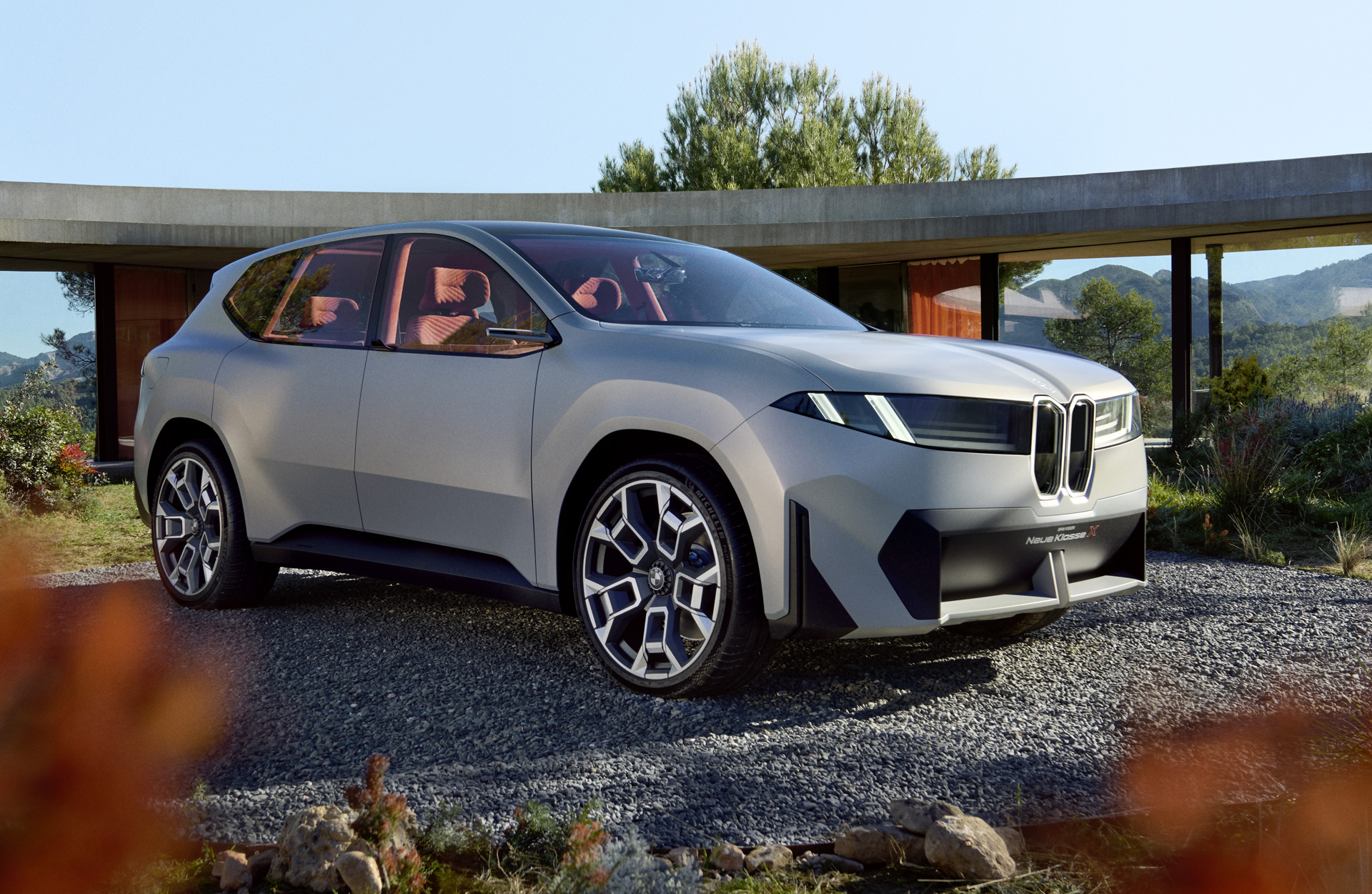
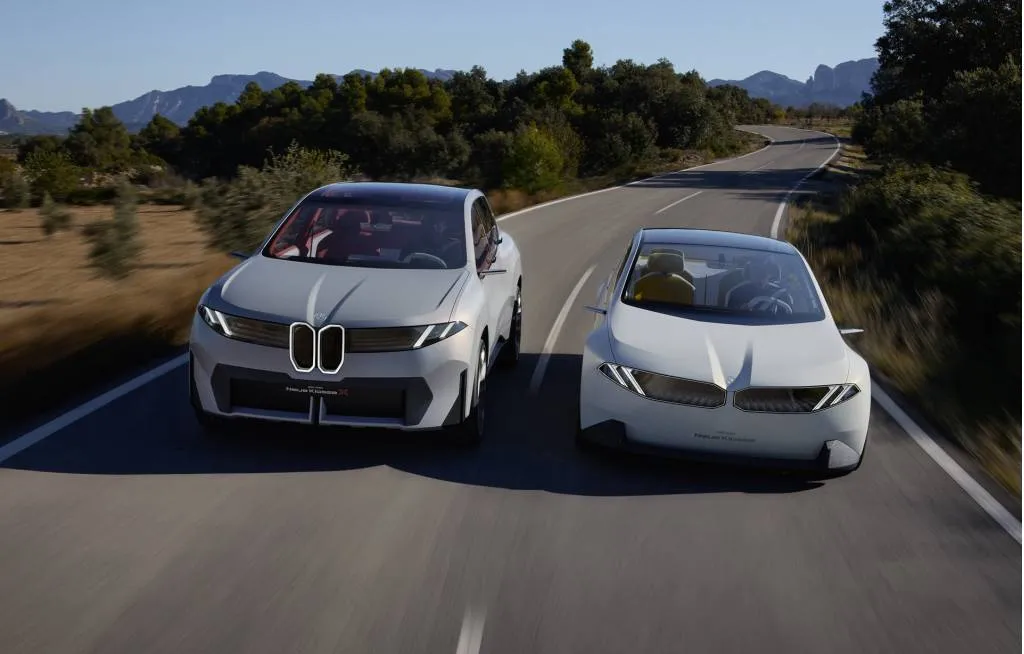
The BMW Vision Neue Klasse X is an electric SUV that forecasts a model due to start production in Debrecen, Hungary, in 2025. It follows the Vision Neue Klasse compact sedan concept unveiled last fall in previewing the Neue Klasse (German for “new class”), named in honor of the family of models from the 1960s that set the template for modern BMWs.

Like the previous sedan concept, the Vision Neue Klasse X features a minimalist look, although the SUV sports a prominent version of BMW’s signature twin-kidney grille. The tall, thin grille resembles those used on original Neue Klasse models, and houses sensors for driver aids. While the taller SUV is likely less aerodynamic than the sedan, BMW claims a 20% reduction in drag over a comparable current model.

BMW Vision Neue Klasse X concept

BMW Vision Neue Klasse X concept

Neue Klasse models will also feature faster charging than current BMW EVs thanks to an 800-volt electrical architecture, and they’re at the leading edge of a battery shift for the company. BMW claims new cylindrical battery cells have a volumetric energy density more than 20% higher than the prismatic cells it currently uses. The combination of cylindrical cells and the 800-volt shift will speed up charging by up to 30%, BMW claims.

Sixth-generation drive units will also help boost range by up to 30%, according to BMW, while new tires and an EV-specific braking system should improve overall efficiency by up to 25%.

Bidirectional charging to serve as home backup power

Bidirectional charging is also part of the Neue Klasse vehicles. “Our customers can feed electrical energy stored in the vehicle back into their own house, electrical devices like your e-bike or the public power grid,” explained BMW chairman Oliver Zipse, in a statement that was cited from the automaker’s Annual Conference this week. “This lowers electricity costs and helps stabilize networks.”

The Vision Neue Klasse X is also further proof that future BMW interiors will adopt a minimalist, screen-focused design. A door-to-door panoramic display and 3D head-up display provide most information to the driver, with functions controlled primarily through a central touchscreen or voice assistant. The Vision Neue Klasse X also debuts the HypersonX Wheel, a feature BMW claims will allow drivers to play customizable sounds.

BMW Vision Neue Klasse X concept

BMW Vision Neue Klasse X concept

Following the start of production in Hungary, Neue Klasse EVs will be manufactured at BMW’s main plant in Munich, Germany. Production in San Luis Potosí, Mexico, will then follow in 2027, likely allowing vehicles to qualify for U.S. federal tax credits.

With their cylindrical battery cells, 800-volt architecture, and high-tech interiors, the Neue Klasse EVs will certainly be innovative. But they’ll also incorporate some lessons learned from the formative BMW i3, albeit with a form factor and design aimed more at the mainstream.


Source link

Aston Martin names current Bentley chief as new CEO

0


Aston Martin on Friday named Adrian Hallmark as its new CEO.

Hallmark is currently CEO of Bentley and will start the new position at Aston Martin no later than Oct. 1. Bentley said in its own statement that it will name a successor for Hallmark in due course.

Aston Martin’s current CEO is Amedeo Felisa, a Ferrari veteran who held the CEO role at Maranello at one point. He was hired in 2022 to replace former AMG CEO Tobias Moers, who took on the CEO role at Aston Martin in 2020 during the height of the pandemic.

Moers failed to turn Aston Martin’s losses around and several Aston Martin veterans left during his tenure. Felisa, who is 78, was lured out of retirement by Aston Martin Chairman Lawrence Stroll to run the company while its new generation of sports cars were developed. Felisa also oversaw Aston Martin’s technology tie-up with Lucid announced last year.

Adrian Hallmark

Adrian Hallmark

Like Felisa, Hallmark is an automotive veteran, with board experience in the U.K., the U.S., and Asia. From 1999 to 2005, he was head of sales for Bentley. He then joined JLR, where he headed up Jaguar, before returning to Bentley in 2018 to serve as CEO.

Crucially for Aston Martin, which is still bleeding cash, his background is in sales. He also oversaw the development thus far of Bentley’s future electric portfolio, the first member of which is due in late 2026. Similarly, Aston Martin is planning to launch EVs, the first of which is also due in 2026.

Felisa will remain in his post as Aston Martin CEO until Hallmark takes over the reins, and will oversee the launch of the DBS successor later this year, Aston Martin said. The new car, whose launch follows the recent launches of the new DB12 and Vantage, has been spotted testing and may end up reviving the Vanquish nameplate.


Source link

VW ID.4 review, Audi Q6 E-Tron preview, Lexus RX PHEV, Trump EV tariff: The Week in Reverse

0


Which automaker recalled nearly 150,000 U.S. EVs?

Which generation buys the most EVs?

This is our look back at the Week In Reverse—right here at Green Car Reports—for the week ending March 22, 2024.

A first drive of the 2024 Volkswagen ID.4, with a vastly better infotainment interface and a little more acceleration punch complementing an otherwise already great set of attributes, showed us that the ID.4 is now the opening act for trendier VW EVs that it was originally supposed to be. 

2025 Audi SQ6 E-Tron

2025 Audi SQ6 E-Tron

In a preview drive of the 2025 Audi Q6 E-Tron, we saw the promise in Audi’s first fully conceived, best executed EV—thanks in part to the new PPE platform it shares with the Porsche Macan EV.

Green Car Reports also drove the 2024 Lexus RX 450h+ and found it to have a usable electric-only range and comfortable ride but rather expensive and unimpressive in its infotainment interface. 

BMW Vision Neue Klasse X concept

BMW Vision Neue Klasse X concept

BMW provided a first look at another concept previewing its next generation of EVs. The BMW Vision Neue Klasse X is an electric SUV anticipated for production as soon as 2025 and built on an 800-volt architecture, providing super-fast charging and a bidirectional charging toolkit. 

DOE and EPA rules finalized this week give automakers a little more flexibility in complying with pending rules for model years 2027 to  2032. The EPA estimates it will take about 56% EVs by 2032, along with at least 13% plug-in hybrids.  

Rivian NACS adapter

Rivian NACS adapter

Rivian has confirmed that in April it will start shipping the NACS adapters that will, with interface updates, allow owners to plan road trips with Tesla Supercharger stations as waypoints. It also nearly doubles the number of fast-chargers Rivian drivers can access through the interface. 

As it seeks to sell down an inventory of about 4,700 vehicles, Fisker has paused production of its Ocean EV. Meanwhile, it confirmed “a financing commitment” of up to $150 million, said it continues to negotiate with another automaker—reportedly Nissan—over a strategic partnership, and is pursuing a franchised-dealership model.

Fisker Ocean

Fisker Ocean

Shell announced this week that it’s planning to shed some gas stations in favor of EV charging. It also announced that it plans to expand the number of EV chargers it operates from 54,000 today to 200,000 by 2030.

A recently filed GM patent application suggests that the automaker is considering battery cells with Lego-like shapes that might allow easier cooling in battery-pack configurations. It’s unclear whether or not such an idea is serious, as GM is in the midst of ramping up large-format pouch cells for its Ultium EV family and has committed to cylindrical cells for some future EVs. 

2024 Genesis GV60

2024 Genesis GV60

Nearly 150,000 EVs from Hyundai, Kia, and Genesis were recalled in the U.S. earlier this week over an electronics issue that could cause 12-volt batteries to fail while driving. It follows an international recall and is over the same component that could result in a sudden loss of drive power. 

Former President Donald Trump said that he will apply a tariff of 100% to cars made in Mexico by Chinese companies for U.S.-market sale, he said in a campaign speech Saturday. Trump also appeared again to deride electric vehicles as short on range and too expensive. 

Mercedes-Benz Vision EQXX desert run

Mercedes-Benz Vision EQXX desert run

In a new Saudi Arabian desert EV range and efficiency run of its EQXX design and engineering concept, Mercedes-Benz has shown substantial gains not just from the use of a next-generation heat pump but also from a solar roof—a sign there may be hope after all for the feature in future models from the luxury brand. 

And is there a generational gap in EV interest? As new data from Experian has shown, Gen X and Millennials buy the most EVs—at a time when Baby Boomers dominate policy.

_______________________________________

Follow Green Car Reports on Facebook and Twitter


Source link

2024 Jeep Grand Cherokee 4xe in Thailand – PHEV with 381 PS, 37 km EV range; coming to Malaysia?

0


2024 Jeep Grand Cherokee 4xe in Thailand – PHEV with 381 PS, 37 km EV range; coming to Malaysia?

The Jeep Grand Cherokee 4xe has finally been given official pricing in Thailand, several months after order taking for the brand’s electrified SUV started at last year’s Thailand International Motor Expo – Jeep Thailand is managed by Belfort Automotive. Available in a single Summit Reserve variant retailing at 5.49 million baht (about RM714k), deliveries of the Grand Cherokee 4xe will begin in the second quarter of 2024.

First revealed in January 2021, the Grand Cherokee is a two-row SUV – there’s also a three-row version called the Grand Cherokee L – that measures 4,915 mm long, 2,149 mm wide (including the side mirrors), 1,798 mm tall and with a wheelbase of 2,964 mm. The ‘4xe’ refers to the brand’s plug-in hybrid system, which features a 2.0 litre turbocharged inline-four petrol engine providing 270 PS at 5,250 rpm and 400 Nm of torque.

This is augmented by an electric motor rated at 145 PS and 245 Nm that is sandwiched between the engine and eight-speed automatic transmission. Together, the total system output is 381 PS and 637 Nm, while the 17.3-kWh battery provides up to 37 km of electric-only range – the latter supports AC charging at a max of 7.2 kW with a full charge taking around 2.5 hours.

2024 Jeep Grand Cherokee 4xe in Thailand – PHEV with 381 PS, 37 km EV range; coming to Malaysia?

Other driving-related systems on the Grand Cherokee 4xe include the brand’s Quadra-Trac II 4WD system, air suspension with semi-active damping, Selec-Terrain modes, axle differentials with front disconnect function and an electronic limited slip rear differential.

The Summit Reserve is the top trim for the Grand Cherokee and variant sold in Thailand comes standard with 21-inch alloy wheels (with 275/45 profile tyres), automatic LED headlamps, a dual-pane panoramic sunroof, front LED fog lamps, an active grille shutter, Palermo Nappa leather seats and door trim, powered front seats (with memory and massaging functions), all-seat heating and ventilation, a digital rear-view mirror, keyless entry and start as well as four-zone climate control.

In terms of tech, there’s a head-up display and a 10.25-inch digital instrument cluster for the driver. Meanwhile, the Uconnect 5 infotainment system is presented on a 10.1-inch central touchscreen and includes support for Android Auto and Apple CarPlay. There’s also a 19-speaker McIntosh sound system as well as wireless charging pad.

2024 Jeep Grand Cherokee 4xe in Thailand – PHEV with 381 PS, 37 km EV range; coming to Malaysia?

As for safety and driver assistance systems, the SUV comes equipped with blind spot monitoring, lane keep assist, autonomous emergency braking, hill start assist, hill descent control, adaptive cruise control, parking assist, a surround view camera, night vision with animal detection and a tyre pressure monitor.

The Grand Cherokee 4xe comes in four colours, including Diamond Black and three two-tone options (Bright White, Silver Zynith and Baltic Grey) with a black roof. Each purchase is accompanied by a three-year, 100,000-km warranty, a three-year, 55,000-km maintenance package and 24-hour emergency assistance.

This generation of the Grand Cherokee is not offered in Malaysia, although we did get the previous, fourth-generation model in sporty SRT and Trackhawk guises long ago in March 2021 when TAHB Automotive brought back the Jeep brand to Malaysia a year earlier in 2020. With Stellantis Malaysia beginning operations here earlier this month, the current Grand Cherokee be introduced here. Is that something you’re looking forward to?

Looking to sell your car? Sell it with Carro.


Source link