Naza Italia recently launched the second-generation Maserati GranTurismo in Malaysia, which is available in two variants. The Italian carmaker’s 2+2 grand tourer made its global debut in 2022 and is available for the first time exclusively with all-wheel drive powertrains.
At a starting price of RM738,800 before local duties and taxes, any customisation options and insurance, the GranTurismo in its base Modena variant is powered by 3.0 litre twin-turbo petrol V6 engine paired with a ZF-sourced 8HP75 eight-speed automatic transmission and all-wheel drive system.
Dubbed Nettuno by Maserati, the engine is similar to the one found in the MC20, albeit with a wet sump oil system as opposed to the supercar’s dry sump setup. In Modena guise, the mill serves up 496 PS (489 hp or 365 kW) at 6,500 rpm and 600 Nm of torque at 3,000 rpm, which is good for a 0-100 km/h time of 3.9 seconds and top speed of 302 km/h.
The Trofeo uses the same engine but with outputs of 557 PS (550 hp) and 650 Nm for a quicker century sprint time of 3.5 seconds and higher top speed of 320 km/h. You’ll pay more for the added performance, as the Trofeo starts from RM878,800.
Both variants come with electronic damping control, a staggered wheel setup (20 inches front and 21 inches rear) as well as Brembo brakes with 380-mm front discs (six-piston calipers) and 350-mm rear discs (four-piston calipers). One notable difference is the rear self-locking differential, which is mechanical for the Modena and electronically controlled for the Trofeo.
Features of the GranTurismo include a 12.2-inch digital instrument cluster and four more displays – a 12.3-inch unit for infotainment, an 8.8-inch for climate controls, a head-up display and a small digital clock, similar to the Grecale. The company also offers a Sonus faber sound system with 19 speakers and 1,195 watts of amplification as upgrade over the lesser 14-speaker, 860-watt setup.
As with other Maserati models, customers can customise their GranTurismo with a wide range of options that will factor into the final price, and each purchase is accompanied by a three-year, unlimited-mileage warranty.
After several delays, Audi’s Q6 E-Tron has finally arrived, in both regular and sporty SQ6 E-Tron guises. It’s confirmed to start sales in the U.S. late this year as a 2025 model, and specifications for this market will be announced closer to that on-sale date.
The Q6 E-Tron is an electric compact crossover that serves as a plusher alternative to top-sellers in the segment like the Tesla Model Y. It’s the corporate cousin to the recently revealed 2024 Porsche Macan that starts at about $80,000. Audi hasn’t revealed U.S. pricing for the Q6 E-Tron, but a slight discount to the pricing of the Macan is likely.
Both vehicles ride on Volkswagen Group’s new PPE modular platform designed for high-volume cars from the automaker’s premium brands. The automaker has the older MEB platform for mainstream brands. The standard battery for the U.S. will be a 100-kwh unit (94.4-kwh gross capacity), and dual-motor all-wheel drive will also be standard across the range.
The Q6 E-tron will come with 422 hp and a boost mode that lifts output temporarily to 456 hp. The SQ6 E-Tron will come with corresponding numbers of 483 hp and 510 hp. Audi estimates a 0-60 mph time of five seconds for the Q6 E-Tron and 4.2 seconds for the SQ6 E-Tron. The top speeds are 130 mph and 143 mph, respectively.
Like the Macan, the Q6 E-Tron features an 800-volt electrical system. This facilitates charging at rates of up to 270 kw. Additionally, the system has been designed to offer so-called bank charging when only 400-volt charging stations are available. The process essentially splits the 800-volt battery into two 400-volt segments and speeds up charging. In optimal conditions, owners can expect a 10-80% charge in 21 minutes, Audi said.
A CCS connector and Plug & Charge will be featured, and eventually the Q6 E-Tron will adopt Tesla’s NACS connector for North America, which enable it to use some of Tesla’s charging network. There’s no EPA range estimates yet but Audi said the most efficient versions will deliver more than 300 miles.
For the dash, a curved panel is angled toward the driver and integrates an 11.9-inch digital gauge cluster and a 14.5-inch infotainment touchscreen. A head-up display with augmented reality will be available, and buyers will also be able to opt for a 10.9-inch screen facing the front passenger. The passenger screen will be able to stream films and provide access to the navigation.
2025 Audi Q6 E-Tron
2025 Audi Q6 E-Tron
2025 Audi Q6 E-Tron
The infotainment system is a new Android-based design developed by Cariad, VW Group’s software division. It features its own app store.
Cariad has also developed a feature for the Q6 E-Tron that will let owners change the light signatures of the daytime running lights for both the headlights and taillights.
Production of the Q6 E-Tron is handled at a plant in Ingolstadt, Germany. A more coupe-like variant is planned, though not for the first year. The latter will carry the Sportback designation, just like the larger Q8 Sportback E-Tron.
In March 1964, Automobili Lamborghini was still in its infancy. Established just a few months previously, it had presented its first prototype in October 1963, known as the 350 GTV designed by Franco Scaglione and built at Carrozzeria Sargiotto in Turin. The production car, derived from that first prototype (which remained a one-off), was the 350 GT, presented at the Geneva Motor Show in March 1964.
Sixty years after that debut, Automobili Lamborghini is back on the streets of Geneva with the 350 GT with the second chassis number, the oldest existing production Lamborghini, to celebrate the story of its first production car and the origins of the Sant’Agata Bolognese carmaker’s DNA.
Automobili Lamborghini’s commercial story started on its stand at the 1964 Geneva Motor show, with the public presentation of the 350 GT. From that point on, customers were able to buy a car with the iconic bull symbol. Right from its conception, the 350 GT was fast and extraordinary at the same time. The chassis and frame were the result of the work of engineer Giampaolo Dallara, very young at the time and is now considered the best chassis maker in the world.
The 3.5-liter V12 engine with four overhead camshafts was the design of engineer Giotto Bizzarrini, who envisaged it for competitive use and was adapted for road use on the 350 GT by engineer Paolo Stanzani, a key figure in the history of Automobili Lamborghini and GT cars around the world. The aluminum bodywork design and its production were carried out by Carrozzeria Touring in Milan, which in the early 1960s, it was considered the absolute best to deliver sports cars with a luxury finish.
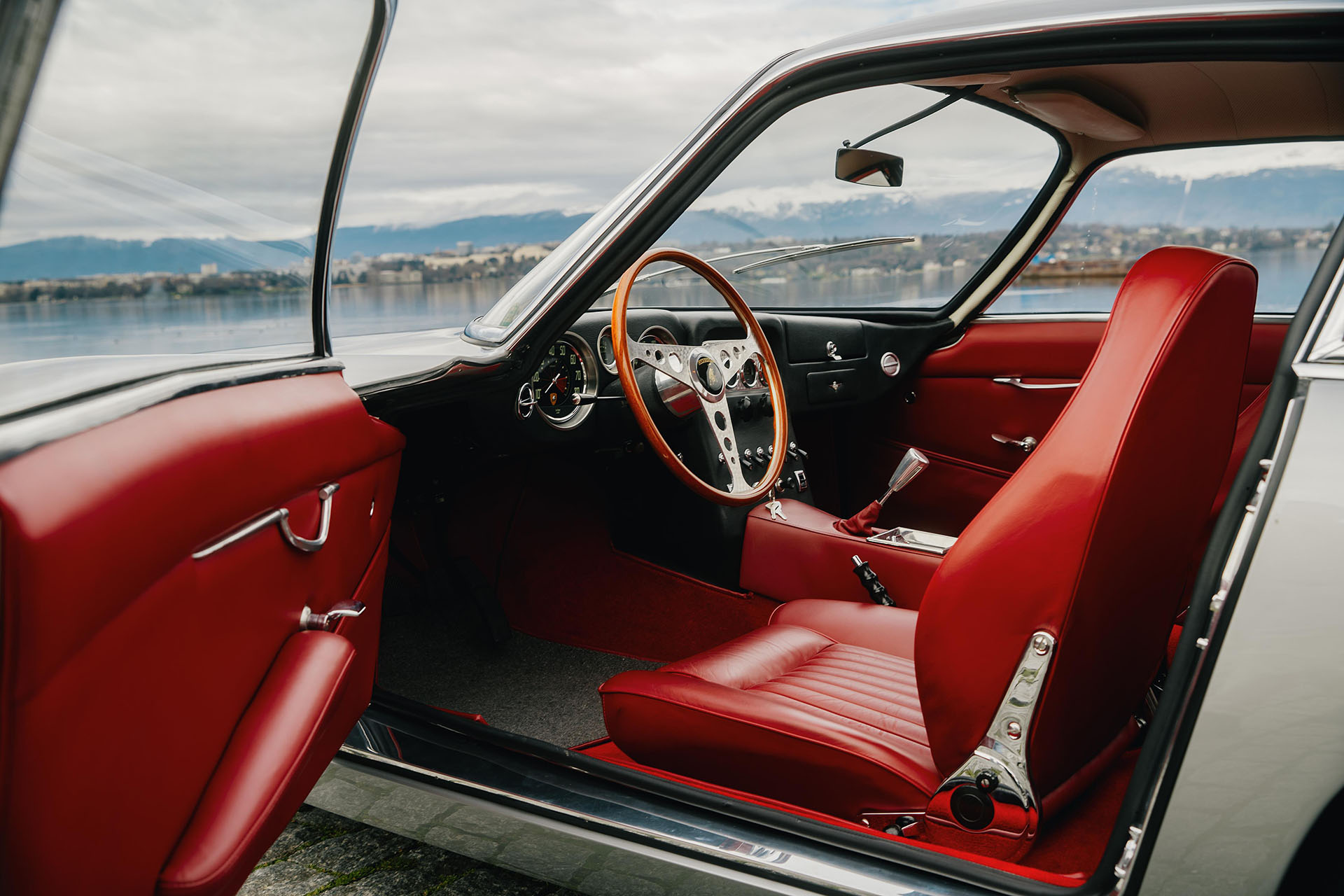
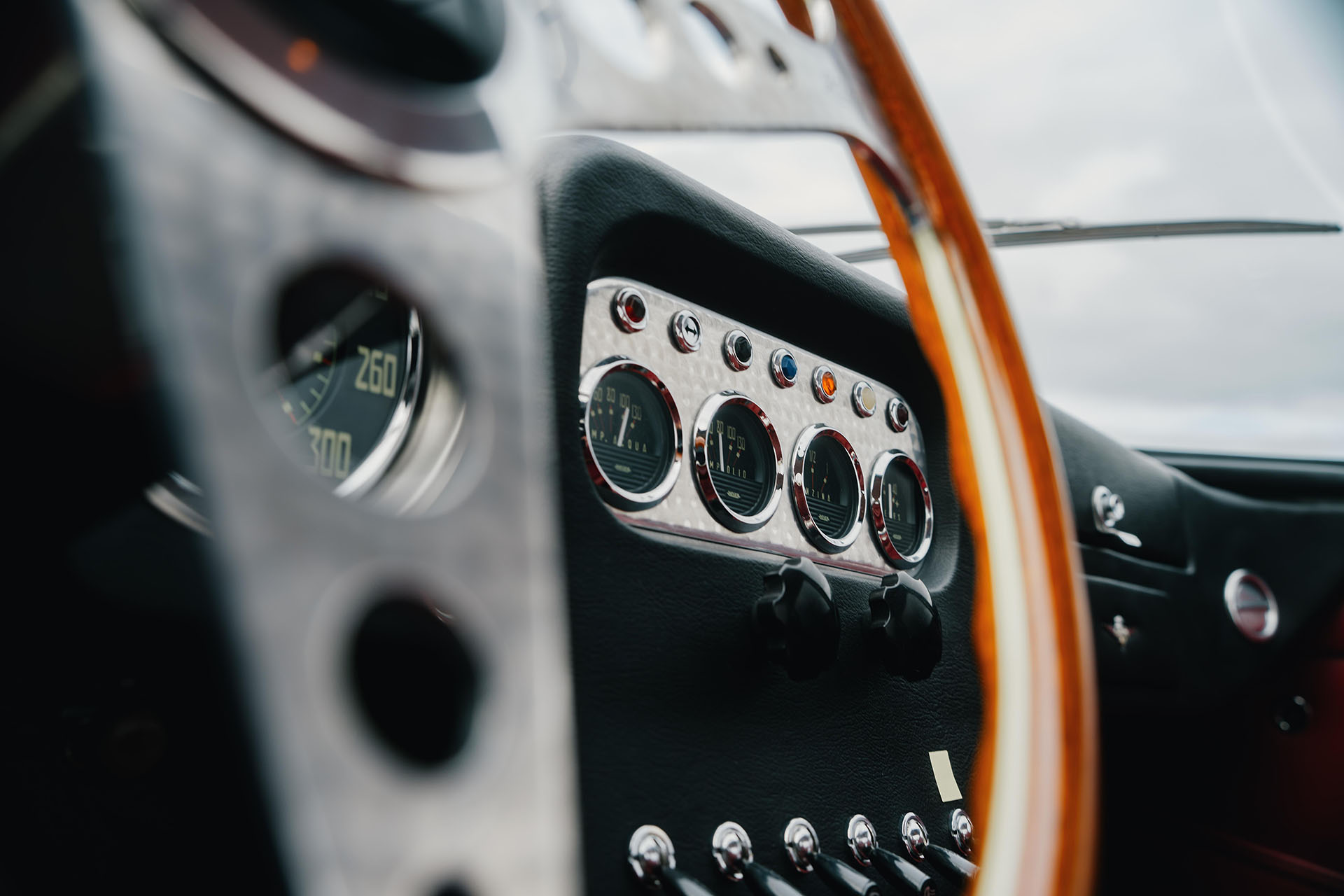
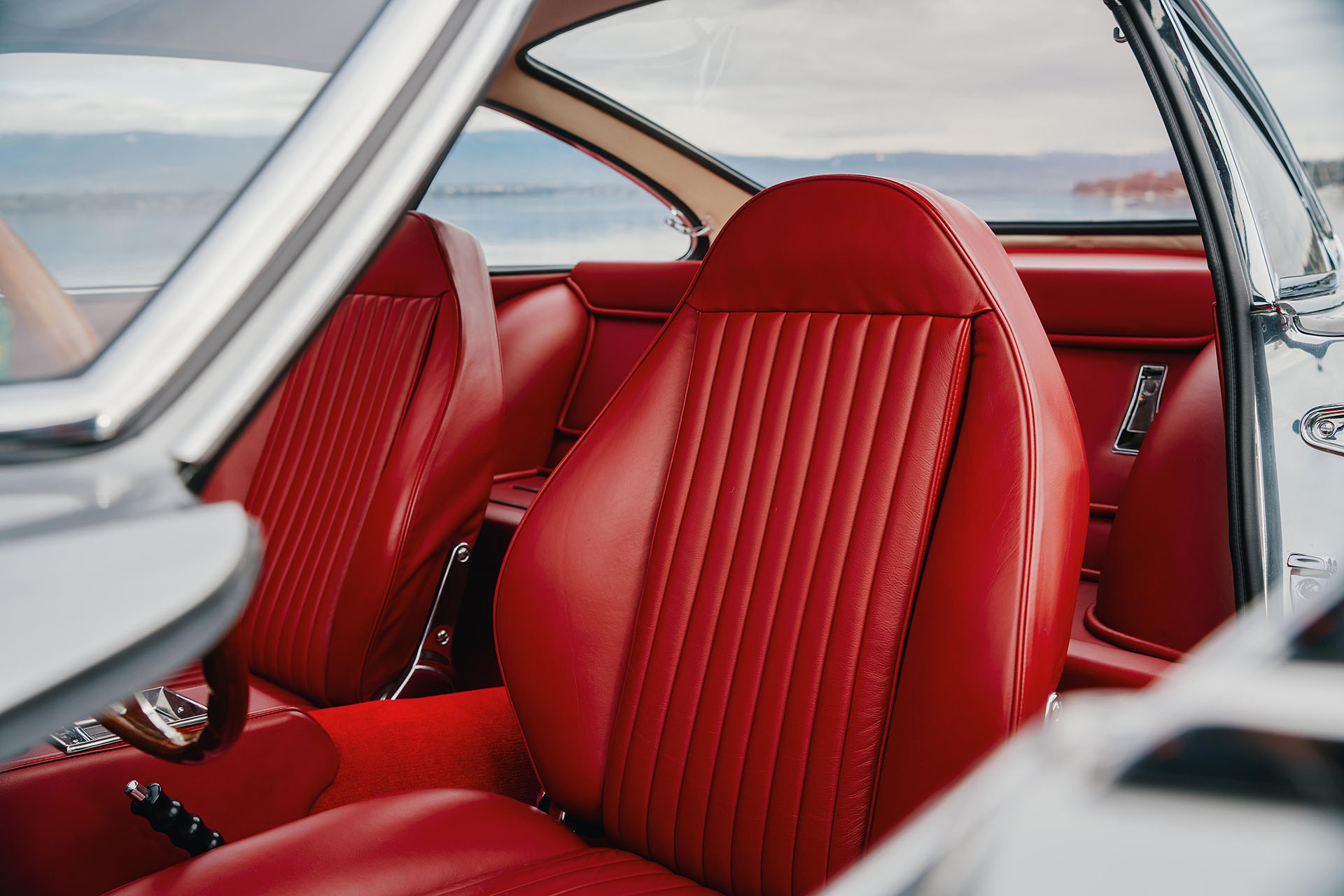
The first production model made by Lamborghini was an immediate hit and caught the attention of much of the media present in Geneva at the time. The interiors of the 350 GT were of the highest level, with widespread use of leather and chrome plating, and characterized by a 2 + 1 configuration, with two front seats and one central rear seat. As well as the design, the engineering was striking: the four independent wheels and engine performance, with 320 CV, were state-of-the-art choices.
The engine captivated every visitor to the stand, where Ferruccio Lamborghini himself showed off the car to onlookers, future customers, and journalists. As confirmation of its qualities, the Lamborghini V12 was taken to 4 liters just a few months later on the 400 GT, and in this new configuration, it would become the cornerstone of Lamborghini’s success. For the next 40 years, the same geometry would be used in various positions and variations and would become one of the key symbols of Lamborghini’s DNA. Indeed, this engine would be used in a front longitudinal position on the 400 GT, Islero, Jarama, Espada and LM 002, in a rear transverse position on the Miura, and in a rear longitudinal position on the Countach and Diablo.
The first 350 GT was delivered to Livorno-born drummer Giampiero Giusti, who was at the height of his success with the band “I 5 di Lucca”, which later became the “Quartetto di Lucca”, considered one of the most important jazz ensembles in Italy. This marked the beginning of a close relationship between Lamborghini and the entertainment world in which many actors and musical performers became passionate customers of the company. The 350 GT took on a starring role in the 1967 Columbia Pictures film “Kill Me Quick, I’m Cold”, directed by Francesco Maselli, where it was driven by the leading couple, Monica Vitti and Jean Sorel.
The car exhibited at the Lamborghini stand at Geneva 1964 was the 350 GT chassis #101, Metallic Geneva Green in color with white interior, the first ever produced. The car, later used as a test model for development and endurance tests, was unfortunately destroyed by a rear-end collision while stopped at traffic lights.
However, the very next 350 GT, with the second chassis number, did survive: metallic gray with red interior, despatched from Sant’Agata Bolognese on 15 August 1964 and delivered brand new to Geneva. The very same car is now the oldest existing Lamborghini production car, perfectly restored and certified by Lamborghini Polo Storico. This year, the Sant’Agata Bolognese carmaker wanted to celebrate its story, bringing it back to life and in top form on the streets of Geneva, the city where it was first delivered and presented six decades years ago.
California, often called the Golden State, offers an array of picturesque landscapes, thrilling amusement parks, and cultural experiences, making it a great destination for family trips. With its vast diversity, from the coast’s sandy beaches to the majestic mountains and bustling cities, there’s something for everyone in the family to enjoy.
To help you plan your itinerary, here is a list of the top travel destinations you should consider visiting on your family trip to California:
Other articles you can read:
1. Disneyland Resort, Anaheim
No family trip to California would be complete without visiting the Disneyland Resort in Anaheim.
Known as “The Happiest Place on Earth,” Disneyland and its sister park, California Adventure, offer a magical experience with rides, shows, and attractions for all ages. From the fairy-tale charm of Sleeping Beauty’s Castle to the thrilling adventures in Star Wars: Galaxy’s Edge, Disneyland Resort is a must-visit travel destination for families looking to immerse themselves in a world of imagination and fun.
2. San Diego Zoo and Safari Park
For animal lovers and adventure seekers, the San Diego Zoo and its companion, the Safari Park, are great destinations that offer a look at animals worldwide in a family-friendly environment. The San Diego Zoo in California is famed for its conservation and education efforts, making it a fun outing and an informative experience for kids and adults alike.
Yosemite National Park is an awe-inspiring natural wonder that allows families to explore the great outdoors. With its iconic cliffs, waterfalls, and giant sequoias, Yosemite provides a stunning backdrop for hiking, camping, and rock climbing in California. Whether gazing at the majestic Yosemite Falls or marveling at the giant sequoias in Mariposa Grove, Yosemite is a destination that inspires and rejuvenates.
4. Santa Cruz Beach Boardwalk
For a classic beachside amusement experience, the Santa Cruz Beach Boardwalk is a timeless California destination. With free admission to the boardwalk, families can enjoy different rides, games, and attractions, all while soaking up the scenic beauty of the Pacific Ocean. Whether riding the historic Giant Dipper roller coaster or playing mini-golf, the Santa Cruz Beach Boardwalk offers fun for the entire family.
Lake Tahoe, a lake between the border of California and Nevada, is a stunning destination year-round. In the summer, families can enjoy boating, fishing, and swimming in the lake’s crystal-clear waters. Winter makes the area a snowy wonderland, perfect for skiing, snowboarding, and cozy cabin stays. The natural beauty and various activities make Lake Tahoe a versatile family destination.
Top California Destinations for Families to Enjoy
How to Prepare for Your Family Trip to California
When preparing for family trips, especially to vibrant destinations like those in California, it’s crucial to plan ahead to ensure a smooth and enjoyable experience for everyone involved.
Here are five essential tips for parents to consider:
1. Research and Book in Advance
Make sure to research and book key attractions in California and accommodations well in advance to avoid disappointment and make the most out of your family trip. This is especially important for popular destinations like Disneyland Resort or Universal Studios Hollywood, where tickets and fast passes can sell out quickly. Booking ahead can also help you secure better rates and special family deals
2. Involve Your Children in the Planning Process
Engaging your children in trip planning can make the experience more enjoyable for them. Allow them to pick a few activities or destinations they are excited about. This involvement helps build their anticipation and makes the trip more meaningful, as they get to experience something they chose themselves.
3. Pack Smart and Prepare for All Weather Conditions
California’s weather can vary greatly depending on where and when you’re visiting. That’s why make sure to pack layers for everyone so you can adjust to changing temperatures throughout the day. Also, don’t forget essentials like sunscreen, hats, and comfortable walking shoes.
4. Schedule Downtime
While it’s tempting to pack your itinerary with back-to-back activities, it’s important to schedule some downtime. Young children, in particular, can get easily overwhelmed by too much stimulation and can benefit from rest periods. That’s why you should allot time for relaxed activities like enjoying your hotel’s amenities or having a leisurely picnic in a park.
5. Get Family Travel Insurance
Investing in family travel insurance is a must. This type of insurance can cover unexpected events such as trip cancellations, medical emergencies, lost luggage, and more. It provides peace of mind knowing that your family and your trip investment are protected against unforeseen circumstances. Make sure to read the policy details carefully to understand what is and isn’t covered.
Make Unforgettable Memories in California with Your Family
Embarking on a family trip to California opens up a world of adventure, discovery, and bonding opportunities that can leave a lasting imprint on your family’s memory. From the enchanting allure of Disneyland to the natural wonders of Yosemite, California offers a diverse landscape of experiences for you and your family to explore and enjoy.
Were you aware that RV’s come with their own vocabulary? Some of the RV Slang and Acronyms crossover from other industries. But other’s are unique to just the RV World.
We’ve put together an RV dictionary of sorts. Whether you’re new to RV’s or have been doing this for years, freshening up your knowledge of these terms, slang, and acronyms can help in several ways. Not only will you have a better understanding of your rig. But it will assist you in understanding blogs and forums about RV’s.
10 Year Rule – rule by some RV resorts and parks indicating that you cannot use their facilities if your RV is older than 10 years
A/C – Air Conditioner
Adjustable Ball Mount – height adjustable ball at the hitch allowing the ball and tongue height to properly match between the tow vehicle and trailer
Airbag – added equipment to the suspension system of a tow vehicle or RV to act as a shock absorber
LoadLifter 5000 Ultimate Plus Air Suspension Kit
Anode Rod – usually a zinc rod used to prevent corrosion in a steel hot water tank
Arctic Package – optional package for RV’s increasing insulation and adding tank heaters for an extended camping season
Auxiliary Battery – Extra Battery to run your 12-volt stuff
Awning – material (usually vinyl) attached to a metal frame along the exterior wall of the RV used as a sun or rain block
Axel Ratio – relation between the driveshaft and rear axels – has a large impact on tow ratings and capacities
Back-Up Monitor – Camera mounted to the rear of the RV with a monitor in the dashboard compartment
Ball Mount – supports the hitch ball and connects the trailer coupler
Basement – Large storage area under your RV’s living area which is accessible from the outside cabinets.
BH – abbreviation for Bunkhouse
Black Water Capacity – Amount of waste water from your toilet that your black water tank can hold
Black Water Tank – Tank under the RV that holds the waste water from your toilet
BLM – abbreviation for US Bureau of Land Management
Blue Boy – portable waste water tank used to transport waste water from an RV to a dump station when the hook-up is not on site
Boondocking – a style of RV’ing with no hook-ups
Booth Dinette – Dining table with opposing benches
Brake Controller – device in the tow vehicle that applies trailer brakes at the same time the tow vehicle brakes
Breakaway Switch – safety switch that applies the trailer brakes if your trailer becomes unhitched from the tow vehicle.
BTU (British Thermal Unit) – A measurement of heat. Quantity of heat required to raise 1lb of water 1 degree. Heaters, furnaces, and RV air-conditioners are BTU rated.
Bunkhouse – RV floorplan style that has bunkbeds
Burn Ban – law, regulation, or rule indicating that you cannot have a campfire often seen in arid climates like the desert
CCC (Cargo Carrying Capacity) – max weight of personal items you can add to your RV including storage
Cab – see Cockpit
Cab-Over – see Mother’s Attic
Captain’s Chair – driver’s seat of a motorhome
Camper Van – see Class B
Camp Side – passenger side of an RV referring to the side of your campsite designed for your outdoor activities
Caravan – term used to describe a group traveling together
Cassette Toilet – toilet with a small holding tank. popular in smaller Class B campers
Chassis – the frame your RV is built on
Chucking – movement of an unbalanced RV while traveling. Think bucking bronco.
Class A – style of drivable RV that looks like a flat nosed school bus or charter bus
Class A Camper with Toad
Class A Diesel Motorhome – see Class A – specifically fueled by diesel
Class B – van style motorhome
Class C – style of motorhome where the front looks like a box truck with a mother’s attic
Coach – see motorhome
Cockpit – front of a motorhome where the driver and front passenger seat are located
COE – abbreviation for Army Corp of Engineers
Control Panel – panel located inside the RV where you control the RV’s systems (climate, lights, power) and where your tank gauges are located
Converter – converts 120 volt AC power into 12 volt DC power
Coupler – part of the tongue or A-Frame of a travel trailer that attaches to the Ball Hitch of the tow vehicle
Diesel Puller – diesel powered motorhome with the engine located in the front
Diesel Pusher – diesel powered motorhome with the engine located in the rear
Dinghy – vehicle towed behind a motorhome
Dispersed Camping – camping on federal land usually with no hook-ups. also see Boondocking
Dry Weight – weight of the RV new from the factory. No items, water, fuel, or passenger weight
DSI Ignition (Direct Spark Ignition) – method of igniting the main burner on a propane fuel appliance
Dually – pick-up truck with 4 rear wheels
Ducted A/C – air conditioning supplied through ducts in the ceiling or throughout the RV
Ducted Heat – heat is supplied through ducts in the ceiling, floors, or throughout the RV
Dump Station – location where you can legally dump your waste water from the black and gray tanks
Electrical Connector – links the power from the tow vehicle to the trailer while traveling for such things like your lights
Enclosed Underbelly – RV where the bottom has been closed off or insulated for temperature control and/or exterior damage
Engine – provides power to your motorhome
Engine Oil Cooler – heat exchanger where engine oil is passed through to be cooled by airflow. sometimes used by trucks hauling a heavier load to prolong engine life
Equalizing Hitch – see Weight Distribution System
Extended Stay – campground that allows for extended stays often reducing the rate (monthly vs nightly site)
FB – abbreviation for Front Bath
Fifth Wheel RV – style of towable RV where the hitch is inside the bed of a pick-up truck
Fifth Wheel Style Camper
Fireplace – found in newer RV floorplans located in the living room works as an electric heater
Fiver – another name for a Fifth Wheel
FK – abbreviation for Front Kitchen
FL – abbreviation for Front Living
Flat-Towing – style of towing a vehicle with all 4 wheels on the ground without the use of a tow dolly
FMCA (Family Motor Coach Association) – membership club of motor coach owners
FRED – FRont Engine Diesel – see Diesel Puller
Free Standing Dinette – Dining area with chairs
Fresh Water Capacity – amount of fresh water your RV can hold
Fresh Water Tank – Tank that stores fresh water for your RV when not connected to a spigot
Front Galley – RV floorplan where the kitchen is in the front portion of the RV
Front Kitchen – same as Front Galley
Front Living – RV floorplan where the living room is in the front portion of the RV
Front Sleeping – RV floorplan where the master bedroom is located in the front portion of the RV
Fuel Type – type of fuel used for your motorhome; either gas or diesel
Full-Hookup – site that has hook-ups for your water, electric, and sewer
Full-Timer – describes a person who lives in the RV all year
Fur-Babies – term of endearment used to describe one’s pets
Galley – Kitchen
Gaucho – sofa or dinette bench that converts to a sleeping area
GAWR (Gross Axel Weight Rating) – total weight allowed on each axel including the axel, tires, wheels, and brakes
GCWR (Gross Combination Weight Rating) – total allowable weight of a tow vehicle including trailer, occupants, fuel, personal items, and hitch
Generator – gas, propane, or diesel powered machine that generates 120-volt power often used by RVers when boondocking or no power pedestal is available
Genny – another term for generator
Glamping – camping in luxury, such as with the use of an RV
Gooseneck – type of hitch used on Fifth Wheel campers
Gray Water Capacity – capacity of the gray water tank
Gray Water Tank – tank that holds the waste water from your sinks and shower
GVWR (Gross Vehicle Weight Rating) – maximum weight allowed for a vehicle including chassis, body, engine, fuel, fluids, occupants, and personal items
Hard-Sided – walls of an RV made of aluminum or another hard surface
Heat Exchanger – device that transfers heat. Example: The Furnace
Height – top most point (usually an air condition unit) to bottom (ground) measurement of an RV
High Profile – RV design in Fifth Wheel campers allowing for higher than normal interior height, usually found in front living floorplans
Hitch – connection between a tow vehicle and an RV or a motorhome and a towed vehicle
Hitch Capacity – maximum towing capacity of hitch, measured in pounds
HP – abbreviation for Horsepower
Holding Tanks – tanks under an RV that hold your black waste, gray waste, and fresh water separately
Honey Pot – portable waste water tank
Camco Rhino Portable RV Tote Tank
Honey Wagon – truck or trailer that will come to your campsite to empty your waste water tanks
Hook-Up – term referring to connecting your camper to the available amenities at a campground
Hose Bib – fresh water tap or spigot providing fresh water
House Battery – battery in an RV that powers the 12-volt electric system in your RV
HR – abbreviation for Holiday Rambler, a popular motorhome manufacturer
Hula Skirt – mud flap along the rear of an RV – sways like a hula skirt while driving giving it the name
Interior Height – floor to ceiling measurement inside the RV
Invertor – converts 12-volt DC power to 120-volt AC power
Island Queen – RV bedroom floorplan with a queen sized bed with walking room on either side
Jack-Knife – 90 degree angle at the hitch point created by poor turning of a tow vehicle with trailer
Jack-Knife Sofa – RV sofa or couch that can be opened up to create a sleeping area
King Pin Support – additional equipment for Fifth Wheel RV’s that increases stability
King Pin Weight – actual weight pressing down on a fifth wheel hitch by the trailer
KOA (Kampgrounds of America) – franchise of RV parks
Laminated Walls – term referring to the exterior walls of the RV. Usually frame, Styrofoam, fiberglass sheeting, and then laminated
Length – furthest forward point to furthest rear point including bumpers and any hitch
Leveling Jacks – equipment used to level the RV on the ground when stationary
Livability Package – items available to rent to equip an RV for use instead of purchasing. Term found when renting an RV
Loft Bed – bed or sleeping area located above another room. Generally over the cockpit of a motorhome
LP Gas (Liquid Petroleum) – another name for propane
MH – abbreviation for Motorhome
Mods – RV slang for Modifications done to an RV by the owner
Moochdocking – RV term used to describe camping on someone’s private property or residence often with a garden hose and 15amp power cord
Mother’s Attic – area located over the driver cockpit of a Class C motorhome often used for storage or a loft bed
Motorhome – style of drivable RV
Murphy Bed – bed that is hinged on one end to fold up vertically along a wall when not in use
NADA – abbreviation for National Automotive Dealer’s Association
Newbie – term referring to someone who is new to the RV world
Non-Potable Water – water that is not safe for consumption but may be used for cleaning of holding tanks
NPS – abbreviation for National Park Service
OEM – abbreviation for Original Equipment Manufacturer, such as for replacement parts
OK – abbreviation for Outside Kitchen
Park Model – specific camper type designed to be stationary
Part-Timer – term used for those that use their RV for more than the occasional vacation, but do not live in it year round
Pilot Light – small standby flame used to to light the main burner of a fuel fired appliance such as an RV stove
Pin Weight – see King Pin Weight
PO – abbreviation for Pop-Up Camper
Pop-Up Camper – most lightweight style of camper. identified by it’s tent like walls when completely expanded
Porpoising – the up and down motion of a camper while driving. Like a dolphin swimming.
Potable Water – water that is safe for consumption
Primitive Camping – see boondocking, common term for tent camping
Pull-Thru – term used to describe a campsite that you can pull through instead of backing into
RB – abbreviation for Rear Bath
RE – abbreviation for Rear Entertainment
Rear Kitchen – RV floorplan where the kitchen is in the back portion of the camper
Rear Living – RV floorplan where the living area is in the back portion of the camper
Rear Sleeping – RV floorplan where the master bedroom is in the rear portion of the camper
Receiver Hitch – see Hitch
Reefer – RV slang for refrigerator that operates in 2 or 3-way operating modes (propane, 120-volt, or 12-volt)
Rig – term used to refer to a motorhome
RK – abbreviation for Rear Kitchen
RL – abbreviation for Rear Living
RV (Recreational Vehicle) – vehicle or trailer that includes amenities like cooking area, sleeping area, and living area
RVDA – abbreviation for Recreational Vehicle Dealer’s Association
RVIA – abbreviation for Recreational Vehicle Industry Association
RV License – specific license some states require to drive an RV
Safety Chains – set of chains attached from the tow vehicle to the trailer close to the hitch intended to keep the trailer attached to the tow vehicle in the case of a hitch failure
Schoolie – RV term used for a school bus that has been converted into an RV
Sealed Underbelly – see Enclosed Underbelly
Self Contained – term used to describe an RV that can stay overnight with no external hook-ups
Shore Cord – electrical cord connecting the RV to Shore Power or a Generator
Shore Power – electrical connection provided at the pedestal of a campground
Site – designated area of a campground that a camper rents for use
Skylight – Plexiglass covered opening at the ceiling of an RV designed to allow natural light in. Commonly found in the shower
Sleeping Capacity – the number of spaces for sleeping in an RV. (example – dropping a dinette table to make a bed)
Slide-In – style of RV specifically designed to slide into the bed of a pick-up truck
Slide-Outs – expanding walls of an RV designed to increase the interior space
Slider – RV term for sliding hitch
Sliding Hitch – Fifth Wheel hitch designed for short bed pick-up trucks allowing them to safely tow a Fifth Wheel camper
Snowbird – term referring to a person who leaves a cooler climate in the winter to seek warmer weather during the cooler months
SS – abbreviation for Super Slide
Stick and Bricks – term used to refer to a traditional home
Stinky Slinky – RV term used to describe the waste water hose
Super Slide – term used to describe one large slide out on an RV
Sway Bar System – equipment attached at the hitch designed to reduce side to side motion of a towable RV while driving
TH – abbreviation for Toy Hauler
Theater Seating – RV seating option in the living area designed like a movie theater style seat with recliners located in front of the TV
Toad – see Dinghy
Tongue Jack – jack that is mounted on the front of a towable RV used to raise and lower the front for leveling and connecting to the tow vehicle
Tongue Weight – actual weight pressing down on the hitch ball
Tow Rating – maximum weight a tow vehicle can haul safely
Toy Hauler RV – style of RV distinguished by its ability to haul recreational equipment like motorcycles, bicycles, ATV’s within the RV. Identified by a garage in the rear of the RV
TPMS (Tire Pressure Mounting System) – built in or after market system that monitors the condition and pressure in your tires with a monitor or alert system in the cab for the driver
TireMinder i10 RV TPMS with 4 Transmitters
Travel Trailer RV – style of towable RV identified by a hitch that attaches to the bumper of a tow vehicle
TV – abbreviation for Tow Vehicle
Umbilical Cord – wire or cord providing power from the tow vehicle to the trailer for traveling
Underbelly – bottom surface of an RV
Walkable Roof – feature on some RV’s with reinforced structure that allows a person to walk on the roof
Weekenders – Term used to describe RVers that primarily use their RV on the weekends
Weekend Warrior – see Weekender
Weight Distribution System – system designed to take the weight from the tongue and distribute it to the front of the tow vehicle
Wet Bath – RV bathroom design with the shower at the top and toilet with lid at the bottom of a single room. Common in smaller RV’s such as the Class B
Wheel Base – horizontal distance between the centers of the front and rear axel
Width – side to side measurement of the RV when slides are in and the vehicle is prepared for driving down the road
Winterizing – the process of getting your RV ready for colder weather
This is an ever evolving and changing list. Just like our language, there are always new terms and slang being created and added. As we hear and learn things, we will update our dictionary.
We anticipate that this list will prove helpful whether you’re perusing the internet for assistance in your next project or looking to purchase an RV. If you know of anything we have left off the list, please send us an email and let us know!
BMW’s next-generation EV family, known as the Neue Klasse, is coming soon. The first members to arrive will be a sedan and SUV, sitting in the same segments as the 3-Series and X3. BMW already previewed the sedan with with last year’s Vision Neue Klasse concept, and soon we’ll get a preview of the SUV with a concept called the Vision Neue Klasse X.
Lamborghini’s oldest nameplate, the 350 GT, has turned 60. To celebrate, Lamborghini took the oldest surviving example, the second car to roll off the production line, back to Geneva where the first car made its world debut. Lamborghini held onto that first car for testing purposes but it was later destroyed when it was rear-ended at a traffic stop.
Buyers of the 2024 Ford Mustang GT and Dark Horse can order a supercharger upgrade from Ford Performance that will lift output to 810 hp. The upgrade costs less than $10,000, excluding installation, and can be performed at any Ford dealership.
You’ll find these stories and more in today’s car news, right here at Motor Authority.
BMW Vision Neue Klasse X electric SUV set for March 21 debut
Lamborghini’s first car, the 350 GT, turns 60
810-hp supercharger kit for 2024 Mustang’s V-8 costs $9,995
Review: 2024 Volkswagen ID.4
GM may be developing extendable truck bed
Gen X, Millennials buy the most EVs, as Boomers dominate policy
6 Porsche 911 GT3s complete with transport truck up for sale
Honda Pilot vs. Ford Explorer: Compare SUVs
Mercedes explores use of humanoid robots on factory floor
Mercedes EV range run shows gains from heat pump, solar roof
The redesigned 2024 Mercedes-Benz AMG GT Coupe starts sales this spring priced from $136,050, including a $1,150 destination charge.
It arrives in GT 55 and GT 63 grades, both fitted with the familiar twin-turbocharged 4.0-liter V-8 engine. The GT 55 is rated at 469 hp. Upgrading to the GT 63, which is priced from $177,050, including destination, nets 577 hp.
The GT 63 needs just 3.1 seconds to reach 60 mph from rest and will keep accelerating to a governed top speed of 196 mph. The GT 55 is only slightly off that pace, with its 0-60 mph time coming in at 3.8 seconds and its top speed capped at 183 mph.
Unlike its two-seat, rear-wheel-drive predecessor, the redesigned AMG GT features 2+2 seating and all-wheel drive, making it a more practical car all around.
Inside, buyers will find heated and cooled power-adjustable seats, an AMG Performance steering wheel, a 12.3-inch digital instrument cluster, and an 11.9-inch infotainment screen with a tilt function to improve visibility when there’s glare. All of these features are standard alongside a head-up display, surround-view camera system, and Burmester audio system. Wireless Apple CarPlay and Android Auto, plus a wireless mobile phone charger are also standard.
Buyers have 11 colors to choose from, plus multiple wheel options ranging from 20-21 inches. An AMG Carbon Fiber Package can be added, which features a number of exterior items finished in real carbon fiber. An AMG Aerodynamics Package is also available and is designed to boost downforce front and rear.
Gatlinburg is the best place to stay in Tennessee if you enjoy chasing waterfalls. Almost a dozen waterfalls are within a 30-minute drive of the mountain town. It’s more than enough to keep you busy for a week or more – or multiple trips.
All the waterfalls near Gatlinburg are in the Great Smoky Mountains National Park. This adds a layer of difficulty in visiting the waterfalls. You’ll need to purchase a parking tag, plan your trip around peak tourism times, and hunt for parking at the trailheads.
It’s not mission impossible – but it’s not a cakewalk.
Use this guide to the waterfalls in Gatlinburg to learn about the waterfalls, where to park, the hiking trails to the falls, and the best times to visit.
Note | The waterfalls in this guide are listed from east to west to make it easier to find on the map.
Missing Waterfalls
You may read this guide and immediately, “What about Abrams Falls? How could he forget this waterfall?!”
I didn’t forget. I left them off this list. And for good reason.
Abrams Falls is one of the best waterfalls in the Great Smoky Mountains National Park. But the trailhead to the waterfall is at the far end of Cades Cove. On a good day, driving from Gatlinburg to the Abrams Falls Trailhead takes over an hour. And on a busy day, it can take 2-3 hours – each way.
If you want to visit Abrams Falls, I recommend spending two nights in Townsend. It’s a quiet town that capitalizes on mountain peacefulness.
There are 17 waterfalls in the Great Smoky Mountains National Park. And in North Carolina, there are a few waterfalls outside the park in Cherokee. Sometimes, the best place to stay to chase waterfalls is Townsend, Bryson City, or Cherokee.
Map of Waterfalls in Gatlinburg
How to use this map | Click the icon in the top-left corner to open the Map Legend, then click on any of the legend items to display more information. If you have a Google account, click the (very faint) star at the end of the map’s name to save this map to your account, then access the map from your smartphone during your trip.
Best Time to Visit Waterfalls
Spring is always the best time to visit waterfalls, and there’s no exception in Gatlinburg. March is the wettest month of the year with 4” of rainfall. But April and May are close seconds with 3.9” and 3.6”, respectively.
All this rain is excellent for visiting waterfalls. Some waterfalls, like Abrams Creek, have enough water volume to be great all year. But other waterfalls, like Grotto Falls and the Place of a Thousand Drips, are better to see after heavy rainfall.
The best time to visit most waterfalls near Gatlinburg is April or May. The worst time to visit any of the waterfalls is October. Although the spectacular fall colors are a stunning addition to the scenery, it’s the driest month of the year, and many waterfalls are reduced to a trickle.
Another factor to consider is the traffic in the Great Smoky Mountains National Park. June, July, and October are the busiest months of the year, totaling nearly 6 million visitors – almost half the annual visitors. But May is part of the shoulder season with barely half as many visitors as the more popular months.
Ramsey Cascades
Ramsay Cascades is not the most popular waterfall. It’s not even in the top five most popular in Great Smoky Mountains National Park. But it is the tallest.
The 100-foot cascading waterfall is located near the Greenbrier area, about half an hour from Gatlinburg. The 8-mile roundtrip hike on the Ramsey Cascades begins at a small parking lot at the end of the dirt road. The trail follows the creek upstream to the waterfall with a gradual 2,185-foot ascent.
Read More: AllTrails App Review – Why AllTrails is the Best Hiking App
It’s a moderately strenuous hike with a steady climb to the waterfall. But it’s a downhill trek back to the car after seeing the spectacular waterfall. A small pool at the bottom is perfect for getting your feet wet. It takes about 5-7 hours to complete the trail.
Fern Branch Falls
After a gentle walk along the Porters Creek Trail, the cascading 35-foot Fern Branch Falls is a treat. It’s one of the least visited waterfalls in the Great Smoky Mountains National Park and rarely appears in travel guides or maps. I found it by accident after learning about a CCC cabin along the trail – I missed the cabin but found the waterfall.
The 7-mile roundtrip hike on the Porters Creek Trail is one of the easiest in the national park. The trail has a gradual 1,500-foot ascent from the parking area, following an old logging road that’s flat and well-maintained.
Fern Branch Falls is on the right side of the trail, about 1.7 miles from the parking area. It takes about 30 minutes to hike to the waterfall casually. And it’s a downhill hike on the way back.
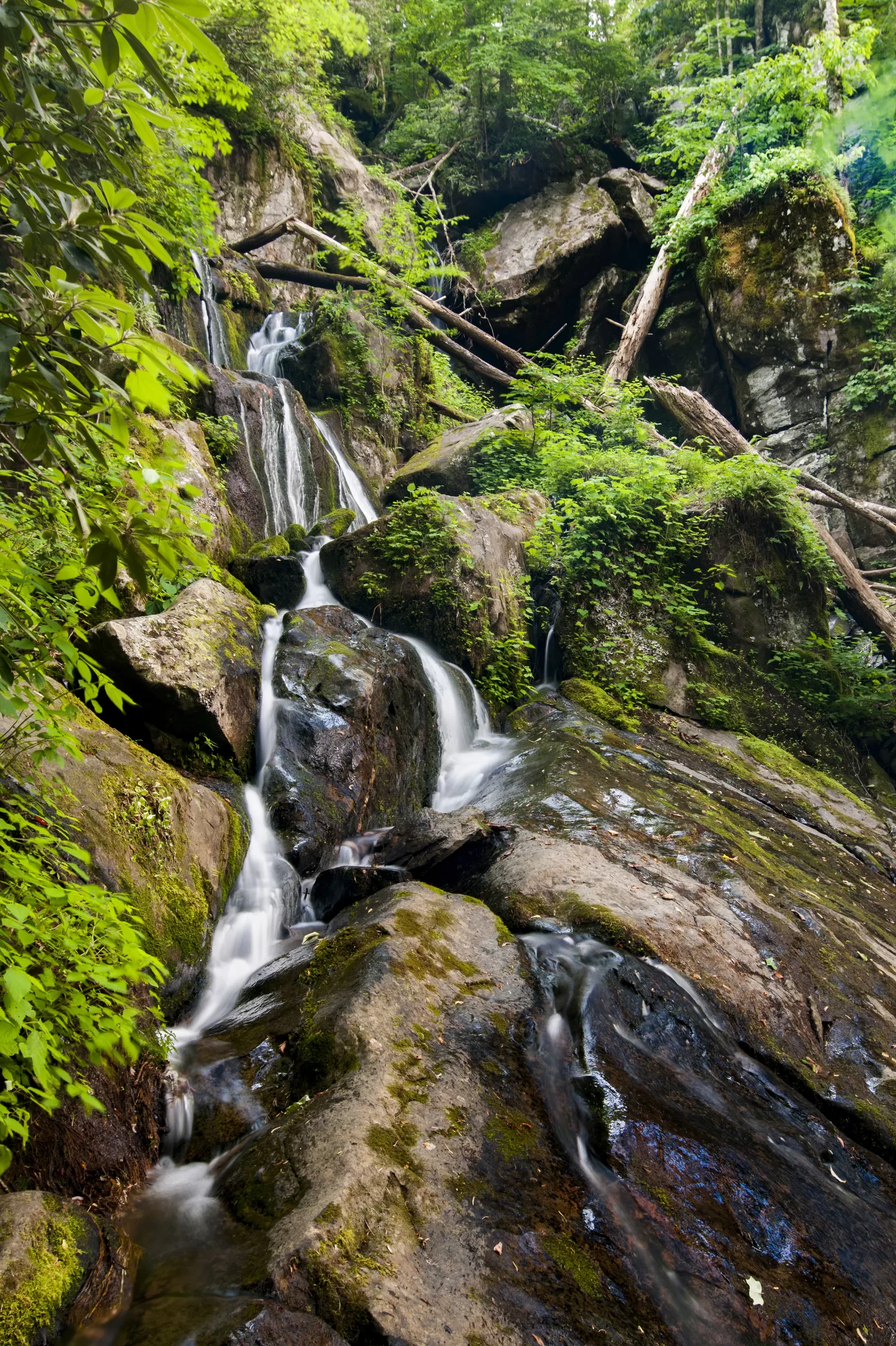
Place of a Thousand Drips
The Place of a Thousand Drips is a curious waterfall. On most days, especially in late spring and autumn, the waterfall is reduced to dozens of tiny streams and hundreds of drips.
But after heavy rainfall, more than a dozen streams of water cascade along the jagged rocks and smooth boulders.
The Places of a Thousand Drips is near the end of the Roaring Fork Motor Nature Trail, a one-lane, one-way scenic drive near Gatlinburg. There is limited parking around the waterfall. Drive past the waterfall for a few pull-off parking spots along the road and walk back to see it.
But most people stop in the road for a moment to admire the waterfall – it’s one of only two waterfalls in the national park viewable from the car.
Baskins Creek Falls
Baskins Creek Falls is a 40-foot cascading waterfall in the center of the Roaring Fork Motor Nature Trail. It’s grown in popularity recently as other waterfalls have become overcrowded.
Baskins Creek Trail crosses from one side of the Roaring Fork Motor Nature Trail to the other, providing two ways to hike to Baskin Creek Falls.
Read More | Travel Guide to the Roaring Fork Motor Nature Trail at Great Smoky Mountains National Park
The first trailhead is a few hundred feet from where the one-lane, one-way road begins. But you don’t have to commit to the auto touring route. You can park at the Rainbow Falls Overflow Lot on Cherokee Orchard Road before turning onto the Roaring Fork Motor Nature Trail and then walk along the road to the trailhead.
From this trailhead, the waterfall is about 1.4 miles into the rugged terrain. It’s a moderately easy hike with a gentle elevation gain.
Pro Travel Tip | The best place to park to hike this trail in the summer is the Rainbow Falls Overflow Parking – and early in the day. The one-lane, one-way scenic road is often overcrowded with bumper-to-bumper traffic in the summer and in October.
The second trailhead is on the opposite side of the Roaring Fork Motor Nature Trail near the Alex Cole Cabin. From here, the 1.3-mile hike to the waterfall is slightly more challenging.
Best Time to Visit | April or May, or just after sunrise in the summer.
Address & Map | Baskins Creek Trail, Gatlinburg, TN 37738
Parking | Pull-off parking along the Roaring Fork Motor Nature Trail at either the trailhead or the Rainbow Falls Overflow Parking on Cherokee Orchard Road.
Grotto Falls
Grotto Falls is tiny, but it’s spectacular. The 25-foot-tall waterfall spills over a rocky outcropping into a shallow pool. It’s a popular waterfall located on a popular hiking trail with multiple destinations, so it can become a busy place during the prime season.
The waterfall’s trailhead is located on the Roaring Fork Motor Nature Trail, a 5-mile one-lane, one-way scenic drive in Gatlinburg. Begin on Historic Nature Trail and then continue onto Cherokee Orchard Road to the gate at the beginning of the one-lane portion of the scenic drive. Continue to a parking area along the road. There are few marked parking spaces near the two trailheads, but you’ll find more as you continue along the road. A privy restroom is available between the two trailheads.
The hike to Grotto Falls follows a 2.6-mile roundtrip journey on the Trillium Gap Trail. It’s a moderately difficult hike with a 544-foot ascent to the waterfall – but fortunately, it’s downhill coming back. The hike takes about 2-3 hours.
Read More: AllTrails App Review – Why AllTrails is the Best Hiking App
Rainbow Falls
Rainbow Falls is one of the most popular waterfalls in Great Smoky Mountains National Park, routinely competing with Laurel Falls and Abrams Falls for most visitors. The 80-foot freefalling waterfall crashes into a shallow pool and then trickles through a series of small crevasses in the rock-strewn stream below.
The trailhead is on Cherokee Orchard Road before entering the Roaring Fork Motor Nature Trail, which is why it’s a popular hiking trail. There are two large parking lots – one located at the trailhead and the other beside the entrance to the motor nature trail. There are also a few pull-off parking spots along the road. There is a privy restroom in the first parking lot.
The 5.1-mile roundtrip hike on the Rainbow Falls is moderately difficult, with a gentle 1,600-foot ascent. It’s a steady upward climb alongside LeConte Creek to the waterfall – so it’s a pleasant downhill trek on the way back. The hike takes about 2-3 hours to finish.
Best Time to Visit | April or May, or mid-week in the summer or October.
Parking | There are dozens of parking spaces along the road before and after the trailhead and an overflow parking lot two minutes past the trailhead.
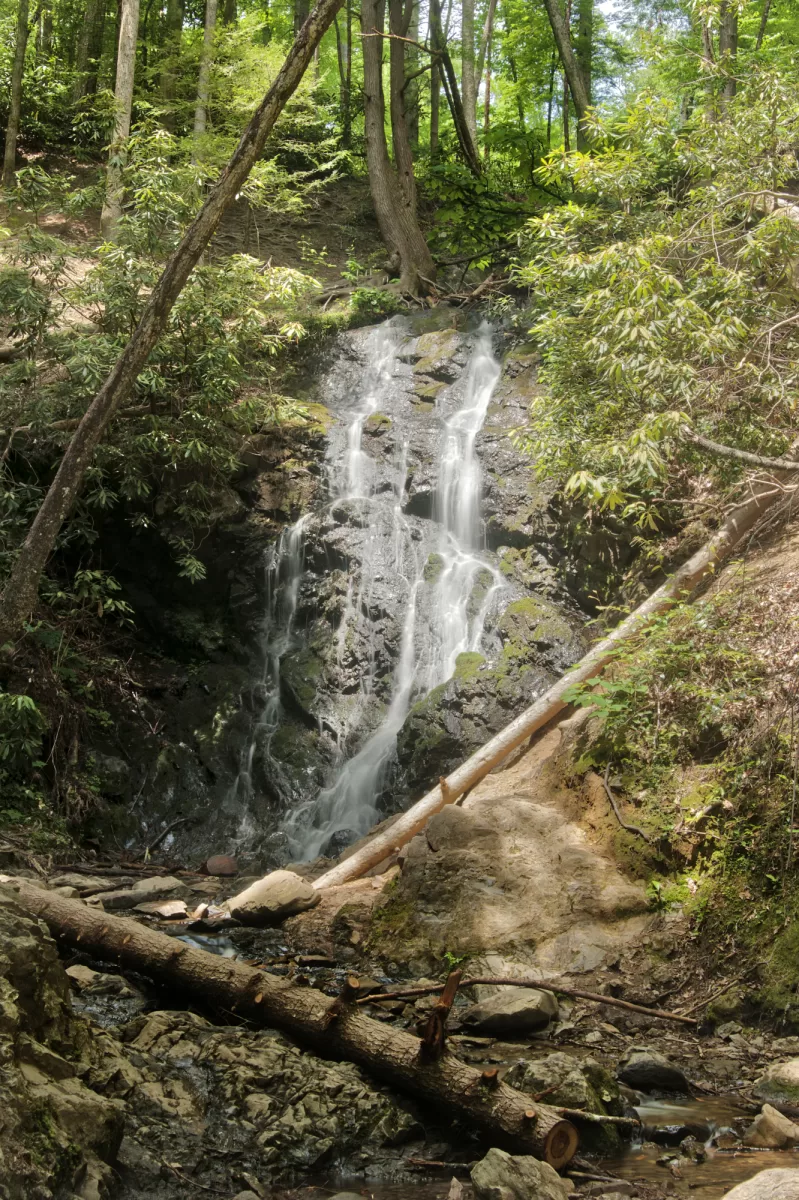
Cataract Falls
Cataract Falls is one of the least spectacular waterfalls in the Great Smoky Mountains National Park. But the trailhead begins at the most popular visitor center and is an effortless hike.
The 25-foot cascading waterfall is typically reduced to thin streams of water softly falling into a shallow pool. But, after heavy rainfall, the waterfall features a tremendous water flow.
The trail begins between the Sugarlands Visitor Center and restrooms. Follow the signs because several trails intersect and branch off in different directions. It takes about 20 minutes to walk the 1.1-mile trail casually.
Huskey Branch Falls
There are a lot of things to do in the Elkmont Historic District. You could explore the restored cabins in Daisy Town. Take a walk along Millionaires’ Row. Or go for a pleasant hike to Huskey Branch Falls.
I think the Little River Trail is one of the best hiking trails in the Great Smoky Mountains National Park. The trail follows the course of the small river, providing hikers with a constant hum of rushing water.
Pro Travel Tip | You’ll find restrooms at the Elkmont Campground. It’s best to visit the restrooms before parking near the trailhead.
The 4.3-mile out-and-back hike on the Little River Trail features a gradual ascent of about 350 feet. It takes about 90 minutes to hike the trail but give yourself time to enjoy the scenery along the way.
One of the reasons I love this trail is the fascinating remnants of previous cabins and the troll bridge! A stone fireplace is all that remains of a cabin, stubbornly standing in the middle of the forest. The Troll Bridge is a gorgeous stone bridge where the Little River Trail crosses a creek.
Best Time to Visit | April or May
AllTrails | Little River Trail
Address & Map | 603 Little River Trl, Gatlinburg, TN 37738
Parking | A few parking spaces at the trailhead near the Spence Cabin. If those spaces are taken, continue driving around the corner to a larger parking lot at the Jakes Creek Trailhead.
Laurel Falls
Laurel Falls is a beautiful 80-foot-tall cascading waterfall and one of the most popular waterfall hikes in Great Smoky Mountains National Park. The trailhead is only 6 miles from Gatlinburg – one of the primary reasons it’s such a popular trail.
It’s a 2.6-mile roundtrip hike to the waterfall on the Laurel Falls and typically takes about two hours. The moderate trail has a gradual ascent to the waterfall. It’s a deceiving trail because it starts paved, but the pavement quickly succumbs to nature. The trail is well-maintained but wonderfully rough. Mountain streams cross the trail in several places.
Read More: AllTrails App Review – Why AllTrails is the Best Hiking App
The waterfall is divided into an upper and lower section. A walkway cuts across the middle, allowing visitors to get closer to this waterfall than any other in the national park. With overcrowding reduced, there’s plenty of room to enjoy the spectacle if you bring a lightweight camp chair or hammock.
The Sinks
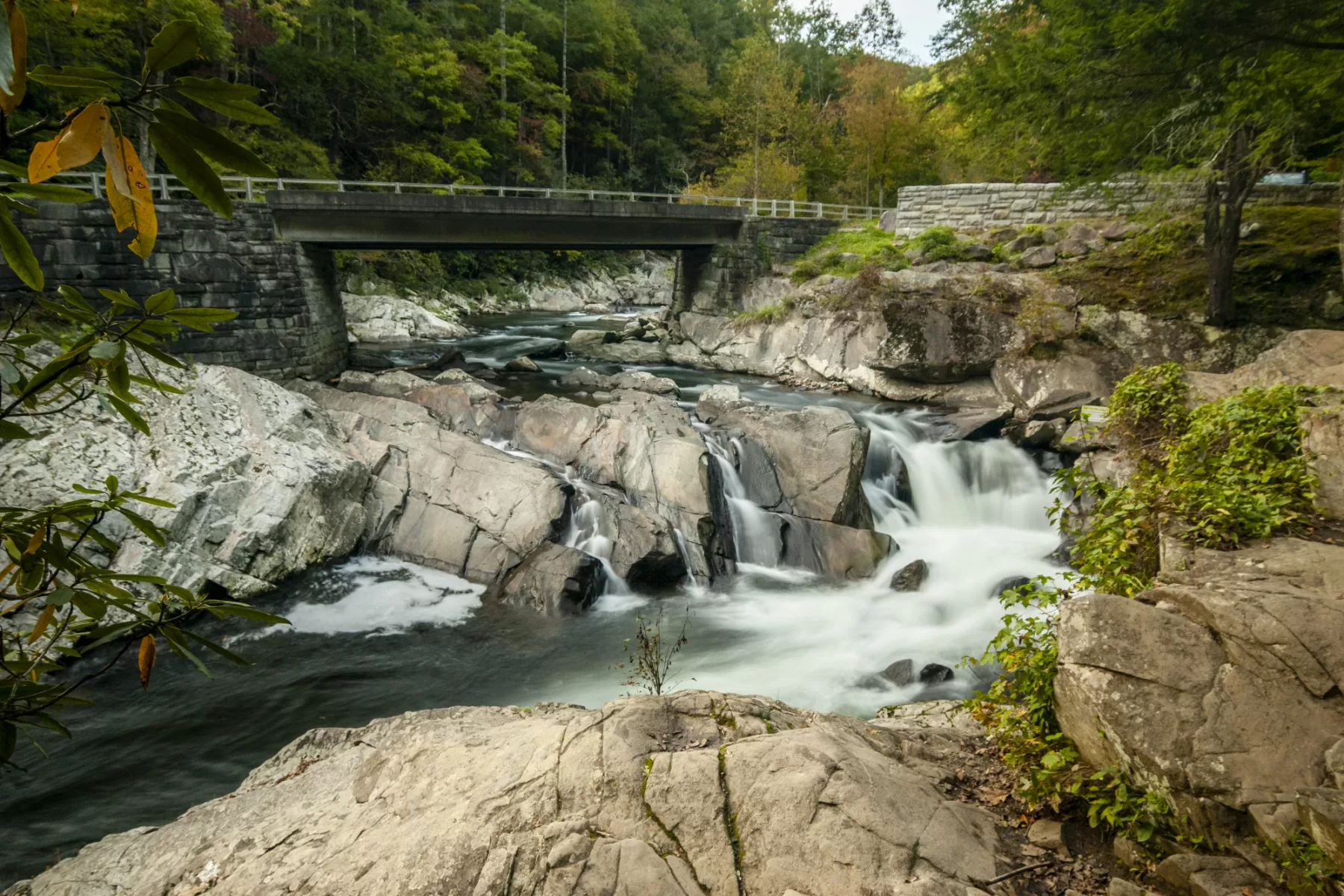
Logging was the primary industry in the Great Smoky Mountains throughout the 1800s. Before the first railroads were built to haul the timber out of the forest, they were floated along the Little River. But in the last years of floating logs, heavy rainfall left a massive pile of hundreds of logs stuck in the horseshoe bend of the river.
Workers decided to use dynamite to free the log jam. But the tremendous explosion did more than clear the stuck logs on the river. It created a 30-foot-deep chasm in the riverbed and bridged two ends of the horseshoe bend, rerouting the river.
Read More | The Fascinating Story of How Dynamite Created The Sinks at Great Smoky Mountains National Park
Today, the interesting place is called The Sinks. It’s about ten miles from Townsend and fifteen miles from Gatlinburg on Little River Road. A bridge crosses the turbulent rapids as the river gushes across the jagged rocks. It’s a popular place for fishing, but swimming is prohibited because of the powerful river currents.
Meigs Falls
Meigs Falls is one of only two Great Smoky Mountains National Park waterfalls that can be seen from the comfort of your car. Meigs Creek plummets into a narrow cove before flowing into the Little River.
Although the waterfall is about 30 feet tall and 60 feet wide, with a good flow throughout the year, it’s difficult to see. The waterfall is set back from the highway about 500 feet across the Little River. A pull-off parking area offers plenty of room for vehicles – typically, people inch along the parking area to enjoy the view from the car and then leave just as quickly as they arrived.
The waterfall is about 15 miles from Gatlinburg and 7 miles from Townsend on Little River Road. The best way to see this waterfall is with a good pair of binoculars.
Best Time to Visit | April or May. But it’s also spectacular when frozen over in the winter.
Address & Map | Townsend, TN 37882
Parking | Several pull-off parking spaces on the waterfall side of the two-lane road.
I’m not sure why BMXers and drifting seem to go hand in hand, but it seems to be a thing.
Here in the Netherlands, Koen de Laat, better known as KUHNS, is another BMX rider who has made the jump from two wheels to four. What no one expected was the vehicle he chose to go drifting in.
The story of this E21 BMW 316 goes back eight years to the time Koen had just gained his driving licence. A friend visited Koen at home to congratulate him and casually hinted that his uncle might have a cheap car for sale.
After contacting the uncle, Koen discovered two things – the car was a coppery-brown E21 3 Series coupe, and it had been sitting outside in the elements for some while. Despite its weathered condition, Koen was keen to purchase the BMW, and a fair price of EUR 500 (around US$550 today) was agreed upon.
How do you transport a non-running car from a backyard on one side of town to your garage on the other? Most people would arrange a tow, but Koen just phoned his friends and convinced them to help push it!
Once the E21 was safely tucked away in his small garage box, Koen wasted no time getting stuck in. With help from his friends, the E21 was quickly back up and running and ready for its roadworthiness inspection, which the car ultimately passed.
At this point, the 316 was still a bone-stock daily driver. It stayed that way for a few years, too. During this time, however, Koen developed an interest in modified JDM cars of a similar age as his E21 and decided to customize the BMW in a similar fashion. At first, he kept things modest with a little lowering and then some new wheels.
At this point, Koen was still BMXing at a semi-pro level, but a knee injury from a riding incident put paid to taking things any further. As one door closed, however, another one opened. Koen decided to keep modifying the E21.
First up was the interior, where Koen’s idea was to upgrade it in the way you see early ’80s Corollas modified for street/drift use in Japan.
The driver’s seat was swapped for a vintage Recaro LXB recliner with classic Spectrum fabric. The E21’s large factory steering wheel was next on the chopping block, replaced with a smaller diameter wood-rimmed Momo equivalent.
Another period-correct aftermarket upgrade came in the form of Pioneer TS-X1 box speakers for the rear shelf. Finally, to enhance the BMW’s drift-ability, a hydraulic handbrake was fitted and customized to fit the original centre console.
Outside, Koen once again looked to Japan for inspiration and not go over the top. Staying true to the E21 era, a BBS front lip (yes, BBS used to make other things, too) and Zender side skirts and rear lip were added.
But it’s the wheels that set everything off – a mismatched set of Work Equips, 03 and 01 models front and rear respectively. The Equips aren’t wide, but they do have a huge amount of dish at the rear, something Koen achieved by splitting the wheels and reversing the centers. It’s an old-school trick to look cool on a budget, while not making the wheels any wider than they need to be for the amount of engine power on offer.
The 1.6L engine that came factory-fitted in Koen’s 316 barely made 90hp, and although the car could get sideways with it, it was less than ideal for drifting. The remedy came in the form of a 1.8L M10 engine from an E30 3 Series. But that isn’t the creative part.
To produce the power the engine is now making, Koen added a Volvo 940 turbocharger that sits on a custom-made manifold. The fuel injectors also came from a 940, while the exhaust was pieced together from an Audi RS3 system. What kind of management does this Frankenstein setup use? Surprisingly, it runs a stock E30 ECU. An adjustable fuel pressure regulator does play a key role, though.
Koen says the setup is good for 180hp, and it has performed reliably for the past two years while taking an absolute beatdown at grassroots drift events. A 323i axle provides some extra beef at the rear end, while BC Racing coilovers and strut braces front and rear refine the handling.
Koen’s E21 is not even close to pristine, but it serves its purpose and has character for days. It is also still street-legal. Yes, although we Dutchies love to complain about the cost of cars, taxes and insurance, we are blessed with pretty loose vehicle modification laws here.
Sadly, our photo shoot was cut short by a punctured rear tyre during some activities, but if you would like to see more of the E21 or this side of Dutch car culture, let me know. I might team up with Koen and hit a local drift day soon.
Collin Tiemens Instagram: collinclicksphotos
More IAMTHESPEEDHUNTER posts
How To join the IATS program: We have always welcomed readers to contact us with examples of their work and believe that the best Speedhunter is always the person closest to the culture itself, right there on the street or local parking lot. If you think you have what it takes and would like to share your work with us then you should apply to become part of the IAMTHESPEEDHUNTER program. Read how to get involved here.
In a pre-Genesis-as-a-brand world, Hyundai was obsessed with moving upmarket, and introduced the delightful 5-liter V8-powered Equus as a bargain-priced competitor to the 7-series and S-class. When it was new a decade ago it was damn near $70,000 (around $92,000 in today’s money), undercutting the Bimmer by almost 10 grand and the S-class by over 20!
The interior is the star of this car, with supple leathers, real wood, and plenty of features that would have been absurd a decade ago but are pretty common in a mid-sized sedan today. It’s a quiet car — like, vault-quiet. There are screens everywhere, which I’m sure are dated as hell today, but I can probably put up with that.
When Jalopnik reviewed this car back in 2014, it was met with mild praise. “The wood is real but it looks tacky, and the plastic buttons feel pretty cut-rate. Still, while it’s not the best out there, it’s convincingly premium.”
Image : Ebay
The 5-liter engine produced an impressive-for-2014 429 horsepower and 376 lb-ft of torque. It’s a big heavy car, so it needed that kind of power just to get up and go. It’s lackadaisical, you could say. I’ve had my fair share of Ford Panther-chassis cars, so I can get on with that just fine.
Once again, Patrick George reports:
“[T]here’s something to be said for getting in this car after a long day at work and just sort of gliding all the way home.”
Image : Ebay
This train of thought started because my wife mentioned she liked the idea of the Bentley-based Volkswagen Phaeton. I think the Equus delivers a lot of the same vibe without the threat of bankrupting me twenty minutes into ownership. What do you think, should I pick up an Equus and write about it?
The technical storage or access is strictly necessary for the legitimate purpose of enabling the use of a specific service explicitly requested by the subscriber or user, or for the sole purpose of carrying out the transmission of a communication over an electronic communications network.
Preferences
The technical storage or access is necessary for the legitimate purpose of storing preferences that are not requested by the subscriber or user.
Statistics
The technical storage or access that is used exclusively for statistical purposes.The technical storage or access that is used exclusively for anonymous statistical purposes. Without a subpoena, voluntary compliance on the part of your Internet Service Provider, or additional records from a third party, information stored or retrieved for this purpose alone cannot usually be used to identify you.
Marketing
The technical storage or access is required to create user profiles to send advertising, or to track the user on a website or across several websites for similar marketing purposes.