Are premium car audio systems really premium? Here’s the scoop.
Consumer Guide Car Stuff Podcast – Premium Car Audio Systems
Whether you drive a car, need a car, or just occasionally bum a ride with friends, you’ve come to the right place. Join Jill and Tom as they break down everything that’s going on in the auto world. New-car reviews, shopping tips, driving green, electric cars, classic cars, and plenty of great guests. This is the Consumer Guide Car Stuff Podcast.
Episode: 211
Broadcast date: March 18, 2024
Guest: David Schneider
–
Jill and Tom opened the episode by acknowledging that EV-startup Fisker is in dire financial straits, having recent halted production. In related EV news, the hosts discussed the announcement that Honda and Nissan are seeking avenues of cooperation to develop electric-vehicle technology, including platforms and software, but not final retail products.
Tom quickly shared his thoughts on a pair of vehicles he recent evaluated, including the 2024 Land Rover Defender, and Volkswagen Taos.
Jill shared her thoughts on the redesigned Lincoln Nautilus premium midsize crossover, including the vehicle’s new door-to-door infotainment screen. Listen in for Jill’s complete review.
In the second segment Jill and Tom welcome David Schneider of Harman Internation to the show. David walked the hosts through the portfolio of premium-audio brands the company manages, and what is involved in allowing a carmaker to use specific audio brands, including Bang & Olufsen, Harman Kardon, JBL, Mark Levinson, and Revel. David explained how Harman works with manufacturers to produce in-car audio experiences appropriate to each Harman brand.
In the third segment Jill is subjected to Tom’s “Fake Concept Car” quiz, which includes a “fishy” bonus question. The hosts wrapped up the show discussing the Ram 1500 Classic, a previous generation Ram pickup truck still offered for sale a lower cost than the current-generation model.
Bentley will delay the launch of its first pure electric vehicle (EV) by a year, and now plans on having an electric-only range by 2033, instead of the earlier target of 2030.
Speaking at a press conference after announcing the brand’s 2023 results, Adrian Hallmark, Bentley’s CEO, told the press, including Automotive News Europe and Autocar, the company is now planning on unveiling its first EV towards the end of 2026 with deliveries starting in 2027.
The original Beyond 100 plan announced back in 2020 called for Bentley’s first EV to be launched in 2025. This would then be followed by a further four EVs, with one being launched per year until 2030, at which point the brand would be electric only.
Those subsequent EVs have been delayed too, and Bentley doesn’t expect to do without internal combustion engines until 2033 now.
According to Mr Hallmark, the company’s first EV will be an “incremental model” built at its factory in Crewe, UK. Introducing a new model with no direct predecessor is less of “gamble” with less pressure.
With its reset targets, Mr Hallmark claimed the company’s EV development budget and timelines are now “locked and loaded”.
Mr Hallmark said the slowed down EV roll out was due to technical issues rather than the lower than expected growth in EV demand.
He sheeted part of the blame onto the software problems and other issues encountered when Porsche and Audi were developing Platform Premium Electric (PPE), the architecture that will underpin Bentley’s future EVs. PPE finally made its production debut this year with the second-generation Porsche Macan, and the Audi Q6 e-tron.
The CEO also said today’s delay announcement will help the brand to solve the “battery and architecture issues that we have had to get to our attribute and target levels attribute and target levels”. Bentley’s previously stated goal was for its EVs to have 600km of range.
Bentley’s CEO also tried to sell another upside, noting “some of the autonomous features that we will now get are better than the ones that we would have got”. He said the cars would have “Level 2++” driver assistance tech with remote summon, but not hands off the steering wheel, eyes off the road Level 3 autonomy.
Although its EV timeline now stretched out further into the future, Bentley will stick to its previous goal of making its entire internal combustion engine range plug-in hybrid by 2026.
The Flying Spur and Continental two-door models will soon gain a twin-turbo V8 plug-in hybrid system that will effectively replace the W12 engine that was retired in 2023. The Bentayga will receive this drivetrain in 2026.
The GWM Ora is currently one of Australia’s most affordable electric vehicles (EVs), going head-to-head with the likes of the BYD Dolphin and MG 4.
WATCH: Paul’s video review of the Ora Standard Range
Although a majority of hype surrounding the Ora has been for the entry-level model with its alluring asking price, there are still a sprawling number of variants on offer.
On test here is the flagship 2024 GWM Ora GT which is fully loaded and kitted out with a range of extra equipment to make it look as sporty as possible – the only catch is its single front-mounted electric motor doesn’t produce any extra power or torque.
Is it worth taking a look at the flagship GWM Ora GT over its mid- and base-spec counterparts? Read along to find out.
How does the GWM Ora compare?
View a detailed breakdown of the GWM Ora against similarly sized vehicles.
GWM
Ora
How much does the GWM Ora cost?
There are currently four variants of the GWM Ora offered in Australia. On test here is the flagship Ora GT.
2024 GWM Ora pricing:
2024 GWM Ora Standard Range: $39,990
2024 GWM Ora Extended Range: $45,990
2024 GWM Ora Ultra: $48,990
2024 GWM Ora GT: $51,990
Prices exclude on-road costs
GWM is currently offering a range of drive-away offers on MY23 Ora models until March 31, 2024. Pricing varies from state-to-state, due to the range of incentives on offer.
To see how the GWM Ora shapes up against its rivals, check out our comparison tool.
What is the GWM Ora like on the inside?
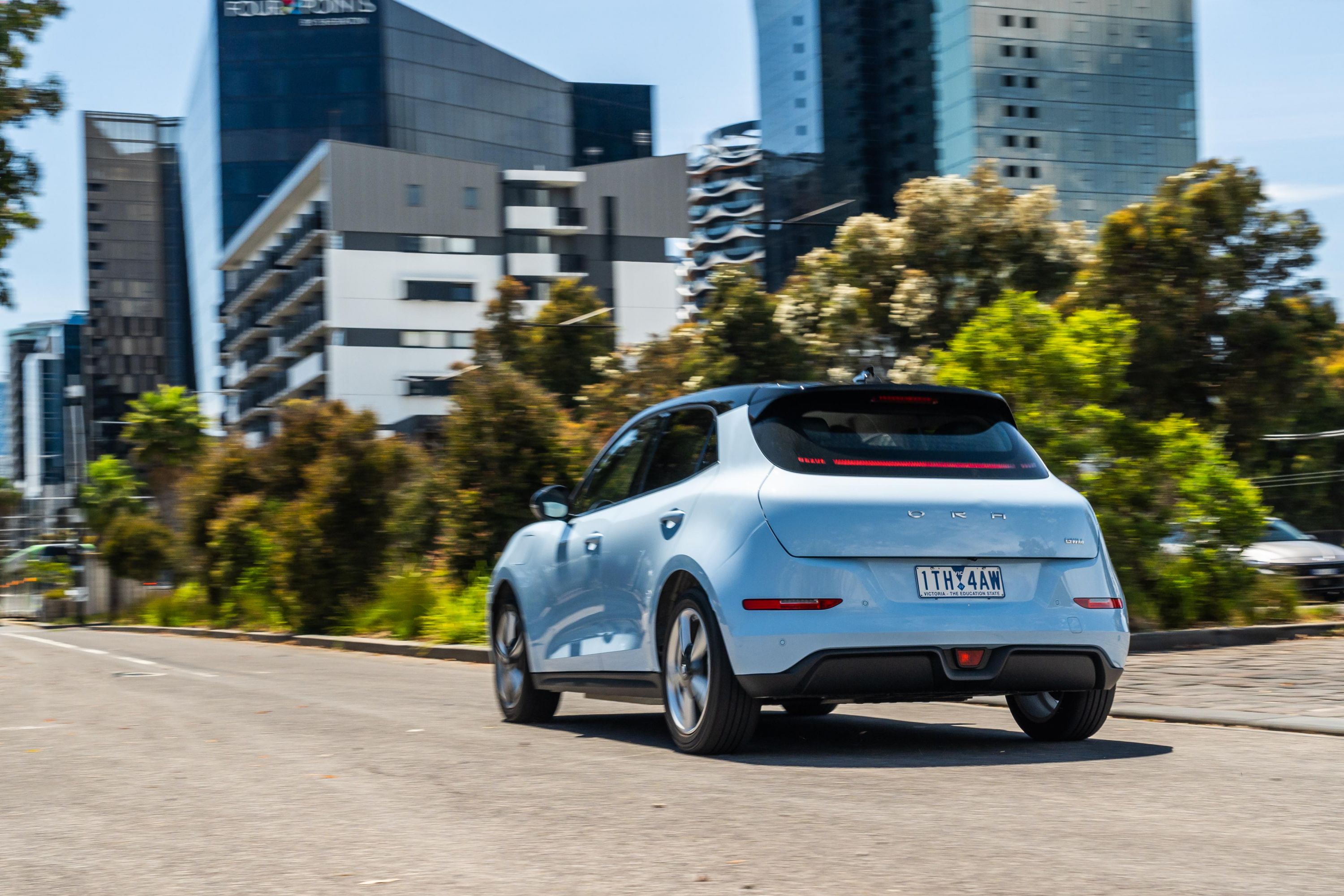
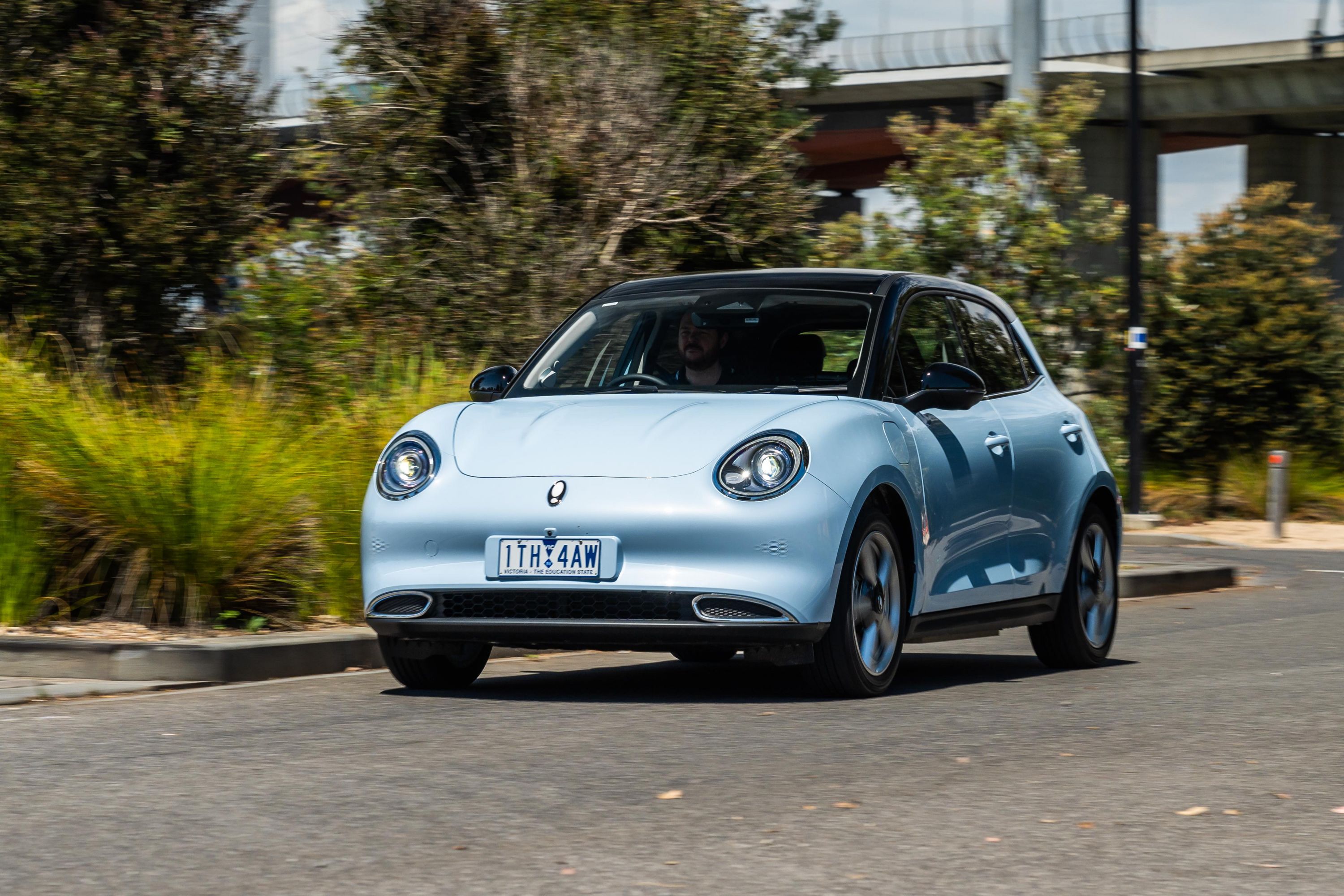
Walking up to the GWM Ora GT you’re initially smacked in the face with the car’s out-there body kit. It’s not for everyone, given how polarising the Ora already looks, but it definitely attracts eyeballs from other drivers and pedestrians.
The car also has a cute lighting animation that plays when you unlock it. The animation sequence is very elaborate and takes a fair while to complete, similar to the GWM Haval Jolion Hybrid’s.
Although the Ora does look like a small (almost warm) hatch with its GT bits and pieces, it’s actually quite large. Throughout my time with our tester I parked next to a number of crossovers and SUVs and was surprised to see how similarly sized the Ora was with them. The most notable was a first-generation Nissan X-Trail.
Hopping into the Ora is pretty easy thanks to the raised seat hip point. You step across into the car rather than stepping up or down, which is nice for people with restricted mobility. The battery pack raises up the floor height meaning the seat is mounted higher.
Once you’re in you’re presented with a set of cool-looking faux leather seats that have a two-tone black and red finish with red ‘GT’ embroidery on the headrest. Even the seatbelts are red which is typically a sign of a performance model, though in this case it’s all for show.
Although the seats look cool they get hot and sticky very quickly given they’re faux leather.
Thankfully both the front seats are ventilated which was really helpful during the few really hot days recently in Melbourne. The front seats also offer heating and massage functions.
The driver’s seat is rather flat, which doesn’t help it feel like it matches the ‘GT’ name. It also lacks thigh support and side bolstering. Thankfully the driver’s seat does have six ways of electric adjustment, but surprisingly it doesn’t have adjustable lumbar support.
Ahead of the driver is a faux leather-wrapped steering wheel that also has a two-tone black and red finish. It does look sporty and feels nice in the hand. There’s also plenty of tilt and reach adjustment which means people of all shapes and sizes should be able to grasp the wheel comfortably.
Throughout the cabin of the GWM Ora GT there aren’t too many glossy piano black finishes, but it does feature on the steering wheel button panels. This is arguably one of the worst places for piano black because it gets grubby very quickly due to fingerprints and also easily scratched when cleaned.
Thankfully the steering wheel buttons are physical push buttons and not touch-sensitive units like a number of Volkswagen vehicles did.
Speaking of the steering wheel buttons, a lot of them have functions that aren’t necessarily clear at first. I found I needed to play around with them to see what function they actually served.
Behind the steering wheel is a 10.25-inch digital instrument cluster that’s clear and has a bunch of different graphics that change depending on the selected drive mode. It always shows the current speed in digital form largely and prominently.
Although the digital instrument cluster shows a lot of information the only configurable section is on the right-hand side. You can cycle through a range of informative pages including ones for the trip meter, average energy consumption, and media, among others.
I do wish there was a bit more configuration with the digital instrument cluster as there’s a large amount of negative space in its current look.
Moving across there’s a 10.25-inch touchscreen infotainment system that’s within the same housing as the digital instrument cluster.
It’s funny how times change but the Ora’s touchscreen infotainment system does look a little bit on the smaller side given a number of its rivals have touchscreens now measuring closer to 12 inches. The Ora’s touchscreen is also positioned a tad too far away from the driver which means you have to stretch a bit in order to reach the far corners.
There are a lot of menus and pages in the infotainment system which can make navigating it very confusing. You’re forced with getting acquainted with it however, as you’ll frequently be using it.
Thankfully despite these gripes it appears there is enough processing power for the infotainment system. This means it starts up pretty quickly and new pages load snappily.
Currently the GWM Ora offers both wired and wireless forms of Apple CarPlay, though I’d heavily recommend opting for the former and plugging in your phone. Wireless Apple CarPlay didn’t work for more than it did during my week of testing.
Thankfully wired Apple CarPlay with my iPhone 15 Pro Max had a considerably better and more reliable connection than its wireless counterpart as it didn’t randomly drop out whenever it felt like it.
Disappointingly the Ora doesn’t offer any form of Android Auto connectivity. This is really surprising given the demographic this car is being targeted at, as well as how common it is in the segment.
When connected Apple CarPlay takes up the entire 10.25-inch display, which is typical. What isn’t typical however is the lack of readily available switchgear to change the climate controls.
Sure there are piano key-style buttons for turning on the air-conditioning and the climate control system itself, but there aren’t any readily available buttons to change the temperature when Apple CarPlay is connected.
If you’re wanting to change the set climate control temperature with Apple CarPlay connected you first need to exit smartphone mirroring, and then you can open up a separate climate control page to reveal all the functions.
It’s worth noting if you don’t use smartphone mirroring there are widgets on the right-hand side of the touchscreen’s user interface that can be used to change the set temperature and fan speed. I wish these were displayed when Apple CarPlay is connected because it just adds so many unnecessary steps.
Looking around the cabin there are a range of cool-looking two-tone black and red finishes like the seats and steering wheel. There are also some soft touches on high traffic areas like the armrests and dashboard, though harder plastics are easy to find.
The GWM Ora’s interior is incredibly minimal with only a few visible buttons for key functions. Even the buttons for the drive modes and electric power switch are hidden off to the right-hand side of the steering wheel out of sight.
At the front of the centre stack are a set of two USB-A ports and a 12V socket, as well as a two cup holders which are a fair way from the front passengers. The cupholders are also located quite close to the floor so you might be knocking your water bottle with your leg quite regularly.
On the raised middle section of the centre console the Ora’s rotary gear selector takes centre stage with an electric park brake and wireless phone charger positioned behind it. The latter of these features doesn’t have a particularly grippy surface which caused my phone to slide around a bit with everyday driving, meaning it didn’t charge properly.
As standard the Ora GT receives a panoramic glass sunroof which is on the smaller side but still gives an airy feel to the cabin. It’s nice to be able to vent the hot air from the cabin when you first hop in.
Hopping into the second row there’s more space than I had initially anticipated in this small-but-not-really-small electric car. Leg, head and shoulder room are all great, though toe room is lacking just a bit.
Two adults will be able to fit in the second row completely fine, though trying to squeeze a third person could make things a little awkward given the middle seat is raised higher than the outboard ones.
Even in the second row the Ora GT retains the cool red ‘GT’ embroidery on the outboard rear headrests, as well as the red seatbelts for all three second-row seats.
In terms of second-row amenities there are unfortunately no air vents which is disappointing, though there is a USB-A port, as well as a fold-down centre armrest with cupholders. There are also the requisite ISOFIX child seat anchor points on the outboard second-row seats, as well as top-tether points on all three rear seats.
Around the back the GWM Ora GT has a powered tailgate with a hands-free function which is very handy for when you’ve got your hands full. Once the tailgate is open you might be a little disappointed with how much storage space is on offer.
GWM quotes an official boot capacity figure of 228 litres, which is on the smaller side for its segment, though it can be expanded to 858 litres by folding down the rear seats.
The boot opening is rather narrow and there’s a puny cargo cover that’s not attached to the tailgate and needs to be manually moved up and down when you’re wanting to load items.
The boot space itself is an awkward triangular-like shape meaning if you want to put a box in there you might have to fold down the rear seats as it may hit the tailgate.
Storage space isn’t the GWM Ora’s strong suit as there’s no front boot space area, which is disappointing but common in its segment.
Also common is the lack of a spare tyre. GWM does provide Ora owners with a tyre repair kit but this isn’t very helpful when you go on a road trip and get a puncture a fair distance from the nearest tyre repair centre.
What’s under the bonnet?
Only a one single electric motor option is available in the local GWM Ora lineup, however there are two different battery packs offered. On test here is the larger 63kWh nickel manganese cobalt (NMC) unit.
Model
GWM Ora GT
Electric motor setup
Single front-mounted electric motor
Total system power
126kW
Total system torque
250Nm
Driven wheels
Front-wheel drive
Battery
63kWh lithium-ion NMC
Weight
1580kg (kerb)
Claimed range
400km (WLTP)
Energy consumption (claimed)
16.8kWh/100km
Energy consumption (observed)
15.8kWh/100km (550km mixed driving)
Maximum AC charging rate
11kW
AC charging time (10 to 80 per cent @ 11kW)
6.5 hours
Maximum DC charging rate
80kW
DC charging time (10-80 per cent @ 80kW)
50 minutes
To see how the Ora compares with its rivals, use our comparison tool.
How does the GWM Ora drive?
Starting up the GWM Ora is an interesting experience as you don’t really have to start it up at all. The car automatically turns on when you sit down on the seat.
Ora Standard Range shown
After this there’s a strange startup montage with a range of different ambient sounds and a fish that slinkies across both the digital instrument cluster and touchscreen infotainment system.
Once the car has finished its strange startup montage you can then turn the dial into either reverse or drive and you’re on your way – it’s as easy as that!
Setting off in the Ora there’s progressive and linear acceleration which is reassuring from a driver’s perspective. Although the flagship GT on test here may look sporty, its single front-mounted electric motor doesn’t produce any more power or torque than the rest of the range.
The Ora GT is actually 0.1 seconds slower to 100km/h than the rest of the range. GWM claims a 0-100km/h sprint time of 8.5 seconds for the Ora GT, compared to 8.4 seconds for the rest of the range.
This flagship version of the Ora GT also has 20km less claimed range than the variants equipped with the 63kWh lithium-ion nickel manganese cobalt (NMC) battery. The GWM Ora GT has a WLTP claimed range of 400km, whereas the Ora Extended Range and Ultra have a WLTP range of 420km.
You likely won’t be too blown away or shoved too heavily into the seat by the Ora’s acceleration from a standstill. However, you will likely be winning a fair few informal traffic light races if you’re that way inclined due to the instantaneous way an electric car’s power and torque is delivered.
The Ora GT comes with a range of selectable drive modes including ‘Automatic’, ‘Normal’, ‘Eco’, ‘Eco+’, ‘Sport’, and ‘Individual’. The latter of these drive modes is unique to the flagship GT variant.
Cycling through these drive modes there are different sound clips that are played. They’re kind of cute when you first hear them, but after a while they get very annoying.
There’s also a launch control function that’s unique to the Ora GT, though I don’t really see the point in this given it’s not a performance model and doesn’t have any more power or torque than the regular model.
As standard there are a range of selectable regenerative braking modes available as well. My favourite was the ‘Strong’ setting which felt the most natural and confidence-inspiring.
The GWM Ora does technically have a one-pedal driving mode though you need to dive into a sub-menu on the touchscreen to turn it on every time you drive the car. The one-pedal driving system will also disengage if you turn cruise control on and then off.
Like a range of other one-pedal driving systems, the Ora’s does thankfully bring the car to a complete stop, though it does rock a tad which is a little unnerving.
Even more unnerving is the fact the brake lights illuminate while you’re slowing down but then switch off as you come to a stop. This could be dangerous as people driving behind you mightn’t realise you’ve come to a complete stop.
In order to have your brake lights illuminated when at a complete stop with the one-pedal driving system activated is to actually depress the brake pedal. This makes the point of the one-pedal driving system completely pointless.
Around town the Ora GT’s steering errs on the lighter side but is still direct and easy to control. There are three different steering modes – ‘Comfort’, ‘Normal’ and ‘Sport’ – which artificially either lighten or weigh up the steering depending on your personal taste.
As your steering around corners there’s an annoying sound-view camera popup that displays and cuts out your music. Thankfully you’re able to switch this off in a settings menu.
In addition to the aforementioned surround-view camera, the Ora GT comes with front and rear parking sensors, as well as dipping side mirrors. The latter of these is incredibly helpful when parallel parking as they clearly show where the kerbs are.
Don’t be expecting the Ora GT to be incredibly dynamic. Due in part to its heavy battery it likes to lean a bit in the corners. You’ll also be sliding around a bit in the driver’s seat due the lack of lateral support.
Something that did surprise me about this car is how compliant and resolved its suspension is around town. It’s on the softer side but isn’t anywhere near as bouncy or unwieldy as other GWM-branded vehicles I’ve sampled in the past.
The GWM Ora’s suspension system genuinely one of the best I’ve experienced from the Chinese carmaker thus far. It’s a good sign for future vehicles which will hopefully receive further tweaks and refinements.
Ramping up the speed in the Ora GT is fine but you start to reach the upper limits of what the single electric motor is capable of. It’s safe to say this car is better suited to being in the city than out on the open road.
At higher speeds there’s a considerable amount of road noise which is even more noticeable given electric cars are so inherently quiet. There’s also a bit of wind noise than can be heard from around the side mirrors.
Interestingly the Ora GT gets blown around a little bit on the highway. I wasn’t really expecting to see anything like this in a car that weighs close to 1.6 tonnes.
On the safety front the Ora’s lane-keep assist and emergency lane keeping systems can be really intrusive. Over speeds of 60km/h they switch on and continuously jerk at the steering wheel to keep you within the lane even though you’re nowhere near marked line.
If you leave the lane-keep assist system to its own devices it’ll pinball endlessly in the lane. Thankfully you can turn it and the emergency lane keeping systems both off in a settings menu.
The Ora GT’s adaptive cruise control system is also a little annoying as it likes to slow down considerably when it detects a car ahead. This gripe is common with all adaptive cruise control-fitted GWM vehicles.
The adaptive cruise control system gets even more frustrating when the intelligent cornering is turned on as it will slow down the car when you’re going around a bend. The bend doesn’t even have to be very sharp for it to start slowing the car down, which will inevitably frustrate the cars behind you.
Another gripe with the Ora’s cruise control system is there’s no proper resume function. The provided stalk behind the steering wheel has a function that allows you to set a new speed for the cruise control, but there’s no function to resume to previously set speed.
Lastly, the cruise control system’s set speed can only be adjusted in increments of 5km/h, which drives me utterly wild. You’re able to set your speed at 82km/h, for example, and it will stay there, but if you adjust the set speed it will either go to 80km/h or 85km/h. There’s no way to get back to 82km/h unless you cancel cruise control and then reset it exactly at your desired speed.
What do you get?
The GWM Ora is available in four different trim levels in Australia. On test here is the flagship GT variant.
Ora Standard Range and Extended Range highlights:
18-inch alloy wheels
Automatic LED headlights
Automatic high-beam
Rear fog lights
Privacy glass
Heated side mirrors
10.25-inch digital instrument cluster
10.25-inch touchscreen infotainment system
Wireless Apple CarPlay
Wireless phone charger
6-speaker sound system
Climate control
Proximity entry and keyless start
Faux leather-wrapped steering wheel
Auto-dimming rear-view mirror
Leatherette seats
6-way power driver’s seat
4-way power passenger seat
Auto-dimming rear-view mirror
Ora Ultra adds:
Hands-free powered tailgate
Panoramic sunroof
Heated steering wheel
6-way powered driver’s seat with memory
Heated, ventilated, massaging front seats
Power-folding mirrors with memory
Auto parking assist
GT adds:
Unique 18-inch alloy wheels
Unique bumpers and grille
Red brake calipers
Individual driving mode
Launch control
Front cross-traffic alert
Is the GWM Ora safe?
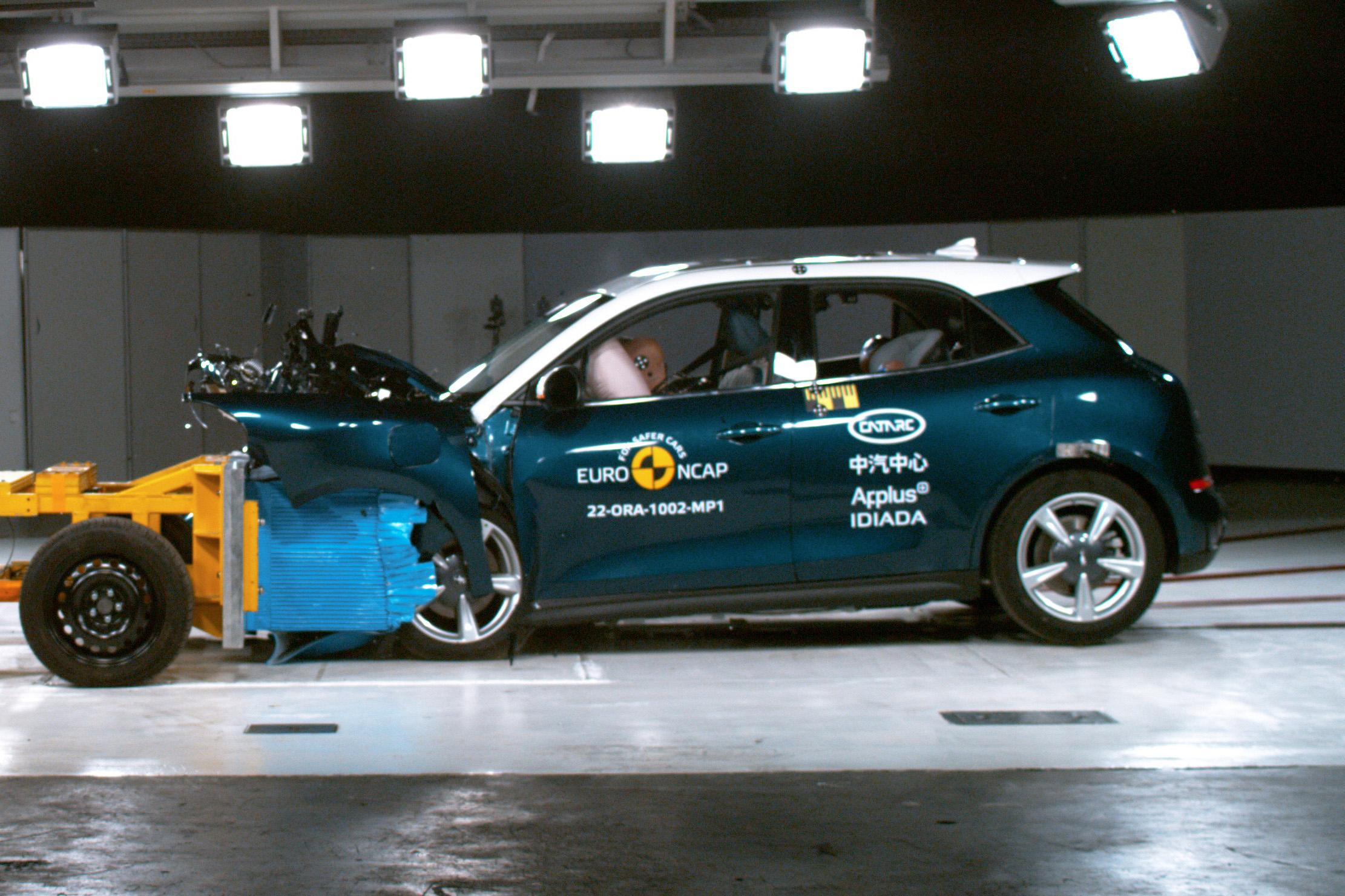
GWM’s electric hatchback received a five-star ANCAP safety rating, based on Euro NCAP tests conducted in 2022.
The GWM Ora received an adult occupant protection rating of 92 per cent, a child occupant protection rating of 84 per cent, a vulnerable road user protection rating of 74 per cent, and a safety assist rating of 93 per cent.
Standard safety equipment across the Ora range includes:
7 SRS airbags
Autonomous emergency braking (AEB)
Pedestrian detection
Cyclist detection
Junction assist
Blind-spot monitor and assist
Lane departure warning
Lane-keep assist
Rear cross-traffic alert
Reverse collision warning
Traffic sign recognition
Camera-based driver monitoring
Reversing camera
Surround-view camera
Adaptive cruise control with stop and go
Tyre pressure monitoring
Ora Extended Range adds:
Front parking sensors
Auto parking assist
Ora GT adds:
Front cross-traffic alert
How much does the GWM Ora cost to run?
The GWM Ora is backed by a seven-year, unlimited-kilometre warranty like the wider range. The battery is covered for eight years.
Five years of roadside assist and five years of capped-price servicing are also included.
The first five services for the GWM Ora are capped at $99. Logbook servicing is required every 12 months or 15,000km, whichever occurs first.
CarExpert’s Take on the GWM Ora
The GWM Ora is a fantastic entry-level electric car for those looking to dip their toes into owning an EV. It’s very smooth to drive and has one of the most comfortable suspension tunes I’ve experienced in a GWM-branded product to date.
The flagship Ora GT on test here is also very well equipped and provides polarising looks that would typically denote more power and more dynamic driving experience.
With that in mind however don’t go expecting the Ora GT to be a sports car. It’s technically slower from a standstill to 100km/h and also has 20km less claimed range than the more affordable Ora Extended Range and Ultra variants.
All that extra GT kit is just for looks which is a tad disappointing because I’m not certain if it even looks any good. It certainly attracted a lot of attention regardless.
If you’re after a properly fast small EV you’d be best to consider the MG 4 XPower which is only $8000 more expensive than the Ora GT at $59,990 before on-roads. It also brings an eye-watering quick claimed 0-100km/h sprint time of 3.8 seconds which is 4.7 seconds quicker than the Ora GT.
Even if you’re not after outright straight-line speed, the non-performance MG 4 variants are rear-wheel drive which provides a more engaging driving experience than the front-wheel drive GWM Ora.
That’s not to say the GWM Ora isn’t an EV you should consider. It just makes the most sense in the more affordable entry-level forms where sporty dynamics aren’t a necessity.
The 52 Fly is set to debut in Asia in 2024 through dealer Absolute Marine
Absolute’s 52 Fly, the third model of its upgraded flybridge planing series, debuted at the 2023 Miami International Boat Show before having its European debut at the Cannes Yachting Festival. Following in the wake of the 60 Fly and 56 Fly models, the newcomer packs a lot of comforts and updates into an overall length of almost 55ft.
Sometimes you have to rub your eyes and take a leap of faith when shipyards talk about their line’s “family feeling”, but there’s no mistaking an Absolute. Built inland at a shipyard that’s much closer to Italy’s car manufacturing hubs than it is to the sea, each Absolute yacht takes a trip along the country’s famed Autostradas before getting anywhere near the open water.
The aft end of the flybridge and aft cockpit both feature modular furniture
The size constraints posed by tunnels and overpasses along this unusual maiden voyage combines with the shipyard’s desire to get the most out of every inch of space to dictate the Absolute look: sturdier and more voluminous than sleek and sexy. From the dock it may not be love at first sight, but there’s no denying these yachts have the kind of beauty that comes from the inside.
To give the boat a look of forward thrust, Absolute’s in-house design team has created lozenge-shaped glass inserts in the hull, picking up and repeating their lines and angles in the hard-top supports and along the sides of the boat. This gives the 52 Fly a compact, unified look that helps offset its volume-maximising features.
OPEN TO THE ELEMENTS
The 52 Fly continues the shipyard’s tradition of engineering for comfort, performance and quality of life at sea.
The beach club includes a high-low swim platform
Starting from the high-low beach platform, you can sense this new offering from Absolute is going to have what it takes to make for great times on the water. With a hydraulically operated mechanism, the platform gives safe and easy access to the water and offers a convenient storage space for a tender.
Under the waterline, the V-shaped hull assures excellent seakeeping and was purpose-designed for the two Volvo Penta D8- IPS800 engines. Symmetrical staircases lead up to the cockpit where glass panels aft provide clear views of the platform and sea.
“Our new terrace cockpit has a glass transom and open gunwales, so has a real open-air feel,” says Cesare Mastroianni, Absolute’s Vice President of Sales and CCO. “And thanks to modular furniture first used aboard the Navetta 64, you can change the setup throughout the day.”
The aft cockpit offers sea views aft and through cut-through bulwarks
Join pieces to form couches or single seats, slot in armrests and backrests, add or take away cushions, and you can make all sorts of combinations of seating or side tables.
The updated version of this ingenious furniture also includes a box where you can tuck away things like swimming fins to dry while keeping them neatly out of sight. To finish it all off, curved LED rope lights in the ceiling and a textured panel under the docking station add that touch of design flair you expect from an Italian boat.
FRESH AIR INDOORS
The aft galley is on the same level as the aft cockpit and perfect for preparing a proper meal in good company. Just open the doors all the way, drop a window down and the galley and cockpit become a single, convivial space, nominally divided by a serving station that does double duty as a bar. “You have all the space and utensils to really cook,” Mastroianni says.
Opening the sliding doors connects the cockpit to the aft galley
Top-quality appliances include a large fridge-freezer on the starboard side. To port is the C-shaped cooking area, which offers plenty of space for provisions, while there are well-designed storage units for dishes and cutlery. There’s even a wine cellar tucked under the helm seat.
The team at Absolute are always upping their game, so one look around the saloon and you think: family boat yes, but the right kind of family. Details like leather drawer pulls and dark veneer profiles contrast with the predominantly light-coloured woods used in the panelling, like the piping on a Chanel suit to give a touch of stylish luxury.
The curved rope lights in the ceiling of the cockpit and galley become a full circle over the seating area, subtly setting the saloon apart and marking its different function.
It’s one step up from the galley to the saloon
There are couches on both sides and a retractable TV screen, but what you notice most of all is the ceiling height and the sense of openness that comes with the large, glazed surfaces. But it’s more than a feeling. The windows open electrically like car windows, so air can circulate naturally throughout the boat at just the push of a button.
Sophisticated lacquered elements in the ceiling contrast nicely with the floor in natural wood overlaid with a textured mesh to give it extra anti-skid properties for safety. Just as cooking is part of the fun of being aboard the 52 Fly, so is helming.
“This is a family boat that experienced yachtsmen can use on their own, without extra help from crew,” Mastroianni points out. “There’s a crew cabin if you need it, but more experienced owners will manage the boat themselves and use the crew cabin for an extra guest.”
Storage starboard of the galley
The two-seat helm station is part of the saloon and has an elegantly futuristic setup with Garmin screens mounted flush into the console. Like all of Absolute’s models, the 52 Fly has a full-height side door by the lower helm and owners have docking commands at the main helm station, on the fly and in the aft cockpit.
As if this weren’t enough, the IPS system comes with easy-to-use joystick commands, while assisted docking is optional.
MASTERFUL ACCOMMODATION
The chic continues on the lower deck where there are three well-appointed guest cabins: a full-beam VIP midships, a twin and a full-beam owner’s cabin fore.
Forward view of the master suite
The VIP is as elegant, practically as large and is fitted to the same degree of luxury as the master suite. Seeing how the VIP shares a bathroom with the twin, a family may prefer to keep the aft cabin and twin for themselves and host any guests in the owner’s cabin for privacy.
All cabins have opening portholes for natural air circulation and memory-foam mattresses, while the twin cabin comes with beds that slide together to become a double. In a nod to the needs of family use, there’s a washing machine hidden behind the panelling in the lobby.
The full-beam VIP occupies the same midships location as most master suites
An en-suite crew cabin has its own entrance from the transom. However, seeing how easy it is to helm this boat, it could well be used more frequently by a guest or a teenager hoping to sneak back aboard at some improbable hour without waking mom and dad.
MOVING FORWARD
The foredeck area is never an afterthought on an Absolute and the setup on the 52 Fly has a curved couch around a table that adjusts in height for coffee or dining. There are large sun pads, drink holders and lights that pop up from the flush deck when they’re needed. Fenders can be tucked away into storage lockers and the whole area can be shaded with an awning.
The foredeck sunpad can be adjusted to create an aft-facing sofa
Any boat with ‘fly’ in its name is going to have something important going on up top and the 52 Fly doesn’t disappoint. The aft section can be set up with the same modular pieces used in the cockpit and the aft enclosure is glass.
Backing the C-shaped seating arrangement under the hardtop, there’s a full wet bar that owners can choose to set up as an outdoor galley complete with a fridge, icemaker and grill. The helming area on the port side is convivial with two seats by the wheel and sun pads right next to it.
The headrest on the sun pad flips back to become the backrest of one of the banquettes by the inlaid teak table under the hard top, a typically Absolute touch of ingenuity. There’s also the option of having solar panels installed on the hard top to provide enough energy to run the boat in hotel mode in total silence.
Aft view of the flybridge
Speaking of silence, Absolute was an early adopter of IPS propulsion, which just keeps getting better. The fuel efficiency and reduced noise and vibration you get from this system are already well documented.
Fitted with twin IPS800 engines, the 52 Fly begins to plane at just 12-13 knots, cruises comfortably at 20-22 knots while consuming just around 200 litres of fuel per hour, and tops out at just over 29 knots.
The solidity and sturdiness suggested by the exterior lines aren’t an illusion: this is a boat that knows her stuff when it comes to handling easily and performing safely.
The 52 Fly reaches 29 knots with twin Volvo Penta D8-IPS800 engines
She may be the youngest member of the Fly family, but the 52 is without a doubt an Absolute. Find out more about what’s inside and you’ll soon be seeing the engineering and ease of use more than the exterior look that runs in this family.
While her beauty may not be immediately apparent, to know the Fly 52 is to love her, as the saying goes, and the love that comes with knowing from the inside out is the kind of love that lasts.
www.absoluteyachts.com
All images are courtesy of Absolute
This article was first seen on yachtstyle.co
For more on the latest in yachting news, click here.
Fisker has paused production of its Ocean electric SUV for six weeks as it seeks to draw down inventory and secure additional financing.
To the funding point, Fisker confirmed Monday that it has secured “a financing commitment from an existing investor” of up to $150 million.
The company has about 4,700 vehicles in inventory worth about $200 million, according to the same company statement. The production pause at contractor Magna’s Graz, Austria, factory is intended to give Fisker time to sell some of these vehicles.
Fisker Ocean
Fisker shipped roughly 5,000 of 10,000 vehicles produced by Magna in 2023, and claimed to have delivered roughly 1,300 in January and February of this year. The company, which has pointed to supplier issues as the reasons for the Ocean’s slow rollout, gave that model’s top trim level a $7,500 price cut in October 2023.
Fisker also said Monday that it had just $121 million in cash and cash equivalents on hand as of March 15, $32 million of which is restricted or not immediately accessible, according to TechCrunch. With an accounts payable balance of up to $182 million, Prior to the additional funding, Fisker reportedly told regulators that there is “substantial doubt” that it can avoid bankruptcy without raising new capital, after raising similar concerns in a filing last month.
Fisker Ocean
Fisker said in a statement that it also remains in negotiations with another automaker about a strategic partnership that could include an investment. A report earlier this month pointed to Nissan as the potential partner, with the deal reportedly including a $400 million investment toward developed of the Fisker Alaska pickup truck. Nissan would also reportedly manufacture the truck and get its own derivative.
It is also attempting to pivot from a direct sales model to franchised dealerships, and in its statement released last week said that the leadership team is “laser-focused on these efforts”—referring both to that, and to the negotiations for the strategic partnership. But as TechCrunch points out, at least one of the first dozen-or-so Fisker dealers that signed up has already come and gone.
I step on the brake with my left foot, press the accelerator to the mat with my right—then, slip off on the left. Motors whirl to life as they whorl out warp-speed forward thrust. Traffic cones fly by in the side windows like mailboxes on a country road until I let off the pedal and let “B” mode’s regenerative braking lasso this electric SUV down for a gradual right turn back into its parking spot.
Even the briefest exposure to Audi’s new electric SUV, the 2025 Q6 E-Tron, it’s easy to see the promise in the first fully conceived, best-executed EV from the brand.
Audi still sells some good-to-great gas-powered SUVs, but the EV companions like this Q6 E-Tron are the ones that will catapult it into the future, powerfully.
The Q6 E-Tron marks the first Audi vehicle on a new VW Group architecture it developed: PPE, which it shares initially with the Porsche Macan EV. Promised to be Audi’s most efficient EV yet, it’s said to be a third more efficient and a third more powerful at the same time than its E-Tron SUV predecessor (now the Q8 E-Tron).
With seats for five and a footprint like its intended target, the Tesla Model Y, the Q6 E-Tron also pits itself against Hyundai’s E-GMP trio of the Kia EV6, Hyundai Ioniq 5, and Genesis GV60, while Ford’s Mustang Mach-E also factors in the same size and battery class. The Audi commits none of the quality fumbles of the Tesla (or the Ford: see interior trim), while it angles against the Hyundai trio for technology and quality. It’s fancy without the frippery—and it’s fast without foibles.
It arrives in the U.S. late in 2024 as a 2025 model. I’ve only driven it for very short distances, but I can see the promise in its new architecture, its battery choices, its dual-motor drivetrain, and its high-end suspension.
2025 Audi Q6 E-Tron
2025 Audi Q6 E-Tron
2025 Audi Q6 E-Tron
2025 Audi Q6 E-Tron
What is the 2025 Audi Q6 E-Tron powertrain?
The foundation of the Q6 E-Tron in this rendition of PPE sits under its five seats. It’s a 100-kwh (gross) battery pack that can use up to 94.4 kwh of that capacity. Its 12 modules of 180 prismatic CATL cells, assembled in Ingolstadt into packs which comprise the floor of the Q6, weigh about 1,257 pounds. A 10-module, 83-kwh (gross) version will factor into vehicles made for markets outside the U.S.
In the PPE universe, Audi bets on bigger battery modules, and fewer of them, to ease manufacturing and to cut materials use—and therefore, planet-load. PPE requires fewer battery connectors, while it also enables better cooling and warming for the battery with predictive management, which helps maintain optimal condition.
Audi has chosen to make the most of the pack’s capacity from the outset; it hasn’t reserved some energy for future upcharges and upgrades delivered over the air, as Mercedes and other brands have done. It does sport a vastly more powerful computing structure, which leaves ample room for OTA updates as well as future V2X uses.
Compared to first-gen E-Tron,Green Car Reports Best Car To Buy 2020, Audi reports the Q6 E-Tron’s battery energy density has risen 62 percent, while energy consumption has dropped 30% and drive-unit costs have dipped 15 percent.
Audi farms dual motors for the Q6 E-Tron in Hungary, rated at 140 kw in front and 280 kw in the rear. Total system output hits 422 hp in the core Q6 edition, which weighs about 5,150 pounds, but in a higher-draw “boost” mode, it can deliver up to 456 hp. Audi quotes a 0-60 mph in 5.0 seconds with launch control, as I’ve stomped my way through under the fittingly steel-gray sky near the Munich airport.
The higher-performance model, the SQ6 E-Tron, taps battery energy more voraciously, to send 483 hp to all four wheels, or up to 510 hp in the boost mode. That’s good for a 0-60 mph run in 4.2 seconds, Audi says, while the SQ6 can also top out at 143 mph.
No specs have been quoted for the most efficient version to come, a single-rear-motor version—or for the top performance edition, an RS Q6.
Audi has confirmed the Q6 E-Tron will tow up to 4,400 pounds, though it won’t offer a specific off-road model. That’s just as well: with its conventional steel suspension or its upgraded air suspension and adaptive dampers (standard on SQ6, an option on the Q6), this SUV and Audi SUVs as a genre have shied away from any hardcore rock-crawling or trail-clambering connotations—especially those that would affect on-road performance.
2025 Audi SQ6 E-Tron
2025 Audi SQ6 E-Tron
2025 Audi SQ6 E-Tron
2025 Audi SQ6 E-Tron
How does the Q6 E-Tron drive?
With just two laps in a parking lot gymkhana, we can’t say much if anything about the way the Q6 E-Tron drives. Launch mode has the catapult effect that’s intended, though ultimate acceleration is more in line with a Mach-E than a Plaid. With three levels of paddle-controlled regenerative braking and a one-pedal “B” drive mode that the Q8 E-Tron lacks, the Q6 E-Tron promises to blend in its conventional brakes better and later than most systems. Audi believes that’s a more efficient and smoother way to deliver its maximum of 0.3g of deceleration in one-pedal mode. That’s more than theBest Car To Buy 2022 Lucid Airgenerates, and in the Audi, our very short drive telegraphed some silken transitions between motors and friction brakes, something we also noted in our2024 Q8 E-Tron test drive review.
How fast does it charge, and what is its battery range?
The EPA hasn’t tested the Q6 E-Tron yet, but Audi has committed to more than 300 miles of range for the base Q6 “60” model with dual motors. With an AC charge port on the right and a CCS port on the left, the Q6 arrives too soon for Audi’s transition to the Tesla-style NACS charging interface, though it will transition into it soon.
The Q6 E-Tron will accept up to 270 kw of DC fast-charging and will be able to top off its battery pack from 10-80% in as little as 21 minutes. Where possible on lower-output chargers, the Q6’s 800-volt system can separate its pack into twin 400-volt virtual packs; the car will bring both to the same state of charge first, then charge the banks in parallel at up to 135 kw. Plug & Charge connectivity will be fitted from the get-go.
For home charging—which accounts for the vast majority of luxury-priced electric cars—the Q6 E-Tron will be able to recharge in about 10 hours on a 40-amp 240-volt AC charger.
The Q6 E-Tron weaves itself tightly into Audi’s existing electric-SUV family. The shield at its front end wears its four-ring logo proud atop a set of active shutters that give the not-grille texture, even when the body-color base model swaps into gray and black on higher-trim editions. From the side the Q6 resembles nothing less than a Bentley Bentayga, with pronounced brows over 19- to 21-inch wheels rendered in near-flush spokes that speak of lots of aerodynamic attention. Audi won’t be able to offer the trick dynamic LED lighting that it will sell elsewhere: the NHTSA code means its LED signature must remain fixed on American roads, while Chinese and Polish and Irish drivers will be able to flip through eight different lighting arrays on a whim. U.S. drivers will get to choose a less formal Sportback roofline, but not in the first model year.
TheQ6 E-Tron shows off a new interiorthat wraps around the driver in a cool tech embrace. It empanels an 11.9-inch digital “virtual cockpit,” in Audi-speak, that blends mapping, infotainment, and vehicle displays in a complex show of force. The central 14.5-inch touchscreen splits off navigation and vehicle and infotainment functions in the (slightly) more traditional way, dressed in pencil-thin fonts and crisply outlined icons. A 10.9-inch passenger screen has a digital privacy blind that blocks the driver from watching a movie on the go—but allows it for the front passenger. Android Automotive OS forms the core of the operating system, but wireless Apple CarPlay comes gratis, and a greatly expanded set of recognized voice commands liberates the cabin from the old haptic interfaces in favor of voice and touch.
Both nestle in an environment defined by dogbone-shaped, softly padded dash and door panels capped by wood or metallic trim. It’s a clubby place, not relentlessly stark like the Model Y suite.
At 187.8 inches long, 64.9 inches tall, 78.5 inches wide, and with its 114.1-inch wheelbase, the Q6 E-Tron tangles most directly with the Model Y, though. Our brief exposure showed the appeal of Audi’s styling choices and of its usual high grade of seat comfort. And with up to 53.9 cubic feet of cargo space behind the front seats and a 2.2-cubic-foot frunk, the Q6 E-Tron doesn’t come up shy on room.
It leans in with safety technology too, from standard automatic emergency braking, to adaptive cruise control, blind-spot monitors, and automatic high beams.
Prices haven’t been confirmed, but an entry sticker of about $70,000 seems a safe bet, with a $90,000 bill for the SQ6 E-Tron in sight. Neither version will qualify for federal tax credits, however, since the batteries come from CATL and get put together in Germany.
We’re eager to spend more time in what’s clearly Audi’s best first shot at a new EV architecture yet. Stay tuned: we’ll drive the Q6 E-Tron later this year, in advance of its on-sale launch, expected by early December 2024.
Audi paid for the travel expenses to and in Munich that enabled this firsthand report.
Martin Schnider is the man behind one of the most luxurious accommodations in Kuala Lumpur. Set amidst the expansive flowering gardens of the KLCC Park and the dramatic heights of the Petronas Twin Towers, Mandarin Oriental, Kuala Lumpur offers impressive views from its elegantly designed rooms and exquisite suites.
Martin Schnider, general manager of Mandarin Oriental, Kuala Lumpur
Starting out as a food and beverage trainee at Mandarin Oriental, Singapore in 1994, Martin Schnider would eventually work his way up the corporate ladder to become assistant food and beverage manager at Mandarin Oriental, Manila before joining Mandarin Oriental, Kuala Lumpur in 2000. Schnider moved from his role as food and beverage manager to resident manager five years later. Today, Schnider holds more than 20 years of experience at Mandarin Oriental hotels in the Asia-Pacific region. Overlooking elegant rooms and suites set in a tranquil atmosphere alongside stunning views at the heart of Kuala Lumpur’s city Centre, Schnider ensures that each guest at the Mandarin Oriental, Kuala Lumpur experiences a personalised stay steeped in luxury and hospitality. Renowned for focusing on excellence in all aspects, Schnider has a record for maintaining superb hotel service and product quality.
LUXUO sits down with the seasoned hotelier to discuss the evolution of Kuala Lumpur in recent years and how the Mandarin Oriental, Kuala Lumpur differentiates itself from its competitors.
You left Doha to come back to Malaysia in 2023. Clue us in to your experience in hospitality.
Hospitality remains a very competitive industry and our guests continue to evolve at the same time in terms of their needs and wants.
How does it feel being back at the Mandarin Oriental, Kuala Lumpur after your first job two decades ago?
It feels great to be back in Malaysia after a long time and I will always reflect fondly on my experience in Kuala Lumpur from March 1999 to October 2005. This hotel holds a very special place in my heart.
Mandarin Oriental, Kuala Lumpur facade at night
How have you seen Kuala Lumpur evolve over the years?
It is almost a completely different city from when I was working here back in the early 2000s. From my perspective, it has changed and matured in the sense that there are a lot of new buildings, hotels, people, and of course, free-standing restaurants.
The Royal Suite’s Living Room at dusk
What is the DNA of the Mandarin Oriental, Kuala Lumpur hotel and how does it differentiate itself from other high-end hotels in the capital city?
The DNA of Mandarin Oriental, Kuala Lumpur will always be steeped in class and high-quality service. With the increasing standard of service across the industry, it is important that we maintain the way we do things in the hotel.
What do guests love most at the Mandarin Oriental, Kuala Lumpur?
Our guests always appreciate the prestige and recognition that staying here brings. We reciprocate this by ensuring that all their needs are met and that they are kept happy regardless of if they are staying for one night or more. Therefore, everything we do must revolve around an experience that cannot be matched. If we are able to give guests this experience, they will continue to appreciate what we do for them.
Lai Po Heen
On the fine dining side and as a food lover yourself, tell us more about what the Mandarin Oriental, Kuala Lumpur currently has on offer.
Our hotel has many things to offer from a business perspective to a leisure perspective. For business needs, we are strategically located in the heart of Kuala Lumpur where several key businesses are. It is also conveniently located next to venues like KLCC Convention Centre, the PETRONAS Twin Towers, and many luxury branded shops. We also have the largest Club Lounge in Kuala Lumpur. Our MO Club Lounge is an ideal place for guests who want a relaxing and quiet space to work. It also offers one meeting room as well as a boardroom for bigger groups. These spaces can be used for private discussions, presentations and more. At the same time, the 270-degree view of the Kuala Lumpur skyline also provides a stunning backdrop for work or casual discussions. Our dedicated colleagues are always on standby to cater to guest needs whether it’s a simple cup of coffee or a meal.
Spa’s Single Treatment Room
For leisure, we have many options such as an award-winning spa at Mandarin Oriental, Kuala Lumpur, Peter Burwash International certified tennis courts, an infinity pool overlooking KLCC Park, a well-equipped fitness centre and many top dining outlets.
All these make Mandarin Oriental, Kuala Lumpur more of an urban resort as opposed to the more traditional business hotel.
The Mandarin Cake Shop
Your hotel’s durian pancake at the Lai Po Heen Chinese restaurant has become something of a culinarily icon. Are these among your personal favourites?
To be honest, I’m not a fan of durian, but the pancakes are decadent. However, I do enjoy sweets once in a while.
Lounge on the Park Patio
As general manager, what are your plans for the hotel from 2024 to 2025?
My focus is always on delivering legendary service and exceptional experiences. I believe that when it comes to the hotel industry, especially for Mandarin Oriental, what truly sets us apart is our passion for quality service. These are the things that guests remember along with amazing facilities, amenities and dining options.
Royal Suite’s Dining Area
To cap off this interview, indulge us in one secret that you have never shared about the Mandarin Oriental, Kuala Lumpur? Perhaps a hidden location or a secret experience?
When you book an MO Club Room or Suite, you will have one of the most exclusive MO Club experiences in the city. Benefits include flexible check-in and check-out times, an airport fast-track service, priority bookings and of course access to the MO Club Lounge, the biggest Club Lounge in the city.
For more on the Mandarin Oriental, Kuala Lumpur, head to the link here.
For more exclusive interviews on luxury travel and hotels, click here.
A redesigned version of Mercedes-Benz AMG’s GT sports car lands at dealerships this spring, but the range is not yet complete.
The GT, which has grown to enable 2+2 seating, arrives in GT 55 and GT 63 grades, both powered by AMG’s familiar twin-turbocharged 4.0-liter V-8. The engine delivers 469 hp in the GT 55 and 577 hp in the GT 63. A 9-speed automatic and standard all-wheel drive complete the drivetrain package for both grades.
At least two more grades are known to be coming, one positioned further up and another below. The latter was revealed on Tuesday as the GT 43. The former will be a plug-in hybrid likely dubbed the GT 63 S E Performance. It’s due later this year and will pack over 800 hp.
The GT 43 packs 416 hp, courtesy of a 2.0-liter turbo-4 shared with the related AMG SL 43 convertible that arrived for 2023 (as well as the AMG C 43 sedan). The GT 43 arrives for the 2025 model year, though specific timing for its sales launch in the U.S. hasn’t been announced.
2025 Mercedes-Benz AMG GT 43 Coupe
Despite the loss of four cylinders, the GT 43 is no slouch. It will sprint from 0-60 mph in 4.5 seconds and top out at a governed 174 mph. Helping with the performance is an electrified turbocharger design similar to what’s found in Formula 1.
An electric motor powered by a 48-volt mild-hybrid system and measuring just 1.6 inches wide is integrated directly with the turbocharger, sitting between the turbine wheel on the exhaust side and the compressor wheel on the intake side. It spools up the compressor at low revs, before the exhaust gases take over, reducing turbo lag and as a result making the engine more responsive.
The GT 43 also skips the all-wheel-drive system of other GT variants, meaning drive is to the rear wheels only. The smaller engine and missing all-wheel-drive system should save considerable weight compared to the other GT variants, though no curb weight has been revealed.
2025 Mercedes-Benz AMG GT 43 Coupe
The GT 43 also misses out on the AMG Ride Control suspension with adjustable damping as standard, though it’s on the options list. The Race mode of the AMG DYNAMIC SELECT drive mode selector is also missing here.
The GT 43 is visually distinguished from the GT 55 and GT 63 by unique front and rear fascias, as well as round tailpipes instead of the V-8 grades’ square-shaped tips. There are also different wheel patterns for the GT 43, with the standard set measuring 19 inches in diameter.
Pricing information hasn’t been announced but a steep discount on the $136,050 starting price of the GT 55 is likely. As a guide, the SL 43 is priced from $111,050. All figures include a $1,150 destination charge.
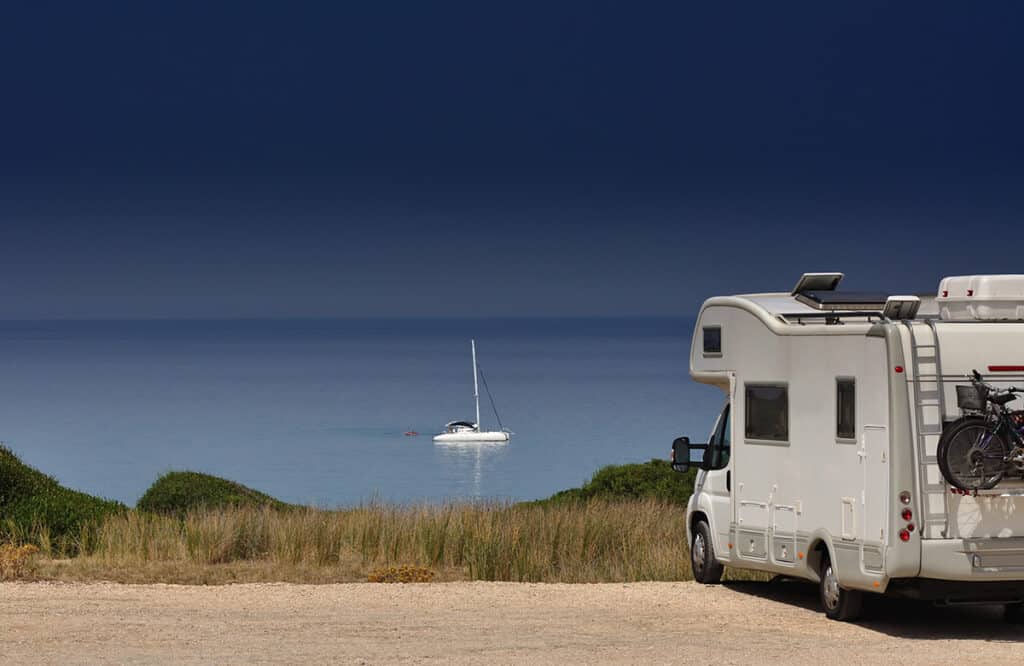
Wondering how to get mobile internet in your motorhome, campervan or RV? Trying to figure out if you need a 4G antenna, a motorhome wifi dongle, a booster… or something else?
Getting motorhome internet can be confusing. There are a LOT of options out there – and not all options will be right for you. Here’s everything you need to know to get the best motorhome wifi & internet system for you.
*We work hard to make this the best motorhome travel blog and road trip website possible, full of helpful content for you. The website is supported by our readers, so if you buy through links on this site we may earn a commission- at no extra cost to you. All opinions remain our own.
If you find this post useful, you can also treat us to a coffee – we promise to enjoy it while creating more useful content like this- we might even indulge in a biscuit (or two!)
Motorhome wifi & getting internet on the road
Hands up if you use the internet?
I took a gamble considering you’re reading this website!
The majority of people in the western world access the internet at least once a day. If, like me, you work from a laptop or spend time on social media, it could be much more frequently than that.
When I quit my job and started touring Europe in a motorhome, getting reliable internet connectivity in my motorhome was one of my primary concerns, especially in rural areas or remote locations. Working online from the road just doesn’t work without the ‘online’ bit and I knew a reliable connection with decent download speeds would be important.
In a rush?
Want to know which motorhome internet system we recommend fast?
For occasional trips, get this dongle with this short-term mobile broadband SIM card for use in Europe
For longer trips or full-time travel, get this dongle with a monthly data SIM from either EE, 3 or Vodafone network (if you will be returning to the UK regularly.) Alternatively, you can buy a pre-paid data SIM like this
If you plan to tour overseas for a long time, get this dongle and buy local SIM cards as you tour- much cheaper than using a UK network. This dongle is unlocked to use any SIM card worldwide.
Motorhome internet access- the options
If you’re touring in a motorhome, campervan or caravan, there are several options for you to get both wifi and internet access (yep, the two are slightly different.) We’ll review and discuss the pros and cons of each option below, so you can decide which is best for you.
Connect to wifi at a campsite or rv parks using any device able to connect to wifi (such as a smartphone)
Create your own wifi hotspot using a dongle or device with a sim card and data connection (most iPhones and android smartphones have this now).
Install a specialist system / satellite internet service in your motorhome- good for touring in remote areas
Go to a place with a public network and use their wifi/ internet, like cafes, coffee shops or McDonald’s.
Don’t panic if this is starting to sound difficult. It’s really not. Let’s look at the options for mobile wifi in more detail.
Confused by Internet, WiFi, 4G & Broadband?
Before we go any further, let’s clarify these terms so we’re all on the same page (in very very simplified terms!)
The internet is the thing that you’re ‘on’ when you go online. This website, Google, Netflix, Facebook etc are all ‘on the internet’.
WiFi is a wireless network, which you connect to in order to get access to the internet without a physical connection or using your data allowance.
4G (or 3G/5G) are types of signals floating all around us. Your internet service provider/ wifi compatible device can detect these signals and connect to access the internet. Coverage refers to how strong these signals are. (Often called cell phone signal in the USA)
Network is the name of the carrier/ mobile phone provider you are with (Vodafone, EE, T-mobile etc). These are called a cellular network in the USA
Mobile Data is how much ‘data’ you have to use on the internet. Some networks have an unlimited data plan, but others only allow you so much before you are cut off or restricted. This is especially true if you’re touring outside your home country. (This is also called cellular data.)
Mobile internet/ mobile broadband are other terms for using the internet away from home/ without a fixed connection. Usually on 4G.
Broadband is what you might have at home or anywhere with a physical cable which goes to a router. This router then creates the wifi signals you connect to. If you can travel with it, it’s called a mobile router.
What is the best way to get wifi in a motorhome?
The BEST way to get internet in a motorhome, campervan or caravan will depend on three things:
the device you want to use (laptop, tablet, smartphone etc)
where you are – geographical location
what you want to do on the internet
Basically, your choices for a reliable internet connection when touring in a van are either to connect to an existing internet system (wifi connection) or to connect to the network directly using a 3G/4G/5G device.
The important thing to remember is that, if your device DOES NOT HAVE A SIM CARD, it cannot connect directly to the internet (ie- it won’t get a signal for data.) Some tablets, Kindles, iPads and most laptops don’t have their own sim card, so you will need to have some sort of wi-fi connection in order to use the internet on these devices.
Let me give you a practical example of how I work from the road. I have a laptop (no SIM card), an iPad (with SIM card) and a mobile phone.
The laptop needs a wifi connection in order to be able to access the internet. The iPad and phone don’t; as long as they have a phone signal or decent quality signal, they can access the internet directly without needing to connect to anything else. This is accessing the internet via your phone/ iPad and will use an amount of data from your monthly allowance (monthly data package)
From this, I can do one of several things:
use one of the phones to provide a ‘mobile hotspot’ for my laptop
connect to wi-fi hotspots at a campsite or cafe
use my motorhome wifi dongle, which is installed in my van, to give internet access to all devices which are connected to it (also like a mobile hotspot)
I use options 1 & 3 most frequently, as do many full-time rvers and campervanners. If you only do the occasional tour overseas, you’ll find using your mobile phone as a hotspot the easiest and cheapest option in your home country, especially if you’re on an unlimited plan for data.
Roaming charges outside of the UK
Most of the major UK networks now have a data cap and have re-introduced roaming charges since we left the EU. This will NOT be the same as your monthly allowance within the UK. It’s likely to be less than half what you’re used to. (Many UK networks allow only 25GB of data when you’re touring in Europe)
If you’d like to know what your network rules are, here’s how to avoid paying data roaming charges in the EU (or at least reducing the cost!)
Mobile wifi- how to set up a personal hotspot for your phone
It’s quite easy to use a device which has its own SIM card to provide a wifi connection for a different device. I do this almost every day between my laptop and my iPhone.
On an iPhone/ smartphone, you can find your personal hotspot in the settings menu and follow the guidelines. Call it something easily recognisable and SET A PASSWORD- you don’t want everyone else on the campsite logging onto your phone and using up all your data!
Switch to the device you want to use (ie-laptop) and select the wifi button (often top right). Find your phone’s name in the possible wifi options. Select it, input the password and you’ll be connected! As long as you have a decent signal on your phone and have mobile data enabled, you’re good to go.
Be careful- this will use the data on your phone twice as fast, so keep a careful eye on how much you’re using.
NOTE: Using a phone as a hotspot is not going to give you fibre broadband speeds. Luckily, we’ve lived on boats for years and are used to the speeds, but it might be a shock if you’re used to fibre.
What is the best way to get motorhome internet while travelling?
If you’re in your home country (such as the UK), your mobile phone is most likely already set up to receive & use data. As long as there is a phone signal, you should be able to connect to the internet on your phone (as long as your handset is less than about 10 years old)- this is a great option for anyone doing the majority of trips inside their home country.
However, if you’re travelling overseas on or on the road full-time, you’ll find that the amount of data you’re allowed to use within your monthly subscription is likely capped, which makes things a lot harder when you’re used to using the internet constantly and need reliable internet access to plan your motorhome trip and find campsites etc.
Even harder if you’re a digital nomad or full-time traveller who needs reliable wifi/ internet to be able to earn money.
Using Mobile data outside your home country
If you are travelling outside your home country, you need to make sure that data roaming is enabled on your phone AND that you have an internet plan which allows you to use data in other countries cheaply.
Since BREXIT, many of the main UK phone networks are charging data roaming fees again and it’s entirely possible to end up with a large bill at the end of your trip!
This IS a mandatory data cap of £45 per billing period, but will mean once you’ve hit this threshold you either agree to pay more or you can no longer access the internet.
Also, be aware that the data limit you have at home will probably NOT be the same as your free allowance abroad- often it’s reduced by 50% or even more. It’s hard to track data usage, but things like maps, streaming videos and Facebook can all use up a LOT of data.
Planning to take your motorhome to Europe?
How to get mobile internet in a camper or motorhome using a wifi dongle
The downside to using your phone/ device for the internet is that it can use up all your mobile data pretty quickly if you’re not careful, leaving you without any for later in your trip.
For this reason, if you think you’ll use the internet a lot (or want faster speeds) you will probably want to get a wifi dongle. This applies whether you’re motorhoming in the UK or whether you’re heading into Europe.
When we first started, we had a Huawei wifi dongle (below), which was a very good option. We used it with EE, and as long as there was a strong phone signal strength, we were able to get pretty decent internet: most of this website and our Youtube videos have been uploaded using this motorhome wifi dongle.
Another popular brand is the Netgear range (shown below the 4g and 5g models).
Buying a SIM card for a motorhome internet dongle
When you buy a wifi dongle, you’ll need to buy a SIM card on a network to use with it. This needs to be a DATA sim, not a phone sim.
Prepaid ones are great, but read the small print; often, once they’re activated, you only have so long to use the data before you lose it. I pay a monthly fee for our data sim because we use it so often, but this isn’t necessary if you’re only making the occasional trip overseas. Do whatever works best for you.
Make sure you buy the correct size SIM card for the dongle. Many take either nano-SIMs or micro-SIMs. If in doubt, go into a mobile shop and ask for advice once you have the dongle.
If you don’t use the dongle for long stretches at a time (I think it’s around 6 months) you might have to reactivate the sim card before you can use it again- this should be mentioned in your instructions.
Best Motorhome wifi SIM cards
Although there are various sims and packages available, there are some things to check when you choose your wifi data sim card:
contract or PAYG (pay-as-you-go)
how much data you think you’ll use
if travelling out of the UK, will it work (and how much data are you allowed?)
what physical size is it? (ie- will it fit your wifi dongle)
Depending on your usage requirements, these are 3 motorhome wifi sim cards we recommend:
Wifi on Board- my current motorhome wifi system
I now have a router on my van by a company called Wifi on Board. One of the reasons I love this so much over the dongle is it comes with an antenna (sometimes called wifi extenders), which allows me to boost weaker signals and get internet where previously we were unable to.
We wrote an in-depth review on our motorhome wifi unit here (and you can see the video of how we fitted it into our van.) We’ve travelled all over Europe with this in our van and it’s fantastic. If there’s even a hint of a signal, this router and antennae will find it for you.
5g Motorhome Wifi
Wifi on Board also offers a 5G version of their unit. We haven’t used this in anger yet, although have played with it at the Caravan show and it looks great. Just beware it works best in areas with strong 5G signals, so if you travel to the mountains regularly like us, it might not be the best choice for you; you might prefer to stick to the 4G model.
Motorhome internet in Europe- Which mobile data network works best?
Over the years, I’ve used devices on several different UK networks: 3, Vodafone and EE. When travelling in Europe, there is a definite difference between which networks can pick up signals where.
For example, when we were motorhoming in France, I couldn’t get a signal on my phone in Chamonix at all, but Mr WB could.
In our opinion, EE and Vodafone are currently the best mobile/ cell phone providers for data roaming across Europe. Just be careful with the roaming charges and do your own research before signing up for any contracts- the best deals change all the time.
New to motorhome or camper travel in Europe? You might find these posts helpful:
How to tour Europe in a Motorhome- step-by-step
How to plan EPIC motorhome trips
How to find Free motorhome parking and overnight stopovers in Europe for motorhomes and campervans
Essential kit for Motorhoming in Europe (with free checklist)
See all our Europe motorhoming posts here
NEED GEAR? If you need any kit or essentials for motorhoming in Europe, here’s what we recommend and where to find it
How many devices can you connect to a motorhome wifi router?
That varies on the router. Previously, we have had 7 devices connected to our motorhome wifi: two laptops, two iPads and 3 phones. And that was without our daughter Jade being in the camper!
Most sane people won’t need that many devices, but it shows it can handle it. If you think you’ll have a similar amount, pay attention when you buy your wifi dongle- some are limited on how many devices can be connected at once.
WiFi System for Motorhomes
The Kuma system is a complete wifi system designed for motorhomes, campers, caravans and boats.
t includes a router (dongle) and an antenna. It’s unlocked, so you can put your own data sim into this system to give you a wi-fi network in your van.
As long as there is a decent signal, it’s stable enough for you to stream video calls or live tv on a laptop or even a motorhome tv and you can upload videos and documents using it too.
It can connect up to 10 mobile devices at once.
The Motorhome WiFi system is another complete wifi system designed for motorhomes. They have a variety of packaged to suit your needs.
How to get mobile internet in the middle of nowhere
Wild camping in Austria- nothing but a satellite is getting a mobile data signal here!
But what if there isn’t a phone signal? What if you’re staying in remote places like national parks (where allowed!) or up mountains- are there any options to get data or internet in your camper?
Some of my favourite nights in the motorhome have been when we haven’t had internet; like the night spent up the Swiss Alps under the Milky Way. Don’t be scared of not having a phone/ wifi signal for the odd night; it’s oddly liberating, even with teenagers.
The only way to get an internet signal if there are no other signals is by satellite. The best option for motorhomers and campers is Starlink– the internet arm of the SpaceX owner Elon Musk.
It uses satellites (a lot of them!) for internet connection rather than using land towers/ 4G. It’s expensive but can be a great way to get online if you want or need high-speed internet connection from anywhere (do a speed test if you use it- it’s usually much faster than dongle internet)
You will need a satellite dish and to subscribe to one of their monthly packages (they currently have the Starlink Roam and Starlink Mobility (sometimes known as Starlink RV) which is catered toward life on the road.
The monthly payments can be suspended for a period of time if you’re not using them, which is a good idea, but I believe there are limits on how often you can suspend them- please look into this before signing a contract.
The satellite dishes for this system are designed to be easy to move, but will take up space in your motorhome or campervan, so you’ll want to look into storage options as well before committing. You will also need to position it/ them so there is a clear view of the sky, which can be difficult in built-up or wooded areas.
Best Motorhome Internet booster- how to improve your signal
If you only have a weak data connection or wifi signal, you can use a motorhome wifi booster or wi-fi extender
A signal booster is an antenna or small box which fixes to the roof of your motorhome/ campervan and boosts any wifi signal it receives, allowing you to get a better connection (such as 3G or 4G).
Wifi boosters will NOT create a signal where there isn’t one, but can allow you to stream TV over a poor signal and get your internet on your road trips.
Some antennas or dishes are designed to be permanently fitted, like this. Please remember an external antenna can increase the height of your motorhome or campervan, so take that into account when purchasing( if you’re touring in Europe and go above 3.01m, it could cost you more on the toll roads.)
We used one of these on the boat for years, and they are very good. I really like that this system can be powered by either 12v or 240v- perfect for mobile wifi when wild camping or using on campsites. If you’re unsure, there are installers who can fit motorhome wifi to your vehicle.
How much internet data do we use?
Understandably, knowing how much data you might use when touring is important.
Sadly, there’s no easy answer to this, as it depends on several factors, such as how many people are travelling and how often you usually use the internet. It can also matter if you plan to use a sat nav system or Google maps for your navigation.
To give you a rough idea, I often use around 40GB, but recently spent 2 weeks touring Germany, Switzerland and France and used less than 25 gb of data! (I don’t think I uploaded many YouTube videos during that time!)
Beware the new roaming rules which have come into place since Brexit. Most networks now have a 25GB data cap, so even if you have unlimited data in the UK, you probably won’t in Europe.
That’s why two sim cards for the dongle (perhaps on different mobile plans) can be useful- just be sure they get used regularly or you might find they shut down after a few months.
If you’re data-capped, there are a couple of things you can do to increase your internet options:
Have a couple of sim cards (if you’re touring long-term, you can buy a local sim from a supermarket- just make sure it’s data compatible and not phone only.)
Have a couple of dongles and sim cards if there are a few of you or you need to work (expensive, but effective)
Use mobile satellite internet from satellite internet providers (ie- Starlink)
Use campsite/ campground wifi (although it’s often not great, especially for uploading things like YT videos)
Use wifi in cafes and restaurants- McDonald’s is always a sure bet in Europe!
The other thing we do which helps a lot is to try to download as much as possible before we travel. Jade uses Spotify and Youtube for online games and music, but we ask her to download a playlist before we go (while in the UK) so it’s not using data as we travel.
We also download several movies and TV show episodes onto our iPads so we don’t need to do it while abroad. After that, it’s only really live sporting events which we will stream/watch.
As you can see, there are several options for getting motorhome & campervan wifi or internet on the open road. If there’s a question you have about motorhome or rv wifi which isn’t covered here, please do ask below and we’ll do our best to help you.
Want more tips for motorhoming?
Here are some more ideas you might find useful:
Want FREE checklists, eBooks and additional tips to help? Visit our resource page
Last update on 2024-03-19 / Affiliate links / Images from Amazon Product Advertising API
When it comes to purchasing a pre-owned Mercedes-Benz vehicle, finding one in excellent condition at an attractive price is surely what any buyer is looking for. If you happen to be looking for such a deal, you’ll find plenty of them at Hap Seng Star’s Mercedes-Benz Certified Pre-owned Raya Bonanza, happening this March 1 to April 9.
A wide selection of vehicle models are available, ranging from the A-Class, C-Class and E-Class to the GLB and GLC. You’ll also be able to find rarer models such as the AMG A35 and GLE as well as electric vehicles such as the EQA and EQB at the Raya Bonanza event. Regardless of your budget, there’s a Mercedes-Benz that’s right for you.
Expect to enjoy substantial savings, what with enticing prices in store across all model ranges. For instance, the A 200 and A 250 are available from RM169,000, while the C 200 can be had from RM243,000.
If SUVs are more up your alley, consider the GLB 200, available from RM228,000, or the E 200, from as low as RM281,000. Additionally, if you opt for an A-Class, you’ll receive two complimentary services for the car, while a complimentary Touch n Go card worth RM200 will be provided for other models. Trade-in deals will also be offered during the campaign period.
At Hap Seng Star’s Pre-owned centre for Mercedes-Benz Certified Pre-owned vehicles, you can be assured that whichever Mercedes-Benz vehicle you pick, it will meet the high standards of the Mercedes-Benz Pre-owned programme.
That’s because all vehicles available under the programme are not older than seven years or exceed 100,000 km in mileage, and have no identifiable structural damage and have been fully serviced and maintained by authorised Mercedes-Benz service centres previously, using only original parts.
Available for the Pre-owned selection is Young Star Agility financing by Mercedes-Benz Financial, aimed at providing value, unrivalled benefits and more importantly, peace-of-mind coverage. Under the YSA programme, customers enjoy flexible end of agreement options and end-to-end solutions such as flexible financing, insurance solutions, service maintenance and extended limited warranty tailored to their preference.
So, if you’ve been looking to purchase a pre-owned Mercedes-Benz model, make a beeline for the Hap Seng Star Mercedes-Benz Pre-owned Raya Bonanza, taking place at Hap Seng Star Pre-owned centres in Balakong and Bukit Tinggi until April 9. You can also check out available Mercedes-Benz Pre-owned vehicles on the Hap Seng Star website.
The technical storage or access is strictly necessary for the legitimate purpose of enabling the use of a specific service explicitly requested by the subscriber or user, or for the sole purpose of carrying out the transmission of a communication over an electronic communications network.
Preferences
The technical storage or access is necessary for the legitimate purpose of storing preferences that are not requested by the subscriber or user.
Statistics
The technical storage or access that is used exclusively for statistical purposes.The technical storage or access that is used exclusively for anonymous statistical purposes. Without a subpoena, voluntary compliance on the part of your Internet Service Provider, or additional records from a third party, information stored or retrieved for this purpose alone cannot usually be used to identify you.
Marketing
The technical storage or access is required to create user profiles to send advertising, or to track the user on a website or across several websites for similar marketing purposes.