Which EV brand rolled out lower-priced versions of its electric pickup and SUV?
Which hotels are soon getting Tesla wallbox chargers?
This is our look back at the Week In Reverse—right here at Green Car Reports—for the week ending February 9, 2024.
In a first drive of the 2024 Mercedes-Benz eSprinter electric van, we saw how businesses and fleet managers are going to run out of excuses, as diesel’s living on borrowed time. And this quiet, super-efficient van leads the way to passenger vans, RVs, and the electric vanlife arriving in just a few more years.
2024 Mercedes-Benz eSprinter
Rivian on Thursday released details for the cheaper R1T and R1S Standard pack versions that had been expected to arrive with an LFP battery pack. Instead of that, the Standard and Standard+ versions are getting a smaller version of the same battery pack offered on the rest of the lineup. That qualifies them for the $3,750 EV tax credit from the get-go—effectively $67,950, including destination, for a 270-mile electric truck, or upping it to a 315-mile range for $3,100 more..
On March 7, Rivian will reveal its mass-market R2—even though it’s not due to arrive to customers until 2026. Will it stoke some new interest in the electric truck brand and be its “Model 3 moment?”
2025 Porsche Taycan
In a revamped 2025 Porsche Taycan lineup revealed Tuesday, Porsche has teased out better numbers in many respects, including range, efficiency, charging and acceleration—and it appears that the Taycan’s range gains will go well beyond its 13% gain in battery capacity. The Taycan stands strong versus gasoline models, too; Porsche says it’s the quickest and most powerful production Porsche ever.
Ford CEO Jim Farley, during the company’s Q4 2023 earnings call Tuesday afternoon, noted that the company was shifting its electric vehicle efforts away from large EVs and toward smaller, lower-cost EVs to rival a $25,000 Tesla and products from China. With the Gen 3 platform he referred to—what’s being developed under Model 3 development guru Alan Clarke within Ford’s Model E—will Ford translate the ethos of the Model T into the EV era?
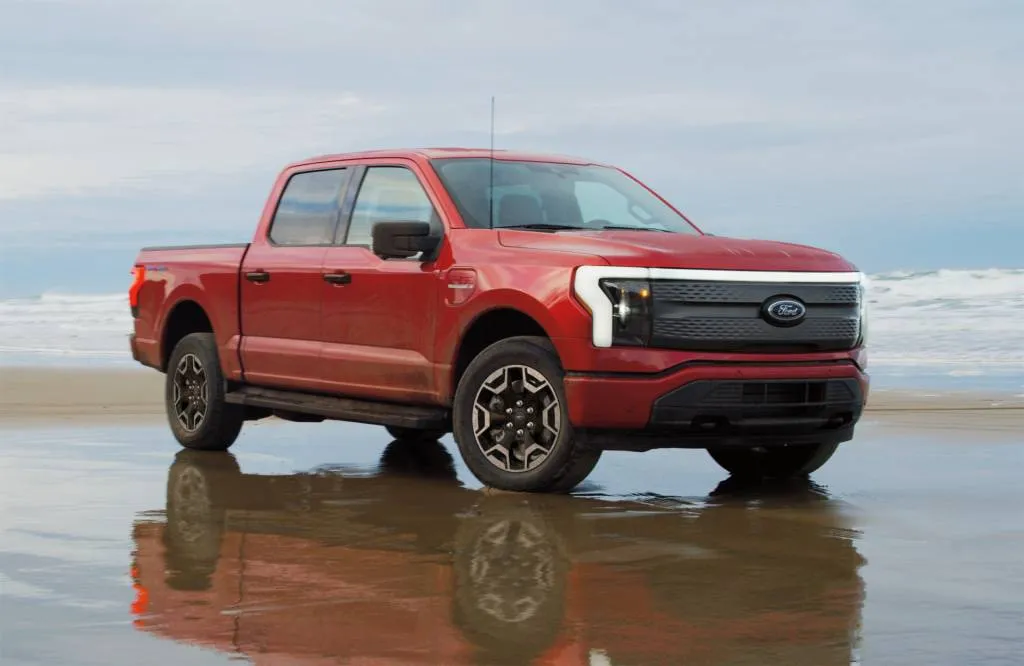
2023 Ford F-150 Lightning
Farley also emphasized Ford hybrids amid regional variations in EV demand. In California, for instance, the Lightning EV is 30% of F-150 sales, while in Dallas hybrid and EV versions together only added up to 15%. Farley claimed that easier showroom math on hybrids’ cost advantages are part of it.
The efficiency-focused California startup Aptera claims it’s crowdfunded enough money to build its three-wheel solar EV. But is it enough to escape Elio’s long shadow, and a pattern of pushed-back timelines?
2023 Kia Niro EV
Kia is recalling two of its EVs—in this case, a small number of 2023-2024 Niro EV and 2023 EV6 models for potentially defective driveshafts. The recall covers models made within a relatively narrow build window earlier last year—1,243 U.S. vehicles in all.
Toyota’s recent comments downplaying EVs don’t appear to have changed its plans to build a three-row electric Toyota SUV in Kentucky. It announced an additional $1.3 billion toward the plant to add a battery-pack assembly line to the plant, where EV production is set to start in 2025.
2025 Kia Carnival Hybrid
With the addition of the 2025 Kia Carnival Hybrid minivan, families will have another high-mpg family choice with three rows of flexible seating. The Carnival Hybrid is set to rival the Toyota Sienna and Chrysler Pacifica Hybrid, although it won’t initially offer all-wheel drive or a plug-in hybrid version.
Want an electric sport wagon? The BMW i5 Touring announced Wednesday is that—a wagon version of the i5 electric car and member of the 5-Series family. BMW calls the first EV of its kind. Yet if you want anything with its utility in America with the BMW badge you’ll have to go with one of its SUVs; BMW confirmed that there are no plans to bring it, or any 5-Series wagon, to the U.S.
2024 BMW i5 Touring
And there were many pieces of charging news. Among them, Choice Hotels, the chain that includes Radisson, Cambria, Comfort, Quality Inn, and more, has announced that it will add Tesla wallbox chargers at thousands of hotel locations—good for a full charge overnight for many EVs. The Cambria brand will offer EV chargers at every location, by the end of 2024.
Electrify America is showing a template for the future in its flagship urban EV charging station, which shifts it indoors with climate-controlled lounge areas, food and beverage vending, and free wifi along with connectors up to 350 kw. It starts a new strategy for larger stations serving urban areas, while its new outdoor layout adds solar canopies and more.
First Electrify America indoor charging station opens in San Francisco
Ionna is the name for the EV charging network formed by seven automakers, it revealed Friday. The network, set to eventually offer 30,000 fast-chargers, each at 350 kw or more, might be the closest rival yet to Tesla’s Supercharger network. First U.S. charging stations will be open this year, it says.
The Biden administration’s National Electric Vehicle Infrastructure (NEVI) program tends to favor gas stations and convenience stores. But a fast-charging stop at Waffle House in Tennessee is one such example that bucks the trend.
Rendering of EnviroSpark EV chargers at at Waffle House
GM has tapped former Tesla battery-development chief Kurt Kelty to bring lower-cost GM EVs to production sooner. GM’s production ramp has been going extremely slowly, with the battery ramp itself pointed to as part of the reason why the company has missed production targets by such a margin.
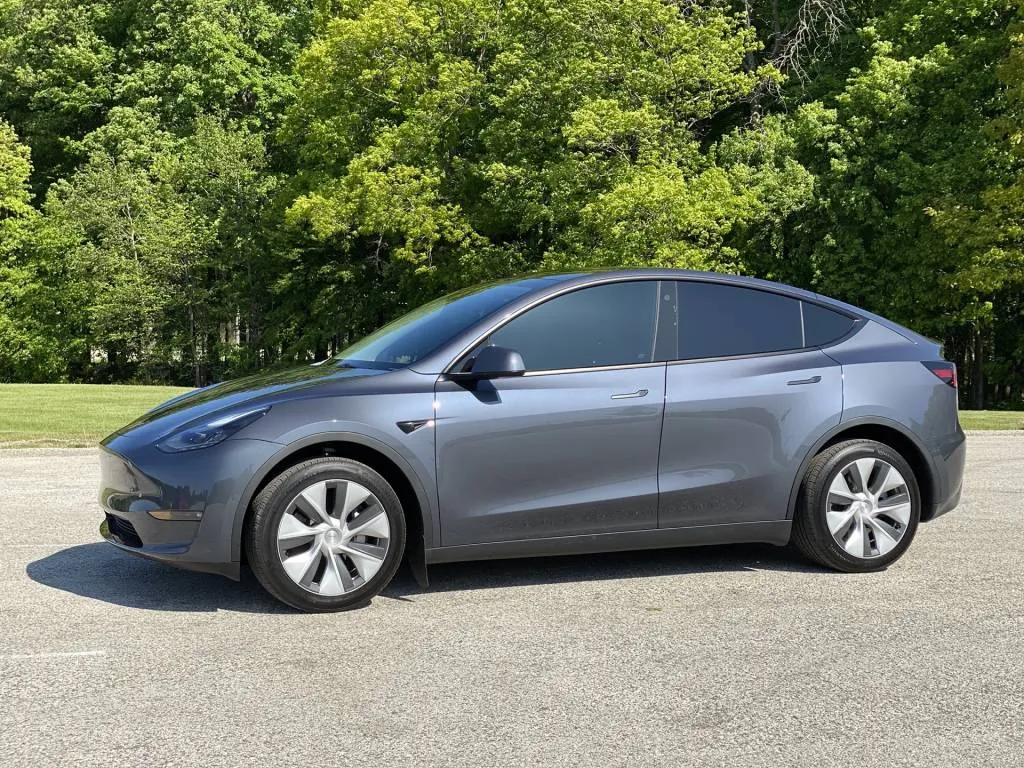
As a sales roundup released this past week by dealers in California pointed out, EV sales from franchised dealerships were way up 94% from 2022 to 2023. But the direct-sales champ Tesla still reigned in California, with the Model 3 and Model Y adding up to nearly one in eight vehicles sold in the state, electric or not. To mix it another way, nearly one in eight Teslas sold globally were delivered in California.
2023 Tesla Model Y
And the National Automobile Dealers Association (NADA) thinks it can turn car dealers into EV experts in 90 minutes. Could such a program be all dealers need to get pull out of the slow lane and belief that the Biden administration is moving too fast on EVs?
Daihatsu stated that the ministry of land, infrastructure, transport and tourism in Japan has confirmed that the models involved now comply with the country’s road transport vehicle act.
Daihatsu Kyushu plant
From the Daihatsu Kyushu Oita (Nakatsu) plant, the models from three brands that will resume production and shipment are as follows:
Daihatsu:
Mira eS
Hijet Truck
Hijet Cargo
Atrai
Toyota:
Pixis Epoch
Pixis Truck
Pixis Van
Subaru:
Pleo Plus
Sambar Truck
Sambar Van
“As a company that provides light vehicles, which are the transportation of the people, we will continue to be close to our customers’ lives and fulfill our social significance. To this end, we will take necessary measures, such as conducting examinations witnessed by certification authorities, under instructions from the Ministry of Land, Infrastructure, Transport and Tourism [of Japan],” Daihatsu wrote in its statement.
While the Jaguar E-Type is famous for having been considered the world’s most beautiful car by a certain Enzo Ferrari, for many, the XJ13 race car is the Jaguar that’s most appealing to the eye.
Sadly, just the one example was built. That was back in 1966, when Jaguar needed a new contender for a return to the 24 Hours of Le Mans. A combination of a lack of funds and rule changes meant the XJ13 never hit the track in 1969 as intended.
Despite never racing, the XJ13 remains an icon of Jaguar’s past, and today it sits in the British Motor Museum. Fortunately for fans, several companies are capable of building replica examples, and one of these was featured in the latest episode of “Jay Leno’s Garage.”
The replica belongs to Tyler Schilling and was built by a British firm called Building The Legend. As Schilling points out, his replica more closely resembles the original XJ13 than the actual XJ13 in the British Motor Museum. This is because the original XJ13 was involved in a crash in 1971 and when it was restored, Jaguar revised the design of the fenders, adding some extra flare to cover a set of wider wheels. Schilling’s car sticks to the pre-1971 design.
The XJ13 was also famous for being among the first Jaguars fitted with a V-12. Its engine, developed by Claude Baily, was a unique 5.0-liter unit with double overhead cams and a peak output of just over 500 hp. During early testing in 1966, the engine powered the XJ13 around the 2.8-mile banked MIRA test track in the U.K. at an unthinkable 161.6 mph, a record that stood for more than 30 years.
Jaguar’s V-12 that eventually went into production in 1971 switched to a simpler single-cam design, and the same is found on Schilling’s car whose V-12 displaces 6.4 liters. Incidentally, Building the Legend’s first XJ13 replica unveiled in 2016 was powered by one of the three prototype V-12s that Jaguar developed as part of the XJ13 program.
While we can always imagine what the XJ13 might have achieved at Le Mans, replicas like the one owned by Schilling ensures the car doesn’t have to remain just a museum piece.
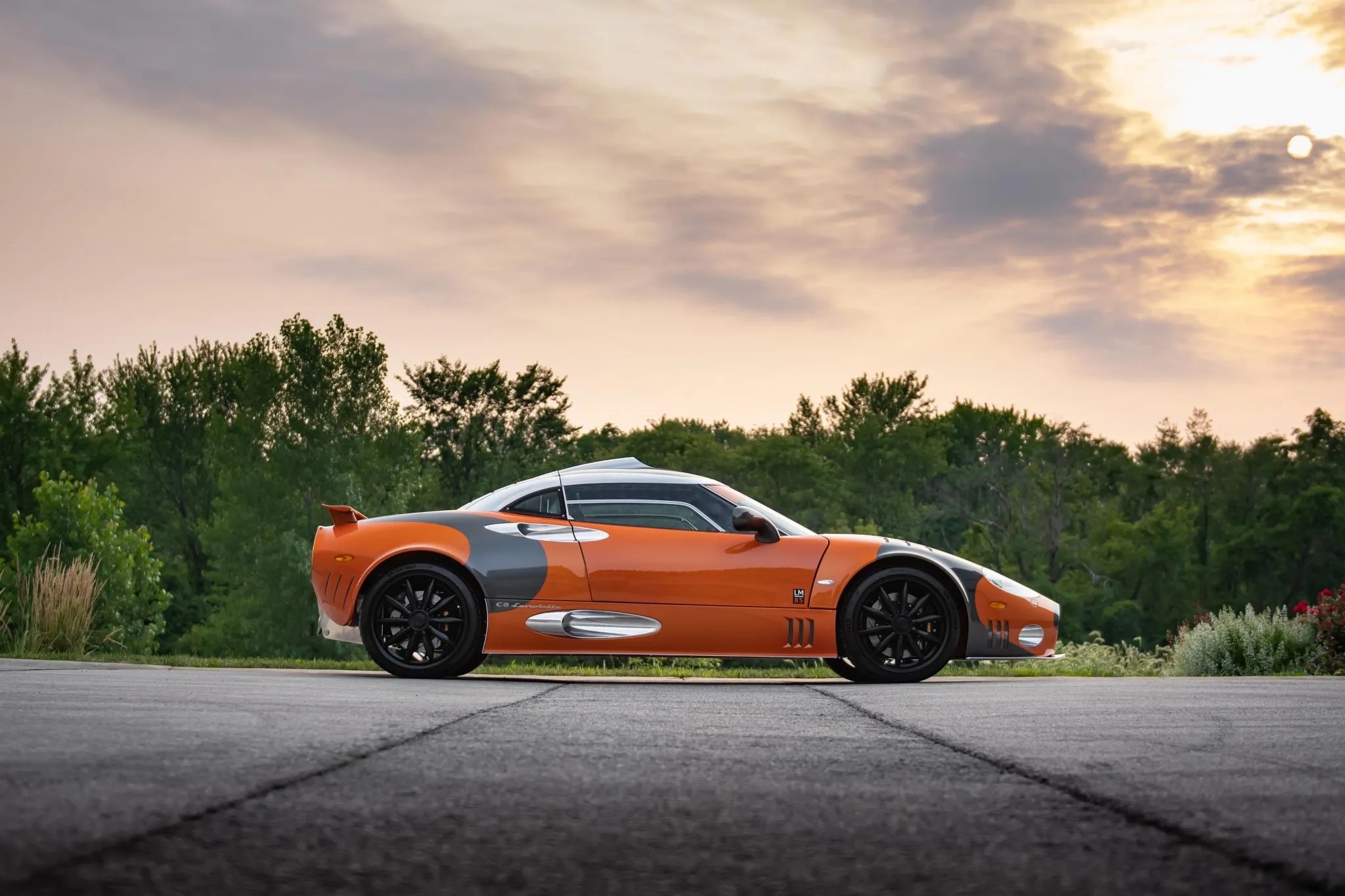
Spyker introduced the Spyker C8 Laviolette at the 2001 Amsterdam International Motor Show as the closed Coupe counterpart to the C8 Spider, honoring the Belgian engineer Joseph Valentin Laviolette, known for his contributions to Spyker racing cars in the early 1900s.
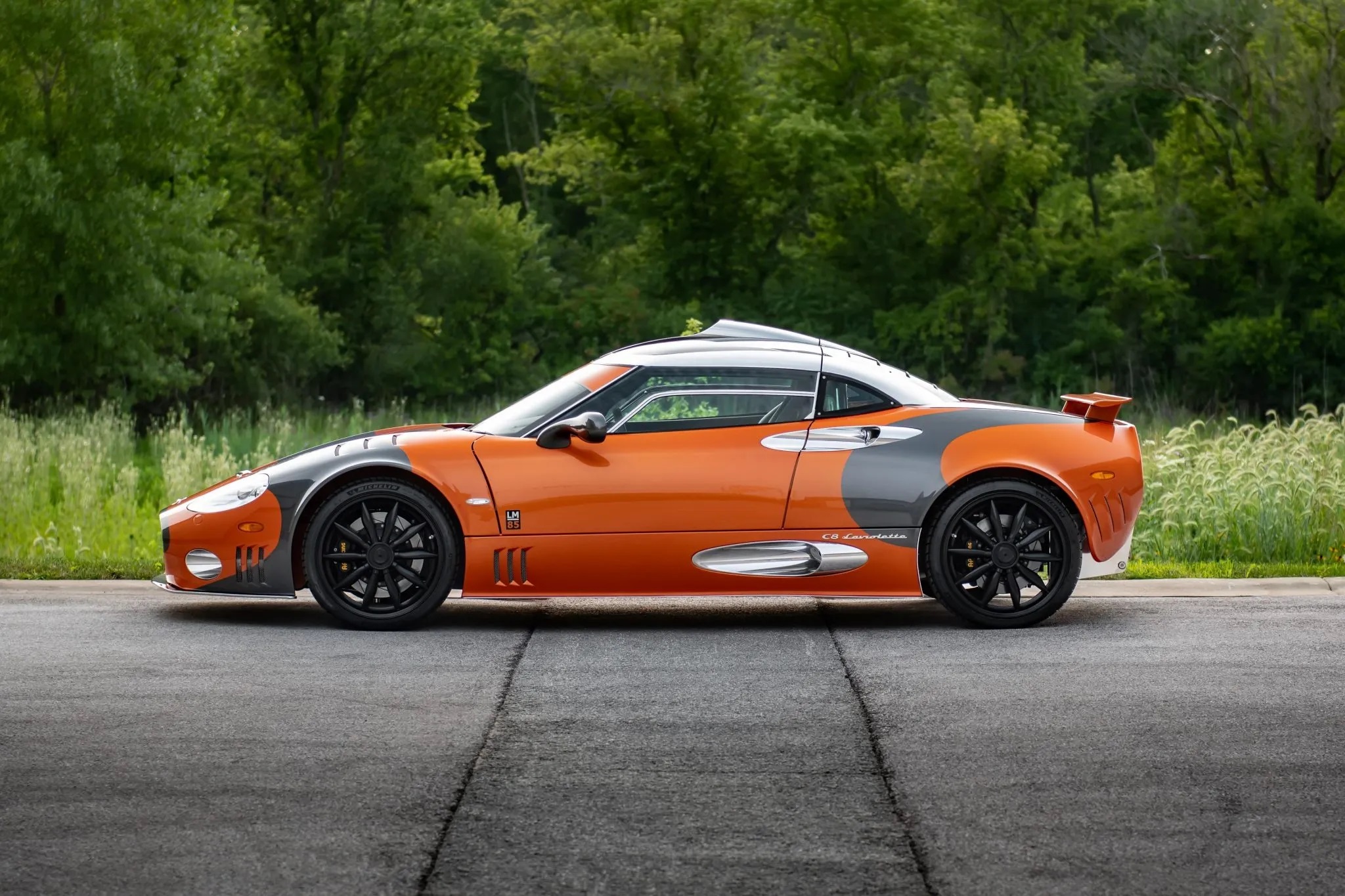
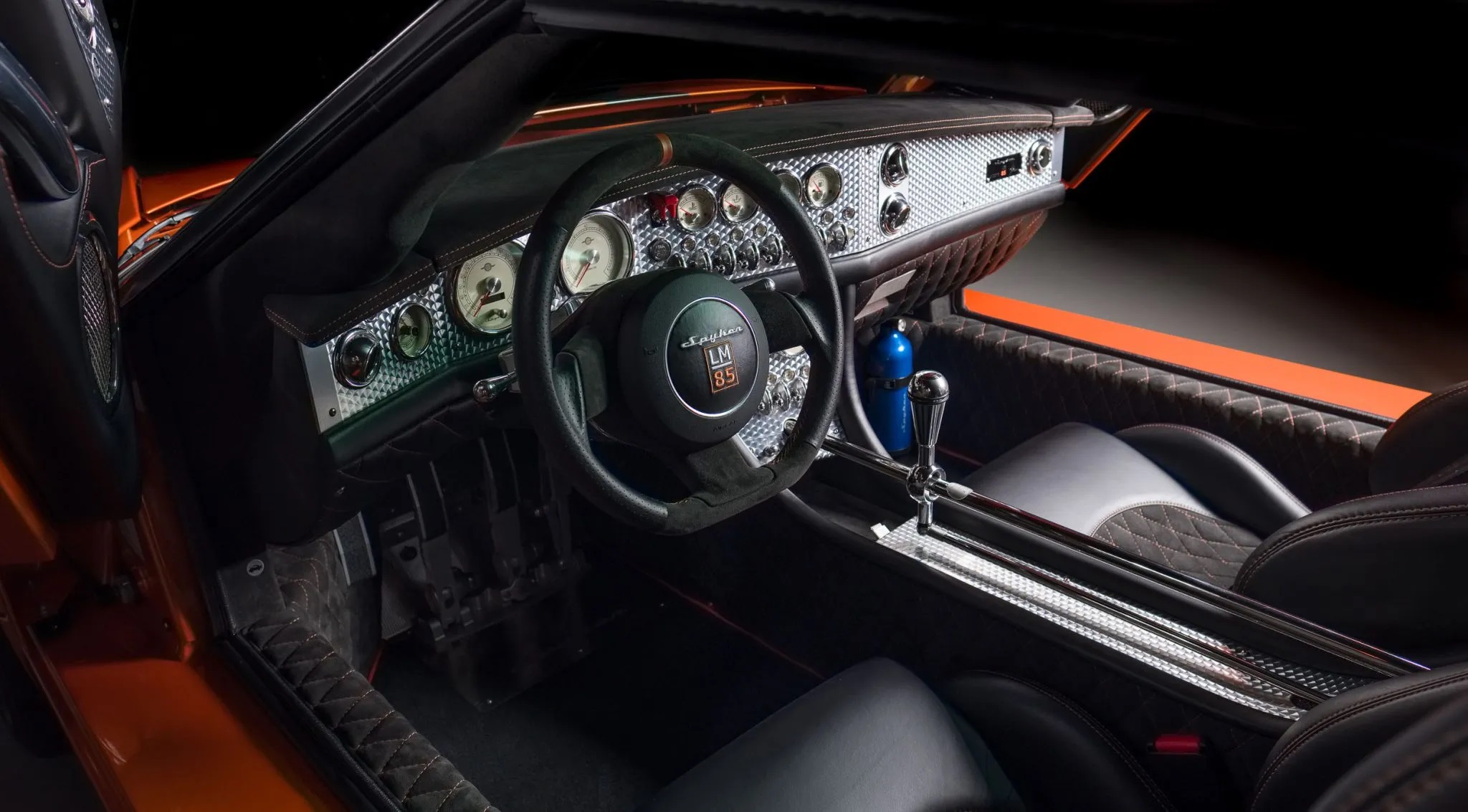
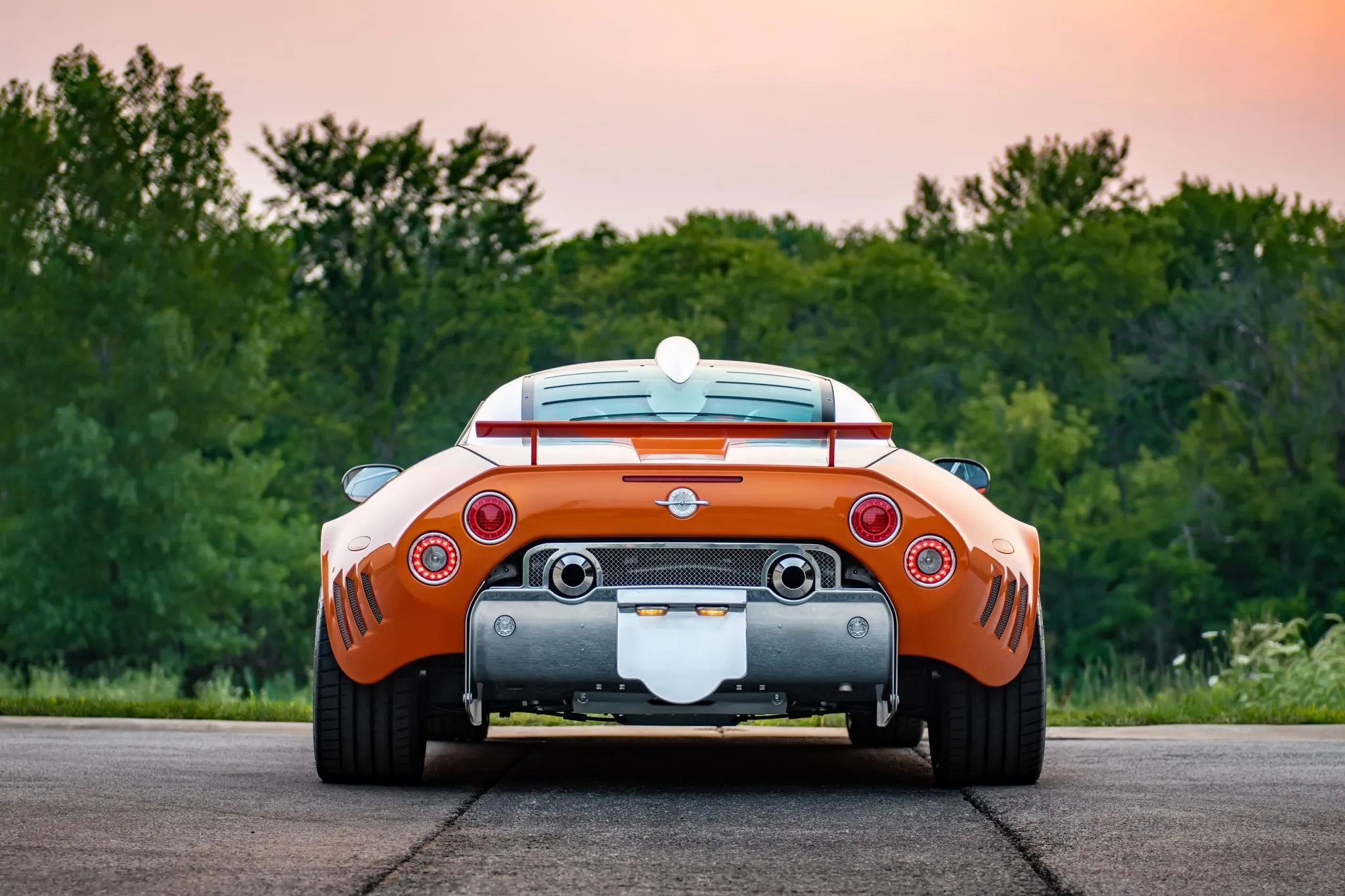
One of Spyker’s most striking bespoke creations was the C8 Laviolette LM85, denoted by “LM” for Le Mans and “85” for the racing number. Limited to 24 units, mirroring the duration of the Le Mans endurance race, only 14 were eventually manufactured.
Each featured aBurnt Almond Orange racing livery with a Gun Metal “S” logo, complemented by a cabin adorned in black leather and Alcantara. Additional details included LM85-specific exhaust tips, a fixed rear spoiler, and black AP Racing brake calipers concealed behind 19-inch black Aeroblade wheels.
Power for the C8 Laviolette is provided by a naturally aspirated 4.2-litre Audi petrol engine. This highly responsive 90-degree V8 power unit generates 400 horsepower at 6,800 rpm and an immense wave of torque with 480 Nm at just 3,500 rpm. With excellent power-to-weight ratio, the C8 Laviolette can accelerate from 0-to-60 mph kph in just 4.5 seconds and go on to reach a top speed of 186 mph.
We’ve been doing quite a bit of boondocking and dispersed camping since visiting home back in July. When we initially hit the road, we thought we were prepared for dry camping, but quickly learned that we were more than a little unfit for the task.
Dispersed camping, boondocking and dry camping are all RV terms for camping outside of a campground. Most of the time it is on BLM land or in a National Forest all by yourself, or in a designated camping area with other campers.
That being said, we have done several upgrades to the camper, learned how to find good locations, and even created a list of our Boondocking Essentials, which is what I wanted to share with you today. So let’s get right into it…
#10 – Folding Chairs
For most RV’ers this is something that we already have in our camper. And although they are really nice to have when you’re at a campground, they become even more necessary when you’re boondocking. While some dispersed camping locations do provide a picnic table to sit at, most of them do not. Unless you plan to spend your entire day and night in your camper, you should make sure that you’ve packed a comfortable chair to sit in outside. Doug and I actually have 3 different style chairs packed away in our monstrosity.
Now, I wouldn’t really recommend that everyone have 3 different types of chairs at the ready, I would suggest that you have one for each person in your party, plus 2 extra’s. Each person in the camper should find, and bring, a chair that they’re most comfortable in. We have anti-gravity chairs for lounging, chairs with a side table for sitting around the fire, and 2 beach chairs for when we just want to sit outside and enjoy the weather without laying down and falling asleep in our lounging chairs.
Oversize XL Padded Zero Gravity Lounge Chair Wide Armrest
Why do we suggest bringing an extra 2 chairs? There are actually 2 very different reasons… The first is simple. If someone’s chair breaks, you have a spare (or 2). I’ll throw this in there too – if someone finds their chair extremely uncomfortable that day, they have another option. But the second reason isn’t as obvious. You should bring (and put out) 2 extra chairs because it’s more inviting if you happen to meet someone.
Doug and I learned this trick while down in Florida from our friend Mark who travels alone. When we asked him why he had so many chairs out, he said, “if I didn’t, where would you sit?” His theory, and now ours too, is that – if you meet someone while camping they will feel more comfortable if you have a place for them to sit. Otherwise, the conversation may end when their legs are tired of standing. All campers are out here doing the same thing as you. You probably have a lot in common. And even if you don’t, you at least have camping as a topic of conversation and have made a single serving friend while out enjoying your adventure.
(Also Read: How To Have A Good RV Shower While Boondocking)
#9 – Outdoor Folding Table
Like I said before, there is likely not going to be a picnic table just hanging out where ever you decide to set up camp for the evening. You’re going to need a place to put things down instead of on the ground. This will come in handy if you want to eat outside too. You can put all of your camp chairs around it and enjoy your meals here. Once again, most of us have some kind of folding table in our camper already, but it becomes much more essential when Boondocking.
PORTAL Camping Table Foldable with Adjustable Legs
#8 – Firewood / Fire Starters
I want to preface this category by saying that there are times when there is a ban on fires in different parts of the country. So read any posted signage, speak with a camp host, or do your due diligence and know the current ruling before you start a campfire.
That being said… You can scavenge and pick up dead fall where ever you decide to camp. But what if you’re somewhere that doesn’t have any? When we camped at The Wall at the Badlands in South Dakota there wasn’t a tree in sight. There was no wood laying on the ground for us to use. You will need to bring/ purchase firewood. When dry camping having a fire going serves multiple purposes. Alone from the ambiance that it provides, a fire is great place to warm up on cold days, and can also be where you do a lot of your cooking.
Frontier Tumbleweed Natural FireStarters
You also want to make sure that you have a way of starting the fire. Not just a lighter. If you are relying on dead fall and it’s been raining for the last week, everything is going to be wet. Getting that fire started is going to be more difficult. We carry quick start charcoal and tumbleweeds to start our fires. Charcoal is great to get a hot bed of coals going at the bottom of the fire. It also reduces the amount of smoke you get when adding additional wood to the fire.
#7 – Outdoor Stove / Grill
Yes. Your camper likely has a stove inside. Yes. You can cook over the fire. But we’ve found that having an outdoor stove has been vital to our boondocking. When it’s 90 degrees out and you’re fighting to keep the inside of your camper cool, the last thing you want to do is start cooking a meal inside. It’s almost instantaneous that the temperature starts to rise in there. And there’s just some things that are more difficult to cook over a fire… like small vegetables. I’m not saying it’s impossible to cook everything over the fire. But going back to that 90 degree day – Do you really want to be standing over a camp fire to cook everything that you plan on eating? Having a camp stove has eliminated the rising heat in the camper and prevented us from cooking pancakes over the fire. I can use my same pots and pans from inside, and we don’t have to worry about making sure the fire is at the right temperature for cooking.
Camp Chef Ranger II Table Top Stove
#6 – Solar Lights
When you’re boondocking, it isn’t likely that you will have any ambient light source at night other than the moon. If you start using the outdoor lights on your camper, you’re going to drain your batteries down faster. Once your fire is out for the evening, it get’s pretty darn dark, and it happens really quickly. Having solar lights has been indispensable. Just being able to see to get back into the camper is wonderful, but more than that, they are a security feature. Think about your stick and brick house… You have an outdoor light flip on if you hear an intruder or need to run outside and grab something. In a camper, a lot of your storage is accessed from outside. If you need to get something once it’s dark outside, the solar lights provide enough light to do so. They also provide enough light to see a bear sitting outside your camper when the dog needs to go to the bathroom in the middle of the night. I think solar lights should be used in conjunction with a flashlight for more direct light. But the solar lights provide enough light that you aren’t opening your camper door into pitch blackness.
Solar Lights Outdoor Waterproof
#5 – Low Flow Showerhead
Water conservation is a reality when doing any kind of dry camping. The only water you have is what you brought with you. If you’re camper only holds 15 gallons of fresh water, well then, that’s all you’ve got. You need to be conscience of your water usage. One area that we have been able to seriously conserve water is by upgrading our showerhead to one that is low flow. A good low flow shower head will reduce the gallons per minute pouring out while you’re trying to rinse off. You are also going to want to make sure that it has a pause feature. Like this, you can get in, get wet and hit that pause button while lathering up, and turn then just quickly un-pause it when you’re ready to rinse. The pause button allows you to keep your water temperature and save a few gallons of water while you’re in the lathering phase of your shower. It works out much better than turning the water completely off and then back on again when you’re ready.
Oxygenics 92489 Fury RV Handheld Shower
#4 – Water Acquisition
Yeah. I know. I already pointed out that you’ll only have whatever water you’ve brought with you. But what if you could get additional water? We’ve been able to seriously extend our time in dispersed camping locations because we’ve been able to procure additional water and get it into our fresh water tank. Depending on the set up of your camper this can be done several ways. We use a combination of little tricks.
You can buy bottled water at the grocery store that you can use for drinking and cooking. This keeps the water in your tank for showering and toilet usage. We most definitely do this.
If your camper is set up to just pour water into your fresh water tank, you can carry buckets, or collapsible containers for fresh water transport. Although your dispersed camping location may not have water readily available, you may be able to obtain potable water at a local public well, or even a gas station. Now all you need to do is pour that water into your camper’s tank and you’re good to go for another few days.
In our case, our camper requires the water be pressurized to get it into the fresh water tank. Doug is quite ingenious with rigging stuff up. He had upgraded our water pump to a quieter unit before we even moved into the camper. For some reason he thought that he should keep the old water pump. At the time, this was probably just in case something went wrong with the new one he had installed, we would have a spare. Well, that spare water pump has been a lifesaver. We have been able to locate public wells, and fill 5 gallon buckets with fresh water, and then use that old water pump to get the water into our tanks. You can check out Doug’s bucket build here, as it is way out of my realm of being able to explain for everyone.
#3 – Electricity
I think this category should probably be labeled energy management, but it all boils down to your electricity. First and foremost, you should not plan to do any kind of boondocking with your camper straight from the factory as is. You will require the purchase of additional items to make camping like this an option. The easiest solution sounds like a generator, and we will both agree that a generator is the simplest solution to providing electric to your camper. We happen to love our Harbor Freight Predator 3500. But you may not be able to run a generator for 24 hours. Even in National Parks and Forests, there are sometimes quiet hours that you need to adhere to. At the Clark Canyon Reservoir we had quiet hours from 10pm until 7am. In Glacier National Park, we could only run the generator from 8am-10am, 12pm-2pm, and from 5pm to 7pm. So although a generator is the simplest way to get electric into your camper, it shouldn’t be relied on as the only source.
Renogy 400Watt Grid 12V Solar Power System
We have also added solar panels to our rig. Now, we didn’t go crazy with adding enough solar to run air conditioner units, we just added enough solar panels to keep our batteries charged. Doug goes into a lot more detail with what unit we opted for and how it’s performing for us in his article RV Solar Install For Normal People. But the bottom line here is that you need to plan for energy management when out dry camping.
#2 – Percolator Coffee Pot
This item on our list may be a bit of a joke… But not for us, and maybe not for a lot of you too…
Coffee is a necessary evil for both Doug and I in the morning. Admittedly, I drink more coffee than Doug. And likely more coffee than a dozen people combined, but I can make it through waiting for a pot to brew in the morning. Doug on the other hand needs to roll out of bed to the coffee being brewed in his mouth or he’s a cranky camper. Believe it or not, that little coffee pot on your counter sucks up a LOT of electricity. When you’re out boondocking you’re batteries may have enough charge left in them to not be setting off any kind of alarms, but if you have a power inverter, the moment you turn that coffee pot on, all of that can change. Remember, your generator hasn’t been running all night, and the sun hasn’t been throwing all of that energy into your solar panels either. If you’re anything like us, you’re awake before you’re allowed to crank up the generator and now you need your coffee. A small percolator coffee pot on your stove (indoor or outdoor) will get you that warm delicious caffeinated nectar of the gods quickly so you can go about enjoying your dispersed camping location without scaring off all wildlife with the horns that start growing out of your head. (P.S. This also works great for boiling water for you tea drinkers.)
Outdoors Percolator Coffee Pot
#1 – A Back-Up Plan
It doesn’t matter where you plan to head out to for your dispersed camping experience, you will absolutely never know what everyone else on the planet’s plans are. You can drive past the same location 100 times and never see anyone there, but when you get there, it could be full. There’s also the case that there may not be a place big enough for your camper. For us, we are 65 feet total with the truck and camper. That’s a LOT of space! There may be another area for you to set up in right down the road, but there may not be either. You should always have a back up plan. Sometimes that back up plan will need to be the campground 30 minutes further down the road. And sometimes, it will have to be to just keep driving around the National Forest until you can find another suitable location. But ALWAYS have a back-up plan.
With our list of must have’s and careful water and electric management we have been able to extend our boondocking to 14 nights without needing to stop in a campground. If you have any essential dispersed camping items that you think belong on the list, we would love your input. We are still relatively new to longer term boondocking and would love to learn more about how you’ve been able to extend your stays so we can continue to keep our RV Life Worth It.
Rowan Atkinson has been blamed for the slow adoption of electric vehicles (EVs) in the United Kingdom, reports Sky News. The Mr. Bean and Johnny English actor was name-checked during an environment and climate change committee meeting in the House of Lords earlier this week, with the Green Alliance think tank saying a comment piece by Atkinson was damaging to EV sales in the country.
The piece in question was published by The Guardian on June 3, 2023, with Atkinson saying “electric motoring doesn’t seem to be quite the environmental panacea it is claimed to be.” He goes on to talk about the environmental impact of EV production, alternative fuels, the life cycle of an automobile and that “our honeymoon with electric cars is coming to an end.”
The following week, The Guardian published another article by Simon Evans, deputy editor and senior policy editor of climate news site Carbon Brief, which looked to debunk claims made in Atkinson’s article.
In the meeting, the Green Alliance shared its views on the main obstacles the UK government faces in its bid to phase out petrol and diesel cars before 2035, and said, “one of the most damaging articles was a comment piece written by Rowan Atkinson in The Guardian which has been roundly debunked.”
“Unfortunately, fact checks never reach the same breadth of audience as the original false claim, emphasising the need to ensure high editorial standards around the net zero transition,” it added. Among the issues put forth by the think tank include an insufficient numbers of charging points, high EV prices and “a lack of clear and consistent messaging from the government.”
Last year, the UK government announced it would postpone the ban on the sale of new petrol- and diesel-powered cars to 2035, claiming the change is a “more pragmatic, proportionate, and realistic approach” that “eases the burdens on working people.”
Mahindra Group has announced the appointment of Pratap Bose as the Executive Vice President and Chief Design Officer to lead its newly formed Global Design organization. The new Global Design organization, expected to be headquartered in the UK, aims to ‘renew Mahindra’s commitment to reshaping the future of mobility by designing and developing dynamically engineered next-generation authentic products with global appeal’, according to the company press release.
Bose, who until recently was Head of Design at Mahindra’s cross-town rival Tata Motors, will now be tasked with leading the recently announced Mahindra Advanced Design Europe (M.A.D.E), which is being set up in Coventry, UK, and the existing Mahindra India Design Studio (M.I.D.S), which was previously led by Ramkripa Ananthan.
According to internal sources, Anathan has resigned from the company after 24 years of service. It is as yet unclear what her next role will be.
Mahindra’s decision to create a new Global Design Organization is not without warrant. Following Brexit, the UK is no longer subject to stringent EU rules regarding overseas candidates. This move will allow the company to access a broader talent pool and expand its global technology footprint.
Pratap Bose (right of the Sierra Concept clay model) stands with Tata Motors’ UK design team | 2019
In his new role, Bose will oversee the design of all key business segments for Mahindra globally and continue the company’s momentum in building authentic SUVs. He will guide the design of Mahindra’s battery-electric vehicle range; light and heavy-duty commercial vehicles; last-mile mobility products; Peugeot scooters and the company’s tractors and farm machines. Based in the UK, Bose will report to Rajesh Jejurikar, Executive Director, Auto and Farm Sectors, Mahindra and Mahindra Ltd.
“We are at an inflection point in our Auto and Farm Sectors growth journey as we accelerate our transformative initiatives,” Jejurikar said in a statement. “Our robust pipeline of 23 new products that will be launched in the next five years would bring our design and advanced engineering capability across automotive, farm equipment and two-wheelers to the fore. Having Pratap on the team will strengthen our design capability, enhance our products and widen our customer base.”
See also
The Global Design organization is a strategic initiative aimed at ensuring that products are future-ready and exceed the expectations of customers across the world. The company says ‘dedicated verticals are being created in each studio location that will maximize and enhance creativity,’ adding that the new organizational structure ‘will sharpen Mahindra’s distinctive product designs and differentiated technology offerings across its portfolio’.
Prior to becoming Global Head of Design at Tata Motors in 2011, Bose held several positions within the company, including that of Chief Designer and Principal Designer of Tata Motors’ European Technical Center (TMETC), which he joined in 2007 following roles at scooter manufacturer Piaggio in Italy and at DaimlerChrysler in Japan. An alumnus of the UK’s Royal College of Art and the National Institute of Design in India, Bose has more than 20 years of global automotive design experience.
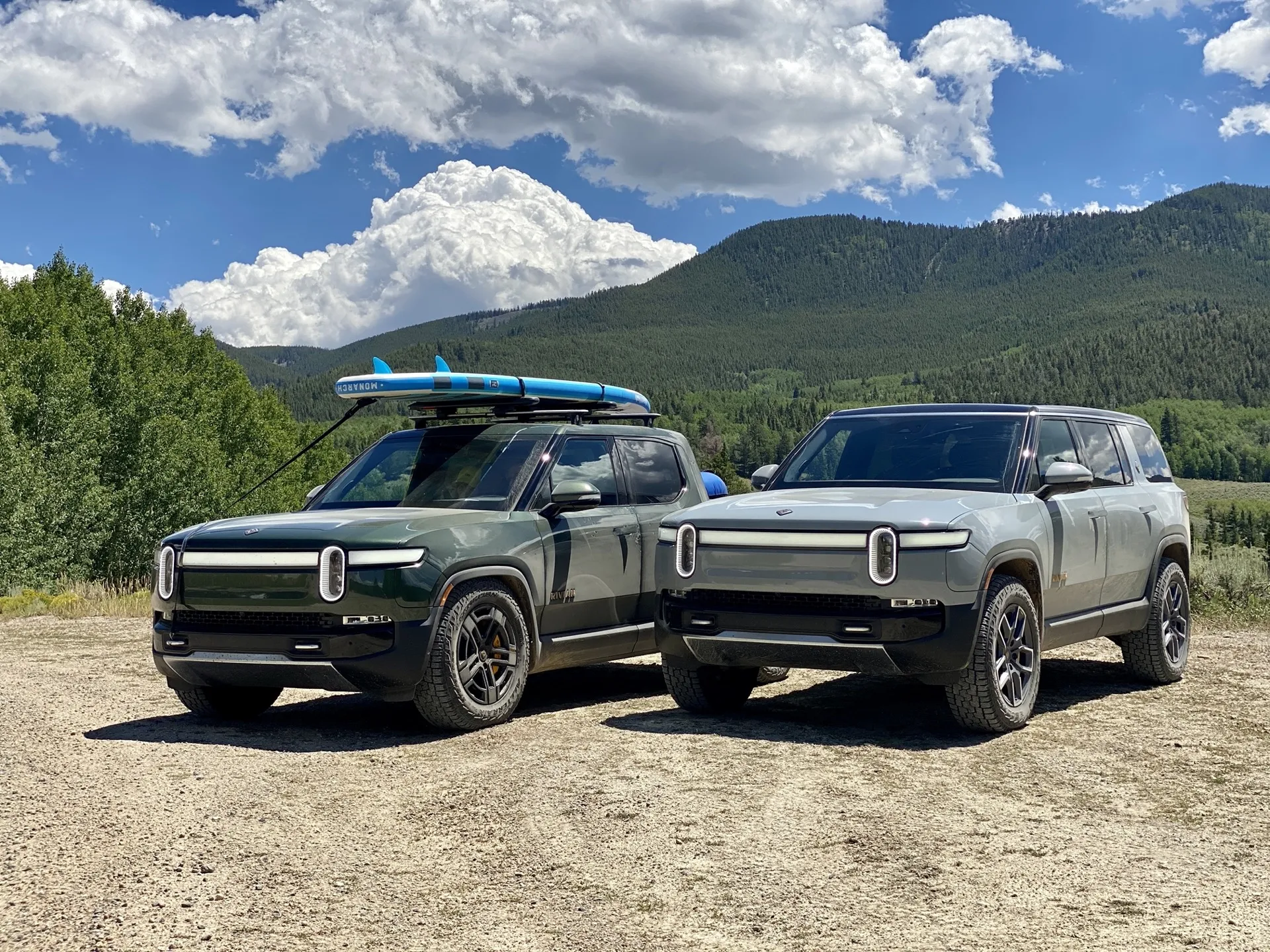
EV startup Rivian has made its R1T pickup truck and R1S three-row SUV more accessible by finally making available long promised entry-level battery options, called a Standard Pack and a slightly bigger Standard+ Pack.
As they’re currently priced, the R1T with the base 533-hp Dual-Motor AWD powertrain and the Standard Pack battery starts at $71,700, rising to $74,800 with the addition of the Standard+ Pack battery. The new Standard pack replaces the old Standard pack, now Standard+, resulting in a lower starting price of $3,100.
The R1S with the base powertrain and Standard Pack battery starts at $76,700, rising to $79,800 wit the Standard+ Pack battery. All figures include a $1,800 destination charge.
Since the prices fall below the $80,000 cutoff for trucks and SUVs, some customers could qualify for federal tax credits under the Inflation Reduction Act.
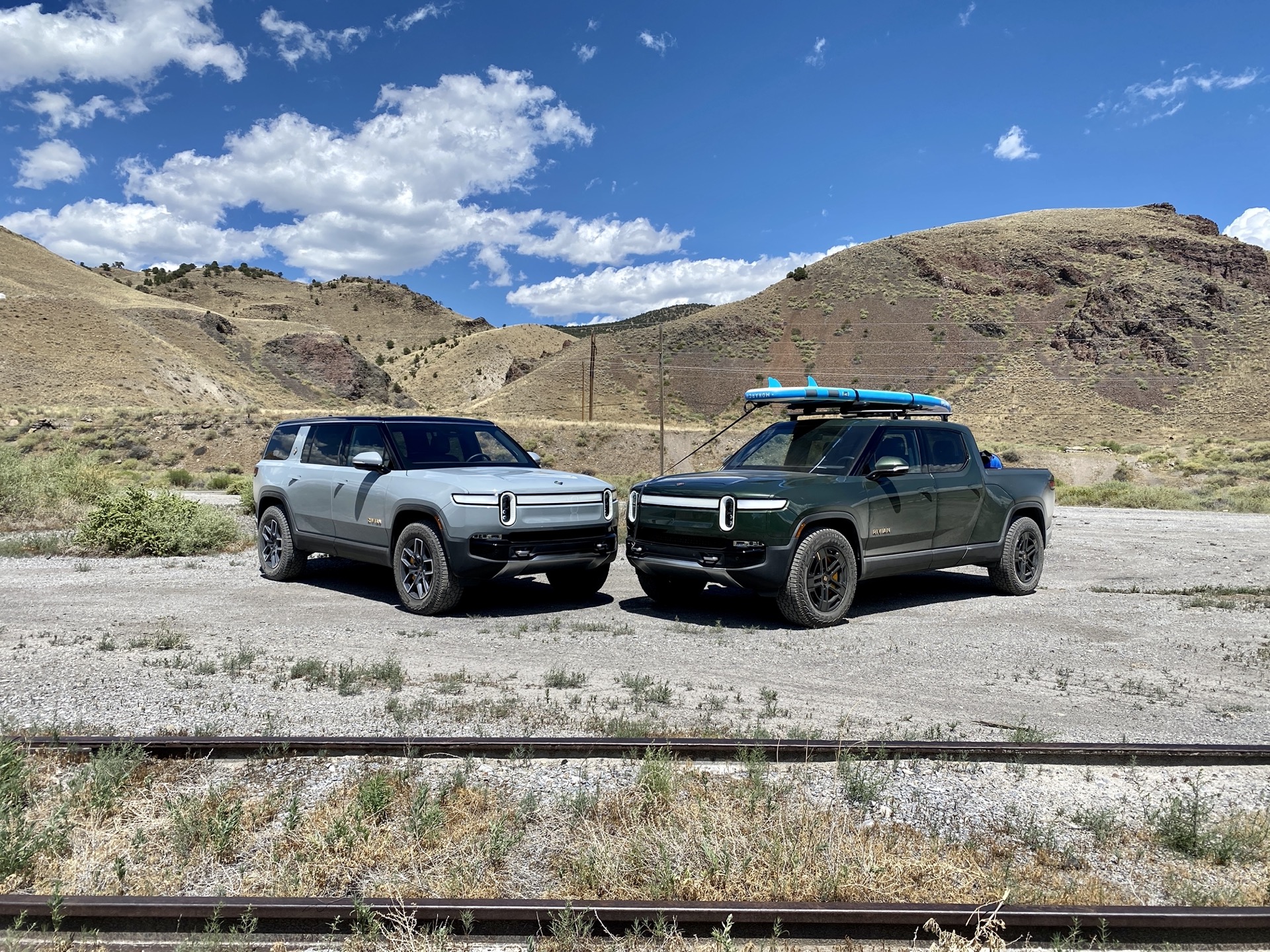
Rivian R1T, green, vs. Rivian R1S, silver
EPA-rated range estimates for the new battery options haven’t been published but Rivian estimates the Standard Pack battery will deliver up to 270 miles and the Standard+ Pack battery up to 315 miles.
Buyers looking for more range can opt for the mid-level Large Pack battery that delivers an EPA-rated range estimate of up to 352 miles. Above this is a Max Pack battery that’s rated by the EPA at up to 410 miles.
Rivian still has more battery options planned for the R1T and R1S. The company confirmed to Green Car Reports that new LFP batteries, currently due by the spring, are still in the pipeline for both the R1T and R1S.
Rivian also plans to launch smaller models based on a new R2 platform. The first of these, thought to be an SUV, is scheduled to be revealed on March 7. Its arrival will potentially bring down the price of a Rivian further. The company has previously hinted at prices ranging between $40,000 and $60,000.
Freedom’s Fortress. Gibraltar of the Chesapeake. America’s largest stone fortress. Fort Monroe is famous for a lot of reasons. And now, visitors can walk the halls once traveled by presidents and poets.
Fort Monroe National Monument was established in 2011. The National Park Service maintains the grounds – areas like the seawall trail and beaches – while the Fort Monroe Authority manages the visitor center and museum. The government entities keep the historic fort well-maintained and entertaining for visitors.
Find out what you can do with a day trip visit to Fort Monroe National Monument, the stories behind the monikers, and some interesting people connected to this site on the Chesapeake Bay in Virginia.
National Park Service App
The official National Park Service app is an all-in-one tool for planning a national park adventure and finding your way around the park. The app has information about every national park site across the country, essentially putting all the online information at your fingertips.
The free app features interactive maps, self-guided tours, amenities like restrooms, and lists of things to do. The powerful app has an offline mode – with a single tap, you can save the park for offline use to access all the information later. You’ll also have access to important information like alerts, contacts, fees, and operating hours.
Download the free app on iOS and Android.
Fort Monroe National Monument Map
How to use this map:Click the icon in the top-left corner to open the Map Legend, then click on any of the legend items to display more information. If you have a Google account, click the (very faint) star at the end of the map’s name to save this map to your account, then access the map from your smartphone during your trip.
Zoom out to see the lodging options.
The History of Fort Monroe
Shortly after Captain John Smith and the Virginia Company landed in the New World, this small point was scouted for a fortification to protect the young colony. In 1609, Fort Algernourne was completed. It was a wooden fort with 7 mounted canons manned by 50 colonists.
During the War of 1812, British forces entered the Chesapeake Bay unchallenged and burned the nation’s capital. After the war, Congress appropriated nearly a million dollars to develop the Third System of Forts. A commission appointed by President James Monroe identified potential sites around the country’s coast for new forts.
Work began in 1819 on the fort named after the president at the time. Overseen by Simon Bernard, the fort was ironically built using slave labor. When completed in 1834, the perimeter wall was 1.3 miles long and 10 feet thick, making it the largest stone fortification ever built in America.
Fort Monroe remained in federal control throughout the Civil War. On May 27, 1861, three escaped enslaved people – Frank Baker, James Townsend, and Sheppard Mallory – arrived at the fort seeking their freedom. Major General Benjamin Butler made the controversial and pivotal decision of declaring the men “contraband.” Since Virginia considered the men property, but the state had seceded from the United States, the Fugitive Slave Act no longer applied. And seized property was a spoil of war.
The decision led to the fort’s everlasting nickname – Freedom’s Fortress.
Fort Monroe Visitor and Education Center
The Fort Monroe Visitor and Education Center was built in 1909 as the Coast Artillery Library. The building stands outside the mote surrounding the fort. It’s an excellent place to begin exploring the free national park site.
The 16,000-square-foot building features exhibits about the fort’s long history. Archives are available upon request for studying parts of the fort’s history.
Casemate Museum
The Casemate Museum is a fascinating opportunity to explore inside the fort’s walls – an area called the casemate. Historically, the casemates served as living quarters, operational facilities, and artillery emplacements. But there are a few hidden parts of history that are incredible to explore.
The Casemate Museum includes the Jefferson Davis Cell. Over a month after General Robert E. Lee surrendered at Appomattox Courthouse, the Confederate president was arrested in Georgia. He was transported to Fort Monroe and confined to a damp cell for nearly six months. He was eventually moved to better accommodations in the fort at Carroll Hall, but he was never brought to trial.
Another illustrious resident was the poet Edgar Allan Poe. Under the alias “Edgar A. Perry,” he served in the United States Army for two years. He was briefly stationed at Fort Monroe before abruptly resigning to attend West Point. An exhibit in the Casemate Museum expands on his military career – and charges of dereliction of duty for spending this time writing poems.
1619 African Landing Memorial
A recent – and controversial – development at Fort Monroe National Monument is the establishment of the 1619 African Landing Memorial. Current research indicates the first enslaved African Americans sold in the Colonies happened at this point.
After raiding a Portuguese ship in the Caribbean, the White Lion traveled to Fort Algernourne and traded “20 and odd” Africans for goods. It’s the earliest documented trade of enslaved people in North America.
Main Gate
There are two immeasurably fascinating aspects of Fort Monroe National Monument. First, it’s still surrounded by a 5-foot-deep watery mote. Second, visitors can drive vehicles into the 63-acre interior of the fort.
The Main Gate was the first portion of the fort to be completed in 1820. But the gate isn’t exactly up to current codes – it has a 12’3” clearance but only one lane wide. A traffic light controls traffic in and out.
It’s a fascinating experience driving a modern vehicle inside a nearly 200-year-old fort.
Flagstaff Bastion
The Flagstaff Bastion offers the best view anywhere inside Fort Monroe National Monument. One of the seven bastions around the fort, this one features a towering flagpole beside the platforms that once supported mounted artillery.
The Flagstaff Bastion is accessible with a long ramp. The angle is slightly steep.
At the top, visitors are treated to a stunning view of the Chesapeake Bay. To the left is the Old Point Comfort Lighthouse. To the right is the waterfront Continental Park. And straight ahead is the Hampton Road Tunnel – a section of Interstate 643 that dips beneath the water’s surface.
Old Point Comfort Lighthouse
When Captain John Smith and his weary settlers finally landed in 1607, they called it Point Comfort.
The Old Point Comfort Lighthouse was one of the first maritime lighthouses built by the United States. Completed in 1802 and lit in 1803, it’s also one of the few remaining lighthouses on the Chesapeake Bay.
Ironically, the British used it as a lookout tower during the War of 1812.
The lighthouse is not open to the public because it is still active.
Building #1 – Old Quarters
Completed in 1819, Building #1 is the oldest building in Fort Monroe. For nearly the first century, it served as the commander’s quarters. When Major General Benjamin Butler issued the pivotal “contraband decision” in 1861, these were his living quarters.
President Abraham Lincoln used the quarters when he visited Fort Monroe in 1862. During his brief stay, the president visited Hampton, inspected the USS Monitor, and coordinated a campaign to capture Norfolk.
Building #17 – Lee’s Quarters
Completed in 1823 as an officer’s quarters, Building #17’s most famous tenant was Lieutenant Robert E. Lee. He was stained at Fort Monroe from 1831 until 1834, overseeing the final construction of the fort, including the mote.
During leave in 1831, Lee married Mary Custis, the great-granddaughter of Martha Washington from her first marriage. The married couple lived in the quarters. In 1832, Custis Lee was born in the house.
Chapel of the Centurion
Religious services at Fort Monroe began regularly in 1825 during the fort’s construction. In 1858, the Chapel of the Centurion was dedicated. It was named after the Roman centurion Cornelius, who is widely considered to be the first person to convert to Christianity.
The chapel was the oldest wooden structure for continuous religious services on an Army base until Fort Monroe was decommissioned in 2011. Today, the chapel continues weekly services and can be rented for weddings and events. The building was restored in the 1980s and features exquisite architecture.
Saint Mary Star of the Sea
In 1860, the Catholic Diocese of Richmond agreed with the United States to build a parish church at Fort Monroe. Unlike the Chapel of the Centurion, which was owned by the Army, the building for Saint Mary Star of the Sea would be owned and funded by parishioners.
The first church was completed in 1860. During the Civil War, the Archdiocese of Baltimore maintained the small one-story building. In 1873, the first full-time pastor arrived and supervised the construction of the church’s rectory.
The current church was completed and dedicated in 1903. Regular services are still held at the church, the ninth-oldest parish in the Diocese of Richmond.
Outlook Beach
Interestingly, Fort Monroe became a resort beach town in the 1880s. The Chamberlain Hotel and Hygeia Hotel were renowned for their restorative baths. Visitors traveled from around the world to stay at the waterfront hotels at the doorstep of the U.S. Army fort.
Outlook Beach is the only beach open to the public for swimming today. During the summer, the City of Hampton keeps lifeguards on duty at the beach.
Fort Monroe Seawall Trail
The 2-mile Fort Monroe Seawall Trail (bookmark on AllTrails)is a great opportunity to stretch your legs and enjoy stunning views of the Chesapeake Bay. A concrete trail begins near the marina, passes in front of The Chamberlin and Continental Park, and continues to Battery Irwin. From there, the trail follows a paved road no longer open to vehicles to the Paradise Ocean Club.
How to Get to Fort Monroe
There are a few ways to get to Fort Monroe at Old Point Comfort. Which way you take depends on how badly the traffic is congested on Interstate 64.
The shortest route is to take Exit 268, turn onto South Mallory Street, and then turn right onto East Mellen Street. Pass through the old part of Hampton across the Mugler Memorial Bridge to a traffic light. Continue straight to Ingalls Road.
Another way is to take Exit 263 – this route bypasses congested traffic on the interstate. Take U.S. Highway 258 to Mercury Boulevard, cross the bridge, and turn left onto Ingalls Road at the traffic light.
Where to Stay
There are lots of great places to stay near Fort Monroe National Monument. Virginia Beach is less than an hour away. You could also head across the Chesapeake Bay-Bridge to Virginia’s Eastern Shore and find a vacation rental home.
But if you want to stay nearby, I recommend a few great hotels.
The Landing at Hampton Marina is a luxurious waterfront hotel with everything you need for a comfortable getaway. Get something to eat at the two on-site restaurants, swim in the rooftop pool, and enjoy the spectacular view from bay windows in the guest rooms. Book now with Booking.com or Expedia.com
Holiday Inn Express is at Exit 263, an easy twenty-minute drive from the national monument. The hotel features an indoor swimming pool and comfortable guest rooms. Book now with Booking.com or Expedia.com
Hyatt Place also features an indoor swimming pool with larger guest rooms with sleeper sofas that would be perfect for larger families. Book now with Booking.com or Expedia.com
Best Western is the budget-friendly option with comfortable guest rooms and an outdoor swimming pool. Book now with Booking.com or Expedia.com
Frequently Asked Questions
When was Fort Monroe built?
Fort Monroe was built from 1819 to 1834.
Who is Fort Monroe named after?
Fort Monroe is named after President James Monroe. He was the president at the time construction began on the fort.
Why was Fort Monroe built?
Fort Monroe was built after the British effortlessly entered the Chesapeake Bay during the War of 1812. It was part of the Third System of Forts, a series of coastal fortifications to prevent enemy troops from ever landing on American soil again.
What is the largest stone fort in the United States?
Fort Monroe is the largest stone fortification in the United States. The fort’s walls are 1.3 miles long and 10 feet thick.
Can you go inside Fort Monroe?
Visitors can explore Fort Monroe on foot and by car! The fort’s interior is so large that paved roads connect various buildings and entrances.
What is Fort Monroe famous for?
Fort Monroe is most famous for an incident on May 27, 1861. Three escaped enslaved people – Frank Baker, James Townsend, and Sheppard Mallory – arrived at the fort seeking their freedom. Major General Benjamin Butler made the controversial and pivotal decision of declaring the men “contraband.” Since Virginia considered the men property, but the state had seceded from the United States, the Fugitive Slave Act no longer applied. And seized property was a spoil of war.
When did Fort Monroe close?
Fort Monroe was decommissioned in 2011.
When was Fort Monroe National Monument established?
Fort Monroe National Monument was established in 2011 by an Executive Order signed by President Barack Obama.
Can you drive inside Fort Monroe?
One of the most interesting aspects of Fort Monroe is that visitors can drive their cars through the Main Gate, built in 1820, inside the fort.
When was the Old Point Comfort Lighthouse built?
Old Point Comfort Lighthouse was built in 1802 and lit in 1803. It was one of the first lighthouses completed by the new United States.
Pagani unveiled an updated version of its Huayra R track car. The newcomer boasts a more powerful V-12, a long-tail design, and removable roof panels. According to company founder Horacio Pagani, the idea of the removable roof came to him while watching an IndyCar race in Nashville.
The Shelby Series 1 sports car lives on with a new coupe version built to celebrate 25 years since the original roadster’s launch. The coupe is based on the upgraded Series 2 roadster that debuted at the 2018 Paris auto show, and will be built in a run of just 10 cars.
Fiat’s 600e electric subcompact crossover is about to receive the Abarth treatment. Fiat released a single photo of the new 600e Abarth and confirmed it will come with 240 hp. Such an output will make it the most powerful vehicle to carry the scorpion logo.
You’ll find these stories and more in today’s car news, right here at Motor Authority.
Pagani Huayra R Evo adds power, long-trail design
Series 2 Coupe celebrates 25 years of Shelby sports car
Feisty Fiat 600e Abarth to debut this year with 240 hp
Review: 2024 BMW Z4
RB F1 team, formerly known as AlphaTauri, reveals 2024 car
GM taps ex-Tesla battery chief to deliver cheaper EVs sooner
Rivian drops price on R1T, R1S with new entry-level battery
Review: 2024 Lexus RZ
McLaren reportedly considers new tech, financial partners
2025 Kia Carnival Hybrid minivan adds mpg but not AWD in refresh
The technical storage or access is strictly necessary for the legitimate purpose of enabling the use of a specific service explicitly requested by the subscriber or user, or for the sole purpose of carrying out the transmission of a communication over an electronic communications network.
Preferences
The technical storage or access is necessary for the legitimate purpose of storing preferences that are not requested by the subscriber or user.
Statistics
The technical storage or access that is used exclusively for statistical purposes.The technical storage or access that is used exclusively for anonymous statistical purposes. Without a subpoena, voluntary compliance on the part of your Internet Service Provider, or additional records from a third party, information stored or retrieved for this purpose alone cannot usually be used to identify you.
Marketing
The technical storage or access is required to create user profiles to send advertising, or to track the user on a website or across several websites for similar marketing purposes.