Home Blog Page 957

2024 Genesis G70, Porsche delays, electric Lambos: The Week In Reverse

0


We drove the 2024 Genesis G70, Porsche encountered an issue importing most of its lineup with U.S. customs, and Lamborghini’s CEO talked about the automaker’s future electric cars. It’s the Week in Reverse, right here at Motor Authority.

We drove the 2024 Genesis G70 and found the updated luxury sport sedan remains elegant. The new base turbo-4 provides more power which in turn provides an even stronger value proposition. The turbo-6 car is still downright quick and our choice, but the base engine makes the less expensive model more fun than before.

The 2025 Audi RS 6 Avant GT debuted as the fire-breathing wagon’s swan song. The limited-production high-performance variant features hand-built final assembly with lots of carbon fiber bits, huge 22-inch Avus wheels, and presumably a large price tag when it arrives later this year.

Most new Porsches are being held at U.S. ports due to a U.S. Customs’ issue. A company spokesperson said a small electronic component, thought to be a microchip, is the issue and needs to be replaced in each car before they can be released and shipped to dealerships. Customers waiting for cars are being told parts are on their way and the cars will be updated as quickly as possible. A timeline is unknown.

The Volkswagen Arteon was set to bow out after the 2024 model year, but the hatchback ceased to exist in 2023, a year earlier than planned, despite nobody noticing. Volkswagen said production of the Arteon ended sometime in the second half of 2023. It will be replaced by the electric ID.7 in the lineup later this year.

Lamborghini CEO Stephan Winkelman said that future electric Lambos will have blistering performance on paper, but still will deliver an emotional feeling behind the wheel. The executive noted a power-to-weight ratio is key, and EVs will have to have a ton of power because batteries weigh a lot. The first electric Lamborghini will be a high-riding 2+2 GT followed by a super SUV.


Source link

Best States To Visit In USA

0


After spending 2.5 years on the road and visiting 28 different states, my family and I have created a lifetime of memories. Whenever I share my travel stories, people often ask two questions: “What’s your favorite state?” and “What state were you happy to finally leave?” 

While I can quickly answer these questions, I’ve never put much thought into ranking the best states to visit in USA.

So why not do that today? Let’s take a ride together and explore the 28 states I’ve visited. I will rank them from my favorite (where I would love to live someday) to my least favorite (the one you’ll never catch me in again). Buckle up, and let’s get started!

1. Oregon

My favorite state, without a doubt, is Oregon. If you’re an outdoor lover like we are, Oregon has everything. From the breathtaking views of Mt. Hood, the high desert, the Tillamook Rainforest, and the Pacific Coastline, Oregon has a world of natural wonders.

I fell in love with Oregon during our first trip to Bend. Our visit to Lava Lands in the Deschutes National Forest was like nothing I’d ever seen.

Then, visiting Mt. Hood and spending time at Trillium Lake only reaffirmed my love for the state.

And just when I thought it couldn’t get any better, we visited the Pacific Coastline. From the sand dunes in Florence to Haystack Rock in Cannon Beach, it’s impossible to deny Oregon’s natural beauty.

When our full-time RV life is all done, Oregon will be the state we call home.

2. Washington 

I love Washington for many of the same reasons I love Oregon. If you’re an outdoor lover, Washington is hard to beat. Fortunately, it’s the northern neighbor of Oregon, so with just a few hour’s drive, you can enjoy both states!

Visiting the Washington Coast marked my first time visiting the Pacific Ocean, something I never thought I’d be able to do.

We also spent considerable time near Mt. Rainier and Mt. St. Helens. The views of those two mountains are something I’d never get used to. Washington was also the first time I went cliff jumping, and I got to do it with my two adventurous boys! That makes the memories even sweeter.

Washington also had excellent library systems, which is very important to us as we raise our boys.

3. New Mexico 

New Mexico was a very unexpected favorite of ours. What was supposed to just be a “stopover” state turned into a state we loved.

Our first stop in New Mexico was Roswell. If you don’t know about Roswell, it’s where the UFO incident took place in the summer of 1947, when a rancher discovered unidentifiable debris in his sheep pasture.

So the town was full of aliens, which the boys loved! We visited the International UFO Museum & Research Center, which was a blast! We also did a pretty fun “spacewalk” that made us feel like we were on a different planet.

Apart from the out-of-this-world experiences in Roswell, we also loved White Sands National Park, which, coincidentally, also makes you feel like you’re on another planet. I felt like Luke Skywalker exploring distant galaxies on the massive dunes of pure white sand.

But instead of taking off in the Starship, we hopped on a sled and rocketed down the dunes. If you’ve never considered visiting New Mexico, I highly recommend it.

4. Utah

We only stopped in two different places in Utah, but that was enough for it to crack the top 5. Our first stop in Utah was in a tiny little town that gave us some “hills have eyes” vibes, so I won’t call it by name in case 1 of the 50 people in that town end up reading this article.

But, our boondocking spot was on an abandoned playground, so the boys had a blast opening the front door and stepping right onto a playground. We also learned the history of the Historic Coke Ovens, which was an added bonus.

But the best part of Utah was boondocking at the Bonneville Salt Flats. If you don’t know, the Salt Flats were formed when ancient lake Lake Bonneville dried up. Now, this majestic landscape serves as the racing grounds for generations of land speed racers from around the world.

There’s nothing like getting your truck up to 90mph on a speedway some of the fastest cars in history have driven on.

We also had so much privacy and panoramic views of some of America’s most beautiful natural wonders.

5. California

While Oregon is my favorite state, California is home to my top two National parks. I’d never heard of Pinnacles National Park before we visited, but it was a pleasant surprise.

My favorite part was the cave trails. Pinnacles National Park has two main cave areas: the Bear Gulch Caves, which are near headquarters in the East District, and the Balconies Caves, which are near the Chaparral Picnic Area in the West District. If you’re ever in town, be sure to check out both.

Yosemite is beautiful beyond words. Seriously, nothing I write here can do this national park justice. If you’re thinking of traveling full-time, Yosemite HAS to be on your list of stops. 

If you’re wondering about the power and beauty of Yosemite, it led Roosevelt to expand federal protection of Yosemite, and it inspired him to sign into existence five national parks, 18 national monuments, 55 national bird sanctuaries and wildlife refuges, and 150 national forests after visiting.

Yosemite National Park is an absolute must-visit for any outdoor lover.

6. Florida

The second time we got to Florida, we had no intention to leave. It’s the Sunshine State! No cold weather, flip flops, and board shorts all year. We absolutely loved the Springs. Three Sisters Springs near Crystal River, Florida, was our absolute favorite. We got to swim with Manatees!

We also saw dolphins off the Gulf Coast and loved spending time with the animals at the Hardee County Wildlife Refuge.

But, with the sunshine comes the heat, and with Florida comes hurricanes. There’s nothing quite like dodging a category 4 hurricane while towing your house and everything you own behind you. One of the many challenges of RV life we faced on the road!

And that leads to insane insurance prices in the state and extremely high overall cost of living. So, even though Florida had its perks, we decided to pack the camper and keep moving.

7. Illinois

We went to Illinois for one reason – to see Superman. I’ve been a fan of the Man of Steel since Christopher Reeve made me believe a man could fly decades ago. At the southern end of Illinois sits Metropolis, the home of Superman. 

And in Metropolis, IL is the Superman Museum. 

The museum is full of collectibles and artifacts commemorating and honoring Superman in his various forms – books, comics, TV, movies, and more. If you like the big blue boy scout, you’ve got to visit Metropolis, Illinois.

8. Pennsylvania

We didn’t spend much time in Pennsylvania, but I made it a point to visit the state to take the boys to Hershey Park. Hershey Park is an amusement park named after the chocolate company. I visited Hershey Park once a year growing up, so it was important for me to let my boys experience it as well.

If you’re a fan of amusement parks, it’s a must-visit. In addition to the amusement park, you can also visit Chocolate World and take a tour to learn how Hershey makes its chocolate. And at the end, you get a free candy bar.

9. South Carolina

South Carolina is where we lived before we “launched.” I spent ten years in South Carolina, and it’s where I met my wife and where my kids were born. It will always be special to me, but it wasn’t where we were meant to spend the rest of our lives.

Port Royal, SC, was one of our first stops when we started traveling. It’s a lovely little beach town where everybody knows everybody. If you’re ever in Port Royal, stop by the Zen Den to see “Mamma Bear.” You won’t regret it.

10. North Carolina

North Carolina is where my wife was born and raised. We visited her mom in Ocean Isle Beach and spent time with her brother in Stone Mountain. If you’re ever near Roaring Gap, NC, you have to check out Stone Mountain State Park. They have some excellent trails with unbeatable views, and you can learn some history of the area.

We also spent some time near Emerald Isle Beach, another quaint little beach town. If you’re ever in the area, check out Sunset Slush.

11. Maryland

Maryland is where I was born and raised. I grew up right next to the Appalachian Trail and Antietam Battlefield, so it was nice taking the boys out on some of those trails and teaching them some of the history of the area.

If you’re ever out near the Antietam Battlefield in MD, be sure to hike up to Weverton Cliffs for a fantastic view of the Appalachian Mountains and the Potomac River.

And while it’s not in MD, cross the border into West Virginia to spend some time in Harpers Ferry.

12. Virginia

We passed through Virgina twice. The first time, we spent some time at Ridge Valley Alpacas. The boys absolutely loved hanging out with the Alpacas, and the owners of the farm were great. 

The second time we were in VA, we caught COVID. After dodging it for two years, it finally caught up to us. We all felt like death, and our memories of VA are tainted by COVID. Fortunately, we all made a full recovery and kept traveling.

13. Ohio 

Ohio was fun for us because we visited friends we hadn’t seen in a while. We were only in the state for a few days, but seeing some old faces on the road was really nice. We did take the boys to the Boonshoft Museum of Discovery in Dayton, Ohio. Out of all 28 states, Boonshoft was by far our favorite museum. There was plenty for the boys to do, they never got bored, and they wanted to stay longer.

If you’ve got kids, you need to visit the Boonshoft Museum.

14. Mississippi

Speaking of museums, Mississippi had our second and third favorite museums we’ve visited so far. We took the boys to the Mississippi Agriculture and Forestry Museum and the Mississippi Museum of Natural Science. Both are in Jackson, MS, and both are worth a trip if you’re ever in the area.

15. Indiana 

Admittedly, we didn’t do much in Indiana. The campground we parked in was one of the best we’ve stayed at, so we didn’t wander too far off. It was one of those stops where we just needed to rest and recharge. The campground had a nice playground for the boys, plenty of places to take a nice walk, and a big pond to watch the geese and ducks.

We did get out a few times, though, and stopped by the Walnut Street Variety Shop. It’s an eclectic little store with something for everyone, and it’s definitely worth stopping by if you’re in the area.

16. Nevada

We boondocked in Nevada on our way to the Pacific Northwest. Boondocking can be stressful, but once you get the hang of it, it offers so much peace and relaxation away from the world. We stayed at the Water Canyon Recreation Area and enjoyed some time in nature, away from the hustle and bustle of the “real world.”

However, as you can tell from the picture, we had to deal with some smoke from the wildfires in the area. That’s always something to be mindful of when traveling in the West at that time of year.

17. Iowa

Iowa was another spot where we Boondocked away from it all and didn’t do much in the outside world. Even if we wanted to get out and explore the area, there wasn’t much to do.

So we settled in at the Waubonsie Campground for a few nights and got some work done. We also made a few new friends, as you can see in the picture.

18. Missouri

Missouri was a one-night stop-through. At this point, we were quickly heading back across the country and needed a spot to spend the night. We ended up at Montauk State Park. If you like to fish, this State Park is for you. It’s in a beautiful, remote location, and it is a trout fishing hotspot.

19. Colorado 

We didn’t spend nearly as much time in Colorado as I would’ve liked to. Sometimes, things just don’t work out how you’d like them to. But, we did get a chance to visit a nice small town with amazing mountain views. We stayed in a Hip Camp in Colorado, the only time we used that service, but it was well worth it.

However, we initially turned into the wrong driveway and were met with a warning shot. We turned around really quickly and got out of there! We’ll never forget the time our GPS almost got us shot!

20. Alabama

The campground we visited in Alabama was really nice. It had a nice pool, clubhouse, and a decent laundry room (laundry is essential!). However, there really wasn’t anything else around. We were 20-30 minutes from a tiny town and then about another 20-30 to get to any major conveniences. This was another state we just took some time to relax and enjoy being disconnected.

The picture above is our old camper and truck before disaster struck in our least favorite state (keep reading to find out what happened!)

21. Georgia

We found both of our camping spots in Georgia on Boondockers Welcome. The first spot we stayed at was owned by the nicest family we’ve encountered on the road. They treated us like we were part of the family and even invited us to a cookout at their home. It really was a great time, and we will forever cherish the memories we made there.

Our second spot was….different. Let’s call it Farmer Joe’s. Farmer Joe’s was a farm with donkeys and horses that would walk right up to your camper. The boys loved it. There were also chickens, ducks, and goats (we got to hold a baby!) It was amazing being surrounded by farm animals in every direction.

But, there were some strange vibes at this place. It kind of felt like a cult. People we were never introduced to would just pop up, working on the farm. They wouldn’t speak to us. They were just there, working. It was odd, but we have some incredible memories of riding horses and feeding donkeys.

22. Kentucky 

We drove through some beautiful spots in Kentucky. We also drove through Louisville the weekend of the Kentucky Derby, which wasn’t very smart on our part. Pulling a 36-foot travel trailer through dense city traffic isn’t fun.

However, we were only in Kentucky for one night and slept in a rest area. Sometimes, that’s life on the road. One night, you’re on the side of a beautiful mountain, and the next night, you’re parked next to an 18-wheeler in a rest area.

23. Lousiana 

Just like Kentucky, our trip to Louisiana wasn’t very exciting. While we drove through some beautiful places, we didn’t camp anywhere spectacular. Unless you count the parking lot of a Cracker Barrel spectacular.

If you don’t know Cracker Barrel, it’s an old-style diner serving breakfast, lunch, and dinner. Each restaurant features unique local finds that reflect the community’s history, so you can learn about the area you’re in while you dine. We had an amazing breakfast before we hit the road again.

24. Arizona 

Arizona is hot. There are some beautiful places in Arizona, but it is hot. We stayed at a nice campground with a river flowing through it, and I spent a lot of time hanging out there with the boys. We also went on a really nice hike on the Cliffrose Trail nearby.

Another time we were in Arizona, we Bondocked next to giant cacti near Saguaro National Park. We don’t have cacti like that on the East Coast, so that was an amazing experience. The visit to Saguaro National Park is also well worth the visit.

We would later find out that our dog got parvo that nearly killed him when we were in AZ, and that kind of soured us on the state. No one ever told us about parvo on the East Coast, so if you’re heading to the southwest, be sure your dogs are up to date on their parvo vaccine.

25. Idaho

Idaho was an adventure for all of the wrong reasons. We planned to stay at the Frank C. Jones access area for the night, but things didn’t quite work out as expected. The campground was smaller than it looked in the pictures, so I went out on foot to check it out before we pulled in, and I was sure we’d be fine.

We weren’t.

I pulled the camper down the twisty, narrow driveway to the spot where we were going to camp for the night, but we were too long to turn around to get into the spot. 

The area was too narrow for our long truck and camper to turn around, leaving us with one choice – back the truck and camper up the narrow, steep, curvy driveway.

It was stressful and tested my driving skills, but we made it out without getting stuck or damaging the truck or camper. After that, we went back to a rest area we passed a few miles down the road and stayed there for the night.

26. Nebraska

I was excited when we pulled into the campground in Nebraska. It was a boondocking spot, and the place was practically empty. We found a HUGE spot right on the river. It was perfect.

For a night.

The next day, a tent camper chose the spot right next to us (even though the entire park was open), but we didn’t think anything of it. We’ve discovered in our travels that some people just like to be close to other people.

However, one morning, I looked out at our generator, and there was a phone and a phone charger plugged into it, but they weren’t ours.

Our neighbor, who we later found out was homeless, helped himself to our generator without ever speaking to us. I spoke to the guy, and he turned out to be harmless, but he completely destroyed our peace and quiet.

We let him charge his stuff on our generator, but we left a couple of days earlier than we had planned. We always err on the side of caution because of our boys.

27. Wyoming

We did not enjoy Wyoming. Wyoming was supposed to be a quick stopover for one night, but it turned into our second most stressful stop (our most stressful stop is next). Driving down the interstate to our boondocking spot, my wife suddenly noticed the camper was sitting unevenly.

I pulled over to check things out, and after a quick inspection, we noticed that one of our leaf springs snapped right in half. All things considered, we were extremely lucky. When the leaf spring broke, it wedged itself in the undercarriage of the camper. If that didn’t happen, we could’ve lost control of the camper, and it could’ve ended in disaster. It’s one of the many ways in which road trips can be dangerous.

We were only a mile away from our boondocking spot, so we slowly pulled the camper there and parked. We tried fixing the leaf spring ourselves, but we couldn’t get a corroded screw out. We called around to a few mechanics, but in such a small town, there weren’t a lot of options, and the ones that were available were charging astronomical prices. 

We didn’t have a ton of money to spend on the repair, so we tried to fix it again ourselves until we were referred by a local campground to a mobile RV mechanic who happened to be staying in the area at the time.

When they found out what happened, they fixed the leaf spring free of charge. They were amazing people, they even gave the boys free hats. We will be forever grateful to them, and I will always pay their generosity forward.

28. Texas

Everything is bigger in Texas, including the disasters. At one point in time, Texas was on our short list of states we might settle down in when we stopped traveling. But now it is ranked as the worst state we visited.

And, in Texas’s defense, it’s mainly due to horrible luck.

It started on our way to the 7IL Ranch when our truck started breaking down. I lost power steering on the way to the ranch, but we still made it. However, while trying to back into our spot, I realized I couldn’t turn the truck sharply enough and hit a tree.

I left a massive hole in the roof that we had to cover with a tarp while we waited 4 days for an insurance adjuster to show up. And this was in the dead of summer, so it got HOT in that camper.

When the insurance adjuster finally showed up, he said the camper, our house, was totaled. Now we’re homeless with nowhere to go. Fortunately, insurance paid for a hotel while we figured things out. We ended up in the hotel for a week with everything we owned in a Uhaul trailer in the parking lot.

We didn’t know what would happen, and we were prepared to end up crashing at one of our parent’s houses until we figured things out.

But, on my birthday, we were lucky enough to finance a brand new camper, and after unloading the Uhaul and getting all of our stuff into the camper, we were back on the road.

But the ‘fun’ didn’t stop there. After about a week in the new camper, my wife totaled our pickup truck. Fortunately, everyone was okay, but it really shook up my wife, and we were left without a way to pull our camper.

Now, just like we had to figure out how to get a new camper, we had to figure out how to get a new truck.

Keep in mind we had just replaced our first truck after the incident with the power steering that led me to total the first camper.

So now we’re truck shopping. It took us about a month to get things situated with insurance and then find a truck we could afford and use to pull the trailer. We eventually did and got back on the road, but everything had changed.

We will not be back to Texas.

Reflecting on a Journey: 28 States, Endless Memories

As our journey across 28 states comes to a close, it’s clear that each place has left its unique mark on our family’s story. From the awe-inspiring natural beauty of Oregon to the unexpected challenges in Texas, our travels have been a mosaic of experiences, teaching us about the diversity and richness of the United States. 

These rankings are more than just a list; they are a tapestry of memories, lessons learned, and the joy of exploration. While some states captured our hearts more than others, every stop along the way contributed to our family’s adventure, shaping our perspective and enriching our lives.

As we continue our travels, we carry with us not just souvenirs, but the invaluable experiences of each state we’ve visited. To fellow travelers, may your journeys be just as enriching, and to the states that hosted us, a heartfelt thank you for the memories that will last a lifetime.


Source link

Best Time to Visit Puerto Vallarta (Weather and Costs)

0


If you’re planning a trip to Mexico and are wondering when the best time to visit Puerto Vallarta might be, you’ve come to the right place! This guide takes a look at all the different seasons, as well as a closer look into each month to help you decide when to travel to Puerto Vallarta.

As a beach town on the Pacific Coast of Mexico, the weather is warm year-round in PV. Regardless of when you visit, you can leave those heavy jackets at home.

That being said, there are still seasons here – just not your typical four. In short, there’s a high season and a low season, which are very much dependent on the weather, and then there are shoulder seasons in between.

The best time to go to Puerto Vallarta depends on what you plan to do there, your budget, and how you feel about crowds. I’ve experienced PV in every month over the years and have stayed during all the seasons, so I’m here to share my discoveries and make planning your trip easier.

Overall Best Time To Visit Puerto Vallarta

snowbirds flock at the beach shore. snowbirds flock at the beach shore.

So, when’s the best time to travel to Puerto Vallarta? This is a tricky question to answer, as it depends on how you want to spend your trip (and your money).

Generally speaking, the high season in PV lasts from November to March with the peak being around Christmas and New Year’s. While the weather is lovely this time of year, the crowds are dense and the prices are high.

People book their accommodation for the high season a year or more in advance – it’s that competitive these days. Many are happy to pay the elevated prices to escape the harsh winters up north, as snowbirds flock here year after year.

In my humble opinion, the best time to visit is on the cusp of high season on either end. This means visiting in either November before the holiday rush or in April/May depending on Spring Break and Easter schedules. Like I said, it’s a tricky question!

The reason I choose these months is because the weather is pleasant, the crowds either aren’t quite there yet or have thinned out, and prices are more reasonable.

Peak Season in Puerto Vallarta
(December – January and March – April)

fireworks puerto vallartafireworks puerto vallarta

There are a few different peak seasons in PV. The first comes between Christmas and New Year’s, lasting from mid-December to mid-January.

At this time, the town is absolutely packed. Airlines and hotels jack up their prices and people pay them, as many travelers eagerly plan to vacation on the beach and celebrate the holidays.

New Year’s Eve is a huge party in PV with a fireworks show on the Malecon and lots of special events in the bars and clubs. You’ll see a mixture of locals and tourists and the traffic can be insane.

There’s another peak season that coincides with American spring break and the Holy Week leading up to Easter. It’s important to check the calendar to see when these are taking place.

During the former, the resorts and clubs are full of boozy American teenagers. During the latter, the town bursts at the seam with tourists from Guadalajara and Mexico City coming to party on the beach. For both, the prices go up and availability goes down.

Shoulder Season in Puerto Vallarta
(October – November and April – May)

day of the dead festivalday of the dead festival

It can be argued that the best time to visit Puerto Vallarta is in either shoulder season. During these months, it’s not too hot or too rainy. It’s also not as crowded or as expensive as it gets from December to March.

I love the month of May in PV. Most of the snowbirds have gone back up north and the busy holiday seasons are over. The intense rain and humidity hasn’t arrived yet, making it a nice time to visit weather-wise.

This is typically the time of year when Restaurant Week is celebrated. It’s more like a month these days, and 50+ restaurants participate by offering set menus for a heavily discounted price. For foodies, this might be the best time to go to Puerto Vallarta.

I also enjoy Puerto Vallarta in November because of the Day of the Dead festivities. If you get to town just before, you can lock down a good deal on accommodation if you’re looking to stay through the winter.

Off Season in Puerto Vallarta
(June – October)

tropical rain stormtropical rain storm

You know that old saying “when it rains, it pours”? Well, visit Puerto Vallarta in the summer or early fall months and you’ll live to experience the phrase for yourself.

From June until October, PV experiences its rainy season. When it’s not pouring rain, it’s quite hot and humid. This weather is not for the faint of heart, my friends.

If you plan on traveling to Puerto Vallarta during these months, I would advise ensuring you have a place with A/C and a pool. Because of the weather, you’ll need to be pretty open-minded and flexible with your plans as they can quickly need to change due to the constant downpours.

On the bright side, the crowds are far smaller and prices plummet during this time.

When to Visit Puerto Vallarta For Beaches

The hidden beach in Marietas Island, Puerto Vallarta, Mexico. The hidden beach in Marietas Island, Puerto Vallarta, Mexico.

If you want to spend some quality time on la playa and plan on getting in the water a lot, my recommendation is to visit in April or May. The water is warm this time of year and you won’t see any unwelcoming runoff that comes during the rainy season.

Aside from Semana Santa (Holy Week), which I recommend avoiding like the plague if you’re traveling to enjoy the beaches, this is a relatively quiet time of the year in PV.

While there are plenty of people out enjoying the beach at all times of the year, the water can get quite chilly during the high season and the beaches can become pretty crowded. The spring months provide a happy medium that’s perfect for hitting the beach.

When to Visit Puerto Vallarta For Festivals

There are all kinds of festivals to celebrate in PV. One that I particularly enjoy is Mexico’s Independence Day. It falls on September 17th and the days leading up to it are full of parades, outdoor markets and fairs, and a fun and lively atmosphere. See what it looks like in this short video:

As a leading LGBTQ+ destination, Puerto Vallarta hosts a huge gay pride week every year, typically at the end of May. Hotels fill up in advance for this celebration which includes a parade, pool parties, a party in the park, and plenty more.

The traditional Mexican holiday, Day of the Dead, provides a unique cultural experience. The Malecon fills up with colorful ofrendas (altars) that people create to honor those who have passed on.

When to Visit Puerto Vallarta For Historical Sites

Puerto Vallarta, Altar of Parish of Our Lady of Guadalupe Puerto Vallarta, Altar of Parish of Our Lady of Guadalupe

Unlike the Riviera Maya on the other coast of Mexico, Banderas Bay isn’t home to many ruins. And unlike the big cities, Puerto Vallarta doesn’t have a great deal of historical sites.

For the most part, people travel here to relax on the beach, go on adventures, or just wine and dine their way around town. If you’re interested in seeing a lot of historical sites in Mexico, I encourage you to take a trip to Mexico City or Oaxaca.

The main historical site in PV is the Church of Our Lady of Guadalupe in El Centro. It’s the symbol of the city and an important part of the local culture. Many people make a pilgrimage to the church between December 1st and 12th. This festival celebrates the Virgin Mary and her critical role in Mexican culture, with processions and other festivities centered around the main square.

When to Visit Puerto Vallarta For Wildlife

Humpback whale breaching in the Pacific Ocean background.Humpback whale breaching in the Pacific Ocean background.

Without a doubt, the best time to visit Puerto Vallarta for wildlife is during the whale-watching season. A few thousand humpback whales migrate to the waters here in Banderas Bay every December to mate and give birth – it’s an unforgettable experience to witness these creatures.

You can take a whale-watching tour throughout the high season from December to March where you’ll be all but guaranteed to see whales and probably dolphins. If you’re lucky, you may even see a whale breach.

It’s one of my favorite things I’ve done in PV over the years and there’s some tough competition there!

When to Visit Puerto Vallarta For Cheap Prices

Beach summer couple on island vacation holiday relax in the sun in their deck chairs. Beach summer couple on island vacation holiday relax in the sun in their deck chairs.

For those wondering about the best time to travel to Puerto Vallarta on a budget, August to October are the cheapest months. While it’s hot, humid, and rainy in the mid-summer months, lots of Mexican families still travel to PV for a beach vacation.

As a result, prices don’t tend to drop all that much in June and July. Sure, it’s cheaper than the high season, but you’ll get a better deal if you wait until Mexican schools are back in session.

I kid you not, an Airbnb or local short-term rental is likely to be half the price or less in September when compared to December or January. Those willing to brave the rain and the humidity are at least rewarded with cheap accommodation costs.

When to Visit Puerto Vallarta For Hiking

tropical hiketropical hike

If you’re looking to do more hiking than lounging, I recommend visiting between December and March. Yes, this is the high season, but most people are occupied with lying on the beach or going out to restaurants and bars.

Puerto Vallarta isn’t typically considered a hiking destination. However, this is good news if you’re looking to work up a sweat as the few trails in the area are never particularly crowded. Even better, you’ll know that tacos and margaritas await once you’re back in town.

My favorite hike is the one from Boca de Tomatlan to Las Animas Beach. You can take the local bus down there from the Romantic Zone for just 10 pesos ($0.58), cross the bridge, and just follow the trail along the coast. Click here for directions to the bus stop.

It’s not too strenuous of a hike and it passes by several remote beaches if you want to take a break. Once you make it to Las Animas, you can grab lunch and drinks while chilling on the beach before catching a water taxi back.

The Best Time to Visit Puerto Vallarta By Month

A man and a woman participate in the Folkloric Street Dance Festival, and a man rides a horse. A man and a woman participate in the Folkloric Street Dance Festival, and a man rides a horse.

By now you may be wondering what month is best to visit Puerto Vallarta. Honestly, my answer changes year to year as it depends a lot on the weather. Here’s a brief description of each month in PV focused on the weather and things to do.

Puerto Vallarta in January

The New Year kicks off with a bang in Puerto Vallarta, as the whole town is one big fiesta on December 31. It’s a great place to recover from a hangover, that’s for sure!

Weather in Puerto Vallarta in January

January is a very pleasant time to be in PV. The average daily high is 27°C/80F while the low is 16°C/60F, and there’s typically no rain.

With freezing temperatures reigning supreme up north, it’s no wonder Puerto Vallarta is such a popular snowbird destination. Better to be plowing sand than snow, am I right?

While you can definitely hit the beach in January, the water is a bit chilly for my liking. I usually just hang out on Los Muertos Beach with fish tacos and margaritas rejoicing in the fact that I’m not in Michigan.

Things To Do in Puerto Vallarta in January

Tourists watching killer whales from a zodiac boat. Tourists watching killer whales from a zodiac boat.

One great thing about being here in January is that it’s peak whale-watching season. The whales usually start arriving in December and there are plenty of them in the bay by January. Click here for whale-watching tour options.

This is also a good time of year to be active outdoors. In other months it’s simply unbearable with the heat and humidity. Get out there and jog the Malecon or even run up the steps to the mirador (viewpoint). Click here for directions.

Puerto Vallarta in February

The high season is still going strong in February, as the weather is much the same as it is in January.

Weather in Puerto Vallarta in February

Puerto Vallarta Beaches, Sunsets and Scenic Ocean ViewsPuerto Vallarta Beaches, Sunsets and Scenic Ocean Views

It’s still perfect weather here in February, with plenty of sunshine and not a rain cloud in sight. And the crowds are still here soaking it all up…

During the day, you can hang out on the beach and then walk through town after sunset. After dark, though, you definitely don’t want a wet bathing suit on and you might want a light sweater – it can be a little chilly.

Things To Do in Puerto Vallarta in February

February in Puerto Vallarta is the perfect time to get out there and do some hiking. As I mentioned earlier, the Boca de Tomatlan to Las Animas is a great choice and is easily accessible from PV.

It’s also a good month to explore more of Banderas Bay. All of the little beach towns are hopping this time of year; head to Yelapa, Bucerias, Sayulita, or San Poncho.

Puerto Vallarta in March

March in Puerto Vallarta is that odd time when all the snowbirds and American high school & college kids are all in town at the same time. Needless to say, it can get interesting.

Weather in Puerto Vallarta in March

“Spring Break! Wooooo!” You might hear that once or twice in March. Students flock here to resorts to unwind and slam Piña Coladas, so yeah, the sun is shining down here.

The Spring Breakers rarely make it to town, but you may encounter some of them barefoot, (slightly inebriated), and confused on the local bus. Partygoers aside, the weather is still glorious at this time of year!

Things To Do in Puerto Vallarta in March

A rental boat parked on the beach shore A rental boat parked on the beach shore

With higher temperatures and lots more rain on the horizon, March is a great month for taking a boat trip. One of the best is the trip to the Marietas Islands, where you can swim to a hidden beach and look out for blue-footed boobies.

The water gets a little warmer in March, and it’s during this time of year that most I love going out to SUP (stand-up paddleboard) or snorkel. You can do both on a trip to Los Arcos just south of PV.

Puerto Vallarta in April

Things are starting to warm up a bit in April and lots of the high-season folks start making their mass exodus.

Weather in Puerto Vallarta in April

By April, the average daily high is 29°C/84F and the low is 19°C/66F. There’s still very little to no rain, making April an ideal month to visit PV.

Honestly, the warmer weather and longer days make April one of my favorite months.

Things To Do in Puerto Vallarta in April

Holy Week mexicoHoly Week mexico

One thing to consider in April (and March sometimes) is Semana Santa. The Holy Week leading up to Easter is an incredibly busy time for travel in Latin America, and PV is one of the top destinations in Mexico.

During Semana Santa in PV, the beaches are packed all day long and traffic is unbearable. The smart expats just get out of town, so I discourage you from planning your vacation during this time.

If you do find yourself in Puerto Vallarta outside of Semana Santa, it’s an awesome time to be here. Get out there and do the Rhythms of the Night tour. It’s a sunset cruise, gourmet dinner, an open bar, and an incredible performance all in one.

Puerto Vallarta in May

Three beautiful girls in a bar on the beach.Three beautiful girls in a bar on the beach.

Ahhh… May in PV. It’s officially shoulder season and you don’t need to wait for a beach chair or a seat at the bar. Life is good.

Weather in Puerto Vallarta in May

Come May, the average daily high hits 30°C/86F. The hottest time of the day is definitely siesta hour as it starts to become unpleasant to be out in the hot sun – any excuse for a nap!

It’s very much tank-top and flip-flop weather by this point in the year. There still isn’t much rain in May, but those rainy-season vibes start to creep in at the end of the month.

Things To Do in Puerto Vallarta in May

May in Puerto Vallarta is all about Pride Week which typically takes place the last week of the month. There are parades and parties throughout the week and the town is bustling.

I also like hanging out down on the Isla Cuale in May. It’s easy to find some shade and it’s nice to relax by the river before the mosquitoes come out to play.

Puerto Vallarta in June

We have reached the low season in Puerto Vallarta, as the heat and the rain scare many a gringo away. Only the strong survive at this point in the year!

Weather in Puerto Vallarta in June

June is when you should start to think about carrying an umbrella with you. This can be to shield you from the sun or the rain depending on the day, and sometimes both.

The average daily high is 32°C/89F with lows sometimes dropping to 25°C/77F. It also starts raining quite frequently, but the really intense storms don’t usually happen in June.

Things To Do in Puerto Vallarta in June

A plate of delicious tacos with tequila line chicken on the table. A plate of delicious tacos with tequila line chicken on the table.

A June trip to PV requires some flexibility with your itinerary. You might get several nice beach days, and you might only get one. Expect boat trips in particular to be rescheduled because of storms.

It’s best to go with the flow as the rainy season kicks off. Thankfully you can still do things like go on awesome food tours even on a rainy day. Mas tacos y tequila por favor!

Puerto Vallarta in July

Summertime and the living’s rainy… welcome to July in PV.

Weather in Puerto Vallarta in July

Those nice days of June start to slip away in July, as it rains on a near-daily basis at this point. It’s super hot and humid as well, so you might end up spending a lot of time in the room with the A/C on.

A July visit to PV isn’t a bad time to consider an all-inclusive. You can still hang out at the swim-up bar even when it’s raining!

Things To Do in Puerto Vallarta in July

ATV tourATV tour

While it’s hot, rainy, and humid, July is a sort of off-season high-season in PV. There aren’t any snowbirds and international tourist numbers are low, but Mexicans flock here in droves for summer vacation.

July is a fun time to escape the city and head up into the mountains. A little mud doesn’t stop the ATV tours from running, and they’re actually more fun in the summer months.

Puerto Vallarta in August

By August, PV starts to become somewhat of a ghost town. At least it’s easy to find a deal on a hotel room…

Weather in Puerto Vallarta in August

There’s about an 80% chance of rain on a daily basis in August. This is hurricane season here, and while Banderas Bay is usually pretty sheltered, it’s become an area of higher risk in recent years.

Rain will most definitely thwart some of your plans if you’re visiting in August. There could be worse places to be stuck than a fun bar in Puerto Vallarta, though. Una mas cerveza?

Things To Do in Puerto Vallarta in August

Chocolate removed from choco mold.Chocolate removed from choco mold.

It’s good to have some indoor activities as backup plans. Thankfully, PV has some nice air-conditioned malls with great cinemas.

Other fun indoor activities include the Choco Museum and the Tilt PV Museum. You can take a chocolate-making workshop at the former and some trippy pictures at the latter.

Puerto Vallarta in September

Locals here call this month “Sep-hambre” (hambre meaning “hunger”) because it’s the depths of the low season. The many who rely on tourism here are scraping to get by until the next high season, so if you find yourself here in September and you’re able, be generous with tips.

Weather in Puerto Vallarta in September

At this point in the summer, you’re just so sick of the heat, humidity, and constant power outages that September brings.

This is the time of year when your shirt sticks to you all day and you need to shower three times or more. Then you get caught running home in the rain for a 4th shower.

Things To Do in Puerto Vallarta in September

A street market wherein selling traditional items. A street market wherein selling traditional items.

If you do brave the weather conditions, you’ll be rewarded with being able to enjoy Independence Day. It’s celebrated on September 17 and there are festivities held throughout the week leading up.

Rain or shine, there’ll be parades, street markets, fireworks, and a bunch of “Viva Mexico!” chants. Despite the sticky shirts, it really is a fun time to be in the city.

Puerto Vallarta in October

There’s a light at the end of the tunnel, but it’s also flooded. Such is life in PV in October.

Weather in Puerto Vallarta in October

Come October, there are signs that nicer weather is around the corner. That being said, it’s still sticky, hot, and very, very rainy.

If you’ve survived the whole low season, by this point you just take the downpours and power outages in stride. If you’re just visiting for a few days, it might put a damper on your trip…

Things To Do in Puerto Vallarta in October

sports barsports bar

Sports return to the scenes in October. There are plenty of great sports bars in town where you can watch whatever kind of sports tickles your fancy.

In a party town, it should come as no surprise that Halloween is a fun time here. Plenty of stores have costumes and various party supplies, so get in the spooky spirit.

Puerto Vallarta in November

Just like that – the rains start to dissipate and the crowds start to return. It’s the circle of PV life.

Weather in Puerto Vallarta in November

Finally – after months of rain and heat – we’re back to a nice 30°C/86F average high and 20°C/68F for the lows. The umbrellas can get stuffed back in the closet (if they haven’t been retired after the rainy season, that is).

This is a beautiful time in PV to enjoy being outside and bouncing around town before the high season really kicks in. It’s one of my favorite times of the year to be here for sure.

Things To Do in Puerto Vallarta in November

A beautiful beach and a rock-side hill under the sunset. A beautiful beach and a rock-side hill under the sunset.

The month kicks off with the Day of the Dead, which is a great time to be in Puerto Vallarta. While the celebrations here aren’t quite as big as they are in Mexico City or Oaxaca, it’s still a very interesting cultural experience.

With the return to lovely weather, November is a good time to jump on a boat and spend the day at a beach hideaway. Sit back, relax, and drink it in.

Puerto Vallarta in December

December in PV means the floodgates are open, as the airport is packed daily with people coming here to spend the holiday season.

Weather in Puerto Vallarta in December

Once again, it’s cold up north and just about perfect here in PV. Daily average highs hover at 28°C/82F and the lows dip as far as 18°C/64F, so you can laugh at all your friends scraping ice off their windshield while you sip daiquiris by the pool.

The beaches and the Malecon are once again full as the chance of a random downpour is very low. It’s high season in PV, and everyone is out enjoying the weather.

Things To Do in Puerto Vallarta in December

On December 12, Puerto Vallarta celebrates the Feast of Our Lady of Guadalupe. People from all over Mexico make a pilgrimage here to the cathedral and there’s a festive atmosphere in the main square all week.

In the lead-up to Christmas, the Malecon is decorated with a bunch of little houses. There’s even a huge Christmas tree all lit up. After all the Christmas fun, it’s time to party. New Year’s Eve is huge in PV and the year goes out with a bang here.

Best Time to Visit Puerto Vallarta: FAQs

Here are some answers to the most commonly asked questions about the best time to visit Puerto Vallarta:

What is the rainy season in Puerto Vallarta?

The rainy season lasts from June to November.

What is the hurricane season in Puerto Vallarta?

It could be any time from June to November but is typically between August and October.

What month is the best weather in Puerto Vallarta?

April has very pleasant temperatures with little to no rain.

What is high season in Puerto Vallarta?

The high season lasts from late November until March in PV.

What is low season in Puerto Vallarta?

The low season occurs between June and October, although July can be busy with families on vacation.

What is the warmest month in Puerto Vallarta?

Either July or August is usually the hottest month in PV.

What is the busiest month in Puerto Vallarta?

December, with Christmas and New Year’s Eve, is the busiest time of year.

In Conclusion

I hope this post helps you decide on the best time to visit Puerto Vallarta for you. Because that’s the thing – what’s best for you might not be best for me, and vice versa.

Truth be told, there isn’t a bad time to visit Puerto Vallarta. Even when I’ve been stuck in a downpour with no raincoat or umbrella in my flip-flops, I’ve managed to have a good time.

Rain or shine, there’s always someone cooking up tacos al pastor, someone cranking the reggaeton up, and someone pouring drinks. I’m sure you’ll have fun regardless of the weather. Disfruta Puerto Vallarta, amigos.


Source link

Best Bryce Canyon Camping Options (Including Free Dispersed Campsites) – Bearfoot Theory

0


Enjoy my content? An easy way to say thanks is to make your purchases through the affiliate links in this blog post. We get a small commission with no added cost to you. I also have a virtual tip jar if you want to provide direct support for our work. THANK YOU!

Between hiking, cycling, snowshoeing, and an abundance of other outdoor recreation activities, there are so many things to do in Bryce Canyon National Park, making it the perfect choice for your next adventure. There are countless trails for people of all levels and abilities to appreciate the beauty of the hoodoos in the park. It is a must-visit destination for national park lovers and outdoor enthusiasts.

Maybe you are road-tripping around Utah’s Mighty Five National Parks and looking for a spot to camp around Bryce Canyon. Thankfully, there are plenty of options for camping and sleeping under the stars near this park.

This guide includes the best camping within and near Bryce Canyon National Park. I cover official National Park campgrounds, paid campgrounds outside the Park, free and dispersed camping near Bryce Canyon, and glamping accommodations for those looking for a little extra comfort.

Important Reminder: As it goes in all of the destinations we share, please practice good trail etiquette and remember to Leave No Trace. This means packing out all of your garbage (including toilet paper), being respectful to others, and following the established rules.


Best Time of Year to Camp at Bryce Canyon

Each season offers different things to do in Bryce Canyon National Park. The best time of year for camping near Bryce Canyon and visiting the park really depends on the experience you’re looking to have.

Since Bryce Canyon sits at a high elevation of around 8,000 feet, weather conditions can vary in the fall, winter, and spring. If you’re on a big road trip visiting Utah’s Mighty 5 National Parks, you’ll likely find that the weather in Bryce Canyon is cooler than the other Parks on your itinerary.

Chart showing the average temperatures and precipitation levels for each month in Bryce Canyon National Park.Chart showing the average temperatures and precipitation levels for each month in Bryce Canyon National Park.
Average monthly temperatures and precipitation levels in Bryce Canyon

If you’re looking for comfortable temperatures, dry roads, and greater campsite availability, prime camping season near Bryce Canyon is going to be late spring and early fall.

As you approach late October, prepare for temperatures to start dipping below freezing at night and stay warm with these essential fall camping tips. The coldest and snowiest months of the year are December, January, and February – a beautiful time to visit, but maybe not the best time to camp.

I’d say if you are sleeping inside a camper van or a truck camper, camping in winter is still possible. However, you need to be prepared for muddy, inaccessible roads, and I’d also recommend having the proper recovery gear if you are trying to get off the beaten path.

I wouldn’t recommend tent camping near Bryce Canyon in winter unless you have experience and a desire to camp in the snow. Follow these tips for staying warm while cold-weather camping if you decide to try it.

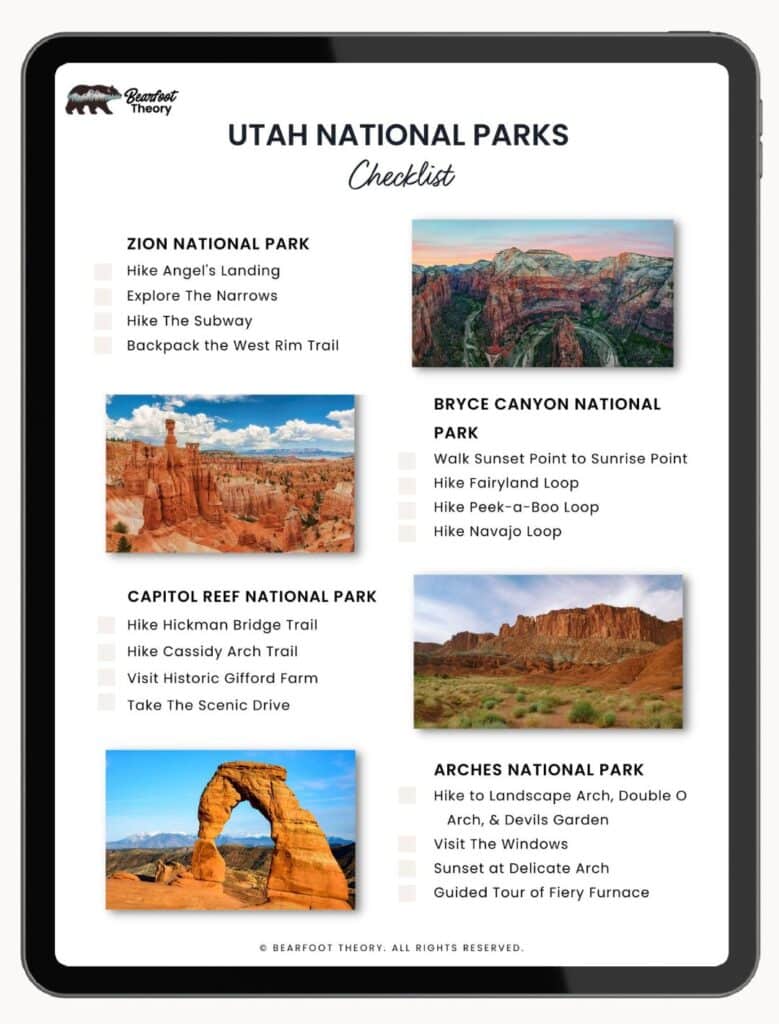
Utah National Parks checklistUtah National Parks checklist

Get my Utah National Parks Checklist

Enter your email below to get this PDF guide on your phone, so you don’t miss anything on your Utah Road Trip!

In March and April, spring snowstorms can also occur, but as late spring arrives, it becomes a very nice time of year to camp in this area whether you are sleeping in a tent or a camper. The warmest time of year to camp near Bryce Canyon is between June and September where the highs typically fall in the 70s and 80s, though afternoon thunderstorms are common in July and August.

Depending on where you camp, it is possible to find shade. Also there are not many bugs or mosquitoes in Bryce Canyon National Park during the summer (or any season), but you can pack insect repellent just to be safe. For a full list of what to bring, check out my Car Camping Packing Checklist.


Camping In Bryce Canyon National Park

Bryce Canyon National Park is away from city lights, meaning there are clear skies and ideal stargazing conditions. Depending on the night, you can see quite a bit of the Milky Way. It is a perfect destination to bring your tent or camping rig to experience the area’s natural beauty under the night sky.

Camping at one of the campgrounds in Bryce Canyon National Park is an excellent way to have a guaranteed campsite close to the hiking trails. This allows you to leave your vehicle parked at your campsite while utilizing the free shuttle system from mid-April to mid-October.

Red rock hoodoo formations in Bryce Canyon National ParkRed rock hoodoo formations in Bryce Canyon National Park
Camping inside Bryce Canyon puts you closest to the hoodoos in the park

There are two campgrounds in the park: North Campground and Sunset Campground. Both campgrounds are open to tent and RV campers and include 100 campsites to pick from.

If you do not make a reservation in advance and there are available campsites on the date you are visiting, you can reserve a campsite at either campground on a first-come, first-served basis (though these are rare during the busy summer months).

The fee for both campgrounds covers the use of the RV dump station near North Campground. There is also potable water available for campers near the dump station. The dump station closes for the season when overnight temperatures fall below freezing in the winter, so if you are visiting in winter, make sure to come prepared will all of the drinking water you need.

Map showing the shuttle stops in Bryce Canyon National ParkMap showing the shuttle stops in Bryce Canyon National Park
The park shuttle stops at both North Campground (14) and Sunset Campground (7)

1. North Campground

  • Reservations: reservations required May 19-October 6; First-come, first-served camping from January 1-May 18
  • Number of sites: 100
  • Standard site fee: $30/night
  • Available amenities: Flush toilets, fire rings, picnic tables, access to dump station with potable water
  • Unavailable amenities: Sewer, water, or electrical hook-ups; showers

North Campground in Bryce Canyon National Park sits across the street from the Visitor Center near the General Store and Fairyland Loop/Rim Trail. There is a shuttle stop at the Visitor Center to easily get to other trailheads and viewpoints within the park.

It is about a 10-minute walk from this campground to the General Store, which has coin-operated laundry machines, coin-operated shower facilities, firewood, groceries, and camping supplies. The General Store opens for the season on April 1 and closes at the end of November.

The campground offers shade and sun within a ponderosa pine forest. To reserve a spot at North Campground, book a spot on the Recreation.gov website.

  • What guests like: Guests like how many of the campsites are in the shade to keep cool during the hot summer months. They also like how they can walk to hiking trails from the campground because they can leave their vehicle parked at the campsite and avoid full parking lots.
  • What guests dislike: Guests dislike how the campground is first-come, first-served from January to May as it adds a layer of stress to the trip. Some guests also say the sites are large but not private since they are so close together.
An empty campsite at North Campground in Bryce Canyon National Park. It is a dirt site surrounded by pine trees.An empty campsite at North Campground in Bryce Canyon National Park. It is a dirt site surrounded by pine trees.
A campsite at North Campground in Bryce Canyon National Park

2. Sunset Campground

  • Reservations: 14-day reservation window from May 18-October 14; First-come, first-served camping from April 15-May 17 and October 15-October 31.
  • Number of sites: 100
  • Standard site fee: $30/night
  • Available amenities: Flush toilets, fire rings, picnic tables, access to dump station with potable water
  • Unavailable amenities: Sewer, water, or electrical hook-ups; showers

Sunset Campground sits near Sunset Point, approximately 1.5 miles south of the Visitor Center. This proximity to Sunset Point makes it convenient to catch a sunset there before heading back to your campsite for a campfire. It is a further walk to Sunset Point from North Campground, and the shuttle only runs until 6:00 p.m. in the spring and fall, which could be too early to catch the sunset (depending on the month).

For hikes outside of the Bryce Amphitheater, there is also a shuttle stop next to this campground entrance to get around the park. This allows you to leave your vehicle parked at your campsite.

The views of the ponderosa pine forest and the amenities at Sunset Campground are nearly identical to those offered at North Campground, though it is a bit of a farther haul to the dump station. Sunset Campground is also open a few weeks longer than North Campground during the fall, with the camping season ending on October 31.

You can reserve a campsite at Sunset Campground on Recreation.gov.

  • What guests like: Guests appreciate how the campground is quiet, beautiful, and clean. They like how there is a separate sink at the campground for washing dishes, hair, and even laundry by hand.
  • What guests dislike: Guests note that some of the RV spaces share an RV pad with another RV, which is not indicated on the reservations. They also dislike how both the tent and RV spots are unlevel and too close to one another.
The Milky Way with stars and clouds over an orange rock formation at Bryce Canyon National Park at night.The Milky Way with stars and clouds over an orange rock formation at Bryce Canyon National Park at night.
The dark sky in Bryce Canyon makes it a great place for stargazing near your campsite

Free Dispersed Camping Near Bryce Canyon

Although it is nice to have a guaranteed spot for the night along with the amenities of a campground, they can be expensive, especially if you plan on staying for a while. If your trip is spontaneous and you don’t make advanced reservations, you also might find that the campgrounds inside Bryce Canyon National Park are full, leaving dispersed camping as your only option.

Luckily, there are many options for dispersed camping near Bryce Canyon National Park, particularly on the Dixie National Forest land. If you decide to go this route, you can always pay to use the coin-operated showers, laundry facilities, and dump station inside the park.

When I’m traveling in my van, I often use apps and recommendations from friends to find these free spots. You can also check out our ultimate guide to finding free campsites to learn the resources available to you while planning your trip.

Make sure you leave these campsites better than you found them. Also, learn how to poop outside and leave no trace before you head to your campsite.

Here are five options for dispersed camping near Bryce Canyon:

1. Closest to the park by the entrance sign (N 37.39332’, W 112.10253’)

When approaching the park on Bryce Canyon Road, you will see a turn for a gravel road on the right just before the park entrance sign for road 090. It is free national forest land with numbered campsites, fire rings, shade, and cell service.

When BFT contributor Kaylin visited Bryce Canyon National Park in October 2023, she camped there with her husband for a week. Kaylin thought this area was quiet and clean.

The road is relatively easy to drive with some bumps and ruts, and it does not require 4×4 or high clearance; however, it could get pretty muddy in the winter and spring. There are spots at the beginning suitable for bigger rigs. Bring leveling blocks as the campsites are uneven.

A dispersed campsite outside of Bryce Canyon National Park with pine trees. The sky is blue with pink clouds at sunset.A dispersed campsite outside of Bryce Canyon National Park with pine trees. The sky is blue with pink clouds at sunset.
A sunset view from the top of this dispersed camping area / Photo Credit: Kaylin Zittergruen @katekeepswild

2. Tropic Reservoir overlook (N 37.35036’, W 112.14832’)

If you have 4×4, high clearance, and want a spot with epic views, this one is worth checking out. This single spot overlooks Tropic Reservoir and has views of mountains and valleys. There is a fire ring at the site and decent cell service.

Since this spot is high and exposed, it could be dangerous in high winds or thunderstorms. Depending on your rig’s size, you may want to skip this spot. The road is a narrow track with low-hanging trees and tight turns.

Tropic Reservoir outside of Bryce Canyon National Park with blue water and pine trees.Tropic Reservoir outside of Bryce Canyon National Park with blue water and pine trees.
Tropic Reservoir outside of Bryce Canyon

3. Johns Valley Road (N 37.43540’, W 112.5519’)

To get to this camping area, drive out of the park through Bryce Canyon City and continue on UT-63 until it becomes Johns Valley Road. These spots are 8.4 miles from the Visitor Center in Dixie National Forest land and include a stone firepit, cell service, and shade. The area is easy to access and does not require 4×4.

4. Toms Best Spring Road (N 37.43411’, W 112.15147’)

This dispersed camping area is often the most crowded, depending on the time of year. It is off of UT-12 in the Dixie National Forest land. Although there are crowds, the spots are spread out, level, and easy to find. There is good cell service here, and 4×4 is not required to access the spots.

5. Losee Canyon Road (N 37.7685’, W 112.3381’)

Losee Canyon Road offers easy access to Bryce Canyon while also offering proximity to some of the trails in Red Canyon, including Losee Canyon Trail. Although it is a bit further away than Toms Best Spring Road, it is still within 20 minutes of the park. I have stayed at one of the sites here before and appreciated the quietness, cleanliness, and vault toilets at the trailhead.

Bearfoot Theory founder Kristen Bor in the bed in the back of her Sprinter camper van parked near Bryce Canyon National ParkBearfoot Theory founder Kristen Bor in the bed in the back of her Sprinter camper van parked near Bryce Canyon National Park
Camping off of Losee Canyon Road in my Sprinter Van
#1 campsite finder app

Try The Dyrt PRO free for 30 days

Get a FREE 30-Day membership to The Dyrt PRO, one of our favorite apps for finding campsites.

Perks include:
• 5,000+ free camping locations
• 1,000+ campground discount network
• $0 extra booking fees
• Get reservations at sold-out campgrounds, and more

Use the code BEARFOOT to get 30 days free!


Paid Campgrounds Near Bryce Canyon National Park

Although the paid campgrounds near Bryce Canyon tend to be expensive, many of them often have amenities you will not find in the national park campgrounds or at dispersed campsites.

There are an abundance of campgrounds near Bryce Canyon, but here are a few to highlight:

1. Ruby’s Inn RV Park & Campground

In addition to lodging, Ruby’s Inn Campground has 250 campsites for tents and rigs of all sizes. All RV and camper sites have electric and water, or you can pay extra for full hook-ups.

With activities including shopping, horse rides, and swimming in the campground pool, this is an excellent campground for families camping with kids.

Amenities include restrooms, shower facilities, dump stations, fire pits, and a laundromat. The free national park shuttle also stops here.

  • What guests like: Guests comment that they appreciate the proximity of Ruby’s Inn to the park entrance. They also like how it is a “one-stop-shop” campground with restaurants and shopping.
  • What guests dislike: Guests wish there were grill grates over the fire pits to make outdoor cooking easier. Some guests say that the spaces are very close to each other and lack privacy.
The Ruby's Inn logo on the outside of the Ruby's Inn stone building.The Ruby's Inn logo on the outside of the Ruby's Inn stone building.
The outside of Ruby’s Inn in Bryce Canyon City

2. King’s Creek Campground

If you want a cheaper private campground with fewer amenities, check out Kings Creek Campground. This campground is 12 miles from Bryce Canyon National Park and sits on the west side of Tropic Reservoir.

It is perfect for visitors who enjoy boating, canoeing, fishing, hiking, mountain biking, and ATV trails. Amenities include campfire rings, a dump station, flush toilets, grills, lake access, and picnic tables.

  • What guests like: Guests appreciate the friendliness of the camp hosts, campground cleanliness, and grill stations. They also like the proximity of the campground to ATV trails and a lake with boating options.
  • What guests dislike: According to recent reviews, King’s Creek Campground no longer has water for the foreseeable future. Guests also note that the 7-mile washboard road leading to this campground is extremely dusty.

3. Red Canyon Campground

Along UT-12, Red Canyon Campground sits within the ponderosa pine and among limestone formations similar to those found in Bryce Canyon National Park.

This paid national forest campground features 37 campsites with picnic tables and fire pits. It offers convenient access to trails for hiking, mountain biking, and road biking. I have stayed here and appreciated this convenient trail access. It’s right on the Golden Wall Trail Loop, which is an amazing dog-friendly hike in Red Canyon (with very similar landscapes to those in Bryce Canyon).

Me hiking on the Golden Wall Trail, accessed from the Red Canyon Campground

There is drinking water, flush and vault toilets, showers, and a dump station. Unlike the other campgrounds mentioned above, this campground does not offer reservations and is only available on a first-come, first-served basis. The campground operates from May 5-October 9. 

There are no hook-ups available. The campground can accommodate RVs up to 45 feet in length.

  • What guests like: Guests enjoy the friendly hosts, views of the rock formations, and cleanliness of the bathrooms. They also appreciate how the campsites are spread out so they can have more privacy.
  • What guests dislike: Guests dislike how the showers are not complementary and require quarters to use with no change machines nearby. They also dislike how the campground is first-come, first-serve, as this makes it difficult to secure a spot during popular summer months.
A white camper driving along the highway near Bryce Canyon National Park with red rock formations on both sides.A white camper driving along the highway near Bryce Canyon National Park with red rock formations on both sides.
An RV driving along the highway near Bryce Canyon National Park

Best Glamping near Bryce Canyon

Camping in Bryce Canyon does not necessarily mean roughing it or staying in a traditional campsite. If you want to camp in luxury, consider one of the two glamping options below.

1. Bryce Glamp and Camp

How many opportunities do you get to stay in a luxury dome? At Bryce Glamp and Camp, you can stay in a one-of-a-kind escape to admire nature in comfort.

The domes feature air conditioning and heat, wifi, TV, kitchen with fridge, microwave, coffee maker, electric fireplace, and table. Plus, you get a private bathroom with a walk-in shower along with your own outdoor area with a picnic table, chairs, grill, and gas firepit.

The facility also features an 18-hole disc golf course, volleyball nets, horseshoes, cornhole, hiking trail, and stargazing pad.

  • What guests like: Guests commented that they appreciate the amenities, communication, and level of service that this business provides. They also note that the beds are comfortable, and the views of the night sky from the domes are remarkable.
  • What guests dislike: The only downside that guests mentioned was staying here during cooler weather. The cold temperatures make it difficult to take full advantage of all of the amenities like volleyball and dis golf, and there is a lot of mud during the winter and spring from snow and rain.
One of the domes at Bryce Camp and Glamp (Photo credit: Bryce Camp and Glamp)

2. Under Canvas Bryce Canyon

If you desire a luxurious tent glamping experience, check out Under Canvas Bryce Canyon. Their tents include king-size beds, an ensuite bathroom, and a private outdoor lounge space. Only 15 minutes from the entrance to Bryce Canyon, it’s convenient to all of the activities in Bryce Canyon.

Under Canvas offers on-site dining, nightly campfires, and other activities to keep you entertained during your stay.

  • What guests like: Guests enjoy the friendly staff who go out of their way to cater to your needs. They also say the beds are extremely comfortable and tents are beautifully appointed. They also love the food options and the full-bar.
  • What guests dislike: Some guests have commented that the food is not included and is expensive. The menu also doesn’t cater to those with dietary restrictions. Some people complained that the tents got cold overnight.
Stargazer tent at Under Canvas Bryce CanyonStargazer tent at Under Canvas Bryce Canyon
Stargazer Tent (Photo: Under Canvas Bryce Canyon)

Other Bryce Canyon Lodging Options

If you change your mind about camping or experience bad weather during your trip to Bryce Canyon National Park, there are plenty of options for hotels and lodging. There are hotel chains, locally run options, and cabins.

Did you know there is even a lodge within the park? The Lodge at Bryce Canyon is an iconic, historic structure. Along with its surrounding motels, it offers 114 rooms including lodge suites, motel rooms, and cabins. It is a short walk from the Bryce Amphitheater and sits along the 5-mile paved shared-use path that runs through the park.

To maintain the peace and history of The Lodge, there are no in-room TVs, wifi, or air conditioning available to guests. Amenities within the rooms include a coffee maker, hair dryer, mini fridge, and portable fans. There is a gift shop at The Lodge and a dining room open for breakfast, lunch, and dinner.

The main lodge suites and motel rooms can be reserved from April 1-November 1. The cabins operate from April 30-November 1.

The Lodge at Bryce Canyon National Park with snow on the ground and green pine trees.The Lodge at Bryce Canyon National Park with snow on the ground and green pine trees.
The Lodge in Bryce Canyon National Park

If you’re road-tripping through Utah, check out these other must-see places:

Save this post to Pinterest

Where do you like to go camping near Bryce Canyon National Park? Did we leave any spots off of this list? Leave a comment below!


Source link

J.D. Power: Vehicles Growing Less Dependable

0


J.D. Power: Vehicles Growing Less Dependable

Lexus builds the most dependable cars for sale in America. Toyota builds the most dependable vehicles available at mainstream prices. But they’re standouts in a struggling industry as overall vehicle dependability, measured after three years of ownership, fell in the 2024 edition of J.D. Power’s U.S. Vehicle Dependability Study.

The COVID-19 pandemic may be to blame.

J.D. Power’s study surveys owners of 3-year-old cars. Researchers asked 30,595 owners of 2021 model-year vehicles whether they’d had problems with 184 specific aspects of their cars.

That means many of the cars studied this year were built during the height of the COVID-19 pandemic when manufacturers struggled to get parts amid worldwide factory pauses.

This year, owners reported an average of 190 problems per 100 vehicles — four more than last year. The difference, said Frank Hanley, senior director of auto benchmarking at J.D. Power, “can likely be attributed to the tumultuous time during which these vehicles were built.”

As usual, infotainment systems posed the most problems.” Among infotainment issues, Android Auto and Apple CarPlay connectivity (6.3 [problems per] 100) is the top problem, followed by built-in voice recognition (6.1 [problems per] 100),” the researchers said.

Many owners also complained about the safety alerts built into driver assistance systems like lane-centering. “Many would think that after three years, owners would become used to the alerts on their vehicle,” Hanley said. “However, that is not the case.”

Electric cars posed more problems than gas-powered cars — not surprising with a relatively new technology. Electric vehicles (EVs) posed 256 problems per 100 vehicles. Plug-in hybrids, with the complexity of two propulsion systems, posed 191. Hybrids posed 191 — almost the same as the 187 found in gas-powered cars.

Rank by Manufacturer:

RankManufacturerProblems Per 100 Vehicles
1Lexus135
2Toyota147
3Buick149
4Chevrolet174
5Mini174
6Porsche175
7Mazda185
8Kia187
9BMW190
10Dodge190
11Jeep190
N/AStudy Average190
12Cadillac196
13Hyundai198
14Subaru198
15Nissan199
16Genesis200
17Ram201
18GMC206
19Honda206
20Acura216
21Mercedes-Benz218
22Infiniti219
23Ford239
24Volvo245
25Lincoln251
26Volkswagen267
27Land Rover268
28Audi275
29Chrysler310

Tesla does not allow J.D. Power access to owner information in states where permission is required by law, so the company is never ranked and gets unofficial scores based on partial data. This year, its unofficial score was 252 — 10 points worse than last year.

Scores by Model

The vehicle with the highest overall dependability score was the Porsche 718 Cayman/Boxster, which J.D. Power treats as a single model.


Source link

Polestar 2 – Driving the Brand’s First Pure Electric Model

0


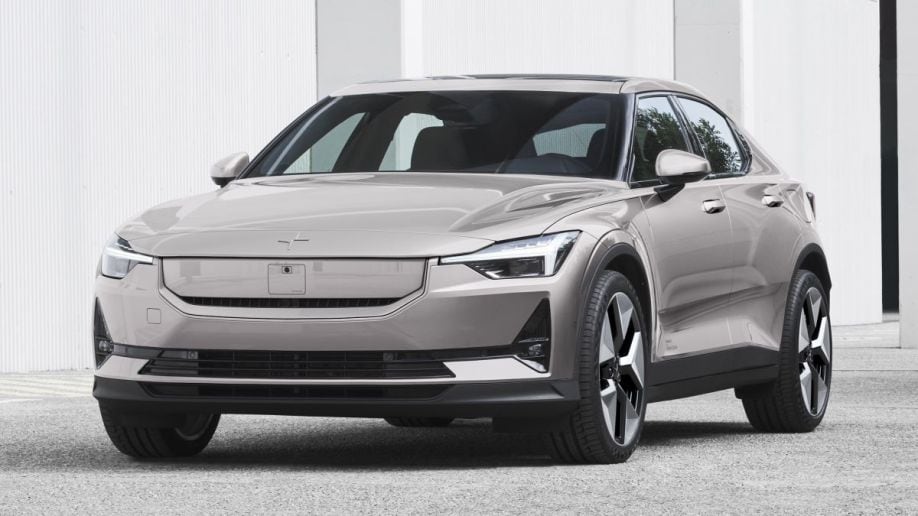
The electric car is no longer an environmentalists’ token. With plans to end the sales of new petrol and diesel vehicles in the UK, Germany, Ireland and the Netherlands by 2030 (Norway will bring in a ban in 2025 and France has a 2040 ban in the pipeline) electric vehicles will be the way forward – quite literally – in the not-too-distant future. Many manufacturers are having to jump in with both feet, sink or swim. And that’s the role of the Polestar 2.

Polestar is a new electric brand owned by Swedish car brand Volvo and, by extension, China’s Geely – which owns Volvo, Lotus, Proton, Lynk & Co, LEVC… It’s an electric luxury brand spun off of near-premium contender Volvo, which makes its chief competitor Tesla and the German premium electric brands. From a design perspective, it’s quite unique, especially this Polestar 2. But before we delve into that, here’s a bit of history.

Volvo 40.2 concept (2016)

Back in 2015, Volvo purchased Polestar, which was then a performance arm of Volvo but operating independently, like a contractor of sorts. In 2016, Volvo came out with the 40.1 and 40.2 concepts, both of which signaled the upcoming 40 cluster of cars from the Swedish brand and the first application of the Compact Modular Architecture – CMA – platform.

The 40.1 became the XC40, a very successful compact SUV that I reviewed a few years ago. But the 40.2 didn’t really fit in the Volvo model lineup. It was different. According to the design team, they wanted to continue with the car, and the decision was made to spin it off into becoming the Polestar brand’s second product.

In that sense, the story closely matches that of the Polestar 1, which started life as the Volvo Concept Coupe in 2013 before being spun off to become the first vehicle. But while that car is a hybrid model that shares a lot of carryover parts from the 90-cluster from Volvo – particularly in the interior – the Polestar 2 is an all-new crossover vehicle typology, blending the attributes of a sedan with those of an SUV.

EXTERIOR DESIGN

Let’s start with the exterior. The Polestar 2 is simple, yet elegant and robust. It’s a bit taller – giving it more ground clearance than its rivals – and is fitted with big wheels surrounded by cladding. In that regard, it’s similar to the Cross Country V60 and V90 models Volvo builds. But there’s more to it than that.

Polestar 2Polestar 2

The front end has a lot of character without being aggressive. The blacked-out grille element is arguably unnecessary, but it does conceal the front camera nicely and adds a technical feel through the numerous little squares within it. It’s also got a little recess, which is a nod to the historic Volvo P1800’s concave oval grille.

The Thors hammer headlamps are familiar and link to Volvo – but on the Polestar 2 the center DRL protrudes out of the main housing to almost join the grille. This adds to the sense of width to the front, which is underscored by the horizontal lines that demarcate the bumper.

Beneath the bumper is a secondary grill opening as well as two triangular graphical elements that house the foglamps at each corner. The fact that these are black on this ‘Snow’-white face and joined by another horizontal trim piece separates these elements from the rest of the face and subtracts visual weight.

Polestar 2Polestar 2

From the side, the subtle indentation around the wheelarches further serves to accentuate the arches, adding character to the fenders and anchoring the car around the 20-inch wheels. It’s also accomplished within the stamping of the body rather than through another trim piece, saving materials and weight.

Otherwise, the surfacing on the bodyside is full, with soft volumes punctuated by sharp edges, like the shoulder line. The shoulder line is continuous, running all the way through and around the rear of the car to the decklid. It’s progressively accentuated as it travels rearward, becoming more undercut over the rear door and above the rear fender. This enhances its robust quality.

In the lower section of the doors is a rising feature line and a pronounced light catcher beneath. Combined with the black sill, this disguises the car’s height quite well. And while we’re on the subject of height, the Polestar 2 is only 30mm taller than the Tesla Model 3, which is longer and wider (by 88mm and 95mm, respectively).

I particularly like the blacked-out A-pillars, chunky C-pillar treatment, and steeply raked backlight, which gives a unique, dynamic and sporty character to the profile.

Polestar 2Polestar 2

Like the front, the rear is bold and characterful, thanks in part to the unique lighting signature. The concave area encased within the taillamp graphic is fitted with the body color badge while the lighting is a thin, 3D element that stand proud from the surfaces. The horizontal lines emphasize the width of the car while blacked out lower element subtracts visual weight.

The squared clamp light graphic gives the car a robust yet technical aesthetic, which also subtly communicates the propulsion system within, especially when you approach and leave the car. It’s got this very cool ‘Knight Rider’-like welcome signature, another nod to the tech.

INTERIOR DESIGN

The Polestar 2 features the first all-new interior for the brand. The cabin is minimalist without forgetting that there’s a driver. There’s a dedicated 12.3-inch screen for the speedometer and all driving information in front of the driver’s seat while the central 11-inch portrait screen is clear, simple and intuitive, with no noticeable lag.

Polestar 2Polestar 2

The IP consists of a simple continuous line that encapsulates three slim tiers and connects to the high-mounted central tunnel. Like the exterior, this emphasizes the width of the cabin and highlights the technology showpiece at the center.

The main fabric-covered element on the IP is backlit, which adds a three-dimensional quality that’s more akin to furnishings in a high-end hotel than a car interior. The recessed lighting continues behind the gloss back panel in the center console, which make it look like it’s floating. The irony of this lightweight aspect is interesting, as the car weighs a whopping 2.1 tons.

The compact shift lever is dynamic, sporty and lightweight, being hollow and illuminated on the inside. The main knob – for the audio controls – features a 3D edge pattern, which also appears on the insert trim piece on some models. The car I tested had a black ash wood insert, which felt authentic.

As an electric car, Polestar is also emphasizing sustainability within the Charcoal WeaveTech ‘Vegan’ interior… The 3D-knit fabric covering the seats are made of 100% recycled PET bottles; the interior plastics are infused with waste cork products, and the carpets are derived from recycled fishing nets. It’s all very Scandinavian.

TECHNOLOGY

Technology is, of course, paramount, and the Polestar 2 has everything you’d expect. It features heated seats, a heated steering wheel and the Pilot Package, which includes adaptive cruise control, lane keep assist, traffic sign recognition and emergency braking functions.

See also

It’s also got an Android system, that includes Google Assistant for voice commands, Google Play, Spotify and all sorts of Apps. It mostly works fine but not always and can be a bit frustrating, especially because I’m an iPhone user. Fortunately, Car Play will be rolled out later this year as an over-the-air update.

I particularly like the 360-degree view of the car, which is displayed on the screen and alerts you to surrounding obstacles, and the direction indicator to show you what gear you’re in. It’s the little things that add to the overall ease of operation and comfort.

As I mentioned before, this car is built on the CMA platform, which is not a dedicated EV platform. It therefore doesn’t have a skateboard platform as you’d find on other BEVs, where the batteries are mounted in the floor. Instead, they’re mounted in a T-Shape and going through what would normally be the transmission tunnel and under the rear seats. This is notable for two reasons: 1) the battery packs don’t eat away at space in the footwells and 2) it enables better ground clearance.

Volvo CMA platform T-shape layout

I didn’t know this before taking delivery and was a bit wary about driving it up my steep driveway. It’s a 45-degree incline that then levels off. My own car ( a BMW 3 Series) always scrapes either the front lip or the undercarriage as the front overhang is longer and the approach angle shallower than that of the Polestar 2. 

The breakover angle at the center of the wheelbase is also more generous here, though the wheelbase on both cars is nearly identical [a negligible 25mm difference]. The point is this car is higher, and it provides a great middle-ground between a sedan and an SUV. You still get the higher ride height and seating position but – depending on your seating position – it doesn’t feel top-heavy.

DRIVING

One thing about electric cars is that, besides being silent, they’re quick. The Polestar 2 generates 300kW of power from two motors, which translates to 408hp in ICE terms, but it’s really the torque that matters in the real world. This has 480 lb-ft of it available pretty much the moment you stomp on the pedal. It can reach 60mph in 4.5 seconds. Definitely not too bad considering it’s heft. With AWD and a near-perfect front/rear weight distribution, it’s not only fast but sure-footed and agile too.

The steering is light, lighter than is it in M Sport BMWs even on the firm setting. That certainly not a deal-breaker… I don’t know too many people that like heavier steering as much as I do. The brakes are powerful, the Brembo four-piston calipers are amazing and the one pedal action is great too. I found myself using this feature quite a lot around town, though it can be quite jarring in the standard setting, scrubbing off speed at a rapid rate.

Besides the yellow Brembo calipers and larger front discs, valve caps and seat belts, the Performance Pack also adds Ohlins adjustable dampers so you can tweak the ride setting to your liking. I didn’t touch them so I presume they were on their standard setting, which is quite firm, and as the 20-inch wheels are shod with 40-series rubber the ride is a bit on the stiff side, which I actually like.

CHARGING

Being that this is an electric car, I’d be remiss not to mention charging. The claimed WLTP (Worldwide Harmonised Light Vehicle Test Procedure) range on the Performance Pack version of the Polestar 2 (I don’t know if it differs at all between models) is 292 miles from its 78 kWh battery pack. That’s not as good as the Tesla Model 3’s 329-mile range from its 75 kWh modules. This is compounded by the fact that, in the UK, Tesla’s Supercharger network – which can charge between 150kW and 250kW – is vastly superior in availability and output. Obviously, when you can charge at a much higher voltage, it takes less time.

Polestar 2Polestar 2

The Polestar network can only reach 150kW max and the best I could find was 50kW outlets, which took two hours to charge 33% one day and three hours to charge 75% the next. On a regular wall socket from my house (2.3kW) it took six hours to charge 11%. [Note: These are top-up figures, not sure if it makes a difference]. The worst was actually seeing the battery lose charge when I hadn’t even driven the car. I drove the car in the winter, so temperatures are right around 5-degrees Celsius, and apparently batteries really don’t like being below 12-degrees, so there’s that.

Battery technology and – crucially – the changing infrastructure will undoubtedly improve over the next decade. Until then, the Polestar 2 is a great foray into what is as yet new technology and it’s blazing its own path in more ways than one. It is a welcome new and unique offering, which certainly turned a lot of heads during the time I was driving it around in London. The Polestar 2 is a compelling product from Volvo’s new premium offshoot.


Source link

Who Makes Polestar Cars? – Kelley Blue Book

0


Front view of the 2024 Polestar 2 and its revised grille areaFront view of the 2024 Polestar 2 and its revised grille area

Zhejiang Geely Holding Group, Volvo Car’s parent company, makes Polestar vehicles. Volvo and Geely Holding announced plans for Volvo to transfer Polestar ownership in 2024, likely to Geely Sweden Holding subsidiary. Wall Street analysts have criticized Volvo for its ownership stake in Polestar, saying that it’s a drag on Volvo earnings. Geely says the company fully supports Polestar as an independent brand, giving the Chinese automaker a foothold in the United States.

Volvo bought Polestar in 2015 and established the Gothenburg, Sweden-based brand two years later as a standalone performance electric vehicle manufacturer. Before Polestar became a standalone car brand, it made a name for itself by tuning Volvo cars for higher performance.

The Polestar 1 launched for the 2020 model year. While Polestar’s plant in Chengdu, China, makes many of its vehicles, the Polestar 3 SUV will be made in an assembly plant in Ridgeville, South Carolina, that it shares with Volvo.

List of 2024 Polestar Cars and SUVs 

  • 2 sedan
  • 3 SUV
  • 4 SUV coupe

Read Related Articles:


Source link

Glass Beach Transformation: From Trash to Treasure Trove

0


Nestled along the rugged coastline of Fort Bragg in Northern California, Glass Beach stands as a testament to nature’s ability to transform the remnants of human activity, into a stunning spectacle. This unique beach, renowned for its colorful glass pebbles, offers a fascinating story that blends environmental awareness with the beauty of natural reclamation.

Glass Beach Transformation: From Trash to Treasure Trove
Stunning image of this colorful beach, which was generated by AI

Glass Beach Location and Historical Context

what glass beach would have looked like 100 years ago with trash on the beach
AI Generated image of what this beach might have looked like when it was a trash heap

Glass Beach is located near the town of Fort Bragg, about 170 miles north of San Francisco. This area, known for its scenic beauty and rich history, became an inadvertent dumpsite, known locally as “The Dumps,” during the early to mid-20th century. Residents discarded their household garbage over the cliffs onto the beach below, including a significant amount of glass. Back then most of our packaged food was in cans or glass, as plastic was not prevalent like it is today.

Transformation of Trash to Treasure

Colorful shot

What makes Glass Beach extraordinary is its transformation. Over decades, the pounding waves cleansed the beach, breaking down everything but glass and pottery. The relentless tumbling by the Pacific Ocean waves smoothed and polished the glass, turning the beach into a kaleidoscope of sparkling colors. This process is a striking example of how the natural forces can reshape human waste, creating beauty from what was once pollution.

Why the Glass Reveals Itself

handful of glass from Glass Beach near Fort Bragg
Handful of glass I found on one of my visits

The glass on Glass Beach is most visible during certain times. Winter storms and the resulting turbulent waves often uncover fresh layers of glass, while calmer summer waters may bury them under sand. This ebb and flow mean the beach is constantly changing, revealing different aspects of its glassy treasure with the seasons.

Environmental Awareness and Protection

The story of Glass Beach is not just about aesthetic transformation, but also an environmental redemption. It stands as a poignant reminder of the long-lasting impacts of human waste on natural environments. Recognizing its ecological and historical significance, the beach is now part of MacKerricher State Park. This status provides it with protection, ensuring that visitors do not remove the glass. Instead, they are encouraged to observe and photograph this remarkable testament to nature’s resilience.

Glass Beach is now a Magnet for Tourists and Environmentalists

Tourist searching for the colorful treasures
AI Generated Image of tourists looking at the colorful glass

Today, this area attracts tourists and nature enthusiasts from all over the world. Visitors are often mesmerized by the sparkling shore, where waves gently lap over a mosaic of reds, blues, greens, and whites. It’s a photographer’s paradise and a naturalist’s wonder, providing an unusual, yet striking example of how an area’s industrial past can morph into an environmental highlight.

In Conclusion

Glass Beach is a symbol of hope and renewal, demonstrating the incredible power of nature to reclaim and beautify what was once a scarred landscape. Its story is a blend of human history and natural artistry, making it a must-visit destination for anyone traveling along California’s picturesque northern coast. As we walk along its glinting shores, we’re reminded of the delicate balance between human activities and the natural world, and the importance of preserving such unique landscapes for future generations.

If you’ve ever been to this area of northern California, leave a comment below and share your experience.


Source link

GFN Thursday: ‘The Inquisitor’ on GeForce NOW

0


The GeForce NOW anniversary celebrations continue with more games and a member-exclusive discount on the Logitech G Cloud.

Among the six new titles coming to the cloud this week is The Inquisitor from Kalypso Media, which spotlights the GeForce NOW anniversary with a special shout-out.

“Congrats to four years of empowering gamers to play anywhere, anytime,” said Marco Nier, head of marketing and public relations at Kalypso Media. “We’re thrilled to raise a glass to GeForce NOW for their four-year anniversary and commitment to bringing AAA gaming to gamers — here’s to many more chapters in this cloud-gaming adventure!”

Stream the dark fantasy adventure from Kalypso Media and more newly supported titles today across a variety of GeForce NOW-capable devices, whether at home, on a gaming rig, TV or Mac, or on the go with handheld streaming.

Gadgets Galore

GeForce NOW anniversary - device ecosystem
Play on!

Gone are the days of only being able to play full PC games on a decked-out gaming rig. GeForce NOW is a cloud gaming service accessible on a range of devices, from PCs and Macs to gaming handhelds, thanks to GeForce RTX-powered servers in the cloud.

Dive into the cloud streaming experience with the dedicated GeForce NOW app for Windows and macOS. Even on underpowered PCs, gamers can enjoy stunning visuals and buttery-smooth frame rates streaming at up to 240 frames per second or at ultrawide resolutions for Ultimate members, a cloud-gaming first.

Take it to the big screen and stream graphically demanding titles, from The Witcher 3 to Alan Wake 2, on GeForce NOW from the comfort of the couch at up to 4K natively on Samsung and LG Smart TVs, without the need for a console. Or stream across any TV with NVIDIA SHIELD TV for the ultimate living room gaming experience.

Gamers on the go can drop into the neon lights of Cyberpunk 2077 and other ray tracing-supported titles on a portable, lightweight Chromebook and stream up to 1600p at 120 fps. GeForce NOW members can also stream to Android devices at new higher resolutions, up to 1440p at 120 fps.

Logitech G Cloud with GeForce NOW
Look, ma, no wires.

Go hands-on with any of the new handheld gaming devices supported by GeForce NOW, from the ASUS ROG Ally to the Logitech G Cloud. The Logitech G Cloud is an Android device with a seven-inch 1080p 16:9 touchscreen, fully customizable controls and support for GeForce NOW right out of the box.

The Logitech G Cloud is normally priced at $349.99, but Logitech and GeForce NOW are providing a 20% discount to the first 500 Ultimate and Priority members that grab the code from the GeForce NOW Rewards portal, a deal available until March 8. On top of that, follow the GeForce NOW and Logitech social channels for a chance to win a Logitech G Cloud during the anniversary celebrations this month.

Whether playing at home or on the go, members can game freely on GeForce NOW without having to worry about download times or system specs.

Celebrate With New Games

The Inquisitor on GeForce NOW
Jesus, take the wheel.

Dive into an alternate reality in the world of The Inquisitor, where Jesus has escaped from the cross. Play as Mordimer Madderdin, an inquisitor who investigates a mysterious murder in the town of Koenigstein. Face moral choices, visit the dangerous Unworld and fight against sinners.

The title leads the six new games this week. Here’s the full list:

  • Stormgate (Demo on Steam, available Feb. 5-12 during Steam Next Fest)
  • The Inquisitor (New release on Steam, Feb. 8)
  • Aragami 2 (Xbox, available on Microsoft Store)
  • art of rally (Xbox, available on Microsoft Store)
  • dotAGE (Steam)
  • Tram Simulator Urban Transit (Steam)
  • The Walking Dead: The Telltale Definitive Series (Steam)

What are you planning to play this weekend? Let us know on X or in the comments below.


Source link

Floating on the C. – thoughts on automotive design

0


The history of the floating roof or, the uninteresting curiosity of the separated C-pillar.

Automotive styling is very much a fashion business. Designers are a rare breed, existing in very low numbers. They study at the same places and learn from each other. They change studios quite often, and sometimes in packs (headhunted by each other). Add the huge risks involved in billion dollar business decisions and we constantly will see what looks like copy-cat trends in automotive styling, but are actually a lot more subconscious in implementation. There are even trends in design sketch styles- but I think that may deserve it’s own blog post. The fashion industry carefully monitors and plans around trends, and this is also true in automotive (particularly CMF departments) but in terms of exterior design the intention is often to appear different (brand recognition) but the result can be quite similar if a design is “on trend”. Sometimes there are glaringly obvious copies- but more commonly we just see the results of parallel inspirations and attempts to appear on consumers radar as the “next best thing”. Recently my fleet of cars increased with a 2014 BMW i3 joining. This wonderful design (exterior by Nicolas Guille) inspired me to think about it’s stylistic influences. For around 10 years we have seen a trend for elaborate C-pillar dressage and floating roofs, along with abrupt changes in window/belt lines. Let me try to explain, and perhaps uncover a timeline. It might not be very interesting….

Authors own i3…. with paint-over graphic.

The first evidence of floating roof designs probably came from our likeable original gangsters of car styling– the US of A. The 1950 Chevrolet Bel Air is pretty much the archetypal elaborate Coupé roof protege. The Bel Air continued this style for many iterations and is remembered almost exclusively for it. Many pre-war cars had contrasted colour roofing. The materials used were soft fabrics and coverings were often temporary. Pre-war was an era when most cars were not fixed roof. The rise of monocoque construction post war (from aircraft metal working technology) with reduced costs of panel stamping in mass production, meant that the the fabric roof died out due to a reversal of costs. Metal was now king, but the US stylists used paint choices and styling lines to remind us of the elegant past of coach-built carriages and pre-war romance. Post war emotional styling was the next big trend.

1950 Chevrolet Bel Air

In Europe the roof shapes and design were much more pragmatic due to manufacturing methods(similar technology from aircraft) but with more subdued styling that owed a lot to housing (actual miniature gutters around the domed roof!) rather than high-tech space-age ideas. It is often joked that a Rover, or Rolls Royce is a stately home on wheels, and this is stylistically and thematically true (inside and outside). The 1959 Mini shows a long-lasting example of this style, continued as pastiche to this day with all Mini designs. Just before the mini appeared, Europe create one of the most original and innovative car designs ever from Flaminio Bertoni in 1955. The Citroen DS. The same guttering can be seen, which also neatly hides the edges of the roof panel, but the jet-set style of American cars is also hinted at. The Citroen was remarkable for so many innovative technologies and the roof was yet another, being made from GRP (Glass Reinforced Plastic). Matching a plastic panel colour to painted metal (and perhaps even painting it) was not easy in the 1950s, so I believe this might explain the decision not to match the colours on the cheaper ID19 model based on the DS21. The DS/ID roof was also bolted on, with a rubber seal between it and the metal frame. On later models the plastic roof was bonded with adhesive! In 1966, this was truly space age, and links very nicely to perhaps the spiritual successor of the DS for innovation and technology – the BMW i3. A plastic roof panel again, but this time recycled CFRP (Carbon Fibre Reinforced Plastic) is again glued onto the roof frame. A glass roof was available on the BMW, but Citroen reportedly offered an even more daring entirely transparent panel for the DS! Glass roofs are a modern trend, perhaps publicised heavily by Tesla, but Citroen did it first over 65 years ago.

Detail of 1957 Citroen ID19 rear C-pillar.

Transparent full roof on a Citroen DS
BMW i3 roof is lowered into place before bonding.

Between these two important vehicles were some lesser known brave designs that tried tricks with C-pillar design. The most outstanding of all was the Renault Avantime of 1999. Patrick Le Quement lead a major renaissance of Renault design, and French car design in general, during the 1990s. Beginning with some rather sensible unexciting designs – which were excellent examples of the late 80s and early 90s industrial design aesthetic (strong aerodynamic and engineering-led designs). The late 90s and leading into the new millennium Renault’s financial position enabled Le Quement to take some bold next steps. The Avantime was a very strong example of his modernist approach. Even the vehicle type it represented was totally unique, a 2 door MPV/Coupe/Luxury sedan “crossover” which sounds strange even now. BMW later got close to this concept with their 5 series Gran Turismo of 2009 (F07).

Very bold C-Pillar treatment on the 1999 Renault Avantime

The failure of the bold works of Le Quement perhaps set back car styling a few years, (along with perhaps the Fiat Multipla) to it’s usual cautious self. Fiat followed quite soon with their new Panda design, with a utilitarian approach to window graphics, somewhat similar to the i3 created 10 years later. It wasn’t until Chris Bangle gained a powerful position at BMW that things finally took a step forwards. From 2003 when Bangle released his iconic E60 5 series it was game on, and Citroen certainly took note of this. They explored more interesting design shapes, and their 2005 C-Sport Lounge concept car showed bold treatment of it’s C-pillar, a lot like their famous DS model of the past. The inspiration seemed to come full circle, when that Citroen inspired the creation of an entire new brand: DS, and the concept car developed into the DS5 production model of 2011. The smaller DS3 model was released first, and we saw that the C-pillar treatment and contrast colour roof was emphasised as a key DS brand trait. The DS brand really brought these ideas to the mass-market and this is when other manufactures began to borrow this European flair. The Japanese (Nissan), and Korean car companies embraced this flair, in an attempt to appeal to European tastes and the Koreans are still playing with more styling ideas than perhaps any other manufacturers. Something that we have seen the DS brand introduce into the mainstream, is the shark fin B-pillar treatment seen on the DS3 model first. This forward facing styling feature, is reminiscent of the reverse rake screen of the Citroen AMI-6. The AMI 6 was Citroen’s most extreme take on the interesting styling of a C-pillar. It is the opposite angle to which we are accustomed, and the DS has a B-pillar which reverses the usual directional angle that we expect in this area. This shark fin is something we see moved to the C-pillar in a lot of contemporary Kia designs for example.

Citroen AMI 6 of 1961- with reverse rake C-pillar and floating contrast roof.
2009 DS3
Kia Sorento 2021, with DS style shark fin, but no floating roof or separated C-Pillar.

Lastly a couple of honourable mentions to bold designs that have pushed floating roof, contrast colours, and elaborate C-pillar designs into new genres. The Aston Martin DB11 (designed by Julian Nunn and Leighanne Earley) is still controversial after it’s 2016 debut, thanks mostly to it’s floating C-pillar design. This seemed much too “fashionable” for die-hard Aston traditionalists. Warnings were given that it may date, but has it? The trend is still around 5 years later, and also the design had many advantages. One reason it was green-lit was for the customisation options it gave Aston buyers. Different materials, and different colour combinations (including non- contrasting) are available in almost infinite variations. Aston wanted to emphasise they were a bespoke car company. You can play with those yourself on their configurator…. The c-pillar also conveyed a hidden message, regarding the innovative aerodynamic design. Air is ingested at the leading edge of the C-pillar, the rear of the second side window. Air travels down the C-pillar internal structure, either side of the luggage space, and exists in a slot across the rear deck. This creates a spoiler, an invisible air spoiler, to give high speed stability, known as Airblade. The invisible spoiler is one of the DB11’s greatest design features, and means we get that lovely smooth clean rear deck

floating c-pillar, and air slot rear spoiler visible on rear deck lid.
Photo by Toms Svilans on Pexels.com

A car that I owned (from new in 2017, but replaced in 2021) is the dramatic and bold Toyota C-HR. This coupe crossover was a styling-trick tour de force. A real life text book for aspiring car designers to learn every trick from. There has perhaps not been any car in history that employed so many styling tricks in ONE vehicle, it probably deserves a blog post of its own. It did also hit the trend of contrast colour roof, with a floating C-pillar. By now I hope you realise that floating, means that the roof structure, and the side/door structure of the car seem to be separated somehow- as if the roof just floats over the body of the car. Toyota also used this transitional area, between side and roof, to cram in a “hidden” rear door handle. It was not completely invisible, but it was impractical and a purely styling based decision to put it there. I found it useful as a parent because my young children at the time could not reach to open the door themselves. This meant I had more control of where and when they opened it!

Authors own C-HR… with added snow in complex C-pillar design

The most important and radical cars since the DS, as mentioned earlier, were the BMW i3 and i8. These cars were previewed by the advanced thinking, efficient dynamics concepts. The first of these debuted in 2009. The floating surfaces, and new shapes and structures were made possible by carbon construction techniques. The concepts were perhaps created with total freedom, and the production cars could follow with innovative surfaces. In the case of these cars, the styling was to create the feeling that almost every component of the car was floating- and not connected to any other component. This is a huge leap away from the solidity and formality previously expected of vehicle aesthetics. An annihilation of the Bauhaus-like principles that car design still hinted at, but did not respect, in terms of being pure emotional styling exercises, not rational products. There was of course some functionality implied by these cars styling, mostly aerodynamic flow management and the visual representation of it. This can be done without the flowing aesthetics, as evidenced in cars such as the McLaren Senna, or almost any covered-wheel race car. The i8 followed on from the concept, and put in practice a reoccurring aesthetic which had a surface starting at the A-pillar, flowing all the way to the rear deck, via a C-pillar (B-pillar was invisible, blacked out, or not present). The glass and dark coloured body of the cars were sandwiched in between. This has become a trademark style of all BMW i products. The forward thinking of the original two i3 and i8 products, means that many other brands and designs have been influenced by them. The separation of the roof- with a flowing line from A pillar to rear most pillar, with blacked out section in between has become a true car styling trope of the 2020s.

Efficient (Aero)dynamics. Thanks to CarDesignNews for the image.
BMW i3 Concept and BMW i8 Concept (09/2011)

I tried to list a timeline of significant cars with this styling feature- but my knowledge will have significant gaps, and with a current trend such as this you will easily find many more cars with the feature. Asia (Chinese brands in particular) will be home to a huge number of models with this fashionable styling idea. Pick any brand, for example I will choose Geely, and there it is again on at least 3 models.

2021 Geely Atlas (previously Boyue from 2016-2020)

During the more pragmatic 1970s, 80s and even 90s, there were cars with styling features on their C-pillars which might be classified here but mostly the features were to hide welds, or act as air vents. In the 70s the black vinyl roof was a popular look, but without the floating style of the C-pillar being different in colour to the roof and body side. The 80s and 90s also saw aero look as a trend, and perhaps another blog post can explore this. Aerodynamic aesthetics originally meant lack of features, and quite uniform shapes. One example might be the Renault Fuego from 1980, and the same year the extremely small division at the base of the Audi Coupe C-pillar. Perhaps if you find more examples of this aesthetic, post them in the comments section.

Timeline of floating C-pillar developments

  • 1950 Chevrolet Bel Air
  • 1955 Citroen DS and ID19
  • 1959 Austin Mini
  • 1969 Land Rover Range Rover
  • 1980 Renault Fuego
  • 1980 Audi Coupe (B2)
  • 1982 Citroen BX
  • 1985 Ford Granada/Scorpio
  • 1999 Renault Avantime
  • 2003 Fiat Panda
  • 2005 Citroen C-Sport Lounge (concept)
  • 2009 BMW Efficient Dynamics (concept)
  • 2009 Citroen DS3
  • 2011 Citroen DS5
  • 2012 Opel Adam
  • 2013 BMW i3 and i8
  • 2014 Citroen C4 Cactus
  • 2016 Aston Martin DB11
  • 2016 Lexus RX
  • 2019 Peugeot 2008
  • 2021 Chevrolet Trailblazer

Thanks again to www.citroenorigins.fi for great Citroen images!

EDIT: Thanks to replies on Twitter- and in the comments section, I decided to add some reader suggestions in another gallery.

Debate seems to centre on what counts as a floating C-pillar, and I agree that not all my examples “float”. There has been some designs mentioned with a blacked out C-pillar, such as the Ford Granada Scorpio. Yes a black painted C-pillar does indeed create a floating roof, this is true, but the added upwards kink or other changes of colour or material, are the main exaggerated versions we see as a modern trend. Citroen have had this feature on nearly every model since the DS, and the XM is reminiscent of the BMW i3 for sure. Meanwhile after writing this post, Genesis said “hold my beer” and created one of the strangest C-pillar designs we’ve seen for a long time with their new BEV, the GV60. Hard to describe (essentially a severe V graphic) but I’m not a fan.


Source link