Home Blog Page 985

The Rolls-Royce Ghost by Urban Automotive

0


The Rolls-Royce Ghost is the latest luxury vehicle to receive Urban Automotive’s bespoke styling upgrades and specialized carbon fiber design enhancement package. As one of Urban Automotive’s most hotly anticipated new designs, the exclusive styling program combines imposing presence and understated elegance, building on the success of the reimagined Rolls-Royce Cullinan launched by Urban in 2022. Following its official debut at SEMA in October 2023, the Ghost Redefined by Urban is available to order from January 2024.

Designed and manufactured in the UK, Urban Automotive’s signature style is applied to the Ghost with a replacement carbon fiber front bumper, visual carbon fiber splitters, and a two-piece trim overlay. The rear exterior styling further underlines the new dynamics of the Ghost with a full-replacement carbon fiber rear bumper and integrated rear diffuser in carbon fiber. Designed to conform with OE quality standards, Urban Automotive’s enhancements are seamlessly integrated with streamlined carbon fiber for a factory finish.

Urban’s comprehensive range of enhancements consists of over 40 individual components, including lower door sills and a rear lip spoiler in carbon fiber. The design upgrades are reinforced with a choice of two all-new premium forged Urban Vossen wheels, in 22-inch or 24-inch diameter. An optional, fully customizable Milltek performance exhaust is also available, unlocking more potential from the Ghost’s powerful V12 engine and providing an elevated soundtrack to match Urban’s visual enhancements.

Urban Automotive’s full-replacement carbon fiber products remain a unique proposition within the market, offering unrivaled levels of quality, style, and durability. All carbon fiber items are available in a variety of finishes, offering Urban clients the highest level of bespoke vehicle personalization. All items are handcrafted using state-of-the-art equipment at the company’s Milton Keynes HQ. Each design process begins with a full 3D vehicle scan, working to an industry-leading precision level of 0.03mm.

All Urban Automotive products are designed by their in-house team, led by company founder Simon Dearn. Like all Urban designs, the Ghost styling package follows an ‘OEM+’ philosophy which complements and enhances the original design with added individuality and presence. This latest offering was heavily influenced by Urban’s styling program for the Rolls-Royce Cullinan, with a design language that flows across both applications. All modifications are also designed to work with the factory safety systems and warning devices, with each Urban product subject to a comprehensive research and development process.

Rolls-Royce Ghost by Urban Automotive: Specification
Exterior styling

  • Replacement carbon fiber front bumper
  • Two-piece front bumper trim overlay in visual carbon fiber
  • Integrated daytime running lights
  • Front bumper splitter in visual carbon fiber

  • Replacement carbon fiber rear bumper
  • Integrated rear diffuser in visual carbon fiber
  • Milled billet aluminum exhaust finishers
  • Lower door sills in visual carbon fiber
  • Rear lip spoiler in visual carbon fiber
  • Urban Icon rear tailgate badge

Wheels

  • Choice of bespoke 22- or 24-inch forged alloy wheels

Optional extras

  • Milltek Sport performance exhaust

About Urban Automotive
Urban Automotive, the UK’s foremost luxury vehicle styling provider, was established in 2014 as an independent vehicle modifier, to provide ‘OEM Plus’ design, and a bespoke vehicle modification service. With headquarters and vehicle production based in Milton Keynes, Urban Automotive is a carbon fiber specialist and has become one of the UK’s leading manufacturers of carbon fiber styling kits for an expanding range of premium and luxury models.


Source link

This BMW Is Far More Than An M3

0


Where do you stand on the topic of car purity?

Is a car only ‘correct’ if it’s a numbers-matching, unfettled example as it left the showroom floor? Does a tubular chassis with some fibreglass bodywork still count as the car it’s supposed to resemble? This is Speedhunters after all, so I presume that I’m writing to an open-minded crowd who enjoy a modified car. But, where do you stand on a replica, or tribute?

HarjunSH-1

Harjun Singh‘s 1992 BMW is not an M3, having started life as a 318i, then covering only 1,500 miles before being taken off the road and used by a college for educational purposes. But I’ll be referring to it as an M3 for the rest of the article, for multiple reasons.

HarjunSH-7

This isn’t Harjun’s first E30, though. “My first car was a red 316i, which I got when I was 17 years old. My dad had one back in the day, and I’ve always loved the shape,” he explained.

HarjunSH-46

“But it wasn’t long before I wanted more power, so I dropped in an M42 engine from a 318is. Then I started doing track days and wanted more power again, so I replaced the M42 with a 2.8L six-cylinder M52, which I did a lot of track days with. By the time I was at uni, I was doing track days every couple of months, and the 316i had an E46 M3 S54 engine in it, which I would later supercharge for 550bhp,” says Harjun.

HarjunSH-81

Then one day out of the blue, a completely rust-free E30 318i shell appeared for sale with a full M3 exterior conversion having already been completed using genuine BMW M3 body panels. The previous owner simply lost interest in the project over the course of the transformation and decided to move it on for a very reasonable price.

HarjunSH-20

Harjun snapped it up, and in the mysterious way the world works, somebody then proceeded to hound him to sell the supercharged 316i he already owned. “I ploughed the money from the sale of the 316i into this new shell to get it finished, but this time it would have to be a four-cylinder engine, not a six.”

Although he loved it, no matter what Harjun tried with the previous car, even with 550bhp it simply didn’t feel fast enough for him. A six-cylinder was simply too heavy in an E30 shell.

HarjunSH-23

Cue a Honda K24 engine with a Garrett G30-770 turbo attached to the side of it. Mapped to 550bhp with an 8,500rpm rev limit and an incredibly linear power curve, I can assure you that from the passenger seat at least, this E30 feels very fast.

HarjunSH-39

The fuelling requirements are met by the ATL/Nuke Performance competition fuel cell unit with integrated swirl tank and fuel pumps in the boot.

HarjunSH-21

Cooling is taken care of by an E36 M3 radiator, Setrab oil cooler and a 600x300mm intercooler with 3-inch piping. The exhaust system is fully custom from the turbo to the tips.

HarjunSH-79

A suite of Ecumaster goodies control the E30’s solid-state electrical system, including the ECU itself, digital dashboard, GPS system and power management unit. “The PMU allows me to keep stock controls, like the wiper and indicators stalks, headlight and electrics. I wanted the car to still feel like an E30,” said Harjun.

HarjunSH-34

This extends to creature comforts beyond electrical, with actual door cards and carpets to elevate the cabin beyond that of a stripped-out track car.

HarjunSH-29

Sure, you’re sat in a pair of Recaro SPG bucket seats with TAKATA Racing harnesses, but there is also a pair of LED lights mounted to the roll cage to illuminate the cockpit and the boot. Peek past the cage and you’ll see the new roof’s carbon fibre weave.

HarjunSH-8

The M3’s real party piece, however, is the driveline and suspension. “I’ve owned an F80 [M3] since around the time of the supercharged E30, and I absolutely love the rear end feel on track. So I decided to stick the whole rear end into the ‘M3′,” Harjun explained.

HarjunSH-31
HarjunSH-41

Yes, the rear subframe, aluminium uprights, suspension arms and multi-link geometry are all directly taken from a 2014+ F80 generation BMW M3. A Drexler limited-slip differential is nestled in the subframe, driven through a 5-speed E36 M3 transmission. The AST coilovers and subframe pick-up points are tied into the roll cage, while the rear inner arches have been tubbed to accommodate a wider and taller wheel and tyre setup at a low ride height.

HarjunSH-15

Don’t think the front has escaped any sort of special treatment either, as the BMW nerd in me is delighted to report that Harjun has fitted genuine Group A touring car magnesium uprights as well as adjustable billet aluminium front arms from MRT. Quantum coilovers complement the AST rears, fitted in raised suspension turrets and with separate reservoirs at both ends of the car and spring rates of 14kg/mm and 12kg/mm front to back.

BTCC-spec 6-piston AP Racing callipers sit over 368x35mm front discs, while the rear has actually been downsized from the OEM F80 setup to Porsche 4-piston Brembo callipers with 294mm discs. A Tilton non-servo pedal box connected to an MK60 ABS control unit ensures reliable braking with strong pedal feel.

HarjunSH-50
HarjunSH-57

Visually, Harjun’s M3 carries a lot more presence than a normal E30 M3, though it’s not noticeable to the untrained eye. The reason being, the M3 box arches weren’t wide enough to contain the F80 rear end – even with the tubbed inner arches – so an ever wider set has been fitted front and rear adding 140mm to the car’s width. These complement the carbon fibre wing and Gurney flap.

HarjunSH-54

7twenty wheels in 18×9.5 and 18×10-inch fitments fill the arches, but will only do so until a set of 5×120 RAYS Volk Racing TE37s in the right size and offset for the pumped bodywork come up for sale. Harjun switches between semi-slick, slick and wet tyres depending on the weather and intended use.

HarjunSH-76

What Harjun has created here is his own take on the perfect E30. A smattering of the best OEM parts from various eras, combined with other parts that far surpass what an E30 M3 ever was. And don’t forget the inspiration from some of the greatest M3s to ever grace the internet.

HarjunSH-45

To finish, let’s circle back to my opener, and I’ll answer my own question. It would take an exceptional machine for me to put my prejudices aside and embrace a ‘homage’ with open arms.

This is that exceptional machine.

Mario Christou
Instagram: mcwpn


Source link

Here’s How Many Times Toyota Will Let Your Car Start-Stop Before Replacing Your Starter

0


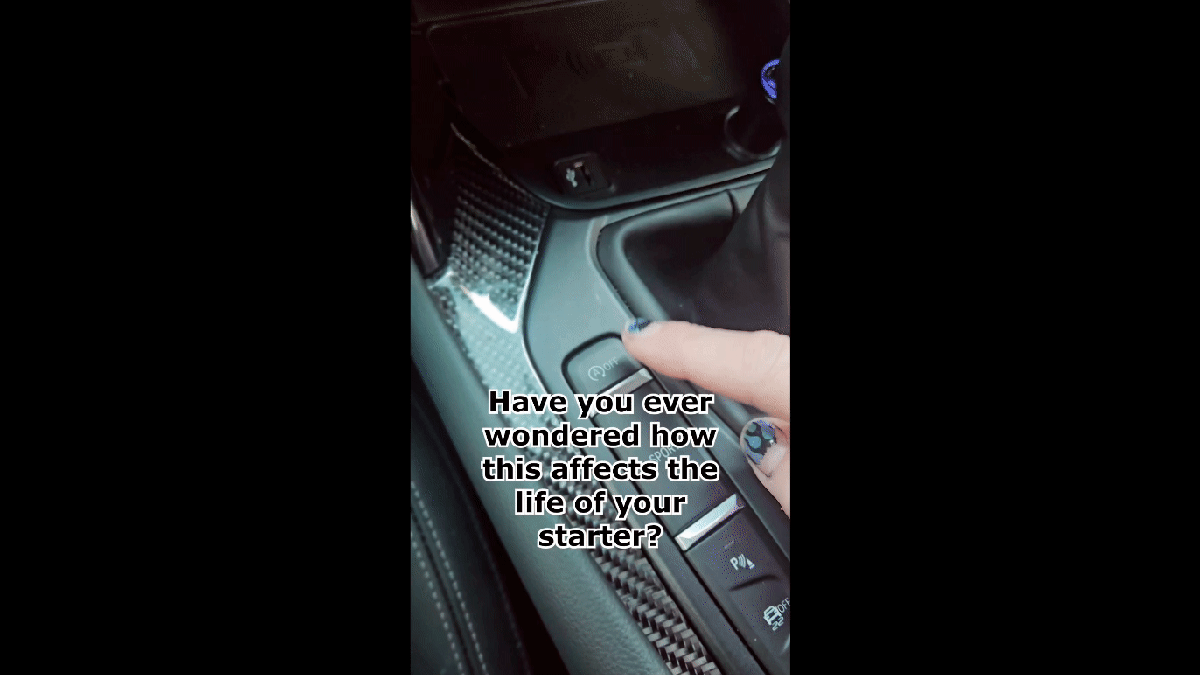
Automatic start/stop systems help to mitigate tailpipe emissions when idling, but for folks who are concerned about this function affecting the longevity of your starter motor, Toyota built-in a predetermined number of cycles before throwing a check engine light.

Faye Hadley, a certified ASE Master Technician and social media influencer, shared a video about the number of starts that a Toyota equipped with the automatic start/stop function will allow before throwing a check engine light and needing replacement.

I’ll ruin it for you if you haven’t checked yet;, Toyota will allow 384,000 restarts before throwing a code. If the starter motor is ever replaced before this milestone, technicians have to reset this measurement, giving your starter motor a maximum lifetime of 384,000 restarts.

To contextualize that number, 384,000 restarts equates to more-than 21 starts every single day for 50 years. Now, this doesn’t necessarily mean that the starter motors will last that many cycles, but that’s the built-in point when Toyota requires your starter to be replaced.

Volkswagen was the first company to introduce a production start-stop system on the European market 1983 VW Polo Formel E, and some automakers claim this system boosts fuel economy by up-to 10 percent. In reality, it’s hard to measure how much fuel this function saves. 

At least start-stop systems have chilled out since they were first introduced, though I still feel like I am in the minority when I say I don’t mind a well-integrated start/stop system. My 2017 Mini Cooper S is equipped with a start/stop system, but thankfully it remembers when I turn the system off and I don’t have to hit the button to deactivate it every time I start my car.


Source link

2025 Hyundai Santa Cruz spy shots reveal mild updates

0


Hyundai’s preparing to refresh its pickup truck.

Spotted on public roads, the 2025 Hyundai Santa Cruz is now undergoing cold-weather testing.

Despite the heavy camouflage, it’s clear the South Korean automaker’s pickup truck’s refresh will be mild. The prototypes appear to be production ready and a debut is expected to take place in 2024 with sales beginning later in the year or early in 2025.

The front end will receive the largest changes with a more truck-like design. The LED daytime running lights no longer seem to bleed into the grille like the Hyundai Tucson crossover SUV. A more squared-off grille design can be seen. The vertically stacked headlights carry over in taller, more rectangular housings that go higher into the fascia. 

Updated wheel designs can be seen. It’s unclear if any sheetmetal changes take place based on the heavy camouflage, but the rear end seems to feature updated LED taillights.

The interior of the prototypes seems to be covered in camouflage, but no clear shot could be taken. Expect some of the touch-based controls to be replaced by buttons and knobs as with the refreshed 2025 Hyundai Tucson. 

The current Santa Cruz is powered by a 191-hp 2.5-liter inline-4 paired with an 8-speed automatic transmission. The available 2.5-liter turbo-4 with 281 hp is the popular engine with its indecisive 8-speed dual-clutch automatic transmission. AWD is available and every Santa Cruz features a standard load-leveling rear suspension system. No powertrain changes are expected, but the platform does support a hybrid powertrain should Hyundai choose to take the Ford Maverick head-on.


Source link

How Long Does It Take To Charge an Electric Car?

0


Electric cars are becoming increasingly popular with drivers who desire these vehicles’ eco-friendliness and cutting-edge design. These days, buyers turn to them because they want to save money as they steer clear of gas stations.

Electric vehicles (EVs) are also becoming cheaper to own and easier to maintain thanks to a proliferation of charging stations at shopping centers, office buildings, and other public places. Also, the federal government offers up to $7,500 in tax incentives for buying select new or leased cars. There are also incentives for select used electric cars.

However, charging these cutting-edge electric automobiles may hinder their popularity due to a lack of charging stations in certain areas and slow charging times in many cases. Even extreme weather conditions like below-zero temperatures or high heat can wreak havoc on drivers’ ability to charge their vehicles.

How can drivers maximize how much time they can drive on a single charge? Let’s start with some factors that can affect how much time they spend charging their EVs in the first place.

Factors That Impact EV Charging Time

Charging times can vary due to several factors. What is your power source? How much power can your electric car handle? How can drivers charge their vehicles and get back on the road more quickly? Depending on an electric vehicle’s charging source and battery capacity, some drivers can charge their cars to 80% in as little as 15 to 30 minutes using a Level 3 fast charger (more on that in a bit).

Unfortunately, that isn’t the standard. Most drivers will need at least a full day to charge a fully depleted electric car battery if they use the standard three-prong plugs found in the walls of most homes.

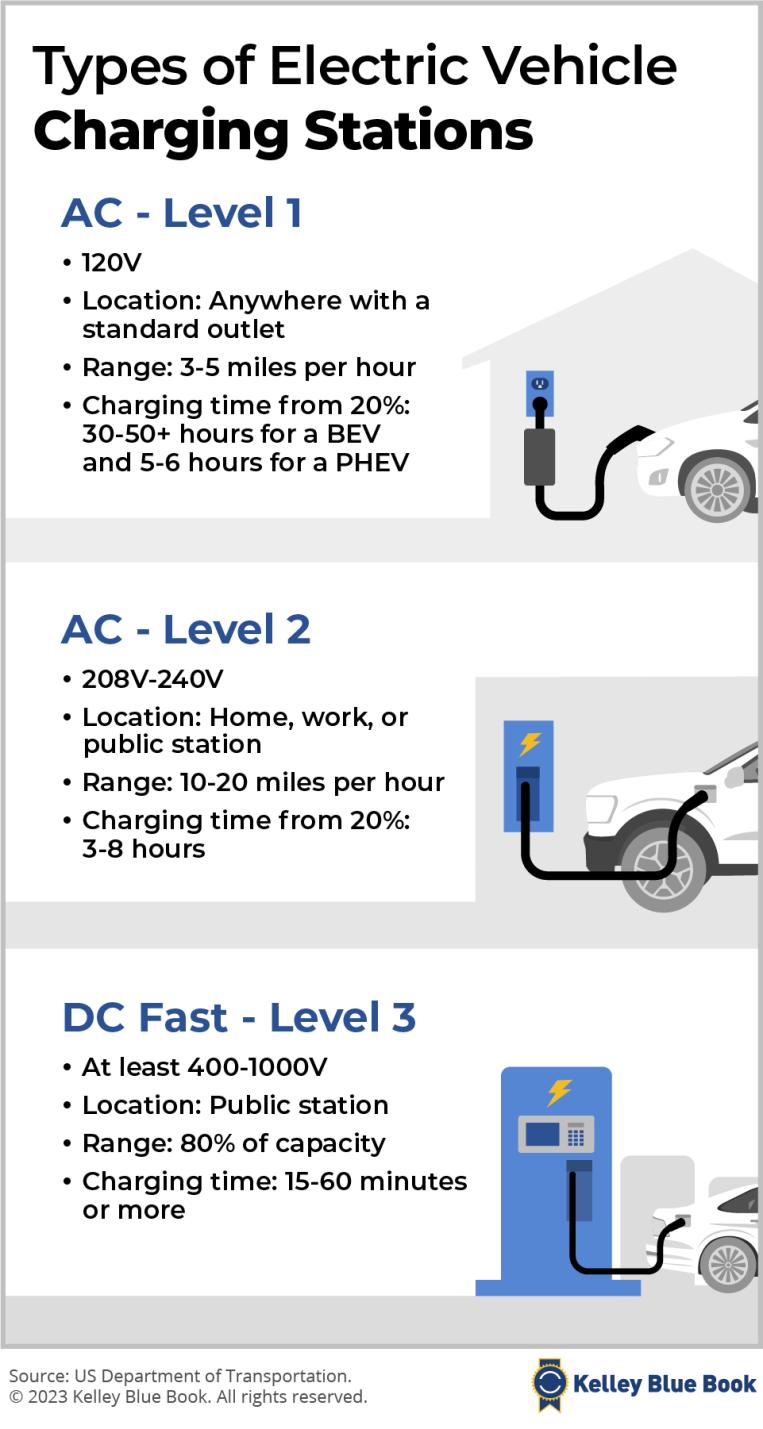
How long it takes to charge an EV based on the charging station level

Other Factors That Impact Electric Car Charging Time:

Your Power Source for Charging

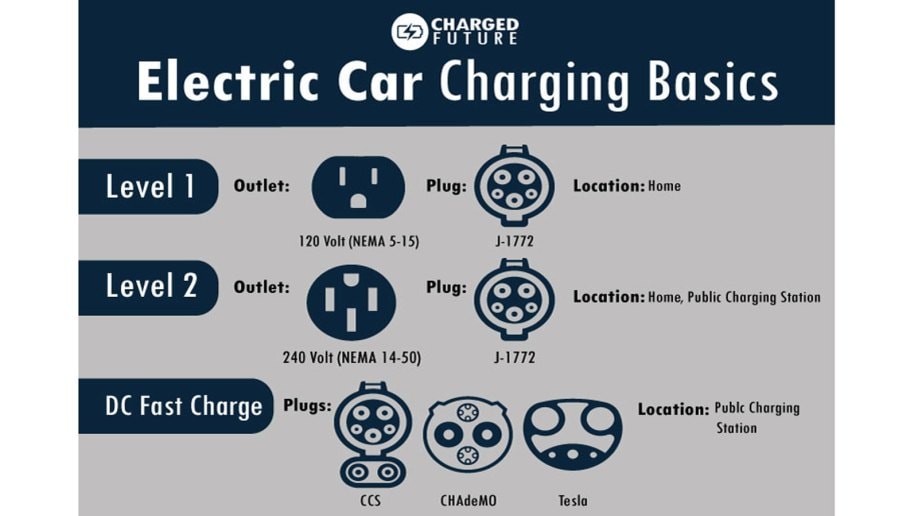
EV charging basics infographic

Start with your home power source to get a sense of how long it will take to charge your car. A Level 1 power outlet charges at the least amount of power, while Level 2 chargers can plug into outlets like the ones electric clothes dryers use and charge at twice the power.

Unlike Level 1 chargers, however, you’ll need an electrician and a compatible circuit to install a Level 2 charger at home. (A quick way to calculate the power you can generate is to multiply your voltage and the number of amps you plan to use.) Companies like California-based startup Splitvolt have also developed splitters that let EV drivers use a standard household garage outlet without unique installations.

Level 3 chargers (also called DC fast chargers or DCFCs) use a high-voltage direct current that goes straight to the car’s battery. However, these chargers aren’t compatible with every electric vehicle. They are hard to find beyond public spaces like malls and parking garages, though infrastructure continues to grow. Beyond that, many drivers who can’t use DC fast chargers opt for the combined charging system (CCS). CCS supercharges its power sources by conjoining Level 1 and Level 2 chargers.

RELATED: How EV Charging Could Become Easier in the Future

Your Car’s Charging Capacity

You should also consider your car’s charging capacity when figuring out how long it will take you to charge it. For calculations, get the optimal charging time for your electric vehicle by dividing the battery capacity (measured in kWh) by the power rating of your car’s onboard charger, then adding 10% to the loss of power associated with charging it.

For example, a 2024 Tesla Model 3 Long Range has an 11.5-kW onboard charger and an 82-kWh battery pack, which would take roughly 6.5 hours to charge fully using a Level 2 charger.

The Tesla Supercharger can charge at 250 kW, which would lower that charging time to approximately 15 to 25 minutes.

PRO TIP: Remember, EV battery technology constantly improves and evolves. Ask lots of questions about the battery and estimated charging times when purchasing a new or used electric car.

What To Know About Rapid Charging

Rapid or fast charging seems easy and convenient. But that speed comes with a caveat. Even the fastest charging time can decrease significantly when the battery falls under 20% or above 80%.

This keeps the battery from overcharging and keeps it in optimum condition. Many manufacturers gauge charging times by how long Level 3 DC fast chargers can charge your battery to 80%.

Rapid charging is also becoming easier to access thanks to plans from Electrify America and others continuing the push to build out the nation’s charging infrastructure and Tesla starting to open its network to other vehicles. Also, more manufacturers plan for their EVs to adopt the Tesla charging port.

RELATED: How EV Charging Could Become Easier in the Future

Top-Up Charging

Anyone who’s ever driven a car with a standard gasoline engine has “topped up” their gas tanks or filled them way before the gas gauge hits “E.” It makes sense: No one wants to run out of gas, especially on a long road trip. But should you top up your electric car’s battery the same way? Not really.

The battery works best when it isn’t running below 20% or above 80%. Many manufacturers discourage topping up batteries in hot weather since the act of charging combined with excessive heat can adversely affect your electric car’s thermal management systems and internal resistance systems.

That can adversely affect how well your car works over time.

Here’s How Long It Takes To Charge an Electric Car

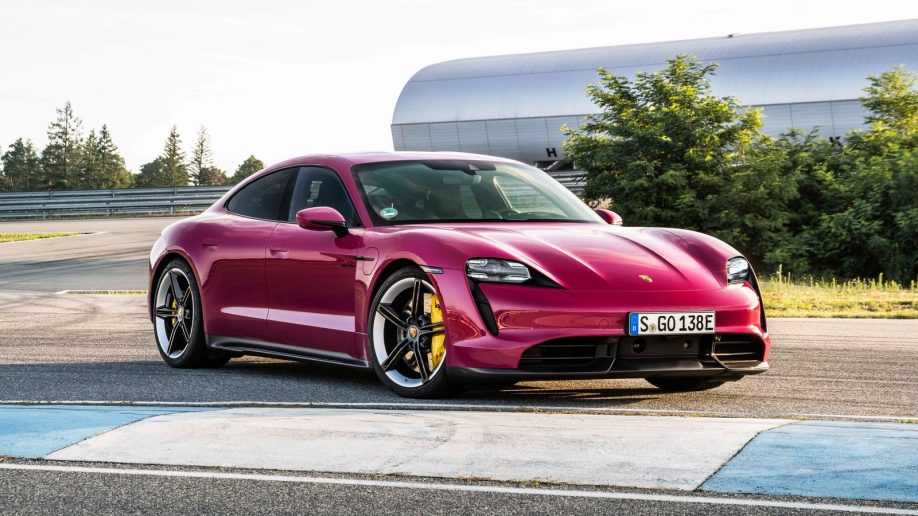
2022 Porsche Taycan Turbo S

How long would it take to fully charge some of the leading electric cars on the road? According to research from the manufacturers’ websites and Fueleconomy.gov, see the charging estimates using a Level 2 and DC fast charger for the following 2024 models. Remember that different models feature different battery sizes, and these are estimates.

Related Articles about Electric Cars:


Source link

Are You At Risk Of Being A Distracted Driver? – The Car Spotter Blog

0


Partnered post

Distracted driving is a huge factor in motor incidents, with roughly 8% of all fatal accidents that happened in the year 2020 factoring in some form of distraction. You might think that you don’t allow yourself to get distracted, but is that true? Here, we’re going to look at some of the causes of distraction, and some of them might be ones you’re more prone to than you think.

Image Credit

Passenger behaviour

It is not uncommon for passengers to not really understand how their behaviour can prove to be a risk to the driver and car that they’re in, even though it also personally endangers them. If you’re new to solo driving, then you should avoid giving lifts until you become more comfortable in the car and are more vigilant and aware of the risks on the road. When you do welcome passengers, make sure they abide by the rules of not making too much noise and limited distracting behaviour.

Your phone

Technology can be an aid in driving, but it’s also consistently one of the biggest dangers. There are real risks involved in taking your attention from the road to interact with your phone. That temptation can become very real on long drives. Take what steps you can to enable hands-free features, such as connecting the phone to a car, or using a mount to keep it within convenient access.

Eating and drinking

You’re not likely to be driving with a bowl of cereal in your hands, but it’s very easy to quickly sneak a bite or a drink of coffee when you’re in the car. However, if anything is occupying your hands while you’re driving, it is a serious danger. Even while you’re parked, eating and drinking can take away precious seconds of reaction time. Cupholders are often promoted as a solution, but they make the danger even more accessible. Avoiding eating and drinking unless you’re parked, full stop.

Windscreen issues

Your eyes are going to be locked on the windscreen, or what you can see through it, for the majority of the trip. A dirty or cracked windscreen can be a lot more distracting than you think and, what’s more, they can interrupt your field of vision. Fixing it ASAP with the help of services like windscreen fitters is always recommended. Even if it’s only a small crack, letting the issue linger is taking a risk you don’t need.

A lapse in attention

No one is perfect. We can lose attention if we’ve been on the road for a long time, or if it is late and we’re tired. Try to adjust to and accommodate your state as you are. If you’re feeling tired, then it might be better to pull over for either a brief rest or to get a caffeinated drink to help you regain your focus.

Distracted driving is a killer and should be taken seriously. It’s more important to become aware of your own potential faults and to try and fix them, rather than to simply assume they don’t apply to you.


Source link

Singtel, NVIDIA to Bring Sovereign AI to Southeast As

0


Singtel, NVIDIA to Bring Sovereign AI to Southeast As

Asia’s lion city is roaring ahead in AI.

Singtel, a leading communications services provider based in Singapore, will bring the NVIDIA AI platform to businesses in the island nation and beyond.

The mobile and broadband company is building energy-efficient data centers across Southeast Asia accelerated with NVIDIA Hopper architecture GPUs and using NVIDIA AI reference architectures proven to deliver optimal performance.

The data centers will serve as sovereign national resources — AI factories that process the private datasets of companies, startups, universities and governments safely on shore to produce valuable insights.

Singtel’s first AI services will spin up in Singapore, with future data centers under construction in Indonesia and Thailand. From its hub in Singapore, the company has operations that stretch from Australia to India.

Trusted Engines of AI

The new data centers will act as trusted engines of generative AI. The most transformative technology of our time, generative AI and its ability to amplify human intelligence and productivity are attracting users worldwide.

Nations are creating large language models tuned to their local dialects, cultures and practices. Singtel sits at the center of such opportunities among Southeast Asia’s vibrant Chinese, Indian, Malay and other communities.

Singtel’s initiative supports Singapore’s national AI strategy to empower its citizens with the latest technology. The plan calls for significantly expanding the country’s compute infrastructure as well as its talent pool of machine learning specialists.

For businesses in the region, having a known, local provider of these computationally intensive services provides a safe, easy on-ramp to generative AI. They can enhance and personalize their products and services while protecting sensitive corporate data.

Taking the Green Path

Singtel is committed to democratizing AI and decarbonizing its operations.

Its latest data centers are being built with an eye to sustainability, including in the selection of materials and use of liquid cooling. They adopt best practices to deliver less than 1.3 in PUE, the power usage effectiveness metric for data center efficiency.

Singtel will use its Paragon software platform to orchestrate how the new AI applications work in concert with its mobile and broadband services. The combination will enable edge computing services like powering robots and other autonomous systems from AI models running in the cloud.

A Full-Stack Foundation

The company will offer its customers NVIDIA AI Enterprise, a software platform for building and deploying AI applications, including generative AI. Singtel will also be an NVIDIA Cloud Partner, delivering optimized AI services on the NVIDIA platform.

Because Singtel’s data centers use NVIDIA’s proven reference architectures for AI computing, users can employ its services, knowing they’re optimized for leading AI performance.

Singtel already has hands-on experience delivering edge services with NVIDIA AI.

Last May, it demonstrated a digital avatar created with the NVIDIA Omniverse and NVIDIA NeMo platforms that users could interact with over its 5G network. And in 2021, Singtel delivered GPU services as part of a testbed for local government agencies.

New AI Role for Telcos

Singapore’s service provider joins pioneers in France, India, Italy and Switzerland deploying AI factories that deliver generative AI services with data sovereignty.

To learn more about how Singtel and other telcos are embracing generative AI, register for a session on the topic at NVIDIA GTC. The global AI conference runs March 18-21, starting with a keynote by NVIDIA founder and CEO Jensen Huang.


Source link

Toyota Pod: Forgotten Concept | The Daily Drive

0


Toyota Pod Concept
Toyota Pod Concept

Forgotten Concepts, Forgotten Concepts This is an installment in a series of posts looking back on show cars that we feel deserved a little more attention than they got. If you have a suggestion for a Forgotten Concept topic, please shoot us a line or leave a comment below.

Toyota Pod

First Shown: 2001 Tokyo Motor Show

Description: Subcompact mobility lounge

Sales Pitch: “It knows how you feel.”

More Forgotten Concepts

Toyota Pod Concept
Toyota Pod Concept

Details:

First seen at the 2001 Tokyo Motor Show, the Toyota Pod Concept was part design study, part motoring therapist. Designed in cooperation with Sony, the Pod included a number of features we might now associate with Amazon Alexa.

The small upright car featured front doors hinged at the front, and rear doors hinged at the rear, an arrangement that created a huge contiguous access port when both doors were opened simultaneously. Inside, seating came by way of upright stool-style chairs, each of which rotated toward the nearest door for easier ingress and egress. Mounted to each seat was something akin to tablet computer. The tablets were to be used for a number useful tasks, including creating shopping lists.

And, using a number of sensors—including a heartrate monitor–the Pod was, per Toyota, able to discern the driver’s mood, and display it via a series of mood-appropriate colors displayed via exterior LED lighting (see pics below). And, were the mood sufficiently positive, the Pod’s taillike rear antenna would wag.

Toyota shared little regarding the Pod mechanically, though we do know the bubbly concept was powered by a 110-horsepower 1.5-liter engine.


Forgotten Concept: Ford Probe III

Toyota Pod Concept
Toyota Pod Concept

CG Says:

Toyota’s automotive mood ring has long since been forgotten, though the designed-in shopping feature was certainly predictive, though the company was mum on many of the specifics, such as how shopping lists become fulfilled orders.

The mood lighting stuff is silly, though it makes for fun auto-show eye candy. And, since 2001, we’ve seen plenty of colored LED lighting systems make it into production cars, though generally the interior, and generally with no claim to represent the emotional well being of the driver.

Cool Trucks From Bad Movies

Follow Tom on Twitter

Toyota Pod Gallery

(Click below for enlarged images)


Source link

Lamborghini electric GT arriving in 2028, electric Super SUV in 2029

0


Lamborghini has reaffirmed plans to launch its first EV in 2028, followed by an “electric Super SUV” in 2029, according to a business update from the automaker released Tuesday.

The timeline for the launch of the first all-electric Lamborghini matches what the automaker said when it unveiled the Lanzador concept, which previews the planned production EV, at 2023 Monterey Car Week last August.

Lamborghini Lanzador concept

Lamborghini Lanzador concept

The production EV is expected to have the same form as the concept, a high-riding coupe with 2+2 seats not unlike the Espada, a model that will celebrate its 60th anniversary when the production EV is due. The automaker previously said that it’s targeting 300 miles of range and comfortable rear seats.

Lamborghini hasn’t confirmed whether that production model will keep the Lanzador name, but the electric GT will be considered a fourth model line alongside the automaker’s established supercar and SUV lines.

Lamborghini Lanzador concept

Lamborghini Lanzador concept

Speaking of the existing model lines, Lamborghini plans to introduce a plug-in hybrid version of the Urus, as well as a plug-in hybrid replacement for the Huracán, later this year. They’ll join the Revuelto plug-in hybrid introduced in 2023 as a replacement for the Aventador, giving Lamborghini an all-plug-in-hybrid lineup.

Lamborghini isn’t discussing EV plans beyond the launch of its electric SUV in 2029, but the automaker has indicated that its traditional supercars will be the last to go all-electric. The automaker hasn’t set a timeline for eliminating combustion engines from its cars, but plans to reduce overall emissions 40% per vehicle produced by 2030 through a combination of electrified powertrains and emissions reductions in manufacturing and the supply chain.


Source link

2024 BMW 4 Series price and specs: Prices up in pared-back range

0


The updated BMW 4 Series Coupe and Convertible will arrive in the second quarter of 2024, but the range will be smaller than before.

BMW Australia has axed the 420i Coupe and the 430i Convertible, but will continue to offer the 420i Convertible, 430i Coupe and M440i xDrive Coupe and Convertible.

“The high volume of new BMW models introduced to the local market prompts us to constantly assess our product portfolio in line with customer demand and our commitment to offering products that suit individual needs,” a BMW Australia spokesperson told CarExpert.

“This has led us to restructure certain model line-ups for 2024.”

The updated 4 Series will benefit from the latest BMW iDrive 8.5 operating system, freshened interior and exterior styling, and some feature additions.

Pricing

  • 2024 BMW 420i Convertible: $106,500 (+$6100)
  • 2024 BMW 430i M Sport Coupe: $109,700 (+$5000)
  • 2024 BMW M440i Coupe: $134,400 (+$2300)
  • 2024 BMW M440i Convertible: $150,900 (+$2500)

All prices exclude on-road costs.

Drivetrains

The 2024 BMW 420i has a turbocharged 2.0-litre four-cylinder petrol engine which produces 135kW of power and 300Nm of torque.

The BMW 430i also has a turbocharged 2.0-litre four-cylinder petrol engine, but tuned to deliver 180kW of power and 400Nm of torque.

The range-topping M440i xDrive packs a 3.0-litre turbocharged inline-six petrol engine with 285kW of power and 500Nm of torque.

All 4 Series models are rear-wheel drive except for the M440i xDrive, which is all-wheel drive.

Efficiency

BMW Australia is yet to quote fuel consumption claims for the updated 4 Series, however the claimed combined cycle figures for the pre-update models are listed below:

  • 420i Convertible: 6.6L/100km
  • 430i Coupe: 6.6L/100km
  • M440i xDrive Coupe: 7.8L/100km
  • M440i xDrive Convertible: 8.2L/100km

Dimensions

BMW Australia is yet to quote dimensions for the updated model, however we’ve included dimensions for the pre-update range below:

  • 420i Convertible: 4768mm long, 1852mm wide, 1384mm tall
  • 430i Coupe: 4768mm long, 1852mm wide, 1383mm tall
  • M440i Coupe: 4770mm long, 1852mm wide, 1393mm tall
  • M440i Convertible: 4770mm long, 1852mm wide, 1394mm tall

All models ride a 2851mm wheelbase.

Servicing and Warranty

BMW Australia offers a five-year, unlimited-kilometre warranty on all its vehicles.

The company has yet to provide service pricing for the updated 4 Series, though it currently offers a five-year, 80,000km Service Inclusive Basic package which costs $2225.

Safety

The BMW 4 Series has a five-star ANCAP safety rating based on tests conducted by Euro NCAP. However, this rating applies only to models with a 2.0-litre four-cylinder engine. Six-cylinder models are unrated.

The 4 Series Coupe scored 97 per cent for adult occupant protection, 86 per cent for child occupant protection, 93 per cent for vulnerable road user protection, and 73 per cent for safety assist.

The 4 Series Convertible scored 96 per cent for adult occupant protection, 86 per cent for child occupant protection, 93 per cent for vulnerable road user protection, and 73 per cent for safety assist.

BMW hasn’t released a full list of standard safety equipment, however the pre-update model comes standard with the following features:

  • Autonomous emergency braking
  • Blind-spot monitoring
  • Lane-keep assist
  • Rear cross-traffic alert
  • Front and rear parking sensors
  • Reversing camera
  • Adaptive cruise control

Standard Equipment:

The BMW 420i Convertible features:

  • M Sport Package
  • 19-inch M light alloy wheels with run-flat tyres
  • M high-gloss Shadowline package with extended contents
  • Wind deflector
  • Keyless entry and start
  • Electric seat adjustment
  • Vernasca leather upholstery
  • ‘Luxury’ instrument panel
  • HiFi sound system
  • Connected Package Professional
  • Wireless smartphone charger
  • BMW Curved Display (12.3-inch digital instrument cluster, 14.9-inch infotainment touchscreen)
  • DAB digital radio
  • Android Auto and Apple CarPlay
  • Live Cockpit Professional
  • Head-up display
  • Heated steering wheel (NEW)
  • Adaptive M suspension (NEW)
  • Air Collar (NEW)
  • Driving Assistant Professional (NEW)
  • Parking Assistant Plus (NEW)

The BMW 430i Coupe adds:

  • M Sport brakes
  • Power boot-lid
  • M Sport seats with lumbar support
  • Electric sunroof (NEW)
  • Front heated seats (NEW)
  • Sunroof (NEW)

The BMW M440i Coupe and Convertible add:

  • BMW xDrive all-wheel drive
  • 19-inch light alloy wheels with sport tyres
  • Tyre repair kit
  • Adaptive LED headlights
  • Harman/Kardon surround sound system
  • Tyre pressure monitoring (NEW)
  • CraftedClarity glass trim (NEW)

Colours

BMW Australia has yet to confirm the entire paint range for the 4 Series, however it has confirmed it will feature one solid colour – likely Alpine White – and seven metallic finishes including Cape York Green and Fire Red.

MORE: Everything BMW 4 Series


Source link