Home Blog Page 99

What to Expect on a Nile River Cruise

0


A Nile River Cruise in Egypt is an unforgettable journey that combines relaxation, culture, and thousands of years of history.

It’s one of the best ways to experience Egypt’s ancient wonders from the comfort of a floating hotel on the country’s most fabled waterway.

If you’re thinking about booking a Nile River cruise, we’ve got the perfect guide for you. Here’s everything you need to know about booking a cruise and what to expect.

Overview:

There are Four Main Types of Nile Cruises in Egypt

When looking at Nile cruises, you’ll find four different types to choose from:

  1. Cairo to Aswan (Long Cruise): This epic two-week voyage covers the full length of the Nile in Egypt, from the pyramids near Cairo to the temples of Aswan.
  2. Luxor to Aswan and back to Luxor (Long Loop Cruise): A week-long round-trip that sails south from Luxor to Aswan and returns, offering an extended itinerary with additional stops.
  3. Luxor to Aswan (Short Cruise): The most popular option, a 4-night cruise downstream from Luxor to Aswan, typically covering all the major sites in between.
  4. Aswan to Luxor (Short Cruise): A similar journey upstream from Aswan to Luxor, often 3 nights, with the same highlights in reverse order.

No matter which cruise itinerary you choose, all of them allow travelers to soak in the Nile’s scenery and visit incredible ancient sites along the way. Below, we break down what to expect on a Nile cruise, practical tips for preparation, the unique advantages of river cruising, and the must-see highlights that make a Nile cruise so special.

Nile River Cruise in Egypt
Nile Cruise in Egypt

Daily Life Aboard: What to Expect on a Nile River Cruise

Stepping aboard a Nile cruise ship is like checking into a moving hotel that floats through history. Each day brings a blend of sightseeing and relaxation. In the mornings, you’ll typically join guided excursions with an Egyptologist to explore ancient temples and tombs.

Expect to walk through pharaonic wonders like Karnak Temple – the largest temple complex in Egypt or descend into the colorful chambers of the Valley of the Kings with some wonderful colors that lasted thousands of years. Tours usually start early to beat the midday heat, and your guide will bring Egypt’s history to life as you wander through colossal columns and hieroglyphic carvings. After the morning’s adventure, you return to the ship for lunch and some well-earned rest.

Many itineraries offer another outing in the afternoon or evening, such as visiting local markets or seeing temples lit up at night (for example, Luxor Temple after dark is magical). Throughout the journey, you’ll be immersed in history literally sailing the same river that nurtured Egyptian civilization for millennia.

A traveler relaxes on the deck of a Nile River cruise ship, enjoying views of the lush riverbanks and distant desert. In between ancient sites, life on deck is wonderfully tranquil. As the ship navigates the calm waters of the Nile, you can lounge on the sun deck, perhaps take a dip in a small pool (common on many cruise boats), or simply sip a cold drink as timeless landscapes drift by.

The scenery is a constant highlight: palm lined riverbanks, emerald fields, and golden dunes of the Sahara in the distance. You’ll glimpse scenes of everyday Egyptian life unchanged for generations, local children joyfully waving from the banks, farmers with their donkeys and water buffalo plowing fields just as their ancestors did in ancient times. It’s a moving panorama of rural Egypt that you’d likely miss traveling by road or air.

On board, all meals are usually included, giving you a chance to savor Egyptian and international cuisine. You might dine on flavorful grilled meats, tahini dips and fresh bread, or other local specialties as you watch the sunset over the river. Evenings are for relaxation and entertainment: some nights there may be traditional performances such as belly dancing or Nubian music, or fun events like an “Egyptian night” costume party where guests dress in jalabiyas (a traditional robe) for a bit of cultural fun.

The rhythm of a Nile cruise sightseeing by day, leisurely cruising by afternoon, and leisure by night creates a delightful balance between adventure and comfort. By the time you retire to your private cabin, the boat will gently rock you to sleep, ready for the next day’s discoveries.

What to Expect on a Nile River Cruise

Practical Tips for a Perfect Nile Cruise

Planning ahead will help you make the most of your Nile cruise. Here are some practical tips and local insights to ensure a smooth, enjoyable journey:

  • Best time to go: Schedule your cruise between October and April for the most pleasant weather. These winter and shoulder months offer sunny days that are warm but not scorching, typically around 20–25°C (68–77°F) in the daytime. In contrast, summers in Upper Egypt (Luxor and Aswan) can be extremely hot, with daily highs often exceeding 40°C (104°F) in July, making midday sightseeing very draining. Traveling in the cooler months not only makes temple visits more comfortable but also aligns with peak cruise season when more ships are operating. If you go in summer, expect a slower pace with very early start times to avoid the heat.
  • What to pack: Pack for warm days and cooler nights, and cultural modesty. Light, breathable clothing is a must, think loose cotton or linen outfits that keep you cool while touring ancient sites. For women (and men), it’s wise to bring clothing that covers your shoulders and knees for visiting temples and mosques out of respect for local customs. Long pants or skirts and short or long-sleeve tops are ideal for excursions. You’ll also want comfortable walking shoes with a good grip, as temple floors can be uneven and you’ll be doing a lot of walking. Don’t forget a wide-brimmed hat, sunglasses, and high SPF sunscreen; the sun in Egypt is intense even in winter. A light jacket or sweater is useful for cooler evenings on deck or in air-conditioned areas (in winter months, nights can dip to 10°C/50°F). If your ship has a pool, pack a swimsuit, but remember that swimwear is only for onboard, Egyptians dress conservatively in public.
  • Respectful dress & etiquette: While there’s no strict dress code on the cruise ship (onboard you’ll see tourists in casual attire, even shorts and tank tops by the pool), modesty is appreciated during off-ship excursions. When visiting religious sites or local villages, ensure your shoulders and legs are covered, and avoid very revealing outfits. This respect goes a long way in Muslim majority Egypt, where locals, especially in rural areas, tend to dress conservatively. It’s also a good idea for women to carry a scarf to cover hair when entering mosques or Coptic churches. In terms of behavior, ask permission before photographing local people, be courteous if you’re approached by market vendors (a polite “la, shukran”  no, thank you will suffice if you’re not interested), and try to learn a few basic Arabic phrases to greet the crew and guides, simple words like “salaam alaikum” (peace be upon you) or “shukran” (thank you) are always warmly received. Tipping (baksheesh) is a part of the culture: plan to tip your guides, crew, and drivers. Many cruises suggest an approximate tipping guideline (often pooled for the crew at the end of the trip), so keep some small Egyptian pound notes handy for tipping service staff or bathroom attendants at sites.

Related read: Traveling to Egypt During Ramadan

  • Health & safety: Egypt is generally a safe destination, but it pays to be prepared. Stay hydrated, carry a water bottle on tours and drink plenty of fluids, as the dry heat can sneak up on you. However, stick to bottled water for drinking and even brushing your teeth; tap water in Egypt is not recommended for visitors, and it’s easy to get an upset stomach if you’re not used to it. Your cruise ship will usually provide bottled water. Use hand sanitiser or wash your hands frequently, especially before meals (you’ll be touching a lot of dusty ancient surfaces!). If you’re sensitive to the sun, bring a travel umbrella or parasol for shade during site visits, and consider packing electrolyte tablets to add to your water in case of excessive sweating. Insect repellent can be useful for evenings (available on most ships). While not everyone encounters mosquitoes on the Nile, they can be present around dusk, especially in summer or near lush areas. One thing you should not do is swim in the Nile or the irrigation canals beyond the crocodiles far south, the water can carry parasites; it’s best to save the swimming for your ship’s pool. Finally, travel insurance is essential, and if you take any medications, bring enough for the trip (and a copy of your prescriptions). With basic precautions in place, you’ll likely find the cruise environment very welcoming and worry-free.

What to Watch Out For: Crucial Cruise Considerations

While a Nile River cruise is typically smooth and memorable, there are a few practical decisions that can make or break your experience. Choosing the right cruise ship isn’t just about price or itinerary, but also comfort, accessibility, and atmosphere.

First, make sure reputable company operates the boat and, ideally, recently renovated. Older boats that haven’t been updated can feel dated or lack essential amenities. Cabins should be clean, air-conditioned, and well-maintained.

If you’re traveling with elderly companions or anyone with mobility concerns, note that very few Nile cruise ships have elevators. Most ships have multiple decks with stairs, so it’s essential to inform your travel provider in advance if accessibility is a priority. Some operators offer ground-level cabins or limited stair access, but it must be arranged early.

The onboard staff can dramatically influence your journey. A warm, attentive crew and skilled chefs make all the difference, especially since you’ll be eating every meal on the ship. There are no alternate dining options mid sailing, so a boat known for its hospitality and food quality will elevate your trip far beyond the standard sightseeing fare.

Lastly, avoid booking a cabin near the engines (typically in the rear lower levels of the ship). These rooms can suffer from significant noise and vibrations during cruising hours, particularly at night or early morning. Ask your provider about cabin placement before confirming your reservation, a quiet, mid-ship cabin on an upper deck is often the sweet spot for comfort.

Unique Advantages of Cruising the Nile River

Why choose a Nile River cruise over other ways of exploring Egypt?

Simply put, a Nile cruise offers a combination of comfort, convenience, and an immersive travel experience that is hard to match by flying or driving.

One big advantage is the ease of travel: you unpack your suitcase once and your “hotel” moves with you. No packing and unpacking every day, no long bus rides on dusty highways, the hassle of travel logistics melts away. Instead, you drift serenely from one destination to the next. Each new day delivers you to another iconic location without you lifting a finger to get there. It’s a relaxing way to cover a lot of ground (or rather water) in a country that’s jam packed with ancient sites. The ship amenities, from comfy cabins to restaurants, ensure you’re well-rested and fed between adventures.

In essence, a Nile cruise combines transportation and accommodation, letting you devote all your energy to enjoying Egypt rather than worrying about the next stop. It’s no wonder Egyptians have been cruising down the Nile for thousands of years, even the pharaohs knew that traveling by river was the most civilized way to go!

Another unique perk of a Nile cruise is the perspective it provides.

As you glide along the river, you get to see Egypt in a way that overland tourists often miss. The Nile is the country’s lifeblood, and along its banks, you witness a side of Egyptian life that feels timeless: fishermen casting nets at dawn, farmers tending date palms, and children playing in the mud-brick villages. This intimate look at rural life is something you can really only get by slowly sailing through the heart of the country.

You’re not just traveling to attractions; you’re traveling through the fabric of Egypt.

The scenery itself becomes an attraction, offering wonderful photo opportunities and peaceful downtime that a hectic city-to-city itinerary can’t offer. It’s also incredibly romantic and atmospheric, many a traveler has found nothing compares to sitting on the deck as sunset paints the sky orange, the call to prayer echoes from a distant minaret, and felucca sailboats silhouette against the horizon.

On a practical note, a cruise also ensures you have an expert guide with you for the entire journey (usually accompanying the group on the ship), so you have continuity in your sightseeing and a knowledgeable resource at all times. You’ll likely make friends with fellow travelers on board too, sharing dinner conversations about the day’s highlights, which adds to the fun.

In short, a Nile cruise offers not just sights but an experience, a chance to travel in the footsteps of pharaohs with modern luxury and genuine cultural immersion rolled into one.

Intimate Option: Cruising the Nile on a Dahabiya

For those seeking a more intimate and traditional Nile experience, consider sailing on a Dahabiya, a smaller, sail-powered riverboat reminiscent of the elegant yachts used by 19th-century travelers. Dahabiyas typically carry 10 to 20 passengers, offering a slower pace, personalized service, and the ability to stop at off-the-beaten-path villages and temples that larger ships can’t reach.

They don’t follow a strict schedule, so there’s more flexibility, quietude and no crowds. Just the gentle sound of sails and water. If you’re after an exclusive, boutique-style adventure steeped in nostalgia and charm, a Dahabiya might be the perfect way to cruise the Nile.

El Tawfik Tours

Experience unforgettable travel with our dedicated team in Cairo, Hurghada, Luxor, and Aswan.

We are passionate about every detail, providing personalized itinerary planning and on-the-ground support. Trust us as your reliable travel companions to make your journey amazing!

Highlights Along the Nile: Temples, Tombs, and Timeless Treasures

One of the top reasons to go on a Nile cruise is the incredible array of historic sites you can easily access along the way. The cruise itineraries are like a greatest-hits tour of ancient Egypt, stopping at the riverbank cities that were power centers of the pharaonic civilization.

In Luxor, often the start or end of the cruise, you’ll find yourself in what is essentially the world’s largest open-air museum. On the Nile’s east bank lies the sprawling Karnak Temple Complex, dedicated to the god Amun, with its forest of towering columns in the Hypostyle Hall and monumental obelisks. Exploring Karnak’s precincts, you can’t help but be awed by its scale; it’s the largest temple ever built in Egypt and was expanded by generations of pharaohs.

Nearby is the elegant Luxor Temple, which is beautifully illuminated at night and provides a vivid sense of ceremonial grandeur on the ancient processional avenue that once connected it to Karnak. Across the Nile on the west bank are the royal necropolises: the Valley of the Kings, home to over 60 tombs of New Kingdom pharaohs, and the Valley of the Queens, among other burial grounds. Descending into the Valley of the Kings, you can see richly painted tomb passages that still burst with color after 3,000 years; it’s a thrill to stand where Howard Carter discovered Tutankhamun’s treasure in 1922.

Also on the west bank is Hatshepsut’s Temple (Deir el-Bahri), an architectural marvel built into a cliffside, and the towering Colossi of Memnon statues that once guarded a vanished temple. With so many sights, it’s fitting that Luxor’s name itself means “the palaces” and on a cruise, you’ll typically get to tour many of these marvels with ease. (For the truly keen, some longer cruises or added day trips can take you to more distant gems like the Temple of Dendera or Abydos, which are north of Luxor, but these are optional excursions.)

As your ship sails southward, more wonders await between Luxor and Aswan. The Temple of Edfu is usually the first major stop after leaving Luxor. Dedicated to Horus, the falcon god, Edfu stands as Egypt’s best preserved temple, it somehow escaped damage from floods and invaders, so visiting it feels like stepping back in time. The walls and halls of Edfu are intact, complete with a black granite statue of Horus and fascinating inscriptions detailing ancient rituals. Don’t miss the Nilometer well in the floor that ancient priests used to measure the Nile’s rise.

Continuing along the river, you’ll arrive at Kom Ombo, a picturesque temple ruin uniquely dedicated to two gods at once: Horus and Sobek (the crocodile god). Because of this dual devotion, Kom Ombo’s design is symmetrical with twin entrances, twin courts, and duplicate sanctuaries essentially two temples fused as one. It’s a smaller site but very photogenic, perched on a rise overlooking the Nile. Kom Ombo also houses a quirky little Crocodile Museum where you can see mummified crocodiles that the ancient Egyptians preserved in honor of Sobek, a reminder of the sacred crocodiles that once basked on these riverbanks.

After Kom Ombo, the cruise reaches Aswan, Egypt’s southernmost city and a beautiful, laid back destination. Aswan’s highlight is the Philae Temple, which occupies an island in the Nile amid stunning scenery of rocky islets and greenery. Originally dedicated to the goddess Isis, Philae was rescued from rising waters after the Aswan High Dam was built and painstakingly relocated to its higher island home, a story your guide will surely recount. Approaching Philae by a small tender boat is a memorable experience, and the temple’s blend of Egyptian and Greco-Roman architecture, with pillars and carvings, makes it a favorite for many travelers.

In Aswan, you can also visit the Unfinished Obelisk quarry to see how these giant monuments were carved, stroll through the colorful Nubian villages, or enjoy a serene sail on a traditional felucca around Elephantine Island and the botanical gardens. Many Nile cruises include a stop at the Aswan High Dam, not an ancient site, but an impressive modern feat of engineering that created Lake Nasser.

No Nile cruise would be complete without mentioning Abu Simbel, although it lies south of Aswan on Lake Nasser. This jaw-dropping pair of temples built by Ramses II is often offered as an additional excursion at the end (or start) of your cruise. From Aswan, you can take a short flight or a pre-dawn road trip to Abu Simbel to witness the colossal statues guarding the temples.

Standing in front of the Great Temple of Abu Simbel, with four 20-meter-tall statues of Ramses II staring impassively across the desert, is a humbling experience and truly one of the highlights of any trip to Egypt. Inside, the temple walls depict Ramses’ triumphs, and an ingenious design lights up the inner sanctuary with the rising sun on specific days of the year. The effort to get there is rewarded by a site that many describe as the most awe-inspiring after the Pyramids of Giza. If your schedule allows, it’s absolutely worth adding Abu Simbel to your Nile cruise itinerary.

From Cairo to Luxor to Aswan, the Nile cruise route is a parade of bucket-list landmarks.

You’ll traverse the legacy of multiple pharaohs and eras: from the Old Kingdom pyramids (if you start up north) to the New Kingdom temples in Luxor, right down to Ptolemaic-era shrines like Philae and Kom Ombo. Each stop along the Nile offers a distinct atmosphere and story, and experiencing them one after another truly gives you an education in Egyptian history, not just through books or displays, but by walking in these ancient spaces and feeling their grandeur around you.

Embrace the Journey

A Nile River cruise is a magical journey through 5,000 years of Egyptian history, blending onboard tranquility with onshore adventures. Sail along ancient currents, visit iconic temples, and enjoy serene sunrises and starry nights. Perfect for history buffs, romantic getaways, or curious travelers, it offers a unique, immersive way to experience Egypt’s culture and beauty at a leisurely pace, creating lasting memories of ancient wonders and golden sunsets.


  • El Tawfik Tours

    With offices in Cairo, Hurghada, Luxor, and Aswan, our dedicated team is committed to enhancing your travel experience. We prioritize the details and are passionate about assisting you, from planning your itinerary to providing support during your adventures. Let us be there for you every step of the way!


    View all posts


    With offices in Cairo, Hurghada, Luxor, and Aswan, our dedicated team is committed to enhancing your travel experience. We prioritize the details and are passionate about assisting you, from planning your itinerary to providing support during your adventures. Let us be there for you every step of the way!


Source link

Production-spec De Tomaso P72 debuts with a 700 hp V8 engine

0


De Tomaso Automobili has finally unveiled the production version of the P72 supercar. Revealed in concept form at the 2019 Goodwood Festival of Speed, the P72 is inspired by the 1965 De Tomaso P70.

The De Tomaso P72 is based on a carbon fibre chassis designed to deliver optimal weight distribution and a low centre of gravity. It is equipped with push-rod suspension and 3-way manually adjustable dampers.

De Tomaso P72 first production-spec unit-2

The beating heart of the beast is a hand-assembled 5.0-liter supercharged V8 engine that delivers 700 hp and 605 lb-ft of torque. It is paired with a 6-speed gearbox that has short gear ratios for immediate and responsive in-gear performance.

De Tomaso P72 first production-spec unit-3

The P72 is designed to offer an old-school, mechanical driving experience. The exterior looks like a racing car from the 1960s, and the same is true for the interior. There are no digital screens or infotainment. Instead, you are greeted by classy analogue dials and bespoke switchgear with milled aluminium components.
Production of the De Tomaso P72 will be limited to 72 units. The car showcased in these images is the first internal production-spec unit.

Source: De Tomaso


Source link

RIMOWA’s Latest Jet-Set Travel Palette

0


RIMOWA has never once disappointed with their seasonal chromatic explorations. After the most recent Mint, Papaya and Emerald, the German luxury travel maison now introduces Granada and Verde — the former is an ardent dusty pink of ripe pomegranates, and the latter a milky green that is inspired by the cross-section of an agave plant.

Crafted from premium polycarbonate, the Essential range is well-loved for its seamless monochromatic appearance — from handle, zipper, badge and wheel housing — which is also why every new seasonal hue stands out more and adds richness to the RIMOWA lineage of legacy luggages. Visuals aside, the functionalities of the Essential line also remain undoubtedly champion in its versatile functionalities to complement various traveller personalities; RIMOWA’s stage-free telescopic handle, Multi-Wheel system, TSA approved locks and complimentary leather luggage tag are all the more celebrated with the addition of a dual organization interior, which comes with a fully zipped compartment and a large mesh zipped pocket for additional storage. Add on RIMOWA’s adjustable Flex Divider, a compression system and their lifetime guarantee and you have the perfect lifelong companion to capture all your travel memories with.

In addition to the Essential line, the RIMOWA Personal Polycarbonate Cross-Body Bag also comes in Granada — specifically in its polycarbonate shell, removable webbing strap and leather interior. A selection of daily bags has also been reimagined in the seasonal hue, counting the RIMOWA Signature Flap Backpack Small, RIMOWA Signature Sliding Tote, RIMOWA Trifold Toiletry Pouch, and RIMOWA Packing Cubes — a picture-perfect colour-coordinated travel set.

Cherry — or pomegranate — on top? Some charms and stickers to decorate your Essential Granada and Verde with — all playful designs inspired by the energy and spirit of Mexican summers and the new colours.

Just like how these colours are at home and found in abundance in nature, RIMOWA envisions the Essential Granada and Verde to sail through the foliage of greens through the countryside, scenic boat tours, and the home of most luxury connoisseurs — the city.

Vibrant and energetic, the two colours celebrate the art of the journey to the destination, whimsical yet very much at ease in the rituals and routines that come with global movement.

RIMOWA’s Granada and Verda additions are now available at RIMOWA stores islandwide.

This article was first seen on Men’s Folio Singapore.

For more on the latest in lifestyle and accessory releases, click here.


Source link

9 Absolute Best Places In Delaware To Visit – Hand Luggage Only

0


Just south of Philadelphia, Delaware is an epic state to visit while travelling across the East Coast of the United States. And don’t be fooled by its relatively small size—Delaware packs a punch when it comes to exciting things to do and a stunning coastline to explore. 

We always love visiting the gems across the East Coast; it’s an incredibly diverse region of the United States, and Delaware is a literal perfect example! Additionally, with its smaller size than states like Texas or Florida, it’s easy to drive around in a few days. 

So, to help you maximise your trip, I’ve jotted down all the gems we love most. This way, you won’t miss any of the best places in Delaware when you visit. As with all our posts, please don’t hesitate to message us if you need further advice on your route through Delaware. Have the best time exploring the state! 

1.) Cape Henlopen State Park

Best Things To Do In Delaware This Year Cape Henlopen State Park

Right on the eastern shoreline of Delaware is Cape Henlopen State Park. Not only is this place gorgeous, it’s also really easy to visit if you’re already based in Nassau or taking the ferry over from Cape May in New Jersey. 

You can easily spend a long afternoon here, wandering around the historic WWII fort and following Gordon’s Pond Trail, which is so nice on a sunny day. In addition, you can easily visit North Shore Beach if you park in this parking lot (Google Maps pin). This way, you can spend time on the beach and then head over to the trails. 

Alternatively, park here (Google Maps pin), which is again right on the beachfront and much more within Cape Henlopen State Park itself. 

Getting peckish? Head over to Wheelhouse (in Lewes) for their calamari and seafood pot pie. They are both delicious. 

Read more: Best places on the East Coast USA to visit

2.) Winterthur

Best Things To Do In Delaware This Year Winterthur

Just outside of Wilmington, Winterthur is a small township that actually doesn’t get enough attention. We love it here, especially as it’s small, quaint and easy to explore in an hour or two. Best of all, it’s really easy to tack onto a Wilmington itinerary, especially if you’re leaving the city for a day trip. 

Now, the key spot to really visit in Winterthur is the Winterthur Museum, Garden and Library. Book your tickets online before arriving and give yourself a fair few hours to stroll around the grounds. After all, there is over 25 miles of trails and the grounds are a nature preserve that is so beautiful. Oh, and be sure to hop into the Winterthur Museum itself. Inside, you’ll find everything from fine art to exhibits about the du Pont family. It’s worth a trip. 

Best Things To Do In Delaware This Year Winterthur

Finally, if you fancy a stroll, head over to nearby Brandywine Creek State Park. It might not be the biggest park, but it’s over 900 acres and there are heaps of trails to follow when you arrive. 

Read more: Best things to do in Philadelphia

3.) Lewes

Best Things To Do In Delaware This Year Lewes Delaware

Just shy of Cape Henlopen State Park, Lewes is another gem of a place to visit in Delaware as you drive across the state. After arriving, head for some of the best Delaware tacos at Agave Mexican Restaurant

That said, if it’s a cool cafe you’re after, head to The Station on Kings. These guys make some of the best deviled eggs in the region, and the cafe is stunning. 

Finally, make sure to spend some time at Savannah Beach, which is really convenient to visit as there is a car park (Google Maps pin) close by. Plus, like I said previously, you can easily add Lewes to your visit to Cape Henlopen State Park. It’s so worth it. 

Read more: Best things to do in Philadelphia

4.) Rehoboth

Best Things To Do In Delaware This Year Rehoboth Beach

Rehoboth Beach is one of my favourite towns in Delaware. It’s within easy reach of Lewes and Cape Henlopen State Park. 

Now, what makes Rehoboth Beach so special is its boardwalk and beach. We love it! The whole coastline here is stunning and stretches for ages. Whilst wandering the boardwalk, make sure to stop off at Funland. It’s a kitschy little place that’s so much fun if you’re visiting with the family. Inside, you’ve got small retro rides like the carousel, helicopters and number cars. It’s so retro and cute. 

Best Things To Do In Delaware This Year Rehoboth Beach

For a bite to eat, head to Above The Dunes at sunset for dinner. Their jumbo crab cakes are so tasty. Book a table in advance, as tables fill up fast at peak times. 

Best Things To Do In Michigan This Year Best Things To Do In Delaware This Year Rehoboth Beach Dolles Taffy

Finally, make sure to grab some saltwater taffy from Dolles. We totally loved the peanut butter taffy. It’s all handmade and super yummy.

Read more: Best things to do in Philadelphia

5.) Wilmington

Best Things To Do In Delaware This Year Wilmington

Although Wilmington isn’t one of the biggest cities in the United States, it certainly still packs a punch when finding things to do. You can easily spend a few days wandering the city and it’s a great place to stop if you fancy a citybreak in Delaware. 

After arriving, make sure to stop by the Hagley Museum. There’s a small entry cost to enter this beautiful building, but it’s so worth it. Historically, this was initially the family home of du Pont, constructed way back in the early 1800s. We loved visiting, even seeing all the bits on gunpowder, which I never knew could be interesting! 

Then, hit the road and get down to Nemours Mansion and Gardens. This is absolutely incredible, and with over 75 rooms, it can’t be missed when visiting Delaware. In fact, I’d say it’s one of the best places in Delaware to see, if not the whole of the East Coast if you love history. 

Now, to give you a bit of backstory, Alfred du Pont gifted the Nemours Mansion to his wife, Alicia, after its construction in the early 1900s. I mean, what a gift! The mansion is huge and built in an out-of-this-world French chateau and Renaissance style. Once at Nemours Mansion, you’ll explore the gardens and the wider estate. Oh, and don’t forget it closes on Monday. 

If you stay in Wilmington for a few days, visit the Delaware Art Museum. It’s one of the best places in Delaware to visit, dedicated to showing the dominant artworks from the 19th century to the 21st century.

Once inside, you’ll glimpse the likes of the English Pre-Raphaelite art that existed around the middle of the 19th century. The museum is an excellent spot for works by the American artist Howard Pyle. Visits take around 60 minutes and are well worth visiting if you’re into your art history. 

I know I’m rambling lots about Wilmington, but we had such a great time here, so I had to mention all the places you can’t miss. For instance, we also loved the Grand Opera House. There’s always something going on inside the restored 1871 Victorian theatre. For instance, you’ll find all sorts of seasonal performances, from Victorian melodramas, Vaudeville, symphonies, musical recitals, burlesque, variety shows, and operas. 

Best Things To Do In Delaware This Year Russell Peterson Wildlife Refuge Wilmington

If you fancy a ramble outside the city limits, head to Russell Peterson Wildlife Refuge. The wetlands here are great to walk around on a sunny day, and the views are stunning. Just make sure to always stick to the defined boardwalk and not disturb the local ecosystem. 

Best Things To Do In Delaware This Year Rockford Park Tower

Finally, if you head to Rockford Park, then make sure you get a glimpse of Rockford Tower (Google Maps pin). It’s right on the trails and really easy to spot as you follow Tower Drive. 

Read more: Best places in New Jersey to visit

6.) Bethany Beach 

Best Things To Do In Delaware This Year Bethany Beach

South, down the coast from Cape Henlopen State Park, is Bethany Beach – an iconic spot to visit in Delaware if you’re following Route 1 down the coast. 

What makes Bethany Beach so special is its sandy shores and boardwalk, which are great to visit on a sunny day. The beach does get quite busy on the weekends in summer, but don’t let that put you off – there’s ample sand space for everyone along this long stretch of Delaware’s coastline. 

Oh, and stop off at Sedona for their shrimp papadella. It’s so good. 

Read more: Best things to do in Washington D.C.

7.) Dover

Best Things To Do In Delaware This Year Delaware Legislative Hall in Dover

Just shy of Bombay Hook National Wildlife Refuge, Dover is another one of Delaware’s cities you can easily visit when driving around the state. It’s got heaps going on, and you can easily spend a night or two within the city limits before venturing further around Delaware. 

Best Things To Do In Delaware This Year Old State House Dover

After parking up, head over to the Air Mobility Command Museum. There’s a fee for entry, but this place is totally epic top visit if you’re something of an AV geek like me. The museum is dedicated to displaying vintage planes built as far back as 1941 and other artefacts for airlifting, and air refuelling (which I promise is cooler than it sounds). 

Best Things To Do In Delaware This Year Dover

Afterwards, head over to Delaware’s Old State House that dates all the way back to the 1700s. Today, you can visit the rooms and see the exhibits that document life in Delaware and the building’s long history. Plus, you’ve got the Biggs Museum of American Art right next door and it is well worth a visit on a lazy afternoon in the city. 

Read more: Best things to do in Washington D.C.

8.) Bombay Hook National Wildlife Refuge

Best Things To Do In Delaware This Year Bombay Hook National Wildlife Refuge

Just northeastof Dover is Bombay Hook National Wildlife Refuge. This place is stunning and one of the best places in Delaware to visit if you want to explore the great outdoors.

Now, what makes Bombay Hook a real cause for a visit is the birdlife that calls this area home. Depending on when you visit, you’ll get to see the likes of American Bald Eagles and so many shorebirds (which, if I’m being honest, I couldn’t identify… but they are birds – that bit I know!).

Visits can take as long or as little as you’d like, just make sure to plan your day accordingly if you’re looking for dinner, as there are limited options in the local area. 

Read more: Cheapest cities in the USA to visit

9.) The Nanticoke Indian Museum

Best Things To Do In Delaware This Year The Nanticoke Indian Museum

If you’re driving between Lewes and Millsboro, then make sure to stop off at the Nanticoke Indian Museum. Don’t expect colossal displays like in the Smithsonian, but what it lacks in size, it makes up for in artefacts. From an international perspective, it was a great little stop on a Delaware road trip and allowed us to learn more about Native American culture, ways of life, and so much more. 

Visits take around 25 minutes. 

Read more: Cheapest cities in the USA to visit

16 Cheapest Cities To Visit In The USA


Check Out The Very Best Of Great Britain!

Hand Luggage Only Great Britain Travel Book Advert Banner


Pop Over To Our YouTube Channel For Travel Videos!


Source link

One-off Porsche 959 Speedster could go for $1.7 million at auction

0


RM Sotheby’s Milan auction will have a rather special Porsche 959 for sale. When we say “special”, we mean a one-of-a-kind Porsche 959 Speedster.

This unique 959 Speedster was built by master craftsman Karl-Heinz Feustel in 1989. However, it started life as a standard Porsche 959 ‘Komfort’, which was delivered to racing driver Jurgen Lassig, winner of the 24 Hours of Daytona and Le Mans runner-up. The car was involved in an accident sometime in 1988, after which Lassig sold it to Feustel.

Porsche 959 Speedster RM Sothebys Auction-2

Once in his possession, Feustel set about building the 959 Speedster at his workshop in Cologne, Germany. It is said that the build took over 4,000 hours.

The 959 Speedster is finished in Grand Prix White, which is complemented by a blue leather interior. It has an electrically operated soft top as well as a removable hardtop. The car also comes with an interchangeable ‘Speedster’ windscreen, spare door mirrors, and owner’s guides.

Porsche 959 Speedster RM Sothebys Auction-1

This one-off Porsche 959 Speedster will be auctioned on May 22. It is expected to fetch between $1.2 million and $1.7 million.

Source: RM Sotheby’s


Source link

Best T Top Cars To Own

0


T Top cars have been around since the 1940s. They were originally designed to offer a convertible-like experience in various vehicles without the costly and time-consuming process of removing the entire roof. Even today, t tops are still popular, and for a good reason. Today we share some of the best T Top cars to own – ones that rise above the rest.

With more than a sunroof, but less than a soft top, Targa top cars walk a thin line between a coupé and a convertible body style.

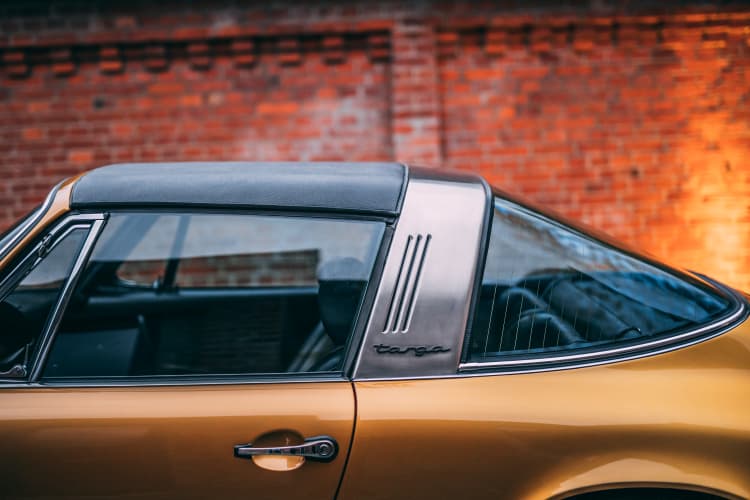
In short, targa tops are removable roof panels. The Targa roof is constructed in a way that does not require the same extent of body and chassis structural rigidity otherwise mandatory for keeping roofless cars from falling apart, thus providing a similar open-air feel with mild effects of added weight and compromised overall performance.

In addition to being a better engineering solution for open top cars, targa tops became a car design necessity. Due to growing safety concerns exploding in the late sixties, no significant companies developed convertibles as their future was uncertain and bound to be written off due to inadequate rollover protection. So, to still offer an open-top experience, automakers resorted to targa tops where the rear glass housing acted as structural protection in case a car finds its way wheels up.

Now, while there aren’t many targa tops on sale today, the historic and collector car market offers plenty of options. 

To find ten best second-hand T Top cars you can buy right now, we decided to focus on attainable and usable classic, so don’t be surprised not to find a Porsche Carrera GT, 918 Spyder, Bentley Continental SC, Ferrari F50, LaFerrari Aperta, or Maserati MC12, just to name a few rare, otherwise elusive and seven-figure examples.

Our list of the 10 best T Top cars are:

Here’s a look at the top 10 T Top cars:

1. Porsche 911 Targa

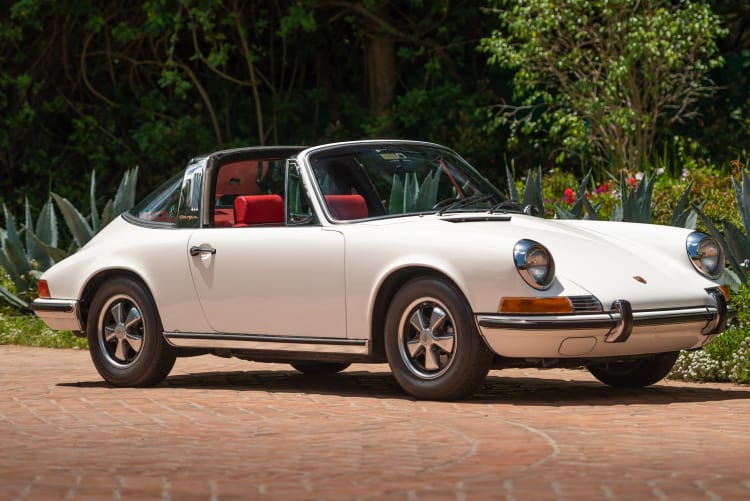
Porsche 911 is the only car to actually bear the Targa name, hence its first place on our T Top cars list. In 1965, Porsche conceived this body style to meet safety regulations of the era, naming it after the Targa Florio, a Sicilian public road event where Porsche scored considerable success with its lightweight sports cars, namely the 550, 718 and 904. 


1972 Porsche 911 S 2.4 Targa 
Stephan Bauer ©2020 Courtesy of RM Sotheby’s


Porsche offered the 911 as a Targa throughout many variations, starting from the G Series all the way to the current 992 generation. First, the Targa was a removable hardtop, only to be reinvented as a sliding glass roof panel on 993, 996, and 997 models. Then, starting from 991, the 911 Targa became a modern interpretation of the classic car design.

That being said, it’s up to you, your budget and preferences which one you choose. Do you want a classic air-cooled 911 or four-cylinder 912, or do you prefer one of two modern variations? Tell us what’s your perfect 911 T Top car in the comment box below!


Stephan Bauer ©2020 Courtesy of RM Sotheby’s


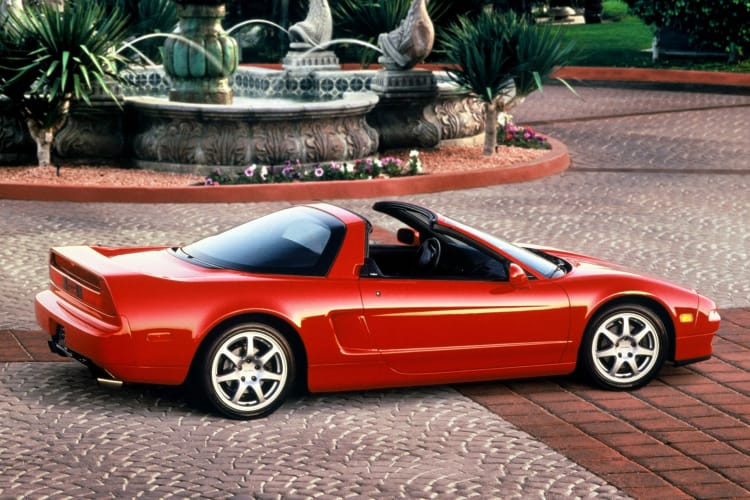
2. Acura NSX-T

Perhaps the greatest Japanese sports car of all time, the NSX was originally developed as a hardtop coupe and fine-tuned with inputs from the greatest ever Formula 1 driver, Ayrton Senna.


Source: Honda


Midway into production, Honda introduced an open top version in 1995, naming it the NSX-T and making it a bit softer compared to its hardtop counterpart.

That might disappoint those looking for an undiluted NSX driving experience, especially given the fact that the NSX-T became the only variant available on the North American market. However, even with a bit more weight and re-engineered internals, the NSX-T is a staple Japanese sportscar and a sound investment opportunity.

3. Lotus Elise

When it comes to cars clad in actual bodywork, there’s hardly any providing an open-wheel feel better than the featherweight Lotus Elise.


Lotus Elise Classic Heritage Edition. Source: Lotus


Its minimalist interior is distraction-free, its seats will grip you tightly in the bands, but what’s really amazing about the Elise is its chassis stiffness and surgically precise handling. Further enhancing the feeling of a race car, the nimble little Lotus was exclusively offered with a removable top.

Depending on the generation and the variant, the Lotus Elise has either a soft canvas or a hard fiberglass top, but what’s common for all of them is that you had to leave it home should you decide to go for a roofless drive.

Given that the Elise has been in production from 1996 to the present day, there’s plenty of variants to choose from, so when picking the best one for yourself, it all comes down to the budget and how much horsepower you think is enough to have proper fun.


4. Pontiac Firebird

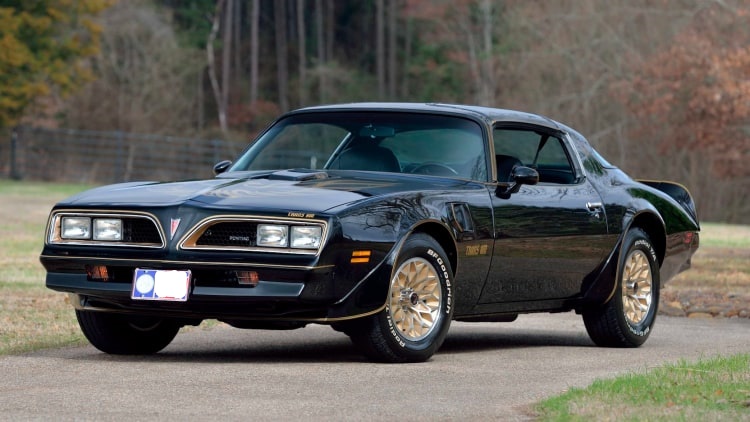
While the late 2nd generation Pontiac Firebird might lack in the performance department compared to virtually every other car on the list, it more than makes up with its all-American charms and pop culture credentials.

Of course, we’re talking about a very particular F-Body Firebird, the black and gold 1977 Firebird Trans-Am Special Edition, better known as The Bandit.


1977 Pontiac Trans AM SE. Source: Mecum


The T-Top wasn’t limited to this edition too, debuting in 1976 on the 50th Anniversary Trans Am which still used single headlight design and staying as an optional extra through 1981.

First developed by Hurst, the design was later finalized by GM and had two removable panels with a fixed bar in the middle. The third generation Firebird Fiero got a T-Top only in 1988 and with a compromise in performance, so we’re staying with the iconic 1977-1981 Firebird as our pick.


5. Chevrolet Corvette C3-C8

The 1968 Chevrolet corvette coupe (C3 generation) was the first US production vehicle to incorporate a t top roof, and it has stayed there to this day.

In fact, the C4 generation was built exclusively as a T top car until the convertible joined the lineup in 1986. The following two Corvettes, the C5 and the C6 had a targa top as one of three roof options alongside a hardtop coupé and a convertible, whereas the C7 was again a T-top. Finally, the latest and the first mid-engined C8 Corvette is also a targa by default.


2020 C8 Chevrolet Corvette Stingray- Source: Chevrolet


So, all of this begs a question, which is the best buy? Honestly, it all depends on what you’re looking for in a car. Less exciting variants of the C4, C5 and C6 Corvette are budget-friendly options, as well as some C3 ones from the malaise years, but as your budget increases, a low mileage C4 ZR1 is a safe bet for an investment that’s also a fabulous driver’s car.

Finally, there’s also the C6 ZR1, perhaps the best second-hand Corvette you could get to enjoy and store value. Which one is your favorite T-Top American sweetheart?


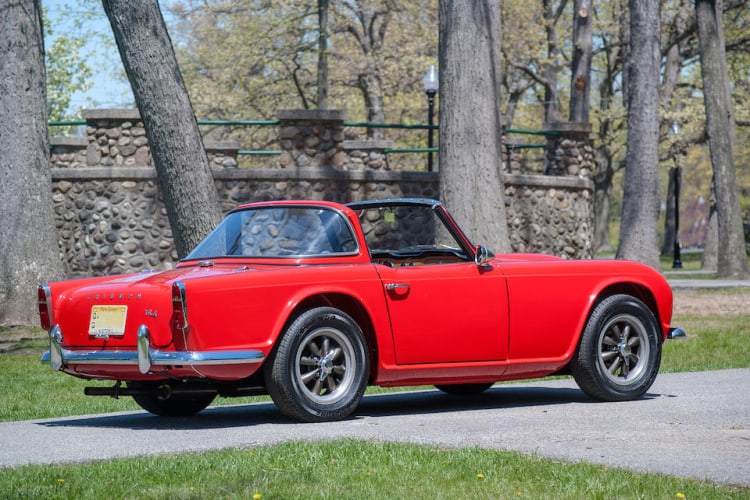
6. Triumph TR4

The now-defunct Triumph brand gained popularity for its Italian-designed roadsters from the TR and Spitfire series, but it produced targa tops as well.

In this segment, Triumph is mostly remembered for the Stag, designed as the Spitfire’s big, V8-powered sibling, but the first Triumph T-Top actually preceded our number one pick on the list.


Source: Bonhams


Truth be told, the Triumph TR4 wasn’t a typical t top car in the sense that the rear glass housing wasn’t a structural element of the bodywork, but a bolt-on removable panel, while the canvas roof panel was dubbed Surrey Top.

The TR4 was produced from 1961, four years earlier than the 911 Targa, but Giovanni Michelotti’s design was overshadowed by the iconic Porsche. Still, that doesn’t mean the TR4 isn’t worthy of your attention. On the contrary, it is a charming and well-drivable piece of British motoring history.


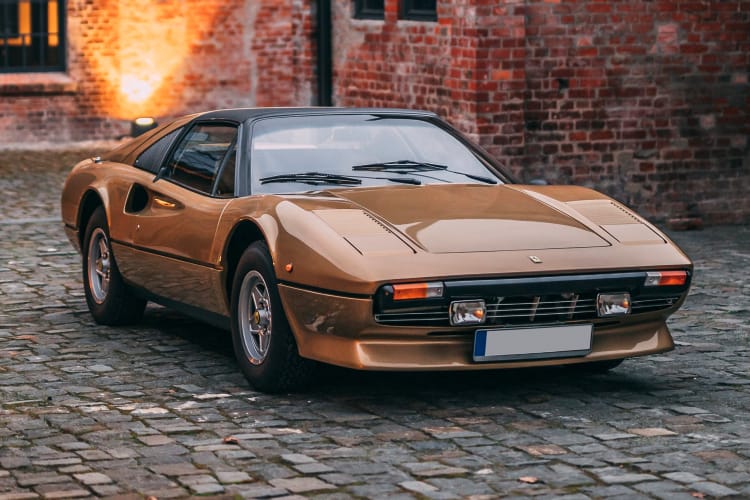
7. Ferrari 308 GTS

The world of T Top cars from Maranello offers a lot of options to choose from and in all price ranges, like the 246 Dino classic car, the 1990s icon F355 GTS to the exotic glass panel top 575M Superamerica, but this time our vote goes to the 308 GTS.


1979 Ferrari 308 GTS. ©2020 Courtesy of RM Sotheby’s


Powered by the venerable Dino V8, the 308 engine produced 240 horsepower in carbureted and 32-valve Quattrovalvole variants and mere 200 ponies as a 308 GTSi. Power figures aside, nothing really beats the 308’s pop-cultural appeal, courtesy of Magnum PI among others.

Prices of these legendary cars have witnessed a surge in recent years and today, you can find them in the neighborhood of $70,000.


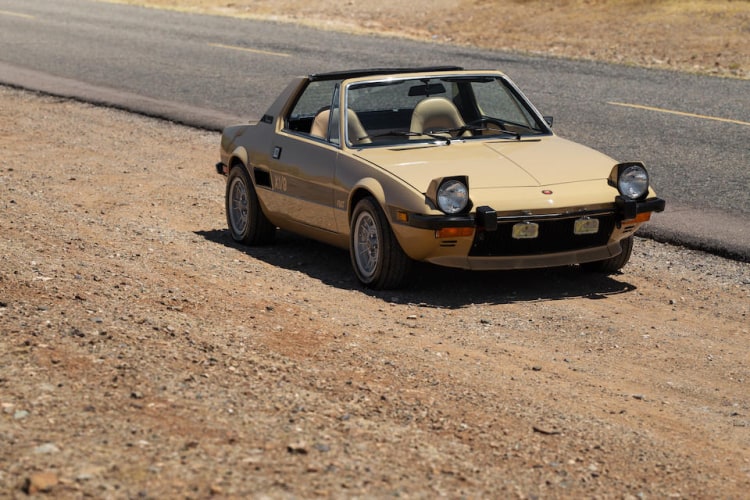
8. Fiat X1/9

Fiat 124 Spider was available from the 1960s to 1989 and unlike many other Fiats, it achieved considerable success in North America, so it’s no wonder this Bertone-designed two-seater wedge is often forgotten. But, the X1/9 is a nimble, lovable, and above all affordable sports car, so you should be eyeing to get one and see why.


Source: Bonhams


Originally sporting a transversely mid-mounted 1.3-liter 63 horsepower inline-four powering the rear wheels, the X1/9 later got a bump to 1.5-liter and direct fuel injection, resulting in 75 horsepower.

These numbers might seem humble to say the least, but the X1/9 provides an immersive experience nonetheless. Perhaps the best of all, this little T Top car was designed by Marcello Gandini and while it isn’t his most famous work, it’s enough for the X1/9 to become an integral part of Fiat’s sports car history.


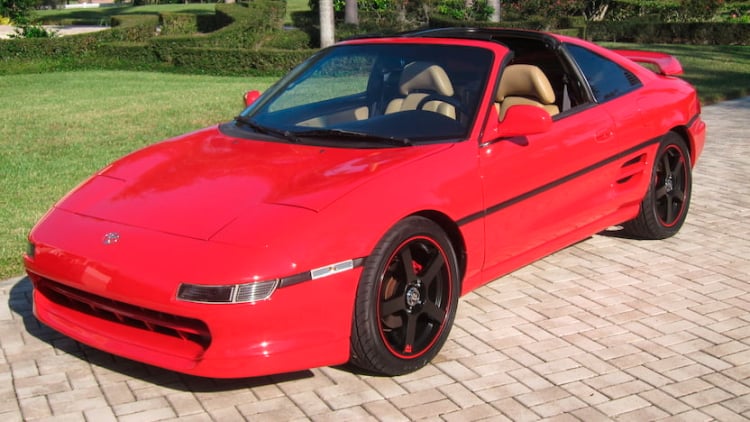
9. Toyota MR2

The original W10 Toyota MR2 is another compact, cool and fun mid-engined wedge T Top car. This sweet little JDM coupe took the automotive world by storm in 1985 and today, it’s still worthy of every bit of praise it garnered back then.


Source: Mecum


Initially powered by a 112 horsepower 1.6-liter transversely mounted inline-four, the MR2 was built with handling in mind, so Toyota enlisted Lotus for some expertise in that department.

To max out on both the driving sensation and value, you should go for a 145-horsepower factory supercharged 4A-GZE-powered variant in stock condition. 


10. Mazda MX-5 RF

The car that reinvented the roadster and kept it alive well into the 21st century has its targa top variant as well, dubbed Mazda MX-5 RF.


Source: Mazda


The initials stand for ‘retractable fastback’ and this roof mechanism functions just like the modern 911 Targa – the rear section lifts to house the roof panel and it all happens with just a press of a button.

Contrary to a majority of T Top cars, the MX-5 RF isn’t an alternative derived from a coupé body style, but a solution to make a classic roadster more user-friendly, which makes it a unique market offering.

Mazda MX-5 RF can be bought straight from the showroom, but second-hand examples are a viable alternatives too given that it has been on the market since 2017.


Are there any T Top cars that should be included in our top 10? Comment below.


Source link

First Amels 80 Launches in the Netherlands

0


Damen Yachting has launched the first hull of the Amels 80, the flagship of the current Amels Limited Editions series. Announced in early 2022 and sold by Burgess later that year, the 80m superyacht has a beam of 12.5m, a volume of 2,175GT, naval architecture by Damen Yachting, exterior design by Espen Øino and an interior by Sinot Yacht Architecture & Design.

Rose Damen, Managing Director of Damen Yachting, said: “With the launch of the first Amels 80, we have reached another landmark achievement in the history of Amels. I would like to thank our client and the team at Burgess for entrusting us with this very special build. We are honoured and excited to see the final phase through to delivery.”

Burgess sold hull one six months after the model’s online introduction and has since managed the build on behalf of the owner. Now entering the final stages of outfitting, sea trials and commissioning, the yacht is scheduled to be delivered to its owner in the summer.

Sean Bianchi, Partner and Head of Burgess Technical Services: “We are delighted to see Amels 80 hull one depart her construction dock and enter the commissioning and sea trials phase. This milestone marks the culmination of close collaboration between Damen Yachting, Sinot and the owner’s team in crafting a yacht that is truly one of a kind.

“As the first 80m Limited Editions, this yacht has evolved into something truly extraordinary through the owner’s vision and meticulous input. With her striking exterior lines and a bespoke interior like no other, we are proud to support both the owner and the shipyard in bringing her to life. She is set to become an icon, instantly recognisable by her distinctive paintwork and exceptional design.”

Engineered with a hybrid propulsion system, the Amels 80 offers reduced emissions, quieter operations and efficient cruising, with a range of 5,000 nautical miles at 12 knots. Design features include a foredeck helipad, 200sqm sundeck, private owner’s deck and a 6.5m swimming pool, while the beach club includes a spa, sauna, gym, hammam and massage room.

Damen Yachting’s Adriaan Roose, Product Design Manager for the Amels 80 series, played a vital role in fulfilling the client’s expectations and implementing their desired customisations. “The Amels 80 offered the client many custom options while still benefitting from the shortened delivery time,” Roose said. “This yacht is the ultimate balance of individuality and efficiency.”

The interior by Sinot, in the Dutch studio’s first collaboration with Amels, includes accommodation for 14 guests – in seven luxurious suites – and 20 crew plus the captain.

Described by Damen Yachting as “a sanctuary of calm refinement”, the interior includes a strong use of natural materials and “features fluid transitions between spaces, while a soft, neutral palette encases the occupants in the highest levels of luxury”.

Paul Costerus, Partner at Sinot Yacht Architecture & Design, said: “The Amels 80 provided us with the opportunity to develop something truly unique. You will feel at home from the moment you step on board.”

damenyachting.com
amelsyachting.com

This article was first seen on YachtStyle.com.

For more on the latest in luxury yachting reads, click here.


Source link

How This Charming Greek Island Has Become a Surprising Art Destination—With Stylish Parties and Pop-up Galleries

0


Traveling to Hydra is normally a relaxing, almost soporific affair.

The tiny Greek island, only 90 minutes by ferry from Athens, has been renowned for generations as a dreamy, car-free outpost where the only traffic sound is the clip-clop of donkey hooves and the most stressful decision is which white wine to choose with dinner. But I was heading there in mid-June, when Hydra is an offbeat stop on the art-world circuit and the energy resembles that of a wild night at Art Basel Miami Beach.

From left: Taking the plunge near Hydronetta bar; harborside buildings.

Thomas Gravanis


The cultural frenzy had begun earlier that day in Athens, with brunch at the art-filled mansion of Greek collectors Dakis and Lietta Joannou. It was a lavish affair with a book bazaar, buffet, and cocktail bar spilling onto expansive, sun-dappled patios where celebrity artists like the Joannous’ friend Jeff Koons mingled with elegantly coiffed curators from Zurich, London, and Cologne. 

Mid-afternoon, I joined a group of fashionable Greek artists in a convoy of taxis bound for the Athenian port of Piraeus, just in time to catch the 5:30 p.m. fast ferry across the Saronic Gulf to Hydra. Soon we were all gaping in wonder at the first glimpse of the fabled island that Henry Miller memorably described in 1939 as having a “wild and naked perfection.” He praised its “aesthetically perfect” port, where blue-and-white buildings cluster like a stadium above the harbor in “the very epitome of…flawless anarchy.” 

From left: The clock tower in Hydra’s port; “Lalo,” a painting by Iasonas Kampanis, at Wilhelmina’s gallery; harborside buildings.

Thomas Gravanis


No sooner had we stepped ashore than we were whisked via a five-minute boat ride to Mandraki Bay, where the gallery Wilhelmina’s has operated in a splendid 19th-century mansion since 2023. As the sun dipped below the horizon, a raucous reception began for a group show called “Magic Mirror,” which showcased 33 emerging Greek and international artists, the majority of whom were women. Wine flowed. Tables groaned with treats: plates of seafood, bowls of Greek salad, tubs of plump olives. More guests arrived by foot and boat, until the gallery was mobbed. 

As the festivities wound down at midnight, Wilhelmina von Blumenthal, the gallery’s young U.K.-born director, explained that she had set up in Hydra after a trip to the island in the fall of 2022. “It was all very organic,” she said. “I came for a long weekend and stumbled across this lovely space. At the time it was covered in cobwebs and full of odds and ends, more like a storage room. I said to the owner, ‘This would make a beautiful gallery,’ and he said, ‘What a good idea!’ ” 

The Windmill Bar.

Thomas Gravanis


Von Blumenthal’s co-curator, Greek artist Irini Karayannopoulou, was thrilled by the enthusiastic turnout for the event. “We’d planned on a hundred guests,” she mused. “It could have been 150? Maybe 250?” Von Blumenthal piped in: “It’s a good problem to have!”

There is a pleasing symmetry to this artistic resurgence on Hydra (pronounced ee-dra). The rocky speck in the Aegean has enjoyed a mythic status among travelers since the early 20th century, when it first became a hangout for bohemians such as Miller and the Greek poet George Seferis. It was rediscovered after World War II by the likes of Lawrence Durrell and two Australian writers, George Johnston and Charmian Clift, who became the anchors of a new expat community. In 1960, the 26-year-old singer-songwriter Leonard Cohen bought a house on the island, where he would live for the next seven years, part of that time with his Norwegian-born girlfriend and muse, Marianne Ihlen.

The Roloi Café, in a space near the docks that was a popular artists’ hangout, displays an array of black-and-white photos from that time. In recent decades, Hydra has maintained its magical aura, largely thanks to the absence of traffic—everyone gets around by foot, boat, or donkey—and limits on new construction. 

From left: Cocktails at Hydronetta bar; gallerist Wilhelmina von Blumenthal.

Thomas Gravanis


When I first visited the island a few years ago, I spent a week indulging in what Clift once called “summertime, playtime, easy-living time, lotus-eating time.” I rarely strayed from the path that led 100 yards from the port’s tavernas to Hydronetta, an elegant bar perched on a cliffside. Between glasses of chilled white, I could descend steps carved into the rocks and dive directly into the waves. Later, back in New York, it was hard to believe visiting Greek friends when they told me that sleepy Hydra was actually a hot spot for contemporary art. And so last summer I set forth to explore this encounter between culture and nature on the lavishly eulogized Greek island.

After the reception at Wilhelmina’s, I didn’t have far to travel: I was staying at the new Mandraki Beach Resort, a few steps from the island’s only sandy beach. Although it offers state-of-the-art luxury, including private plunge pools, its two-century-old structures are a part of quirky Greek folklore: they were the former shipyards and naval base of a revered, semi-piratical independence hero named Admiral Andreas Miaoulis, who set sail from this cove to defeat the Ottoman Turks in 1826. (Every June, the island holds the Miaoulia Festival, a 10-day celebration that climaxes in a re-creation of the decisive naval battle of Geronda with fireworks, music, and the ceremonial burning of a boat in the harbor.) Poetically enough, Wilhelmina’s is located in Miaoulis’s former mansion.

From left: Island style at Mandraki Beach Resort; the entrance to a home in the port.

Thomas Gravanis


Thanks to the hawklike oversight of historic edifices by Hydriot authorities, renovation of the hotel was painstaking. The manager, Arthur Fitzwilliam, who began coming to Hydra when he was a teen in the 1960s, explained that after getting the lease in 2016, he spent 18 months obtaining permits to ensure that original details were maintained. “It was a mix of architecture and archaeology,” he said. The process included replicating the chemical composition of the 18th-century mortar. “It took three months just to find the right lab and to get them to break down its six ingredients!”

The following night, Hydra’s jet-set scene was in full swing. Ripples of excitement could be felt in the port as Dakis Joannou’s mega-yacht, cheekily named Guilty, glided to the docks. It was hard to miss: Jeff Koons designed the exterior of the vessel with jagged geometric patterns, a Cubist-like effort based on the “razzle dazzle” camouflage used by the British and U.S. navies in World War I, whose aim was not to hide ships but to make their outlines confusing.

From left: Portraits of Greek military heroes at the Historical Archives Museum of Hydra; golden hour at Windmill Bar, above Hydronetta Beach.

Thomas Gravanis


The entire harborfront was taken over by a street party hosted by Joannou’s Deste Foundation for Contemporary Art. At dusk, a parade of art lovers strolled east of the port to the Projectspace Slaughterhouse, another updated historic space. Since 2022, the cliffside gallery has been crowned by Koons’s gilded, 30-foot-diameter Wind Spinner, an image of Apollo, the ancient Greek god of the sun and art, with metal rays rotating around his circular face. Inside, American artist George Condo’s disturbingly grotesque portraits were on view in an exhibition called “The Mad and the Lonely.” (“Sounds like my dating life,” quipped one visitor.) Dakis, as Hydriots fondly call him, was happily working the crowd. After dark, back at the port, Deste threw a free celebration: islanders and visitors danced to live bands on a stage as wine, beer, and ouzo flowed, and souvlaki sandwiches were handed out to all and sundry.

From left: The recording studio at the Old Carpet Factory; grilled octopus and scallops with fava purée at Mandraki Beach Resort.

Thomas Gravanis


By the next afternoon, the art crowd had decamped and Hydra returned to its serene summer pace, with other low-key art sites revealing themselves like sculptural rocks at low tide. For the rest of the week, using the Mandraki Beach Resort as a base, I started each day in time-honored Hydriot style—diving off the jetty, having a breakfast of fruit, Greek yogurt, and thick black coffee—then setting off on a quirky cultural excursion.

It was hard to believe visiting Greek friends when they told me that sleepy Hydra was actually a hot spot for contemporary art.

Given the strict limits on new construction on Hydra, it was perhaps unsurprising that the string of art spaces I visited were, like my hotel, all in charmingly renovated historic structures. At dusk one day, I climbed the port’s steep, cobblestoned lanes and clambered beneath stone arches to visit the Old Carpet Factory, a recording studio that doubles as a gallery in a majestic mansion with picture windows and panoramic views. The exhibition, “The Warp of Time,” featured striking contemporary tapestries by Helen Marden on the walls that echoed the century-old handwoven carpet from the island’s Soutzoglou Carpets company on the floor. “Weavings from 1924 below us, weavings from 2024 above,” mused owner Stephan Colloredo-Mansfeld, who runs the space with his Russian-born partner and curator, Ekaterina Juskowsi. “We’re surrounded by continuity.” In the courtyard, the word moonshine was projected on a wall and visitors tasted samples of tsipouro, a type of Greek brandy.

From left: Sunbathing below Hydronetta bar; a George Condo exhibition at Deste’s Projectspace Slaughterhouse.

Thomas Gravanis


The next evening, I strolled another winding lane to Hydrogoios Arts & Culture, a part-time exhibition space that occupies a 240-year-old mansion. Von Blumenthal and Karayannopoulou were hosting a continuation of their “Magic Mirror” show. The two curators, who promote emerging artists, are becoming established on the island as the scrappy, bohemian counterpart to Deste. 

As musicians strummed and crowds chatted around the stone cistern, Ioanna Stroumpouli, Hydrogoios’s co-owner, and Tassos Lagadianos, its caretaker, proudly showed off the building’s antique features. One room had a wooden boat hull for a ceiling, and stone arches were embedded in the entrance. The exterior walls were a fortress-like thickness; they’d been built to protect the inhabitants from pirates. But they were most excited to show me the herb garden. “These are our smelling herbs,” Stroumpouli said, grinding up tiny fresh leaves and putting them to my nose. “Oregano. Rosemary. And this one is very salty—I don’t even know its name in Greek!”

From left: Swimmers off Hydronetta Beach, on the Greek island of Hydra; a Jeff Koons sculpture at Deste’s Projectspace Slaughterhouse gallery.

Thomas Gravanis


There were happy accidents. While visiting the waterfront Historical Archives Museum of Hydra, I stumbled into the Hydra Book Club. This bookstore and community center, run by American expat Josh Hickey, is devoted to the island’s rich literary and artistic tradition and has a strikingly designed namesake magazine. Other spaces I heard about through word of mouth. For 25 years, the artist Dimitrios Antonitsis has curated shows in spaces around the island as part of the Hydra School Projects, I was informed, including “the old schoolhouse.”

He doesn’t promote himself on a website or social media, but I managed to find him in the Lyceum, or “new schoolhouse,” a string of empty classrooms where he was presiding over a fascinating group show that included an astonishing collection of surreal gold jewelry made by cult British artist Leonora Carrington in 2008. (A more permanent jewelry exhibit is artist Elena Votsi’s boutique in the port town; she creates necklaces that play with the traditional evil-eye charm, abstract versions of the sun and mountains, and bronze images of island donkeys.)

From left: A guest room at Mandraki Beach Resort; the resort’s cove.

Thomas Gravanis


Everyone at the art spaces was so amiable and open that most nights I would somehow find myself invited to sunset cocktails at Hydronetta or the Windmill Bar, where tables and chairs were set around a medieval stone turret. (The landmark is also known as the “Sophia Loren windmill,” as it was featured in her 1957 film Boy on a Dolphin.) A group dinner would be held at the eatery referred to as “the chicken lady,” or beneath the gnarled olive tree at Xeri Elia Douskos café, the setting for a famous photograph of Cohen strumming a guitar next to Clift. The festivities would continue at the tiny square fronting 1821 Hydra, a cocktail bar that sits at the center of a concentration of nightspots jokingly referred to as the Bermuda Triangle: “You enter and somehow get lost,” German-born art curator Katharina Bosch, who spends her summers on Hydra, warned me. “You look at your watch and realize it’s 3 a.m.”

And every night, I would either stroll around the coast along a footpath lit by the moon and stars, or take a boat across glassy waters, back to Mandraki. 

Islands can feel like self-contained worlds. I knew that small ferries regularly left from the main port to other corners of Hydra, but in the summer heat they seemed like impossibly far-flung provinces. Then, on my last day, I was persuaded to take an expedition with one of the artists I had met at Wilhelmina’s, Lindsey Calla, who was raised in New Jersey and visited Hydra regularly before moving there full-time in 2023. I had admired two of her images at the gallery, which looked like abstract paintings but were actually photographs of Hydra’s wild coast. Calla offered to show me where they were taken.

An exhibition of work by Ugo Li at Hydrogoios Art & Culture.

Thomas Gravanis


We boarded a vessel hardly bigger than a fishing boat that took us 15 minutes west to the village of Vlichos, then followed a coastal trail and scrambled down a cliffside to a pebbly cove. I suddenly recognized the colors of earth and sea and the foam of the waves from her artworks. “This is the essence of Hydra,” Calla told me. “The ancient, blood-red cliffs; the wine-dark sea of Homer; the foam of the crashing surf.”

Afterward, we clambered back up the cliff to Tassia’s Tavern, at the Four Seasons Hydra—which, in charming Greek fashion, is a small beachfront inn entirely unrelated to the international luxury chain—and had a lunch of grilled sardines, feta salad, and ice-cold retsina, white wine with a hint of pine flavor. I like to think that the island hedonists of the past, Henry Miller and Charmian Clift—not to mention the venerated bard of Hydra, Leonard Cohen—would have approved. 

A version of this story first appeared in the June 2025 issue of Travel + Leisure under the headline “Muse of the Mediterranean.


Source link

Rolex Monterey Motorsports Reunion (2022)

0


100 years ago, the small French automobile company Chenard & Wacker, a manufacturer of Paris taxis defeated, Bentley, Bugatti, Delage, and other major manufacturers in the first 24 Hours Grand Prix of Endurance. On a wet rain-soaked, muddy course over public roads through and around Le Mans, France. Chenard & Wacker Type U3 15CV the Paris Taxi of the day finished first and second overall.

Over the last 100 years, the 24 Hours of Le Mans has evolved into a racing spectacle that pushes car, driver and teams to the limit. The 24 Hours of Lemans is the ultimate test bed of high-speed automotive technology.

This year the 2022 Rolex Monterey Motorsports Reunion is featuring a display of overall winners, class winners, and other significant cars from the past 100 years of Le Mans. These are the actu

Turn Eleven..RMMR-2018 DennisGray

al cars curated from museums and private collections from around the world. Many of the cars will run demonstration laps during the four days of the RMMR.

These cars will be on display and running demonstration laps.

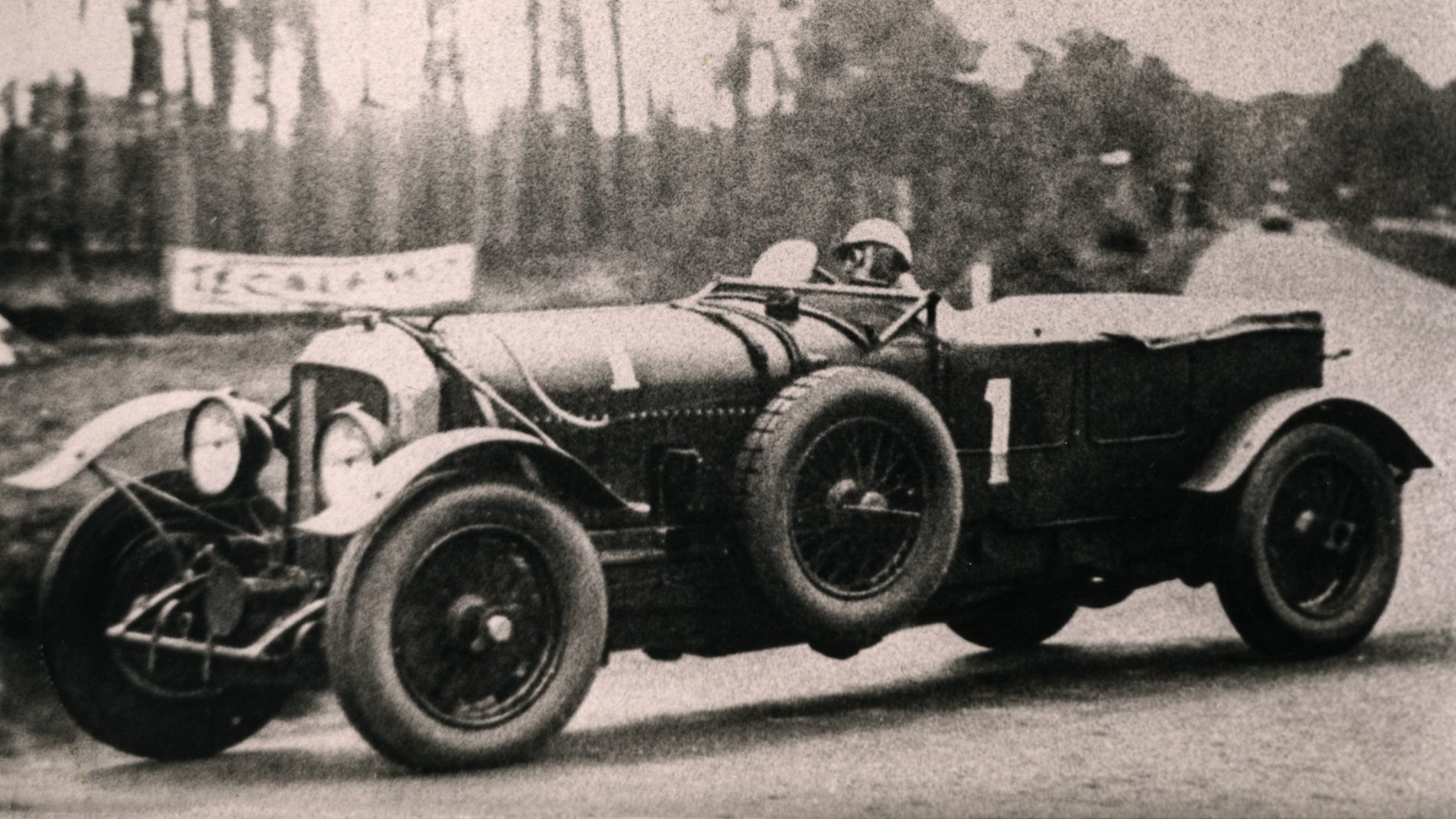
  1. 1929 Bentley Speed Six – Driven by the original “Bentley Boys” to consecutive overall wins in 1929 and 1930
  1. 1929 Bentley 6.5L/8L Old Number One Chassis Number: LB2332

    1951 Porsche 356/2 063 – The very first Porsche entered in the 24 Hours and class winner

  2. 1952 Mercedes 300SL W194 – The first German car ever to achieve an overall victory at Le Mans and is, to this day, the only Mercedes factory-built car to win Le Mans
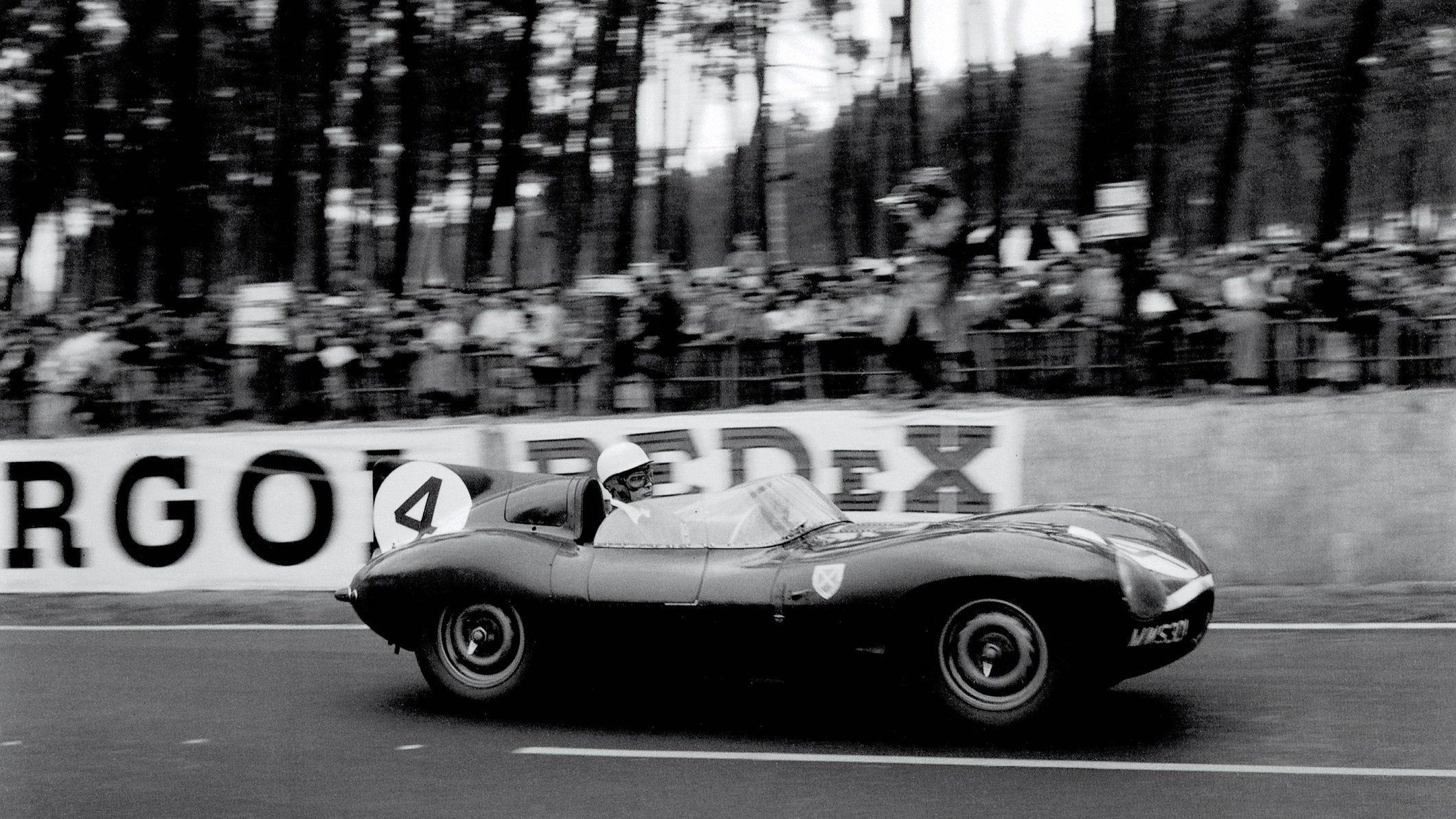
  3. 1955 Jaguar D-Type XKD – The 1956 overall winner, second of three consecutive overall wins for the D-Type.


  1. 1965 Ferrari 250 LM – The last Ferrari to capture overall honors in 1965
  2. The original Ford GT40s that dominated by winning overall in 1966, 1967, 1968 and 1969
  3. 1984 Mazda Lola T616 – The first-class winner for Mazda
  4. 2005 Audi R8 LMP1 – Overall winner and part of the string of Audi performance mastery
  5. 2007 Peugeot 908 HDi FAP – The most recent overall winner displayed

Besides these cars on display, another 12 run groups will be on track each day.

Group 1:  1923-1957 Le Mans cars. Such as Max Jamiesson’s 1957 Porsche 356, Chris MacAllister’s 1955 D Type Jaguar, and Nathanael Greene’s 1925 Bugatti 37A.

Group 2: 1955 to 1966 SCCA Production Cars. These cars run the gambit from Charles Nearburg’s 1965 Shelby GT350 to Anthony Rimicci’s 1965 Alfa Romeo GTA.

Lynn Park – 1964 Cobra

Group 3: 1955-1966 SCCA Sports Racers. A fast loud group that includes Gunnar Jeanette in a 1963 Elva Porsche to Michael Silverman’s 1959 Echidna Chevrolet Devin Special.

Group 4: 1955-1969 Saloon. Smaller GT cars such as Kevin Adair’s 1968 Ford Escort to a couple Mini Cooper S cars from Dennis and Donald Racine.

Group 5: 1956 to 1957 Le Mans. This group is comprised of quick, fast GT cars such as Robert Kauffman’s 1965 Ford GT40 to Ranson Webster’s 1961 Porsche Abarth Carrera.

Dave Hagan – 1967 Porsche 910

Group 6: 1958 to 1963 Formula Junior cars. Small open-wheel racers that are quick and great fun to watch. Look out for Danny Baker in his 1963 Lotus 27. Another quick driver car combination is Harinda de Silva in his 1962 Gemini.

Group 7: 1966 to 1985 Historic Formula One. These are the cars that bring a number of us out to the RMMR. Steve Romak’s 1985 Tyrrell F1 and Charles Nearburg’s 1981 Williams are two of the cars to keep an eye on. Another rare jewel is the 1976 Ferrari 312T2 driven by Chris Mac Allister.

Chris MacAllister – 1976 Ferrari 312 T2

Group 8. 1972-1982 Le Mans. Two places to watch these cars from is from turn 2. Cars like Zak Brown’s 1981 Porsche 935, Ken Epsman’s 1976 Dekon Monza or William Lyon’s 1973 Porsche RSR these guys pop over the turn 1 hill drop down into turn 2 sliding from inside to outside the turn accelerating down the short strait into turn three. Nose to tail, fender to fender, and loud. The ground vibrates under your feet as these guys power through 2. Fun, fun, fun.

Dennis Singleton – 1974 Porsche RSR

Group 9. 1974 -1979 Formula Atlantic. These cars are between the Group 6 Formula Junior cars and the Group 7 Historic Formula One cars in both size and speed. These guys go through turns as though they were on the preverbal rails. A couple cars and drivers ti watch, Dalmo De Vasconcelos 1976 Ralt RT-1 and Wade Carter’s MARCH FA or Danny Baker’s Ralt RT1.

Danny Baker – 1979 Ralt RT-1

Group 10. 1981-1991 IMSA GTO, and Trans-Am. Braking into larger cubic inch engines in this group combined with a few smaller cubic inch but high technology engines. Big cubes John Goodman’s 1988 Chevrolet Corvette. Smaller cubes combined with high technology Tom Long’s 1991 Mazda RX7-GTO.

Group 11. Historic Trans-Am. Big loud cars with lots of movement on track. Keep your eyes on Bruce Canepa in his 1970 ex-Penske AMC Javelin and Jeffrey O’Neill in his 1969 Mustang Boss 302. Often the best racing of the day. Place yourself up in The Corkscrew to watch these guys pop up over the rim then drop down the hill. The noise and vibration shake the leaves off the oak trees.

Group 12. Le Mans Prototypes 1981 – 2005. These are the cars to watch. Fast and beautiful. Try turn 4 or turn 5. These guys come screaming into the turn drop the anchor, slide around the corner then use their blistering acceleration to jump to the next turn. Two cars and drivers that combine the speed and handling of these cars to produce a smooth fast lap are Tom Dooley in his 1988 Porsche 962 and Ernie Spada in his 1981 Lola T600.

Tim Park – 1964 Cobra

As a final note: RMMR runs on track from Wednesday, August 17th through Saturday, August 20th. Sunday, August 21st for the first time in WeatherTech Raceway history invited cars will run counterclockwise up the hill from turn 11 through turn 8.

According to Monterey Motorsports Advisory Council member Bruce Canepa, the hill climb will be spectacular. “There are several cars I’m considering entering,” he says. “I’ve raced several times at the Goodwood Festival of Speed, yet doing it at Laguna Seca up the Corkscrew is an unprecedented experience that’s really going to be exciting. I don’t know who will enjoy it more, the drivers or the fans.”

“The Corkscrew Hillclimb concept emerged as a fun way to engage new fans visiting for the day, while allowing Rolex Reunion entrants and families a chance to unwind and enjoy the experience in a relaxed environment after four days of racing,” added Narigi. “Families and our community are encouraged to attend this event, as it’s a wonderful way to experience everything WeatherTech Raceway has to offer in an informal setting after an action-packed Monterey Car Week.”

There will be two hill-climb sessions culminating in a People’s Choice Shootout to crown the overall inaugural winner. The limited sessions will be open to 60 cars that competed in the historic races, along with selected special interest vehicles.

Along with the Hill Climb will be a paddock filled with Cars & Coffee, Lexus VIP Safety car rides, an open paddock of historic race cars, Le Mans Legends cars on open display, all with music.


Source link

COMO Cocoa Island: Where Stranded-on-a-Sandbar Meets Luxury

0


Dhoni Water Villa

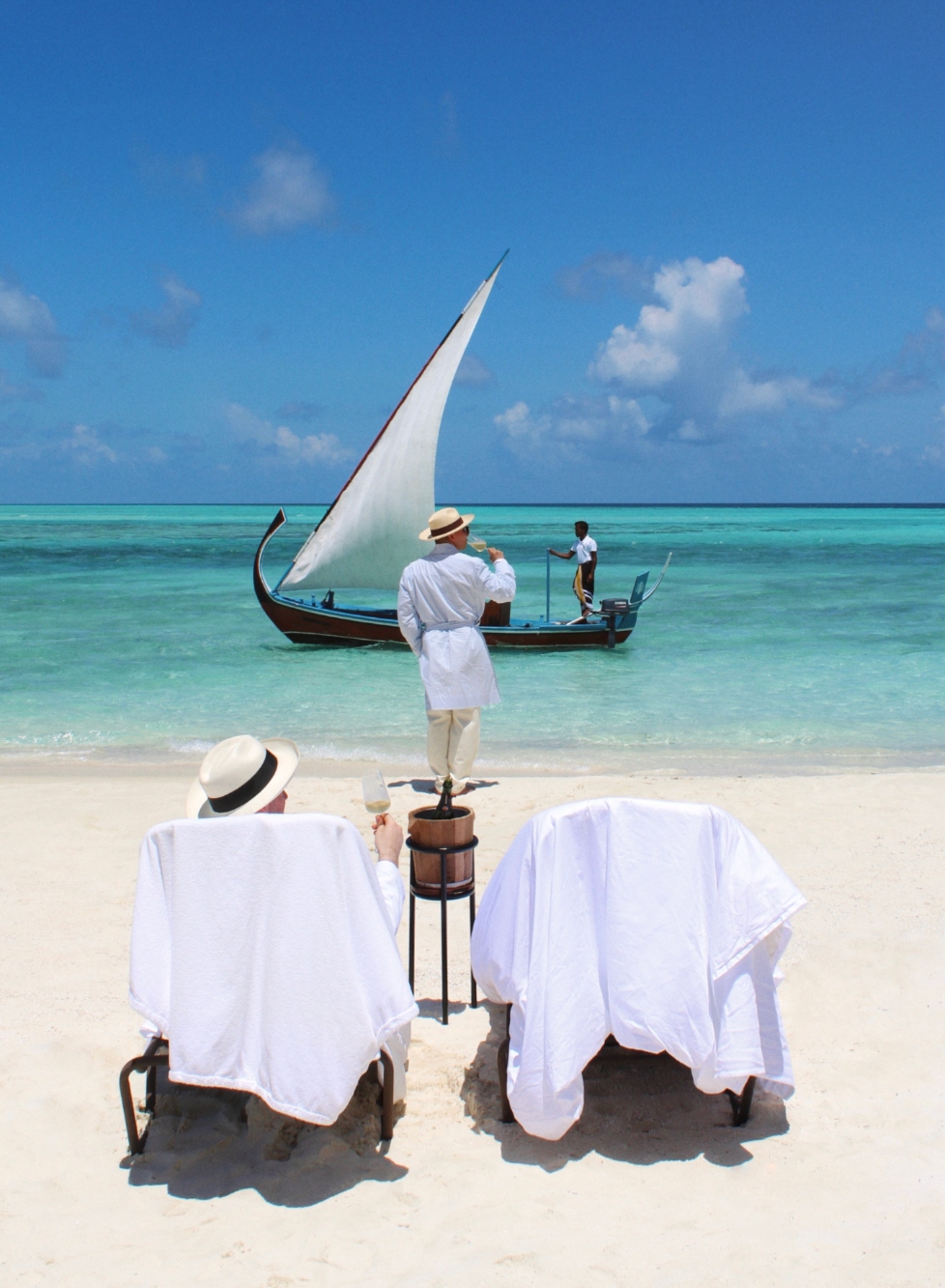
Imagine being shipwrecked — but instead of building fires with coconuts and arguing with volleyballs, you’re sipping turmeric tonics in an open-air spa pavilion while someone expertly unkinks the stress you didn’t even know you had. Welcome to COMO Cocoa Island, the Maldives’ most tasteful answer to “oops, I guess I live here now.”

This isn’t just a resort; it’s a fever dream for design lovers who think “barefoot luxury” should still involve Egyptian cotton and artisanal bath salts. The villas, designed to look like traditional dhonis, float above a sapphire sea with such effortless elegance, it’s like they were summoned by a mood board called “Zen Millionaire.” Inside, think serene whites, driftwood tones, and just enough high-end minimalism to make you feel both relaxed and vaguely superior.

The agenda here is simple: do as little as possible, but do it beautifully. Float off your worries over the coral-flecked house reef, where even the fish seem to glide slower out of respect for the vibe. Then get professionally melted at the COMO Shambhala spa, where the massages are equal parts treatment and spiritual intervention. Warning: after an hour of Ayurvedic oil rituals, you may struggle to form full sentences.

Three Bedroom COMO Sunset Villa (left) Candlelit Beach Dinner (right)

Dining is delightfully uncomplicated — unless you count trying to choose between the charred reef fish with coconut sambal or the lime leaf curry that could make a monk weep with joy. Vegan? Gluten-free? Carnivore with a taste for extravagance? Ufaa’s got you. Bonus points for cocktails strong enough to make you believe you could live on an island forever and write your memoirs under a palm tree.

Shoes are not exactly discouraged, but let’s just say the sandy paths and teak walkways don’t love a stiletto. Embrace the barefoot mandate and channel your inner boho billionaire.

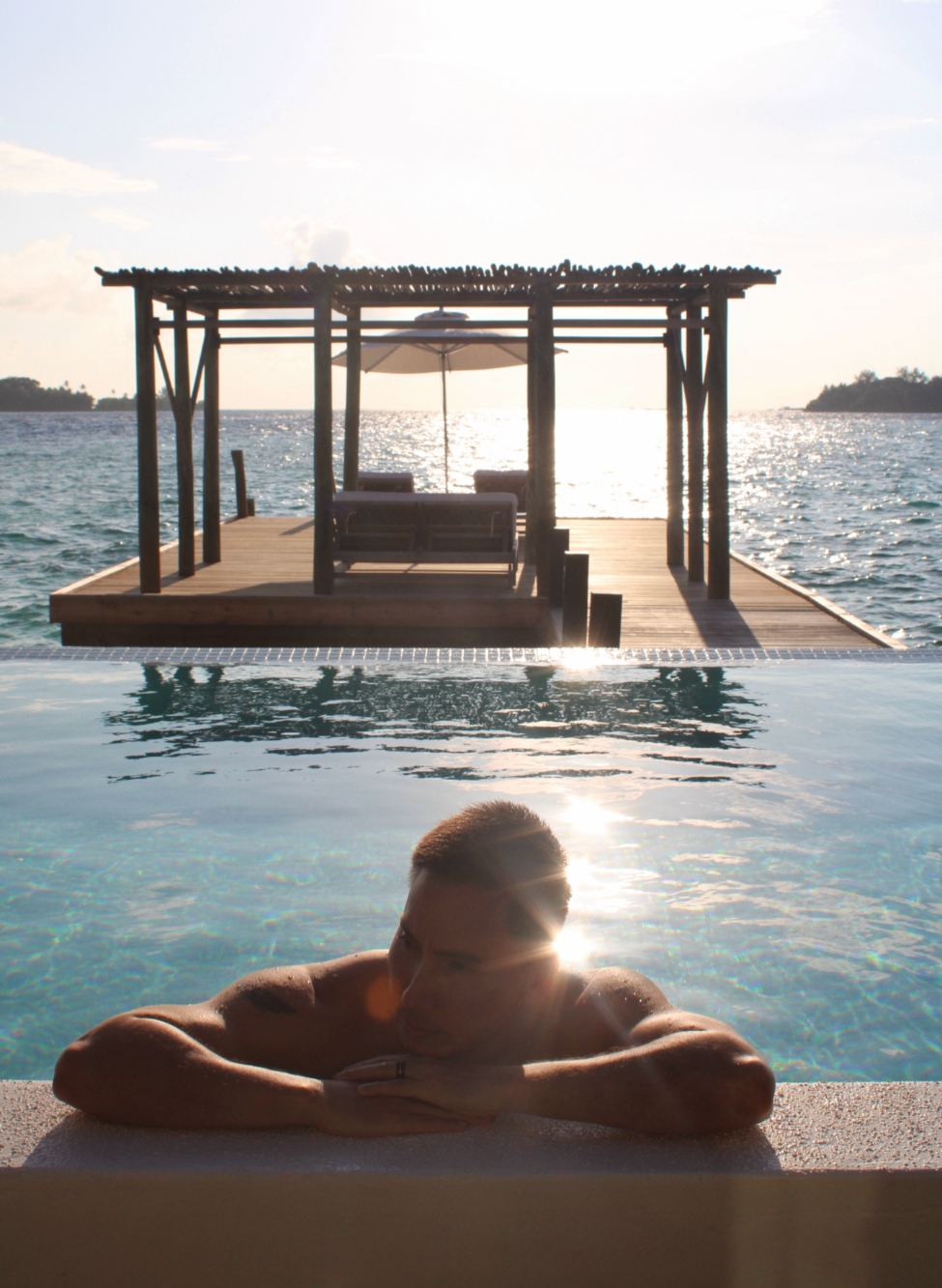
One Bedroom Water Villa with Pool

Accommodation ranges from the “I could get used to this” to the “why isn’t this my actual life?” — with the Dhoni Loft Villas offering split-level living that screams “honeymoon without the clichés” and the larger one-bedroom escapes providing the kind of seclusion that makes you wonder if you’re still technically on Earth. Pro tip: the western-facing villas offer sunset views so good, you’ll want to propose to someone, anyone.

Aerial Poolside

Sustainability is not just a buzzword here — it’s baked into the resort’s DNA. From reef restoration efforts to community engagement with local islands, COMO manages to make being virtuous feel as chic as ordering truffle fries with your green juice.

Three Bedroom COMO Sunset Villa Outdoor Deck

Even the resort’s poolside bar feels like a low-key Bond set: all teak, torchlight, and sultry soundtracks. Whether you’re nursing a post-snorkel smoothie or a dangerously handsome negroni, it’s the kind of place where time politely stops.

Bottom line? COMO Cocoa Island is less “escape” and more “elevated existence”. Bring someone you love (or just really like), leave your email behind, and prepare to redefine your idea of paradise — preferably while wrapped in a sarong and sipping something with a tiny umbrella in it.

COMO Water Villa Aerial

For more on the latest in lifestyle, culture and travel reads, click here.


Source link