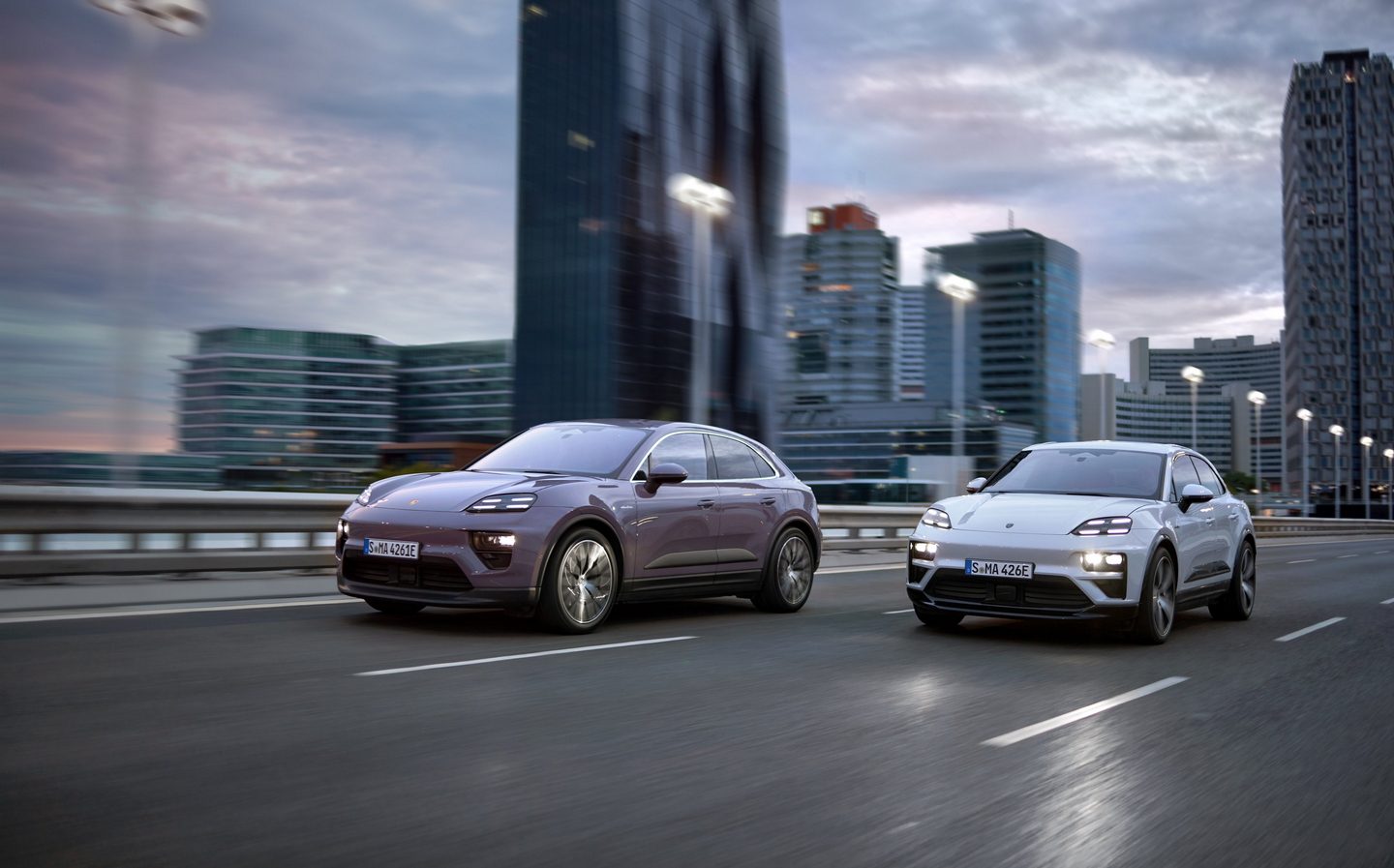
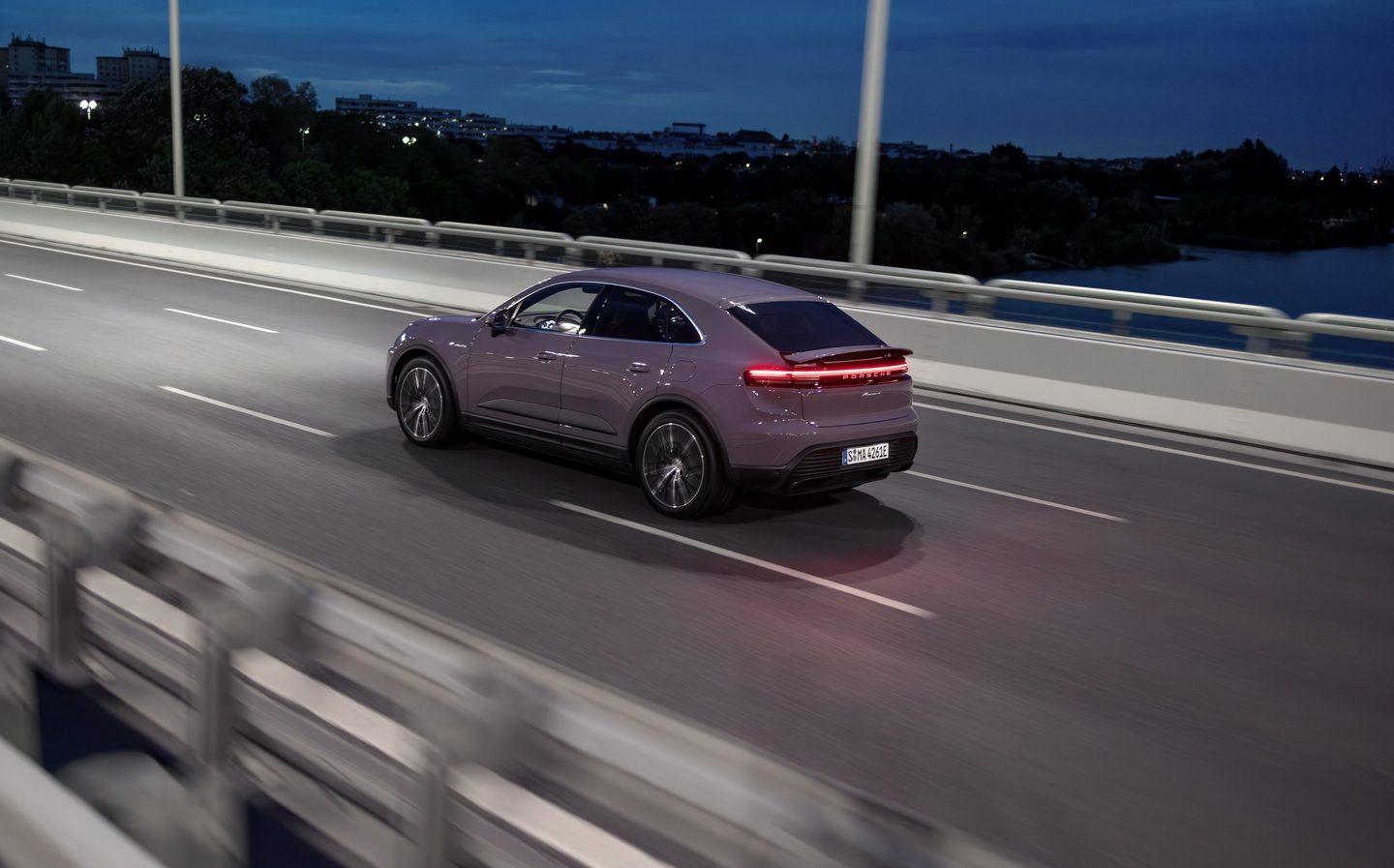
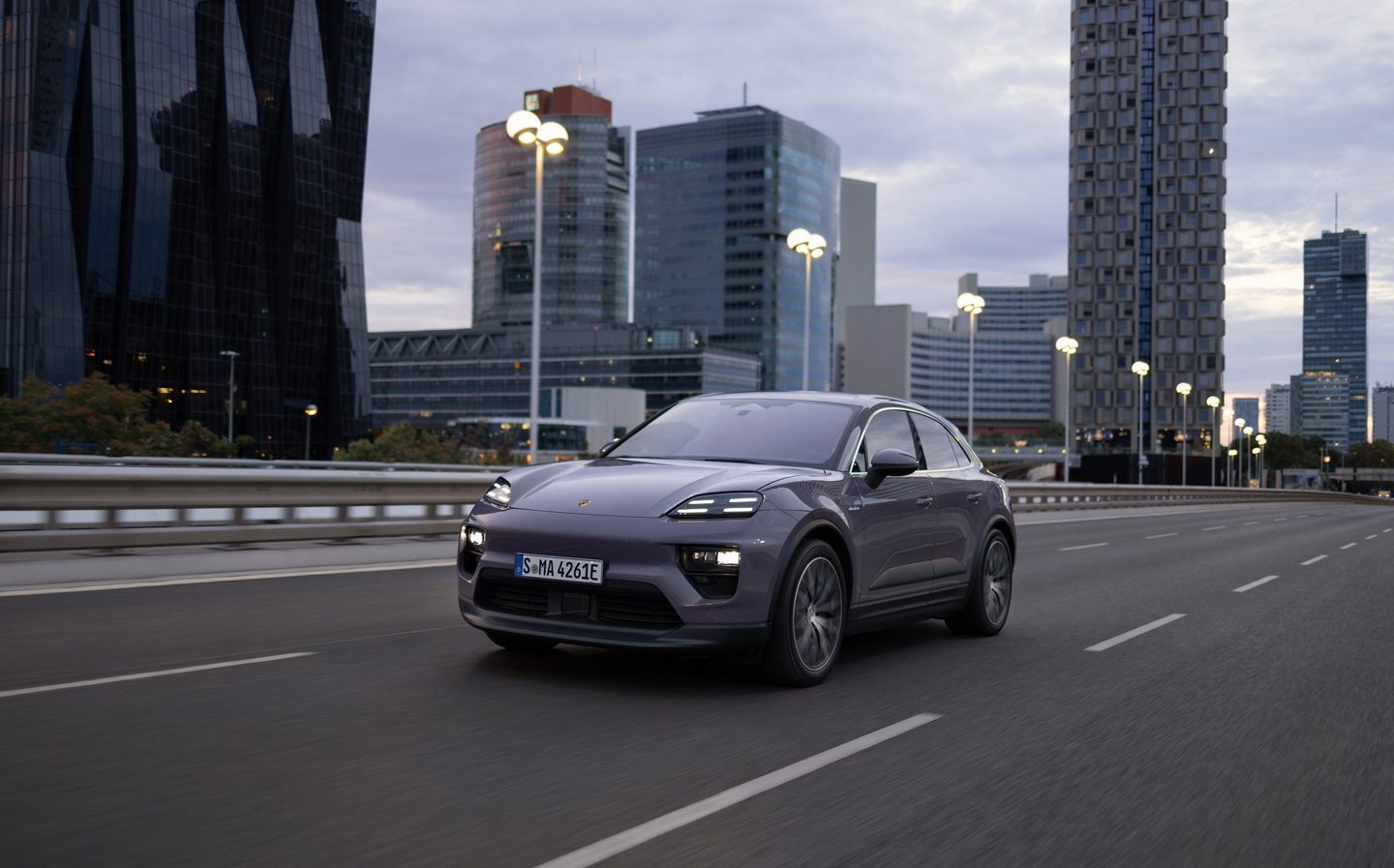
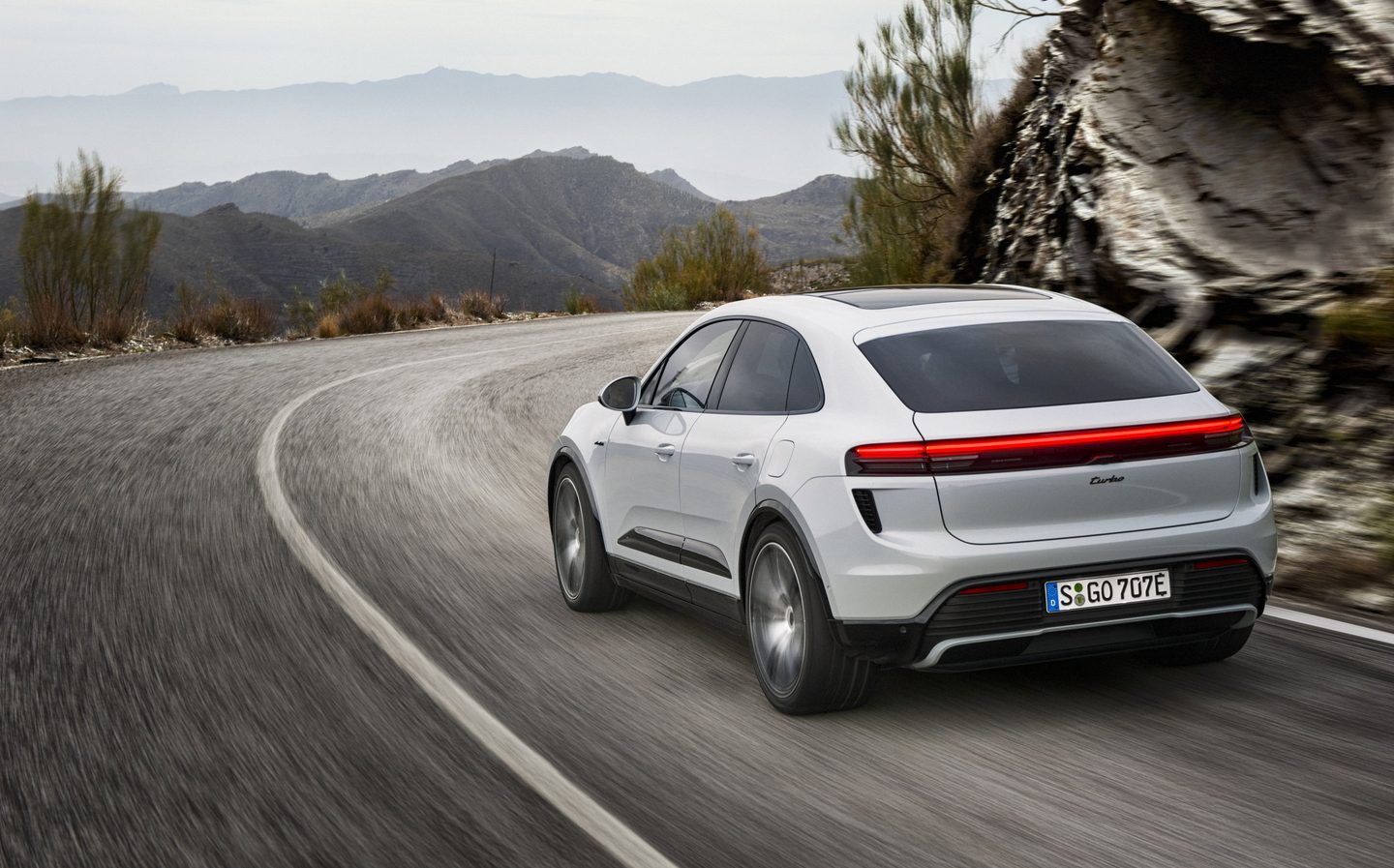
Porsche has taken the wraps off the Macan EV. The all-electric version of the brand’s baby SUV is its second pure-electric model, after the Taycan. At launch, it will be available in two variants – Macan 4 and Macan Turbo.
The Macan EV is based on Porsche’s Premium Platform Electric (PPE) with an 800-volt architecture. The 100 kWh battery pack offers a maximum range of 380 miles in the Macan 4 and 367 miles in the Macan Turbo (WLTP cycle).
The Macan EV supports up to 270 kW DC fast charging. Porsche claims the battery can be charged from 10-80% in 21 minutes at a fast-charging station.
Both the Macan 4 and Macan Turbo have all-wheel drive with electric motors on each axle and air suspension. The base version has 402 hp and 479 lb-ft torque. It can sprint from 0-60 mph in 4.9 seconds and has a top speed of 136 mph. The Macan Turbo packs 630 hp and 833 lb-ft of torque and achieves 0-60 mph in just 3.1 seconds. It can reach a top speed of 161 mph.
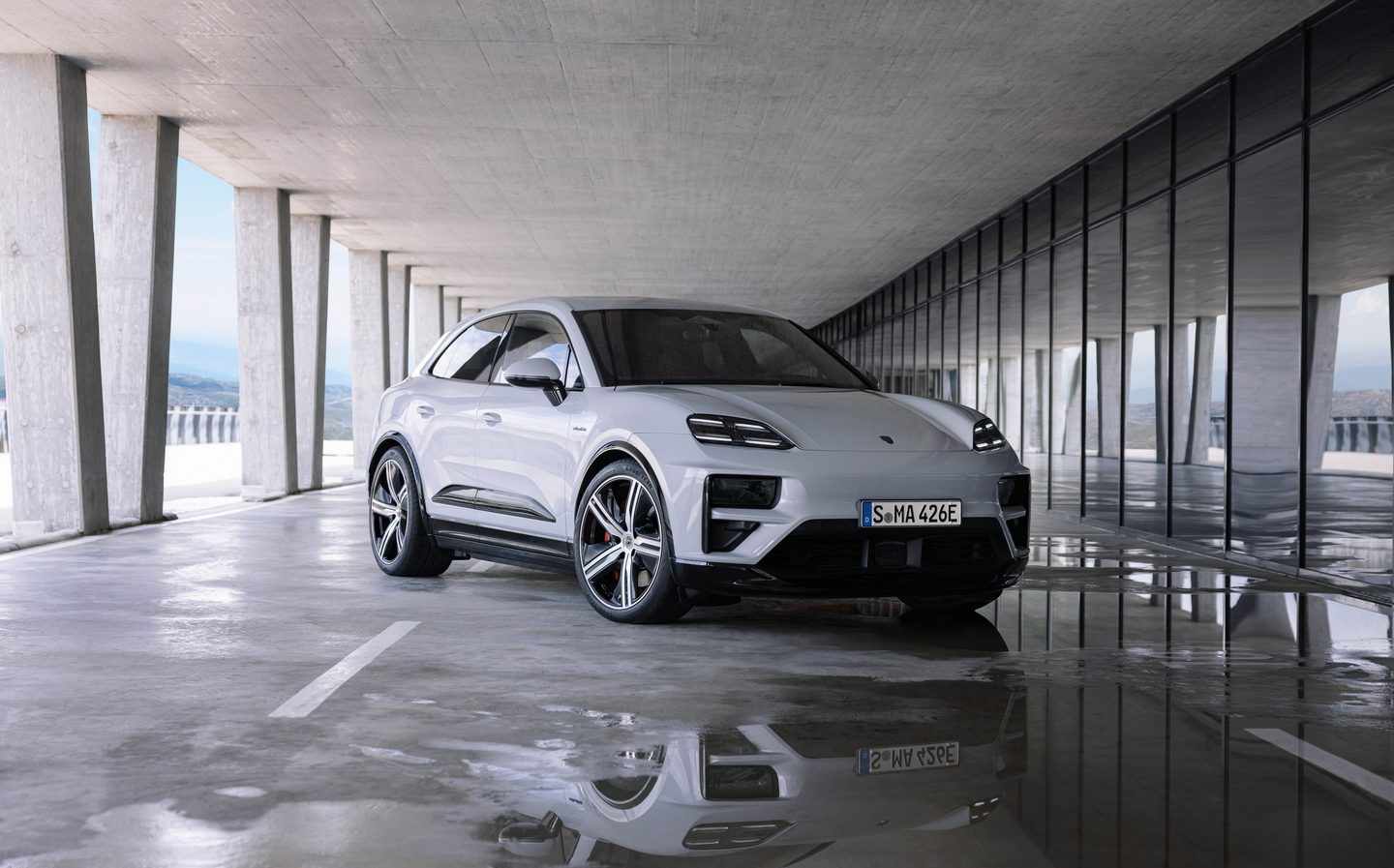
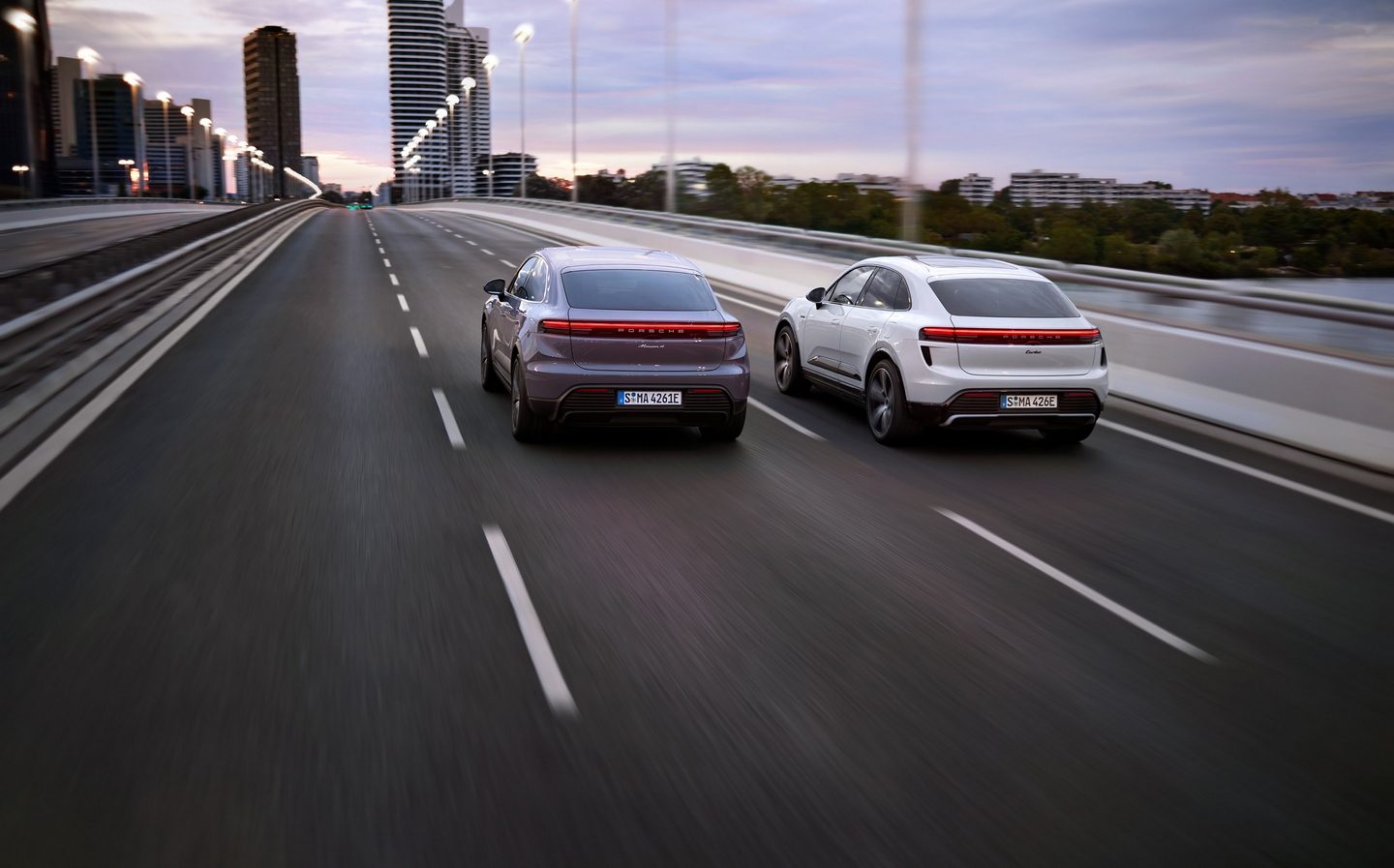
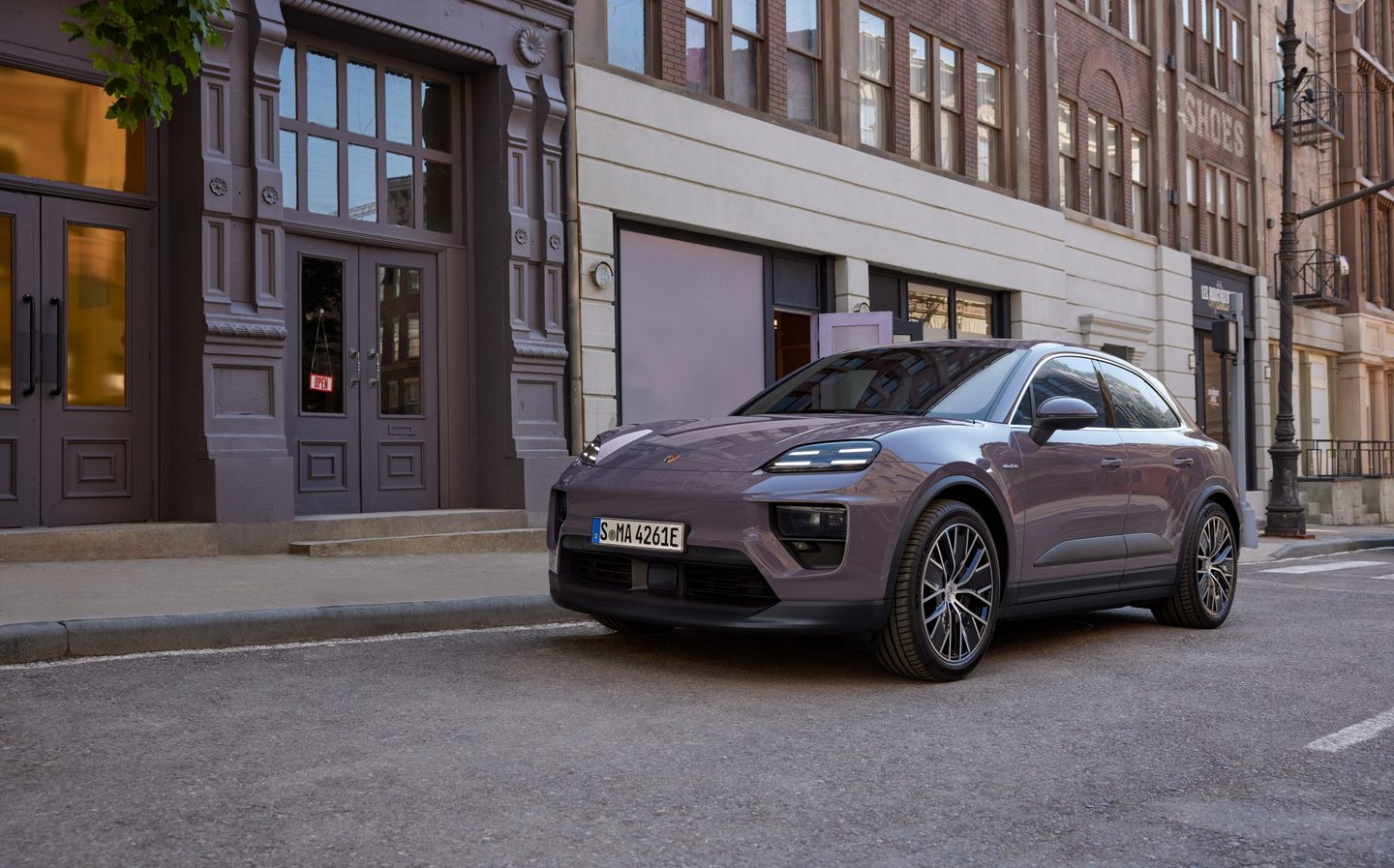
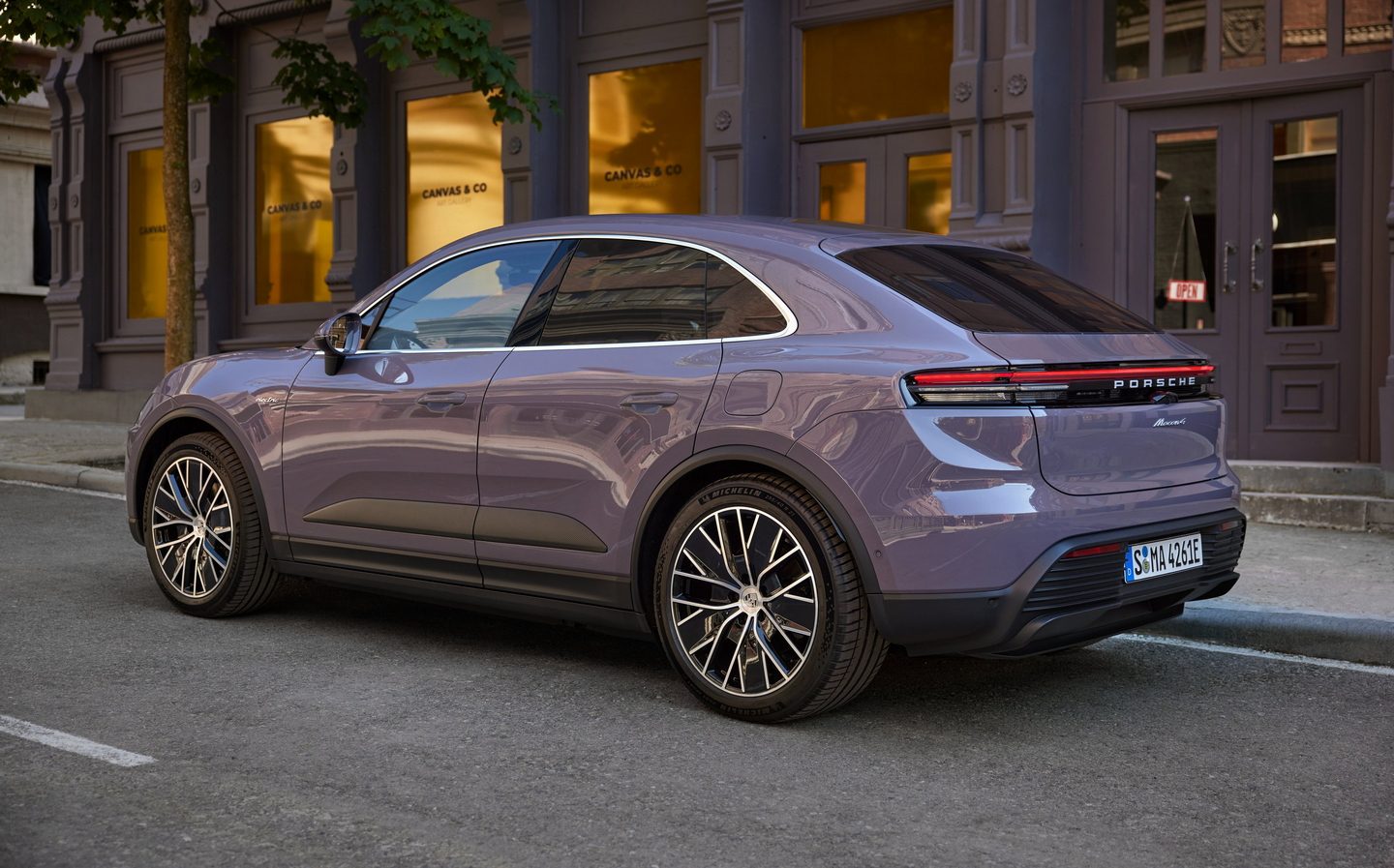
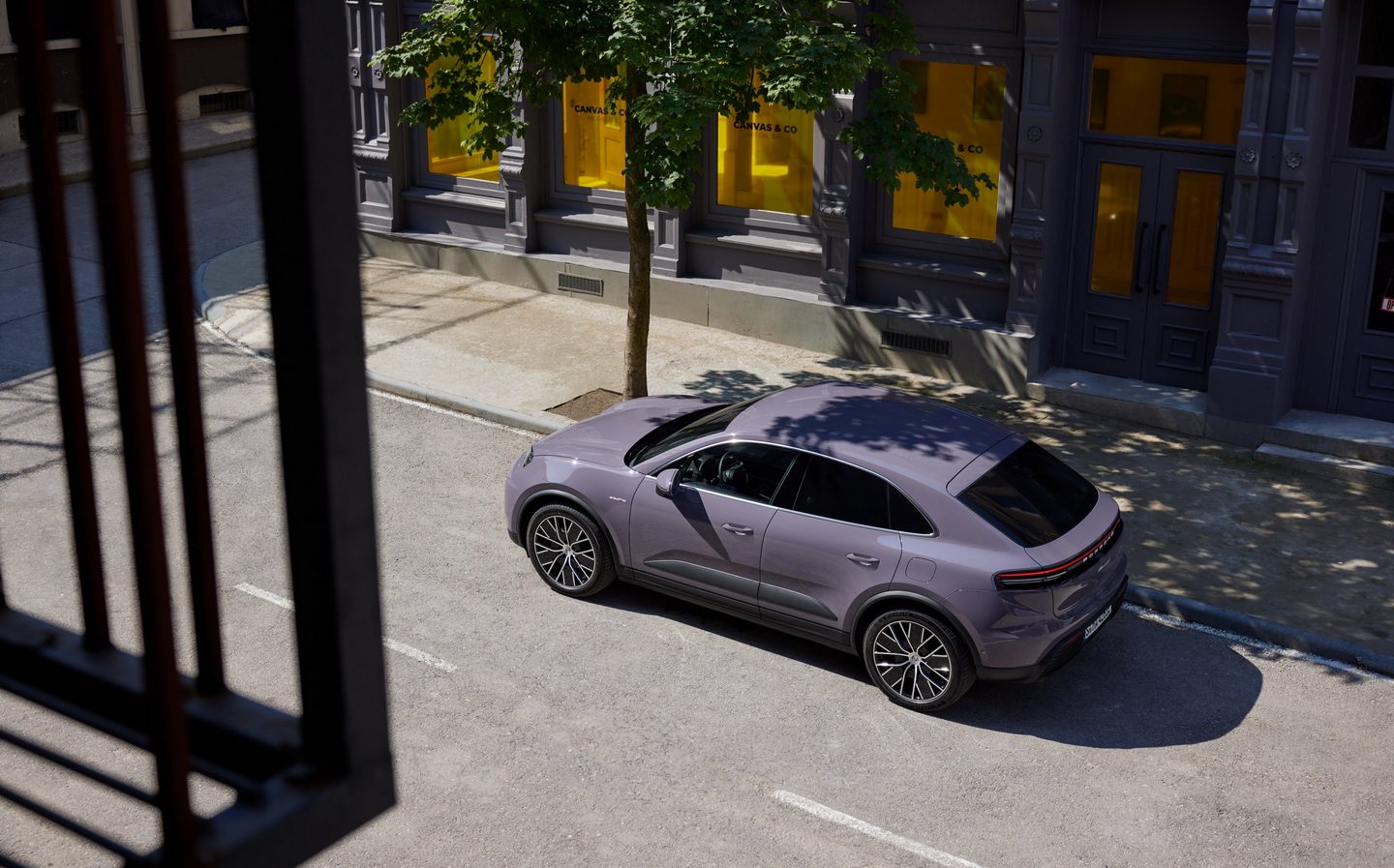
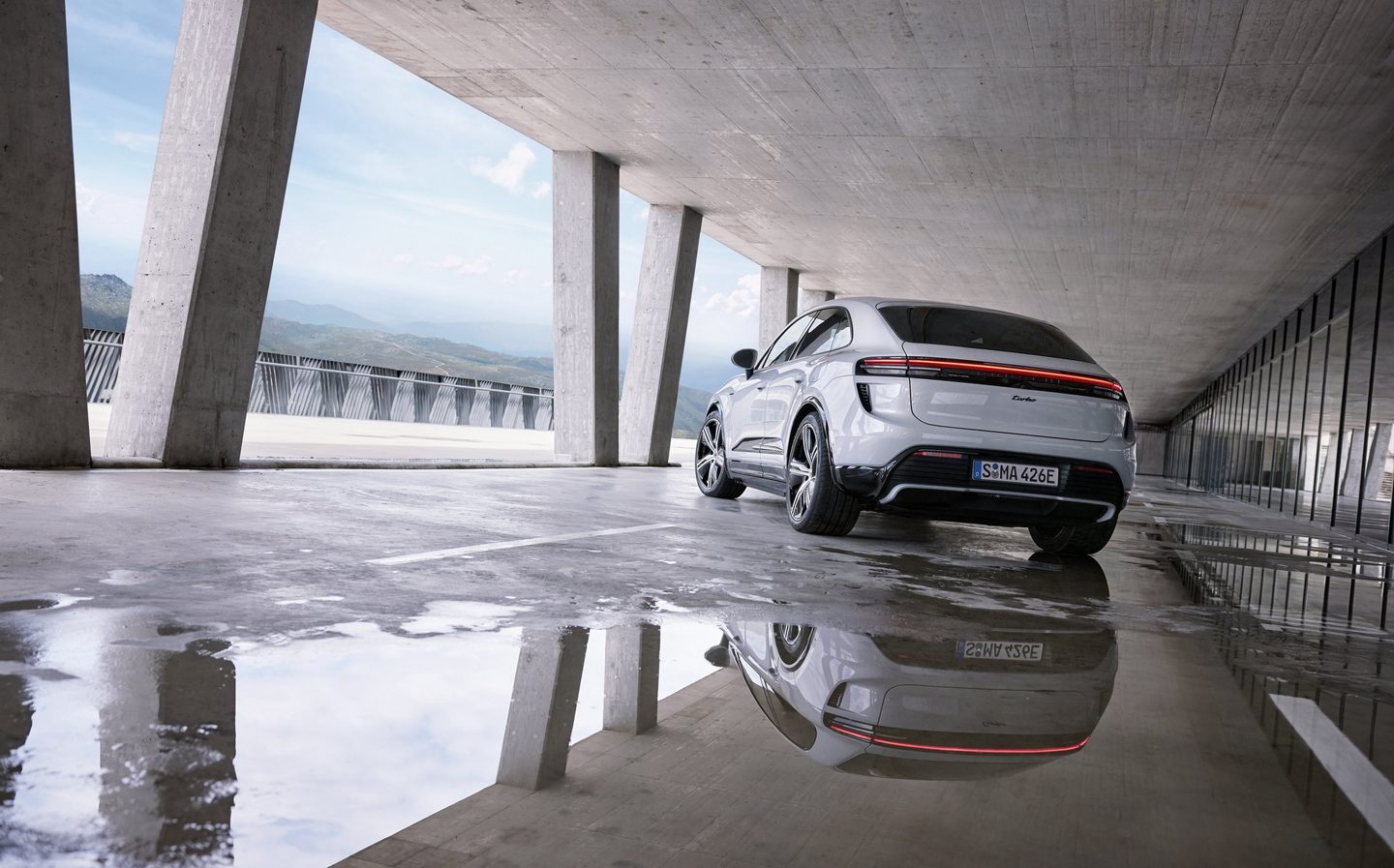
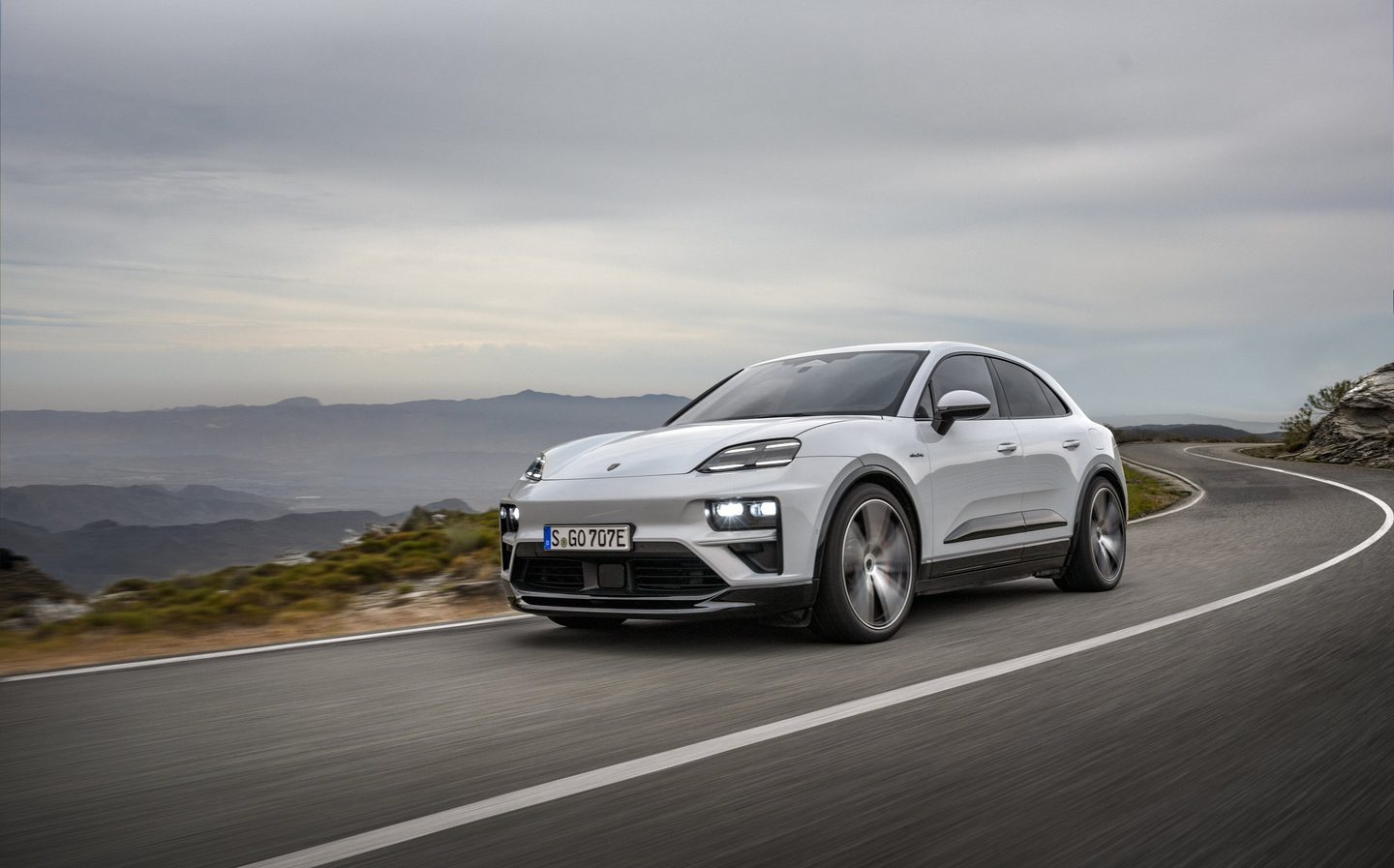
The Porsche Macan has entered the second generation with the all-electric model. While the design has been updated, it still looks unmistakably like a Macan. It features horizontal quad-LEDs up front adopted from the Taycan and a sporty front bumper with active flaps. The car has a coupe-like roofline and an active rear spoiler. Sleek LEDs adorn the rear, along with an LED light bar.
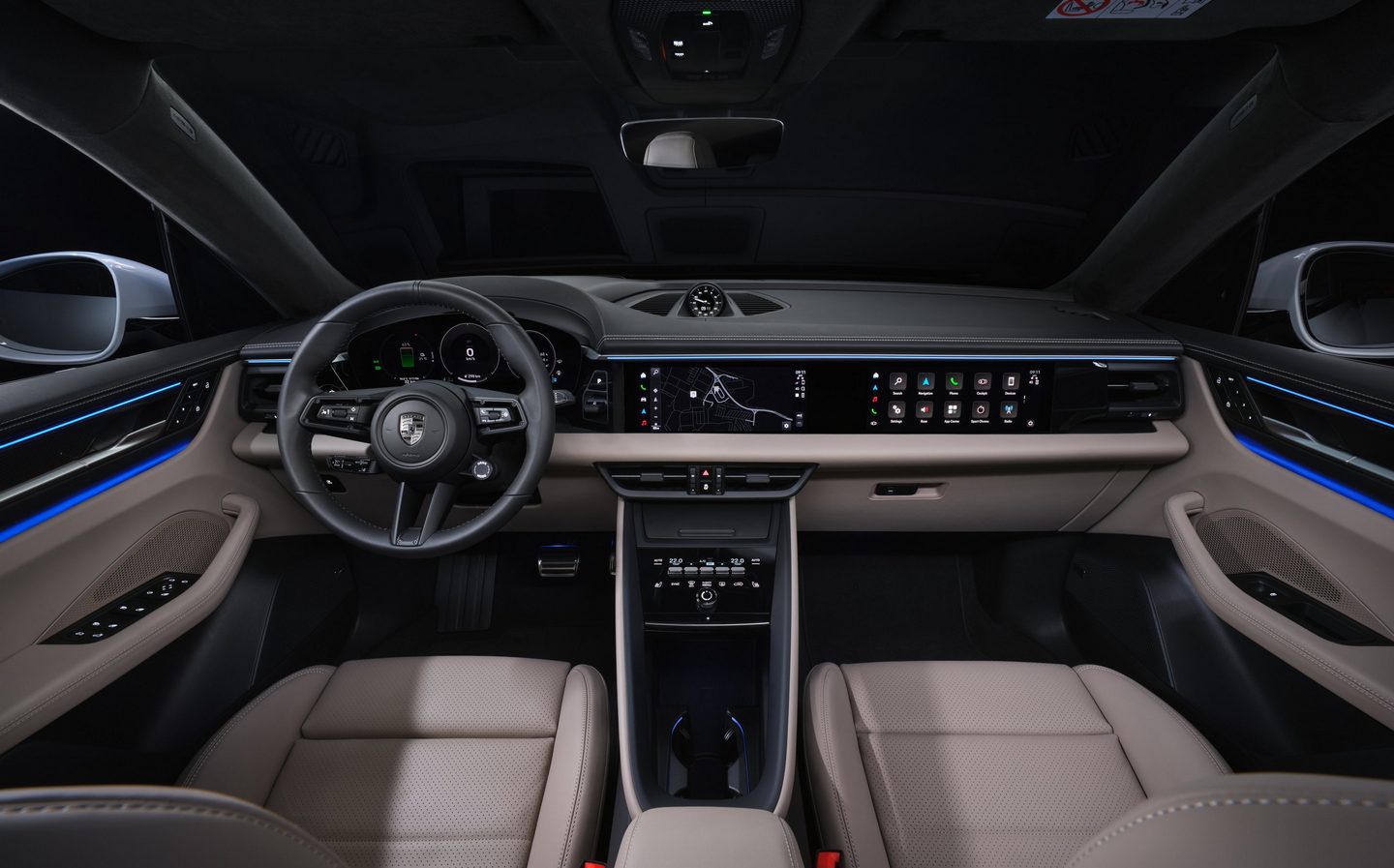
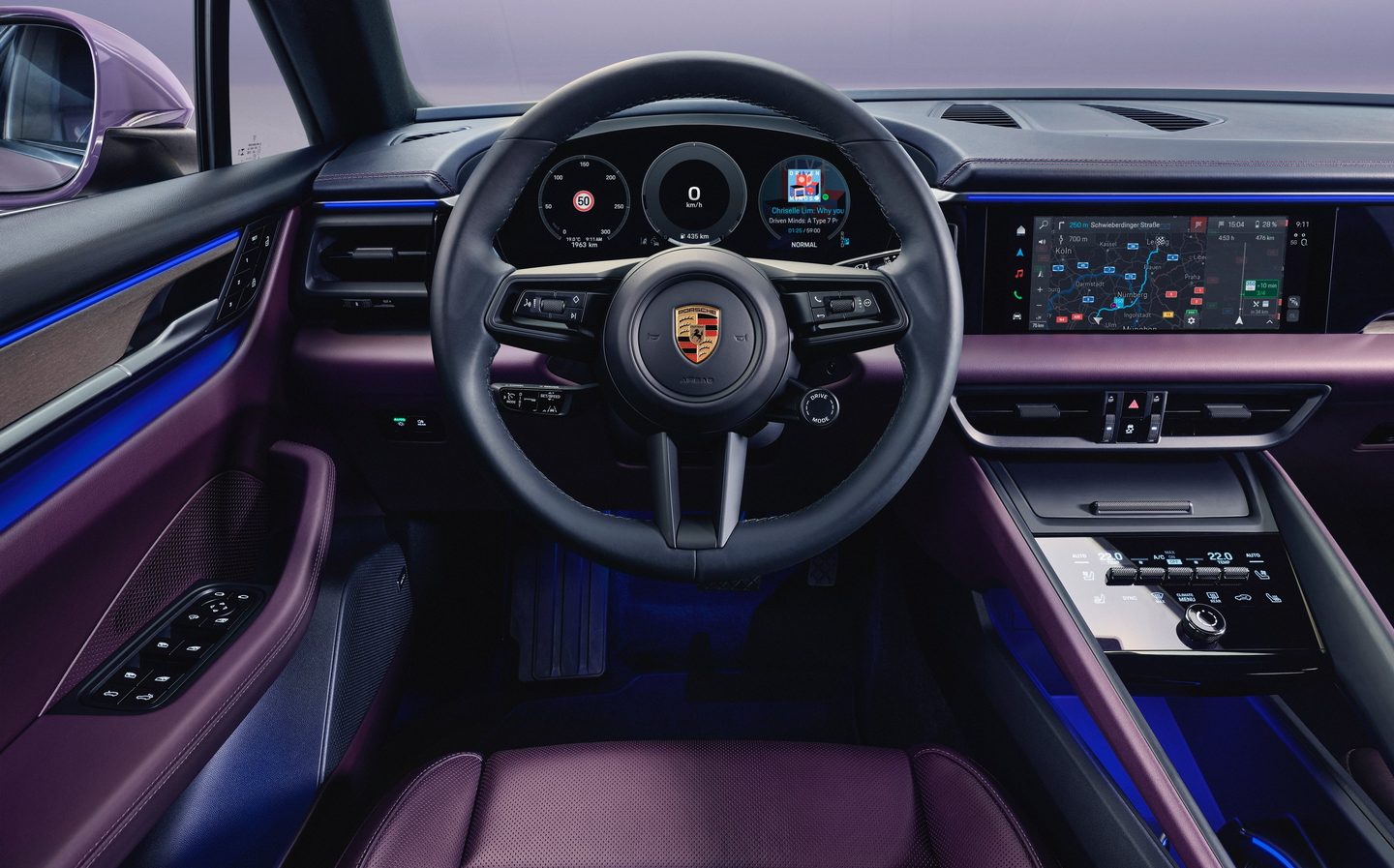
The interior of the Macan EV looks minimalistic with simple lines. The car gets a free-standing 12.6-inch, curved-design instrument cluster and a 10.9-inch central display.
Prices for the Macan 4 start at $78,800, while the Macan Turbo is available at a base price of $105,300.
If there were ever any doubts that Porsche had little concern for the EV revolution—and that the Taycan would be a one-off compliance measure within it—then the new Macan EV will be putting all of them to bed.
Not only does the new Porsche Macan EV signal the automaker’s intent to legitimately scale their fully-electric business line, but it’s also poised to make a statement on how to “do EV the right way”, particularly within the immensely popular (and lucrative) compact SUV segment that has made the Macan Porsche’s best selling vehicle.
We’ve spoken before about how the Taycan—as the company’s very first EV—would serve the important role as a trailblazer and benchmark setter, and that it would require some brave early adopters with relatively deep pockets to take the plunge. The upcoming (and yet-to-be officially announced) Cayman/Boxster EVs will ultimately become a niche within a niche, given the car’s inherent design language and intended audience. There’s also an all-electric Cayenne in the works, and according to Porsche CEO, Oliver Blume, “much more to come” as well.
In the Porsche Macan EV, the German luxury car brand now has the opportunity to propagate its zero-emissions philosophy to the masses. While the Taycan has paved the way, and the Cayman/Boxster EVs will generate more hype when they arrive, it’s the Macan EV which will ultimately become the work-horse during Porsche’s trajectory towards achieving widespread commercial success in this new era of electrified transportation.
Making its official debut in Singapore today and broadcast globally via livestream, here’s what was revealed about the new all-electric Porsche Macan.
e-Performance & Range
All Macan EV models will come standard with a 100 kWh battery pack, of which roughly 95 kWh will be usable. This is an all-around improvement over the Taycan, which provides 83.7 kWh of usable energy from its 93.4 kWh Performance Battery Plus. Improved charging technology also means it can take in up to 270 kW at an 800-volt fast charging station, allowing the all-electric Macan to replenish a SoC from 10% to 80% in just 21 minutes.
With the Macan 4 and Macan Turbo serving as the initial launch models, all-wheel drive will also come standard, at least for the time being. This consists of a dual motor configuration, with one motor powering the front and rear respectively. That means the door remains open for the release of a possible single motor Macan EV—in following with the rear-wheel drive Taycan—which could serve as a more accessible base model with a lower cost of entry.
In terms of power output, Porsche decided to provide benchmarks based on the range-topping Turbo variant which produces 450 kW (604 hp) and 1,130 Nm (833 lb-ft) of torque. Porsche claims that the all-electric Porsche Macan Turbo can sprint from 0-60 mph in just 3.3 seconds and hit a top speed of 260 km/h. Corresponding specs for the Macan 4 were not provided during the unveiling, but the Porsche execs did hint that all of the current Macan offerings are sub-4-seconds-capable, so I’ll leave the reverse engineering up to you.
They were a little less coy about range, revealing that both the Macan 4 and Macan Turbo will regularly achieve more than 500 km of range, with the former and latter having a maximum range of 591 km and 613 km respectively. It was said with some authority too, having aggregated over 3.5 million kilometers of test-driving in various conditions over the past few months.
Chassis & Electronics
It drives like a Porsche”
– Timo Bernhard, Porsche brand ambassador and former racing driver
That’s the message made loud and clear (and with few, but effective words) when describing what the Macan EV offers in terms of engagement. Besides a glowing endorsement—albeit from a perfectly credible source—there wasn’t much detail given in this department, so we’ll just have to take Timo’s word for it and/or wait until automotive journalists get their hands on them.
However, the usual suspects should be expected here, with features such as torque vectoring, adaptive air suspension, PDCC, and ceramic brakes all remaining part of the (optional or standard) furniture. We do know that the rear spoiler is adaptive and the underbody is completely flat and smooth. Notably, Porsche also claims that the Macan EVs will have a 2,000 kg towing capacity, but did not specify if there is a distinct towing mode that can be selected or how range might be affected.
Design & Interior
One of the key features of the new Macan is its improved aerodynamics—a crucial element in the overall performance and viability of an electric vehicle. Porsche says that a more streamlined design has resulted in a 0.25 Cd, which is an improvement of over 0.1 Cd versus the outgoing design. All else being equal, this equates to around 85 km more range on the new body style.
Purpose. Attention. Focus.
Those are the 3 key words bringing life to the design, according to VP Porsche Style, Michael Mauer. From a visual perspective, it’s all about minimalism meeting functionality. In the Macan EV, there’s a utilitarian package encapsulated by a sporty silhouette, which in complimenting the outgoing model, isn’t a significant shift in direction. However, there are distinct Porsche EV design cues being showcased now, not least of all with the headlight design clearly borrowed from the Taycan. Looking closer at the details, it’s evident that the Turbo models have more aggressive exterior styling, highlighted by larger inlets in the front and additional air ducts integrated into the rear bumper, though I’m not sure if this is in any way functional or purely for visual theater.
Performs like a Porsche. Behaves like a smartphone.
That’s the company’s philosophy driving an experience that they say, will provide performance on the road and in the digital world as well. Showcasing this is an augmented reality heads-up display—a first for Porsche—headquartered by the curved digital display which is becoming a fixture in all new and upcoming Porsche vehicles. There’s also an App Center which allows for 3rd party apps to be downloaded, providing a new level of personalization to Macan ownership. Porsche also claims that the new Macan’s “exceptional charging management” will help make the practice of charging more easy and convenient than ever before.
Now that there’s a “frunk”, it was duly mentioned during the unveiling, and it provides around 84 L of cargo capacity—ample room for a travel bag or charging peripherals. Interestingly, there were no details given with regards to total cargo room, though we expect it to be similar to the outgoing model’s 1,708 L. For customers really looking to channel their inner eco-warrior, some of the interior components can be optioned using sustainable materials, such as vegan leather and recycled polyester. Additional body colors are also being introduced to further highlight the Macan’s renewed aura.
In essence, Porsche’s goal was to build the most sporty and forward-thinking SUV in the segment. All signs point towards them really hitting the mark on that.
More To Come
We’re still awaiting official pricing information and expected delivery dates. In fact, there’s still much to be revealed with regards to the new all-electric Porsche Macan. Stay tuned for more—updates will be provided as more details trickle in.
For those wanting to fast-track their news straight from the source, you can sign up for the All-Electric Macan Insiders newsletter, here.
There’s one thing most people don’t really understand about Turkey: It’s a huge country. I didn’t comprehend its size until I started traveling around it and learning more about the culture. Unsurprisingly, thanks to its size, there are some amazing things to do in Turkey; you just need to know the best spots to head to. Planning ahead can make your trip far more enjoyable, and much less stressful.
If you want to do the very best sightseeing in Turkey, you need to be organized. I lived in Turkey for a few years with my husband, and I still visit very regularly now; I know just how important it is to have a plan in this country if you don’t want to miss the good stuff. You should also be aware of the fact that barely anything runs on time…
The great news is that getting around Turkey is pretty easy, mainly thanks to fantastic buses and domestic flights. No matter where you visit in Turkey, each part is distinct and has its own unique feel; the southwest coast is Westernized and modern, and the central and eastern parts of the country are a lot more traditional. But that’s just what makes it so special, right?
Best Things To Do in Turkey
Turkey is about far more than just beaches; it’s packed with culture, architecture, history, food, and nature, and the list just keeps going. I’ve traveled around this country a lot, and while the obvious Turkey attractions should definitely be on your visit list, there are some lesser-known gems that you should make time for too. Let me share my wisdom and hopefully, help you explore as much of this amazing country as possible.
1. Explore Istanbul
Exploring Istanbul‘s top sights is one of the best things to do in Turkey, and I recommend carving out at least three days to do this. I love Istanbul; it’s one of my favorite cities in the world – I don’t imagine ever growing tired of it, even after visiting more times than I can count on two hands. But you need to be organized if you don’t want to miss the best tourist attractions in Turkey.
I’m talking about the Blue Mosque, Hagia Sophia, Topkapı Palace, Basilica Cistern, Grand Bazaar, and Dolmabahçe Palace. When visiting Istanbul, you have to make peace with the fact that you’re not going to see the entire city in one visit, but you can immerse yourself in its vibrant feel and, of course, its amazing nightlife and delicious food.
To get the most done in the shortest amount of time, I recommend a sightseeing walking tour. The traffic in Istanbul is just the world’s biggest nightmare; I’ve genuinely been sitting in it for more than six hours at a time, and it’s not something you want ruining your time; taking a walking tour is a great way to avoid this and see some top sights at the same time. Click here for more information and to book.
2. Spend Time on a Mediterranean Beach
Turkey’s beaches are the stuff of legend. For me, there’s nothing better than spending a hot summer’s day chilling on a beach, splashing in the sea to cool down, and topping up my tan. The entire south coast is full of fantastic beach spots, but I think Antalya has some of the best, with Fethiye taking the runner-up spot; Ölüdeniz’s Blue Lagoon is one of my favorite beaches in the world.
There are many things to do in Turkey for families but beach time is a top option. Most large beaches have water sports, parasols, and sun loungers, often with beach bars close by, making it easy to grab refreshments throughout the day.
If you want to see one of the most stunning beaches you’ll ever set your eyes on, head to Kaputaş Beach between Kaş and Kalkan. Alternatively, Cleopatra Island near Marmaris is another spot that will take your breath away. Click here for tour details.
3. Hike the Lycian Way
The Lycian Way is a long-distance hiking trail that stretches from Fethiye to Antalya. It features some of the best things to see in Turkey along the way and some truly stunning views, taking you along the coastline of ancient Lycia. While the full 520km (320 miles) might be a bit difficult to follow during a visit, you can walk a portion of it and still get the same feel as you pass old ruins with serious character.
It can be hard to follow the trail alone, so I took a walking tour with other people. I highly recommend doing this; not only do you learn a lot more about what you’re seeing, but you get to make new friends along the way. Click here for tour details.
If you choose to spend a few days on this trail, there are several villages on the way with accommodation and small cafes and restaurants. This is definitely one of the best hikes I’ve ever done, and it’s easygoing most of the way, so is perfectly fine for beginners. Despite that, I wouldn’t recommend it during the peak summer months; stick to April-May or October-November for easier conditions.
4. Step Back in Time at Ephesus
Hands down, one of the best attractions in Turkey, and one of my epic favorites is Ephesus. This place blew my mind in all the best ways possible. It was literally like being right back in the heart of this ancient city, somewhere around the 10th century BC.
Once upon a time, Ephesus was an important city in Ancient Greece, however, it’s now located around an hour from Izmir, in Selçuk, modern-day Turkey. The ruins here are extremely well-preserved, and the site is huge. When booking to go here, don’t miss out on the House of the Virgin Mary, which is slightly away from the main site, but a must-visit nonetheless.
A couple of things I realized from visiting Ephesus: a) it’s huge, so you need comfortable shoes, and b) there is zero shade so wear sunscreen, a hat, and drink plenty of water. If you can, I recommend going as early in the day as possible and avoiding the peak summer months because not only is it boiling hot, but it also gets extremely crowded. Click here for tour information.
5. Paraglide Over the Blue Lagoon
Ölüdeniz’s Blue Lagoon is one of the world’s best and most famous spots to paraglide, and people flock here to enjoy this rather terrifying but completely exhilarating activity. I should point out that I am terrified of heights and I visited about four times before I decided to go for it—I’m so glad I did. Yes, it’s very high, but the view as you float over the Blue Lagoon in the capable hands of an experienced instructor is second to none.
Paragliding here is one of the top things to do in Turkey, and it’s surprisingly lower in cost than you might think. Your jump-off point is Mount Babadağ and if you decide not to paraglide, I still highly recommend you head up the cable car and check out the view from the top. The restaurant there is also fantastic, although it can get busy so reserving a table is a good idea. Click here for details and to book.
6. Eat Delicious Turkish Food
Turkish food is famous the world over, and for very good reason. No matter where you are in the country, make sure you forego the usual international fare and opt for traditional dishes. Not only will you get to taste something new and more than likely seriously enjoy it, but you’ll save money too, (tourist restaurants are a lot more expensive than local spots).
The great thing about Turkish cuisine is that it’s ideal for meat eaters, vegetarians, and vegans alike. It’s based heavily on local produce that’s in season at any time, and it’s also quite healthy, comprising mostly of grilled meats and plenty of vegetables.
You’ll no doubt have heard about all the different meat kebabs, but make sure you opt for some other traditional dishes, such as guveç, kavurma, and Turkish moussaka. Of course, it would be a crime to visit Turkey and not have a full breakfast at least once, known as kahvalti; it’s one of the best things to do in Turkey—just make sure you’re hungry first.
7. Learn to Haggle in the Bazaar
Whether you want to call it haggling or bargaining, trying to get the best price possible while you’re shopping in a bazaar is one of the most fun things to do in Turkey. It also means you’ll get some great souvenirs for yourself and friends and family back home without spending a fortune.
The first time I tried haggling, I failed miserably; it was embarrassing. But I persevered, and now I can comfortably say that I’ve got the hang of it. The most important thing to remember is that it’s expected, so don’t feel cheeky for trying to knock a little off the price. Just avoid haggling in regular shops as it won’t work.
Istanbul’s Grand Bazaar is a great place to give haggling a try, and it’s so big you’re sure to walk away with a bag full of great items to take home with you.
8. Stand in Awe at Cappadocia
Some places in the world are so unique, that they’re like nowhere else you’ve ever seen or are ever likely to. That’s Cappadocia. The only way I can describe it is that it’s so weird yet so stunningly beautiful all at the same time – it’s otherworldly.
A hot air balloon ride over Göreme National Park is one of the top things to do in Turkey, and I highly recommend you book this well ahead of your visit to avoid disappointment. But, if you prefer to keep your feet on the ground, there’s plenty to see and do still, including exploring underground cities, staying in a cave hotel, hiking around the fairy chimney landscapes, and checking out the stunning sunset.
Because Cappadocia is far away from the main sights, based in Nevşehir, the best way to go is via a guided Cappadocia tour. You can fly and get a bus yourself, which is totally doable, but it’s best to take the hassle out of it with a tour. Click here for more details.
If you want a real adventure, the Eastern Express is definitely the way to go. This isn’t on the usual list of tourist attractions you’ll find in Turkey, but it’s seriously impressive, and it will show you some stunning landscapes. The train takes you from Ankara to Kars, close to the border with Armenia, and many believe this to be one of the most beautiful train journeys around.
This is one of the best things to do in Turkey for couples because it’s super romantic, and the journey lasts for 24 hours in very comfortable surroundings. The service on the train is also high quality, giving it a particularly sophisticated vibe.
For sure, this isn’t the cheapest activity to do in Turkey, but if you want to do something different, and you’re up for an adventure, I highly recommend it.
10. Scrub Away Your Cares in a hammam
The cleanest I’ve ever felt was after a hammam in Marmaris; I swear I lost a million dead skin cells that day and I was left feeling as if I was floating. So, if you’re looking for stuff to do in Turkey that’s authentic and great for your health and well-being, it has to be a hammam.
Some hammams are mixed-sex, but some are single-sex, so make sure you ask before you go if you want to go with a partner. Once you’re in, you’ll spend some time in the sauna, sweating out all your impurities, before going into the hammam itself for a good scrub. It’s a really great experience to have, even if you only do it once.
Many hammams offer massages after the scrub, which are sure to leave you feeling wonderfully relaxed. I went on an organized tour in Istanbul, and I highly recommend doing the same if you’d prefer a private hammam rather than a public one. Click here for more information.
11. Enjoy the Natural Wonders of Pamukkale
Pamukkale is one of those places that you have to see to believe. I would however give you one tip: make sure you wear sea shoes when you go as the ledges are quite slippery and I have seen people slip countless times. Other than that, Pamukkale is definitely on the list of what to see in Turkey.
You’ll find Pamukkale in Denizli, and it’s part of a huge complex of ruins, showcasing the ancient city of Hierapolis. However, the main part is a large travertine that shines blinding white and blue, thanks to the combination of carbon minerals and natural spring water. The pictures you’ll get here are incredibly beautiful, and the water is super refreshing in the summer months.
There’s something really special about Pamukkale, and it is so unique; it’s packed with visitors all year round. I recommend you go as early in the day as you can if you want to avoid large crowds, and the shoulder seasons are a good time to go in general. A guided tour will help you get the most out of your time: click here for more details.
12. Have Your Mind Blown at Uzungöl
One thing you’ll no doubt try when you visit Turkey is çay, or Turkish tea; it’s everywhere, and it’s delicious. The north of Turkey, particularly around the Black Sea coast, is where most of the country’s tea is produced, and Uzungöl is located there.
Uzungöl is a huge lake surrounded by imposing mountains situated next to tea plantations. Not only are there plenty of things to do around the area, such as walking, cycling, and water sports, but you can head up one of the mountains and take a photograph looking down while enjoying a Turkish breakfast. It’s one of the best things to do around Turkey, and it’s a photograph I cherish.
Located in the Trabzon region, Uzungöl is a little off the beaten track in terms of regular attractions, but it’s worth heading there to experience authentic Turkish life, try the delicious food (Trabzon pide is amazing), and check out the stunning views. You can take a tour which will show you the area in detail, and take you to visit a tea factory. Click here for more information.
13. Climb Mount Nemrut
There are some places in the world that don’t really make much sense; we can’t figure out why they’re there or what they’re about, and in some ways that’s what you’ll encounter when you climb Mount Nemrut. But don’t get me wrong; this isn’t something trivial; it’s just mind-blowing that at the top of this mountain, you’ll find stone statues that nobody is sure how they got there, or what they even mean.
Yes, there are theories, but it’s so mystical. We do know they date back to the Commagene Kingdom, around the 1st century BC, but so much is left unsaid. Put simply, if you’re looking for things to do in Turkey that are off the chart mind-blowing, you have to climb (or walk, to be more precise) Mount Nemrut.
If you’re thinking that you can’t possibly climb a mountain, don’t worry; I did it, and I am not that fit. It’s not difficult to do and only takes around an hour at most. The view from the top is breathtaking, the sunsets are divine, and the statues will knock you sideways for all the right reasons. If you want to see more of the area (totally worth it), then you can take a tour which also encompasses nearby Şanlıurfa. Click here for details.
14. Explore the Underwater World in Bodrum
If you’re a lover of all things that dwell under the water, you’ll love Bodrum. Not only can you visit the fantastic Museum of Underwater Archaeology, but there are some great dive sites around the town. The warm waters of the Aegean Sea are teeming with different types of marine life, including sea bream, octopus, tuna, and sea sponges.
For me, one of the best things to do in Turkey is visit the Museum of Underwater Archaeology, where you’ll find artifacts recovered from the sea dating back to around the 16th century – the whole vibe is interactive and great fun. The museum sits inside Bodrum Castle, which is a must-visit in itself, with stunning views over the town.
If you want to dive, you’ll find plenty of dive schools to help you out, and Bodrum is home to two major dive locations: the Big Reef and the Small Reef. As the names suggest, one is bigger than the other, but they’re located just off Bodrum Marina, so they’re very easy to reach and are suitable for beginners and intermediates. A scuba diving tour makes life easier and takes you to some other dive sites further off the coast. Click here for details.
15. See the Whirling Dervishes in Konya
One of the most unique things to do in Turkey at night is to see the famous whirling dervishes. While you can catch performances in most large towns, Konya is where this magical tradition began. The Mevlevis follow the Sufi order and they’re known as the ‘whirling dervishes’ because of the whirling dance they do during worship.
Konya itself is a beautiful and very cultural city which will show you a more traditional side of Turkey compared to the beach towns on the south coast. It’s a good idea to take a guided tour so you can learn more about the city; I did a tour, and it really helped me to understand what I was witnessing and its importance. Click here for tour details and to book.
The whirling dervishes are something very special and unique to this part of the country. If you manage to see a performance, it will be something you won’t forget in a hurry, that’s for sure. It’s mesmerizing to see, and almost hypnotic in some ways. If you can’t get to Konya, you can also see performances in Istanbul, at the Galata Mevlevihanesi Museum, which is located close to the Galata Tower.
Getting Around Turkey
I’ve already mentioned a few times that Turkey is massive, so you’ll need to know how to get around and from place to place. You have three main options: self-drive (renting a car), long-distance buses, or domestic flights. There are train services in Turkey, but they aren’t that extensive and only cover certain parts of the country; they also take many hours.
The sheer number of things to see in Turkey means all public transport has become very easy for tourists to use. I’ve used the long-distance bus service Pamukkale several times, and I think it’s far better than the bus services in the UK. There’s also Metro and Kamil Koc to add to the list of providers, and you’ll get refreshments, snacks, and entertainment during your journey. To book a ticket, head online to the provider’s website or drop into a bus station.
Turkey is a pretty easy country to drive around, thanks to great roads, but many tolls can add cost to your journey. The last option is to take a domestic flight; most flights connect in Istanbul, either at Istanbul Airport or Sabina Gokcen. However, this is a great way to reach major cities, and if the attraction you want to visit isn’t so close, you can then use the bus for the rest of your journey.
Things To Do in Turkey: FAQs
Here are some answers to commonly asked questions about the best things to do in Turkey:
What is Turkey known for?
Turkey is known for its beaches, food, history, culture, and traditions. There are many free things to do in Turkey, which makes it easier to explore, and more history in just one city (Istanbul) than in most other countries. This really is a ‘something for everyone’ kind of destination.
When is the best time to visit Turkey?
You can visit Turkey at any time of year, but if you want to enjoy the beaches on the south coast, you should visit between May and October. The rest of the country, including Ankara, Istanbul, and Izmir, is visible no matter what the month. Istanbul in particular is very popular during the winter months.
Is Turkey worth visiting?
Turkey is definitely worth visiting! There’s so much to see and do, and no matter what your interests are, you’ll find something to match them. You’ll probably find some new ones too. Turkey is huge, so you do need to do some pre-planning before you go, but it’s 100% a must-visit for everyone.
How many days should I spend in Turkey?
How many days you spend in Turkey really depends on where you’re going and what you want from your vacation. If you’re going to the beach resorts on the south coast, you’ll need a week at least. If you’re visiting Istanbul, a minimum of four days is needed, but you still won’t get to see everything: even two weeks won’t allow you to do that.
Is Turkey safe?
Generally speaking, Turkey is a safe country but like anywhere in the world, certain parts of the country have a higher risk of issues than others. As long as you use your common sense you should have a very safe and enjoyable time. Simply keep an eye on the news before and during your visit to be aware of any issues.
What is the most popular thing to do in Turkey?
There are so many things to do in Turkey that it’s very difficult to pinpoint the most popular one. However, spending time on the beach is probably one of the top-rated things to do. After that, exploring the history of Istanbul is definitely high on the list, as well as shopping in the many colorful bazaars.
What foods should I try in Turkey?
Turkish food is famous for a very good reason — it’s delicious! There are many different types of kebabs you can try, and Adana kebab is one of the most famous. Try the famous Turkish breakfast, or kahvalti, gözleme, baklava, and börek, to get you started.
Which parts of Turkey are worth visiting?
Each region of Turkey has something special for visitors, so it purely depends on your preferences. However, Istanbul, Ankara, Izmir, and the south coast resorts of Bodrum, Marmaris, and Antalya are extremely popular places to visit, with the beach resorts extremely busy during the summer months.
Do not miss Istanbul. The size and busy nature of the city can put some people off, but that’s a huge mistake. Even if you’re visiting the south coast beach resorts, try and schedule a few days in Istanbul if you can. This is a city that literally has it all, and I guarantee you’ll want to return.
Which part of Turkey is beautiful?
All of Turkey is beautiful in its own right. However, if you’re looking for pristine beaches and an impossibly blue sea, the south coast beaches, particularly around Antalya, are picture-perfect. Yet, if you love history and city life, it has to be Istanbul and the view over the historic Golden Horn.
In Closing
The top things to do in Turkey are scattered around the country, but don’t let that stop you from going on a grand tour and seeing as many as you can. The size of the country shouldn’t put you off traveling, and having done it many times myself, I can hand on heart say that Turkey is a very easy country to navigate. Whether you choose to use the bus, fly, or drive yourself, you’ll see amazing things no matter where you go.
While this list of the best things to see in Turkey is long, it’s definitely not exhaustive; the list is borderline endless. But you can choose the top sights and start from there. I’m certain that once you get a delicious taste of everything this beautiful country has to offer, you’ll want to return time and time again.
Porsche has finally revealed its electric Macan, and the performance is greater than anticipated. The vehicle is a true next-generation design, but it won’t immediately replace the current Macan as Porsche will sell both the gas and electric versions side-by-side for a period.
Lucid has teased its third model, a compact crossover targeting the Tesla Model Y. It is still a few years out but its arrival should substantially boost volumes for the California company which last year built less than 8,500 units of its debut Air sedan.
Audi has been spotted testing a prototype for what’s likely to be an RS 5 Avant. The high-performance wagon will directly replace the RS 4 Avant sold overseas, and come with a plug-in hybrid powertrain. It isn’t clear whether the RS 5 Avant will be sold in the U.S., but its powertrain should feature in a future RS 5 Sportback to be sold here.
You’ll find these stories and more in today’s car news, right here at Motor Authority.
Following a major update for 2024, the Chevrolet Silverado HD enters the 2025 model year with a new Trail Boss grade.
The grade is aimed at buyers who may do the occasional bit of off-roading, and first appeared on the 2019 Silverado. It was added to the Colorado for 2022 and now it’s also available on the Silverado HD.
For more serious off-roaders, Chevy offers the ZR2 grade which has been available on the Silverado HD since the truck’s 2024 update.
The Trail Boss grade can be added atop the Silverado HD’s LT and LTZ grades, and brings goodies like the Z71 suspension package with Rancho shocks, 20-inch wheels with BFGoodrich rubber, and various styling touches including red recovery hooks and backed-out fascias and badges.
The standard powertrain on the Trail Boss is the Silverado HD’s 6.6-liter V-8, which is rated at 401 hp. The Silverado HD’s available 6.6-liter turbodiesel V-8, good for 470 hp, can also be ordered for the Trail Boss. In both cases the sole transmission is a 10-speed automatic.
Chevy is also introducing some minor tweaks to other Silverado HD grades for the 2025 model year. These include the addition of park sensors as an available feature on the WT, Custom, and LT grades, and a standard feature on the ZR2. Adaptive cruise control has also been made standard on the High Country grade. Other changes include an available black styling pack for the Custom grade and new 20-inch wheels for the Midnight Edition.
The 2025 Silverado HD lineup will be available from the summer. Pricing information will be announced closer to the market launch.
I love Costa Rica. It was the first place I visited by myself over 15 years ago and the country that set me on my nomadic journey. From its stunning beaches to its lush jungles, this biodiverse nation is popular with backpackers, honeymooners, and expats alike. And while it’s small, there’s a ton to see and do. You could easily spend a month and still barely scratch the surface.
It’s also amazing for road-tripping.
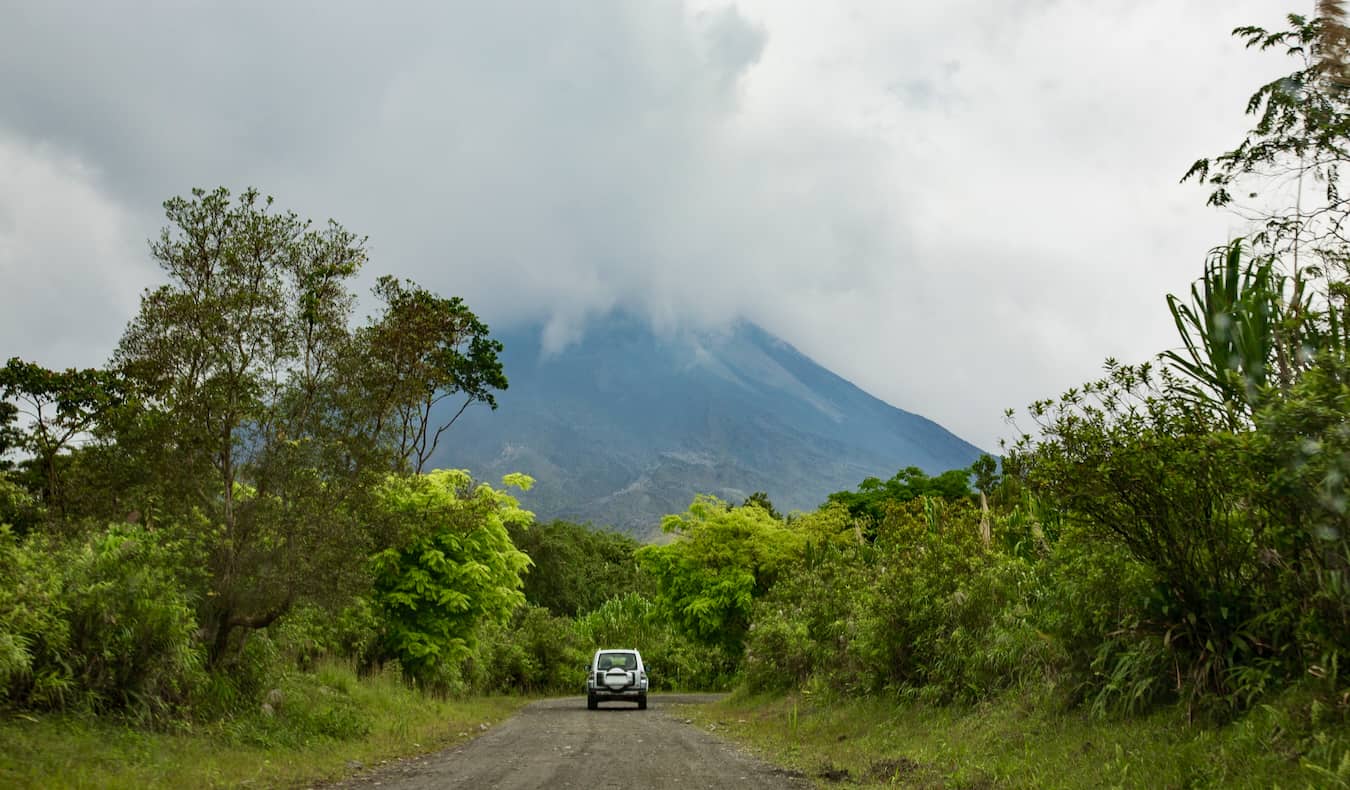
As much as a backpacking bus or hitchhiking adventure might initially sound appealing, the reality is that waiting in the hot sun and then bouncing along bumpy roads in an old bus without shocks or air-conditioning is not for the fainthearted. If you want real freedom to explore, you need a rental car.
To help you plan your trip, here’s everything you need to know about renting a car in Costa Rica.
Picking the Right Rental Car (and Rental Company)
Before you rent a car, read and compare reviews for car rental companies. While the standard big companies are available here, there are lots of local ones too.
Once you have narrowed down the list to a chosen few, ask for quotes for the type of vehicle and travel dates that you require. The quote should include mandatory third-party insurance, taxes, and any other surcharges, like airport tax. Most sites include all this info when getting a quote online.
Whether you are reserving online or directly with an agent, double-check the details of your reservation. Crossing time zones may mean that your rental pickup time or even date is different in Costa Rica than your country of departure. You will need to confirm the time, date, and location of your vehicle’s pickup and drop-off, the vehicle category, transmission, and coverage required.
Points to remember when renting a car in Costa Rica:
A manual transmission may be cheaper than automatic and more common in Costa Rica but should only be selected if you can drive a stick shift.
Returning your car at a destination different from where you picked it up will probably incur an additional charge.
Most rental companies will not guarantee a specific make and model within the rental category.
Expect to rent for 24-hour periods. Time your pickup and drop-off accordingly.
Provide your flight number before you arrive, so the company can track your flight.
If you have an early flight, consider dropping off the vehicle the night before and using a hotel shuttle to the airport.
Online travel agencies (OTAs) often fail to include all charges, so if you book through one, be sure to check the final price with the car rental company, through which the pricing may be more transparent.
Most companies now offer an online check-in process to upload documents such as passports and driver’s licenses to cut time at the counter and get on the road faster.
Both international airports in Costa Rica have car rental company desks within the building; however, the offices (where you’ll get your car) are off-site. They generally have a shuttle service to take clients to their offices, most of which are located within a 10-minute drive of the airport.
Local hustlers might tell you that your company has gone out of business to convince you to go with a different company that will pay them a commission. Look for a sign with your company’s logo and ignore the hustlers.
If your flight is delayed or you miss your connection, contact the company with your new estimated arrival time to avoid having the reservation canceled as a no-show.
When you arrive at the rental office, the agent will fill in any outstanding paperwork that has not been done online and conduct a vehicle inspection with you. Although the agent will note existing damage, you should take photos or video of the car for backup purposes.
Your vehicle may not have a full fuel tank when you pick it up, but the fuel gauge level should be logged on the inspection form. You will need to return the car with the same fuel level. Although you will not be reimbursed for a level higher than the one registered, you will be charged if it is below the starting level.
Returning the Vehicle Confirm your drop-off location and time when you pick up the vehicle. If you are caught in traffic or are delayed for any reason, contact the rental company to avoid a penalty. Make sure that your fuel gauge is at the right level, or else head to a gas station before you drop it off. The company’s representative will inspect your vehicle with you and then process the deposit reimbursement.
Documents Needed for Renting a Car in Costa Rica
Here’s everything you need to rent a car in Costa Rica:
Driver’s license – You can use your local driver’s license during the rental period as long as it is printed in the Latin alphabet. If your license is in a language that does not use the Latin alphabet (e.g., Mandarin, Arabic), an international driving license is required. Your driver’s license must be valid for the entirety of your stay.
It is important to note that although most tourists will be given a 180-day visa when they enter the country, their driver’s licenses are only valid for 90 days, and they will be required to leave Costa Rica and return to legally drive again.
Credit card – You need a valid credit card in your name to pay the car rental and to place the deposit.
Passport – Your passport should be valid for the duration of your stay. Legally, tourists must carry it with them at all times. The transit police will want to see it and your entry visa if you are pulled over.
A Note on the Minimum and Maximum Driving Age Each car rental company has policies regarding the age of the drivers it insures. Many do not have a maximum age, but some set a limit of 70-75 years old. The legal age to drive in Costa Rica is 18; however, most companies require that drivers be at least 25. Younger drivers may be able to rent a car for an additional surcharge and insurance costs.
Insurance Coverage
Costa Rica has mandatory third-party insurance for car rentals. It is not possible to obtain this coverage any other way. Check that this cost is included in your rental quote, as it’s often left out, so you may end up paying more than what you initially thought.
A collision damage waiver (CDW) covers losses from damage to your rental car. This is legally required when renting a car in Costa Rica. Most companies offer various tiers of insurance, with various deductibles. Many renters select full coverage for peace of mind, as then any damage that occurs during rental is covered. Some companies offer additional coverage for tires and the windscreen (windshield), as they are not always covered by the CDW.
If your credit card provider has a CDW as a perk, you can waive the in-house CDW. Just note that you will need to bring a letter that explicitly states the amount of coverage, that Costa Rica is included in the areas covered, and the last four digits of the driver’s credit card. A copy of the credit card company’s terms and conditions is not usually sufficient.
One important thing to note is that the rental company may hold a deposit for the rental period, which could be up to $5,000 USD if the renter is using their credit card provider’s CDW. The deposit will be released at the end of the rental period. Make sure you have a credit card that can absorb this deposit.
Driving in Costa Rica
Here are a few things to keep in mind while driving in Costa Rica:
Speed limits – Signs are in kilometers rather than miles, and speed limits are generally lower than you’d expect, with a 90 km/h (55 mph) limit on major highways. Speed limits change with limited warning between areas, so stay alert to signage.
Gas stations – Make sure that you know if your rental vehicle is fueled by gas or diesel. This information should be on the vehicle inspection report if you’ve forgotten. Gas stations are not self-service, so be prepared to ask for the kind of fuel you need as well as the amount.
If you’re renting one of the EVs that are starting to form part of fleets in Costa Rica, then plan your route around the network of charging stations across the country. You can learn more about those here.
Navigation – Use Waze, which is updated in real time by an enthusiastic group of volunteers, so you’re aware of accidents or other situations that may affect your travel time. Google Maps is available but does not always have accurate information. It also tends to underestimate journey times, so you should take that into consideration when planning your itinerary if you plan to use it.
Despite Costa Rica’s official address system, which consists of calles (roads that run north-south) and avenidas (avenues that run west-east), almost all locals give directions using landmarks, and few can provide directions using road or avenue numbers. It’s helpful to know that a block is usually described as 100 meters.
To add to the confusion, a location may use landmarks that no longer exist but were known well enough to remain in living memory. So you may be directed to go 600 meters south of the place “where the big mango tree used to be” or to turn left after “the supermarket that used to be pink.” Thankfully, Waze is a navigation lifesaver, but you might grow to enjoy the quirky tico (Costa Rican) way of finding places!
Parking – Always park in secure parking lots, and do not leave valuables in an unattended vehicle, as break-ins can occur.
In the last few years, there have been cases of the transit police issuing fines and removing license plates from vehicles parked on yellow lines at popular tourist spots like Manuel Antonio. The headache in this situation is that the vehicle cannot be driven without plates and must be towed back to the office, where it remains off the road until the car rental company reclaims the plates from the relevant authority. This is a time-consuming and expensive procedure, so be mindful of where you park!
Additional Rental Considerations
Many car rental companies charge a daily price for equipment or services beyond the basic rental costs. You should take this into account when budgeting your trip. These can include:
Additional drivers – Expect to pay a daily rate for each driver added to your rental agreement after the main driver. (Vamos Rent-A-Car offers additional drivers without extra cost.) It makes sense to have at least one additional driver to share the burden for longer journeys or to take over if the main driver is feeling under the weather.
Roof racks – If you’re traveling with a lot of luggage or surfboards, then renting a roof rack at a daily rate may be a solution to a cramped vehicle interior.
Baby or car seating – If you’re traveling with children, Costa Rican law about seating (see below) is strictly enforced. Either bring your own child seat or rent one at a daily rate from the company.
Costa Rican seating laws for children are based either on age or weight/height:
Rear-facing baby seat: Required for children less than a year old and under 22 lbs (10 kg)
Child seat: For those up to 4 years old or less than 40 lbs (18 kg) and under 3’7”
Booster seat: For those 5 to 12 years old, 40 pounds or more, and still under 4’9”
Seat belt: For those 4’9” or taller or over the age of 12
Wi-Fi – Stay connected throughout your trip without paying extortionate roaming charges by using a Mi-Fi (mobile Wi-Fi) device from your rental company. It’s usually fast enough to upload your latest vacay pics onto Instagram, connect to your Spotify road-trip playlists, and navigate with Waze, but downloading movies is probably too much to expect. Internet coverage in Costa Rica is wide, but don’t count on it if you are traveling off the beaten track.
Accidents – If you are involved in a traffic accident, check that no one is hurt then move to safety off the road. Do not move the vehicle. Call the transit police and your insurance company. You should also call your car rental provider to assess if the car can be driven, if a mechanic is required onsite or if the car needs to be exchanged and towed. The vehicle can be moved once the transit police give permission.
Crossing the Border – Rental vehicles cannot be taken to neighboring countries (Nicaragua or Panama) due to insurance restrictions. If you want to visit those places, you can arrange to drop off your rental vehicle at the border and reserve a car to be delivered once you’ve crossed it.
11 Driving Tips for Costa Rica
1. Keep a close eye on speed limit signs, as this can change quickly within a short distance.
2. You’re renting a car, not a boat, so resist the temptation to drive through rivers (even if the locals are doing so). Insurance policies are voided if the vehicle is driven through any body of water. And the electronic components of modern vehicles are likely to experience expensive damage in water.
3. On a similar note, it is illegal to park on the beach. This is to protect wildlife, such as turtles. Even if locals are doing it, find a secure parking lot instead.
4. Drivers in the other lane may flash their lights as they are coming toward you. This is usually a warning that there are transit police ahead or that there’s an upcoming obstacle.
5. Speed bumps may be big and could be unmarked. Stay vigilant.
6. Bridges may be one lane, so you need to look for signage that indicates which direction has priority.
7. If driving a manual-transmission vehicle, change gears when driving downhill, and don’t ride the brakes or else the pads could overheat.
8. Use caution while driving at night. Roads are often poorly lit, and cyclists or pedestrians may use the road edge in places where there’s no sidewalk. Plan to arrive at your destination by sunset or around 5:30pm. Keep your eyes peeled for sloths or other wildlife crossing the road.
9. If you’re traveling outside of the Central Valley or the most visited tourist spots like Jaco, rent an SUV for the higher clearance that the vehicle offers. For more rural destinations, a 4×4 may be required, especially in the rainy season. Feel free to ask your car rental provider for advice on the best vehicle for your itinerary.
10. Flat tires are not usually covered by in-house or credit card policies. If you get a flat tire, a local garage can usually fix it for less than $20 USD.
11. If you are pulled over by the transit police, you should present your driver’s license, passport, and the paperwork provided by the car rental company. Traffic tickets can be issued by officials, but the payment can only be made in a bank or via your car rental company. Should a police officer ask you for cash, call the police directly or your car rental company for assistance. Do not pay any bribes.
***
Costa Rica is a beautiful country and one of my favorite destinations in Central America. To ensure you make the most of your visit and get off the beaten path, rent a car. You’ll have more freedom and flexibility, and be able to explore beyond the standard tourist sites. I can’t recommend it enough!
Book Your Trip to Costa Rica: Logistical Tips and Tricks
Book Your Flight Use Skyscanner to find a cheap flight. They are my favorite search engine because they search websites and airlines around the globe so you always know no stone is left unturned!
Book Your Accommodation You can book your hostel with Hostelworld as they have the biggest inventory and best deals. If you want to stay somewhere other than a hostel, use Booking.com as they consistently return the cheapest rates for guesthouses and cheap hotels. My favorite places to stay are:
Don’t Forget Travel Insurance Travel insurance will protect you against illness, injury, theft, and cancellations. It’s comprehensive protection in case anything goes wrong. I never go on a trip without it as I’ve had to use it many times in the past. My favorite companies that offer the best service and value are:
Looking for the Best Companies to Save Money With? Check out my resource page for the best companies to use when you travel. I list all the ones I use to save money when I’m on the road. They will save you money when you travel too.
When I thought about a Mitsubishi Lancer Evolution lapping Tsukuba Circuit in 55 seconds, I naturally wondered if I could even hold my breath for that long – as you do.
On my first attempt I managed a feeble 42 seconds. My second try wasn’t much better, but on the third go I held my breath for 1 minute 10 seconds. For a brief moment I experienced the smallest sense of achievement ever felt by a human heart. The lesson here? Never give up. Which I’m sure is the unofficial motto of Keiichi Kurita, owner of today’s feature car subject – the Unlimited Works ‘Kuribo’ Evo VI.
For the record, the longest voluntary breath hold is 24 minutes, 37.36 seconds. Incredible.
If I really put my mind to it and practised, I think I could probably hold my breath for 1 minute 40 seconds, by which time, Kurita-san would have almost lapped Tsukuba’s iconic TC2000 course twice in his rapid time attack Evo. I know which one is more impressive. But let’s not forget, I’m just a regular breather, not a professional free diver training for a Guinness World Record.
In the same way that I’m not a deep sea diver, Kurita-san is not a mechanic. Like me, he’s a regular guy who enjoys regular things like eating ramen and watching anime. However, what he’s done with his Lancer is highly irregular.
From the outside, the car is like any other street-driven, time-attack-style Evo. The only giveaway that this car is a real time attack deal, is the Unlimited Works sticker. But it’s somewhat of a red herring.
While the engine and transmission were both built at Unlimited Works, and the car gets regular checkups and maintenance work there, many aspects of the project were carried out by Kurita-san himself.
Kurita-san modified the aero, put the car on a diet by removing unnecessary interior parts, and installed a Bride Zeta 3 bucket seat plus all the gauges and gadgets you see inside. He also tuned the Haltech Elite 1500 engine management system himself to pull around 600hp from the 4G63.
When Unlimited Works built up the engine, they retrofitted it with Toda Racing forged pistons, a JUN crankshaft and connecting rods, and Tomei 280-degree Procam camshafts. All essentials to handle and make the most of the extra boost provided by a Garrett GTX3076 Gen2 turbocharger perched on a FullRace manifold.
Of course, it’s not just high power output that nets fast lap times – although it certainly helps getting out of corners. Handling is enhanced by Quantum coilovers with 20kg/mm front and 18kg/mm rear spring rates. The wheels are Enkei PF01EVOs in 18×10.5-inch +22 all around, shod in 295/35R18 Yokohama Advan A050 semi-slicks.
On top of Kurita-san’s 55.570 Tsukuba TC2000 lap, the Unlimited Works Kuribo Evo VI has lapped Tsukuba TC1000 in 37.117, Nikko Circuit in 36.388, and Motegi in 2’03.428 – all impressive times.
Obviously it’s not just down to the world-class work completed by Kazuhiro Sato and his team at Unlimited Works, or even the ECU tuning Kurita-san did himself. Nor the aero tuning, which has quite an effect too.
The truth is, an Evo VI can’t drive itself. It takes hours of driving on the limit and a whole lot of passion to achieve PB laps like these.
But if a salaryman from Tokyo can get within a whisper of the legendary CyberEvo’s best time around Tsukuba and then drive home afterwards, there’s hope for the rest of us. Just be sure to practice your breathing.
Juha Salo and Mika Stenberg of Finland and Mitsubishi Ralliart Finland drive their Mitsubishi Lancer Evolution 9, N/4, during Leg 1 of Rally Finland 2008 on August 1, 2008 in Jyvaskyla, Finland.Photo : George Kidonas/Reporter Images ( Getty Images )
The Shrek-ear wing mirrors on the Mitsubishi Lancer Evolution always stand out in my mind as some of the weirdest looking wing mirrors in automotive history. I remember the first time I saw them during Jeremy Clarkson’s track test of the Evo VIII FQ 400 and never forgot about them. Especially on a compact car like the Lancer platform, you don’t need massive mirrors to compensate for giant blind spots on bulkier vehicles, so I can’t imagine these little mirrorettes caused many visibility issues.
I like adjusting my mirrors to see the lane next to me to reduce my blind spots, and these short mirrors might not provide that wide of a view. I have never driven a Mitsubishi Evo though, so if anyone has an Evo with these mirrors that they would let me test drive, I would be more than happy to drive your car and report back to our audience about the limitations posed by these distinctively dinky Shrek ear wing mirrors.
What wing mirrors stand out in your automotive encyclopedia brains that you think belong on the list of the weirdest wing mirrors ever? Let us know in the comments and check back for the results!
Carwow never disappoints when it comes to unconventional and thrilling drag races and in their newest video, we are treated to a showdown between a Bugatti Chiron facing off against a Kawasaki H2R and a Ducati Panigale SP2.
The Chiron SS is equipped with the renowned W16 engine, boasting 8 liters and four turbos, delivering an impressive 1,600 horsepower and 1,600 Newton-meters of torque. Power is distributed to all four wheels, and despite its weight of approximately 2 tons, the Chiron SS is a force to be reckoned with. On the two-wheeled front, the Kawasaki Ninja is a formidable competitor, sporting a 1,000 cc 4-cylinder engine with 310 horsepower and 165 Newton-meters of torque. We also have a Ducati Panigale V4, with its 1.1-liter engine, offers 216 horsepower and 124 Newton-meters of torque.
The drag race unfolded in the classic quarter-mile (400 meters) format, where the Chiron’s formidable 1,600 horsepower proved dominant, creating a spectacle that is more unique than common. Surprisingly, despite the substantial weight of the French hypercar, it outperformed both bikes in all three races. The fastest recorded time was 9.6 seconds in the third race. On the half-mile, the Bugatti Chiron achieved an impressive speed of 318 km/h.
Feel free to watch the video yourself below to see how the Bugatti Chiron destroyed its opponents.
Winter is the perfect season of the year to try completely new things in fashion. Plus, it’s a time when you can wear more clothes, mix patterns, try combinations and create very different looks, so you can have more fun.
The coldest months of the year are your opportunity to wear coats, shirts, accessories, jackets, everything that in other warmer seasons you leave in the closet. Now, just because it’s winter, doesn’t mean you have to wear everything at the same time. As in the rest of the seasons, balance, and style are fundamental. That’s why here are five outfits ideas for winter that we are sure you will love.
Create a Layered Look
Image courtesy of Unsplash
Layered looks are your best alternative in winter. Adding more items to your looks will protect you from the cold, but you can also create fashion outfits that will look great on you. The first thing you will need is a simple t-shirt, this will make you look casual, but also great for any occasion.
On top of the t-shirt, you can layer a t-shirt and then top it with a leather jacket or knit sweater that is thick enough to keep you warm. Then, if you still want to add one more layer, you can incorporate a coat that is large and long enough to cover you.
On the bottom don’t forget to wear a pair of jeans and for the shoes it will always be a good idea to wear a closed one. Now, regarding the colors, you could keep this look simple by using basic tones. Maybe a white t-shirt will go well, a red plaid shirt with black will look excellent, and a beige sweater will make an excellent contrast.
Try an Oversize Look
Image courtesy of Unsplash
Oversize outfits are here to stay in the fashion world, and in winter you can create stylish looks if you choose the right clothes. The ideal is to mix more fitted garments with others with oversize cut.
For example, straight cut jeans can go great with an oversized sweater. The good thing about oversize is that it allows you to add more clothes underneath to protect you from the cold or to give the look a little more dimension.
Another option is that all the garments of your look are traditional cut. That is, your shoes, t-shirt, shirt, sweater, and jacket are normal cut. What will give the extra touch is a maxi coat of oversize width and length to be the special touch of your outfit. This can be used for many occasions both formal and informal, and you will always look good.
Dare to Wear Colours in Winter
Image courtesy of Unsplash
The colour palette for winter is not usually too vibrant. This is a time when sobriety is part of most people’s looks, but you can go for something different. You can achieve this with alternative fashion clothes that fit your body well and are also colorful.
Just because you decide to go for colour in winter doesn’t mean that every garment you wear will be a vibrant colour. If you do this it can look bad, what you should do is keep the look neutral and add some intense colours such as red, purple, green, pink and similar shades.
For example, if you are wearing dark jeans, black boots and a beige coat, you could wear a red t-shirt to add a touch of colour to the look. Now, if you want your coat to steal the show, choose it in the main colour, but leave the rest of the garments in a more sober colour, so it won’t compete with the others.
Wear Prints and Look Bold
When we think of prints, the first thing that comes to mind is a floral or tropical print. And while this is the most common type of print, it is not your only option for winter. There are alternative prints such as plaid that will be an excellent choice for this season.
If you want to look stylish, you can wear a turtleneck sweater with a pair of pants with a tartan print. Although, if you don’t feel so bold to wear this type of pants, you can change the print’s position. Wear more classic pants and incorporate the print into a t-shirt or sweater, and it will look great.
At this time of the year, plaids look great. You can find them on a lot of garments, and they all look great. My favorites are hats, scarves, jackets, and even t-shirts. Any option will look good on you. But remember to avoid combining one print with another, as it might look a bit too much.
Create a Look With Fashion Accessories
Image courtesy of Unsplash
A good winter fashion outfit should include stylish accessories. Your options are many, you can add scarves, gloves, hats, glasses, bags, belts and much more. All your options are valid, but it is not always a good idea to include them all in the same look.
Imagine you already have a look with a pair of jeans, beautiful leather boots, a knit sweater and a jacket that matches your boots. While the outfit is not bad at all, it lacks an extra touch that you can add a matching scarf. This way you can add new colors and make your outfit pop.
Also, accessories will help you add more style to the look. For example, if you already have a complete look but feel it’s missing something, try adding a knit hat, beret, or cap. Which option you choose will depend on how casual or alternative you want the appearance to be. Either way, incorporating it will make you look much better and more stylish. Although if you want to take your looks to the next level, don’t forget to accessorise with bracelets, watches, earrings, rings, and anything else that completes the look.
For more on the latest in fashion reads, click here
The technical storage or access is strictly necessary for the legitimate purpose of enabling the use of a specific service explicitly requested by the subscriber or user, or for the sole purpose of carrying out the transmission of a communication over an electronic communications network.
Preferences
The technical storage or access is necessary for the legitimate purpose of storing preferences that are not requested by the subscriber or user.
Statistics
The technical storage or access that is used exclusively for statistical purposes.The technical storage or access that is used exclusively for anonymous statistical purposes. Without a subpoena, voluntary compliance on the part of your Internet Service Provider, or additional records from a third party, information stored or retrieved for this purpose alone cannot usually be used to identify you.
Marketing
The technical storage or access is required to create user profiles to send advertising, or to track the user on a website or across several websites for similar marketing purposes.