Home Blog Page 136

Road Trip Items to Make the Journey More Enjoyable

0


A great road trip isn’t just about getting from point A to point B—it’s about the moments in between. The spontaneous detours, the breathtaking overlooks, the roadside picnics that turn into unexpected highlights. But to truly embrace the journey, you need the right road trip items—not just the basics, but a few thoughtfully chosen extras that bring comfort, convenience, and maybe even a little indulgence to the ride. Whether it’s a portable espresso maker for a scenic morning brew, or a packable hammock for those picture-perfect rest stops, these road trip picks will transform the way you experience the open road.
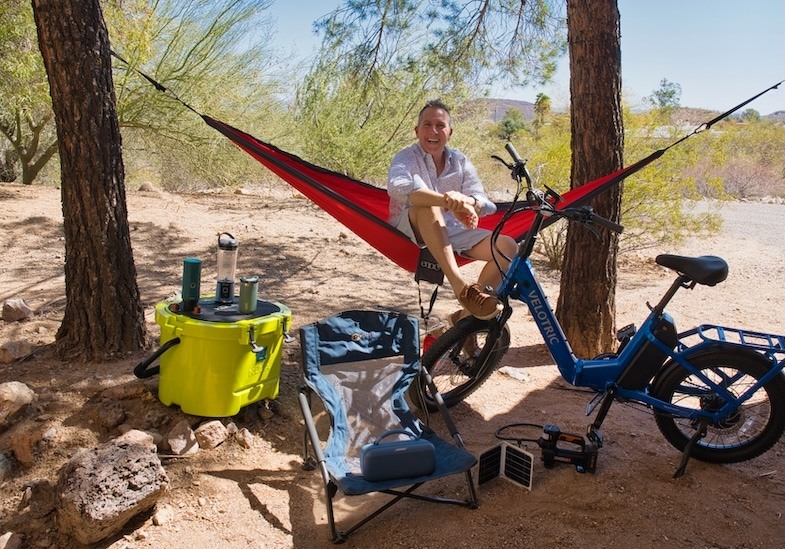
Road Trip Items to Make the Journey More Enjoyable

Espresso on the Go: This road trip item lets you brew like a Barista

For coffee lovers who believe a road trip should be as much about the journey as the destination, the OutIn Nano Portable Electric Espresso Machine is a game-changer. Why settle for gas station coffee when you can brew a rich, barista-quality espresso wherever the road takes you? Whether you’re parked at a scenic overlook, setting up camp in the wilderness, or just need a caffeine boost before tackling another stretch of highway, this sleek and compact espresso maker ensures you never have to sacrifice quality for convenience. With fast heating, powerful extraction, and a lightweight design, it’s the perfect luxury-meets-practicality addition to your road trip gear. Because a great road trip isn’t just about where you’re going—it’s about how you fuel the adventure along the way.
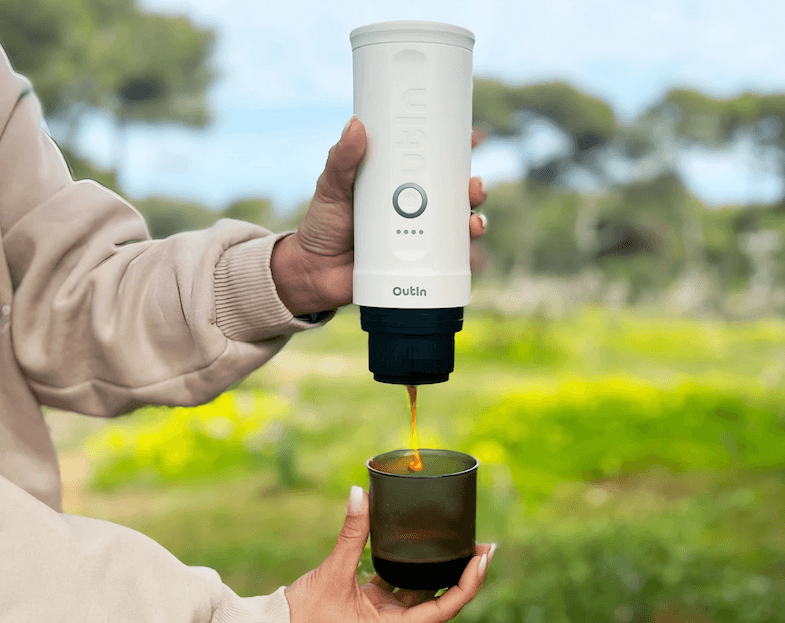
Espresso on the go

Why It’s a Cool Road Trip Item:

  • Brew Anywhere, Anytime – No need to search for a café; make fresh espresso in minutes, whether you’re at a campsite, a roadside picnic, or taking in a sunrise from your car.
  • Compact & Travel-Friendly – Weighing just 670 grams, it’s easy to pack and store without taking up valuable space.
  • Powerful & Versatile – With self-heating capability, and compatibility with both ground coffee and capsules, you get café-quality results no matter where you are.

The Cooler That Goes Beyond Cold: Meet the Bote Kula 10

A road trip should be about soaking in the adventure—not worrying if your drinks are still cold or if your snacks have turned soggy. That’s where the Bote Kula 10 Cooler changes the game. More than just an ice chest, this innovative, stylish, and ultra-functional cooler keeps your road trip refreshments perfectly chilled for days. Designed with a smart, ergonomic shape that fits cans and bottles better, it’s made to be both practical and undeniably cool. With built-in features like a bottle opener, a cushioned top for seating, and MAGNEPOD™ attachment points for securing your essentials (phone, drinks, etc.), this is the kind of road trip upgrade you didn’t know you needed—but won’t want to go without.
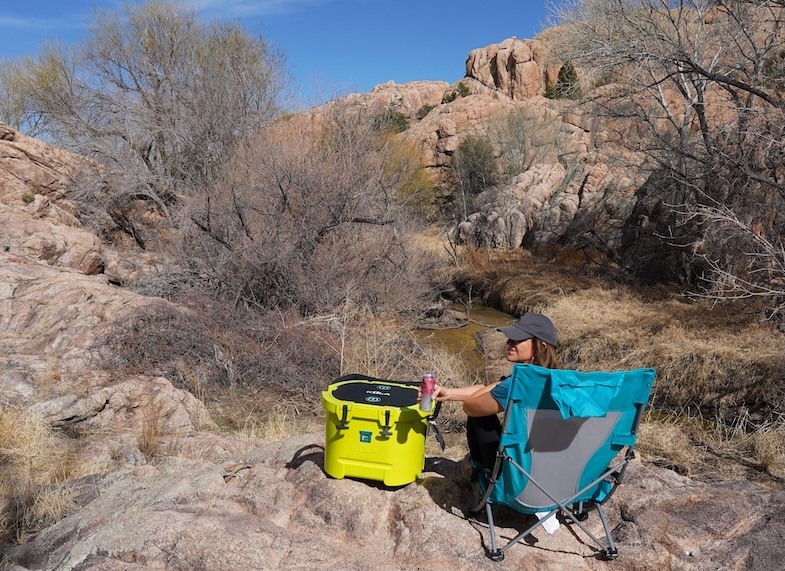
Bote Kula 10 one of the best road trip items you can add to your trip.

Why The Kula 10 is a Great Road Trip Item:

  • More Than a Cooler—It’s a Roadside Throne – The EVA foam cushioned lid doubles as a comfy seat, perfect for kicking back at a scenic overlook or around the campfire.
  • Holds Ice (and Style) for Days – With a sleek, innovative design and vibrant color options, this cooler keeps drinks ice-cold for the long haul while looking good doing it.
  • Packed with Smart Features – From a built-in bottle opener to a 270º easy-open hinge, this cooler is designed for convenience, making every rest stop feel like a mini getaway.

Turn Up the Adventure: Bose SoundLink Max Portable Speaker

A road trip isn’t just about the sights—it’s about the soundtrack. Whether you’re pulling over for a scenic picnic, hitting the beach, or setting up camp for the night, the Bose SoundLink Max Portable Speaker makes every stop along the journey feel like an experience. With epic stereo sound and deep bass, this powerhouse speaker fills any space with rich, immersive audio. Dust-proof and water-resistant, it’s built for the unpredictability of the road, ensuring your playlist keeps going no matter the conditions. And with a removable handle and compact design, it’s easy to grab and go, bringing the party wherever the adventure takes you. Because the best road trips deserve a killer soundtrack—and this speaker makes sure the music never stops. Speaking of soundtracks, check out my Top-20 Road Trip Songs list.

Bose SoundLink Max Portable Speaker

Why It’s a Great Road Trip Item:

  • Big Sound, Anywhere – Crisp highs, deep bass, and powerful stereo sound turn any rest stop, campsite, or roadside break into a personal concert.
  • All-Day Battery & Device Charging – With 20 hours of battery life, you’ll have tunes from sunrise to sunset, plus a built-in USB-C port to charge your phone on the go.
  • Rugged & Road-Ready – Built to handle the elements with an IP67 waterproof and dustproof rating, so you never have to worry about spills, sand, or sudden downpours.

Explore More, Drive Less: The Velotric Folding E-Bike for Road Trippers

One of the best parts of a road trip is the freedom to explore—but that doesn’t always mean driving everywhere. With the Velotric Folding E-Bike, you can set up camp, park farther away, and cruise effortlessly through city streets, scenic trails, or charming small towns—all without moving your vehicle. Designed for power, portability, and versatility, this compact e-bike folds down in three simple steps, making it easy to store in your trunk, RV, or even a closet. With a powerful 750W motor, 55-mile range, and hydraulic disc brakes, it delivers smooth, confident riding whether you’re tackling hills or coasting along the beach. Plus, with its low step-through design and customizable accessories, it’s built for every type of rider—whether you’re an adventure junkie, urban explorer, or just want to make your road trip more effortless and fun. Because a road trip isn’t just about the drive—it’s about the adventure waiting beyond the parking lot.
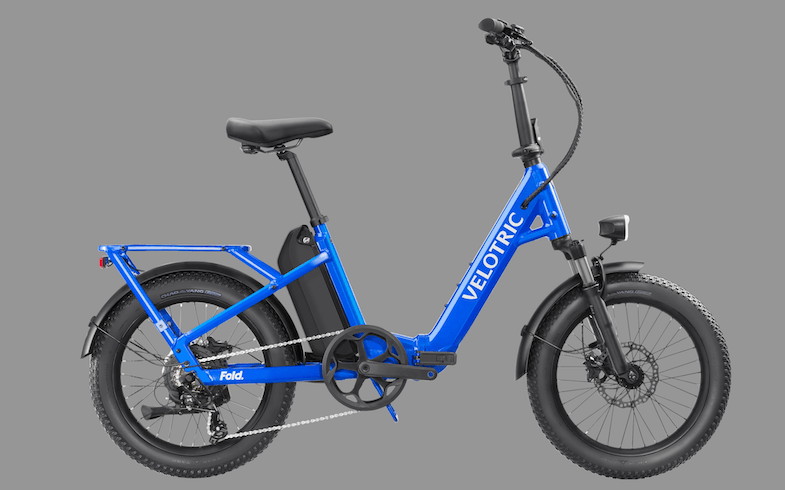
Why the Velotric Folding E-Bike is a Great Road Trip Item:

  • Adventure Without Limits – With a 55-mile range and a 750W motor, you can explore further without relying on your vehicle (up to 28mph).
  • Compact & Convenient – Folds in 3 steps to fit in any trunk, RV, or storage space—perfect for those with limited room.
  • Customizable & Built to Last – Outfitted with hydraulic disc brakes, waterproof components, and a reinforced frame, it’s designed to handle whatever the road (or trail) throws at you.

Blend Anywhere: Fresh Drinks on the Go with the Ninja Blast

Why settle for gas station sodas when you can whip up a fresh smoothie, protein shake, or even a homemade cocktail from the comfort of your car? The Ninja Blast Portable Blender is the ultimate road trip sidekick, letting you blend up refreshing drinks wherever adventure takes you. Compact, rechargeable, and water-resistant, this sleek blender packs serious power into a travel-friendly design. Whether you’re parked at a scenic overlook or fueling up for a hike, the Ninja Blast makes it easy to enjoy fresh, on-the-go beverages without the hassle of bulky kitchen appliances.
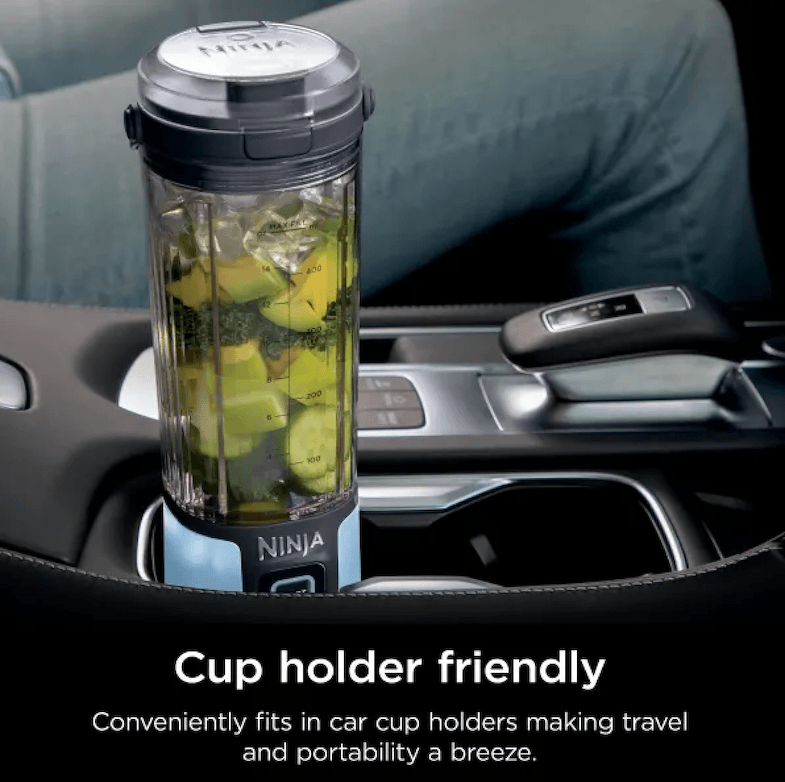
One of the best road trip items you can get is the Ninja Blast blender.

Why This Ninja Blast is a Great Road Trip Item:

  • Fresh Blends, Anytime, Anywhere – Juice up a refreshing smoothie, mix a protein shake, or blend a cocktail at a rest stop—all powered by a rechargeable battery.
  • Designed for Travel – With a BPA-free, dishwasher-safe container, a leak-proof sippy lid, and a water-resistant base, it’s made for mess-free mixing on the move.
  • Small But Mighty – Compact yet powerful, stainless steel blades and a 30-second blend cycle make quick work of fruits, ice, and more—so you can sip in style wherever the road takes you.

Hang Anywhere, Relax Everywhere: The ENO Hammock Road Trip Essential

A road trip isn’t just about the drive—it’s about those perfect moments when you pull over, take in the scenery, and truly unwind. That’s why the ENO Hammock is a game-changer. Ultra-packable, ridiculously comfortable, and endlessly versatile, it lets you set up the ultimate lounge spot wherever the road takes you. Whether you’re stretching out for a midday nap, enjoying a sunset snack, or simply soaking in the surroundings, this hammock transforms any stop into an impromptu oasis—no (standing) trees required. Because a great road trip isn’t just about where you’re going—it’s about how you relax along the way.
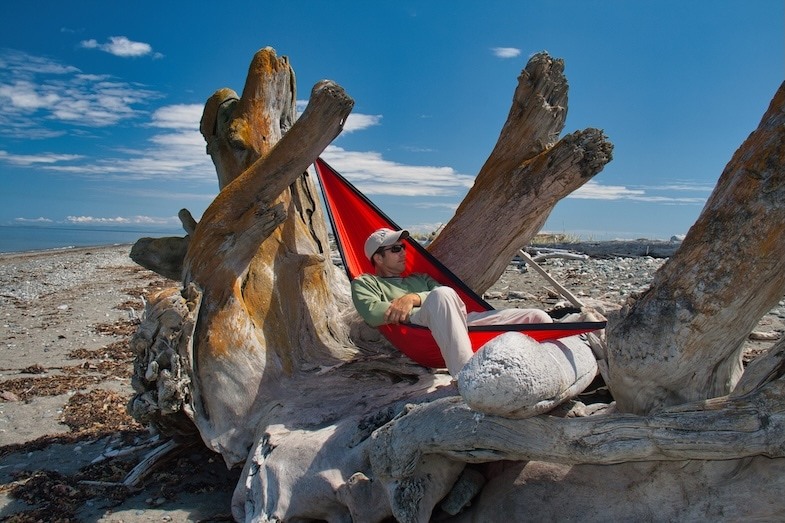
ENO hammock is a great road trip item to bring with you.

Why The ENO Hammock is a Great Road Trip Item:

  • Packs Down Small, Sets Up Fast – Weighing just over a pound and packing into a tiny stuff sack, the ENO hammock takes up almost no space but delivers big on comfort.
  • Hang It Anywhere – No trees? No problem. Use rock outcroppings, car racks, poles, or even a sturdy driftwood structure (as seen in the photo) to create the perfect lounging spot.
  • The Ultimate Break Spot – Whether you need a cozy seat for a trailside snack or a full-body hammock for a midday snooze, it’s the easiest way to turn any stop into a mini getaway.

Stay Inflated, Stay Prepared: The Worx Portable Air Compressor

A road trip is all about the open road—until a low tire slows you down. That’s where the Worx 20V Portable Air Compressor comes in. This compact, cordless powerhouse is a game-changer for anyone traveling with bikes, scooters, sports equipment, or just the peace of mind that comes with being prepared. Unlike old-school inflators that rely on a cigarette lighter, this battery-operated compressor gives you total freedom to inflate tires, top off low pressure wherever you are. With a digital gauge, auto shut-off, and built-in emergency light, it’s the road trip companion you’ll never want to leave behind. Because a great road trip is about freedom—and nothing should slow you down.
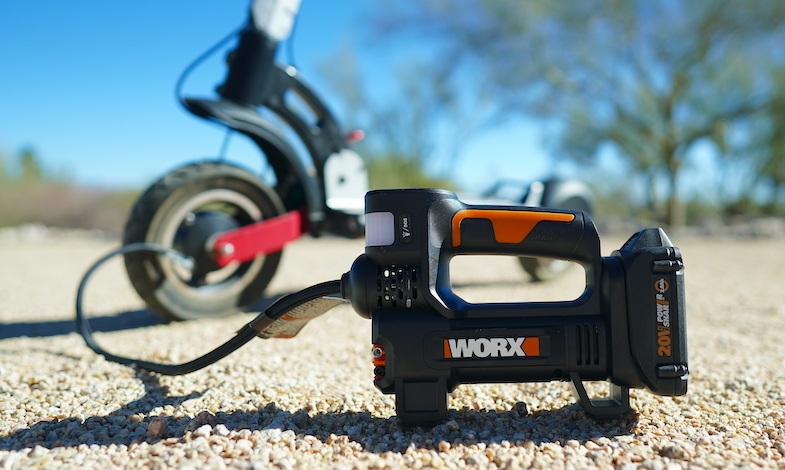
Worx portable air compressor - Photo by Mike Shubic of MikesRoadTrip.com

Why It’s a Great Road Trip Item:

  • No Outlet, No Problem – Cordless and battery-powered, it works anywhere, making it easy to inflate tires, sports balls, or air mattresses at the push of a button.
  • Smart & Safe Inflation – The digital LED gauge lets you preset the desired PSI, while the auto shut-off prevents over-inflation.
  • Compact, Yet Powerful – With up to 150 PSI, a built-in LED work light, and onboard storage for multiple nozzles, this small but mighty tool is perfect for any roadside adventure.

Stay Fresh Anywhere: The FLEXTAILGEAR MAX Portable Shower

A road trip is about adventure, but that doesn’t mean you have to embrace the dirt that comes with it. Whether you’re rinsing off after a sandy beach day, washing down a muddy bike, or giving your pet a quick clean before they jump back in the car, the FLEXTAILGEAR MAX Portable Shower makes it easy to stay fresh on the go. Lightweight, rechargeable via USB-C, and designed for effortless setup, this compact shower provides powerful water flow at the push of a button. With two pressure settings and a clog-resistant design, it’s the perfect way to bring a little comfort and cleanliness to your outdoor travels. Because the best road trips get messy—but that doesn’t mean you have to stay that way.
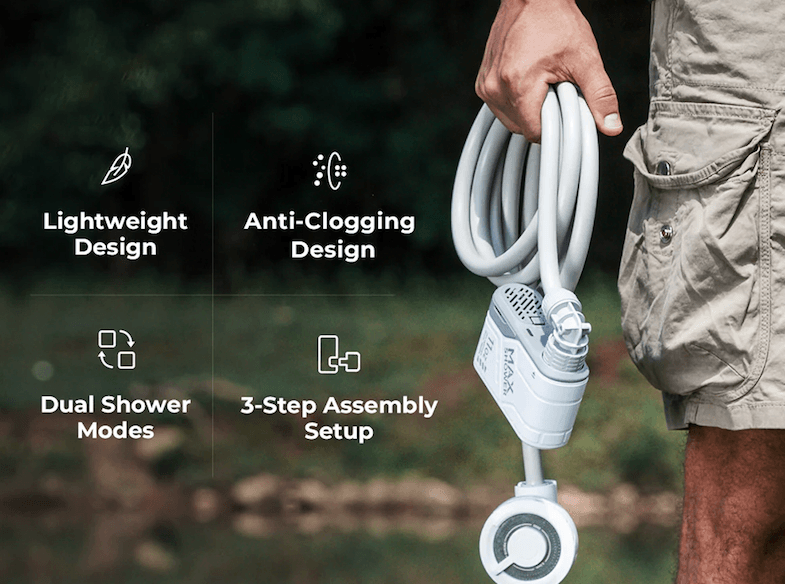
Why It’s a Great Road Trip Item:

  • Rinse Off Anywhere – Shower after a beach swim, clean off hiking boots, or wash your bike before loading it back into your vehicle—no bulky water bags required.
  • Compact & Rechargeable – Weighing just 11 ounces and powered by a USB-C battery, this portable shower is easy to pack and ready whenever you need it.
  • Two Water Flow Modes – Choose between a water-conserving low-flow setting or a stronger high-flow mode, depending on your needs.

One Key, Total Security: BOLT Locks for the Road Tripper

A great road trip means bringing along all your favorite gear—but keeping it secure shouldn’t mean carrying a dozen different keys. Enter BOLT Lock, the game-changing security solution that syncs to your vehicle’s ignition key. Whether you’re hauling bikes, towing a trailer, or locking up expensive gear at a campsite, BOLT offers a full range of locks that eliminate the hassle of juggling multiple keys. Made by STRATTEC, the leading supplier of automotive locks, BOLT products are nearly impossible to pick, highly weather-resistant, and built to withstand the rigors of the road. From cable locks to trailer hitch security, BOLT lets you lock it all—without the key clutter. Because your focus should be on the journey ahead—not searching for the right key to unlock your gear.

Why It’s a Great Road Trip Item:

  • One Key for Everything – No more fumbling through a ring of tiny keys—your vehicle’s ignition key unlocks all BOLT locks, from cable locks to hitch receivers.
  • Built for the Road – With the highest corrosion resistance rating and an automotive-grade weatherproof shutter, these locks can handle any adventure.
  • Maximum Security, Minimum Hassle – Featuring a 6-plate tumbler sidebar and oversized cylinders, BOLT locks provide top-tier protection against picking and bumping.

Sip in Style: The Adventure-Ready Insulated Mug You Need

Whether you’re watching the sunrise from a mountain overlook or cruising down the highway on your next big road trip, having a quality insulated mug is a game-changer. The Octaroma Lungo by Wacaco is more than just a travel cup—it’s a premium, vacuum-insulated companion that keeps your coffee piping hot or your iced drinks refreshingly cold for hours. Designed for the coffee enthusiast who refuses to settle for lukewarm mediocrity, this sleek, leakproof tumbler locks in flavor and aroma, ensuring every sip is as satisfying as the first. Compact enough to fit in most car cupholders and stylish enough to turn heads at a roadside café, it’s the ultimate way to enjoy your favorite brew—wherever the road takes you.

Why It’s a Great Road Trip Item:

  • Hot or Cold for Hours – The double-wall stainless steel construction keeps beverages at the perfect temperature, so your coffee stays hot and your iced drinks stay cold.
  • Leakproof & Travel-Ready – Designed for adventure, the secure lid prevents spills, making it perfect for bumpy roads and unexpected detours.
  • Sleek Yet Durable – With a premium feel, comfortable thin-lip design, and five stylish colors to choose from, it’s a mug that looks as good as it performs.

Wine, Anywhere: The High Camp Parkside Flask for Effortless Elegance on the Road

A road trip doesn’t mean leaving the finer things behind—especially when it comes to your favorite bottle of wine. The High Camp Parkside Flask brings the sophistication of stemware to the great outdoors with a beautifully designed, vacuum-insulated flask that keeps wine at the perfect temperature for up to 24 hours. Whether you’re picnicking in a mountain meadow, lounging at the beach, or catching golden hour in the park, this flask lets you sip in style—no corkscrew, plastic cups, or glass bottles required. Available in 375ml or 750ml sizes, and complete with integrated magnetic tumblers, the Parkside Flask turns spontaneous moments into memorable ones. Because some moments on the road deserve more than a twist-cap bottle—they deserve a toast.
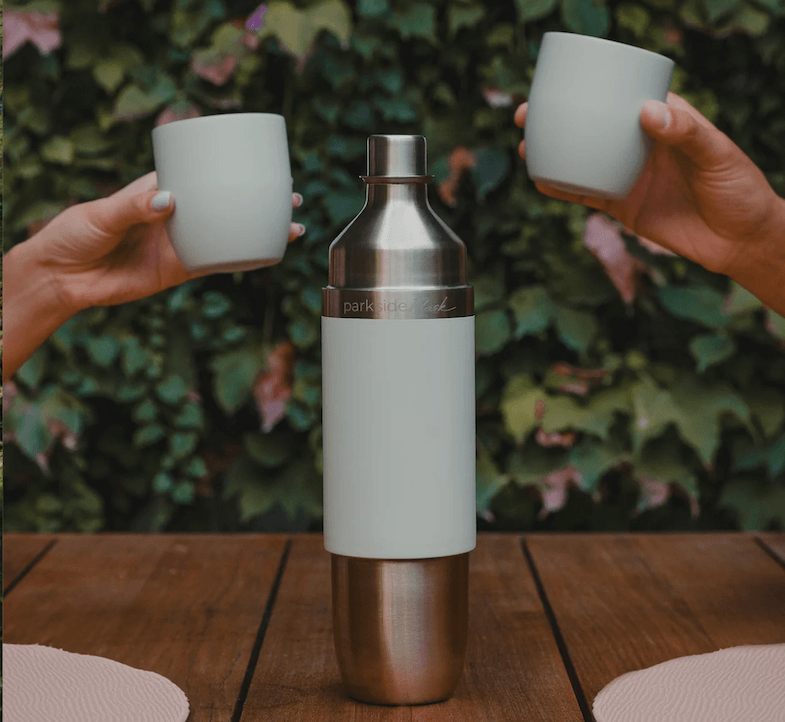
High Camp Flasks are great for road trips

Why It’s a Great Road Trip Item:

  • Elegant Meets Adventure – Ditch the plastic cups and preserve flavor with sommelier-grade stainless steel designed to elevate your wine experience anywhere.
  • Always the Perfect Temp – Vacuum insulation keeps your favorite red, white, or rosé at just the right temperature for up to 24 hours—no cooler needed.
  • All-in-One Convenience – With magnetically attached tumblers, a no-drip pour spout, and a wide mouth for easy filling, it’s designed for seamless sipping on the go.

At the end of the day, road trips are about more than just reaching a destination—they’re about embracing the journey, the pauses, the views, and the unexpected moments along the way. While none of these items may be strictly essential, they each add a layer of comfort, joy, or downright indulgence that turns a simple drive into a memorable adventure. From freshly brewed espresso at a scenic overlook to impromptu wine tastings at sunset or music that fills the campsite, these are the road trip items you never knew you needed—but won’t want to travel without again. So go ahead—elevate your next journey. You deserve it! So, until next time, we’ll see ya on the road…

NOTE: I’ve personally tested every item on this list, and I can confidently say they’ve each earned their place in my travel kit. I’ve also included links to each product so you can easily check them out for yourself—some of which are affiliate links that help support my channel at no extra cost to you. Thanks for coming along for the ride, and here’s to making your next road trip even more enjoyable.


Source link

Konstantin Chaykin: The Artist Trapped in the Body of a Watchmaker

0


Konstantin Chaykin (THE HOUR GLASS)

Konstantin Chaykin does not fit neatly into any box, though at first glance, you might think otherwise. His silver-streaked hair and thin wire-framed glasses suggest a man rooted in tradition, the kind you’d expect to find hunched over a workbench, crafting intricate mechanisms. And you’d be right—partly. But what lies beneath is a man whose playful imagination gave life to pieces like the Carpe Diem—a timepiece depicting Chronos, the Greek god (who birthed time) holding a functional hourglass integrated into its dial, to a Minion-themed titanium watch priced at nearly SGD30,000.

I had the privilege of exchanging a few words with Chaykin at IAMWATCH, a bustling watch fair which brought together watchmakers, collectors, and enthusiasts alike. Here, he shared more about the release of his new creation, the ThinKing—a watch measuring a mere 1.65mm in thickness. To put that into perspective, this is the thinnest mechanical watch in existence. If that doesn’t blow your mind, consider the level of ingenuity required for an independent watchmaker to not only craft such a marvel, but out-thin(k) the colossal watchmaking houses.

The ThinKing borrows from Chaykin’s acclaimed “Wristmon” series, known for their humanlike charm. Two “eyes” on the face of the watch—formed by hour and minute displays—are framed by a steel case engraved with the brand’s signature to form a smile. Instead of sandwiching the K.23-0 movement—a manually wound calibre offering up to 32 hours of power reserve — between two steel surfaces, the movement is woven directly into the case to maximise thinness. Every detail, from the Swiss lever escapement to the ultra-thin winding barrel and double balance system with a geared clutch all work together towards a singular truth: create the thinnest damn watch possible.

But engineering such thinness comes with its own set of challenges. Chaykin had to design a patented strap, crafted from alligator leather with elastic inserts and titanium supports, to manage the inevitable twisting and stress of wear. The result? Not only the world’s thinnest watch, but also one of the lightest.

To step into a ring dominated by giants like Bvlgari and Richard Mille takes audacity—or madness. Perhaps both. What kind of person willingly takes on such a challenge? Does Chaykin ever dream up ideas so absurd that even he hesitates? These questions swirled in my mind as I delved deeper into his story.

“Too crazy? No.” Chaykin said with a slight shrug when I finally asked him. “I’ve had a lot of challenges in my life. From the start, my watchmaking path has been a challenging strategy—almost crazy. If you check my timepieces, from the first to the last, I try not to create classic watches. I always find some crazy challenge for myself, for my soul, because life should not be boring.”

The Whimsical

Minions “Wristmon” Titanium watch (THE HOUR GLASS)

This spirit of whimsy and daring can be ambiguously used to sum up Chaykin’s work, particularly in his pursuit of the absurd through the “Wristmon” series. Take the Minions Titanium watch, for instance, which features “eyes” for hour and minute displays. But here, the phases of the moon form the mischievous smile of a minion, while the pupils and tongue shift with time, lending the timepiece almost a personality of its own. It may come to you as a surprise, but there aren’t actually tiny minions running around beneath the dial rotating gears and the lot. Instead, the in-house K.18-15 automatic calibre keeps everything running smoothly, offering a 42-hour power reserve.

Although the world may primarily think of Chaykin as the creator of the “Wristmon” series due to all the acclaim he has received because of it, that is not how he views himself. Far from it.

“I see myself more as an artist than anything,” he says. It’s a perspective that explains his refusal to be confined by the traditional boundaries of watchmaking. If you study the work of great artists throughout history, you’ll see they weren’t defined by a single collection or work. Their legacy as a whole is an evolution. This is what Chaykin envisions for himself — long after his loupes have magnified its last balance wheel.

The Classical

The Cinema (THE HOUR GLASS)

One piece we feel encapsulates this dynamic particularly well is The Cinema. Look no further than its rectangular frame, vintage typography carved into silver dials, and a mesmerising Clous de Paris guilloché finish decorating the dial. It is as its name suggests—a watch inspired by cinema. But what sits at 6 o’clock is its defining feature. A disc with 12 frames depicts a galloping horse, creating the illusion of motion—an ode to the first-ever motion picture of a horse and its rider in 1873. The in-house KCM-01-0 movement works overtime to power not only the timekeeping side of things, but also the animation sequence. All this is housed within a 37mm x 47mm steel case, only 12mm thick. Despite the brilliance of this concept, Chaykin has yet to turn it into a collection, more than 10 years since its inception.

For a man like Konstantin Chaykin, the idea of strictly sticking to a brand’s borders is boring. “It might be good for business since many people prefer that kind of consistency—DNA is great for business. But not for creativity, not for me.” And that, perhaps, is the heart of Chaykin’s philosophy. An artist trapped in the body of a watchmaker, where the watches he crafts are not just instruments of time, but manifestations of his restless creativity.

This article was first seen on Esquire Singapore.

For more on the latest in leaders stories, click here.


Source link

On and Boiler Room Debut Clubhouse Nights Miami

0


DJ Pressure Point

As Miami becomes the epicentre of tennis this season, On and Boiler Room came together to present “On Clubhouse Nights Miami” — an immersive evening that brought together sport, music and culture in an electrifying new format. Hosted at Lot 11 Skatepark in downtown Miami, the event transformed the space into a dynamic tennis arena and pop-up retail experience, all centred around “THE ROGER Clubhouse” — On’s latest tennis-inspired lifestyle sneaker.

Ben Shelton

The night opened with high-energy matches featuring On athletes Ben Shelton and Joao Fonseca, alongside tennis enthusiasts Francisco Lachowski, Jake Nevins, Mia Regan and Alexandra Katya. Against the unexpected urban backdrop of a skatepark, the players delivered a spirited performance, cheered on by an animated crowd.

MARTE

Following the on-court action, Boiler Room took over with a soundtrack that celebrated Miami’s deep Caribbean influences. Dancehall sensation Shenseea, dembow pioneer Cromo X and local club legend  MARTE delivered electrifying DJ sets, while freestyle skaters brought an added layer of energy to the scene.

Guests mingled with On athletes, explored the off-court collection and had the chance to win exclusive On merchandise. Culinary highlights included crisp pizzas from Luna Rossa Brick Oven Pizza, tacos from The Wolf of Tacos and a curated selection of cocktails by Lalo Tequila, E11even Vodka, Manojo Mezcal and Bacardi.

The evening drew an eclectic crowd, from athletes and musicians to tastemakers and creatives, including Jencarlos Canela, Olivia Elliott, Lina Luaces, Andrea DiValentina and more. With its fusion of sport and culture, On Clubhouse Nights Miami redefined how tennis can be experienced — far beyond the confines of the court.

For more on the latest in culture and events, click here.


Source link

Menorca: The Spanish Island You Must Know

0


You’ve probably heard of Mallorca. But have you heard of Menorca, its little sister, which is no less beautiful? When I searched for information about this place in a certain group, the answers I got were that I had a spelling error.

Related read: Top Mallorca Attractions & Activities

I admit that until I moved to Spain, I didn’t know about the existence of this place.

And how lucky we were to meet!

A wonderful vacation on an island that’s not particularly big, but packed with amazing beaches, tiny towns with picturesque alleys, and an atmosphere of eternal freedom—is it right for you?

Want to see everything in pictures? Jump to the highlight on Instagram.

Here’s an overview:

Menorca is part of the archipelago of the Balearic Islands, which also includes vibrant Ibiza, elegant Mallorca, and tiny Formentera. In addition to the four main islands, there are others in the Mediterranean Sea, only about 80–90 km from the Iberian Peninsula.

The official languages ​​are Spanish and Catalan.

As of 2025, about 100,000 people live on the island, which is roughly a 10th of the population of Mallorca.

Sailing boat in a bay in Menorca, Spain.

Arrival to Menorca

There might be no direct flights depending on where you’re coming from. I always check Expedia for the latest options, so feel free to do the same!

However, there are flights with a short connection to all sorts of points in Europe.

From Barcelona, there’s a flight that takes about half an hour or a ferry that will take you and your car by sea in about eight hours.

When to Visit?

We were there in early–mid-April. The weather was wonderful: not too hot, not too cold. Just pleasant.

As for swimming in the sea, well, the brave ones among us swam, despite how cold it was. The swimming season officially starts on May 1st and lasts until October 31st.

If you have time, I’d recommend visiting in June, when the water is warm enough and the island is not yet flooded with tourists from northern Europe.

A friend told me that she came with a friend on a motorcycle in August and there were beaches where they had no place to park.

Related read: The Best Beaches in Barcelona (Including the Nude & Gay Beaches)

Car Rental in Menorca

To get around comfortably on the island, even though it’s not very large, I highly recommend renting a car.

There are a variety of vehicle rental companies that operate at Mahón Airport, plus those that are not located at the airport but will come to deliver the car to you there upon landing.

I’ve had good experiences with PAAPM, which is worth checking out.

use the Paapm Paapm search to find the best rates

Public transportation is available—use the below map or Google Maps.

Public transport map of Menorca, Spain.

Where To Stay In Menorca?

Like in Mallorca, finding a hotel room for a couple + two children can be no easy task. Luckily, we were traveling with my parents, so we split into a couple + one in each room.

The hotel I stayed in is this one:

Hotel Gran Sagitario

Small, comfortable, and gives fair value for the price.

The food was not exciting, but that was our impression of the food on the island in general. What was convenient was the indoor pool, which we frequented for a few days.

The thing I liked most was the cove, a two-minute walk from the hotel—small and so picturesque. It was my view for my morning run.

The city, which I really liked, Ciutadella, is about a seven-minute drive away. So, everything is close enough, but not crowded.

Book it here!

Hotel Gran Sagitario in Menorca, Spain.

Other Great Places To Stay In Menorca

As usual, I have lists from the US to the UK of all the places I want to stay.

Here are some of the ones I picked that weren’t available at the time and that I would have loved to stay at in Menorca.

Alcaufar Vell Hotel Rural & Restaurant

The place that I was most disappointed wasn’t available for us. Exactly my taste—rustic with a restaurant. That’s all you need, I think.

Book it here!

Alcaufar Vell Hotel Rural & Restaurant in Menorca, Spain.

Ses Sucreres Small & Slow Hotel

I have a special fondness for slow places, and when they come in an old 19th-century building it’s a real treat. Simple rooms but with a touch of chic and a local breakfast.

Book it here!

Garden of the Ses Sucreres Small and Slow Hotel in Menorca, Spain.

Hotel Hevresac Singular & Small

A 4-star hotel and 250m from the capital, it’s small, delightfully decorated, and great value for money. It has a very high rating on the different booking plattforms.

Book it here!

Lobby of the Hotel Hevresac Singular & Small in Mahon, Menorca, Spain.

Carema Garden Village

A 3-star hotel we passed by and it just looked really lovely. The area is also beautiful and quiet.

Book it here!

View onto Carema Garden Village and its pool in Menorca, Spain.

Barceló Nura

A 5-star hotel, very close to Splash Water Park, with an outdoor pool, indoor pool, and spa. It’s great for families.

Book it here!

Barceló Nura in Menorca, Spain.

The Cami de Cavalls, a coastal path that encircles Menorca, allows energetic hikers to explore the island’s rugged coastline and secluded spots. For water-sports enthusiasts, there are plenty of opportunities for kayaking, surfing, and snorkeling.

Cami de Cavalls in Menorca, Spain.

The Capital City, Mahón

Well, Mahón didn’t leave any significant impression on me. Apart from a cute promenade and a distillery that we’ll talk about soon, I don’t think it’s a must-see on a holiday in Menorca.

Maybe I missed something, but I really didn’t find anything exciting here.

The Distillery Xoringeur Gin Distillery

The distillery has been here since the 17th century (!), when it was founded by the Xoringeur family, whose origins are in Italy. Since then, traditional techniques have been used, passed down from generation to generation.

But wait—gin is British. How did it get here?

Menorca was under British rule (not at all surprising that they were looking for some sunny island and didn’t want to give it back). Sailors from the Royal Navy brought the art of production to the island.

To this day, as mentioned, the distillery proudly continues this tradition, using only the finest ingredients and traditional copper stills.

Take a guided tour here and see all the traditional tools that were used back then. At the end of the tour, you can taste a wide variety of gin flavors, from the classic London Derry to special versions fermented with local plants.

Currently, more than half a million bottles are produced here per year, which are sold not only in Spain but also in the United States, France, Italy, Japan, Australia, Mexico, and New Zealand.

We came here spontaneously and there was no guided tour available at the time. We walked around the place independently, tasted the different types of gin, and bought a few bottles to take home. 😋

To book a guided tour, visit their website.

Address: Moll de Ponent, 91, 07701 Maó, Illes Balears

If you do visit, hop to the other side of the road; maybe you’ll be lucky and a fishing boat will dock and you can observe the sea catch.

Gin distillery Xoringeur in Menorca, Spain.

The Cardamom Menorca Indian Restaurant

Food that always makes the human heart happy, especially vegetarians.

I highly recommend this restaurant, which convinced even my mother and young son who are not really into Indian food.

Address: Moll de Llevant, 267, 07701 Maó, Illes Balears

Restaurant Cardamom Menorca, Spain.

Ciutadella

Ciutadella was once the capital and dates back to the 13th century. It has an old town with an impressive cathedral and alleys lined with boutique shops and restaurants.

Today it’s a port city and an important commercial center for the entire island.

Of the beaches, Cala Macarella and Cala Turqueta are two gems with turquoise waters and fine white sand.

Ciutadella Menorca, Spain.

Café Central

A heavenly cafe, and something I have not seen anywhere else. It has the atmosphere of a monastery with Jesus on the wall.

The tea was poured with a wooden stick that reminded me of a matcha house in Tokyo.

The dishes were special and beautiful. The thick meaty cookie we ate was bursting with peanuts and flavor. Soft and a little crispy on the edges.

Don’t miss this place!

Address: Carrer de Ca’l Bisbe, 1, 07760 Ciutadella de Menorca, Illes Balears

Cafe Central, Ciutadella Menorca, Spain.

Gelateria Deliri DeLaCrem

We know DeLaCrem ice cream from Barcelona and couldn’t be happier to find out that they have a Menorcan branch. Same high standard, same excellent service.

It’s one of the best I’ve had in recent years. Actually, in my life.

Ice cream at Gelateria Deliri - DeLaCrem in Menorca, Spain.
Ice cream at Gelateria Deliri – DeLaCrem in Menorca, Spain.

Nibs Healthy Bar

This is a great place for lunch and is vegetarian-friendly. It’s in a prime location—in a beautiful central square.

Address: Plaça d’Artrutx, 7, 07760 Ciutadella de Menorca, Illes Balears

Pasta at Nibs Healthy Bar in Menorca, Spain.

Self-Sailing From Ciutadella

This was one of our most memorable experiences from our vacation. No license is required—you can rent a small motorboat for self-sail.

In April, we had a hard time finding a place to rent it to us, though, since it was before the season. However, we didn’t give up and found the last guy who miraculously had a boat available for us.

When we arrived, happy and cheerful, with cold drinks we bought on the way, hats, swimsuits, and sunscreen in case the sun broke out, it turned out that the engine was broken.

“I’ll be back in half an hour with a new boat.” Well, well. So it was clear that it wasn’t half an hour. And luckily so. Because we had time to check out the nearby heavenly cafe (there’s no other definition).

After an hour and a half, the guy returned with a new boat in tow. It even managed to start. And so, we set off into the heart of the sea, happy and cheerful still.

Wind in our hair, the roar of the struggling engine, the bounces on the waves, the intoxicating views. The 11-year-old in our group quickly mastered the steering and was happy to be the captain for four hours, while we rested and drank cold drinks.

What a joy. I would venture to say that it doesn’t really matter where you sail, you will definitely find beautiful beaches—plenty of them. We were happy to reach places we already knew from before.

Some of us whose lineage is rooted in Eastern Europe were excited to jump into the water when there were gray clouds and it was 16 degrees outside. An especially worthwhile experience.

Pay attention:

  1. Don’t go too far from the coast.
  2. The ferries leave from Ciutadella (and also from Mahón). They are extremely large and make high waves.

Cala en Brut

Almost the first beach we visited. How beautiful it is!

Very easy to get to, but there are a few steps to go down. Clear, crystal water. There is no real access to the beach, just concrete with steps to the water.

Cala en Brut in Menorca, Spain.

Cala Mitjana/Mitjaneta

If there’s a place I’d like to stay, it’s here. A piece of paradise, my dear. A beach worth the kilometer walk to get to.

Park in the lot and start walking along the path. After fifteen minutes (or less, if you don’t have children 😊) you’re there.

A hot tip: Continue along the path to Cala Mitjaneta, the tiny bay farther on. It will take you a while to get there, not because the road is long, but because every step is an opportunity for another mesmerizing photo.

There are no beach services here, so bring everything you need with you.

Simply a dream of a place.

Cala Mitjana/Mitjaneta in Menorca, Spain.

North of the Island: Fornells and the Area

One of the most beautiful towns worth a visit is Fornells on the northern end of the island. It has a small port, a few restaurants and cafes and some small, picturesque streets.

In between are white houses with green shutters. It’s simply lovely to wander around here.

From there, drive to the beach of Fornells: Platges de Fornells, park your car there, and walk to Cala Tirant. The view here is simply lovely.

When you get tired, drive to the Cape Cavalleria Lighthouse. When you leave the car park, you’ll see a kiosk. Buy something cold to drink, some ice cream, and walk around the lighthouse area.

Related read: A Week in Spain: From Madrid to Barcelona

Platges de Fornells in Menorca, Spain.

South of the Island

Binibeca

The main town here is Binibeca, and it’s super cute. It’s worth hopping onto the Bufador de Binibequer beach and walking there for a while.

Church in Binibeca, Menorca, Spain.

Cala en Porter

A beautiful view of a small but impressive bay—Mirador Cala en Porter.

Just park your car and walk 10 meters until you see this beautiful beach, then continue down to the sand.

Cova d’en Xoroi

A place we didn’t get to, unfortunately, because we arrived with tired children and even more so parents, just as it was closing in the afternoon.

I’m also not sure how suitable the place is for children. It’s a music bar-club. Anyway, look at the pictures on Google Maps and you’ll see what a cool little nook it is. It’s a bit reminiscent of Rosh HaNikra.

There’s a fee to enter here—see the place’s website. If you go, tag me on Instagram and tell me how it was.

Related read: The Best Beach Bars in Barcelona

Cova d'en Xoroi in Menorca, Spain.
Cova d’en Xoroi in Menorca, Spain.

Visiting a Dairy

So not only does Manorca dabble in traditional gin, it’s proud of its cheese, too, called—you guessed it—Mahón cheese.

This dairy, which is right in the center of the island, makes the cheeses on site. You can take a guided tour or order a tasting platter with snacks. We toured independently (how did we miss all the guided tours?) and sat down to eat.

I admit, there are better cheeses than this, mostly in northern Spain. For cheese fans, I recommend you at least try it, though.

In the air-conditioned factory store, you can also purchase other delicacies.

Address: Carretera Alaior a Arenal d’en Castell s/n, 07740, Balearic Islands

  • Inbal Cabiri

    Inbal Cabiri is a food and travel photographer & writer, based in Barcelona.


    View all posts


    Inbal Cabiri is a food and travel photographer & writer, based in Barcelona.


Source link

Aston Martin Vanquish Volante teased; Global debut on March 25

0


Aston Martin has just dropped the first teaser of its upcoming V12 convertible, the Vanquish Volante. The new model is all set to make its global debut on March 25.

In terms of its design, the Vanquish Volante will be similar to the coupe, except for its retractable top, which is likely to be made from fabric instead of metal. The rest of the styling will be carried over, including the large front grille and LED headlamps.

The rear section is also expected to be borrowed from the coupe and will feature vertically stacked LED taillights with a carbon fascia in the centre.

The Vanquish Volante will be mechanically identical to the coupe. It will be powered by a 5.2-liter twin-turbo V12 engine. This upgraded unit delivers 824 hp @ 6500 rpm and 738 lb-ft of torque @ 2500-5000 rpm. The engine will be mated to an 8-speed automatic gearbox, driving the rear axle via an electronic limited-slip differential.

That being said, the Volante might be slightly heavier than the hard top version, which could affect overall performance.


Source link

Novitec Esteso widebody kit for Ferrari Purosangue launched

0


Novitec has introduced Esteso, a sporty widebody kit for the Ferrari Purosangue. The modifications are subtle and complement the overall design of Ferrari’s first SUV, unlike some of the other aftermarket brands.

Novitec Esteso Ferrari Purosangue-2

The Novitec Esteso widebody kit is made from carbon fibre and PUR-Rim plastic. It includes wheel arch extensions, side vents, bonnet vents, a front splitter, a rear diffuser and a rear boot lip spoiler, among other plug-and-play components. It adds 6 cm to the overall width of the car. Customers can also spruce up the engine bay with a carbon fibre air filter box.

Novitec Esteso Ferrari Purosangue-3

Purosangue customers can spec their cars with Vossen rims that come in three unique designs with 22 inches in the front and 23 inches in the rear. These can be had in up to 72 different colours and surface finishes. Custom sport springs lower the car by about 25 mm.

Novitec Esteso Ferrari Purosangue-4

The Esteso body kit can be paired with the Novitec high-performance exhaust, which adds another 30 hp to the overall output of the 6.5-liter naturally aspirated V12 engine. Customers can select from a stainless steel exhaust or one made from lightweight Inconel.

Source: Novitec


Source link

Modern Costa Rican Architecture: Visionary Insights from Roderick Anderson, CEO of SARCO Architects

0


Villa Avellana, Península Papagayo Costa Rica
Image copyright Andres Garcia Lachner

Costa Rica is increasingly becoming a sought-after destination for building luxury dream homes, attracting discerning individuals seeking modern, luxurious residences in a pristine tropical setting. Here, we delve into the visionary behind SARCO Architects Costa Rica in an exclusive interview with Roderick Anderson, CEO and Design Director. With a rich family legacy spanning over five decades, Roderick continues to upscale luxury residential architecture in this vibrant Central American nation. Consistently honored by Luxury Lifestyle Awards as Best Luxury Residential Architect Studio in Costa Rica, SARCO Architects exemplifies innovation and excellence in crafting bespoke modern homes. Join us as we explore SARCO’s recent award-winning project, Villa Avellana, and unveil insights into creating dream homes in Costa Rica for international clients.

Luxury Lifestyle Awards(LLA): Hi Roderick, it has become a tradition for us to speak with you annually and delve into SARCO Architects’ award-winning projects. To what do you attribute the consistent success of your company and projects year after year?

Roderick Anderson(RA): I believe this is because, at our core, we are an architectural firm with a clear client-centric approach. We deeply care about each of our clients and the projects that we design for them. We like to get to know our clients, and understand the elements that are important for them, what they truly value, and then design in a way that responds to them. We really dedicate the time, effort, and thought to these projects and how to bring our signature integrated design approach, bringing the architecture, interiors, and lighting details all as a single design process.

Villa Avellana, Península Papagayo Costa Rica
Image copyright Andres Garcia Lachner

LLA: Villa Avellana has been recognised numerous times by prestigious awards, including LLA. Can you describe the inspiration behind Villa Avellana and what sets it apart as one of SARCO Architects’ most outstanding projects?

RA: Villa Avellana was a truly unique project and one that we fully embraced from the beginning. Our client was a frequent visitor to Costa Rica and would constantly rent a very expensive villa in the resort, and decided it was time to own a villa of his own. At the same time, he had a vision of making this villa the absolute best from a service and experience level for the guests. So we had an opportunity to design something that at its core is a home, but when you take a wider look it’s much more than a home.  Villa Avellana is a project that is designed to feel like an amazing residence, but one that addresses the best creature comforts for large groups.  An ultimate-experience villa.

Villa Avellana, Península Papagayo Costa Rica
Image copyright Andres Garcia Lachner

LLA: How did the unique natural setting of Villa Avellana influence the architectural design and overall experience for guests?

RA: Absolutely. The beachfront location of this project brought to our hands a very different design approach and thought process.  Most of our projects are usually perched on a hillside, so the focus of the design is the view. In Villa Avellana, being down low and on a beachfront site made that even though the views were still important, we had to think about the home’s integration with the surrounding site all around. The outdoor spaces, more than being areas to enjoy time outdoors, became areas where guests could unwind, have an array of different spaces to come together or have some solo time, all while giving the home a direct connection to the beach, integrating the beach activities and flowing the experience from the home to the beach seamlessly.

LLA: What were some of the key challenges you faced in designing a luxury residence like Villa Avellana?

RA: We had two opposing concepts that we had to somehow bring together. On one hand, we had a project brief that called for a very large residence, with a multitude of spaces to serve and house large groups of guests, and on the other hand, we had a site with limited space and zoning and resort restrictions. The mesh of those two elements was the big challenge we were constantly up against.  Also, one of the important aspects of the ultra-luxury home experience brief was to somehow make the service needs of the home invisible to the guests. This brought another element into the mix and that in combination with the site, the steep uphill slope present at the back of the property, created a multitude of difficult challenges that we needed to solve.

Villa Avellana, Península Papagayo Costa Rica
Image copyright Andres Garcia Lachner

LLA: Could you elaborate on the sustainability aspects integrated into Villa Avellana, particularly regarding materials and energy-efficient systems?

RA: Sustainability is always at the core of our design ethos.  However, we like to believe that we have a practical approach instead of a theoretical approach to sustainability.  It begins with energy efficiency. We have a clear understanding that people enjoy Costa Rica for the warm weather and the connection to nature.  Our designs usually incorporate welcome areas, hallways, staircases, etc., as outdoor spaces, they become experience areas where people enjoy the natural breeze, the sounds of the ocean, and the sounds of nature.  This approach minimizes the spaces that we need to spend energy to air condition.  Careful architectural aspects to making the home efficient is also key. Our technological approach to design allows us to run energy evaluation reports during the schematic design stage, improve the home’s performance via orientation and extensive overhangs, and incorporate architectural elements to control solar and heat gain. From the materials aspect, we try to use local natural materials to reduce the carbon footprint of transport.  Selection of manufactured materials is always done considering the brand’s sustainability approach to production and recycling of waste, etc.

LLA: The SARCO System™ is renowned for its seamless remote architectural process. How was this system employed in the design and construction phases of Villa Avellana? – if it was.

RA: Like all our projects, the remote service to our clients is always at the center of our services.  Our client was a very busy business individual, and we needed to make the process easy, clear, and straightforward for him.  The use of 3D visualization and interactive design models that our client could use and experience easily on his devices were key elements to design communication during the entire project process.  Also, our client online information hub would make access to project presentations, selections, product discussions, etc., easy and accessible from anywhere.

Villa Avellana, Península Papagayo Costa Rica
Image copyright Andres Garcia Lachner

LLA: Could you elaborate on SARCO Architects’ Integrated Design Approach and how it facilitated the successful realization of Villa Avellana?

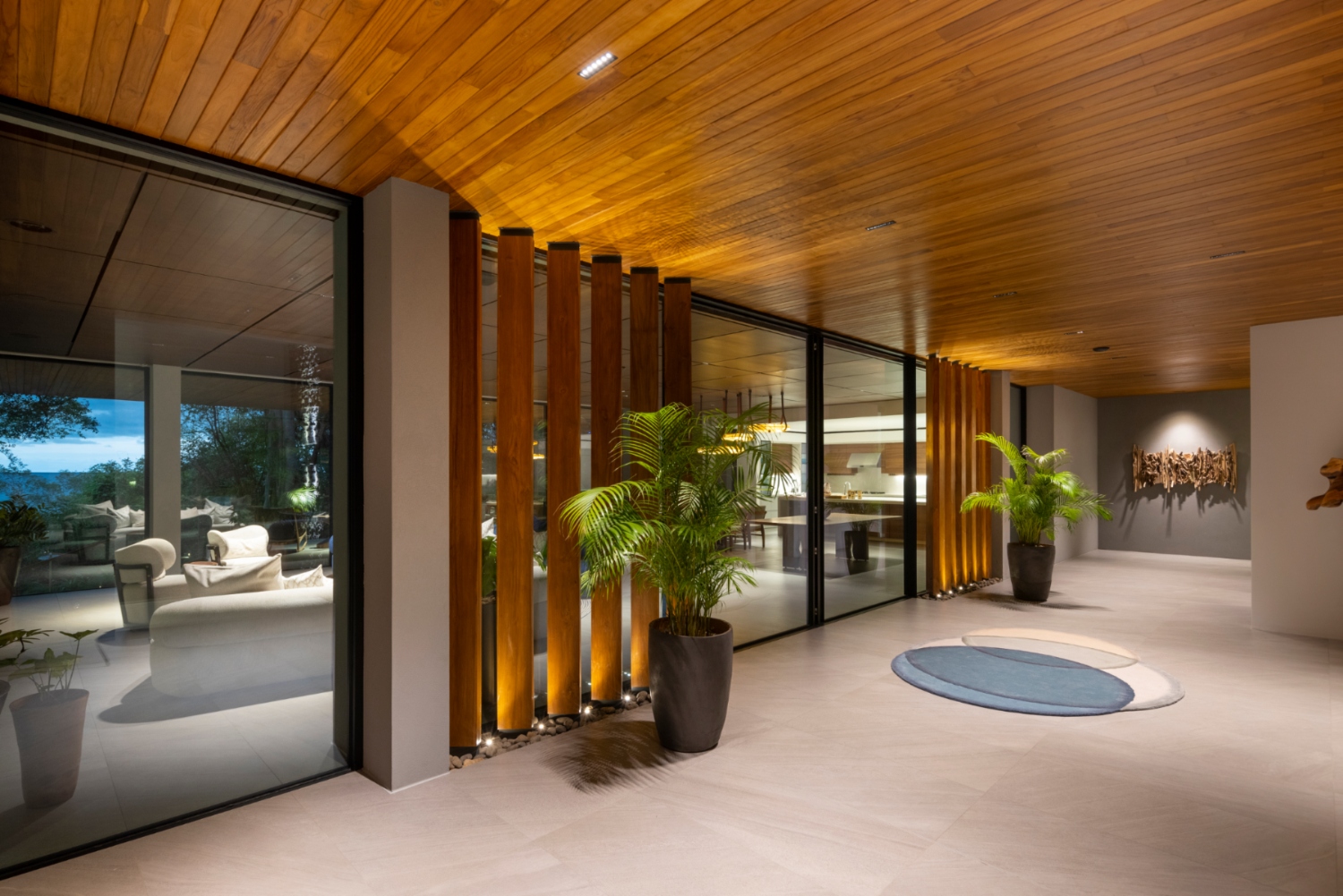
RA: We approach our projects with a process where architecture, interiors, and lighting blend together and interact directly in the design of the project and its spaces.  Once a schematic design is complete and we begin the design development of the project, we start this interactive approach between these main design elements, where we are thinking about interior details, lighting design and the mood and accents it creates, and the selection of materials and how it interacts with all these aspects.  Having these three design main design components under our umbrella, instead of being handled by external design teams, allows us to experiment, try things, iterate, and make design decisions with a firm and quick approach.  In Villa Avellana this was at the core of our design approach. Many spaces in the home exude this approach, but probably the main living space more than others.  There we have a combination of the all-glass space to enjoy the natural setting, the design of a custom wood panel ceiling that incorporates invisible magnetic lighting tracks where we could design the lighting customized for the living and the dining area (each with different lighting feel and mood). We also integrated the invisible architectural slots for the air conditioning system and hid away the A/V system that provides a large projection screen to enjoy media when desired. All these components would be a pain to design and coordinate successfully, however as we control the totality of the design elements, for us is not only possible but successful.

Villa Avellana, Península Papagayo Costa Rica
Image copyright Andres Garcia Lachner

LLA: How does SARCO ensure that international clients can confidently build their dream homes in Costa Rica without being physically present? Could you elaborate on the processes and technologies SARCO employs to maintain quality and client satisfaction throughout the remote building process?

RA: We have been working with international clients now for over 20 years.  We understand that our clients have busy lives and schedules, therefore we focus on providing our services so that a project is not another complicated thing making life difficult for our clients.  Our online communication hub with our clients is active from design all the way through project completion.  This is a way where our clients are always in the loop of the project’s progress and involved in any updates, changes, or decisions that need to be made.  Also, our integrated design approach to our projects plays a huge role in this as well.  Since we put so much time in making sure that all design and client decisions are done in the design phase, all the questions are answered and decisions are made, then during construction, there is very little that our clients need to be active and involved in.  Our team takes care of everything needed during construction so that the project is seamless and effective all the way through.

Villa Avellana, Península Papagayo Costa Rica
Image copyright Andres Garcia Lachner

LLA: What makes Costa Rica an ideal destination for building luxury dream homes, and why do so many successful people choose to escape here to create modern luxury residences?

RA: Costa Rica is geographically located in a very advantageous location.  It is close enough to North America so there is a multitude of direct flights available from main cities in the USA and Canada.  Direct flights from many European cities are also more and more common. Also, the International Airport in Liberia, Guanacaste, allows people who travel in private jets to a very convenient destination that is close to the main beach areas and locations where they can build their luxury home. The warm weather, beautiful natural setting, natural fauna, elevated ocean views, and stunning sunsets are all elements that many of our clients truly treasure. Also, there are options of luxury resort destinations where successful HNW individuals can choose a property to build their luxury getaway and still have the amenities and conveniences they need.

In this exclusive interview with Roderick Anderson, we have gained invaluable insights into modern home Costa Rica architecture. Roderick’s dedication to upscaling luxury residential architecture, combined with SARCO’s exemplary integration of sustainability and cutting-edge technology, continues to set new benchmarks in the field. As Costa Rica solidifies its reputation as a prime location for tropical luxury homes, SARCO Architects stands out as a leader, ensuring international clients can confidently create their dream residences in this idyllic setting, even from afar.

For more information about SARCO Architects Costa Rica, visit https://www.sarcoarchitects.com/

For more on the latest in properties and architecture reads, click here.


Source link

Southwest Flavors & Scenic Dining

0


Tucked within the stylish Amara Resort in the heart of downtown Sedona, SaltRock Kitchen is more than just a hotel restaurant—it’s a culinary destination that fuses bold Southwest flavors with fresh Verde Valley ingredients and a craft cocktail program that could rival any metropolitan bar.

A Stylish Arrival: First Impressions at Amara Resort

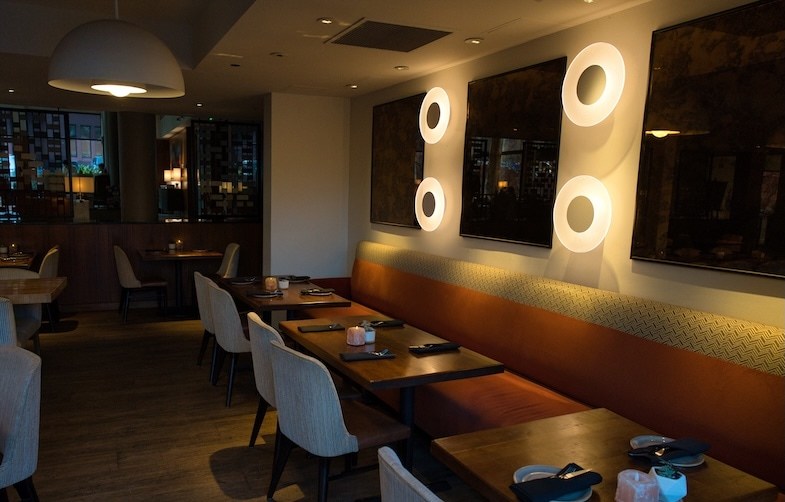
From the moment you step into Amara Resort, the journey begins. The expansive lobby, flooded with natural light and adorned with desert-chic décor, invites you to linger. Modern yet grounded in the natural surroundings, it feels like a curated gallery of Southwest comfort—low-slung couches, eclectic art, and inviting communal spaces. As you meander past the inviting lounge area, SaltRock Kitchen opens to your left, while to your right, the SaltRock bar glows with a backlit salt rock wall—a warm, golden beacon that sets the tone for the experience to come.

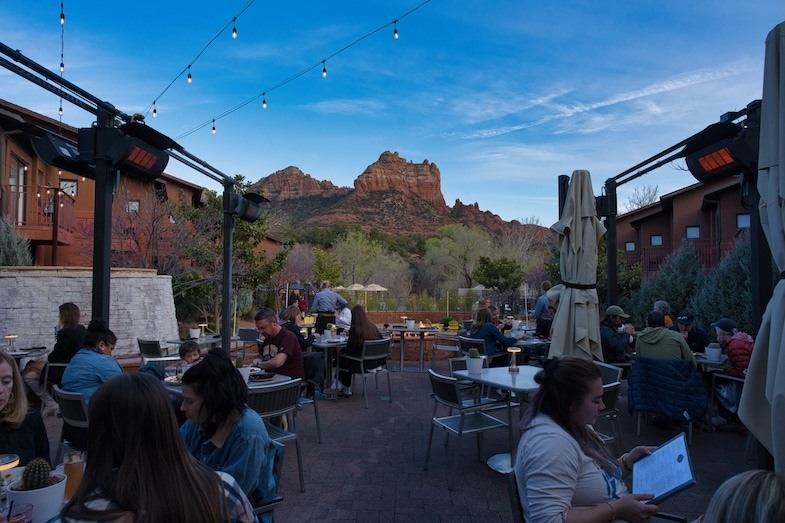
The outdoor patio at SaltRock Kitchen is something out of a travel magazine. With fire pits crackling, soothing water features trickling, and a straight-on view of Sedona’s iconic red rocks—including a distinctive butte that dominates the skyline—the setting alone makes the meal unforgettable. But thankfully, the food and drink match the view in every way.

SaltRock Kitchen Patio by Mike Shubic

Sipping in Style: Elevated Cocktails That Dazzle the Palate

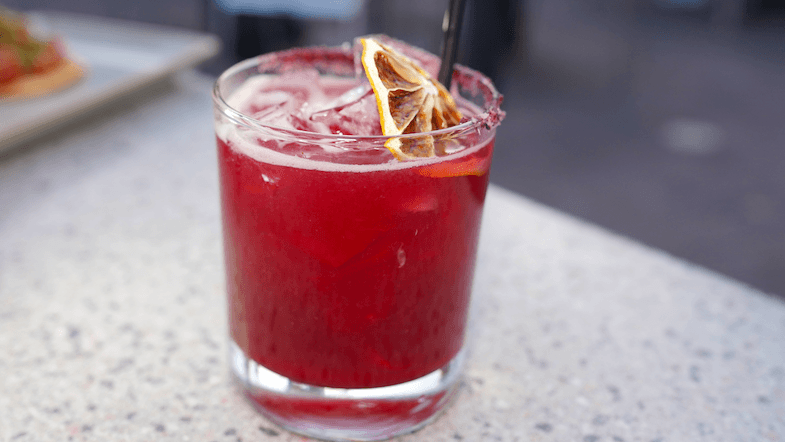
We began our evening with two of SaltRock’s handcrafted standouts. The Flor de Hibisco arrived first, shimmering in a glass rimmed with hibiscus sugar salt. A harmony of Reposado tequila, Pasilla chili liqueur, lime, and pomegranate-hibiscus syrup, it danced between floral sweetness and a subtle smoky heat. Refreshing yet layered.

Flor-de-Hibisco-at SaltRock Kitchen - Photo by Mike Shubic

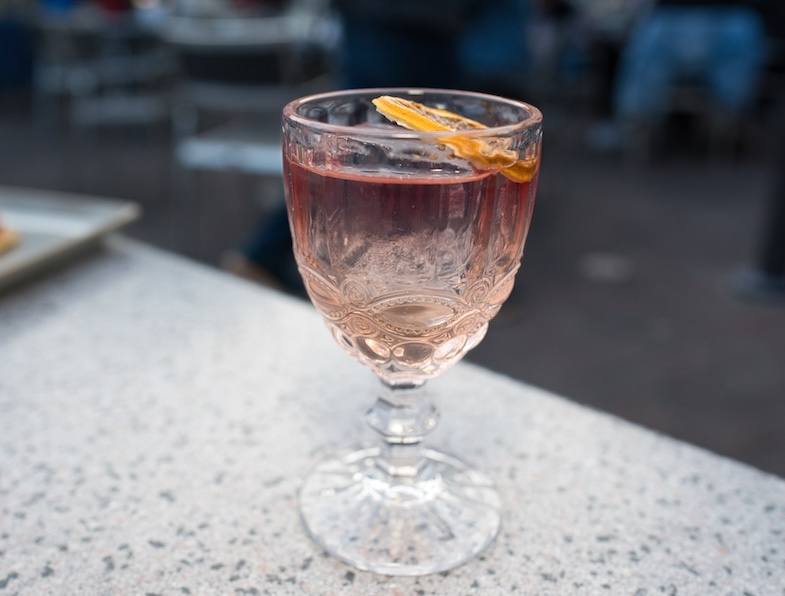
Then came the Cactus Bird—their ever-changing clarified milk punch. A rare find in most bars, this clarified concoction uses curdled milk (yes, really) to achieve a smooth, translucent drink with extraordinary complexity. This rotating seasonal drink is for the adventurous cocktail lover, and it doesn’t disappoint—it’s smooth, nuanced, and as photogenic as it is fascinating.

A Symphony of Starters: Artfully Composed Small Plates with Big Flavor

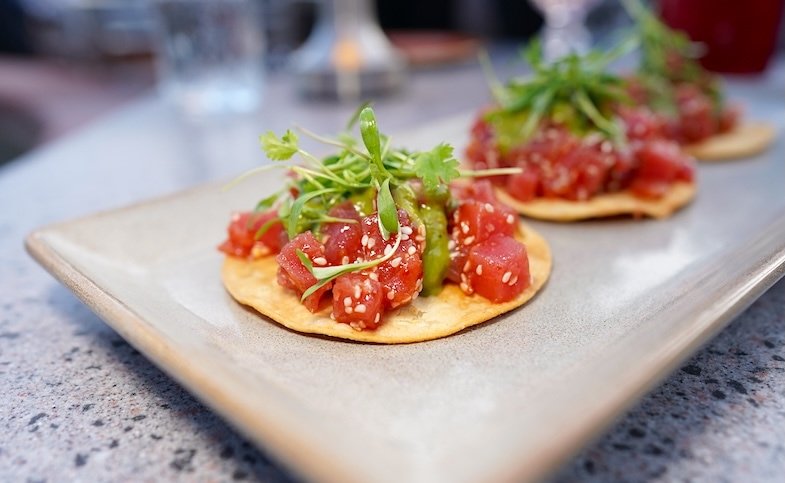
The Ahi Tuna Tostadas came out next: delicate chucks of ruby-red tuna atop crisp tostadas, punched up with Vietnamese chile, salsa verde, and sesame, then brightened with a flourish of locally grown cilantro. It’s a globally inspired bite that doesn’t shy away from boldness.

Southwest Flavors & Scenic Dining

The Black Cod was another favorite—lightly battered in cerveza and mezcal, delivering a tender interior and perfectly crisp exterior. It’s topped with a crunchy cucumber and radish slaw and drizzled with habanero crema that hits you with a whisper of heat rather than a roar.

Black Cod Tacos at at Sedona Restaurant

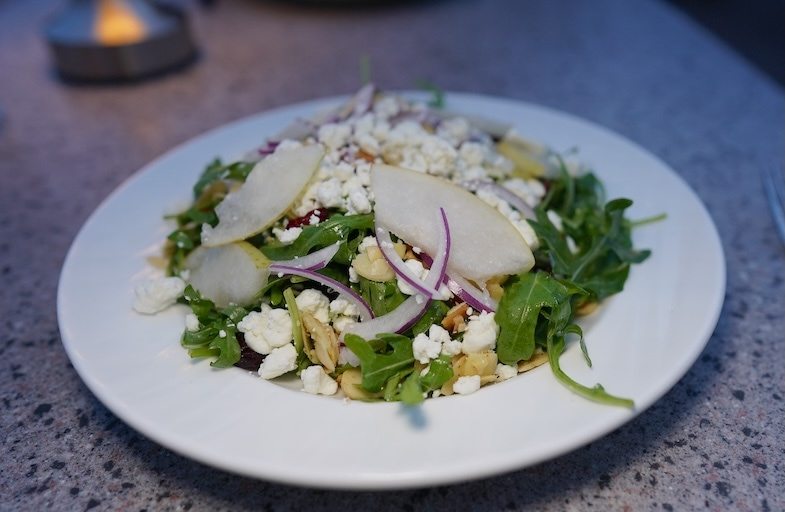
And the Pear & Arugula salad was anything but an afterthought. The balance of sweet and savory was sublime—butter-browned chipotle almonds, tangy goat cheese, dried cranberries, and a lime-agave vinaigrette that tied it all together. It’s bright, fresh, and full of texture.

Pear & Arugula salad at SaltRock Kitchen in Sedona

Main Course Pivot: When the Menu Inspires Culinary Curiosity

Originally, we had our sights set on the Duet of Pork—a luxurious pairing of mole dulce pork tenderloin and pork belly lechón, but we were informed it had recently rotated off the menu. Our backup plan was the Branzino al Pastor, a seafood play on the classic Mexican preparation with pineapple salsa, carrot cardamom purée, and fresh maize tortillas. But with the starters being surprisingly generous (and satisfying), we made a game-time decision to skip the entree and save room for dessert. A wise move.

A Sweet Finale at SaltRock Kitchen

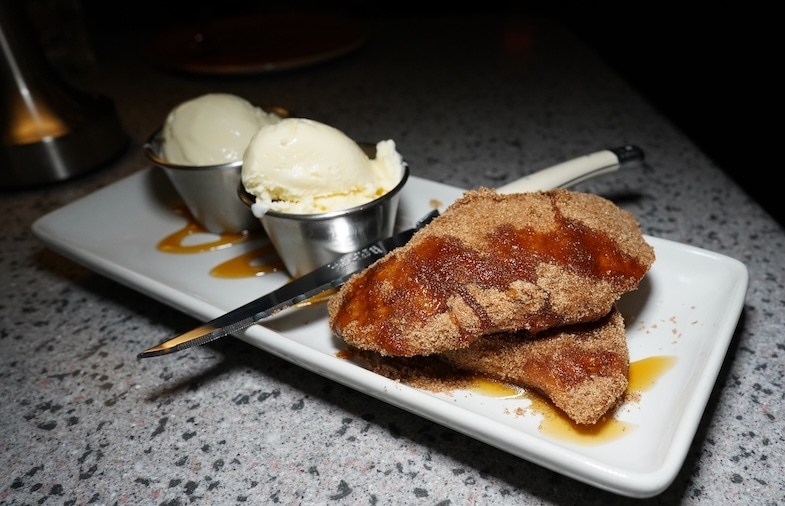
The Warm Fig & Brie Empanada was the perfect closer—crispy on the outside, warm and gooey inside with preserved fig compote and triple cream Brie, dusted with cinnamon and sugar, and finished with a hot honey drizzle. The scoops of vanilla ice cream added that final creamy note. Sweet, savory, buttery, and indulgent—a true dessert for grown-ups.

The Warm Fig & Brie Empanada at SaltRock Kitchen by Mike Shubic

Whether you’re staying at Amara or just stopping through Sedona, SaltRock Kitchen is a must. With a chef-driven menu that creatively interprets Southwest traditions, an atmosphere that showcases Sedona’s natural beauty, and cocktails that push the envelope of mixology, this place has firmly earned its reputation.

SaltRock Kitchen Contact Information:

Reservations are recommended—especially if you want that coveted patio seat with the view. Trust me, it’s worth it. If you have any questions about visiting SaltRock Kitchen in Sedona, please leave a comment below. So, until next time, we’ll see ya on the road…


Source link

Nicaragua Travel Guide

0


For decades, travelers seeking sun, sand, and the supreme biodiversity of the most pristine ecosystems in the Americas have passed over Nicaragua for neighboring Costa Rica. However, as Nicaragua is celebrating a coveted spot on Travel + Leisure‘s list of the 50 best places to visit in 2025, that finally seems poised to change.

“Many parts of Costa Rica have become busy, built-up, and expensive over the years,” says John Kendall, a boutique hotel owner with years of experience on the cutting edge of Nicaragua’s nascent travel industry. “Meanwhile, Nicaragua still has a raw, real magic to it that travelers are only now starting to see,” Nestled along the sands of Little Corn Island, Kendall’s Yemaya Reefs is one of those magical places, a destination so stunning it has been named among the most beautiful places in the Caribbean.

With a brand-new coastal highway set to connect hundreds of miles of beachfront along the Emerald Coast, it will soon be easier than ever to experience destinations in Nicaragua once reserved only for the most adventurous visitors. Amidst a growing demand from both luxury-minded travelers and the intrepid backpackers who first told tales of the country’s incomparable beauty, Nicaragua now stakes its claim among its neighbors as a destination worth traveling for.

Top 5 Can’t Miss

  • Head to the heart of Lake Nicaragua to sink into a private island paradise at Jicaro Island Lodge.
  • World-class waves draw surfers to the Emerald Coast, where brand-new accommodations elevate luxury travel in Nicaragua unlike ever before.
  • Located in the heart of colonial Granada, NM highlights local ingredients and farm-fresh cuisine at what is one of the country’s most innovative kitchens.
  • Biodiverse cloud forests near Matagalpa and remote nature reserves along the Rio San Juan welcome jungle adventures and wildlife encounters.
  • Crystal-clear waters lap at powdery sands in the Corn Islands, considered some of the last truly untouched islands in the Caribbean.

Best Hotels & Resorts

Aerial view of Jicaro Island Lodge.

Courtesy of Jicaro Island Lodge


Jicaro Island Lodge

Part of the Cayuga Collection of sustainable luxury hotels in Central America, Jicaro Island Lodge is a luxe, private island hideaway surrounded by the serene waters of Lake Nicaragua. Among volcano-studded landscapes coated in forests, the island’s nine casitas just as easily welcome adrenaline seekers eyeing water sports and hiking trails as they do those looking to spend long, lazy days floating in the infinity pool or balancing in a hammock, book in hand.

Yemaya Reefs

Feel the stress melt away instantly at Yemaya Reefs, the gem of Nicaragua’s Corn Islands in the heart of the Caribbean. The boutique property, named for the colorful corals that sit just offshore, features 20 oceanfront casitas, each perfectly secluded amidst lush jungle foliage that opens onto golden sands. Yemaya Reefs also features an intimate spa, a yoga shala, and an Afro-Caribbean-inspired dining concept. It is part of the Colibri Boutique Hotels collection with four stunning sister properties in Tulum.

Rancho Santana

A sprawling 2,700-acre resort and residential community nestled among sea and sand, Rancho Santana is the star of the surf-obsessed Emerald Coast. However, there’s much more to Rancho Santana than just catching waves, with an expansive spa and impressive wellness program, five distinct beaches, a turtle sanctuary, and more than 20 miles of hiking trails to keep guests busy. The property even maintains its own 80-acre working farm, from which it sources most of the ingredients used across numerous dining concepts that range from fine dining to casual taco spots.

Morgan’s Rock Hacienda & Ecolodge

Located just north of San Juan del Sur, Morgan’s Rock Hacienda & Ecolodge is renowned for curating an immersive and sustainable jungle experience that feels singular in Nicaragua. The property’s 15 bungalows and three villas were designed to preserve as much old-growth foliage as possible, using natural materials and incorporating design elements like thatched roofs that provide shade for private pools. Every angle highlights views of verdant jungle canopy and frames a tranquil crescent of sand below.

Best Things to Do

Colonial buildings in Leon, Nicaragua.

ClaudineVM/Getty Images


Explore the jungle.

Immense biodiversity and vast swaths of raw, untouched jungle make Nicaragua a dream for adventurous travelers. Take a tiny boat from Lake Nicaragua to the ultra-sustainable Guacimo Lodge for an immersive experience among tropical birds and monkeys in the Indio Maíz Biological Reserve. Up north, Matagalpa is the gateway to cloud forests native to the Peñas Blancas Massif Nature Reserve, which is packed with hiking trails to hidden jungle waterfalls in an area known as the “Land of Eternal Spring.”

Visit historic cities.

Many of Nicaragua’s cities still bear the richly layered architectural legacy of their colonial past, lending them an undeniable and colorful charm that visitors love. Granada is one of the oldest cities in the Americas, having just celebrated its 500th anniversary. With a canary-yellow church at its center, it’s just as vibrant and vivacious as you’d expect. From there, head to León to take in the view of whitewashed domes on the roof of the city’s church, set against brilliant blue skies.

Go surfing.

Summertime swells draw surfers from far and wide to Nicaragua’s Pacific Coast. San Juan del Sur on the sunny Emerald Coast reigns supreme as a destination for surfers of all skill levels. Or, travel with Rise Up Surf, a company with years of experience curating laid-back surfing and wellness retreats in stunning spots up and down the West Coast.

Try volcano boarding.

If surfing isn’t your scene, don a jumpsuit and grab a board to slide down the black-sand slopes of Cerro Negro instead. This active volcano is considered Central America’s youngest, having first appeared in 1850 and erupted dozens of times since. Volcano boarding is better left to only the most adventurous, as speeds can get up to 40 miles per hour for the five-minute ride to the bottom of the volcano. It’s just as wild as it sounds.

Best Restaurants

Dishes from NM restaurant.

Courtesy of NM


NM, Granada

“True fine-dining options in Nicaragua are still few and far between,” says Karen Emanuel, owner of Jicaro Island Lodge, with inspirational spots like NM in Granada charting a new path in local cuisine. Deeply faithful to the restaurant’s farm-to-table concept, chefs at NM curate seasonal menus featuring local ingredients. The eight-course tasting menu and craft cocktail list are highlights of the experience.

Boca Baco, Granada

Steps from historic Granada’s cathedral, Boca Baco fills a breezy, beautiful patio space with local art and draping greenery for an unpretentious spot to enjoy one of the best meals in town. Unexpected Asian fusion dishes and sushi rolls set it apart, but a menu including fan favorites like pasta and burgers caters to every palette.

La Cocina de Doña Haydée, Managua

Any no-frills restaurant in Nicaragua will serve classic local dishes like gallo pinto (rice and beans) and vaho (beef, yuca, and plantains cooked inside banana leaves), but La Cocina de Doña Haydée is where they shine. There are now three outposts of this popular eatery located around Managua.

Cervecería San Juan del Sur, San Juan del Sur

Nicaragua’s first brewpub perfectly fits San Juan del Sur’s beachy, surf-town vibe. A beloved haunt dedicated to using traditional brewing methods and mindfully-sourced ingredients in its beers for over a decade, Cervecería San Juan del Sur is a must for great food, live music, and a good time just a few blocks from the sand.

Magnific Rock Café, Popoyo

Head south from the breaks in Popoyo to Magnific Rock Café, a surf resort and yoga retreat with a chill cliffside eatery known for its stunning 270-degree views over the golden sands and rolling waves of the Pacific.

Downstairs, the Rock Bottom Bar is even more lively, with frequent live music and DJ sets on Saturday that transform this relatively sleepy coastal spot into a party.

Areas to Visit

View of Concepcion Volcano from Ometepe Island in Nicaragua.

Tiago_Fernandez/Getty Images


Managua

Visitors will be content with merely passing through Nicaragua’s capital city of Managua on their way to more picturesque parts of the country. “Unfortunately, a lot of the historic charm of Managua was destroyed in a devastating earthquake in the 1970s,” explains Kendall, “and there isn’t much appeal to the city for most travelers.”

Granada

Bask in the beauty of Granada, studded with cobblestone streets and facades dating back as far as the 16th century. Colorful colonial architecture hides modern restaurants and cafes, making the city “an instant favorite among visitors,” says Emanuel. The city’s lakeside location makes it convenient for exploring some of the country’s most gorgeous destinations, including the nearby crater lake, Laguna de Apoyo.

Ometepe Island

A UNESCO Biosphere Reserve, Ometepe Island sits at the heart of Lake Nicaragua. The island’s name originates from the native Nahuatl words ome (“two”) and tepetl (“mountain”), speaking to its striking hourglass shape anchored by two towering volcanoes. It’s now a haven for ecotourism with hiking trails, wildlife-laden forests, natural pools, and hidden beaches. “Many visitors say it’s their favorite part of Nicaragua,” says Kendall.

The Corn Islands

Flung more than 40 miles off the Caribbean Coast of Nicaragua, the Corn Islands have long been spoken of by in-the-know travelers looking for a truly tranquil escape. This pair of palm-fringed, white-sand islands rimmed with colorful reefs are nothing short of paradise, with the car-free Little Corn Island embodying the essence of the unhurried, undisturbed Caribbean of decades past.

Emerald Coast

Long known for its stellar surfing, the Emerald Coast is now an emerging destination for adventure and wellness-minded luxury travelers looking for their next escape. Most visitors will stay put in or around San Juan del Sur, but there are other smaller towns up the coast with even better surf breaks and plenty to see. Popoyo’s new Hide & Seek Resort and a slew of other surf schools with sleek accommodations speak to the region’s rising profile and draw comparisons with the Tulum of 20 years ago.

Best Times to Visit

Pontoon boat on Lake Nicaragua.

AnkNet/Getty Images


The best time to visit Nicaragua is between mid-November and April, when the country’s delightful dry season brings clear skies, and temperatures are more springlike than sticky. The rainy season starts in May and lasts until early November, though rains generally tend to pass quickly. Sustained, sometimes travel-impacting downpours make it best to avoid Nicaragua in September and October.

Visitors heading to Little Corn Island should be aware that windy conditions from December through February can make the boat ride from Big Corn Island rough, or on the rare occassion, cause it to be canceled outright. Though unlikely, tropical storms and hurricanes are possible in the Corn Islands during the Atlantic hurricane season from June through November.

Known as Semana Santa, the week leading up to Easter is one of the busiest times to travel, with locals streaming out of cities and heading straight to the coasts. Expect travel to be punctuated by memorable cultural experiences like processionals, traditional foods, and music, but destinations will be notably crowded and more expensive.

How to Get There

Augusto C. Sandino International Airport (MGA) in Managua is Nicaragua’s main international airport. United Airlines now offers daily flights between Managua and its Houston hub, adding even more flights during peak travel periods. It’s the only airline that provides direct service to Managua from destinations outside of Florida, where several airlines offer flights out of Fort Lauderdale and Miami.

Travelers headed for destinations in southern Nicaragua like San Juan del Sur and the Emerald Coast may also consider flying into nearby Daniel Oduber Quirós International Airport (LIR) in the Guanacaste region of Costa Rica. Though the drive takes slightly over two hours, the drive from Managua is just as long, and the Guanacaste airport offers numerous direct flights from cities across the United States.

How to Get Around

Colorful street in Granada, Nicaragua.

Stefan Cristian Cioata/Getty Images


With no significant rideshare programs available in Nicaragua, most travelers take taxis when traveling locally. Budget-conscious travelers can also take local or regional buses for a fraction of the cost (and an extra helping of adventure).

When it comes to regional travel, “I usually recommend visitors take a private transfer between cities rather than renting a car. While roads are decently good in much of the country, private transfers tend to be highly affordable and save a lot of hassle,” says Emanuel. The proximity of Nicaragua’s most popular destinations rules out domestic flights unless you’re traveling to the hard-to-reach Caribbean Coast or the Corn Islands.


Source link

Volkswagen Golf GTI with more power, less weight on the cards

0


This year marks the 50th anniversary of the Golf GTI, and Volkswagen will be celebrating it with a new special variant. The automaker recently confirmed this, stating that the new hardcore Golf GTI will debut at the ADAC 24 Hours race at the Nurburgring in June.

While Volkswagen hasn’t revealed any details of the 50th-anniversary edition, rumors suggest it could be called the Clubsport S.

We’ve also heard that the upcoming Golf GTI Clubsport S will pack around 330 hp and is expected to be more lightweight compared to the existing Clubsport. The weight reduction would be achieved by deleting the rear seats.

vw-golf-gti-clubsport-2024 (1)

The current Golf GTI Clubsport, based on the updated Mk8 Golf, is powered by a 2.0-liter turbocharged petrol engine that delivers 296 hp and 295 lb-ft of torque. That’s 35 hp and 22 lb-ft more than the standard GTI.

The same engine powers the Golf R, which has 328 hp. Both variants of the hatchback have a front-wheel drive layout, and the Clubsport S will be no different.

If the ongoing rumors are true, then the Golf GTI Clubsport S will be the most track-focused version of the popular hatchback.


Source link