Home Blog Page 144

2026 Jeep Cherokee spied with new details

0


  • A redesigned Jeep Cherokee is expected to debut in 2025
  • Latest prototype sighting points to a bigger, brawnier design for the new Cherokee
  • Jeep officials have hinted at a hybrid powertrain for the new Cherokee

Stellantis’ SUV brand, Jeep, has several new models in the pipeline, and a prototype for one of them has just been spotted.

The prototype is believed to be for a redesigned sixth-generation Jeep Cherokee, expected to hit the market later this year, likely as a 2026 model. The last Cherokee bowed out after the 2023 model year.

The heavily camouflaged prototype is unmistakably a Jeep, given its signature design elements including the trapezoidal wheel arches and seven-slot grille. A closer look at the greenhouse also suggests a strong resemblance to the Jeep Wagoneer S introduced for 2024, indicating that the new Cherokee will likely share the electric SUV’s STLA Large platform.

The section between the A- and C-pillars appears to closely match the Wagoneer S, though the Cherokee features a taller rear section, which should improve cargo space but may impact aerodynamic efficiency. Stellantis may have already hinted at the design during an investor presentation in 2021, where it showcased the outline of an SUV—albeit an electric one—with styling very similar to what we see here.

2026 Jeep Cherokee spy shots - Photo via Baldauf

2026 Jeep Cherokee spy shots – Photo via Baldauf

Former Jeep boss Antonio Filosa announced during the 2024 Los Angeles auto show that a compact crossover to fill the Cherokee’s void is coming in 2025. He didn’t explicitly refer to it as a Cherokee, but earlier in 2024 he mentioned that a compact crossover with a familiar name was on the way.

Filosa also stated at the L.A. auto show that the upcoming crossover will feature a hybrid powertrain. However, he didn’t clarify whether it will use a plug-in system like Jeep’s 4xe models or a traditional hybrid system that doesn’t require charging. At the time, Automotive News reported that a traditional hybrid is the likely option—something Jeep officials have hinted at in recent months.

The STLA Large platform supports gasoline, hybrid, and electric powertrains, and the new Cherokee may offer all three. The prototype is fitted with a gas engine, as evidenced by its exhaust pipe, though it’s unclear whether a hybrid system is also onboard.

Other new Jeeps headed to showrooms soon include the Recon electric off-roader, expected later this year, a redesigned Compass in 2026, and an electric Renegade coming in the near future, with a price tag anticipated to start below $25,000. Jeep recently confirmed that the new Compass would also offer an electric option, in addition to hybrid and plug-in hybrid options.


Source link

2025 F1 Australian Grand Prix preview: New season starts

0


  • The 2025 F1 season gets underway this weekend with the Australian Grand Prix
  • The season includes five rookie drivers and will be run over 24 races
  • The season is also the first for Lewis Hamilton at Ferrari

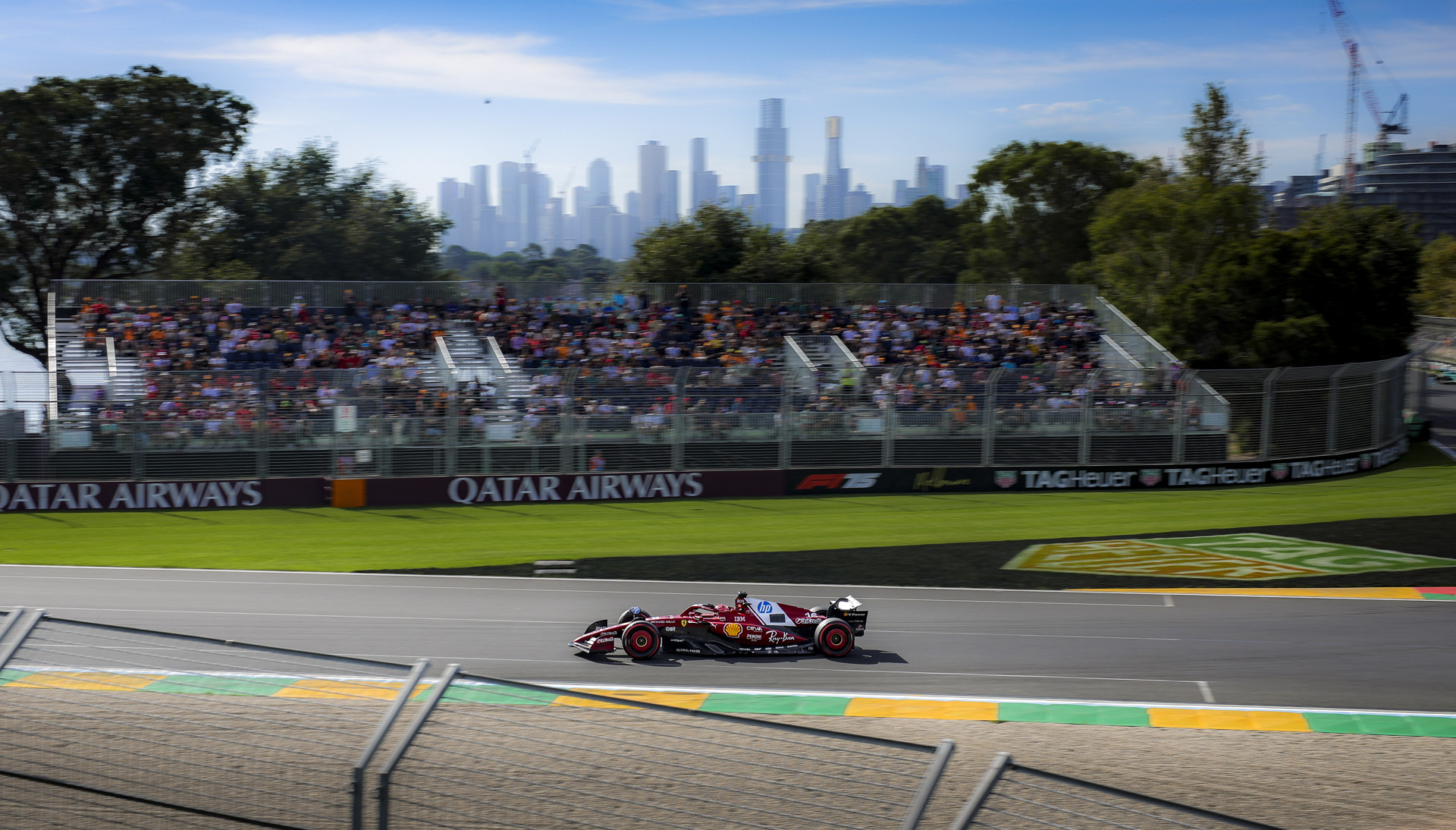
After the long winter break, the Formula 1 World Championship returns this weekend with the Australian Grand Prix at Melbourne’s Albert Park Circuit.

The season marks F1’s 75th anniversary and is the last for the sport’s current regulatory era, which goes back to 2014 when F1 made a switch from V-8 engines to turbocharged V-6 engines paired with complex hybrid systems. The V-6 hybrid format will remain when F1’s new era gets underway in 2026, though with greatly increased power from the electric side.

As F1 continues to prepare for that new era, the 2025 season doesn’t bring much in the way of new car designs, though five new drivers joining the grid should provide some surprises. They include Andrea Kimi Antonelli at Mercedes-Benz AMG, Jack Doohan at Alpine, Oliver Bearman at Haas, Gabriel Bortoleto at Sauber, and Isack Hadjar at RB. The talented Liam Lawson also returns with a full-time seat at Red Bull Racing, while Lewis Hamilton, Carlos Sainz, Nico Hülkenberg, and Esteban Ocon are all at new teams—Ferrari, Williams, Sauber, and Haas, respectively.

F1 fans can look forward to another jam-packed 24-race season. As was the case last year, three of those races will be held in the U.S. alone, at locations in Miami, Austin, and Las Vegas.

Albert Park Circuit, home of the Formula 1 Australian Grand Prix

Albert Park Circuit, home of the Formula 1 Australian Grand Prix

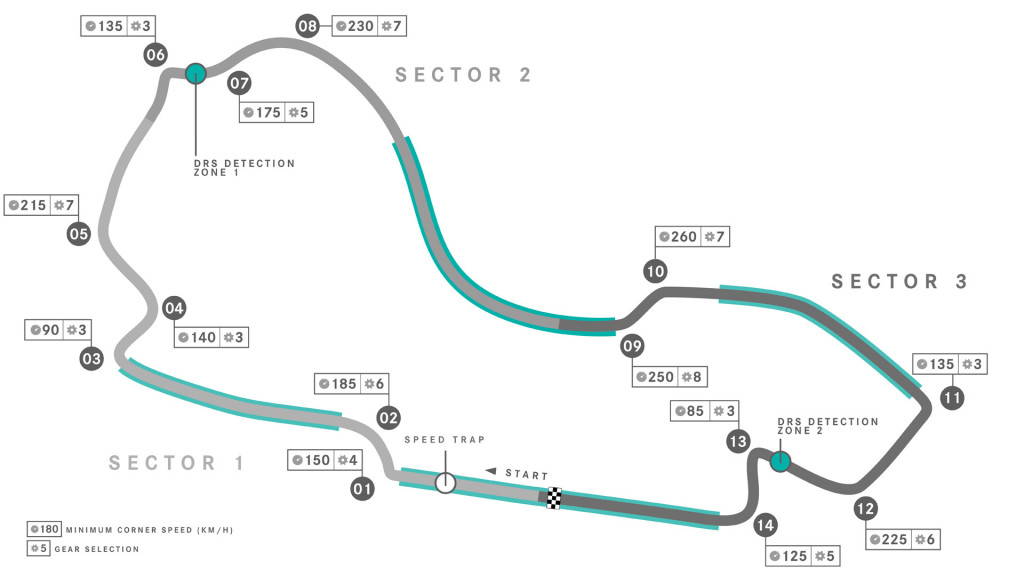
The Australian Grand Prix returns to its traditional place at the start of the calendar for the first time since 2019. It’s held at the Albert Park Circuit, a street circuit that has been on the F1 calendar since 1996. The current layout measures 3.28 miles and features a mix of high-speed and technical sections that incorporate 14 turns and four DRS zones.

With 72% of the lap time, and 79% of lap distance, spent at full throttle, the Albert Park Circuit is the third highest on the calendar for both these metrics. The circuit also has the shortest pit lane on the calendar, at just over 900 feet, meaning cars spend only about 13 seconds at pit lane speed. Pirelli has nominated its softest tire combination for the race: the C3, C4, and C5.

Weather can be a mixed bag in Melbourne, with the current forecast calling for mild temperatures throughout the weekend and possibly some rain during Sunday’s race.

Conditions were fine during Friday’s practice sessions, where Ferrari’s Charles Leclerc ended the day at the top of the timesheets (live updates are now available via Apple Sports). McLaren’s Lando Norris and Oscar Piastri also impressed, while Bearman in his debut for Haas ended his session early when he crashed at the high-speed Turn 10 and ended up in the wall.


Source link

March 2025 Lunar Eclipse From Around the World

0


Were you one of the millions who managed to take in the beauty of last night’s hauntingly beautiful total lunar eclipse? The celestial event, the first to be visible from the Americas since 2022, delivered on the hype: it turned the moon a ruddy red color for over an hour in the early morning hours.

Below are a collection of images captured from around the world.

How long did the total lunar eclipse last?

A lunar eclipse unfolds over a longer duration compared to its solar counterpart, with last night’s event kicking off at 11:57 p.m. EDT on March 13 and ending at 6 a.m. EDT on March 14. Totality—the stage of the eclipse where the moon enters the deepest part of the Earth’s shadow—started at 2:26 a.m. EDT and lasted for 65 minutes. It was visible from most of North America and half of South America. According to Time and Date, the entire eclipse unfolded over an estimated 863 million people from beginning to end. 

When is the next lunar eclipse?

If a missed alarm or gloomy weather conspired against you, the good news is that total lunar eclipses are quite common. On Sept. 7, a lunar eclipse will be completely visible over Asia, Australia, and parts of Europe and Africa. The next chance for the Americas will be in less than a year, with the next “blood moon” slated to appear on March 3, 2026. 

A total lunar eclipse infographic.

Murat Usubali/Getty Images


Why does a total lunar eclipse turn the moon red?

A total lunar eclipse occurs when the Earth aligns between the sun and moon, casting its shadow across the lunar surface. During totality, the moon gradually slips into Earth’s umbra—the darkest part of its shadow—yet never vanishes entirely. Some sunlight still reaches the lunar surface by passing through Earth’s upper atmosphere. While the shorter wavelengths (blues and violets) get scattered, the remaining reds and oranges filter through, bathing the moon in a subtle, coppery glow that’s often dubbed a “blood moon.” 


Source link

Steel of Approval – LUXUO

0


In an era where businesses sprout and wither with alarming efficiency, it is truly impressive to find one that has endured revolutions and pestilence; witnessed the transition from candlelight to electricity; journeyed from horse-drawn carriages to self-driving cars; and stayed relevant in a constantly changing world. Vacheron Constantin, among the oldest watchmaking firms in continuous operation, enters its 270th year in 2025.

The Geneva-based company has previously marked significant milestones with extraordinary timepieces that show the world just how it manages to maintain such incredible longevity. For its 200th anniversary in 1955, it released a trio of watches powered by the Calibre 1003, making them the thinnest watches of their time at 1.64mm in height. For its 250th anniversary in 2005, it presented a collection of horological marvels that included the ultra-complicated Tour de l’Ile, with an original combination of 16 complications that can be read off on a double-sided display, making it the most complicated wristwatch ever produced in a series; the record-breaking Saint Gervais with its 250-hour power reserve, and the L’Esprit des Cabinotiers – a unique secret clock concealed within an eight-petaled pink gold orb hand-engraved with a sky chart drawn by Robert de Vaugondy, geographer to Louis XV.

The 270th anniversary certainly promises more mastery and finesse, but it is kicking off the celebrations with an ode to the recent past: the Historiques 222. Eager to align with the zeitgeist of a society enamoured with the luxury sports watch category in the 1970s, Vacheron Constantin commissioned renowned watch designer Jorg Hysek to create the original 222, coinciding with the Maison’s 222nd anniversary.

The original 222 debuted in stainless steel, with precious metal variants following later. Its distinctive design elements included an integrated bracelet with hexagonal centre links, a fluted bezel and Vacheron Constantin’s signature Maltese cross, uniquely positioned at 5 o’clock within the monobloc case. The minimalist dial featured baton hands and hour markers, while the ultra-thin calibre 1120 – then the world’s thinnest full-rotor automatic movement – powered the watch and provided a date display at 3 o’clock.

It was only in 2022 that the model made its first return – in full yellow gold – maintaining the dimensions of the original “Jumbo” while incorporating modern improvements. The updated construction abandoned the monobloc case for enhanced comfort and serviceability, while the in-house calibre 2455/2 was proudly displayed through a sapphire crystal caseback. Yet collectors continued to pine for the steel version that started it all. Their wait is now over.

The new steel Historiques 222 mirrors its golden predecessor’s proportions and engineering, measuring a refined 37mm in diameter and 7.95mm in height. The case combines vertical brushing with polished bevels, while the midnight blue dial offers sophisticated contrast with the stainless steel. The signature yellow gold Maltese cross, positioned at 5 o’clock on the case flank, adds a subtle touch of precious metal.

“The 222 is a legendary timepiece and is greatly appreciated by collectors – not least because its initial production run in the late 1970s was very limited. The distinctive character of the 222 has made it one of Vacheron Constantin’s most recognisable models over the last few decades,” says Chief Marketing Officer Alexandra Vogler. “By kicking off its 270th anniversary with this iconic timepiece – one that is vintage yet resolutely contemporary – the Maison is weaving past and present together.”

This article will also be featured in the upcoming WOW Spring 2025 issue.

For more on the latest in luxury watch reads from WOW, click here.


Source link

In Her Element: Christine Nagel On Her Latest Hermès Fragrance

0


There are fewer master perfumers than there are astronauts, making it a career path that has one of the highest barriers to entry. Christine Nagel is one such master perfumer, who is also the head perfumer at Hermès. Her latest creation, Terre d’Hermès Eau de Parfum Intense, draws inspiration from the depths of Earth itself. Men’s Folio Malaysia sits down with her to learn more about the new fragrance.

Great to speak to you again. Let us start with a quick description of the Terre d’Hermes Eau de Parfum.

With this new chapter in the Terre d’Hermès story, I sought to express in olfactory terms another facet of the earth: its volcanoes, and the warmth and power of an inner fire rising forcefully to the surface.

The concept behind this scent feels very raw, almost with a visceral passion. Can you tell us about your inspiration behind this piece?

Isn’t the earth fascinating in all its expressiveness? The starting point for Terre d’Hermès Eau Givrée was the vision of an unspoilt, pure earth, alive and well under a blanket of frost. The new chapter, Terre d’Hermès Eau de Parfum Intense, offers another facet of the earth that captivates me: its volcanoes. I feel a great aesthetic emotion at seeing this subterranean impulse, this original fire that rises from the bowels of the earth in the form of a rock that is dense and absolute in its blackness. And yet it is so light.

We also get feelings of contained power. Not outwardly expressed, but held within as a smouldering source of energy. Are we on the mark about this fragrance?

That is absolutely right. For this new creation, I wanted to explore deep into the earth. An earth under which a fire smoulders. An earth that is darker, but warmer, more fiery, more intense, but I also wanted to explore a more intimate, more intense side of mankind, one that expresses the inner fire that drives us.

Did any interesting ingredients stand out to you?

I would like to single out the liquorice note. To convey the vigorous power of this inner fire, I thought I would open with assertive bergamot and a hint of black pepper with a note of burnt cedarwood. One of my suppliers then introduced me to an exceptional material, one that had never been used in perfumery before. It is natural liquorice root, which was discovered four years ago. The liquorice note in perfumery is often created using synthetic materials.

Another ingredient is roasted coffee. This had been complicated to use for reasons of colour and consistency of quality. When roasted, it can be variable in aroma. I’ve been trying to use it for a long time and now one of my suppliers has managed to create a perfectly reproducible coffee.

Were there any design choices behind the bottle that not many people know?

I am of the opinion that a fragrance is inseparable from the object that houses it. The perfect bottle is at one with the fragrance; it gives it form and becomes inseparable from it in our memory. It is identifiable by its style, the imprint of the man and know-how that gave rise to it, and by its shapes and details rooted in the house and its quality. It is elegant, functional and comfortable, but also symbolic and emblematic.

To round up this interview, what does creative freedom mean to you?

It is an idea that is very dear to the house and that is exceptional in this industry where marketing is king. It is the role of a house like Hermès, with the creative freedom it offers us, to be bold and present new directions.

This article was first seen on Mens Folio Singapore.

For more on the latest in beauty and leaders stories, click here.


Source link

Lewis Hamilton put himself in remade “Ferris Bueller’s Day Off” scene

0


  • Lewis Hamilton has starred in a remake of a scene from “Ferris Bueller’s Day Off”
  • The original scene features a replica Ferrari, which Hamilton tracked down for his remake
  • Hollywood actor Edward Norton, a friend of Hamilton, also makes an appearance

Lewis Hamilton has marked his start with Ferrari in Formula 1 this season with a little fun: remaking a famous scene involving a classic Ferrari from the 1980s cult-classic movie “Ferris Bueller’s Day Off.”

For readers not familiar with the film, it centers around the titular high schooler (played by Matthew Broderick) skipping school. At one point, Bueller and his friend Cameron Frye (played by Alan Ruck) borrow a prized 1961 Ferrari 250 GT California Spyder belonging to Frye’s father.

In one scene, they leave it at a garage and pay an attendant five whole bucks to look after it, after which the attendant immediately takes the car for a joyride.

In Hamilton’s remake of the scene, which you can view on his YouTube channel, the seven-time Formula 1 world champion plays the role of the attendant. Hamilton also got a friend, Hollywood actor Edward Norton, who was sometimes mistaken in his earlier years for Ruck, to join in, playing the role of the attendant’s colleague who joins in for the joyride.

Replica Ferrari from 'Ferris Bueller’s Day Off'

Replica Ferrari from ‘Ferris Bueller’s Day Off’

Three examples of the Ferrari were used for filming the original movie, all of them replicas. One of the three was sacrificed for the scene in which the car takes a nosedive out of the Frye residence’s garage. The other replicas ended up in private hands, and Hamilton said he tracked down one of the cars for the remade scene.

“This is to pay homage to the iconic film and to celebrate my first season with Ferrari,” he said. “Had to get the exact car too—it’s been a dream car since seeing the movie.”

Hamilton spent the majority of his F1 career with Mercedes-Benz AMG, where he won six of his seven titles. However, in recent years, the team struggled to maintain its competitive edge, with poor performances and a widening gap to rivals like Red Bull Racing and McLaren. Seeking a fresh challenge and a return to the top, Hamilton made the bold decision to join Ferrari for the 2025 season. He will enter his first race with the Prancing Horse this weekend at the Australian Grand Prix, the season opener for the 2025 F1 season.


Source link

Unlock Your Luxurious Asia-Pacific Journey

0


Exclusive Marriott Bonvoy Benefits: The More Nights You Stay, The Closer You Get to Your Private Island Villa!

A Cocktail That Sparked a Magical Escape

“Mom, look! There are glowing stars in the pool!” Six-year-old Amy gasped, leaning over the infinity pool edge at Marriott’s Bali resort as twilight painted Jimbaran Bay.

Swirling my mojito, I listened to the symphony of crashing Indian Ocean waves and my husband’s laptop clicks—a modern family travel fantasy come true. Kids discovering wonders, partners working under palm trees, and me, melting jet lag away with a spa treatment funded entirely by membership points.

“This beachfront villa with a private chef? We redeemed it using last year’s business travel points,” my husband revealed, turning our “luxurious” family getaway into a masterclass in smart travel hacking.

The Membership Treasure Box

Registering as a Marriott Bonvoy member unlocks a golden key to 30 Asia-Pacific destinations. New members now enjoy exclusive perks like opening a limited-edition gift box:

  • 3,000 bonus points on your first stay (enough for a moonlit dinner at Bangkok Marriott’s executive lounge)
  • 48-hour flash deal: Book 2+ nights in Asia-Pacific this week and save $200
  • 37% chance of free room upgrades (last month, a guest’s standard room morphed into a Maldives overwater villa with a glass-floor bathroom!)

Better yet, your points multiply like magic coins. Every business trip coffee, family vacation kids’ meal, or client meeting booked racks up credits for future escapes. Dreaming of cherry-blossom suites in Tokyo or Phuket yacht party passes? Your digital points can now turn fantasies into reality.

Beach - Marriott Resort
Beach – Marriott Resort

The Secret Math of Longer Stays

Savvy travelers know: Staying 3+ nights at Marriott triggers hidden discount algorithms.

  • Stay 3 nights, get 20% off (the “Long Vacation Equation”)
  • Stay 5 nights, pay for 4 (a “time-bending hack”)
  • Business traveler hybrid mode: Book 3 weekday nights, score a free weekend family stay voucher

Our Kyoto experiment: Originally planning 2 nights for autumn foliage, we extended to 3 when learning the third night unlocked a private kaiseki kitchen experience. Result? We devoured a chef’s century-old eel recipe and scored a discount voucher for Osaka Marriott’s executive suite. Proof that time truly does buy space here.

Marriott terrace with sea view

Asia-Pacific’s Hidden Wonderland

Marriott’s Asia-Pacific portfolio just leveled up with surreal escapes:

  • Okinawa’s newly opened Ocean Screen Hotel, where floors project real-time tidal movements
  • Singapore Sentosa’s Pirate Castle Resort, hosting holographic treasure hunts nightly at 7 PM
  • Shanghai’s Sky Meeting Rooms with switchable views: Northern Lights, cherry blossom storms, or interstellar travel

Don’t miss viral favorites like Bali’s Atlas Beach Club parties or Osaka’s rooftop floating onsens. Book via Marriott’s website now to grab a City Secrets Pass—think Bangkok alleyway noodle dynasties or Seoul’s midnight-only Michelin gems, all curated by local staff.

Aerial pool view - Marriott Resort
Aerial pool view – Marriott Resort

Let Your Trips Breed More Trips

As Amy drifted to sleep under a starlit tent at the kids’ club and my husband extended his work session using free late checkout, I sank into a Himalayan rose salt bath funded by points. My phone buzzed: “Redeem your points for Hokkaido’s ICE HOTEL package.”

Smiling, I set my phone beside the champagne flute. In Marriott’s universe, every stay isn’t an end—it’s a launchpad for your next adventure. Ready to start your story?

Head over to https://k.fanstoshop.com/9Hfa

  • Travel Dudes

    I’m sure you’ve had similar experiences I had whilst traveling. You’re in a certain place and a fellow traveler, or a local, tip you off on a little-known beach, bar or accommodation. Great travel tips from other travelers or locals always add something special to our travels. That was the inspiration for Travel Dudes.


    View all posts


    I’m sure you’ve had similar experiences I had whilst traveling. You’re in a certain place and a fellow traveler, or a local, tip you off on a little-known beach, bar or accommodation. Great travel tips from other travelers or locals always add something special to our travels. That was the inspiration for Travel Dudes.


Source link

Toyota reportedly plans hybrid powertrain for hot GR cars

0


Toyota has slowly expanded its offerings of GR-branded performance cars over the years, with models like the GR Corolla and GR Yaris attaining cult-like status in some markets.

None of the cars feature electrification, but that may change soon, Autocar reported on Wednesday, citing comments from GR engineer Hiroyuki Yamada.

According to the report, GR, which stands for Gazoo Racing, Toyota’s official motorsports arm and performance sub-brand, is developing a hybrid powertrain that uses a newly developed 2.0-liter turbo-4 as its gas component. The move will enable Toyota to meet stricter emissions regulations in both road car and motorsports applications.

“We can use hybrid for future cars,” Yamada is quoted as saying. “This technology we create we will apply to both motorsports and passenger engines.”

Toyota GR Yaris M prototype

Toyota GR Yaris M prototype

The 2.0-liter turbo-4 was announced in January during the 2025 Tokyo Auto Salon, with Toyota revealing it in a mid-engined GR Yaris prototype that rumor has it could be an early test mule for a potential modern-day MR2 sports car. A modern Celica may also be a recipient for the engine.

According to Autocar’s report, the engine features a compact, lightweight design thanks to a shorter piston stroke, and both mild hybrid and plug-in hybrid configurations are supported—with outputs as high as 400 hp possible. Timing for the engine’s market launch, whether as a sole power source or forming part of a hybrid setup, is unknown.

GR is also thought to be developing an electrified V-8 engine for a new sports car that will likely end up marketed as a Lexus. This sports car has already been spotted testing and is expected to hit the market next year.


Source link

Porsche 997 Turbo Buyers Guide

0


When the Porsche 997 Turbo debuted in 2006, it marked a significant evolution in Porsche’s flagship 911 Turbo lineage. As the successor to the 996 Turbo, the 997 Turbo was a blend of modern advancements and Porsche’s timeless approach to high-performance engineering.

 It wasn’t just another iteration—it was a statement. The 997 Turbo introduced new technology, better aerodynamics, and driving experience, making the Turbo as one of the most capable and well-rounded supercars of its era.

At the heart of the 997 Turbo was a 3.6-liter twin-turbocharged flat-six engine, an evolution of the legendary Mezger engine known for its durability, motorsport pedigree, and immense tuning potential. Producing 480 hp and 460 lb-ft of torque (502 lb-ft with overboost from the Sport Chrono Package), it delivered fast acceleration. 

With the optional Tiptronic S transmission, 0-60 mph was achieved in just 3.4 seconds, making it one of the fastest cars in its class at the time. In 2010, the updated 997.2 Turbo introduced a larger 3.8-liter twin-turbo flat-six, delivering 500 hp, and the Turbo S variant pushed it even further to 530 hp with standard PDK and ceramic brakes.

The exterior design of the 997 Turbo maintained the classic 911 silhouette while incorporating functional aerodynamic elements. The front fascia featured larger air intakes, integrated LED daytime running lights (on the 997.2), and an active rear spoiler that adjusted for stability at high speeds. Wide rear fenders housed the all-wheel-drive system, giving the car its signature widebody stance. Lightweight center-lock wheels became standard on the Turbo S.

Inside, the 997 Turbo’s cabin came with high-quality leather upholstery, complemented by optional carbon fiber or aluminum trim accents. Porsche’s PCM infotainment system evolved over the years, with the 997.2 models benefiting from a touchscreen interface, improved navigation, and Bluetooth connectivity. 

The Turbo S came fully loaded with adaptive sport seats, extended leather, and exclusive badging, reinforcing its position as the top-tier 997 Turbo variant.

Throughout its production run, the 997 Turbo faced competition from some of the most respected supercars of its time, including the Nissan GT-R, Audi R8 V10, and the Chevrolet Corvette ZR1 (C6). Yet, the 997 Turbo remained a benchmark for its blend of all-weather usability, extreme performance, and timeless Porsche engineering, securing its place as one of the most desirable 911 Turbos ever built.

Model Changes (Breakdown by Year)

2007 Porsche 997 Turbo

For the 2007 model year, the Porsche 997 Turbo made its official debut in the U.S. market, offering a Turbo Coupe as the sole body style. 

Powering the car was a 3.6-liter twin-turbocharged flat-six Mezger engine, delivering 480 hp  and 460 lb-ft of torque, with the optional Sport Chrono Package temporarily boosting torque to 502 lb-ft. Buyers had the choice between a 6-speed manual transmission or a 5-speed Tiptronic S automatic, the latter enabling quicker acceleration times, achieving 0-60 mph in just 3.4 seconds with Sport Chrono package, compared to 3.7 seconds with the manual. 

The 997 Turbo was the first production gasoline car to feature Variable Turbine Geometry (VTG) turbochargers, improving throttle response and efficiency. The car came standard with all-wheel drive (AWD), Porsche Active Suspension Management (PASM), and active aerodynamics, including a retractable rear spoiler and adjustable cooling vents. 

Optional Porsche Ceramic Composite Brakes (PCCB) were available for enhanced stopping power, making the 997 Turbo one of the most advanced and capable supercars of its time.

In 2007, the Porsche 911 Turbo (997.1) was introduced to the market with a starting price of $122,900 for the Turbo Coupe. The Tiptronic S automatic transmission was available as an option for an additional $3,420.

2008 Porsche 997 Turbo

For 2008, Porsche expanded the 997.1 Turbo lineup with the introduction of the Turbo Cabriolet, offering an open-top driving experience. 

The new soft-top, power-folding roof maintained the coupe’s structural rigidity, ensuring that the Cabriolet delivered nearly identical performance figures. 

Equipped with the Tiptronic S transmission, it could accelerate from 0-60 mph in just 3.5 seconds, matching the hardtop’s capability. 

Top speed remained at 193 mph, further proving that the Cabriolet was every bit as quick as its coupe counterpart.

In 2008, the Porsche 911 Turbo Coupe had a starting price of $126,200, while the newly introduced Turbo Cabriolet variant started at $136,500.

2009 Porsche 997 Turbo

In the 2009 model year, the Porsche 997.1 Turbo received subtle enhancements to its interior and exterior aesthetics. Inside, Porsche offered optional wood trim upgrades, allowing owners to personalize their vehicles with luxurious materials such as wood veneers and brushed aluminum finishes. 

These upgrades encompassed various components, including the dashboard, center console, and door panels, providing a more refined and customized cabin experience.

Externally, the 2009 997.1 Turbo featured new wheel designs, offering owners more choices to tailor the car’s appearance to their preferences. These options included the classic 5-spoke design, known for its balance of simplicity and aggression, and the Sport Design wheels, characterized by a 15-spoke layout that combined aesthetic appeal with functional performance.

In 2009, the Porsche 911 Turbo Coupe had a starting price of $132,145, while the Turbo Cabriolet variant started at $142,150.

2010 Porsche 997 Turbo

For 2010, Porsche introduced the 997.2 Turbo, a major mid-cycle refresh that brought significant performance, technology, and design improvements. 

The Turbo Coupe and Turbo Cabriolet returned, now powered by a new 3.8-liter twin-turbo flat-six, marking the first time Porsche’s Turbo engine featured direct fuel injection. This upgrade resulted in 500 hp and 479 lb-ft of torque, with the optional Sport Chrono Package temporarily boosting torque to 516 lb-ft. 

One of the most notable changes was the replacement of the 5-speed Tiptronic S with the more advanced 7-speed PDK dual-clutch transmission, significantly improving shift speed and efficiency. A 6-speed manual was still available for purists. With PDK and Sport Chrono, the 997.2 Turbo could accelerate from 0-60 mph in just 3.2 seconds, reaching a top speed of 194 mph. 

The exterior received revised front and rear bumpers, new LED daytime running lights, and updated taillights, modernizing its appearance. A lighter, more efficient AWD system improved handling, while a new titanium-aluminum turbocharger enhanced responsiveness. Additionally, Launch Control became standard with PDK, and Porsche Torque Vectoring (PTV) was available as an option, further refining the car’s dynamic capabilities.

In 2010, the Porsche 911 Turbo Coupe had a starting price of $132,800, while the Turbo Cabriolet variant started at $143,800.

2011 Porsche 997 Turbo

For 2011, Porsche introduced the 997.2 Turbo S, an even more potent version of the already impressive 997.2 Turbo, available in both Coupe and Cabriolet body styles. 

The Turbo S was designed as the ultimate factory-spec 911 Turbo, featuring an uprated 3.8-liter twin-turbo flat-six producing 530 hp and 516 lb-ft of torque with overboost. Unlike the standard Turbo, the Turbo S came exclusively with Porsche’s 7-speed PDK dual-clutch transmission, eliminating the manual option but enabling a blistering 0-60 mph time of just 2.9 seconds and a top speed of 196 mph. 

The Turbo S also came fully loaded with performance-enhancing features that were optional on the standard Turbo, including Porsche Ceramic Composite Brakes (PCCB), the Sport Chrono Package, dynamic engine mounts, and Porsche Torque Vectoring (PTV). 

It also featured center-lock wheels for a race-inspired aesthetic and an interior trimmed in premium leather, carbon fiber accents, and Alcantara.

In 2011, the Porsche 911 Turbo Coupe had a starting price of $137,500, while the Turbo Cabriolet variant started at $148,300. The higher-performance Turbo S Coupe began at $160,700, and the Turbo S Cabriolet was priced at $172,100.

2012 Porsche 997 Turbo

For 2012, the Porsche 997.2 Turbo and Turbo S continued unchanged, marking the final full production year of the 997 Turbo lineup before the introduction of the 991-generation 911 Turbo. 

In 2012, the Porsche 911 Turbo Coupe had a starting price of $137,500, while the Turbo Cabriolet was priced at $148,300. The higher-performance Turbo S Coupe started at $160,700, and the Turbo S Cabriolet was listed at $172,100.

2013 Porsche 997 Turbo

For 2013, the Porsche 997 Turbo lineup entered its final year of sales, with limited production as Porsche phased out the model in favor of the upcoming 991-generation Turbo. One notable release was the 997 Turbo S 918 Spyder Edition, an exclusive special edition available only to Porsche 918 Spyder buyers, featuring unique badging and premium interior trim. 

Beyond this, remaining inventory of the 997 Turbo and Turbo S models was sold off before the 991 Turbo officially took its place, marking the end of an era for one of Porsche’s most celebrated 911 Turbo generations.

The starting price for the Turbo S Edition 918 Spyder was $160,700.

Porsche 997 Turbo Common Problems

The Porsche 997 Turbo is a reliable, high-performance sports car that combines driving excitement with everyday usability and comfort. Over the years, many 911 Turbos have been used as daily drivers, accumulating high mileage while still maintaining their reliability and performance.

This breaks the traditional belief that supercars are inherently unreliable.

However, it is essential to keep in mind that all cars, even supercars, can have issues and it is crucial to perform a Pre-Purchase Inspection (PPI) from an authorized dealer or experienced independent mechanic to reveal all issues.

Coolant Pipe Corrosion: The alloy connector cups in the coolant pipes are prone to corrosion, which can lead to leaks. In severe cases, addressing this issue may require engine removal. 

Water Pump Wear: Over time, the water pump may begin to weep or leak, indicating bearing wear. Early detection and replacement are crucial to prevent overheating. 

Tandem Oil Pump Corrosion: The cover of the tandem oil pump can corrode, potentially leading to oil leaks. Regular inspections can help identify this issue before it becomes severe. 

Coil Pack and Spark Plug Deterioration: Neglecting the coil packs and spark plugs can result in misfires and reduced engine performance. Replacing these components can be labor-intensive due to their location. 

Exhaust Manifold Cracks: The exhaust manifolds are susceptible to splitting, which can lead to exhaust leaks and potential MOT failures. Addressing this issue is advisable during spark plug replacement.

Turbocharger Corrosion: Although less common, corrosion of the turbo units can occur, leading to performance issues and costly repairs. Some owners opt for hybrid turbo upgrades as a solution.

Radiator Blockage and Corrosion: Debris accumulation in the front intakes can cause radiator corrosion and reduced cooling efficiency. Regular cleaning of these areas is recommended to maintain optimal performance.

Air Conditioning Condenser Leaks: The air conditioning condensers are prone to leakage, which can impair the system’s functionality. Replacing these components is a relatively straightforward and cost-effective process.

Brake System Wear: The standard steel brakes may exhibit wear over time, affecting braking performance. Upgrading to Porsche Ceramic Composite Brakes (PCCB) can enhance braking efficiency but at a higher cost. 

Camshaft Position Sensor Failure (P0021 Code): A known issue where the camshaft position sensor fails, triggering the P0021 error code. This can affect engine timing and performance, requiring prompt attention. 

Recalls

2009 Porsche 997 Turbo vehicles

Variable Turbine Geometry (VTG) Turbocharger Lubrication (Recall no. W902)

This campaign addressed the lubrication of the Variable Turbine Geometry (VTG) turbochargers to prevent potential seizing. The procedure involved applying lubricant to the VTG mechanisms and was performed at authorized Porsche centers.

Maintenance and Ownership Costs

In comparison to other supercars, the Porsche 997 Turbo is known for its relatively minimal maintenance needs.

However, it is important to remember that regular maintenance and repairs will still be necessary, and the costs can vary depending on whether you take your car to a dealer or an independent mechanic.

Here are the suggested service schedule and intervals per Porsche:

Annual Maintenance or Every 10,000 Miles:

In addition to the annual service, perform the following maintenance tasks based on the specified time or mileage intervals:

Additional Maintenance Every 20,000 Miles or 2 Years:

Additional Maintenance Every 30,000 Miles or 4 Years:

  • Replace spark plugs

  • Replace tire sealant

Additional Maintenance Every 60,000 Miles or 6 Years:

Additional Maintenance Every 120,000 Miles or 12 Years:

  • Replace manual transmission oil

  • Replace PDK transmission oil (on 997.2 Turbo)

  • Replace front differential oil

Here is a rough estimate of typical service costs associated with the Porsche 997 Turbo:

  • Oil Change – An oil change for the 997 Turbo typically costs between $200 and $400 at a dealership, depending on the type of oil and labor rates. Independent shops may offer this service for $100 to $200. 

  • Minor Service – Minor services, including oil changes, filter replacements, and inspections, generally cost between $200 and $400 at both dealerships and independent shops. 

  • Major Service – Major services, encompassing comprehensive inspections, spark plug replacements, and fluid changes, can range from $1,000 to $2,500 at dealerships. Independent shops may charge between $800 and $1,500 for similar services. 

  • Tires – A set of four high-performance tires such as the Michelin Pilot Sport 4S tires, typically costs between $1,200 and $2,000, depending on the brand and specifications. Installation fees may vary between dealerships and independent shops.

  • Brakes – Replacing brake pads and rotors on all four corners can cost between $900 and $1,800, depending on whether OEM or aftermarket parts are used. 

  • Clutch – Clutch replacement is a labor-intensive process, with costs typically ranging from $1,500 to $2,500, depending on parts and labor rates.

Options List

When considering the Porsche 997 Turbo, understanding the available options is key to tailoring the car to your preferences. The Sport Chrono Package Turbo enhances performance with dynamic engine mounts, a SPORT button that sharpens throttle response, and an overboost function that temporarily increases torque for stronger acceleration.

Porsche Ceramic Composite Brakes (PCCB) offer superior braking performance with reduced unsprung weight, improving handling and stopping power, though they come at a significant cost over standard steel brakes.

For exterior features, the electric slide/tilt sunroof provides an open-air driving experience without compromising the coupe’s structural rigidity. Park Assist uses sensors embedded in the rear bumper to alert drivers of obstacles, making parking in tight spaces easier.

The windscreen with grey top tint reduces glare from direct sunlight, enhancing visibility on bright days. Porsche Dynamic Cornering Lights adjust the headlight beam based on steering input, improving nighttime driving by illuminating turns more effectively.

Inside, heated seats are available for both the driver and passenger, making the cabin more comfortable in cold weather. Adaptive sport seats provide enhanced lateral support for spirited driving while maintaining long-distance comfort. The Bose Sound System delivers a high-end audio experience with upgraded speakers and a dedicated amplifier, ensuring premium sound quality within the cabin.

With these options, the 997 Turbo can be configured to suit a variety of driving styles, whether focused on track performance, daily comfort, or high-end luxury. Buyers looking for the most engaging experience often opt for Sport Chrono and PCCB, while those prioritizing comfort may prefer features like adaptive seats and Bose audio.

2007 Porsche 997 Turbo options list

2010 Porsche 997.2 Turbo options list

Key Options

The Best Porsche 997 Turbo to Buy

When it comes to choosing the best Porsche 997 Turbo, several key factors should be considered, including model year updates, available options, and overall vehicle condition.

For those looking for the best version of the 997 Turbo, the 2012 model year is an ideal choice. As the final full production year of the 997.2 Turbo, it benefits from all the refinements made throughout its production run, including the 3.8-liter twin-turbocharged engine with direct fuel injection, PDK dual-clutch transmission, and improved all-wheel-drive system.

Additionally, the Turbo S variant, available from 2011 to 2013, is the highest-performing factory version, featuring 530 hp, standard Porsche Ceramic Composite Brakes (PCCB), and center-lock wheels.

Otherwise, for non Turbo S models, go for one with a manual transmission. Even though it was an optional extra for the tiptronic transmission, it is simply not desirable and often go for much less money than one with a manual. Also, the non Turbo S cars that were spec’d with the optional Porsche Ceramic Composite Brakes (PCCB) are a desirable option and you can tell because they came with factory 

In terms of market stability, 2007 to 2012 models are a solid choice for hacking, provided you find a clean, well-maintained example.

In addition to selecting the right model year, the condition and mileage of the car are crucial factors. A well-maintained 997 Turbo with full-service history and documented maintenance will not only provide better reliability but also hold its value more effectively. 

Given that many of these cars were driven hard, looking for examples with regular oil changes, clean coolant systems, and properly serviced PDK or manual transmissions is essential.

Conclusion

In summary, with a starting price of around $88,000+, the Porsche 997 Turbo remains a compelling choice for those seeking a high-performance sports car with everyday usability. It offers a balanced combination of power, precision, and all-wheel-drive capability, making it one of the most versatile 911 Turbos ever produced.

While alternatives like the Nissan GT-R, Audi R8 V10, and Chevrolet Corvette ZR1 offer strong competition, the 997 Turbo stands out with its Mezger-derived engine (997.1), direct-injection advancements (997.2), and timeless 911 design. 

For those looking for a daily-drivable supercar with a strong long-term value, the Porsche 997 Turbo is an excellent match.

Car Hacking Shortcuts

  • Target 997.2 models (2010–2013) for improved reliability, direct fuel injection, and PDK transmission for faster shifts and better performance

  • Go for the Turbo S variant (2011–2013) for higher horsepower, standard Porsche Ceramic Composite Brakes (PCCB), and better long-term value

  • Look for well-maintained examples with full service history, especially those with documented coolant pipe updates, turbo maintenance, and transmission servicing

  • Manual transmission models are desirable

  • Avoid neglected or heavily modified examples

  • Factory options like Sport Chrono, Adaptive Sport Seats, and PCCB can increase desirability and resale value

  • Higher-mileage cars can still be a good buy if major services like clutch replacements, turbo servicing, and suspension work have already been completed


Source link

Thoroughly Excellent – LUXUO

0


The Classic Worldtimer Manufacture

Swiss watchmaker Frederique Constant has joined forces with Watches of Switzerland to commemorate the retailer’s 60th anniversary. This collaboration introduces a limited-edition version of the Classic Worldtimer Manufacture, an impressively complicated watch that underscores the brand’s dedication to craftsmanship and horological excellence.

This edition of the Classic Worldtimer Manufacture is distinguished by its salmon sunray dial, adorned with a meticulously embossed grey world map. Further emphasising its global connectivity, the watch features a salmon city disc displaying 24 IATA airport codes. A notable addition to this model is the pearl black central seconds hand, which incorporates a delicate compass rose. This nautical touch is a first for the Classic Worldtimer Manufacture and thus marks the watch as singularly distinctive.

The Classic Worldtimer Manufacture

Encased in polished stainless steel with a 42mm diameter, the watch boasts an exhibition caseback engraved with an individual limited-edition number (WOS XXX/100). The elegant design is complemented by a dark brown alligator leather strap with a folding buckle, reinforcing its evergreen appeal.

At the heart of Classic Worldtimer Manufacture is Frederique Constant’s in-house calibre FC-718, an automatic movement offering a 38-hour power reserve. Designed for both convenience and precision, the watch allows for seamless adjustment of all functions via the crown, blending technical cleverness with ease of use.

The Classic Worldtimer Manufacture

Reflecting on this milestone, Frederique Constant CEO Niels Eggerding expressed his enthusiasm for the collaboration:

“We are honoured to collaborate with The Hour Glass in Singapore, and delighted to celebrate Watches of Switzerland’s 60th Anniversary with this limited edition of the Classic Worldtimer Manufacture, an iconic watch from Frederique Constant. Its salmon dial exudes subtle elegance and is enhanced, for the first time in its history, by a discreet compass rose on the counterweight of the seconds hand. A special watch, made with passion to please refined watchmaking enthusiasts.”

Image courtesy of Frederique Constant

Norman Ho, Group General Manager of The Hour Glass Group, echoed the sentiment:

“The Frederique Constant Classic Worldtimer Manufacture represents quality craftsmanship and global connection. It highlights the art of watchmaking and the strong partnerships that drive our industry. We are honoured to celebrate Watches of Switzerland’s 60th anniversary, paying tribute to its legacy while embracing the future of watchmaking”.

This commemorative edition will be available through Watches of Switzerland, reaffirming its legacy as a premier destination for fine and distinctive watches. With this launch, Frederique Constant and Watches of Switzerland continue to uphold their commitment to excellence, celebrating a shared passion for watchmaking that transcends generations.

This article will also be featured in the upcoming WOW Spring 2025 issue.

For more on the latest in luxury watch reads from WOW, click here.


Source link