Home Blog Page 166

How to Navigate Paris’s Louvre Museum Like a Pro

0


How do you fall in love with the Louvre? The biggest, grandest, most visited public repository of art in the world, it demands our attention. But love? Like an evasive paramour, the Louvre may not always seem to be interested in a relationship.

The building has sat, stonily, on the Right Bank of the Seine for centuries, starting as a medieval military fortress at the end of the 12th century, then becoming a palace and finally a museum. Royals and rulers renovated it more than 20 times, satisfying their vanity but leaving behind a sprawling structure that lacks logic. Its galleries, facades, staircases, and ceilings are individual jewels, but together they do not form a coherent whole. 

I remember nothing about the first time I visited the Louvre, the summer after my junior year in college. I wish I could say I was moved by its majesty, or felt the ghostly presence of kings and queens. Perhaps I was frustrated by the scale of the place: the long, dark corridors; wings closed because of a shortage of security guards; room after room of paintings of Jesus, Mary, and their relatives, followers, enemies, and attendant angels. I must have seen the Mona Lisa, but all I wrote in my journal was: “I went to the Louvre and walked outside of the Tuileries Garden along the shops.”

Like me, it took time for Laurence des Cars, the director of the Louvre, to yield to the museum’s seductive power. Des Cars came to the Louvre’s top job in 2021 after four years as head of the Musée d’Orsay, and some years before that as scientific director of the museum in Abu Dhabi that bears the Louvre’s name. But even she remembers nothing about the very first time she visited the Louvre. “I cannot really pin the moment,” she says. “I was not a great museum-goer when I was a kid.”

While there have been umpteen efforts to improve the visitor experience, directors of the Louvre have long acknowledged the challenges it presents—and its absence of cohesion and order. “Ours is a very difficult collection to comprehend—unless you know history, mythology, and the Bible,” Henri Loyrette, who served as director of the museum for 12 years, told me. “No one can possibly claim to be a ‘specialist of the Louvre.’ ” Jean-Luc Martinez, his successor, said “the Louvre is a palace and doesn’t have the logic of a museum.” Des Cars calls it “a large, jumbled encyclopedia.”

To free myself from feeling overcome by its forbidding magnitude, I had to learn how to visit the Louvre. I had to don the mantle of Loyrette’s humility. I had to wander and get lost and forget about time. I had to come to know the works of art by making connections and starting conversations as I roamed the galleries—with experts, guards, friends, even perfect strangers.

And so, over time and long acquaintance, the Louvre has pulled me into its grasp. I no longer see it as a fortress, palace, or museum, but as a living, breathing character with multiple personalities.

Somewhere along the way, I fell in love. 

Les Salles Rouge, home to the Louvre’s collection of 19th-century French paintings.

Chris Sorensen/Gallery Stock


Over years of trial and error, I have developed personal strategies to make a Louvre visit more enjoyable, for both first-timers and old hands.

It can take forever to get in. In the summer of 2013, shortly after he was named director, Martinez posed as an ordinary tourist and stood in line at the main entrance. It took him more than three hours to enter. It’s not nearly that bad today, but still not good enough.

It is crucial to book timed tickets in advance, as only a small number of walk-ins are allowed per day. You can avoid the main entrance at the pyramid by trying the underground Carrousel entrance, but it can also get clogged. You can line up before the museum opens, but that tactic can backfire if too many guides and their clients do the same thing. Sometimes going at lunchtime or at the end of the day works better. Joining an organized group visit or hiring a private guide can help avoid the lines. Even with the Louvre’s decision in 2023 to slash the number of entry tickets by 30 percent, there may be a wait, and it could be a long one, whatever your strategy.

Come relaxed, not stressed from a ride in an overcrowded Métro or a taxi that has been trapped in central Paris’s gridlock. And don’t count on eating when you get inside. The food stations are crowded, and the fare is mediocre. It’s best to arrive at the Louvre straight from a café. (One of my mantras is: “Never come to the Louvre on an empty stomach or with a full bladder.”) My favorite spot is Le Nemours, a three-minute walk from the museum on the Place Colette. No one at Le Nemours would mind if you ordered just one chocolat chaud and sat there for five hours. But hot chocolate is not your goal. So fortify yourself with a traditional, correctly toasted croque monsieur and head toward the museum.

Once inside, you ride down escalators into an open circular space with the feel of an airport terminal. You hear the noise of the crowd before you see it. The signs warning visitors to look out for pickpockets are unnerving but necessary. If it’s a sunny day, it gets hot; sunlight bounces off the pale stone floors and blinds you. Your visit hasn’t even started, but you already feel disoriented.

Most of the explanatory labels near each work of art are brief and written only in French. The official foldout map, showing locations of the exhibits, seems designed to confuse.

But don’t let the Louvre’s imperfect welcome discourage you. You’re here to see great art. You’ve paid admission to get in, and the temptation is to get your money’s worth. Ninety minutes to two hours is what most people can manage in one go. If you try to stay longer without a break, your feet will hurt, and you will forget much of what you saw. Travel light, with a small backpack or the smallest handbag possible; leave the guidebook, the sketchbook, and the water bottle home. Wear sturdy footwear. For the slippery stone, especially the marble stairs, I would stick with your most structured running shoes. To minimize distractions, avoid Mondays. It’s the worst day to go, because the Musée d’Orsay is closed, increasing demand at the Louvre (which is itself closed on Tuesdays). Avoid Wednesday afternoon, because French children have no school, freeing throngs of families for museum-going.

The Louvre also closes certain rooms (cleaning, renovations, lack of security staff) and announces the closures on its website. If you are determined to see certain artworks, reading up in advance offers some help. There are thousands of guidebooks. My favorite is an oversize, 107-page official guide with excellent color images, Masterpieces of the Louvre. It comes in several languages and can be purchased for just eight euros at the museum or through its online store.

As much as I prefer wandering, I can give a basic Louvre pilgrims’ tour—the biggies and more—in two hours. I take guests up the escalator to the Sully wing, through a vestibule where the walls are decorated with four friezes, and then into a long tunnel to see the vestiges of a centuries-old fortress wall.

Then we mount a staircase on the right, and then another, also to our right, and enter the vaulted Renaissance music gallery known as Le Salle des Caryatides, with its ancient Roman statues. Through the windows, we view the pyramid on the right and the Cour Carrée on the left and continue straight to the Venus de Milo, in the room next door.

We take a breath here. Then comes a right turn through the juncture of the Greek, Roman, and Etruscan collections. We take a quick look at the Baroque ceiling, then head up the stairs to the Winged Victory of Samothrace. We have now reached the Denon wing and find ourselves at the museum’s busiest crossroads. First, we revel in the beauty of the goddess of victory. Then we proceed to the left into the razzle-dazzle Apollo Gallery, where the crown jewels are displayed. After we’ve been blinded by France’s royal heritage—or what’s left of it—we U-turn and return to the Winged Victory.

This time we take a right, pausing as we encounter Botticelli’s Venus. (There are quiet places to sit near the windows that look out to the floor below.) Then through the Salon Carré, with its 13th- to 15th-century Italian paintings, and more famous and later Italian paintings in the Grande Galerie, which is not a gallery but a long corridor. We don’t miss the four Leonardos! Walking the length of the Grande Galerie, we then follow the crowd to a room that leads to the Salle des États to see the Mona Lisa. I tell my guests not to waste 20 minutes waiting in line unless they are determined to take a selfie with her, but to look at her from the side. Then I insist we take in the other great paintings in the room, starting with Veronese’s The Wedding Feast at Cana, 150 times bigger than the Mona Lisa. And we don’t leave without spending time with Titian’s Man with a Glove. On the other side of the partition where the Mona Lisa hangs are three other Titians. Hardly anyone looks at them, but we do! 

When we leave the Salle des États through the Mona Lisa gift shop, we turn to the Red Room, which is filled with the best of Neoclassical art, from David’s Coronation of Napoleon to Ingres’ Grande Odalisque, one of the most beautiful women in the Louvre. Then we go back to the other gallery next to the Salon Denon to see what Romanticism did best in Géricault’s Raft of the Medusa and Delacroix’s Liberty Leading the People. After this we’ll find ourselves at the Escalier Mollien, which we descend to witness how Michelangelo captured in marble the beauty of two slaves. Et voilà, we’ve seen some of the best the Louvre has to offer.

Now for my dirty little secret about how to conquer the Louvre stress-free. While entry is free for many, the price of a standard ticket is 22 euros (about $23) and expected to cost 30 euros (about $31) in 2026. If you plan to visit multiple times over the course of a trip, splurge and become a Friend of the Louvre. For 80 euros—the price of dinner with wine at a reputable bistro—you can buy an annual membership (120 euros for two people). You can apply in advance online, with a photo; the card will be mailed to you. Or apply in person at the Amis du Louvre office inside the Louvre. You just wave the card at the Richelieu entrance, enjoy unlimited entry, cut the line like a celebrity, and stay for as long as you want. It is the best cultural deal in Paris.

Launch an opération séduction on the staff. “If you’re a normal person, you might feel aggressive and frustrated,” Guillaume Kientz, director of the Hispanic Society Museum & Library in New York and a former Louvre curator, told me. “Instead, be extremely nice to all the employees—say ‘Bonjour’ to all the security guards. They could use appreciation from the visitors, because they are the ones no one looks at except to complain. If you treat a French person with kindness, all the doors will open for you.” 

When it all feels overwhelming, head to a quiet place: the lower floor of Islamic Arts, perhaps, or the rooms with the Poussin paintings, or a marble bench in the Marly sculpture courtyard. Just say to yourself over and over, “I am in Paris. I am in the Louvre.” 

Excerpted from Adventures in the Louvre: How to Fall in Love With the World’s Greatest Museum, published this month by W. W. Norton & Company.

A version of this story first appeared in the March 2025 issue of Travel + Leisure under the headline “Learning to Love the Louvre.


Source link

Ford Carousel: Forgotten Concepts | The Daily Drive

0


Maybe not the first minivan, but a nod to family-first transportation.

Front 3/4, colorized
Ford Carousel

Forgotten Concepts, Forgotten Concepts This is an installment in a series of posts looking back on show cars that we feel deserved a little more attention than they got. If you have a suggestion for a Forgotten Concept topic, please shoot us a line or leave a comment below.

Ford Carousel Prototype

First Seen

1973


Description

Passenger-van prototype


Sales Pitch

Something to position between the Country Squire station wagon, and Club Wagon van.

More Forgotten Concepts

Profile, black and white, sepia,
Ford Carousel

Details

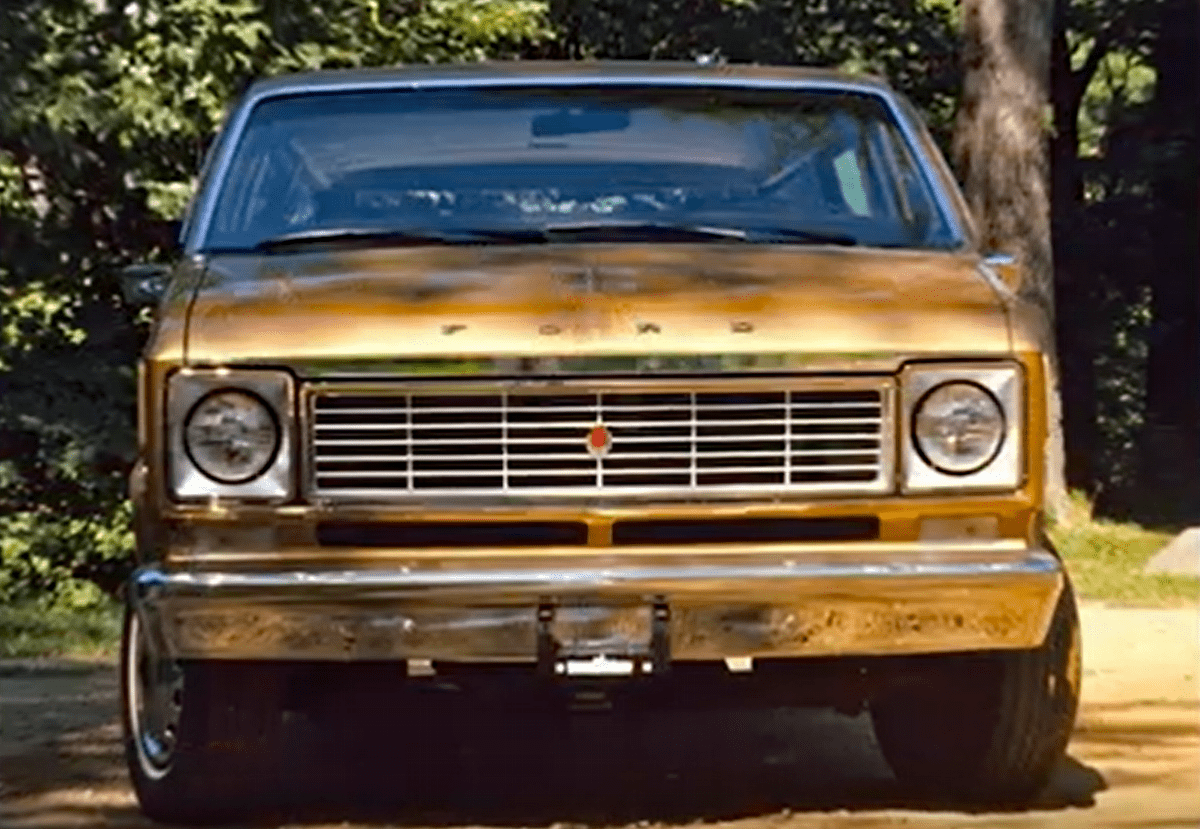
Rendered by esteemed Ford designer Dick Nestbitt—creator of the hyper-popular Mustang II—in 1973, the Carousel was conceived to serve families looking for something larger and more comfortable than a station wagon, but smaller and easier to garage than a full-size Club Wagon van. Then Ford President Lee Iacocca supported the “Nantucket Program” as the Carousel project was internally named.

To contain costs, the Carousel featured the dashboard of a Thunderbird, and many of the interior elements of the LTD Brougham. Though nowhere near as small as coming minivans would be, the Carousel stood just 6 feet high, fully a foot shorter than the Club Wagon from ground to roof.

The Carousel was powered by Ford’s enormous 460-cubic-inch (7.5-liter) V8, backed up by a 3-speed automatic transmission. To maximize cabin space relative to the Club Wagon, the engine and transmission in the Carousel were relocated further forward on the van chassis. And, despite its size, the Carousel was conceived as a 5-passenger van, which likely left plenty of space for cargo.

As fate would have it, Iacocca was booted from Ford in 1978, and support for the Carousel projected faded. Iacocca famously landed at Chrysler, where he brought to life the “K-Car” compact cars, and the new-for-1984 Dodge Caravan and Plymouth Voyager minivans, no doubt the spiritual successors to the stillborn Carousel. And, as the Carousel was a prototype, and not a concept car, the vehicle was never seen at an auto show or other public event.

Side door open, profile, Woodie
Ford Carousel

CG Says

While the Carousel was indeed novel in concept, it was not the first minivan, and there is absolutely not certainty that it would have sold well.

The Carousel was much larger than the coming Chrysler minivans, plus, it’s massive engine would have made it a gas guzzler, and its rear-drive design meant that it sat higher off the ground than many families would likely have liked.

Timing, too, was working against the Carousel. Gas prices were on the rise, and massive inflation—and related high interest rates—seen toward the end of the Seventies would have made for a very rocky product launch.

We love the look of the Carousel, and the modern open-cabin glass design would have, indeed, made the van an excellent long-trip conveyance. Click here to see more Forgotten Concepts.

Dick Nesbitt drawing, Ford Carousel
Ford Carousel

 Listen to the Consumer Guide Car Stuff Podcast

Follow Tom on Twitter

Ford Carousel Pictures

(Click below for enlarged images)

Forgotten Minivans: More than 30 Minivans You Don’t Remember (Pictures and History)

Consumer Guide Car Stuff Podcast Episode 262: New Genesis, Delightful Subaru, Ford Law-Enforcement Fun


Source link

2026 Porsche 911 GT2 RS order books are now open

0


The hottest, most anticipated upcoming Porsche has to be the new 911 GT2 RS. While it is expected to debut early next year, a recent leak suggests Porsche has started accepting orders. The estimated price is €450,000, and deliveries are expected in June 2026.

Like the previous generation, the 992 Porsche 911 GT2 RS is expected to see a limited production run. The 991-gen was introduced in 2017, and only 1,000 units were built.

992 Porsche 911 GT2 RS orders

The GT2 RS is positioned as the most powerful and track-focused version of the 911. The same will be true for the new 992-gen car. While exact details are unclear, rumors suggest it might have around 850 hp. That’s over 150 hp more than the previous generation.

The 991 GT2 RS had a 3.8-liter twin-turbo flat-6 engine that made 691 hp and 553 lb-ft of torque. It was paired with a 7-speed PDK transmission, enabling the car to sprint from 0-60 mph in 2.7 seconds. It had a top speed of 211 mph.


Source link

2025 Mercedes-AMG GLC63 S E Performance review

0


It’s sad to see another V8 go.


Note: This is an updated version of a review first published in August 2024.

There have been major changes to pricing or specifications in the past months since publication, save for some minor pricing changes due to adjustments with the Luxury Car Tax (LCT) threshold.

We have updated key details, such as pricing, with the most up-to-date information available. Read the original version of this review here.


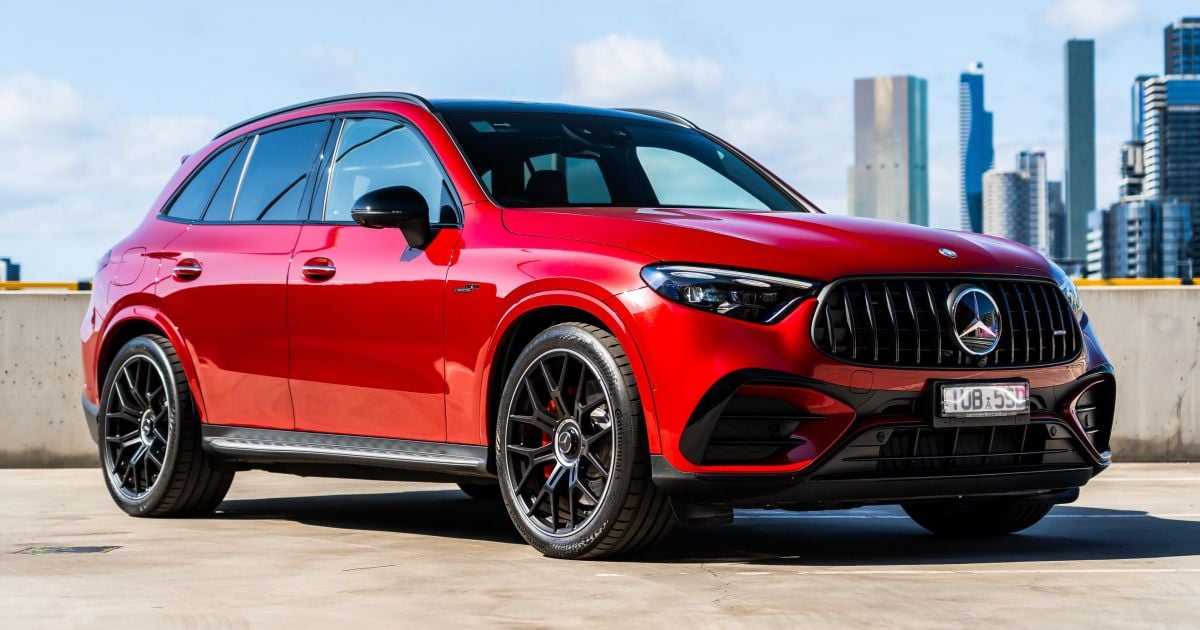
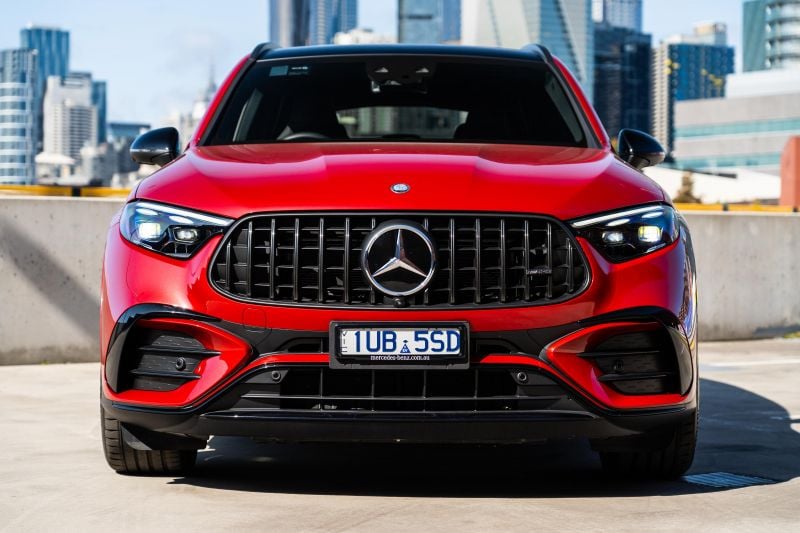
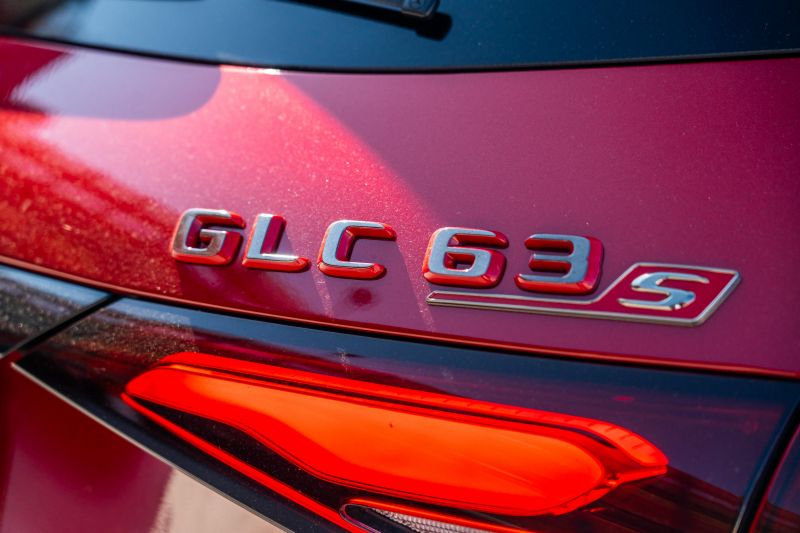
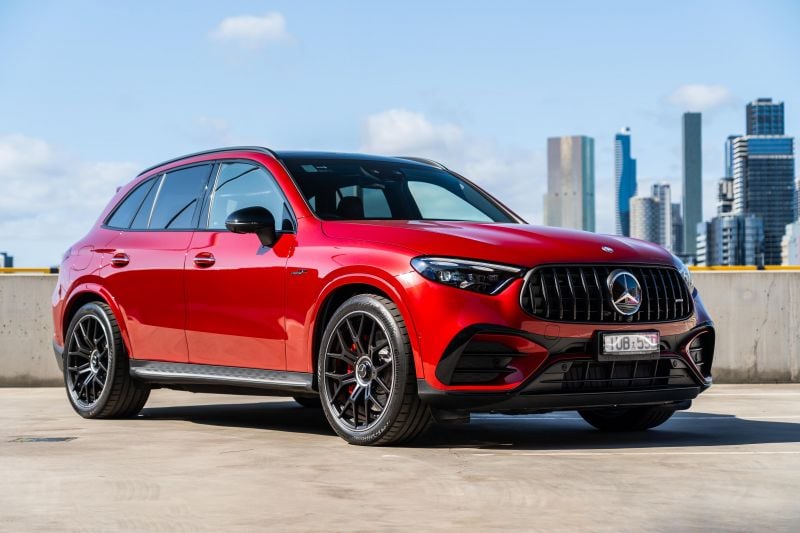
The Mercedes-AMG GLC63 S E Performance is the brand’s new high-performance mid-sized SUV, ditching the twin-turbocharged V8 of the old AMG GLC63 in favour of a turbocharged four-cylinder plug-in hybrid powertrain.

It follows the same playbook as the new C63, which it’s closely related to. As with the wider C-Class range, all GLCs pack four-cylinder power, with the GLC63 sitting above the GLC43 which features the same engine but without the plug-in hybrid system.

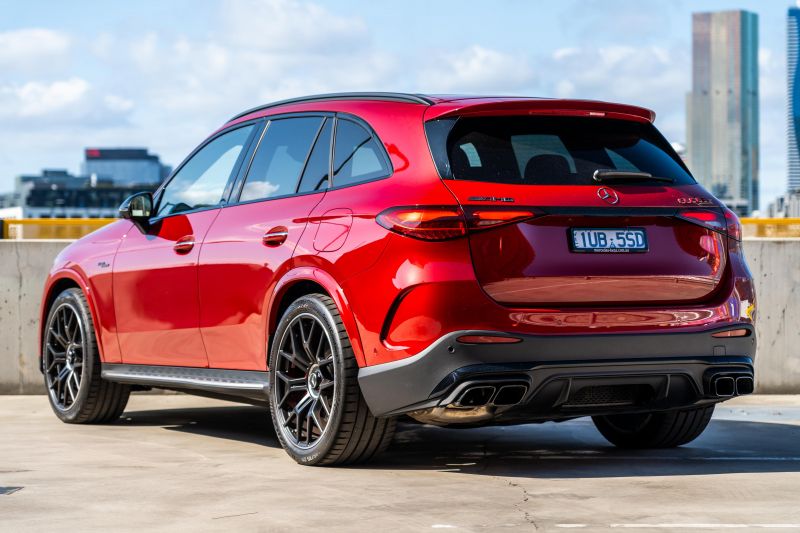
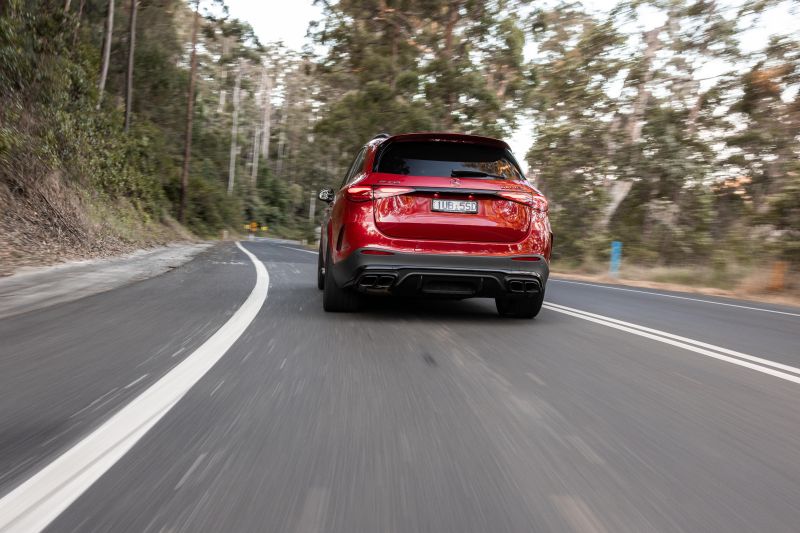
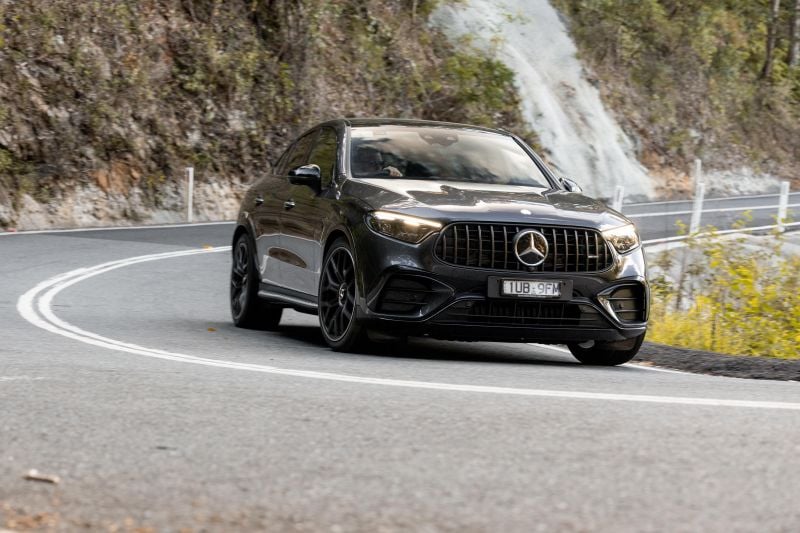
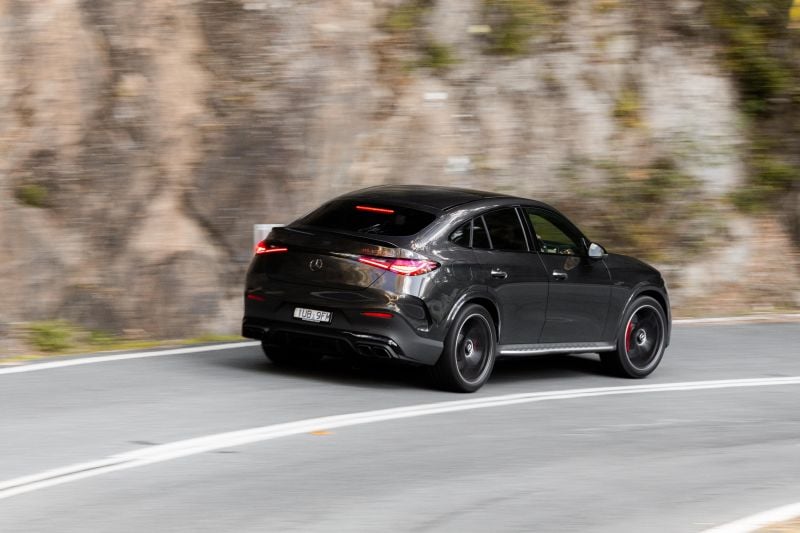
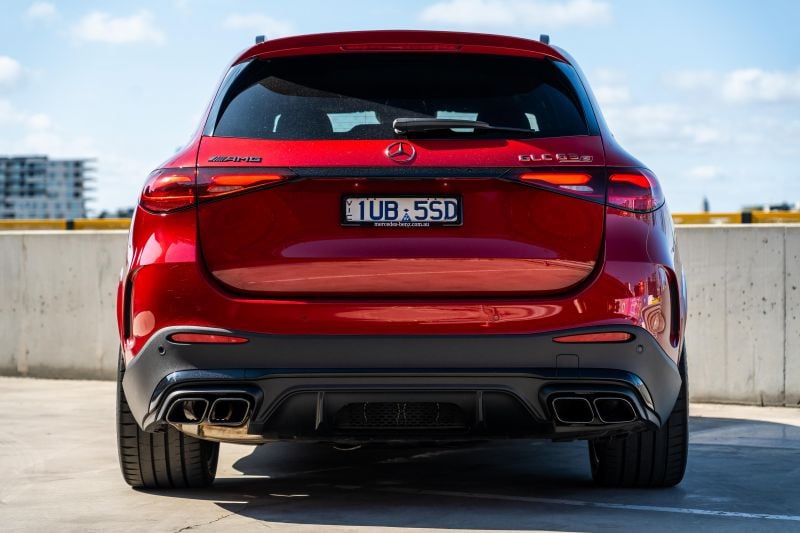
The four squared-off (instead of round) exhaust outlets are the biggest giveaway this isn’t the GLC43, but like its less expensive sibling this is a very subtle-looking performance SUV. Those useless side steps are a bit silly though.

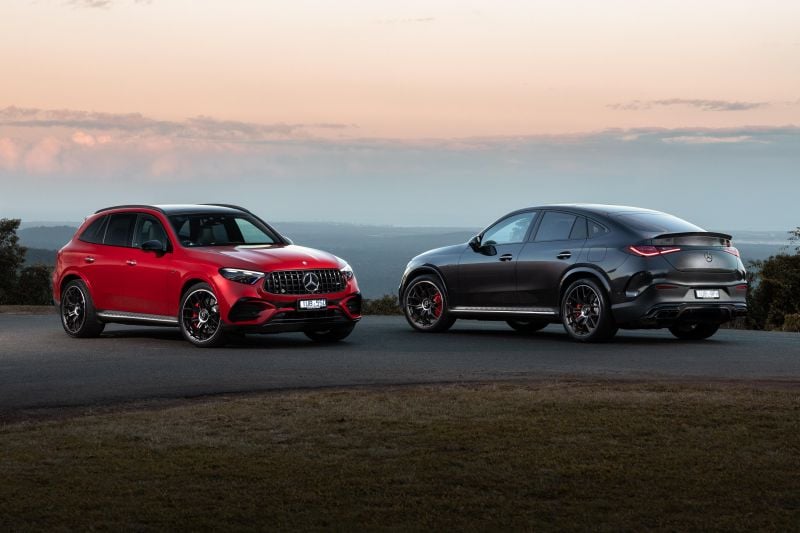
As with the GLC43, there’s a choice of more traditional SUV or coupe SUV body styles, with the latter arguably doing a better job of looking like a coupe than its predecessor – those tail lights could have come straight from the new CLE Coupe.

The mid-sized high-performance SUV segment is undergoing a huge transformation right now, and the GLC63 has gone from being the only V8-powered model to being the only plug-in hybrid (PHEV).

The BMW X3 and X4 stick with a twin-turbocharged inline six in hot M guise, and rumour has it these high-performance SUVs won’t be directly replaced.

The Maserati Grecale Trofeo and Alfa Romeo Stelvio Quadrifoglio also have twin-turbo sixes, while Audi still hasn’t launched an RSQ5 which leaves only the tamer SQ5. Finally, Porsche’s Macan is now all-electric in Australia.

The GLC63 therefore is quite a unique offering in the segment. Is it the one to pick?

How does the Mercedes-AMG GLC compare?

View a detailed breakdown of the Mercedes-AMG GLC against similarly sized vehicles.

Mercedes-AMG GLC cutout image

Mercedes-AMG

GLC

How much does the Mercedes-AMG GLC63 cost?

The GLC63 is a bit more expensive than rivals from BMW and Maserati, though it’s more powerful than all of them.

ModelPrice before on-road costs
Mercedes-AMG GLC63 S E Performance$191,814
Mercedes-AMG GLC63 S E Performance Coupe$198,415

To see how the Mercedes-AMG GLC63 lines up against the competition, check out our comparison tool

What is theMercedes-AMG GLC63 like on the inside?

The GLC63’s interior isn’t dramatically different from lesser GLCs.

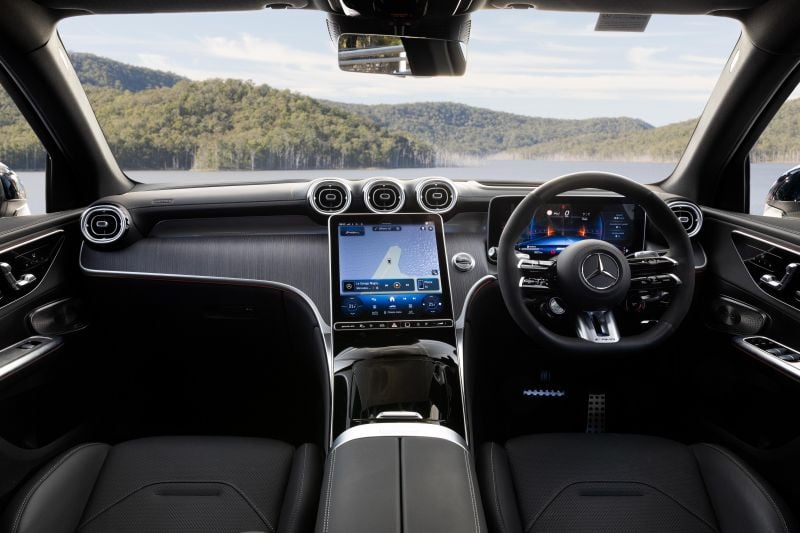
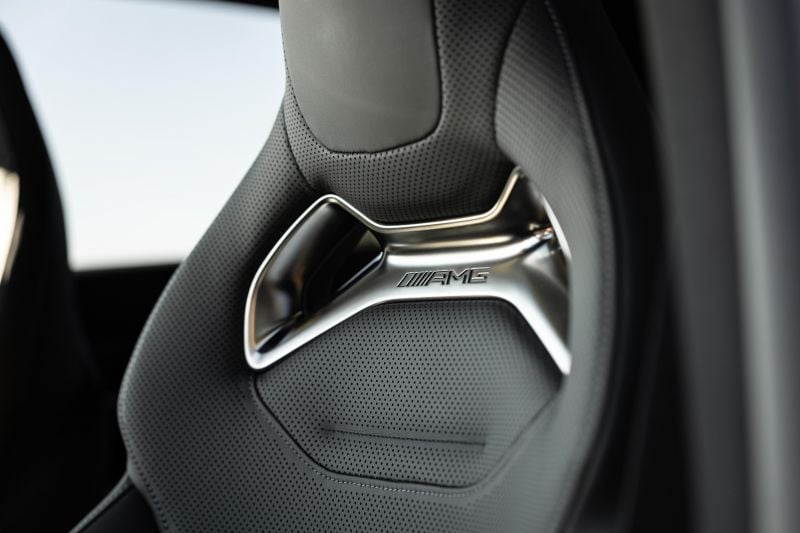
Let’s start with what is different. There are wonderfully comfortable, supportive AMG sports seats finished in Nappa leather, which feature heating but no ventilation or massage. You can also opt for racier AMG Performance seats.

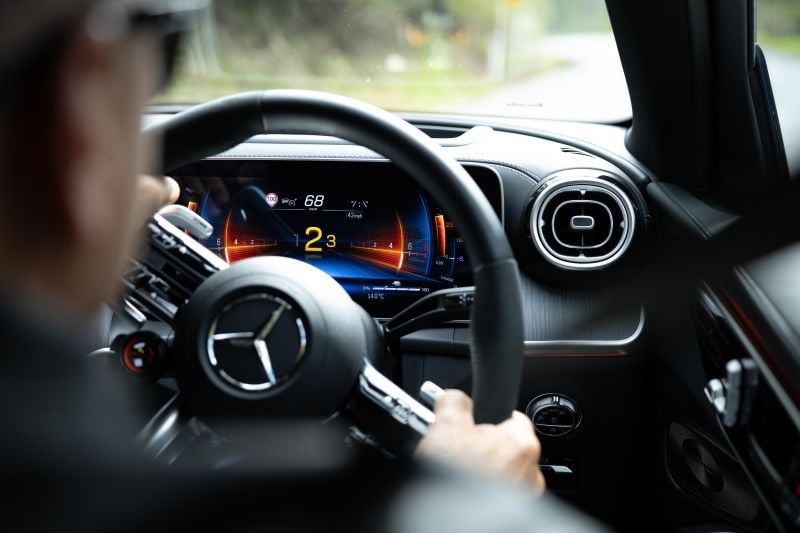
The standard AMG Performance steering wheel feels terrific, with a thick, perforated Nappa leather rim and AMG’s little rotary controls towards the bottom. The touch-capacitive switches are okay, but we’d prefer traditional buttons and toggles.

There are also various AMG- and hybrid-specific screens on the 11.9-inch infotainment touchscreen and the 12.3-inch digital instrument cluster.

Otherwise, this is standard GLC (and C-Class, and EQE SUV, and EQE, etc) fare. That means an interior that is flashy and majors on showroom appeal, but has a small handful of disappointing elements once you scratch past that glitzy surface.

On the topic of scratching, the vast swathe of piano black trim on the centre console seems especially susceptible to it, as well as fingerprint smudges and dust.

Look, Mercedes-Benz is far from alone in using this material. But what makes its application so perplexing here is that there’s a sea of wood trim across the dashboard which could have used instead. There’s also genuinely attractive, tactile metal trim used around the window switches which we wouldn’t mind seeing more of.

The Edition 1 includes some enticing additions inside the cabin. The steering wheel features carbon fibre and microfibre, there are various yellow highlights such as the contrast stitching and seatbelts, and that forest of wood on the dash becomes a sea of carbon fibre.

Personally, I’m not usually a fan of carbon-fibre trim as it feels a bit cliché at this point, but the stuff in the Edition 1 is genuinely attractive. Note you don’t have to go for the Edition 1 to get the trim or features like the carbon-fibre/microfibre steering wheel and multicontour performance seats, as these are available in other option packages.

Given how close this is to the GLC300 inside, a car which costs around half the price, there are a few issues that are especially bothersome in the more expensive GLC63.

The button to open the centre console bin, as we’ve noticed in various Mercedes models, feels very cheap. The lowest reaches of the dash and doors are also finished in hard plastic – tolerable in a circa-$100k GLC300, less so in a circa-$200k AMG GLC63.

However, overall cabin presentation, like the cheaper GLC, is good. There’s a soft-touch dash top with stitching details, as well as soft-touch trim on the sides of the centre console. The squircle air vents are attractive, as are the metallic speaker grilles, and there is of course Mercedes’ flashy ambient lighting.

The technology is also top-notch. The infotainment system is generally quite easy to navigate, with climate controls always anchored to the bottom of the screen in the absence of physical switches.

The digital instrument cluster also offers a range of different display modes, all of which feature attractive graphics.

Step into the back and you’ll find a spacious second row. There’s noticeably less headroom in the Coupe, however, as well as worse visibility out of the rear window due to the sloping roofline.

There aren’t separate climate controls back here, though there are air vents plus USB outlets and a fold-down centre armrest with cupholders. If you want to fit a child seat, you can use one of three top-tether or two ISOFIX anchor points.

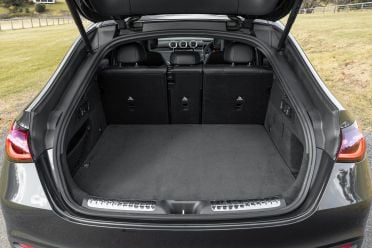
Boot space is down on lesser GLCs due to the large battery. It’s also down 110L on the previous-gen model, regardless of what body style you choose, and that’s despite the new GLC being between 44mm and 67mm longer overall.

DimensionsGLC63GLC63 Coupe
Length4749mm4792mm
Width1920mm (2076mm incl. mirrors)1920mm (2076mm incl. mirrors)
Height1635mm1603mm
Wheelbase2888mm2888mm
Cargo capacity470-1530L390-1335L

To see how the Mercedes-AMG GLC63 lines up against the competition, check out our comparison tool

What’s under the bonnet?

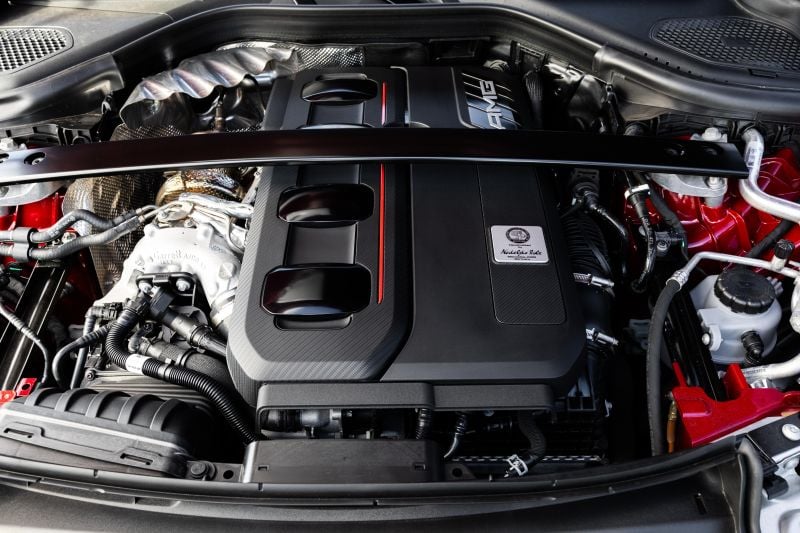
As with the new C63 S E Performance, the GLC63 packs a version of the turbocharged 2.0-litre four-cylinder ‘M139’ engine from the AMG A45 S that is the most powerful production four-cylinder engine in the world.

SpecificationsMercedes-AMG GLC63 S E Performance
Engine2.0L turbo four-cylinder
Engine outputs350kW
545Nm
Electric motor outputs150kW
320Nm
System outputs500kW
1020Nm
Battery6.1kWh lithium-ion
Transmission9-speed automatic
2-speed automatic integrated with electric motor
Driven wheelsAll-wheel drive
Weight2338-2366kg
Fuel economy (claimed)7.3L/100km
Fuel economy (as tested)12.8L/100km
Electric driving range (PHEV)14km
Electric energy consumption (claimed)9.8kWh/100km
Fuel tank capacity65L
Fuel requirement98-octane premium unleaded
CO2 emissions166g/km
Emissions standardEuro 6
Braked towing capacity1800kg

This is mated with a rear-mounted electric motor with 150kW of peak power and 320Nm of torque (or 80kW of continuous power), fed by a 6.1kWh lithium-ion battery pack. A turbocharger is driven by not only exhaust gases, but also by a 48V electrical system.

Compared to the old GLC63, the new car has 125kW more power and 320Nm more torque in total, and is also 0.3 seconds quicker to 100km/h.

To see how the Mercedes-AMG GLC63 lines up against the competition, check out our comparison tool

How does theMercedes-AMG GLC63 drive?

I got into the GLC63 S E Performance with three concerns: that it was going to feel overly heavy and ponderous; that it was going to have a lumpy ride on account of the large battery pack and low-profile tyres; and that it wasn’t going to sound all that good.

Driving this new-generation performance SUV, however, has assuaged most of my concerns. Let’s address the elephant in the room: the sound. After all, that’s one of the best things about a V8, right?

Make no mistake, the new GLC63 doesn’t sound as good as the old one – that doesn’t mean it sounds bad, however.

Mercedes-AMG has installed a pressure sensor within the exhaust that it says allows it to pick up the engine note and transfer it to the speaker system inside the car.

You can manually toggle an amplified version of the engine note in either the vehicle settings menu or by using one of the steering wheel toggles, and it goes from sounding like a typical turbocharged four-cylinder Benz to sounding, well, pretty good.

Okay, not V8 good, but it makes the GLC63 louder, more dynamic-sounding and yet easy on the ears. You also get some tasty pops and crackles.

When you’re running on pure electric power, there’s a futuristic, spaceship-y noise.

As you’d expect, the GLC63 is very fast given it takes the most powerful production four-cylinder engine in the world and then mates it to an electric motor.

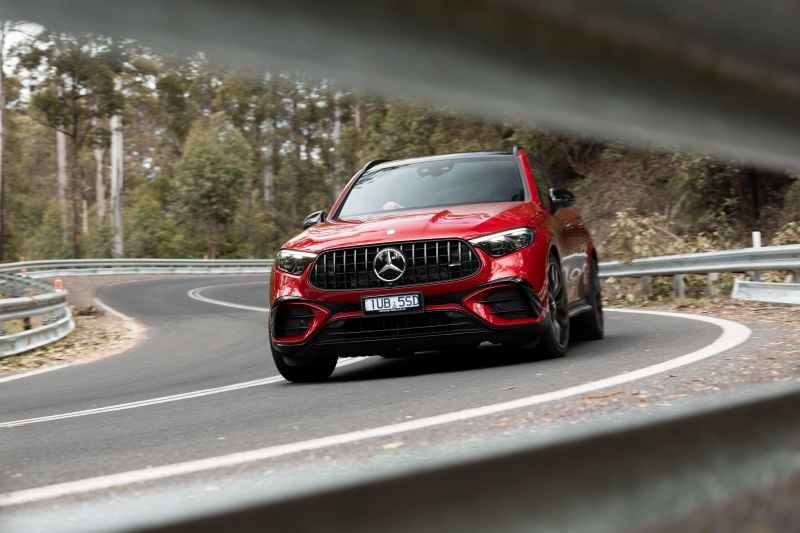
Our drive route took us along some of the best driving roads in South East Queensland, including through Mount Nebo and Mount Glorious, in a GLC63 Coupe.

First, however, we had to get through peak-hour Brisbane traffic, which revealed just how versatile these performance plug-in hybrids are.

You can zip around on pure electric power at speeds up to 120km/h, though you only have a claimed 14km of electric range. You can plug the GLC in and recharge the battery using AC power at up to 3.7kW, or use the petrol engine to top it up.

There are so many drive modes to choose from, selectable using a handy wheel on the steering wheel. These comprise Slippery, Individual, Battery Hold, Electric, Comfort, Sport, Sport+ and Race modes.

What this means is if your spouse is a tame driver and you’re more adventurous, you have this excellent dichotomy whereby they can drive it in Comfort or Electric and find it thoroughly unintimidating, and then you can get in, pop it into Sport+, and fang it.

We kept it in Comfort mode around town, and then flicked it to Sport+ when the roads got more interesting.

While driving around at lower speeds, we found the transition between petrol and electric power to be very smooth.

If you want, you can configure your own Individual setting. Choose between Battery Hold, Electric, Moderate, Sport, Dynamic and Race for drive; Comfort, Sport and Sport+ for suspension; and, for AMG Dynamics, Basic, Advanced, Pro and Master levels.

By adjusting the AMG Dynamics level, you’re altering the calibration of the stability control, the all-wheel drive system, and the electronically controlled limited-slip differential.

It all sounds a bit complicated, doesn’t it? Well, yes, but it also means there’s a seemingly endless amount of customisation on offer, so you can tailor the car just the way you want it.

There’s meaningful differentiation between the drive modes, too. For example, thanks to the adaptive dampers, the ride, while still firm, is much more pliant in Comfort mode with almost a hint of float, in contrast with the stiff feel you get in Sport+.

The steering always has a nice weighting to it. Turn-in is sharp, and there’s plenty of road feel here.

We wish the brake pedal felt better, however. When we went to give the GLC63’s pedal a stab before a corner, we found it felt rather spongey. The brakes themselves are excellent, our criticism is with the feel of the pedal.

The GLC63 weighs a sizeable 250kg or so more than its predecessor, largely due to that battery pack. But Mercedes-AMG engineers have nevertheless improved the weight distribution, which has gone from 55:45 front/rear to 49:51; the electric motor is situated on the rear axle.

Torque is distributed anywhere from 50/50 front/rear all the way up to 100 per cent to the rear.

The GLC63 features rear-axle steering, which can move the rear wheels in the opposite direction to the front wheels by 2.5 degrees at speeds of up to 100km/h; likewise, they can move in parallel to the front wheels at an angle of 0.7 degrees at speeds above 100km/h.

All of this makes the GLC63 sound very impressive on paper, but I was nevertheless still surprised how nimble it felt.

You can carry a lot of speed into corners due to the excellent grip and almost complete lack of body roll. You might sit slightly high but this doesn’t really feel like an SUV to drive.

That instantaneous grunt also means you can propel yourself out of a corner with impressive ease.

Even the standard AMG sports seats hug you in place in the corners, so the optional performance seats hardly seem necessary.

The cabin is quiet, even at highway speeds, unless you’re on a coarse-chip surface. That’s when tyre roar becomes quite loud.

Mercedes-AMG has stressed this isn’t an efficiency-focused hybrid, and with observed fuel consumption of 12.8L/100km this is no miser – still, it could be a lot worse.

The official claim is 7.3L/100km, compared to 12.2L/100km with the old V8 car.

To see how the Mercedes-AMG GLC63 lines up against the competition, check out our comparison tool

What do you get?

The Mercedes-AMG GLC63 S E Performance is the flagship variant in the range.

GLC63 S E Performance highlights:

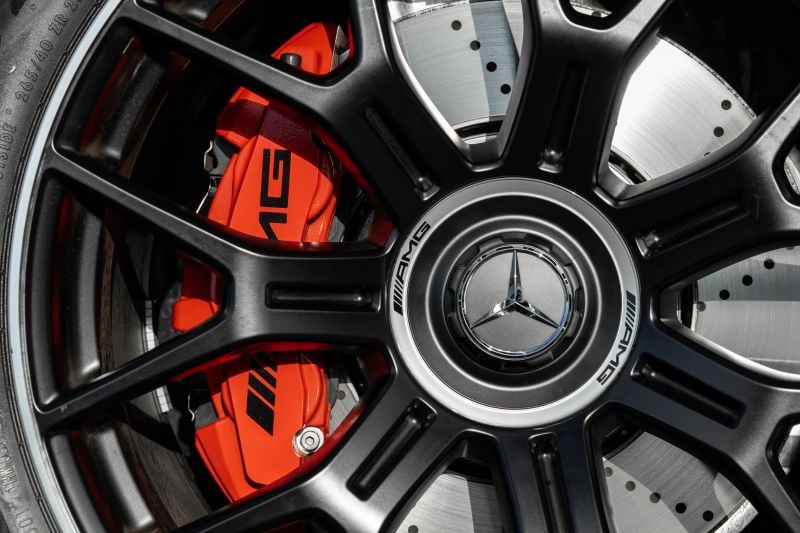
  • 21-inch forged wheels
  • AMG Active Ride Control suspension
  • AMG Night Package II with darkened grille, black chrome badging
  • AMG Track Pace track data logging
  • AMG Driver’s Package
  • Semi-autonomous parking assist
  • Panoramic sunroof
  • LED headlights with adaptive high-beam
  • Nappa leather upholstery
  • Heated front seats
  • Power-adjustable front seats with four-way lumbar
  • Head-up display
  • AMG Performance multifunction steering wheel
  • 11.9-inch MBUX touchscreen infotainment system
  • Wireless Apple CarPlay and Android Auto
  • Satellite navigation with augmented reality
  • Burmester 3D sound system
  • Dual-zone climate control
  • Wireless phone charger
  • 8m charging cable for domestic sockets

Options

There are a wide range of optional extras for the GLC63 S E Performance.

Edition 1 Package: $12,900

It removes the standard aluminium-look running boards.

You can get many of the Edition 1’s features in separate packages.

The Carbon Interior Package ($2600) adds:

The Performance Ergonomic Package ($6900) adds:

A ceramic composite braking system is an additional $8300.

To see how the Mercedes-AMG GLC63 lines up against the competition, check out our comparison tool

Is theMercedes-AMG GLC63 safe?

While the Mercedes-Benz GLC has a five-star safety rating from ANCAP, the AMG GLC range is thus far unrated.

Standard safety equipment includes:

To see how the Mercedes-AMG GLC63 lines up against the competition, check out our comparison tool

How much does theMercedes-AMG GLC63 cost to run?

The Mercedes-AMG GLC63 S E Performance is covered by a five-year, unlimited-kilometre warranty.

Running costsMercedes-AMG GLC63 S E Performance
Warranty5 years, unlimited kilometres
Roadside assistance5 years
Service intervals12 months or 20,000km
Capped-price servicingUp to 5-year plans
Total capped-price service cost$5025 (3yrs)
$6455 (4yrs)
$7180 (5yrs)

To see how the Mercedes-AMG GLC63 lines up against the competition, check out our comparison tool

CarExpert’s Take on theMercedes-AMG GLC63

Compared with its predecessor, the new GLC63 is heavier, more expensive and doesn’t sound as good.

It’s also quicker and more efficient. Mercedes-AMG has taken with one hand but given with another.

It’s a thoroughly entertaining SUV to drive when you push it, and yet it can also be a placid and comfortable commuter.

V8 lovers may be disappointed with Mercedes-AMG’s decision to move to a plug-in hybrid four-cylinder, and indeed this move has brought extra weight and complexity.

However, it would be remiss of mid-sized performance SUV enthusiasts not to check out the new GLC63.

Interested in buying a Mercedes-AMG GLC? Get in touch with one of CarExpert’s trusted dealers here

Click the images for the full gallery

MORE: Everything Mercedes-AMG GLC


Source link

8 Luxury Walking Trails in the UK for an Opulent Escape

0


When you are thinking of taking a break from your hectic schedule you can look out for holidays that allow you to do more outdoor adventures and activities. Being out in the open surrounded by nature provides you with an opportunity to disconnect from the modern world. If you are in the UK, luxury walking trails and holidays can provide you with a great experience without having to compromise on quality and luxury. You can look out for luxury walking trails that allow you to enjoy the rugged and scenic landscape while staying in a boutique countryside hotel that ensures luxury and comfort.

Going on walking holidays can be a fun and adventurous experience whether you are doing it alone or with family and friends. With Walk With Williams, you can focus on making the most of your walking holidays and creating memorable moments that add to your overall experience.

If you are looking for luxury walking trails in the UK you can choose from these options.

Coast to Coast

The Samling Hotel in the Lake District

While walking seems to be a great way to explore the outdoors you can add some challenge to it for sure. Walking Coast to Coast walking trails in the UK can provide you with the right set of rugged landscapes and breathtaking scenery. The path begins from St Bees to Robin Hood’s Bay and covers a distance of 192 miles (309 km).

This is one of the best ways to walk, climb and explore Britain’s natural wonders. As you cover this walking trail you also get to walk across three national parks and stay at some of the best luxury hotels including The Samling Hotel in the Lake District, Yorebridge House in the Yorkshire Dales and The Grand York in North Yorkshire.

Cotswold Way

The Royal Crescent Hotel & Spa, Bath

One of the top paths that you can choose for luxury walking experiences is Cotswold Way. This is among the popular walking trails that offer a unique blend of scenic countryside views and luxury retreats. Stretching 102 miles (164 km) from Chipping Campden to Bath this is a moderately difficult trail that is ideal for first-time walkers as well.

While you are exploring this walking trail you can stay at historic manor houses and boutique hotels that ensure that you can have a great accommodation and dining experience. You can stay at Ellenborough Park which is a country house hotel with a spa. Similarly, you can also stay at The Lygon Arms or The Royal Crescent Hotel & Spa when you conclude your trip in Bath.

Hadrian’s Wall Path

Hadrian’s Wall Path

If you are running out of time and prefer simple choices you can stick with walking trails like Hadrian’s Wall Path. This is among the most popular walking trails in the UK which is well-maintained and marked. This allows you to walk through Roman ruins, historic sites, rolling hills and beautiful moorlands.

Stretching 84 miles (135 km) from Wallsend to Bowness-on-Solway, the path runs parallel to the UNESCO-listed site combining history with stunning natural views. You also get to enjoy various luxurious stays that would ensure that you can make the most of your walking holidays in the UK.

The Dales Way

The Dales Way

If you are looking for easy and relaxed walking trails in the UK that offer you a great holiday experience you may choose The Dales Way. This is among the easiest and gentlest paths that you can choose especially if you have never tried walking holidays in the UK. Stretching 81 miles (130 km) from Ilkley to Bowness-on-Windermere this path is blessed with river views, lush greenery and plenty of wildlife.

Walking the Dales Way can be one of the best reasons to visit England’s Lake District and stay at some of the opulent accommodations. While you are here you can stay at The Devonshire Arms Hotel & Spa and even Linthwaite House which offer panoramic views of Windermere.

The Ridgeway

There are plenty of historic sites that you can explore when you are in the UK. However, if you are interested in walking one of the oldest paths in Britain you should choose The Ridgeway. Lined with prehistoric sites and high-end country accommodations The Ridgeway can provide you with unique holiday experiences.

The path stretches 87 miles (139 km) from Overton Hill to Ivinghoe Beacon and can provide you with views of chalk ridges, open countryside and multiple prehistoric sites like Uffington Castle, Wayland’s Smithy, and Avebury Stone Circle. You also get the opportunity to stay at lavish hotels and countryside manor houses that come with Michelin-star dining options.

Peddars Way

If you prefer to keep your walking expedition short and sweet, you can try the Peddars Way. This is among the shortest walking routes in the UK that can offer you an opportunity to enjoy scenic views involving historic villages, heathlands and quiet countryside landscapes. The path begins from Knettishall Heath and ends in Holme-next-the-Sea.

With just 46 miles (74 km) to cover on foot, this is one of the shortest and luxurious walks. When you are done for the day you can stay at premium accommodations that offer you the best comfort and convenience. These accommodations also come with spa treatment and gourmet cuisine options that add to the experience.

Norfolk Coast Path

Holkham Beach

While you are planning a walking holiday in the UK you can choose to stay close to the coast and enjoy some breathtaking coastal views. The Norfolk Coast Path stretches 84 miles (135 km) from Hunstanton to Hopton-on-Sea and is probably one of the easiest trails. This path allows you to enjoy some of the best beaches in England like Holkham Beach, Hunstanton Beach and Cromer Beach.

You also get to explore and walk through quaint coastal villages and salt marshes that ensure that you can enjoy some quiet and clean coastal views. When you are done for the day you can rest at some of the luxurious stays and enjoy meals at award-winning restaurants that can make your trip worth the time.

Northumberland Coast Path

If you are exploring the northern England territory you can add Northumberland Coast Path to your list. This 62-mile (100 km) coastal path starting from Cresswell to Berwick-upon-Tweed is moderately challenging and can provide you with stunning views of castles, dunes and rugged coastline. You can also enjoy the coastal wildlife and birds when you are exploring this route either solo or with your family.

While you are walking this path you would also want to soak in the views of Bamburg Castle and Holy Island and indulge in luxury stays. This path also has seafront accommodations that ensure that you can make the most of your stay along multiple locations.

For more on the latest in luxury lifestyle and travel reads, click here.


Source link

Private equity group reportedly buying Willow Springs Raceway

0


A Boston-based private equity real estate firm has struck a deal to buy California’s Willow Springs International Raceway, The Drive reported Friday.

CrossHarbor Capital Partners, which specializes in “property turnarounds” for commercial real estate and currently has a property portfolio valued at over $10 billion, confirmed to the website that a deal to purchase the historic track, opened in 1953, is pending.

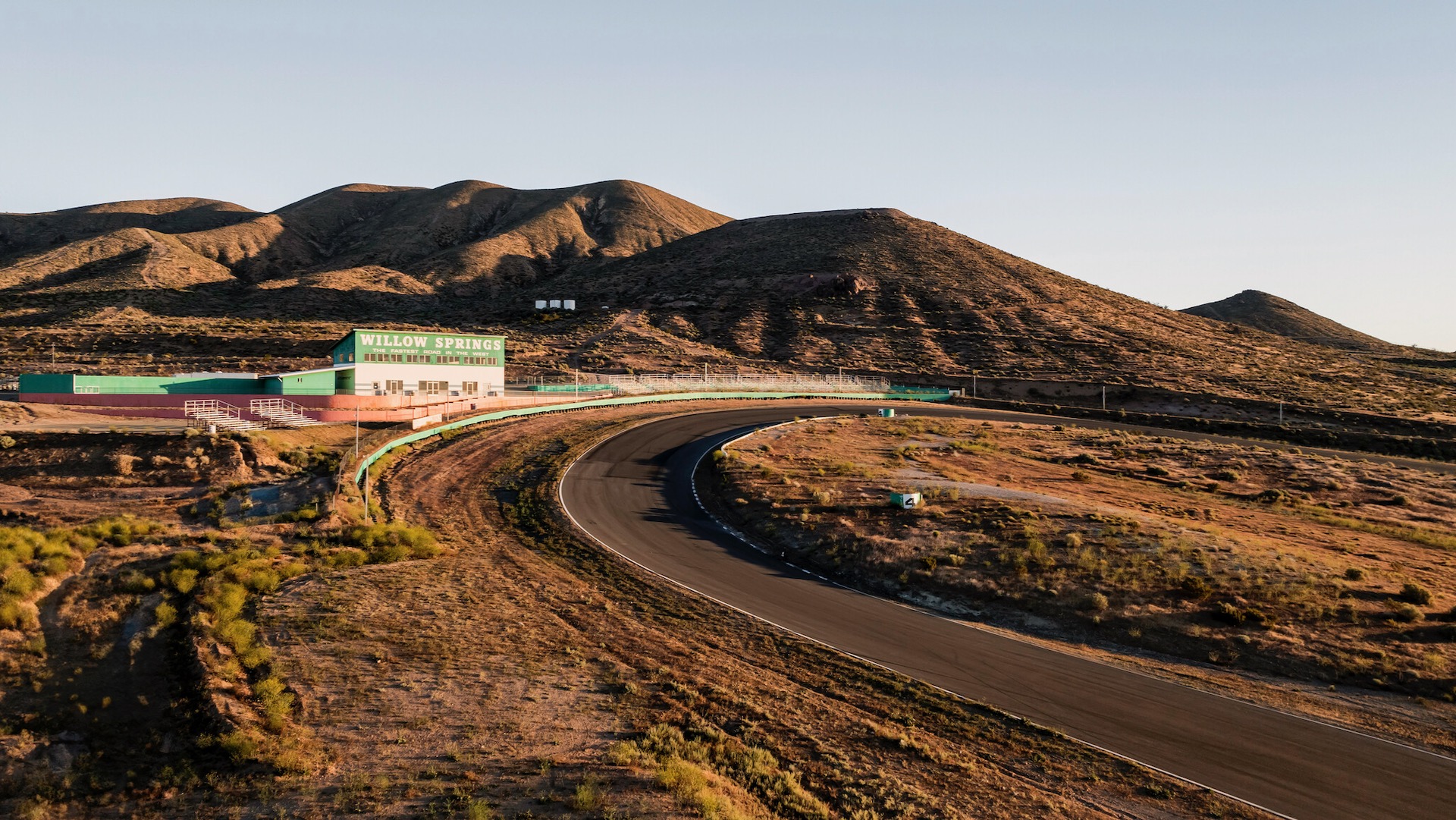
Willow Springs has had the same owners for the past 62 years, the Huth family, but it was listed for sale last year at an undisclosed price. The track has been maintained in more or less the same condition over the decades, so as other racetracks have modernized and focused more on a rich clientele—or simply disappeared into housing tracts, shopping centers, or industrial parks—Willow Springs has remained unpretentious and accessible.

Willow Springs International Raceway (image via LoopNet)

Willow Springs International Raceway (image via LoopNet)

Whether that will remain the case under new ownership remains to be seen. In a statement to The Drive, a CrossHarbor spokesperson said the firm aims to “preserve the legacy and enthusiast access” to Willow Springs, “while also setting up the property for growth and success in the future.”

That provides some hope that Willow Springs will remain more or less as it is. Opened in 1953, it’s actually a complex of seven tracks, including the 2.5-mile Big Willow road course, Streets of Willow, and Horse Thief Mile, along with a skidpad, autocross area, and dirt oval.

Willow Springs International Raceway (image via LoopNet)

Willow Springs International Raceway (image via LoopNet)

Located about 80 miles north of Los Angeles, Willow Springs has never been a mainstay of big-time professional racing. But it’s extremely popular with enthusiasts, in part because the Huth family has kept it accessible and cheap to rent. It was also a filming location for “Ford v. Ferrari,” which is fitting as Ken Miles, who the film’s story centers around, helped design the facility.

Willow Springs isn’t the only track to come up for sale recently. Palm Beach International Raceway was listed for sale earlier this year, and real estate listings for Oregon Raceway Park and Michigan’s Grattan Raceway have popped up over the past few years as well.


Source link

Power steering could fail in over 370,000 Teslas, recall initiated

0


  • Tesla spent over a year investigating the issue at the behest of a non-U.S. regulatory agency
  • In the U.S. Tesla’s latest recall affects the 2023 Model 3 and Model Y
  • Tesla’s NHTSA recall filing leaves unanswered questions for global markets

Tesla has acknowledged over 300,000 of its EVs could lose power steering.

On Thursday, Tesla’s Daniel Donovan, Technical Publications Manager, filed an acknowledgement with the National Highway Traffic Safety Administration (NHTSA) that stated the automaker will be conducting a recall. The recall, posted a day before by the agency, involved 376,241 Tesla EVs.

Specifically, the recall involved the 2023 Model 3 sedan and 2023 Model Y crossover.

Tesla estimates only 1% of the vehicles included in the recall have the defect.

Those vehicles were manufactured in the U.S. prior to software release 2023.38.4. Model 3s affected were produced between February 28, 2023 and October 11, 2023 while Model Ys were assembled between February 24, 2023 and October 11, 2023.

These vehicles are equipped with electronic power-assist steering (EPAS) systems that, prior to software version 2023.38.4, could experience a code error that leads to overstressed motor drive components. Tesla said that if this occurs above 0 mph, steering effort will not be affected though alerts will appear on the vehicle’s dash-mounted screen. Once the vehicle reaches 0 mph, the steering system will revert to a manual system without assist. It’s unclear how long and under what conditions the reversion to manual steering would persist.

Tesla acknowledged this could increase the risk of a collision. Tesla will recall all vehicles in all markets affected by this situation, but failed to mention how many vehicles that would include outside the U.S. or detail those vehicles.

Tesla said software release 2023.38.4 and beyond resolve the issue, and that as of January 23, 2025, some 99% of affected vehicles in the U.S. have installed the release or later software versions. Tesla did not mention how many vehicles outside the U.S. have been updated or any information pertaining to those vehicles. U.S. vehicles in production rolled off the assembly line with the updated software as of October 11, 2023.

The recall notice said an unidentified regulatory authority in a non-U.S. market area opened an investigation into complaints related to the loss of power steering by the described conditions. Tesla spent over a year performing technical reviews with this unidentified authority before issuing a recall for vehicles affected on January 16, 2025. The automaker didn’t file the report with the NHTSA until February. 

Tesla admitted in the filing that it has identified over 3,012 warranty claims and 570 field reports in the U.S., but does not expand on any claims or reports outside the U.S. market, which is where the original investigation started. Tesla claimed it’s unaware of any crashes, injuries, or deaths related to the condition.

Tesla’s already issued a large recall in 2025 and seven Cybertruck recalls in 2024 alone. The automaker’s sales fell in 2024 while its share of the U.S. EV market fell below 50%.


Source link

Watch a Pro Drifter slide a $3.4 million Pagani Utopia Roadster on ice

0


Would you ever risk driving your $3.4 million Pagani hypercar on an icy, low-grip surface like a frozen lake in the middle of winter? But that’s exactly what some supercar owners do in St. Moritz, Switzerland, each year.

Of course, the drivers who take the cars around know a thing or two about car control, like Yaroslav Veselaho, who is a professional racer and 2020 Drift Champion of Ukraine. This year, he got behind the wheel of a Pagani Utopia Roadster for a media shoot. His task was simple – slide the hypercar on the icy track while the media team shot pictures and videos.

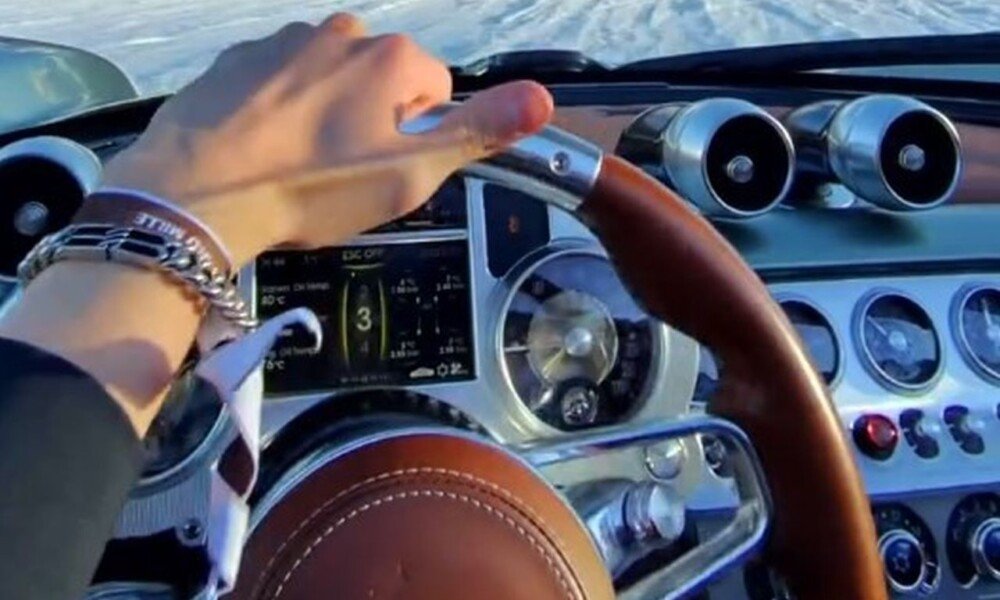
Veselaho posted a short first-person video on his Instagram, showing us what it’s like to drift a Utopia. You can see him shuffling the steering wheel as he tries to point the car in the right direction. Also, note the sound of the turbochargers.

Powering the Utopia Roadster is the same 6.0-liter twin-turbo V12 engine as the coupe. This AMG-sourced engine produces 864 hp @ 6000 rpm and 811 lb-ft of torque @ 2800-5900 rpm. It is paired with either a 7-speed automated manual or a stick shift.


Source link

Aveta Nova 125 dan Nova 160 dilancarkan di Malaysia – skuter harga masing-masing RM5.2k dan RM8k

0


Aveta Nova 125 dan Nova 160 dilancarkan di Malaysia – skuter harga masing-masing RM5.2k dan RM8k

Baru sahaja melancarkan skuter Vanguard 250 bulan lepas, Aveta terus mengekalkan momentum mereka dengan pengenalan dua lagi skuter iaitu Nova 125 dan Nova 160. Ia masing-masing dijual pada harga RM5,188 dan RM7,988 tidak termasuk insurans.

Ditawarkan sebagai sebuah skuter mampu milik, Nova 125 dipacu oleh enjin satu silinder SOHC sejukan udara 125 cc bersama transmisi automatik CVT, mampu menghasilkan kuasa 9 hp pada 8,000 rpm dan tork 8.6 Nm pada 6,500 rpm. Enjinnya boleh dihidupkan dengan pemula elektrik dan penendang.

Memegang rim 14 inci pada skuter ini adalah fork teleskopik di hadapan dan satu penyerap hentak di belakang, sementara tugas membrek dilaksanakan oleh unit cakera di hadapan dan dram di belakang. Tangki minyak berkapasiti enam liter dan ia juga didatangkan dengan soket pengecas USB serta meter jenis LCD digital.

Pergi pula kepada Nova 160, ia adalah sebuah skuter yang digerakkan oleh enjin satu silinder SOHC sejukan cecair 154.4 cc, bersama transmisi automatik CVT dan mampu menghasilkan kuasa 15.8 hp pada 8,500 rpm dan tork 14.7 Nm pada 6,500 rpm.

Spesifikasi Nova 160 ini juga adalah lebih tinggi dengan kelengkapan seperti kunci pintar, sistem start/stop brek cakera hadapan dan belakang serta suspensi belakang yang terdiri daripada dua penyerap dengan tabung gas.

Satu lagi perincian yang mencuri perhatian adalah tangki, di mana Nova 160 ini datang dengan unit berkapasiti 10 liter, sementara rim pula adalah unit 14 inci dengan tayar masing-masing bersaiz 100/80 di hadapan 120/70 di belakang.

GALERI: Aveta Nova 125

GALERI: Aveta Nova 160


Nak jual kereta anda? Jual dengan Carro.


Source link

2026 Kia EV3 GT spied for first time

0


  • The Kia EV3 electric subcompact crossover is getting a GT performance flagship
  • The new EV3 GT is likely powered by a dual-motor all-wheel-drive powertrain
  • Peak output may lie close to 300 hp

Engineers from Kia have been spotted testing a prototype for the GT version of the EV3 electric subcompact crossover.

GT is the designation Kia uses for high-performance versions of its electric vehicles, first introduced on the 2023 EV6 GT and recently expanded to the 2026 EV9 GT.

The EV3 GT is expected to arrive late this year or early next. If approved for U.S. sale, it will likely debut for the 2026 model year.

The regular EV3 was unveiled last May, but Kia has yet to confirm whether it will be sold in the U.S. In other markets, sales began late last year.

Kia EV3

Kia EV3

We know the prototype in the latest spy shots is for the EV3 GT due to its revised front fascia, embossed “GT” logos on the headrests, and lime green accents in the cabin and on the brake calipers—a signature design trait of Kia’s GT range. The prototype’s wheels appear to be from an updated Hyundai Ioniq 6 due around the same time as the EV3 GT, likely for testing purposes only.

The EV3 rides on Hyundai Motor Group’s flexible E-GMP platform, which also underpins the EV6, EV9, and several Hyundai and Genesis models, though in a lower-cost 400-volt (down from 800 volts) specification. The Standard model features a 58.3-kwh battery, while the Long Range model comes with an 81.4-kwh battery. In both cases, power comes from a single electric motor rated at 201 hp, capable of 0–62 mph acceleration in about 7.5 seconds and a top speed of 105 mph.

The EV3 GT is expected to retain the 81.4-kwh battery but pair it with a dual-motor all-wheel-drive powertrain delivering closer to 300 hp.

More details are likely coming soon, as Kia plans to provide an update on its electrification strategy during a special Kia EV Day presentation in Tarragona, Spain, on Feb. 24. The event will also feature the debut of an EV4 sedan and hatchback, and PV5 electric van.


Source link