Home Blog Page 167

Ford GT First Generation (2005–2006) Buyers Guide

0


When the 2005 Ford GT was introduced, it wasn’t just a new entry into the supercar world—it was a celebration of Ford’s rich racing heritage, paying homage to the legendary GT40 that famously conquered Le Mans in the 1960s. 

Designed as a modern interpretation of its historic predecessor, the Ford GT was a limited-production, mid-engine supercar developed to showcase Ford’s engineering prowess and commemorate the company’s centennial anniversary. 

This wasn’t just a design exercise; it was a fully realized performance machine built to challenge the best from Europe, combining retro styling with updated technology.

At the heart of the Ford GT lies a 5.4-liter supercharged V8, an all-American powerhouse that produces 550 hp and 500 lb-ft of torque. Paired with a 6-speed manual transmission, the GT delivers a thrilling driving experience, launching from 0 to 60 mph in around 3.3 seconds and reaching a top speed of 205 mph. 

The engine’s roots-style Eaton supercharger ensures immediate throttle response, while an aluminum block and forged components highlight the car’s race-bred durability.

The exterior design of the Ford GT stays remarkably faithful to the GT40, with its low-slung stance, aerodynamic shape, and distinctive side air intakes. Modern touches, such as HID headlights, lightweight aluminum body panels, and an integrated rear diffuser, contribute to both aesthetics and performance. The car’s signature clamshell rear hatch, housing its mid-mounted V8, is a visual and mechanical spectacle, echoing the race car’s heritage.

Inside, the Ford GT’s cabin features minimalist racing elements and modern comforts. The carbon-fiber and aluminum interior keeps weight down while delivering a raw, driver-focused feel. GT40-inspired toggle switches, a wide center tunnel, and deeply bolstered leather seats made by Sparco reinforce the connection to Ford’s motorsport legacy. 

Throughout its production, the Ford GT competed in the elite supercar segment against some of the most iconic performance machines of its time. Rivals included the Porsche Carrera GT, the Ferrari 360 Challenge Stradale, and the Lamborghini Murciélago, each offering its own take on speed, and exclusivity. Yet, the Ford GT stood out with its blend of American muscle, heritage-inspired design, and accessible performance, making it one of the most celebrated modern supercars.

Model Changes (Breakdown by Year)

2005 Ford GT

The 2005 Ford GT marked the debut of Ford’s modern supercar, designed to commemorate the company’s centennial anniversary and pay tribute to the legendary GT40 that dominated Le Mans in the 1960s. I

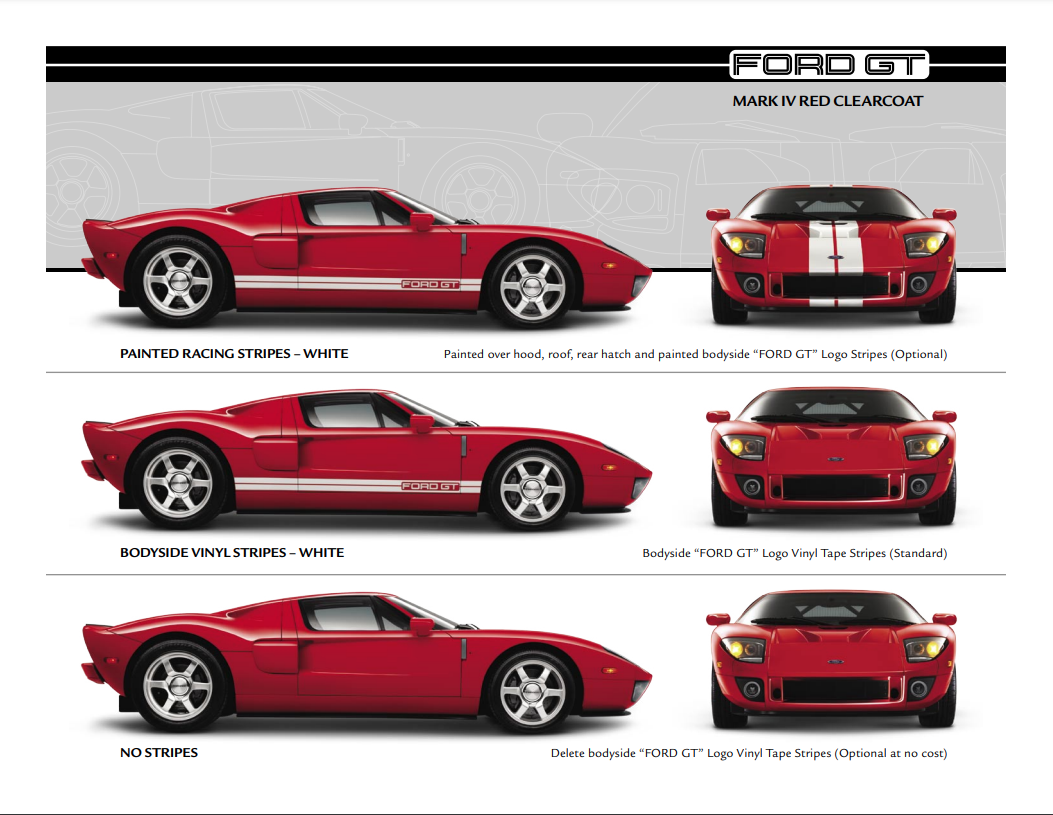
n its first production year, Ford built 2,022 units, offering the GT in four striking colors: Mark IV Red with white racing stripes, Midnight Blue with white racing stripes, Centennial White with blue racing stripes, and Quick Silver with black racing stripes.

Beneath its sculpted body panels, the 5.4-liter supercharged V8 engine produced 550 horsepower and 500 lb-ft of torque, sending power to the rear wheels through a 6-speed Ricardo manual transmission.

Structurally, the Ford GT featured a lightweight aluminum spaceframe chassis, combined with carbon fiber and aluminum body panels, ensuring an optimal balance of strength and weight. Performance components included BBS forged aluminum wheels, Brembo brakes, and Goodyear Eagle F1 Supercar tires, all contributing to the GT’s exceptional handling and braking capabilities. I

Inside, the cabin retained a driver-focused design, featuring leather-trimmed bucket seats, aluminum accents, and GT40-inspired toggle switches.

Ford also offered three optional packages for buyers looking to personalize their GTs: the McIntosh Audiophile Stereo System, Lightweight Forged BBS Wheels, and Painted Racing Stripes. Despite its engineering excellence, early production models faced a suspension control arm recall, requiring replacement parts to be installed on affected vehicles. 

Nonetheless, the 2005 Ford GT quickly cemented itself as an instant classic, blending retro styling with cutting-edge performance in a way that honored Ford’s motorsport legacy.

The starting price of the 2005 Ford GT was $139,995 when it was new. However, this price could increase with optional extras such as:

  • McIntosh Audiophile Stereo System: $4,000
  • Lightweight Forged BBS Wheels: $3,500
  • Painted Racing Stripes: $5,350

With all options selected, the final MSRP could exceed $153,000.

2006 Ford GT

The 2006 Ford GT marked the final production year of Ford’s modern supercar, with 2,011 units built, making it slightly rarer than the 2005 model. 

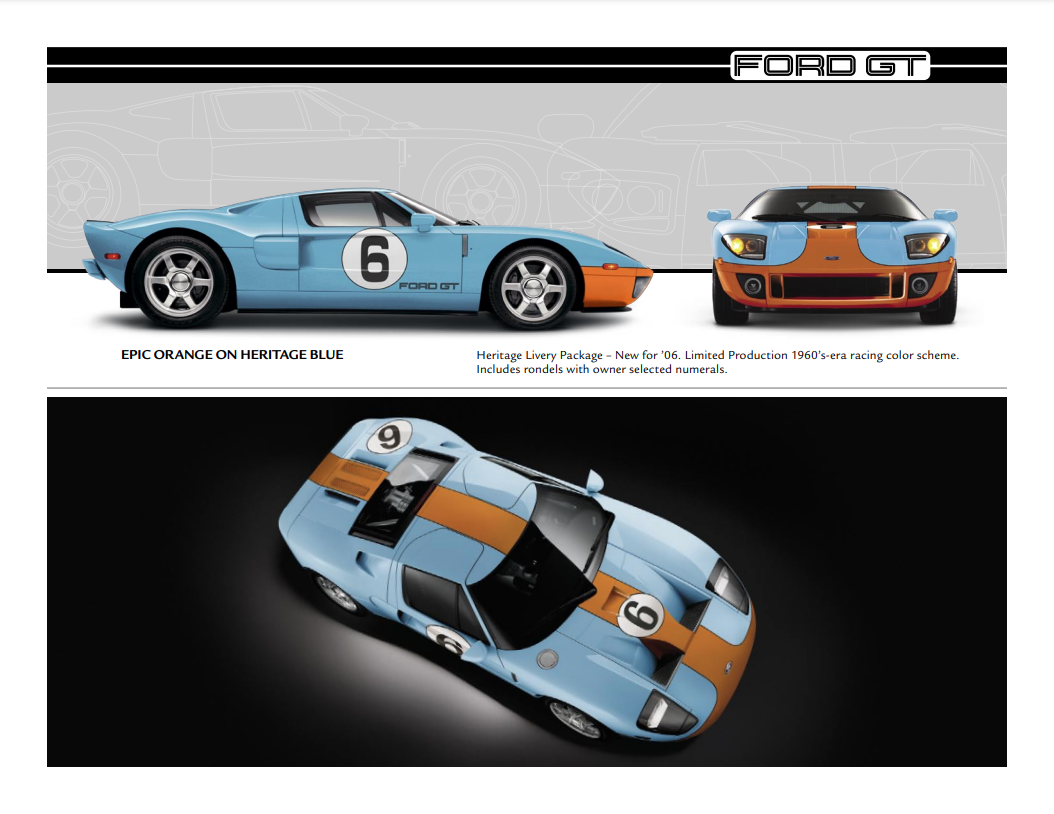
This year introduced new color options, including Tungsten Grey Metallic with white stripes, a special 40th Anniversary tribute to the GT40, and the Heritage Blue with Orange Gulf Livery, which paid homage to the 1968–69 Le Mans-winning GT40. The Mark IV Red, Centennial White, Midnight Blue, and Quick Silver color options from the previous year remained available.

Ford made subtle refinements to the 2006 model, improving build quality based on feedback from early 2005 production cars. Notably, stronger suspension components were installed to resolve the control arm recall issues that affected some of the earlier cars. 

On September 21, 2006, production officially ended, marking the final run of the first-generation Ford GT and solidifying its status as a modern collectible supercar that bridged Ford’s past and present in motorsport excellence.

The starting price of the 2006 Ford GT remained at $139,995, the same as the 2005 model. And with all options selected, the final MSRP could exceed $153,000.

Ford GT First Generation Common Problems

While the first-generation Ford GT (2005–2006) is fairly reliable, it is not without its issues. Like any high-performance vehicle, certain components have shown vulnerabilities over time, requiring attention from owners and collectors. 

Some early production challenges led to recalls and refinements in later models, while other wear-related issues have surfaced with age and use. Fortunately, most of these problems are well-documented, and with proper maintenance, regular inspections, and preventative care, the Ford GT remains a reliable and exhilarating machine that continues to appreciate in value and desirability.

Regular maintenance and thorough pre-purchase inspections are essential to address these issues and ensure the vehicle’s longevity.

Suspension Control Arms: Early 2005 models experienced a recall due to potential failure of the suspension control arms, leading to replacements in affected vehicles.

Paint Peeling: Some 2006 GTs have reported issues with paint peeling, particularly on body panels.

Engine Performance: A few owners have noted engine problems, such as loss of power or unexpected stalling while driving.

Airbag Recalls: Certain models were affected by the widespread Takata airbag recall, necessitating airbag inflator replacements.

Fuel Fill Issues: Some owners have reported difficulties with refueling, often due to a faulty fuel filler neck design.

Instrument Cluster Failures: Instances of malfunctioning instrument clusters, leading to inaccurate or non-functional gauge readings, have been reported.

Weather Stripping Degradation: Over time, the weather stripping around doors and windows can deteriorate, leading to potential water ingress.

Tie Rod End Wear: Premature wear of tie rod ends has been observed, which can affect steering responsiveness.

Recalls

2005 to 2006 Ford GT vehicles

Suspension Control Arm Failure (Recall No. 04V604000)

Ford recalled certain 2005 Ford GT vehicles due to a defect in the front and rear upper and lower control arms. Some units were found to have casting imperfections, which could lead to fractures, increasing the risk of a loss of vehicle control and potential crash. Owners were notified, and dealers replaced all four control arms and associated fasteners free of charge. This recall was issued in December 2004 before full-scale production began.

Driver Airbag Inflator Defect (Recall No. 14V787000)

As part of the Takata airbag recall, Ford issued a recall for 2005–2006 Ford GT vehicles due to a defect in the driver-side airbag inflator. The inflator could degrade over time, leading to moisture intrusion and a risk of rupture during deployment, potentially causing metal fragments to strike occupants. Ford dealers replaced the driver-side frontal airbag inflator at no cost. The recall was initiated on December 19, 2014.

Passenger Airbag Inflator Defect (Recall No. 15V319000)

Ford expanded the Takata airbag recall to include the passenger-side frontal airbag inflator in 2005–2006 Ford GTs. Similar to the driver-side issue, the passenger-side inflator was at risk of rupturing due to long-term exposure to heat and humidity, posing a serious injury hazard. Owners were contacted, and dealerships replaced the defective passenger airbag inflators free of charge. This recall began on June 2, 2015.

Expanded Takata Airbag Recall (Recall No. 17V024000)

Ford issued another recall covering additional 2005–2006 Ford GT units that may have received faulty replacement airbag inflators. The issue remained the same—potential rupture due to propellant degradation over time, leading to an increased risk of injury or death in the event of airbag deployment. Ford notified affected owners, and dealerships replaced the inflators at no cost. This recall started on January 10, 2017.

Service Parts Airbag Inflator Replacement (Recall No. 21V081000)

Ford discovered that certain replacement airbag inflators installed during previous recalls may have still been defective. As a precautionary measure, another recall for 2005–2006 Ford GT models was issued, instructing dealers to inspect and replace both driver and passenger airbag modules or inflators as necessary. This recall was launched on February 10, 2021.

Maintenance and Ownership Costs

Owning a 2005 to 2006 Ford GT is generally considered cost-effective compared to other supercars of its era. Routine maintenance tasks, such as oil changes and brake servicing, are relatively straightforward and can be performed without excessive expense. The vehicle’s robust engineering contributes to its reliability, resulting in fewer unexpected repairs. 

However, sourcing specific components, like body panels or unique interior parts, can be challenging and potentially costly due to the car’s limited production run. Overall, with proper care and regular maintenance, the Ford GT offers a rewarding ownership experience without imposing prohibitive upkeep costs.

Every 5,000 Miles:

  • Change engine oil and replace oil filter.
  • Inspect tires for wear and rotate as needed.
  • Perform a multi-point inspection, including checks of fluid levels, brakes, suspension components, and steering linkage.

Every 15,000 Miles:

  • Replace engine air filter.
  • Inspect brake pads, shoes, rotors, drums, lines, and hoses.
  • Examine the engine cooling system and hoses.
  • Inspect steering linkage, ball joints, suspension, driveshaft, and U-joints.

Every 30,000 Miles:

  • Replace fuel filter.
  • Inspect and, if necessary, replace the cabin air filter (if equipped).
  • Inspect exhaust system and heat shields.
  • Check automatic transmission fluid level and condition.

Every 60,000 Miles:

  • Inspect and replace accessory drive belts as needed.
  • Examine and service the cooling system, including a coolant flush and replacement.
  • Inspect and lubricate suspension and steering components.

Every 100,000 Miles:

  • Replace spark plugs.
  • Inspect and service the timing chain and related components.
  • Examine and, if necessary, replace the PCV valve.\

Please note that these intervals are general guidelines. The Ford GT’s Owner’s Manual provides specific recommendations tailored to the vehicle. For precise maintenance schedules and any additional service requirements, refer to the 2005 Ford GT Owner Manuals or consult with a certified Ford technician.

Following these service intervals helps maintain the vehicle’s performance and can prevent potential issues down the road.

Here is a rough estimate of typical service costs associated with the Ford GT First Generation:

  • Oil Change – The Ford GT requires high-quality synthetic oil. An oil change typically costs between $260 and $300 at a dealership. Independent shops may offer this service for approximately $200 to $250.
  • Minor Service – Minor services include oil and filter changes, tire rotation, and a multi-point inspection. At a dealership, this service ranges from $300 to $500. Independent shops might charge between $250 and $400.
  • Major Service – Major services includes comprehensive inspections, fluid replacements, and component servicing. Dealerships may charge between $1,000 and $1,500 for this extensive service. Independent shops could offer it for $800 to $1,200.
  • Tires – A set of four tires such as the Bridgestone Potenza tires typically costs between $1,500 and $2,000, depending on the brand and specifications. Installation and balancing fees at a dealership can add $200 to $300, while independent shops might charge $150 to $250.
  • Brakes – Replacing brake pads and rotors on the Ford GT is relatively straightforward. Dealerships may charge between $1,000 and $1,500 for all four wheels. Independent shops might offer the service for $800 to $1,200.
  • Clutch – Clutch replacement is a significant service due to labor intensity. Dealerships typically charge around $4,000 for this service. Independent shops may offer it for $3,500 to $4,000. It’s noteworthy that clutch replacements are rarely required unless the vehicle is subjected to extensive racing or aggressive driving.

Options List

The 2005 to 2006 Ford GT came with three key factory options that allowed buyers to personalize their cars. 

The McIntosh Audiophile Stereo System was a $4,000 upgrade that improved sound quality with a custom head unit, upgraded speakers, and a retro-inspired design. It was a rare selection, as many GT buyers prioritized performance over audio. 

The Lightweight Forged BBS Wheels, priced at $3,500, were a sought-after option for those looking to reduce unsprung weight. These wheels were lighter than the standard cast aluminum set and improved handling while featuring an aggressive 10-spoke design.

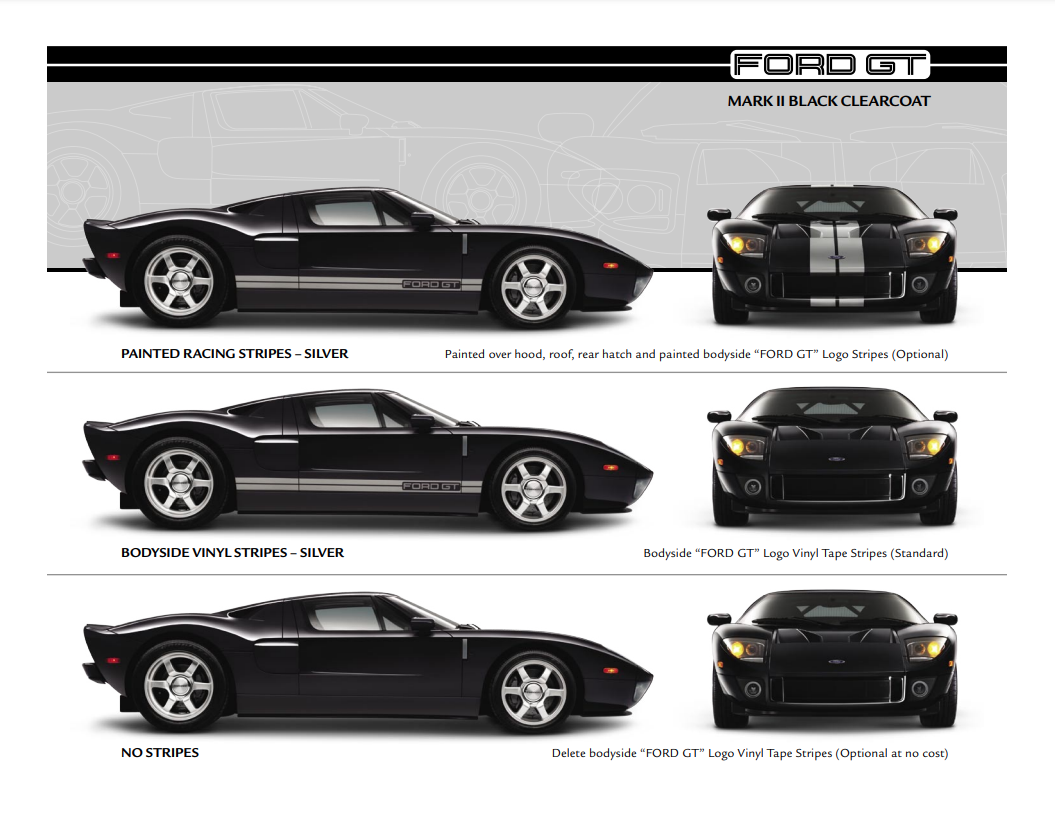
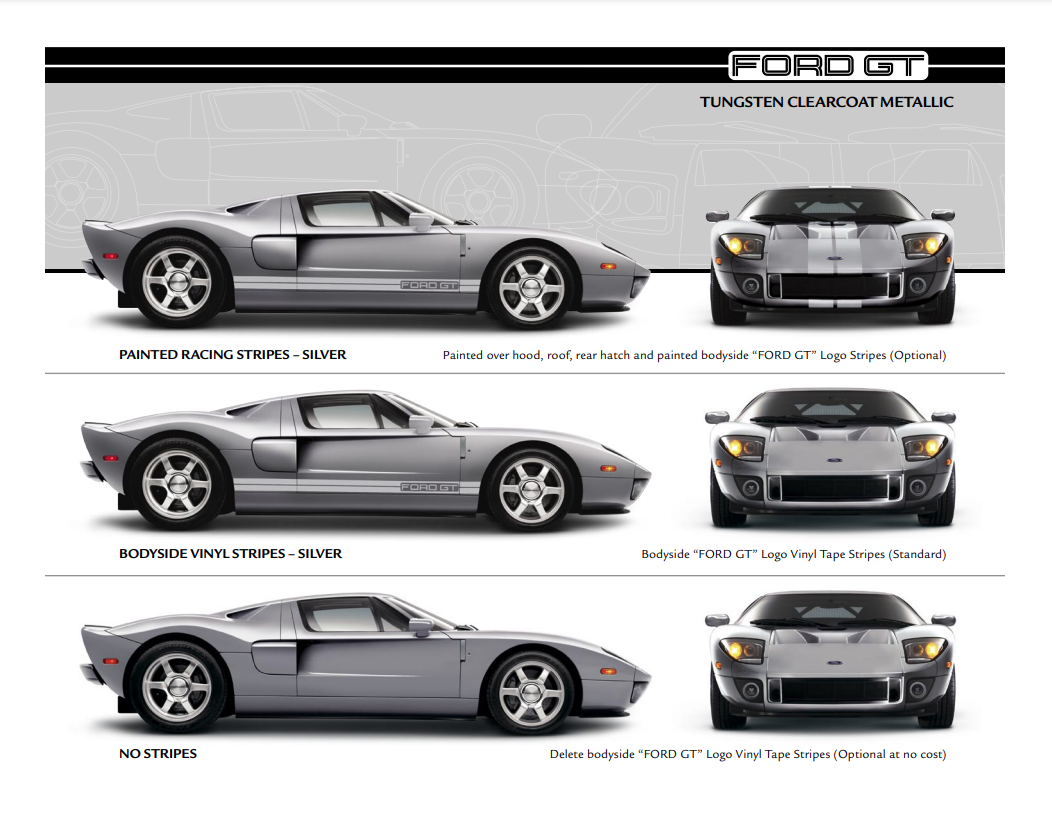
Also, the Painted Racing Stripes, a $5,350 option, added a contrasting stripe design running down the center of the car, enhancing its resemblance to the original GT40. 

Unlike vinyl decals, these stripes were painted and clear-coated for a seamless finish. Factory-painted stripes are highly desirable today, as they contribute to resale value. While there were no performance add-ons, these factory options played a significant role in customizing the Ford GT’s appearance and driving experience. 

Fully optioned examples tend to be more valuable, with the McIntosh stereo and painted stripes being the most sought-after among collectors.

2006 Ford GT options list
Key Options

  • McIntosh Audiophile Stereo System
  • BBS Forged Aluminum Wheels
  • Painted Racing Stripes
  • Painted Brake Calipers (Red or Grey)
  • Side Stripe Delete

Ford GT First Generation Price and Value

The Best Ford GT First Generation to Buy

When it comes to choosing the best first-generation Ford GT (2005–2006) to buy, several key factors should be considered, including model year, factory options, special editions, and overall condition.

For those looking for the most desirable version, the 2006 model year is a great choice. As the final year of production, it benefits from improved build quality following refinements made after early production issues in 2005. The Heritage Edition, introduced in 2006, is the most collectible variant.

Featuring the iconic Gulf Oil racing livery—a Heritage Blue exterior with Epic Orange stripes—it pays tribute to the 1968–69 Le Mans-winning GT40. With only 343 units produced, the 2006 Heritage Edition is one of the rarest and most valuable first-generation Ford GTs.

Beyond model year, option selection plays a role in desirability. The most sought-after factory options include painted racing stripes, lightweight forged BBS wheels, and the McIntosh Audiophile Stereo System. GTs equipped with all three options tend to command a premium in the collector market.

Condition is another critical factor when choosing the best Ford GT to buy. Vehicles with low mileage, original paint, and no modifications tend to hold the highest value. Many GTs were preserved as collectibles, but some were driven aggressively, so a pre-purchase inspection (PPI) is highly recommended. Ensuring that recalls—such as the control arm and Takata airbag recalls—have been addressed is also essential.

For long-term value and collectibility, a 2006 Ford GT with low mileage, full-service history, and desirable factory options is the best choice. The 2006 Heritage Edition, with its Gulf Livery, is the most valuable and historically significant, making it a standout investment among all first-generation Ford GTs.

Here is the colour breakdown for production:

2005 Production

  • Mark IV Red: 766 units
  • Centennial White: 503 units
  • Midnight Blue Metallic: 265 units
  • Mark II Black: 238 units
  • Satin Silver: 156 units
  • Speed Yellow: 97 units
  • Quick Silver: 1 unit
  • Gulf Blue: 1 unit

2006 Production

  • Tungsten Silver: 541 units
  • Heritage Blue (Gulf Livery): 343 units
  • Mark IV Red: 348 units
  • Mark II Black: 292 units
  • Centennial White: 222 units
  • Midnight Blue Metallic: 190 units
  • Speed Yellow: 75 units

Conclusion

In summary, with a price of $430,000+, the 2005–2006 Ford GT offers a piece of performance and heritage. Its supercharged 5.4-liter V8 engine delivers 550 hp, and a top speed of 205 mph. The design pays homage to the legendary GT40, with classic styling and modern performance.

While alternatives like the Porsche Carrera GT, the Ferrari 360 Challenge Stradale, and the Lamborghini Murciélago exist, the Ford GT distinguishes itself through its unique combination of American muscle, racing pedigree, and limited production numbers. Its rarity and historical significance have contributed to its strong appreciation in value over time.

For enthusiasts seeking a supercar that embodies American automotive excellence and offers both exhilarating performance and investment potential, the first-generation Ford GT stands out as an exceptional choice.

Car Hacking Shortcuts

  • Look for models with all three factory options: BBS forged wheels, McIntosh stereo, and painted racing stripes

  • Opt for the 2006 Heritage Edition for exclusivity and higher long-term value

  • Prioritize low-mileage, original, and unmodified examples for better resale potential

  • Verify that all recalls, including airbag and control arm issues, have been addressed

  • Check for comprehensive service history to ensure proper maintenance and long-term reliability


Source link

Alpine A390 teased, debuts May 27

0


  • Alpine is months away from the reveal of its second EV, the A390 performance crossover
  • The A390 starts production in 2025 at Alpine’s Dieppe plant in France
  • Alpine plans to launch in the U.S. around 2027

Alpine on Friday released a teaser photo of its upcoming A390 electric performance crossover, set to debut on May 27—just days before the brand celebrates its 70th anniversary.

The teaser doesn’t reveal much, but the design is hardly a secret. Camouflaged prototypes have been spotted for over a year, and Alpine showcased the thinly veiled A390 Beta concept at the 2024 Paris auto show.

The A390 is a compact electric crossover with a fastback design similar to the Polestar 2. It will be Alpine’s second EV, following the A290 subcompact hatchback, which entered production last year.

Production of the A390 is slated to begin later this year at Alpine’s plant in Dieppe, France, where the gas-powered A110 sports car is built.

Alpine A390 Beta

Alpine A390 Beta

Expect it to ride on a dedicated EV platform from the Renault-Nissan-Mitsubishi Alliance, specifically the CMF-EV design found in the Renault Megane E-Tech and Nissan Ariya. (Renault is the parent company of Alpine.) The platform delivers up to 429 hp in the Ariya Nismo, and something similar may be unleashed in the A390. There are rumors that one variant may even offer a 3-motor setup.

Sales in Alpine’s existing markets are expected to start later this year. While Alpine plans to enter the U.S. around 2027, the A390 and A290 likely won’t be part of that launch. Instead, the brand is expected to debut stateside with two larger crossovers—one targeting the Porsche Macan and the other the Cayenne. Other upcoming Alpine models include an electric successor to the A110, a four-door sedan or hatchback called the A310, and even a supercar.

Alpine’s naming strategy follows a pattern: the “A” represents the brand, the first digit indicates the vehicle’s size and positioning, and the last two digits distinguish sporty models from lifestyle models. Sporty models use “10,” like the A110 sports car, while lifestyle models use “90,” as seen in the A290 hatch and upcoming A390 crossover.


Source link

Corinthia Brussels Hotel Review

0


Corinthia Grand Hotel Astoria Brussels

  • This will become Belgium’s first palace hotel—elevating it to a similar status as Paris’s Le Meurice and Plaza Athénée.
  • The hotel’s address—one of the most luxurious and well-known in the city—is near the Royal Palace, terraced botanical gardens, and the UNESCO-listed, Grand-Place square.
  • Corinthia Brussels has a phenomenally cozy brasserie, Le Petit Bon Bon, and a 13,000-square-foot spa.

Seventeen years after it closed its doors, Brussels’ legendary Hotel Astoria reopened last December as the Corinthia Brussels. The latest launch from the Maltese hospitality group that counts Corinthia London and the new Surrey, A Corinthia Hotel in New York, among its properties, there’s a real buzz that this city of 1.25 million—the capital of Belgium and the home of the European Parliament—finally has the luxury address it has been lacking.

Commissioned by King Leopold II for the Brussels International Exposition of 1910, in its heyday the Astoria hosted the likes of Salvador Dalí, James Joyce, Dwight D. Eisenhower, Winston Churchill, and the Shah of Iran. Corinthia, which took over the project in 2016, enlisted a team of architects and historians to bring every historical detail, including the gold leaf on the listed Louis XVI façade and the original color scheme in the high-ceilinged lobby, back to life.

The hotel’s lobby and concierge.

Jonathan Maloney/Inga Beckmann/courtesy of Corinthia Brussels


There’s a real sense in Brussels that this opening is also a talisman for the city, which is too often passed over by travelers in favor of Paris or Amsterdam—both less than two hours away by train. “It’s Brussels’ new dawn,” said Filip Boyen, Corinthia interim general manager (and formerly CEO of Luxury Hotels of the World), over coffee in Palm Court, the lobby lounge area. We’re sitting under a sublime stained-glass skylight that has been painstakingly recreated from photographs of the original. Outside, it’s a moody Brussels sky, yet the big potted palms, floral motifs on the carpet and sage-green and pearl-white color scheme ensure the lofty space is full of light.

Boyen, who hails from Belgium, isn’t the only one to tell me that it’s time travelers discovered how creative, vibrant, and energetic Brussels is. For that, you don’t even need to leave the 126-room property: some of the best talent in the country has been assembled under this roof, including a duo of chefs from Michelin-starred restaurants, David Martin and Christophe Hardiquest; mixology superstar Hannah Van Ongevalle; and the high-end, handcrafted Belgian designer brands like Maison La Collection on sale in Coutume, the on-site boutique.

Hopes are high that the Corinthia Grand Hotel Astoria Brussels, as it is known in full, will become Belgium’s first palace hotel—elevating it to a similar status as Paris’s Le Meurice and Plaza Athénée, among others. This hotel is designed to draw leisure travelers to the city, or entice business travelers to linger in town longer. There are also the locals who have their own memories from the storied address: none more so than the King, Philippe of Belgium, who held his wedding reception to wife, Mathilde, here in 1999. Plans are also underway to restart the classical concerts under the original crystal chandeliers of the Salon Elisabeth, once the highlight of the city’s social scene.

With this careful restoration, Corinthia has struck an ideal balance between old and new right in the heart of one of Europe’s lesser-known capitals. Here’s my complete review of Corinthia Grand Hotel Astoria Brussels.

The Rooms

When the Corinthia Brussels is fully open in June, there will be 90 rooms, 31 suites, and five Penthouses across six floors. During my visit, only the first and second-floor rooms were opened—although additional floors are gradually becoming available for reservations.

The Corinthia Group called upon GA Design, the firm behind not only Corinthia London but leading hotels like the Atlantis the Royal in Dubai and Austria’s Rosewood Schloss Fuschl, to imagine a design that blends heritage and modern design. The result is a calming palette of soft greys, rust golds, and royal blues with bespoke artwork by Belgian artists hanging on the walls. My 775-square-foot Grand Deluxe Suite on the first floor felt like my own apartment in the center of the city, complete with a living room, walk-in closet, and Diptyque toiletries in the marble bathroom.

Alongside three categories of rooms (starting at the 323-square-foot Superior Room up to the 450-square-foot Grand Deluxe Room), the property offers a choice of six suites, the largest being a 1130-square-foot Grand Suite. Still to open, the signature suites on the sixth—and top—floor have wrap-around terraces and views over the Brussels skyline; the largest is more than 3,500 square feet. Each of these Penthouse Suites will draw from a different theme: one is inspired by the great Belgian masters, Bruegel and Rubens, while another is named for the Brontë sisters, who once lived in this neighborhood.

Food and Drink

Guest enjoy French cuisine at Palais Royal by David Martin.

Jonathan Maloney/Inga Beckmann/courtesy of Corinthia Brussels Brussels


The property’s flagship restaurant is David Martin’s 38-seat Palais Royal, in a grand reception room just off the main lobby. Martin, who runs the two-starred restaurant La Paix just three and a half miles down the road, describes the menu here as a culinary voyage inspired by his global travels. Our ten-course degustation menu is infused with Japanese and Italian influences: a delicate fish cake with nori flakes and a reimagined gnocchi, made with potatoes and rice. “The idea is to surprise diners, who might expect a menu of classics in such a setting,” Martin tells me. There’s also a divine course of shredded Belgian endive served atop a swirling spinach and hibiscus sauce. The menu is rounded out by three dessert courses, including a delicious soufflé inside a scooped-out lemon.

Enjoy afternoon tea or a pre-dinner drink in the Palm Court.

Jonathan Maloney/Inga Beckmann/courtesy of Corinthia Brussels


Across the lobby, Hardiquest’s Le Petit Bon Bon is the perfect example of acclaimed chefs opening more relaxed brasseries. There’s a buzzy Monday night vibe and an open kitchen dishing up a menu of Belgian classics such as vol-au-vents and steak au poivre. I pick and mix a selection of plates: oysters au gratin, Liège-style meatballs, and shrimp croquettes, accompanied by a crisp Belgian white wine—another of this country’s little-known talents. Palm Court has an all-day dining menu of lobby classics and a delightful sweet trolley of too-pretty-to-eat pastries for afternoon tea.

Grab a cocktail or mocktail at the Under The Stairs bar.

courtesy of Corinthia Brussels


The bar, Under the Stairs, is still a work in progress although Hannah Van Ongevalle promises a cocktail list full of surprises. “I want to make people step out of their comfort zone,” she told me. “I want them to say they had the best cocktail ever and that they can only come back to Under the Stairs if they want to try it again.”

Amenities and Experiences

Brussels’ largest hotel spa area has been dug out beneath the ground floor of the building. Also in this new space is a fitness centre and gym. Another delightful addition is the presence of celebrated local florist Daniel Ost, whose street-level store is a colorful explosion of perfumed flowers. When the florists aren’t busy crafting new bouquets for Palm Court and the Salon Elisabeth breakfast room, they will soon start organizing wreath-making and floral arrangement classes for interested guests.

The concierge team is on hand for recommendations of art galleries (Almine Rech or the Xavier Hufkens Gallery are favorites) or shopping areas (Rue Antoine Dansaert for jewelry and clothes) to visit, but can also arrange exclusive experiences for guests, such as a private tour of Maison Delvaux, the world’s oldest luxury leather goods company. Excursions to Antwerp, Bruges, and Ghent, all close enough to be visited in a day, can also be organized.

The Spa

The indoor pool located at the hotel spa.

Jonathan Maloney/Inga Beckmann/courtesy of Corinthia Brussels


At 13,000 square feet in size, you won’t find a similar spa experience in a Brussels hotel—and it’s the perfect cocooning space for those cool winter days that make this city such a top spot for a cozy break. Partnering with French cosmetic brand Sisley, there are seven private treatment rooms as well as a large sauna and steam room. A wide stone staircase leads to a 29-foot lap pool and a heated vitality pool with a variety of jets. I like that both are big enough that you can have your own space, even when others are using it.

The spa is an entirely new space, but the historical narrative of the area has nonetheless been carefully woven into the design, which draws inspiration from the local neighborhood, Notre-Dame-aux-Neiges (Our Lady of the Snow). The swimming pool is painted white, while the lace-making heritage of the quarter is reflected in the intricate patternwork behind the reception and on the walls.

Family-friendly Offerings

My nine-year-old daughter, who was travelling with me, loved the popcorn maker and Tintin comics to read in our suite, as well as the quintessentially Belgian waffles for breakfast. Her favourite part of the stay, however, was a pre-dinner swim in the lap pool (children are welcome in the subterranean spa between 8 a.m. and 10 a.m. and 6 p.m. and 8 p.m.). Younger guests are also catered for in the restaurants, from Palm Court’s dedicated kids’ menu to the bespoke way the team at Palais Royal were able to whip up a kid-friendly meal of veal and mashed potato for my daughter while I enjoyed the degustation menu. There are 31 connecting rooms across the property, and I’m told a dedicated kids’ program is in the works.

Accessibility and Sustainability

Once fully open, the property will have eight accessible rooms. All are located near the elevator, with a large accessible shower, walk-in wardrobe, and sufficient space to move with a wheelchair.

As well as energy savings made by harnessing residual heat from the kitchen and the data rooms to warm the rooms, small sustainable touches I noted are the compostable room cards and a focus on local produce—even swapping out ubiquitous Heinz ketchup and mayonnaise for beloved local alternative, Bister.

Location

The tagline for the reborn property is “Brussels’ most fabulous address,” and it’s hard to argue with its location: less than half a mile from the Royal Palace and surrounded by embassies, museums, ministries, and historical Art Nouveau façades, the design movement born in the city. Classic sites, like the gilded, UNESCO-listed, Grand-Place square and the terraced Botanical Gardens, are within easy walking distance, as is the Comic Art Museum, which celebrates Belgium’s rich comic book legacy. Brussels Airport is a 30-minute drive away. Brussels-Midi railway station, the terminus for both the Eurostar service from London St. Pancras and Paris Gare du Nord, is 1.7 miles from the hotel. Brussels Central station, which has a direct service to the airport, is a half-mile walk from the hotel. 

How to Get the Most Value Out of Your Stay

Rooms at the Corinthia Grand Hotel Astoria Brussels start at €690 ($721) per night. Corinthia also has its own loyalty program, Discovery, which is part of the Global Hotel Alliance and gets guests “Discovery Dollars” to earn toward future stays.


Source link

Lab-Grown Diamonds vs. Natural Diamonds: Which is Ideal for Your Engagement Ring?

0


Do you want to gift something unique to your partner in Grand Cayman? Well, nothing can be better than an engagement ring. However, when it comes to buying luxury engagement rings in Grand Cayman, you have options of natural and lab-grown diamonds to choose from. Natural and lab-grown diamonds are created differently, but both diamonds look beautiful like real diamonds. So, which one is ideal for you? In this guide, we will discuss the similarities and differences between laboratory and natural diamonds.

What Are Natural Diamonds?

Natural diamonds are formed over billions of years under intense heat and pressure deep within the Earth. They are mined from various locations around the world, making them a finite and rare resource. These diamonds are valued for their historical and natural significance.

Key Features of Natural Diamonds:

Uniqueness: Each natural diamond is a one-of-a-kind gemstone with its own history and characteristics.

Timeless Value: Natural diamonds are often seen as a traditional symbol of eternal love.

Investment Potential: Due to their rarity and demand, natural diamonds may hold or even increase in value over time.

Emotional Connection: For many, natural diamonds hold sentimental value as they are considered timeless and irreplaceable.

What Are Lab-Grown Diamonds?

Lab-grown diamonds are created in controlled environments that replicate the natural diamond formation process. Using advanced technologies such as High Pressure High Temperature (HPHT) or Chemical Vapor Deposition (CVD), these diamonds have the same chemical composition, physical structure, and brilliance as natural diamonds.

Key Features of Lab-Grown Diamonds:

Controlled Creation: Produced in weeks rather than billions of years, lab-grown diamonds are carefully engineered for consistency.

Ethically Produced: They are free from the environmental and social concerns associated with diamond mining.

Affordable: Lab-grown diamonds generally cost 20-40% less than their natural counterparts.

Appearance: Can You Tell the Difference?

One of the most common questions buyers ask while buying engagement rings in Grand Cayman is whether they can visually differentiate between natural and lab-grown diamonds.

Visual Similarities:

Both lab-grown and natural diamonds exhibit the same brilliance, clarity, and sparkle. Advanced tools are required to identify whether a diamond is lab-grown or natural.

Visual Differences:

While lab-grown diamonds are crafted with fewer inclusions, natural diamonds may feature tiny imperfections, giving them a more “organic” look. However, these differences are often imperceptible to the naked eye.

Cost: Which Option Fits Your Budget?

When shopping for luxury engagement rings in Grand Cayman, budget often plays a significant role in your decision.

Natural Diamonds: Due to their rarity, natural diamonds are typically more expensive. The cost increases with size, clarity, and carat weight.
Lab-Grown Diamonds: Lab-grown diamonds offer a cost-effective alternative. You can purchase a larger or higher-quality diamond for the same price as a smaller natural diamond.

Durability and Longevity: Will Your Ring Stand the Test of Time?

Both natural and lab-grown diamonds are incredibly durable, scoring a 10 on the Mohs scale of hardness.

Natural Diamonds: Their long geological history makes them a timeless choice.
Lab-Grown Diamonds: Despite their modern origin, lab-grown diamonds are equally durable and suitable for daily wear.

Lab-Grown Diamonds vs. Natural Diamonds: Which Is Ideal for You?

The “ideal” diamond for your engagement ring ultimately depends on your priorities:

Choose Lab-Grown Diamonds If: You want a budget-friendly, eco-conscious option without compromising on beauty and quality.
Choose Natural Diamonds If: You value tradition, rarity, and potential long-term value.

Conclusion: The Perfect Symbol of Love

Both lab-grown and natural diamonds have their own charm and advantages. When selecting unique engagement rings, consider what matters most to you—whether it’s the symbolism of natural rarity or the innovation of lab-created brilliance.

At the end of the day, your engagement ring represents your unique love story, making either choice equally meaningful.

For more on the latest in luxury jewellery reads, click here.


Source link

Petersen Museum’s Brilliant New Ken Block Exhibit Helped Me Grieve The Passing Of A Childhood Hero

0


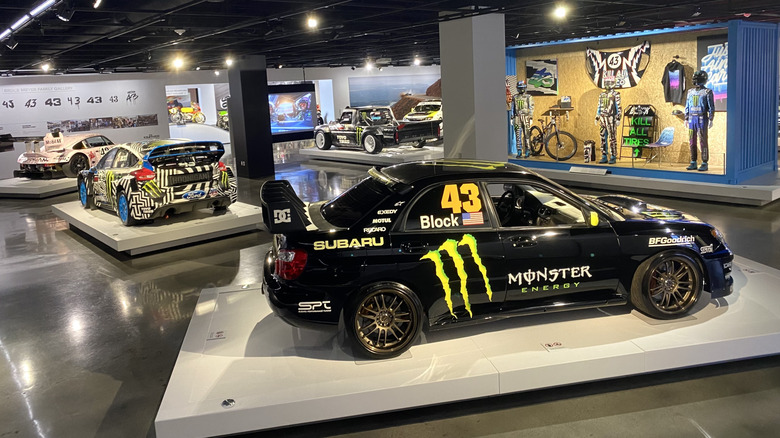
The tragic passing of American rally legend, vehicular Gymkhana innovator, Hoonigan founder and DC Shoe co-founder Ken Block in early 2023 devastated car enthusiasts. Block and his series of Gymkhana videos brought the excitement of motorsport to an audience of over half a billion people around the world, including this humble writer. Born in my hometown of Long Beach, California, Block’s jovial, unpretentious attitude and passion for motorsports resonated with me as an already car-obsessed early adolescent. The Petersen Automotive Museum in Los Angeles, California has a new exhibit dedicated to his myriad contributions, called “People’s Champ: The Impact Of Ken Block.” Open from now through October, it’s a fitting ode to the motorsports legend. I expected the exhibit to be impressive, but I didn’t expect it to help me process and grieve the passing of Block, one of my childhood heroes.

The Petersen is widely regarded as one of the finest automotive museums in the world, but the current selection of exhibits might be the most compelling I’ve ever seen there. The Ken Block exhibit is housed on the museum’s second floor in the Meyer Family Gallery, but crossing the threshold feels entirely transformative. When you enter the gallery, you get the same feeling that you do when you pass from Frontierland into Star Wars land at Disneyland California; you walk through the entrance and it’s as though you’ve entered the Ken Block dimension, where nothing else in the world exists or matters.

What’s on display?

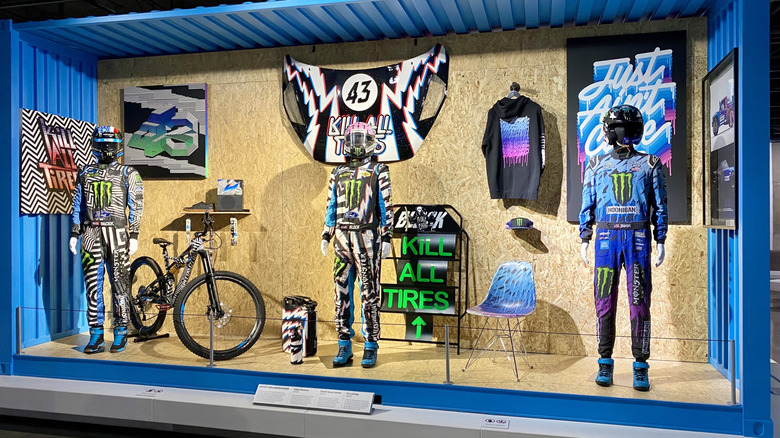
Three of his race suits stand tall on display as his affable voice plays over the speakers in the form of interviews and other sound bites. The interviews are broken up by the sound of Block vaporizing tires and turning fuel into noise as clips of his famous Gymkhana videos play on massive screens. Eight of the monumental vehicles that acted as his chariots of vehicular badassery in different eras of his career sit silently atop plinths, as though paying respects to their fallen champion.

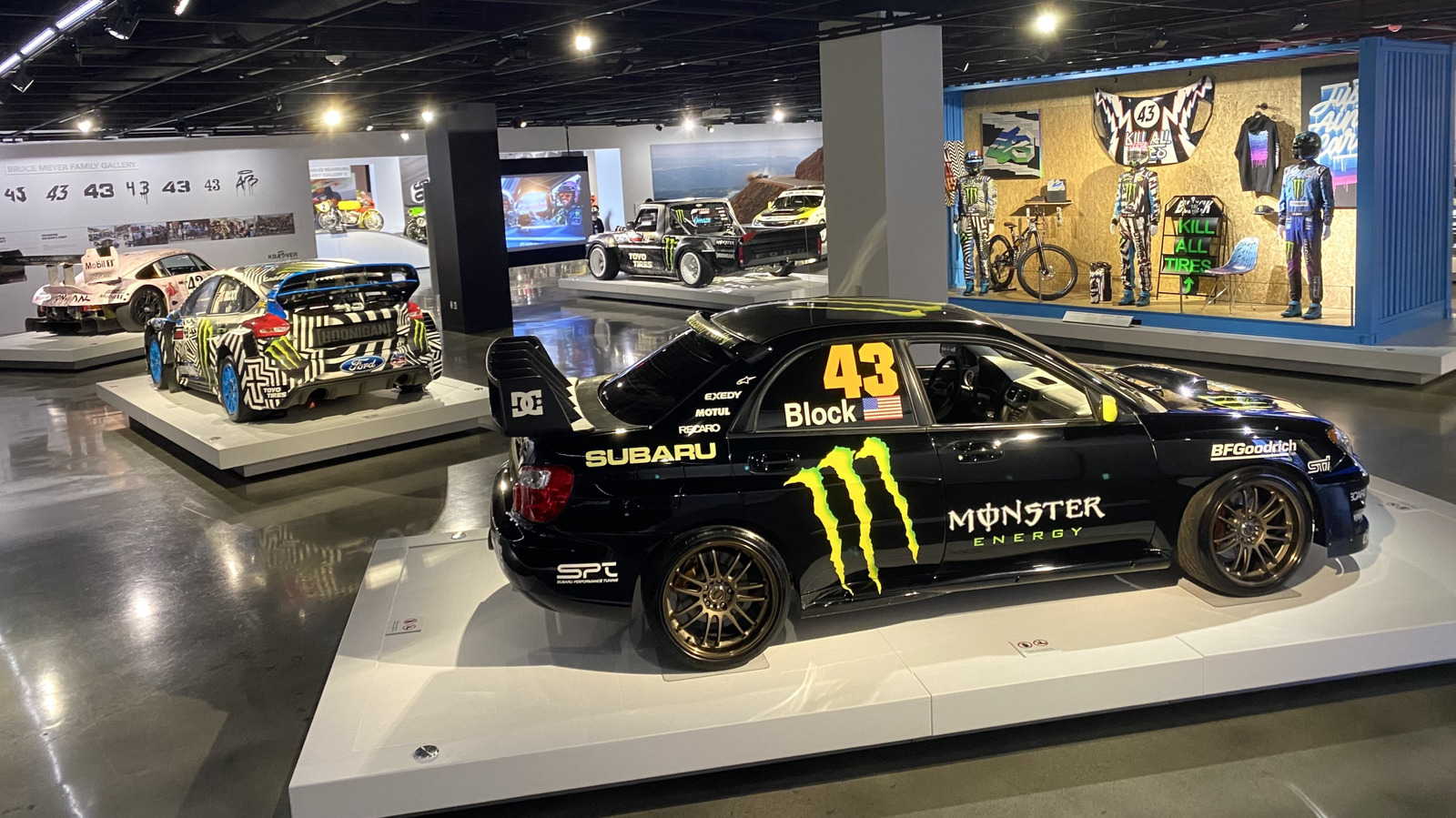
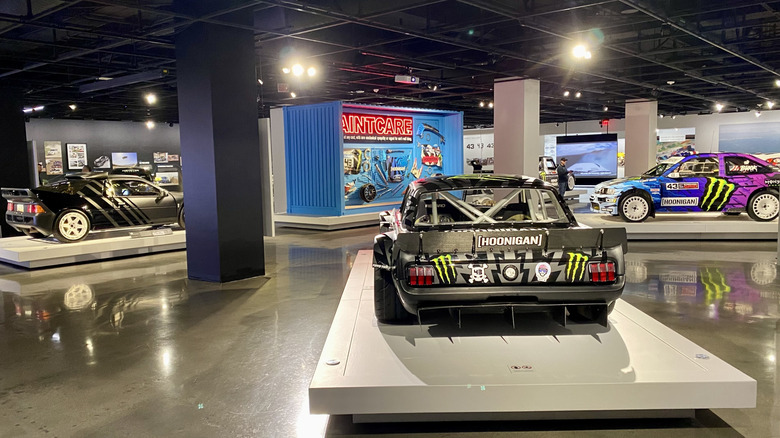
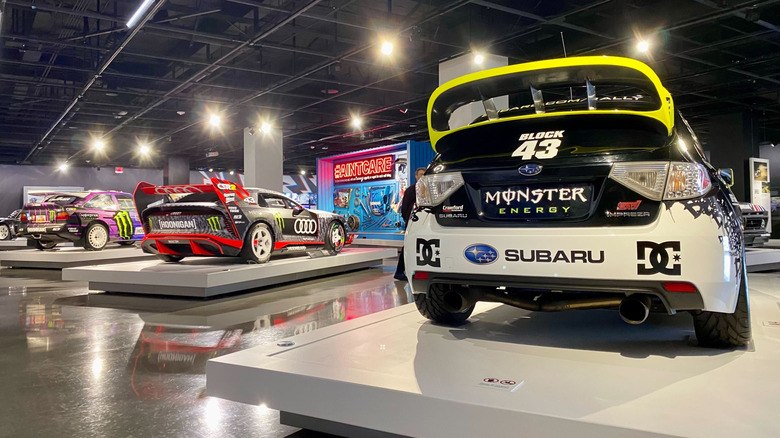
One of my favorite things about Block was his openness to different marques. Many car guys have a firm allegiance to one or two brands, but this exhibit alone include Fords, Subarus, Porsches, and Audis. From the 2005 Subaru Impreza WRX STI that starred in the very first Gymkhana to the Hoonipigasus Porsche 911 SVRSR that was built for the 2022 Pikes Peak International Hill Climb, Block’s noble chariots stand proudly on display. Various pieces of memorabilia are encased in class along the perimeter of the exhibit, and a comprehensive timeline of his storied career occupies an entire wall. The floorplan is peppered with cars, including his 1965 Hoonicorn Ford Mustang, 1994 Ford Escort RS Cosworth, 1986 Ford RS200 Evolution, 2016 Ford Focus RS RX, 2022 Audi S1 E-Tron Hoonitron, 1977 Ford F-150 Hoonitruck, and my personal favorite, the 2008 Subaru Impreza WRX STI featured in Gymkhana Two.

Grieving is healthy

As I sit on the bench facing the “Ain’t Care” wall of shrapnel that still vaguely resemble the car parts they were before Block pushed them to their limit, it finally sits in. Block’s voice comes across the gallery speakers, chills make their way across my skin, and I start to feel a lump in my throat; this man who brought joy, excitement, and inspiration to me and millions of other car nerds across the globe really has passed. I was fortunate enough to share spaces with Ken a couple times in my life, and though I never personally knew him, I felt intrinsically connected to him. I was 12 when the first Gymkhana video made waves on YouTube, and as a giant gawky pubescent car nerd it gave me hope. It inspired me to own my inexplicable infatuation with the automobile, and almost made it cool. This exhibit gives closure to those who have a personal connection to the cultural contributions of the late, great Ken Block, and gives the next generation a chance to learn about and witness why he was such an impactful figure.

I don’t want to spoil the exhibit so this is your last photo

Along with “People’s Champ,” The Petersen has several other brilliant and enthralling exhibits on display right now including “Best In Low: Lowrider Icons of the Street and Show,” “Cars are Beautiful: Mr. Brainwash @ The Petersen,” and “Modern Concepts: Future Visions from the Recent Past.” Each of these exhibits are beautifully curated and contain brilliant artwork and of course, unique, rare, and tantalizing cars. A docent told me that the current array of exhibits has drawn in a remarkably diverse crowd of car fans, including folks who wouldn’t normally feel at home in a museum, and I believe it. I implore anyone in the LA area to pay the museum a visit. There will be a cruise-in event on Saturday, April 5 and other events throughout the week that includes 4/3, National Ken Block Day. Visit the Petersen Automotive Museum website to learn more about ticket prices and hours.


Source link

Maserati GranCabrio gains new entry-level powertrain

0


  • Maserati has revealed the GranCabrio 490
  • The new entry-level model of the GranCabrio lineup packs 483 hp
  • Prices will be revealed in March and order books open in April

Maserati’s GranCabrio has gained a third powertrain option, establishing a new entry point for the convertible grand tourer.

On Friday, Maserati unveiled the GranCabrio 490 and confirmed its arrival at U.S. dealerships by July of this year, with order books to open in April.

Prices will be announced in March, but as the new entry-level model in the GranCabrio lineup, the 490 will be positioned below the sporty Trofeo and electric Folgore models, which start at $204,995 and $206,995, respectively. Both prices include a $1,995 destination charge.

The GranCabrio 490 is powered by the same 3.0-liter twin-turbo V-6 found in the GranCabrio Trofeo, but with output reduced from 542 hp in the Trofeo to 483 hp in the 490—the same rating as in the GranTurismo Modena, the entry-level version of the coupe. For those seeking more power, the GranCabrio Folgore delivers 751 hp from a trio of electric motors, with one at the front and two at the rear.

New Maserati GranCabrio 490

New Maserati GranCabrio 490

As in the Trofeo, the 490’s engine is paired with an 8-speed automatic transmission and a standard all-wheel-drive system. Air suspension is also standard. Maserati claims a 0-62 mph time of four seconds and a top speed of 186 mph.

The GranCabrio’s soft-top roof, available in five colors, takes just 14 seconds to be raised or lowered and can be operated at speeds of up to 31 mph. A neck-warming system with three intensity levels comes standard, and buyers can opt for a wind deflector that fits behind the front seats to improve aerodynamics—though at the expense of rear-seat passengers.

Other available features include a Sonus Faber audio system with 19 speakers, carbon-fiber cabin accents, and Maserati’s latest take on its Verde Giada green paint finish for the exterior.

Additionally, Maserati will offer a new Sports Exhaust system for all gas-powered GranTurismo and GranCabrio models starting from March.


Source link

Black Bay Chrono Flamingo Blue is TUDOR’s New Miami Vice

0


Photo: TUDOR

Following the success of its pink-dialled sibling from 2024, TUDOR is injecting another burst of colour into its iconic Black Bay Chrono lineup. The new “Flamingo Blue” channels the spirit of South Beach into a sophisticated sports watch, manifested in the form of a turquoise dial.

Details That Matter

While flamingos themselves aren’t blue, the dial’s distinctive turquoise hue evokes the tropical waters where these birds inhibit — bright skies, shimmering lagoons, and the kind of carefree energy that comes with the imagery. The 41mm chronograph maintains the Black Bay’s signature design elements, including the iconic “Snowflake” hands — a Tudor diving watch hallmark since 1969 — and a domed dial with two contrasting black sub-counters. Paying homage to TUDOR’s first chronographs from 1970, the layout includes a 45-minute counter and a date window neatly positioned at 6 o’clock.

Photo: TUDOR

But don’t be fooled by its playful look — the Black Bay Chrono “Flamingo Blue” is as serious as they come. At its core lies the Manufacture Calibre MT5813, a high-performance automatic movement featuring a column wheel and vertical clutch. The chronograph movement, derived from Breitling’s B01 calibre but enhanced with TUDOR’s own regulating organ and exclusive finishes, offers a robust 70-hour power reserve and COSC certification that qualifies for everything from adventurous pursuits to day-to-day wear. The watch can also reach depths of up to 200 meters, living up to its sun-soaked aesthetic.

A fixed bezel with a tachymetric scale adds a dash of motorsport flair, harking back to the 1970s Oysterdate chronographs that cemented TUDOR’s connection to the racing world. Yet, the Black Bay Chrono “Flamingo Blue” doesn’t overplay its sporty side. Instead, it strikes a careful balance between the racetrack and boardwalk — perfect for the massive market of collectors who love drag racing and long walks on the beach.

Photo: TUDOR

Then there’s the bracelet. TUDOR’s five-link stainless steel bracelet with the T-fit clasp might not steal headlines, but it deserves praise. Offering five adjustment positions within an 8mm range, the rapid adjustment clasp requires no tool, allowing wearers to tweak the fit on the fly. The ceramic ball bearings ensure a smooth, secure closure while adding a subtle tactile pleasure to each adjustment. 

The Black Bay Chrono “Flamingo Blue” isn’t a watch for those looking to fade into the background. It’s a statement piece that merges heritage with personality, embracing the boldness and individuality of Miami. Practicality? That depends on who you ask. But for those who believe that individuality can coexist with style, this is a watch that fits in anywhere — and yet stands out everywhere.

This article was first seen on Esquire Singapore.

For more on the latest in luxury watch reads, click here.


Source link

2025 Ferrari 355 by Evoluto: A 90s Legend Reborn

0


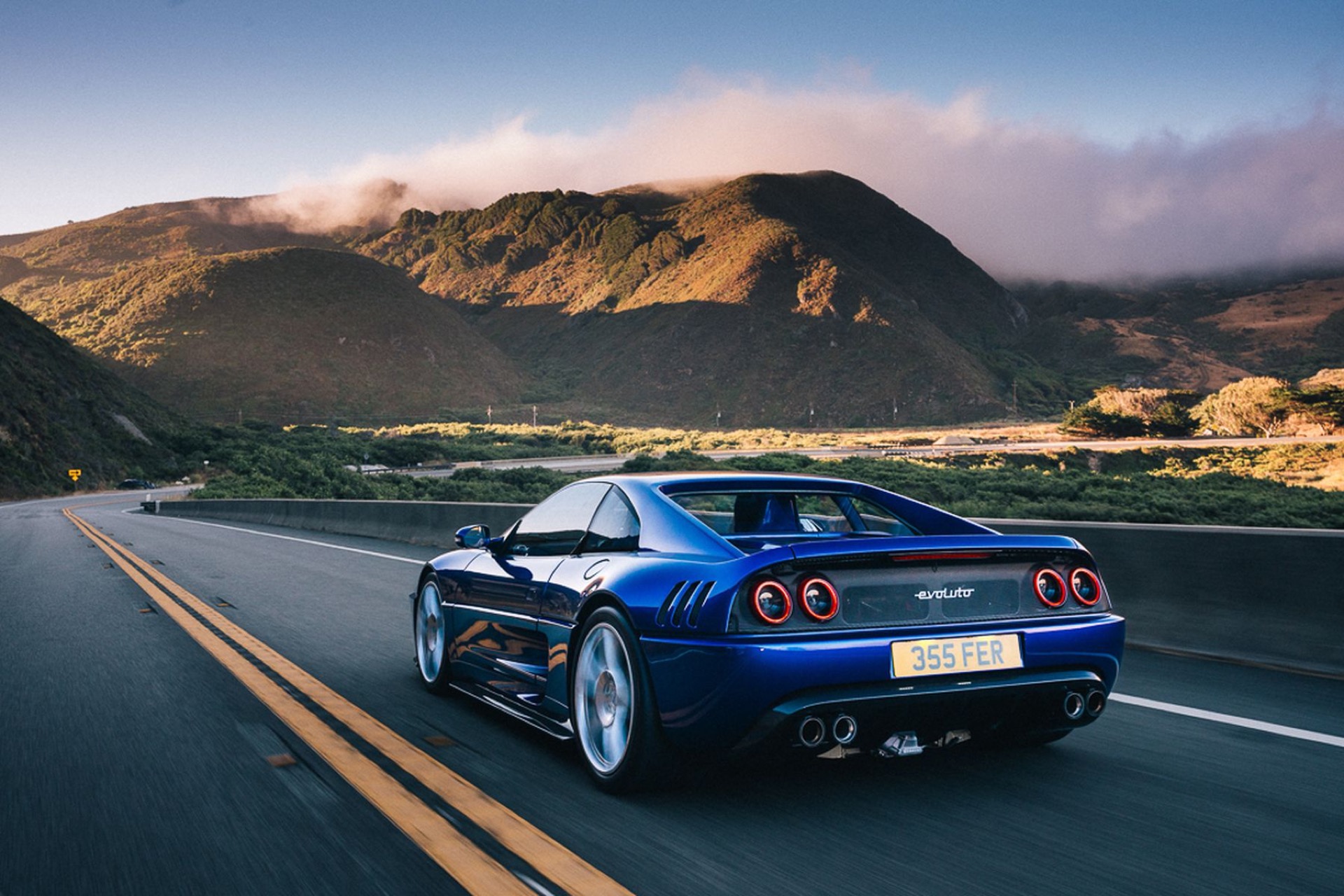
Few Ferraris evoke as much nostalgia as the F355, a 90s sports car icon revered for its timeless design and thrilling V8 soundtrack. Now, British firm Evoluto, led by former Jaguar design chief Ian Callum, has reimagined the legend. Dubbed the 355 by Evoluto, this modern interpretation enhances performance, handling, and reliability without sacrificing its classic mid-engine character. With only 55 units planned, this is a rare opportunity to own a redefined Ferrari icon.

The original Ferrari F355 was a breakthrough model, blending race-inspired aerodynamics, aluminium construction, and a high-revving V8. While over 11,000 units were built, making it one of Ferrari’s best-selling models of its era, it remains highly sought after. Evoluto retains the essence of the original, refining rather than overhauling its design. A wider stance, redesigned air intakes, and modern LED headlights enhance aerodynamics and visibility, while sleeker mirrors improve airflow.

At the heart of the transformation lies a naturally aspirated 3.5-litre V8, re-engineered with over 200 new or modified components. A modern ECU, an advanced Coil-on-Plug ignition system, and CNC-milled cylinder heads with larger intake valves increase power and efficiency. A lightweight titanium exhaust sharpens throttle response and enhances the signature Ferrari soundtrack. The result? An increase from 381 PS to 420 PS, with a rev limit raised to 8,500 rpm.

Weight reduction plays a key role in performance gains. Carbon fibre components improve structural rigidity by 23%, while reducing overall weight to 1,250 kg—a saving of 100 kg. Brembo brakes offer precise stopping power, with an optional carbon-ceramic setup for track-focused buyers. The 19-inch forged wheels—235 mm front and 305 mm rear—ensure optimal grip, enhancing stability at high speeds.

Evoluto also respects the true Ferrari driving experience by keeping the gated manual gearbox. The classic open-gate shifter delivers a mechanical, satisfying “click” with every gear change, preserving the raw connection between driver and machine. Owners can fully customise their interiors, with modern electronics and an improved wiring loom making maintenance easier.

The 355 by Evoluto is a fusion of heritage and modern engineering, staying true to the soul of the Ferrari F355 while elevating its performance, precision, and exclusivity. With only 55 units available, pricing remains undisclosed—but expect a six-figure sum for this high-performance restomod masterpiece.


Source link

New Vehicle Affordability Hits 41-Month High

0


New Vehicle Affordability Hits 41-Month High

The economic news is alarming these days, full of possible wild swings as a new presidential administration proposes radical changes in nearly every kind of policy. But the actual numbers? Those are surprisingly stable and positive at the moment.

In January, new cars were easier for the average buyer to afford than at any point in the last 41 months.

Related: Is Now The Time To Buy, Sell, or Trade in a Car?

Our favorite way to measure a car’s price isn’t money. It’s time. Few Americans can afford to buy a car outright with cash. Most of us borrow to buy and work to pay off the loan. So, the Cox Automotive/Moody’s Analytics Vehicle Affordability Index measures how long the average earner would need to work to pay off the average new car loan.

Kelley Blue Book parent company Cox Automotive publishes the index.

Approaching Pre-COVID Numbers

Before the COVID-19 pandemic rocked the global economy, the time metric routinely fluctuated between 33 and 36 weeks. Once the shocks started, it soared, peaking at 44 weeks in December 2022.

In January, it fell back to 37.7.

“New-vehicle affordability received a boost from the lower prices typically observed in January following the luxury brand sales surge in December,” explains Jonathan Smoke, chief economist at Cox Automotive. “These lower prices, combined with higher incomes, more than offset lower incentives and a slight increase in interest rates during January.”

In January, the typical payment declined by 1.3% to $755, which was down 1.7% year over year. The average monthly payment had previously peaked at $795 in December 2022.

It’s hard to predict what could happen with car prices in 2025, as the Trump administration has suggested it may enact as many as four separate tariffs over the next two months, each of which could drive car prices higher.

But, in the short term, car shopping is easier than it’s been in more than three years.


Source link

Toyota puts more Supra and Land Cruiser classic spares into production

0


Toyota has been reproducing spare parts for some of its most beloved classics in recent years, including iconic models like the Supra, AE86, and even the uber-rare 2000GT.

These parts are developed by Toyota’s Gazoo Racing motorsports division under the GR Heritage Parts Project, which has been running since 2019.

Toyota has now announced that these parts will be available at Toyota dealerships, just like regular genuine parts, starting in February. However, the automaker has not specified which markets will receive them.

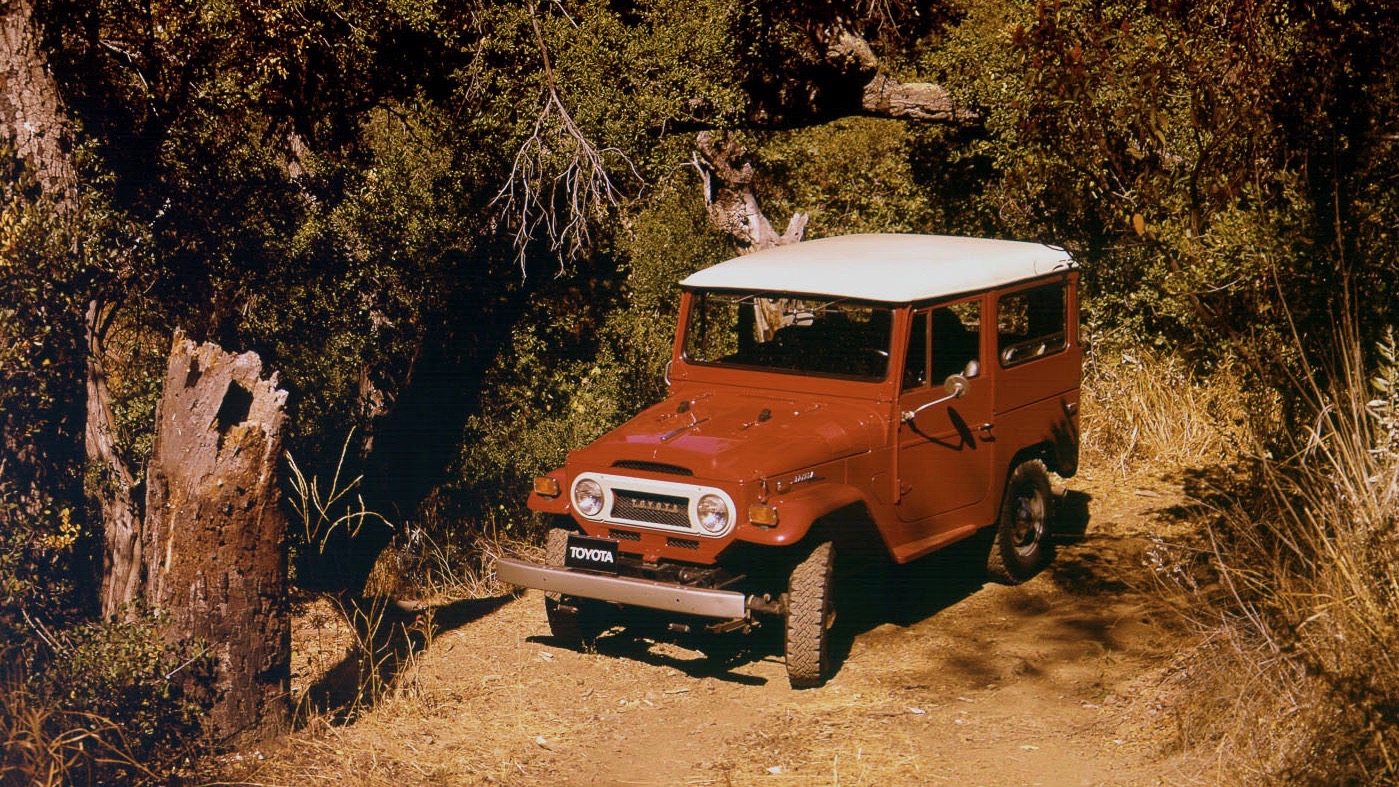
In addition, Toyota has expanded its catalog of classic spare parts, introducing new components for the A70- and A80-generation Supras, the 40-, 60-, 70-, and 80-series Land Cruisers, and the AE86.

Toyota AE86 Sprinter Trueno

Toyota AE86 Sprinter Trueno

The new parts range from relatively simple items, such as switches and dashboard components for the Supras, to more complex components like an engine wiring harness for the AE86. For the Land Cruisers, available parts include fuel and oil gauges, fuses, and select grille pieces.

Supporting classic models was once primarily the domain of exotic brands like Aston Martin and Ferrari, whose vintage cars are often considered high-value investments. However, in recent years, mainstream automakers have also entered the space.

Toyota, known for the durability and longevity of its vehicles, has been one of the most active in this area. In 2022, it even launched an in-house restomod service known as the Kinto Factory. Currently available only in Japan, this service allows customers to have their vehicles restored and upgraded with modern features directly at the factory.


Source link