More than just luxurious places to stay, today’s chicest hotels are redefining themselves as some of the most distinctive places to shop. Their highly curated boutiques reflect each hotel’s unique identity and taste, spotlighting works by local designers and one-of-a-kind pieces for travelers who’ve seen—and bought—it all. Whether inside posh beachside resorts or cool urban havens, these stores are not merely window dressing. They’re stylish destinations in their own right.
Tokyo: Trunk (Hotel) Cat Street
From left: A diffuser in the Trunk (Hotel) Cat Street’s signature citrus-lemongrass scent; the hotel’s Trunk (Store).
Courtesy of TRUNK
This hideaway in Tokyo’s Shibuya neighborhood blurs the lines between highbrow design and youth culture. That extends to its Trunk (Store), a luxe konbini—a Japanese convenience store—stocked with eco-friendly clothing, food, and beauty products. Collaborations include striped pajamas by the work-wear label Steteco. “Discovering a new local brand is part of the fun,” says Kasumi Naito, the hotel’s merchandiser.
Perfect Gift: A citrus-lemongrass diffuser. “Every Trunk property has a unique scent,” Naito says.
Italy: Le Sirenuse
From left: The pool at Le Sirenuse, on the Amalfi Coast; a Camille skirt sold at the hotel’s boutique.
From left: Brechenmacher & Baumann/Courtesy of Le Sirenuse; Courtesy of Le Sirenuse
Set on a cliff overlooking the Amalfi Coast, Le Sirenuse embodies Italian glamour. Guests can take home a slice of the Riviera at Emporio Sirenuse, which carries an array of merch, including towels, beach bags, and hats. The boutique also releases four resort-wear collections a year, which are sold at Net-a- Porter and elsewhere. “The shop began as a desire to translate the hotel’s understated elegance into clothing, and it evolved into a global brand,” says Francesco Sersale, the head of marketing and grandson of the hotel’s founder.
Limited Edition: Ceramics by Lucio Liguori. “Every time his products come in, they are gone almost immediately,” Sersale says. Camille skirts are another favorite. “They come in a few styles and always sell out.”
Marrakesh: El Fenn
From left: At El Fenn, a model wears a graphic t-shirt designed by artist Hassan Hajjaj; an El Fenn guest room.
From left: CleoLeather/Courtesy of El Fenn; Kasia Gatkowska/Courtesy of El Fenn
This arty retreat founded by Vanessa Branson brings the vibrancy of a Moroccan souk into its tadelakt walls. “Everything is in the colors of the medina,” says Yann Dobry, the shop’s creative director. Most items are unique to the store, including embroidered clothing made in collaboration with Moroccan designers and tangerine-colored ceramics by Poterie Serghini.
Best Seller: Colorful graphic T-shirts by Hassan Hajjaj, a Moroccan-born, London-based artist.
Los Angeles: The Peninsula Beverly Hills
From left: The Sita 1910 store in the Peninsula Beverly Hills; a model wears a fringed metallic knit jacket by Tim Ryan.
Courtesy of Sita 1910
It started in an apartment behind The Peninsula Beverly Hills in 2022. Fashion veteran Cio Soler opened a pop-up store, Sita 1910, showcasing lesser-known designers “for women who don’t want to look like everyone else,” she says. When the Peninsula noticed that guests kept returning with Sita 1910 bags, it offered the store a permanent home. “We spoil our clients with an edit of one-of-a-kind pieces,” Soler adds. A second outpost recently opened at the Beverly Hills Hotel.
Exclusive: Fringed metallic knit jackets by Tim Ryan. “We’re his only retail partner,” Soler says. “He makes every cardigan and jacket by hand, some with 5,000 silk ribbons.”
São Paulo: Rosewood São Paulo
From left: Artwork by Walter Corrêa lines an elevator at the Rosewood São Paulo; an ashtray by Patrícia Bianco at the hotel’s Art Library.
Courtesy of Rosewood
The hotel occupies a landmark building attached to a modern tower teeming with greenery. Its Art Library is both a museum-quality gallery, with 50 site-specific works by Brazilian artists, and a boutique with rare handcrafted objects. Vinicius Romancini, the hotel’s art concierge, says his favorites include wooden stools carved in the shape of jaguars, tapirs, and other native creatures.
Buy Local: An ashtray by Patrícia Bianco. “The frog holds deep symbolic meaning for many Brazilian Indigenous communities,” Romancini says.
A version of this story first appeared in the October 2025 issue of Travel + Leisure under the headline “Charge It to the Room.”
San Diego’s food scene is in the midst of a delicious evolution, and it shows no signs of slowing down. From Michelin-starred gems to inventive farm-to-table concepts, the city has become a vibrant culinary playground where new restaurants seem to pop up weekly, each one raising the bar a little higher. Whether it’s a refined tasting menu or a rustic dish crafted from hyper-local ingredients, San Diego continues to impress with its bold flavors, creative chefs, and a commitment to quality that’s hard to ignore. In a city where innovation meets laid-back coastal charm, dining out is never just a meal- it’s an experience.
From the moment we arrived at Lilo, it was clear we were in for something extraordinary. Earning a Michelin star just two months after opening is no small feat, and after experiencing it firsthand, it’s easy to see why. The journey begins before you even set foot inside. Greeted by name in the parking lot (yes, every member of our party!), we were escorted to a stunning outdoor patio where the experience truly began. Homemade mocktails were served alongside a rotating selection of divine appetizers; each bite was a symphony of flavor, texture, and creativity. It was the kind of start that immediately sets a tone: you’re not just here to eat, you’re here to feel something.
Once inside, Lilo continues to surprise. The space hums with an energetic buzz: lively, modern, and utterly unpretentious. Unlike many fine dining establishments that veer into sterile or overly formal territory, Lilo manages to strike the perfect balance between elevated and inviting. You want to stay awhile.
Every dish is a performance. Finished tableside, plates arrive in ice bowls, on beds of moss, or nestled among edible flowers that are crushed right before your eyes. The creativity is jaw-dropping, but never gimmicky – it always serves the food, highlighting the freshness and thoughtfulness of every ingredient.
Service is where Lilo truly separates itself from the pack. With a 1:1 staff-to-guest ratio, the attention is nothing short of impeccable. You’re never rushed, never waiting, and always taken care of with a warmth and intuition that feels almost uncanny.
Lilo isn’t just a restaurant, it’s a revelation. It has managed to do what so many strive for but few achieve: make fine dining deeply personal, incredibly fun, and completely unforgettable.
pros: you start and end your experience in the patio and then wrap up your experience by a firepit with desert and tea and club-like music. Ingredient combinations are otherworldly. presentation is breathtaking, customer service is outstanding.
cons: pricey with a rigid, non-refundable cancellation policy.
must order: it’s a prix-fix menu that can cater to any of your allergies or food preferences. every. single. dish. was divine.
La Jolla has a new spot to check out with the arrival of Taco Time Cantina. The bright and colorful space also has a relaxed outdoor patio ideal for enjoying a casual meal in the sunshine. Inside, a self-serve salsa bar adds a fun touch, letting you customize your plate with extra heat or flavor. The staff is welcoming and attentive, creating an easygoing atmosphere that makes you want to linger. On the menu, you’ll find familiar favorites like tacos, flautas, nachos, and burritos; classic comfort foods prepared with care. Taco Time Cantina brings a laid-back, flavorful addition to the neighborhood dining scene.
pros: inexpensive, friendly staff, solid no-fuss Mexican food cons: servers will bring you your dishes, but you need to get your own water and utensils
must order: they are famous for their ribeye taco
Farmer’s Bottega in Mission Hills is a cozy bistro-style spot that leans into the farm-to-table experience with a menu full of fresh, thoughtfully sourced ingredients. Their cocktail list is equally enticing, with seasonal flavors and well-crafted drinks that pair nicely with the food. The welcoming staff adds to the charm, creating an inviting atmosphere that makes the space feel both polished and approachable. It’s a neighborhood gem that delivers on quality without losing its laid-back appeal.
Parfait Paris is another welcome addition to La Jolla and is already becoming a neighborhood favorite. Known for its fresh French pastries, the bakery offers everything from buttery croissants to delicate tarts that taste as good as they look. The coffee bar turns out perfectly made drinks that complement the sweets, while the authentic breakfast and brunch menu brings a true Parisian touch with options like crepes, quiches, and other classics. With its inviting atmosphere and carefully crafted flavors, Parfait Paris brings a little slice of France to the neighborhood in a way that feels both approachable and special.
pros: great menu, lively, delicious pastries cons: long wait time for barista station drinks must order: chocolate almond croissant and veggie quiche
Take an escape to Lana in Solana Beach for a delicious weekend brunch experience. Imagine starting with a velvety sweet corn soup, rich, gently sweet, and subtly fragrant, and then following it with huevos rancheros done right: crisp tortillas topped with perfectly cooked eggs, vibrant salsa, beans, and creamy cheese. With a warm, coastal-chic vibe, this is the kind of brunch that makes Sundays feel special.
pros: cool vibe, fantastic food
cons: they don’t make homemade hot sauce must order: sweet corn soup
Cooler days are nearly upon us, so before the temperatures officially drop, stock your wardrobe with pieces equipped to keep you cozy during all your fall adventures. Luckily, this year’s jacket trends are plentiful (and perfectly packable), so you’ll have no trouble finding your dream style to accompany you throughout your seasonal travels.
From barn jackets to cropped trench coats, we’ve identified the five biggest jacket trends hitting the streets this fall, along with the best ways to shop each style (with some picks even on sale!). Read on to find 20 eye-catching looks your wardrobe has been missing from Everlane, Gap, Nordstrom, and more. Best of all, everything costs less than $150.
Barn Jacket
Functional, flattering, and the perfect weight for the early weeks of fall, the barn jacket trend is one of the most utilitarian fads we’ve seen crop up this season, and you don’t need to shell out a fortune to get the look, either. With a boxier fit and a contrasting collar, the Old Navy Canvas Barn Jacket is a steal at $60, and shoppers have their choice of three gorgeous neutrals in sizes XS to 4X. If you’re willing to splurge a little more, the Levi’s Women’s Short Cotton Barn Jacket is another great, high-quality piece at $101, while the Everlane The Barn Jacket is a whopping 60 percent off in the men’s fit if you like your clothes a little baggier.
Bomber Jacket
Bomber jackets are one look that never truly seems to go out of style—probably because they make every outfit look effortlessly cool and they’re great for transitioning between seasons. For a sportier vibe, the Athleta Flex Bomber is a lightweight, packable pick that’s on sale for under $100. The best-selling Madewell Classic Bomber Jacket,on the other hand, features a cropped fit and a cozy cotton and wool blend—plus it’s now 34 percent off. And, if your dream bomber jacket has a leather exterior, the slick Automet Women’s Motorcycle Jacket will be an automatic “add to cart” while it’s on sale for $40.
Cropped Trench Coat
Full trench coats can step aside because cropped coats are having a moment this fall, and they’re far more packable than their longer counterparts. With adjustable sleeves and a boxy fit, the Abercrombie & Fitch Cropped Trench Coat is a cool, lightweight layer for brisk evenings, and the army green shade is especially on-trend. For a more affordable version, the best-selling Saodimallsu Crop Double Breast Trench Coat is an unbeatable selection at Amazon that’s now just $48.The Gap UltraSoft Denim Crop Trench Jacket is a more casual jean option and the moody dark wash just went on sale.
Suede Jacket
Suede has long been one of the most popular materials of the early fall for its lightweight drape and moderate warmth, and this year is no exception. Luckily, there are so many ways to make the trend your own, starting with the oversized Wayf Rita Faux Suede Jacket that’ll look effortlessly cool paired with a mini skirt, jeans, or even well-tailored trousers. For a fitted, cropped finish, the A New Day Faux Suede Lady Jacket is an affordable pick for under $50, and if you’re looking to add a bit of edge to your style, the Loft Faux Suede Moto Jacket will do the trick for under $100.
Quilted Jacket
One of the more versatile trends of the season, quilted jackets are about to be spotted everywhere as temperatures rapidly drop, and they come in so many unique styles and patterns that will easily integrate into your existing wardrobe. Our standout pick is the Free People Quinn Quilted Cotton Denim Jacket that’s now nearly $100 off and will instantly add intrigue to your simplest travel outfits. The Thread & Supply Quilted Jacket is a close second since it comes in one of the most popular prints of the year: gingham.
Most 11-year-olds want to go to Disneyland for spring break. Mine wanted to see architecture. While there is no shortage of iconic buildings in our hometown of New York City, Pennsylvania arguably has a more esteemed collection. So last spring, we packed up my boyfriend’s vintage Mercedes station wagon and hit the road for five days of design hunting, food, and, if there was time, antiquing. A thousand miles later, we looked at the state in an entirely new way.
Day 1: The Brutalist
We began our drive early Sunday, so we could be at Canal House Station, a restaurant in Milford, New Jersey, before the lunch crowd. The founders, cookbook authors Christopher Hirsheimer and Melissa Hamilton, have created a magical space that highlights the season’s best produce. After a transportive lunch that involved fresh peas and rhubarb, we arrived at the Wharton Esherick Museum in Malvern, Pennsylvania, for our 2:30 tour.
I’d never heard of Esherick, a polymath best known for his handcrafted furniture, but this museum had popped up when I searched for Louis Kahn, the Brutalist architect who was based in Philadelphia. While walking through the Hobbit-like home and studio that Esherick built from 1926 to 1966, it was hard to imagine him befriending Kahn—their styles were so different. But as stories of Esherick’s love of martinis and parties emerged, their connection made more sense. On the drive to Philadelphia, we stopped at Erdman Hall, the three-cube dorm Kahn built at Bryn Mawr College, and Frank Lloyd Wright’s magnificent, Japanese-inspired Beth Sholom Synagogue in the town of Elkins Park. Though the synagogue was closed by the time we arrived, it was worth the detour just to see the exterior.
We checked in to the Lokal Hotel Fishtown, a Modernist hotel in a trendy part of Philadelphia. Our two-bedroom duplex was perfect—except for the trains that regularly passed outside our windows. Next time, I would book a room on the hotel’s quiet side, or try Lokal’s Old City location.
From left: George Nakashima Woodworkers, a design studio in New Hope, Pennsylvania; the Beth Sholom Synagogue, in Elkins Park.
From left: George Nakashima Woodworkers SA, Ltd. New Hope, PA; Beth Sholom Congregation
Day 2: One Night Only
We spent the day touring Philadelphia with the sunroof open, taking in such architectural highlights as Christ Church, finished in 1744; the Greek Revival–style Second Bank of the United States, completed in 1824; the International Style PSFS Building from 1932 (now a Loews hotel); Louis Kahn’s former office on Walnut Street (now an AT&T store) and the medical-research labs he designed at the University of Pennsylvania in the late 1950s; and the Comcast Center, the 58-story shimmering glass skyscraper by Robert A. M. Stern, completed in 2008.
After lunch, we drove four hours west to the small town of Acme, to stay in a house designed by the modern master himself, Frank Lloyd Wright. In the 1960s, two Pittsburgh couples commissioned Peter Berndtson, an acolyte of Wright’s, to build a pair of summer homes on a 130-acre site that would later become Polymath Park. The estate now also includes two Wright homes from the Midwest that were saved from demolition and relocated, including our home for the night: Mäntylä, a three-bedroom house from 1952.
My stepmother had driven from Virginia to join us, and it’s fair to say that the four of us didn’t talk (or eat) much that evening—we were so moved by our remarkable surroundings. It’s one thing to tour Fallingwater. It’s quite another to inhabit Wright’s concept of “compression and expansion” while walking barefoot to your bedroom across his trademark “Cherokee Red” concrete floors.
A living area in Fallingwater, the Wright masterpiece in Mill Run.
Christopher Little/Western Pennsylvania Conservancy
Day 3: A Classic Revisited
The winding, 25-minute drive to Fallingwaterfrom Acme showed off the landscape that Edgar Kaufmann, a Pittsburgh department-store tycoon, and his wife, Liliane, chose for their weekend home. They commissioned Wright to design it in 1934. He sited the structure over a rushing waterfall, with cantilevered terraces.
I had visited Fallingwater decades ago, but was moved anew by this marvel—one of America’s greatest contributions to architecture. Details revealed by our fantastic guide (we sprang for the enhanced tour) seemed newly relevant, including the cold-plunge pool for Mrs. Kaufmann and the separate bedrooms and terraces for each family member.
More than a living work of art, Fallingwater is a place that teaches us to think closely about how we use our homes. After the two other tour-goers left (the 8:45 a.m. reservation turned out to be a smart move; we had the place to ourselves), my son grabbed my phone and snapped photos of each room so he could sketch them in the car. It was fascinating to see what caught his eye.
After lunch in the Fallingwater Café, we made our way to Pittsburgh, passing Kaufmann’s Department Store, now an amenity-rich apartment building. We drove on to the Industrialist Hotel, fittingly housed in a Beaux-Arts building. After check-in, we had delightful tapas at the award-winning Morcilla.
Day 4: Pittsburgh, Old and New
A walking tour of Pittsburgh’s old downtown spanned eras, starting with the Allegheny County Courthouse & Jail, designed by Henry Hobson Richardson and completed in 1888. Modern highlights included the hulking 1971 U.S. Steel Tower and the neo-Gothic PPG Place, designed by Philip Johnson and his partner, John Burgee, and completed in 1984, with 231 spires clad in black glass. Downtown was quiet, so we were happy to stumble upon Bluebird Kitchen for breakfast.
As in Philadelphia, there was so much architecture to see. After swinging by Mies van der Rohe’s Hall of Science at Duquesne University and I. M. Pei’s City View Apartments, we went to the Carnegie Museum of Natural History (great dinosaurs, confusing layout) and, at my son’s request, the kid-friendly Carnegie Science Center. While the 1991 building didn’t stand out, I was interested in its architect, Tasso Katselas, a Pittsburgh native who had been tapped to design a chapel (never built) at Fallingwater.
After an early dinner at the neighborhood joint Vandal, we raced the sunset to see a 1960s monastery that Katselas had built at St. Vincent Archabbey & College, in the town of Latrobe. Angular bay windows jutted out from the brick façade and glowed in the silent evening. Through the windows, we could see cassocked monks. I had read that Katselas spent time with the monks to understand how they live; his building spoke movingly of his dedication.
Day 5: A Post-modern Family
On our drive back home, there was one more architectural stop to make. In Harrisburg, we tried to find the Olivetti-Underwood Factory that Louis Kahn completed in 1970. It was so altered, we didn’t recognize it while idling out front. We consoled ourselves at the Antique Marketplace of Lemoyne, a shop so good that we’re planning a return. We also had an exceptional burger and fries at theJackson House.
Then we made a beeline to New Hope, where the architect George Nakashima settled after being released from a Japanese internment camp in 1943. He mastered the live-edge wood furniture that would be embraced as a counterpoint to the rigidity of Modernism. His property, George Nakashima Woodworkers, is now a historic landmark. During our visit, my son was mesmerized by the towering stacks of Persian-walnut slabs.
Nakashima’s daughter, Mira, now in her 80s, leads the design studio, housed in a building she designed with her father that is surrounded by graceful Japanese maples and cherry trees. Also working in the studio are her grandson Toshi, daughter-in-law Soomi, and a dedicated team of woodworkers. To be there is to experience the harmony of nature and architecture. No wonder the tours sell out months in advance. (Luckily, we’d made an appointment to commission a table.) We signed up for the mailing list, eager to create our own tradition and, perhaps, become a family of designers, too.
A version of this story first appeared in the November 2025 issue of Travel + Leisure under the headline “Design Within Reach.”
For most travelers, airports are a gauntlet: security lines, baggage carousels, and the frustrating wait for a rideshare or taxi. By the time you reach your hotel, half the day’s energy is gone. Yet celebrities step off flights looking refreshed, composed, and somehow ahead of schedule. The difference isn’t just private jets. It’s what happens in the first 30 minutes after touchdown—the discreet world of seamless airport transfers that rarely gets mentioned, but quietly defines how the stars arrive.
The Silent Disappearing Act
In Los Angeles, the saying goes: you’re judged by how you arrive. For public figures, that judgment starts before they leave the airport. A well-timed chauffeur, waiting just beyond the terminal doors, can erase hours of fatigue. The psychology is simple: when the transition from runway to road is effortless, the entire journey feels different.
LAX itself has acknowledged just how stressful the curbside experience can be. Congestion has grown so severe that the airport is planning to move its ride-hail lot in 2026, coinciding with the launch of its long-delayed People Mover. The move is designed to ease traffic, but for travelers on a tight clock—especially celebrities—it underscores the risk of relying on unpredictable systems.
Why Friction Costs More Than Time
Executives and performers alike know that wasted minutes at the curb aren’t just inconvenient; they ripple into performance. That’s why smooth transitions have become a form of professional armor. Forbes put it plainly in its feature on business-travel efficiency: cutting friction is the most reliable way to protect presence and productivity on the road (Mastering Time Management On The Road: A Guide For Business Travelers).
For celebrities, that presence isn’t just internal—it’s a brand asset. Arriving frazzled at a premiere or press junket isn’t an option. The luxury isn’t only in the leather seats of the SUV; it’s in the time and focus they preserve along the way.
Safety, Privacy, and the Stakes of Being Seen
There’s another factor driving stars away from rideshares: risk. The optics of being stranded or, worse, endangered, can’t be ignored when your face is your career. Reports of driver misconduct have only heightened scrutiny. Earlier this year, Reuters covered Lyft officials settling a lawsuit over sexual assaults by drivers, highlighting vulnerabilities that make vetted chauffeur services more than a perk. For public figures, discretion, reliability, and commercial insurance are non-negotiable.
In this context, a professional chauffeur isn’t a flourish—it’s security policy dressed as convenience.
The Emelx Example: Quiet Precision from LAX to the Hills
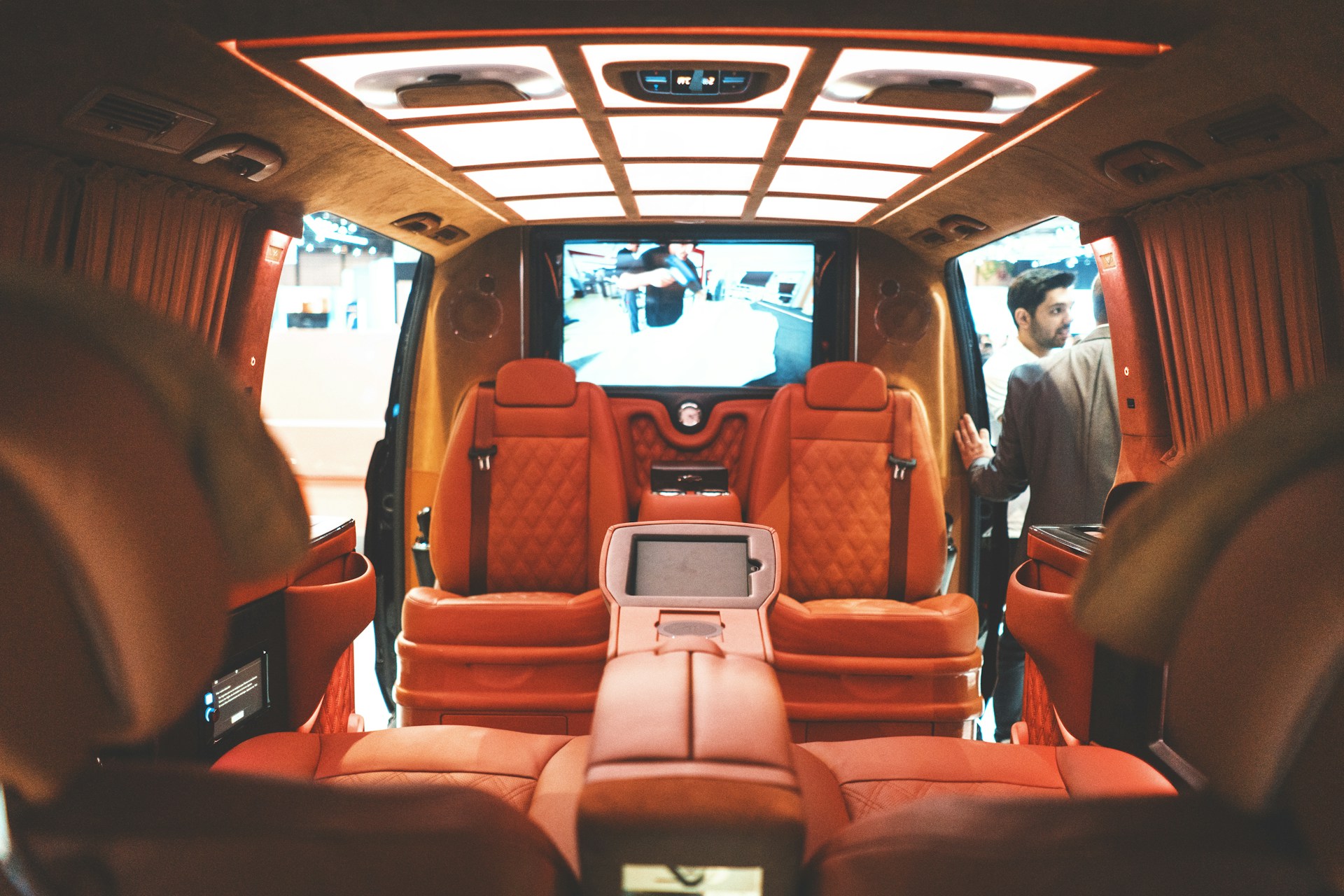
In Southern California, luxury chauffeur transfers in Los Angeles has quietly established itself as the service of choice for those who can’t afford uncertainty. The vehicles—sleek Lincoln Navigators and Cadillac Escalades—are familiar, but the value lies in what you don’t see: the flight tracking that begins before wheels-down, the staging that puts the SUV at the curb at the exact right moment, and the discretion of chauffeurs who know when silence is golden.
A producer landing from Europe might step off a redeye and into an Emelx SUV, water waiting, Wi-Fi humming, luggage already stowed. By the time they reach Beverly Hills, the fatigue of a ten-hour flight has been softened into something resembling calm. For a family arriving for a coastal vacation, the experience is equally transformative: child seats pre-installed, playlists ready, the sense that the holiday began at the arrivals hall, not hours later.
It’s choreography, not just transport—and in Hollywood, choreography is everything.
Beyond Lounges and Labels: Redefining Luxury
Airports themselves have leaned into the idea that calm is the new currency. The competition among lounges has turned them into sanctuaries designed to manage stress before or after flights. As Travel + Leisure recently noted, the best lounges are no longer about champagne towers but about creating the mental space travelers crave.
For celebrities, though, the real sanctuary begins once they leave the terminal. Lounges can soothe the wait, but a seamless airport transfer is what sets the tone for the next stage of the journey.
The Luxury Celebrities Don’t Post About
Scroll through an A-lister’s social media and you’ll see the couture, the hotels, the stage lights. What you won’t see is the ten-minute glide from customs to car, the door that opened at just the right time, or the SUV that whisked them into invisibility. That absence isn’t oversight—it’s by design. The most powerful luxuries are often the quietest.
For celebrities, seamless airport transfers are the invisible infrastructure that makes everything else look effortless. And for travelers at LAX, services like Emelx prove you don’t need to be a household name to borrow the same playbook.
For more on the latest in celebrity releases, click here.
Tokyo is a city teeming with exceptional Japanese restaurants that captivate gourmets from around the world. Dishes crafted with seasonal ingredients, courses that fuse traditional techniques with innovation, and aesthetics that extend to the tableware and ambiance — these elements embody the spirit of Japanese fine dining.
In this article, we introduce four top-tier Japanese restaurants in Tokyo that are truly worth visiting. From Michelin-starred establishments to hidden gems, each promises a unique culinary experience not only through taste but also in atmosphere and hospitality.
If you’re planning a trip to Japan, let this be your guide for unforgettable dining.
Opened in 2021 in Yoyogi-Hachiman, “Goon” is a Japanese restaurant in Tokyo that has quickly gained a loyal following with its creative cuisine that emphasizes seasonal ingredients.
The hand-written menu changes monthly and features dishes such as fresh sashimi and grilled duck meatballs (tsukune) slowly roasted over charcoal. Each dish is crafted with care and precision — even their rice balls receive glowing reviews like “better than a specialty shop” and “the best in the world.”
Recommended Courses
Omakase Course – ¥9,500 A full-course Japanese meal including rice. A variety of seasonal dishes await you.
Omakase Course – ¥8,200 A course centered around light bites and perfect for pairing with alcohol.
Just a 4-minute walk from Yoyogi-Koen Station, the restaurant offers a calm setting with 16 seats. It includes counter seating at the open kitchen, table seating, and a 6-seat sunkentatami room.
(Course prices and contents may vary by the season.)
Address: 1F Omori Building, 3-7 Motoyoyogi-cho, Shibuya-ku, Tokyo Reserveat Goon
『寿こう』|Jukou
Just a 5-minute walk from Ginza Station, Jukou is a famous Japanese restaurant that has earned Michelin stars for two years in a row.
Using ingredients carefully selected by the owner himself, the restaurant offers dishes that embody Japan’s seasonal essence. Rooted in fermentation, aging, straw grilling, and rice-based techniques, the food avoids gluten and supports gut health. The signature dish, grilled sesame tofu, is a standout, paired beautifully with their flavorful clay pot rice.
Recommended Courses
Dinner: ¥24,200 – Light Course A 9-course meal including the grilled sesame tofu and seasonal straw-grilled dishes.
Dinner: ¥36,300 – Standard Course A 12-course feast featuring carefully chosen seasonal ingredients, with a menu that changes daily.
Lunch: ¥13,200 per person (2 or more guests) A special Saturday-only lunch course at a more accessible price.
Seasonal Special Course: For example, the Matsuba Crab Course (¥77,000) — a luxurious menu using high-end seasonal ingredients.
The interior, designed by a prominent Kyoto designer, offers a serene space with private rooms ideal for special occasions and intimate meals.
(Course prices and contents may vary by the season. All prices are per person. Lunch private room: +10%, Dinner service charge: +10%)
Address: 6F Nishi Gobangai Building, 5-6-13 Ginza, Chuo-ku, Tokyo Reserve at Jukou
『青草窠』|Seisouka
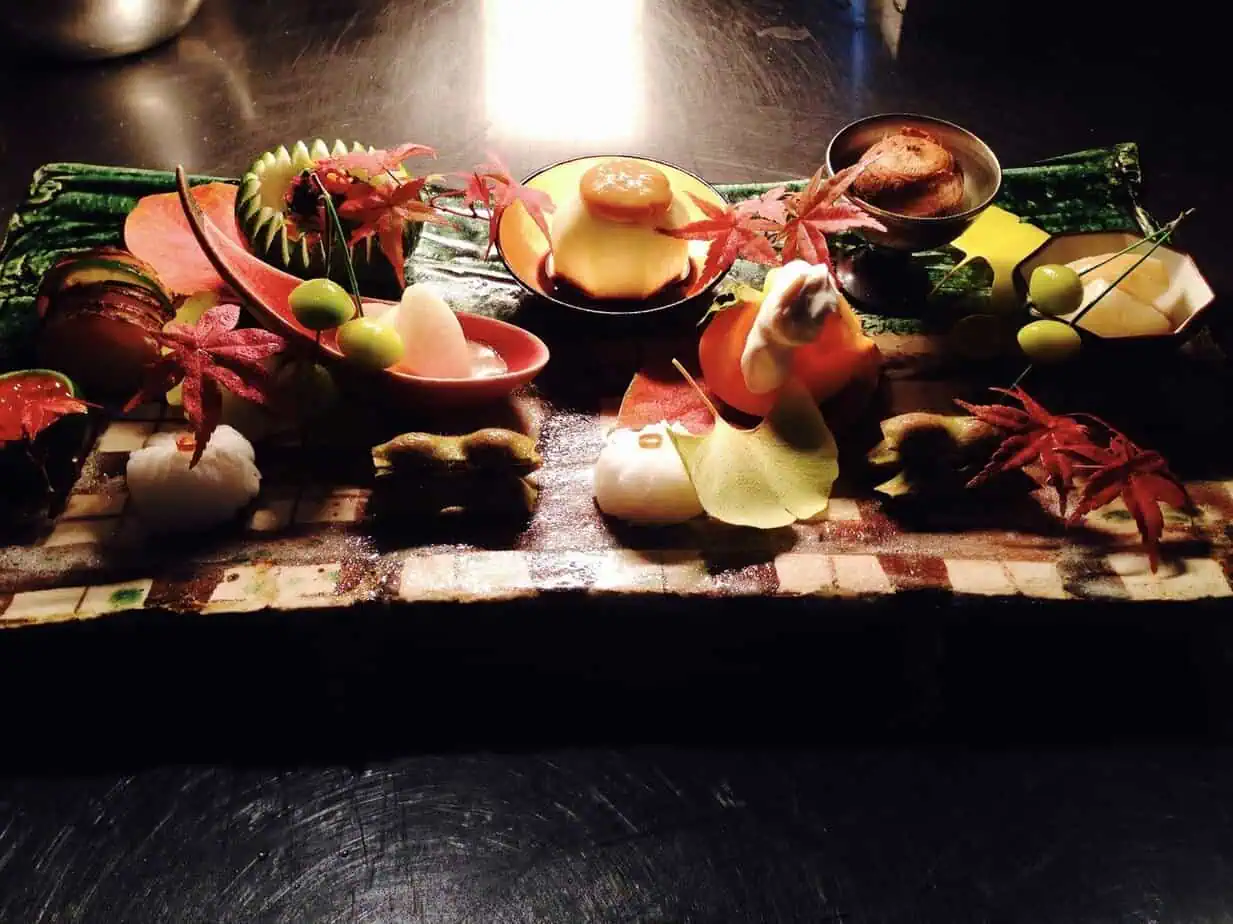
Seisouka is a traditional kaiseki restaurant that has earned Michelin stars for seven years in a row. The white-themed, modern interior is as refined as an art gallery. From cuisine to tableware and decor, the restaurant embodies the beauty of Japanese culture.
Their omakase course offers exquisite kaiseki dining that values both seasonality and tradition. Beginning with seasonal appetizers and continuing through expertly prepared seafood and meat dishes, each course is a masterwork of craftsmanship.
Typical structure: Sashimi, refined soup, grilled dish, fried dish, simmered dish, and more.
A 7-minute walk from Hiroo Station on the Tokyo Metro, Seisouka has 25 seats, including counter seating for up-close chef interaction and private rooms for a more relaxed experience.
(Course prices and contents may vary by the season. Service charge is 10%)
Address: 1F Tengenji Square, 4-2-34 Minami-Azabu, Minato-ku, Tokyo Reserve at Seisouka
『割烹 山路』|Kappou Yamaji
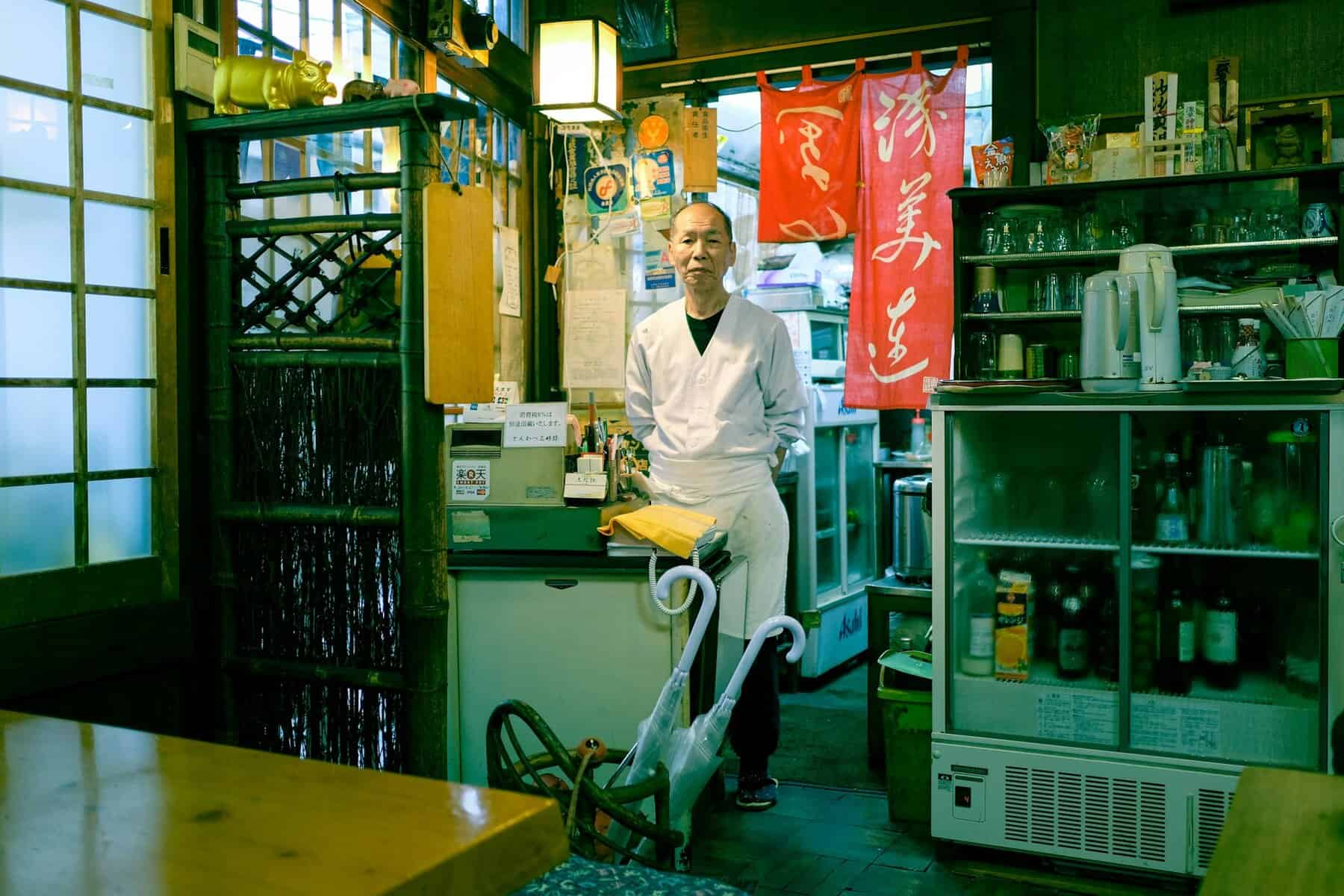
Located just a 2-minute walk from Shimbashi Station, “Kappou Yamaji” is a hidden gem nestled near Karasumori Shrine. It follows the lineage of the renowned Roppongi restaurant “Yamaji,” offering authentic Japanese cuisine steeped in tradition.
The restaurant focuses on drawing out the natural flavors of its ingredients, with fresh seafood sourced from Tsukiji Market and vegetables from Iwate Prefecture. One of its unique charms is the ability to enjoy sushi, traditional Japanese cuisine, and even hand-made soba noodles under one roof.
Recommended Courses
Seasonal Omakase Course – ¥13,750 A course of 8 dishes featuring the season’s freshest ingredients. From appetizers to sashimi, grilled and simmered dishes, and depending on the time of year, sushi and handmade soba for the finale.
Seasonal Omakase Lunch (Sundays & Holidays only, 2 or more guests) – ¥13,750 A lavish lunch course mirroring the dinner lineup, perfect for special occasions.
The restaurant offers an intimate space with 4 counter seats and two 4-seat tables. It exudes a calm Japanese atmosphere and can be reserved for private gatherings — ideal for special dates, anniversaries, or business dinners. Not only is the food outstanding, but the cost-performance is also excellent.
(Course prices and contents may vary by the season. All prices are per person. Service charge is 10%)
Address: 2F Frontier Building, 2-9-12 Shimbashi, Minato-ku, Tokyo Reserve at Kappou Yamaji
Tokyo is home to countless exceptional restaurants where chefs pour their soul into every dish. The four restaurants introduced here all masterfully showcase seasonal ingredients and offer experiences that engage all five senses. Whether for your next culinary adventure or a special dinner, enjoy a truly memorable meal in Tokyo.
AutoReserve is your go-to spot for discovering and booking the widest variety of restaurants around the globe. The smart AI takes care of all your reservations, making dining out effortless no matter where you are.
AutoReserve is your go-to spot for discovering and booking the widest variety of restaurants around the globe. The smart AI takes care of all your reservations, making dining out effortless no matter where you are.
Five minutes after check-in, there was a knock on our door. It was Jessa from room service, welcoming us with a Conrad stuffed animal, a plate of sweets, and a personalized welcome note waiting on the table. That thoughtful start set the tone for the rest of our stay.
Flying in from Dubai, I usually expect my Manila stopovers to be a mix of errands, embassy runs, and family time. But for this trip, I gave myself three days of pure comfort and convenience at Conrad Manila. Spoiler alert: it’s the kind of stay that makes Manila’s traffic almost forgivable.
Filipino Hospitality at Its Finest
What really sets Conrad Manila apart isn’t just its yacht-inspired design or its location—it’s the people. The staff here embody Filipino brand hospitality: warm, genuine, and surprisingly personal. By the third day, the concierge team—shoutout to Justine, Kyle and James—still greeted us by name, making us feel less like hotel guests and more like family returning home.
And I can’t forget Eunice at reception, who extended our check-out and patiently assisted us with our questions. It’s these thoughtful touches that make the whole experience so smooth and memorable.
Breakfast That Feels Like the World on a Plate
The breakfast buffet at Brasserie on 3 deserves its own spotlight. It’s not just about variety (though there’s plenty). You can go from fresh bread and pastries to Filipino comfort food like siopao and beef noodles, switch over to Indian curries and breads, or stick with classic Western breakfast favorites.
And then there’s Vincent. By day two, he remembered exactly how I like my morning coffee—and by day three, it was waiting for me before I even had to ask. That’s the kind of service that keeps you smiling all morning.
Staying Calm in the Middle of the Action
Manila is buzzing, and during our stay, Conrad hosted an event with the Department of Tourism – Philippines Tourism Board as well as a group of international volleyball athletes. Yet the hotel never felt overcrowded. The design and layout balance activity with serenity, so even when big events happen, the ambiance stays relaxed.
Sunset hour was my favorite time. Picture this: an acoustic singer playing live music while you sip a drink at C Lounge, the MOA Eye ferris wheel lighting up the skyline outside. Pure magic.
Beyond the Hotel: Beauty, Food, and Errands
Conrad connects directly to S Maison Mall through a discreet door from the hotel’s main floor (the reception is on the 3rd floor). From there, I treated myself to an eyelash treatment—the kind of small luxury that makes travel days easier. The mall also houses some of my favorite restaurants, including Mamou, which felt like a lucky bonus.
For practical travelers, location matters. I had to process my U.S. visa at the embassy, and being close enough to avoid Manila’s infamous gridlock was priceless. Add to that the convenience of the north-side elevator that links to a bridge straight into SM Mall of Asia. Shopping, shipping packages, even grabbing a haircut—it was all doable without stepping onto Manila’s chaotic streets.
A Gym with a View
For digital nomads and fitness enthusiasts, Conrad Manila also has a fully equipped gym that’s open 24/7. Treadmills, weights, and machines cover all the essentials—but what makes it extra special is the view of the pool. Working out never feels like a chore when you’ve got that kind of scenery.
Current Promotions at Conrad Manila
Foodie Staycation – Breakfast and dining perks bundled in.
2X Hilton Honors Points – A great way to stack rewards.
Buffet Promo – The third diner pays only PHP 40 (valid until October 15, 2025).
And if you’re visiting during the Mid-Autumn Festival season (August 15 – October 6, 2025), don’t miss the ‘Mid-Autumn Blooms’ Mooncake Collection at China Blue by Jereme Leung. Beautifully packaged and thoughtfully flavored, it’s perfect for reunions, pasalubong, or even chic corporate gifts.
The Perfect Stopover
Whether you’re in Manila for a quick layover, wrapping up a longer trip, or mixing business with leisure, Conrad Manila is the kind of place that takes the stress out of city travel. Between the service, location, and small luxuries (both inside and connected to the hotel), it’s more than just a stay—it’s a smart strategy for travelers with limited time but plenty to do.
So if you’re flying through Manila soon, consider Conrad Manila. Because here, even the busiest stopover can feel like a getaway. 🌅
Quick Tips for Your Stay at Conrad Manila
Book a Bay View Room – Our room, 6063, was close to the main elevator and gave us front-row seats to the famous Manila Bay sunset and the MOA Eye ferris wheel.
Get Personal with the Concierge – The staff (especially Justine and James) go above and beyond; don’t hesitate to ask them for help—they’ll even remember your name days later.
Breakfast Strategy – Come hungry and sample across cuisines. Start with siopao and beef noodles, move to Indian curries, then finish with Western classics. And ask for Vincent—he’ll likely remember your coffee order!
Catch the Sunset at C Lounge – Time your cocktails with the live acoustic singer’s set. It’s one of the most relaxing ways to cap a day in Manila.
Use the Mall Connections – Skip Manila traffic by taking the indoor walkway to SM Mall of Asia or slipping into S Maison Mall for spa treatments, shopping, or a dinner at Mamou.
Perfect for Embassy Runs – If you need to visit the U.S. Embassy or handle other Manila errands, the hotel’s location makes it easier to stay on schedule despite the city’s traffic.
FAQs
Is Conrad Manila near popular Manila attractions?
Yes, the hotel connects directly to S Maison Mall and links to SM Mall of Asia. You can shop, dine, and even run errands without dealing with Manila traffic. The U.S. Embassy is also close by.
What kind of dining options are available at Conrad Manila?
Guests can enjoy the wide breakfast buffet at Brasserie on 3, which serves Filipino, Indian, and Western dishes. There’s also China Blue by Jereme Leung for special meals and C Lounge for cocktails with a sunset view.
Are there special promos at Conrad Manila in 2025?
Yes, Conrad Manila offers several promotions including Foodie Staycation packages, double Hilton Honors points, and buffet deals. During the Mid-Autumn Festival, guests can also buy limited-edition mooncakes from China Blue.
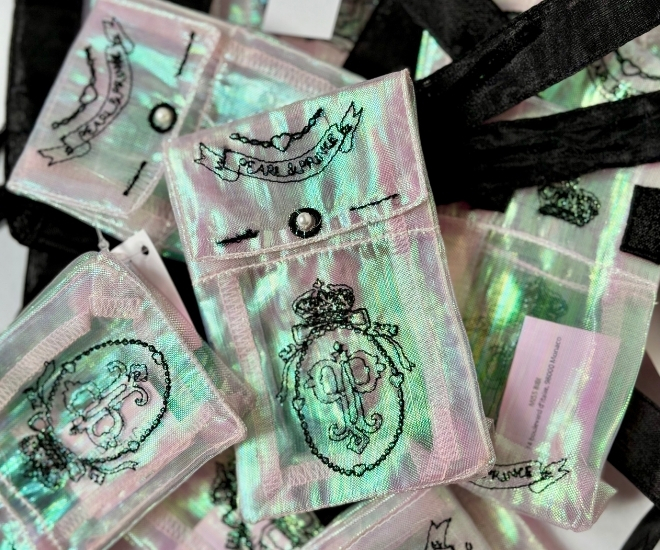
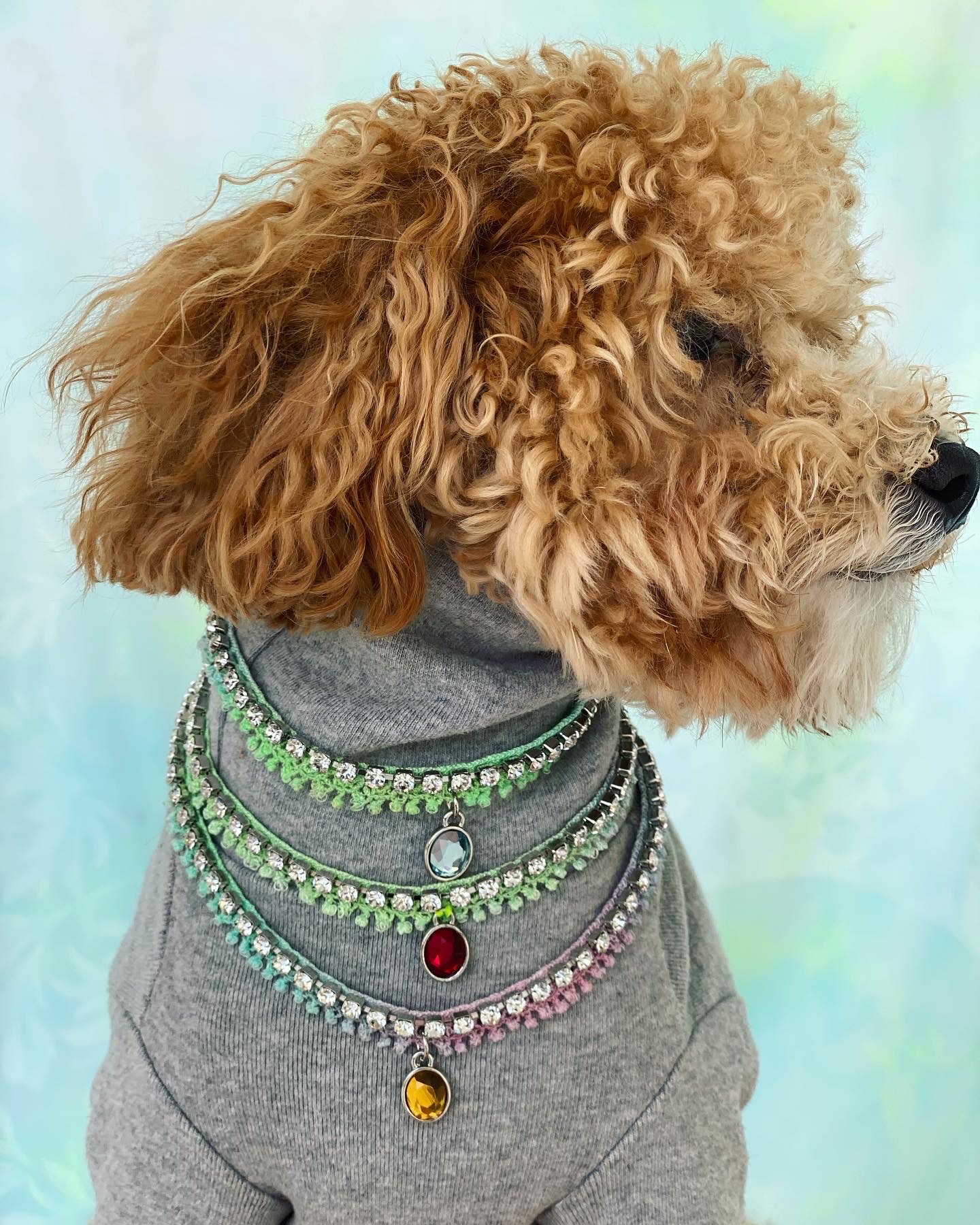
Luxury pet accessory brand Pearl & Prince is collaborating with Franco-Japanese brand Brigitte Tanaka for an exclusive Pet Pouch designed in Paris and available worldwide in September 2025.
Imane Fiocchi started Pearl & Prince in 2023 when a casual internet search for a diamond tennis necklace took an unexpected turn, leading the founder to design and produce one for her beloved dog instead! After living in New York City for 18 years, Imane relocated to Paris in 2024, enjoying all the creativity and inspiration that the City of Lights embodies.
Imane was previously familiar with the Brigitte Tanaka brand. In fact, coincidentally, her first purchase in Paris was one of their organza bags. In a serendipitous turn, a collaboration ensued. For about a year, Imane worked closely with Brigitte, Chieko and their design team to create a chic pet pouch, true to both the Brigitte Tanaka and the Pearl & Prince aesthetic and ethos.
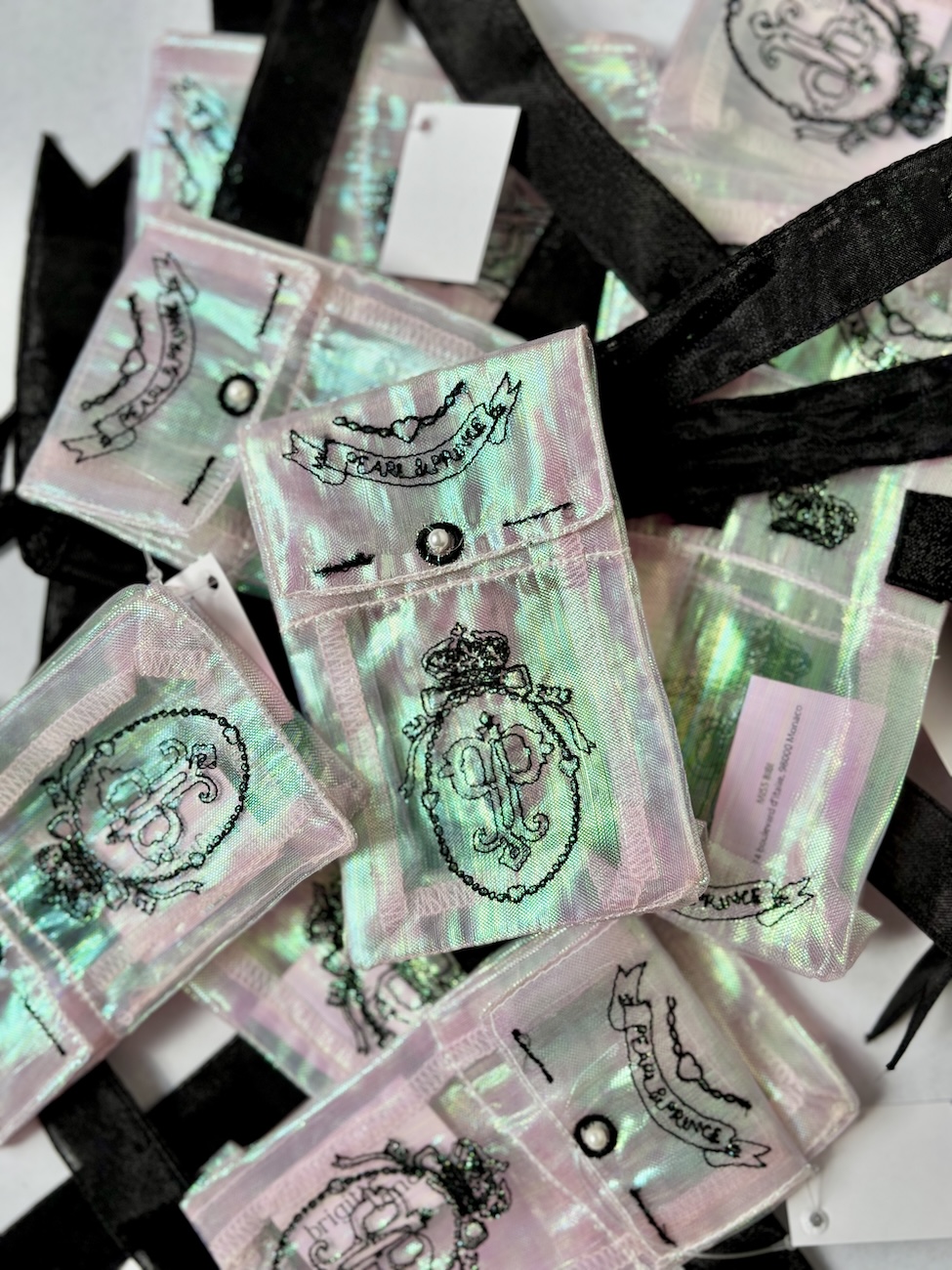
Handmade with the signature organza of Tanaka’s inspired designs, the Pet Pouch can be used to hold waste bags on walks, treats, keys… anything you and your pet desire. The organza’s holographic color-way glistens whilst out and about with your pet, adding extra glamour and safety.
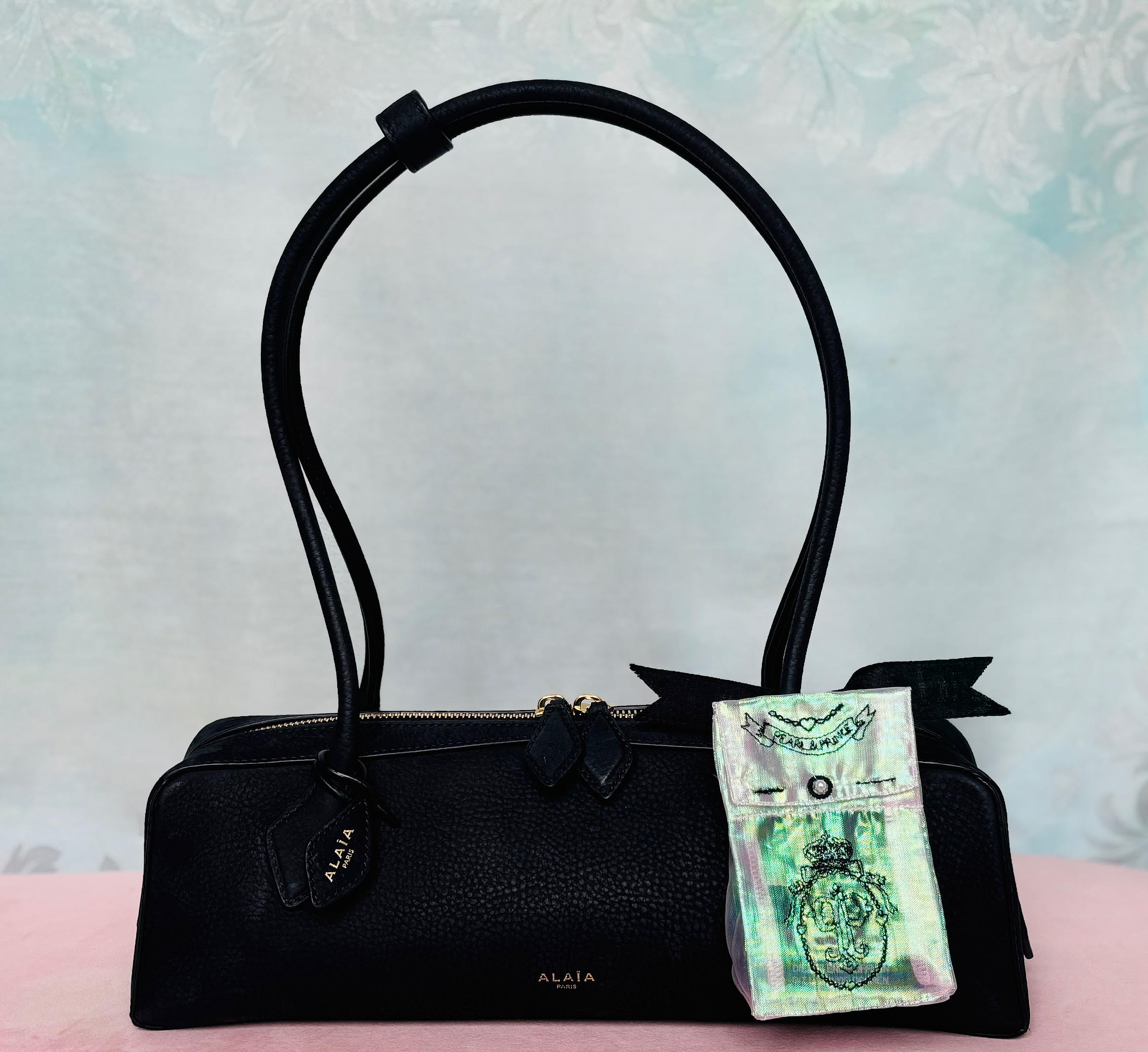
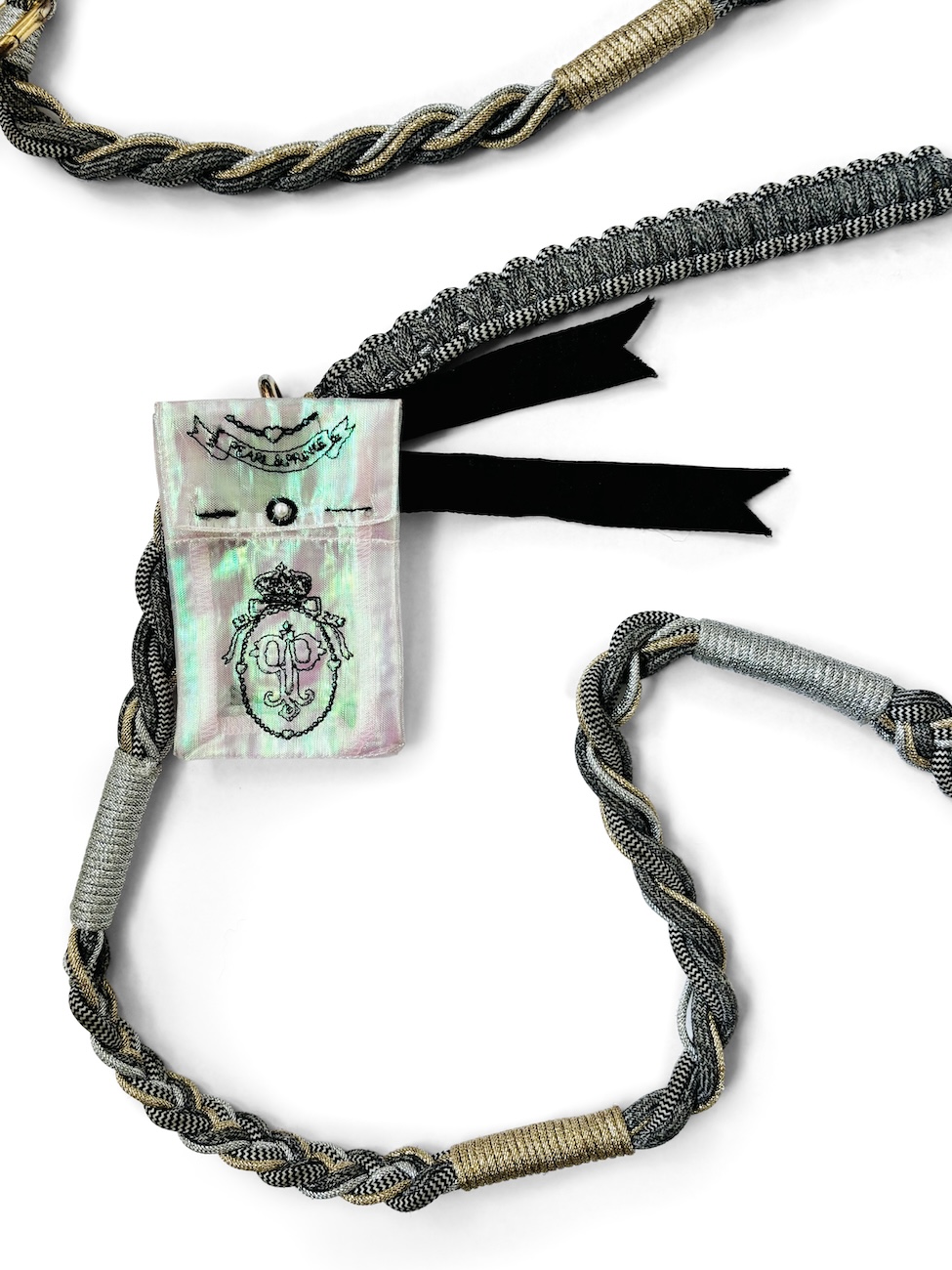
The pouch is embroidered with the brand logo designed by Ex-Libris, while finished with black organza ties that can attach to a leash or a handbag with a pearl button closure. Posh perfection! Bonus: The ties could also work as a bracelet.
“If Marie Antoinette were alive and walked her dog, she’d definitely use this Pet Pouch,” says Imane Fiocchi of Pearl & Prince. “For some time now, I had been thinking about a product that would allow all pet parents to join our community. I wanted to romanticize the waste bag dispensers and make walks prettier. I love pretty things and I also hate the term poop bag dispenser which is why I settled on calling it a Pet Pouch. I chose the organza ties instead of a clip because the thought of tying a bow takes time, is beautiful, and makes me happy. I also loved the idea of someone tying it to their leash or their Birkin. I wanted other pet owners to see the pouch in the wild and think to themselves, ‘What is that? It’s so beautiful. I want it.’”
About IMANE FIOCCHI of PEARL & PRINCE:
With a background spanning art, fashion and beauty, Imane brings a refined creative vision shaped by years immersed in the worlds of design and aesthetics. Her multidisciplinary experience informs every detail of Pearl & Prince, from the artistry behind each piece to the brand’s signature balance of sophistication and playfulness. Guided by an instinct for style and love of animals, Imane has created a brand that reimagines what pet fashion can be. Born and raised in California, Imane called New York City home for 18 years. She recently relocated to Paris with her husband, teenage daughter, and two dogs.
About BRIGITTE TANAKA
BRIGITTE TANAKA is a young French-Japanese design duo based in Paris. Their creative work is summed up by the repurposing of everyday objects that have spanned several eras in their respective cultures, giving them new life. The result is a multitude of unique fashion and home decor products presented under different names. The signature product is an organza and nylon tote bag sold all over the world. An artistic twist combining contemporary design and ecological initiatives, these creations infuse sustainability and poetry into our daily lives. Playing on the paradox of consumer society, this vintage-inspired embroidered bag is an original and durable alternative to commercial plastic bags.
India’s cultural heritage in artisanal creations was the primary driving force in choosing their workshop, where highly skilled teams combine traditional hand embroidery with modern machine methods. They chose nylon for its great strength and flexibility to accommodate the intricate embroidery designs. Organza was selected for its lightness, transparency, and tight weave, allowing it to recreate the airy effect of plastic through a more aesthetic, less polluting, and high-quality alternative.
Visit Pearl & Prince’s official platforms for more information: Social media @pprmediainc, website & LinkedIn
For more on the latest in lifestyle and accessory releases, click here.
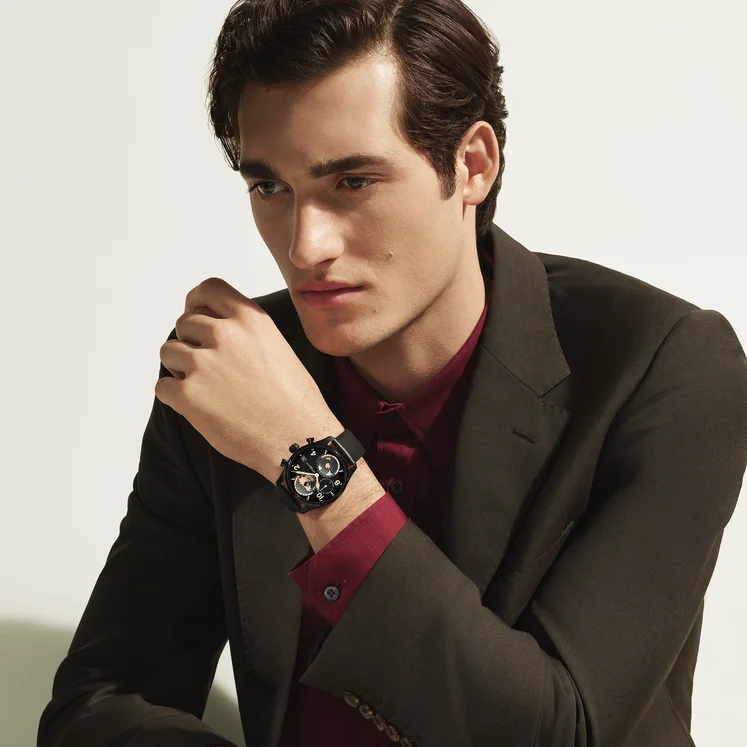
The luxury market is rapidly evolving, particularly as luxury designers, tech engineers and watchmakers explore how technology can enhance user experience without compromising on fashion and function. These eight devices have gone beyond lifestyle pieces with visual appeal to serve as personal assistants, health monitors and performance companions, combining the best of engineering with smart technology. From Hermès’ Ateliers Horizons Headphones to Montblanc’s Summit 3 smart watch, the latest offerings demonstrate a shift in value perception where consumers are investing in wearables that deliver insight, utility and connection, all while retaining the hallmarks of luxury design. This convergence of technology and style underscores how fashion and watchmaking houses are turning wearables into tools that elevate lifestyle performance beyond aesthetics alone.
Hermès Ateliers Horizons Headphones
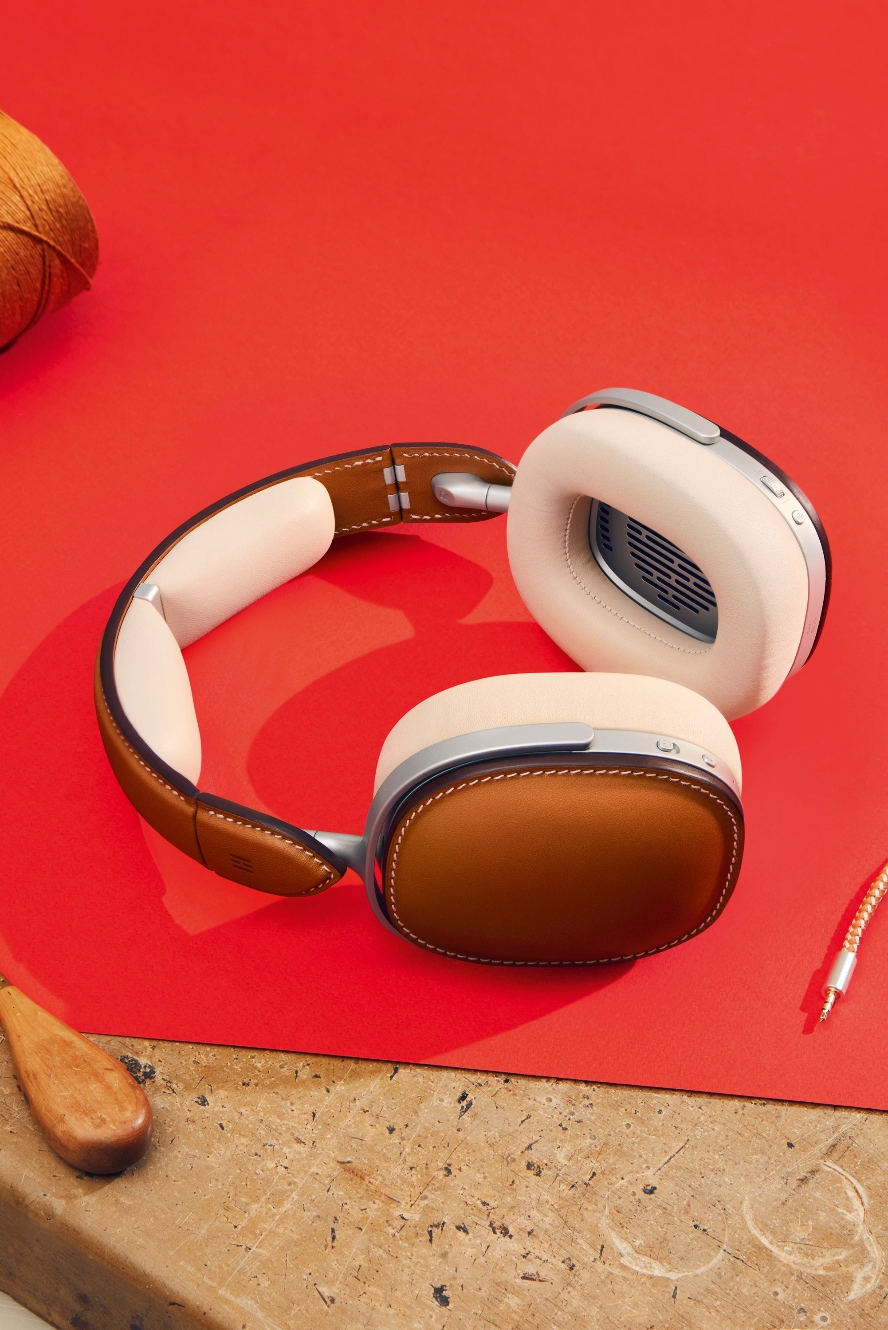
Hermès has expanded its savoir-faire into audio with the launch of its new headphones, crafted in Hunter cowhide with lambskin ear cushions. Designed in France, the model balances high-fidelity sound at 110 dB with comfort, protecting eardrums by directing audio to the outer ear to reduce fatigue. The construction combines microblasted aluminium for lightness with equestrian-inspired details such as stirrup references and Kelly bag finishes. Functionality includes Bluetooth and wired connectivity, active noise cancelling, a 30-hour battery life and intuitive touch controls on the leather frame. Available in a range of colours including black, chocolate, rouge H and Prussian blue, the release positions Hermès within the premium audio category while maintaining the house’s signature design codes.
Vertu Aura Ring
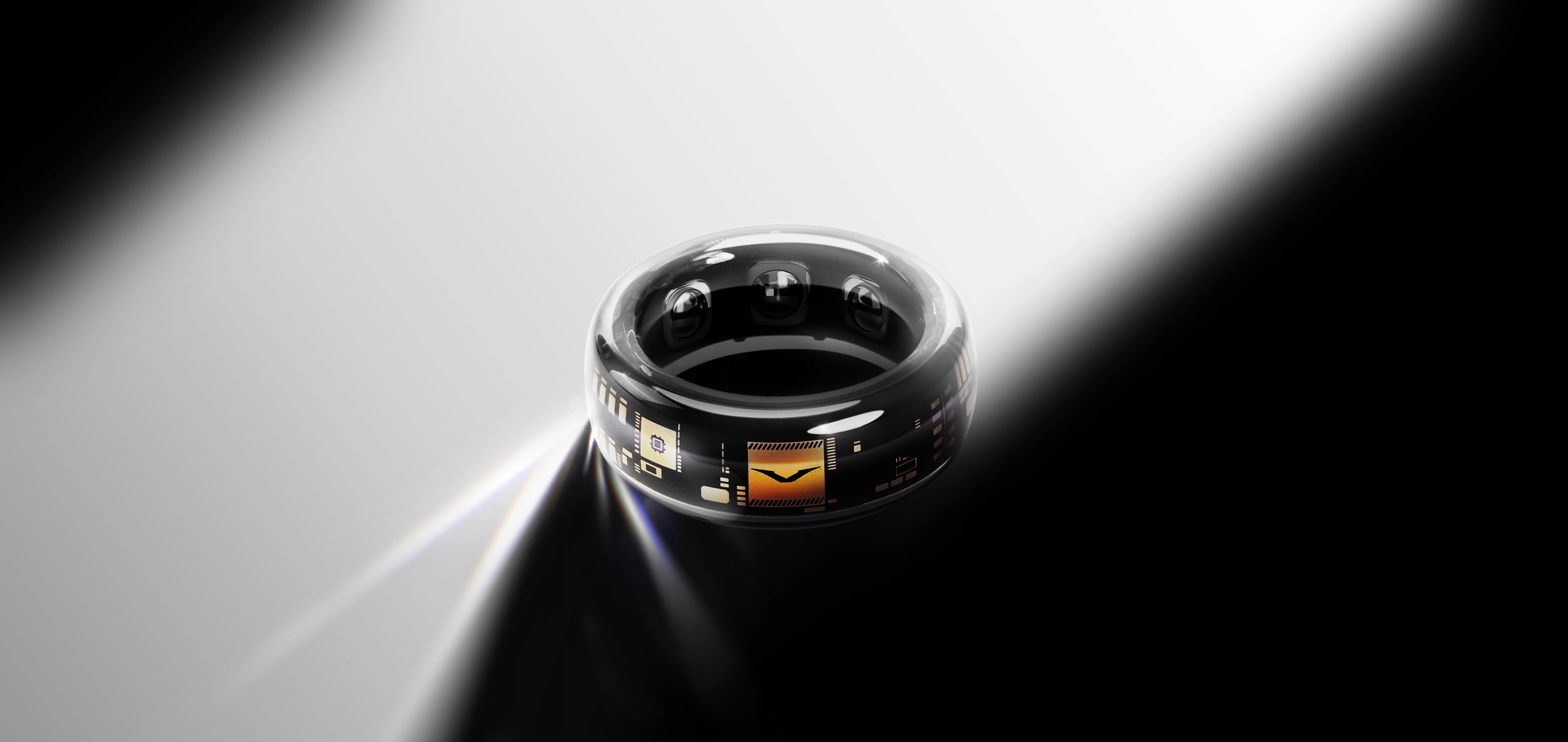
Vertu’s Aura Ring positions wearable tech within the realm of luxury jewellery, combining precision health monitoring with high-end design. Crafted from a proprietary crystal composite and shaped through twenty artisanal steps, the ring integrates sensors that track blood glucose, heart rate, blood oxygen and sleep patterns with predictive accuracy exceeding 85 percent. Its ergonomic curves ensure a seamless fit, while the minimalistic design conceals advanced technology, allowing the ring to function as both a personal health assistant and a statement accessory. Compatible with Android and iOS, the Aura Ring syncs data via the Vertu app, providing real-time insights and tailored guidance without disrupting daily life.
Oakley Meta HSTN Performance AI glasses
Oakley Meta glasses position smart eyewear within the world of sport, merging the brand’s performance heritage with Meta’s AI technology. Equipped with a 12-megapixel ultra-wide camera capable of 3K video recording, the frames enable athletes and users alike to capture and share content hands-free. Integrated open-ear speakers deliver audio for music, calls and podcasts without isolating the wearer from their environment, making them suitable for training or outdoor use. The glasses respond to voice commands for messaging, live streaming and real-time assistance through the Meta AI app, which also manages content and device settings. Designed with Oakley’s Prizm lens technology, the eyewear offers impact resistance and UV protection, extending functionality beyond connectivity. With up to eight hours of typical use and a charging case that supports 48 hours, the Oakley Meta line underscores how smart glasses are shifting from lifestyle accessories to tools built for performance and utility.
The Coperni x Bandai Tamagotchi Swipe Case
Coperni continues its experimentation with the Swipe Bag through a collaboration with Bandai that embeds the beloved Tamagotchi into the accessory’s design. Debuted at the Fall/Winter 2025 Paris Fashion Week show, the Tamagotchi Swipe Case is offered in navy blue, black and silver, maintaining the bag’s distinctive silhouette while integrating interactive technology. The release follows earlier experimental iterations such as the 3D-printed CD-Player Swipe Bag and the Air Swipe Bag, positioning the collaboration as part of Coperni’s broader strategy of blending fashion with technology. While its commercial rollout remains unconfirmed, the Tamagotchi Swipe Case underscores how the brand leverages nostalgia and interactivity to strengthen its reputation for creating viral, conversation-driving accessories.
Montblanc Summit 3
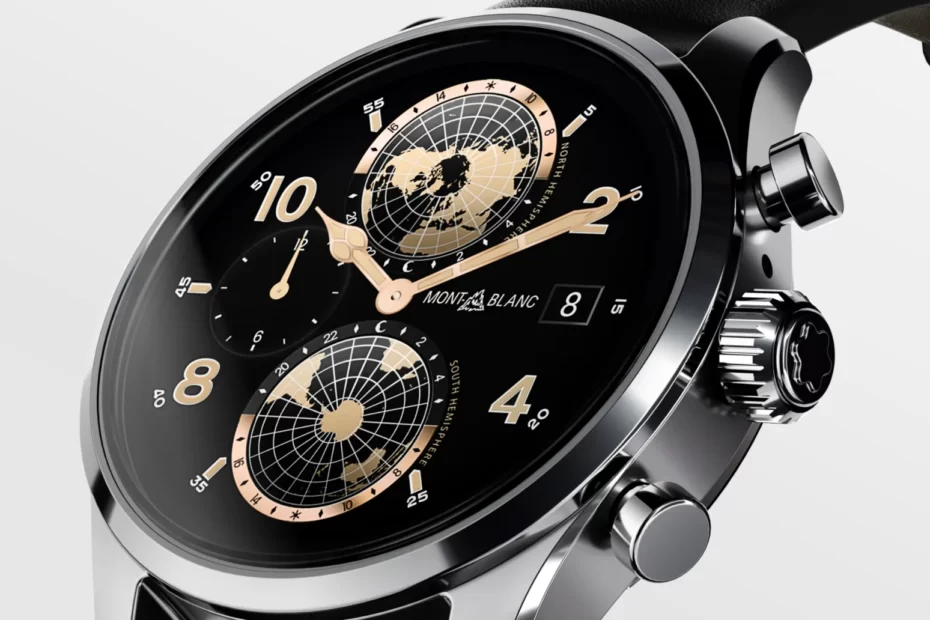
Montblanc’s Summit 3 demonstrates how traditional watchmaking can be adapted for a digital age without losing its heritage appeal. Built in hand-finished titanium, the smartwatch balances durability with lightness, while interchangeable straps and detailed watch faces allow for personalisation that reflects the Maison’s 1858 design codes. Beyond aesthetics, the Summit 3 integrates health monitoring sensors, fitness tracking and extended battery performance, positioning it as a lifestyle tool as much as a timepiece. Running on Wear OS by Google, it supports a wide range of apps and connectivity functions, enabling users to manage daily tasks, monitor wellness and stay linked across devices. By embedding advanced technology into a form that retains the look and feel of Swiss craftsmanship, Montblanc extends its presence in the luxury wearable market with a product that would appeal to the brand’s existing consumer base who seek items with have both sophistication and functionality.
Tambour Horizon Light Up Connected Watch
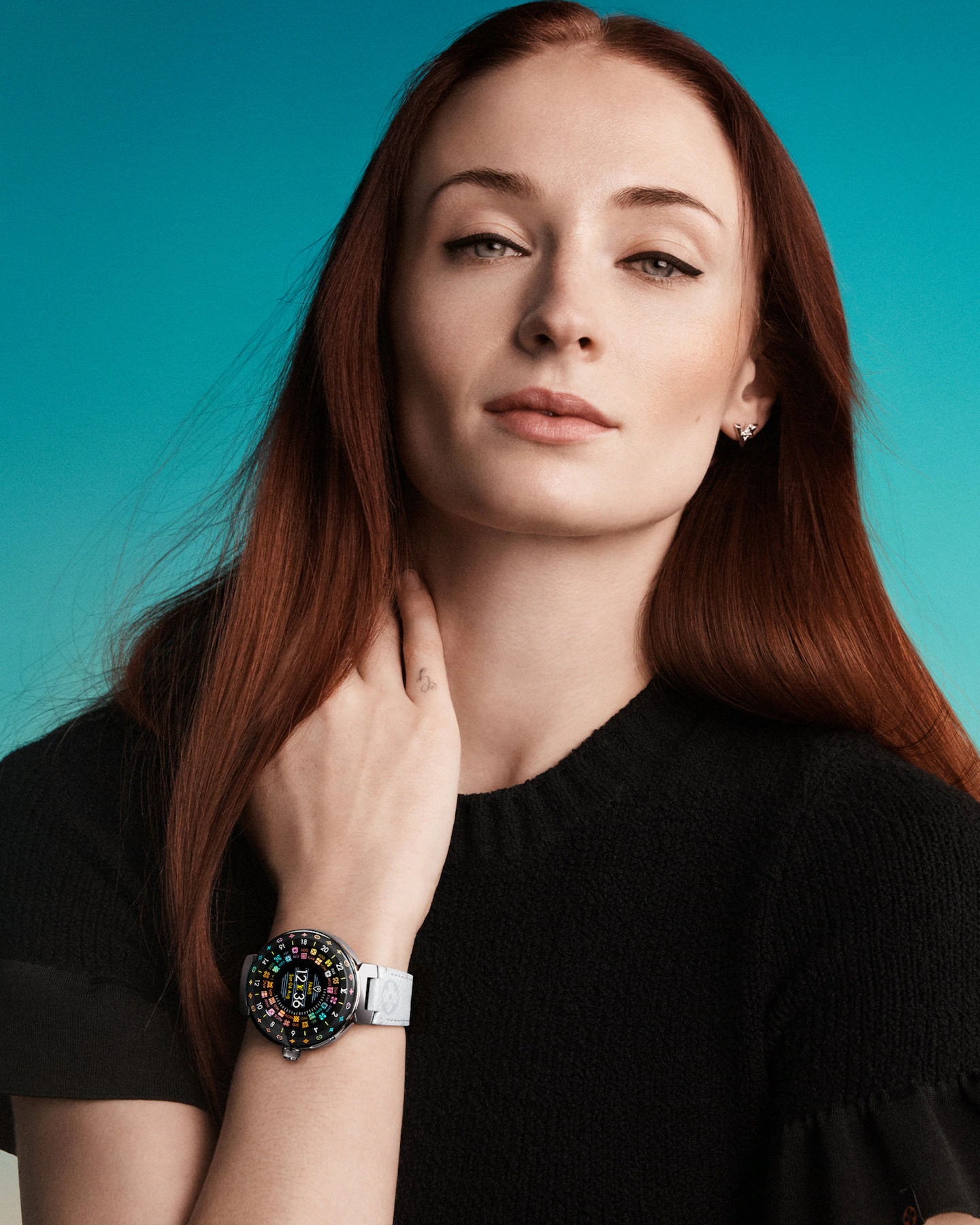
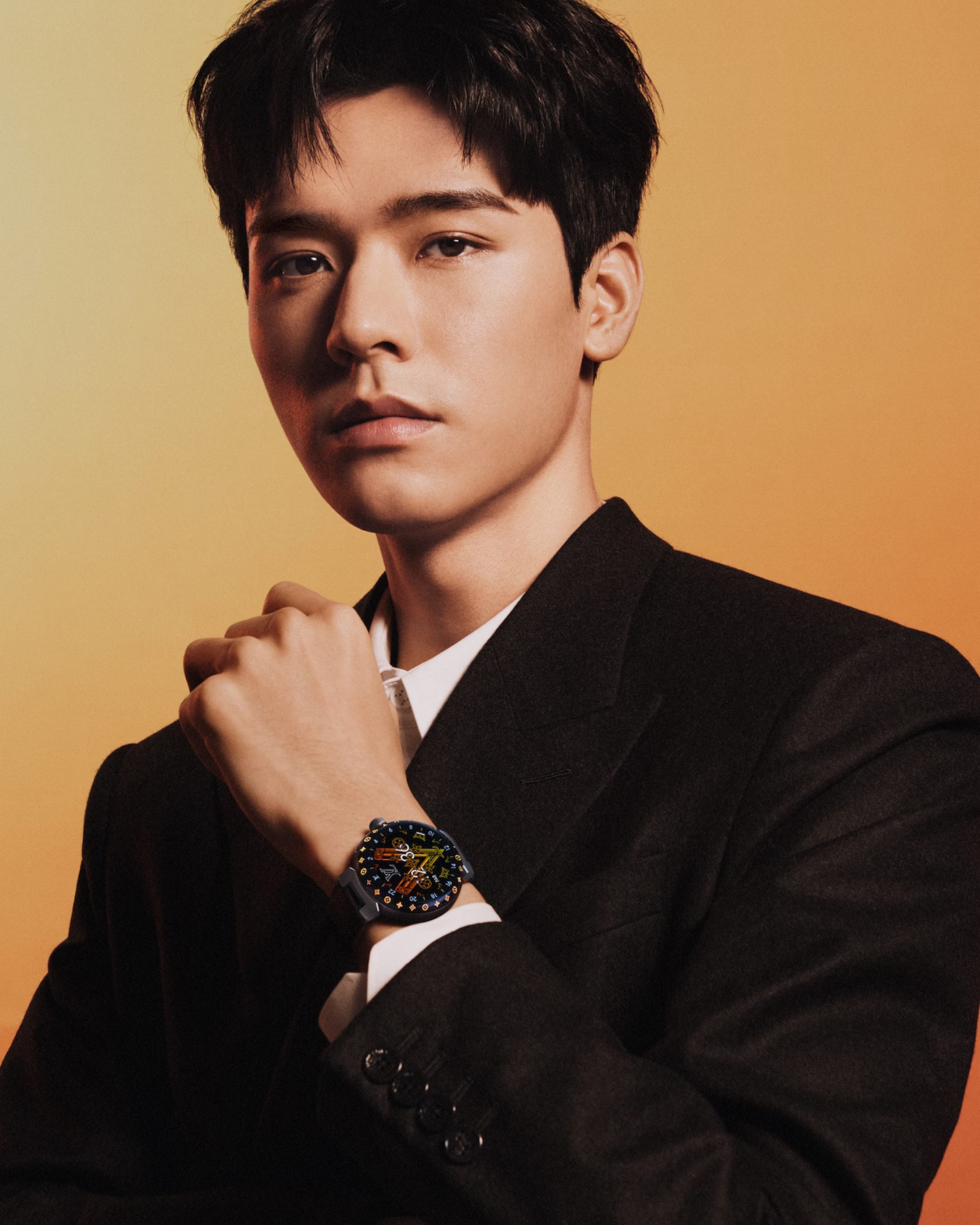
Louis Vuitton strengthens its position in the connected luxury watch segment with the Tambour Horizon Light Up. Retaining the Maison’s signature convex case profile and codes of the original Tambour, the model introduces a curved sapphire glass display bordered by 24 LED lights that animate the Monogram ring with dynamic colour sequences. Designed for personalisation at scale, the watch offers a wide selection of faces — from Monogram-inspired dials to collaborations with artists like Yayoi Kusama — alongside functions such as travel planning, heart rate monitoring and access to Louis Vuitton City Guides. Supported by a proprietary operating system, the device demonstrates how the Maison integrates lifestyle services into luxury watchmaking while maintaining the Maison’s signature sleek identity.
Tag Heuer Connected Calibre E4
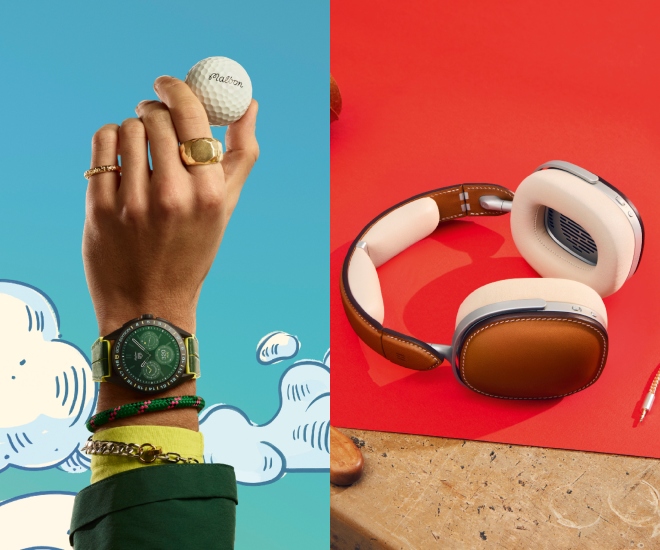
TAG Heuer strengthens its position in the connected luxury watch space with the Connected Calibre E4 45MM x Malbon Golf Edition. The collaboration with golf lifestyle brand Malbon reflects a shared ethos of innovation and a fresh approach to the game, aimed at younger consumers embracing golf as part of their lifestyle. Built with a black DLC titanium case, ceramic bezel and bi-material strap, the watch integrates TAG Heuer’s Golf app to track shots, provide club recommendations and deliver performance insights without interrupting play. Powered by the Snapdragon 4100+ chipset and Wear OS 3, it offers a full day of battery life, wellness monitoring and connectivity through GPS, NFC and Bluetooth. Two exclusive watch faces, Malbon-branded packaging and a co-developed capsule collection of golf apparel and accessories reinforce the lifestyle positioning. With distribution through Malbon stores in the US and Korea, the release positions TAG Heuer to grow its footprint in the golf market while highlighting the adaptability of its Connected line.
Garmin fēnix 8 MicroLED
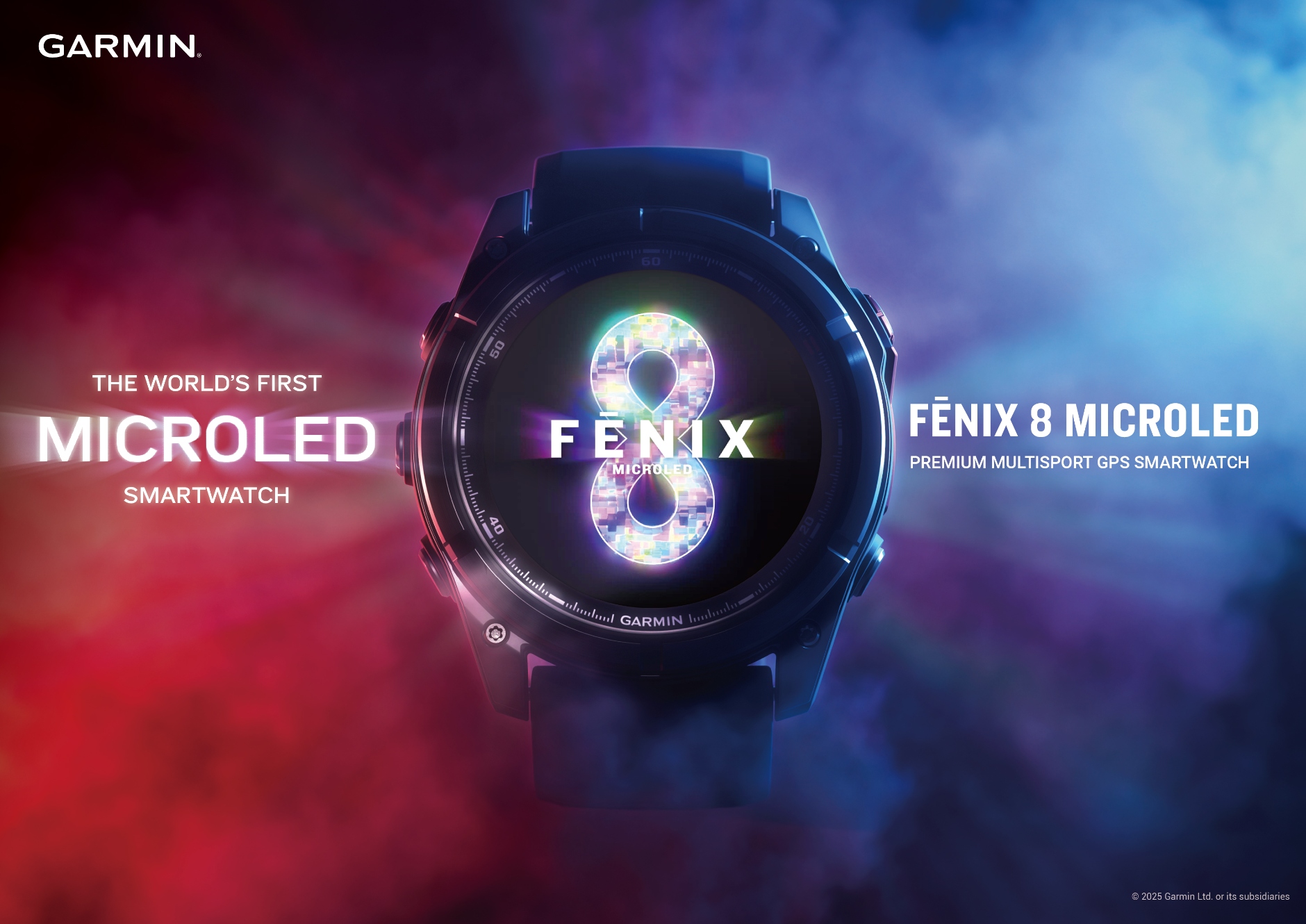
Garmin’s fēnix 8 MicroLED marks a breakthrough in smartwatch technology by introducing the first-ever MicroLED display in a wearable. With over 400,000 individual LEDs delivering up to 4,500 nits, the display offers unparalleled brightness, a 15 percent wider color gamut and exceptional contrast for visibility even in direct sunlight. Built for adventurers and athletes, the watch integrates Garmin’s full suite of performance, navigation, health and wellness features, including preloaded TopoActive Maps, dynamic round-trip routing, ECG monitoring, sleep tracking and Garmin Pay. Its rugged construction and enhanced display durability ensure the device withstands demanding environments, while advanced metrics such as endurance and hill scores support professional-level training. The fēnix 8 MicroLED demonstrates how Garmin combines precision engineering with practical functionality, extending the value of wearable technology beyond style and into performance-driven lifestyle tools.
For more on the latest in lifestyle, tech and gadget reads, click here.
Mercedes downsized the powertrain on its current-generation AMG C63 S E Performance from a V8 unit to a 4-cylinder hybrid powertrain. However, now the German carmaker has confirmed that it will be dropping the 4-cylinder powertrain on the model’s next-generation iteration.
Mattias Geisen, board member for sales & marketing at Mercedes, confirmed that the new-generation AMG C63 will come with a 3.0-litre straight six engine. He stated, “We will have some options where we had a four-cylinder, which will also be available as a six-cylinder going forward. There may or may not be a hybrid, it might be pure-ICE, maybe. We’ll let you know when we’re there.”
Mattias though, kept clear of an official timeline on the arrival of the performance variant of the next-generation C-Class. The straight-six engine on the upcoming AMG C63 is already available on the larger E53 AMG, which, paired with a plug-in hybrid, produces 603 BHP. The introduction of the 3.0-litre straight-six powertrain aligns the next-generation AMG C63 with its closest rivals from Audi and BMW.
Mercedes-Benz is all set to unveil its new-generation C-Class. The brand even teased the EV C-Class sedan at the recently concluded IAA Mobility Show 2025.
The technical storage or access is strictly necessary for the legitimate purpose of enabling the use of a specific service explicitly requested by the subscriber or user, or for the sole purpose of carrying out the transmission of a communication over an electronic communications network.
Preferences
The technical storage or access is necessary for the legitimate purpose of storing preferences that are not requested by the subscriber or user.
Statistics
The technical storage or access that is used exclusively for statistical purposes.The technical storage or access that is used exclusively for anonymous statistical purposes. Without a subpoena, voluntary compliance on the part of your Internet Service Provider, or additional records from a third party, information stored or retrieved for this purpose alone cannot usually be used to identify you.
Marketing
The technical storage or access is required to create user profiles to send advertising, or to track the user on a website or across several websites for similar marketing purposes.

:max_bytes(150000):strip_icc()/TAL-el-fenn-hotel-shop-HOTELSHOPS1025-352ef29be38f4833a56be9e650095ec7.jpg "5 Best Hotel Stores in the World—With Perfect Gifts and Exclusive Merch")
:max_bytes(150000):strip_icc():format(jpeg)/TAL-el-fenn-hotel-shop-HOTELSHOPS1025-352ef29be38f4833a56be9e650095ec7.jpg)


:max_bytes(150000):strip_icc()/tal-its-getting-10-degrees-cooler-this-week-tout-8df879965c3543aa8231a156b0c27f71.jpg "5 Lightweight Jacket Trends for Fall 2025")
:max_bytes(150000):strip_icc():format(jpeg)/tal-its-getting-10-degrees-cooler-this-week-tout-8df879965c3543aa8231a156b0c27f71.jpg)
:max_bytes(150000):strip_icc()/TAL-modernist-home-woods-trees-PENNARCHITECTURE1025-3272d9baa73c462bb3b591b54baec692.jpg "I Explored Pennsylvania’s Hidden Architectural Treasures With My Son for Spring Break—Here’s What We Found")
:max_bytes(150000):strip_icc():format(jpeg)/TAL-modernist-home-woods-trees-PENNARCHITECTURE1025-3272d9baa73c462bb3b591b54baec692.jpg)