We know that Toyota has been working on a sporty version of the Corolla. We got our first glimpse of the GRMN Corolla when it was teased in March this year.
New images, believed to be of the GRMN Corolla, have now leaked online after the car was showcased at a dealer event.
If these images are indeed real, then the GRMN Corolla could feature lightweight carbon fibre parts, including a vented hood and a roof spoiler. The car also sports an aggressive body kit with flared wheel arches, louvres on the front fenders and a rear diffuser with triple exhausts.
You know that Toyota is serious about weight reduction when you realise that the GRMN Corolla has no rear seats. It has lightweight bucket seats in the front wrapped in Alcantara and a 3-spoke steering wheel. There’s also a special plaque, indicating that the GRMN Corolla will be limited to just 500 units.
The GRMN Corolla is expected to be powered by a turbocharged 1.6-liter, 3-cylinder engine, with an estimated peak output of 300 hp.
For centuries, travelers and historians have been captivated by the beautiful sights of Turkey’s Cappadocia region. With its unique terrain, and “fairy chimney” rock formations, the geology inspires wonder and intrigue.
But while seeing the UNESCO World Heritage site up close and personal is incredible, travelling to Turkey is also a hike. Fortunately, there’s an equally-stunning alternative closer to home where travelers can explore dramatic rock formations and all they have to do is get to New Mexico.
Located in northeastern New Mexico near the famed Four Corners, the Bisti/De-Na-Zin Wilderness Area has captured the attention of outdoor enthusiasts for its gorgeous wave rocks and hoodoos and stunning resemblance to Turkey’s Cappadocia.
“The Bisti/De-Na-Zin Wilderness is a rolling landscape of badlands which offers some of the most unusual scenery found in the Four Corners Region,” the Bureau of Land Management wrote about the area. “Time and natural elements have etched a fantasy world of strange rock formations made of interbedded sandstone, shale, mudstone, coal, and silt.”
When visiting, hikers and campers are advised to bring their own water sources since there is no potable water there. There is also very little shade and temperatures are known to be quite high. That said, most travelers visit in the late spring or early summer as well as in the fall, the bureau noted.
There are a few things to keep in mind when you go: the wilderness area is closed to motorized vehicles and travelers cannot start campfires, climb on the delicate geologic features, or trespass on the adjacent tribal lands. Pets are allowed, but must be on a 6-foot leash. And there is a stay limit of 14 days, according to the bureau.
Despite the challenging terrain, the region remains popular among hikers and backpackers. Outdoor enthusiasts on AllTrails rated the Bisti Badlands Trail within the Bisti/De-Na-Zin Wilderness Area a 4.6 with more than 1,900 reviews.”Amazing, otherworldly scenery!” one AllTrails user shared in a five-star review earlier this year.
On Reddit, other travelers have described the wilderness area as “the most alien landscape I have ever seen.”
Travelers looking to explore the area can reach it from several different airports—like the Albuquerque International Sunport (ABQ) or the Durango-La Plata County Airport (DRO)—but should be prepared to drive a few hours to get to the rock formations.
Planning a trip to Croatia’s stunning coastline, from the medieval walls of Dubrovnik to the cascading waterfalls of Plitvice Lakes?
While you’re busy mapping out visits to Split’s ancient Diocletian’s Palace and island-hopping across the Adriatic Sea, there’s one crucial element that can make or break your travel experience: staying connected.
In an era where our smartphones serve as navigation tools, translation devices, booking platforms, and communication lifelines, reliable mobile connectivity isn’t just convenient – it’s essential.
After extensive research into Croatia’s mobile landscape and testing various connectivity solutions, one clear winner emerges for international travelers: SimLocal’s eSIM technology.
This digital solution eliminates the hassles of traditional SIM cards while providing superior network access, competitive pricing, and unmatched convenience. Whether you’re a digital nomad working from a Zagreb café, a family navigating the winding streets of Rovinj, or an adventure seeker documenting your journey through Krka National Park, SimLocal’s eSIM keeps you seamlessly connected to what matters most.
The Connectivity Challenge: Why Traditional Solutions Fall Short
The Roaming Trap
International roaming remains one of the most expensive ways to stay connected while traveling. Non-EU visitors to Croatia face particularly steep charges, with some carriers charging up to $15 per day for basic data access.
Even seemingly small activities like checking Instagram or using Google Maps can quickly rack up charges of $60 or more due to background app updates and automatic data usage. For a typical week-long Croatian adventure, roaming costs can easily exceed $200, money that could be better spent on experiences like wine tasting in Istria or boat tours around Korčula.
The “Roam Like at Home” regulation benefits EU citizens, but travelers from the United States, Canada, Australia, and other regions still face these punitive charges. More concerning is that roaming often provides inconsistent coverage and slower speeds, particularly in Croatia’s more remote destinations where reliable connectivity is most needed.
Sailing the coast at Korčula in Croatia.
Traditional SIM Card Complications
While local Croatian SIM cards offer better value than roaming, they come with their own set of challenges that can disrupt your travel flow. The process typically requires:
Physical store visits: You must locate a mobile operator store, which may be challenging after late arrivals or in smaller towns.
Language barriers: Navigating Croatian telecommunications terms and conditions can be daunting for international visitors.
Documentation requirements: Some operators require identification and registration, adding bureaucratic layers to what should be a simple process.
Limited network access: Traditional SIM cards connect to only one network, potentially leaving you with poor coverage in certain areas.
Perhaps most importantly, swapping physical SIM cards means temporarily losing access to your primary phone number, cutting you off from important services like two-factor authentication for banking and business communications.
Croatia’s Mobile Landscape: Understanding Your Options
The Big Three Networks
Croatia’s telecommunications infrastructure is dominated by three major operators, each with distinct coverage characteristics:
Hrvatski Telekom (T-Mobile) leads the market with 46% share and the most extensive network coverage, particularly excelling in rural and coastal areas with 98% 4G coverage nationwide. The network offers speeds up to 300 Mbps and has been aggressively expanding 5G coverage to major tourist destinations including Zagreb, Split, Dubrovnik, and even Plitvice National Park.
A1 Croatia holds 20% market share but punches above its weight in urban and coastal regions, offering reliable 200 Mbps speeds and strong performance in popular tourist zones. The network particularly excels in Istria and along the Dalmatian coast.
Telemach (formerly Tele2) rounds out the major three with 35% market share, focusing on competitive pricing while providing 250 Mbps speeds and solid coverage in populated areas. While their rural footprint lags behind Hrvatski Telekom, they offer excellent value in cities and resort towns.
Network Performance in Key Destinations
Recent independent testing by Croatia’s telecommunications regulator HAKOM reveals significant performance differences across the country. In tourist hotspots like Dubrovnik, all three networks provide excellent coverage, but performance varies significantly when traveling to islands or national parks.
Zagreb and Split enjoy comprehensive 5G coverage from all providers, making them ideal for digital nomads requiring high-speed connectivity.
Dubrovnik recently gained 5G access through Hrvatski Telekom’s expansion, with speeds approaching 1000 Mbps in select locations.
Island destinations like Hvar, Korčula, and Brač present more challenging connectivity scenarios, where network choice becomes crucial.
While many eSIM providers have emerged in recent years as digital nomadism and international travel surged post-pandemic, SimLocal stands apart with over 13 years of connectivity experience.
This isn’t a startup experimenting with travel connectivity, it’s a mature company that has refined its services through more than a decade of real-world testing and customer feedback.
This experience gap becomes evident when comparing SimLocal to newer competitors who often struggle with:
Limited network partnerships due to shorter industry relationships
Inconsistent service quality from rapid scaling without proper infrastructure
Basic data-only offerings that miss travelers’ comprehensive communication needs
Unclear refund policies or customer service gaps during peak travel periods
SimLocal’s maturity translates into polished services that work reliably from day one, extensive global network partnerships built over years of relationship development, and comprehensive support systems refined through millions of customer interactions.
Get Connected in Croatia with SimLocal eSIM!
Enjoy fast, reliable 4G/5G coverage on the best local networks, unlimited daily data up to 10GB, and hotspot sharing – all without swapping physical SIM cards. Experience seamless travel connectivity backed by 13+ years of expertise and 5-star customer support.
SimLocal’s revolutionary approach to Croatian connectivity lies in its multi-network access. Unlike traditional SIM cards that lock you into a single provider, SimLocal’s eSIM automatically connects to the strongest available network among A1, Hrvatski Telekom, and Telemach.
This means you benefit from:
Optimal coverage across Croatia’s diverse terrain, from bustling cities to remote islands
Automatic network switching when moving between regions
Redundancy protection if one network experiences issues
Enhanced speeds through intelligent network selection
The 10GB Daily Advantage
While many eSIM providers advertise “unlimited data” only to throttle speeds after minimal usage, SimLocal delivers genuine performance with up to 10GB of full-speed data daily.
This generous allowance supports:
HD video calls for business or family communication
Real-time navigation without buffering delays
Social media sharing including high-resolution photos and videos
Streaming entertainment during downtime
Hotspot functionality for multiple devices
Skype video call on the laptop.
Instant Activation Process
The beauty of SimLocal’s eSIM technology lies in its simplicity. The entire setup process takes less than five minutes:
Purchase online before departure from any global location
Receive QR code instantly via email
Scan and install the eSIM profile on your device
Activate upon arrival with automatic network connection
This streamlined process means you’re connected the moment your plane touches down in Zagreb, Split, or Dubrovnik—no hunting for stores, no language barriers, no delays.
Practical Travel Scenarios: Where SimLocal Shines
Digital Nomad Success Stories
Croatia has emerged as a premier destination for remote workers, thanks to its new Digital Nomad Visa program and exceptional quality of life. For professionals working from Croatian cafés or co-working spaces, reliable connectivity isn’t optional—it’s essential for livelihood.
SimLocal’s eSIM proves invaluable for digital nomads because it provides consistent, high-speed connectivity across Croatia’s diverse landscapes. Whether you’re conducting video conferences from a Zagreb co-working space, uploading client projects from a Split café, or managing social media campaigns from a Dubrovnik hotel, the multi-network access ensures you’re never offline when business calls.
The service’s 24/7 English-language support via WhatsApp and email means technical issues never derail important meetings or deadlines. This level of support is particularly valuable for international professionals who may be working across different time zones.
Family Travel Made Simple
Traveling with family presents unique connectivity challenges. Parents need navigation for driving, children want entertainment during long bus rides, and everyone wants to share their Croatian adventures with friends back home.
SimLocal’s eSIM addresses these needs through its hotspot capabilities, allowing one plan to serve multiple family devices.
The generous 10GB daily data allocation easily supports:
Navigation apps for road trips to places like Plitvice Lakes or along the scenic coastal routes
Translation services for interacting with locals and reading menus
Entertainment streaming during ferry rides between islands
Video calling to share experiences with grandparents in real-time
Social media uploads of those perfect sunset photos from Rovinj
Smartphone navigation app used during travel to support connectivity and ease of location in unfamiliar places.
Adventure Travel Connectivity
Croatia’s natural beauty draws adventure seekers to remote locations where traditional connectivity often fails. Whether you’re hiking in Paklenica National Park, sailing around the Kornati Islands, or exploring the caves of Mljet, reliable connectivity becomes a safety issue as much as a convenience.
SimLocal’s multi-network approach proves essential in these scenarios. When one network loses signal in a remote location, the eSIM automatically switches to available alternatives, maintaining your connection to emergency services, weather updates, and navigation tools. This redundancy can be literally lifesaving when weather conditions change rapidly or when you need to communicate your location to rescue services.
Hiking in Paklenica National Park in Croatia.
Cost Analysis: Value Beyond Price
Transparent Pricing Structure
SimLocal’s pricing philosophy eliminates the hidden fees and surprise charges that plague traditional connectivity solutions. Their transparent structure means:
The pricing remains competitive with local solutions while providing superior convenience and network access. Unlike roaming charges that can escalate unpredictably, SimLocal’s fixed pricing allows for accurate trip budgeting.
True Value Calculation
When evaluating connectivity options, price alone doesn’t tell the complete story. Consider the total cost of ownership:
Time savings: No store visits, no registration processes, no language barriers
Optimizes data paths for maximum speed and reliability
Load balances across available networks to prevent congestion
Monitors network quality in real-time for seamless switching
Prioritizes traffic to ensure critical applications perform optimally
Device Compatibility
Modern smartphones from iPhone XS onward and Samsung Galaxy S20 series support eSIM technology. SimLocal’s profiles work seamlessly with:
Apple devices: iPhone, iPad, Apple Watch with cellular
Android devices: Samsung, Google Pixel, OnePlus, and other eSIM-compatible models
Tablets and laptops: For comprehensive connectivity solutions
Security Advantages
eSIM technology offers inherent security benefits over physical SIM cards:
Theft protection: Cannot be physically removed from stolen devices
Remote management: Profiles can be deactivated remotely if needed
Encrypted provisioning: QR codes contain encrypted activation data
No physical vulnerability: Eliminates SIM swap attack risks
Destination-Specific Benefits
Zagreb: The Capital Experience
As Croatia’s capital and largest city, Zagreb offers excellent connectivity from all providers. However, SimLocal’s multi-network access proves valuable during peak usage periods when single networks may experience congestion. For business travelers attending conferences or digital nomads working from the city’s numerous co-working spaces, this redundancy ensures uninterrupted productivity.
A tram in Zagreb’s city center, Croatia.
Split: Gateway to the Islands
Split serves as the primary ferry port for Croatia’s islands, making it a connectivity hub for island-hoppers. SimLocal’s network intelligence becomes crucial when traveling between Split and destinations like Brač, Hvar, or Vis, where coverage varies significantly between networks. The automatic switching capability ensures you maintain connectivity throughout your island adventures.
Panorama view over Split, Croatia.
Dubrovnik: The Pearl of the Adriatic
Despite its tourist popularity, Dubrovnik can experience network congestion during peak season. SimLocal’s multi-network access helps bypass these bottlenecks, ensuring you can share those iconic city wall photos and stay connected with tour groups.
The recent 5G expansion in Dubrovnik provides exceptional speeds for SimLocal users in select areas.
City center of Dubrovnik, Croatia.
Island Destinations: Where Network Choice Matters
Croatia’s 1,200 islands present unique connectivity challenges. While mainland coverage is generally excellent, island connectivity varies dramatically between providers. SimLocal’s multi-network access becomes invaluable in destinations like:
Hvar: Where network coverage varies between the town center and lavender fields
Korčula: Where medieval streets can create coverage dead zones
Mljet: Where national park areas have limited infrastructure
Vis: Where remote beaches require optimal network selection
Remote beach in Vis, Croatia.
Setup Guide: Getting Connected in Minutes
Pre-Departure Preparation
The ideal SimLocal experience begins before you leave home:
Verify device compatibility through SimLocal’s website or app
Purchase your chosen plan based on travel duration and data needs
Download the SimLocal app for easy management and support access
Install the eSIM profile using the provided QR code (requires Wi-Fi)
Test the installation to ensure proper setup before departure
Arrival Activation
Upon landing in Croatia:
Enable the SimLocal profile in your device settings
Turn on data roaming for the eSIM profile
Allow automatic network selection for optimal performance
Test connectivity with a simple internet search or app refresh
Configure hotspot settings if sharing with other devices
Troubleshooting and Support
SimLocal’s comprehensive support system ensures smooth operation:
24/7 WhatsApp support for immediate assistance
Email support for detailed technical issues
In-app help center with common solutions
Installation videos for visual setup guidance
Multi-language support for international travelers
Get Connected in Croatia with SimLocal eSIM!
Enjoy fast, reliable 4G/5G coverage on the best local networks, unlimited daily data up to 10GB, and hotspot sharing – all without swapping physical SIM cards. Experience seamless travel connectivity backed by 13+ years of expertise and 5-star customer support.
Eliminating plastic waste from physical SIM card production
Reducing packaging and shipping requirements
Minimizing store visits and associated transportation
Supporting digital-first business models
Supporting Local Innovation
By choosing advanced connectivity solutions, travelers support Croatia’s digital transformation initiatives. The country’s investment in 5G infrastructure and smart city development benefits from increased data usage and technology adoption by international visitors.
Looking Forward: The Future of Travel Connectivity
Technology Evolution
As eSIM technology continues advancing, travelers can expect:
Increased device compatibility across all smartphone manufacturers
Enhanced network switching with AI-powered optimization
Integrated travel services combining connectivity with booking and navigation
Improved pricing models through economies of scale
Croatia’s Digital Development
Croatia’s commitment to digital infrastructure development positions it as a leader in sustainable tourism technology. The expansion of 5G networks to tourist destinations supports both visitor experiences and local economic development.
Making the Smart Choice
For international travelers visiting Croatia, the connectivity landscape offers more options than ever before. However, the combination of convenience, performance, coverage, and value makes SimLocal’s eSIM the clear choice for discerning travelers who refuse to compromise on staying connected.
The days of hunting for SIM card stores, navigating language barriers, and accepting single-network limitations are over. SimLocal’s technology-driven approach to Croatian connectivity ensures that your travel memories aren’t interrupted by connectivity frustrations.
Whether you’re documenting sunrise over Dubrovnik’s ancient walls, navigating the hiking trails of Plitvice Lakes, or conducting business from a seaside café in Rovinj, SimLocal keeps you connected to what matters most. In a country where natural beauty and cultural richness create countless share-worthy moments, reliable connectivity isn’t just convenient—it’s essential for making the most of your Croatian adventure.
As you plan your Croatian journey, remember that the best travel experiences happen when technology works seamlessly in the background, enabling authentic connections with places, people, and experiences. SimLocal’s eSIM technology delivers exactly that: invisible, reliable connectivity that lets Croatia’s magic take center stage.
I’m sure you’ve had similar experiences I had whilst traveling. You’re in a certain place and a fellow traveler, or a local, tip you off on a little-known beach, bar or accommodation. Great travel tips from other travelers or locals always add something special to our travels. That was the inspiration for Travel Dudes.
I’m sure you’ve had similar experiences I had whilst traveling. You’re in a certain place and a fellow traveler, or a local, tip you off on a little-known beach, bar or accommodation. Great travel tips from other travelers or locals always add something special to our travels. That was the inspiration for Travel Dudes.
In a year rife with all manner of important anniversaries, Breguet distinguishes its 250th birthday offering with the Classique Souscription 2025, which might be the world’s most important wristwatch with just one hand (flame-blued and curved by hand). There might be more watches out in the wild with no hands than with just one – we can think of a few examples of recent timepieces that only indicated the hours, with just an approximation for the minutes. The word ‘recent’ is key there because Breguet says this model was chosen for the anniversary because it pays tribute to the brand’s past and also looks to the future. The reference here is, of course, Abraham-Louis Breguet’s Souscription watches of 1797.
Manual-winding VS00; 96-hour power reserve
To backtrack a little, Breguet turns 250 this year and it happens to share this milestone with a number of brands, though not every brand is quite as solid as the house Abraham-Louis built. Think of who created the tourbillon and why some numerals and hands are called
Breguet… For the more technically inclined, consider if the watch you are wearing now has a hairspring with a Breguet overcoil. If the list of his accomplishments were limited to his technical innovations, that would suffice for all watch enthusiasts to raise a toast to Abraham-Louis but he was also a pioneer in branding and sales.
That last bit brings us right back to the Souscription watch, which was truly a sales model that the great watchmaker came up with. This story does not have the space to pay proper tribute to all the history but Abraham-Louis had prospective clients pay a deposit to purchase the original Souscription watch, hence the reason for the name (subscription in English).
In this 2025 version, that 60mm pocket watch has been transformed into a 40mm wristwatch in an entirely new and exclusive type of 18k gold, Breguet gold (see the innovation special in our next issue for more). Briefly, other metals in this alloy include silver, copper and palladium and we must reserve comments on the colour until we have it in our hands.
There is also a new calibre in play, the manual-winding VS00, that brings the aesthetics of the Tradition calibres to the Classiques range while also bringing the aforementioned Breguet overcoil into the picture. Collectors and connoisseurs should take note of the new shot-blast decoration and hand-finishing on the gilded brass parts and the cursive script on the ratchet wheel. The latter might be popular enough to lend itself to an appearance in the Tradition models but only time will tell if that happens.
For now, the apparent magnificence of the movement makes us wish for the standard straight lugs here so the watch can be worn comfortably, movement side up! The Classique Souscription 2025 features a reworked case that eschews the expected fluting on the case middle and curved lugs for an improved fit on the wrist.
Even worn properly, we will venture to say that this watch cannot help but be a talking point because people will stop to gawk, and perhaps seek out the secret signatures on the grand feu enamel dial (with petit feu numerals and minute track).
This story was first seen as part of the WOW #79 Summer 2025 Issue
For more on the latest in luxury watch reads, click here.
Northern Michigan offers a unique blend of breathtaking landscapes and vibrant entertainment venues. As you traverse the region, you’ll encounter picturesque routes dotted with renowned casino resorts. This journey invites you to experience the perfect balance of nature’s allure and exhilarating entertainment.
Northern Michigan captivates visitors with its stunning natural vistas and vibrant entertainment offerings. Known for its lush forests, shimmering lakes, and charming small towns, the area beckons travelers seeking both relaxation and adventure. Amidst this scenic beauty, Northern Michigan is home to a variety of casino resorts that provide an exciting complement to the serene environment. This journey through the region also presents an opportunity to engage with Michigan sports betting responsibly, adding an element of thrill to your travel experience.
The scenic routes in Northern Michigan are a feast for the eyes, offering travelers captivating views at every turn. Traverse City is one Michigan’s most beautiful areas, which includes scenic drives, apple and cherry orchards, biking paths and so much more. One of the most popular drives is along the M-22 Highway, which hugs the Lake Michigan shoreline. This route takes you through quaint towns where you can stop to enjoy local shops and eateries. The Sleeping Bear Dunes National Lakeshore is a must-visit along this path, providing panoramic views from its towering sand dunes.
Another scenic drive not to be missed is the Tunnel of Trees on M-119. This narrow, winding road offers an enchanting journey through dense forests that open up to spectacular views of Lake Michigan. As you navigate this route, you’ll find charming stops perfect for grabbing a snack or souvenir. The beauty of these drives lies in their ability to connect you with nature while leading you toward your next adventure.
Whether you’re exploring the shores of Lake Huron or venturing inland, each road promises unique vistas. These routes not only highlight Northern Michigan’s natural charm but also serve as gateways to its vibrant casino resorts and entertainment hubs.
Popular casino resorts and entertainment options
Northern Michigan’s casino resorts are key attractions for those seeking entertainment amidst natural beauty. These resorts stand out with their array of gaming options, live performances, and dining experiences. The luxurious lodging make them perfect spots for relaxation after a day of exploring scenic drives.
These casinos offer exciting destinations with vast gaming floors and regular live events. Visitors can enjoy a diverse range of table games and slot machines, complemented by fine dining options available within the resorts. The proximity to bustling downtown areas adds to their appeal, providing easy access to additional cultural experiences.
In addition to gaming, these resorts offer various amenities such as spa services and golf courses, ensuring that every visitor finds something to enjoy. The combination of high-quality entertainment and stunning surroundings makes Northern Michigan a prime destination for those looking to unwind in style.
Diverse recreational activities for all interests
Northern Michigan caters to diverse interests with its wide array of recreational activities beyond gaming. Outdoor enthusiasts can indulge in hiking or biking on trails that wind through lush forests and along pristine lakeshores. Inland lakes offer opportunities for kayaking and fishing, creating memorable experiences in serene settings.
Culture seekers will appreciate the region’s rich history reflected in local museums and galleries. Towns host art festivals and events that celebrate local talent throughout the year. For culinary enthusiasts, Northern Michigan boasts a burgeoning food scene featuring farm-to-table dining experiences that showcase fresh local produce.
The region’s diverse offerings ensure that every traveler finds activities that suit their interests. Whether you’re immersing yourself in nature or exploring cultural landmarks, Northern Michigan provides ample opportunities to enrich your journey.
How are you continuing to drive forward with your focus on eco-friendly solutions and sustainability initiatives?
We have believed in this path for a long time and are committed to meeting the targets set by both the International Maritime Organization (IMO) and the European Union, both of which we strongly support. These objectives are essential, and it would be disappointing if Europe were to abandon them under pressure from the American government, which has shown little real interest in this area.
While it is true that the European approach – with its ambitious legislative goals and tight timelines – has led some companies to respond superficially or resort to greenwashing, this should not distract us from the critical importance of maintaining a strong focus on reducing emissions.
On one side, our R&D department is focused on the best solution for tomorrow. However, the main approach has been to concentrate on providing the best solutions today, in order not to talk only about the future. We partnered with companies developing state-of-the-art technology, so we can share figures and tell people how they can reduce consumption and emissions, and therefore money.
What aspects are you focusing on?
We focus on three main pillars: reducing weight, developing high-efficiency hulls, and employing innovative propulsion systems.
The efforts for reducing weight led to a significant investment in internal production and the use of carbon fibre. In Avigliana, we have a huge oven to post-cure carbon fibre we produce in-house. For yachts 60ft and above, all our superstructures are in carbon fibre, which alone means 30 per cent less weight. Secondly, we’re testing the use of cork instead of teak to also reduce weight. The Seadeck offers the option of cork decking.
The second big element is hull shapes. Our R&D team has focused on designing good, efficient hull shapes that can improve efficiency by 15 per cent or even more. Some of our best designs are the patented hull on Azimut’s flagship 38m Grande Trideck and the one for the latest Seadeck.
The third pillar is propulsion. The discussion here is very similar to cars. Is electrification the best possible solution? Probably not as a whole, but yes, during this transition phase. For this reason, our current focus is on combining hybrid architectures with the use of biofuels, and more specifically, HVO (Hydrogenated Vegetable Oil), as a concrete and available solution.
Can you provide examples of your current propulsion options?
Azimut has continued to invest in electrification and is offering distinct levels of electrification, each tailored to the yacht’s size, market segment and owner’s needs: from Zero Emission Hotel Mode to Mild Hybrid and Full Hybrid. The Seadeck 7, for instance, is the first full hybrid yacht in its segment, as it features the first installation of a hybrid Volvo Penta IPS propulsion. Thanks to state-of-the-art sustainable solutions, it can reduce CO2 emissions by up to 40 per cent over the course of a year of average use.
As a result of the combination of extensive use of carbon-fibre, high-efficiency hulls, and innovative propulsion systems, half of Azimut’s range falls under the ‘Low Emission Yachts’ family, meaning they reduce consumption and therefore emissions by 30 per cent compared to similar vessels featuring a traditional hull and shaft line propulsion. We believe this is a significant, tangible, proven achievement and the most serious approach.
Finally, as part of our comprehensive approach to low-impact yachting, we’ve partnered with ENI – Italy’s leading energy group in biofuel production – to fully transition to HVO, a biofuel derived from agricultural sources that do not compete with the food-supply chain, capable of achieving up to a 90 per cent reduction in emissions on a well-to-wake basis. Today, we use it for testing, deliveries and transfers to boat shows. We’ve also verified that all our yachts are fully HVO-compliant.
How successful have these options proven?
With the combination of moving to an available fuel, HVO, and by focusing on weight, hull shapes and electrification in general, I can proudly say we’re offering real solutions available today. Hydrogen, methanol, ammonia and alternative fuels in general are technologically possible, but they’re not always applicable to any size of boat, and at this stage are not a widespread option.
They are a fascinating alternative that we’re closely looking at with our R&D department, but not a widely applicable solution for today. I believe legislation might become stricter, so we need to be prepared. We need this technology shift in our yachting world, the same way the car industry needs it, although yachting is a very small player in terms of emissions.
Although some of the current generation of owners are not so concerned about this topic, the stakeholders and the new generation of owners are. I remember a story about a potential client coming to a boat show with his family and telling me he was thinking about buying a boat from another shipyard, but then the 20-year-old daughter said to the father, “No, we should go with Azimut because they are truly investing in green technology.” That was the sign for me that the new generation is much more aware.
Is the Seadeck 7 Azimut’s most eco-friendly offering?
Yes, it’s the epitome today. The Volvo Penta IPS hybrid technology is not yet for sale because it’s still under testing and will only be available on the market in 2026. It’s expensive, but the hybrid propulsion is only responsible for a small part of the emission reductions. Most of the savings are due to all the other technology and materials, so it’s a good solution even without the hybrid system.
What about Benetti’s eco-friendly advancements?
As Seadeck is for Azimut, B.Yond is Benetti’s most eco-friendly production series, while the 108m Luminosity is one of the world’s largest hybrid yachts. Overall, the Benetti fleet can operate with hybrid propulsion, and we currently have 10 yachts under construction with hybrid solutions. However, we’re not focusing only on propulsion, because consumption on megayachts is much more related to onboard systems.
These yachts don’t cruise so much, so the focus is on air-conditioning, lighting and so on. We’re moving towards a new system of air-conditioning that reduces consumption by 50 per cent. We’re doing a lot of studies, including with AI, to improve power management, so that, for example, lights are turned off in cabins when no one is there. We’re looking at intelligent systems that study your behaviour – such as the temperatures you like in your cabin, suitable temperatures when you’re not in the cabin – to drastically cut your bill.
How do owners know what’s being achieved?
To make all this clear, we’ve been working a lot with indexes. For instance, when you buy a washing machine, you have labels – A+, A++ and so on – that tell consumers the efficiency grade. If you want to buy a car, you open a magazine and you can compare one car’s consumption to another’s.
I believe it should be the same in yachting. Today, there are two indices, YETI for the big yachts and SEA Index for the smaller segment, and we’ve been using both. We collaborate with Lloyd’s Register and other third parties to certify all our yacht consumptions; this is not marketing. I’ve been inviting the industry to follow this approach, so it becomes like other industries. We need a professional approach, transparent communication and certifications by third parties, so it’s clear for the consumer.
We’re in a transition phase, but eventually, I can say that Seadeck is eligible for the SEA Index three stars. It can give you a clear, immediately recognisable parameter. Benetti’s 67m Kasper has a three-star index. Little by little, if such a rating becomes part of a customer’s request, it will push shipyards in that direction. There will be a common, independent rating instead of shipyards just saying they’re green.
You have an extensive network of dealers across Asia, but no regional company headquarters. Is this a deliberate choice?
Actually, we do. Our long history in Asia was due to the vision of my father. By the 1990s, we had a Hong Kong-based Benetti customer buying a minority stake in the group. From early on, Asia was a focus and that partnership with a Benetti client helped accelerate our entry into markets in Asia.
It’s a long-established venture. With Azimut, we have about 10 dealers covering the whole of Asia from Japan, mainland China, Hong Kong and Taiwan to Singapore, Thailand, the Philippines, Vietnam and Indonesia in Southeast Asia. We cover the whole spectrum of opportunities in Asia, as we believe in a strong dealer network.
Our dealers are headed by entrepreneurs, such as Mr Takayuki Nozawa, President and owner of Yasuda Group in Japan. Our dealers are deeply rooted in the local economic and cultural environment, providing services for their covered areas, so it’s a very diverse organisation with key people who are not only managers but entrepreneurs. They talk to our prospects and customers at the same level. We believe in this model, which is why we’ve been supporting long-time dealers and establishing new dealers.
Tam Son Yachting in Vietnam is a relatively recent appointment and doing very well. More recently, we appointed Europa Yachts for Indonesia and Short Marine for all of Australia, so we believe we have a good mapping as they complement existing distributors.
On top of this framework, we have dedicated people based in Asia, coordinating the sales and marketing network and supporting local dealers, including for after-sales service. Being in a region that’s so spread out, we have an on-site, mobile regional structure for both Azimut and Benetti. We used to have offices in Shanghai for Azimut and in Hong Kong for Benetti. We kept the people, but we didn’t feel the need for offices. We still have people based in the region, but they travel around because they support the network.
How would you describe the Asia-Pacific market and its importance to Azimut|Benetti Group?
It’s key. The overall Asian market is very fond of Azimut flybridges. Clients here like the design and the volume that the flybridge provides, with a lot of interior space and different socialising areas. Azimut’s Grande range has been doing very well and it’s a fact that the average size of yachts sold in Asia has been growing.
Compared to decades ago, when the Asian consumer was asking for a dedicated layout – such as our Azimut Dragon series – today I see a new generation of more cosmopolitan customers. They don’t necessarily want a completely different product, but are more inclined toward international design and lifestyle, while still appreciating some layout customisations.
Very often, they don’t want a saloon and a dining area but an all-in lounging area, maybe with low tables, so more socialising areas. Unlike in the US, we don’t sell open galleys in Asia because the kitchen should remain separate. In terms of layout, there are still specific requirements and customisation, but I’d say there’s a move towards contemporary global aesthetics.
‘Made in Italy’ is very much appreciated, especially how it has evolved. It’s now cleaner and more harmonious, which is typically Asian, especially Japanese, but with a little bit more decoration and ‘warmth’ than the minimalistic approach.
How does the Asia-Pacific market compare to others?
We launched the Seadeck 7 in Asia at this year’s Singapore Yachting Festival and although we already have parameters from the rest of the world, it’s still very fresh in this region. The trend towards bigger boats is like the rest of the world. When we talk about Asia, there are many different countries and facets.
Chinese customers overseas remain active, but mainland China is still not a big market due to cultural, infrastructure and coastline regulations. A few years ago, when some of our competitors sold partly or fully to Chinese groups, they announced they would start production in China for the local market. This never happened.
In Asia, all of us should work on fostering the yachting culture, which has moved forward but not as much as in Russia, for example. From the time Russia opened to the Western world, it instantly jumped into the marine lifestyle.
More time is needed in Asia and probably better crew quality. There’s a great opportunity for well-paid jobs in this sector and I believe the area has the manpower, but high-quality training is needed.
Is your current focus on Asia influenced by the US-led trade war?
We’ve been experiencing an interesting position in recent years. The fact that we could organise this year’s Azimut Asian Rendez-Vous in Japan, with 10 yachts on display, was very encouraging. We’ve seen an increase in sales and interest, so we want to boost it. Hopefully, we won’t have to substitute the US, because it represents 25-30 per cent of our global market. A major part of our sales in the US are 24m-plus yachts that aren’t normally US-flagged, so it’s not such a big issue.
In the smaller segment, fortunately, we are a truly premium brand in the US, so we believe this perception will make the difference. It’s like a Ferrari car or an Hermes bag: customers will be ready to buy even if there’s a 10 per cent increase in price.
Can you give us an update of Azimut|Benetti Group’s facilities and any changes?
We recently made some acquisitions. We expanded in Tuscany, around Pisa and Massa. We created a hub for building fibreglass and another for building small yachts in steel and aluminium. Previously, these were normally purchased externally or outsourced. The decision was made not to buy suppliers but to control quality by transforming those areas into production sites.
We’ve invested in 100,000sqm close to Avigliana, Piedmont, to be ready for potential new activities. Even in the boom years, the strategy was to expand our facilities. Whenever it was possible, we enlarged all our production sheds in Avigliana, Livorno and Viareggio. We believe in organic, internal growth by building on what we have.
Refit is another focus and area of expansion. In Livorno, we’ve invested €12 million for Lusben to become one of the big refit players in southern Europe, competing with France and Spain, including in the 100m-plus yacht segment and sailing yachts, due to the addition of a dedicated shed for the booms in Lusben’s Livorno facility.
From unique fauna to poison ivy, trails may have a variety of features to pique a traveler’s curiosity. Fortunately, a popular app is taking the guesswork out of identifying what they are.
The outdoor hiking app AllTrails recently released a new feature called Outdoor Lens, which uses artificial intelligence to identify and spot a hiker’s surroundings. The feature, which rolled out last month, boasts a database of more than 50,000 plants and insects. The lens can even identify different fungi in a variety of locations.
“Users can log their discoveries with photos, locations, and timestamps, turning every hike into an interactive adventure,” a spokesperson for AllTrails said in a statement shared with Travel + Leisure.
A hiker using the AllTrails Outdoor Lens.
AllTrails
To use the new feature, hikers simply take a photo within the AllTrails app. Once the image is captured, a “leafing through data” message appears on the screen. After about 10 seconds, the app reveals the result.
T+L tested the feature, and the service quickly and correctly identified a snake plant along with its scientific name, dracaena trifasciata. The app also provided a probability score for the image, which in the case of our test was a 97% confidence rate.
The images are then stored in a logbook—a virtual scrapbook of sorts—along with information like altitude and location. If a user is hiking in an off-the-grid or remote destination, the photo would be safely stored on their phone and analyzed once internet connectivity is restored.
The feature is a fun way to collect images along a trail, but may also be helpful in identifying potentially toxic or dangerous plants. Hikers could use the Outdoor Lens tool to capture potential interactions with poison ivy or poison oak, for example, or even dangerous insects. The logbook feature can also be helpful in recording anything suspicious that may need to be monitored.
AllTrails said the feature has safety protocols, and is not intended for foraging.
In addition to this new tool, the company’s Peak subscription includes access to a “heatmap” to help outdoor enthusiasts avoid crowds along with the ability to customize routes and plan for on-trail conditions.
Safety when hiking is always a top concern and it’s never a bad idea to invest in emergency tools just in case. Staying properly hydrated is also critical with experts recommending travelers drink at least a quart of water per hour, and consume at least a liter of water before even stepping on a trail.
If you’ve never heard of USM Modular Furniture, here’s a quick crash course. Founded in 1885, the Swiss designer and manufacturer became a household name only in 1963, when it introduced the USM Haller System. Built on a steel ball-and-tube skeleton, the modular design allowed for infinite reconfigurations, with vibrant glass panels that captured the spirit of the ‘60s—think the explosion of colours in pop art and psychedelia.
Nearly 60 years later, Zenith has teamed up with USM to release a limited-edition watch inspired by the ‘60s. Its design philosophy was sparked by a single question:
“What might these two icons of Swiss craftsmanship have created together back then?”
The answer is a vibrant, integrated sports bracelet watch that plays with geometry and angles.
Gentian Blue and Pure Orange (ZENITH)
The foundation is the skeleton of the 1969 Zenith DEFY, a fitting starting point for this creative fusion. Chrome-plated steel tubes and ball joints of the Haller System are mirrored through a compact 37.3 mm stainless steel case, while its octagonal form and fourteen-sided bezel scream classic ‘60s. Vintage pump-style chronograph pushers flank the right side of the case, reinforcing that rugged, asymmetrical silhouette that has endured across generations.
Green ZENITH
This interplay between contour and angular shapes is contrasted by square hour markers with horizontal grooves, lending the piece even greater architectural edge. But Zenith fans will know that these design elements aren’t novel.
Golden Yellow (ZENITH)
So What Is?
Where the new DEFY Chronograph USM separates itself is through its movement. This is the first time a chronograph has entered the fray of the original DEFY line. Three silver subdials finished with fine concentric circles overlap each other boldly. This not only adds textural depth within a vibrant, solid-filled dial, but doubles as a subtle nod to USM’s iconic handles. Now pay attention to the second hand, it’s also tipped with a miniature USM Haller ball joint.
(ZENITH)
Inside beats the automatic El Primero 400 calibre—a choice that feels poetic given its lineage traces back to the El Primero 3019 PHC of 1969, the world’s first automatic high-frequency chronograph. Running at a frequency of 5hz, the movement also allows a water resistance of 100m and 55 hours of power reserve.
The DEFY Chronograph USM will be available in four punchy dial colours: Gentian Blue, Golden Yellow, Green, and Pure Orange. Each is limited to just 60 pieces, making this collaboration as exclusive as it is vibrant.
This article was first seen on ESQUIRE SG.
For more on the latest in luxury watch reads, click here.
Looking for the best things to do in Brisbane? You’ve landed in the right place.
Brisbane (or Brissy as locals call it) is the capital of Queensland, located on the East Coast of Australia and is a city that effortlessly weaves the laid-back Aussie lifestyle with big-city buzz. With over 280 days of sunshine each year, Brisbane is a sunshine city for sure. Still, due to its close proximity to the Gold Coast, Sunshine Coast, islands of Moreton and North Stradbroke, plus its green areas within the city itself, you are never far from open spaces and outdoor adventure.
Brisbane is a thriving cultural hub with a growing foodie scene, and is a welcome burst of energy and opportunity sandwiched between the Gold Coast and Sunshine Coast. It didn’t feel as hectic, as busy or as big as Sydney to me, but still gave the full city feels and that warm buzz of strangers around every corner you turn.
If you love a mix of adventure, sunshine, and city life, Brisbane is an epic place to base yourself. With the international airport just 20 minutes from the city centre, this could be a good destination to land in as you start or end your Australia adventure.
Regardless of how long you’re coming for or when you’re coming, this Brisbane travel guide is going to give you all the best things to do, see, eat and explore when in Brisbane, Queensland. Let’s tuck in!
How to Get To Brisbane
Brisbane International Airport (BNE) is located just 20 minutes from the CBD. From here, International flights connect directly to and from Asia, the Middle East, the US, and Europe. An abundance of domestic connections makes it super simple to add Brisbane onto a wider Australian road trip. You can take short domestic flights to the likes of Byron Bay (Ballina Airport), Sydney, Perth and Cairns. From Byron Bay, Brisbane is a 2 hour drive (traffic dependant).
When heading from the airport into Brisbane city, you can then take the Airtrain, an Uber or a rideshare. Easy!
Best Time to Visit Brisbane
Brisbane’s subtropical climate means it’s actually warm year-round. The best time to visit, IMO, is during spring (September–November) or autumn (March–May) when it’s sunny, dry, and not too humid. The summer months can get really hot and sticky as you venture further north into Queensland and so it is actually winter that delivers the milder and more pleasant temperatures for hiking, exploring and camping adventures.
Where to Stay In Brisbane
As with most cities, if you’re only there for a couple of days, it’s a good idea to stay central and walking distance from all the bucket list ticks. This is going to save you time, energy and money with taxis so even though central spots are often more pricey – bear this in mind!
For Brisbane, I’d say it’s South Bank and the CBD that are central and well-connected. Fortitude Valley offers a dose of nightlife and boutique stays, while New Farm is perfect if you want a local, laid-back base. I stayed in the New Farm and I absolutely loved it!
If you’re road-tripping, you’ll also find caravan parks and camping spots on the city fringes and beyond.
Wander James Street and grab a Gelato
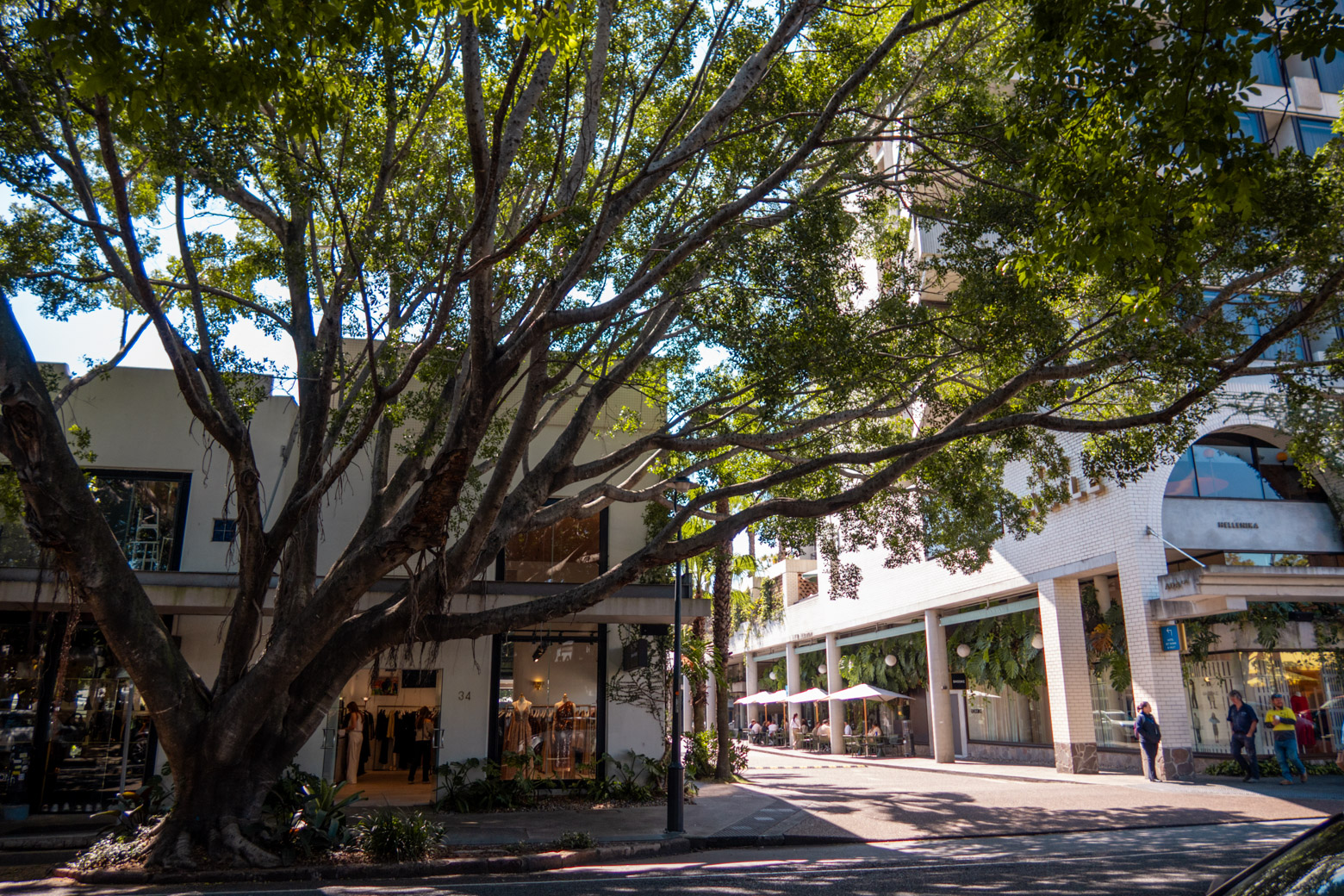
I highly recommend spending an afternoon wandering through New Farm and James Street. This street is lined with boutique shops, hotels and eateries, making it a stunning place to grab brunch with a friend or relax with a coffee or wine. You can see how stunning this street is from the images below.
James Street, Brisbane
If you want to make a day of it, start with a yoga class at Assembly by Aiko, browse the boutique shops with a stop for brunch, coffee or doughnuts at Nodo, relax in the sun at New Farm Park and then finish the evening with Thai at sAme sAme and a scoop of gelato at Messina. A seriously dreamy day in Brisbane right there.
Visiting James Street is one of the best things to do in Brisbane if you love a mix of shopping, food, and local vibes.
Have a sunset drink or dinner at Howard Smith Wharves
I loved this part of the city and think this is absolutely one of the best things to do in Brisbane. Whether you have an hour in the afternoon or you’re wondering what the best thing to do in evening in Brisbane is, head down to Howard Smith Wharves where you have a riverside hub with multiple places on the water to dine and drink.
They have so much outdoor seating so it’s pretty easy to get a spot and you can choose from many food vendors depending on what you fancy.
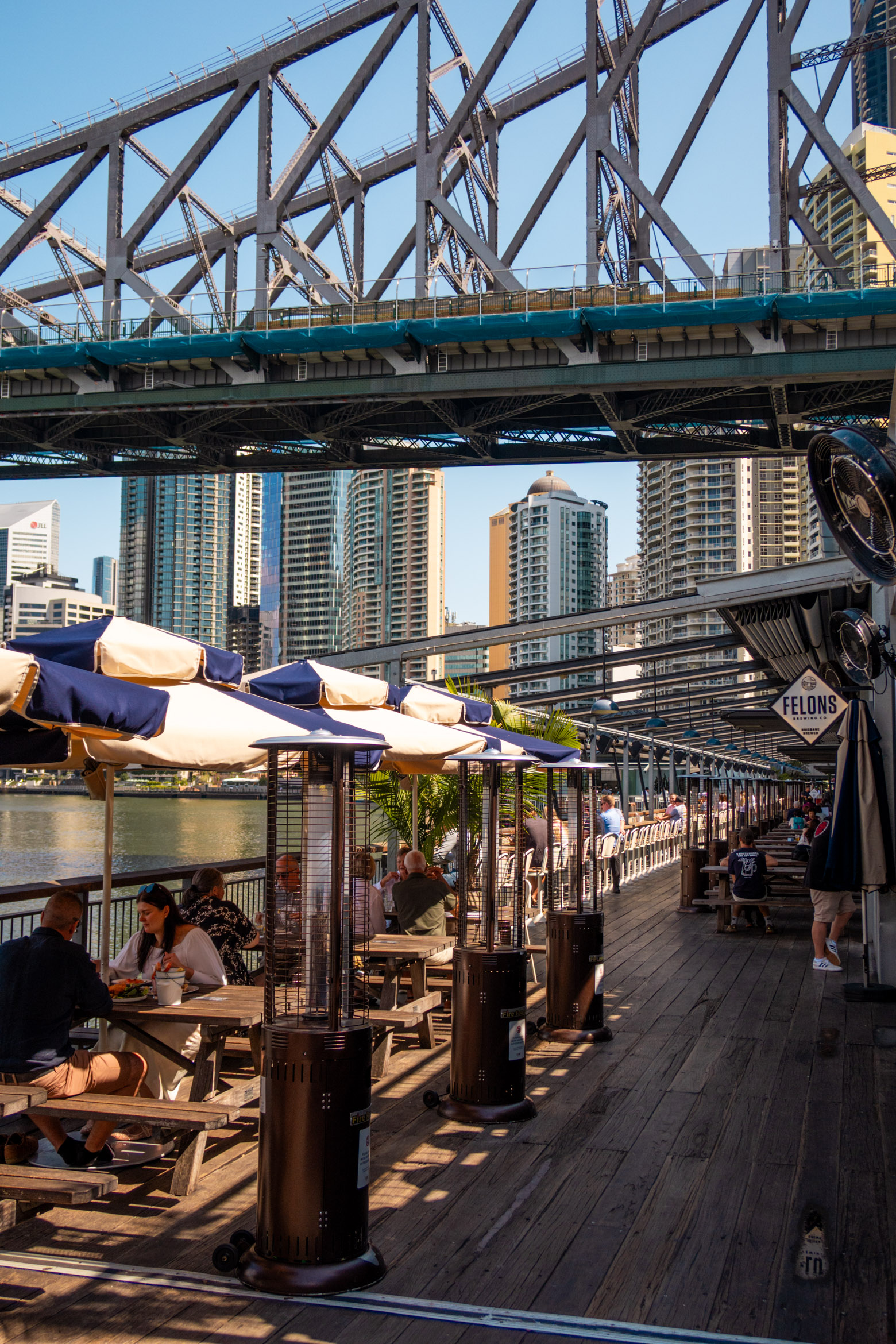
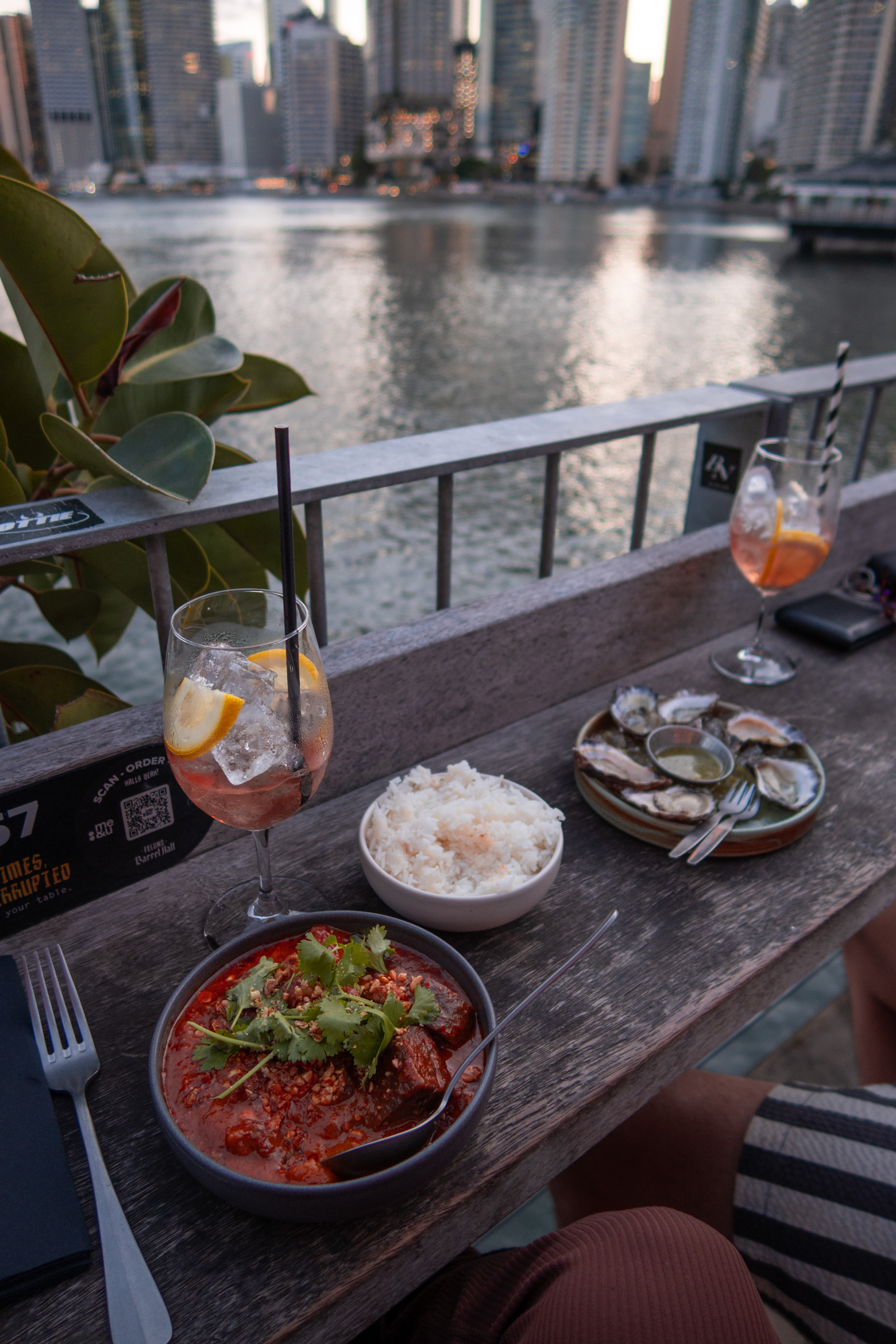
My suggestion would be to grab a craft beer at Felon’s Brewery, or head next door to Felon’s Barrel Hall and order the Massaman curry. See below. Views across the city and very very tasty food.
Outdoor seating at Felons Brewery
Massaman Curry @ Felons Barrell Hall
Have brunch at The New Black in Fortitude Valley
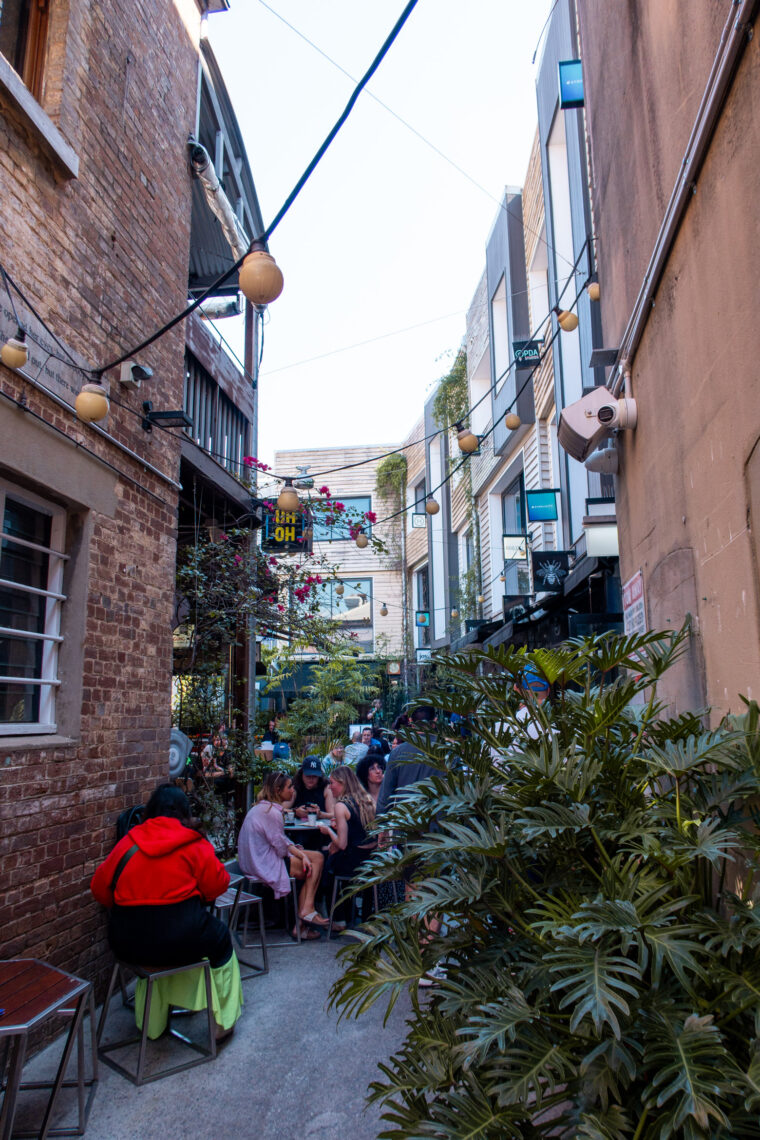
On my morning wander, I wanted to let my senses direct me to a brunch spot and boy did they do good. Just off the main road, Ann St, I peered down an alleyway filled with luscious tropical green plants (always a good indicator), and I noticed a warm buzz of locals.
I walked down and nearly drooled over everyone’s breakfast plates! The vibe was immaculate, and the lady serving was the most friendly and attentive human I could have asked for as I browsed the menu. See the menu here.
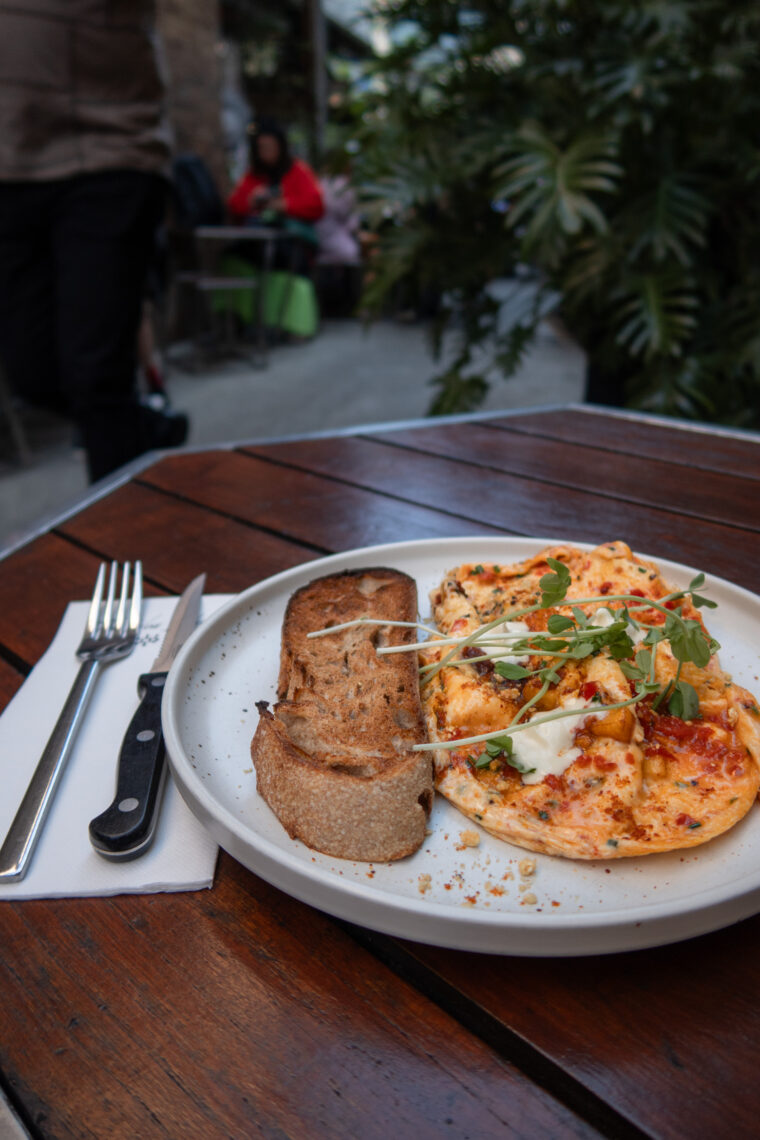
It was ticks all around and so I ordered the Chilli Scram (see below) which included fermented chilli, scrambled egg, chives, fried halloumi, creme fraiche and prok dust on rye toast. Heavenly.
The New Black easily earns its spot on the list of the best places to eat in Brisbane.
Bakery Lane, Brisbane
Chilli Scram @ The New Black
Climb the Story Bridge
If adventure is your style, don’t miss the iconic Story Bridge Adventure Climb.
Scaling this iconic bridge gives you 360° views of the city, the Brisbane River, and the mountains beyond. It’s a touristy but fun thing to do in Brisbane if you want to do something active! For an extra adrenaline rush, you can abseil down afterwards.
I’d say this is one of the most unique best things to do in Brisbane, and it’s a fun way to see the city from a whole new angle. Book your climb here.
Explore the water by Foot, Ferry or Kayak
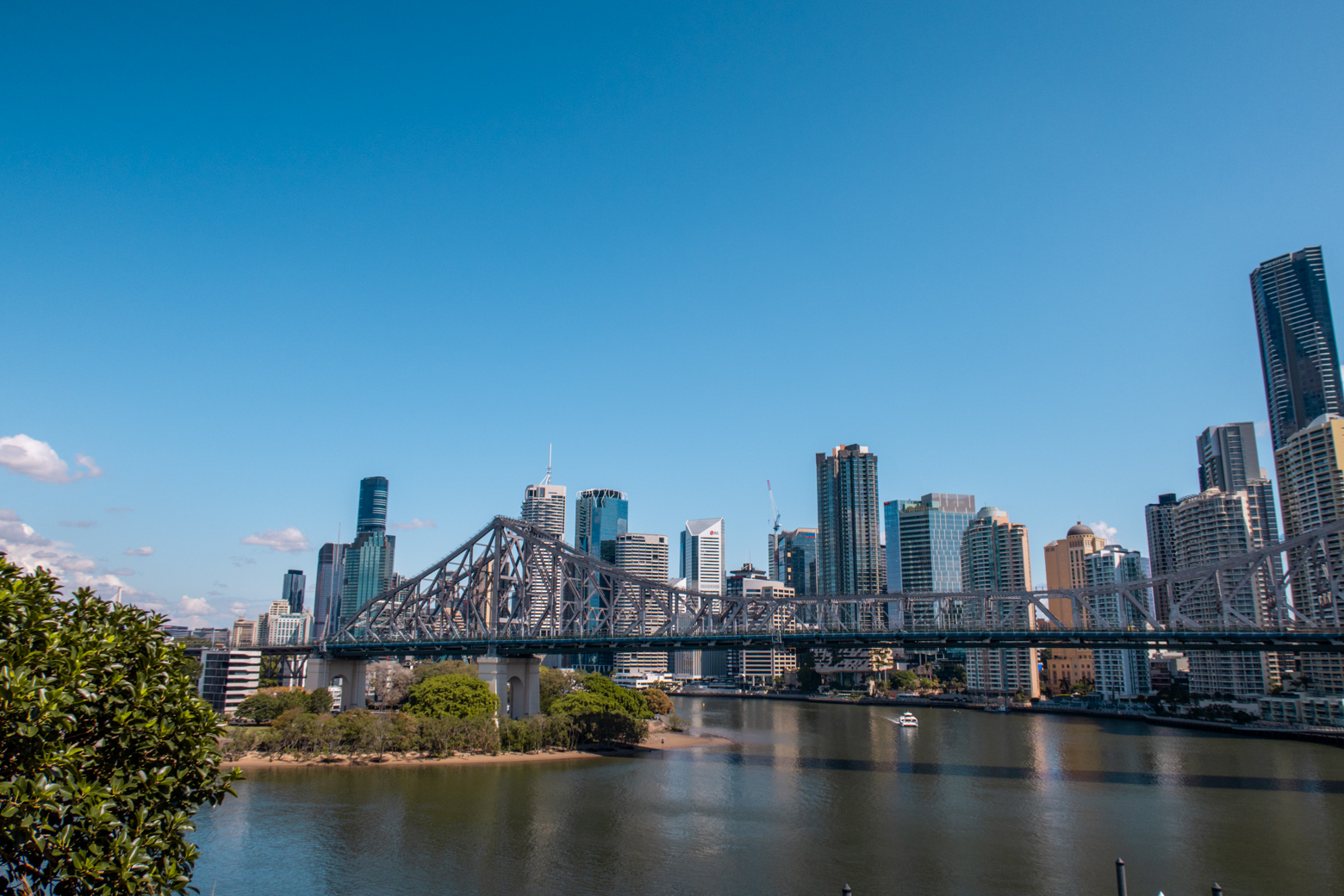
Brisbane is a city built around its river (see the image above), and the best way to experience it is from or along the water. Here are some options below, choose one depending on your level of desired adventure:
Jump on a CityCat ferry to explore neighbourhoods like South Bank, New Farm, and Teneriffe from the water
Book a night kayaking tour where you paddle under the Story Bridge with the city lights reflecting around you.
Take the City Reach Boardwalk from Howard Smith Wharves.
Take the New Farm River boardwalk across the water with views across the city.
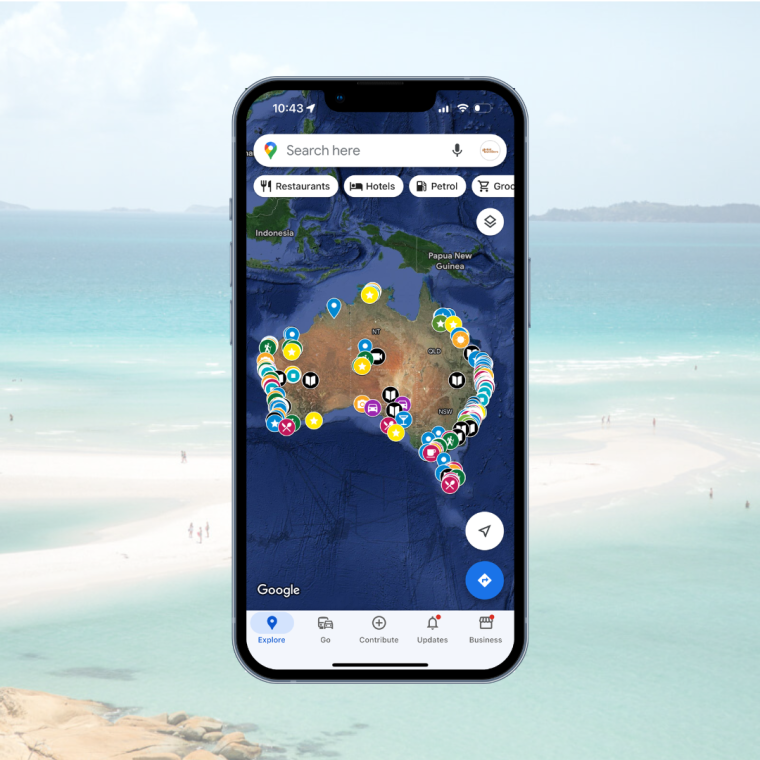
Get lifetime access to my endless hours of research and time spent on the ground finding the best places to eat, drink, relax and explore in the area. You simply open the Google Map on your device and all my pins are at the touch of your fingertips.
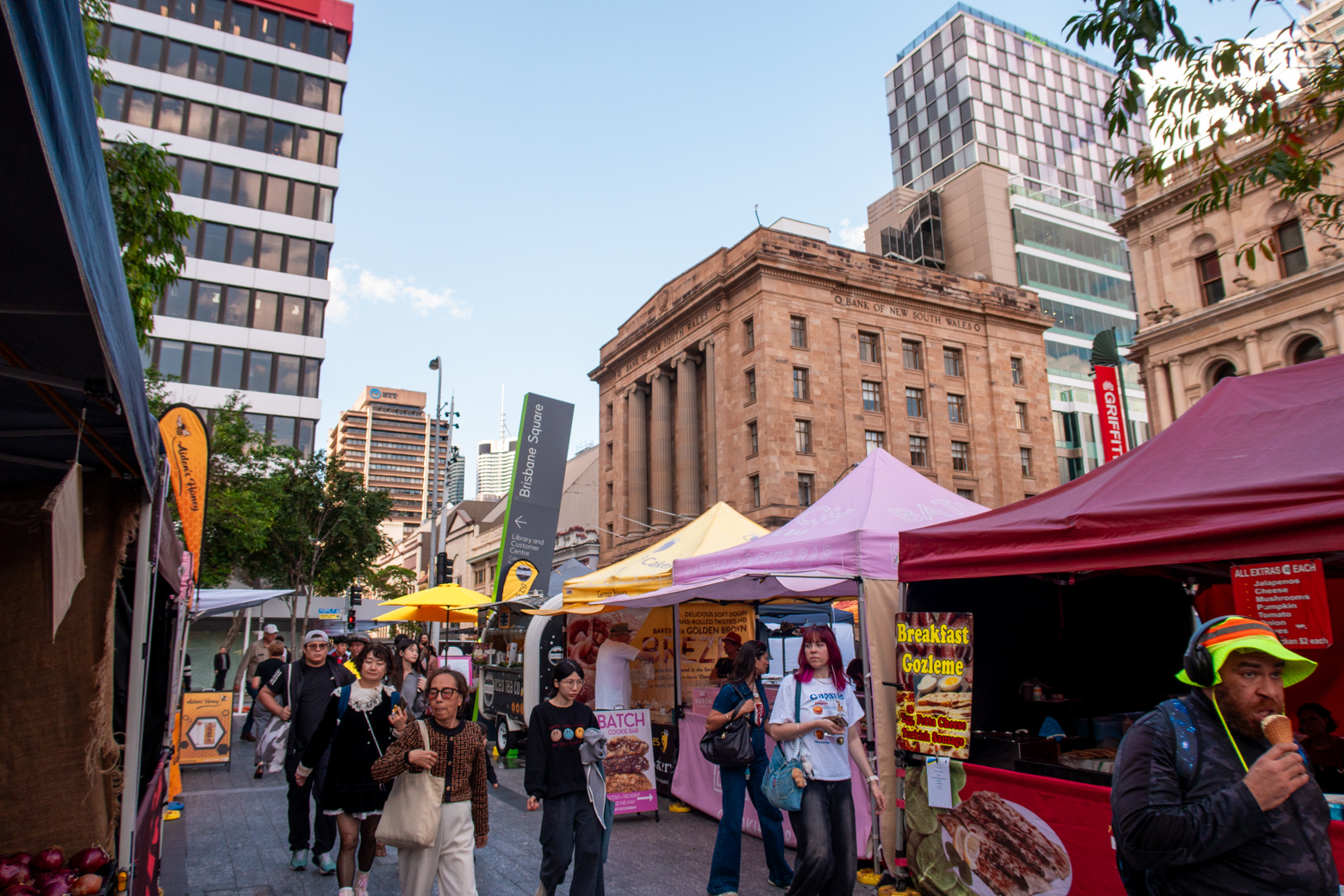
Head to one of the city’s markets!
Whilst I was in town I went to Brisbane City Markets at Reddacliff Place. Every Wednesday, from 8.00 AM to 6.00 PM, locals gather to buy fresh produce, street food, matcha, and artisan goods.
I just so happened to be in the city on this day and I absolutely LOVED my hour there. It’s a great way to support, buy from and chat to local growers. There are some real tasty treats and you could even come here and get your lunch from a food truck. My suggestion though would be coming down to grab picnic supplies before heading out on a day trip or to one of the city parks!
My favourite find was the Nagomi Japanese Matcha stall. I am really fussy when it comes to Matcha and I have to say – this was up there!! So if you’re looking for the best matcha in Brisbane – get yourself to the city markets!
Address: Reddacliff Place – 266 George Street (at the end of Queen Street Mall) Brisbane, QLD
The Collective Markets, South Bank (Fri 5pm–9pm, Sat 10am–9pm, Sun 9am–4pm)
West End Markets (Saturdays 6am–1pm)
Eat Street Northshore (Fri & Sat 4pm–10pm, Sun 4pm–9pm)
Enjoy the views from Mt Coot-tha Lookout or THE City Botanic Gardens
For the best panoramic view across Brisbane, you’ll want to head to Mt Coot-tha Lookout. Take a day for it and take the 471 bus out of Brisbane which takes around 30 minutes. The trails around the mountain are perfect for hiking and you’ll find many heading up here to enjoy sunset over the city. At the bottom of the mountain you’ll also find Mt Coot-tha Botanic Gardens.
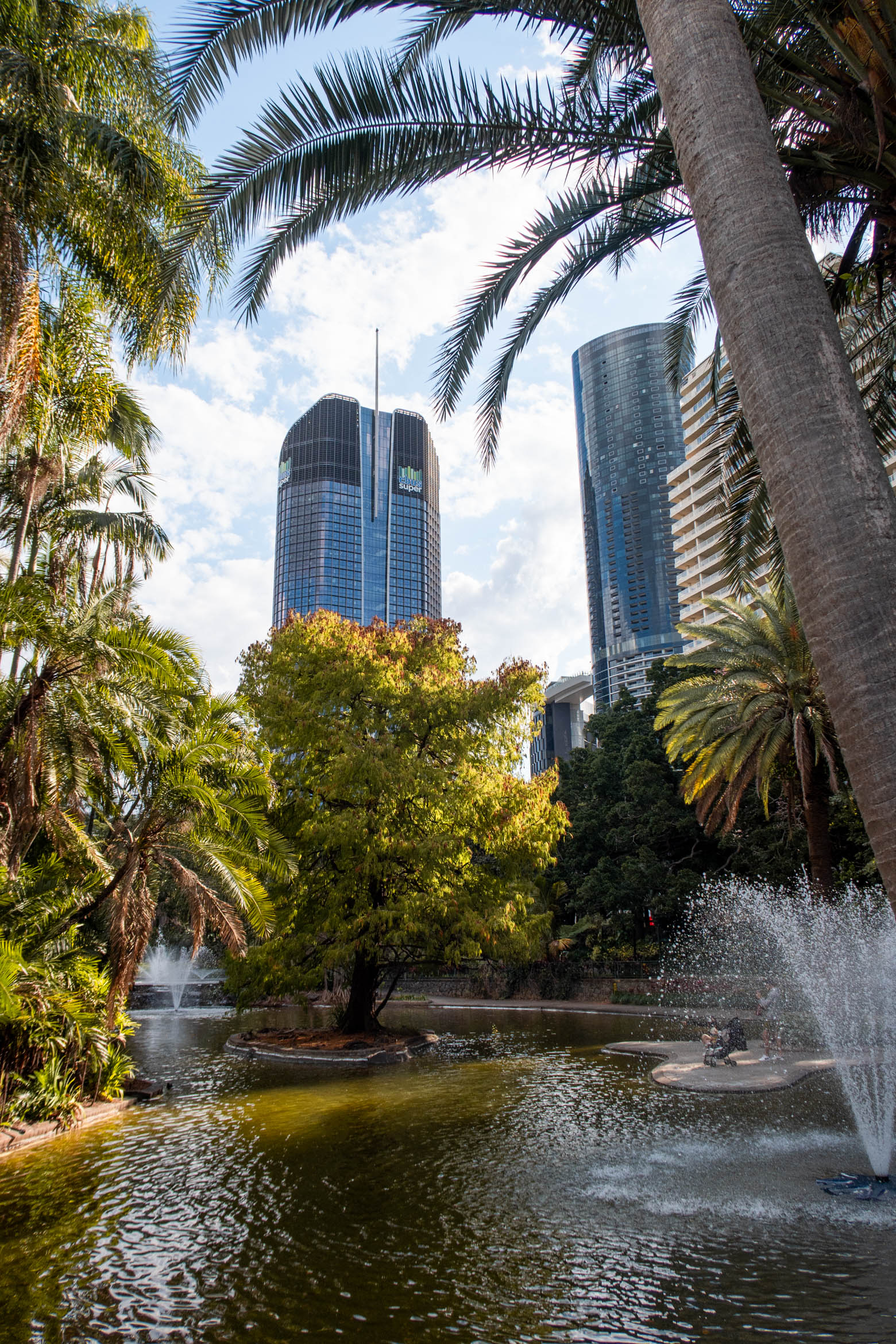
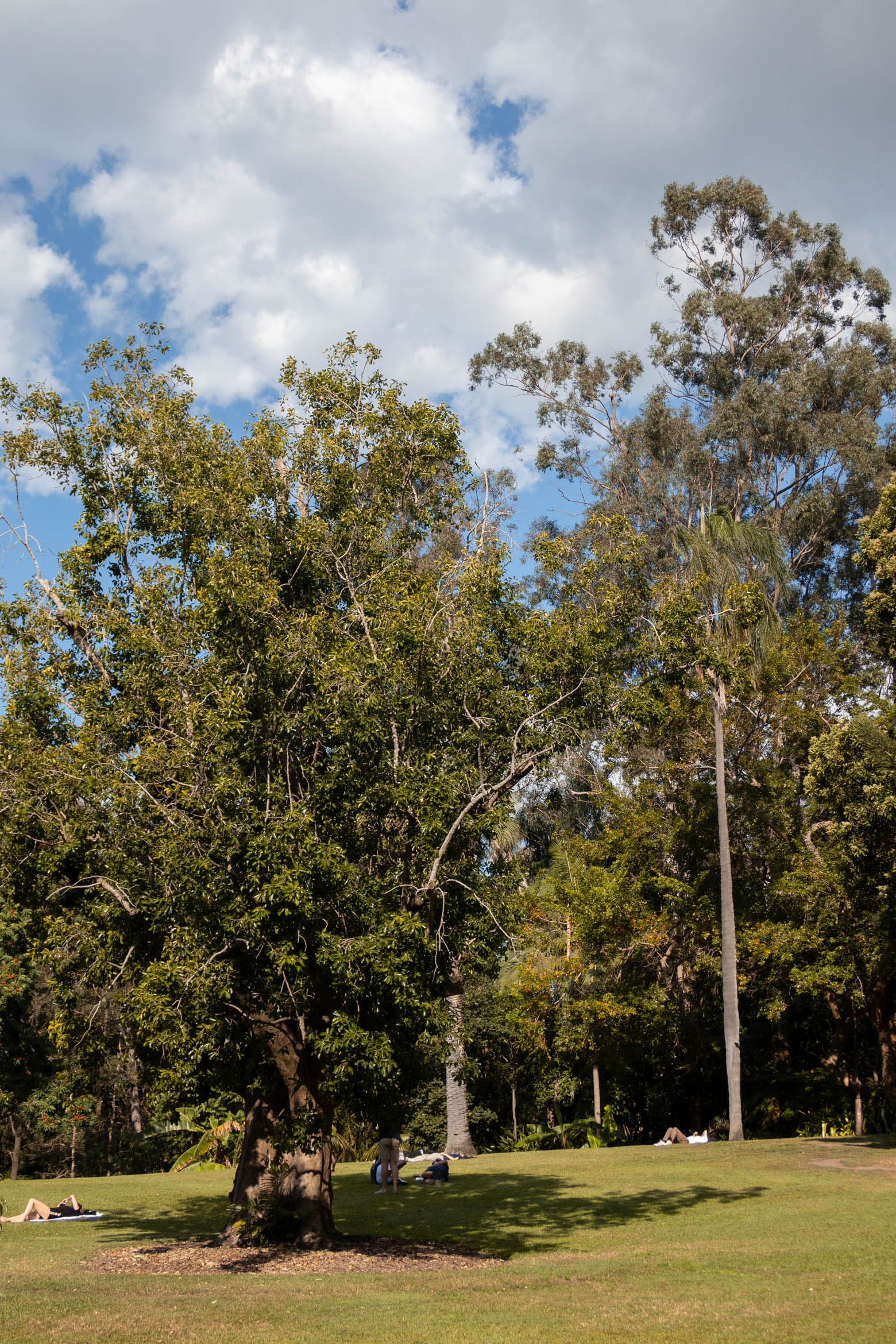
If you don’t fancy venturing outside of the city and you want to keep it local, you can get your dose of green and explore the trails in Brisbane’s City Botanic Gardens. It’s free to enter and to wander and it is here you’ll find many nature trails, areas to enjoy a picnic and places soak up the zen.
Brisbanes City Botanic Gardens
Brisbanes City Botanic Gardens
Check out the amazing bakeries and cafes in Brisbane
I honestly get a little overwhelmed when I get to the city, haha. There are way too many good places to eat and drink, and just not enough time to experience them all! Brisbane was no different; I really had to enjoy lots of places with my eyes and nose instead of inhaling everything into my stomach!
Here are a few places that were amazing / highly rated and recommended that you should add to your list and try:
A scoop or two of gelato at Messina (ABSOLUTE MUST)
Doughnuts and coffee at Nodo
Cookies at Brooki’s Bakery
Pastries at Sprout Artisan Bakery
Mediterranean Buffet at Sunshine, Fortitude Valley
Amazing thai food at sAme sAme
Handmade pasta at Nug
Brunch @ Emme James Street
Day trips to consider from Brisbane:
Camping adventure on Moreton Island
I mean, if you have time for an adventure, this is going to take the number one spot if you ask me my opinion. Moreton Island is literally my favourite place in the world to relax and switch off from the world.
The best way to experience Moreton Island is with a 4X4, so if you have one great, if you can hire one, fabulous. You’ll take a ferry ride from the city which takes around 90 minutes and then you’ll drive straight off and onto the sand. The beach is your highway, nature is your home and the sounds of the ocean, the birds and the campfires will be the soundtrack to your time here.
You can take the passenger ferry and explore for the day or if you pack your camping stuff and get a vehicle permit you can stay for a few days.
If you’re looking for the adventure of a lifetime and you love stripping it back and being outdoors, this is one of the best things to do in Brisbane. Find my full guide to visiting Moreton Island here.
Hike the Glass House Mountains
Just an hour north of Brisbane, the Glass House Mountains are a must for us outdoor adventurers and easily one of the best things to do in Brisbane.
These dramatic volcanic peaks rise straight out of the landscape, creating some of the most striking scenery in Queensland. Seriously, even from the highway im like woaaaa.
Popular things to do in this area include:
Hike to the summit of Mt Ngungun for an unforgettable sunrise view
Tackle the more challenging Mt Beerwah if you’re an experienced climber
Wander the surrounding trails and soak up the raw beauty of the national park.
Lone Pine Koala Sanctuary
If you’re keen to meet Aussie wildlife, the Lone Pine Koala Sanctuary is just 20 minutes from the CBD and is a highly recommended spot to meet the native Aussie wildlife. Yep it is here you can hand-feed kangaroos, cuddle a koala, and see native species up close.
Fun fact: Lone Pine is the world’s oldest and largest koala sanctuary, making it one of the most iconic stops on any Brisbane travel guide.
Scenic Rim Adventure
Around 90 minutes from Brisbane, the Scenic Rim is another lush outdoor adventure and is a haven of rainforest hikes, waterfalls, and camping spots. National parks like Lamington and Main Range are packed with trails, wildlife, and viewpoints. Whether you’re chasing waterfalls or sipping wine at a local vineyard, the Scenic Rim is one of the best things to do near Brisbane for outdoor adventurers.
Have you been to Brisbane, Australia?
What are the best things to do in Brisbane, Australia? Anything you’d add to this Brisbane, Australia bucket list?
Looking for things to do in Incheon? Well, you came to the right place. I moved to Incheon in February of 2019 to teach English in South Korea. When people visit South Korea, they mostly think of Seoul and Busan. Some who do their research know about Daegu, Daejeon, and Incheon.
What is Incheon known for? Incheon is the South Korea’s third-largest city. It is where the Incheon international airport is located and the saying Incheon is known for is “All ways Incheon” meaning that all ways lead to Incheon because of Incheon International airport, the shipping dock, and more.
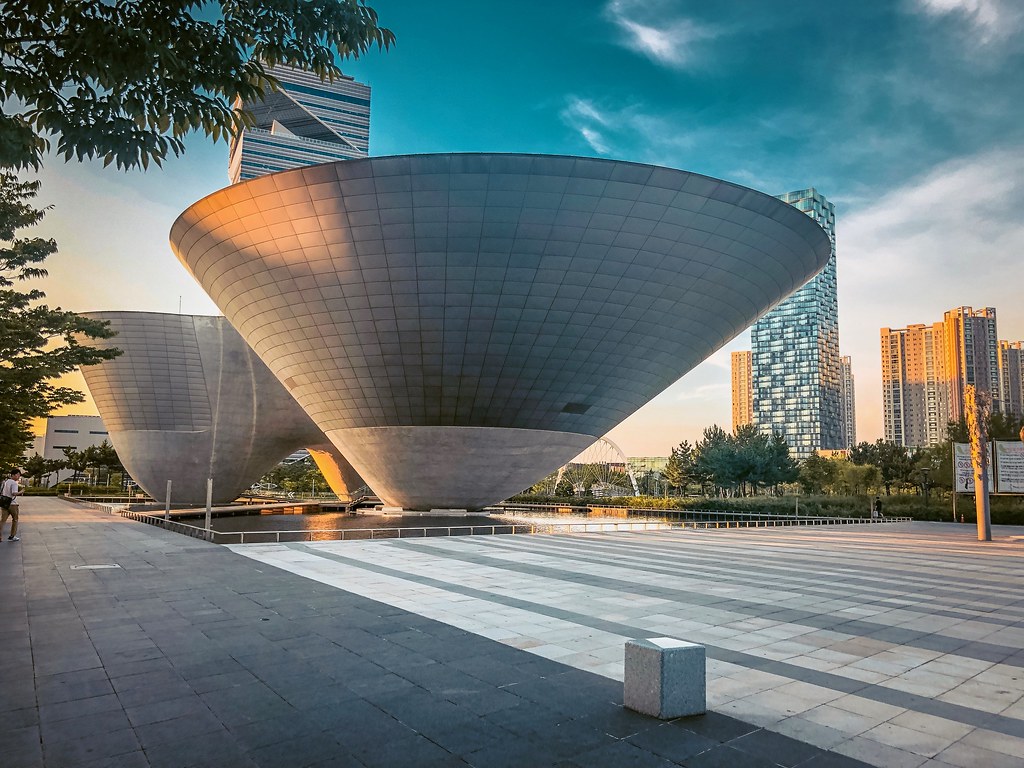
Incheon South Korea is also known to hold a lot of ex-pats from all over the world and is becoming more popular with the city of Songdo. While living here, I have been able to explore and wander to various places in Incheon and I wanted to share a local’s perspective on things to do in Incheon. It’s a great place to travel to for a one day trip. Enjoy this ultimate Incheon guide.
This site contains affiliate links to products. We may receive a commission for purchases made through these links. Support my blog here
This site contains affiliate links to products. We may receive a commission for purchases made through these links.
First time traveling to South Korea? Check out some of these posts below.
What to do in Incheon City – things to do in Incheon, South Korea
Incheon Metropolitan City is probably one of the most undervalued places to visit in South Korea. Most people will skip over it because there is so much to do in Seoul. Most people don’t know where Incheon is even though it is where the airport is. Incheon is quite far from everything, unfortunately, but what makes it great is that it isn’t overtaken by tourists and foreigners like Seoul. You immediately go into Hongdae, Itaewon, Myeongdong, and you are surrounded by tourists. When you visit Incheon, it’s definitely a more authentic feel of Korea. Don’t let Seoul prevent you from experiencing the best things to do in Incheon.
Many transit passengers may want to explore parts of Korea and Incheon is the best location to get a glimpse of Korean Culture. There are a lot of nearby attractions for airport layovers, especially in Songdo international city.
Best time to visit Incheon
The best time to visit Incheon is in the spring, March-May, or fall, September–November, months. The winter months are doable if you don’t mind the cold. The weather can be very cold up to -20 degrees F so be prepared with some thick winter coats. The summer months, however, are extremely humid. The temperatures don’t usually get too high, but the humidity is about 80% and higher. Things to do in Incheon can vary depending on the weather.
How to get to Incheon – Where is Incheon?
Incheon is located in the far west of South Korea. It’s the main area where you will fly when arriving in South Korea.
If you are arriving from the airport then you are already in Incheon. You can easily take the subway to your destination or get in a taxi cab and travel around. If you are new to South Korea, let me explain the ways to travel around South Korea.
Subway
One of the best ways to get around Seoul or Incheon is by Subway, they are consistently reliable and always run on time. There are plenty of subways to take and they are easy to get around. All signs are written in English and Korean, just be sure to download the subway app first before arriving in South Korea.
Bus
One way to get around Incheon is to take the bus. Buses are very common all over South Korea and especially in the major city propers. It’s one of the best ways to get around. However, if you are traveling during heavy traffic times, it may be the worst way to get around.
Taxi
The other way to get around is by Taxi, this is perfect for family, people who are struggling with traveling long distances or if it happens to be late at night and past the time when buses and taxis operate. Taxis are very affordable in Korea which makes it a great resource to use. I highly suggest you download the Kakao Taxi app. This is pretty much the uber of South Korea and you can pay the driver with a card or cash. You don’t need to input your information into the app.
Where to stay in Incheon City
There are a lot of areas to stay in Incheon, but I think these are the best places to stay if you are looking for things to do in Incheon or just want a layover hotel.
Unseo – If you are only in Korea for a layover, I suggest you look for hotels near or in the area of Unseo. Unseo is the next subway stop from the airport. There are a lot of affordable transit hotels in this area and is a very newly developed area perfect to just get a good night’s rest and some food.
Paradise City – If you want to visit Cimer Spa and enjoy a spa day during your layover or just wanting to stay and be in that area, I suggest you stay at Paradise City. This is a great hotel location for layovers as well since it is very close to the airport and you can easily take a bus from the airport here or even take the subway as well.
Oakwood Premier in Songdo – Now I suggest Oakwood because it is the most popular hotel to stay at in Songdo, however, you can easily find any hotel or location in Songdo. Songdo is very popular for foreign visitors who are there for work.
Bupyeong – I suggest staying in Bupyeong if you want to be surrounded by a ton of restaurants and locals. It’s a great place to shop, explore and a very populated area in Incheon.
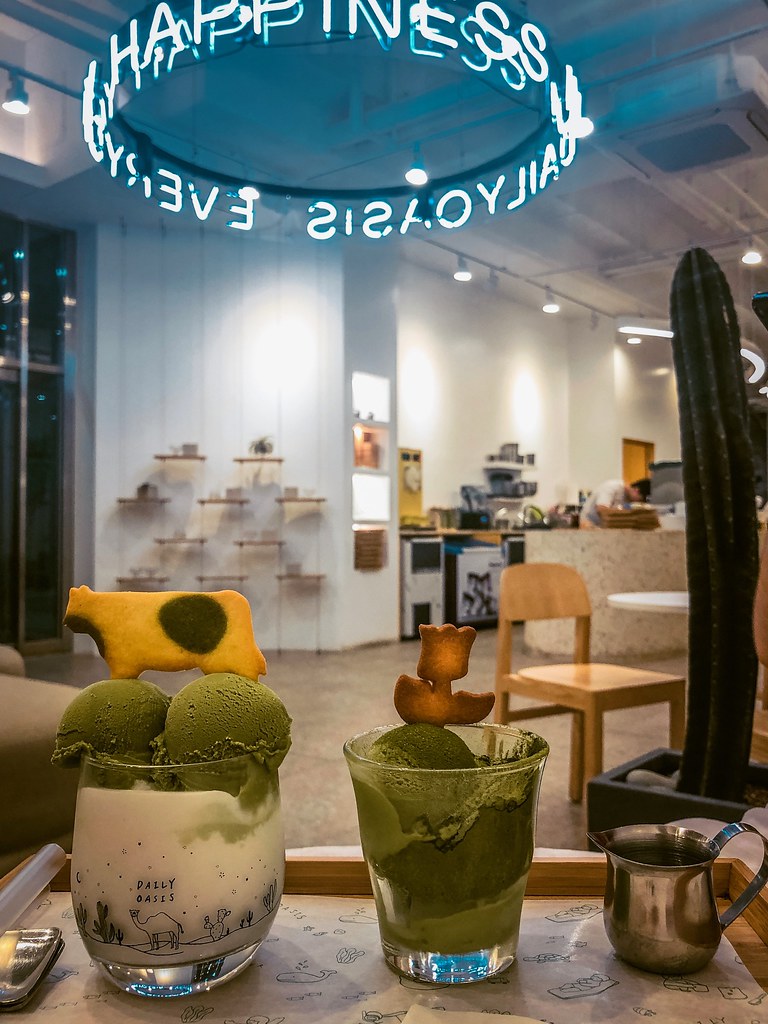
Daily Oasis | Things to do in Incheon
Things to do in Incheon City – Popular Cafes to Visit in Incheon
Looking for what to do in Incheon? Cafe hopping is probably one of the most popular things to do in Incheon or in fact all of Korea. There are so many cute little cafes within the city which means there are a lot of things to do in Incheon. Many of these cafes are great things to do in Incheon at night.
Rose Stella Garden Cafe – This is Incheon’s cutest little cafe that has a greenhouse feel. With many of the greenhouse cafes and parks popping up in the area, this is a cafe that is popular because of its quaint charm.
Daily Oasis – This cafe is for matcha green tea lovers. This entire cafe focuses on the natural earthy flavors of green tea. They have ice cream and desserts along with coffee. This cafe is Instagram-worthy with its cute cactus and cow-shaped cookies.
Cafe Mug – This cafe is a very cute and relaxing cafe. You can sit on the rooftop under tents, eat dessert, drink coffee or other drinks along with your friends.
Cafe Valor – Check out this cute Instagrammable Cafe in Incheon. You can easily take photos in their large warehouse filled with the furniture you can purchase.
Other Cafes to Visit in Incheon
Andhari (앤드하리)
Cafe Ora
Masirang Cafe
Daliswim
Talk Rapi
Cafe Galilee
Green Holiday
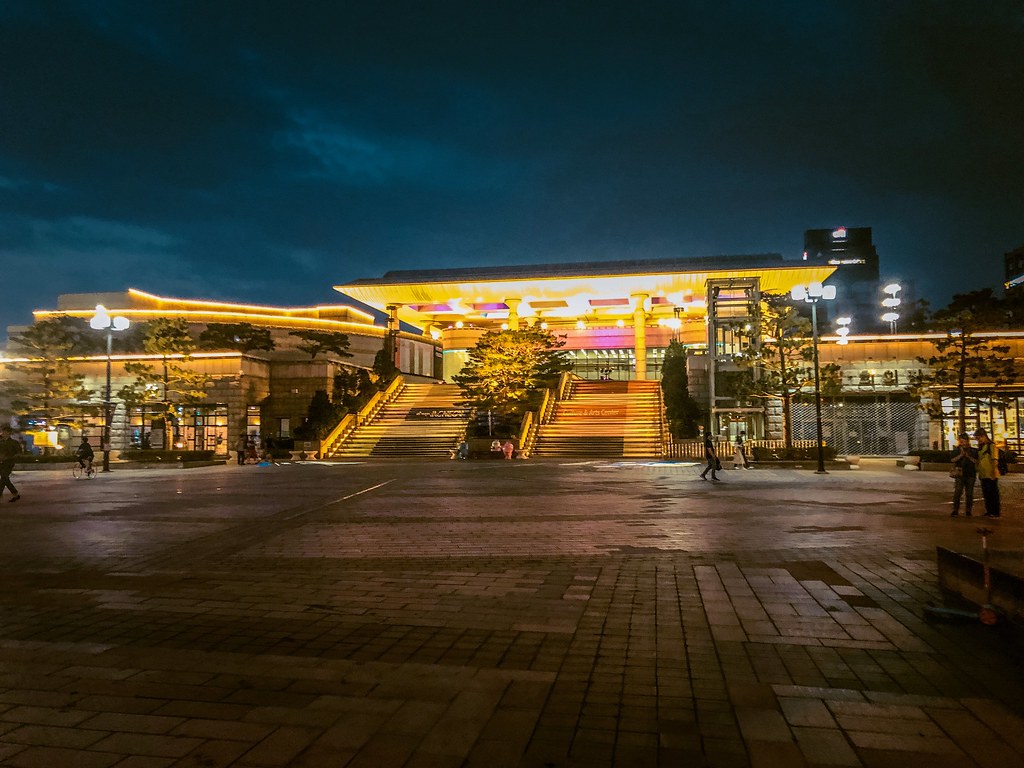
Incheon Arts Center | Things to do in Incheon
Things to do in Incheon | Where to eat in Incheon
Incheon Arts Center – One of my favorite places to enjoy a few good meals and go drinking is to hang on in the Incheon Arts Center area. Near the subway station are a lot of great restaurants and places to drink. This is a pretty popular area among younger people and there is a reason why. Additionally, you can walk to the open park area and view the Art Center and light show as well.
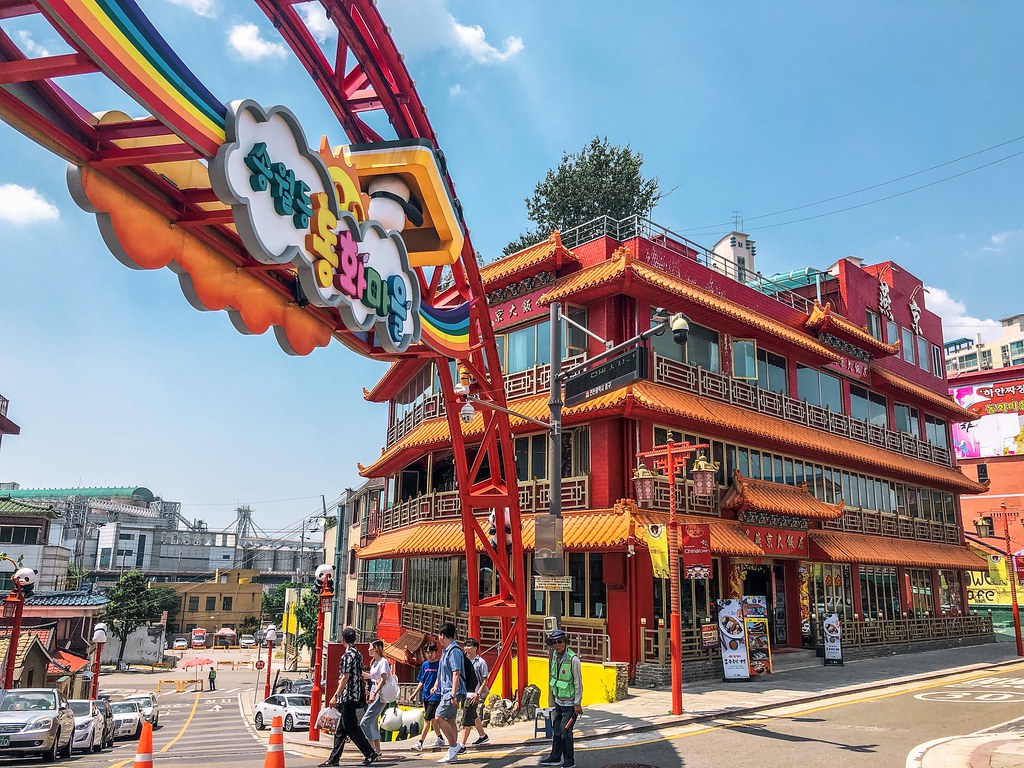
Chinatown – In Chinatown, you should each the best Jjajangmyeon which is a noodle dish with black bean sauce that is found in South Korea. They have been known to have made this dish since the 1800s. The best restaurant to go to for jjajangmyeon is Mandabok.
Songdo – If you want more Western food options, I suggest you go to the Technopark Subway station and use exit 2 to get to Triple Street. There you can easily find so many Western Restaurants. You can walk into the mall and find some market-style places to eat at or keep going through the passageway where you can find Mexican food from Coreanos and more.
Bupyeong – Near Bupyeong Station there are tons of places to eat, shop and explore. Above the large market is also a huge food court where you can get any type of food imaginable.
Where to shop in Incheon – Where to go in Incheon
Bupyeong Underground Shopping Mall – This Incheon shopping mall is very impressive and super easy to get lost in. It’s one of the biggest underground malls and there is something for everyone here.
Triple Street – Triple Street is the popular Incheon shopping mall area located in Songdo. This popular area is filled with locals and foreigners from all over. There are more Western brands here like Nike, Adidas, H&M, Zara, and more. You can find a lot to do here and be sure to eat at Shake Shack!
NC Cube Canal Walk – Another shopping area that is popular in Incheon is the NC Cube Canal Walk. This area is filled with many western brands as well, however, this area isn’t very easy to get to by public transportation.
Planning a trip to Korea?
Incheon Attractions – Best things to do in Incheon
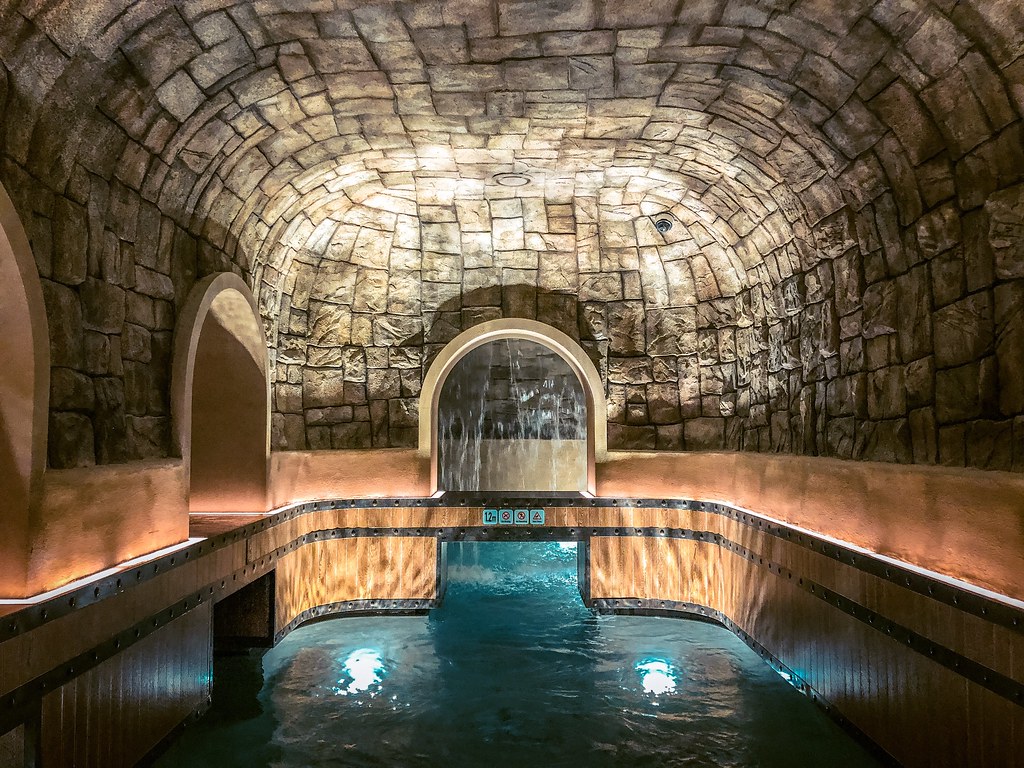
Skincare and spas are very popular all over South Korea. Koreans really enjoy resorts and fancy hotels, it’s part of their culture. Many people will rent a hotel room over the weekend to either spend quality time with their friends or significant others. The Cimer K-Style Spa is a very popular spa in Korea and is quite affordable once you find out everything that this place has to offer. You can enjoy an entire day swimming, enjoy spa treatments, and feeling relaxed. This is the most popular day spa in Incheon and one of the most popular things to do in Incheon during a layover.
Gyeongin Waterway – Gyeongin Waterway is a beautiful canal that runs through Incheon and connects the Han River to the Yellow Sea. It’s a great place to take a leisurely stroll, enjoy some fresh air, and take in the sights of Incheon.
Along the way, you can find many restaurants, cafes, and shops. There are also plenty of historical sites to explore such as the Incheon Grand Bridge, which is the longest bridge in South Korea. The Gyeongin Waterway was built in the late 19th century and has been a major transportation route for goods and people ever since. It’s also a great place to take some beautiful photos of Incheon’s skyline.
Bupyeong Underground Market
South Korea is very popular for shopping for clothes, bags, skincare, and more. Bupyeong Underground Market has it all. You can find anything you really want in this area and bargain to the best of your abilities. Underground markets are very popular in South Korea. If you have been to Korea, you probably have explored many of the night markets in and around Seoul.
This is one of my most memorable things to do in Incheon. I remember going to this market quite often as a kid. It’s a great place to shop.
Sudoguksan Museum of Housing & Living
Sudoguksan Museum of Housing & Living is a great place to learn about the history of Incheon. This museum was built in the late 19th century and showcases the traditional Korean lifestyle. It’s a great place to learn about the culture and history of Incheon. You can also find many artifacts from the past such as pottery, furniture, and more.
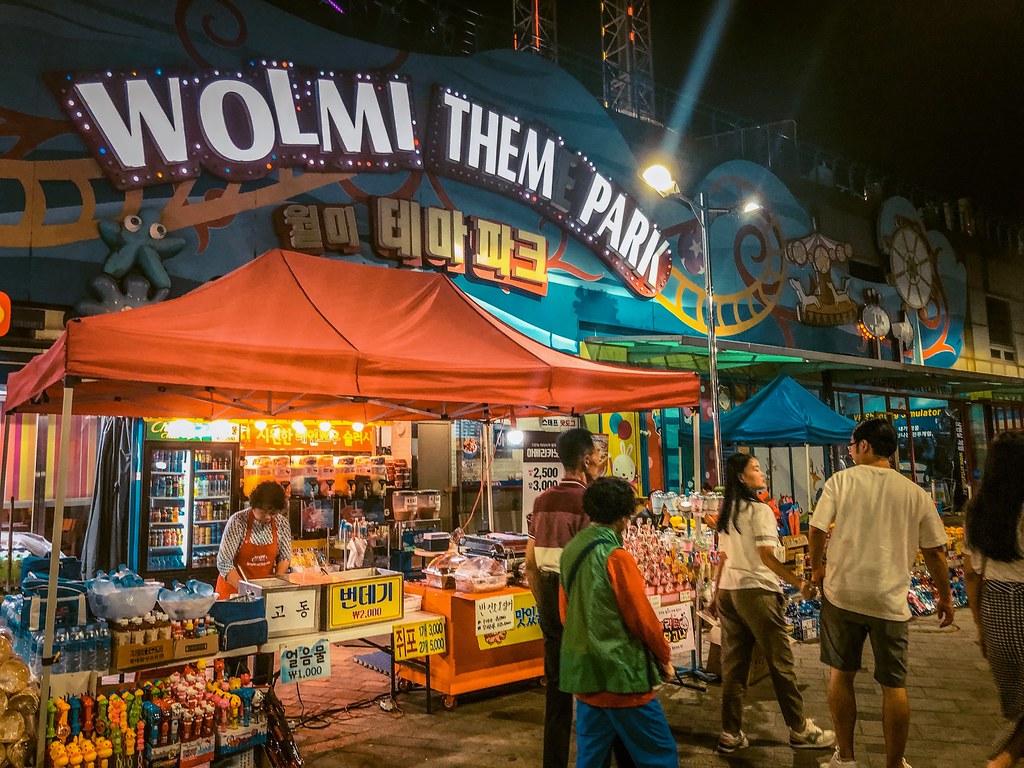
Wolmi Theme Park | Things to do in Incheon
Wolmido and Wolmi Theme Park – Popular things to do in Incheon at Night
So if you happen to miss the boardwalks from the US or want to experience the boardwalk of Incheon, Wolmido Island or Wolmi traditional park is the place to go. Here they have classic wooden roller coasters, a Ferris wheel, and carnival games. You can walk all the way to the lighthouse, enjoy street food, buy alcohol at the convenience store and just walk around the boardwalk.
If you are adventurous, one of the most popular things to do in Incheon at Wolmido Island is to ride the Disco Bang Bang. I absolutely hated this ride, but it’s found all over social media and is a very fun ride. There are a lot of people who get on it and there is a DJ who entertains and tries to throw you off the ride. It’s one of the fun things to do in Incheon Korea at Wolmido Island.
Not too far from Wolmido in Chinatown. Chinatown is a popular destination in Incheon because of the influence of Chinese immigrants and food. Jajangmyeon a Chinese Korean dish, is popular among Koreans. This dish is what they call a Chinese dish, however, you will never see it in a Chinese restaurant unless it is in Korea. This dish is a noodle dish covered in a black sauce with meat and veggies. This is one of my favorite things to do in Incheon when I am craving Jjajangmyeon.
Sinpo International Market
If you’re interested in learning more about Incheon’s past, then be sure to visit Sinpo International Market, which is home to many traditional shops and restaurants. This vibrant market is home to hundreds of stalls selling all sorts of local delicacies. Be sure to try some of the famous seafood dishes while you’re there! Here, you can buy souvenirs, sample local food, and learn about the city’s culture.
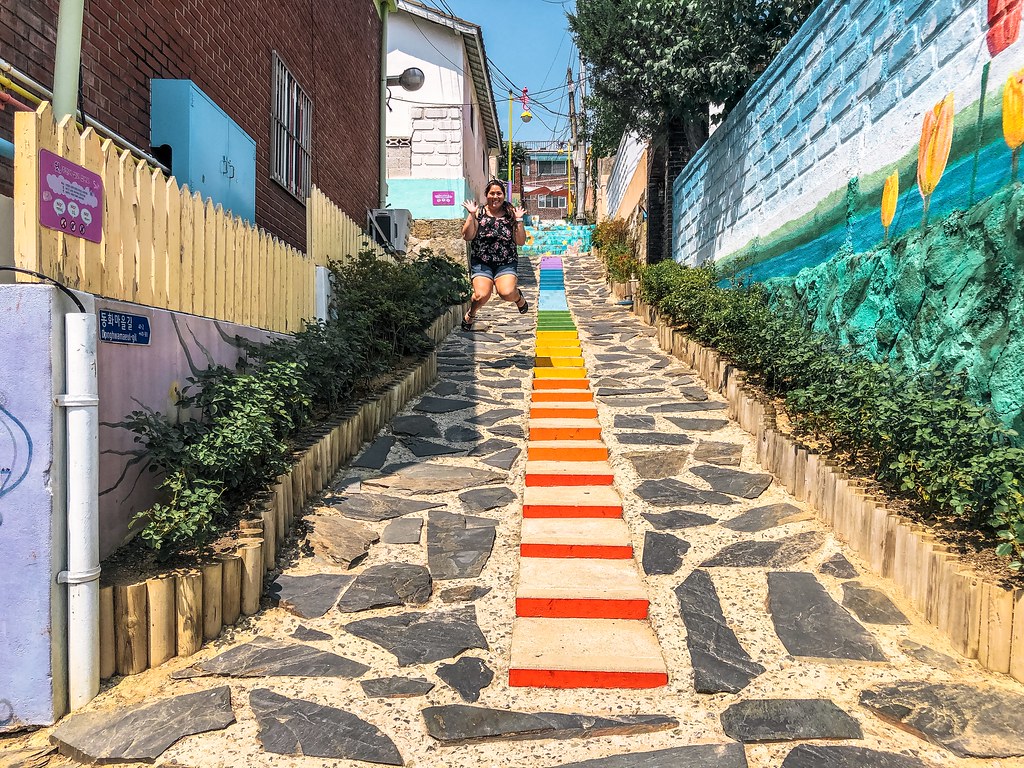
In the same neighborhood and right next to Chinatown is Songwol Dong Fairy tale village. This is a magical place in South Korea with images from famous Disney characters, fairytale fiction, and more. You can get some of the best Instagram selfies you want here. If you have seen the KDrama “What’s wrong with Secretary Kim?”, you can see the rainbow steps here, where the movie was filmed. Additionally, you can get a stamp with your selfie blasted on it. I used it a lot for my kids at school, which has made it pretty fun to use.
This is probably one of the most visited places and things to do in Incheon.
Sorae Ecology Park
This is probably the least known thing in Incheon and is located in the area I am living in. There is a nice nature walk near my house with old-style windmills. I found it to be a relaxing nature walk and a great way to not feeling like I am in a city proper. I was also able to take some cute Instagram photos (oh don’t mind me) and explore the open space.
Hanagae Bathing Resort | Things to do in Incheon
Go to the beach on Incheon’s Islands
Incheon isn’t notorious for beautiful beaches but there are a few beaches to go looking for shellfish, swim, and some do have a good view as long as the tide is high. Incheon’s beaches are typically more known for their muddy flats, but it makes for good places for kids and a good place to visit in Incheon. The water is usually quite shallow and the waves are less harsh. I highly suggest visiting Hanagae Bathing Resort on Muui Island, it’s my favorite Incheon beach.
Jayu Park is a great place to visit in Incheon. It is located in the heart of the city and offers stunning views of the harbor and the surrounding mountains. The park was built in 1883 by Japanese forces during their occupation of Korea, and it has since become a popular spot for locals and tourists alike.
The park features several monuments, including a statue of General Douglas MacArthur, who led the United Nations forces during the Korean War. There is also a memorial to the victims of the Korean War, as well as a monument dedicated to those who died in the Battle of Incheon. The park also features a beautiful fountain and several gardens, making it a great place to relax and take in some of Incheon’s history.
Baedari Secondhand Bookstore Alley (배다리 헌책방 골목)
If you are a book lover or just interested in finding any book store, library, etc. in Korea, one of the places to visit in Incheon is the Baedari Secondhand Bookstore Alley. Like the famous bookstore alley in Busan, these stores are covered from floor to ceiling with books.
Aiins World
This cute little theme park located in Incheon is filled with miniature recreations of world-famous buildings. See some of the famous architectures around the world such as the Great Wall of China, the Empire State Building, Rockefeller Center with its famous ice rink, Mount Kilimanjaro, and Broadway in New York City.
Ganghwado or Ganghwa Island
Ganghwado is a beautiful island on the coast of Incheon and can be accessed by vehicle by driving over a bridge. It is one of the biggest islands off the coast of Incheon and has a lot of amazing things to see and do. It is located in the yellow sea on the west coast and the only thing that separated this island from North Korea is the Han river. There are a lot of beautiful cafes and restaurants in this area making it a great location to visit and miss the touristy crowds.
Visit Incheon Grand Park
Like Seoul Grand Park, Incheon has its own Grand Park. This is a large-scale park located between two mountains within Incheon. This park includes an outdoor theater, artificial turf grounds, skating rink, botanical garden, bicycle trails, lake, sledding hill, a children’s zoo, observatory, and more. You can easily rent a bike and take a ride around this beautiful park. This is one of the best things to do in Incheon during the spring and fall months.
Jeondeungsa Temple
Jeondeungsa Temple is a beautiful temple located in Incheon. It was built in the year 678 and is one of the oldest temples in Korea. This temple is known for its unique architecture, which includes a three-story pagoda and a five-story stone pagoda.
The temple also has several other buildings, including the main hall, lecture hall, and bell tower. Visitors can also enjoy the beautiful scenery of the surrounding mountains and forests. Jeondeungsa Temple is a great place to visit if you want to learn more about Korean history and culture.
Baengnyeongdo
Baengnyeongdo is an island located off the coast of Incheon. It is known for its beautiful beaches and stunning views of the ocean. The island is also home to a variety of wildlife, including seals, dolphins, and migratory birds. There are several hiking trails on the island that offer breathtaking views of the surrounding landscape. Visitors can also explore the many historical sites on Baengnyeongdo, such as the Baengnyeong Fortress and the Baengnyeong Lighthouse.
Things to do in Songdo Incheon
Songdo International Business District is located in the southernmost part of Incheon. This area became popular because of large companies like Samsung, and Jansen, and add to more of the things to do in Incheon. Many foreigners live in this area because of the large companies so there are a lot of Western restaurants. Songdo is considered to be the newer part of Incheon. You can easily bike the entire parameter of the island and that was the purpose of this location.
Songdo is one of my favorite places to visit in Incheon. Incheon sightseeing has been quite popular in this area and for a good reason as well. I’ve listed the Incheon Songdo attractions and where to go in Incheon.
Picnic and boat ride at Songdo Central Park
One of the most popular things to do in Incheon outside of eating and drinking in Song-do is to visit Song-do’s central park. Central Park is a large park with many walking trails and a man-made river in the middle. Here you can have a picnic, rent small a small boat or kayak with your family and friends, and cruise down the river. Don’t forget to visit the rabbit island.
If you’re looking for a place to relax and enjoy nature, then Songdo Central Park is definitely worth checking out. This scenic park features walking trails, ponds, and plenty of green space where you can sit back and relax. It’s the perfect place to spend an afternoon on a sunny day.
Tri Bowl | Things to do in Incheon
Tri Bowl
The Tri Bowl is an art center located in Songdo’s central park. This creative architectural building was built with 3 bowl shapes that happen to sit on the water. You can walk on the paved concrete paths underneath the structure. There are some events that are held here that you can enjoy as well. You can visit their website to check out the monthly schedule at the Tri Bowl.
G-Tower Observatory Deck
After visiting the Tri Bowl, take some time to go to the G-Tower. This is a tower a 33-floor, 150-meter skyscraper. There are lots of small businesses located in this tower, but the observatory deck is the most popular location to visit for tourists. You can get the best view of Songdo’s Central Park.
Songdo Hanok Village
This is a modern hanok village since it isn’t in the traditional sense but is made to look traditional. It’s a great way to get some beautiful photos and visit a hanok village in Incheon or in Songdo if only visiting for a layover. They have cafes and restaurants in these hanoks. It was a way to promote some tourism in the area as well.
Incheon Bridge
The Incheon Bridge is a bridge that connects the mainland of South Korea to the island of Yeongjongdo. It is one of the longest bridges in the world, stretching over 10 miles long. The bridge was opened in 2009 and has become an iconic symbol of Incheon.
Visitors can take a walk or bike ride across the bridge and enjoy stunning views of the ocean and nearby islands. There are also several restaurants and cafes located along the bridge, making it a great spot to take a break and enjoy some local cuisine.
Other Incheon Attractions
Jangseung
Goryeosan
Hike Gyeyangsan
Jeondeungsa Temple
Island Hopping to Baengnyeongdo
Baemikkumi Sculpture Park (배미꾸미조각공원)
Gwangseongbo Fortress (광성보)
Memorial Hall for Incheon Landing Operation
Best Beaches in Incheon
There are a lot of amazing Incheon beaches to visit. However, a lot is not easy to get to. Many Koreans will tell you the beaches in Incheon are not great because they are difficult to get to and many do not consist of that beautiful white sand. I have found a lot of the beaches to be quite beautiful if you are willing to commute.
Wangsan Beach
Hanagae Bathing Resort
Eulwangni Beach
Dongmak Beach
Masian Beach
Jageunpulan Beach
Things to do in Incheon FAQS
Is Incheon worth visiting?
Of course! There are a lot of things to do in Incheon and honestly, I prefer it over many parts of Seoul. You can have better integration with being around Koreans and still can do a ton of shopping, great parks, cafes, and many things to see and do including KDrama filming locations.
What is Incheon best known for?
Incheon is best known for its Chinatown I would say. They are also well known for its Incheon Airport.
What can you do at the Incheon Airport layover?
There are a lot of things you can do. If you are able to travel outside of the airport, I highly recommend you read this post on what to do in Incheon Airport for a layover.
Can I leave Incheon Airport during a layover?
This highly depends on your country and visa requirements. Many Americans can leave Incheon Airport during a layover, however, they do need to fill out a K-ETA which authorizes them to visit. You can easily do that online prior to your trip.
Is Incheon better than Seoul?
I wouldn’t compare the two. They are both quite different and Seoul is very well known for many tourist attractions. Incheon provides a more intimate experience while Seoul really gives you that big city vibe. Both cities are worth visiting and mentioning to make a memorable experience.
Is Korea cheaper than Japan?
100% yes. It’s much cheaper than Japan. That mainly is because Japan has a lot of capital debt while Korea’s debt is fairly low. It is more affordable because of their food culture and importance of accessible and affordable public transportation which many Korean’s rely on a daily basis.
Did you like this post on things to do in Incheon? Please feel free to donate and keep this blog up and running!
There you have it, my favorite things to do in Incheon, South Korea. Be sure to come back to this post as I discover and explore other parts of Incheon.
The technical storage or access is strictly necessary for the legitimate purpose of enabling the use of a specific service explicitly requested by the subscriber or user, or for the sole purpose of carrying out the transmission of a communication over an electronic communications network.
Preferences
The technical storage or access is necessary for the legitimate purpose of storing preferences that are not requested by the subscriber or user.
Statistics
The technical storage or access that is used exclusively for statistical purposes.The technical storage or access that is used exclusively for anonymous statistical purposes. Without a subpoena, voluntary compliance on the part of your Internet Service Provider, or additional records from a third party, information stored or retrieved for this purpose alone cannot usually be used to identify you.
Marketing
The technical storage or access is required to create user profiles to send advertising, or to track the user on a website or across several websites for similar marketing purposes.




:max_bytes(150000):strip_icc()/TAL-bisti-de-na-zin-wilderness-CAPPADOCIADUPE0825-0ce632f476bf4e2382f6a002282b399d.jpg "This Surreal Wilderness Is Called the ‘Most Alien Landscape’ in the U.S.—and It’s a Domestic Dupe for Turkey’s Cappadocia")
:max_bytes(150000):strip_icc():format(jpeg)/TAL-bisti-de-na-zin-wilderness-CAPPADOCIADUPE0825-0ce632f476bf4e2382f6a002282b399d.jpg)
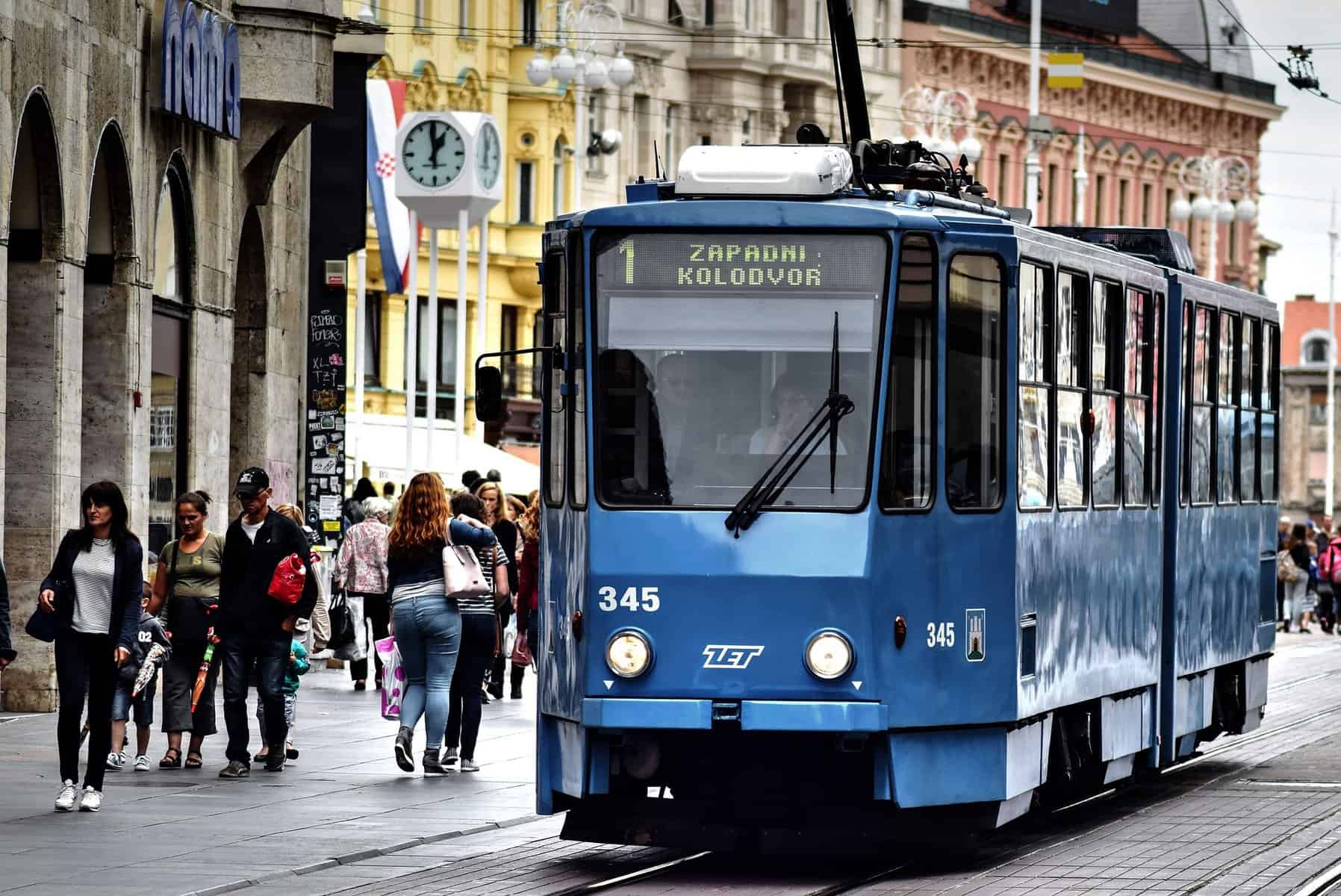
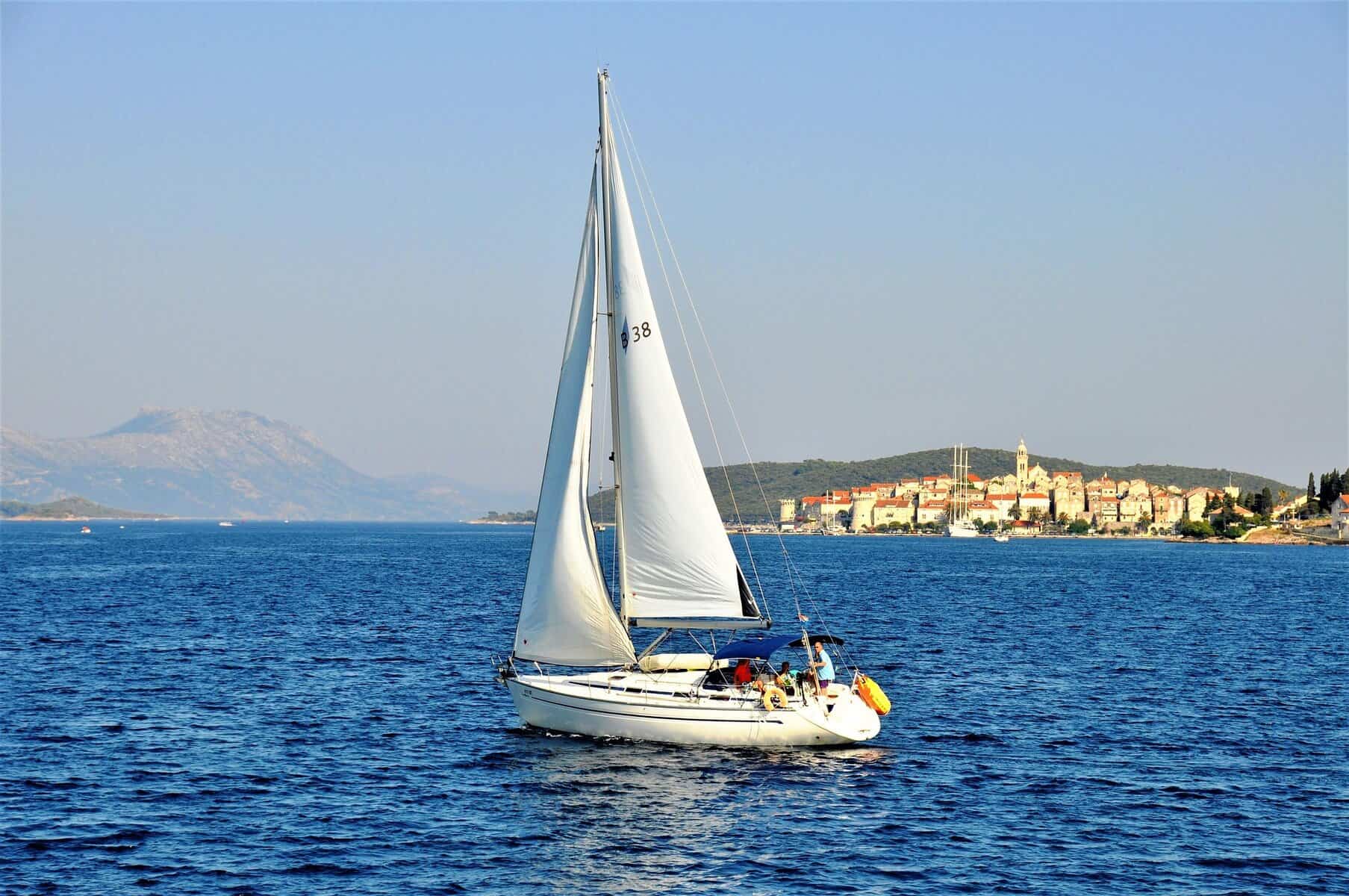


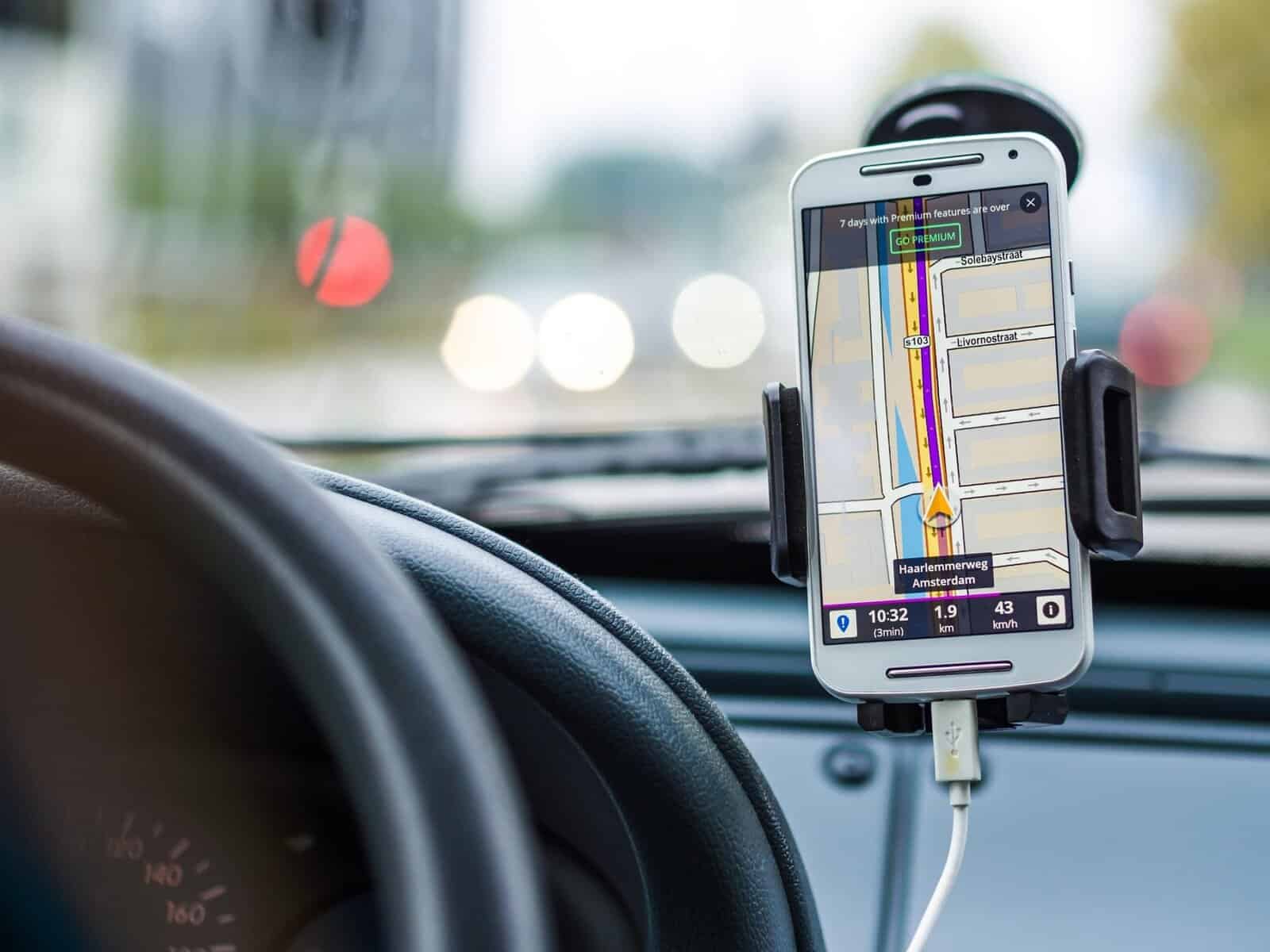
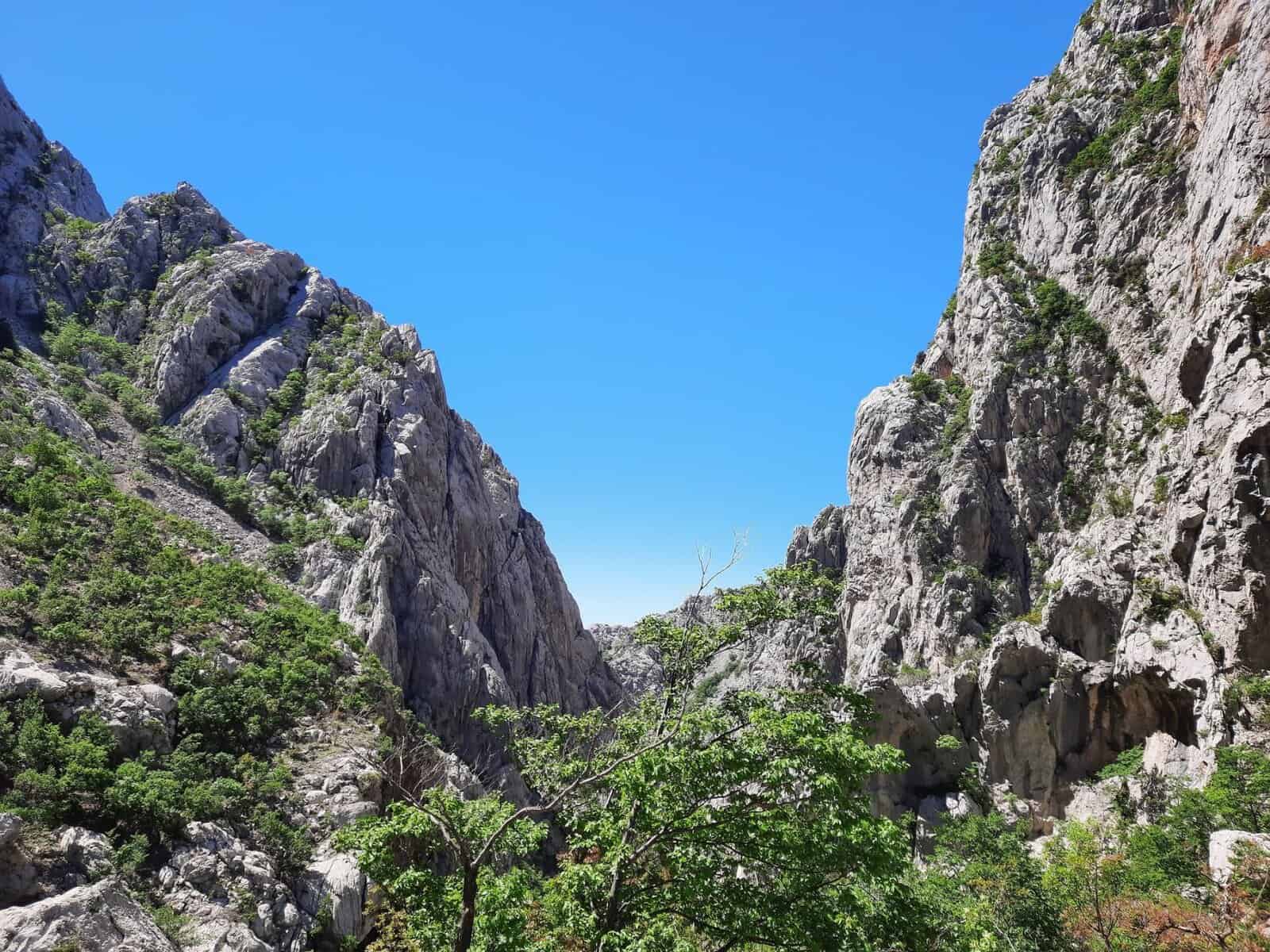
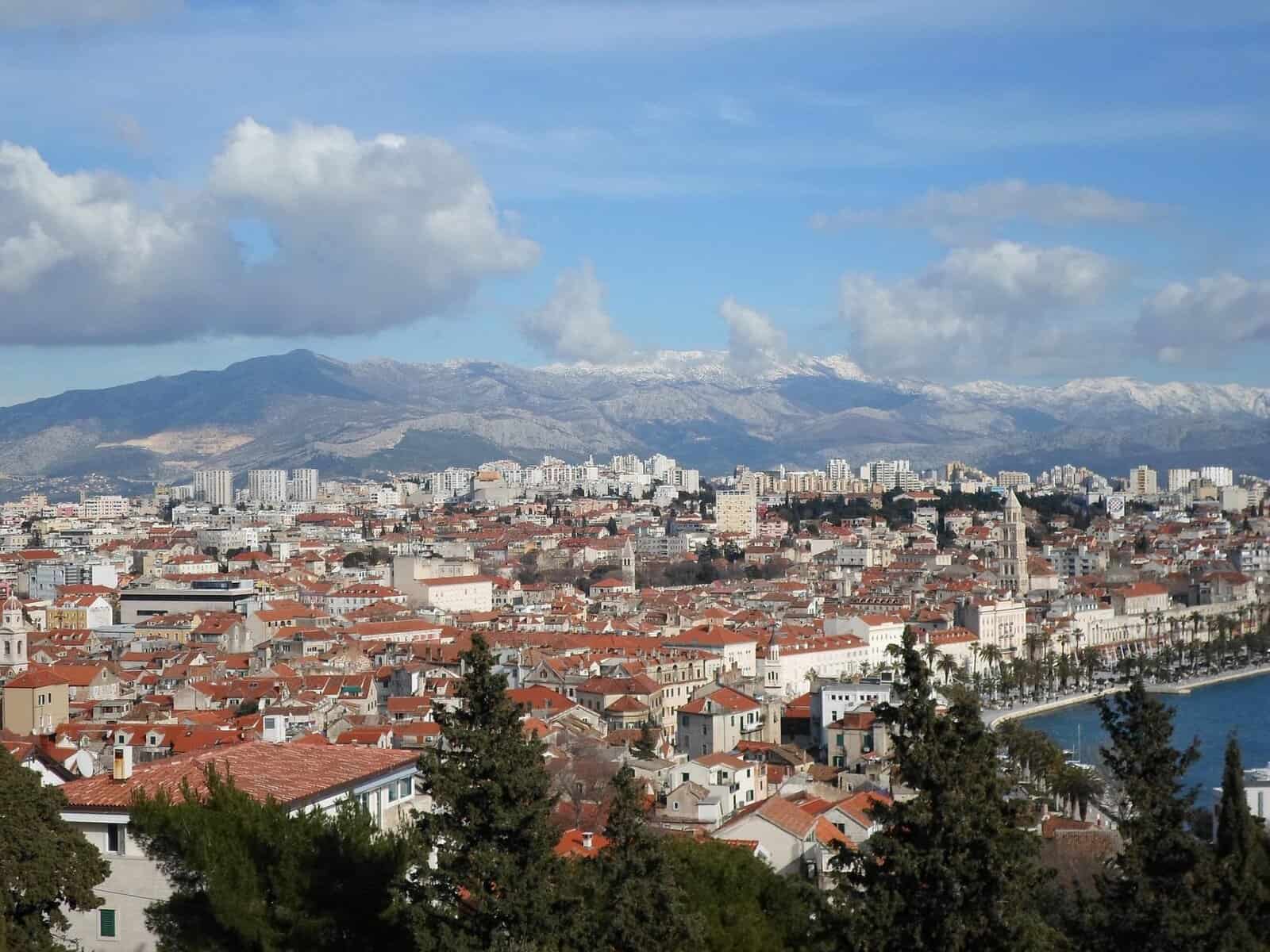
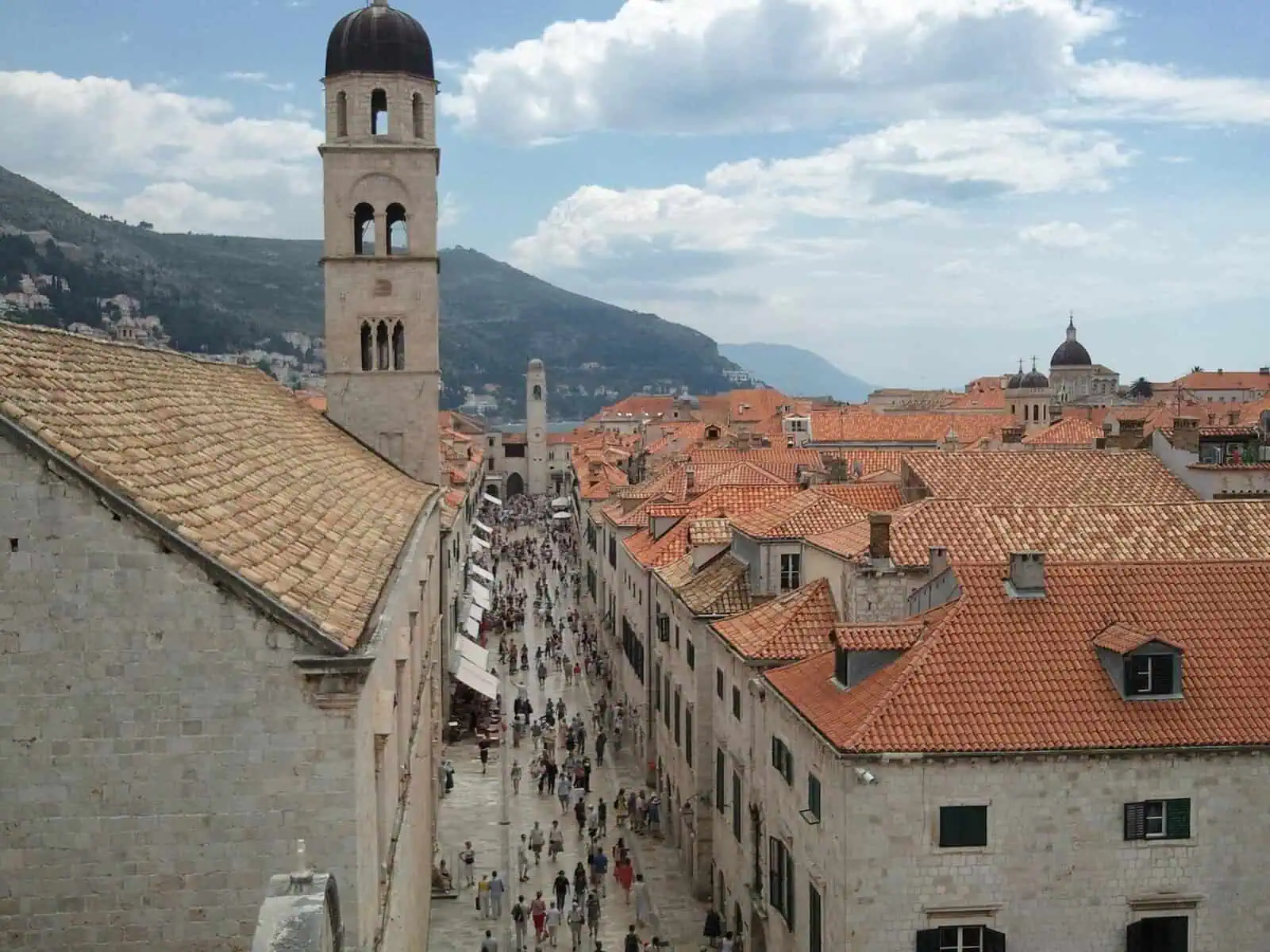
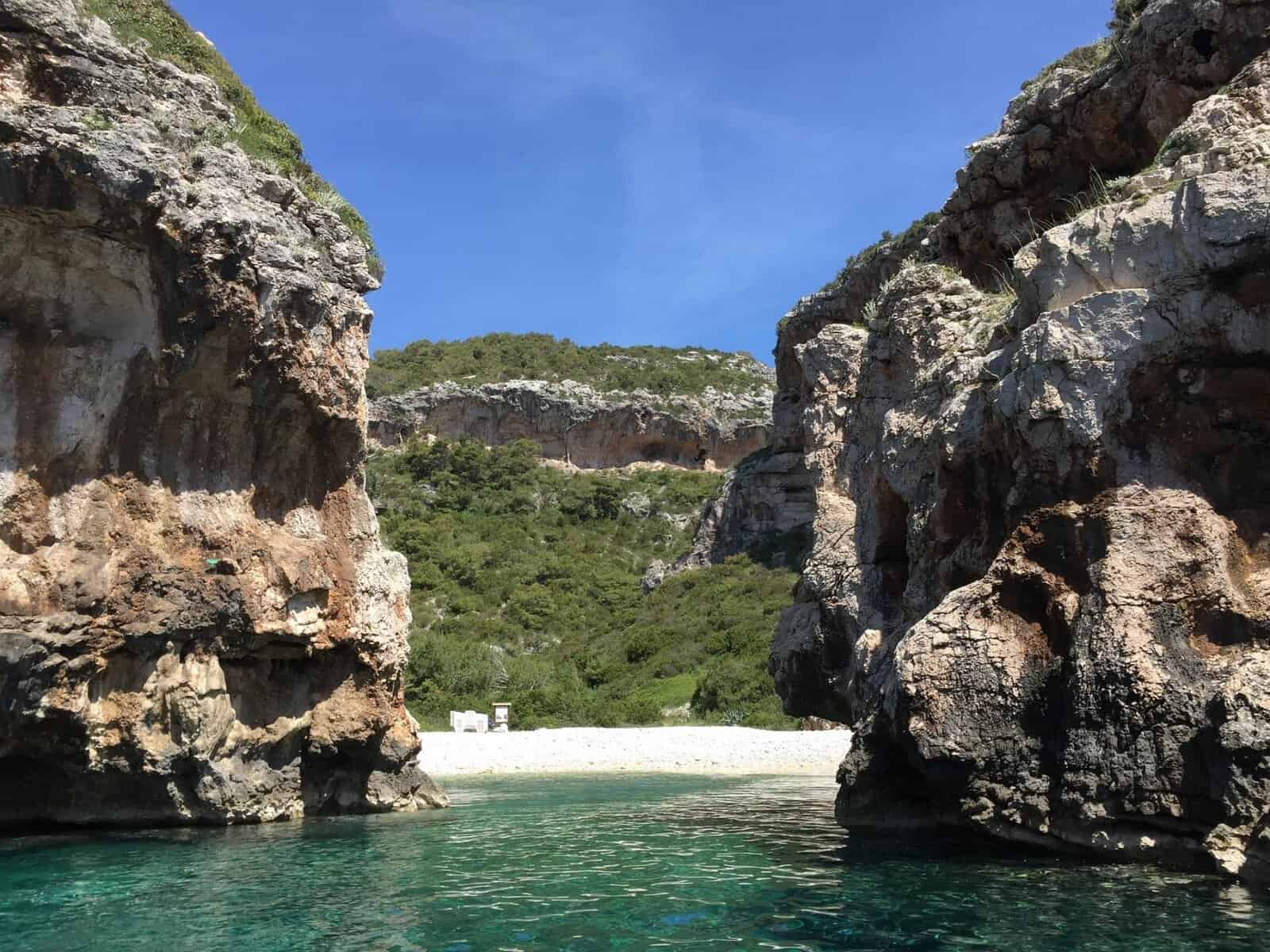
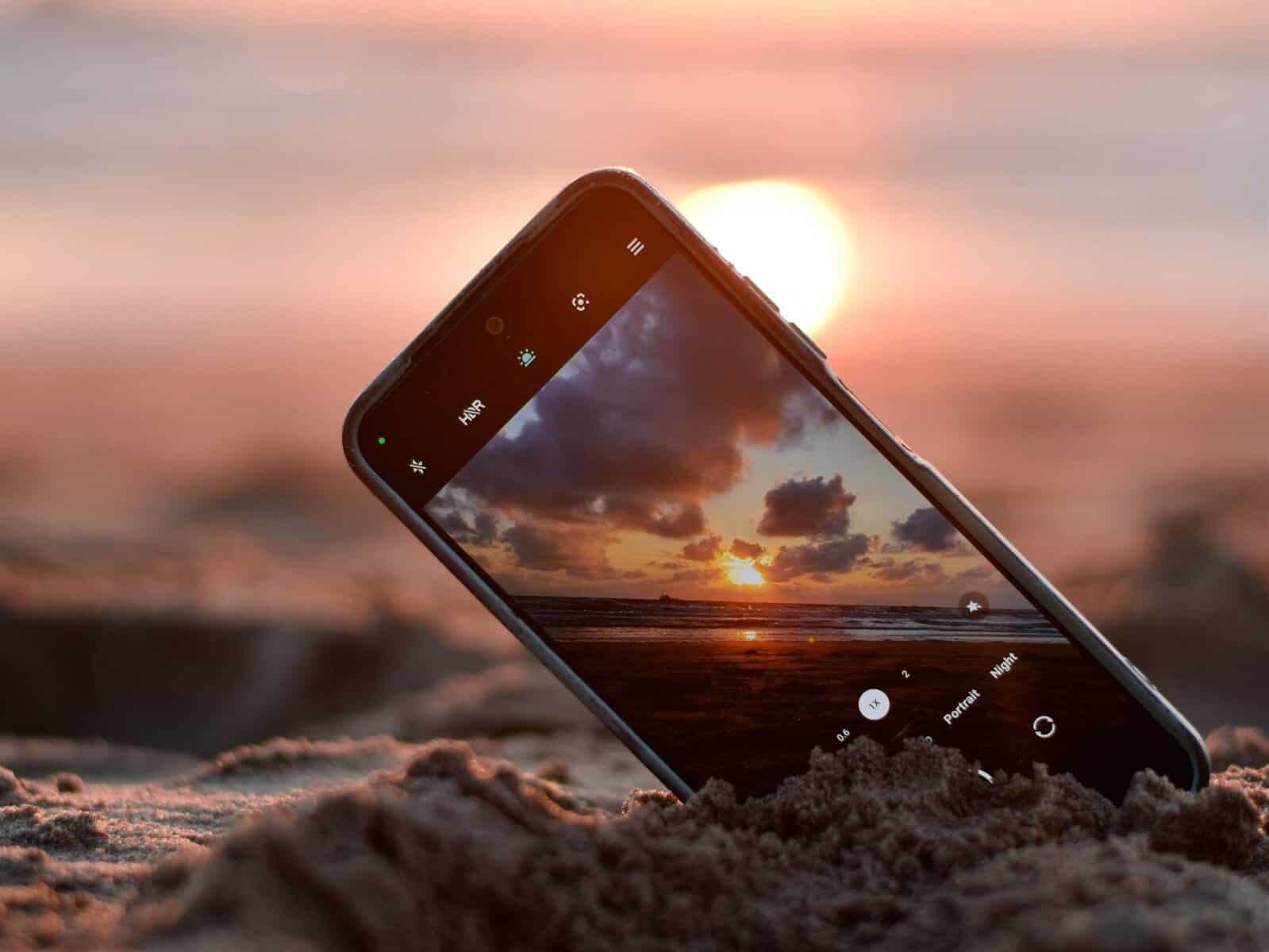





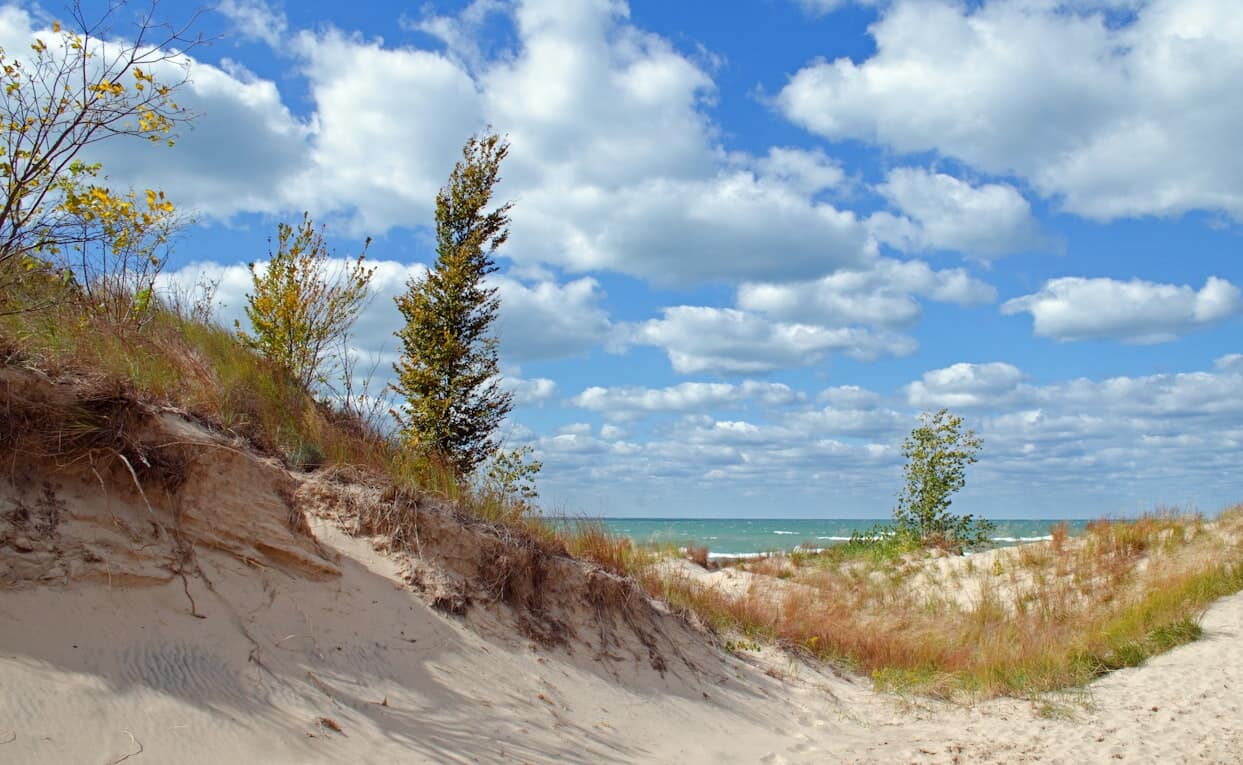
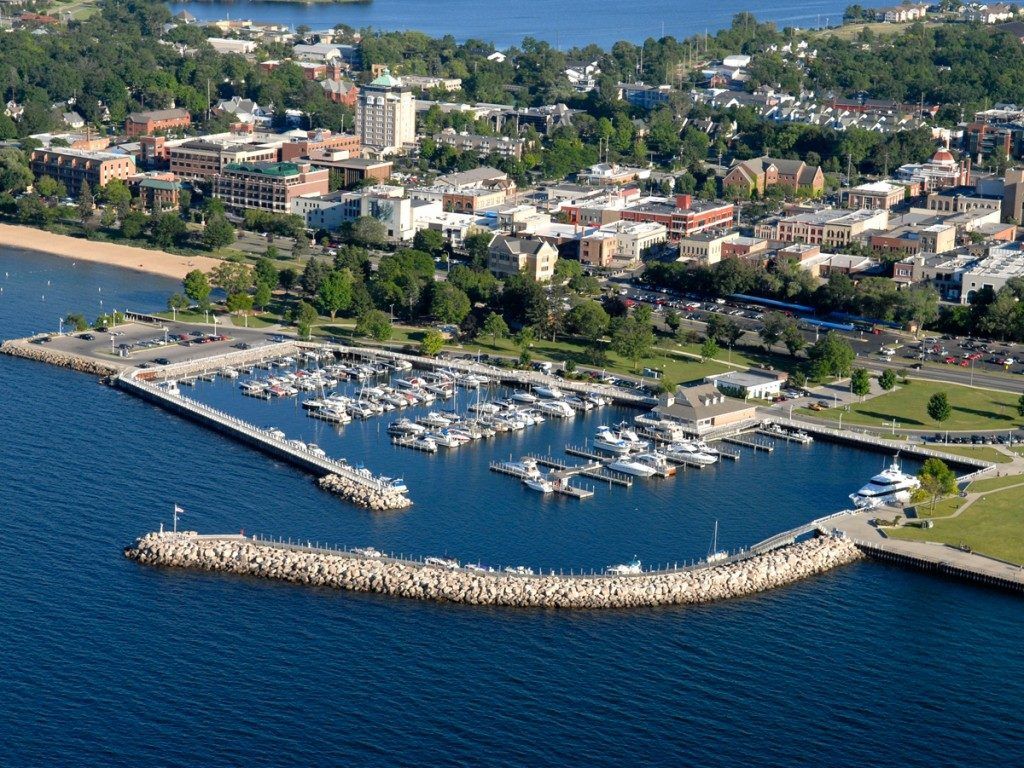
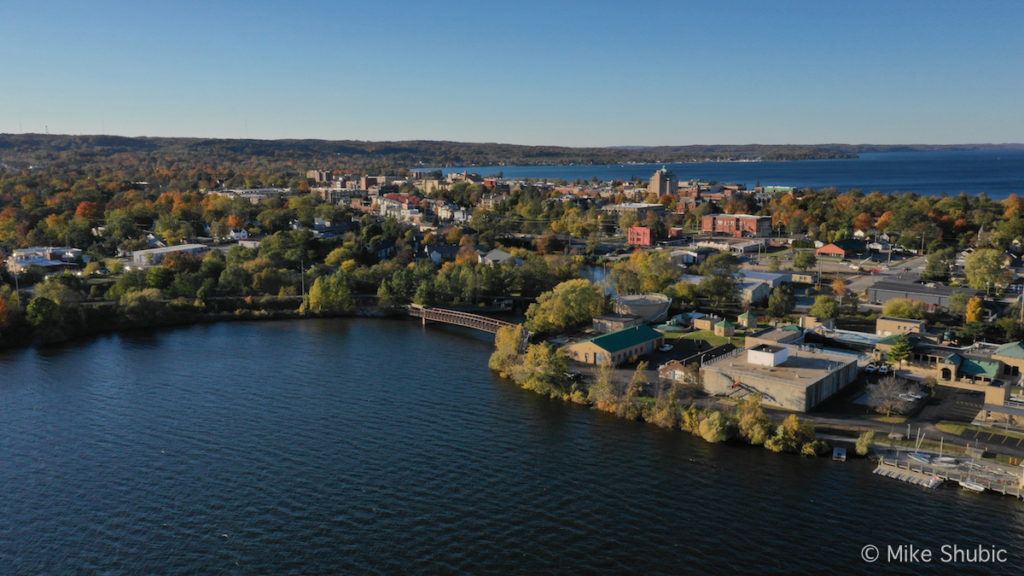




:max_bytes(150000):strip_icc()/TAL-header-alltrails-hiking-olympic-national-park-OUTDOORLENS0925-3bf52da0cfe949cd924998ffe9dafcbc.jpg "AllTrails Has a New Interactive Hiking Tool That Helps You Avoid Hazards—What to Know")
:max_bytes(150000):strip_icc():format(jpeg)/TAL-header-alltrails-hiking-olympic-national-park-OUTDOORLENS0925-3bf52da0cfe949cd924998ffe9dafcbc.jpg)