The ministry of investment, trade and industry (MITI) is keeping to the target of 10,000 EV chargers in Malaysia by 2025, MITI minister Tengku Datuk Seri Zafrul Abdul Aziz has said at today’s Parliament sitting, in response to a question by Tampin MP Mohd Isam Mohd Isa.
The target was originally outlined in 2021 under the Low Carbon Mobility Blueprint (LCMB) 2021-2030.
Zafrul added that as of September 31, there are 813 DC and 2,358 AC chargers in Malaysia. The targets are 1,500 DC and 8,500 AC chargers by end-2025, covering all states. He also said that based on current BEV registrations, the current ratio is nine EVs to one charger in Malaysia.
In order to address the imbalance of charging locations between urban and rural areas, the government has held discussions with local authorities to communicate the importance of the EV market and the need for public charging. It is also in discussions with highway concessionaires, hypermarkets and associations of shopping malls and hotels for the same purpose.
Zafrul also revealed that 4,984 Malaysia Electric Motorcycle Use Promotion Scheme (MARiiCAS) applications have been approved. You can skip to the 1:13:40 mark in the video below.
A total of 32,974 individuals have qualified and have taken part in the MyLesen programme as of September 14, 2024, reported New Straits Times. Of the total, 1,730 individuals have completed the programme, said transport minister Anthony Loke.
The remaining 31,244 individuals are currently in the training and testing phase, which runs from July to November of this year, Loke said.
The MyLesen programme was introduced at a national level in May 2023 to aid persons from the B40 income group in obtaining a B2 motorcycle license for motorcycles below 250 cc of engine capacity, as part of the transport ministry’s initiatives as outlined in the 2023 Budget.
In addition to B2 motorcycle licenses, the MyLesen programme also provided for the acquiring of public service vehicle (PSV) and goods driving licenses (GDL) for lorries. This programme was formed to enhance the social-economic status and household income by enabling individuals to secure job opportunities, according to NST.
A movie about the life of Bugatti founder Ettore Bugatti is in the works, Deadline reported on Monday, citing comments by producer Andrea Iervolino.
The movie is being developed by Iervolino’s new production company, The Andrea Iervolino Company, alongside a movie about the founding of Maserati and starring Anthony Hopkins. The Oscar award winner will play a financier who backs the Maserati brothers in their endeavor to start a car company.
Iervolino has experience with movies about car legends. He was a producer of recent movies about Ferrari founder Enzo Ferrari and Lamborghini founder Ferrucio Lamborghini, 2023’s “Ferrari” starring Adam Driver and 2022’s “Lamborghini: The Man Behind the Legend” starring Frank Grillo, respectively.
“After the success of our films on Lamborghini and Ferrari, I am thrilled to bring another global automotive icon to the screen,” he told Deadline. “Bugatti will be a film that honors the passion and innovation that have defined one of the most iconic car manufacturers of all time.”
Ettore Bugatti – Photo via Bugatti
According to Deadline, filming of the Bugatti movie is due to start next year at locations in France and Italy.
Ettore Bugatti was born in 1881 in Milan, Italy, and would later spend time in Germany and France. From an early age, he had a penchant for engineering. This talent didn’t go unnoticed by his father, Carlo Bugatti, who persuaded his son to take up an apprenticeship at a factory of Prinetti and Stucchi at the age of 16.
He would later work for companies like De Dietrich and Deutz before founding Bugatti in 1909. He endured plenty of tragedies throughout his life, including living through both the First and Second World Wars, and losing his son Jean in a car accident in 1939. He eventually died in 1947, after suffering for months from mental health issues.
A release date for the movie hasn’t been announced.
The Lamborghini Revuelto only started deliveries late last year but has already received its first recall notice.
Lamborghini has issued a recall of the V-12 plug-in hybrid supercar because the windshield wiper on the passenger side could fail, which in some situations may cause a loss of visibility, and thus increase the risk of a crash.
The recall covers certain Revueltos from the 2024 model year, of which 455 are in the U.S.
According to the recall notice published by the NHTSA on Oct. 15 (recall campaign number 24V765000), the issue deals with a rod connecting the wiper arm and wiper motor potentially bending and coming detached from the wiper motor.
The remedy involves the installation of of a new rod for the passenger side windshield wiper, a service dealers will perform free of charge.
Lamborghini said it identified six warranty claims related to the issue worldwide, but isn’t aware of any crashes or injuries that may be the result of the issue.
Notification letters for owners of the affected vehicles are expected to be mailed out on Dec. 8, but anyone looking for further information can contact Lamborghini at 1-866-681-6276 or visit Lamborghini’s recall page.
The Revuelto made its debut in early 2023, and while it may appear similar to its Aventador predecessor, it represents a ground-up redesign that in addition to electrification includes a new carbon-fiber tub, a new 8-speed dual-clutch automatic transmission, and a newly developed V-12. The V-12 is a 6.5-liter unit that works with a trio of electric motors to generate a combined 1,000 hp. Two of the electric motors are at the front axle and work independently, and the third is integrated with the rear-mounted transmission. Lamborghini quotes performance numbers of 2.5 seconds in the 0-62 mph run and a top speed of 218 mph.
McLaren in October revealed a successor to its P1 hypercar in the form of the W1.
The new hypercar is similar to the P1 in that it features a plug-in hybrid powertrain built around a twin-turbocharged V-8 engine, but in other areas it is completely different, especially when it comes to chassis design.
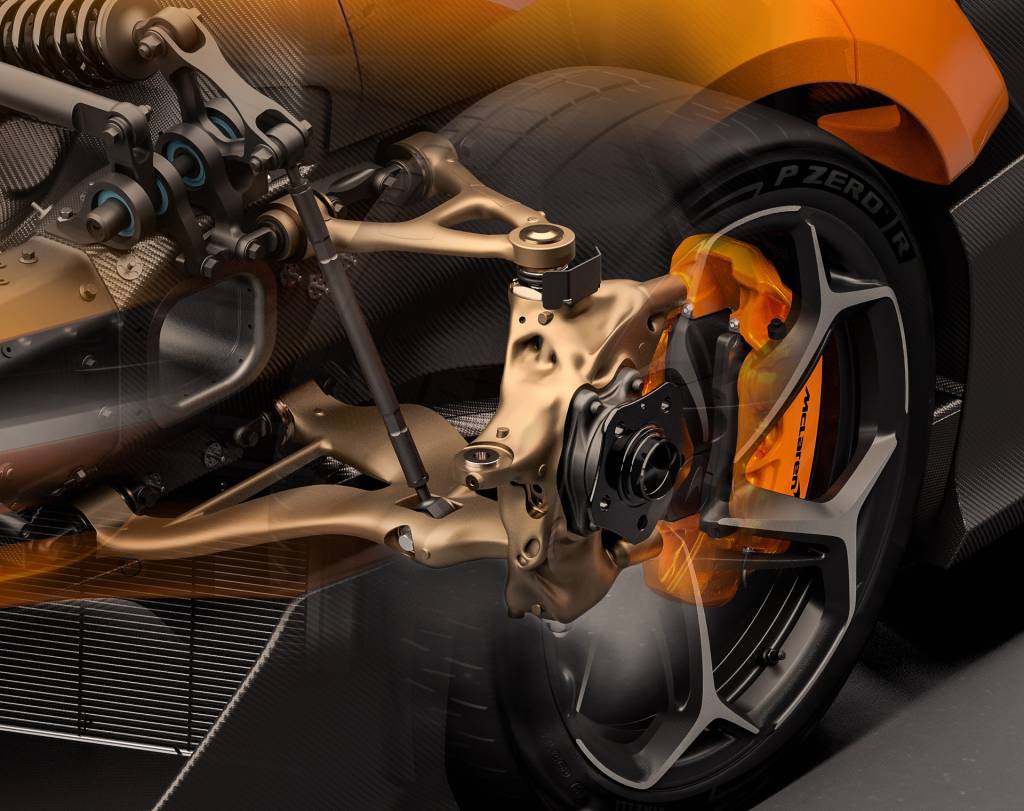
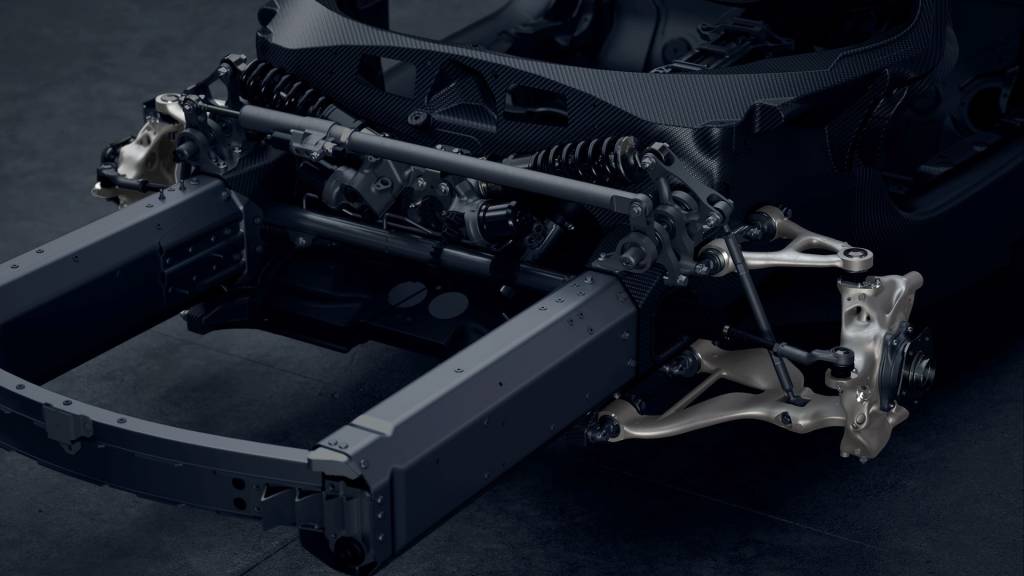
One area where the W1 stands out is the use of 3D printing to manufacture lightweight but strong suspension parts. The list includes the front upper wishbones, the aerodynamically shaped lower wishbones, and the front uprights.
To develop the parts, McLaren teamed up with America’s Divergent Technologies, a company that specializes in 3D printing of complex parts, including for sectors outside of automotive. Divergent’s founder, Kevin Czinger, also founded the hypercar brand Czinger, which is developing cars that use 3D-printed parts throughout.
McLaren W1 suspension
The 3D printing process involves metal in powder form being deposited layer by layer and fused into place using lasers. Completed parts then head to a heat treatment furnace to bake and eliminate residual stress. Specialized software is used to design the parts with the bare minimum of material, which results in the somewhat organic shapes the parts sometimes take.
On the W1, the front suspension parts, which also include pushrods with inboard dampers, torsion bars, and heave dampers, are mounted directly to the car’s central carbon-fiber tub, eliminating the need for a front subframe. This helps to save further weight while enabling the optimization of air flow under the car.
McLaren W1 suspension
McLaren and Czinger aren’t the only manufacturer sin the hypercar space using 3D printing for suspension parts. Ferrari also uses 3D printing for suspension parts for its rival F80 hypercar. Bugatti has also been using 3D printing for its hypercars for years, including for suspension parts on the latest Tourbillon hypercar.
The W1 is scheduled to start deliveries in 2026. Pricing starts at $2.1 million but all of the 399 examples destined to built have already been claimed, according to McLaren.
Redesigned 2025 Audi S5 replaces both Audi S4 sedan and S5 Sportback
S5 gets sharper handling
S5 interior offers up to three screens
On the tight roads of the Provence Alps region of southern France, there are Citroens to the left of me, rock walls to the right, and I’m stuck in the middle in the2025 Audi S5.
There are worse places to be stuck. The new S5’s sharp steering and controlled handling make it a great companion to deal with the wannabe Tour de France bicyclists who appear suddenly as I round corners and the French drivers who are often uninterested in minding the center line. With its 2025 redesign, the S5 takes a leap forward as a gas-powered grand tourer, and the roads outside Nice are a great place for a grand tour.
The S5 is the sportier, more powerful version of the new A5, and this redesign marks a new era for the duo. Both are part of a shift in naming strategy in which gas-powered models use odd numbers in their names and electric models use even numbers. The A5 and S5 employ a hatchback body style with the shape of a sedan, so they replace both theA4/S4 sedanand theA5/S5 Sportbackhatchback. AnS5 Avant wagonis offered in Europe, but we won’t get it because we can’t have all the nice things.
The new A5 and S5 both arrive as part of a new product onslaught that will include several gas vehicles redesigned around the new Premium Platform Combustion (PPC) architecture. At the same time, Audi has introduced a new Premium Platform Electric architecture for a series of new EVs. All told, Audi will introduce20 new or significantly updated global vehiclesin the next two years.
Audi S5: New platform, new design
The 2025 Audi A5/S5 is larger than the cars it replaces. At 190.1 inches long, it’s 2.9 inches longer than the outgoing A5/S5 Sportback on a wheelbase that grows 2.9 inches to 114.1 inches. It’s also 2.9 inches taller at 56.9 inches and 0.6 inch wider at 73.2 inches. The larger size adds up to 375 more pounds based on the European curb weight of 4,300 pounds.
With the new platform comes a new design that seems wider and more planted, thanks mostly to pronounced rear wheel haunches that make the S5 look like it’s ready to pounce. The nose gets a revised version of the Audi single-frame trapezoidal grille with a honeycomb texture. It’s flanked by squinting headlights and lower air intakes with black surrounds. The biggest change is in the profile where the S5 straddles the three-box shape of the S4 sedan and the pure fastback shape of the outgoing S5 Sportback. The S5 resolves with an integrated rear spoiler, a full-width taillight panel, and quad exhaust outlets. The A5 has a slippery coefficient of drag of just 0.25, down from 0.29, and the S5 is in the same ballpark.
The S5 is also available with advanced lighting technology, withLED matrix headlightsup front and digital OLED rear lights, each with 60 segments, that can be configured in eight patterns, though not on the fly. It retains traditional Audi cues while taking a decidedly different and muscular direction.
Audi S5: Refined dynamics
Audi engineers put a lot of effort into tuning the A5/S5 for improved handling and more immediate responses. ThePPC platformhas 10% more torsional rigidity than the outgoing MLB platform, and the negative camber of the front tires increases 10%. Audi stiffened the steering connection by mounting it directly to the body and giving it a stiffer torsion bar. The engineers also used a stiffer axle design, and stiffened the axle bearings, front and rear stabilizer bars, suspension mounts on the front axle, tie rods, and subframe bushings. The dampers are firmer as well, and have a greater delta between the adjustable dampers’ Comfort and Dynamic modes. Finally, Audi moved the roll center more toward the rear with tuning of the stabilizer bars (stiffer bars out back will do that).
The S5 uses a sport suspension that sits 0.8 inch lower than the standard A5, and it also pairs the standard steel springs with adjustable dampers. Audi makes 19-inch wheels standard on the S5, but my tester has a square set of 245/35R20 Goodyear Eagle F1 Supersport summer tires.
From behind the flat-top and -bottom steering wheel, the changes combine to move the S5 a step forward in handling and refinement. It has variable-ratio steering that quickens at low speeds and slows for stability at higher speeds. Light and direct, the steering helps me put the car in tight spots without the unpredictability that can sometimes accompany a change of ratios on the fly. It also provides more road feel than is typical for an Audi, though I’d still like more.
The sport suspension strikes a great balance of handling and ride quality. The S5 irons out the bumps, even in the suspension’s sportiest Dynamic setting, and yet the car reacts quickly on turn-in, takes an immediate set, and carves stable lines through the twisty roads of the Provence Alps. It appears the stiffer structure and mounting points allowed Audi to go with firmer suspension settings without hurting ride quality.
Audi’sQuattro all-wheel-drive systemand the S5’s standard electronic limited-slip rear differential also aid handling. The AWD system can send all of the power to the front or rear, but in these corners it has a rear bias for more of the playful character of a rear-drive car. The rear differential apportions torque to the outside wheel to help the car rotate more willingly—also aided by brake torque vectoring. It also manages torque on the whole rear axle for best traction when exiting the corners, which lets the car accelerate more quickly on corner exit.
The Goodyears have more than enough grip for this type of mountain road driving, but a set of Michelin Pilot Sport S 5’s would likely be even grippier.
The S5 is quiet, too, despite the open area where there used to be a trunk in the S4. I don’t detect road noise coming from the rear wheels, though that could change on coarse American roads.
Overall, the S5 boasts a sporty, pleasant driving character that is getting lost more and more these days as low-set cars give way to taller crossovers and SUVs.
2025 Audi S5
Audi S5: Power equilibrium
Ready power doesn’t hurt, either. Under the hood, the S5 retains a turbocharged 3.0-liter V-6 that spins up 362 hp and 406 lb-ft of torque. That’s a jump of 13 hp and 37 lb-ft overthe outgoing modelthanks to an optimized combustion process and a new turbocharger with variable turbine geometry. While it’s one of the few ways the S5 has moved forward only nominally, it didn’t need to take a big leap.
I’m piloting a Euro-spec model that has moved further forward. The engine is the same, but it also uses a 48-volt mild-hybrid system that adds 24 hp during acceleration and can power the vehicle alone when driving at city or parking lot speeds. It can also add torque fill between shifts of the generally responsive and well-behaved7-speed dual-clutch automatic transmission.
In U.S. spec, which won’t have the mild-hybrid system, Audi quotes a 0-60 mph time of 4.6 seconds. The additional power of the mild-hybrid system makes it slightly quicker at 4.5 seconds in the 0-62 mph run. The difference is likely quicker throttle response from a start and slightly more punch in the midrange. Either way, the turbo V-6 provides plenty of punch for any need and emits a throaty growl while doing so.
Audi does a fine job of blending the 48-volt mild-hybrid’s brake regeneration with the S5’s mechanical brakes to create a natural pedal feel. The S5 uses 14.2-inch front rotors and 13.8-inch rear rotors, all with single-piston floating calipers. That proves enough to handle some hard driving on these mountain roads, but I wouldn’t chance it on a racetrack.
Audi S5: Bigger, more tech-laden cockpit
Audi completely redesigned the cockpit as well, making it larger for passengers and offering the latest in connectivity. The dash now sports up to three screens. An 11.9-inch digital instrument cluster and a 14.5-inch center touchscreen form a standard bank of screens, and the latter is canted toward the driver to put it within easy reach. A 10.9-inch touchscreen for the front passenger is optional, and it lets riders control the entertainment and navigation functions, and also watch videos that can’t be seen by the driver.
The S5 runs the latest version of Audi’s infotainment software that can control vehicle, navigation, and entertainment functions. It isaided by ChatGPTand will only use this AI feature when the native system can’t handle the request. The center screen is configurable as users can drag apps to their desired spots. AvailableBang & Olufsen headrest speakerscan create a sound zone for the driver to listen to navigation directions without disrupting the audio for other passengers.
2025 Audi S5
Also new are touchpads on the doors to handle the mirrors, seat memory controls, front and rear fog lights, and door locks. At first blush, they seem like touchpad overkill, but they work almost the same as most door controls.
The redesign gives the S5 more space for occupants and cargo. Occupants are treated to standard leather upholstery and front-seat riders get sport seats with heating, cooling, and a massage function. Back seat occupants enjoy an extra inch of legroom. I found good space to sit behind myself with my 5-foot-9 frame, but anyone 6-foot or over will start to have problems with rear legroom and headroom.
2025 Audi S5
Though it looks like a sedan, it’s a hatchback with 24.5 cubic feet of cargo space behind the rear seat, and that expands to 45.9 cubes when the 60:40 rear seat is folded flat. That makes this low-set car almost as practical as the typical compact crossover SUV.
Occupants are also surrounded by soft-touch materials befitting a high-end cabin, though perhaps without quite as much design flair as Audis past. My Ascari Blue S5 has black and steel gray nappa leather upholstery with contrast stitching on the seats, armrests, dash, and center console. The cabin also sports synthetic suede on the dash below the screens, piano black trim on the center console, and small bits of carbon-fiber trim along the sides of the center console. It lacks some of the contrasting aluminum of previous versions, but it comes off as tech-rich and high-end.
2025 Audi S5
Pricing and a complete equipment list haven’t been announced for the 2025 Audi S5 and they likely won’t be until shortly before ithits U.S. dealers early next summer. With its move forward as a sporty, pleasant, and practical hatchback, expect it to top the $56,195 starting price of the current S4 sedan and the $58,595 of the S5 Sportback and coupe. Don’t look for the coupe or convertible body styles to return, though, as this more practical body style will serve the most U.S. buyers.
Do expect more equipment, though. Audi says the A5 and S5 will come standard with leather upholstery, navigation, a panoramic glass roof, a power-opening hatch, and a wireless phone charging pad. Options will include the Bang & Olufsen sound system with headrest speakers, a power-adjustable steering column, and the 10.9-inch front passenger display.
2025 Audi S5
Standard safety features in other markets will include parking sensors, lane-departure warnings, and a driver-attention monitor, but expect more features in the U.S., including automatic emergency braking, front cross-traffic assist, adaptive cruise control, and a basic rear-seat reminder system that works if the rear doors have been open. Audi will also offer a more advanced rear-seat reminder system that’s sensor-based, as well as Adaptive Cruise Control+ that monitors the vehicle surroundings, uses map data and swarm data from the cloud, and has traffic sign recognition to let drivers drive hands-free for short intervals.
Those who do buy the new S5 won’t feel stuck at all. They’ll get a quick, sporty, and smooth riding car that has good space for four people and their stuff. Audi may be embarking on an ambitious move toward EVs, but the 2025 S5 moves the brand’s gas offerings forward as well.
Audi paid for travel and lodging for Motor Authority to bring you this firsthand report.
The power boost in the new Audi S5 Avant, with 270 kW / 367 PS, may seem modest at first glance. However, thanks to the electrification through a mild-hybrid system, the performance estate now consumes less fuel and delivers better acceleration.
The new Audi RS6 looks impressive with its broad shoulders and muscular build. A glance at the rear… Wait, hold on. It’s actually the new Audi S5 Avant, not the RS6! How so? Why? Let’s start with the naming convention: from now on, electric vehicles carry even numbers in their model designations, while combustion engine models carry odd numbers. In this way, the A5 is now also the new A4, positioned above the former bread-and-butter model. Essentially, two models merged into one. Moreover, Audi is looking to shift into attack mode once again. They have lingered too long in the shadow of their Munich rival, so the Ingolstadt brand aims to project more confidence in their designs, as demonstrated by the current top model, the S5 Avant. It fits the bill, and we’re curious about how the RS5 Avant will look. Hopefully, Audi doesn’t go overboard with its bold styling.
But we’ll know once the RS5 Avant enters the market. For now, let’s focus on this powerful estate. Under the hood, the 3.0-litre V6 TFSI engine delivers 270 kW / 367 PS and a maximum torque of 550 Nm, which isn’t a bad start. To fulfil our duty as chroniclers: compared to the current petrol-powered S model in the A5 lineup, this is an increase of 10 kW / 13 PS. Not an explosion of power, but still an improvement. Let’s dive into the technology.
The Audi S5 Avant is no longer based on the Modular Longitudinal Platform (MLB evo) but rather the new Premium Platform Combustion (PPC). Despite all the hype around electric mobility, there’s still a platform dedicated to combustion engines. Of course, it doesn’t come without some electrification. The 3.0-litre six-cylinder engine, like other Audi powertrains, employs the new 48-volt mild-hybrid system (mhev plus). In this configuration, the belt-starter generator (BSG) is supplemented by a driveline generator (DLG) mounted on the transmission output shaft, contributing up to 18 kW / 24 PS and 230 Nm of torque.
Equally important is the maximum recuperation capacity of 25 kW, which can bring the vehicle to a complete stop if necessary. The DLG disengages at speeds above 140 km/h. For this complex system to work, a battery capable of rapidly storing and releasing energy is necessary. The 48V lithium iron phosphate battery has a capacity of 1.8 kWh, allowing for short electric drives. Aside from improving drivability, this E-module reduces fuel consumption by up to 0.74 l/100 km for petrol engines. Audi claims that the new S5 Avant achieves a consumption of 7.6 litres per 100 km.
What matters most, though, is how the S5 drives. After all, no one buys a 367 PS estate costing at least €80,150 to simply achieve its official consumption figures. Sometimes, it’s all about having fun. And the S5 delivers—easily and without much fuss. It’s a gentleman’s athlete, quick on its feet without breaking a sweat, and it won’t cause its driver to perspire either. You don’t need to be a driving expert to enjoy the 1,965-kilogram estate at speed. The steering, noticeably more communicative than in previous models bearing the four rings, plays a big part in this.
Thanks to the sport suspension, which sits 20 millimetres above the ground, the standard sport differential combined with torque vectoring via brake interventions reacts faster due to the brake-by-wire technology, giving the 4.83-metre sports estate the best handling for zipping through corners. Improvements in the chassis, such as optimised control arm bearings and increased front axle camber, further enhance the agility when cornering. Generally, the S5 Avant remains neutral and easy to handle in corners. Only when pushed too far do the all-wheel drive and engineering magic reach their limits, causing the S5 Avant to drift towards the edge of the road. Even then, it doesn’t come as a surprise and doesn’t catch the driver off guard.
Inside, the new Audi interior features curved screens. The driver faces an 11.9-inch digital cockpit with virtual instruments, while a 14.5-inch touchscreen serves as the infotainment command centre. This is complemented by a head-up display that’s 85% larger than before, making the floating navigation arrows easier to see. The voice assistant, activated via a steering wheel button or by saying “Hey Audi,” is a notable feature. If the onboard system doesn’t have the answer, it seamlessly brings in ChatGPT to assist. All this is well and good, but the Audi S5 Avant’s core strength remains its agility.
If you’re looking for a deeper connection to nature, you need to visit the world’s most remote and stunning locations.
The answer: learning how to start overlanding. This extended vacation requires considerable planning and packing, so your preparation is well worth the time and effort.
Here’s our guide on how to start overlanding.
Here’s an overview:
What Is Overlanding?
First, it’s essential to distinguish overlanding from other outdoor adventures. This activity entails driving in remote locations and relying on yourself for survival.
Overlanding encourages taking the roads less traveled and making your way within national parks and other recreational areas.
What is the history of overlanding? The remote travel method became more prominent as car usage spread, considering people wanted to drive and explore.
In the 20th century, overlanding became necessary in countries like Australia. The Outback may take you 1,000 miles away from human habitations, so you must rely on yourself to make these trips.
Cotopaxi National Park
How to Plan an Overlanding Trip
Overlanding can change your life and provide new perspectives. However, it requires preparation to ensure your safety and enjoyment.
Here are seven tips on how to start your next overlanding adventure.
1. Determine the destination
First, you should determine your destination. The world offers plenty of beautiful and remote locations, so choose wisely based on your preferences and budget.
The most accessible options might be within your country, considering you won’t need a passport or visa. If you choose international travel, check your passport expiration date and start any application processes early.
Common overlanding destinations include deserts and mountains because you can find consistent solitude. You may encounter the occasional traveler, but you’ll often be alone.
Outdoor enthusiasts gravitate toward national parks because of their lenient overlanding policies. However, it’s best to check the rules of any location.
Preparation is critical for overlanding because you rely on yourself for survival. While adapting to your destination is crucial, you can help your crew with research.
For instance, what is the regional climate? If you go overlanding in a desert, you might be surprised to feel the temperature dips at night.
Therefore, you must bring warm and cold weather clothes to stay comfortable throughout the trip. Your research should also include what documentation you need, especially if you cross borders.
International overlanding means you’ll find people from other cultures. Learn the customs and social norms to fit in as much as possible.
3. Pack your overlanding gear
The most important part of overlanding might be the gear you bring. You’ll need enough supplies to last your trip, whether for two weeks in the mountains or a month in the desert.
Your packing list starts with camping gear. Overlanding involves living in your vehicle, so pack tents and sleeping bags to rest under the stars.
While you might not be around people, you must maintain good hygiene. Experts recommend bathing two or three times weekly. Consider bringing portable showers, and remember your toothbrushes.
Make room on your packing list for an emergency kit because you’ll be far from the nearest healthcare facilities. This first-aid pack should include personal protective equipment (PPE), over-the-counter medications, bandages and other necessary supplies.
4. Bring backup options
Some people minimize their technology while overlanding to maximize their outdoor connection. However, others have it by their side to make the trip easier.
Regardless, it would help to have backup options in case your phone loses signal. Relying on technology might not be wise in the most rural areas.
For example, you should obtain paper maps of the terrain you explore. Get the most updated version to account for new roads and trails.
Additionally, prioritize basic navigational tools like compasses. With these gadgets, you have a better chance of finding your way out if you get lost.
Gobi Desert
5. Consider your nutritional needs
When overlanding, you probably won’t find fast-food restaurants or fine-dining establishments. You’re on your own to provide your breakfast, lunch and dinner.
Your first option is to bring non-perishable food from home. Pack bags full of nuts, nut butter, dried fruit, jerky and canned food to satisfy your nutritional needs.
If you want to prepare food, bring a camp stove or similar tools. Modern devices have become more portable through battery and solar power.
Prepackaged food will help you survive, although you can often hunt and forage for your meals. Fishing could be suitable if your trip is near bodies of water.
6. Drive overland vehicles
Next, you should consider what vehicles you can bring on your overlanding journey. Your shortlist should include off-road-ready vehicles like trucks, SUVs and crossovers.
Overland enjoyers use Toyota 4Runners, Ford Rangers, Chevrolet Colorados and other models with solid reputations.
Regardless of preference, your vehicle should have high ground clearance to cover rocks and other rugged terrain.
The vehicle also needs a reputation for durability because you won’t be close to service centers. This distance means you should prepare your vehicle before heading out.
7. Ensure vehicle readiness
Your rig is fundamental to overlanding, so it’s necessary to ensure it’s ready for the long trip. This preparation could mean upgrading your vehicle and giving it special attention.
For instance, perhaps your suspension could benefit from a lift kit to protect it from rocks and obstacles. Another upgrade idea is a more powerful battery for your camping amenities.
Before overlanding, consider your vehicle’s payload and towing capacities. Check your owner’s manual to see the needs of your specific model.
If you bring an overlanding trailer, research your vehicle’s tongue weight for better safety. Experts say it should be 10%-15% of the total trailer weight, so use a tongue weight scale to measure it.
What Locations Are Best for Overlanding?
Overlanding can take you to some of the most beautiful places many people don’t get to see. If you’re wondering how to pick an overlanding destination, here are five places to start.
If you’re up for a challenge, head to the Simpson Desert in central Australia. This large, open terrain is for outdoor enthusiasts who want to see the Land Down Under in its purest form.
The Simpson Desert is 176,500 kilometers across three territories and is the country’s largest national park. Water is hard to come by, so bring plenty for hygiene and hydration.
Drive across this massive desert to see tiny towns and their unique cultures. For instance, Coober Pedy is a must-see for overlanders because of its dugout homes.
The drive includes numerous dunes, so regularly clean your vehicle’s undercarriage to remove sand.
2. Cotopaxi National Park
National parks are excellent for overlanding because of their protected areas. Cotopaxi National Park in Ecuador fits the bill for a South American experience.
Cotopaxi National Park has some of the tallest active volcanoes worldwide, offering thrills and dangers. Admission and camping are free, which is great for travelers on a budget.
In addition to volcanoes, there are grasslands and forests with unique wildlife viewing and hiking opportunities. Acclimating to the elevation could be difficult, so give yourself time to adjust.
Before traveling, check the requirements upon entering the country. Ecuador requires a visa for stays over 90 days and an application from specific nations.
3. Gobi Desert
Overlanding in a desert doesn’t always mean hot temperatures. The Gobi Desert’s chilly terrain presents unique opportunities for outdoor enthusiasts.
This extensive terrain covers southern Mongolia and northern China, with plenty of grasslands and dunes to explore.
If you travel to the Gobi Desert, prepare for the harsh winds and dust storms. Don’t be surprised to encounter gusts as powerful as a hurricane.
Much of the Gobi Desert remains untouched, so it’s among the best overlanding destinations for those wanting to disconnect from the regular world.
4. Victoria Falls
Africa is full of natural beauty and numerous overlanding opportunities, but it’s hard to compete with the road to Victoria Falls and its marvelous sites.
This trek requires driving through Zambia or Zimbabwe, as the waterfall marks the border between the two countries. Travel through Zimbabwe and the Zambezi National Park for a once-in-a-lifetime adventure.
This sizable recreational area includes elephants and lions in their natural habitats — creatures you may otherwise only see in zoos.
If this is your first overland trip, consider hiring a professional guide to help you navigate the complex roads, wildlife and border crossings.
Victoria Falls
5. The Grand Canyon
The Grand Canyon is one of America’s most breathtaking sites available to overlanders. Head to the North Rim for a fun challenge with your overlanding vehicles.
The South Rim is where you’ll find most tourists and daytrippers. However, the northern section is more remote, with its primitive campgrounds and demanding trails.
Regardless of the side, there are numerous trailheads and camping spots for your vehicle. Bright Angel, Bridle and the North Kaibab Trail headline this national park.
Around Grand Canyon National Park, you can explore the Parashant National Monument and the Kaibab National Forest. Check out the Tuweep campground for your overnight stays.
How to Start Overlanding in Nature’s Finest Locations
Overlanding is excellent for exploring nature and getting to know your planet. If your next trip is your first time, ensure you have the proper overlanding gear, vehicle and trailer to make it easier.
The overlanding opportunities span each continent, as you’ll find pristine, untouched landscapes for your adventures. While the land is beautiful, you’ll be far from shops and service centers.
Preparation is vital to overlanding, so prioritize research and readiness for yourself and your crew.
Jack Shaw is a writer and world traveler currently serving as the senior Outdoors editor of Modded. He has a great love of travel and dedicates much of his writing to teaching people how to navigate the world safely and effectively. You can find his writing on sites like Duluth Pack, The Travel Magazine, EcoHotels and more.
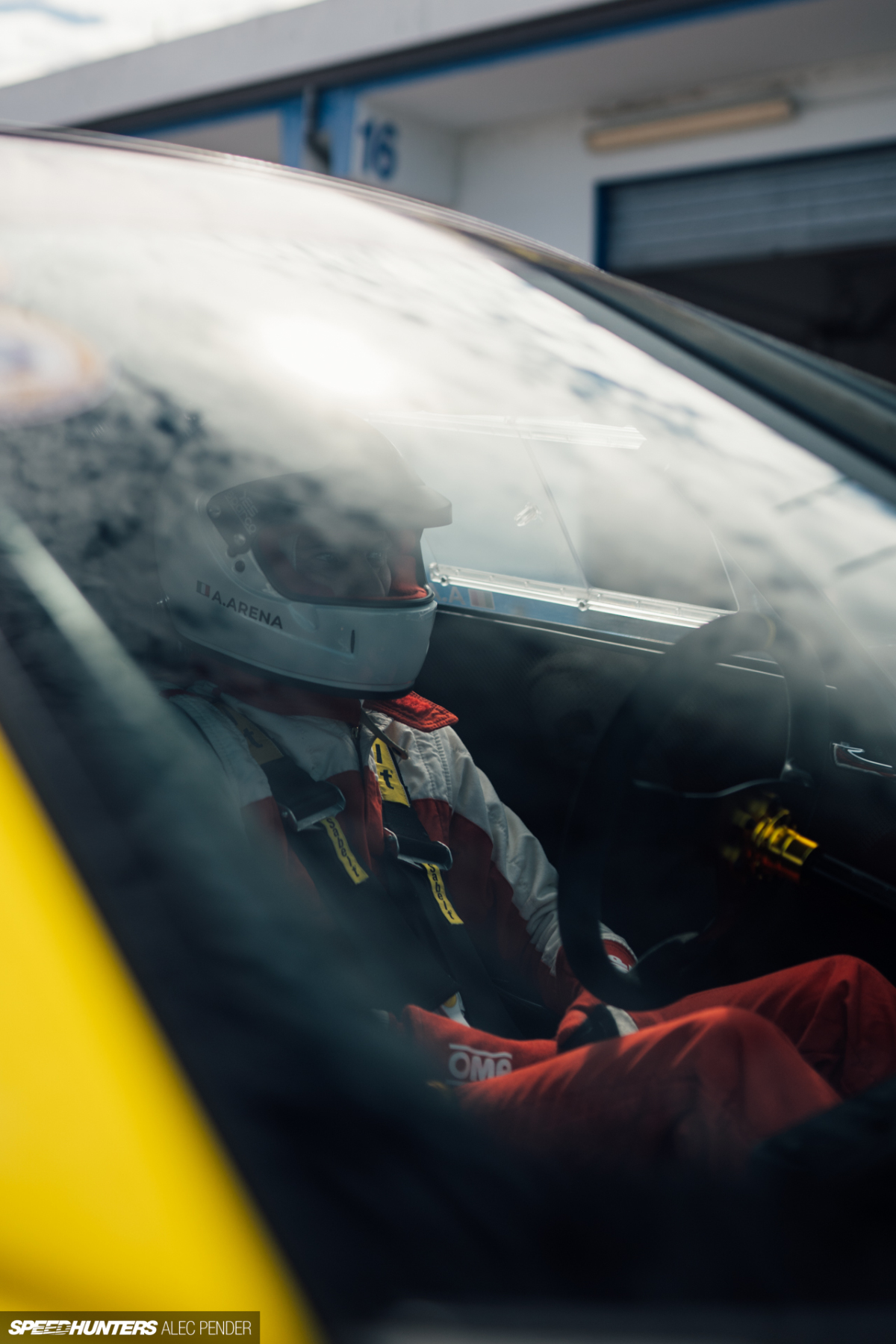
In 2000, the seventh-gen Toyota Celica hit the road, showcasing a bold design for the time. For 14-year-old Alessio Arena in Italy, it sparked an enduring passion for cars, particularly this model.
Upon turning 18, Alessio bought his first Celica. He started with the base 1ZZ-FE VVT-i (143hp) version but later upgraded to the 2ZZ-GE VVTL-i T Sport (192hp), which he still treasures today. Despite his love for the Celica, Alessio always felt a tiny bit letdown by its front-engine, front-wheel-drive layout. He imagined how good it could be if configured another way.
Fast-forward to 2015, when a friend offered Alessio a bare seventh-gen Celica body shell. It was begging to be transformed into something special, and when a complete Ferrari 360 Modena drivetrain came up for sale online, Alessio knew what he had to do.
While ambitious, this wasn’t a high-budget, resource-rich endeavour; Alessio and his father completed all the work in the family’s modest home garage under the name Arena Prototipi da Corsa.
To create a Ferrari-mid-engined, rear-wheel drive Toyota Celica, the body was reduced to an outer shell and rebuilt with a custom chrome-molybdenum tube frame. The front end was redesigned, with a custom aluminium frame supporting the bumper, headlights, radiator, and air intake.
Crowning this new structure is an array of carbon fibre components. While the hood, tailgate, spoiler, and seats were sourced from the aftermarket, many carbon parts were meticulously handcrafted by Alessio and his dad.
The new suspension is built around a custom pushrod system featuring Öhlins TTX shock absorbers and adjustable blade-style anti-roll bars. All gold pieces that can be seen were made using a small lathe and then finished by hand.
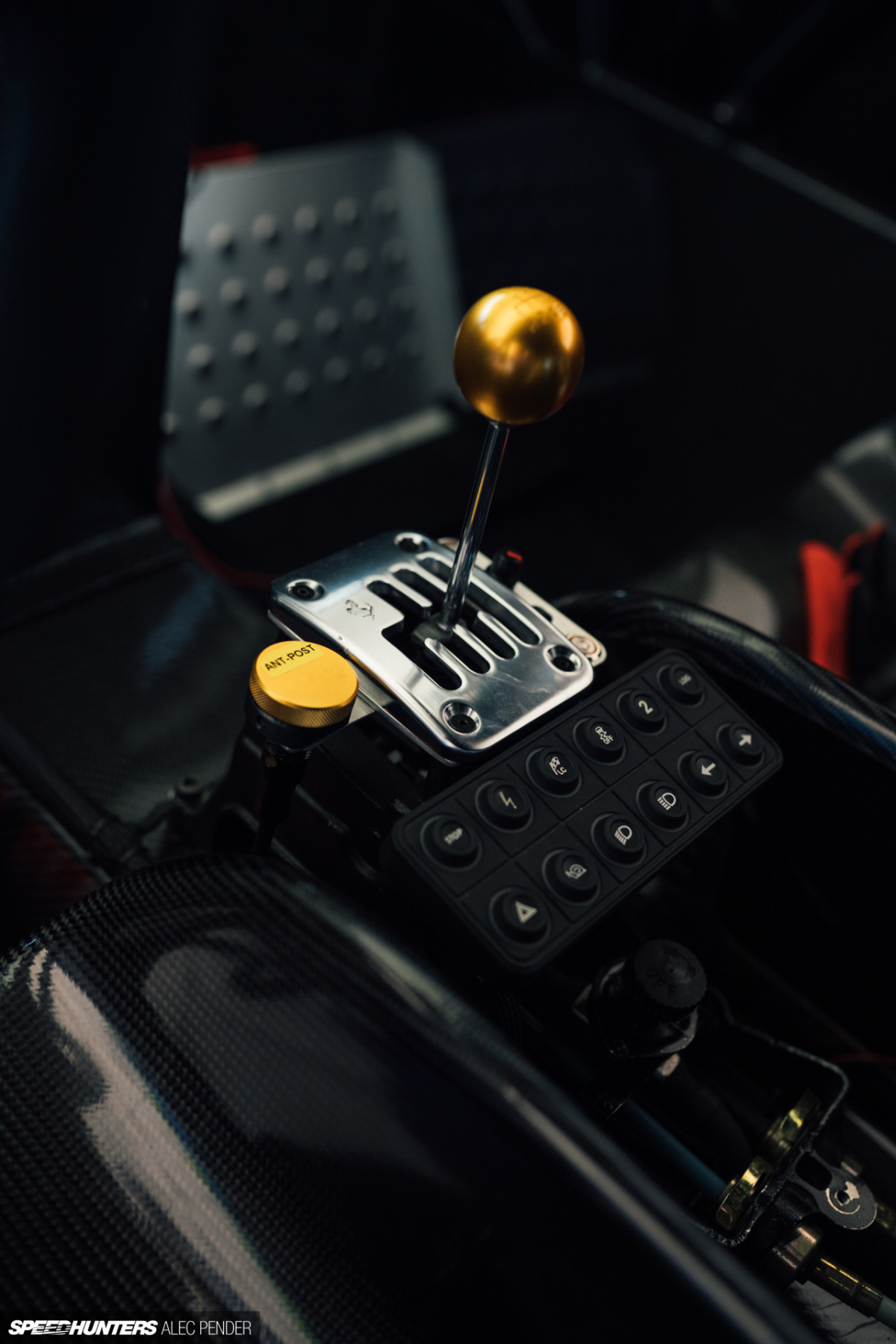
The centrepiece of the Celica is undoubtedly the 400hp Ferrari V8, an engine far removed from its original design intentions. The 3.6L motor and its corresponding manual gearbox – still operated by the original Ferrari gated shifter – are suspended in the tube chassis with custom-made mounts and brackets. Streamlining the installation, the water pump and power steering were converted to electric, and an aluminium fuel tank was strategically placed behind the front axle for optimal weight distribution. A MaxxECU engine management system wired in with a custom loom gives the firing orders.
The Celica rides on Italian-made 18-inch NTM wheels wrapped in Hankook full slicks. Behind the wheels, Ferrari 360 hubs hold Ferrari brakes, managed by a fully custom pedal box and brake biasing system.
With a full tank of fuel and Alessio on board, the Ferrari-powered Toyota weighs 1,100kg (2,425lb). That’s a good effort, considering all glass windows except for the polycarbonate windscreen have been retained.
After three thousand hours of relentless work, Alessio unveiled a tyre-melting, rear-engined, rear-wheel-drive Celica that’s about as far removed from the original example that ignited his interest in the model.
This is not just another cross-manufacturer repower thrown together with whatever off-the-shelf parts. It’s an entirely new vehicle, with nearly every component reimagined. Alessio’s wild Celica is a testament to what can be achieved in a home garage, fueled by passion and a helping hand from family.
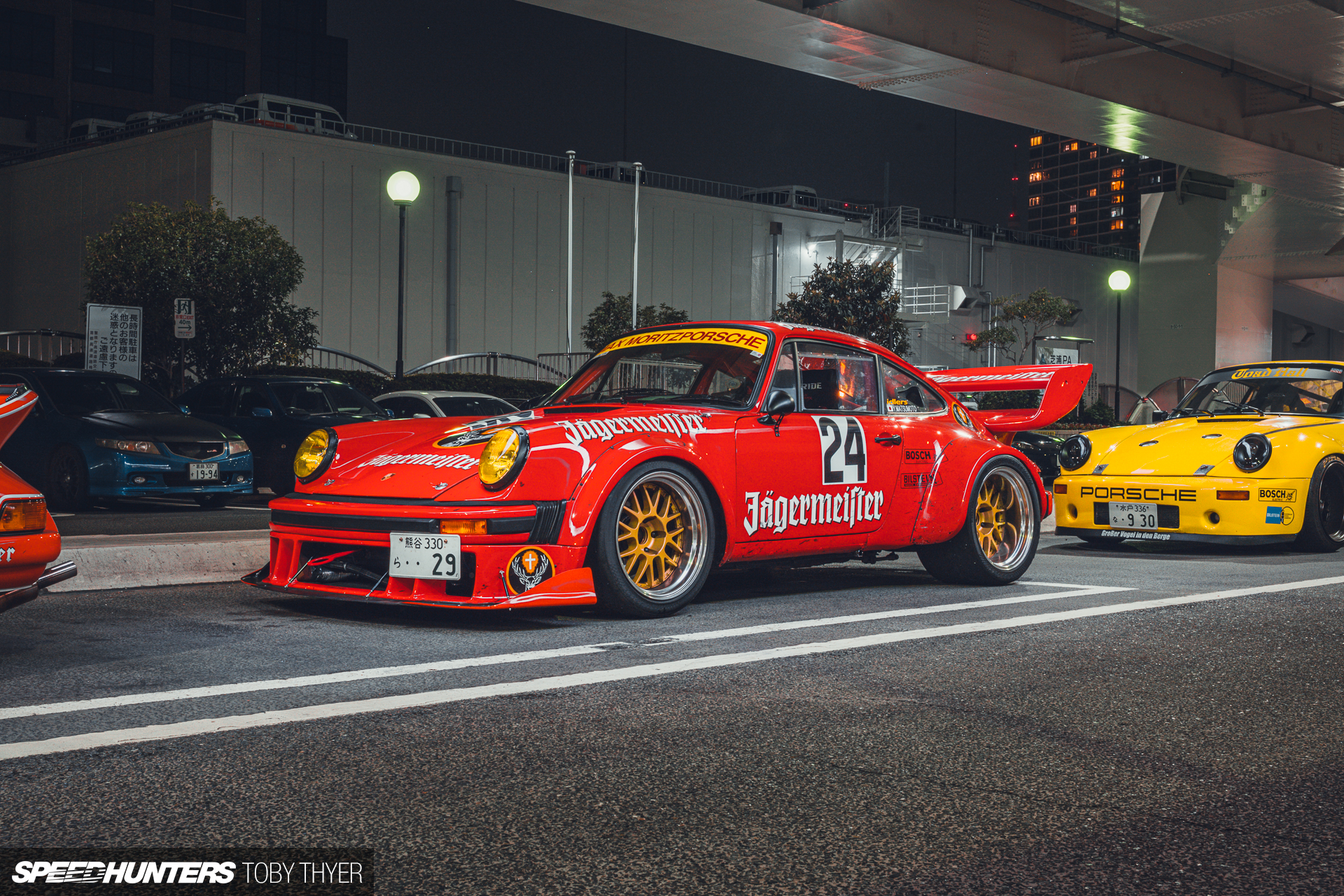
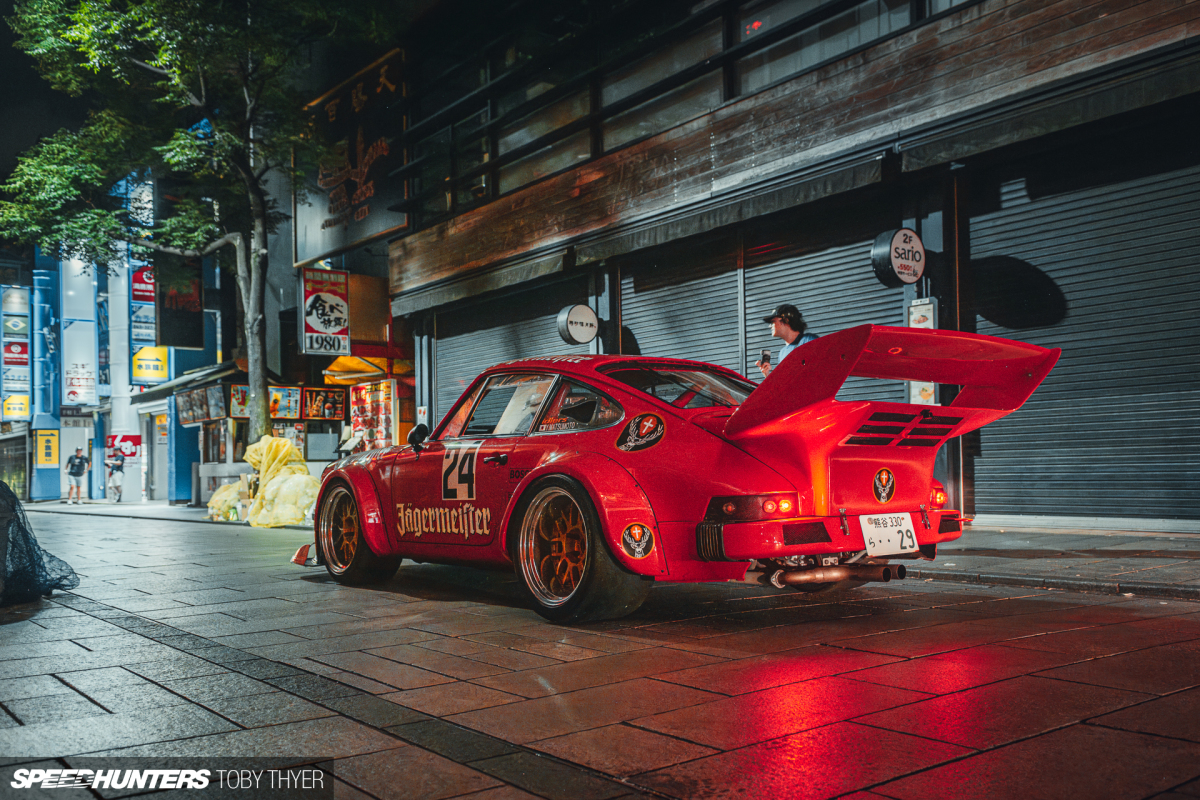
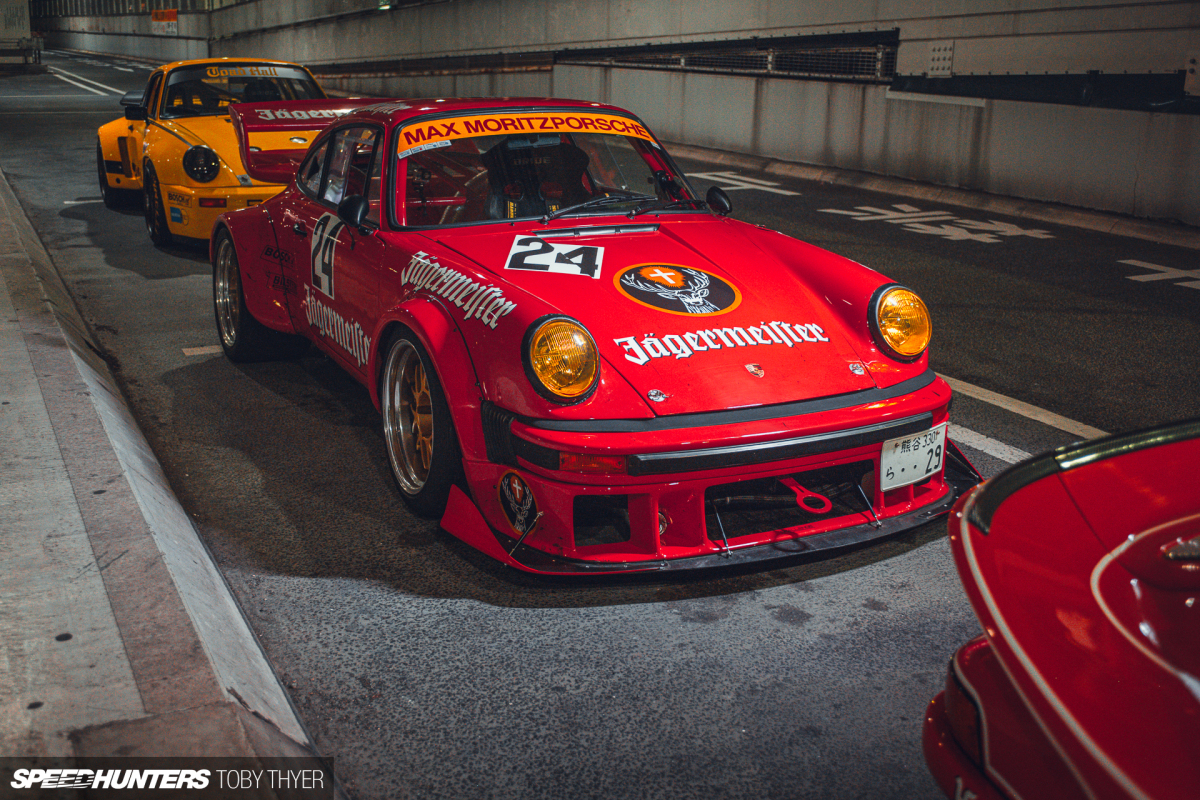
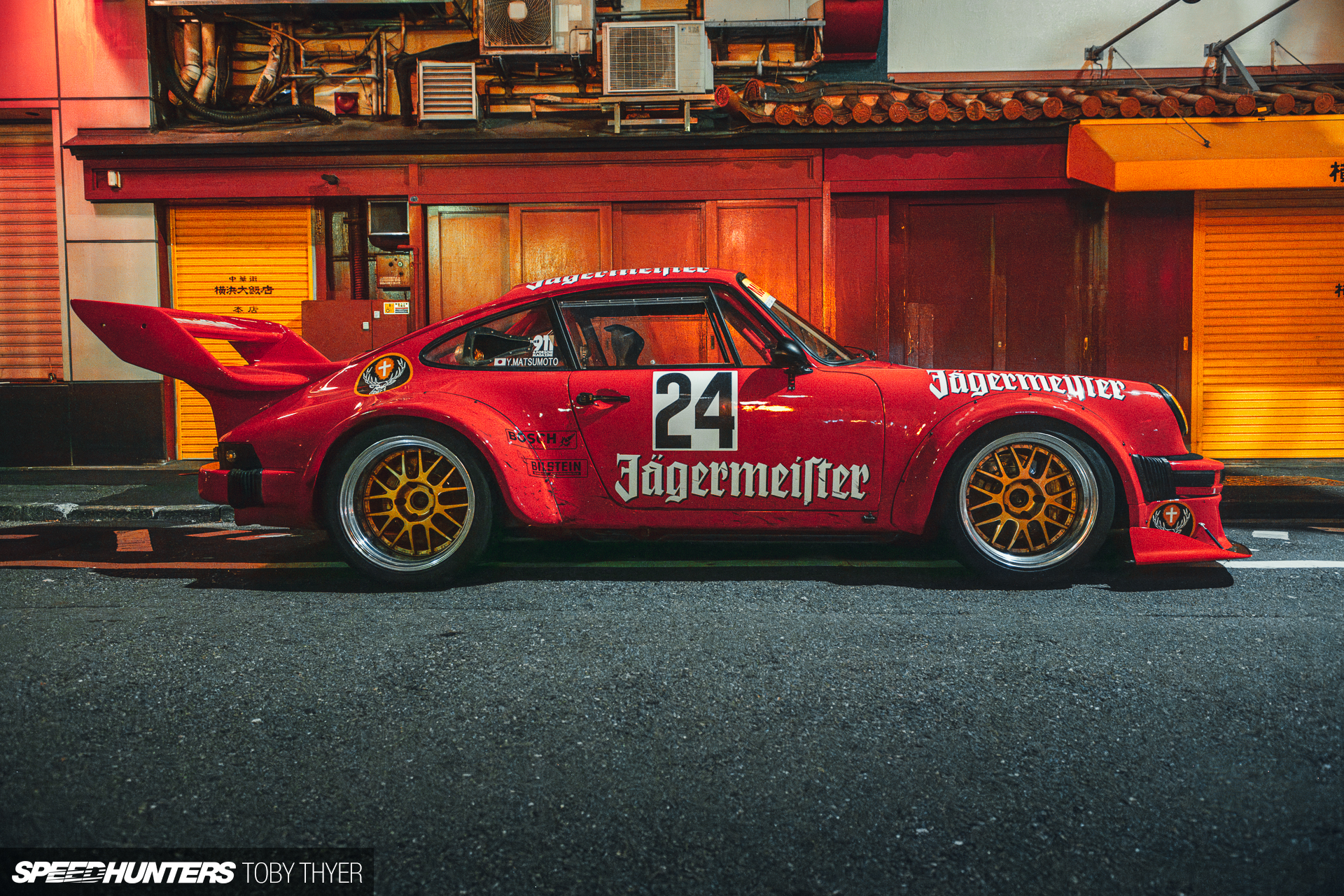
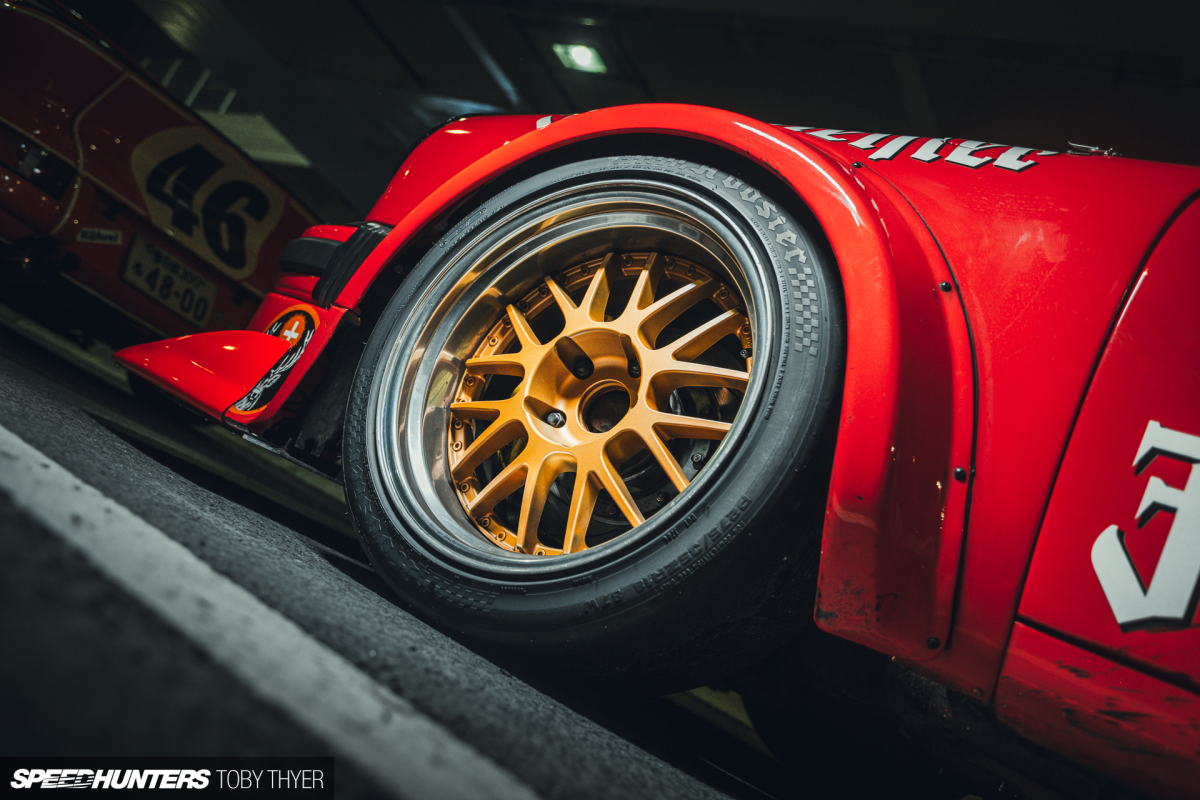
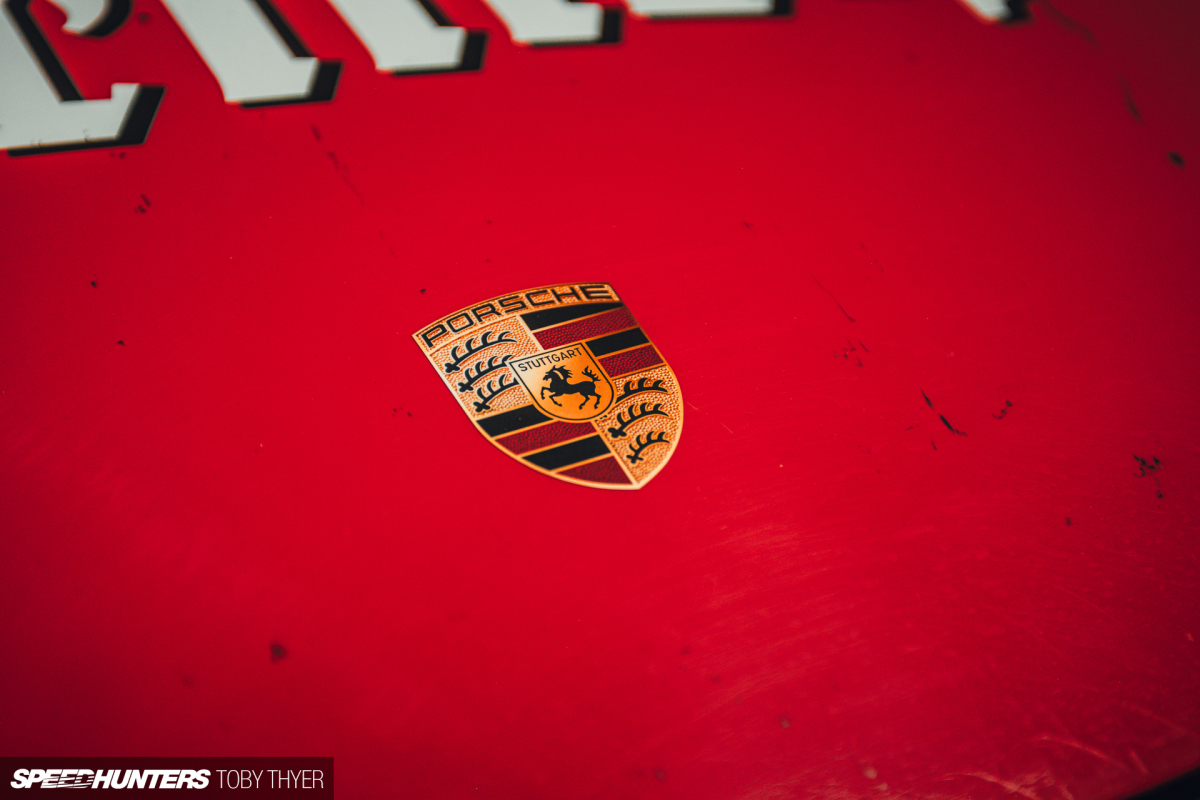
After nearly two decades of ownership, this Porsche 911 Carrera in 934 attire has finally hit the streets with a set of number plates.
Yuki Matsumoto acquired the car in 2006 as a stock-standard 1986 930 3.2L Carrera featuring wide arches, a whale tail, and an aftermarket front bumper. Painted in a colour reminiscent of Porsche Viola Metallic, the Turbo-lookalike was a pristine, road compliant 911, boasting comfortable seats and clean carpets. But that state of perfection didn’t last long.
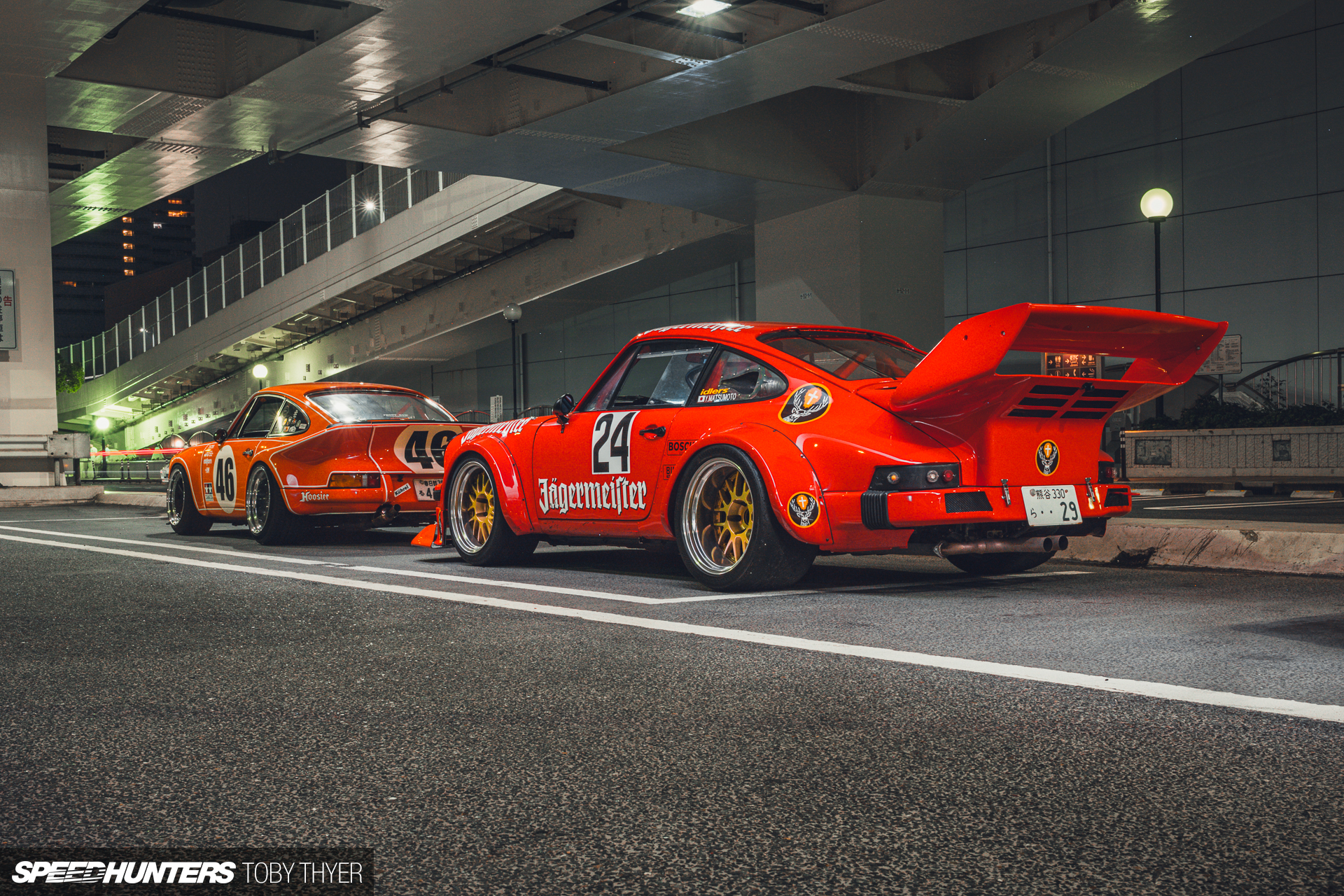
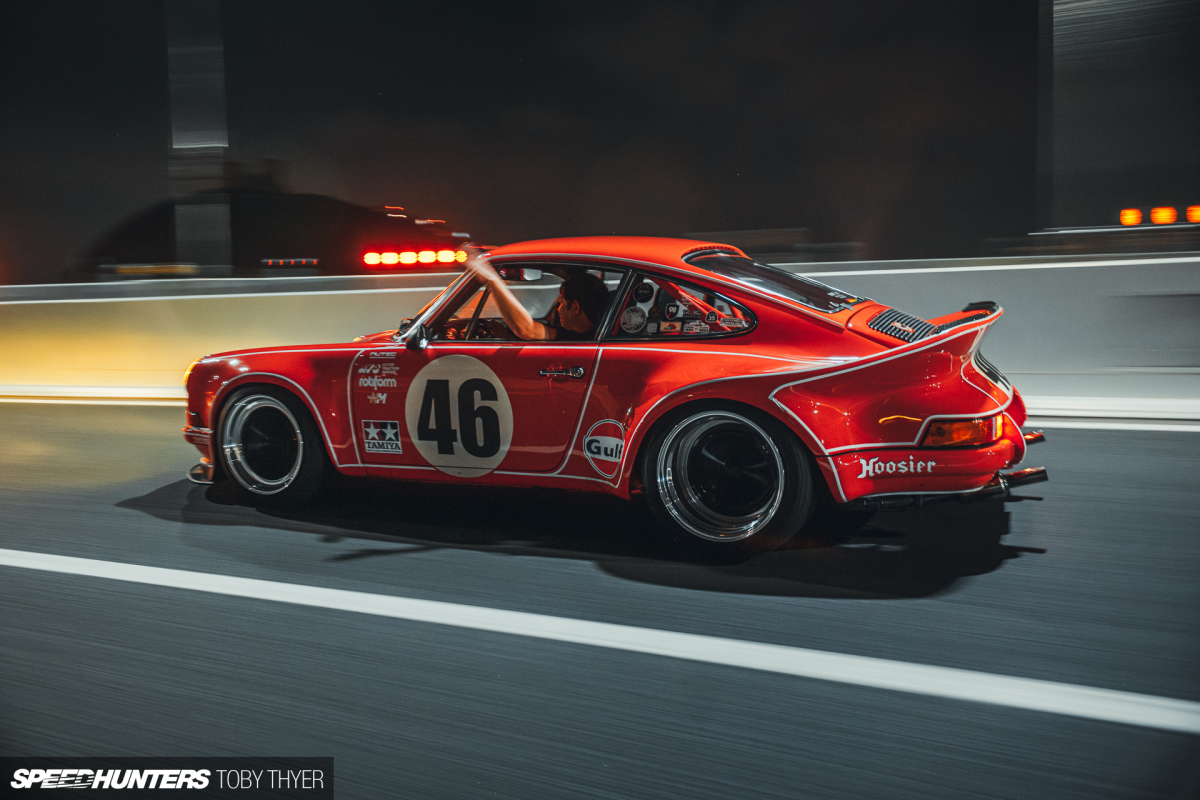
I caught up with Yuki-san for a drive with friends to see how far the car had come. Yamanouchi-san’s yellow RSR tribute – one of the first cars I featured in Japan – made me feel quite sentimental. Hidaka-san’s Pork A L’Orange looked as magnificent as ever.
The shop where Yuki-san bought the car also organised track days at Tsukuba Circuit, which provided a perfect opportunity for him to test his purchase. After a few laps, it was clear the car needed serious adjustments.
First, Yuki-san ditched the air-conditioning system, shedding about 15kg (33lb). This led to any other unnecessary interior components – like the rear seat and door cards – also being binned. Before Yuki-san could say ‘Ferdinand Porsche,’ the car was completely stripped and caged – Stage 1 complete.
From 2006 to 2018, the car served as a track day toy before undergoing its first major transformation: a fresh coat of white paint, the interior stripped bare, and new bumpers from Sunburst, complemented by a 935-style wing and 934 fender flares crafted by Matsumoto Shokai. Challenge Racing in Saitama handled all the bodywork, rounding out Stage 2.
After 15 years of Idlers Club events at Tsukuba, Yuki-san’s 930 wore its battle scars with pride. The front end was peppered with rock chips, the headlights were battered – one held together with gaffer tape – and the bumper was splattered with tyre rubber residue from years of chasing friends on the track. It was time for Stage 3.
Throughout this journey, Yuki-san had only enjoyed his 930 on the race track. That’s all good and well, but it meant he was only getting half the enjoyment out of the car.
In 2021, Yuki-san returned the car to Challenge Racing for its final transformation. He could have chosen a 935 slant nose in Martini livery or a tribute to the 1979 Le Mans-winning Kremer 935 to pay tribute to, however, a more achievable homage loomed closer to reality: the 934.
Based on the 930 Turbo and homologated for Group 4 GT racing, the 934 was on another level mechanically but shared enough bodywork similarities with Yuki-san’s car to make the decision an easy one.
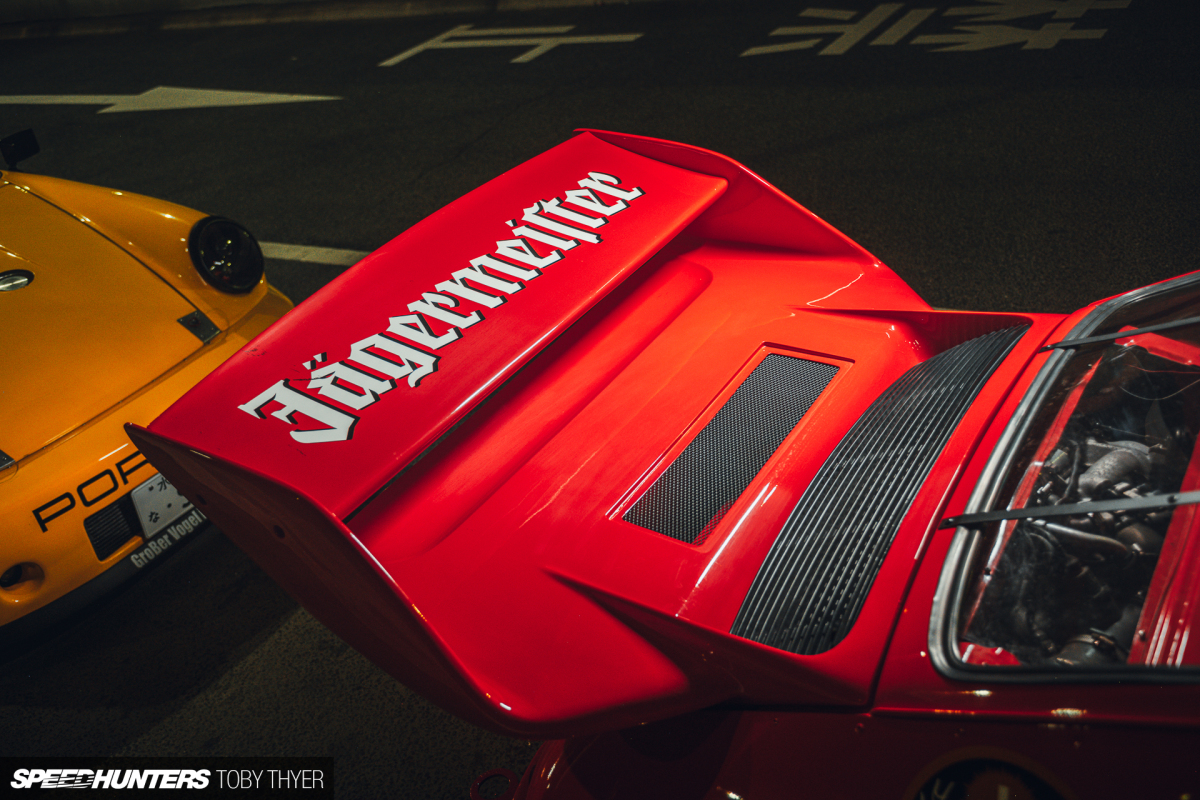
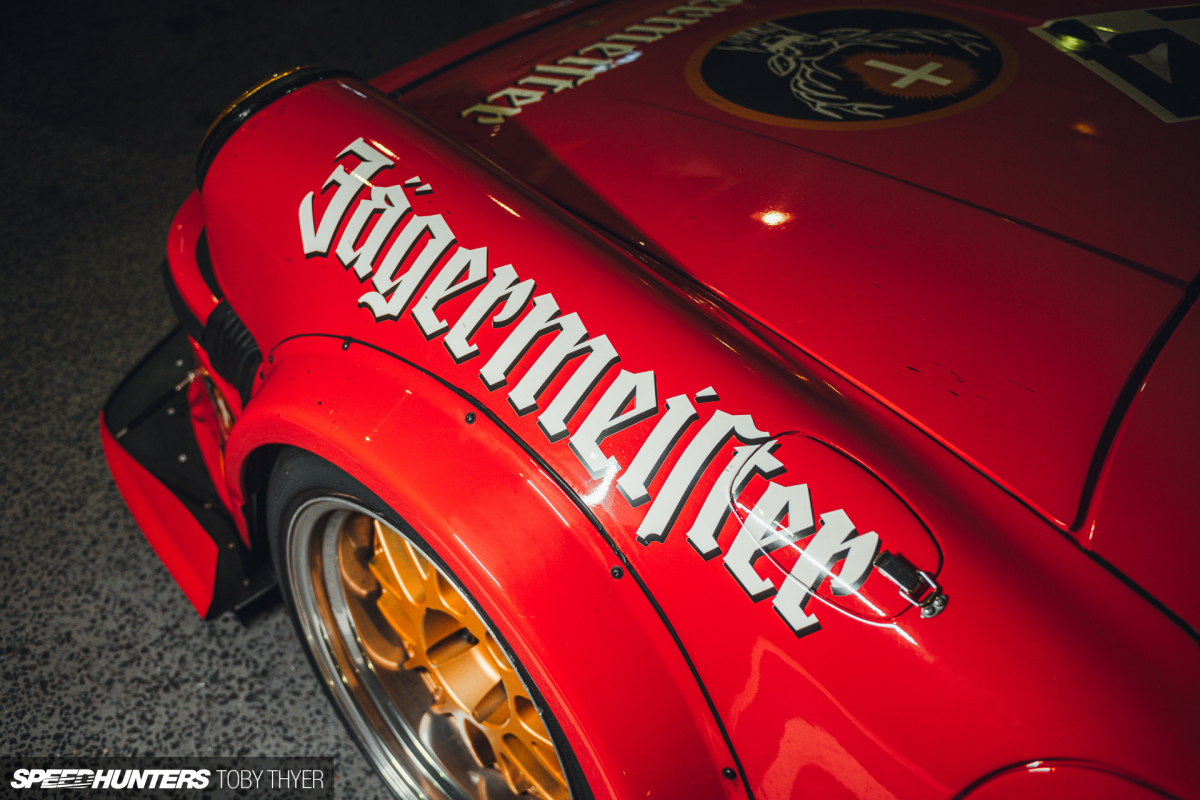
The 934 was among the first Porsches to wear the iconic Jägermeister livery, as did its successor, the formidable 935. The 934 used a factory 930 wing rather than the 935-style wing on Yuki-san’s car, so it was never intended to be an exact replica.
Lifting the enormous vented deck lid reveals a 3.6L Varioram engine paired with a 915 transmission from a 993. The car only weighs 930kg, which, with the updated engine, equates to 300hp per ton. Converting to a twin-turbo setup like the 934 would necessitate upgrading to a G50 transmission, which would mean modifying the chassis. It’s a step Yuki-san is hesitant to take for now. Perhaps there’ll be a Stage 4…
Transitioning from naturally aspirated to turbo also makes it more difficult to get the car road-legal in Japan. After almost two decades confined to the track, Yuki-san decided it was time to enjoy his creation both on and off the circuit. And who could blame him?
With friends like Yamanouchi-san and Hidaka-san, both of whom have incredible race-inspired builds with number plates, I can’t help but wonder if Yuki-san might have been feeling a bit left out.
Of course, running a track car on the road involves compromises. Some aspects of race cars would be hell to live with on public roads, and others would make the car impossible to register. Some might argue that a race car should sacrifice nothing for performance, but I believe the world is not black and white.
There are many ways to enjoy cars, not just at the extreme. After all, we’re not discussing a professional competition vehicle here; we’re celebrating the joy of creating something that suits your life and budget. Something you can enjoy with your mates on the track and also use for late-night city cruising.
If you can build something even a fraction as cool as Yuki-san’s 934-inspired Jägermeister homage and take it for a spin on the streets, then I commend you. This is what car culture is all about.
The technical storage or access is strictly necessary for the legitimate purpose of enabling the use of a specific service explicitly requested by the subscriber or user, or for the sole purpose of carrying out the transmission of a communication over an electronic communications network.
Preferences
The technical storage or access is necessary for the legitimate purpose of storing preferences that are not requested by the subscriber or user.
Statistics
The technical storage or access that is used exclusively for statistical purposes.The technical storage or access that is used exclusively for anonymous statistical purposes. Without a subpoena, voluntary compliance on the part of your Internet Service Provider, or additional records from a third party, information stored or retrieved for this purpose alone cannot usually be used to identify you.
Marketing
The technical storage or access is required to create user profiles to send advertising, or to track the user on a website or across several websites for similar marketing purposes.