The Sabre, a supercar inspired by the McLaren Ultimate Vision Gran Turismo—a virtual concept designed for Gran Turismo Sport—features a striking design that aligns with its sword-inspired name. Its aggressive styling includes blade-like fender extensions, fully skirted doors, and a sleek side profile that sweeps upward, ending in upright LED taillights, a full-width rear wing, and air diffusers.
Sharing the carbon fiber monocoque structure with the Senna, the Sabre also incorporates McLaren’s iconic upward-swinging doors and clamshell-style front and rear hatches, reminiscent of endurance race cars. Powered by a tuned version of the Senna’s 4.0-liter twin-turbo V8 engine, the Sabre delivers 824 horsepower, compared to the Senna’s 790 HP, and is designed to be more aerodynamically efficient.
Despite its formidable power, the Sabre is intended as a road car with excellent track capability, offering a more comfortable ride without compromising performance. It reaches an impressive top speed of 218 mph, surpassing the Senna by 1 mph. True to McLaren Special Operations’ exclusivity, the Sabre is an ultra-rare vehicle, with only 15 examples produced worldwide.
Tesla Cybertruck fans are raving about the truck’s latest OEM accessory: A light bar that sits atop the windshield and blinds all oncoming traffic with its copious lumens. The light bar only has one real problem — it’s illegal for street use, and it’s illegal for Tesla to even install it on your shiny new truck.
Tesla Had A Very Interesting Week
Marques Brownlee posted about his Cybertruck’s light bar on Twitter, mentioning that his lights arrived only partially installed — the front was covered with blackout tape, and the wiring ended in the cabin without ever touching a power lead. After delivering the car with the lights half-installed, Tesla sent Brownlee the name of a local shop that could finish the installation without getting Tesla in trouble.
This seems like an odd way to install an OEM accessory, but it’s actually entirely in line with Tesla’s service manual for the Cybertruck. The manual is absolutely slathered in warnings to Tesla technicians, telling them that they cannot under any circumstances finish the installation of the light bar themselves — a local shop has to do the wiring to keep Tesla’s involvement above board.
The wiring, by the way, is batshit here. The light bar connects to a Cybertruck “roof accessory jumper harness,” which might lead you to believe that the truck has unused wiring connectors read to be hooked up. Nope! The “harness” is just three wires sticking out of the car’s roof, terminating in heat shrink tubing, that have to be soldered to the wiring for the light bar.
Solder, for those who have never worked on automotive wiring, is generally a bad idea in car accessories. Cars vibrate, especially cars that drive off-road — as one might expect from a truck equipped with a light bar that legally can’t be used on the street — and that vibration breaks solder joints all the time. Crimp connections or plugs are far preferable for their reliability, but crimp connectors and plugs cost money. Solder, supplied by a third-party shop that’s willing to install street-illegal accessories on a brand new Cybertruck, doesn’t cost Tesla a dime.
Not only is Tesla’s workaround shady, using local shops to evade the law on street legality, but the actual wiring in the Cybertruck is just as sketchy. Wires that functionally sit outside the vehicle — covered only by a thin piece of metal atop the roof — are just twisted and soldered rather than crimped or plugged. Really, this light bar is about as apt a summary of Tesla as any accessory can be: Poorly engineered and questionably legal.
Elon Musk is a man that forces us to ask the timeless question first put to us by graphic novelist Alan Moore; who watches the watchers? The New York Times as a great breakdown of all the damage this overpowered and over-wealthy individual could have should Trump both take the White House and keep his promise to put his wealthy donor in a position of power.
Walter Isaacson On Elon Musk(s)
Musk is the most wealthy person on the planet — probably in all of human history — which already gives him an almost unlimited amount of power. He’s also had a ton of run-ins with regulatory bodies, from the Securities and Exchange Commission to the Environmental Protection Agency and now the National Highway Safety Administration. Now that he is full-throat backing Trump however, even the weak federal checks on his machinations could soon go by the wayside:
Elon Musk’s influence over the federal government is extraordinary, and extraordinarily lucrative.
Mr. Musk’s rocket company, SpaceX, effectively dictates NASA’s rocket launch schedule. The Defense Department relies on him to get most of its satellites to orbit. His companies were promised $3 billion across nearly 100 different contracts last year with 17 federal agencies.
His entanglements with federal regulators are also numerous and adversarial. His companies have been targeted in at least 20 recent investigations or reviews, including over the safety of his Tesla cars and the environmental damage caused by his rockets.
Given Mr. Musk’s immense business footprint, he will be a major player no matter who wins the election.
But he has thrown his fortune and power behind former President Donald J. Trump and, in return, Mr. Trump has vowed to make Mr. Musk head of a new “government efficiency commission” with the power to recommend wide-ranging cuts at federal agencies and changes to federal rules.
That would essentially give the world’s richest man and a major government contractor the power to regulate the regulators who hold sway over his companies, amounting to a potentially enormous conflict of interest.
Through a review of court filings, regulatory dockets and government contracting data, The New York Times has compiled an accounting of Mr. Musk’s multipronged business arrangements with the federal government, as well as the violations, fines, consent decrees and other inquiries federal agencies have ordered against his companies. Together, they show a deep web of relationships: Instead of entering this new role as a neutral observer, Mr. Musk would be passing judgment on his own customers and regulators.
NASA, the Departments of Defense, the Interior, Transportation, Commerce, Homeland Security — the guy is a significant force in all of these and more already. Should Trump win, an unelected Musk might gain the ability to squash anyone who might stand in his way. His oversized influence is already causing problems:
One such example was the test launch this month of Starship, SpaceX’s newest rocket. NASA has agreed to pay the company as much as $4.4 billion to take astronauts to the surface of the moon on two future missions — although the dates will depend on when all the equipment is ready. So far, Starship has not flown any humans.
But the Federal Aviation Administration held up this most recent test launch for weeks, in part because of questions about harm SpaceX has caused to wildlife near its Texas launch site, a delay that infuriated Mr. Musk.
“We continue to be stuck in a reality where it takes longer to do the government paperwork to license a rocket launch than it does to design and build the actual hardware,” SpaceX said in a statement.
This wouldn’t be the first time that a rich person tried to get their hands on the levers of power in the U.S. without winning an election. In 1933, the Business Plot would have seen wealthy businessmen overthrow president Franklin D. Roosevelt and install a Nazi-friendly military dictatorship, for instance.
No matter who you are voting for, handing any single person this much power is a terrible idea. Head over to the New York Times to read more.
Many of the world’s most celebrated jewellery houses like Bvlgari and Buccellati are Italian and known for their unwavering commitment to craftsmanship and timeless elegance. However this is no coincidence, these brands as well as many other Italian jewellers have a firm foundation in traditional Italian craftsmanship and the use of Italian gold.
A piece of Italian gold jewellery — while at first glance is undeniably opulent — represents much more than what meets the eye. These pieces embody centuries of tradition, generations of skilled artists and a testament to the dedicated hands that have brought the precious metal to life. The enduring appeal of Italian gold is in Italian jewellers’ dedication in preserving and paying homage to the craft, heritage and the skilled artists that came before them. Furthermore, each brand’s love and respect for Italian gold is displayed though ancient techniques, references to classic styles and meticulous attention and dedication to artisanal craftsmanship.
The History of Italian Gold
Photo: Bvlgari
The country of Italy holds the title as the most well-known ancient empire as well as the most celebrated and plentiful gold producers in the world. Best known for the impeccable quality of gold, its origins date back to ancient Rome, with the Etruscans around 700 BC, who saw gold as a symbol of wealth and status, much like ancient Egyptians. The jewellery worn by affluent ancient Romans were lavish and over-the-top, often incorporating the influences from different cultures including the styles of Europe, Egypt, Asia, other parts of the Mediterranean, most notably styles from Greek Mythology.
This mix of inspirations resulted in jewellers of this era experimenting with different techniques and embellishments to harmoniously mesh a variety of styles together. Furthermore, the possession of Italian gold was often used to display a status of power, wealth and sometimes a conquest. As per Jack Weir & Sons, “in 361, Roman dictator Titus Malius challenged a Gaul to a single combat and in defeat, took his torc”. This lead to torcs being awarded to soldiers after brave acts in battle and as a result, the distinctive decoration became a symbol of the elite and victorious. Ancient Romans wore gold in a multitude of ways in the forms of amulets, talismans, bracelets, necklaces and earrings, which functioned as protection from the evil eye or malice intent. It is also worth noting that many of these designs had imprinted shapes resembling animals and coiling snakes to symbolise immortality and fertility — a motif used frequently in jewellery houses till this day.
After the fall of the Roman Empire, jewellery and other gold adornments were primarily crafted in cathedral treasuries and or imperial courts. This meant that the majority of opulent gold jewellery were intended for religious rituals and figures, other metal craftwork was only done for household items. By the renaissance era, the demand for Italian gold grew quickly, thanks to the emergence of the new Italian middle class population. Additionally, wealthy Roman families would also fund trained goldsmiths to craft gold jewellery pieces that were large, grand and heavily embellished with gemstones and religious merits — believing that they were performing God’s work by creating something beautiful. As wealth began to trickle down from affluent families to the middle class population, Italian gold became a thing of desire and demand rapidly rose due to its representation of high societal status.
During this period of high demand, goldsmiths became incredibly skilful, with artistic skills believed to be on par with Italian renaissance painters, sculptors and architects, as per Mountz Jewellers. Another factor worth noting is that the renaissance era had seen a massive comeback of jewellery, prompting many European countries to hold contests to outdo each other on adornment, creating a phenomenon that resulted in a dramatic boost in demand for jewel embellished gold pieces.
What is So Unique About Italian Gold?
Italian gold pieces have remained popular throughout history, most notably gold chains. Italian jewellers were the first to master the art of making gold chains that were durably and intricately crafted. According to Lillicoco Antique Jewellery, the chain motif dates back centuries, with ancient origins founded at archaeological sites of ancient Ur and Uppsala. This later translated into wearable items as jewellery making become innovative and modernised. Furthermore, it has been said that Italian goldsmiths used chain motifs to glamourise and embellish Catholic rosaries to compel more people to wear them. Regardless of intention, Italian gold chains have transcended centuries and is cemented in the jewellery industry to to the exceptional durability, quality and rich colour.
Thanks to the rich heritage of gold craftsmanship, Italian jewellers are renowned for their unmatched creativity and artistry, often using Italian gold as a base for innovative mechanisms and artful designs. Italian gold is often prized for its purity — typically 18K or 22K — which gives it a rich, distinctive colour. The precious metal is also strictly regulated by Italian laws, ensuring consistently high-quality products that are in contrast, with international gold markets, is more pure and more valuable.
That being said, Italian gold continues to have high demand across Europe, the U.S., and Asia. Italian gold exports and hold a significant portion in the luxury market. Despite ever-changing trends, Italian gold jewellery remains an unwavering staple in both high fashion and everyday wear thanks to its durability, natural beauty and the artful innovation of Italian Jewellers. Ahead, LUXUO has gathered a list of renowned Italian jewellers that continue to innovate while maintaining traditional Italian gold craftsmanship.
Bvlgari is one of the most celebrated jewellery brands in the world and is known for being exceptionally innovative and luxurious. Founded in Rome 1884 by a Greek Silversmith named Sotirio Bulgari, the brand was previously known for their designs in silver, given the founder’s profession. Later in the 1920s, Bulgari started to emulate the opulent classic french styles of Boucheron, Van Cleef & Arpels, and in 1940s, the brand embraced their Roman heritage and incorporated significantly more Italian yellow gold. Bvlgari is unmatched when it comes to blending tradition with innovation, having invented the Tobogas design technique which is characterised by interlocking gold strips that form a flexible tubular structure. A technique that gave the world the iconic Serpenti collection.
Buccellati
Buccellati was founded in the 1920s by Mario Buccellati, also referred to as “The Prince of Goldsmith”. The brand is known for having intricate designs, textural gold jewels and silverware, inspired by Italian Renaissance and Venetian lacework. The brand’s hallmark is its detailed engraving and texturing techniques that give its jewellery a distinctive, antique look. Despite the long-standing heritage of the brand, the company has maintained their stylistic identity and traditional ancient goldsmithing techniques. Italian gold is held in the highest regard for the brand, referring to it as “impalpable Italian fabric” to pay homage to heritage and the master goldsmiths that came before them.
Pomellato
Founded in 1967, Pomellato is known for introducing a modern approach to luxury jewellery while maintaining traditional techniques. Their spectacular pieces emphasise bold, colourful gemstones and unconventional cuts, with a focus on elegance. Pomellato goldsmiths use a pink gold and yellow gold to form a unique alloy which is later set with rare semi-precious gemstones using traditional goldsmith techniques. Pomellato is known for their unwavering commitment to the craft and heritage of Italian goldsmiths and works with the Milanese Goldsmith Institute to continue to hand down the exceptional craftsmanship and fundamental skills of artisan jewellers.
Damiani
Established in 1924 by Enrico Damiani an expert goldsmith, Damiani is a family-owned business known for its fine craftsmanship and unique diamond settings. Damiani’s collections often incorporate intricate detailing, making each piece a testament to Italian artistry and made by the master goldsmiths of Valenza.
Roberto Coin is famous for their sophisticated designs and signature hidden ruby in each piece, that symbolises good luck and happiness. Similar to ancient Roman jewellers, the brand was inspired by the styles of ancient Egyptians, displaying their respect and fascination of Italian jewellery heritage. Established in Vincenza, an area famous for fine gold plating and custom designs, Roberto Coin has wide knowledge of traditional and classic styles of the past which are frequently incorporated into their pieces. Additionally, the brand is known for for their heavy emphasis on the “quintessence of Italian craftsmanship”, with each imaginative piece made at the hands of master craftsmen.
Vhernier
Vhernier is renowned for their modern, minimalist designs that focus on geometric shapes and bold, sculptural silhouettes. Vhernier was founded in 1984 at Valenza and was originally a goldsmith’s workshop. The brand has always operated with huge passion and love for Italian gold and extensive knowledge of gemstones to create pieces that are unconventional and contemporary. With Vhernier’s minimalist designs, they aim to draw focus to the master craftsmanship of the goldsmiths and the exceptional quality of their materials.
Marco Bicego
Marco Bicego’s jewellery is a “distinctly Italian” take on the Italian goldsmith tradition, in creating stunning pieces with skills passed down generations. The brand pays homage to their rich heritage, in emulating modern takes of classic Italian style, like multi-coloured gemstones and the ancient “millerighe” burin technique. Marco Bicego is famous for their ability to replicate organic forms found in nature in manipulating gold in to organic shapes and hand-engraved textures. The brand primarily focuses on creating pieces that feel both luxurious and understated, blending tradition with modern design.
Pasquale Bruni
Pasquale Bruni founded his namesake brand in 1968 at just 20 years old, in Valenza, the “City of Gold” which has a long-standing tradition of jewellery making that dates back centuries. The family-run brand was established in known for its romantic, nature-inspired designs that feature floral and celestial motifs. All pieces are made with 750 parts of fine gold, meaning 18 carats. To achieve the warm colour of Pasquale Bruni’s gold, yellow gold is alloyed with silver and copper. Additionally, Pasquale Bruni’s experiences craftsmen meticulously set gemstones in delicate yet bold arrangements, to appear as a “sheer fabric of shimmering stones”.
For more on the latest in luxury jewellery reads, click here.
In this article, I detail exactly where to stay in Hai Phong. Vietnam’s third largest city is often overshadowed by the nearby capital city Hanoi, but with plenty of its own charm, adding Hai Phong to your travel itinerary is a must.
I’ve spent a lot of time traveling around Vietnam, and I love discovering places that don’t always make the guidebooks! So, let’s dive straight into the best areas to stay in Hai Phong, for every style of travel.
Are you ready to live a remote lifestyle?
Take the quiz and see if we can help.
Our Creator Kickstarter Coaching Program will be accepting a maximum of 10 people to start building their dream remote lifestyle. Learn more & see if we can help you achieve your goals!
Best Areas to Stay in Hai Phong
Le Chan District: Best Place to Stay in Hai Phong for Your First Time
The best area to stay in Hai Phong for your first time is Le Chan. It’s a central location with plenty of amenities and access to the city’s major attractions. If you plan to tick off many major sites on your first visit, I highly recommend you base yourself here.
As one of the most populated areas of the city, it can feel chaotic and very busy at times. But this is all part of the great Vietnam travel experience! This vibrance brings an electric pulse, unlike many cities you may have visited before.
Pros of Staying in Le Chan
Convenience: The central location means access to amenities and the city’s major attractions.
Accommodation Options: Furthermore, this is one of the best places to stay in Hai Phong for hotels.
Ex-Pat Scene: This area attracts a lot of Western visitors and tourists creating a friendly expat scene.
Cons of Staying in Le Chan
Busy: This is one of the city’s main hubs for business and commerce, so expect it to often feel busy.
Expensive: Although Hai Phong is not an expensive city, accommodation in Le Chan is higher than in other districts.
Traffic: Vietnamese traffic is a sight to behold, and Le Chan doesn’t disappoint.
Best Places to Stay in Le Chan
Le Chan ranks highly as a place to stay among the Hai Phong neighborhoods for tourists and business visitors alike. Here are 3 great options that I found, ideal for first-timers:
1. DT Hotel: This affordable and central option is perfectly situated for exploring Hai Phong. Hundreds of reviews rate it as fabulous, citing the location and the staff as key factors. Click here for details.
2. Chuoi Can Ho Space Apartment: Enjoy access to 2 swimming pools while feeling right at home in a fully furnished and well-equipped central apartment. This place is situated amongst calm streets with pleasant city views. Click here for details.
3. The Lux Homes Apartment: I love the look of this place, and previous guests have called it the best apartment in Hai Phong. It’s a luxurious penthouse with an abundance of elegant touches. Click here for details.
Top Things to Do in Le Chan
If you’re staying in Le Chan, you’ve picked the best place to stay in Hai Phong for activities and things to do. Here are some recommendations to put right at the top of your itinerary:
2. Visit the Navy Museum: Perfect for history buffs, this is an understated and often overlooked stop in Hai Phong. There are some great exhibits and many retired aircraft and munitions on display. Click here for directions.
3. See the Pho Chieu Pagoda: This stunning Buddhist temple is a peaceful and spiritual place to visit. The surrounding gardens offer a sweet release from the city’s chaotic buzz. Click here for directions.
Where to Eat and Drink in Le Chan
There are some excellent restaurants and very cool bars in Le Chan, be sure to try out these three:
1. Indian Kitchen:This is the place to go if you’re craving excellent Indian food. A top restaurant that serves authentic dishes with extensive vegan and vegetarian options. Click here for directions.
2. Toscana: Continuing the international cuisine, head to Toscana for the best Italian food in Hai Phone. The pizzas are thin and crispy, and cooked in the traditional Italian style. Click here for directions.
3. Rei Bar & Kitchen: A sleek and stylish bar suited to the posher areas of Hai Phong, this is a cool environment for cocktails at affordable prices. Don’t overlook the food either, they stack the burgers high! Find it here.
Hong Bang: Best Area in Hai Phong for Nightlife
There are a few possibilities but in my opinion, Hong Bang is the best place to stay in Hai Phong for nightlife. The wide selection of cool cocktail bars, late-night clubs, and karaoke lounges provide plenty of evening entertainment.
An added benefit of staying in Hong Bang is the proximity to the Cam River. There are plenty of scenic spots and nice walks of varying lengths to sweat out any late-night indulgences!
Pros of Staying in Hong Bang
Nightlife: A decent selection of cool bars, clubs, and lounges.
Location: Well-positioned close to the river and ideal for the city’s sites and attractions.
Westernized Amenities: The social scene lends itself to bars and restaurants that appeal to tourists.
Cons of Staying in Hong Bang
Touristy: Although this may also be a pro, some may not like the touristy nature of Hong Bang.
Noisy at Night: The nightlife scene can make the evenings busy and loud.
Higher prices: Bars and clubs in this area often come with premium prices compared to more local spots.
Best Places to Stay in Hong Bang
There are plenty of great accommodation options to choose from. Here are a few of the top Hai Phong hotels near nightlife:
2. Khach San Solis Hotel: This lovely hotel in Hong Bang caught my eye with its stunning high ceilings in the rooms. It’s a high-rise, modern hotel with the vibe of a boutique guesthouse. Click here for details.
3. Riverview Apartment: Stretch out in your own space with a fully furnished apartment. The river and lake views are exceptional and it’s only a short walk from the main hub of Hong Bang’s nightlife scene. Click here for details.
Top Things to Do in Hong Bang
Cat Ba Island
Hong Bang is a safe neighborhood in Hai Phong to explore. Here are a couple of great things to do while staying here:
1. Hai Phong Museum: Discover the history of the city with a trip to the Hai Phong Museum, where you’ll find many interesting exhibits and artifacts that tell the story of the city’s rich past. Click here for directions.
2. Visit Cat Ba Island: I will be talking more about Cat Ba Island in the next section, but if you’re staying in Hong Bang, consider booking a guided excursion to the island filled with hiking, cycling, kayaking, and swimming. Check out this great tour option.
3. Explore Walking Street: While it may not have as many bars or restaurants as other walking streets in Vietnam, this pedestrianized street often hosts street performances, night markets, and food stalls. Find it here.
Where to Eat and Drink in Hong Bang
Hong Bang is the best place to stay in Hai Phong for nightlife with a selection of cool bars offering everything from craft cocktails to live music. Check out my favorite spots:
2. Insider Cocktail Bar:I can’t guarantee you’ll get one, but free tequila shots are regularly dished out here to compliment the excellent choice of craft cocktails. Open until 3 am daily, it’s another great late-night spot. Find it here.
3. Havana Sky Bar: Enjoy stunning views from this rooftop cocktail bar and lounge. It’s the ideal spot for pre-drinks and gets pretty lively on weekends. Click here for directions.
Cat Ba: Coolest Place to Stay in Hai Phong
Cat Ba might seem like a bit of a wildcard when considering places to stay in Hai Phong, but it’s one of the coolest spots to base yourself. The stunning landscapes, rugged cliffs, dense jungles, and scenic bays make it a truly unique experience.
As the gateway to Lan Ha Bay, you can explore this beautiful and quieter alternative to Ha Long Bay. For those willing to venture off the beaten path and stay a little outside of the city, Cat Ba is one of the most rewarding places to stay near Hai Phong.
Pros of Staying in Cat Ba
Adventure Opportunities: It’s an ideal spot for hiking, rock climbing, kayaking, and exploring caves.
Less Crowded: Quieter than Hai Phong, Cat Ba offers a more peaceful experience.
Eco-Friendly Tourism: The island promotes sustainable travel with eco-lodges and conservation efforts.
Cons of Staying in Cat Ba
Limited Nightlife: There are fewer options for bars or late-night entertainment compared to Hai Phong’s city center.
Accessibility: A ferry or speedboat ride from Hai Phong is required, which increases travel time.
Seasonal Tourism: Some activities are weather-dependent, making it less ideal to explore during off-peak months.
Best Places to Stay in Cat Ba
Cat Ba offers a huge number of accommodation options. Here are some of the best options I found:
1. Paradise Cat Ba Hotel: The stunning views from the infinity pool make this a standout option in Cat Ba. This beachfront property also includes a gym, onsite bar, and restaurant. People rave about the breakfast! Click here for details.
2. Thang Long Hotel: If you’re looking for a clean, bright, and convenient place to stay, this hotel in Cat Ba is a super-affordable option that includes an exceptional breakfast as standard. Click here for details.
3. Bao Phuc Hotel: Over a thousand reviews rate this hotel as superb. With lake, mountain, city, and bay views it’s a stunning accommodation option and cheaper than you would imagine! Click here for details.
Top Things to Do in Cat Ba
Outdoor pursuits are the order of the day in Cat Ba, but if you don’t fancy all that huffing and puffing 24/7, here’s a nice mix of excellent activities to consider:
1. Explore by Kayak: Take to the water with a guided kayak tour that includes visits to the less touristy parts of Lan Ha Bay, Ha Long Bay, and the Cat Ba waters. Everything you need, including lunch, is provided on this great tour, check it out.
2. Take a Bay Cruise: Let the sights come to you as this full-day cruise from Cat Ba tours the bays. There are optional activities if you like, or simply sit back and enjoy a cocktail and the awesome views. Click here to book your tour.
3. Canyoning, Caves, and Lagoons: This amazing tour offers a unique chance to abseil down Cat Ba’s epic limestone cliffs, explore ancient caves, and revitalize in peaceful clear lagoons. This looks amazing – find more information here.
Where to Eat and Drink in Cat Ba
There’s a lovely chilled beachside vibe to many places in Cat Ba, and a couple of fantastic fish restaurants. Here are a few cool places not to miss:
2. Ladybird Cafeteria: Open early and closing late, serving all three meals a day, this highly-rated local restaurant is a must-visit. The food is fresh, delicious, and very affordable. Try their seafood selection! Find it here.
3. The Healing Kitchen: For poke bowls, healthy meals, and vegan or vegetarian options The Healing Kitchen is one of the top restaurants in the Hai Phong and Cat Ba region. Click here for directions.
Ngo Quyen District: Best for Digital Nomads
Ngo Quyen is the best neighborhood in Hai Phong for digital nomads. This central district has a busy urban feel while maintaining a welcoming atmosphere. It’s easy to find spaces to work, reliable WiFi, and plenty of cafes for dialing in remotely.
Its central location also means you’re close to a variety of restaurants, parks, and shopping centers, ideal for perfecting that work/life balance. Fellow remote workers, don’t miss 10 Best Places in Vietnam for Digital Nomads, Hai Phong is in there!
Pros of Staying in Ngo Quyen
Central location: Close to amenities, restaurants, parks, and coworking spaces.
Affordable living: Budget-friendly accommodations and food options make it a cost-effective choice.
Networking opportunities: There are plenty of cafés and social spots to meet other digital nomads.
Cons of Staying in Ngo Quyen
Busy environment: The central area can be a bit noisy and crowded at times.
Limited Natural Spaces: There are fewer natural escapes compared to more rural areas or islands like Cat Ba.
Fewer Outdoor Activities: Subsequently, there are fewer opportunities for outdoor adventurers.
Best Places to Stay in Ngo Quyen
With the digital nomad ethos in mind, here are some top accommodation options in Ngo Quyen:
2. Trang Thanh Luxury Apartment: Settle into this luxurious apartment, an ideal base for remote work. Surrounded by peaceful gardens and calming greenery, it offers ample spots for rejuvenating breaks. Click here for details.
3. Somerset Central TD: Base yourself in the heart of Hai Phong’s business district with a hotel integrated into the famous TD Plaza. There’s a rooftop pool for cooling off between online meetings and a gym to burn off some steam. Click here for details.
Top Things to Do in Ngo Quyen
Here are a couple of great ideas to break up your work day. Number 3 is specifically for digital nomads – it’s a fantastic coworking space I found in Hai Phong.
2. Check out Vincom Plaza: Vietnamese shopping malls are often pretty epic and this one doesn’t disappoint. There’s a huge mix of international brands, local shops, a cinema, and a range of dining options to enjoy. Click here for directions.
3. Get Some Work Done: Visit one of the best coworking spaces in Hai Phong. G-Space has daily rates as low as $5 which includes a comfortable workspace, high-speed WiFi, and a free coffee. Click here for directions.
Where to Eat and Drink in Ngo Quyen
Choosing Ngo Quyen means being among the best places to stay in Hai Phong for restaurants and bars. Here are 3 of the best:
1. Mak Mak Thai: Simply the best Thai food in the city. Fresh, delicious, and affordable dishes are served in a pleasant and welcoming setting. Click here for directions.
2. Hai Dang Japanese Restaurant: Continuing the international theme, Hai Dang delivers outstanding Japanese cuisine. It’s a lovely tranquil restaurant with the friendliest staff around. Find it here.
3. San Bia Giai Phong: An incredibly welcoming Vietnamese beer bar that serves some truly delicious and cheap traditional dishes and good local beer. They even show major sporting events and have seasonal food and beer festivals. Click here for directions.
Kien An: Best Place in Hai Phong on a Budget
Kien An is one of the best neighborhoods in Hai Phong for budget travelers. Many affordable accommodation options and traditional local eateries and street food choices offer an authentic Vietnamese experience, without breaking the bank.
This district is less touristy than other parts of the city, which is great for immersing yourself in local life. Easy access to cheap public transport is another bonus. You can travel around Hai Phong while keeping your expenses to a minimum.
Pros of Staying in Kien An
Affordable Accommodations: There are many budget-friendly hotels and guesthouses for travelers looking to save money.
Authentic: A less touristy atmosphere means a more genuine Vietnamese experience.
Cheap Food: There are plenty of inexpensive local eateries with traditional dishes.
Cons of Staying in Kien An
Limited Attractions: There are fewer major sights compared to central Hai Phong.
Distance: Furthermore, it is located away from central areas and other popular spots.
Fewer Upscale Amenities: Finally, there are fewer luxury options for dining or accommodation.
Best Places to Stay in Kien An
Keeping costs in mind, here are some great, cheap places to stay in Hai Phong:
1. Cuccu Homestay: Budget in Vietnam doesn’t always mean lower quality as exemplified by this excellent homestay. This place is in a great location and is super affordable – there’s even a kitchenette to avoid dining out for every meal. Click here for details.
2. Cozy 9 Hotel: Even the deluxe rooms here won’t blow your travel budget. This is a bright and clean hotel with great reviews. Popular with young visitors, it looks to be among the best places to stay in Hai Phong for groups. Click here for details.
3. Win Win Hotel: Enjoy mountain views from comfortable rooms. Parking in Hai Phong can be tricky if you’re renting a moped or car, but this is the perfect option for where to stay in Hai Phong with parking included as standard. Click here for details.
Top Things to Do in Kien An
Here are a couple of budget-friendly activities to enjoy during your stay:
1. Du Hang Pagado: This ancient Buddhist temple has a serene and calming vibe that is very welcome in a big city like Hai Phong. It’s a stunning retreat and a great spot to chill out for a few hours. Click here for directions.
Traditional food options are the way to go in Kien An, where you’re sure to discover plenty of great Vietnamese options. Here are my recommendations:
1. Trang Beo Quan: A family-run restaurant with excellent local food and cheap beers. The picture menus are helpful if like me you barely speak a word of Vietnamese! Click here for directions.
2. MOTO Cafe: Coffee is a big deal in Vietnam and this is a lovely, modern cafe to spend a few hours sampling local caffeinated concoctions. Be brave and try an egg coffee or a ca phe den. Click here for directions.
3. ZeitGeist: Your nearest cocktail bar in Kien An will be Zeitgeist. I love their tagline – the Booze Kiosk! It’s a trendy bar with regular live music and great deals on drinks. Worth the short trip if you’re craving that sort of night out. Find it here.
Where to Stay in Hai Phong: FAQs
Here are some answers to the most commonly asked questions about where to stay in Hai Phong:
What area of Hai Phong is best for tourists?
The best area of Hai Phong for tourists is Hong Bang. It’s centrally located and has convenient access to key attractions, restaurants, and good transportation links. The area has a lively atmosphere, and markets and cultural sites nearby.
Where should I avoid staying?
Due to it being a quieter residential area with limited attractions, nightlife, and dining options, you should avoid staying in Duong Kinh. Visitors seeking more excitement may find it too isolated from the main city activities.
What is the safest place to stay in Hai Phong?
Hai Phong is generally a safe place to visit. The safest place to stay in Hai Phong is Ngo Quyen. This area is well-developed, with a strong police presence and secure accommodations.
Does it matter where I stay in Hai Phong?
Yes, it matters where you stay in Hai Phong. Different areas offer unique experiences; for example, Hong Bang is great for tourists, while Kien An is perfect for budget travelers.
What’s the best way to get around Hai Phong?
The best way to get around Hai Phong is by motorbike or Grab. Motorbikes are ideal for flexibility and exploring, while Grab provides affordable and safe trips. Both are widely available options for navigating the city.
How many days should I spend in Hai Phong?
You should spend about 3 to 4 days in Hai Phong. This allows enough time to explore key attractions, enjoy local cuisine, and take day trips to nearby areas like Cat Ba Island and Ha Long Bay.
In Conclusion
Even if you only intend to use Hai Phong as a base for exploration, with excursions and scenic tours around Ha Long Bay and Cat Ba Island, I hope this guide to the best places to stay in Hai Phong has assisted you in making the right decisions for your trip.
Whether you’re a budget-conscious visitor in Kien An or a digital nomad seeking the comforts of Ngo Quyen, there’s something for everyone in this great city. Enjoy your stay!
“La Dolce Vita,” which translates to “The Sweet Life,” encapsulates the joy of living, the indulgence in life’s pleasures, and a deep appreciation for beauty and style. Coined in the 1960s by Federico Fellini’s iconic film, the phrase reflects an era of post-war optimism, luxury, and a vibrant lifestyle within Italian society. Today, the concept of “La Dolce Vita” continues to shape various aspects of Italian culture, particularly in fashion, art, and lifestyle, resonating with a global pursuit of pleasure, quality, and aesthetic excellence.
Luxury Italian Brands and Their Interpretations
Versace’s Bold Flamboyance
Versace epitomises the essence of “La Dolce Vita” through its unapologetic celebration of opulence, glamour, and Italian excess. Founded by Gianni Versace in 1978, the brand quickly became synonymous with bold prints, vibrant colours, and daring designs that command attention. Versace’s signature Medusa logo and the famed Baroque patterns encapsulate a lifestyle steeped in luxury and hedonism, reflecting the indulgent spirit of Italian culture. The house is renowned for its exquisite craftsmanship and a fearless approach to fashion that often merges sensuality with sophistication, inviting wearers to revel in their identity and express their desires. Under the current creative direction, Versace continues to embrace its heritage while infusing contemporary elements that resonate with a new generation. The brand’s runway shows are theatrical spectacles, embodying the belief that fashion is not merely about clothing but a statement of lifestyle, aspiration, and the pursuit of joy—true hallmarks of “the sweet life.”
Gucci’s Eclectic Elegance
Gucci has long been celebrated for its ability to blend traditional craftsmanship with contemporary flair, creating pieces that resonate with both heritage and modernity. The brand’s designs often feature intricate detailing, luxurious materials, and bold colour palettes that reflect the exuberance of “La Dolce Vita.” Gucci’s commitment to artisanal techniques and innovative patterns showcases an understanding of fashion as an art form, capturing the essence of indulgence and self-expression. By intertwining cultural motifs with a playful spirit, Gucci invites wearers to explore their individuality, embodying the joy and richness of life in every collection.
Prada’s Timeless Sophistication
Prada represents the sophisticated side of “La Dolce Vita,” showcasing a unique blend of intellectualism and refined elegance. Under the visionary leadership of Miuccia Prada, the brand has redefined luxury by prioritising innovative design and a thoughtful approach to fashion. Known for its minimalist yet striking aesthetic, Prada’s collections often feature clean lines, high-quality materials, and a palette that balances boldness with subtlety. This understated sophistication resonates with the idea of “the sweet life,” where true elegance lies in the art of simplicity and the quality of craftsmanship. By continuously challenging the boundaries of fashion while maintaining a strong connection to cultural and artistic influences, Prada encapsulates the essence of a lifestyle that appreciates beauty, intellect, and the art of living well.
Moschino’s Playful Provocation
Moschino is a brand that embodies the playful spirit of “La Dolce Vita” through its irreverent designs and bold artistic statements. Founded by Franco Moschino in the 1980s, the label quickly became known for its humorous take on fashion, merging high art with pop culture references. Moschino’s collections often feature whimsical motifs, unexpected prints, and tongue-in-cheek slogans that challenge conventional fashion norms, inviting wearers to embrace their individuality and express joy through style. This approach resonates with the ethos of “La Dolce Vita,” as it encourages a life lived without restraint, celebrating creativity, and finding delight in the unexpected. By blending elegance with eccentricity, Moschino revitalises the concept of indulgence, making every outfit a celebration of life itself.
Dolce & Gabbana’s Celebration of Italian Heritage
Dolce & Gabbana epitomises the essence of “La Dolce Vita” by weaving elements of Italian culture, history, and tradition into their vibrant designs. Known for their bold prints, luxurious fabrics, and intricate embellishments, the brand celebrates the glamour and sensuality of Italian life. Each collection often pays homage to Sicily, the designers’ homeland, showcasing motifs inspired by local art, architecture, and cuisine. This deep connection to their roots not only enhances the allure of their pieces but also invites wearers to indulge in the beauty and richness of Italian heritage. Through their unapologetic embrace of colour and detail, Dolce & Gabbana captures the spirit of joy and celebration that defines “the sweet life.”
Fendi’s Innovative Spirit
Fendi continues to embody the principles of “La Dolce Vita” through its exquisite craftsmanship and innovative designs. Known for its luxurious fur, leather goods, and the iconic Baguette bag, Fendi embraces a blend of tradition and modernity. The brand has gained attention for its commitment to sustainability, incorporating eco-friendly materials and practices into its collections while maintaining its signature elegance. The recent runway shows highlighted a playful yet sophisticated approach, merging artistic expression with wearability. Fendi’s collaborations with contemporary artists and designers reflect a forward-thinking ethos that celebrates the vibrant spirit of Italian culture, inviting fashion enthusiasts to indulge in both heritage and innovation. This synthesis of timeless elegance and a modern sensibility ensures that Fendi remains a pivotal player in the global fashion scene, capturing the essence of “the sweet life” for a new generation.
Bottega Veneta’s Contemporary Minimalism
2024 sees Bottega Veneta continue to resonate with the “La Dolce Vita” ethos by championing artisanal craftsmanship and understated luxury. Under the creative direction of Matthieu Blazy, the brand has embraced a modern minimalism that prioritises quality and timeless design over overt branding. Known for its signature intrecciato weave and rich materials, Bottega Veneta focuses on creating pieces that exude elegance and sophistication while allowing individuality to shine. The latest collections feature versatile silhouettes and a refined colour palette that appeals to those who appreciate the subtleties of luxury. In a world increasingly focused on sustainability, Bottega Veneta’s commitment to ethical production and lasting quality embodies the true spirit of indulgence—celebrating not just fashion, but a lifestyle marked by authenticity and craftsmanship. This alignment with contemporary values ensures Bottega Veneta’s place as a beacon of “the sweet life” in 2024 and beyond.
Veni, Vidi, Vici
Italian fashion not only celebrates “La Dolce Vita” through its designs and craftsmanship but also reflects a deep-rooted cultural heritage that resonates with both local and global audiences. From the flamboyance of Versace to the elegance of Prada, these brands capture the spirit of indulgence and joy that the phrase embodies, making Italian fashion a vital part of “the sweet life”.
For more on the latest in luxury fashion and style reads, click here.
Earlier this week, two multi-million-dollar Bugatti hypercars crashed during the Morocco Tour. The accident happened in the Krochi Blanco region between Tangier and Tetouan.
A Chiron Super Sport and a Chiron Pur Sport were involved in the crash. A video shared on the internet shows the cars travelling in a convoy behind a truck. Just as the Super Sport driver was attempting to overtake, the Pur Sport in front also tried to pass the truck, which led to a collision between the two hypercars.
The Chiron Super Sport skidded off the tarmac, while the Pur Sport rolled to a halt. However, the truck appears to roll over, crashing into the right side of the road.
The images reveal the aftermath of the crash. The front end of the Super Sport was heavily damaged in the accident, while the Pur Sport appears to have escaped with minor scratches.
Reports suggest that no one was injured in the accident. However, there’s no word on the condition of the occupants in the truck.
The Kia EV4 appears to mimic the concept from 2023
The Kia EV4 will be available as a sleek liftback and traditional hatch
Kia is expected to unveil the EV4 next year
The production version of Kia’s EV4 concept from a year ago has been spotted testing, and its proportions are almost identical to the striking concept whose name it should share.
The EV4 is one of at least 14 electric vehicles that Kia plans to have in its lineup as soon as 2027, and its debut should happen sometime next year. This points to it arriving as a 2026 model in the U.S., should it be approved for sale here.
The EV4 will be offered as a sleek liftback and as a traditional hatch, both with the footprint of a compact car. The sleek shape of the liftback and its subtle roof-mounted spoiler point to sporty positioning, similar to the larger EV6 crossover.
The vehicle likely rides on Hyundai Motor Group’s flexible E-GMP platform found in the EV6 and EV9, as well as some Hyundai and Genesis offerings. To curb costs, Kia is expected to skip the 800-volt version of the platform and go with a less-expensive 400-volt version. The automaker did the same with the EV3 subcompact crossover that debuted in May.
It isn’t clear how much horsepower the EV4 will pack. In the EV3, Kia has thus far only announced a single electric motor rated at 201 hp.
Inside, there is likely to be a minimalist cabin with a single panel combining screens for a digital gauge cluster and infotainment hub, just like in the EV4 concept. Kia said at the EV4 concept’s launch that the production version would feature a new AI-powered voice assistant that the automaker will slowly roll out to more of its vehicles.
Kia EV4 concept
Kia is quiet on what future EVs it plans for the U.S., though the automaker has previously confirmed a pickup truck and has hinted at a crossover possibly dubbed the EV7. Kia is also out testing an electric van which may be offered locally. The automaker is also close to unveiling an updated EV6 plus a high-performance EV9 GT.
For buyers still seeking a gas powertrain, Kia launched a new K4 sedan for the 2025 model year. The K4 is similar in size to the EV4, and is also set to spawn a hatchback option.
The Ford Mustang Mach-E is the fourth-best-selling electric vehicle (EV) in the U.S. and the best-selling EV without a Tesla badge. It’s not quite old enough to need a styling refresh, yet. But Ford will give it some technology updates and optional visual upgrades for the 2025 model year.
Ford says the 2025 Mach-E will start at $38,490 (including a mandatory $1,995 delivery charge) when it goes on sale early next year. We expect more pricing details soon. The 2024 model on dealer lots today starts at $41,990 delivered.
Heat Pump for Cold Weather Range Boost
The biggest news is a technology change, but Ford remains tight-lipped about its impact on performance: The Mach-E will get a heat pump for 2025.
Many EVs lose significant range when the temperature drops. A heat pump helps warm the battery (and the cabin) to preserve range in cold weather. While it typically doesn’t give the car a longer EPA range rating, it helps the car achieve numbers closer to its EPA rating in the cold.
GT-Look for Non-GT Models
Other updates for 2025 include a new Sport Appearance Package for lower trim levels. Ford says it “brings key styling cues from Mustang Mach-E GT at a lower price point, including the front fascia and grille shield and painted red front Brembo-branded brake calipers, as well as 19-inch Monochromatic High-Gloss Black-Painted wheels and black-painted door cladding and wheel lips.”
Inside, it adds red accent stitching and spot pedals.
Lane Change Comes to BlueCruise
Ford will bring a more advanced version of its BlueCruise hands-free highway driving system to the 2025 Mach-E. BlueCruise 1.5 includes an automatic lane change setting, where the car can select a faster lane and change lanes without driver input.
BlueCruise works on more than 130,000 miles of pre-mapped North American highways. It requires the driver to keep their attention on the road and stay ready to take over at a moment’s notice.
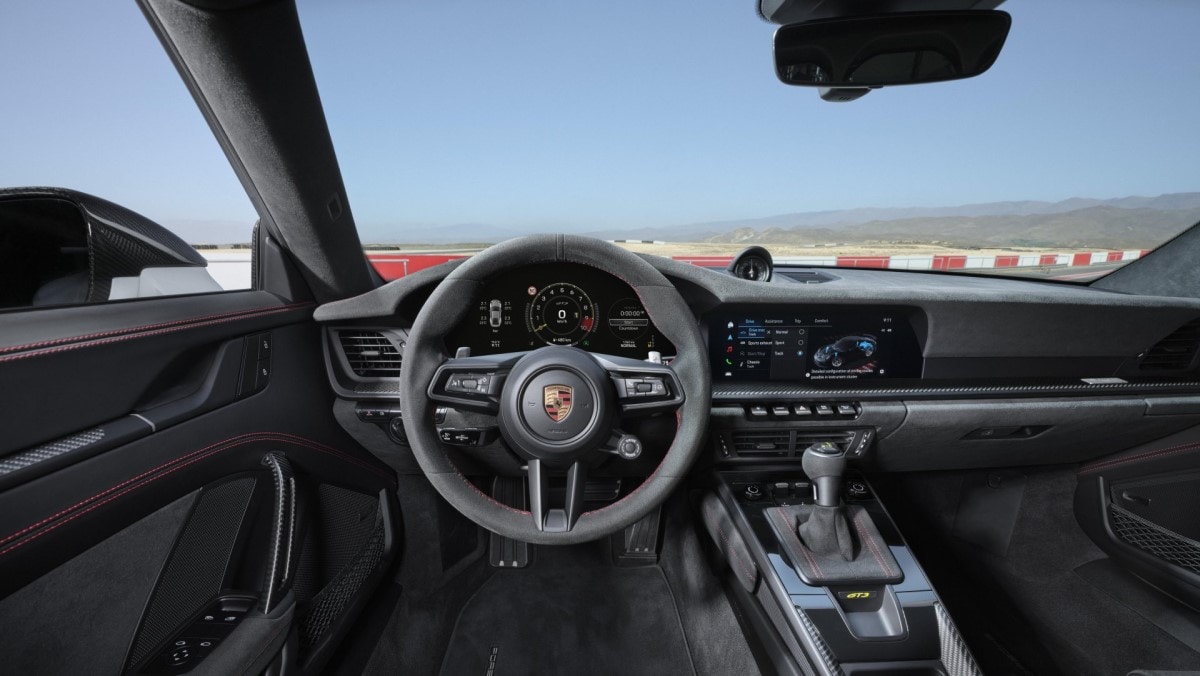
Early in the electric car era, many of the world’s quickest cars bottle lightning, not fire. But there’s one dream car that still stands for the old ways. The 2025 Porsche 911 GT3 – the most powerful version of the most iconic sports car – is new in many ways. But old in some important ones.
But, since its first appearance in 1999, the GT3 has represented the peak of what engineers can accomplish by making gasoline explode in a confined space.
The Porsche 911 is the sports car everyone knows by silhouette alone. In its slowest form, it’s brutally fast. The GT3 is its fastest form.
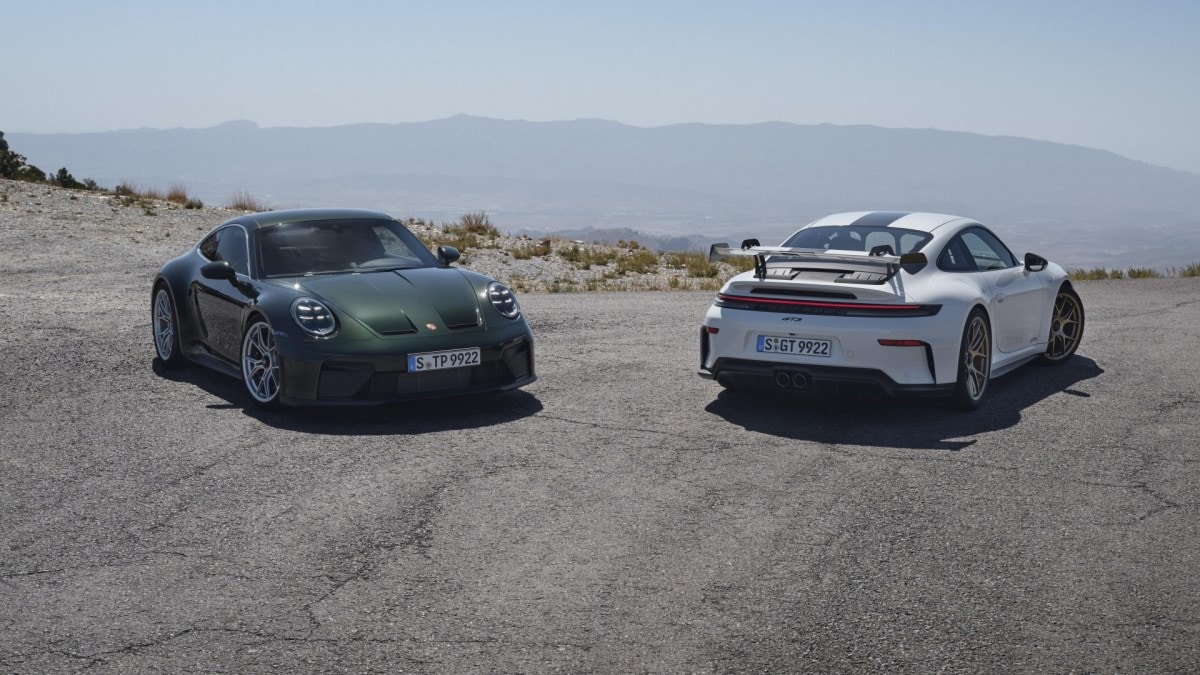
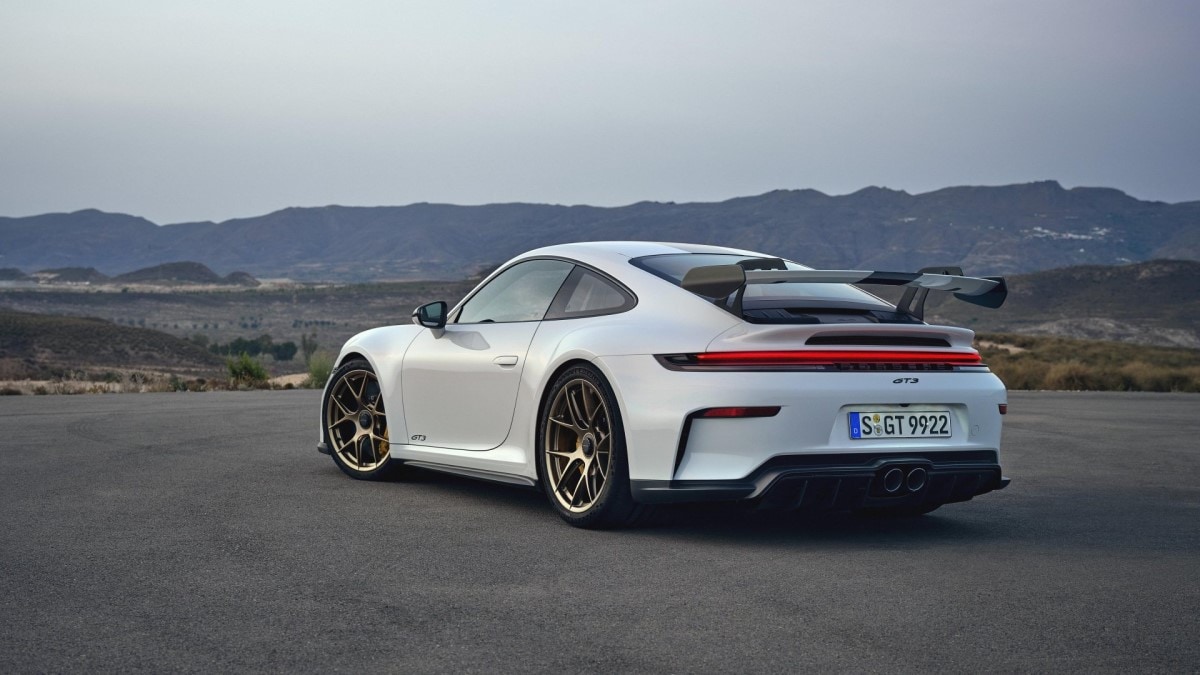
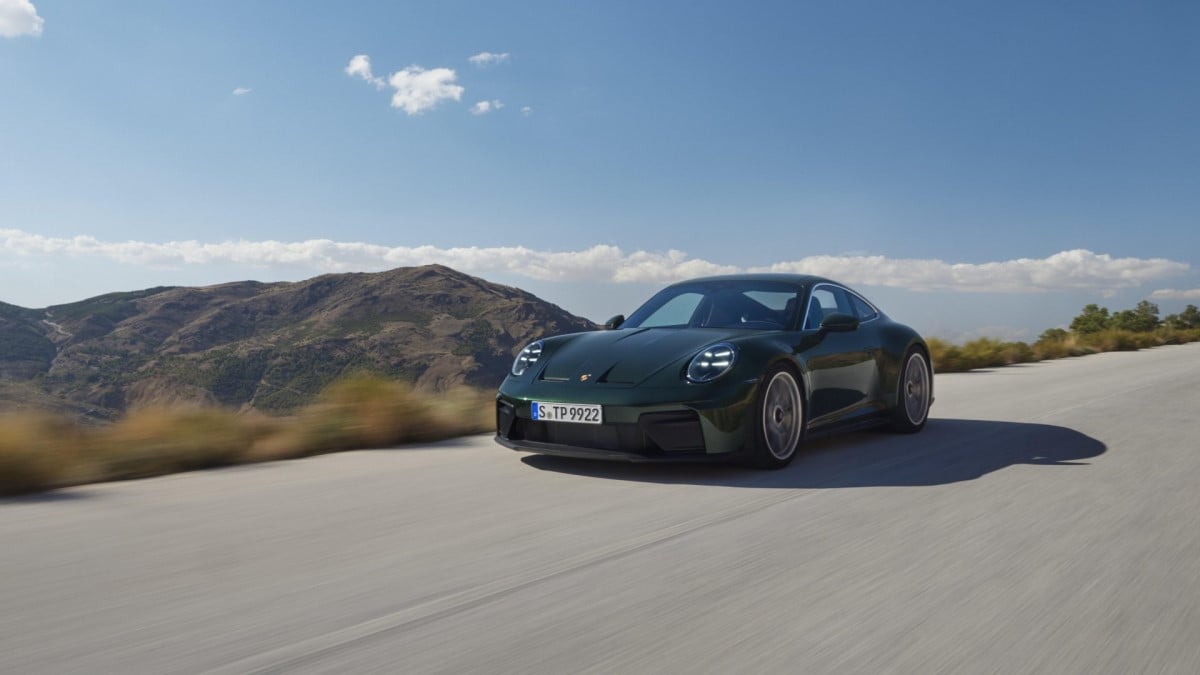
Porsche unveiled an updated version of the GT3 on Friday. As before, it comes in extrovert and introvert forms – a GT3 trim with a huge swan-neck wing and a GT3 with Touring Package trim that removes the wing to look just a bit less track-ready and more suited to the highway.
Both are as high-tech as a gas-powered car can be but retain some old-school thought where it counts.
502 Horsepower, No Turbo
That means no turbochargers, no superchargers, a stick, and classic rear-wheel drive (RWD). A 4.0-liter naturally aspirated flat-6-cylinder engine sits under the hood of every GT3. It makes 502 horsepower and sends 332 lb-ft of torque to the rear wheels, revving to an astonishing 9,000 rpm.
Both models come with either a 6-speed manual transmission or a 7-speed PDK automatic.
Engineers kept powertrain updates to a minimum. Porsche says both transmissions have an 8% shorter final drive ratio. That helps PDK-equipped models get from 0-60 mph in 3.2 seconds and top out at 193 mph. Manual-equipped versions do it in 3.7 with a driver up to the task and can manage an extra 2 mph top speed.
Suspension changes include “special teardrop-shaped trailing arms on the double-wishbone front axle. They increase downforce at high speeds and improve brake cooling.” The front ball joints sit lower than on last year’s car, which should reduce pitch under braking.
Emissions Rules Make This Challenging
The most impressive upgrades may have come in an area no driver will notice. Tough new European emissions standards make it challenging to build gas-powered cars this powerful. How did Porsche manage to do it legally?
With four times the emissions-scrubbing tech of an ordinary car. The company explains, “The 4.0-liter, naturally aspirated engine in the new 911 GT3 has been designed for current, significantly stricter exhaust standards and equipped with two particulate filters and four catalytic converters.”
We assume anyone buying one of these can afford to park it indoors.
Lighter Weight
“Carefully controlled curb weight contributes to the agile and direct handling of the 911 GT3,” the company says. It rides on lightweight aluminum wheels – silver in color this time instead of the bronze of last year – which reduce unsprung weight by 3.3 pounds.
Two available performance packages — the fabled Weissach Package and a Leichtbau (Lightweight) package — offer magnesium wheels instead, which save 20 pounds.
“A new 40 Ah lithium-ion lightweight battery also keeps weight in check by shaving off another roughly 9.9 pounds as compared to the standard 60 Ah of the previous model,” Porsche says.
The Weissach Package, offered on the GT3, also adds an anti-roll bar, coupling rods, and a carbon fiber roof, mirror shells, and side plates for the rear wing.
The Lightweight Package, offered on the Touring model, gets many of the same upgrades but foregoes the wing.
New Aerodynamics
Visual changes are minor, but there if you know what to look for. A redesigned front diffuser and lip spoiler are visible to others in traffic. New underbody air guides are not, but Porsche says they help increase downforce.
Buyers can add new Matrix Design LED headlights, which function as both daytime running lights and headlights. That “enables an enlarged air inlet area,” Porsche says, though it doesn’t explain whether the added airflow has any effect on performance.
“In the rear, the diffuser, air inlets, side plates on the wing, and the decklid are all redesigned.”
Optional Folding Carbon Fiber Seats
Performance car buyers are used to making one difficult choice. Many high-performance cars are offered with a comfort-oriented seat that folds to allow access to rear seats or storage areas, or a solid carbon fiber seat that saves weight but is barely adjustable.
Porsche has created carbon fiber sport seats that fold. They’re an option this year. “The seat is equipped with an integrated thorax airbag, electric height adjustment, and manual longitudinal adjustment; a three-stage seat heater is standard,” the company says.
The headrest pads, uniquely, can be removed to make more helmet space.
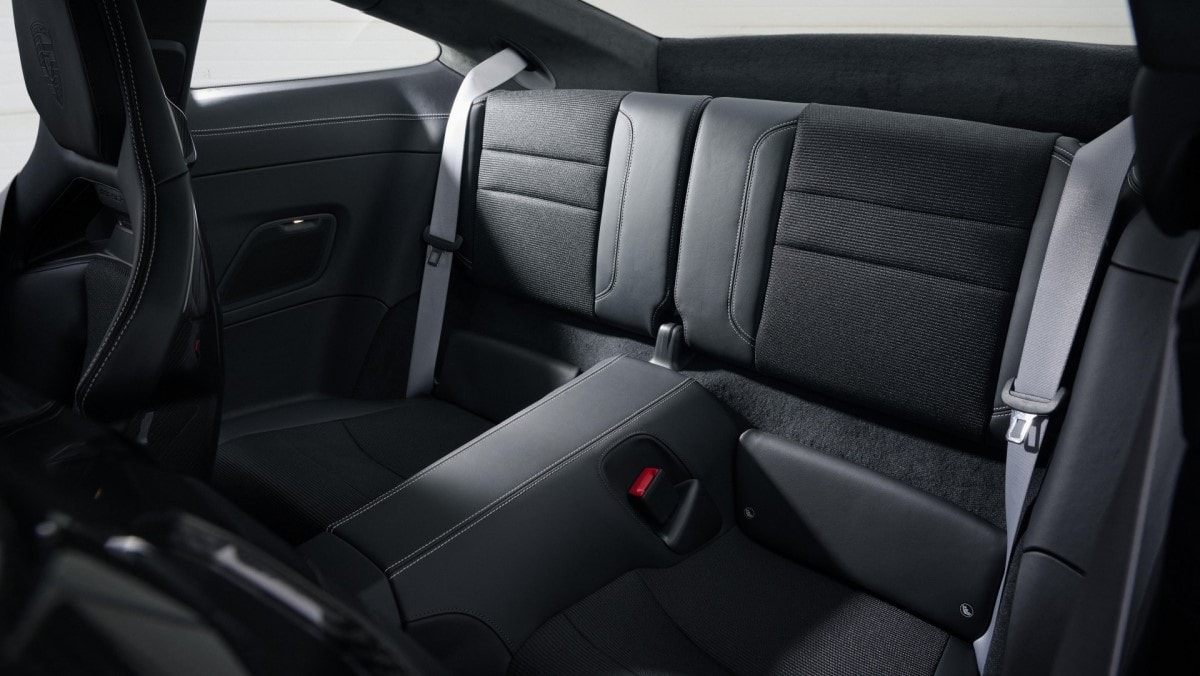
Rear Seats? They’re an Option
Touring edition buyers get another new seating option – rear seats. Porsche explains, “Fulfilling a longstanding customer request, rear seats are now available as an option for the first time.” They will not be offered on the track-ready GT3 model with the big wing.
The technical storage or access is strictly necessary for the legitimate purpose of enabling the use of a specific service explicitly requested by the subscriber or user, or for the sole purpose of carrying out the transmission of a communication over an electronic communications network.
Preferences
The technical storage or access is necessary for the legitimate purpose of storing preferences that are not requested by the subscriber or user.
Statistics
The technical storage or access that is used exclusively for statistical purposes.The technical storage or access that is used exclusively for anonymous statistical purposes. Without a subpoena, voluntary compliance on the part of your Internet Service Provider, or additional records from a third party, information stored or retrieved for this purpose alone cannot usually be used to identify you.
Marketing
The technical storage or access is required to create user profiles to send advertising, or to track the user on a website or across several websites for similar marketing purposes.