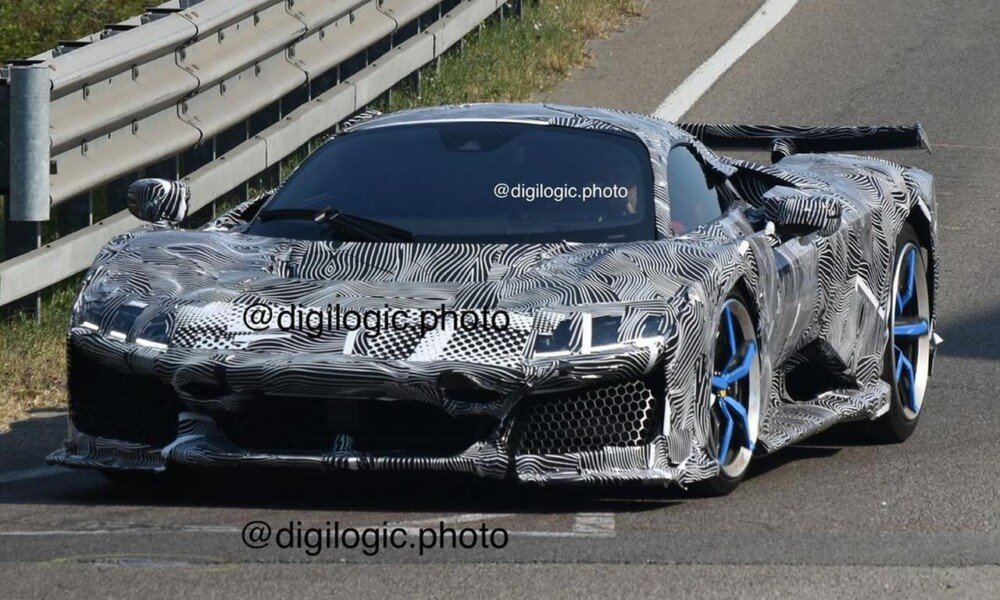
The hypercar wars are hotting up. Following the launch of the McLaren W1, Ferrari is now gearing up to reveal its next-gen flagship. The LaFerrari successor, known internally as ‘F250’, is likely to be unveiled during Finali Mondiali on October 17.
Spy images suggest the F250’s design will be heavily inspired by the Le Mans-winning 499P race car. The new hypercar has a flat nose section with what appear to be active flaps channelling air to a double S-duct. At the rear, it has a large active wing that can be raised or lowered depending on the downforce requirement. It might also have a DRS function. The rear fascia comprises slim LED taillights with an aero channel in the centre, a large diffuser, and a centrally mounted exhaust.
Unlike McLaren, who has adopted a brand new design for its W1, Ferrari appears to be sticking to a more conventional look. The interior is also likely to be based on the latest design trends at Maranello. We can expect to see a digital screen for the gauges, a sporty steering wheel with haptic switches, an additional screen on the passenger side, carbon fibre seats, carbon wheels, and more.
The most notable difference between the F250 and the Enzo and LaFerrari is the engine. For the first time in a very long time, Ferrari’s flagship hypercar will not be powered by a V12. Instead, it will use a race-derived 3.0-liter twin-turbo V6. It will be paired with three electric motors; two of these will drive the front axle, making it all-wheel drive, while a third one is expected to be paired with the dual-clutch transmission.
While Ferrari has yet to reveal the exact details of the powertrain, rumors suggest that it might produce around 1200 hp, allowing the F250 to sprint from 0-62 mph in 2.15 seconds.
It’s often said that everything looks better on social media than in real life. But when it comes to Vink Motorsport in the Netherlands, the opposite is true.
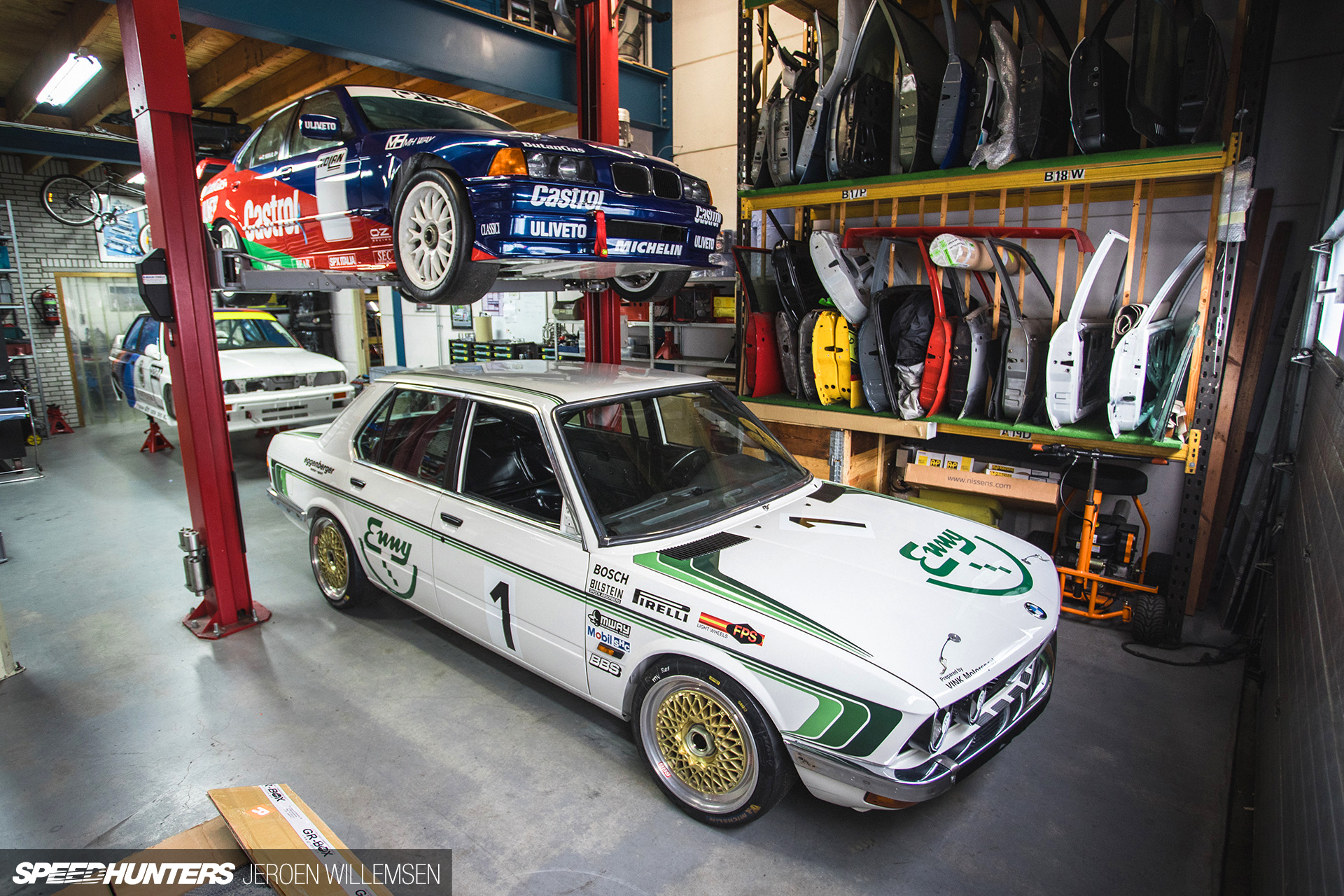
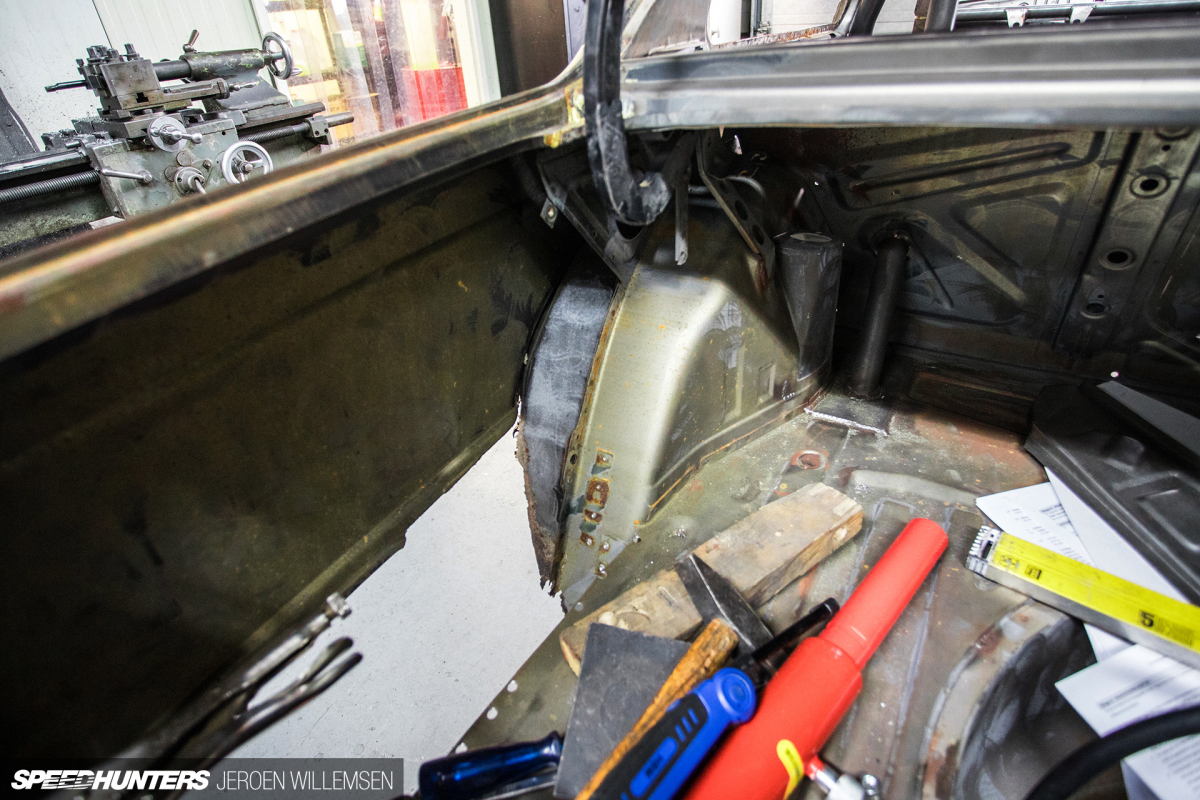
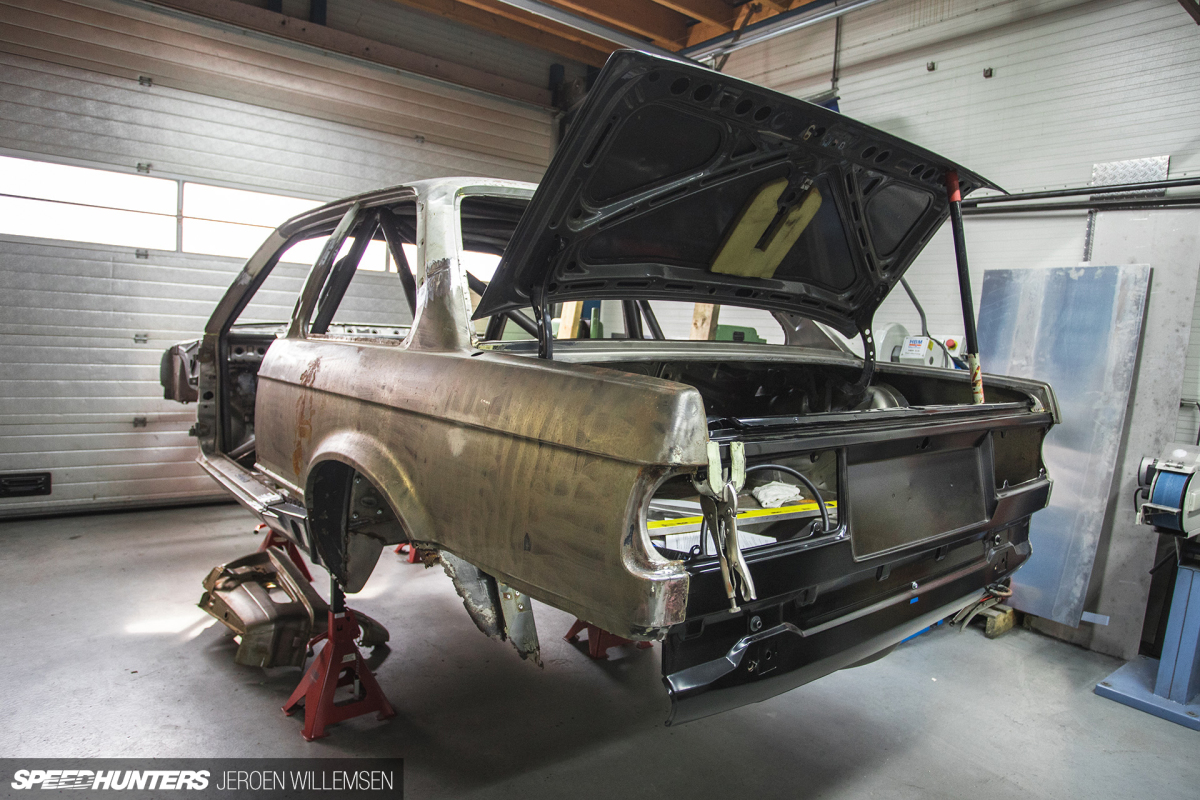
After email exchanges with the Vink team, I was invited to tour the Zaandam-based workshop renowned for its BMW race car restorations and new classic builds.
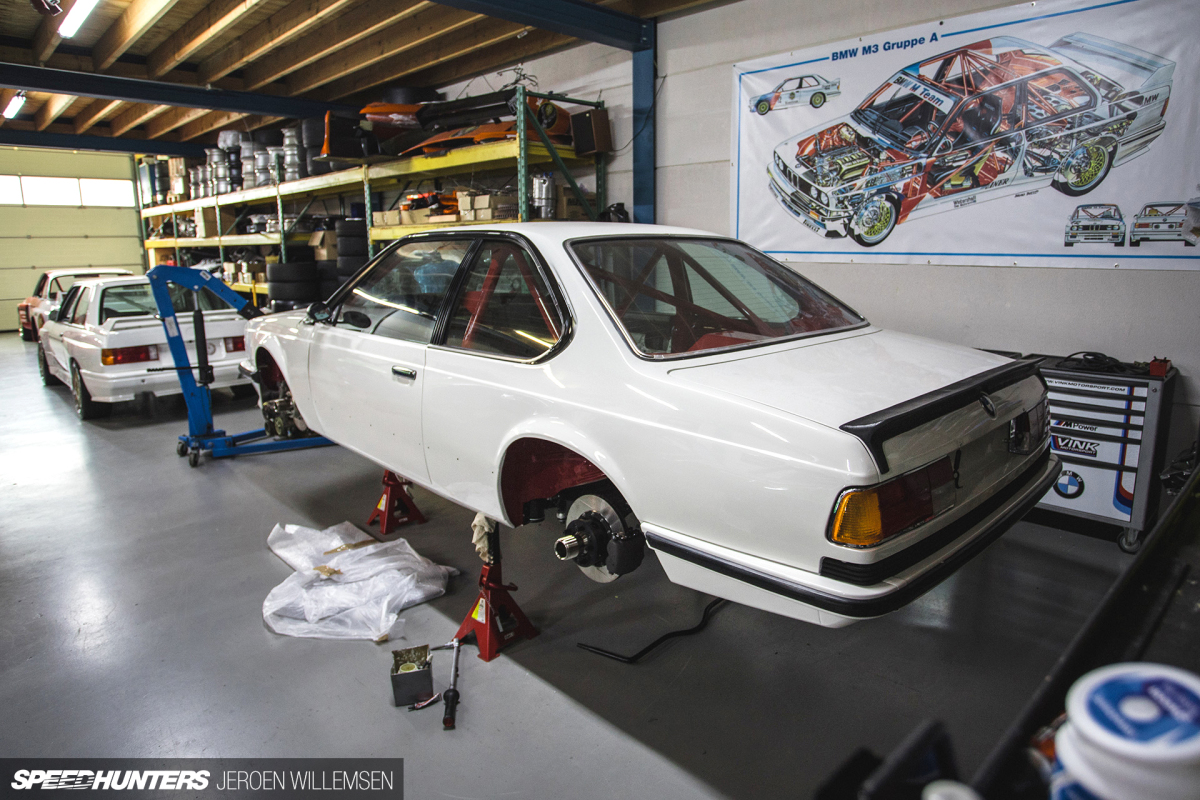
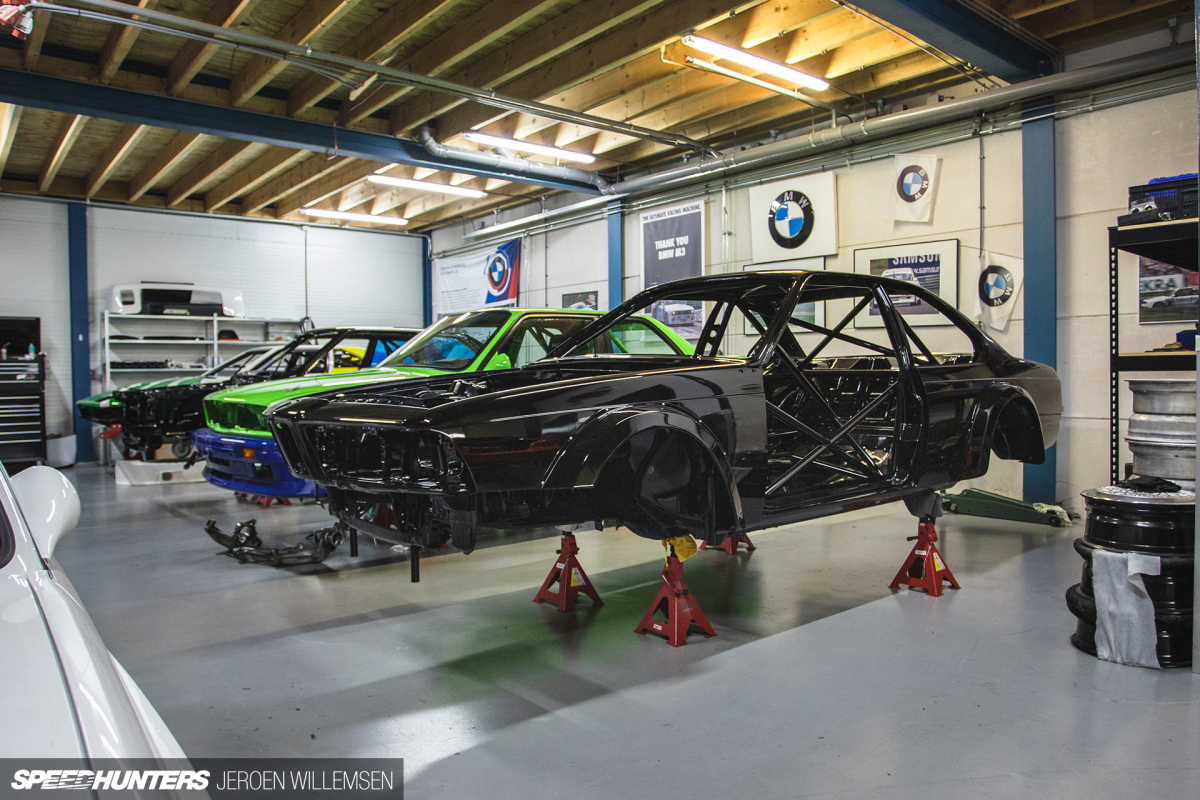
Based on what I’d seen online, I thought I knew what to expect. Yet, stepping inside Vink Motorsport, I was surprised by the size of the building and the number of cars inside. I never would have guessed something like this was possible in the Netherlands; as usual, I underestimated the knowledge and expertise that exists in our small country.
Upon entering, I was greeted by Vink Motorsport’s owner Ton Vink, who has so much passion for the cars he builds.
Ton’s journey dates back to 1993 as a mechanic in the Dutch Touring Car Championship (DTCC), where he ironically started in a Mercedes-Benz team. After his time in the DTCC, he transitioned to karting, running Team TKP, which won Dutch, European, and world titles.
Despite his success in karting, Ton’s passion for touring cars – especially BMWs – remained. So, in 2005, he built his first E30 M3, signaling the beginning of Vink Motorsport. What began as a hobby quickly evolved into a thriving business.
Today, Ton and his team focus on building and preparing BMWs for historic racing. Most of these cars are engineered to historic FIA specifications, allowing them to get back on track for the many classic motorsport events in Europe. Vink Motorsport also provides track-side support, ensuring quick fixes for customers during race weekends.
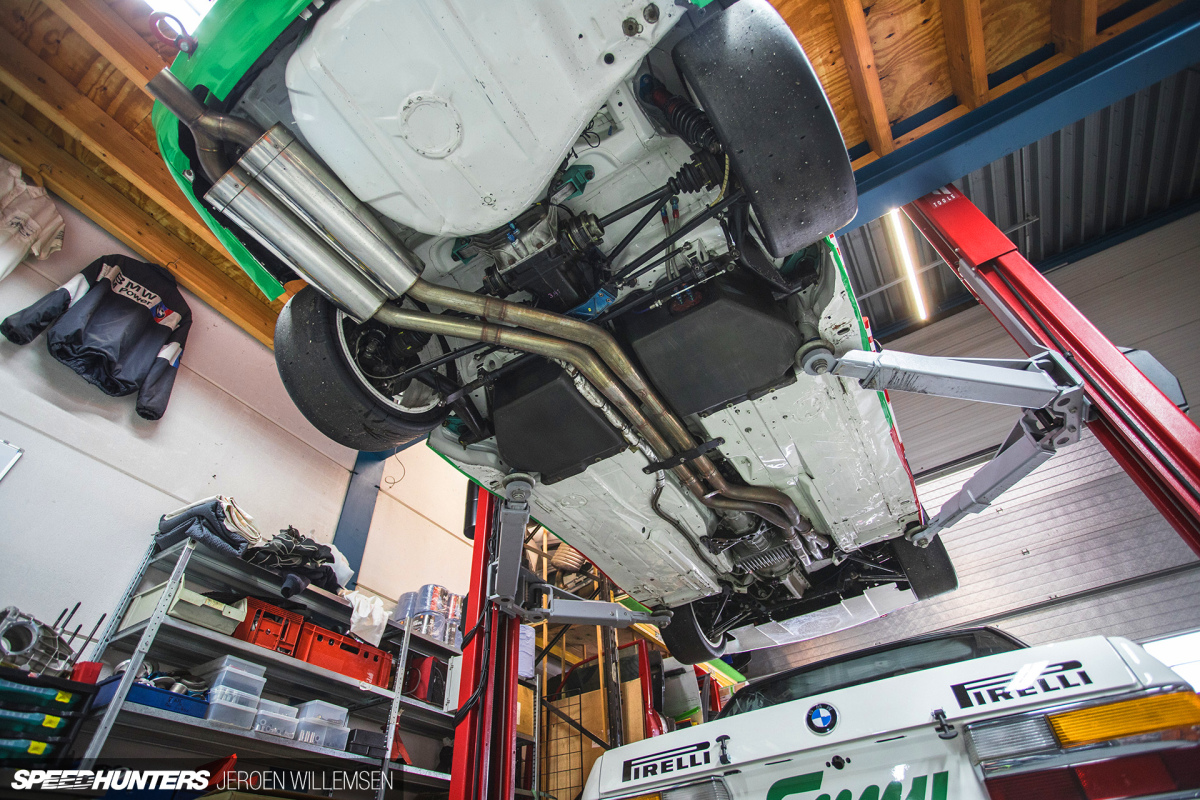
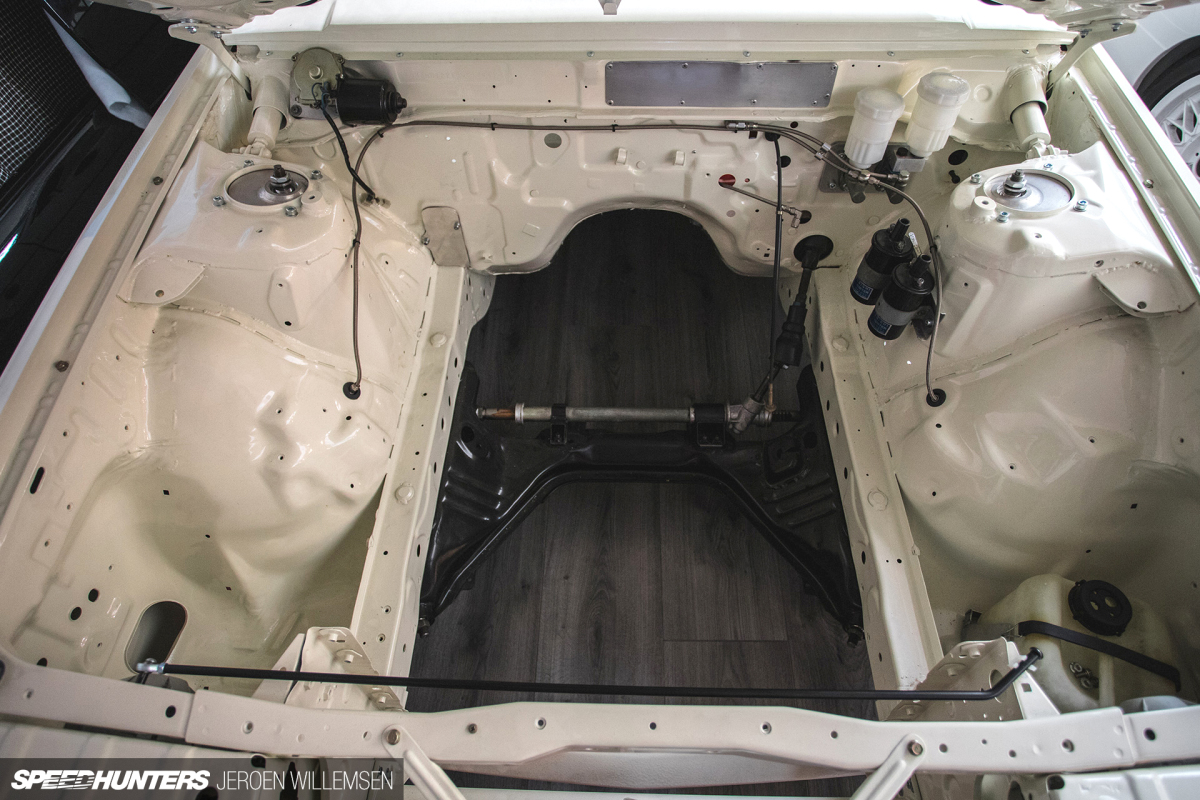
Ton talked me over several BMWs in the workshop – a few of which I’ll show you in a follow-up spotlight – but we’ll start with this treasure: a Schnitzer E36 STC from 1996. Built as a ‘T-car’ (backup car) for that year’s BTCC, it never saw the starting line. Its first race was the 1996 Tourist Trophy at Donington Park in the UK, driven by Joachim Winkelhock, who finished fourth.
Soon after, the E36 was shipped to South Africa for the 1996 Rainbow Championship – contested at Kyalami and Kilarney – of eight races during two weekends. Winkelhock and Shaun van der Linde shared the car, each driving four races. Ultimately, Winkelhock won the championship with four wins from his four starts.
Tucked away in the opposite corner of the workshop sat an E36 with an equally fascinating backstory. Crazily, this car connects to Prodrive and the late Colin McRae. How? Well, Prodrive managed the BTCC BMW factory team in 1992, and McRae, then a rising rally star for Subaru, guest raced in this car at Knockhill Circuit in his home country of Scotland.
The E36 was found in Thailand and brought back to Holland, where it’s waiting for its turn to be restored to its former glory.
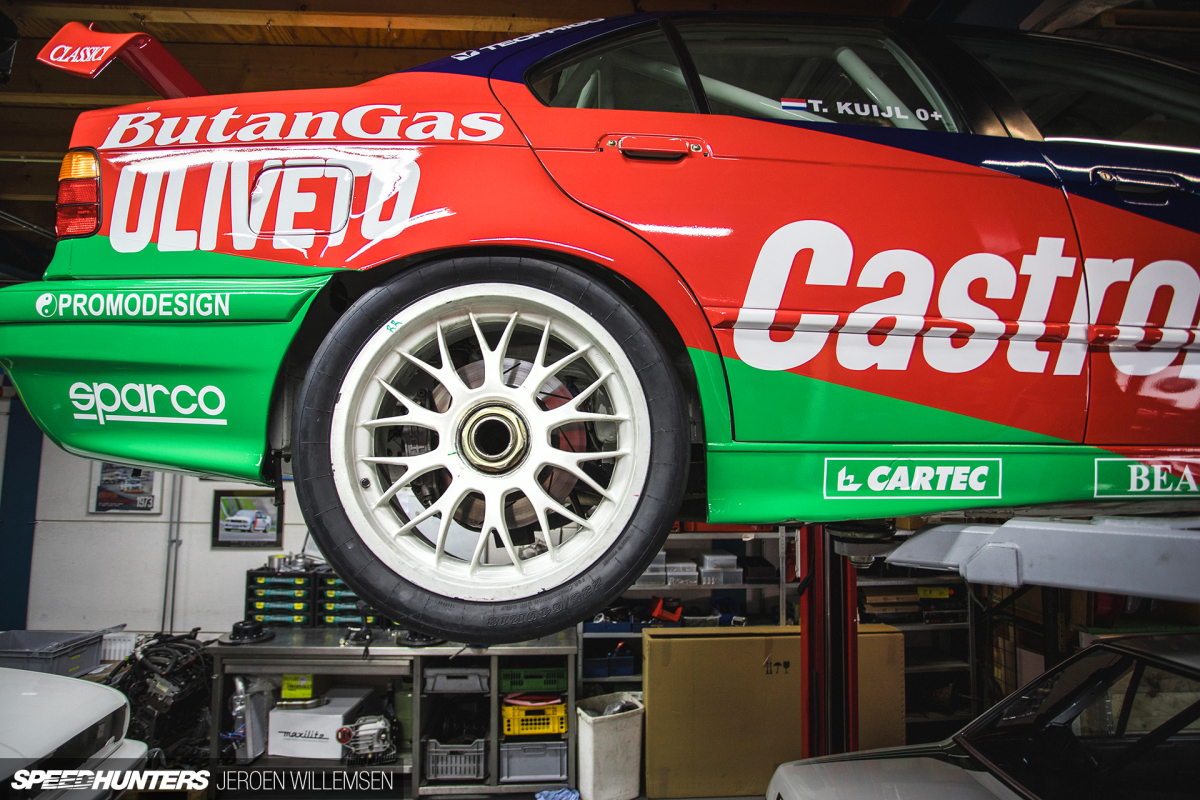
Another E36 caught my eye, this time an STW built by BMW Motorsport and driven by late 1980s F1 driver Stefano Modena. At the inaugural FIA Touring Car Challenge in 1993 at Autodromo Nazionale di Monza, Modena finished 26th in the first race and 7th in the second.
The car’s original livery, featuring a steam cleaner company (Polti), lacked flair, prompting the owner to spice it with this blue, red, and green Castrol scheme.
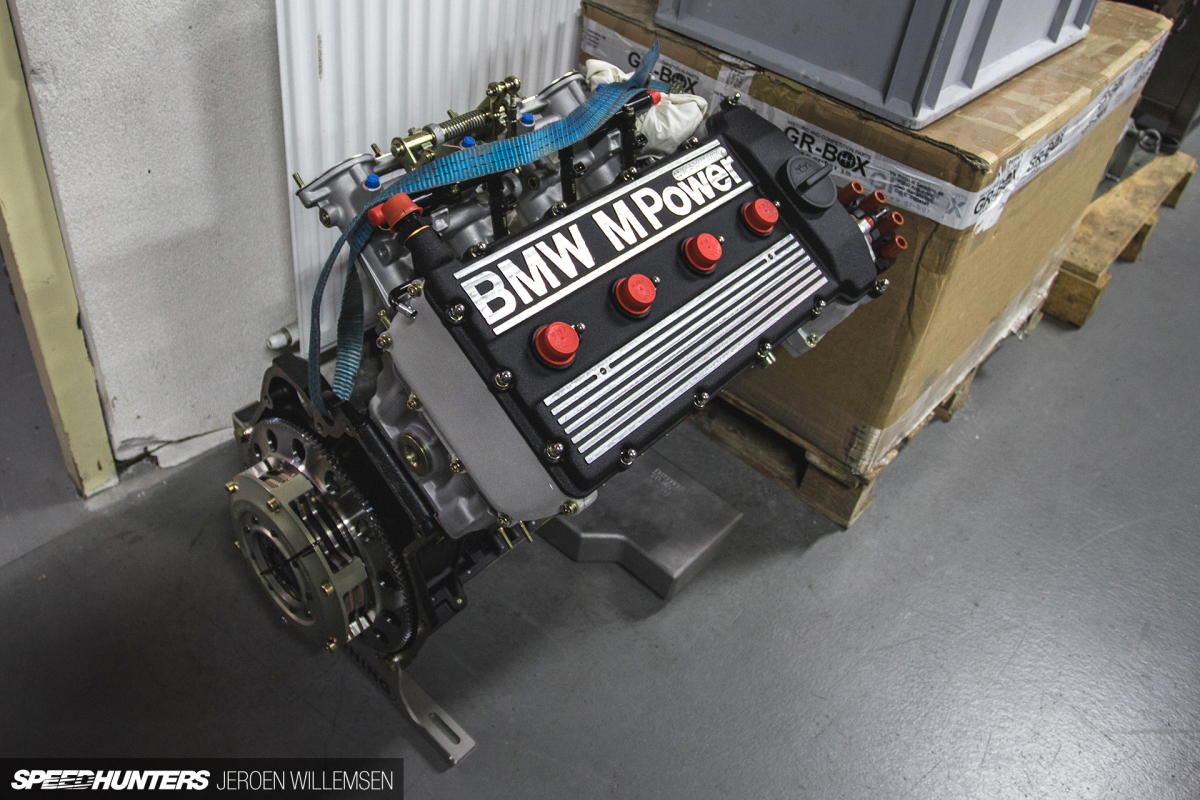
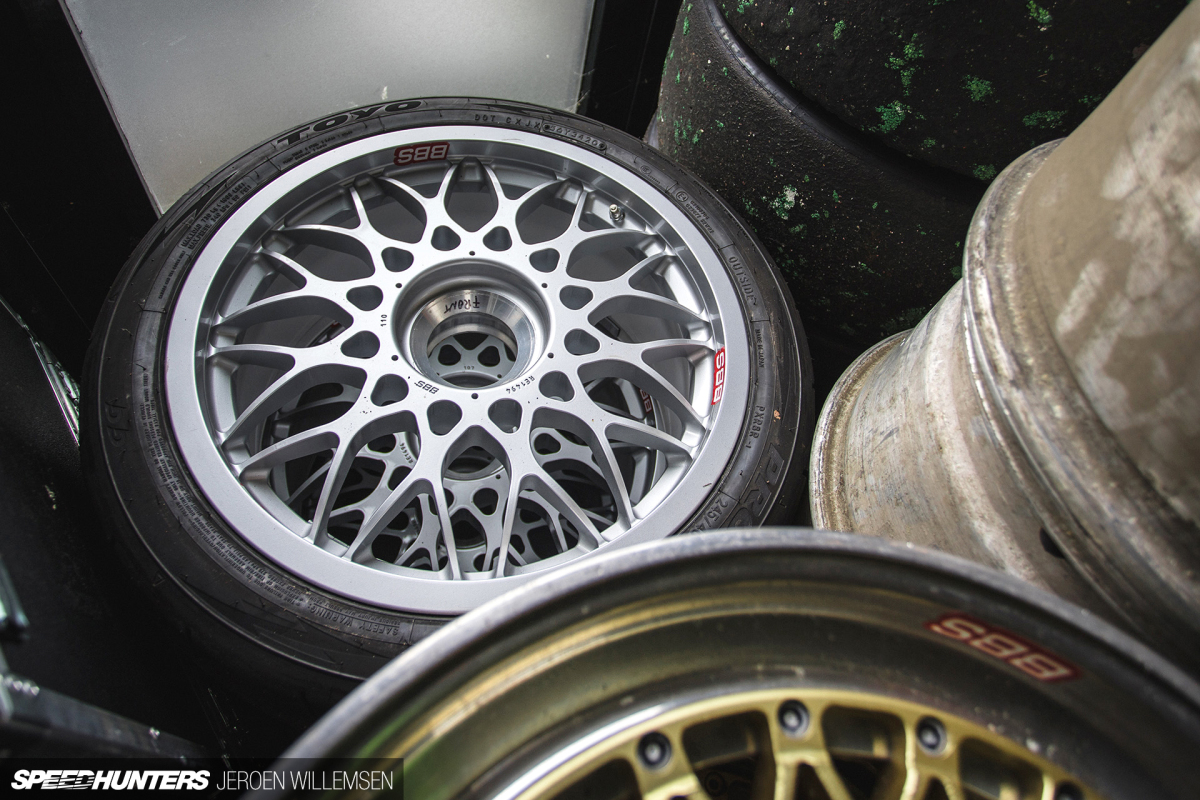
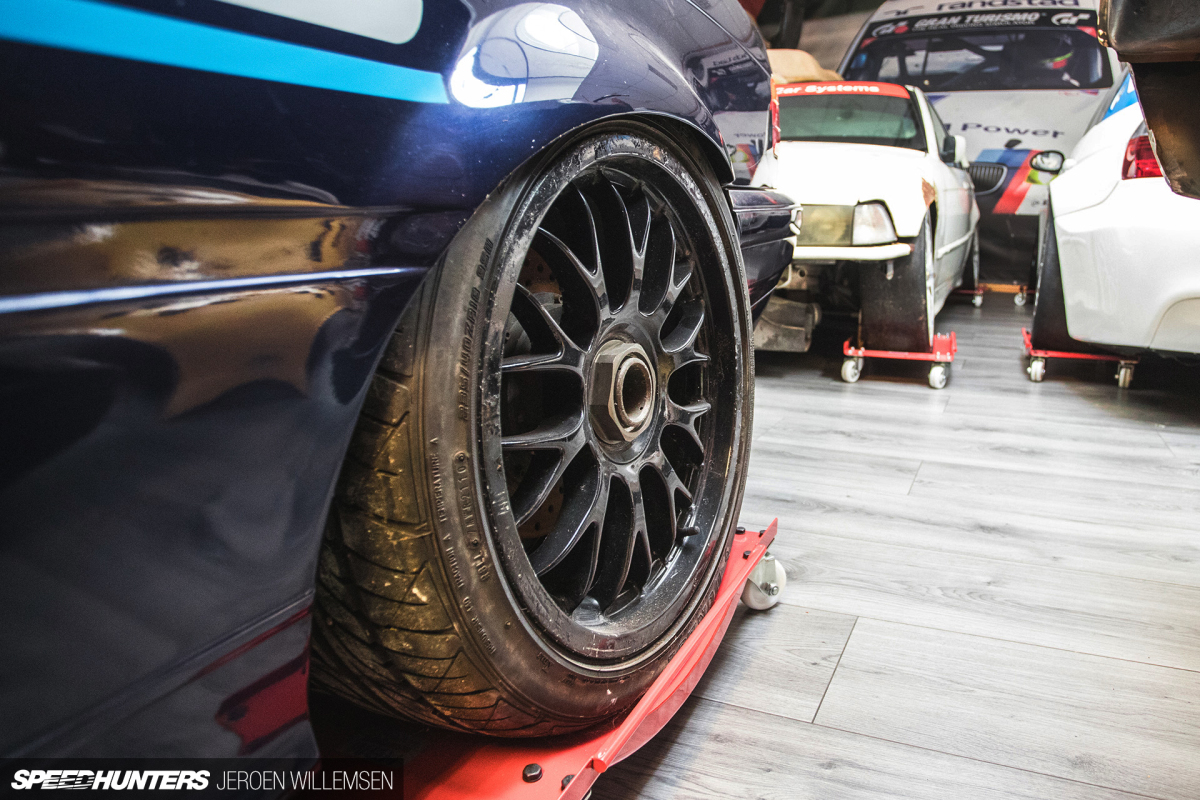
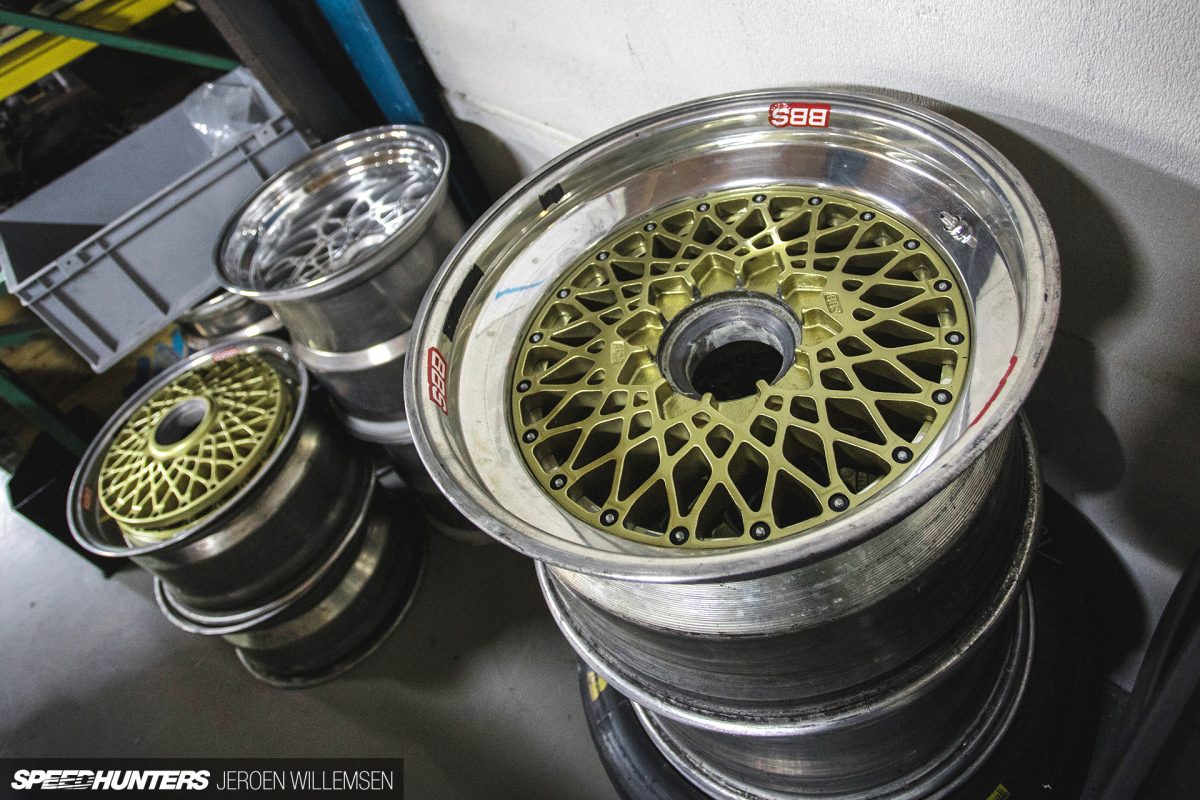
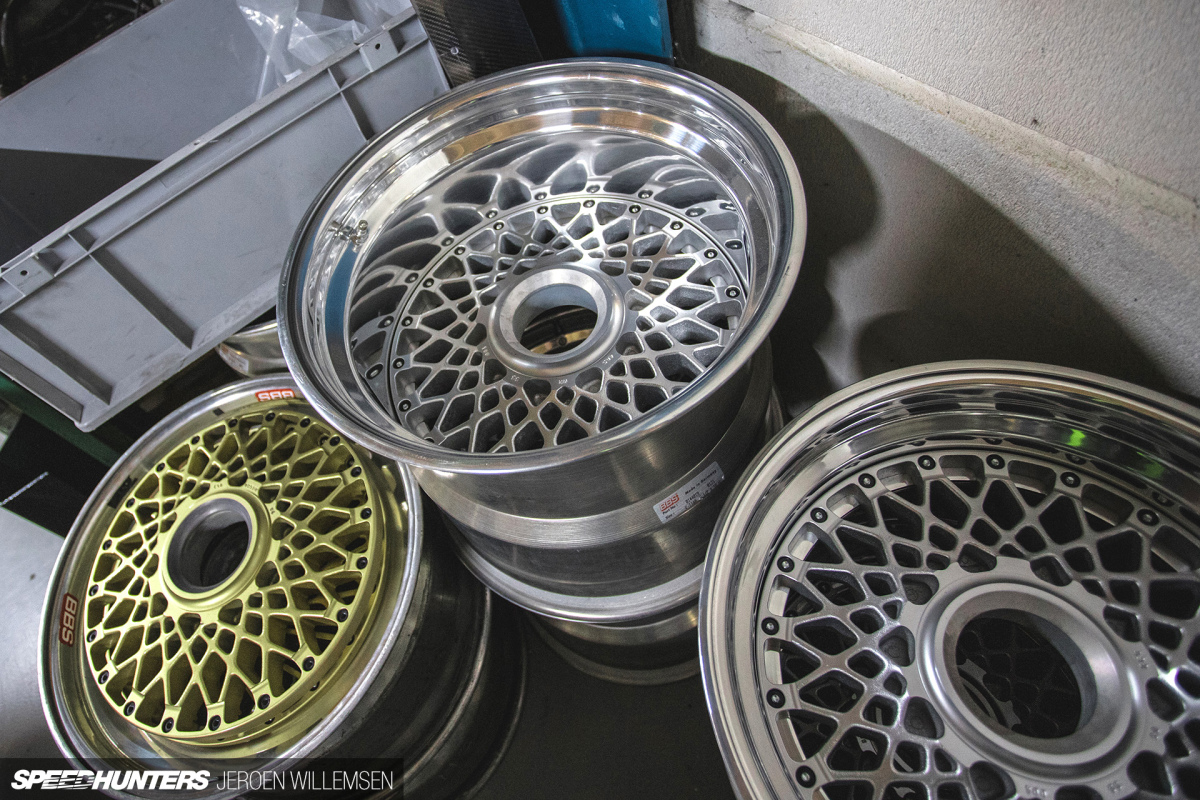
Heading upstairs, I almost tripped over a few priceless BBS wheels… then I saw it…
If there were any car I wasn’t expecting to find at a BMW race car-centric restoration shop, it would be this – a Group A Mazda 929, powered in period by a 13B rotary engine.
The Mazda was originally constructed in 1985 by Dutch racer Hans van der Beek (who now works at Vink Motorsport) for the Spa 24-Hour race. Hans and his privateer team painstakingly crafted the car themselves, successfully homologating all its custom-made racing components with the FIA.
With backing from Mazda Netherlands, the 929 – affectionately dubbed the “Hiroshima Taxi” – was a familiar sight at the circuit until a crash in 1988 sent it to storage. In 2016, it was rediscovered in a Belgian barn.
The Vink Motorsport team is still figuring out a plan for the car, but with so much customer work keeping them busy, it may be a while before this one sees track time again.
As you can see, there’s a lot going on at Vink Motorsport – but this was just the stuff in the shop when I visited!
Ton’s latest endeavor is a dream for any petrolhead: five meticulously crafted replicas of the legendary BMW M3 E36 GTR. Built from original blueprints with historical FIA approval, these GTR replicas promise authenticity and performance. Of the five planned, three have already been sold. Once the first is complete, I’m eager to schedule a photo shoot to capture the masterpiece in all its glory.
For now, though, stay tuned for my Vink Motorsport spotlight feature.
If I told you to expect engine-swapped Hondas at SEMA this year, you might not bat an eye.
I’d be surprised if there were more Hondas on display rocking their original motors than engine-swapped examples. K20, K24, B18, and B16 engines are everywhere these days as if there’s a secret team at Honda keeping the production lines alive.
And that’s before we even get to the topic of Honda swaps in other makes. Whether it’s FWD, RWD, AWD, naturally aspirated, or turbocharged, there’s bound to be someone who’s completed some form of conversion. There’s even a guy out there designing a ‘K36′ inline-six engine. Pure madness.
It’s hard to stand out with a Honda build these days, but Ryan Basseri and the team at Rywire Motorsport Electronics are doing just that with not one, but two outrageous Civics headed for the 2024 SEMA Show in November.
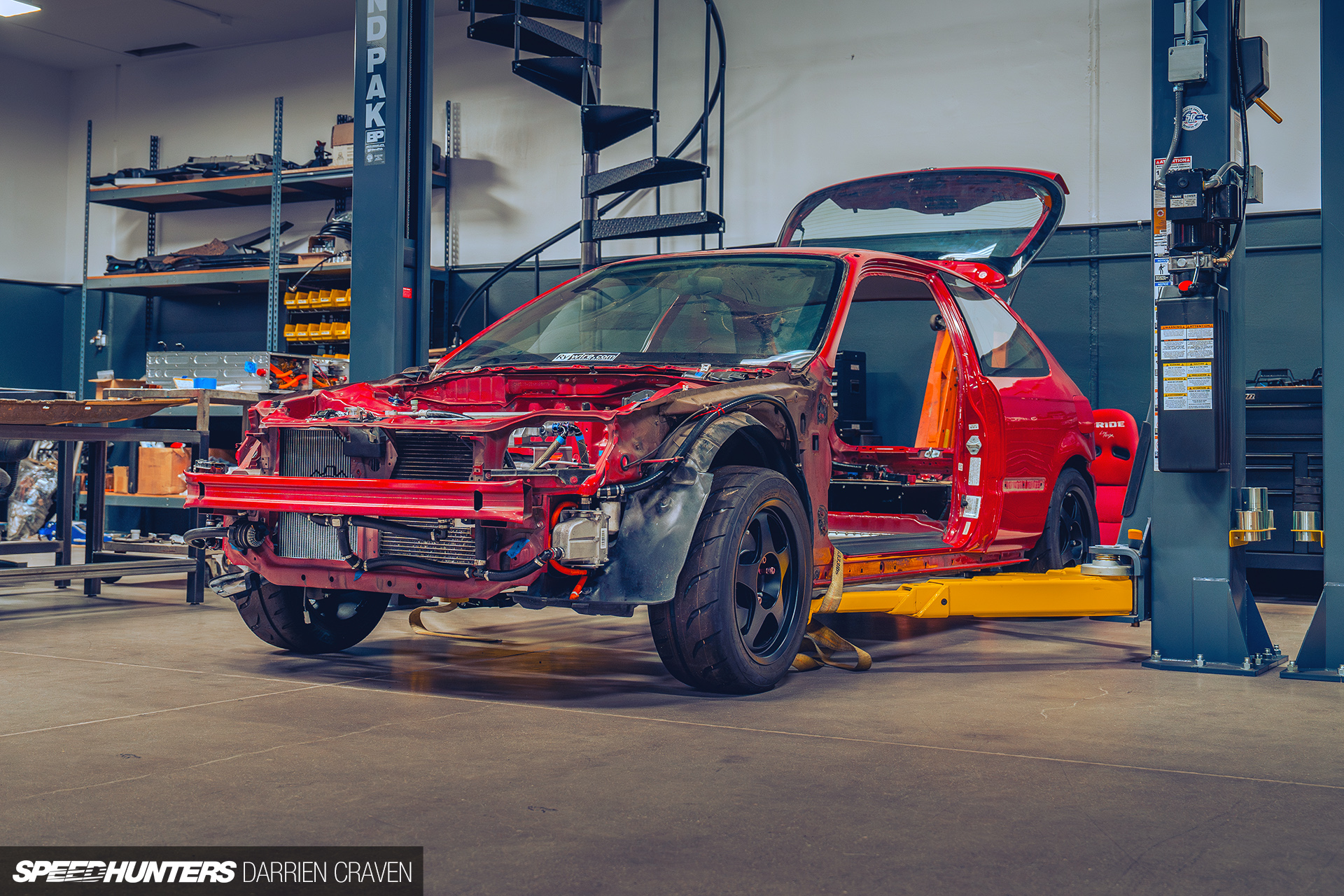
First, let’s take a look at Ryan’s Milano Red EK Civic hatchback, which is still in the early stages of its build.
So, how did this project come about? “I’ve always wanted to build an EK for myself, so this was a great way to kill two birds with one stone – easy brand recognition and development [of electric drive systems],” Ryan says.
This isn’t Rywire’s first foray into electronic systems or electric cars. The company has built a reputation for its expertise in automotive electrical work; look through its product catalogue, and you’ll find hundreds of applications.
With so much variety (think wiring kits to power distribution modules), it’s no surprise that Ryan and his team are always advancing their expertise.
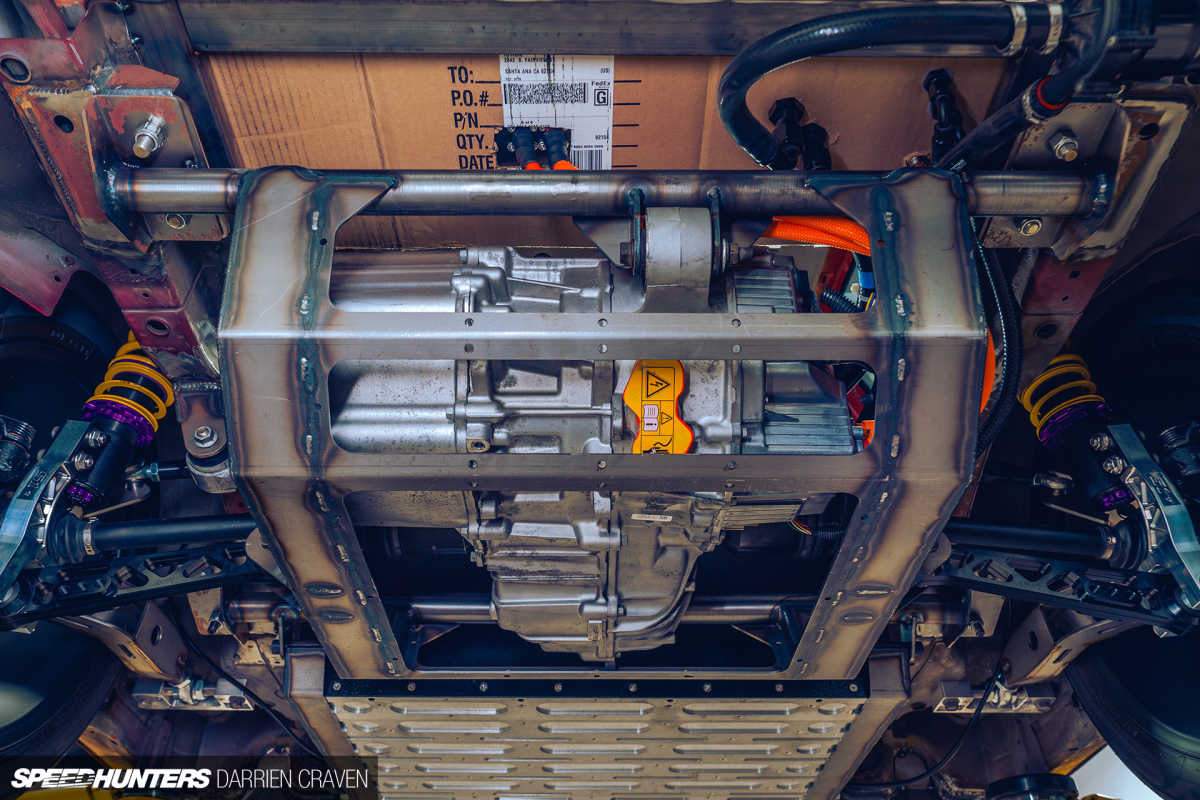
Enter their most ambitious project yet: an S2000 retrofitted with a Tesla motor and Chevrolet battery. Ryan explains: “The S2000 was a bare chassis given to me by a buddy. I was going to build a Civic first, but the S2000 was the path of least resistance.”
“I wanted to learn how EV systems work, and the S2000 was a decent choice given the motor selection and fitment,” Ryan recalls, clearly having learnt a thing or two from the project and finally applying that knowledge to a Civic.
While the EK sports timeless modifications, the S2000 looks like something from the future, tucked away in Rywire’s headquarters.
“The goal for the S2000 was to have it scream ‘electric!” says Ryan. And Rywire nailed it with radical custom bodywork. But that’s not the aim for the hatchback. The 16-inch Desmond RegaMaster EVO wheels, wrapped in Toyo Proxes R888R tyres, add a fantastic touch.
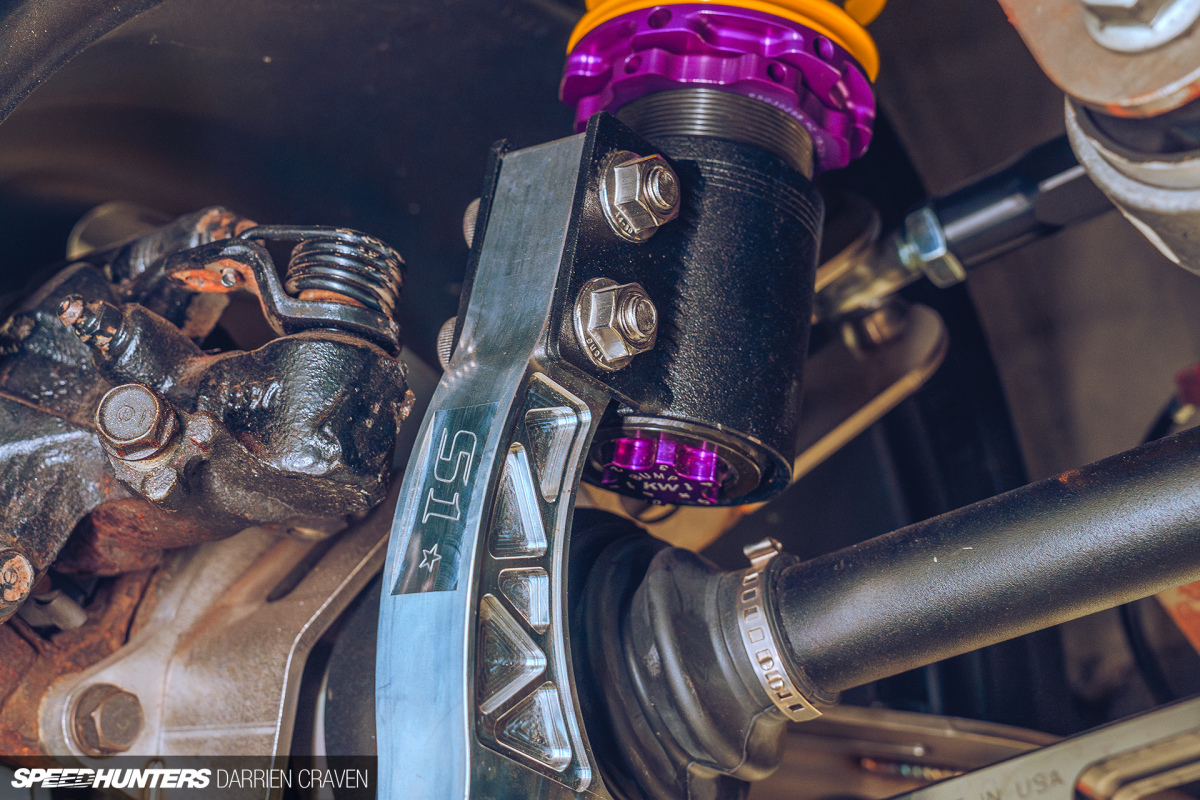
Those with a keen eye might have spotted the 5×114.3 hub conversion accommodating the five-stud wheels. Behind them, a Spoon Sports front big brake kit and bespoke KW Motorsport coilovers all around.
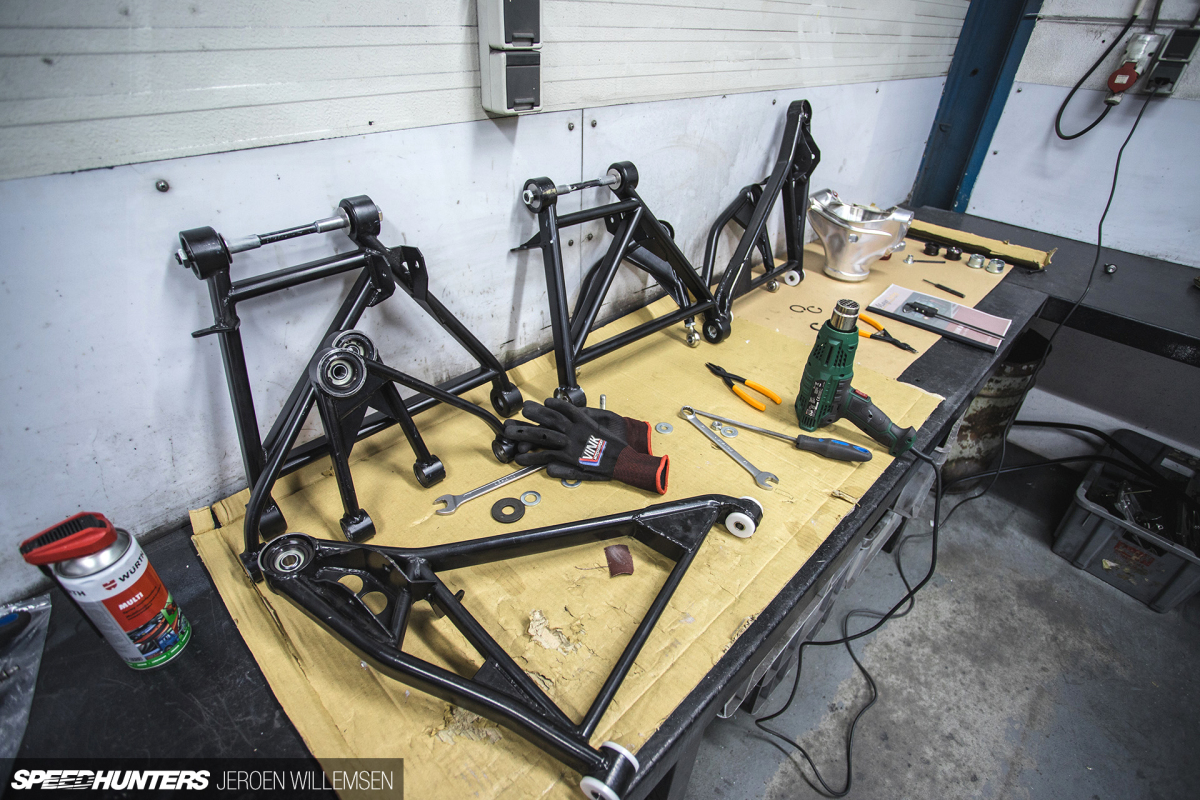
At this stage of the build, the suspension components have had their initial fitting, the setup featuring PCI control arms and linkages and S1Built rear trailing arms for AWD.
Yes, you read that right – AWD. You’re looking at the foundation of a dual-motor, all-wheel-drive EK Civic.
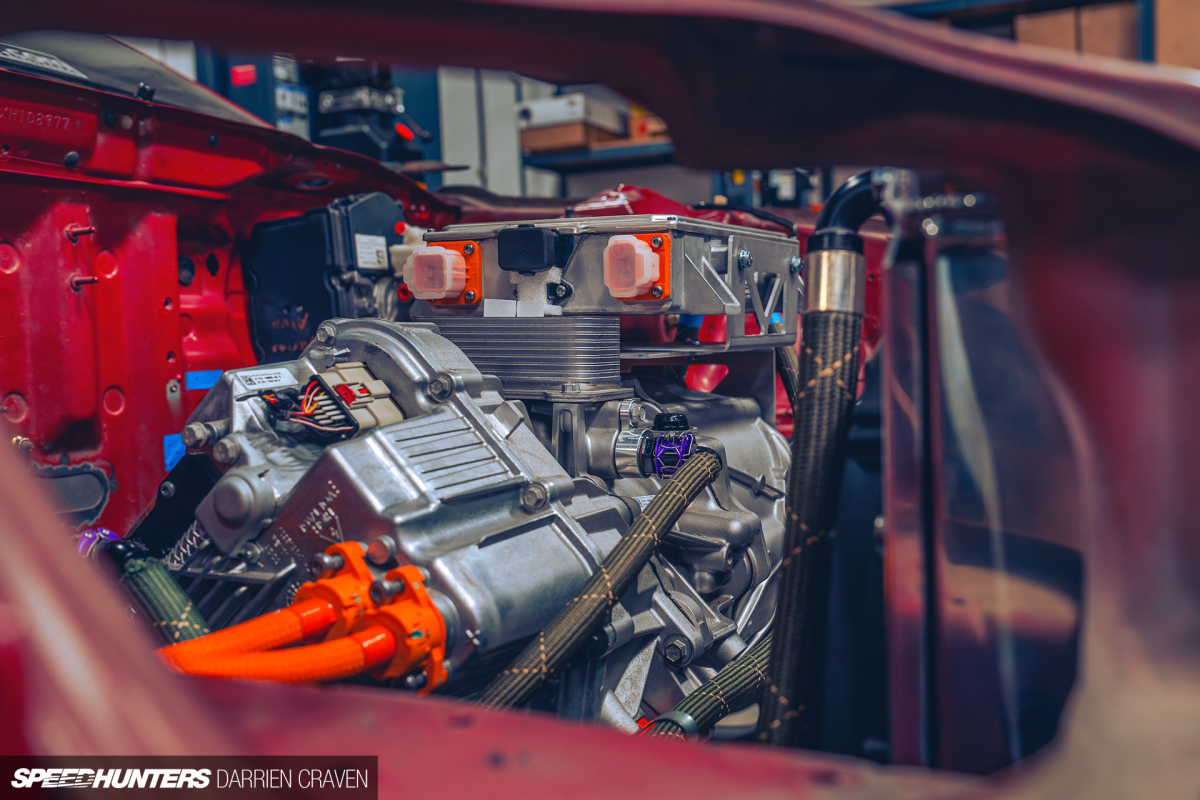
I’ll share more specifics once we feature the complete build, but expect roughly 600hp from the dual motors, with an 85kWh battery good for about 400 miles of range, and a 0-60mph time I can’t quite comprehend.
The engine bay is fascinating, even in its semi-complete state. There’s something so alien about an enormous electric motor residing where you’d expect to see a recognisable B-series engine.
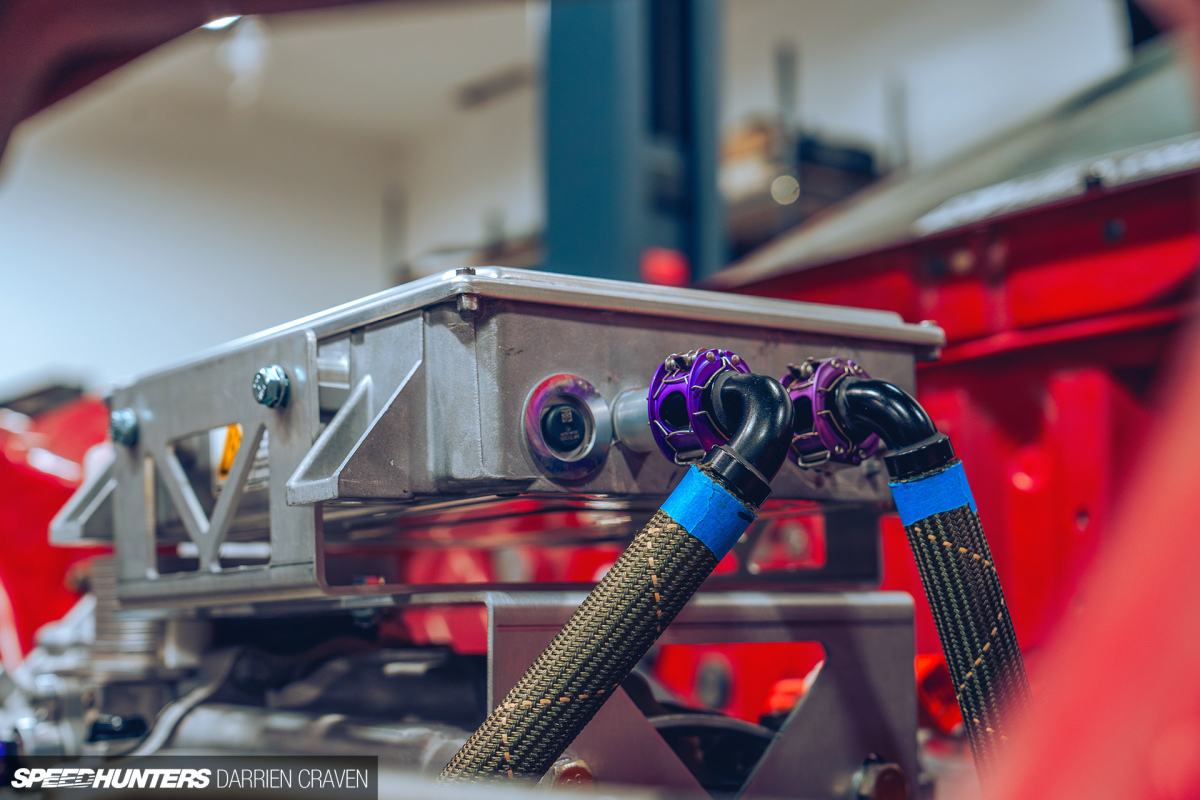
Funnily enough, though, the most interesting details are the ones that can be recognised. The splash of purple from the KW top mounts is one thing, but the beefy CSF Race radiator is something else entirely.
You find CSF cooling solutions in many big-power builds, however, these products almost seem wrong in an EV. Remember, though, electric motors and batteries generate a lot of heat.
As with the coilovers, brakes, and chassis components, Ryan has sourced parts from the top of the aftermarket world to create this wild Civic. I’m excited to share the build progress, especially given the innovative approach being taken.
With classic touches from US and JDM EK Civics, paired with cutting-edge parts for the EV swap, this build is a labour of love for Ryan.
As earlier mentioned, this isn’t the only Civic the RyWire team is preparing for SEMA. Honda enthusiasts, watch this space…
A new variant of the Michelin Pilot Sport Cup 2 is being developed for the Carrera GT
This is the second time Porsche commissioned new tires for the Carrera GT
Porsche Carrera GT production may have stopped almost two decades ago, but Porsche is still working on ways to make its millennial supercar better.
The automaker on Thursday announced that it teamed up with Michelin to develop a new tire for the Carrera GT. A variant of the Michelin Pilot Sport Cup 2, it incorporates recent technological developments to help improve performance on both dry and wet pavement, according to Porsche.
To make the new tire more of an all-rounder than previous Carrera GT rubber, Michelin employed two different rubber compounds. The inner shoulder and tread blocks use a compound that’s high in silica, which is bet for grip in wet conditions, according to Michelin. The outer shoulder and outer tread blocks use a compound made with industrial soot that provides better performance in dry conditions.
Porsche Carrera GT gets new Michelin tires
The tire was tested at the Nürburgring Nordschleife by former Porsche factory racing driver Joerg Bergmeister, who claims better feedback than previous tires, including clear communication of when the tires are about to break traction.
“The new tires do not just make the Carrera GT faster, they also make it easier for the driver to pilot the car in a spirited manner,” Bergmeister said in a statement.
Porsche also claims stopping distance from 62 mph has improved by up to 8 feet, while the stopping distance from 124 mph is 39 feet shorter than before. That’s important in a car that, when new, boasted a 0-62 mph time of 3.9 seconds and a 205-mph top speed. That was achieved with a 5.7-liter V-10 producing 605 hp and 435 lb-ft of torque, propelling 3,043 pounds of car.
Porsche Carrera GT gets new Michelin tires
Porsche made just 1,270 examples from 2003 to 2006. While it’s been a long time since production ended, this isn’t the first time Porsche has commissioned a new tire for the Carrera GT. In 2013, the automaker offered a newly-developed Michelin Pilot Super Sport tire as a replacement for the original Pilot Sport PS2 rubber.
More recently, Porsche had to provide Carrera GT owners with new tires for a different reason. As part of a fix for a suspension-related recall issued in April 2023, the automaker said earlier this month that it would provide owners with a free set of tires.
Nissan has tapped AI to check for paint defects on new cars
AI has improved paint defect detection by 7%, according to Nissan
Nissan said AI is meant to enhance detection, not replace humans
Nissan is using artificial intelligence to help spot paint imperfections on cars produced at its U.S. assembly plants.
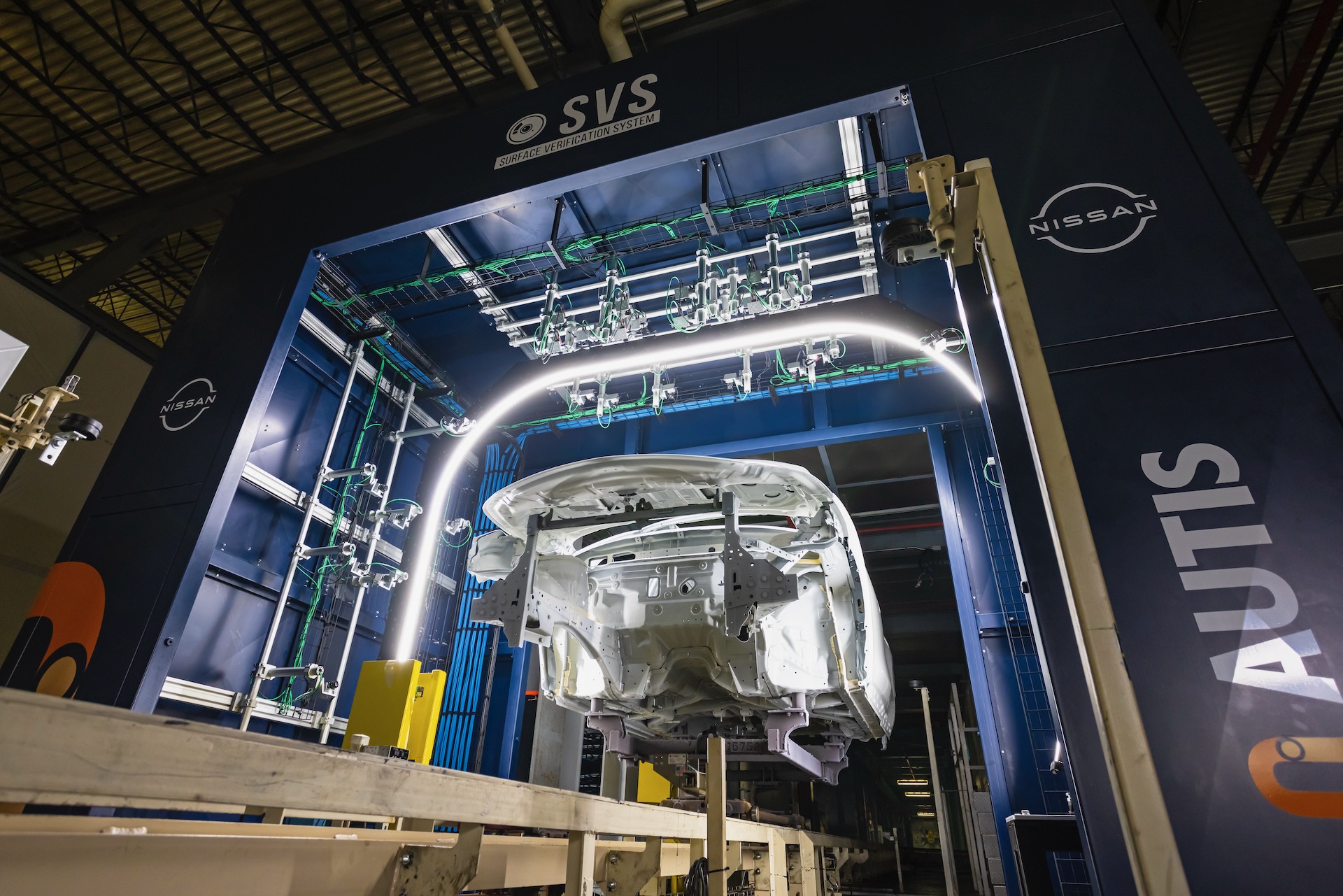
About three years ago, the automaker started using the AI-based AUTIS Surface Verification System, which has improved the rate of defect detection at the Smyrna, Tennessee, plant by 7%, according to Nissan. The system uses high-resolution cameras to take 15,000 pictures of each vehicle as it exits the paint booth. Those pictures are then analyzed by AI software to find flaws in the paint.
“The human eye can spot 85%-95% of flaws, but AUTIS identifies over 98%,” Travis Fritsche, a Nissan paint process engineer, said in a statement. Technicians still verify potential paint defects flagged by the system using monitors and dedicated, wrist-worn company smartphones. But the AI assist reduces eye fatigue and allows for more time to correct paint issues, according to Nissan.
Nissan uses AI to detect paint flaws
“Technicians are critical for confirming and categorizing defects,” Nissan new model paint engineer Rod Lynch said in a statement. “AUTIS is a tool to enhance their work, not replace it.”
The paint-inspection process was also partially automated to begin with. Nissan began using laser-equipped robots to scan for paint defects in 1985. Those first robots could identify paint flaws as small as 0.3 mm in 45 seconds, while the AUTIS system can identify flaws just 0.2 millimeters in size in less than half that time, according to Nissan.
The AI-based system also builds a library of confirmed defects that it can use for future reference to improve its own performance, Nissan claims, adding that this same library can be studied by engineers to address any issues with paint processes for specific vehicles and colors.
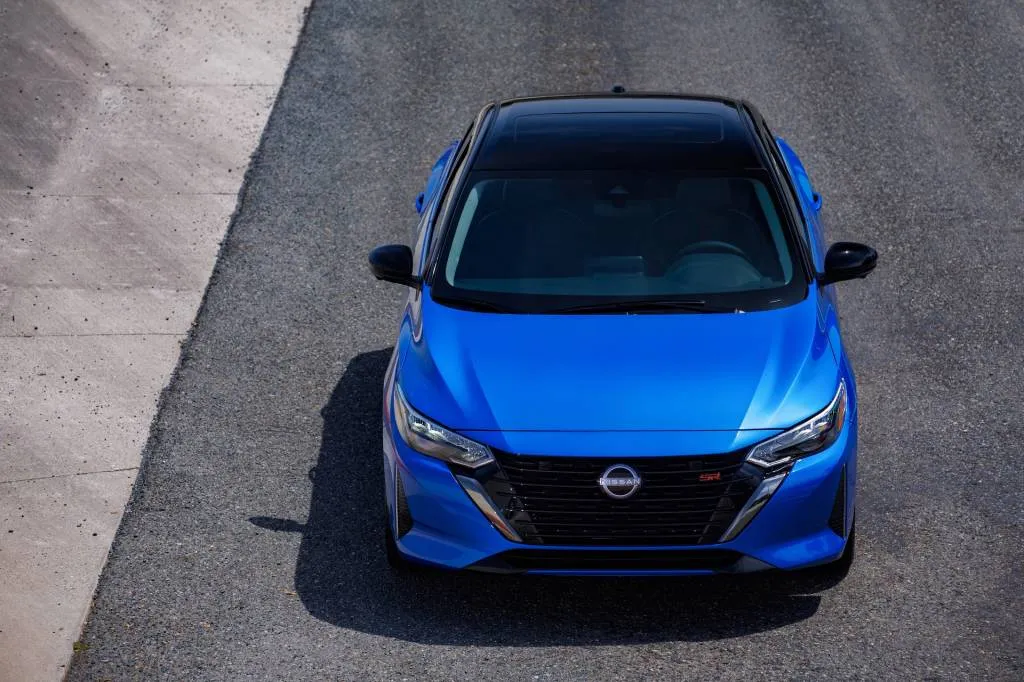
2024 Nissan Sentra
AUTIS has so far evaluated over 500,000 vehicles at the Smyrna plant, according to Nissan. That plant has an annual production of over 640,000 vehicles, according to a 2022 fact sheet. The same paint-flaw detection system is also used at plants in Canton, Mississippi, and Aguascalientes, Mexico. Those three plants assemble most of Nissan’s current lineup, including the Altima, Frontier, Kicks, Leaf, Murano, Pathfinder, Rogue, Sentra, and Versa.
Other automakers are also experimenting with AI, but primarily by working to add popular AI software to infotainment systems. The 2025 Volkswagen Golf integrates OpenAI’s ChatGPT with its voice assistant, and sibling brand Audi is slated to follow suit. Mercedes-Benz in 2023 announced what it called a beta program for ChatGPT integration, and announced at CES earlier this year it was readying an AI-powered next-generation user interface.
Los Angeles street takeoverskeep happening, and they’re once again taking a turn for the worse. Owners of Infinitis and Nissans in LA keep having their cars stolen to be used in takeovers. The cars are later found either wrecked or burned.
2025 Infiniti QX80 First Look : A Luxurious Evolution
According to LA’s NBC 4, San Fernando Valley street takeovers that took place on October 5 had people doing more than just doing donuts in their own cars in the middle of an intersection. Some that were at these takeovers may have been car thieves, specifically on the lookout for Nissan and Infiniti models to use in the takeovers. Similar to what happened with the Kia Boyz, you can thank social media for giving them the instructions on how to steal them.
Auto theft detectives say the online instructions are relatively easy to follow, and with a device meant for professional locksmiths, they enable thieves to create new electronic keys to unlock and start the cars in minutes.
Dozens of videos of takeovers posted on a variety of social media platforms in recent weeks show people spinning-out Infinitis in intersections around LA.
LAPD Deputy Chief Don Graham — the officer in charge of the department’s Street Racing Task Force — said that while they weren’t able to stop the takeovers from happening due to being in another part of the city when they occurred, info gathered about those that attended helped stop another gathering. Graham says something else was planned for the next night involving a group that had come to LA from San Francisco.
As for the vehicles targeted, the LAPD confirmed that five vehicles were later found wrecked and destroyed by fire at various locations in the San Fernando Valley. The department also confirmed that most of the models that were stolen and used in the takeovers were Infiniti G35 and G37s, with an estimated total loss of a quarter-million dollars.
Graham also mentioned that the department needs help in stopping these takeovers from happening. He urged people to talk to their kids or family members who may see this stuff and think that it’s cool to do it. “The response to this can’t just be a police response, we need the community’s assistance,” he said.
“Master Plan, Part Deux” was the first concrete mention of a Tesla robotaxi. The 2016 blog post, which is no longer published on the automaker’s website, outlined a concept where Tesla owners could add their car to a self-driving rideshare fleet to completely offset the purchase or lease cost. Musk wrote:
“When true self-driving is approved by regulators, it will mean that you will be able to summon your Tesla from pretty much anywhere. Once it picks you up, you will be able to sleep, read or do anything else enroute to your destination.”
“You will also be able to add your car to the Tesla shared fleet just by tapping a button on the Tesla phone app and have it generate income for you while you’re at work or on vacation, significantly offsetting and at times potentially exceeding the monthly loan or lease cost. This dramatically lowers the true cost of ownership to the point where almost anyone could own a Tesla. Since most cars are only in use by their owner for 5% to 10% of the day, the fundamental economic utility of a true self-driving car is likely to be several times that of a car which is not.”
“In cities where demand exceeds the supply of customer-owned cars, Tesla will operate its own fleet, ensuring you can always hail a ride from us no matter where you are.”
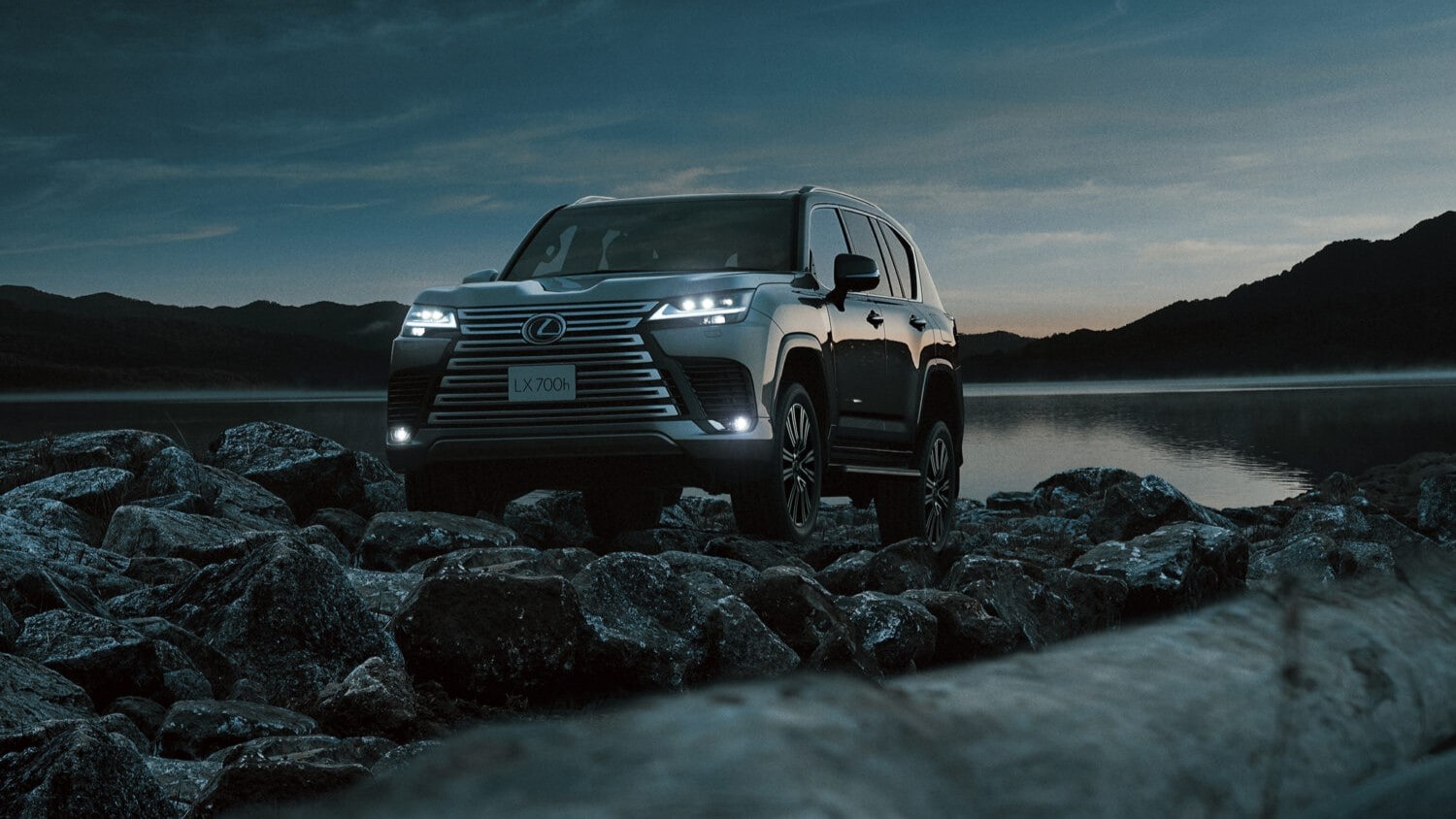
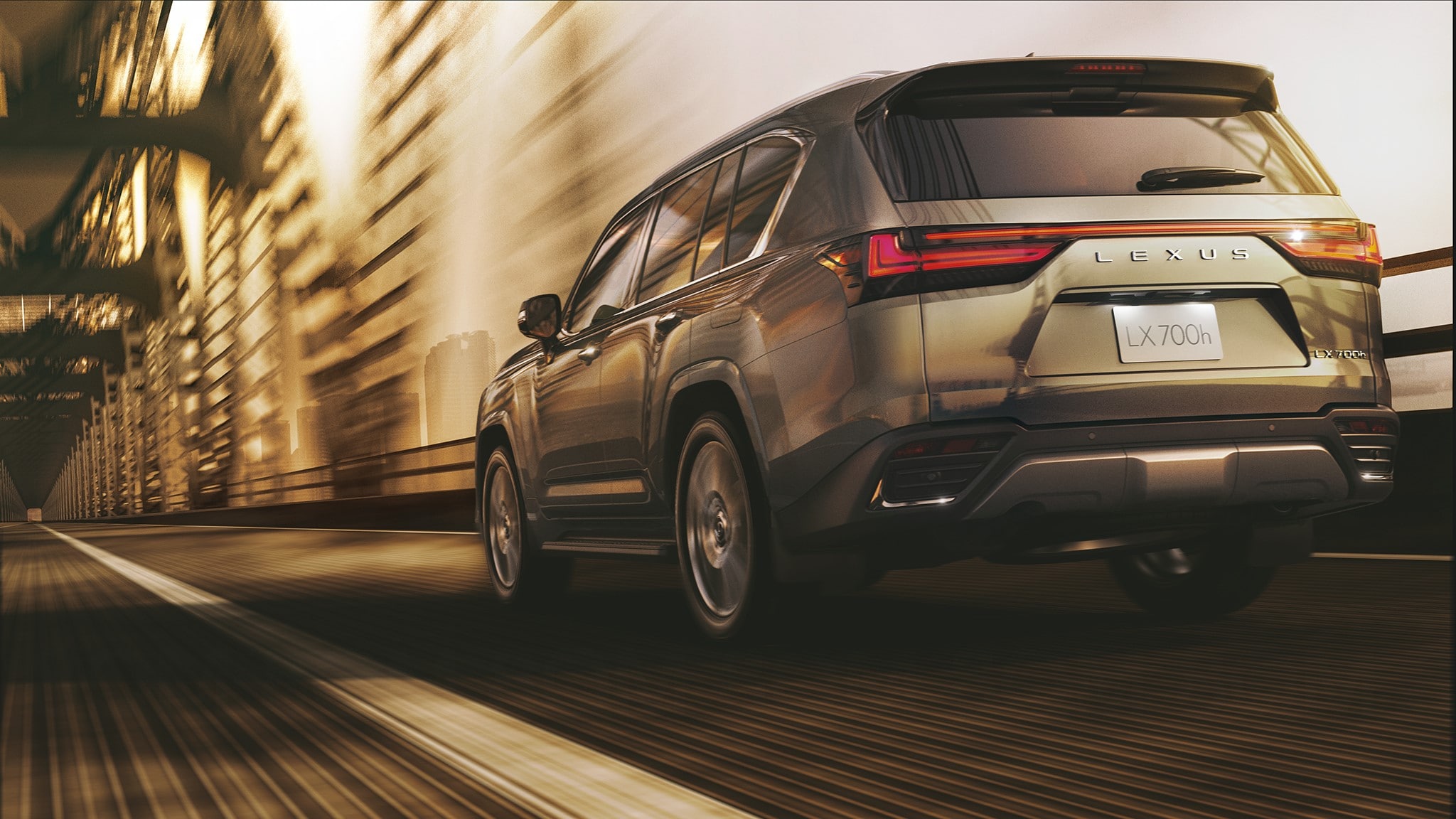
The refreshed 2025 Lexus LX lineup is here, and with it comes an all-new model, the LX 700h. The new hybrid model tops the LX 600 as the brand’s flagship SUV. It goes on sale in January 2025.
Under the Hood
A twin-turbocharged 3.4-liter V6 paired with a hybrid system motivates the new LX 700h. Its 457 combined horsepower and 583 combined lb-ft of torque give it about 50 more hp and more than 100 more lb-ft than the non-hybrid LX 600.
Despite the rowdy power output and its considerable size, the LX 700h gets a tentative 20 mpg combined EPA fuel economy rating.
The LX 700h gets a 4-wheel drive system with Multi-Terrain Select. The system can even use the electric motors only to move the vehicle in low-speed situations that require precise throttle control.
One unusual aspect of the LX 700h’s drivetrain is that it has an alternator and a starter motor in addition to the hybrid system. That way, if the hybrid system fails in a remote location, the LX 700h can still function until it can be repaired. This arrangement is a first for Lexus’ hybrid systems.
Overtrail
A new Overtrail trim line joins the LX range alongside the addition of the LX 700h model. This off-road-focused specification is only available on the LX 700h.
It adds electronic front and rear locking differentials, a skid plate, 33-inch All-Terrain tires, unique appearance details, and a 2,400-watt AC inverter. The LX 700h Overtrail is painted Earth brown.
Inside, the Overtrail gets black or Stone Brown semi-aniline leather trim on the seats and door panels. Stone Brown contrast stitching and black open-pore wood trim complete the interior treatment.
Other Updates
The 2025 Lexus LX comes in two forms: the LX 600 and the new LX 700h. The LX 600 gets minor updates for 2025, including some new optional features. Lexus builds each model in four trims: Premium, F Sport Handling, Luxury, and Ultra Luxury.
LX models can tow up to 8,000 pounds when properly configured.
Lexus’ Safety System+ 3.0 is now standard across the LX range for 2025. The system includes pre-collision with pedestrian detection, emergency steer assist, radar cruise control, lane-keep assist, road sign recognition, automatic high beams, and more.
Lexus has yet to announce pricing for the 2025 LX models. The current LX 600 starts at $93,910.
Last night, Tesla unveiled a long-promised self-driving car with no pedals or steering wheel. The company’s stock price dropped following the announcement. CNBC notes, “Tesla stock was down 5.8% as of 6:33 a.m. ET in premarket trading on Friday,” after the Thursday night reveal.
Early reactions to the Tesla Robotaxi have been mixed, and the project’s status remains cloudy even after a high-energy event to unveil it. There were some surprises, and many questions remain.
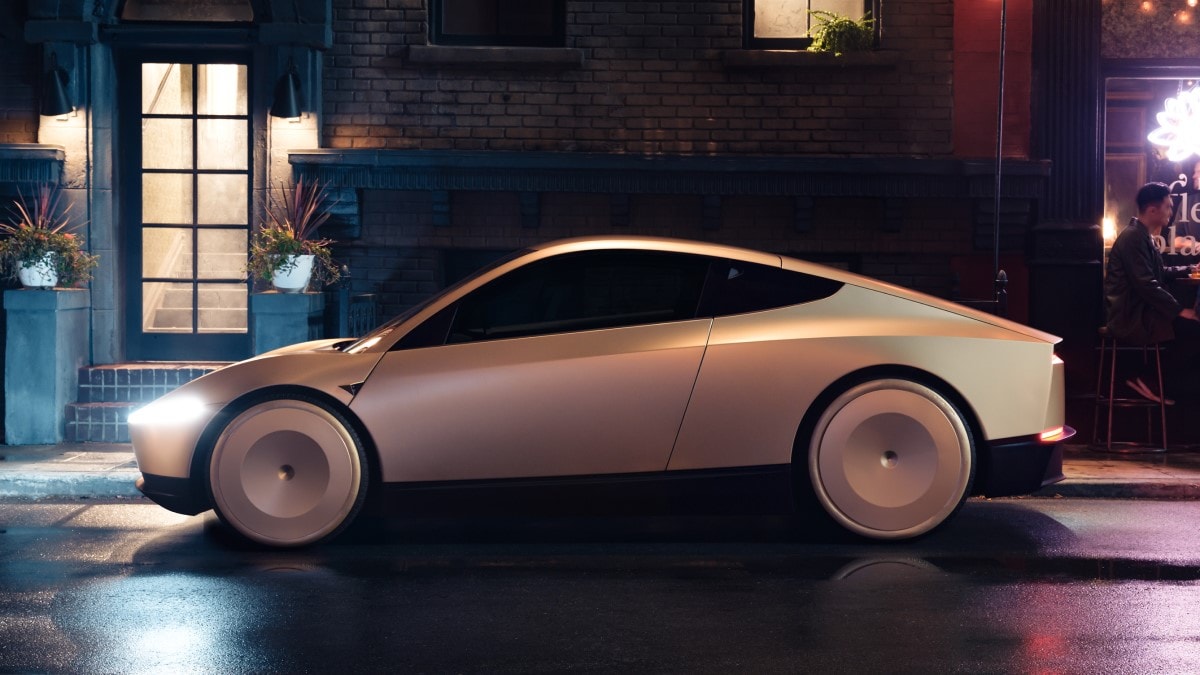
If I told you Tesla designers somehow managed to meld the iconic lozenge design language of the Model 3 and Model Y with the futuristic, hewn-metal look of the Cybertruck, you’d probably have your doubts. But look at it.
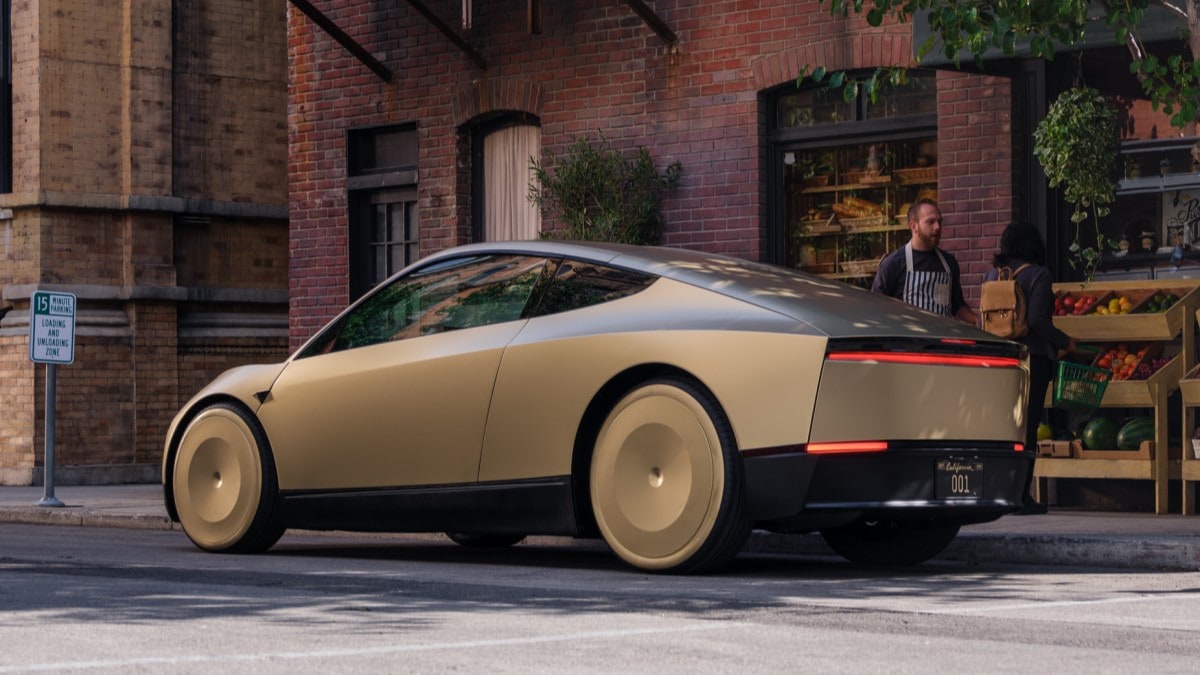
The Robotaxi somehow takes the design scheme of Tesla sedans and updates it with Cybertruck hard edges and a stainless steel look (it’s likely not stainless steel this time). Disk-like wheels enhance aerodynamics and lend it a future feel.
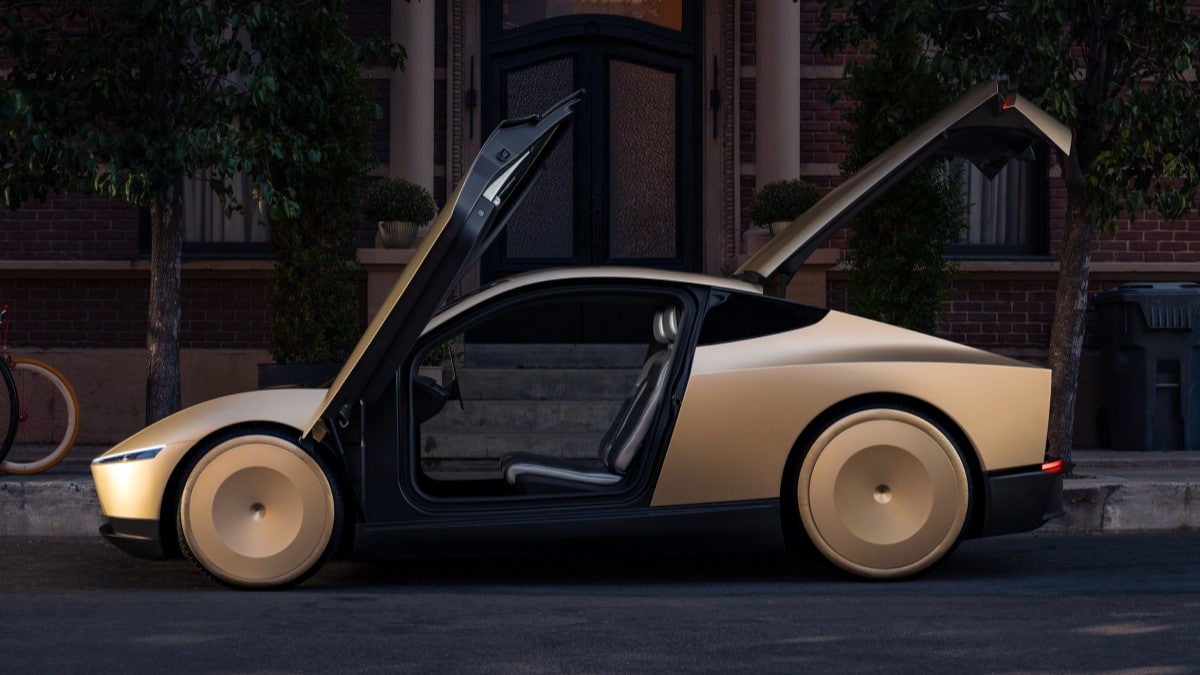
The Robotaxi lacks a rear window, Polestar-4-style. Its two butterfly doors open up and slightly forward, like a beetle opening its carapace to unfurl its wings.
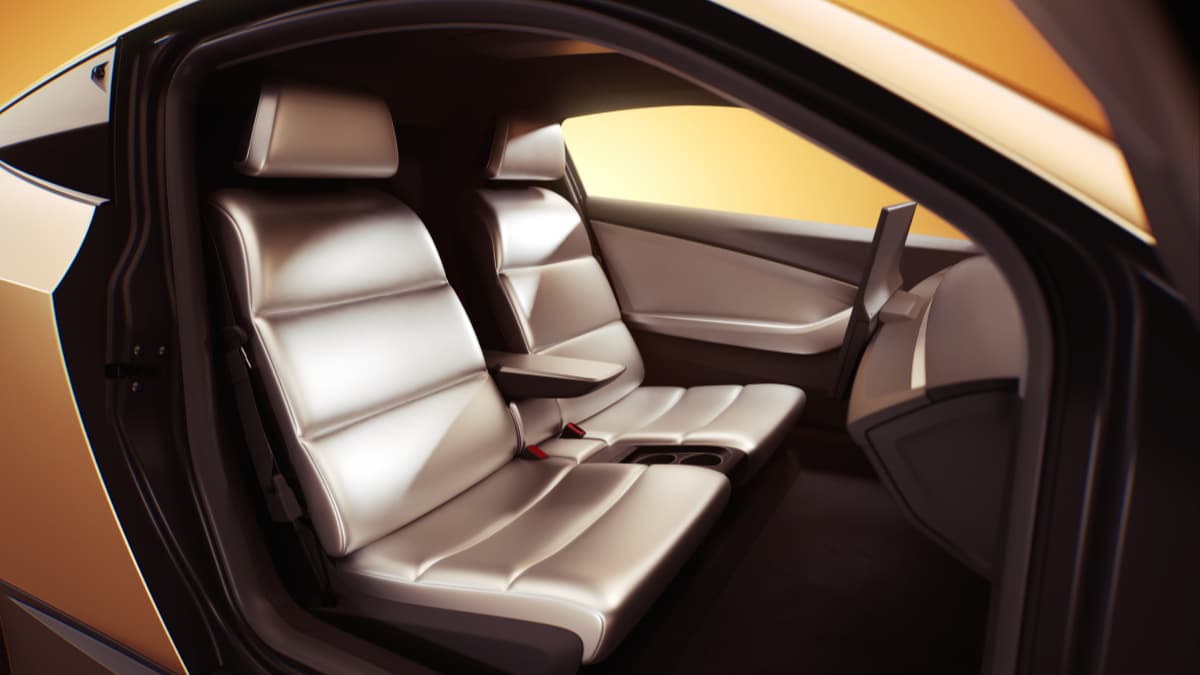
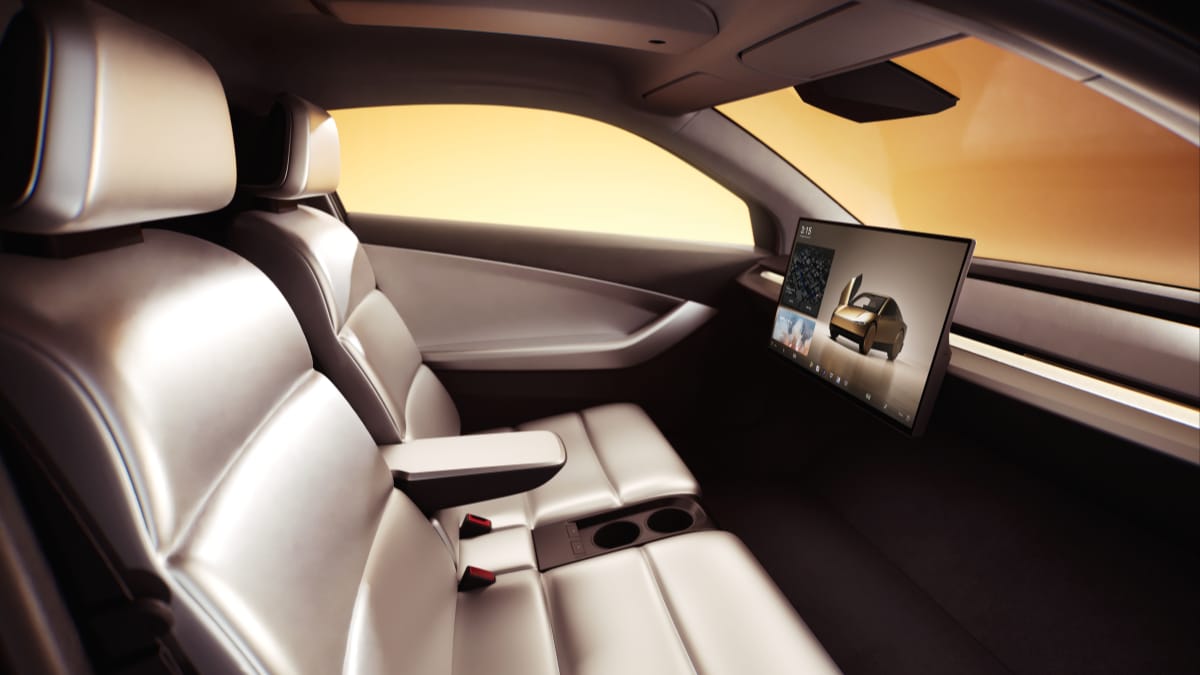
Inside, two seats wrapped in silver upholstery face a touchscreen. They share an armrest. That’s it — that’s the cabin. The Robotaxi has no pedals, steering wheel, or other control interfaces.
Tesla provided no performance details beyond noting that it is an electric vehicle (EV), like all Tesla products.
Input Your Destination and Sit Back
Tesla says it doesn’t need control surfaces because it drives itself. “You could fall asleep and wake up at your destination,” CEO Elon Musk told a crowd gathered for the reveal at a Los Angeles movie studio.
The Robotaxi will reportedly use a future version of the software Tesla calls “Full Self-Driving (Supervised),” which is available on all of its cars for sale today. The system allows the vehicle to accelerate, steer, and brake itself on highways and neighborhood streets, provided that a human is there to correct its mistakes.
Musk did not explain how or when the software would be ready to function without human supervision.
Tesla Says You Can Buy One — or a Few
The big surprise? You’ll be able to buy your own, the company says. “Musk said the company would start building the fully autonomous Cybercab by 2026 at a price of less than $30,000,” the Washington Post explains.
Tesla has long promised owners they would someday be able to let their cars function as taxis when they’re not driving them, bringing in extra income. At last night’s event, Reuters reports, “Musk promised that the company’s popular Model 3 and Model Y vehicles would be able to operate without driver supervision in California and Texas by next year.”
Now, Tesla appears to intend the same for its Robotaxi. The company plans to operate its fleet of Robotaxis but will also sell them to individuals.
Musk, however, was light on details. He said the car would “probably” be in production before 2027 but added, “I tend to be a little optimistic.” Tesla has repeatedly missed production deadlines for hyped products – its Cybertruck finally arrived in late 2023, four years late.
Some customers placed reservations on a sports car promised in 2017 and are still waiting for a production date seven years later.
Surprise Van, Too
Musk often ends reveal events with a surprise, and he didn’t disappoint last night. The Robotaxi reveal also included a “Robovan,” a “much larger EV with hidden wheels and no real windshield,” according to Yahoo Finance.
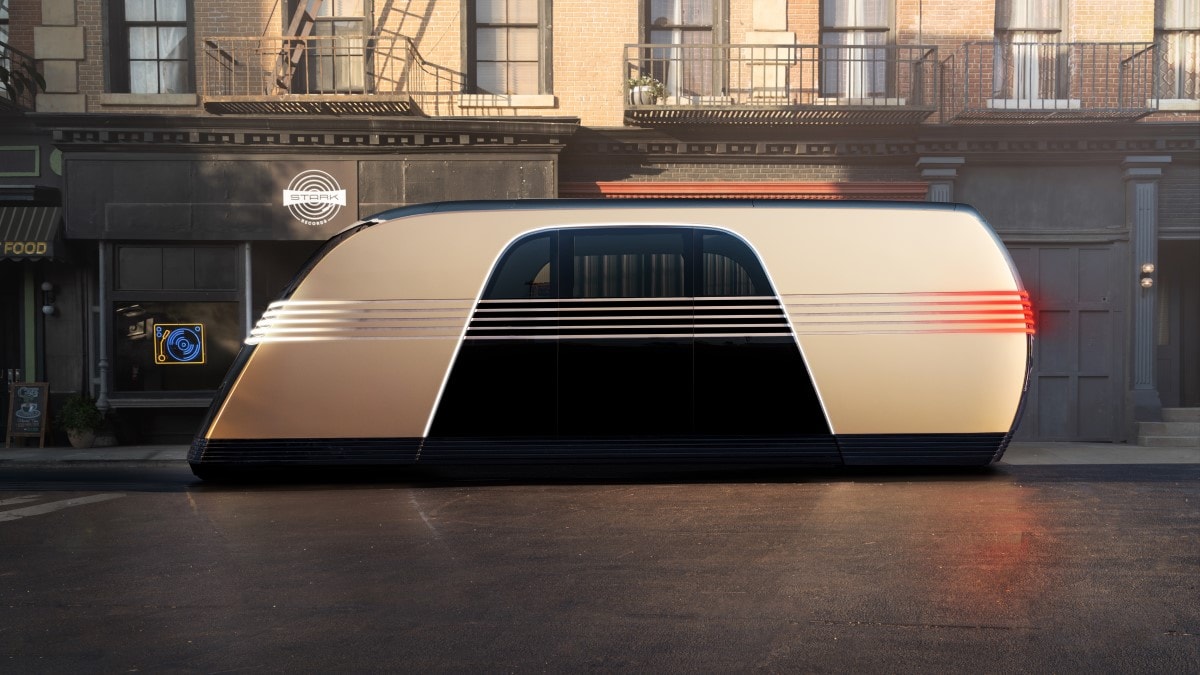
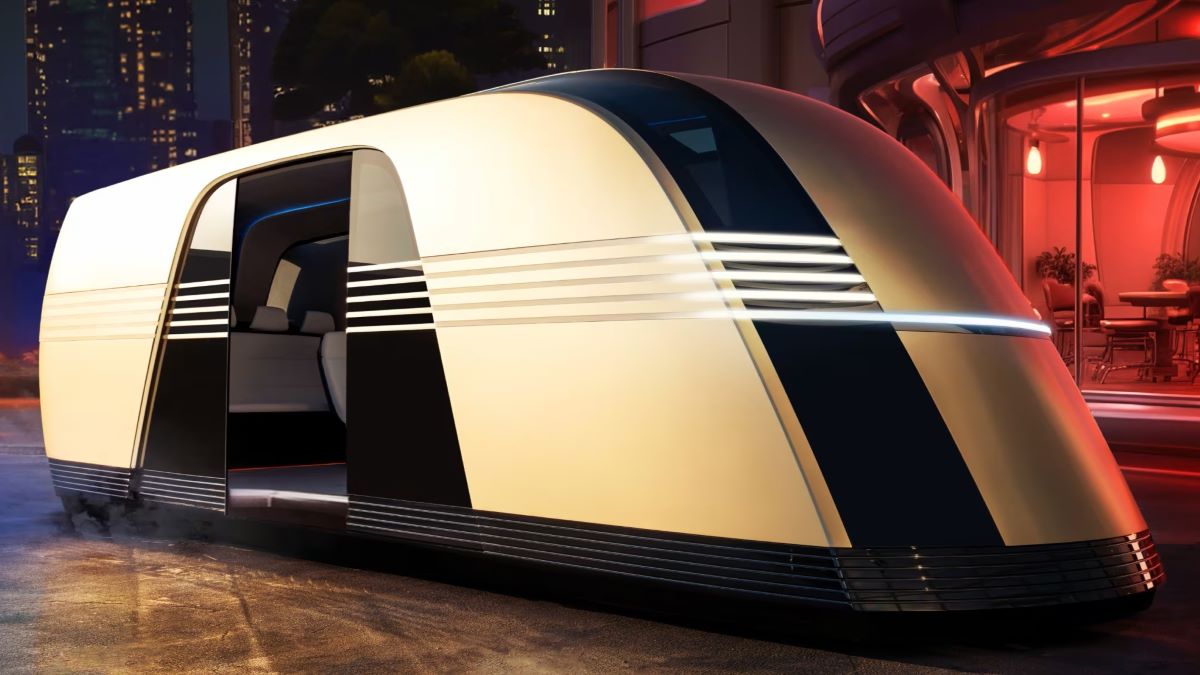
The van, which has a decidedly Art Deco design, looks like a dream of the future from the 1920s. Musk said it would carry up to 20 passengers but offered no production details.
Robotaxis Are Nothing New
Investors usually greet a new Tesla product with a stock price rally. They notably did not react enthusiastically to the Robotaxi.
The Wall Street Journal’s related headline, “Tesla’s Robotaxi Event Disappoints Investors,” is a new experience for Musk’s company.
One reason reaction is so muted? Robotaxis are nothing new.
The New York Times notes, “Waymo, a subsidiary of Google’s parent company, has been operating a driverless taxi service for years. It recently said its cars were providing more than 100,000 rides a week in San Francisco, Phoenix and Los Angeles. Cruise, a unit of General Motors, recently restarted testing driverless taxis after one of its cars hit and dragged a pedestrian last year in San Francisco.” Amazon’s Zoox subsidiary plans its own service and has a driverless van already in testing.
Overseas, China’s Baidu has a similar product in testing on public streets.
Large companies with long-established histories have struggled to make the model successful.
Often Perceived as Industry Leader; Sometimes Behind
Some are also worried about the software behind the cars. The public, particularly the social-media-engaged public, tends to perceive Tesla as the auto industry’s leader in early attempts at self-driving technology.
Notably, Tesla uses only cameras to attempt to understand the world around it. The New York Times explains, “Most other carmakers also use laser sensors to detect people and objects.” Some include ultrasonic and radar sensors as well.
Legal Questions Abound
Finally, investors are aware of complex, unresolved legal issues surrounding autonomous driving. State governments regulate driver assistance systems, so 50 separate legal systems will need to evolve to answer questions like insurance requirements, liability for accidents, and how autonomous cars interact with emergency services.
Companies like Waymo have won permission to operate in limited areas within certain cities, often with remote human supervision. However, they’ve also seen permission revoked and modified regularly as robot taxis have caused accidents or interfered with the work of emergency responders.
Tesla’s Structure Evolving
For most of its existence, Tesla followed a simple business plan. It sold cars, beginning with expensive models. As sales of those recouped the research costs required to build them, it introduced more affordable models.
It kept them in a walled garden, using a charging system unique to Tesla products and earning money from a nationwide network of chargers.
Can Tesla switch to selling autonomous cars and make that technology work where GM, Google, and others have failed?
It’s a risky strategy switch. With Musk courting controversy daily by immersing himself in the contentious U.S. presidential election, investors are nervous.
Tesla’s reveal of the Cybercab robotaxi on Thursday also included the surprise reveal of a larger Robovan robotaxi.
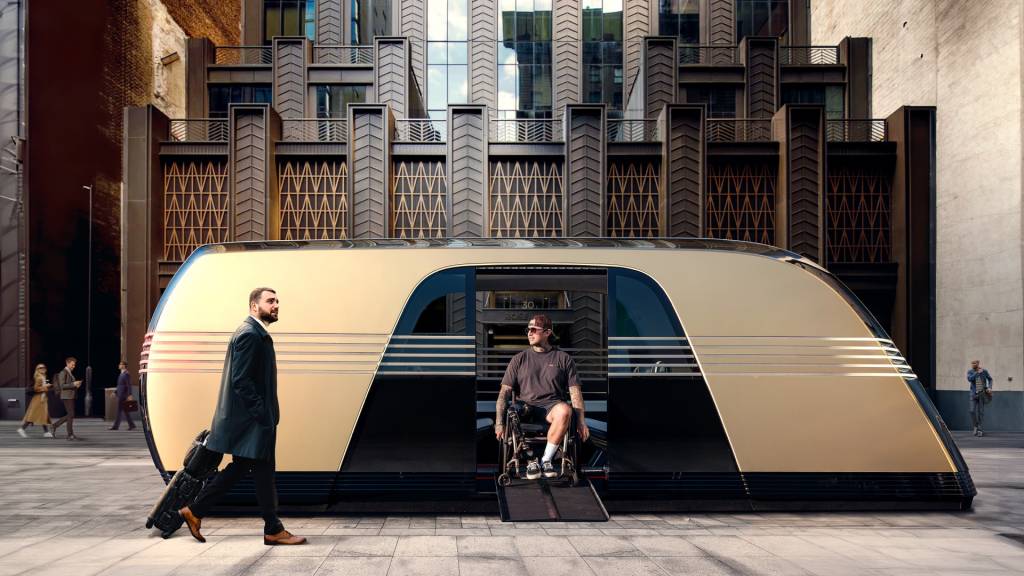
While the Cybercab is a small two-seater designed for hopping around urban environments, the Robovan is able to carry up to 20 passengers, making it ideal to operate in services that currently rely on minibuses and other similar high-capacity vehicles.
Speaking at the reveal, Tesla CEO Elon Musk estimated that the Robovan could deliver a cost as low as 5-10 cents per mile per person, though he didn’t provide a breakdown of that cost. He reference current busses as costing $1 per passenger to operate.
Like the Cybercab, the Robovan will be offered to both private and fleet buyers, though Tesla didn’t say when the Robovan will be available, or how much it will cost. It will likely arrive after the Cybercab, which Musk said is targeted for launch “before 2027” with a starting price of less than $30,000.
Tesla Robovan
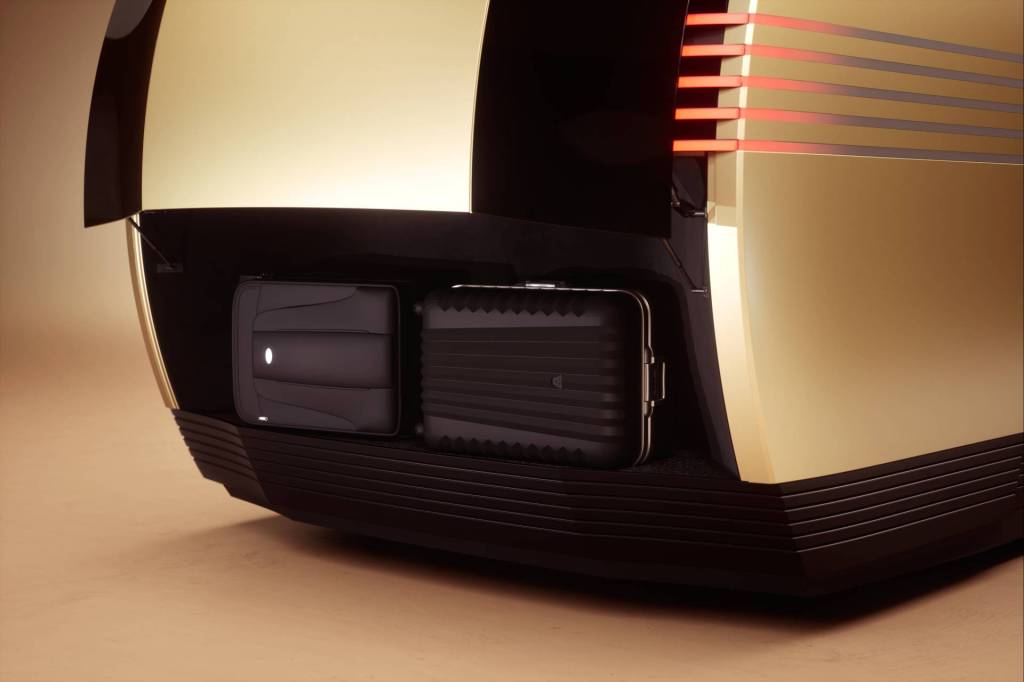
The Robovan features styling clearly inspired by the Art Deco movement that was popular in the 1920s and the following decade. Musk said the design will remain unchanged for production, though it’s hard to imagine how such a low ride height will be maintained. While the version shown had multiple seats, Musk said versions designed for other needs, such as hauling goods, are planned.
The Robovan, like the Cybercab, is devoid of a steering wheel and pedals. That’s ambitious considering Tesla is yet to demonstrate a self-driving system that can function without constant supervision.
The company’s Autopilot with Full-Self Driving (FSD) system is only ranked at Level 2 on the SAE scale of self-driving capability. Level 3 is the first stage where a car can operate without supervision, and currently only Mercedes-Benz’ Drive Pilot system is ranked at Level 3, at least when it comes to private cars.
Tesla Robovan
Tesla Robovan
Tesla Robovan
Musk said on Thursday that Autopilot with Full-Self Driving (FSD) will be able to operate in unsupervised mode next year, albeit only in California and Texas initially. He didn’t say what conditions the enhanced system will have.
Tesla eventually plans to launch an Uber-style service called the Tesla Network, in which its robotaxis will operate. Anyone with a self-driving Tesla will also be able to add their vehicles to the Tesla Network fleet. Musk in 2019 said Tesla would take a cut of any revenue generated, hinting at a figure of 25-30% at the time.
General Motors-backed self-driving technology company Cruise planned a similar vehicle to the Robovan, in the form of the Origin robotaxi that was first shown as early as 2020. However, Cruise in July dropped plans for the Origin, and said its future robotaxis will be based on a next-generation Chevrolet Bolt EV.
The technical storage or access is strictly necessary for the legitimate purpose of enabling the use of a specific service explicitly requested by the subscriber or user, or for the sole purpose of carrying out the transmission of a communication over an electronic communications network.
Preferences
The technical storage or access is necessary for the legitimate purpose of storing preferences that are not requested by the subscriber or user.
Statistics
The technical storage or access that is used exclusively for statistical purposes.The technical storage or access that is used exclusively for anonymous statistical purposes. Without a subpoena, voluntary compliance on the part of your Internet Service Provider, or additional records from a third party, information stored or retrieved for this purpose alone cannot usually be used to identify you.
Marketing
The technical storage or access is required to create user profiles to send advertising, or to track the user on a website or across several websites for similar marketing purposes.