Ferrari has filed a patent application for a side exhaust system, which could give its future road cars a different look.
The application in question was published by the United States Patent and Trademark Office (USPTO) on March 28, and was originally filed by Ferrari on Aug. 24, 2023. In it, Ferrari discusses an asymmetrical design, with the exhaust exiting out of one side of the bodywork between the rear edge of the door and the forward edge of the rear fender. It is to be used on cars with the engine positioned behind the driver, which would mean mid-engine for Ferrari.
Ferrari side exhaust patent image
The point of this seems to be enhancing exhaust sounds. Ferrari says in the application that creating a pleasing exhaust note is becoming more challenging because of turbochargers and the gasoline particulate filters now required on new cars sold in the European Union. These devices lower the sound level of the exhaust, Ferrari notes.
A side exhaust would move the exhaust outlet closer to the passenger compartment, potentially counteracting some of the muffling caused by turbos, particulate filters, and other necessary equipment like catalytic converters. Interestingly, Ferrari points to two classic race cars from rival automakers—the Aston Martin DB3S and Porsche 962 C—as examples of the efficacy of its promised asymmetrical side-exhaust design.
Ferrari side exhaust patent image
Side exhaust has been used on production cars such as the Dodge Viper, but it’s not normally associated with Ferrari. The automaker has come close with cars such as the 250 Testa Rossa, which had exhaust pipes running along the side of the car while still exiting at the back, but it hasn’t used side exhaust on any volume production models.
Ferrari also mentions in the application that side exhaust could be used in conjunction with a hydrogen-powered internal-combustion engine, something the automaker discussed in another recent patent filing (figure 4 shows round hydrogen storage tanks). Ferrari views burning hydrogen instead of gasoline as a way to reduce emissions while keeping combustion engines alive. But the viability of that technology remains in doubt.
The 2024 Ford Mustang Mach-E features the new Rally performance grade serving as the flagship. It’s inspired by rallycross racing, but that inspiration doesn’t only extend to the vehicle’s looks.
Ford on Tuesday provided some insight into the testing that took place during the Mustang Mach-E Rally’s development, much of which included testing to ensure the vehicle can really handle rallycross racing.
According to Ford, prototypes were put through a torture test at the automaker’s own Michigan Proving Grounds. The testing took place on a newly built section of the proving grounds featuring conditions typical of rallycross racing, such as various surface types, tight turns, and even jumps.
Prototypes were driven 500 miles in the rough conditions, which Ford said is the equivalent wear and tear as a decade of monthly rallycross racing. Doing much of the driving was Chris Berchin, Ford’s off-road attributes engineer and a former rallycross driver.
2024 Ford Mustang Mach-E Rally
2024 Ford Mustang Mach-E Rally
2024 Ford Mustang Mach-E Rally
The testing also helped honed the new RallySport drive mode that debuts with the vehicle. This mode allows for more yaw and sideways action before the electronic nannies rein things in, as well as more linear throttle response and a new damping profile for the magnetic dampers.
Other upgrades include a 1.0-inch lift from the standard Mustang Mach-E GT suspension, custom-tuned springs, and 19-inch wheels wrapped in Michelin CrossClimate2 tires.
The Mustang Mach-E Rally is priced from $61,890, including a $1,895 destination charge. It comes with 480 hp, all-wheel drive, and the Mach-E’s 91-kwh Extended Range battery as standard, with Ford estimating the range to be about 265 miles on a charge.
“Following an extensive development and testing program, the new 911 – complete with a performance-focused hybrid system – is ready for series production,” Porsche has announced.
The company promises the hybrid 911 is “8.7 seconds faster than its predecessor” around Germany’s famed Nürburgring nordschleife – a racing circuit automakers routinely use to test performance cars. The track touts 154 turns and more than 1,000 feet of elevation change into just under 13 miles, creating a challenge for any car and a marketing opportunity for automakers.
The key to Porsche’s claim, however, isn’t which race track they used. It’s which “predecessor.” Porsche currently sells more than two dozen different models of the 911. Outrunning the base model isn’t the same challenge as outrunning the GT3 RS.
We’ll find out more at the end of the month. Porsche promises a full reveal of the hybrid 911 on May 28.
In the meantime, we’ll have to make do with hyperbole. Porsche brand ambassador Jörg Bergmeister says, “We have more grip, significantly more power, and the spontaneous response of the performance hybrid is a great advantage.”
Porsche says the test car “was “equipped with standard road tires, plus the aero kit with a fixed rear wing that has been available as an option previously, providing increased downforce at high speeds.”
A faulty fuel pump may be the reason for struggling to maintain speed, engine overheating, sputtering, or the “check engine” light illuminating.
Fuel pump replacement is moderately complicated and may involve removing the fuel tank if no access panel exists in the passenger compartment.
Parts and labor costs for fuel pump replacement vary depending on the vehicle, age, and geographic region.
A fuel pump delivers gas or diesel to an engine’s combustion chamber and usually provides many years of trouble-free operation. Once in a while, though, you may find one that needs replacement. How would you know for sure?
This guide will tell you the signs of a malfunctioning fuel pump, how it works, and replacement costs.
What Are Fuel Pump Warning Signs?
Look for several tell-tale signs your fuel pump needs maintenance, repair, or replacement. They can include the following:
Unable to maintain speed. The feeling of the engine “choking” or struggling to maintain speed. This condition may cause you to think you are out of gas, despite the gauge showing fuel in the tank.
Overheating. Another indicator of failure is engine overheating. A failing fuel pump may overheat, and due to its inefficiency, cause the engine to overheat. A vehicle where this type of failure may be imminent might operate for about 15-30 minutes before stopping. After allowing it to cool, you may find that it runs again, only to repeat the failure as the engine heats up. It’s another warning sign the fuel pump is not long for this world.
All kinds of sputtering. Noises, backfires, and sputtering engines indicate a fuel pump gone bad. Typically, electronic fuel pumps won’t make a noise unless they begin to fail. An inconsistent fuel flow may cause internal engine problems, leading to hesitation when starting the vehicle or upon acceleration.
Engine light comes on. Any of these issues may be accompanied by the “Check Engine” light illuminating on the dashboard.
Driving with a bad fuel pump can create premature wear and tear on your engine, lowering the car’s value. A faulty pump can cause sudden engine power loss, which could lead to a traffic accident or another dangerous situation. Whether for financial or safety concerns, have the car inspected when you first notice symptoms of a fuel pump not working correctly.
Mechanical fuel pumps were once standard, sometimes attached outside the fuel tank. With the advent of electronic fuel injection, mechanical fuel pumps are relics, replaced by electric fuel pumps, which generally get mounted inside the fuel tank. The pump creates positive pressure that forces fuel through the gas lines to the engine. A pump in the tank submerses it in cool liquid and puts it far from the engine, making it less likely to start a fire.
A modern fuel pump uses a direct-current (DC) electric motor to draw fuel from the tank. The pump sends gas through the fuel injectors to mist into the cylinders. The fuel mixes with air, and a charge from the spark plugs creates combustion. A filter on the pump’s intake sifts any impurities to prevent them from entering the fuel lines and contaminating your engine.
Electronic fuel pumps deliver various benefits, including reduced fuel consumption thanks to continuous metering from the vehicle’s electronic control unit (ECU). A second benefit is the pre-delivery of fuel because the engine revolutions (RPM) are no longer responsible for operating the pump. This predelivery enables new vehicles to use auto start and stop systems, saving fuel by stopping the engine and restarting it instead of maintaining a continuous idle.
Electric fuel pumps are generally mounted inside a vehicle’s fuel tank.
What’s Involved in Fuel Pump Replacement?
A mechanic will need to get to the failed pump through the top of the fuel tank via an access panel in the passenger compartment. When no access panel is available, the mechanic must drain the fuel from the tank and lower and remove the tank from the vehicle to service the pump. During this process, the mechanic must remove all fuel supply and return hoses from their connecting points.
Once the mechanic has removed the faulty fuel pump, they attach the mounting brackets to the new pump and install it in place of the old one. A good practice at this point is to replace the fuel filters. Finally, the mechanic fills the fuel tank and tests for leaks.
The typical fuel pump replacement cost is $1,000 to $1,300, depending on the vehicle, age, and region. Labor costs range from about $600 to $700, and parts for fuel pump replacement are about $500 to $600. Estimates do not include taxes and fees.
If you need a fuel pump replacement, see what your vehicle’s fuel pump will cost using our Service and Repair Pricing Guide and find the closest car shops to do the work.
Read Related Articles:
Editor’s Note: This article has been updated since its initial publication.
Summer in Barcelona is simply incredible. The city comes alive with an array of unforgettable Summer music festivals, all of which take place amidst the city’s glorious weather.
From pop and indie to rock and techno, Barcelona has many events to satisfy every music preference!
Here are the top Summer music festivals in Barcelona to add to your wishlist.
Here’s an overview:
Top Summer Music Festivals in Barcelona
Looking to experience a summer music festival this year? Here are the top summer festivals in Barcelona to add to your itinerary.
Barcelona’s summer starts with the incredible Primavera Sound Festival, an event suitable for all music tastes.
Held annually at the end of May, this five-day music festival captivates audiences with an incredible lineup spanning various genres. Previous performers include acclaimed artists such as Rosalía, Fred Again, Kendrick Lamar, Calvin Harris, and Halsey, alongside an array of other remarkable singers, and each year is expected to be even bigger and better.
With more than 200,000 attendees each year, Primavera Sound Festival is ranked among the top music events in Europe, and despite being such a big festival, the care and commitment to its attendees is prominent. The event is extremely well-organized, with ample amenities available for those who visit, including a plethora of excellent bars and food stalls which are perfect for maintaining high energy levels throughout each performance.
Day tickets and full-event passes are both available to purchase. However, for those seeking the best deals, we recommend buying tickets before the lineup is announced because ticket prices increase once the acts are revealed.
June continues with another exciting music event, the Share Festival. This event differs from many others as it focuses on combining musical expression and global awareness, giving artists a platform to use their music to raise awareness on current issues such as climate change, human rights violations, and conflicts around the world.
The festival’s lineup focuses primarily on featuring local talents and Spanish artists, giving emerging musicians a chance to showcase their talents and allowing attendees to experience complete immersion into the world of Hispanic music.
Share Festival’s harmonious blend of artistic expression and social awareness sets it apart from other festivals. Visitors are invited to a musical experience that demonstrates solidarity and community.
Techno lovers and electronic music enthusiasts will adore Sónar Festival, which takes place annually in the middle of June. Spanning across an exhilarating weekend, this festival promises unparalleled performances from top DJs.
From Peggy Gou and Black Coffee to The Blessed Madonna and BICEP, an array of renowned artists from around the globe have graced Sónar’s stage, each pushing the boundaries of musical innovation and providing a truly unique experience for attendees.
Sónar Festival continues to raise the bar and exceed expectations each year thanks to its seamless blend of art, technology, and entertainment. The event offers a multisensory experience like no other, and is the ideal event for those seeking a rave-like experience in Barcelona.
Whether you’re a seasoned techno enthusiast or a curious newcomer, Sónar promises a unique experience that will linger in your memory long after the music fades.
Vida Festival
Vida Festival takes place slightly farther from the heart of Barcelona, however it remains within its province, in the charming seaside city of Vilanova i la Geltrú. This coastal music event is hosted each year at the beginning of July and is known for its indie music scene and delightful natural environment.
This music event is perfect for families as it prioritizes inclusivity and comfort, guaranteeing an enjoyable experience for attendees of all ages. From dedicated spaces for children to accessible amenities catering to diverse needs, each guest can attend the festival with a guaranteed enjoyable experience.
The lineup boasts a mix of nationally and internationally acclaimed artists, with previous performances from Rosalía, Fontaines D.C, and Aurora, ensuring a diverse selection to satisfy every musical preference.
Barcelona Rock Fest
If you’re a heavy metal or rock music fan, visit Santa Coloma de Gramenet at the start of July for Barcelona’s Rock Fest. This electrifying event promises an adrenaline-fueled experience as numerous rock bands take to the stage, including iconic metal acts like W.A.S.P and Cavalera, delivering unforgettable performances you’ll remember forever.
Festival Cruïlla
For those seeking a diverse music experience, look no further than Festival Cruïlla. This extraordinary event, held over three days in early July, features artists from an array of backgrounds and genres. International headliners, emerging bands, and underground artists grace the festival stage to create a truly unforgettable experience.
Embracing artistic diversity, Festival Cruïlla invites music lovers of all genres to revel in its vibrant atmosphere, where rap, acoustic and experimental sounds combine to represent Barcelona’s multicultural ethos.
Summer Music Festivals in Barcelona
Whether you want to sing along to catchy pop tunes or dance to the electric rhythms of techno music, make the most of Barcelona’s summer by immersing yourself in these extraordinary music festivals and experiencing live music like never before!
We are an expert agency in the tourism sector based in Barcelona, Catalonia. For over 10 years, we have offered holiday apartments and long-term apartments in Barcelona, to anyone wanting to visit or spend some time in the Catalan Capital.
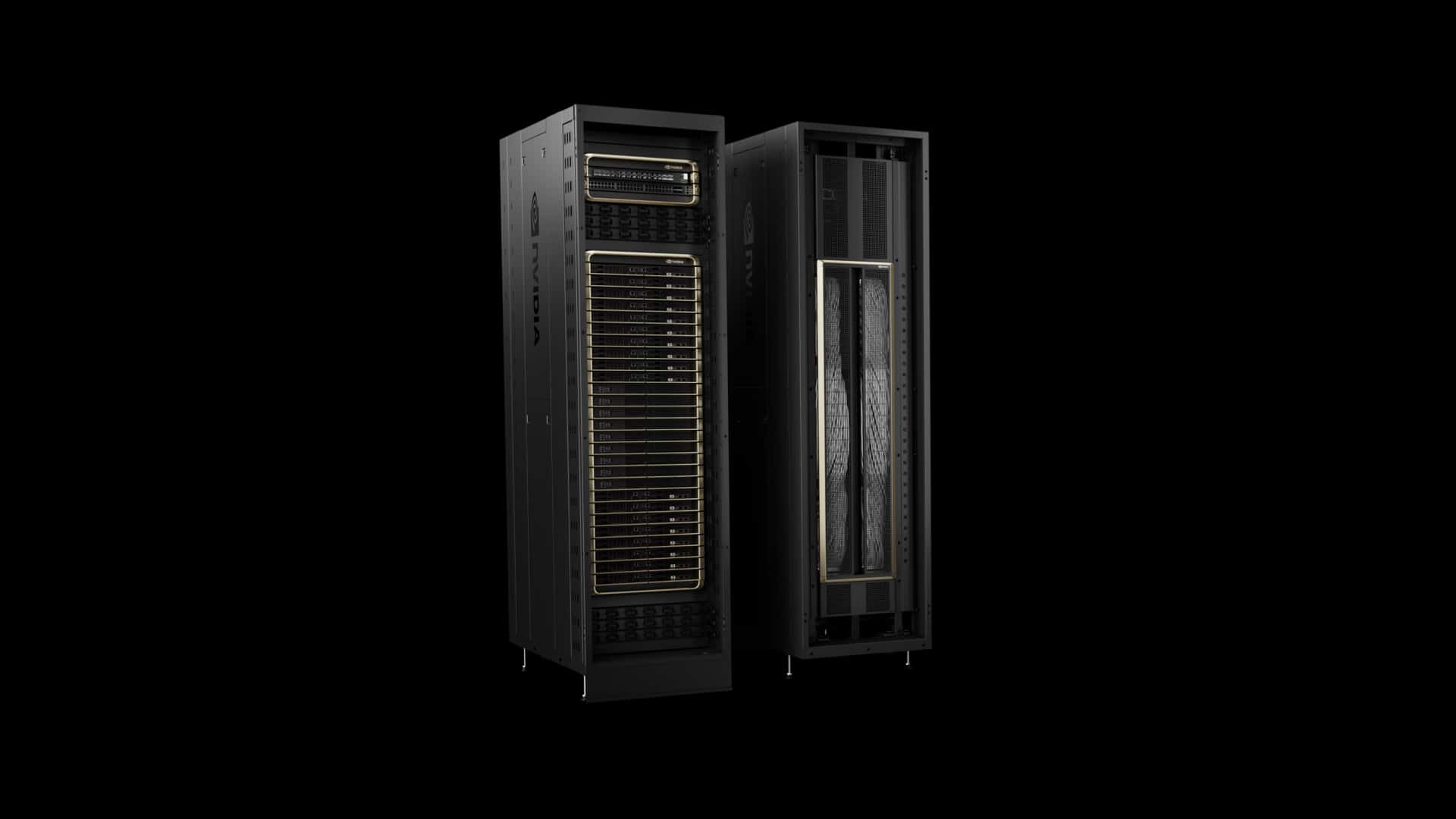
Quantum computing. Drug discovery. Fusion energy. Scientific computing and physics-based simulations are poised to make giant steps across domains that benefit humanity as advances in accelerated computing and AI drive the world’s next big breakthroughs.
NVIDIA unveiled at GTC in March the NVIDIA Blackwell platform, which promises generative AI on trillion-parameter large language models (LLMs) at up to 25x less cost and energy consumption than the NVIDIA Hopper architecture.
Blackwell has powerful implications for AI workloads, and its technology capabilities can also help to deliver discoveries across all types of scientific computing applications, including traditional numerical simulation.
By reducing energy costs, accelerated computing and AI drive sustainable computing. Many scientific computing applications already benefit. Weather can be simulated at 200x lower cost and with 300x less energy, while digital twin simulations have 65x lower cost and 58x less energy consumption versus traditional CPU-based systems and others.
Multiplying Scientific Computing Simulations With Blackwell
Scientific computing and physics-based simulation often rely on what’s known as double-precision formats, or FP64 (floating point), to solve problems. Blackwell GPUs deliver 30% more FP64 and FP32 FMA (fused multiply-add) performance than Hopper.
Physics-based simulations are critical to product design and development. From planes and trains to bridges, silicon chips and pharmaceuticals — testing and improving products in simulation saves researchers and developers billions of dollars.
Today application-specific integrated circuits (ASICs) are designed almost exclusively on CPUs in a long and complex workflow, including analog analysis to identify voltages and currents.
But that’s changing. The Cadence SpectreX simulator is one example of an analog circuit design solver. SpectreX circuit simulations are projected to run 13x quicker on a GB200 Grace Blackwell Superchip — which connects Blackwell GPUs and Grace CPUs — than on a traditional CPU.
Also, GPU-accelerated computational fluid dynamics, or CFD, has become a key tool. Engineers and equipment designers use it to predict the behavior of designs. Cadence Fidelity runs CFD simulations that are projected to run as much as 22x faster on GB200 systems than on traditional CPU-powered systems. With parallel scalability and 30TB of memory per GB200 NVL72 rack, it’s possible to capture flow details like never before.
In another application, Cadence Reality’s digital twin software can be used to create a virtual replica of a physical data center, including all its components — servers, cooling systems and power supplies. Such a virtual model allows engineers to test different configurations and scenarios before implementing them in the real world, saving time and costs.
Cadence Reality’s magic happens from physics-based algorithms that can simulate how heat, airflow and power usage affect data centers. This helps engineers and data center operators to more effectively manage capacity, predict potential operational problems and make informed decisions to optimize the layout and operation of the data center for improved efficiency and capacity utilization. With Blackwell GPUs, these simulations are projected to run up to 30x faster than with CPUs, offering accelerated timelines and higher energy efficiency.
AI for Scientific Computing
New Blackwell accelerators and networking will deliver leaps in performance for advanced simulation.
The NVIDIA GB200 kicks off a new era for high-performance computing (HPC). Its architecture sports a second-generation transformer engine optimized to accelerate inference workloads for LLMs.
This delivers a 30x speedup on resource-intensive applications like the 1.8-trillion-parameter GPT-MoE (generative pretrained transformer-mixture of experts) model compared to the H100 generation, unlocking new possibilities for HPC. By enabling LLMs to process and decipher vast amounts of scientific data, HPC applications can sooner reach valuable insights that can accelerate scientific discovery.
Sandia National Laboratories is building an LLM copilot for parallel programming. Traditional AI can generate basic serial computing code efficiently, but when it comes to parallel computing code for HPC applications, LLMs can falter. Sandia researchers are tackling this issue head-on with an ambitious project — automatically generating parallel code in Kokkos, a specialized programming language designed by multiple national labs for running tasks across tens of thousands of processors in the world’s most powerful supercomputers.
Sandia is using an AI technique known as retrieval-augmented generation, or RAG, which combines information-retrieval capabilities with language generation models. The team is creating a Kokkos database and integrating it with AI models using RAG.
Initial results are promising. Different RAG approaches from Sandia have demonstrated autonomously generated Kokkos code for parallel computing applications. By overcoming hurdles in AI-based parallel code generation, Sandia aims to unlock new possibilities in HPC across leading supercomputing facilities worldwide. Other examples include renewables research, climate science and drug discovery.
Driving Quantum Computing Advances
Quantum computing unlocks a time machine trip for fusion energy, climate research, drug discovery and many more areas. So researchers are hard at work simulating future quantum computers on NVIDIA GPU-based systems and software to develop and test quantum algorithms faster than ever.
The NVIDIA CUDA-Q platform enables both simulation of quantum computers and hybrid application development with a unified programming model for CPUs, GPUs and QPUs (quantum processing units) working together.
CUDA-Q is speeding simulations in chemistry workflows for BASF, high-energy and nuclear physics for Stony Brook and quantum chemistry for NERSC.
NVIDIA Blackwell architecture will help drive quantum simulations to new heights. Utilizing the latest NVIDIA NVLink multi-node interconnect technology helps shuttle data faster for speedup benefits to quantum simulations.
Accelerating Data Analytics for Scientific Breakthroughs
Data processing with RAPIDS is popular for scientific computing. Blackwell introduces a hardware decompression engine to decompress compressed data and speed up analytics in RAPIDS.
The decompression engine provides performance improvements up to 800GB/s and enables Grace Blackwell to perform 18x faster than CPUs — on Sapphire Rapids — and 6x faster than NVIDIA H100 Tensor Core GPUs for query benchmarks.
Rocketing data transfers with 8TB/s of high-memory bandwidth and the Grace CPU high-speed NVLink Chip-to-Chip (C2C) interconnect, the engine speeds up the entire process of database queries. Yielding top-notch performance across data analytics and data science use cases, Blackwell speeds data insights and reduces costs.
Driving Extreme Performance for Scientific Computing with NVIDIA Networking
The NVIDIA Quantum-X800 InfiniBand networking platform offers the highest throughput for scientific computing infrastructure.
It includes NVIDIA Quantum Q3400 and Q3200 switches and the NVIDIA ConnectX-8 SuperNIC, together hitting twice the bandwidth of the prior generation. The Q3400 platform offers 5x higher bandwidth capacity and 14.4Tflops of in-network computing with NVIDIA’s scalable hierarchical aggregation and reduction protocol (SHARPv4), providing a 9x increase compared with the prior generation.
The performance leap and power efficiency translates to significant reductions in workload completion time and energy consumption for scientific computing.
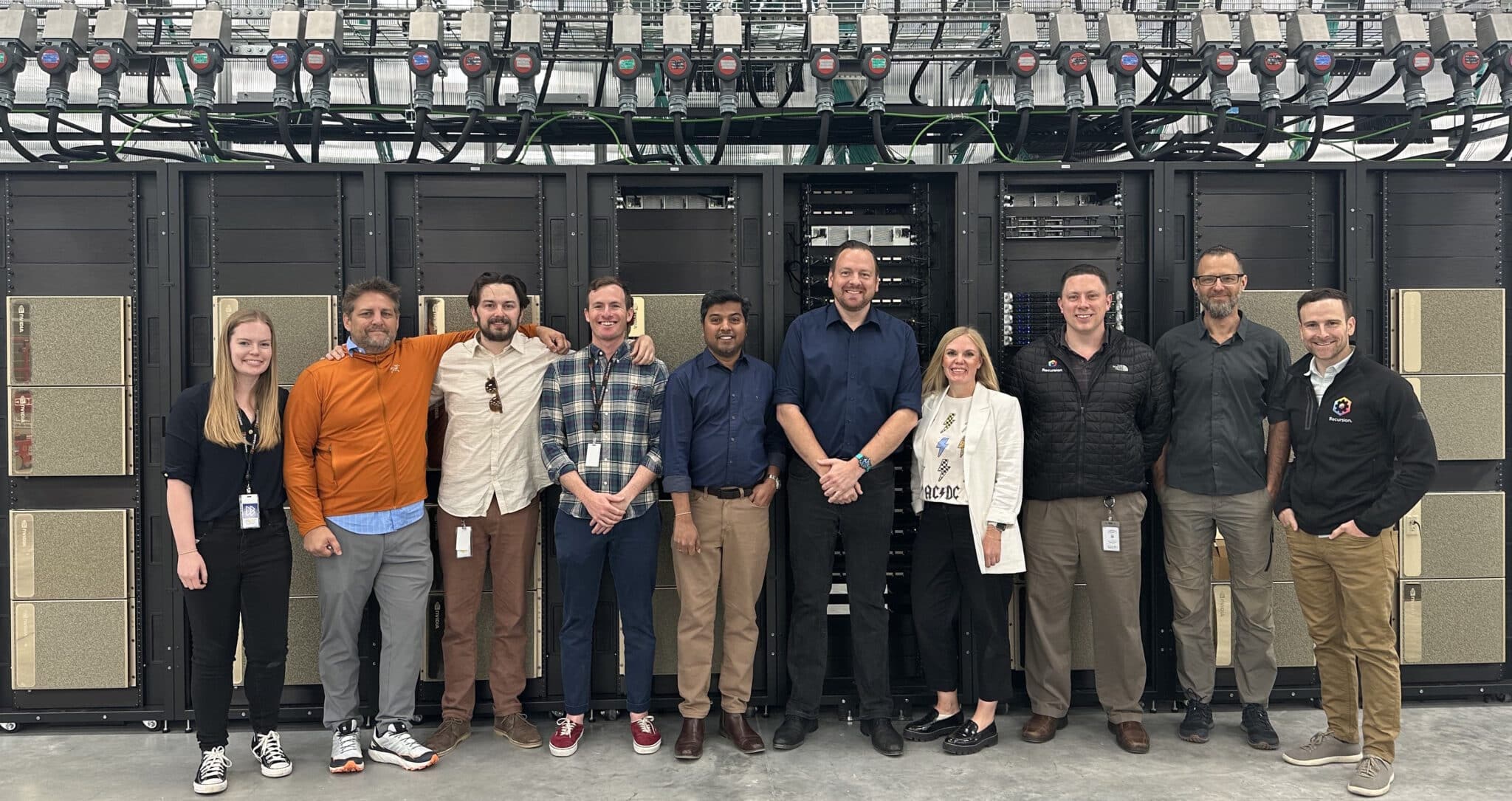
Described as the largest system in the pharmaceutical industry, BioHive-2 at the Salt Lake City headquarters of Recursion debuts today at No. 35, up more than 100 spots from its predecessor on the latest TOP500 list of the world’s fastest supercomputers.
The advance represents the company’s most recent effort to accelerate drug discovery with NVIDIA technologies.
“Just as with large language models, we see AI models in the biology domain improve performance substantially as we scale our training with more data and compute horsepower, which ultimately leads to greater impacts on patients’ lives,” said Recursion’s CTO, Ben Mabey, who’s been applying machine learning to healthcare for more than a decade.
That performance is key to rapid progress because “biology is insanely complex,” Mabey said.
Finding a new drug candidate can take scientists years performing millions of wet-lab experiments.
That work is vital; Recursion’s scientists run more than 2 million such experiments a week. But going forward, they’ll use AI models on BioHive-2 to direct their platform to the most promising biology areas to run their experiments.
“With AI in the loop today, we can get 80% of the value with 40% of the wet lab work, and that ratio will improve going forward,” he said.
Biological Data Propels Healthcare AI
Recursion is collaborating with biopharma companies such as Bayer AG, Roche and Genentech. Over time, it also amassed a more than 50-petabyte database of biological, chemical and patient data, helping it build powerful AI models that are accelerating drug discovery.
“We believe it’s one of the largest biological datasets on Earth — it was built with AI training in mind, intentionally spanning biology and chemistry,” said Mabey, who joined the company more than seven years ago in part due to its commitment to building such a dataset.
Creating an AI Phenomenon
Processing that data on BioHive-1, Recursion developed a family of foundation models called Phenom. They turn a series of microscopic cellular images into meaningful representations for understanding the underlying biology.
A member of that family, Phenom-Beta, is now available as a cloud API and the first third-party model on NVIDIA BioNeMo, a generative AI platform for drug discovery.
Over several months of research and iteration, BioHive-1 trained Phenom-1 using more than 3.5 billion cellular images. Recursion’s expanded system enables training even more powerful models with larger datasets in less time.
The company also used NVIDIA DGX Cloud, hosted by Oracle Cloud Infrastructure, to provide additional supercomputing resources to power their work.
Much like how LLMs are trained to generate missing words in a sentence, Phenom models are trained by asking them to generate the masked out pixels in images of cells.
The Phenom-1 model serves Recursion and its partners in several ways, including finding and optimizing molecules to treat a variety of diseases and cancers. Earlier models helped Recursion predict drug candidates for COVID-19 nine out of 10 times.
The company announced its collaboration with NVIDIA in July. Less than 30 days later, the combination of BioHive-1 and DGX Cloud screened and analyzed a massive chemical library to predict protein targets for approximately 36 billion chemical compounds.
In January, the company demonstrated LOWE, an AI workflow engine with a natural-language interface to help make its tools more accessible to scientists. And in April it described a billion-parameter AI model it built to provide a new way to predict the properties of key molecules of interest in healthcare.
Recursion uses NVIDIA software to optimize its systems.
“We love CUDA and NVIDIA AI Enterprise, and we’re looking to see if NVIDIA NIM can help us distribute our models more easily, both internally and to partners,” he said.
A Shared Vision for Healthcare
The efforts are part of a broad vision that Jensen Huang, NVIDIA founder and CEO, described in a fireside chat with Recursion’s chairman as moving toward simulating biology.
“You can now recognize and learn the language of almost anything with structure, and you can translate it to anything with structure … This is the generative AI revolution,” Huang said.
“We share a similar view,” said Mabey.
“We are in the early stages of a very interesting time where just as computers accelerated chip design, AI can speed up drug design. Biology is much more complex, so it will take years to play out, but looking back, people will see this was a real turning point in healthcare,” he added.
Pictured at top: BioHive-2 with a few members of the Recursion team (from left) Paige Despain, John Durkin, Joshua Fryer, Jesse Dean, Ganesh Jagannathan, Chris Gibson, Lindsay Ellinger, Michael Secora, Alex Timofeyev, and Ben Mabey.
The introduction of the BMW F80 M3, F82 M4, and F83 M4 Convertible made its debut in 2014, succeeding the E90 and E92 M3 models. This generation was meticulously engineered to deliver enhanced output, performance, and efficiency. Crafting a new 3 Series (and 4 Series) M car is a big task, considering the remarkable success achieved by each preceding generation.
The F8x generation brought the inline-six back to the M3, now with two turbochargers and 425 horsepower in the standard model.
The “S55” model of BMW’s engine with two turbochargers supplied the power. This was the first M3 to have a turbocharged engine. Unlike the older models, which needed to rev high, this one had strong and steady power to access from low revs. The power peaked at 406 pound-feet from just 1850 rpm and remained strong up to 5500 rpm.
This was also the first M3/M4 to feature the variable valve timing (VANOS) and variable valve lift (Valvetronic) to stretch the power band as wide as possible.
You could choose between a 6-speed manual and a 7-speed dual-clutch (DCT) automatic transmission. While the 6-speed can be more enjoyable, the DCT can change gears faster than you can by hand and has launch control, making it easy to speed up consistently. In addition, the 7-speed transmission has a special cooling system.
It has been tested on race tracks and helps to keep the car running smoothly and reliably during races by managing the heat.
The M3 and M4 have a lightweight suspension, a very accurate active rear differential, and a cooling and oiling system which together make the car perform really well and safe for everyday use. The steering turns very accurately and is easy and nice to handle, which fans of the M3 will like, especially since this is the first generation to use electric help.
For the F80/F82 models, the design stands out more than ever from the standard 3 Series. The design has noticeable features like bold front and back bumpers, four exhaust pipes, an aluminum hood, and a unique back lid on the M4. It’s not just a fancier 3 Series. Only the front doors and the M3’s back panel are the same as the regular models.
The interiors come with special trim and carbon fibre accents, unique instruments, and more aggressive yet supportive seats. Additionally, there’s a new M steering wheel, designed with a lightweight magnesium frame. It has a thick, soft-padded rim for a steady grip and a perfectly round shape to satisfy purists.
Slotting it between the Mercedes Benz C63 AMG, Audi RS5, Alfa Romeo Giulia Quadrifoglio (released in 2016), Lexus RCF, and Cadilliac CT5-V. Both the M3 and M4 have matured into one of the most exceptional sports cars in their class, it is well-equipped and capable of enduring the high-intensity environment of a race track, delivering performance all day, and still maintaining the reliability and comfort to drive home afterward.
Overall, both the BMW M3 and M4 are fast, powerful cars that will leave you with a smile on your face. It is a mix of luxury and speed, making them a very popular choice for many people.
Model Changes (Breakdown by Year)
2014 BMW M3/M4
The 2014 model was the first year of the F80 M3 and the F82 M4, which replaced the E90 (4-door) and E92 (2-door) M3.
Featuring a 3.0-litre twin-turbo straight-six that produces 425 horsepower.
The starting price was $62,925 for the M3 and $65,125 for the M4.
For the 2014 model year, the cars were offered in the unique Yas Marina Blue and Austin Yellow colours that were used to debut the models.
Some key options include gloss black painted wheels, gold caliper carbon ceramic brakes with six pistons on 400mm rotors up front, LED headlights, a heads-up display, and leather-trimmed dash and door sections. Also, you can get an electric sunroof for free, but you won’t get the carbon-fiber top, and it adds 44lbs high up on the car.
2015 BMW M3/M4
In 2015, BMW released the F83 M4 Convertible, extending the M4 lineup to include a variant that features the enjoyment of open-top driving, allowing enthusiasts to experience both the speed and the surrounding environment in a new way.
With the use of a hard top convertible, it weighs an extra 485 lbs. However, there is one good thing about the M4 convertible being heavier. The weight is spread out well. The hardtop that folds and stores change the balance of the car, so there is more weight at the back, with 52 percent of the car’s weight on the rear tires, compared to the coupe where 52 percent of the weight is at the front.
The M4 convertible’s starting price was more than the M3 and M4 coupe. At $73,495 to start, it is $8,370 over the coupe.
2016 BMW M3/M4
In 2016, BMW introduced a Competition Package as an option for the M3 and M4, available throughout the model’s production. This package added 19 more horsepower to the base model (from 425 horsepower to 444 horsepower), making driving more exciting and responsive.
With this package, cars received larger, 19-inch wheels and wider tires, enhancing stability and road grip. Alterations in stability control and differential allowed for smoother handling in various conditions. Black exterior pieces were added, enhancing the vehicle’s look, and redesigned front sports seats provided more side support, offering increased comfort during sharp turns or fast maneuvers.
The M4 Coupe and Convertible bear substantial resemblance in terms of packaging, the singular modification in the roofless variant being distinctive seats equipped with an “air scarf” – a vent designed to circulate warm air around the neck for those cooler days when driving with the top down is still desirable.
It was attainable in the Competition Package trim, however, no unique editions were accessible for the convertible variant.
Overall, this package offered a mix of stylish looks and improved features, enhancing the driving experience and comfort level for M3 and M4 models.
The price for the Competition package is $5,500. Which makes the starting price for the F80 M3 at $68,425, F82 M4 $70,625, and F84 $78,995.
In the same year, the BMW M4 GTS also made it’s debut. It was a hardcore track focus that only came in the coupe and was distinguished with a Frozen Dark Grey colour, paired with an aggressive front carbon splitter, carbon fibre hood, carbon fibre roof, wing, and orange accents on the 666M wheels. Another thing that was new was the OLED taillights.
For the first time on a BMW production model, OLEDs (organic light-emitting diodes) create light using thin layers of semi-conducting organic materials. Unlike LEDs that shine their light in points, OLEDs illuminate across their entire surface, producing a uniform effect.
When you look inside the M4 GTS, it’s clear this car is made for racing. In Europe, the GTS has a real roll cage, but in North America, it has a fake, half cage. Also, the wall between the cabin and the trunk is made of fiberglass.
They took out the soundproofing material to make the car lighter. The door panels are made of the same strong plastic as the i3 electric car. They also used a full titanium exhaust system to save more weight; it’s 20 percent lighter than the usual exhaust.
The BMW M4 GTS is special because it’s the only BMW that has a water injection system. It uses a well-liked S55 3.0-liter six-cylinder turbo engine that gives 493 horsepower and 443 lb-ft of torque. It only comes in the 7-speed dual-clutch (DCT) automatic transmission and rear wheel drive.
Additionally, it is equipped with KW adjustable suspension, enabling the raising or lowering of the suspension, and also the adjustment of the rebound damping.
With a limited run of 700 GTSs worldwide and 300 for the United States, this special M4 is very exclusive.
The base price started at $134,000 ($68,875 more than the standard M4).
Other notable changes for the 2016 BMW M3/M4:
Software update: In the 2016 model year, the car got software and firmware updates that improved how the vehicle’s traction and stability control system, iDrive infotainment, adaptive suspension, throttle management, and transmission worked.
2017 BMW M3/M4
For the 2017 model year, the F8x series did receive some updates. These included new standard features like the adaptive M Suspension, which was previously an optional feature. Additionally, the iDrive 5.0 system with touchscreen functionality was introduced.
These updates aimed to enhance the overall driving experience and user interface for the driver, by providing more control over the car’s handling characteristics and offering improved infotainment interaction.
In addition, BMW also released the limited-edition “30 Jahre M3” (German for “30 Years M3”). Only 150 came to North America, and available with your choice of a 6-speed manual or a 7-speed dual-clutch automatic transmission.
All North American bound cars features a rich Macao Blue paint, a shade first introduced on the E30 M3 Sport Evolution. Matching this unique color are special 20-inch “star spoke” wheels, similar to those on the M4 GTS. Inside, the changes are subtle: “30 Jahre M3” logos appear on the dashboard and doorsills, and they’re also stitched into the headrests of the two-toned seats.
Together with the design features, BMW equips the 30 Jahre M3 with the Competition package. As the name suggests, this package enhances the M3’s edge over rivals. The included adaptive suspension boosts the sedan’s performance, and the regular 3.0-liter twin-turbo straight-six engine is tweaked to deliver 444 horsepower, an increase of 19 from the base model.
The base price for the 30 Jahre M3 starts at $84,245 for the 6-speed manual, and $87,145 for the 7-speed dual-clutch automatic transmission.
2018 BMW M3/M4
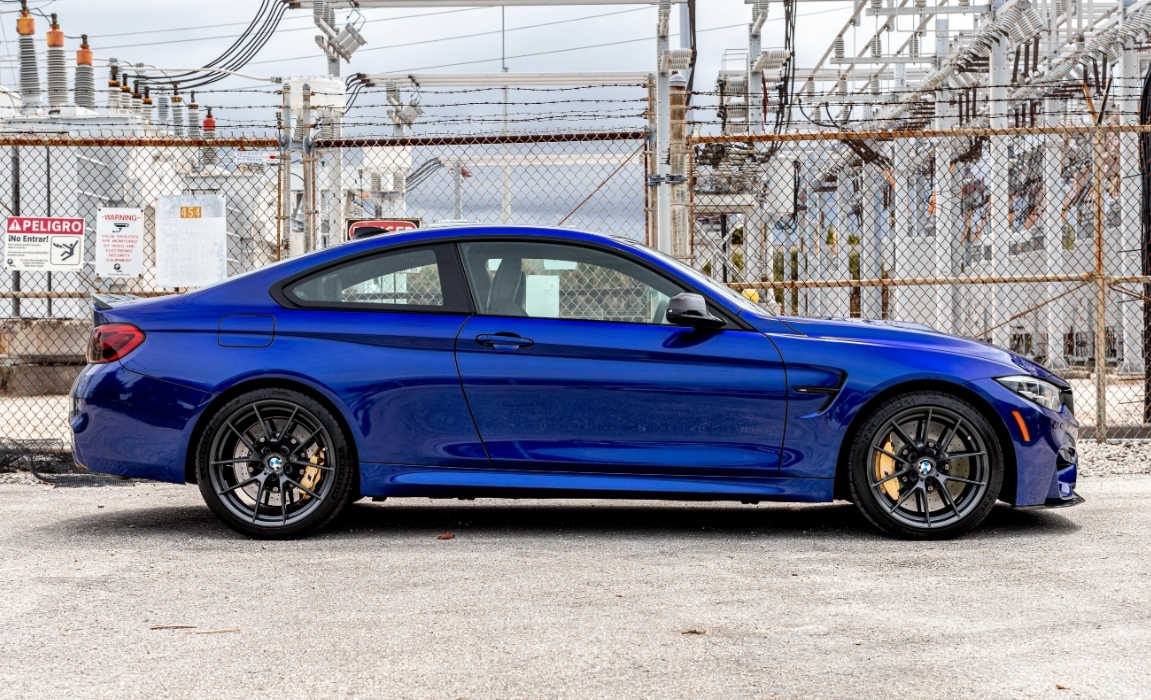
In 2018, BMW released the final introduction of the F8x series and introduced the M3 CS and M4 CS. In many owners’ opinions, the CS is simply the best version you could buy for this generation.
The F8x is the result of learning from each version of it. Many know that at first, the F8X didn’t get a warm welcome from everyone as it brought a lot of new things for BMW: turbos, a unique sound, and higher performance limits than ever before.
It’s no secret that BMW kept improving the driving features of the F8x in all its models, making the power smoother, changing how the automatic transmission works, and adjusting the suspension and steering, all through updates during the model’s life.
From all these improvements and what was learned from the M4 GTS, BMW developed the CS, showing the full potential of the F8x frame and design.
To start with some of the updates found in the CS, the power increases to 454 horsepower (10 more horsepower than the Competition) and 440 pound-feet of torque. The suspension was also tweaked with a significantly improved damping tune along with a CS muffler.
Cosmetically on the exterior, you’d find upgraded 763M wheels, a CS-specific lip spoiler, rear deck-lid spoiler, an M Performance diffuser, and a GTS hood which increases front-end downforce.
Inside you will find custom CS embroidered trim and a GTS center console delete.
While these are differences that you can find both in the M3/M4 CS, here are some key differences that are specific to each model:
M3 CS Specific
– Re-purprosed Silverstone Jahre 30 interior
– No rear AC
– Shadowline tail lights
M4 CS Specific
– GTS tail lights
– GTS front seats (non-buckets)
– GTS door cards
– Melbourne Red as a paint option
– More basic radio head unit (no ASD)
Think of the M3/M4 CS as a GTS-lite. It is not as hardcore, but and you still get some good bits, but the CS is a more livable car to deal with each day.
The base price for the M3 CS started at $99,245 ($30,820 more than the M3 Competition) and M4 CS started at $101,400 ($30,775 more than the M4 Competition).
2019 BMW M3/M4
As a final send-off for the F8x series, BMW released the M4 Heritage Edition limited to 750 cars globally, and you can pick any colour as long as it’s Laguna Seca Blue, Imola Red II, or Velvet Blue.
The M4 M Heritage is a car that celebrates BMW M Motorsports’ history, which started in 1972. This car has a carbon-fiber roof with three colored stripes from the front to the back. It also has 20-inch gray wheels.
Merino Leather M Sport seats are fitted to all Heritage cars. Laguna Seca Blue examples get Silverstone/Black leather upholstery with turquoise stitching, Imola Red II cars have Red/Black leather and red stitching, and Velvet Blue cars get Silverstone/Black leather with blue stitching.
There is also special M Heritage badging on the headrests, carbon trim, and door sills, A plate marked 1/750 shows your friends how special and limited your M4 is.
The base price started at $70,145 ($5,020 more than the standard M4).
BMW M3/M4 Common Problems
The BMW F8X series M3 and M4 have shown a commendable level of reliability, which isn’t always the norm for high-performance sports cars. This might be attributed to BMW’s focus on engineering over excessive electronic gimmicks in these models. Many owners have pushed their vehicles to extensive mileage without facing major complications.
Keep in mind, that it is essential that all cars can have issues and it is crucial to perform a Pre-Purchase Inspection (PPI) from an authorized dealer or experienced independent mechanic to reveal all issues.
Crank Hub Issue: Among the S55 engine’s potential vulnerabilities in the M3/M4, the issue of the crank hub spinning stands out prominently. Should this occur, the repercussions are substantial, potentially leading to extensive engine damage, which can be costly to address and rectify.
Turbos: The turbochargers, though generally reliable, haven’t been without complaints. Owners have occasionally pointed out issues like wastegate rattle. More concerning, though rarer, are instances of complete turbo failure, which can compromise the vehicle’s performance significantly.
Suspension Noises: A segment of users has highlighted unsettling creaking or groaning sounds emanating from the suspension system. These noises tend to be more pronounced during colder weather conditions, suggesting potential material contraction or lubrication issues.
Carbon Ceramic Brake Squeal: Owners who opted for carbon ceramic brakes have sometimes encountered an audible brake squeal. This high-pitched noise is particularly noticeable during cooler temperatures and when the brakes haven’t fully warmed up.
DCT Transmission: The dual-clutch transmission, while offering rapid shift times, hasn’t been immune to criticism. Some users recount moments of rough or unexpectedly jerky gear shifts, which can detract from the overall driving experience.
Electronic Issues: As advanced as they are, the electronics of the M3/M4 have shown occasional hiccups. Reports include minor inconsistencies with the iDrive system or glitches in other onboard electronic components, which, while typically not catastrophic, can be inconvenient.
Exhaust Valve Rattle: A discernible rattle from the exhaust system, especially evident during idling, has been an occasional point of contention for some owners. This noise might be indicative of loose components or minor misalignments within the exhaust assembly.
Water Pump/Thermostat: Both these components, crucial for engine temperature regulation, can sometimes falter. When they do, it’s essential to replace them promptly to prevent overheating or other engine-related complications.
Oil Cooler Gasket Leaks: A segment of M3/M4 owners has pinpointed oil leaks, tracing them back to faulty oil cooler gaskets. These leaks not only represent a potential fire hazard but can also compromise the engine’s lubrication over time.
Air Conditioning: Sporadic feedback from owners highlights issues with the air conditioning system, either not cooling effectively or presenting other related operational concerns, which can hinder cabin comfort, especially in warmer climates.
As with any vehicle, it’s essential to perform regular maintenance and address any potential issues early to prolong the lifespan of the vehicle. If considering purchasing a used F8x M3 or M4, having a pre-purchase inspection by a knowledgeable mechanic is always a good idea to identify any potential or existing problems.
Recalls
BMW M3 vehicles
2015 to 2017 BMW M3
Loose Rear Sub-Frame Bolts (Recall no. 16V653000)
During servicing of the rear differential for a prior service action, the rear sub-frame bolts may have been reused instead of being replaced. Reuse of the existing bolts may cause the bolts to loosen.
2015 to 2016 BMW M3
Slip-Joint Fail (Recall no. 15V782000)
The affected vehicles have a driveshaft with a slip-joint that may not have been filled with grease. As a result, the slip-joint may fail over time.
2016 to 2017 BMW M3
Driveshaft/Flange Fail (Recall no. 18V713000)
The connection between the driveshaft and the flange may fail resulting in a loss of propulsion. A loss of vehicle propulsion can increase the risk of a crash.
BMW M4 vehicles
2015 to 2017 BMW M4
Loose Rear Sub-Frame Bolts (Recall no. 16V653000)
During servicing of the rear differential for a prior service action, the rear sub-frame bolts may have been reused instead of being replaced. Reuse of the existing bolts may cause the bolts to loosen.
2015 to 2016 BMW M4
Slip-Joint Fail (Recall no. 15V782000)
The affected vehicles have a driveshaft with a slip-joint that may not have been filled with grease. As a result, the slip-joint may fail over time.
2015 to 2019 BMW M4
Air Bag Inflator Initiator Fail (Recall no. 17V115000)
The affected vehicles have seat-mounted side air bag inflator initiators that may fail to ignite during a crash.
Improperly Folded and Assembled Air Bag (Recall no. 19V352000)
The driver and passenger knee air bag assemblies may have been improperly folded and assembled.
The Emergency Locking Retractors (ELR) within the front seat belt assemblies may have been produced with incompatible vehicle-sensitive locking mechanism housings.
Maintenance and Ownership Costs
Compared to other high-performance sports cars in its segment, the BMW F8X series M3 and M4 offer a fairly reasonable ownership experience in terms of maintenance. Still, it’s vital to emphasize that owning a performance-oriented vehicle like the M3 or M4 entails more significant expenses compared to more typical commuter vehicles.
Here’s a suggested service schedule and intervals as per BMW:
1 YEAR OR 10,000 MILES
Replace engine oil and filter once a year
Comprehensive inspection per BMW specifications
Complete factory diagnostics
2 YEARS OR 20,000 MILES
Replace engine oil and filter
Brake fluid replacement
Inspect and replace cabin air filter
Check tire tread and pressure
3 YEARS OR 30,000 MILES
Replace engine oil and filter
Transmission fluid and filter change
Replace engine air filter
Typical service costs associated with the BMW F8X M3 and M4 include:
Minor Service: Generally includes oil change, cabin filters, and engine air filters. You can expect to pay around $500 at a dealer.
Major Service: This encompasses minor services, plus transmission fluid change, spark plug replacements, and other comprehensive inspections. Dealers may charge around $1,000 for this service.
Tires: High-performance tires for the M3 and M4, such as the Michelin Pilot Sport, will be around $1,200 to $1,500 for a set.
Brakes: Brake pads for the M3 and M4 will be in the ballpark of $300-$400 for a full set at independent mechanics, with dealers potentially charging more. If rotors need to be replaced, costs can significantly rise, especially for models equipped with carbon ceramic brakes.
Transmission: The dual-clutch transmission (DCT) is relatively durable, but if repairs are needed, they can be costly due to the complexity of the system.
BMW often offers service packages that can be bundled with the purchase of a new car, which can offset maintenance costs for the first few years of ownership. These packages are tied to the vehicle’s VIN and can be a value-add if the car is sold within that period, as the maintenance package can transfer to the next owner. Always check with the dealer for current promotions and packages available.
Options List
The BMW F8X series M3 and M4 come with a broad array of options and packages that prospective buyers can select to tailor the car to their preferences.
Some of these options include packages that provide exterior enhancements, such as carbon-fiber components and exclusive M Performance parts, particularly for the more performance-centric models like the M4 GTS or M4 CS.
One of the frequently chosen options is the upgraded paint palette which includes unique BMW Individual colors that add depth and uniqueness to the car’s appearance.
Several wheel designs are available for both the M3 and M4, allowing owners to further customize the car’s aesthetics to their liking.
Many buyers appreciate the optional Adaptive M Suspension. This system, by adjusting the shock absorbers, enhances the driving experience, making the car more adaptable to varying road conditions and driving styles.
Inside, sport seats with enhanced lateral support are a popular choice for those looking for a sportier feel during spirited drives. However, some have mentioned that for longer journeys, the standard seats might offer better comfort.
The interior can be further refined with the Extended Merino Leather option, allowing owners to choose a distinct color theme for their cabin. This can be a single-color or a two-tone setup that extends to the seats and door panels. Additionally, the M logo is strategically placed in various interior sections, further emphasizing the car’s sporty lineage.
For those seeking a truly unique M3 or M4, BMW’s Individual program provides a deeper level of customization. Through this program, buyers can select from a variety of specialized paints, interior materials, and other bespoke features that aren’t typically offered in the standard catalog.
Cars customized through the BMW Individual program are often seen as more desirable in the second-hand market. Their distinct touches and often limited availability mean they can command a higher resale value due to their exclusivity and distinctiveness.
2017 BMW M3 Options List
Some of the more desirable options to look for include:
Adaptive M Suspension
Carbon Fiber Exterior Packages
Optional Wheels (20-inch M Star-Spoke wheels)
M Sport Seats
BMW Individual Paint
Extended Merino Leather Interior
Executive Package
Competition Package
BMW F8x M3 and M4 Price and Values (M4 GTS)
The Best F8x M3 and M4 To Buy
When it comes to buying an F8x M3 or M4, there are several key factors to consider, impacting the car’s long-term appreciation.
The considerations largely fall into four categories:
For the M3 and M4 models that will most likely appreciate in value, the top contenders are the limited and special editions like the M4 GTS and the M4 CS. Even though they come with a premium price tag, their uniqueness ensures they depreciate at a slower rate.
Despite the base M3 and M4 having a more accessible entry point, they are still expected to hold value decently, especially if they are equipped with specific desirable options that enhance the driving experience.
The color of the M3 or M4 is crucial. Opting for Individual or rare paint finishes can significantly boost the car’s appeal and value.
In terms of market stability, models from 2018-2019 are particularly coveted. They strike a balance between the original allure of the F8x series and modern refinements, ensuring their value remains robust.
Nevertheless, all F8x M3 and M4 models, even those from the earlier production years, are praised for their robust build and driving dynamics, making them a solid choice for enthusiasts and collectors alike.
With the automotive world slowly shifting towards electric and hybrid powertrains, the twin-turbo inline-six engine of the M3 and M4 becomes even more attractive to those who cherish traditional performance engines.
Lastly, similar to any high-performance vehicle, the condition and mileage significantly affect the car’s value. While some M3 and M4 units have been driven aggressively or modified extensively, the models most likely to retain value are those kept in pristine condition with fewer miles on the odometer.
When contemplating an F8x M3 or M4 purchase, thorough research, price comparison, and a preference for well-maintained, low-mileage examples will ensure the best value retention.
Conclusion
In conclusion, for a starting price of around ($60,000+), the BMW F8x series M3 and M4 come as strong choices for those diving into the world of performance sports sedans and coupes.
While rivals like the Mercedes-AMG C63, Audi RS5, Alfa Romeo Giulia Quadrifoglio, and Lexus RCF present compelling alternatives, the M3 and M4 distinguish themselves with their balanced blend of advanced technology, comfortable interiors, intuitive design, and reliable performance on both the street and track.
In summary, if you’re in the market for a high-performance vehicle that delivers both thrills and practicality, the F8x M3 and M4 are fantastic options you won’t regret.
Car Hacking Shortcuts
Ensure the vehicle has adaptive suspension for optimal handling dynamics.
Spec matters: Seek out cars with BMW Individual paint options or unique interior combinations.
Special editions like the M4 GTS or M4 CS are potential future collectibles and might be currently undervalued.
2017+ models of the M3 and M4 bring improved tech and aesthetics and offer great value.
Prioritize vehicles with comprehensive service records, indicating well-maintained conditions and lower mileage.
Stretching over 1,600 miles, the Wild Atlantic Way is an iconic drive in Ireland. Stretching from the beautiful Inishowen Peninsula to Kinsale, it’s arguably one of Europe’s most beautiful drives. Not only that, there are heaps of places on Ireland’s Wild Atlantic Way to visit. There are hundreds of stopping points!
Over the years, we’ve explored so much of the Island of Ireland, from, exploring cities like; Dublin and Belfast, to visiting Galway on the westerly fringes of Europe. Ireland is a stunning country that’s so great to visit on a road trip.
So, to help you get the most out of your visit, I’m sharing the top places on Ireland’s Wild Atlantic Way (and the sider vicinity) that you won’t want to miss.
Plus, I’ve also provided a Google Maps point for each place, so you can easily add these to your map.
Now, I’m not detailing them in any particular route or order, and there’s a good reason why. Most people only join sections of the Wild Atlantic Way or drive alternating routes which makes it hard to pinpoint the most iconic places. Hopefully, our guide will serve as inspiration on where to start and stop your journey in Ireland.
Have an amazing time visiting Ireland.
1.) Cliffs of Moher
Probably one of Ireland’s most breathtaking shorelines, the Cliffs of Moher are one spot you can’t miss. North of the city of Galway, about a 90-minute drive, the Cliffs of Moher are just breathtaking.
Spanning around 10 miles of the coastline in County Clare, the Cliffs of Moher are best visited on your trip between Limerick and Galway, taking the coastal Wild Atlantic Way route.
Towering over the Atlantic Ocean, you’ll get to see O’Brien’s Tower, and head for a stroll along the Burren Way. It’s one of the best ways to view the Cliffs of Moher, especially at sunset (as it’s westerly facing).
To make things easier, book this Cliffs of Moher day trip from Galway. It’s amazing and you’ll get to experience the sheer dramatic beauty of the coastline and the Aran Islands. It’s a whole-day trip and totally worth it. Just be sure to book these tickets in advance, they do sell out at busy times.
Though, a heads up, make sure to take a windbreaker jacket with you. The wind can get so intense after travelling for thousands of miles and hitting the Irish coastline.
For ease of navigation, add this point on Google Maps. It’ll take you right to the cliffs on the Wild Atlantic Way.
Heading west from the town of Tralee, you’ll reach the unspoilt coastal area around Coumeenoole. Now, the drive from Tralee itself will take around 75 minutes, but it’s well worth it if you’re looking to explore some of Ireland’s untapped natural beauty.
Once here, make sure to stop off at Coumeenoole Beach. Yes, it might be small, but it’s so beautiful and really gorgeous to visit on a sunny day.
Not only that, you’ve got some fantastic vistas across the R559 road to see. Make sure to stop off at Blasket’s View, explore Dunmore Head and spot the prehistoric beehive huts (Tóchar Maothaithe) that date back over 2,000 years.
For ease of navigation, add this point on Google Maps. It’ll take you right to Coumeenoole Beach on the Wild Atlantic Way.
Northwest of Lough Mask, Achill Island is one of the places on Ireland’s Wild Atlantic Way you can’t miss. You see, it’s one of Ireland’s islands which is connected by a bridge, making it so easy to visit whilst on a road trip.
After, you’ve arrived on Achill Island, make sure to visit the beautiful Keel Beach and Keem Beach. Both are white sandy bays that are just stunning to see. Oh, and don’t forget to see the White Cliffs of Ashleam on the southerly points of Achill Island.
For ease of navigation, add this point on Google Maps. It’ll take you right to Keem Beach on the Wild Atlantic Way.
On the coastal route, west of Limerick, the town of Ballybunion is an easy stop to make on Ireland’s Wild Atlantic Way. Now, don’t expect a massive town, but its charm is still worth visiting.
If it is the beaches you’re after, then head to either Nuns Beach or Ballybunion Beach itself. Both are stunning, but the former has a few more facilities as it’s right on the edge of Ballybunion itself.
Not only that, on Ballybunion Beach, you can organise surf lessons with Ballybunion Surf School. It’s a great way to test your skills on the surf. However, It’s much harder than it looks (well, it was for me at least).
For ease of navigation, add this point on Google Maps. It’ll take you right to Ballybunion on the Wild Atlantic Way.
East of the Caves of Maghera, Assaranca Waterfall is easily one of the best places on Ireland’s Wild Atlantic Way to visit for a quick stop. You see, it’s one of Ireland’s best waterfalls to see and the wider region around here is stunning too.
Best of all, it’s really accessible and you can park right next to the falls. This means that it’s really easy to spot as you drive around County Donegal.
For ease of navigation, add this point on Google Maps. It’ll take you right to Assaranca Waterfall on the Wild Atlantic Way.
6.) Kylemore Abbey
Kylemore Abbey is a Benedictine monastery and Victorian Walled Garden that’s totally beautiful to see.
The Kylemore Abbey was constructed for the benedictine nuns in 1920; but has a history that goes back even further. It’s so worth booking a visit for the house and the gardens as both are totally gorgeous.
Once inside, you’ll get to explore the Restored rooms, visit the Neo-Gothic Church and stroll the Kylemore Woodlands Trails. Just make sure to give yourself at least 2 to 3 hours to visit.
For ease of navigation, add this point on Google Maps. It’ll take you right to Kylemore Abbey on the Wild Atlantic Way.
7.) Galway
A trip to Galway is a must when driving the Wild Atlantic Way.
Now, Galway is a great little anchor point if you want a little break from all the driving. You see, the city has heaps of things to do and experience.
After arriving in Galway, make sure to visit the Galway Cathedral, explore the Latin Quarter and spot the city walls. You can easily see the latter at the Spanish Arch which was added in the 1700s.
Oh, and make sure to stop off at Kirwan’s for their freshly caught oysters.
Finally, if you fancy heading over to the nearby Aran Islands, then book this tour. Not only does it depart from Galway, but you’ll also get to explore the cliffs of Moher on this full-day tour. It’s so incredible, but make sure to book these tickets before arriving in Galway. Tickets sell out fast at peak times.
For ease of navigation, add this point on Google Maps. It’ll take you right to Galway on the Wild Atlantic Way.
Bunratty Castle is a large 15th-century tower that is easily Ireland’s most historic, still-standing, castle. Easily reached on the road between Limerick and Galway,
I’m not going to spoil it by giving loads of details, but it’s the kind of place you can visit for a few hours and explore Ireland’s history, especially in the folk park where you can learn more about each of the thatched houses.
Now, once here, you can easily grab tickets for Bunratty Castle and the folkpark at the door.
For ease of navigation, add this point on Google Maps. It’ll take you right to Bunratty Castle on the Wild Atlantic Way.
9.) Dun Chaoin Pier (Cé Dhún Chaoin)
When you’re driving around the Wild Atlantic Way, you will come across signs like these (below) called Wild Atlantic Way Discovery Points.
These are points of interest that you won’t want to miss and they make it really easy to locate local attractions as you meander the coast roads. This isn’t the one outside Dun Chaoin Pier, but I wanted to add it for reference for your trip.
Now, when you look out for these signs, you’ll come across Dunquin Pier (Cé Dhún Chaoin). It’s a free vantage point to see whilst driving Slea Head. Plus, it’s located right next to the roadside.
If you do decide to walk down, be prepared for the walk back. Trust me, it feels steep on the stroll to the pier but the way back up is intense. Oh, yeah, and it gets super windy here; so pack plenty of layers.
For ease of navigation, add this point on Google Maps. It’ll take you right to Dun Chaoin Pier on the Wild Atlantic Way.
Travelling over to Valentina Island is super easy. This is especially true as it’s connected by a bridge from Port Magee.
Now, once you’re here, you’ll want to visit the Skellig Experience, it’s a visitor centre that details all about the lives of the Skelling Monks that once lived on the island itself.
Fancy a hike? Then head over to the Geokaun and Fogher Cliffs. This area of Valentina Island is so rugged and totally unspoilt. You can just imagine this landscape looking exactly the same thousands of years ago.
For a really fun experience, book this sea safari tour of Valentina Island that departs from Knight’s Town. It’s so much fun and you’ll get to visit Renard Point and see the local Seals and Oystercatchers.
Now, to drive back over to the main island of Ireland, you’ll drive towards Knight’s Town. From here, it’s a few minutes’ journey by boat to Renard Point.
For ease of navigation, add this point on Google Maps. It’ll take you right to Knight’s Town on the Wild Atlantic Way.
11.) Strandhill
Strandhill is a coastal village renowned for being one of the main attractions for surfers in Western Europe. That being said, it’s not just surfing that makes this area so special.
West of the town of Sligo, Strandhill is one of the best places on Ireland’s Wild Atlantic Way to visit if you’re looking for a slower pace of travel. You see, the coastline around Strandhill, and the local community, are all so lovely.
Once here, be sure to enjoy the dunes of Strandhill Beach and visit The Venue Bar for their freshly caught Irish cod (with chunky chips). It’s so good.
Oh, and don’t forget to book a round of golf at Strandhill Golf Club, too. Their fairways overlook the beautiful coastline here.
For ease of navigation, add this point on Google Maps. It’ll take you right to Strandhill on the Wild Atlantic Way.
Perched right in the northerly route of the Wild Atlantic Way, Fanad Head is a beautiful coastline with spectacular views.
Once here, make sure to spot Fanad Head Lighthouse which dates back to the early 1800s. Oh, and be sure to explore the wider region around Fanad Head, too.
We loved visiting the Great Pollet Sea Arch and exploring Ballyhiernan Bay. All of which are within easy reach by car.
For ease of navigation, add this point on Google Maps. It’ll take you right to Fanad Head on the Wild Atlantic Way.
Malin Head is located at the most northerly point of mainland Ireland and is absolutely breathtaking. There’s something about the rugged beauty of Ireland’s coastline that’s just so inviting.
Now, the whole area around Malin Head is perfect if you want to park up and stroll or hike some of the coastline.
Once here, be sure to check out Lloyds Signal Tower, which has some great views and a long history to learn about. Not only that, you’ve got; Pólifreann, Malin Head Viewpoint and Breshla which can all be explored easily on foot.
Though, again, be prepared for a blustery experience, especially if there’s a westerly wind blowing.
For ease of navigation, add this point on Google Maps. It’ll take you right to Malin Head on the Wild Atlantic Way.
14.) Lough Currant
Nestled on the Ring of Kerry, Louch Currant is an idyllic lough that’s absolutely untouched. Now, it’s not as popular as some other places on Ireland’s Wild Atlantic Way to visit; but we loved it for a 20-minute stop in the car.
Fancy staying longer? Make sure to book this kayak tour on Lough Currant itself. It’s absolutely beautiful. Best of all, the team can provide you with wetsuits and guide you around the lough itself.
For ease of navigation, add this point on Google Maps. It’ll take you right to Louch Currant on the Wild Atlantic Way.
Not too far from the city of Cork, Kilcrea Friary is one of the best places on Ireland’s Wild Atlantic Way to visit when you’ve just started your trip from Cork itself.
You see, Kicrea Abbey is only about a 20-minute drive from Cork Airport and totally easy to find.
Once here, you’ll be able to explore the centuries-old ruins and walk freely around the site. Visits take around 20 minutes and it’s well worth wearing some boots if you’re visiting at wetter times of the year – it can get a little muddy.
For ease of navigation, add this point on Google Maps. It’ll take you right to Kilcrea Friary on the Wild Atlantic Way.
Nestled within the County of Kerry, Abbey Island is a totally beautiful and gorgeous island that can be reached by foot. You see, it’s connected by Derrynane Beach which makes it all so easy.
Once here, you can easily stroll across to the island to explore the eerie ruins of Derrynane Abbey. Alternatively, you can visit Derrynane Bay Beach which is so stunning too.
Oh, and be sure to stop off at Keatings Bar for a tipple. Mind you, it’s only open seasonally – so take some snacks with you.
For ease of navigation, add this point on Google Maps. It’ll take you right to Abbey Island on the Wild Atlantic Way.
The Sliabh Liag Viewing Platform and the views of Slieve League are just stunning to see. In fact, I’d go as far as saying that it’s one of my favourite places on Ireland’s Wild Atlantic Way to visit.
You see, these are the second-highest cliffs in all of Ireland and the views are so beautiful. Now, to get here you’ll take one of the buses from the Sliabh Liag Visitor Centre (which makes it so easy).
Once here, you’ll get to see the views all across the coastline and explore the hiking routes around Shanbally. Hikes can be as quick or as long as you want in this area and the paths are really well marked.
For ease of navigation, add this point on Google Maps. It’ll take you right to the Sliabh Liag Viewing Platform on the Wild Atlantic Way.
The Slea Head drive is on one of the country’s most scenic coastal roads, in the southwest of Ireland. Now, it’s really easy to include the Slea Head drive after exploring Coumeenoole Beach (as they’re in a similar area).
Once here, you can explore Ceann Trá Beach, visit Eask Tower and view the remains at Fairy Fort Ringfort. The latter are Bronze Age ‘house’ ruins that once stood in early (or pre) Celtic times in Ireland.
For ease of navigation, add this point on Google Maps. It’ll take you right to the Ceann Trá Beach on the Wild Atlantic Way.
Nestled within the northern fringes of County Mayo, the small town of Ballina is well worth a stop as you drive along the Wild Atlantic Way.
Once here, make sure to visit the Jackie Clarke Collection. It’s free to enter and is a great way to learn more about Ireland’s long history. Also, don’t forget to have a look around St. Muredach’s Cathedral, which dates back to the 1800s.
Oh, and don’t forget to stop off at The Merry Monk when leaving Ballina itself. It’s a great place for a proper pub lunch and their carvery is so good. It runs from 12-4 pm, so make sure to arrive on time.
For ease of navigation, add this point on Google Maps. It’ll take you right to the Ballinah on the Wild Atlantic Way.
2024 may be the year that sees the “implosion” of luxury e-commerce platforms. Multi-level e-commerce sites like Matchesfashion and Farfetch face increasing financial struggles amid ongoing debts. The market shift away from e-retailers marks a change in consumer preferences alongside the return to brick-and-mortar as luxury brands invest in experiential shopping to regain consumer footfall.
About a decade ago, sites like Net-A-Porter, MrPorter, MyTheresa, Matchesfashion, The RealReal, Farfetch, Vestiaire Collective, and Gilt.com dominated the luxury fashion industry showcasing a range of luxury brands (sometimes secondhand and at discounted prices) under one virtual roof. The success of these sites came to a climax during the COVID-19 pandemic when consumers were forced to make their purchases online. However, the pandemic would also be a step towards its downfall as luxury brands were forced to make the transition from offline to online resulting in the first warning signs coming from fashion brands themselves.
The Dept Debacle
In March this year, Matchesfashion (founded in 1987) collapsed resulting in a debt, in the amount of approximately USD 263 million to designer brands and customers. According to a report by administrators, customers who bought designer items prior to the administration are not able to return items or get a refund. Reports by the Guardian attribute the collapse to “widespread discounting and softening demand for luxury fashion”. The administrators said the retailer’s 541 known unsecured creditors — including customers, landlords and designer clothing suppliers — are owed at least USD 44.58 million and potentially as much as USD 125 million, but are unlikely to receive more than USD 1 million collectively. In December 2023, Frasers Group stepped in to acquire Matches from investment first Apax Partners for some USD 66 million. However, after a difficult Christmas, Frasers said it was unwilling to provide further funds and called in administrators from Teneo.
Matchesfashion was put into administration by Frasers Group in March of 2024, three months after it was acquired. Then you have the luxury group, Richemont, which has spent years trying to offload its online retail division Yoox-Net-a-Porter. Next, Coupang lent Farfetch USD 500 million which resulted in the South Korean e-commerce company suffering a significant decrease in net income for the first quarter. This decrease was attributed primarily to the inclusion of the losses incurred at Farfetch.
Branding Power
Perhaps the biggest issue faced by luxury e-tailers is competition from traditional retailers. Many luxury brands have established their own e-commerce platforms or partnered with established online retailers to sell their products directly to consumers. This direct-to-consumer approach poses a challenge for third-party e-retailers, as they must first compete with the brand’s official channels on top of offering added value to justify their presence on the market.
Luxury brands spend millions in marketing and visual merchandising to curate a one-of-a-kind shopfloor experience prioritising craftsmanship and exclusivity, which can be challenging to convey through an online platform. These sites then face the issue of balancing the brand’s image of luxury and prestige in a digital environment while ensuring a seamless customer experience.
Next, luxury brands have finessed the art of consumer experiences and how to provide the best service for clients. Luxury consumers have come to expect a personalised and immersive shopping experience when visiting a physical boutique. To properly compete, E-retailers have to invest in technologies like augmented reality (AR) and virtual changing rooms to enhance the online shopping experience. E-retailers like Mytheresa have embraced digital innovations, such as virtual styling consultations and exclusive online events, to create a tailored and engaging shopping environment for their customers. However, until augmentation reality and virtual dressing rooms are properly designed, these online platforms will inevitably open themselves to the risk of high return rates of returns that would also lead to a loss in profits. Furthermore, as AI and AR become more common practice used in shopping experiences, a lack of barrier to entry would mean that luxury brands will also adopt this trend and could arguably do it successfully with financial backing from their conglomerates.
What’s Your Credit?
E-retailers face the challenge of building trust and credibility with luxury consumers who may be wary of purchasing high-end products online. While companies like Matchesfashion have implemented rigorous authentication processes to reassure customers of the authenticity and quality of their offerings, when it comes to purchasing high-valued items — particularly with watches and jewellery — customers have more confidence in purchasing it in person and wearing it rather than buying it online, particularly from a third-party platform.
The Inventory Issue
Luxury brands often have stringent distribution agreements and limited stock availability, making it challenging for e-retailers to secure inventory. To overcome this, e-commerce platforms need to establish strong relationships with luxury brands and navigate complex distribution channels to ensure a steady supply of products. However, as these platforms continue to face financial challenges, brands could focus on selling directly to consumers and override e-retailers altogether which would result in inventory shortages and lost sales opportunities.
The Rising Competition
The competition can be broken down into two components — a Lack of USP (unique selling point) and the Rise of third-party resellers. With regard to USP, the fashion e-commerce market has become increasingly saturated with no clear point of differentiation between the platforms. To overcome this, platforms like MrPorter and FarFetch have begun to include some added user experiences like styling guides while providing more editorial content to include alongside fashion commerce. Next, when it comes to resellers, some consumers may hold brand loyalty to specific fashion brands or e-tailers, while many others choose to prioritise price and convenience over brand loyalty. This price sensitivity can make it challenging for e-tailers to maintain profit margins, especially when competing with discount retailers and marketplaces.
In the ever-changing world of luxury retail, the decline of online stores and e-commerce platforms signals a significant shift in how consumers shop and engage with luxury brands. However, the decline of e-retailers and e-commerce platforms proves that consuming luxury goods goes beyond just buying products online. It is also about the tangible, the experiential, and the personal connection between customers and brands. As digital platforms evolve, luxury brands need to hone in on creating immersive experiences (both virtual and in-person) that reflect exclusivity, craftsmanship, and top-notch service. Calibre and value aren’t just about quick online transactions—they are also about communicating luxury’s enduring appeal of quality and sophistication.
For more on the latest in luxury fashion and business reads, click here.
The technical storage or access is strictly necessary for the legitimate purpose of enabling the use of a specific service explicitly requested by the subscriber or user, or for the sole purpose of carrying out the transmission of a communication over an electronic communications network.
Preferences
The technical storage or access is necessary for the legitimate purpose of storing preferences that are not requested by the subscriber or user.
Statistics
The technical storage or access that is used exclusively for statistical purposes.The technical storage or access that is used exclusively for anonymous statistical purposes. Without a subpoena, voluntary compliance on the part of your Internet Service Provider, or additional records from a third party, information stored or retrieved for this purpose alone cannot usually be used to identify you.
Marketing
The technical storage or access is required to create user profiles to send advertising, or to track the user on a website or across several websites for similar marketing purposes.