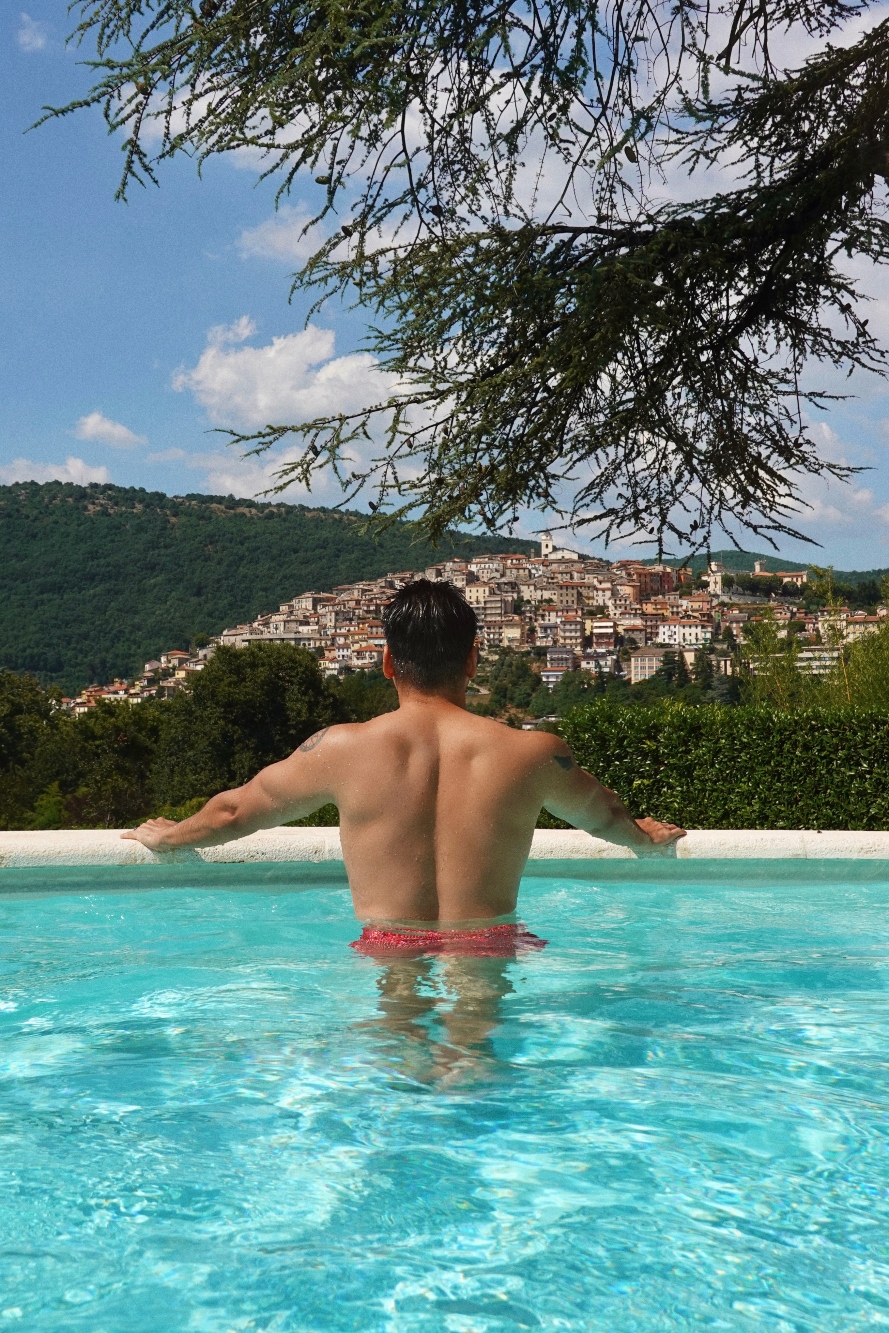
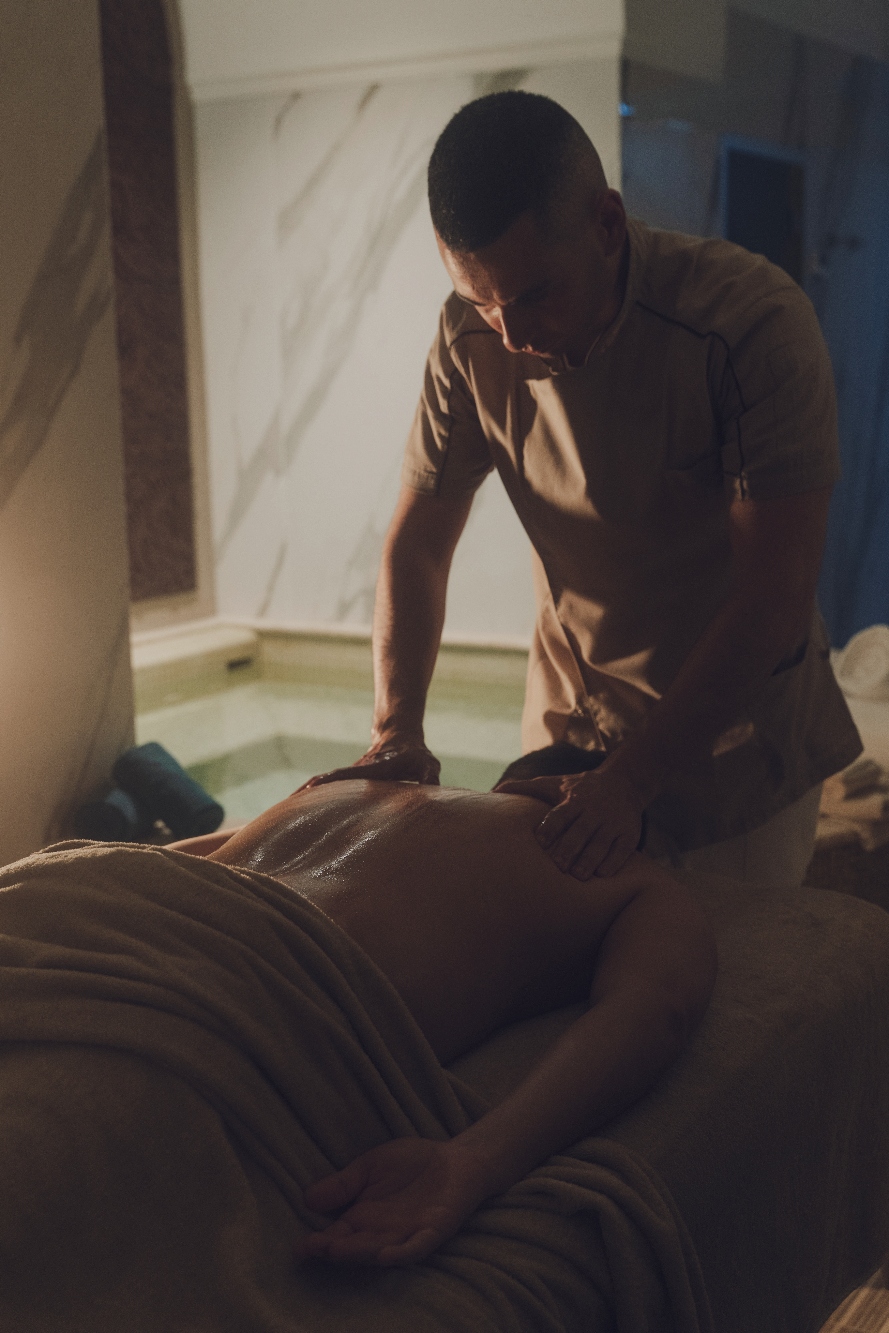
A new hotel discovery platform verifies luxury properties for both accessibility and inclusivity.
The platform, called Inclusive Luxury Hotels, ensures all of its listings are committed to providing “conscious inclusivity” for travelers with mobility, sensory, and neurodivergent exceptionalities.
Included in the listings are luxury properties in Africa, Asia, Europe, and North America.
Luxury travel just got a bit more inclusive, thanks to a new platform designed for discerning travelers with disabilities.
Accessible travel company Inclu has just launched a new hotel discovery platform for travelers with disabilities called Inclusive Luxury Hotels. The platform features hotels that have been vetted (or are in the process of being vetted) and awarded “Verified by IncluCare” status for both accessibility and luxury. All the properties featured have demonstrated their commitment to the concept of “conscious inclusivity” for travelers with disabilities, including mobility, sensory, and neurodivergent exceptionalities.
The platform at launch features 18 hotels and resorts in 10 different countries, with a goal to expand to more than 50 properties by the end of 2025.
Verified by IncluCare accreditation was established in 2022 and is awarded to providers who have completed a four-step process of evaluation, education, and transformation led by Inclu’s experts. The program for hotels aiming for accreditation includes a comprehensive Inclusive Hospitality Appraisal of facilities, amenities, and services, an online webinar to train staff, suggested recommendations in an “action and adjustment plan” to improve accessibility and guest inclusivity, and promotion of the property.
Amilla Maldives is the first Verified by IncluCare five-star property, a ranking that is granted only to hotels and resorts who have demonstrated guest inclusivity excellence for a minimum of 24 months. Some properties are also awarded the ranking on a discretionary basis if they can demonstrate an innovative or exemplary provision for inclusivity.
Six other properties on the platform have been granted Verified by IncluCare status, including: The Atlantic Hotel in Jersey, England; Euphoria Retreat in Mystras, Greece; Hotel Éclat Beijing in China; La Miniera Pool Villas Pattaya in Thailand; Leopard Walk Lodge in Hluhluwe, South Africa; and Ximuwu Lodge in South Africa’s Klaserie Private Nature Reserve.
Verification requires hotels to make their inventory of accessible rooms clearly visible on the Inclusive Luxury Hotels website and provide fully confirmed bookings, which contrasts with the majority of hotels that often offer accessible rooms on a request-only basis or make them otherwise difficult to find online.
The platform will also highlight “En Route” properties that are in the process of verification and have completed the Inclusive Hospitality Appraisal. Eleven properties currently qualify as En Route, including hotels and resorts in Costa Rica, the U.K., Belize, the U.S., and Turkey.
The collector car market is huge. This is why exotic car brands introduce limited-edition models that are often scooped up even before they are announced publicly. These cars are not just heavily customized but are individually numbered, which makes each one truly unique.
There are some brands that are notorious for faking production numbers, though. Ferrari claims they built 400 units of the Enzo. However, some say that’s far from the truth.
We recently came across something really bizarre, which has raised doubts over the exact number of Porsche 911 S/Ts that are being produced.
Last week, we shared images of the one-off Sonderwunsch 911 S/T finished in the classic Fraise shade. That’s number 1724 out of the total production of 1963 units.
Now, here’s the weird part – there’s a Shoreblue 911 S/T delivered to Guatemala with the same production number. As you can see, the special badge clearly says, “1724/1963”. How is this even possible if the production has been capped?
We can only think of these three scenarios here:
Maybe someone at the factory made an unintentional blunder during the assembly process, which, in the case of Porsche, is highly unlikely.
Or maybe Porsche sold a rebuilt car (in this case, #1724) without disclosing it to the customer. This can be easily ruled out if someone can track down the Shoreblue 911 S/T. We also know for a fact that the owner of the Fraise 911 S/T hasn’t purchased the Shoreblue example and repainted it. The car was delivered brand new earlier this month.
And finally, if Porsche has indeed built more cars than it initially promised, then it will be a major issue for the company. Customers who purchased the 911 S/T will be seriously upset and will demand answers.
What do you think could’ve happened here? Let us know in the comments.
Lamborghini has been secretly planning a limited-edition supercar, and we think that it would be a good time to share some details about it, albeit unconfirmed.
The new limited edition Lamborghini was recently showcased at a private event. Edgar Veliyulin, who attended the private preview, described it as “a car that will change everything”. He said that it’s “inspired by the most iconic designs from the brand’s history.”
Edgar’s Instagram post doesn’t reveal much, but from what we’ve heard, it will be based on the Revuelto. We’ve also been told that production will be limited to less than 50 units. The official unveiling will take place at The Quail during the upcoming Monterey Car Week.
The upcoming supercar will most likely be a re-bodied Revuelto with styling inspired by a classic Lamborghini. It will be powered by the same 6.5-liter V12 engine paired with two electric motors for a combined output of 1001 hp.
Thailand offers a perfect mix of history, culture, and stunning natural beauty. Whether exploring city streets, wandering through tranquil temples, or relaxing on the beach, this 7-Day Thailand itinerary covers all the must-see spots. From the buzzing atmosphere of Bangkok to the laid-back vibes of Chiang Mai and the beachside relaxation of Phuket, Thailand is a place that has something for everyone.
If you’re planning your own trip, visit Reliabletraveler, a great place to find expert recommendations, first-hand travel stories, and a dedicated 7-day itinerary planned with all activities to make your one week in Thailand unforgettable.
This trip will take you to the country’s best spots—temples, lively markets, islands, and serene beaches. Whether sightseeing, trying local cuisine, or lounging by the sea, this 7-day Thailand itinerary gives you a well-rounded experience of Thailand’s culture and landscapes.
Here’s an overview:
Days 1-3: Bangkok – Culture, Markets, and Nightlife
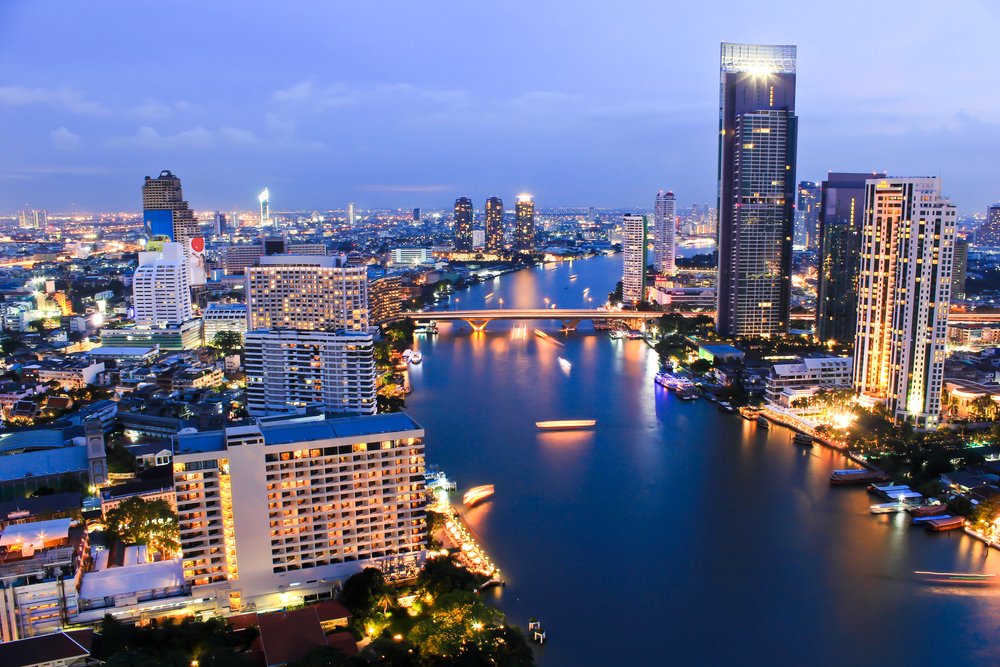
Bangkok is a city that’s always on the go. It mixes old traditions with modern living, and there’s always something happening. Whether you’re visiting temples, tasting street food, or checking out the nightlife, you’ll have a packed first few days here.
This section is ideal for anyone planning a Bangkok itinerary.
Day 1: Arrival in Bangkok – The Grand Palace and River Views
Your Thailand itinerary starts with a visit to the Grand Palace, one of the most iconic sites in the country. The architecture here is stunning, with gold and red decorations that shine in the sun. As you walk through the grounds, you’ll notice the detail in the carvings and the statues, showcasing Thailand’s royal history. Right next to the Grand Palace, Wat Phra Kaew (Temple of the Emerald Buddha) offers a calm place to connect with the spiritual side of the country. Take your time to explore—it’s a spot that holds deep meaning.
After the Grand Palace, hop on a traditional boat for a ride along the Chao Phraya River. This gives you a unique view of Bangkok, where you’ll see landmarks like Wat Arun with its tall spires rising over the city. The river offers a peaceful contrast to the busy streets, and it’s a great way to see how the city blends old and new. You can even stop by some riverside spots to explore.
For lunch, head to one of the floating restaurants along the river. You’ll find classic Thai dishes such as Pad Thai, Som Tum (papaya salad), and Tom Yum Goong (spicy shrimp soup). These dishes capture the best of Thai flavors. Don’t miss out on Mango Sticky Rice for dessert. You can also grab some Satay skewers or Khao Pad (fried rice) from one of the food stalls near the river. It’s street food at its best and one of the classic things to do in Thailand.
As night falls, head to Chinatown. It’s packed with street food stalls where you can try local favorites like dumplings and satay skewers. The energy here is contagious, and the market atmosphere is something you won’t want to miss. Later, visit Khao San Road, famous for its vibrant nightlife. There are plenty of bars and clubs here where you can experience Bangkok’s lively night scene.
Day 2: Bangkok – Temples, Markets, and Khao San Road
On day two, dive deeper into your Bangkok itinerary. Start with a visit to Wat Pho, where you’ll find the Reclining Buddha. This massive statue is one of the city’s most famous attractions. The temple’s peaceful setting offers a moment of calm amidst the excitement of the city. Don’t rush through—take your time to appreciate the details, from the golden statue to the artistic elements throughout the temple.
Next, make your way to Chatuchak Weekend Market, one of the biggest markets in the world. Whether you’re shopping for clothes, antiques, or local crafts, you’ll find a variety of goods. The best part? The market’s food stalls are packed with delicious Thai dishes. Try grilled meat skewers, papaya salad, or a cool Thai iced tea to beat the heat. Wander around, pick up unique souvenirs, and savor the street food—it’s one of the most authentic things to do in Thailand.
Day 3: Bangkok – Floating Markets and Nightlife
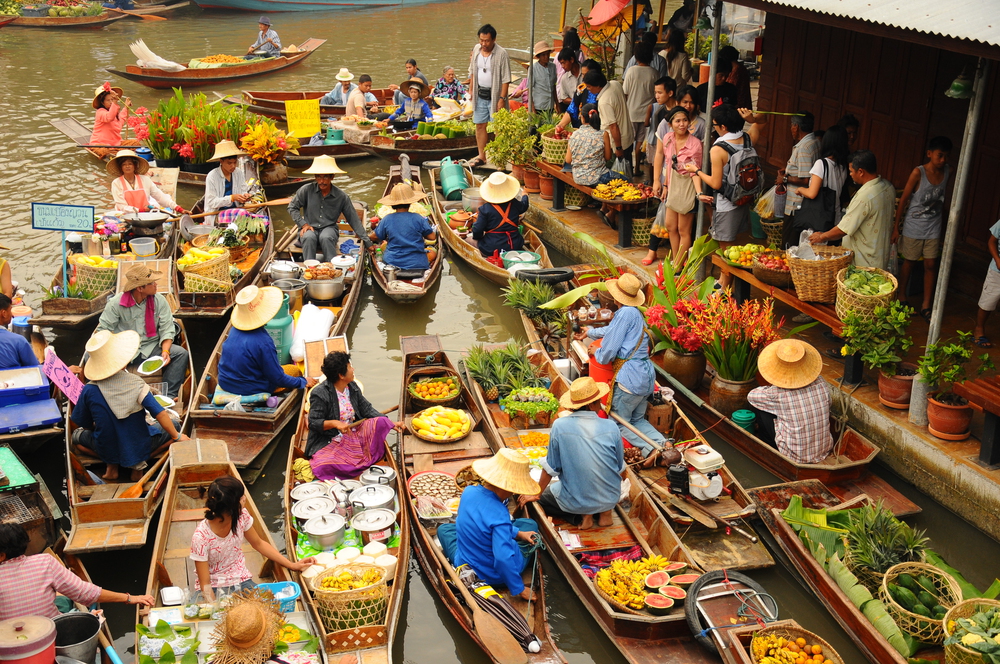
On your last day in Bangkok, taste traditional Thai life at the floating markets. Head to Damnoen Saduak, one of the most famous floating markets in Thailand, located about an hour and a half from the city. The vibrant colors of the fruits, flowers, and goods being sold make for a lively and visually stunning experience. It’s a quiet contrast to the busy streets of the city. The boat ride through the market offers a unique and peaceful way to experience local commerce and the rhythm of daily life in Thailand.
You can even grab some fresh coconut juice or fried banana fritters as a snack while you float through the market. You’ll see vendors in traditional wooden boats, selling everything from fresh produce to handmade crafts. Don’t forget to haggle for some souvenirs—it’s part of the fun and charm of the market.
If you have time, you can also visit the nearby Amphawa Floating Market, which is less touristy but offers an equally unique experience. After exploring the market, take a stroll along the canals and enjoy the slower pace of life.
After the market, head back to the city to experience more of Bangkok’s street food scene. Stop at Yaowarat Road in Chinatown, famous for its delicious snacks and vibrant atmosphere. Chinatown is the best place to sample dim sum, roast duck, or satay skewers. For something a little sweet, try the Chinese-style egg tarts or mango sticky rice, a classic Thai dessert that’s served in every street market.
In the evening, experience Bangkok’s nightlife scene. Whether you’re in the mood for a quiet drink or a wild night out, the city has options for every taste. A visit to one of the rooftop bars, like Sky Bar or Octave, gives you a stunning view of the city. Watch the sun set over the sprawling skyline while sipping on a signature cocktail. If you prefer a more local experience, head to Soi Rambuttri or Sukhumvit Road, where you’ll find live music, quirky bars, and plenty of opportunities to mingle with both locals and fellow travelers.
For a truly unforgettable experience, end the night with a visit to Khao San Road. Known as the backpacker’s haven, this area is packed with energy. There are plenty of bars, clubs, and street food vendors to explore, and you can end the night dancing or enjoying a late-night snack with new friends.
Day 4: Chiang Mai – Temples, Mountains, and Elephants
Chiang Mai offers a more relaxed vibe than Bangkok, but its beauty and culture are just as rich. The city is surrounded by mountains, and its many temples provide insight into Thailand’s spiritual side.
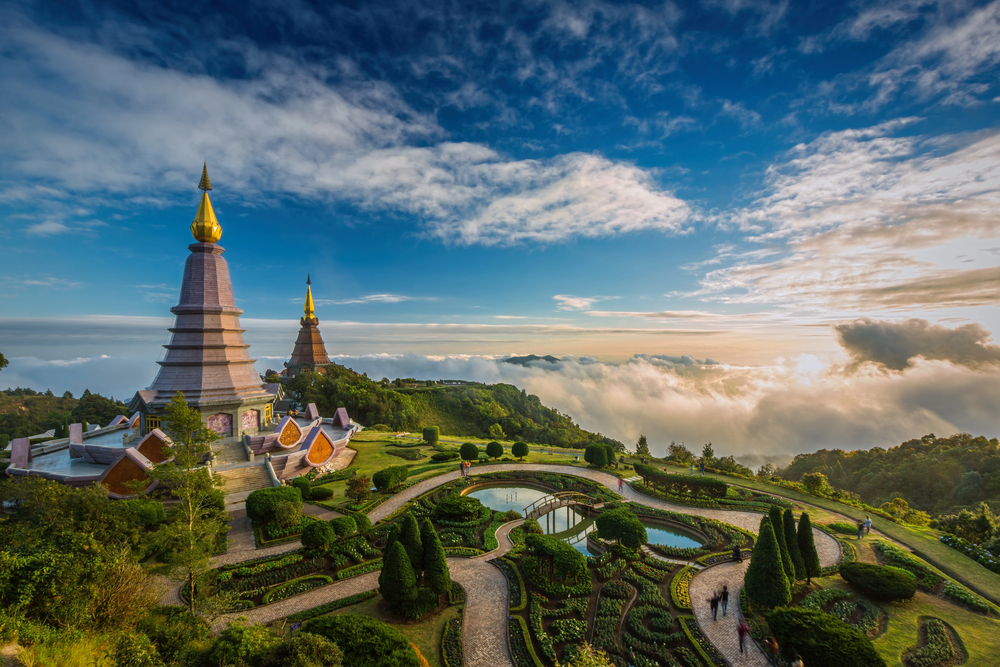
Start with a visit to Wat Phra That Doi Suthep, a temple perched high on a mountain. The views from the top are breathtaking, and the temple itself is a masterpiece of Thai architecture. The golden stupa and intricate details of the temple are perfect examples of traditional Thai craftsmanship. Afterward, head to Wat Chedi Luang, another temple with historical significance. These stops are key highlights of any Thailand itinerary.
Later, visit Elephant Nature Park, an ethical sanctuary where you can interact with rescued elephants. It’s a meaningful stop, and a must during one week in Thailand. Spend the morning feeding and bathing the elephants while learning about their rehabilitation process.
In the evenings, explore Chiang Mai’s Old City and the Night Bazaar. These vibrant areas are perfect for food lovers and those looking to pick up local crafts. Chiang Mai offers a perfect mix of cultural depth and relaxation.
Day 5: Chiang Mai – More Temples and Nature
Your day starts with a visit to Wat Phra Sing, one of the most well-known temples in Chiang Mai. It’s located right in the heart of the Old City and is famous for its beautiful golden Buddha and impressive Lanna-style architecture. If you’re keen on learning about the rich Buddhist history of the region, this is the place to go.
Next, take a trip to the Chiang Mai Zoo and Aquarium, where you can see animals native to Thailand and other parts of the world. For something a bit more adventurous, head out of the city to visit the Bua Thong Waterfalls, also known as the ‘sticky waterfalls.’ Here, you can walk on the waterfall’s rocks, which have a unique texture that makes them non-slippery, giving you a fun and rare experience in nature.
Spend your evening at the Sunday Walking Street Market, where local artisans showcase their crafts and food stalls tempt you with unique dishes. Don’t forget to try Khao Soi, a Northern Thai curry noodle dish that’s rich and flavorful.
Day 6: Phuket – Beaches and Island Life
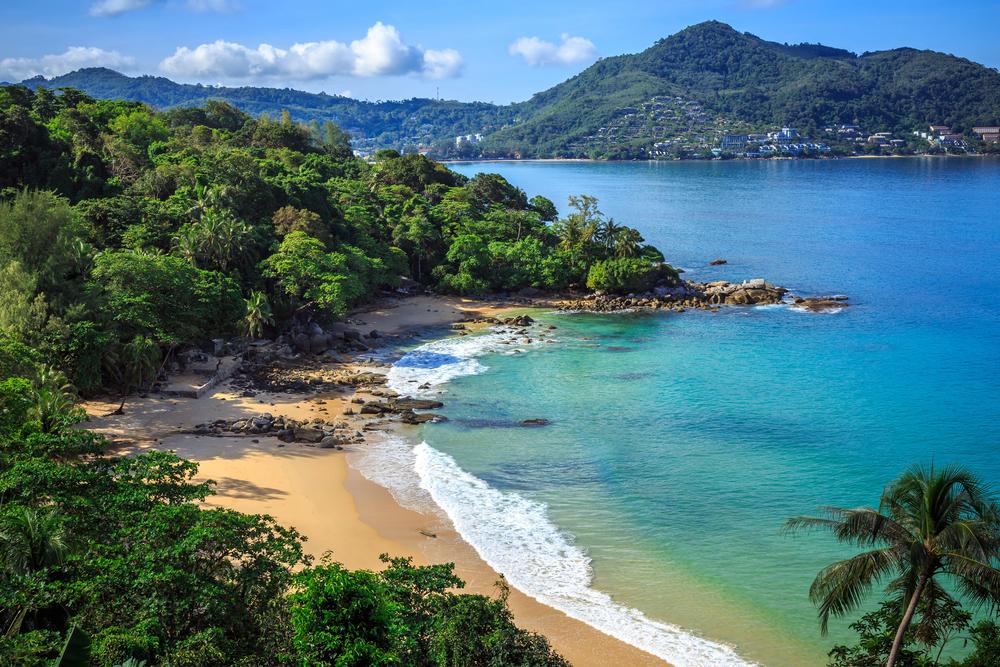
Fly from Chiang Mai to Phuket, Thailand’s largest and most popular island. Phuket is known for its stunning beaches, crystal-clear waters, and exciting activities. It’s the perfect place to unwind and enjoy everything an island getaway has to offer. Your Thailand itinerary wouldn’t be complete without spending some time here.
Start your day at Patong Beach, one of the most famous beaches in Thailand. Patong offers an action-packed atmosphere with a range of water sports to enjoy, including parasailing, jet skiing, and banana boat rides. For a more peaceful vibe, head to Kata Beach or Karon Beach, both known for their laid-back ambiance and clear waters. Here, you can simply relax on the sand, swim, or rent a kayak to explore the bay.
If you want to get more active, why not try snorkeling at Coral Island or Phi Phi Islands? These destinations are known for their vibrant coral reefs and abundant marine life. The islands are a must-see for any one week in Thailand. Take a speedboat tour around the islands and stop at various snorkeling spots where you can swim with tropical fish and marvel at the underwater world.
For a more serene experience, take a boat to James Bond Island, famous for its appearance in the movie The Man with the Golden Gun. The island is home to striking limestone cliffs and caves, making it an excellent spot for some photos.
As the day progresses, take a break and head to Phuket Old Town, known for its colorful buildings, Sino-Portuguese architecture, and vibrant street art. Wander through the charming streets, where you’ll find quaint cafes, art galleries, and boutique shops. The Old Town is a great place to experience the local culture while enjoying a cup of Thai iced tea or freshly brewed coffee. If you’re in the mood for something sweet, stop by one of the bakeries serving Thai coconut cake or fried donuts—perfect for a mid-day treat.
As the sun sets, head to Promthep Cape, one of the best places to catch the sunset in Phuket. The views from the cape are stunning, with the sun dipping into the Andaman Sea, painting the sky with shades of orange, pink, and purple. It’s a peaceful way to end your beach day and take in the beauty of the island.
For dinner, enjoy a seafood feast at one of the beachfront restaurants. Fresh grilled prawns, crab, and fish are the perfect end to your day in Phuket. Pair your meal with a refreshing glass of local beer or Mai Tai as you watch the waves lap against the shore.
Day 7: Phi Phi Islands – Coral Reefs, Beaches, and More
On your final day in Thailand, head to the Phi Phi Islands, an unmissable destination on any Thailand itinerary. These islands are famous for their crystal-clear water, white sand beaches, and dramatic cliffs. The Phi Phi Islands are a must-visit for anyone looking to enjoy the best beaches in Thailand.
Start your day with a boat trip to Maya Bay, known for its stunning beauty and its role in the film The Beach. The turquoise waters, towering cliffs, and white sand make this spot one of the most photographed places in Thailand. Spend time exploring the beach, swimming in the calm waters, and soaking up the sun.
After exploring Maya Bay, head over to Phi Phi Don, the largest island in the Phi Phi group. Here, you can spend time snorkeling and swimming with tropical fish. The underwater life is diverse and vibrant, and there are plenty of opportunities to see marine species such as clownfish, parrotfish, and sea turtles.
In the afternoon, stop at Bamboo Island, a small, uninhabited island known for its picturesque beaches and crystal-clear waters. You can relax, take a swim, or simply enjoy the pristine surroundings. If you’re feeling adventurous, consider a kayak tour around the island’s shoreline.
As the day winds down, return to Phuket for one last evening on the island. Visit the bustling Patong Beach or relax with a cocktail at one of the island’s quieter spots, such as Kata Beach. The end of your trip will be just as spectacular as the start—whether you’re enjoying the sunset at Promthep Cape or sipping a fresh coconut by the sea, Phuket offers the perfect closing experience to your one week in Thailand.
A Journey Through Thailand’s Best
From the vibrant streets of Bangkok to the peaceful temples of Chiang Mai, and the stunning beaches of Phuket, this 7-day Thailand itinerary showcases the best of the country. Whether you’re looking for culture, adventure, or relaxation, this plan delivers. Book your trip today and experience the magic of Thailand firsthand.
For more travel inspiration, visit Reliabletraveler and get detailed guides like this one for a one week in Thailand.
I’m sure you’ve had similar experiences I had whilst traveling. You’re in a certain place and a fellow traveler, or a local, tip you off on a little-known beach, bar or accommodation. Great travel tips from other travelers or locals always add something special to our travels. That was the inspiration for Travel Dudes.
I’m sure you’ve had similar experiences I had whilst traveling. You’re in a certain place and a fellow traveler, or a local, tip you off on a little-known beach, bar or accommodation. Great travel tips from other travelers or locals always add something special to our travels. That was the inspiration for Travel Dudes.
Taiwan is one of the most iconic travel destinations in Asia. When you see a photo of Taipei 101, you’ll immediately know it’s Taiwan. But aside from this building that was once the tallest in the world, Taiwan has a lot to offer to tourists. From rich cultural heritage, to modern cityscape, to stunning natural landscapes, it attracts travelers who are interested in different kinds of adventure. Whether you’re looking to hike through scenic trails, visit temples, or eat your heart out at night markets, this island will surely give you a trip to remember.
Taiwan was our last destination before the pandemic spread around the world and before countries closed their borders. In fact, we even got stranded here because of it! So when we felt that travel is going back to normal, it just felt right to make Taiwan our first out of the country destination.
And now, we’re sharing with you a sample itinerary that you can follow especially if it’s your first time in Taiwan.
Note: This isn’t the actual itinerary we had for our trip. But if it’s your first time and you want to experience a lot in Taipei, this itinerary is what we highly recommend.
Touchdown Airport. When you land at the airport, you can exchange money or withdraw Taiwan dollars from the ATM so you have local currency right away. You can also buy a SIM card or pick one up if you pre-ordered online, so you’re connected as soon as you arrive. Here are two options from Klook!
Make your way to the city center. If you’re on a DIY trip, you can take the train or ride a bus to reach your hotel. But if you’re with a bigger group, traveling with seniors, or just want a smoother trip, you can book a tour package with a reputable agency in Taiwan like Edison Tours, or even from the Philippines.
Check in at hotel. If you arrive too early to check in, drop off your bags at the hotel and start exploring.
Since it’s your first time, it’s best to see Taipei city center’s must-visit attractions.
Chiang Kai Shek Memorial Hall
Built in 1976 to honor one of Taiwan’s most important figures, the Chiang Kai Shek Memorial Hall houses a giant statue of him in the main chamber, with a museum and library on the lower level.
Address: No.21, Zhongshan S. Road, Zhongzheng District, Taipei City, Taiwan (R.O.C) Nearest MRT Station: Chiang Kai-shek (CKS) Memorial Hall Station (Red Line 2 or Green Line 3) Open: Daily, 9:00 AM – 6:00 PM Entrance Fee: FREE
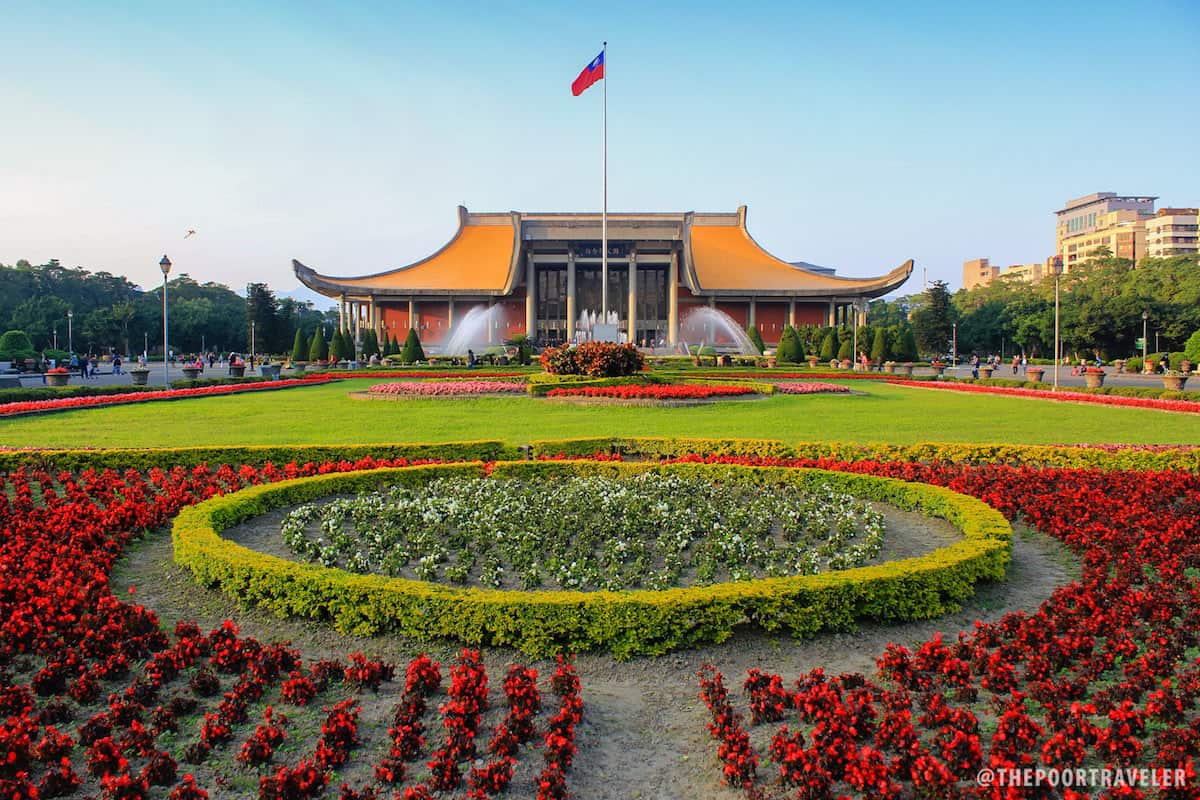
Sun Yat-sen Memorial Hall
Another landmark built to honor one of Taiwan’s founding figures is the Sun Yat-sen Memorial Hall. Sun Yat-sen is widely regarded as the Father of the Nation, and this site celebrates his legacy with a grand statue, exhibits, and spacious grounds perfect for a leisurely stroll.
Address: No. 505, Section 4, Ren’ai Road, Xinyi District, Taipei City, Taiwan (R.O.C) Nearest MRT Station: Sun Yat-sen (SYS) Memorial Hall Station (Blue Line 5) Open: Daily, 9:00 AM – 6:00 PM Entrance Fee: FREE
Note: Since February 2024, the hall is temporarily closed for maintenance. It is expected to reopen in 2026.
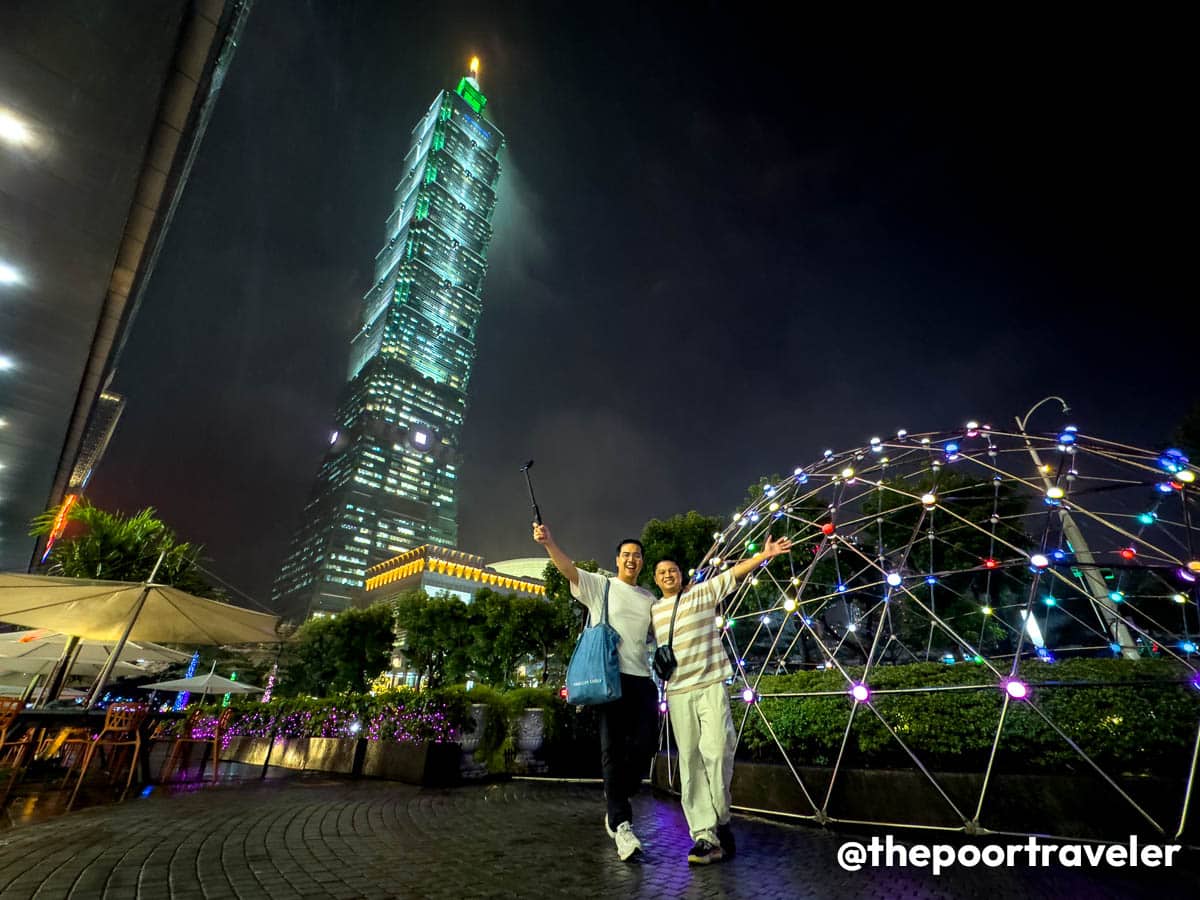
Taipei 101
Taipei 101 is the most iconic attraction in Taipei. From 2004 to 2012, it held the title of the world’s tallest building until it was surpassed by the Burj Khalifa in Dubai. At the top, there’s an observatory where you can enjoy breathtaking panoramic views of the capital.
You can secure your ticket in advance online through accredited booking sites like Klook!
Address: No. 7, Section 5, Xinyi Road, Xinyi District, Taipei City, Taiwan (R.O.C.) Nearest MRT Station: Taipei 101 Station (Red Line 2) Hours open: Daily, 9:00 AM – 10:00 PM Entrance Fee: NT$600
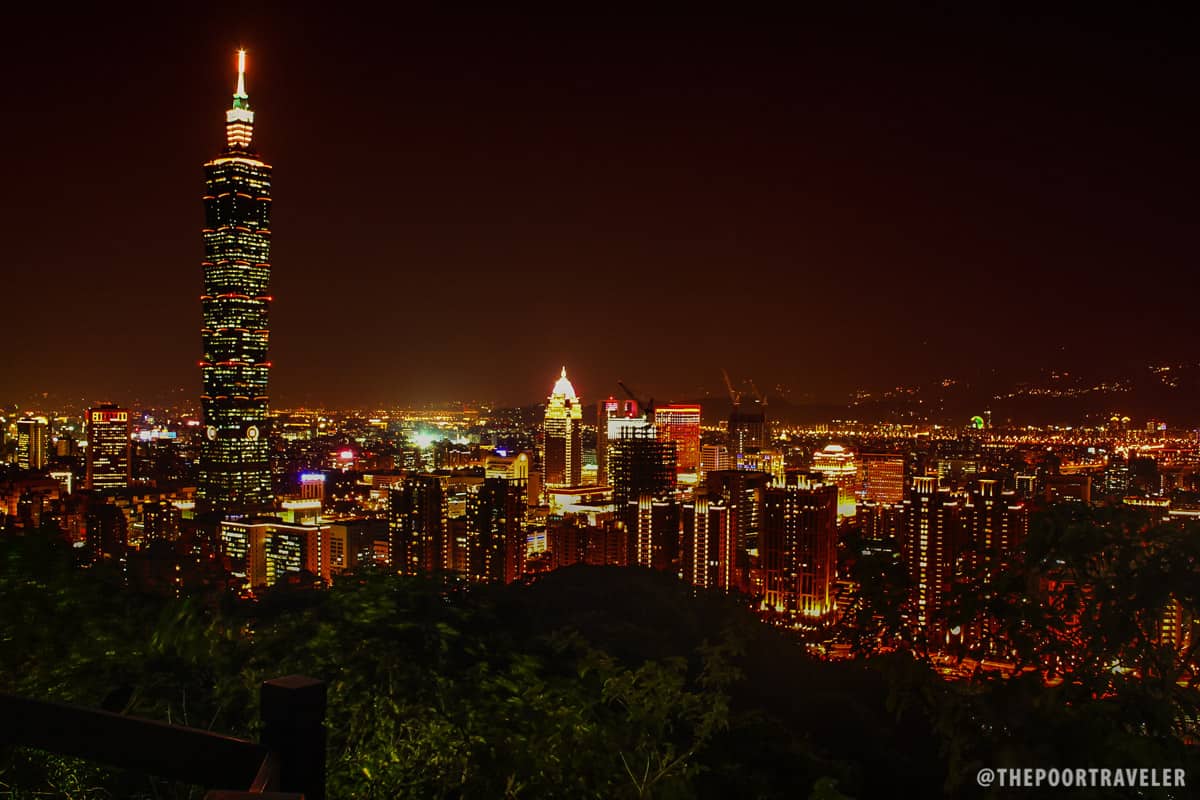
Elephant Mountain
While the Taipei 101 Observatory offers an incredible view of the city, the best vantage point is actually from Elephant Mountain. Many of the city’s iconic postcard shots were likely taken here. The ideal time to visit is late afternoon so you can enjoy the skyline by day, catch the sunset, and see the city light up at night. Just keep in mind, it does require a bit of a climb, so it might not be suitable for those with mobility concerns.
Trail Head: Lane 150, Xinyi Road, Section 5, Xinyi District, Taipei City, Taiwan (R.O.C.) Nearest MRT Station: Xiàngshān Station (Red Line 2) Entrance Fee: FREE
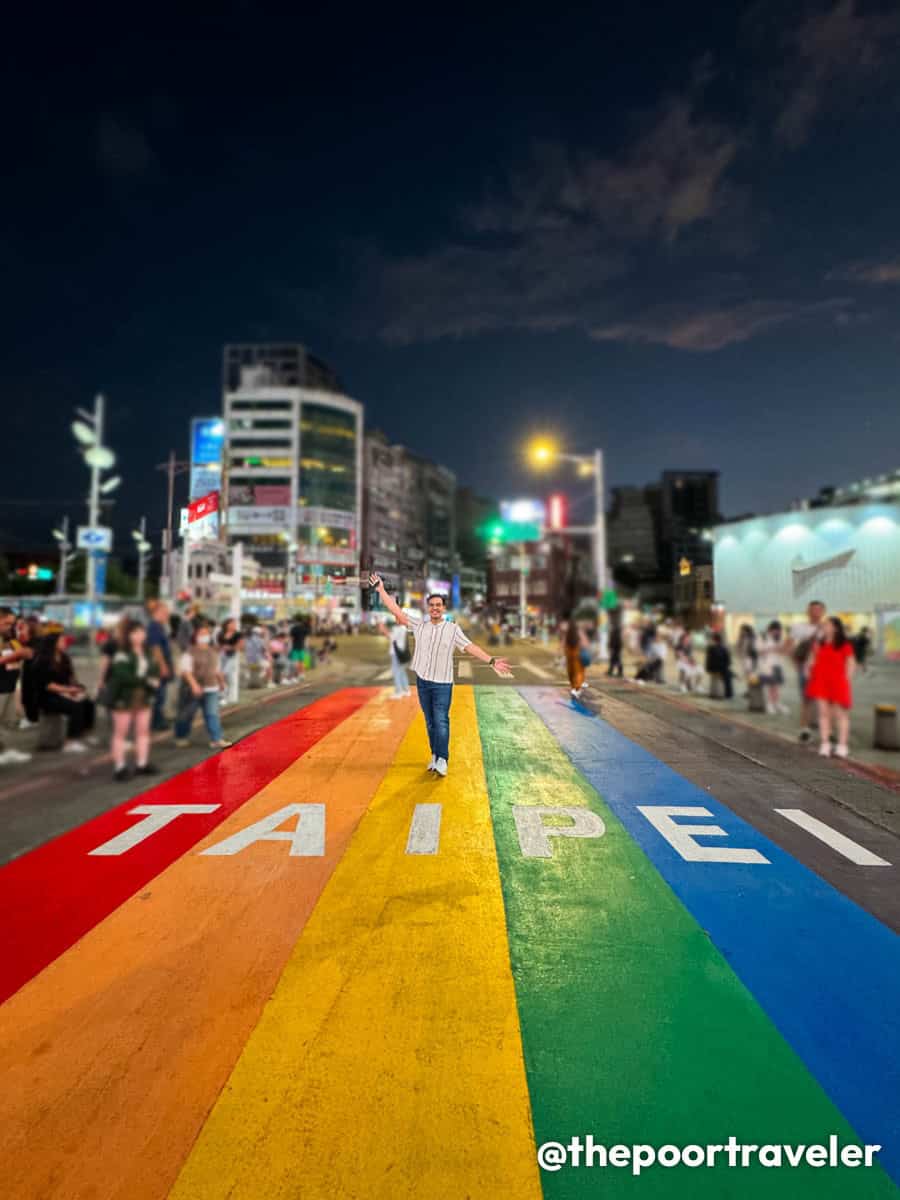
Ximending
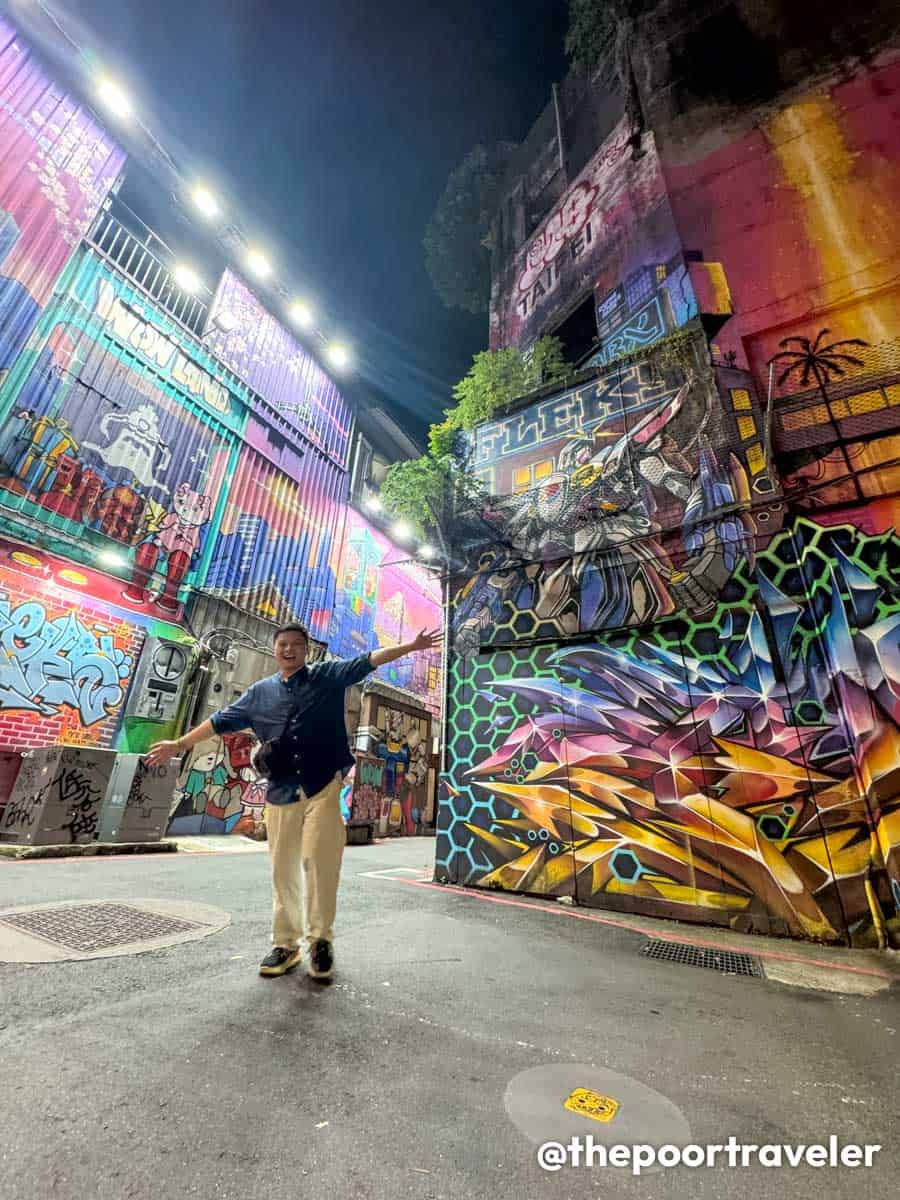
Ximending is Taipei’s youth district, known for its vibrant entertainment, dining, and shopping scene. It really comes alive at night — bright, bustling, and full of energy. Think of it as Taipei’s version of Tokyo’s Harajuku. You’ll find global brand stores, bars, cafes, and clubs here.
The most popular area is Ximen Walker Street, always packed with both tourists and locals. There are also tons of food options around, making it a great place to grab dinner and wrap up your day.
Location: Ximending, Wanhua District, Taipei City, Taiwan (R.O.C.) Nearest Station: Ximen Station (Blue Line 5 or Green Line 3) Entrance Fee: FREE
DAY 2: NEW TAIPEI CITY
After exploring Taipei City, it’s time to head to New Taipei City. Though it’s a separate municipality, it’s often grouped with Taipei City as part of the Greater Taipei Metropolitan Area. Thanks to an efficient transportation system and both cities being progressive, you might not even notice that they’re different cities.
For your second day, let’s switch things up and escape the skyscrapers and shopping malls. Travel to the countryside, visiting the charming districts of Ruifang, Pingxi, and Wanli.
Yehliu Geopark
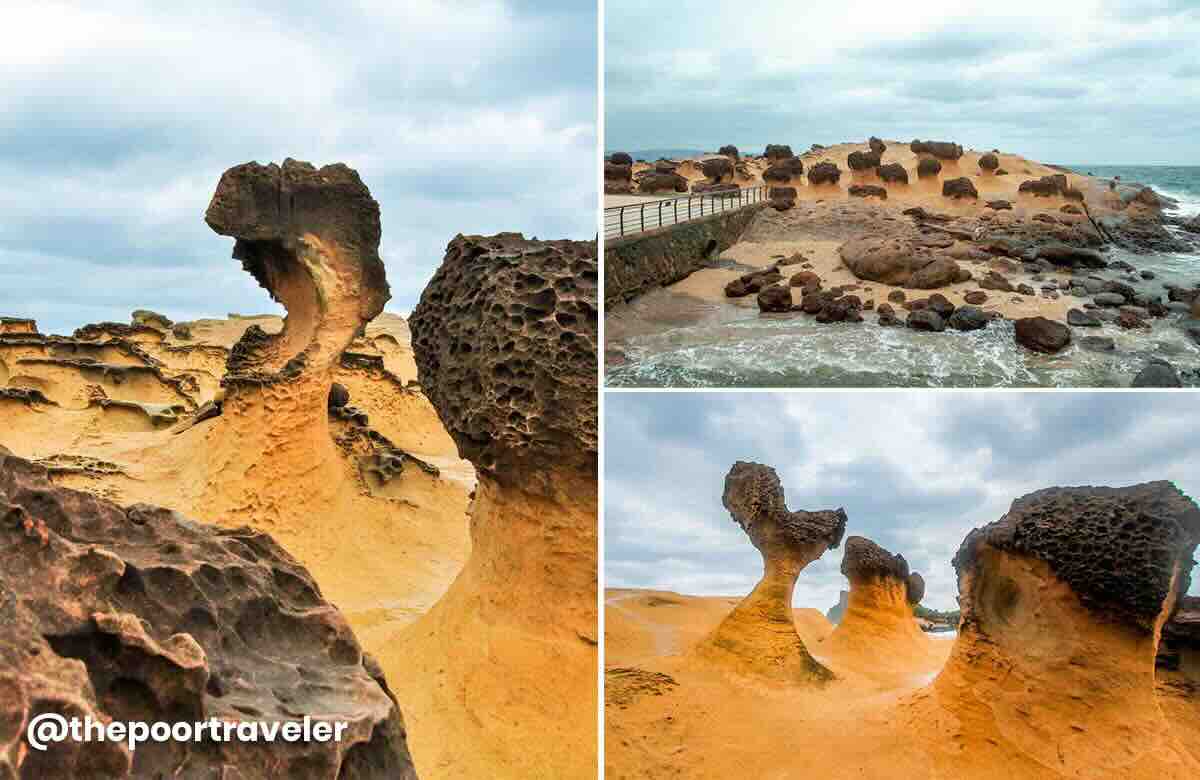
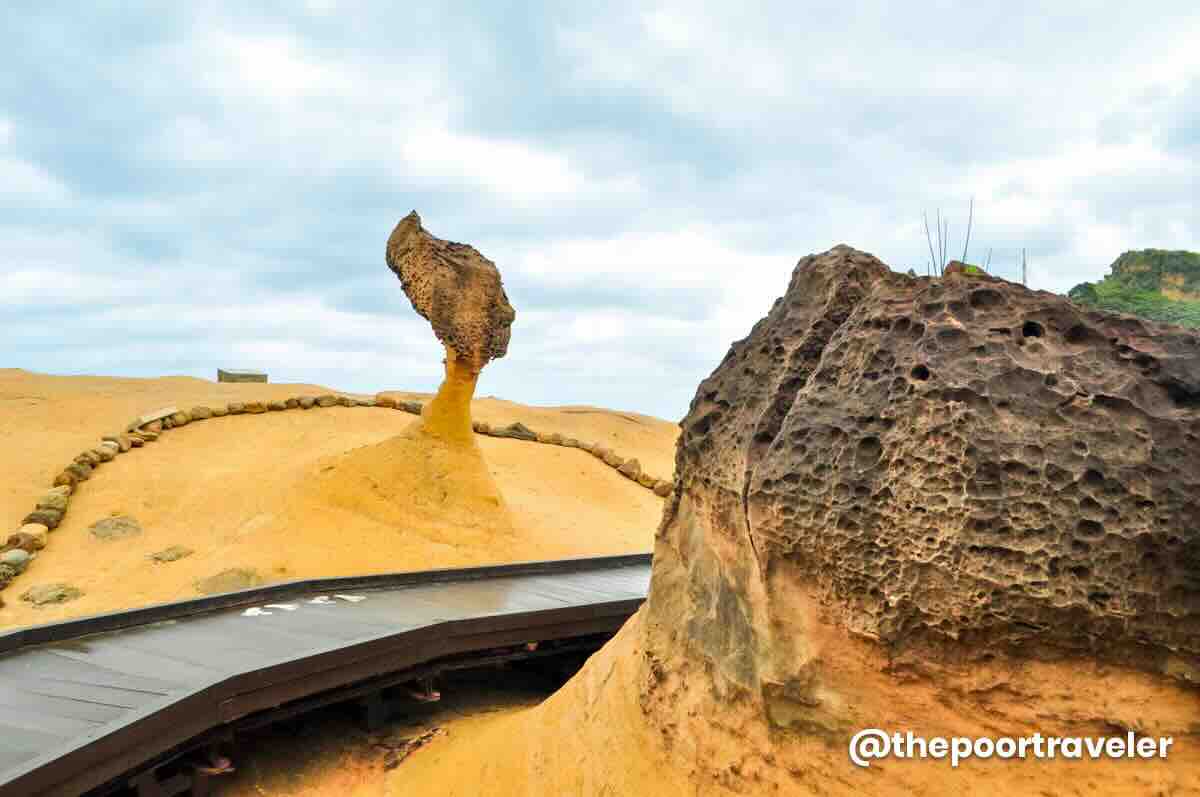
Located at the northernmost tip of Taiwan, the Yehliu Geopark is famous for its striking rock formations, set against the backdrop of powerful waves. It’s no surprise that this spot is a favorite for photographers and tourists alike.
Queen’s Head Rock
However, it’s a bit out of the way compared to other attractions. If you’re doing it DIY-style, be mindful that the journey to the next stop could take around two hours. To save time, we recommend joining a tour, which minimizes transfer and waiting times. Without stops, it’s only about a 45-minute to one-hour drive to the next destination.
Klook offers a day tour that includes Yehliu Geopark, Jiufen, and Shifen, among others. This covers transportation, insurance, and an English-speaking guide.
Address: No. 167-1, Gangdong Road, Wanli District, New Taipei City, Taiwan (R.O.C.) Entrance Fee: Adult, NT$120; Child (6-12 y/o), NT$60
Jiufen Old Street
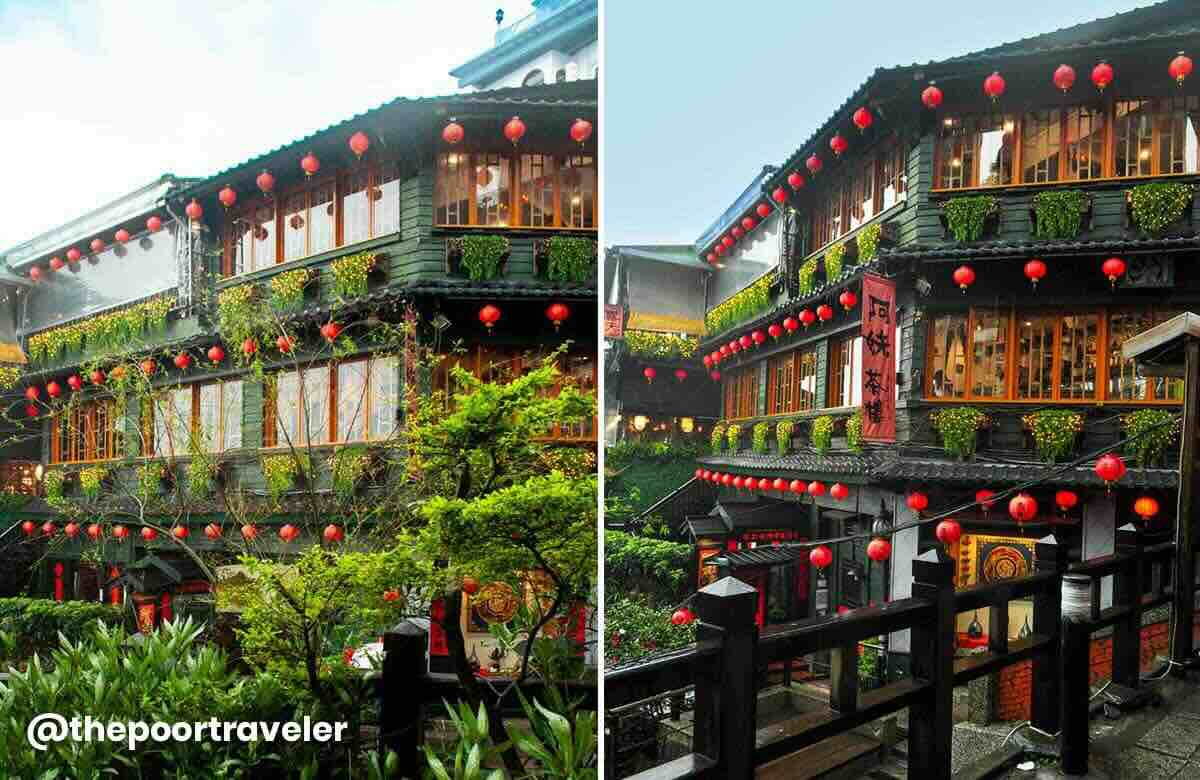
This is like stepping into a scene from Spirited Away. While it wasn’t the actual inspiration for Hayao Miyazaki’s film, many say the town’s ambiance strongly evokes the enchanting atmosphere of the animated world.
Jiufen Teahouses
Once a gold mining town, Jiufen Old Street is now famous for its teahouse culture and charming streets. It’s a delightful place to explore. You can browse for souvenirs, enjoy tea or coffee in cozy cafés, or savor a meal in one of its quaint restaurants. Popular spots include Jiufen Old Street, Shengping Theater, the Gold Mine Museum, Mount Keelung Trail, and various scenic viewpoints.
Location: Ruifang District, New Taipei City, Taiwan (R.O.C.)
How to Get to Jiufen: From Taipei Main Station, take a train going to Ruifang Station. Along Mingdeng Road is a bus station (Local Residents Plaza) with routes heading toward Jiufen. Take bus Route 827 or 788. Going back to Taipei city, take bus Route 1062.
Houtong Cat Village
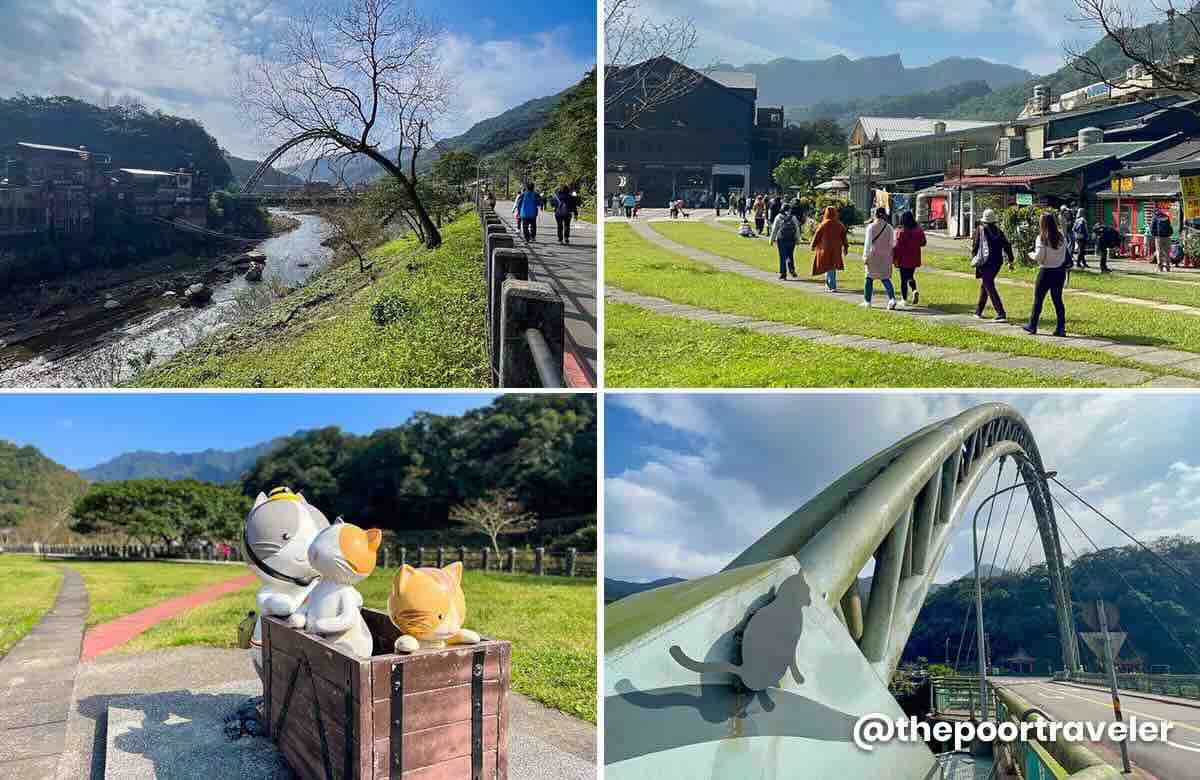
If you’re a cat lover, the Houtong Cat Village is a must-visit! Located just a 15- to 20-minute drive from Jiufen, this former coal-mining town has transformed into a cat haven. In 2008, a local photographer captured the heartwarming sight of residents caring for abandoned cats. Since then, the village has attracted cat enthusiasts from all over the globe.
Aside from the adorable cats, you’ll find statues and cat-themed souvenir shops. The village itself is beautifully scenic, nestled between a stream and a railway. And if you’re feeling hungry, there are plenty of snack stalls to enjoy some local treats.
Location: Ruifang District, New Taipei City, Taiwan (R.O.C.)
How to Get to Houtong Cat Village: If coming from Jiufen, take the train to from Ruifang Station to Houtong Station. From Taipei Main Station, take a train going to Ruifang Station. Then, transfer to Pingxi Line to Houtong Station. Another way is to take a direct local train from Taipei Main Station to Houtong Station.
Shifen Waterfall
This area can also be a great lunch stop since there are plenty of restaurants and food stalls around. But if you’re doing a DIY trip, be ready for some walking. The nearest train stop is Shifen Station, which is about a 25-minute walk from the start of the trail. From there, it’s another 15 to 20 minutes to reach the main viewing deck.
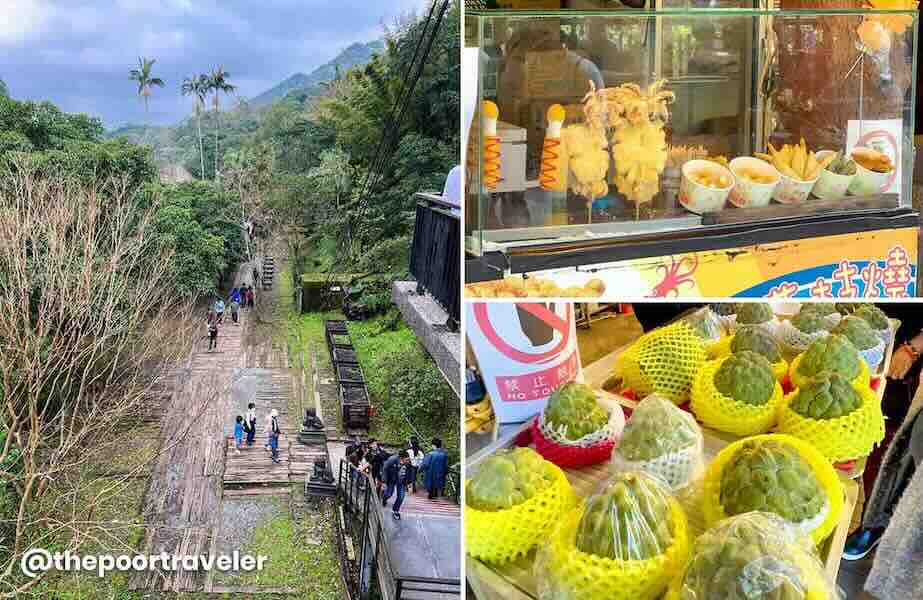
That’s why joining a tour is a smart option, especially if you’re traveling with seniors or kids. Tour buses can park closer to the walking trail, making the journey much shorter and more comfortable. Along the way, you’ll pass by stalls selling snacks, drinks, and souvenirs. Some of the refreshments and bites you’ll find are milk tea, lemon tea, fresh fruits, and eye-catching atis (sugar apples) that are surprisingly huge!
Once you resist all the food temptations, you’ll reach the first viewpoint near the cascade, which is perfect for photos. But for the best angle, continue along the trail until you reach the main viewing platform for Shifen Falls. Just keep in mind there are stairs, so it may not be suitable for those with mobility concerns.
Location: Pingxi District, New Taipei City, Taiwan (R.O.C.)
How to Get to Shifen Waterfalls: From Taipei Main Station, take a train going to Ruifang Station. Then, transfer to Pingxi Line to Shifen Station. From there, you’ll reach the waterfalls in about 25 minutes on foot.
Shifen Old Street
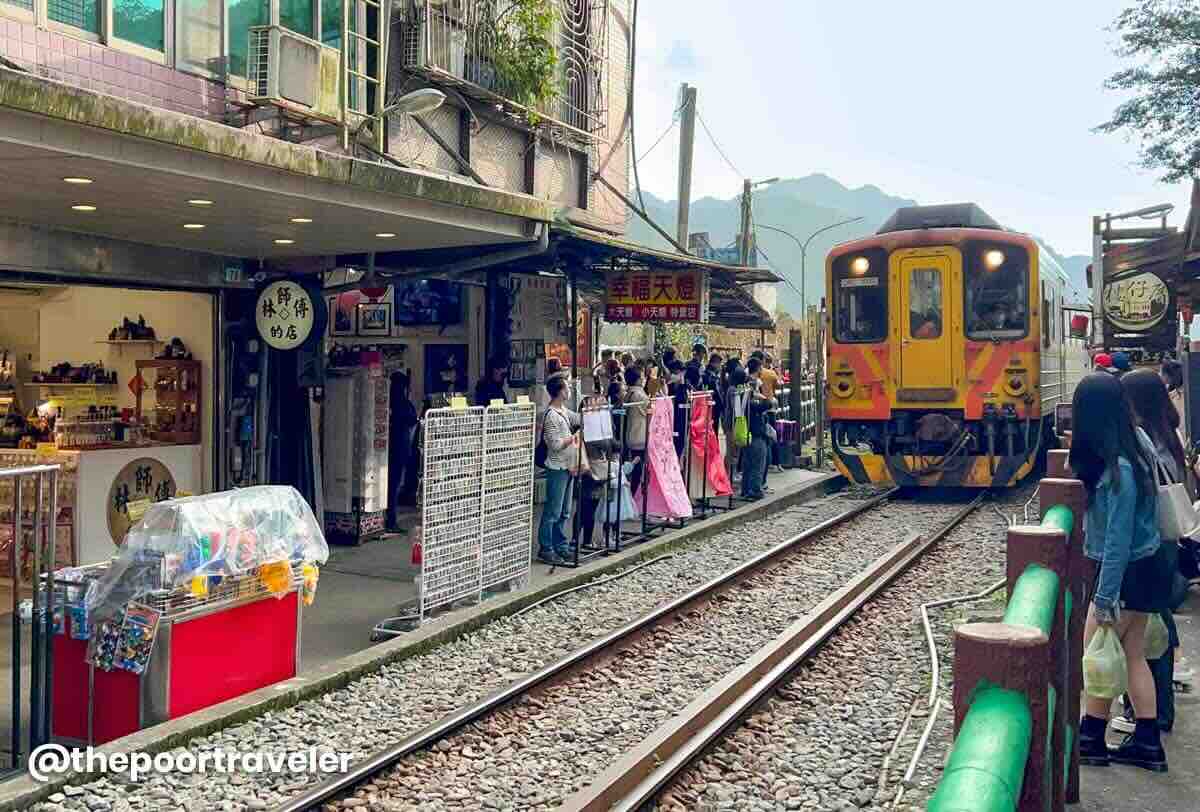
Shifen Old Street is where you’ll find the iconic railway track that serves as the site for releasing sky lanterns. If you decide to try the activity, you’ll start by writing your wishes or messages on the lantern. Once you’re done, a staff member will help light it up, and you can watch it slowly rise and drift away with the wind.
The Pingxi District is famous for its Sky Lantern Festival, held during the first lunar month — usually in February. But you don’t have to wait for the festival to experience this! Visitors can release sky lanterns year-round for a fee. Of course, it’s not for everyone. If you tend to wonder where these lanterns end up after they fall, you might want to skip it. But there are still plenty of other things to enjoy, like shopping for souvenirs or sampling snacks from the stalls that line the tracks.
Location: Pingxi District, New Taipei City, Taiwan (R.O.C.)
How to Get to Shifen Old Street: From Taipei Main Station, take a train going to Ruifang Station. Then, transfer to Pingxi Line to Shifen Station. The railway tracks run along the Shifen Old Street.
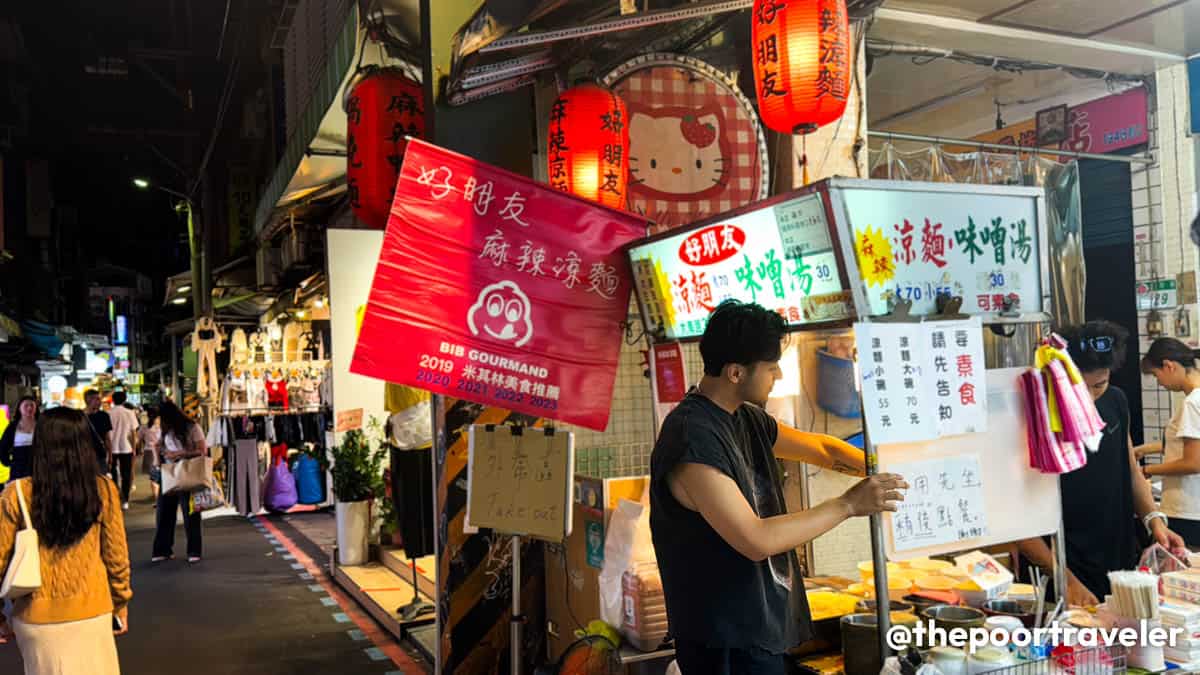
Raohe Night Market
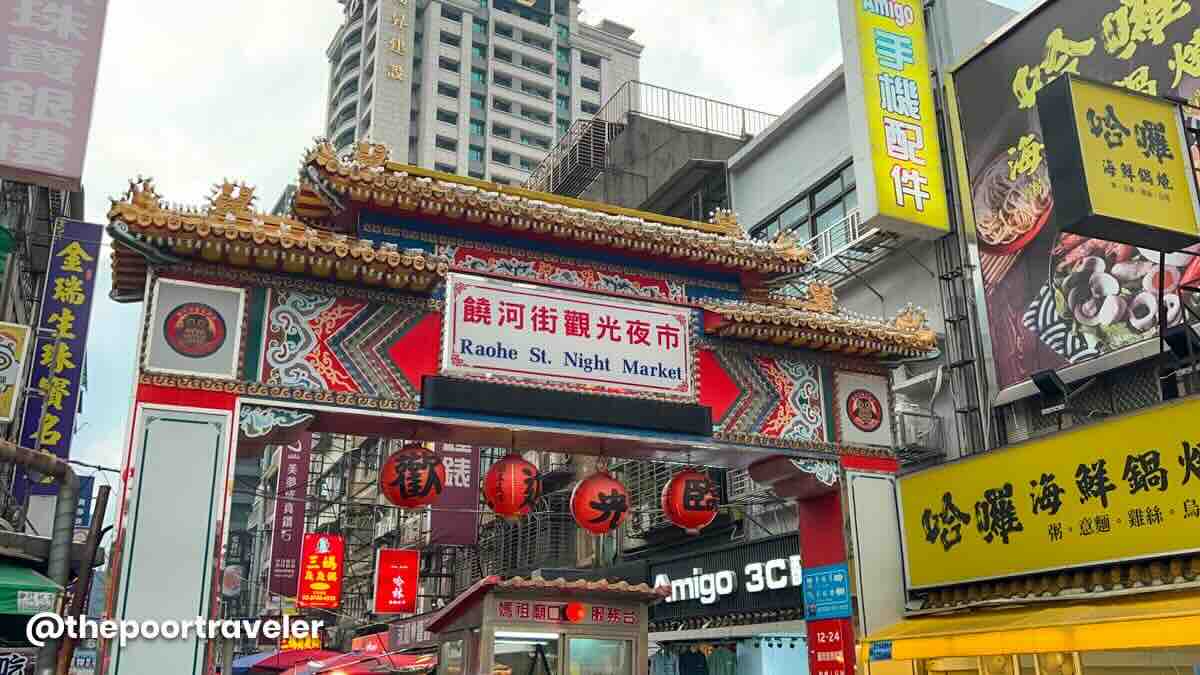
After the tour, it’s time to head back to the city. For dinner, head to Raohe Night Market, one of the oldest and most iconic night markets in Taipei. As of writing, four food stalls here have Michelin Bib Gourmand recognition — an award given to eateries that serve great food at a good value.
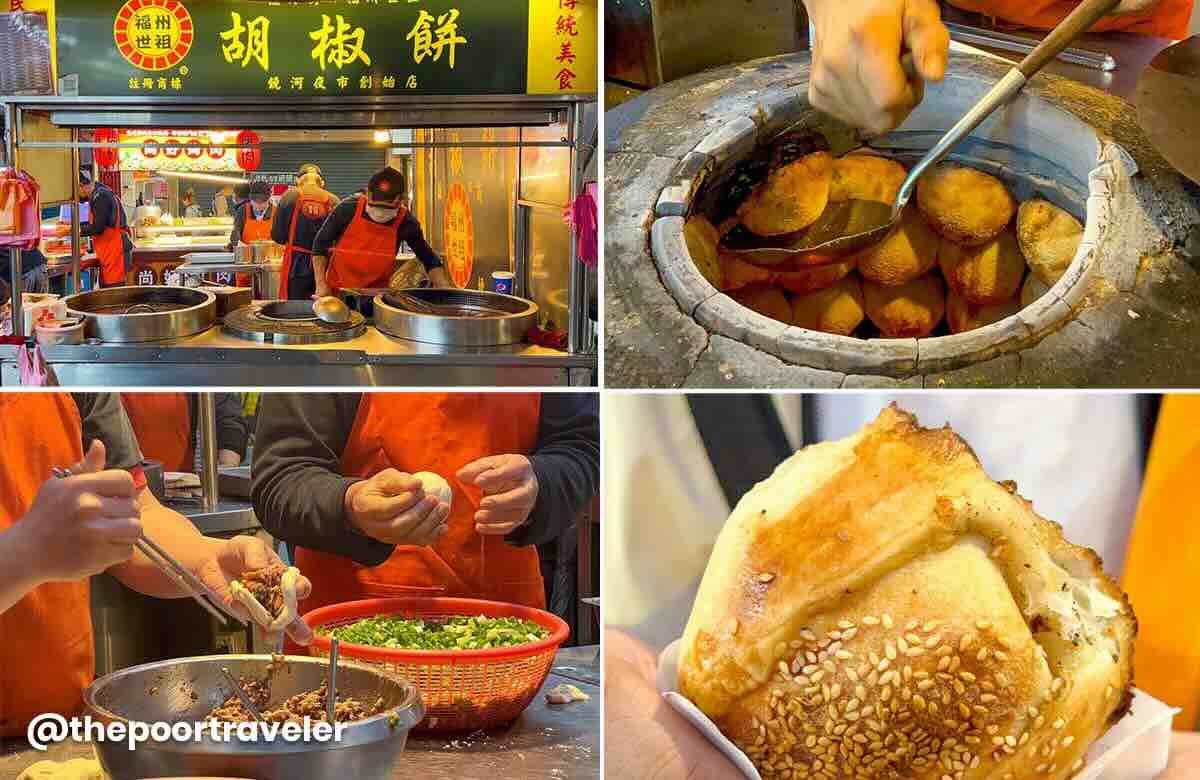
Fuzhou Black Pepper Buns
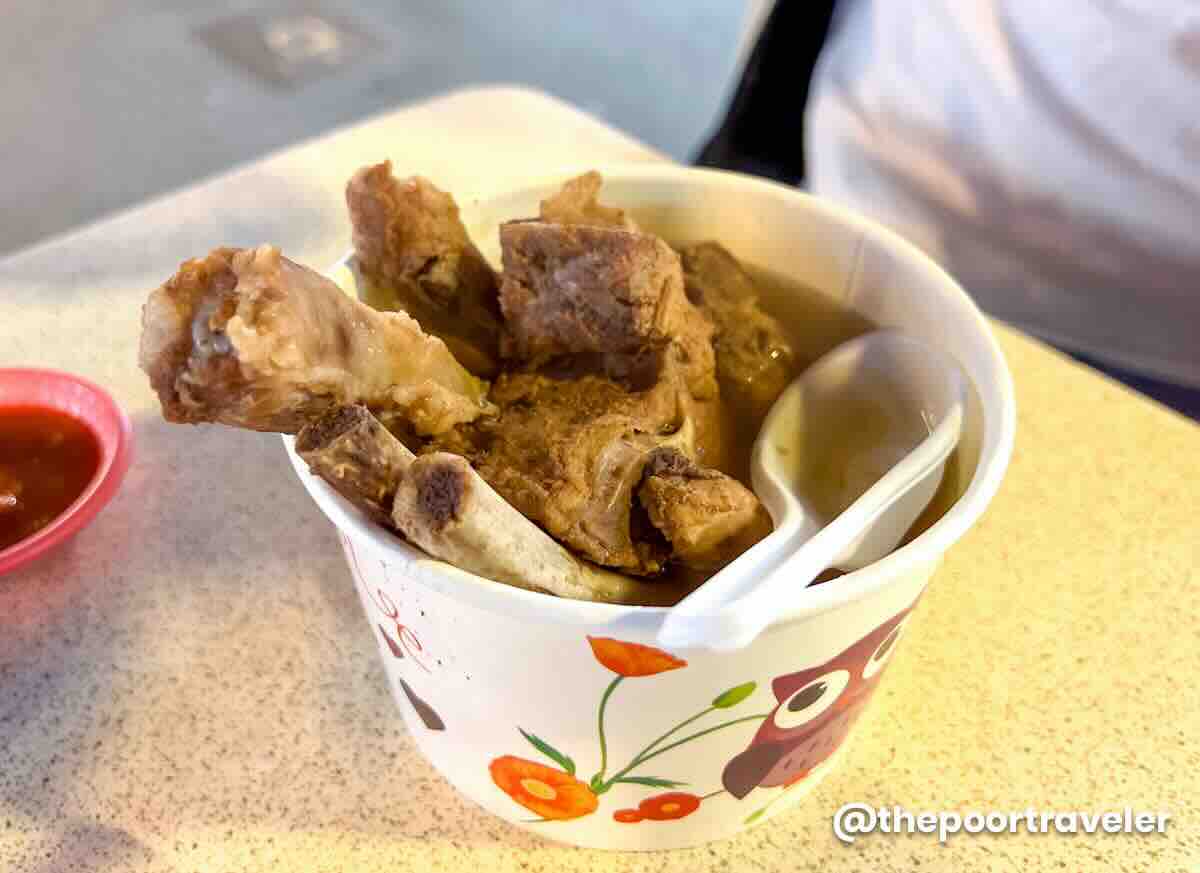
We were able to try two of them. The most famous is the Fuzhou Black Pepper Buns, known for their crispy, charcoal-baked pork buns cooked in a traditional brick oven. Another must-try is the Chen Dong Pork Ribs Medical Herbs Soup. It may look like mostly bones, but the meat is incredibly tender and falls right off. It’s warm, comforting, and flavorful. And while you’re here, be brave and try the notorious stinky tofu, or snack on skewers from the many vendors. Then cap off your night with a classic Taiwanese milk tea!
Chen Dong Pork Ribs Medical Herbs Soup
Address: Raohe Street, Songshan District, Taipei City, Taiwan (R.O.C.) Nearest Station: Songshan Station (Green Line 3) Open: Daily, 5:00 PM – 11:00 PM Entrance Fee: FREE
DAY 3: NORTH TAIPEI TOUR
On the third day, let’s head north! This area is still within Taipei City, but it’s more on the countryside, away from the busy city center. Here are the possible stops.
Yangmingshan National Park
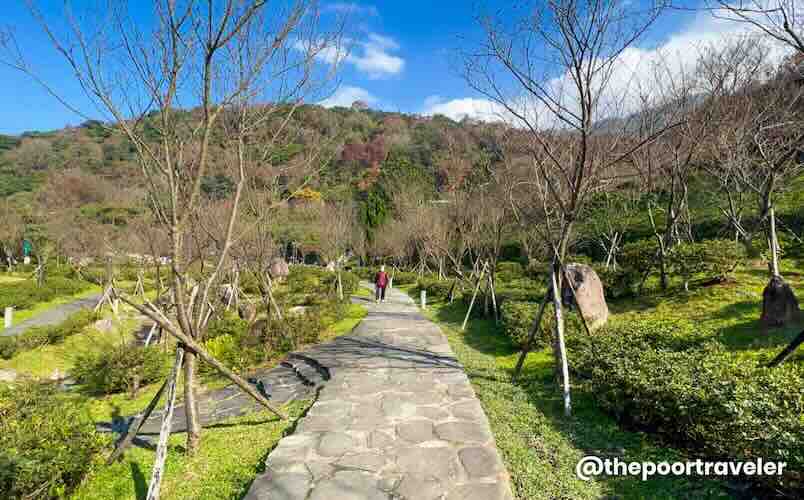
Straddling Taipei and New Taipei City, Yangmingshan is one of Taiwan’s nine national parks. It’s a great destination for nature lovers and outdoor enthusiasts. The park’s most iconic feature is Qixing Mountain, the tallest dormant volcano in Taiwan, surrounded by scenic hiking trails.
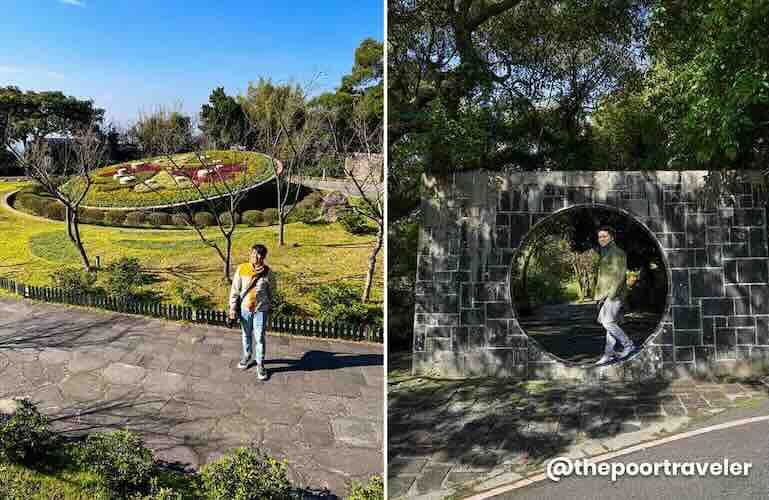
Most visitors explore the western side of the park, which is the most accessible and tourist-friendly. One of its famous landmarks is the flower clock, a favorite photo spot. If you’re hoping to see cherry blossoms, this is one of the best places in Taiwan. Just make sure to visit during the right season. The rest of the year, the park still bursts with color — thanks to peach blossoms, plum blossoms, azalea, and thorn apples.
Jump-off Point: Yangmingshan National Park Visitor Center, No. 1-20, Zhuzihu Road, Beitou District, Taipei City, Taiwan (R.O.C.)
How to Get to Yangmingshan National Park: From Taipei Main Station, take Bus 260 to Yangmingshan National Park Bus Station. It’s just a short walk to the visitor center, which also serves as the main entrance to the park.
Beitou Hot Spring Park
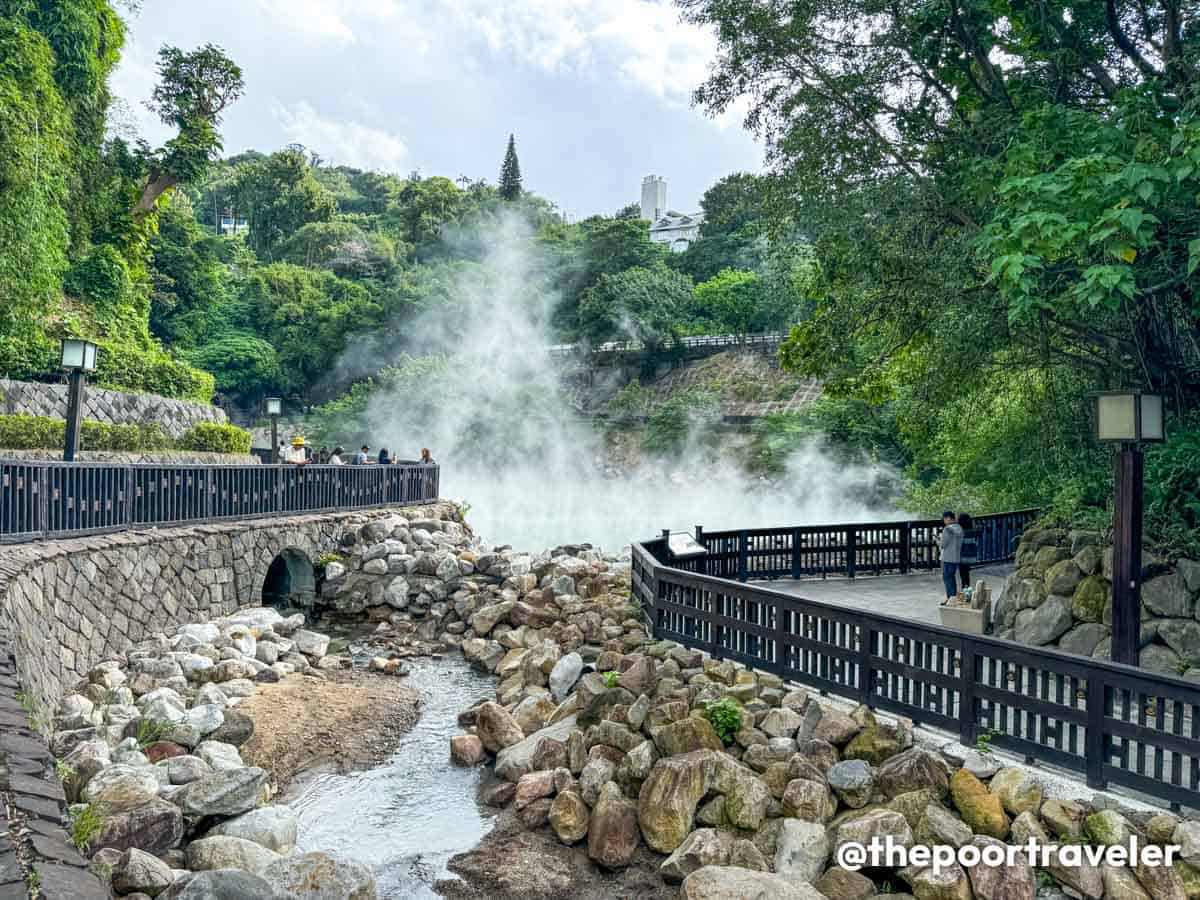
Beitou District is a known hot springs hotspot. Tucked between its peaks are valleys where nutrient-rich, steamy waters bubble up from underground. It’s a scenic area, especially around Beitou Hot Spring Park, which often looks mystical when blanketed in steam.
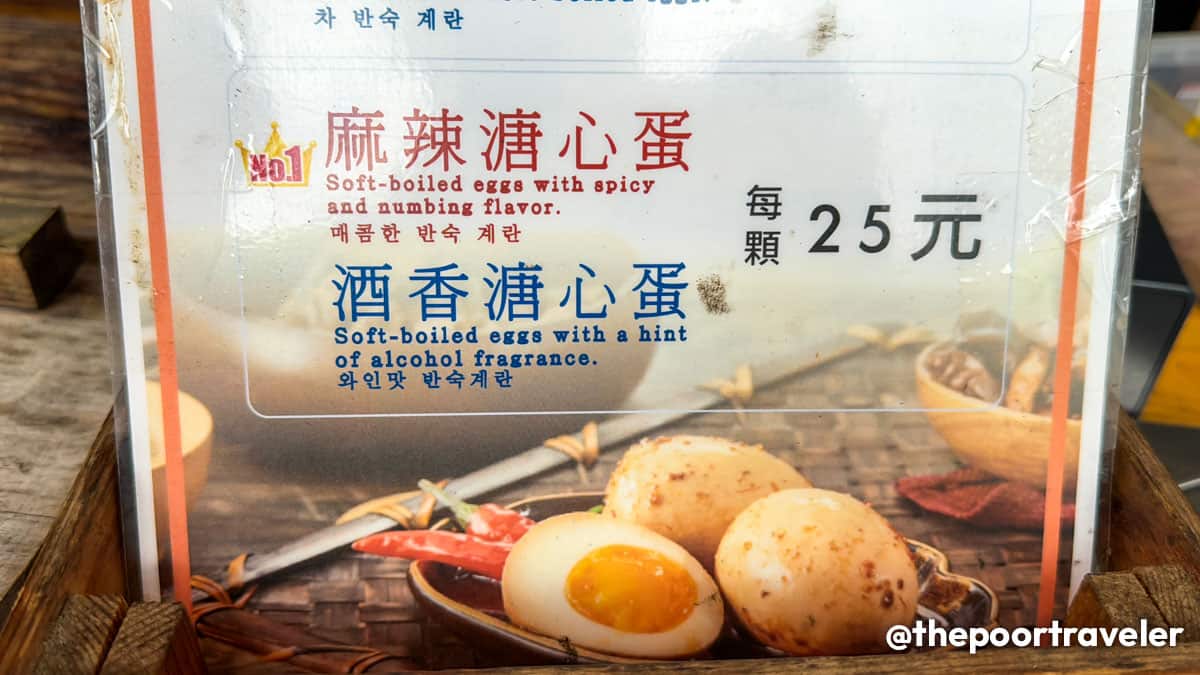
If you choose to visit one of the many public hot springs or spas, you can take a relaxing stroll through the park and soak in the surroundings — literally. If you’re short on time, at least try the local tea eggs, a popular snack often sold around the area. It’s a unique mix of nature, wellness, and local flavor all in one spot.
Location: Beitou District, Taipei City, Taiwan (R.O.C.)
How to Get to Beitou Hot Spring Park: Depending on your itinerary, you can alight at any of these train stations in Beitou from Taipei Main Station: Beitou Station, Xinbeitou Station, Zhongyi Station, Qiyan Station, Fuxinggang Station, Guandu Station, Qilian Station, Mingde Station, and Shipai Station
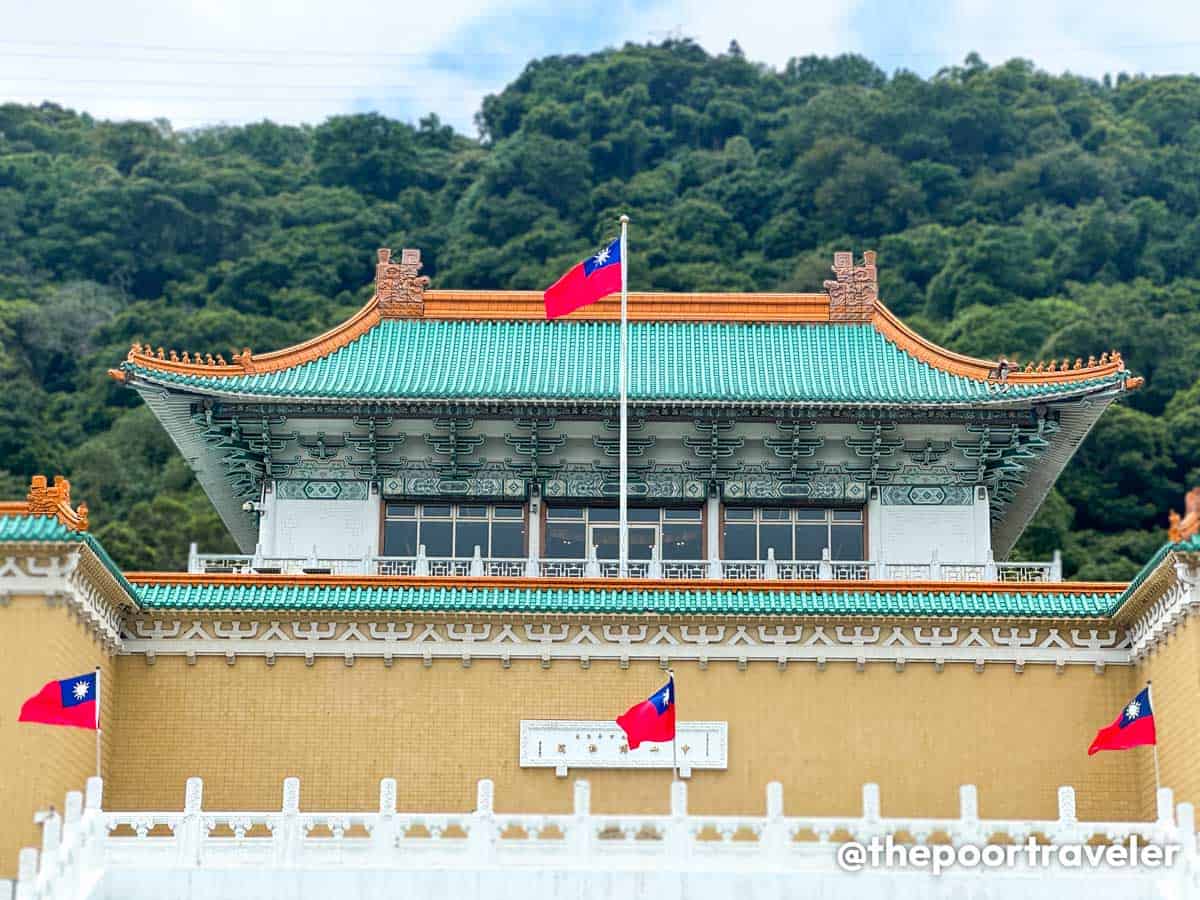
National Palace Museum
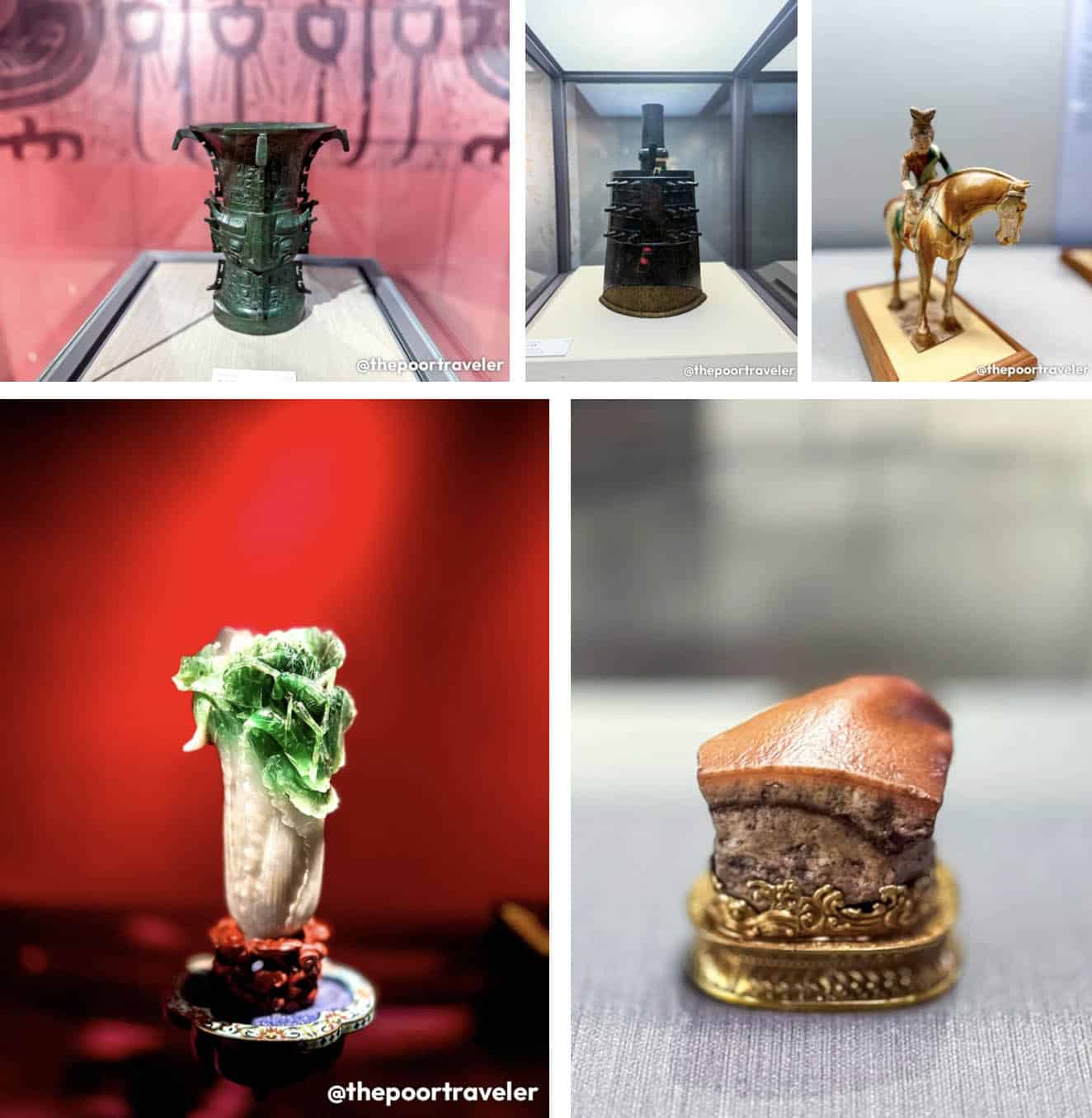
The National Palace Museum holds a collection of around 700,000 artifacts, some dating back thousands of years! But here’s the kicker — only about 1% of that is actually on display. The rest? Safely tucked away in vaults under tight security.
The collection is so massive that it’s hard to wrap your head around. We’re talking about 6,000 bronze pieces, 3,000 calligraphy works, and countless gems, carvings, and textiles, among others. All of them showcase the depth and richness of Chinese culture and history. If you’re planning to dive deep, get ready to spend hours inside exploring.
Address: No. 221, Sec 2, Zhi Shan Rd, Shilin District, Taipei City, Taiwan Nearest MRT Station: Shilin Station (Red Line – 2), then take Bus R30 (NT$15) Hours Open: Daily 8:30 AM – 6:30 PM Entrance Fee: NT$350
Shilin Night Market
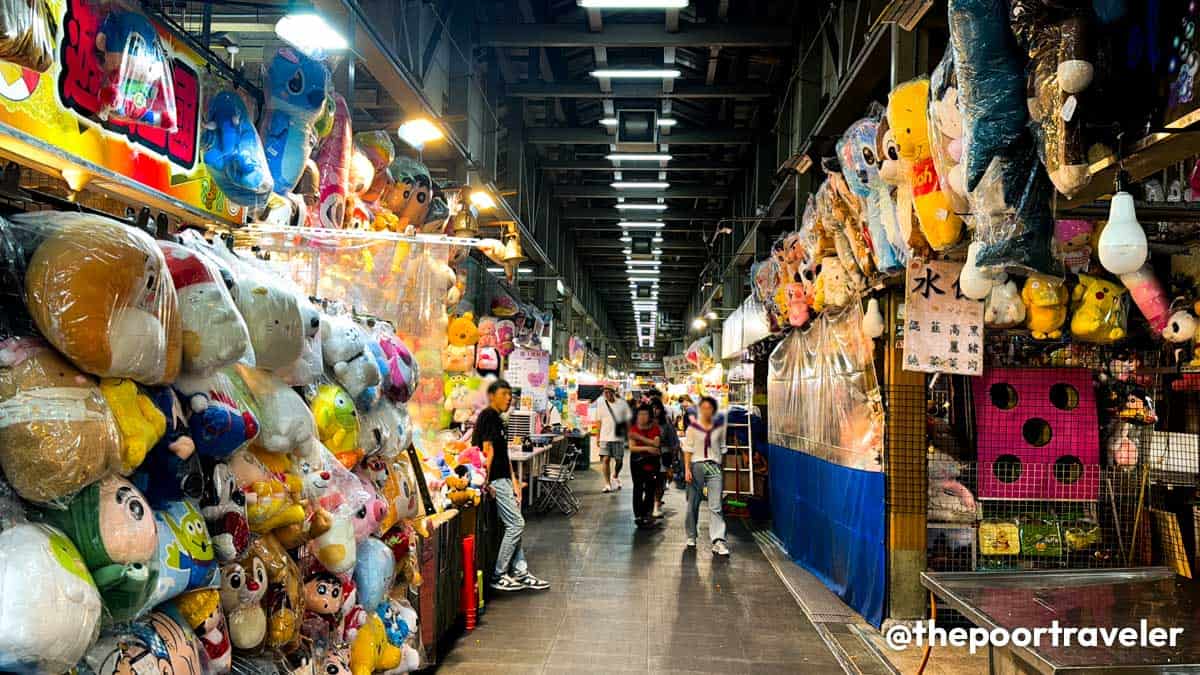
Spread across two levels, Shilin Night Market is the largest night market in Taipei. On the ground floor and nearby alleys, you’ll mostly find souvenir shops and apparel stores.
But head down to the basement, and get ready to feel hungry, even if you just ate. The mouthwatering aroma hits instantly. It’s a maze of about 540 food stalls and eateries offering local favorites like fried squid, grilled chicken tails, breaded chicken, Taiwanese sausages, fried buns, and oyster omelette. Best of all, it’s conveniently located right next to the MRT station.
Address: No. 101, Jihe Road, Shilin District, Taipei City, Taiwan (R.O.C.) Nearest MRT Station: Jiantan Station (Red Line – 2) Best Time to Visit: 5:00 PM – 1:00 AM Entrance Fee: FREE
DAY 4: CHILLIN’ AND SHOPPIN’
Don’t skip Taipei’s café culture on your last day! While Taiwan is traditionally known for its tea, coffee has now taken the lead as the locals’ drink of choice. In fact, Taiwan boasts one of the highest concentrations of cafés in the world. You’ll definitely notice this in lively areas like Ximending, where cafés — both global chains and quirky specialty shops — seem to pop up on every corner.
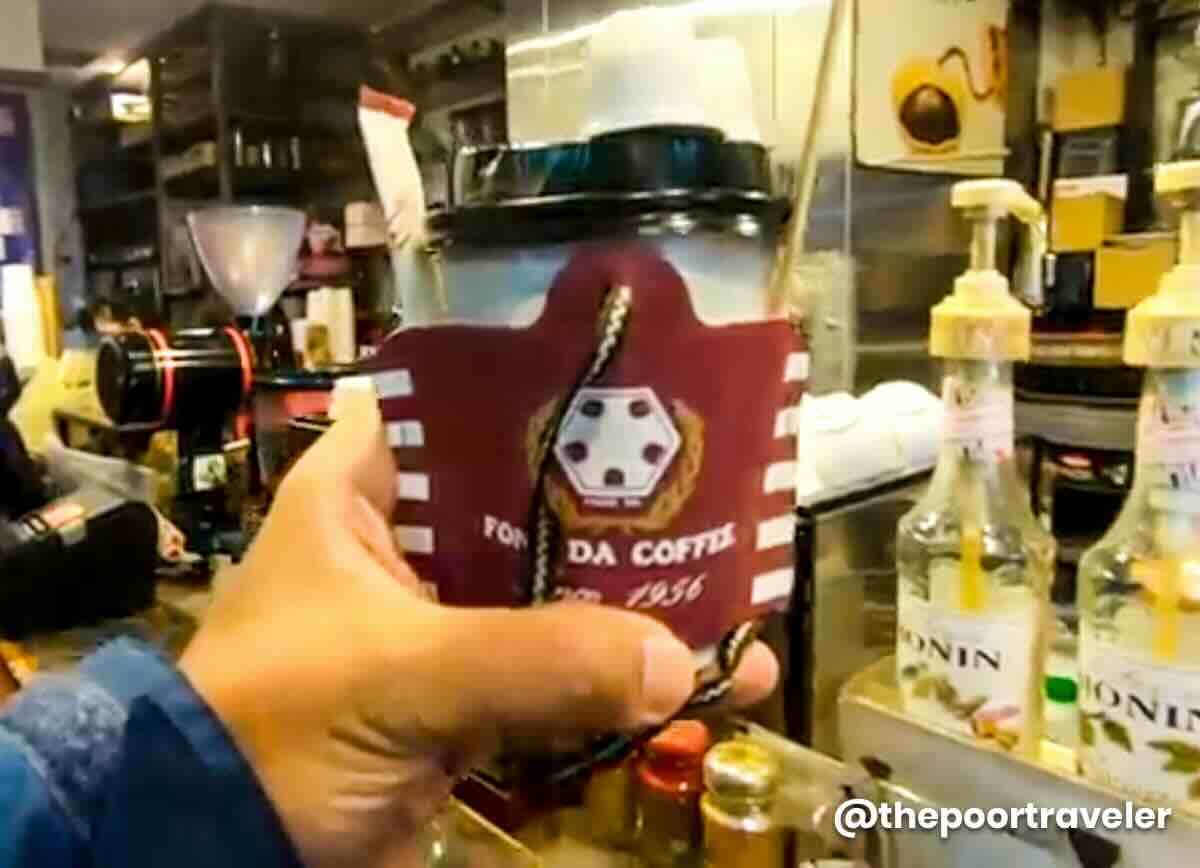
Fong Da Coffee
One café you shouldn’t miss is Fong Da Coffee, said to be the first to serve iced coffee in Taiwan way back in 1956. While most cafés today aim for a trendy, Instagrammable vibe, it stands out by embracing its vintage charm and sticking to its old-school roots with pride.
Address: No. 42, Chengdu Road, Wanhua District, Taipei City, Taiwan (R.O.C.) Opening Hours: Daily, 8:00 AM – 10:00 PM
Modern Toilet
Of course, milk tea isn’t taking a backseat! Taiwan is the undisputed bubble tea capital of the world. Many of the most recognizable milk tea brands, like CoCo and ShareTea, were either born here or have their headquarters in the country. But if you’re looking for a milk tea experience that’s truly unforgettable (and a little weird), head to Modern Toilet.
This quirky café-restaurant has been dishing out hilariously “crappy” meals and drinks for years, and tourists can’t get enough! Everything is toilet-themed — from the chairs and tables to the decor and even the dishes. You can sip tea from a mini urinal and enjoy ice cream served in a toilet bowl. Yep, it’s weird…but it’s also a lot of fun!
⚠️ Don’t keep your hopes up taste-wise. This is good only for the novelty of its theme. There are much better-tasting milk tea places in Taipei like 50 Lan! We’ll be creating a separate article for our food recommendations.
Branches: Ximending and Shilin Opening Hours: Ximending – Daily, 11:30 AM – 10:00 PM; Shilin – Daily, 11:30 AM – 9:30 PM
Vigor Kobo Pineapple Cake Factory
One of the most popular pasalubong items from Taiwan is the iconic pineapple cake. At the Vigor Kobo Pineapple Cake Factory, you can do more than just buy a box. You can actually make your own! They offer a fun workshop where you can try your hand at crafting these sweet treats from scratch. No baking experience? No problem! It’s simple, easy, and a great way to take home a more personal souvenir.
While waiting for your cakes to bake, you can explore the interactive museum to learn more about the history of pineapple cakes and how they’re made. One of the fun features here is the disappearing dandelion wall — give it a touch, and the flowers magically vanish! After shopping for pasalubong, don’t forget to enjoy the highlight of the visit: tasting the pineapple cake you made, fresh and warm from the oven.
Address: No. 87, Section 1, Chengtai Road, Wugu District, New Taipei City, Taiwan (R.O.C.) Opening Hours: Daily, 8:30 AM – 5:30 PM
Ever Rich Duty Free
If you’re ready for some serious shopping, Ever Rich Duty Free is the place to be. They have numerous stores all over Taipei, even in the airports, but we headed to their massive flagship store in Neihu District. Spread across five floors, it’s packed with all kinds of treasures. Plus, you’ll find some pop-up stalls outside adding to the shopping fun!
And of course, don’t forget to keep an eye on your flight time! Make sure you catch your plane!
Address: No. 129, Jinzhuang Road, Neihu District, Taipei City, Taiwan (R.O.C.) Opening Hours: Daily, 10:00 AM – 9:00 PM
D-I-Y vs Booking a Tour
You can definitely do this itinerary DIY-style. However, Days 2 and 3 can be challenging if you rely solely on public transportation, as the schedule of buses and trains needs careful timing. If you’re traveling with a group, seniors, people with mobility concerns, or if you just want a more relaxed, hassle-free trip, booking a tour is a much more convenient option.
You can check out Edison Tours, which is one of the most popular tour operators in Taiwan. They have been operating for decades. To see their offers, you can visit their website.
If you prefer to talk to Pinoys, here are some of the travel agencies in the Philippines that you can ask about Taipei tour packages.
Constellation Travels Inc. Website: www.constellationtravels.com.ph Mobile: +63 956 660 0693
Travel Warehouse Inc. Website: www.twi.com.ph
VIA Website: https://ph.via.com Landline: (+63 2) 8555-9444 E-mail: sales.ph@via.com
Getting a travel insurance is optional, but we highly recommend this, especially when traveling abroad. Travel can be unpredictable, and though we hope we’ll never use it, having it gives us peace of mind in case of unexpected delays, cancellations, or emergencies.
For international destinations, consider PGA Sompo’s TravelJOY Plus insurance. You can GET IT HERE. Don’t forget to use WORTHIT for a special affordable rate.
Nestled in the serene Apennine foothills, Palazzo Fiuggi is fast becoming a global destination for those seeking not just rejuvenation — but transformation. At the heart of its groundbreaking Biohacking Retreat Program is Stefano Santori, a leading thinker in integrative wellness and the creator of Mindset Biohacking®. We sat down with Santori to explore how this luxurious haven is redefining biohacking far beyond Silicon Valley’s gadgetry.
“Biohacking isn’t about devices — it’s about awakening potential.”
Stefano Santori
Stefano, how do you define biohacking, especially in the context of Palazzo Fiuggi?
Stefano Santori (SS): To me, biohacking is the art of leveraging science, technology, and self-awareness to unlock the body’s innate potential. At Palazzo Fiuggi, we’ve developed Mindset Biohacking®, a holistic methodology that fuses cutting-edge diagnostics, personalised coaching and medical-grade therapies. While mainstream biohacking often centers on wearables or supplements, our approach targets cellular optimisation, metabolic balance, and behavioral reprogramming — all under medical supervision. It’s about building resilience that lasts, not chasing shortcuts.
A Day in the Life at the Biohacking Retreat
Imagine waking to breathwork at sunrise, with the mountain air filling your lungs. The day begins with biomarker testing and a deep dive into your physiology. Guests engage in High Performance Method (HPM) training focused on posture and mobility, followed by intermittent hypoxic-hyperoxic therapy (IHHT) to boost mitochondrial vitality.
Afternoons flow with neurofeedback, vagus nerve massage, and cold shock cycles, while evenings are elevated by Chef Heinz Beck’s anti-inflammatory cuisine and the legendary Fiuggi healing waters. The day concludes with sensory deprivation tanks for neurovision training and restorative sleep in tech-enhanced Charme Rooms, tuned for optimal recovery.
Ancient Wisdom Meets Modern Precision
Palazzo Fiuggi is a masterclass in synergy. Red-light therapy is paired with Fiuggi’s 600-year-old mineral waters, offering detoxification at both the cellular and energetic levels. Breathwork deepens the benefits of neurofeedback. Fasting is guided by real-time glucose monitoring, honoring ancestral traditions while ensuring safety. It’s not a binary of old vs. new — it’s a harmonious integration.
Stefano Santori
The Most Overlooked Pillar? Recovery.
“High performers often grind until they break,” says Santori. “At Fiuggi, we teach that recovery is not passive — it’s an active skill.” Guests learn to interpret their nervous system through HRV (Heart Rate Variability) debriefs, rebuild stress adaptability with sauna-cold plunge circuits, and master recovery as the crucible of transformation.
Breakthrough Moments: From Deprivation to Joy
The “aha” moments are powerful. “People arrive expecting discipline and denial,” Stefano laughs. “But they leave realising that peak performance thrives on joy. When a CEO tastes our black truffle risotto and sees their inflammation markers drop, it changes their relationship with wellness.”
The Healing Power of Fiuggi’s Waters
These legendary waters, rich in detoxifying minerals, are more than a supplement—they’re central to the retreat’s success. “They aid in cellular renewal, kidney function, and nutrient absorption,” the expert notes. But their power is also emotional. “The serenity here — the rolling hills, the centuries of pilgrims — it whispers to every guest: Slow down. You’re safe. Heal.”
Stefano Santori
Reclaiming the Human in Data-Driven Wellness
While wearables and metrics are used, they’re never the whole story. “Data informs, but it doesn’t dictate,” Santori emphasises. “We combine Neurovizr-based mindfulness sessions with biometric tracking. But what moves people is that moment they feel — deeply — that their body isn’t a machine. It’s alive.”
Stress Isn’t the Enemy — Rigidity Is
Through controlled stressors like ice baths, proprioceptive challenges, and altitude simulation, guests build a kind of “stress intelligence.” “By day five, they’re not just surviving the stress — they’re mastering it,” he says.
Biohacking Myths and Underrated Truths
Myth: Biohacking requires extreme tech.
Truth: A walk through Fiuggi’s oak forests lowers cortisol more effectively than most apps. And perhaps the most underrated practice? Hydration literacy. “Fiuggi water optimizes nutrient uptake. It’s simple but revolutionary,” Santori says.
Stefano Santori
The Future of Biohacking: Personalised by Nature
Looking ahead, Palazzo Fiuggi aims to be a leader in predictive genomics, combining epigenetics with ancient healing. “Imagine a retreat shaped by your DNA, your microbiome, even the moon’s cycle,” Stefano envisions. “We’re not just chasing longevity — we’re redefining what it means to truly live.”
Experience the Transformation
For those ready to move beyond surface-level wellness, Palazzo Fiuggi’s Biohacking Retreat offers a deeply personal, science-backed journey toward vitality and self-mastery. Whether you’re a high performer or a wellness seeker, this is more than a retreat — it’s a reawakening.
For more on the latest in wellness and beauty reads, click here.
It’s been almost a year since the Red Bull RB17 hypercar broke cover at the Goodwood Festival of Speed. For the past 12 months, Adrian Newey and his team of aerodynamicists and designers have been finalizing the exterior surfaces of the car. We can now share what is said to be the first rendering of the pre-production version.
In its current form, the RB17 looks almost identical to the concept car from last year. Barring minor tweaks such as the LED headlights, which now have an L-shaped design, the rest of the front end looks as extreme as Newey’s original creation. It has a large double splitter with a central spine and curled edges, massive venturi tunnels and gaping holes in the front clamshell exposing the inboard front suspension.
The Red Bull RB17 is powered by a Cosworth-built 4.5-liter V10 engine that revs to 15,000 rpm and delivers 986 hp. Additionally, a 197 hp electric motor takes over at low speeds and assists the engine with torque-fill.
The pre-production version of the Red Bull RB17 is likely to be showcased at Goodwood this year.
The life challenges of overseas Filipino workers can be tough. Being away from home, working in a foreign country, and adjusting to cultural differences is not easy. Many OFWs also struggle with money problems, workplace exploitation, and mental health issues. It’s even harder when facing language barriers, discrimination, or loneliness in the host country. But there are ways to make life better!
Thinking of taking control of your career and exploring the digital nomad lifestyle? Check out my eBook “The A-Z on Becoming a Digital Nomad.” It’s a simple and practical guide made especially for Filipinos who want to live life on their own terms. This eBook will help you get started step-by-step.
In this article, we’ll talk about the most common struggles of OFWs and share simple tips to help. We’ll also show helpful tools, resources, and steps that Filipino migrant workers, digital nomads, and travelers can use to stay strong and happy while abroad.
Common Problems Faced by OFWs
1. Homesickness
Missing your Filipino household and friends is one of the hardest parts of being an OFW. You may feel lonely, especially during holidays, birthdays, or when you see your loved ones on social media.
What to do:
Set regular video calls with your family
Join Filipino groups in your area (especially common in places like Hong Kong, Abu Dhabi, or the Middle East)
Celebrate small wins with new friends
Pro tip: Listening to music or podcasts with wireless waterproof headphones during downtime can ease homesickness, especially after a long workday.
2. Money Problems
Many OFWs send most of their salary back home as remittance. It can feel like there’s nothing left to save. Emergency costs or debts can also add pressure.
What to do:
Make a simple budget using apps like Mint or Monefy
Save at least 10% of your income each month
Use GCash or Remitly for lower fees in OFW remittances
3. Cultural Adjustment
Moving to a new country is a big change. The language, food, and work environment are often different. It may feel like you don’t belong.
What to do:
Learn a few key phrases in the local language
Try local food. But also cook Filipino dishes
Be patient with yourself – adjusting takes time
4. Job Insecurity
Some OFWs, like domestic helpers or migrant domestic workers, are on short-term contracts. Others may deal with unfair treatment or feel stuck in an unsafe job.
What to do:
Know your rights by reading your work contract
Save for at least 3–6 months of emergency funds
Keep learning skills online (try Coursera or TESDA Online)
How to Build a Support System Abroad
Having the right support makes life easier. Here’s a simple guide to help you build your own.
Step 1: Join Online Communities
Search for Facebook groups for OFWs, Filipino workers, or migrant domestic workers. These are great for advice, encouragement, and finding new friends.
Step 2: Connect Locally
Look for local Filipino groups or churches. Attend small events or dinners. These can help you feel less alone.
Step 3: Use Government Programs
The Philippine government offers help through:
OWWA (Overseas Workers Welfare Administration) – for legal help, insurance, and training
POLO (Philippine Overseas Labor Office) – help with working conditions and contracts
DOLE-AKAP Program – emergency cash aid for OFWs in need
Check the official websites or visit a Philippine embassy for details.
Also, invest in travel health insurance before you leave the Philippines. It covers you in case of accidents, hospital stays, or emergencies abroad, giving you peace of mind.
Digital Nomad Life vs. Traditional OFW Life
Some Filipinos choose to work online and travel at the same time. This is called the digital nomad lifestyle. It’s different from the usual OFW setup.
Topic
OFW Life
Digital Nomad Life
Job Type
Traditional jobs like Filipino nurses, caregivers, or domestic workers
Laptop, Wi-Fi, and remote job platforms
Location
Stay in one country for a long time
Stay in one country for long time
Support System
Local Filipino communities
Online groups, coworking spaces
Tools Needed
Work permit, local ID
Stay in one country for a long time
Tip: If you want to switch to being a digital nomad, start small. Try part-time remote jobs first. Check sites like Upwork, OnlineJobs.ph, or Fiverr. Stay connected affordably with Yesim.
Keep Going, You’re Not Alone
OFWs are often called “bagong bayani” (modern-day heroes) because of their sacrifice and strength. They help keep the country’s economy alive by sending money back home. Yet behind the title are real people—Filipinas and Filipinos—who face anxiety, depression, and even isolation just to provide for their families.
So here’s to all our OFWs! Whether you’re in Saudi Arabia, Kuwait, UAE, or beyond, you are inspiring.
Working abroad is not easy. But you’re doing something powerful – working hard to give your family a better life and a brighter future. Your efforts strengthen the Philippine economy, and your hard work brings hope. Even the International Labour Organization recognizes the sacrifices of people like you.
Use the tools and tips above to make life easier. Save money. Stay connected. And don’t be afraid to ask for help.
You’re doing something brave, and you’re making a difference for your family.
Ready to Take the Next Step?
If you’re thinking of going abroad or becoming a digital nomad, start planning today. Talk to other OFWs. Learn new skills. Build your budget and support system. Aim for higher wages, but don’t forget your well-being.
You deserve not just a better opportunity, but also peace, purpose, and joy wherever you are. Your journey may be tough, but it’s worth it.
You got this, kabayan!
FAQ
What is the biggest challenge OFWs face?
Homesickness is one of the most common and painful struggles OFWs go through.
How can OFWs save more money?
Use a budget app, avoid debt, and save a small amount regularly.
Are there free programs for OFWs from the government?
Yes. OWWA, POLO, and DOLE-AKAP offer services like training, legal help, and financial aid.
How can I switch from being an OFW to a digital nomad?
Start by learning online skills and working part-time remotely. Build experience and a strong internet connection.
Where can I find support as an OFW?
Look for Facebook groups, local Filipino groups, or visit your nearest Philippine embassy.
The long, languid days of summer unfold like a well-loved recipe: rich with nostalgia, seasoned with sunlight, and best enjoyed slowly. For me, and perhaps for you too, the season’s magic is woven between golden-hour walks by the sea and the clink of glasses shared around a table filled with friends and family. There is a particular romance in summer’s palette: ripe tomatoes still warm from the vine, strawberries so sweet they feel sun-kissed, and watermelon that drips down onto your best summer dress.
Whether it’s a casual BBQ on the patio or an intimate dinner at a favorite restaurant, I savor the company as much as the cuisine. This is the season when I host often, linger longer, and let the sky be my ceiling, because summer, in all its fleeting beauty, is best tasted together.
Ironside Fish & Oyster is a love letter to the sea, with shucked-to-order oysters and impeccably fresh seafood that feels both timeless and inventive. The nautical-chic décor, complete with portholes and maritime relics, sets the stage for a meal that’s equal parts indulgence and escape. From the buttery lobster roll to the bright, briny ceviche, every dish celebrates the ocean with bold, confident flavors and a touch of coastal romance.
pros: quirky interior that sets the stage for a great meal, attentive staff cons: parking is difficult during peak hours
must order: one of each of their six oysters
Perched above the sparkling Pacific, Duke’s La Jolla brings the spirit of aloha to Southern California with island-inspired dishes that are as breezy and vibrant as the view. The casual vibe, coupled with satisfying dishes, will make you feel like you’re on vacation.
pros: extensive menu, stunning views cons: none
must order: nachos, duke’s burger, and fish tacos
This newest addition to Laa Estancia Hotel focuses on wellness with a sultry twist, serving up adaptogenic mocktails and botanical elixirs that are as healing as they are artfully crafted. With its sleek, serene atmosphere and alchemy-inspired menu, it’s a sanctuary where conscious sipping meets coastal cool. The dishes may be small in size, but they’re bursting with creativity, each one a thoughtfully crafted, health-forward bite that surprises with bold, inventive flavors.
pros: sleek setting, unique mocktails cons: all drinks are non-alcoholic yet carry a hefty price tag
must order: their spin on deviled eggs is divine
Parc Bistro-Brasserie (Banker’s Hill) You’ll love this brasserie for the Parisian charm it exudes, offering a menu that’s both refined and warmly approachable. The setting and menu feel like a quiet escape to a café in Paris, right in the heart of San Diego.
pros: authentic setting, great menu selection
cons: american pickles pair better with burgers than the french pickles they serve
must order: explore savory and sweet crepes
When a kitchen combines ingredients in a way that delivers an explosion of flavor you could never replicate at home- that, to me, is perfection. This spot is the ultimate breakfast destination. Join the two-hour waitlist from your phone and get a text when your table is ready, because what awaits is well worth the wait. The Spanish-style French toast is unreal; you’ve truly never tasted anything like it. A crisp, golden crust gives way to a custard-soaked center so luscious it oozes at the touch of a knife. Topped with fresh raspberries, dark chocolate, granola, aged balsamic, and chèvre, it’s a dish that redefines indulgence. And don’t miss the Turkish poached eggs perched over herbed yogurt, chili, garlic butter, and toast. Trust me on this one, and thank me later when you’ve discovered what a master chef can do with something as simple as an egg.
pros: outstanding food preparation cons: long wait times
Have you ever smelled something and instantly remembered a moment? Maybe it reminded you of a person you knew. Or a place you’d almost forgotten. Just a trace of scent, and suddenly it all comes back. That’s the quiet power of perfume. But how does that power get into a bottle?
Most people don’t think about it. We spray it on before heading out and move on with our day. But there’s a whole process behind it — one that starts in nature, passes through labs, and ends up as something deeply personal. This is how perfumes are made today — step by step, from raw ingredients to the final scent that stays with you.
It Starts with Things That Smells Good
Before it turns into something you spray on your wrist, perfume starts out as… well, raw materials. Mostly plants. Nothing fancy at first. Just petals, bark, roots, leaves, spices.
Take rose petals. They’re a classic. Usually picked early in the morning, when they smell the strongest. Then there’s jasmine — another favorite — but it’s delicate. The kind that bruises if you’re not careful. So, it’s picked gently by hand. Slow work, but it pays off.
Citrus oils are pretty common too. Lemon, bergamot, orange. The good smells lives in the peel. They press it — cold, like juicing — and the oils come out fresh and sharp.
Wood’s another layer. Sandalwood, cedar — they give that warm, smooth base that lingers. And resins? Frankincense and myrrh have been around forever. They still show up today because they anchor a scent. Make it deeper. More solid.
But here’s the thing about using natural materials — they’re unpredictable. Weather, soil, pests… all of it changes the quality. Some years, you get amazing crops. Other years? Not so much.
That’s when the lab steps in. Not to replace nature, but to fill the gaps it sometimes leaves behind.
Why Synthetic Notes Are a Big Deal
Let’s get one thing straight — just because something’s made in a lab doesn’t mean it’s fake or bad. That idea’s kind of outdated.
Some scents can’t even be pulled from nature. Lilies are a good example. Smell amazing, right? But try to get oil out of them and… nothing. Doesn’t work. So, scientists recreate that smell from scratch — molecule by molecule.
It’s pretty technical, but the end result? Smells almost exactly like the real flower. In some cases, even better. You can smooth out the rough edges, make it last longer, or adjust the parts that don’t sit well with other ingredients.
And then there are scents that don’t exist in nature at all. Like that soft “clean skin” kind of smell. Or metallic ones. Those are lab-born. And honestly, they’ve added so much to modern perfumes.
Another big reason synthetics matter? They’re consistent. Nature’s unpredictable — weather, soil, even the time of harvest can mess with the scent. But lab-made notes? They don’t change. Plus, they’re more sustainable. No rare plants. No animal harm. Just smart chemistry.
In the end, synthetics give perfumers more room to create — while also being practical and more planet-friendly.
Getting the Smell Out
So, let’s say you’ve got a rose. Or maybe a lemon. Or even a sticky chunk of tree resin. How do you actually get the scent out of it?
Well, there’s more than one way to do it. And the method depends on what you’re working with.
Steam Distillation
This one’s been around forever. You throw the plant material into a still, add water, then heat it all up. As the water boils, steam carries the scent up and away. Then it cools down and separates into two parts — essential oil and floral water. It’s simple. Classic. Still used today for a lot of things.
Cold Pressing
Used mostly for citrus. You know that blast of smell when you peel an orange? That’s where the magic is — in the skin. They press the peel, kind of like juicing it, but only the oil comes out. No heat involved, which keeps the scent fresh and sharp.
Now, for flowers like jasmine or tuberose, steam is a bit too much. It wrecks the delicate scent. So instead, perfumers use a solvent — usually alcohol or hexane — to dissolve the smell out of the petals. What’s left is a thick, waxy thing called a “concrete”. They clean that up to get the “absolute,” which is basically the most concentrated and pure version of that scent.
This one’s high-tech and pricey. It uses carbon dioxide under pressure to pull the oils out — no heat, no harsh chemicals. The result? Super clean, strong, and very true to the original smell.
Each method has its perks. It all comes down to the plant. Some hold up under heat. Others fall apart the second it gets warm.
The Blend: Where Magic Happens
Once all the ingredients are ready, that’s when things get interesting. This is the part where the magic really happens — blending.
Perfumers — often called “noses” in the industry — start mixing different oils and synthetic notes. They’re not just throwing things together and hoping for the best. It’s a skill. Like painting, but with scent.
Every perfume is built in layers. These are called notes, and each one plays a different role.
Top notes are what you smell first. Light, fresh, usually citrusy or herbal. They pop out, then disappear within minutes.
Heart notes come next. These make up the main body of the fragrance. Think florals, spices — smells that lasts a few hours.
Base notes are the ones that stick around. Musky, woody, rich. They don’t shout, but they’re the part you remember later in the day.
You can think of it kind of like music. One loud instrument ruins the whole thing. But when everything is in sync, it’s beautiful. That’s what a good perfumer does — they find balance between all the pieces.
After blending, the perfume isn’t ready just yet. It needs time to settle. So it’s mixed with alcohol (or sometimes oil) and then left alone. Could be weeks. Sometimes longer.
Why? Because perfumes, like wine, need to age. It helps the notes come together more smoothly. The scent gets deeper. Softer around the edges. It becomes whole.
It Goes Through a Lot Before You Smell It
Before any perfume ends up on a store shelf, it goes through a lot of testing. Like, a lot.
Does it sit well on your skin?
Does the scent last more than an hour or two?
Will it still smell good months down the line, or will it turn weird?
If something feels off — even slightly — they go back and tweak it. Sometimes they scrap the whole batch and start again. It’s trial, error, repeat.
And the bottle? That’s not just decoration.
Light and air can mess with perfume. Change the scent. So brands usually go for thick glass, darker colors, or tight lids to keep everything sealed and safe.
That said, let’s be honest. We do care what the bottle looks like. A good scent is great, but a beautiful bottle? That’s what makes you want to show it off on your dresser.
Perfume Trends Are Getting Bold
Back in the day, it was all pretty divided. Men usually went for heavy, woody scents. Women stuck to florals and sweet nectars.
That’s not the case anymore.
These days, it’s wide open. A guy can wear vanilla. A woman can rock something smoky or leathery. Most of the newer perfumes don’t even bother with “for men” or “for women.” They’re just made for whoever likes the smell.
One big shift? Skin scents. Super soft. Almost invisible. They don’t scream “perfume” — they just make you smell… like you, but cleaner. Warmer. People can’t get enough of them.
And the ingredients? They’re getting bold.
Some scents smell like old books and wood floors. Others remind you of tomato stems, salt, even rain on pavement. It’s weird — but in a fun way.
New releases, like Jean Paul Gaultier Le Beau Paradise Garden, are mixing that old-school charm with surprising twists. So it feels familiar but still new. Like something you didn’t know you needed until you tried it.
One Weird Fact: It Won’t Smell the Same on You
Have you ever bought a perfume that smelled incredible on someone else, but kind of… flat on you?
Yeah, that happens. And it’s not your imagination.
Perfume mixes with your skin, and everyone’s skin is different. Things like your pH level, what you eat, how hydrated you are — they all play a role in how a scent shows up on you.
So here’s a tip: don’t rely on those little paper strips at the store. They give you a rough idea, sure, but it’s not the full picture.
Spray it on your wrist. Let it sit. Go run some errands. Come back to it in an hour or two. That’s when you’ll really know if it works for you — or not.
Final Thoughts
Perfume isn’t just about smelling good. It’s about memory. Identity. A tiny bottle that says something without words.
But making that bottle? It takes farmers, scientists, artists, machines, noses, and time.
Now you know the process — from nature to bottle. From petals to alcohol. From a thousand tweaks in a lab to that final spritz before a night out.
So next time you apply your favorite scent, take a moment. Breathe it in slowly. Feel the story behind it.
And maybe try something new. Your next signature scent might be just a sample away.
For more on the latest in luxury beauty and skincare reads, click here.
The technical storage or access is strictly necessary for the legitimate purpose of enabling the use of a specific service explicitly requested by the subscriber or user, or for the sole purpose of carrying out the transmission of a communication over an electronic communications network.
Preferences
The technical storage or access is necessary for the legitimate purpose of storing preferences that are not requested by the subscriber or user.
Statistics
The technical storage or access that is used exclusively for statistical purposes.The technical storage or access that is used exclusively for anonymous statistical purposes. Without a subpoena, voluntary compliance on the part of your Internet Service Provider, or additional records from a third party, information stored or retrieved for this purpose alone cannot usually be used to identify you.
Marketing
The technical storage or access is required to create user profiles to send advertising, or to track the user on a website or across several websites for similar marketing purposes.
:max_bytes(150000):strip_icc()/TAL-inclu-amilla-maldives-DISABLDTRAVPLTFRM0625-0f0a4f0438ca425e8f8adb3739b2c7cd.jpg "This New Platform Is Changing Accessible Travel by Verifying Luxury Hotels")
:max_bytes(150000):strip_icc():format(jpeg)/TAL-inclu-amilla-maldives-DISABLDTRAVPLTFRM0625-0f0a4f0438ca425e8f8adb3739b2c7cd.jpg)