Home Blog Page 826

Things to do in the Dolomites in Winter

0


Italy, often celebrated for its rich history, stunning coastlines, and delectable cuisine, also hides a winter wonderland within its borders that begs exploration—the Dolomites. This mountain range in northeastern Italy transforms into a snowy paradise during the winter months, offering various activities that cater to everyone from the adventurous soul to those seeking tranquility amidst nature.

Take a break from the mundane of life and allow the mountain peaks and towns to fill you with delight as you plan a trip to the Dolomites in winter. Here’s a breakdown of the top things to do in the Dolomites during the winter months.

Related read: The 9 Best Towns in the Dolomites

1. Go Mountain Hiking

The mountains make the Dolomites the iconic destination they are. The sites are incredibly majestic, and you can always find a hiking trail that works for you. Each mountain tour will provide a breathtaking view different from others, so choose wisely from the numerous private tours. You can also walk self-guided if you know your way around similar terrains.

Apart from the sights, consider the trail’s difficulty and walking time. Some routes, like the Tofana di Mezzo in Cortina d’Ampezzo or Seceda in Val Gardena, are suitable for beginners since they only take less than an hour. Experienced hikers can also hike south of the Geisler. The route takes three hours of walking on average, though it may take a little more if you want to slow down and take in the journey’s view.

2. Arrange a Ski Trip

The Dolomite mountain ranges are also a fantastic skiing destination for tourists. When winter hits, the sites get chilly and snowy quickly. And there’s no need to worry if the weather falters—resorts have modern snowmaking machines to guarantee a fun skiing experience. All that’s left is to make some preparations.

Livigno is another great skiing destination in Italy, check out:

Find Your Equipment

Skiing requires plenty of gear. Grab some skis and poles. It’s also essential to find ski boots. You need to keep your feet warm and grip your skis well. Protect your head with a helmet and some goggles, too.

If you’re a beginner or don’t plan on skiing much, rent out ski equipment. Some resorts offer ski gear with their lodging and passes. You can buy your own if you want to be a bonafide skier — just remember to bring a bigger suitcase.

Pick Out Your Slopes

Like mountain trails, skiing slopes will have their own sets of difficulty. Try to explore different sites at the Dolomites and pick out a hill for you. Remember that some parts of the mountain have unmaintained routes, which can make it a little more challenging and dangerous.

Newbies and experienced skiers can visit Ortisei The Dolomiti Superski in Val Gardena. This spot offers ski routes with different inclines. Those who want to learn skiing can request instructor lessons on the more accessible trails.

Related read: Things to Do Before Hitting the Ski-Slopes

The slopes of Rocca Pietore

Prioritize Your Safety

Skiing is fun, but don’t do it at the expense of your safety. Always wear your helmet. You can also apply sunscreen to the exposed parts of your face and hands since you’ll be exposed to the harsh winter sun.

Alpine skiing is the safest type of skiing style that budding skiers can do. All you need to do is start from the top of a hill and ski to the bottom. There are ski lifts to use for momentum, but remember to get the landing right. Use bindings to strap yourself and prevent injury.

The Dolomite Mountains are best known for backcountry skiing, also known as off-piste skiing. Compared to traditional alpine skiing, backcountry skiing involves more freedom in sliding through the snowy wilderness. You can go beyond the ski resort to explore a wider variety of terrain along the mountainsides.

The Arraba offers comprehensive piste preparation that is ideal for avid backcountry skiers. Remember to travel with a group since these areas are more unmandated and risky. Bring phones or other communication devices when backcountry skiing.

3. Have an Activity Day in the Snow

There are more ways than skiing to have fun in the snow. Adventure enthusiasts can take a snowboard and slide down the Sella Ronda circuit clockwise. At the Greta and Gummer Snowpark, you can make snow angels or create snowmen. That said, you may not be able to replicate the giant snow sculptures by Croda Rossa.

Alternatively, sled with a couple of buddies. You can rent out a group sled or book a fun ride with some of the most lovable huskies on the planet. Huskysleddog in San Martino in Badia can take you along Passo delle Erbe, pulling you around the snowy woods in the Dolomites. Focus on relaxing and taking pictures.

4. Go Ice Skating

What’s winter without a bit of ice skating? Visit the Olympic Ice Stadium in Cortina d’Ampezzo to check out the historic rink and have a skating session. As hinted by the name, the structure was conceptualized and created for the 1956 Winter Olympics.

Catch professional instructors offering lessons to mold you into a great figure skater, or just zoom around for fun by yourself. If you encounter a couple of shows and competitions on the rink during your visit, take advantage of it. Get tickets to watch professional skaters or an ice hockey game.

5. Take Pictures by the Lakes

In addition to the Dolomites’ famous mountains, there is a wide selection of lakes you can visit and take stunning scenic photographs of. Make sure you visit Lago di Braies and Lago di Carezza, renowned destinations every tourist should make time to see.

Some lakes, like Lago di Misurina, allow swimming. However, it may be too cold, especially when traveling during the peak winter season. Visit the Dolomites again in the summer to enjoy all they offer.

Related read: Best Places to Visit in Northern Italy

Dolomites in Winter - Things to do in the Dolomites in Winter
A dock overlooking Lago di Braies

6. Snow Trek Through the Parks

Some people like walking for fun, and there’s no shortage in the Dolomites. Drive down to the Belluno Dolomites National Park and make a challenge out of walking all the way through. The site extends to 32,000 hectares, offering countless sights of nature.

Remember to keep your car well intact during the drive and trekking session, especially if it’s a rental you’ll return. You can get studded snow tires to drive through the slippery roads safely. You can park in safe public spaces too. There are several free areas, like the Seiser Alm cable car station or the Mulin da Coi car park.

7. Shop at Markets

Shopping centers are abundant in the Dolomites, filled with all kinds of goods and trinkets. Dedicate a whole day at Trentino Dolomites to sift through the food and products. You can even pick up a couple of travel souvenirs to remember the trip.

To get some Italian gems, drive to South Tyrol. Look out for the handmade jams and preserves. The region also offers specialty Stilfser cheese and Speck ham. Add a bit of bread, and you have a full-on picnic basket.

There are also some lovely wooden figurines from Val Gardena to have as a keepsake. Wood carving started as a tradition in the 17th century to spark a new trade. You can even drive and tour local workshops to learn more about the process of how they’re made.

8. Eat Good Food

The Dolomites have plenty of delicious dishes to try out. Even with Rome’s reputation for serving tourists menus with generic food, stay sharp. You’re sure to find good food to use as fuel for your winter activities.

Here are some examples:

  • Pizzeria Caffè Villa Sella: Visit this cozy pizzeria to grab a slice of good pizza. You can find familiar flavors like Margherita or new ones like the Wurstel, which features Europe’s version of hot dogs. Don’t forget the apple strudel after.
  • AlpiNN by Norbert Niederkofler: Local three-star Michelin chef Norbert Niederkofler opened up his own food space, offering a menu that provides his Cook the Mountain philosophy. Get a taste of fine dining with his pasta dishes and courses.
  • Cristlá Restaurant and Pizza: Cristlá in San Martino has some delicious ravioli to fill you up. You can’t skip their superstar dessert, as the raspberry tartlet provides just the right sweetness.
  • Kostlichkeiten Gioia: Kostlichkeiten Gioia Quaint is a quaint gelato store in Ortisei with several great flavors. When in Italy, remember that real gelato is denser and richer than ice cream since it undergoes a churning process.
  • Rifugio Burz: Rifugio Burz in Arraba has its own restaurant, offering a fantastic view of the Dolomites while you’re eating. It’s best to book in advance if you want to be seated upon arrival. Request a spot on the terrace and include the lasagna in your order.
  • Ristorante Cianza: Ristorante Cianza has a relaxing ambiance with its cottage-like interior that truly fits the Dolomites. Come for dinner to get bruschetta and one of their intoxicating cocktails.
  • Gostner Schwaige: Gostner Schwaige is an unconventional restaurant with delicious food procured from mountain hut cooking. You can even take cooking lessons to learn some new tips and tricks.
  • Daniel Hütte: Get some German cuisine from Daniel Hütte in Val Gardenia. Ask for the Knodel, a giant steamed dumpling made up of mashed taters.
  • Club Moritzno: If you’re craving seafood, head to Club Moritzno. The restaurant is a master at creating unique dishes like squid ink noodles and scallop carpaccios.

9. Stargaze by a Mountain Hut

It can be hard to see the stars in cities full of light. But when you’re in the Dolomite mountains, all those sparkles seem as clear as day. The average night sky is shining brighter by 9.6% from 2011 to 2022. Arrange a night of stargazing with friends or by yourself.

Even if you’re staying at a hotel, reserve at least one night by a mountain hut in the woods. The Baita Segantini is a popular destination for mountain travelers, located an hour away from Passo Rolle. There’s also the Astrovillaggio Val d’Ega, which offers an astronomical observatory. Get a completely unobstructed view of the sky to treasure forever.

Starry sky above Lago di Carezza

10. Arrange a Spa Day 

If the Dolomites’ winter cold persists, consider arranging a spa day. This experience is the best way to recover from a day out in the snow. Most hotels, like the Rifugio Lagazuoi, have their own sauna. You can even book a room and enjoy the sights before you take a dip.

You can also visit wellness resorts dedicated to delivering a luxurious spa experience. Imagine getting a whole-body massage as you look out the window and watch the snow fall onto the mountain slopes and trees.

What about joining a hiking and yoga retreat in the Dolomites?

Embark on a 7-day Italian Alps retreat in the Dolomites, starting with a welcome at Venice Marco Polo Airport and transfer to Hotel Kolfuschgerhof. Experience wellness activities, Ladin cooking classes, scenic hikes, including Sass Ciampac and Rifugio Cherz, an e-bike tour around Alta Badia, and a wine-tasting session.

Enjoy traditional Italian meals, breathtaking views, and a farewell dinner in Corvara.

Your journey combines wellness, culinary delights, and exploring the Dolomites’ stunning landscapes and charming towns.

Price from € 4,202 for 7 days/6 nights, including:

– 6 nights accommodation
– Meals
– Transfer to and from the airport
– All excursions
– Private Italian cooking class
– Guided hikes
– E-bike tour
– Yoga classes
– Workshops

Book here!

Have a Memorable Trip to the Dolomites in Winter

The Italian Dolomites are a spectacle to behold, especially in their element. Stop by the region when visiting during winter to achieve new experiences. Book your tickets and experiences early, as others may be eyeing the same spots and activities you want.


Source link

Montblanc Meisterstück the Origin Collection Celebrates 100 Years of the Meisterstück

0


Montblanc celebrates the centenary of the Meisterstück with the Montblanc Meisterstück the Origin Collection.

A spirit of innovation — not for innovation’s sake but to answer a modern constraint — is etched deep within Montblanc’s multifaceted universe, spanning writing instruments, watches, leather goods and lifestyle accessories. It was troublesome to travel with a pen a hundred years ago and beyond; people had to pack their pens and ink separately, and ink spillages were a common occurrence as well. This led Montblanc to devise a solution: an integrated fountain pen and one that was very safe for travellers. It was the birth of the Montblanc Meisterstück writing instrument in 1924 when Montblanc still went by its first name, Simplo. A hundred years later, Montblanc is celebrating the centenary of the Montblanc Meisterstück, a groundbreaking invention back then but a great icon of writing culture and an enduring symbol of innovation and craftsmanship by today’s standards.

In the decades to come, the Montblanc Meisterstück embraced both functional and aesthetical changes that reflected the changing tastes of society. Numerous influences from Montblanc’s new generation of leaders saw the writing instrument take on various forms, but is ultimately recognised by these hallmarks:

  1. A cigar form
  2. Montblanc’s emblem on the cap top
  3. A handcrafted Au585/14k or Au 750/18k gold nib with the 4810 engraving
  4. Three gold rings on the cap represent Wilhelm Dziambor, Christian Lausen and Claus Johannes Voss, the three individuals who had the greatest influence in shaping the company in its early years.

To celebrate the 100th anniversary of the Montblanc Meisterstück, the maison is releasing the Meisterstück The Origin Collection, which spotlights and celebrates the writing instrument’s origins and ongoing influence. These editions are decorated with a special design nib showing the number 100, the years 1924 and 2024, and a cap ring decorated with both milestone years.

Meisterstück The Origin Collection: Resin Editions

If Montblanc had to pick just one iteration of the Meisterstück to pay tribute to its original creations, it would be none other than the iconic 149, born in 1952. Superlatives run out for this much-loved classic, though it is most recognisable for its classical oversized cigar shape, well-designed proportions, and weight distribution (two very important aspects for writing comfort). The Meisterstück The Origin Collection Precious Resin 149 features a precious black resin barrel and a cap with a fluid ink effect, enhanced with platinum-coated fittings, including the centenary cap ring and special anniversary clip. The rhodium-coated solid Au750 gold nib is embellished with the centenary design.


Precious Resin 149
Precious Resin Classique
Precious Resin LeGrand

Two other creations, the Meisterstück The Origin Collection Precious Resin LeGrand and Meisterstück The Origin Collection Precious Resin Classique edition, accompany the 149. The former’s resin barrel and Montblanc emblem are outfitted in dark blue with a matching fluid ink effect cap, while the latter features resin green paired with gold-coated fittings. Both nibs are crafted from rhodium-coated solid Au585 gold.

Meisterstück The Origin Collection: Doué and Solitaire Editions

Luxury became synonymous with the Montblanc Meisterstück at the turn of the 1970s, ushering in a new era paved by Montblanc’s artisans and craftspeople. Ornate and refined decorations adorn the Meisterstück The Origin Collection Doué and Solitaire Editions caps inspired by a unique, archival collection that has never gone into production until now.


Doué LeGrand
Doué Classique
Solitarie LeGrand

Two iterations, namely the Meisterstück The Origin Collection Doué LeGrand and Meisterstück The Origin Collection Doué Classique, take the honour of using the special design. The former’s precious blue resin barrel is paired with a platinum-coated cap featuring the archive pattern in blue lacquer and a vintage Meisterstück logo engraving, while the Classique is rendered in green with a yellow gold treatment. Both nibs are crafted from solid Au750 gold. Fans of Montblanc will be thrilled to see the maison’s signature coral colour taking centre stage in the Meisterstück The Origin Collection Solitaire LeGrand edition, paired with a gold-coated design.

Meisterstück The Origin Collection: Accessories

Ink Bottle Blue
Ink Bottle Green
Ink Bottle Coral

What is a writing instrument without ink and canvas for ideas to come into reality? Montblanc answers this question with a series of blue, green, and coral ink colours presented in glass ink bottles bearing the archival design. A blue calf leather Meisterstück 100 Notebook and a set of cards and envelopes complete the writing experience.

This article was first seen on MensFolio.com

For more on the latest in luxury accessories, click here.


Source link

What’s So Great About Badlands National Park

0


In my article about dispersed camping I let you know that we camped right along the edge of the Badlands National Park. I didn’t tell you anything about the park though! I thought I would take some of your time, and let you know why you make the journey to the western side of South Dakota and come see the badlands for yourself.

We’ve all read about the ‘badlands’ when we were in history class, or heard the stories of Wild Bill Hickok riding off into them, but what is it? What does this topography look like that it has this peculiar name that makes it sound so terrifying? What’s so bad about it anyway? The short answer…. It’s bad land. Slightly longer answer… It isn’t good for farming. It has drop off’s that are 1,000 feet, and spires and crevasses all over it. It’s made up of a soft sedimentary rock that erodes easily. It’s a great place to hide from the law, but not great land to live on or manage for production. So why should you go there?

rv hangersrv hangers

When you’re driving along I-90 in South Dakota, you are driving for miles along these beautiful rolling hills. You would have no idea that the earth just seems to drop off less than 10 miles to the south of you. The formation of the Badlands is a million years old, and it’s constantly changing. It’s estimated that they erode about 1 inch per year. But unless you make the turn, you may never even see it.

BadlandsBadlands
National Grasslands at Buffalo Gap along the Badlands National Park border.

We camped outside of Wall, SD right along the same road that the Pinnacles Entrance to the Badlands National Park is on. In the Badlands National Park you can drive along the ridge line and then down and through some of the most spectacular formations so you can see them from the bottom up. You can see the layers and colors of different rocks and sediment from lifetimes ago right in front of you. It gives all of the history you’ve learned a little more meaning when you can actually see it with your own eyes.

Our YouTube ChannelOur YouTube Channel

I have this crazy fear of heights that developed when I tried to cross the Pat Tillman bridge over the Hoover Dam. So for me to stand close to the edge of this flakey ground was a lot to handle. Honestly, I didn’t handle it very well at all. Doug was much less fearful than me, and was able to capture some incredible pictures and footage with the camera’s. Me on the other hand… I about pooped my pants sitting in the truck 100 feet away from the edge. I’m working on it though! In fact, I started working on it here in the Badlands at our amazing campsite.

American Flag Flying on the ridgeline in the Badlands National Park.

Doug wanted so badly to walk down from the ledge we were camped on to the floor of the badlands. He found a more shallow decent and scoped it out. I put my big girl panties on started walking. The pathway did get a lot more narrow than I would have liked for my very first attempt at overcoming this fear, but Doug took Lagertha, and I did make it all the way to the bottom on my own. I’m glad I did too, because seeing other campers from down below was a pretty awesome site. But, back to the park!

Amazon FireAmazon Fire

Loretta making it down to the floor of the Badlands and feeling like she’s on top of the world.

There were a few campgrounds with the park that you can reserve, and there were some that were first-come, first-serve. Just staying on the main road though, you can see quite a lot, so you don’t need to stay within the park to experience it. We went past a huge Prairie Dog Town where we stopped and watched them all poking their heads out of their burrows. Generally when we go to a National Park, we like to get off the beaten path, or main road that everyone else is using. Like when we backpacked Yellowstone National Park. We like to see things that most visitor’s don’t get to see or experience. We actually opted to not do this here because we were able to do it from our campsite just outside of the park. But the Badlands National Park does offer backpacking. So if you’re an adventure enthusiast, and don’t mind sleeping among the bison, coyotes, rattlesnakes, and bears… the option is there. For me, I’ll wait in the camper on this one.

To check out a full guide of our tour through the Badlands National Park, check out our YouTube episode.


Source link

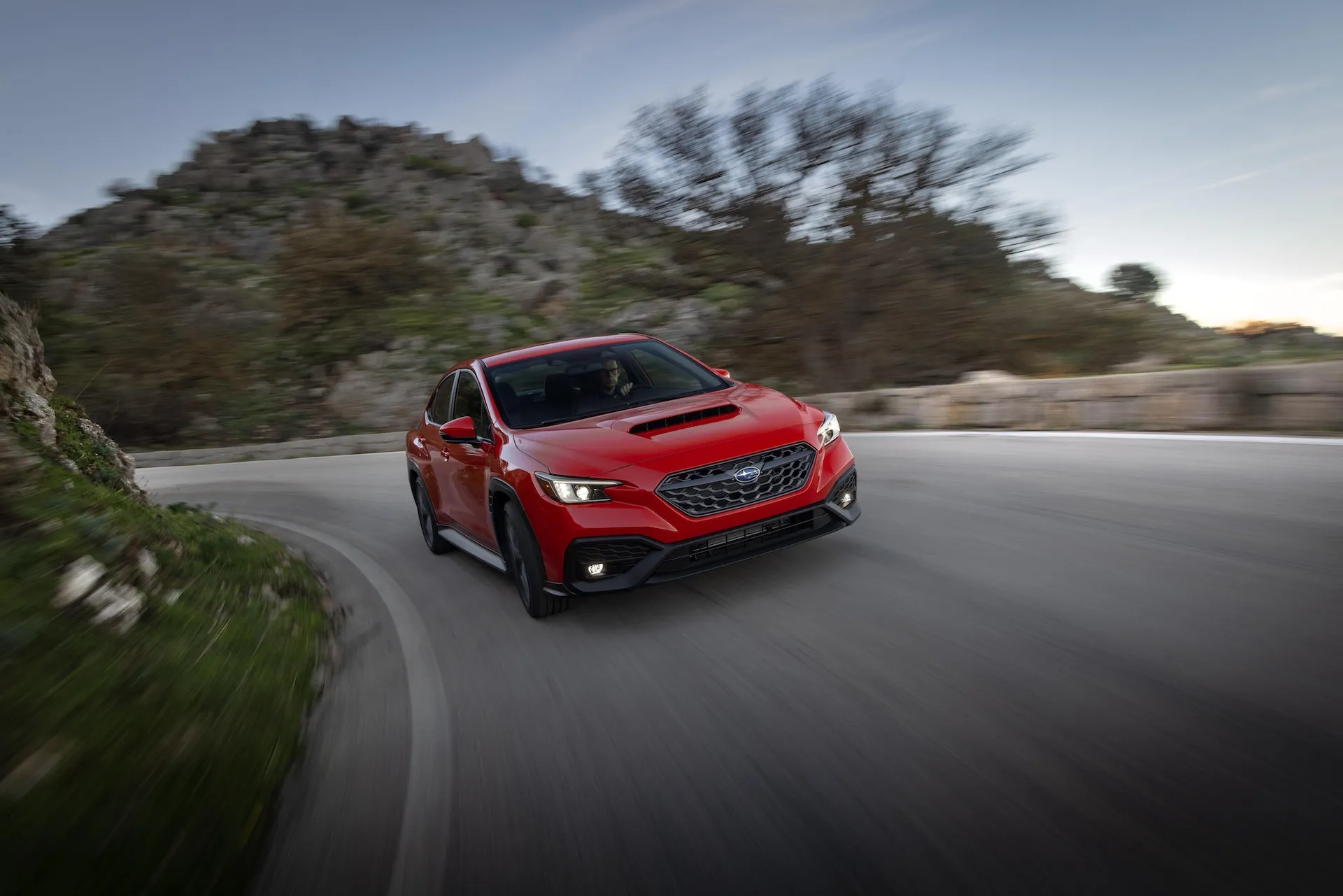
2024 Subaru WRX TR aims for the track, but falls short of STI

0


A hole exists smack dab in the middle of the Subaru lineup. It was left by the beloved WRX STI, gone missing since 2021, and something should really be done about it.

I recently drove Subaru’s effort to at least partially fill that hole, the 2024 WRX TR. This isn’t the first WRX TR. It was originally launched for the 2006 model year as a stripper WRX and the TR stood for Tuner Ready. Rather than coming with all the niceties, it had a very basic stereo, no body add-ons, and the steering wheel from the base Impreza 2.5i model. It did have a sport-tuned suspension and a limited-slip differential, though. The thinking was to provide the performance parts and avoid adding amenities that tuners would just strip out of the car.

The 2024 WRX TR goes in another direction by adding even more performance parts and teaming them with plenty of amenities.

2024 Subaru WRX TR

2024 Subaru WRX TR

2024 Subaru WRX TR

2024 Subaru WRX TR

2024 Subaru WRX TR

2024 Subaru WRX TR

Essentially a half-step toward the STI, the WRX TR gets suspension and brake upgrades but no extra power. Rather than the WRX’s standard 17- or 18-inch wheels and tires, it rides on 19-inch wheels that mount Bridgestone Potenza S007 summer performance tires. The springs are 5% stiffer and the damping rates are revised to handle the car’s larger wheels and tires. The steering is also retuned for improved road feel, and it gets bigger, better brakes.

The base WRX comes with 12.4-inch ventilated front rotors with 2-piston calipers and 11.8-inch ventilated rotors with single-piston rear calipers. The TR ups the ante to cross-drilled 13.4-inch front rotors with Brembo 6-piston calipers and cross-drilled 12.8-inch rear rotors with 2-piston calipers.

The TR, like other 2024 WRXs, also benefits from a couple of improvements enjoyed by all 2024 WRXs. The WRX’s body structure is slightly stiffer this year thanks to additional support in the floorpan, mostly toward the rear. The 2024 WRX also gains the EyeSight suite of safety features for the first time with a manual transmission. It includes adaptive cruise control, automatic emergency braking, and active lane control. A Subaru spokesman said about 75% of WRXs are chosen with the manual transmission, and this is an effort to keep manual transmission-equipped cars viable by adding key safety features.

Inside, the TR has 8-way power-adjustable Recaro seats upholstered in synthetic suede with red contrast stitching. It also lacks a sunroof to remove that weight up high and leave more room for helmeted drivers.

I drove the WRX TR in Wisconsin in mid-March, with conditions that ranged from the mid-50s and dry to the low 40s and rain to the low 30s and snow. The car came out of the Chicago media fleet, and having arrived in winter it was equipped with Michelin Pilot Alpin winter tires in the same 235/45R19 size as the Bridgestone Potenza S007 summer performance tires that come standard.

2024 Subaru WRX TR test drive review, Sicily

2024 Subaru WRX TR test drive review, Sicily

2024 Subaru WRX TR test drive review, Sicily

2024 Subaru WRX TR test drive review, Sicily

2024 Subaru WRX TR test drive review, Sicily

2024 Subaru WRX TR test drive review, Sicily

While the winter tires don’t have the grip of the Potenzas, I could still feel the changes Subaru has made to the TR. The car turns in more willingly. The front end feels better tied together, too. In a turn, the nose doesn’t dip as much on the outside as it would in the standard WRX. Some of that could be due to the improved structure, but the stiffer springs are likely more responsible for it.

The ride quality is also notably stiffer, though it doesn’t become punishing. The WRX has a firm ride to begin with, and this goes further in that direction, so prospective drivers should test drive it before they buy.

While Subaru says it has revised the steering for more road feel, I would have to drive the TR and another WRX back-to-back to judge that. A Subaru spokesman said the change can be felt by using a light grip of the wheel. Whether that’s true or not, the steering has the same quick ratio of 13.5:1, but it’s still too light for my taste.

With no track or autocross access, I never drove the WRX TR hard enough to challenge the braking power. However, they did feel strong with a predictable pedal in the few twisties I could find. The bigger rotors and calipers team with a larger master cylinder to make the car more ready for track duty.

The feel of other controls remains unchanged, though perhaps they should change. Just as the steering is too light, so is the feel of the gearshifter, which could also use shorter throws. The clutch could also use a little more weight, though it feels natural and is easy to modulate. A little more weight all around would feel sportier.

2024 Subaru WRX TR test drive review, Sicily

2024 Subaru WRX TR test drive review, Sicily

The engine is also unchanged. It’s the same 2.4-liter turbo-4 that makes 271 hp and 258 lb-ft of torque. It’s a strong engine, with a 0-60 mph time of about 5.5 seconds with the manual, but it lacks the punch of the 315-hp 2.5-liter turbo-4 of the last WRX STI.

The WRX TR starts at $42,775, including a $1,120 destination charge. It’s equipped like the $40,135 WRX Limited, though it lacks that model’s sunroof. That suggests the changes made to the TR cost about $4,000. The price is also about $4,000 more than the last STI. To be fair, inflation has raised prices across the board since 2021, though that doesn’t make it any less disappointing that a car without the capability of the STI costs more.

While the WRX TR isn’t a full substitute for the WRX STI, the TR now means Track Ready, according to the Subaru spokesman. Its extra equipment backs up that claim. My recommendation to Subaru: Go the half step further by increasing the power, adding a body kit, and firming up some of the controls to bring back the STI. Until Subaru decides the STI should return, however, the WRX TR is as close as we’ll get to a current-generation WRX STI.


Source link

Throwback: Living Legend – Meet Gene Winfield

0


2024 Intro

Regardless of our automotive tastes, we all have the custom car pioneers to thank for getting us to this point in time. Their innovation played a crucial part in shaping contemporary car culture.

Gene Winfield is one such trailblazer, and 10 years ago Speedhunters builder Keith Charvonia visited him at his shop in Mojave, California. Established in 1946, Winfield’s Rod & Custom has seen and done it all, and Gene had some amazing stories to tell. Today, we’re revisiting that 2014 feature.

Speedhunters_Charvonia_Winfield-2-2

2014 Feature

Speedhunters, this is a rare time we’re living in. While it might seem like ages since hot rodding was born on the dry lakes and city streets of California, it was really only a few generations ago. The amazing part – and the part that we really need to embrace right now – is that we’re living in the same time as some of the guys who started the hobby we all love so deeply.

Think about how far the automobile has come in 100 years. Now consider that Gene Winfield has been here for 87 of those years [96 years now], and customizing cars for nearly all of them.

Speedhunters_Charvonia_Winfield-2

He was one of the first few guys to look at a car, re-imagine it as something better, then proceed to hack it to little bits and create a one-of-a-kind vehicle. I don’t take it lightly that I can call Gene a friend. The fact that our lives have overlapped and even better, that I’ve had the opportunity to bend tin with the guy, is flat out amazing to me. Gene has too much to share for us to keep it a secret, so I spent some time with him to bring you this interview, which exposes just a tiny sliver of what Winfield wants to share from his life-long career customizing cars.

Speedhunters_Charvonia_Winfield-32-32

KC: Tell us in your own words: Who is Gene Winfield?

GW: Well, I’m Gene Winfield and I’m a custom car builder. I’ve been building custom cars all my life. I started my first shop when I returned from World War II in late 1946, and I’m still having fun doing it today.

Speedhunters_Charvonia_Winfield-16-16

KC: So you were there when the custom car thing started. Actually, you were one of the people who started it. What do you think about the revival of traditional custom cars today?

GW: Well, I think it’s great! What it is, is some of the older people can finally afford a car now that they couldn’t afford when they were in high school, so that’s part of it. But then there are lots of young people getting into it now too. I just see it going up, up, up all the time. I think the muscle car thing and street rods have kinda leveled off, but they’re always going to be building them because people have a need for speed and power and all that. But the custom car thing is developing rapidly and going uphill all the time.

Speedhunters_Charvonia_Winfield-36-36

KC: Do you think this is the strongest period of growth you’ve seen for kustoms? How does it compare to the ’50s when the style first became popular?

GW: In the ’50s and ’60s it was very strong, and you could build a car with a lot less money. There have always been people who want to make ‘em different. I always like to say people should make a statement with their car, and each owner likes to outdo the other guy and come up with something for his car that nobody else has done. What we all strive to do is build a car that is different, whether it’s several small things or a very big change. The whole point of custom cars is for the next one to be different than the last one, and that’s definitely going on in a big way even today.

Speedhunters_Charvonia_Winfield-41-41

KC: Do you think we’ll ever run out of things to do to cars?

GW: Oh no, no, no. We will never run out of things to do, because we create. You know, I look at a car and sometimes it will take me 20 or 30 minutes, but I’ll be able to say, ‘Well, I can change this and that, and make things a little different, a little better.’ It used to be that I would go to the new car shows and look at the cars and pick them apart. I would say, “Well, I can use that antenna, or part of that grille or bumper guard,’ but you can’t do that today with all the new cookie cutter cars that look the same. There are very few things that you can take off a new car today and put on a custom car. So instead we look at a customized old car and see the shapes, and take parts from other old cars and mix early and late a little, so there’s always going to be customizing going on. We’re always going to be creating things that are different.

Speedhunters_Charvonia_Winfield-29

KC: Do you think we should be modifying new cars the way we did with old ones?

GW: The new cars don’t lend themselves to the same style of customizing we did on the early ones, but someday we’ll have to get into some of that. We’re gonna have to because little by little the old cars are running out. That’s why I make a fiberglass Mercury, because the old ones are getting harder to find. You know, people are doing the tuner cars and hopping them up, but I don’t think anything will match the craze of early kustoms, that’s just been going on for so long.

Speedhunters_Charvonia_Winfield-35-35

KC: So what do you think of the import scene?

GW: Well, I think it’s all good. You know, people want to go fast, they want to have some horsepower, and there are many, many companies making parts for the new import cars to do that. You can get stroker cranks, camshafts, throttle bodies and this and that. There’s so much aftermarket support now, and it’s what I would call the new hot rod generation.

Speedhunters_Charvonia_Winfield-47-47

Hi-Jinks & Stunts

KC: What’s the craziest thing you’ve ever done with car?

GW: One time I pulled a train with a rental car for a commercial. Another time I froze a car in a block of ice for 30 days for a gasoline commercial. I actually have a new book that just came out about all the movie, television and commercial cars I’ve done over the years. It shows you all those crazy things I did back then. When you see a commercial, there aren’t any credits, so you have no idea who did the work. Fortunately I took pictures of all that stuff and saved all the stuff I’ve done so I put it in a book. It’s only available directly through my shop so it’s in small numbers.

Speedhunters_Charvonia_Winfield-17-17

KC: You have to tell us the story about pulling the train with a car!

GW: Yeah, Sunoco Gasoline had an ad agency in New York and they would call and ask me if I could do something. I would always say ‘YES!’ – then I would hang up and figure out how I was gonna do it. But I knew I could pull the train, because I watched them for years. I knew that before they took off they bumped the cars backwards. Just a little bump and it goes from car to car to car. What they’re doing is they’re creating slack, so when the engine takes off forward, it pulls each car with a little jerk. So I knew that was how to get it going instead of trying to pull the whole train all at once, and I figured I could do the same thing with a car. Of course I burned up the tranny doing it, because they had me do it over and over and over!

KC: What kind of car was it?

GW: It was a Ford or a Mercury station wagon, brand new.

KC: And that was a rental car, right?

GW: Yeah, I got the insurance. No problem.

Speedhunters_Charvonia_Winfield-23-23

KC: So you drove the car too?

GW: Oh yeah, I drove in every commercial. The most interesting commercial I did was for Shasta Cola. I built two Model A trucks, and I painted one of them blue and one of them yellow. The blue truck was the Cola truck, and the yellow one was the Cherry truck. It was a flatbed and we put boxes of cherries on there. We were out on a ranch and they would have us drive around and we would have near-misses and so forth, and then we were supposed to have a crash. The idea was that after the crash, we would now have Cherry Cola. I got residuals on that for 18 months, it was really good. It won an award and everything – it was a lot of fun.

KC: Wait, did you actually crash the trucks?

GW: Oh yeah, they wanted it to roll up on the side and dump the cherries, but the first time, I’m drivin’ the truck and I hit it and it didn’t roll over. I dug a trench and got it all figured out so I could hit it in a certain place and a certain way, but it didn’t roll. It just bent the heck out of the axle. But from my old jalopy hardtop days I knew how to straighten it. Everyone was panicked, but I said ‘Give me an hour.’ I straightened the axle and I went back and dug the trench a little deeper and I hit it again and it rolled right over and everything went just fine.

Speedhunters_Charvonia_Winfield-9

KC: I never knew you were a stunt driver too!

GW: Yeah, I did all kinds of stunt driving. This was back in ’70 or ’71. The custom car field went really down in the dumps in the late ’60s because of the muscle cars. When the muscle cars came out they were doing things in Detroit that we had done on our custom cars. They would put bucket seats and four on the floor and dual exhausts and lower silhouettes. They did all that from the factory, so when you could go into the dealer and buy that car on the spot and drive it away, it just made the custom car scene really go down. So I started doing commercials and movie work for a while. For 18 months straight I did nothing but Goodyear commercials.

Speedhunters_Charvonia_Winfield-67

KC: So you found a way to stay busy for a couple decades there while the kustom scene was flat?

GW: That’s right. In the ’80s it started coming back and I didn’t realize it started on the East Coast. Usually the trends start here in California. But all of a sudden it started back up in Ohio and Florida and the Mid-West, and these guys mailed me a car show flyer and I threw it in the trash. Then they called me up and asked me to come to their show, and I still wouldn’t do it. The next year they sent plane tickets for me and my wife to go back to Ohio. I got back there and I said, ‘Oh my god it’s happening all over again!’ So I got back on it and started making parts and pieces, tail lights and things like that for kustom cars. I’ve been in it ever since.

Speedhunters_Charvonia_Winfield-5-5

KC: Do you like building custom cars more than doing movies and commercials?

GW: Oh yeah, that’s how I got my start and I have way more fun doing it. When I do a kustom job and put my Winfield blend on there, I can stand back and say, ‘Wow, there it is, I created a piece of art’. Then lots of people get to see it and it’s very gratifying to stand back and look at what you’ve created and enjoy it.

The Winfield Blend

Speedhunters_Charvonia_Winfield-4-4

KC: Can you explain how you developed your paint style?

GW: When I developed the blending of paint, first I did a couple motorcycles and I blended them from the bottom up, creating different colors. I could see how you could blend the colors from dark to light, and I just experimented and found a way to create something new. The first car I did a complete blend job on was a 1957 Chevy, brand new in ’57. We left most of the side chrome on, it was a mild kustom, and I created this paint job where I blended around the edges and around the chrome and I highlighted what was there.

Speedhunters_Charvonia_Winfield-38-38

Then little by little I got more into blending of the actual colors, and in ’59 I built the Jade Idol (Jade Idol recreation pictured above getting a fresh repaint – KC) and I put a radical, radical paint job on it where I blended the whole car top to bottom and used many, many different colors. Jade Idol hit the show car circuit in 1960 and we took it back East and all over and it won everything at every show. It would win three or four trophies, best paint, best engine, on and on. Some of the trophies were five or six feet tall and we had to take them apart to haul them all home. That was the most radical blended job and it put me on the map because I went all over the nation, and it’s just continued to go uphill ever since the Jade Idol.

Speedhunters_Charvonia_Winfield-11-11

KC: Let’s shift gears. What advice would you give to guys who want to start building cars?

GW: Young or old, if people want to build cars, what they should do first is learn how to weld and do some metalwork. There are good metalworking classes all over the US now, and there are also lots of good DVDs that teach you how to work with metal. The main thing is to have patience and stick with it. Some people, when they try something new, they lose interest too easily. So my advice is to hang in there. Even if your work doesn’t look as good as you want it to, you have to continue to hammer away at it because that’s what will make you better. Stick with it and work hard, that’s the best advice I can give.

Speedhunters_Charvonia_Winfield-8-8

KC: Which basic tools should someone have to start off in metal fabrication?

GW: Number one, get a sandbag. That’s easy to get and doesn’t cost hardly any money. You’ll need some hammers too. The best ones around are probably Martin hammers. Snap-on has a good one that was originally designed by a company called Plumb and Snap-on bought the cross peen design – that’s very good. The cross peen is one of my favorite hammers. You can get them at Eastwood. They say Eastwood on them but they’re made by Martin.

Speedhunters_Charvonia_Winfield-3

Then probably an English Wheel – there are lots of options for those now. A shrinker stretcher doesn’t cost very much money either, and possibly a bead roller once you start getting into equipment.

Speedhunters_Charvonia_Winfield-37-37

KC: Okay, and what about for welding?

GW: For welding I recommend a small torch. The Smith AW1A is my favorite torch. It’s a chrome-plated little torch and it’s beautiful. You can start with an 0 or a 00 tip and learn how to gas weld.

Speedhunters_Charvonia_Winfield-6-6

KC: So would you recommend starting out with gas welding instead of MIG?

GW: No, they both have their place. MIG welding is a lot easier – I can teach a 10-year-old kid how to MIG weld. There are lots of places where MIG works easier than gas welding. Each has its advantages, you just have to learn by trying both and figuring out what works for each situation.

Speedhunters_Charvonia_Winfield-9-9

KC: Where do you get your inspiration to do certain things to cars?

GW: Well, when I was young Harry Westergard was in Sacramento and I was raised 70 miles away in Modesto. Harry Westergard and Dick Bertolucci were both in Sacramento and Joe Wilhelm was in San Jose, and those were the builders who I looked up to when I was learning. Then I finally went down to the LA area and Valley Custom, Clayton Jensen and Neil Emory, they were doing the best work in LA doing hammer welding and leading.

Speedhunters_Charvonia_Winfield-21-21

KC: Did you ever end up working with any of those guys?

GW: No, no I never did, but when Valley Custom closed down I invited Clayton Jensen to come up to Modesto and work with me, and he drove all the way up there, 400 miles, and we talked about it but he decided he didn’t want to move his family so far away. So he went on to rebuild Ferraris and stuff like that. He was a fabulous craftsman. There were no classes back then so we were all self-taught. One of my favorite expressions is ‘Everyday is a school day!’

Speedhunters_Charvonia_Winfield-22-22

KC: I think you should tell us about your time in Japan.

GW: Yeah, I went to Japan with the army in 1950 as a cook in the MP battalion. The first day I was there I found this body shop and it had a dirt floor and the guy had a chunk of steel three inches thick and eighteen inches square. He only had two hammers and a couple dollies. Of course the hammers were double sided so he really had four choices of hammers to use. He would get down on his haunches and pound on these little pieces of metal, and I watched him shape the metal by pounding it with a hammer, and he made a complete fender for a ’39 Buick. All the little pieces, welded together with no filler whatsoever.

Speedhunters_Charvonia_Winfield-39-39

I asked him about lead and he said they knew about it but they didn’t have any. Of course, plastic filler didn’t come out until 1955, and so they mixed this primer that came in pellets, almost like rabbit pellets, and they would mix it with thinner. So if they wanted a putty to fill with they would leave it thicker, or take the same material and thin it out and spray it. That was their primer and filler – that’s all they had. It was a really great experience. I watched the guy all day and went back the next day and watched for hours, and that’s how I learned to hammer weld.

Speedhunters_Charvonia_Winfield-45-45

Then later four of us GIs got together and rented a little shop so we could build cars, and we hired a Japanese guy who we called Hammer Happy because we couldn’t pronounce his name. We paid him 10 dollars a day and he was a tremendous fabricator, welding and everything, just amazing.

Speedhunters_Charvonia_Winfield-42-42

KC: What kind of cars did you guys build in Japan?

GW: I was building a ’41 Ford and I put ’46 fenders on it and did a half chop, half section on it and we made a new pancake hood completely from scratch out of sheetmetal. We were also working on a ’39 Ford convertible and one guy was building a race car because we found a race track over there and they were racing little tiny cars. This guy had a race car with a four cylinder Crosley engine. At the time Nissan/Datsun Motor Company had two gorgeous cars called the DatKing and the DatQueen. They had a full-on race car body just like an Indy car or a Midget, but they had stock Datsun engines that only made 20 horsepower.

Speedhunters_Charvonia_Winfield-29-29

Then they upped it to 28 horsepower and I showed them how to shave the heads and we locked the rear ends and I cross-grooved the tires. Now the tires helped, but they didn’t have enough power to break the locked rear ends loose in the turns so it didn’t work. Yeah, that was interesting. So we were building one of those Crosley racing cars and I have a picture of me holding the complete chromoly frame with one finger. Then I lifted up the Crosley engine in one hand! I was also building more of a sports car – I took a ’34 Ford frame and Z’d it and I was going to build a complete sports car body but we never go to finish it because we ended up coming home.

Speedhunters_Charvonia_Winfield-40-40

KC: What were all those American cars doing in Japan though?

GW: Well all the GIs were allowed to ship their cars there for free, so we brought lots of stuff over. There were so many American cars that I organized the first Stock Car race in Japan, and there were Pontiacs and Fords racing each other in Japan! I have a NASCAR license from 1954, I used to race all kinds of jalopies and hard tops.

Speedhunters_Charvonia_Winfield-33

Now I still run a Midget in Ohio every year in the nostalgia race and I have my Sprint car here. I just sold my Sprint car with a stroker Chevy in it, it was really fast. This one had a Flathead in it and also a small block Chevy, so I’m undecided on what I’ll do with it. But I go out and play and run out here at Willow Springs every year for the nostalgia race.

Speedhunters_Charvonia_Winfield-57

KC: Tell us about the new museum your building.

GW: It’s a picture museum, instead of a car museum. Although last week we put a new door in the side so I can bring one car in there like the Reactor or the Strip Star. My plan is to build it and live in there. It’ll have all the nostalgia stuff, the pictures and posters and articles that I’ve collected over the years. All the magazine articles I’ve been in over the years are going to be on display in chronological order from the ’50s all the way up to today.

Speedhunters_Charvonia_Winfield-18-18

One room will be the Star Trek room where you wave your hand and the doors slide open and the light turns on. I have mirrors at each end so it looks a hundred feet long and I have the Enterprise in there and the Captain’s chair and all sorts of memorabilia from the movie.

Speedhunters_Charvonia_Winfield-34-34

Then the next room is the hot rod garage. There’s a glass top coffee table with a Flathead under it and I have a Model A pickup coming out of the wall that I painted bright red with chrome wheels. When you take the tonneau cover off it’ll have a bed for someone to sleep over on. The museum is coming along really well and I should be living in there before I have my next car show in October.

Speedhunters_Charvonia_Winfield-24-24

KC: I got to meet Ed Iskenderian at your last show. Can you tell us a little about your relationship with him?

GW: Ed is a fabulous guy, he’s 91 I think now and he’s very sharp. He remembers everything and he can talk to you for hours about all the old stuff. He should be there again this year, him and Louis Senter who used to own Ansen wheels, he should be there too. I heard Vic Edelbrock is going to try to make it too.

Speedhunters_Charvonia_Winfield-59

KC: How long have you known Isky?

GW: Probably 30 or 40 years. I didn’t meet him when I was real young. I met Vic Edelbrock and Nick Arias way back before then. I’m 87 now so I met a lot of these guys a long time ago (pauses). Hey they’re calling me, I have to go paint a car now they just got done getting it ready for me. I’m painting a ’54 Pontiac and I’m gonna blend to roof blue, similar to your Kaiser but I’ll go darker on the sides and I already put white pearl lace on the roof that will come through on the blue. So I’m gonna go do that.

Speedhunters_Charvonia_Winfield-52-52

KC: Okay, let me get one last question in – what’s the proudest moment of your career?

GW: Well, that’s hard to say (sighs). I’ve done so many things and met so many beautiful, nice people in the world. You know, I was in New Orleans a couple weeks ago on this series of chopping tops at World of Wheels shows, and this guy had his four-year-old son there. I had him come over and help me work some metal, and it was this nice bonding experience with this young child.

Speedhunters_Charvonia_Winfield-55

Then yesterday we got a cake in the mail and come to find out this guy works for the FBI and he said he really appreciated that I made that panel with his little boy and he said if I ever need anything, I can call him (laughs). So anyways, it was very gratifying, and he sent a cake for the guys at the shop and a nice letter with a picture of me and his boy. Things like that make me feel good, you know.

Speedhunters_Charvonia_Winfield-48-48

KC: Alright well I better let you go paint that Pontiac, thanks so much for your time Gene.

GW: Don’t forget we’re all in this together, for the love of customizing cars, young or old!

Keith Charvonia
Instagram: charvoniadesign

Gallery


Source link

The Rise of Luxury Homes: Trends and Features To Consider

0


Image courtesy of Unsplash

Luxury homes capture the essence of dream homes with their high-end amenities and lush features. These properties go above and beyond the average in design, amenities, and price point. They typically come with custom architecture, lavish interiors, and cutting-edge appliances. 

Unsurprisingly, demand for these high-end properties remains high despite rising interest rates and recession concerns. Based on a market analysis, transactions involving luxury second homes surged 25 percent year-over-year in the second quarter of 2022. 

However, as a rapidly evolving landscape, standards in luxury homes rise, and new trends emerge every year. Whether you’re considering investing in or marketing a luxury home, staying updated with the latest trends and features is crucial for strategic decision-making. 

This article explores the elements that make a luxury home stand out and other factors high-end buyers must actively seek.

Image courtesy of Unsplash

People’s needs are changing, so the notable shift in the definition of luxury homes is unsurprising. Conventionally, spacious rooms, grand staircases, and elaborate chandeliers characterise these high-end properties. 

However, as contemporary architects and builders adopt innovation, blending art with functionality, home design has also shifted significantly. Still, luxury homes aren’t defined by these superficial aesthetics. Likewise, the cost alone no longer signifies a house as a luxury item.

Besides price and appearance, several elements are necessary to make a home extraordinary and classify it as a luxury property. It’s worth highlighting that a luxury home’s unique features, quality, and desirability influence its price. 

Higher prices can mean you need more money to finance and purchase the home. So, before getting a mortgage loan from a bank, let’s explore the trends and features currently shaping luxury homes. 

Personalised and customised interiors 

Image courtesy of Unsplash

Personalisation and customisation are a defining feature of modern luxury homes. Each home reflects the owner’s personality, passion, and lifestyle. 

When buying a luxury home, look for one that allows you to customize it based on your preferences and needs. You’ll likely spend most of your time in your home’s interior. Hence, the space’s layout should be flexible enough to design according to how you want to use it and what you’ll put in there. Customised finishes and layouts are unique features to add to a luxury home. 

Multi-functional living spaces

Image courtesy of Unsplash

There’s an increasing demand for multi-functional living spaces in luxury homes. Instead of designing rooms for a specific purpose, these spaces are flexible and accommodate different activities. They can function as shared workspaces or entertainment areas. 

Because of these functional and flexible spaces, you can adapt to what you need without compromising comfort in your luxury home. This unlocks new possibilities for creativity and personalization. 

Wellness-focused amenities

With the demands and pressures of modern life, individuals are increasingly recognizing the value of health and wellness. This desire for a holistic lifestyle transforms the architectural design and features of luxury homes. 

These luxury properties integrate wellness-centric design in high-end amenities, providing a sanctuary to nurture overall well-being. They have state-of-the-art home gyms, saltwater pools, serene meditation areas, and personal spas. 

Technology and home automation

The integration of technology and automation in luxury homes is growing more common. For instance, smart home features enable homeowners to control a home’s lighting and room temperature with only a tap on their phone. Advanced security systems and voice-activated assistants also optimize comfort, convenience, and security in luxurious living. 

Additional Factors High-End Buyers Must Seek in Luxury Homes

Image courtesy of Unsplash

If you’re considering investing in luxury estate, you’re more likely eager to pay a premium for services and features that cater to your preferences. But no matter how financially ready you are, thorough research and preparation are crucial. 

Ensure you know what to look for in a luxury home. While following the current trends and features can offer inspiration, don’t solely rely on them when making a decision. Consider the following factors when buying a luxury home: 

Location and view

Location is essential in determining the property’s desirability, enhancing its allure and value. A highly desirable area for a luxury home provides exclusivity and privacy. It also offers easy access to schools, work hubs, renowned dining choices, upscale shopping, and landmarks. 

Besides playing an immense role in convenience and lifestyle, a prime location gives luxury homes breathtaking views and complete peace. It can be anything from an unobstructed ocean view to snowy mountains and amazing sunsets. 

Security and privacy

Luxury communities face distinct security challenges. When investing in a luxury home, you also want to secure your investment. Properties equipped with modern security systems and landscaping can give you security, privacy, and peace of mind. 

Future resale value

A luxury home is a sophisticated yet significant investment. Before investing in one, consider its investment potential and resale value in the future. 

You’ll want to find a home that matches your desired amenities and lifestyle and gives you a solid investment opportunity. The factors mentioned above contribute to the price appreciation potential of a luxury home. 

Secure the Luxury Home of Your Dream

Image courtesy of Unsplash

Luxury homes offer an ideal balance between appealing design and functionality. The amenities found in these properties add to a comfortable and fulfilling living experience. However, since the details and features of luxury homes vary, investing in them requires in-depth research. 

Considering the high cost of a luxury home, the last thing you want is to make a hasty decision based on initial impressions. Therefore, take your time to explore multiple properties. Ensure you understand your needs and what you can afford to secure your dream luxury home.

For more on the latest in luxury interiors, click here.


Source link

11 Very Best Things To Do In Puerto Vallarta, Mexico – Hand Luggage Only

0


Perched on the coastline of Jalisco state in Mexico, Puerto Vallarta has really gained popularity over the last few decades; and with good reason! Not only is the coastline absolutely gorgeous, but there are so many of the best things to do in Puerto Vallarta dotted across the wider region. 

Just like other big-hitting destinations in Mexico like; Tulum and Cancun, Puerto Vallarta is a resort town with heaps to do. Honestly, it’s beautiful and you’re going to have the best trip to Mexico. 

So, to help you have an amazing trip to Puerto Vallarta, we’re sharing our top spots you can’t miss once you arrive. This way, you can spend less time being bogged down with planning and more time exploring the local area. 

Have a great trip to Mexico!

1.) Bahía de Banderas

Best Things To Do In Puerto Vallarta Mexico Marina Vallarta

To be honest, you can’t miss Bahía de Banderas if you’re already staying in Puerto Vallarta. You see, it’s one of the largest bays in the area and where most of the hotels are situated. 

Not only that, there’s heaps to do around the bay itself. Once here, make sure to check out Conchas Chinas Beach which is perfect to visit if you fancy a day by the coastline. Though, a heads up, you will want to bring your own parasol and sunlounger if you’re spending longer at the beach itself. There is very rarely anyone renting equipment on this beach. 

Best Things To Do In Puerto Vallarta Mexico Conchas Chinas

Afterwards, head on over to Los Muertos Beach. This is where the main promenade area of Puerto Vallarta is and well worth visiting for an afternoon.

You see, you can spend the day on the beach, and the early evening in the local bars and restaurants that line the shoreline. We loved La Palapa Restaurant for dinner. Just be sure to reserve a table for sunset – the views are incredible. 

Read more: Best things to do in Tulum

2.) Yelapa Falls Cruise

Best Things To Do In Puerto Vallarta Mexico Sunset Viewpoint

Okay, so, one of the best things to do in Puerto Vallarta is to book a boat tour. We loved this all-inclusive Yelapa Falls cruise.

Not only will you spend time on the coastline around Puerto Vallarta, but you’ll also get ample time to swim near Yelapa Falls. 

Plus, you’ll have an all-inclusive bar, food, and more onboard. Though, a heads up, be sure to book these cruise tickets before arriving in Puerto Vallarta. Tickets sell out fast at peak times. 

Read more: Best things to do in Cancun

3.) Naval Museum of Puerto Vallarta

Best Things To Do In Puerto Vallarta Mexico Downtown

The Naval Museum of Mexico is a historic site that’s well worth visiting while you’re in Puerto Vallarta. Home to over 150 different exhibits, it’s a great place to learn more about the Mexican Navy and its historical formation of the years.

Honestly, there are so many different rooms that all have interactive exhibits and have a collection of the Mexican Navy uniforms used over the years, too. Visits take around 45-60 minutes and it’s a great place to explore if you’re interested in naval history. That being said, if you’re not, you might want to stick to the beach. 

Also, if you are visiting, remember that the museum is open every day of the week except Mondays.

Read more: Best things to do in Puerto Vallarta

3.) Mismaloya Beach

Best Things To Do In Puerto Vallarta Mexico Mismaloya Arches

South of Puerto Vallarta itself, Mismaloya Beach is well worth a visit if you’re driving around Bahía de Banderas whilst exploring the coastline. 

Mismaloya Beach is wonderful, and whilst it’s not as popular as Puerto Vallarta’s beaches it’s just as great. 

Once here, you can hop on a boat tour from one of the vendors on the shoreline and easily hop over to Los Pescadores Restaurant for their ceviche. It’s so good. 

One thing to note, Mismaloya Beach is small and it can be nice and quiet when you visit. You can easily have the opposite with heaps of boats and a few crowds. 

If you’re not keen on crowds, I’d stick to some of the closer (and smaller) beaches near Puerto Vallarta itself. 

Read more: Best things to do in Merida

4.) Bucerías

Best Things To Do In Puerto Vallarta Mexico Bucerias

Just north of Puerto Vallarta, Bucerías is a lovely seaside town to visit around Bahía de Banderas. It’s one of the best things to do in Puerto Vallarta for a day trip. 

Now, the beach of Bucerías might be slim, but it stretches for miles! Not only that, it’s a great beach to rent a lounger, pop into the beachfront bars or just take a stroll around the streets. 

Best Things To Do In Puerto Vallarta Mexico Bucerias

Feeling peckish? Head over to Fat Boy Seafood for their freshly baked fish. It’s so good. Also, if you’re staying longer, head for dinner at La Negra. Their ribeye tacos are incredible. 

Read more: How to get to Isla Holbox 

5.) Zona Romantica

Best Things To Do In Puerto Vallarta Mexico promenade Malecon Playa de los Muertos beach

Perched on the southern coastline of Puerto Vallarta, Zona Romantica is a neighbourhood that’s filled with bars, eateries and Los Muertos Beach Pier.

Best Things To Do In Puerto Vallarta Mexico Los Muertos Pier

Not only that, you’ve got Olas Altas Beach which lines the area, too. You can easily spend the day in the area itself and it’s perfect if you want to chill and have easy access to the local bars and restaurants. 

For a yummy dinner, pop into The Blue Shrimp. Their lobster tails are incredible. That being said, if it’s tacos you’re after, then head over to Pancho’s Takos. 

Read more: Best things to do in Cancun

6.) Church of Our Lady of Guadalupe

Best Things To Do In Puerto Vallarta Mexico Our Lady of Guadalupe Cathedral

Not too far from the Naval Museum of Puerto Vallarta, visiting the Church of Our Lady of Guadalupe is one of the best things to do in Puerto Vallarta if you’re interested in the region’s local history. 

The church itself is almost 100 years old and it’s so beautiful to see. Now, a visit here won’t take too long; around 20 minutes but it’s so easy to see as you stroll the shorefront.

Best Things To Do In Puerto Vallarta Mexico Our Lady of Guadalupe Parish Church

Afterwards, for a tasty bite to eat, head over to Coco’s Kitchen for brunch. It’s an unfussy joint that serves up some of the best chilaquiles in the area. 

7.) Isla Cuale

Best Things To Do In Puerto Vallarta Mexico Cuale River Island

If you’re spending some time exploring the streets of Puerto Vallarta, then make sure to stop off at Isla Cuale. Easily reached via the bridges, this small river island is home to small galleries, markets and foodie spots that are lovely to visit. 

Once here, check out the Cuale Island Flea Market. Now, a heads up, you will need to haggle but it’s a great place to stop for a souvenir whilst you’re here. 

Afterwards, head over to River Cafe for a fine dining spot in Puerto Vallarta. They have some of the best dishes (we loved the mahi-mahi), but you do need to book if you’re heading over at dinnertime. Tables do fill up fast. 

Read more: Best things to do in Cancun

8.) Palo Maria Waterfall

Best Things To Do In Puerto Vallarta Mexico Palo Maria Waterfall Puerto Vallarta Jalisco

Around a 35-minute drive from Puerto Vallarta, Palo Maria Waterfall is worth the trip if you want some time away from the beach. Now, a heads up, it’s quite hard to find the trail to the waterfall itself, it can be a tough find if you don’t know the area very well. 

Once here, you can swim and explore the local area. Though, watch out for the spiders on the trail; they are huge! For this reason, we’d always recommend heading here with a guide if you’re interested. 

Read more: Best things to do in Tulum

9.) Los Aros

Best Things To Do In Puerto Vallarta Mexico Mismaloya Arches

The Mismaloya Arches, in Los Arcos National Marine Park, are beautiful and just shy of the shoreline of Bahía de Banderas at Mismaloya.

These vast granite stacks and islands are so beautiful to sail around and you can easily make a day of it when booked on a boat tour. 

Best Things To Do In Puerto Vallarta Mexico Mismaloya Arches

Not only that, but you can easily book this stand-up paddleboarding tour around the Mismaloya Arches which is absolutely stunning.

It’s a great way to explore the stacks and you’ll even get to go inside the grottos and caves that make this area so beautiful. Best of all, this tour avoids the crowds and you’ll even get to see the Bioluminescent plankton that thrive in this region. 

10.) Majahuitas Beach

Best Things To Do In Puerto Vallarta Mexico Majahuitas Beach Cabo Corrientes

If you want a more chillout beach on Bahía de Banderas, then head over to Majahuitas Beach. Best reached by boat, it’s a more secluded and totally pristine beach that’s perfect to visit as you sail the bay.

Best Things To Do In Puerto Vallarta Mexico Majahuitas Beach Cabo Corrientes

Now, lots of tours Yelapa will stop off here for snorkelling. That being said, if you want a full day here, you’ll want to charter your own boat.

This can be a little pricey in peak seasons but it’s one of the best things to do in Puerto Vallarta if you want a sailing day. 

11.) Jorullo Bridge

Best Things To Do In Puerto Vallarta Mexico Jorullo Bridge

Around a 35-minute drive from the centre of Puerto Vallarta, Jorullo Bridge is well worth a visit when you’re in the area and want a more active day while on vacation. 

Now, you can hike the hills in this region, but we love this ATV tour that will take you around the trails of the Sierra Madre Occidental and Jorullo Bridge itself. Best of all, after you’ve driven your ATV around the dirt trails, you’ll get to try some local tequila, too. 

Read more: Best things to do in Tulum

10 Best Things To Do In Tulum, Mexico


Check Out The Very Best Of Great Britain!

Hand Luggage Only Great Britain Travel Book Advert Banner


Pop Over To Our YouTube Channel For Travel Videos!


Source link

2025 Toyota 4Runner teased again, debuts April 9

0


The new sixth-generation Toyota 4Runner is coming, soon.

On Thursday, the 2025 Toyota 4Runner received yet another teaser on Instagram while the automaker confirmed the SUV’s debut will take place on April 9.

The latest teaser confirms the beloved drop-down rear window on the 4Runner’s tailgate will carry over into the sixth-gen SUV. Power operated via either the tailgate (by two buttons that can be seen in the teaser) or via the dashboard, the drop-down glass enables longer items to hang out of the rear window or fresh air to flow through the cabin while driving.

Inside the cabin the 4Runner will feature an available 14.0-inch touchscreen perched on the dashboard (an 8.0-inch touchscreen is expected to be standard), a volume knob, and pushbutton start. 

The previous teaser released a week ago showed the SUV’s rear bumper and lower portion of the tailgate. Like today’s 4Runner, the tailgate sits low into the bumper that theoretically should enable a lower lift-over height making loading heavy items easier.

The new 4Runner will ride on Toyota’s TNGA-F body-on-frame platform, which is shared with everything from the SUV’s pickup sibling, the Tacoma mid-size truck, to its relatives, the Land Cruiser and Lexus GX. It’s also shared with large vehicles like the full-size Tundra pickup and Sequoia SUV.

The new 4Runner is expected to drop the current model’s naturally-aspirated V-6 in favor of turbo-4 engines with a range of power ratings. A hybrid powertrain option is expected in top trims along with an 8-speed automatic. A 6-speed manual might mark the return of a manual transmission for the nameplate.


Source link

A Beginner’s Guide To quattro

0


Introduction

Since the launch of Unbound Vol. 6: Head to Head, we have been riding the Audi hype train to celebrate the automaker’s return within Need for Speed’s digital world.

We have uncovered the in-game updates and even looked back on our top five tuned Audis featured on Speedhunters over the years. But for this week’s theme, we’re taking you all back to school… quattro school.

AUDI-QUATTRO-SPORT-SPEEDHUNTERS-©JORDAN-BUTTERS-10

You’ll find a quattro variant of almost every production Audi in 2024. Yet its origins date back to the 1970s, with engineers Jörg Bensinger and Walter Treser widely credited for pioneering (and being the driving force behind) the technology ahead of its global debut in the 1980 Ur-quattro road car.

050208aud

Then, as Audi rolled it out within their rallying campaign from 1981 onwards, it quickly became apparent this all-wheel drive revolution was here to stay. Not only did Audi claim two World Rally Championship titles and 24 victories between ’81 and ’86, but there hasn’t been a two-wheel drive winner of the WRC since Lancia’s 037 in 1983.

With Audi Tradition on the 2016 classic car tour

Audi’s quattro might be the most renowned all-wheel drive system on the planet, but it wasn’t the first of its kind – not by a long shot. Early four-wheel drive transmissions date back to the inception of the internal combustion engine. Dutch brother Jacobus and Hendrik-Jan Spijker paved the way in 1902 with their Spyker 60 H.P.

IMG_0429

In the following decades,, several 4×4 systems were developed for military and off-road use, including the Willy’s Jeep and Series 1 Land Rover.

What about ‘normal’ cars? Well, Jensen’s FF from 1966 and Subaru’s Leone in 1971 both utilised all-wheel drive long before Audi joined the party. What made quattro different was how it powered all four wheels.

IMG_0515

Rather than use a heavy, inefficient transfer box to drive both axles, Audi developed a lighter, smaller centre differential to deliver the power front and rear. Then, when traction became even more limited, the centre diff could be locked with a vacuum-operated button, allowing the front and rear diffs to rotate at the same speed without slipping.

08

But the real game changer came in 1987 when Audi introduced the Torsen (torque sensing) centre diff. Unlike other systems, this one allowed Audi to continually split the power between axles when needed. So rather than sending power 50:50, it could send anything from 25 to 75% to the axle with the most grip. That kind of tech seems commonplace now, but rewind nearly four decades and you can see why quattro gained such a reputation in both passenger cars and motorsports.

2021-Audi-e-tron-GT-Speedhunters-by-Paddy-McGrath-15

In 2024, the term ‘quattro’ now comes in multiple variations depending on model and intended use – some you’ll already be familiar with, others maybe not. So, grab a pen and paper; class is now in session.

Inception: When Did It All Begin?

40 years, 40 figures, 40 images: fascinating facts and tales abo

Back in 1976, Walter Treser found himself as the head of Audi’s ‘Advanced Special Vehicles’ program. One of his earliest tasks was to oversee the secret development of an all-wheel drive, high-performance car as instructed by Audi CEO Ferdinand Piëch.

The project didn’t even have a proper name, with the original prototype model simply known as A1 (standing for all-wheel drive number one). What’s more, nobody beyond Piëch and the Audi engineers – including Treser and Bensinger – knew about the plan. Especially not Volkswagen.

40 years, 40 figures, 40 images: fascinating facts and tales abo

The story goes that while chatting with Volkswagen’s head of chassis development in Ingolstadt, the engineer boasted to Treser about how great the handling was in their four-wheel drive, off-road VW Iltis, before quickly making an off-hand comment about how good it’d be if the Iltis could have even more power to outshine its rivals.

VW Iltis and Audi quattro

Hearing this, Treser became more intrigued with the idea of using all-wheel drive in a sporty passenger vehicle, either a coupé or two-seater. Piëch shared the same view, which ultimately became the foundation for Audi’s first four-wheel drive production car, the Ur-quattro. Ur means ‘original’ and quattro means ‘four’… in Italian.

However, the Ur-quattro was almost called something entirely different. Carat – short for ‘Coupé All-Wheel-Drive Turbo’ – was the name favoured by the Audi board, but due to this name already being used by a lady’s perfume brand, it was Treser’s previous suggestion (Audi quattro) that reigned supreme.

DSC02036 copy

Introducing Torsen

‘Torsen’ might sound like another Audi engineer, but the term actually means torque-sensing. It was this development in 1987 that truly revolutionised the way all-wheel drive transmissions work.

AUDI-QUATTRO-SPORT-SPEEDHUNTERS-©JORDAN-BUTTERS-03422

In the first Ur-quattro, an open centre differential was used with the ability to lock it manually via a dashboard switch. But from 1988 onwards, this was replaced by a Torsen differential – the Type 1 – which allowed engine torque to be sent automatically to either axle depending on which one needed it the most.

AUDI-QUATTRO-SPORT-SPEEDHUNTERS-©JORDAN-BUTTERS-00955

By default, the split offered a 50:50 distribution, but as grip or traction changed, up to 80% of available torque could be sent to either axle without any need for manual input.

This wasn’t without its limitations, however. Like a conventional limited-slip differential, the Type 1 Torsen is limited by the amount of torque that is able to be supplied to an axle. So if one axle has no grip, the other axle won’t be delivered substantial torque, either.

DSC00810 copy

To try and combat this, Audi initially offered the second-gen Quattro with a manual-locking rear diff. Later advances (and a shift to electronically-controlled differentials) meant that each corner of the car could be monitored to limit wheel spin and allow torque from a low-traction wheel to be passed via the Torsen diff to high-traction wheels instead.

What About Haldex?

In the case of early quattro systems, Audi used a longitudinally-mounted engine with a centre differential to provide permanent all-wheel drive, with the ability to shift torque between axles with the Torsen centre diff.

A timeless design icon: The Audi TT turns 25

But what about those predominantly front-wheel drive Audis? Simply, ‘Haldex’ refers to the name of the original manufacturer, and this drivetrain was designed to provide optional all-wheel drive on those front-wheel drive cars fitted with transverse-mounted engines. Think first-gen TT and S3 models, for example.

images_original_7157-AudiTTHaldexquattroAWD

To keep the packaging tight, Haldex uses a multi-plate clutch at the rear differential (rather than a centre diff) to engage the rear wheels, when necessary, rather than being permanently driven like in earlier models. The downside? Because of the clutch positioning and the front wheels always being driven, earlier Haldex models could only send up to 50% of the available torque to the rear axle. This means that – for the most part – Haldex didn’t feel ‘properly’ quattro compared to the models before it, something Audi addressed later down the line…

quattro ultra

For most modern Audis, quattro ‘Ultra’ is what’s commonly used. This (as the name suggests) is the best of both worlds, combining traditional torque-sensing with the ability to run front-wheel drive without the drawbacks.

14934en

Why would you want to mainly run front-wheel drive? Well, Audi found that 90% of driving doesn’t require power sending to all four wheels. Anyone who’s seen a dyno graph will know that all-wheel drive saps power, which in turn uses more fuel and reduces overall efficiency.

Audi Q7 ultra 3.0 TDI quattro

The solution? Use an electronically-controlled clutch at the rear differential (just like Haldex) but with another clutch also located at the transmission, disconnecting the driveshaft altogether. According to Audi, this improves fuel efficiency by nearly 20%.

quattro drive system with ultra-technology
The fun doesn’t stop there either with quattro ultra. By taking data obtained from the various sensors around the car (including GPS position and outside temperature), Audi’s quattro ultra system can even predict when a driver will require front or four-wheel drive without any other intervention needed.

What About The Rear-Biased Audi R8?

So far, we’ve looked at quattro in transverse and longitudinally-mounted forms. But what about the oddity to the range – the mid-mounted, V10-powered R8 supercar? Naturally, this has a unique quattro variation which uses an electronically controlled hydraulic multi-plate clutch.

7164-TechtalkDeepdiveon40yearsofAudiquattroall-wheel-drivetechnology

Because of the heavy engine in the rear, by default, the R8 is rear-biased with a split of 85% to the rear axle and 15% to the front. But, when the grip or driving requirements change, an electric axial piston pump (which can build as much as 40bar of pressure in just a few milliseconds) presses the friction plates within the clutch together, allowing constant variation of torque between the front and rear axles.

7165-AudiR8V10performancequattro

In second-generation versions of the R8, this even allows quattro to distribute 100% of available torque to either the front or rear axle. But if you really want a rear-wheel drive R8, the R8 RWS built between 2017 and 2018 is your answer. It’s lighter, faster and permanent rear-wheel drive only.

What’s Your Favourite?

That’s a lot of tech to digest in a short time, and we know this barely scratches the quattro surface before you point out what we’ve missed. But quattro is Audi’s party piece after all; this tech not only put them on the map back in the ’80s, but it continues to do so even into 2024 with more vehicles than ever boasting all-wheel drive.

The 2014 Goodwood Festival Of Speed

Naturally, this prestige has yielded some pretty special quattro editions over the years, from the screaming IMSA GTO race car to the Le Mans-winning R18 e-tron. But if we had to choose just one? We’re going five-cylinder and five doors – the Audi RS2 Avant.

IMG_0480

A fast wagon developed with Porsche that also boasted quattro in the early 1990s? Even by today’s standards, they’re obscenely cool – and fast.

Let us know your favourite quattro-equipped Audi in the comments section.

The Speedhunters
Instagram: thespeedhunters


Source link

Hybrid BMW M5 Touring Is Coming To America

0


BMW M5 Touring

Photo : BMW

Wagon lovers, you can finally quit your yapping. BMW has officially announced that the seventh-generation BMW M5 Touring is headed for U.S. shores. It seems BMW saw how well the Mercedes-AMG E63s Wagon and Audi RS6 Avant have sold in this country and decided it wanted in on the action.

BMW is already teasing the car that’s supposed to go on sale in the fourth quarter of this year by releasing a video of the sedan and wagon going on a road trip from Munich, Germany to Arjeplog, Sweden that comes as BMW is wrapping up on-road testing for the new M5. The automaker says that soon testing will begin on the Nürburgring to dial in the suspension.

Episode 1: BMW M5 & M5 Touring Roadtrip from Munich to Arjeplog – One last big winter testing.

Right now, specs for the new M5 are still a bit of a question mark, but BMW says the hybrid motor will be “closely related” to the one found in the BMW M Hybrid V8 GTP race car. However, if I were to place a bet, I’d say the next M5’s powerplant will be similar to what is found in the XM and XM Label. That’s a 4.4-liter twin-turbocharged plug-in hybrid V8 that puts out 738 horsepower and 738 lb-ft of torque. I wouldn’t be surprised if this car makes even more horsepower.

BMW M5 Touring

Photo : BMW

It’ll almost certainly need it, too, as the new M5 sedan weighs nearly 5,400 pounds, according to Motor1. It’s gonna be a chunky fella for sure, but if anyone is good at masking weight, it’s BMW.

That sort of weight and power is a very far cry from the first M5 Touring, which debuted all the way back in 1992 during the E34 generation. That car had to make do with a 3.8-liter naturally-aspirated I6. How did people even get around back then?

But anyway, the BMW M5 Touring is finally coming to the U.S. I know it’s going to cost a lot of money, but if you folks in the one percent don’t put down your cash on this car, I’ll be pissed at you.


Source link