Fast Charging Adapter – Tesla Fast Charging Network
Ford is one of the first automakers to offer compatibility with the upgraded Tesla supercharging network, and the brand is providing its EV customers free adapters to connect to it. From now until June 30, any owner of a model-year 2021-2024 Ford EV in the US or Canada can fill out an online form to request their complimentary adapter, which will be shipped out on a first-come, first-served basis.
Tesla Fast Charging Network
This offer is valid on a per-vehicle, rather than a per-household basis so if you have both a Mustang Mach-E and an F-150 Lightning, you can receive two adapters. EVs used for commercial purposes also qualify with the Ford Pro fleet division handling those customers.
Ford F-150 Lightning
There are a few caveats and restrictions. Only Ford EVs that support DC Fast Charging and the BlueOval charging network can operate on Tesla’s system. If you have a Mustang Mach-E, F-150 Lightning, or E-Transit, you’re good. The 2012-2016 Focus EV and all plug-in gas/electric hybrid models are out of luck. Further, the complimentary adapter is not compatible with Level 1 or 2 chargers, including the Tesla Destination Charger and other household models that employ the North American Charging Standard (NACS/SAE J3400) connector.
Ford says no software updates are required to use Tesla chargers with the adapter, but the company recommends owners keep their vehicles as current as possible to maximize the experience.
From July 1, 2024, onward Tesla supercharger adapters for compatible vehicles will be available from Ford for a cost of $230.
Guide to Electric Vehicle Charging
CG Says:
Public charging availability and reliability continues to be a major sticking point for EV adoption. Tesla opening its well-fleshed-out network to other automakers is potentially a huge step forward for overcoming this hurdle. We’re pleased Ford is stepping up to make the transition as smooth as possible for its EV customers, though the limited-time nature of their free adapter offer is a touch off-putting. We’d like to see the company include them with new EV purchases going forward.
What is Regenerative Braking?
Mustang Mach-E
Listen to the Consumer Guide Car Stuff Podcast
Test Drive: 2022 Ford F-150 Lightning
Tesla Fast Charging Network
Consumer Guide Car Stuff Podcast Episode 209: Charging Fords at Tesla Stations, Honda Passport TrailSport Review, Driving the Aptera 3-Wheel Solar EV
Debuted in 2021 and updated in 2023 based on customer feedback, the bZ4X is a similar size to the best-selling Tesla Model Y electric SUV – or the popular Toyota RAV4 – on the outside.
It’s also priced within $600 of the base Model Y at launch, and like the Tesla offers a choice of single- or dual-motor power. But this isn’t an electric car aimed at early adopters keen to forget everything they knew about motoring.
According to bZ4X chief engineer Masaya Uchiyama, it’s “the first step for the [electric vehicles]” in the multi-pathway approach to reducing carbon we’ve heard so much about from Toyota.
2024 Toyota bZ4X AWD
Toyota has also said it’s only expecting to deliver around 1500 examples in the first 12 months on sale, including vehicles owned by Toyota Australia itself as part of a novel new Netflix-style subscription service.
Does the bZ4X deliver on that promise?
How does the Toyota bZ4X compare?
View a detailed breakdown of the Toyota bZ4X against similarly sized vehicles.
Toyota
bZ4X
How much does the Toyota bZ4X cost?
Toyota is offering two variants of the bZ4X, each getting different drivetrain layouts.
Toyota bZ4X pricing:
2024 Toyota bZ4X FWD: $66,000
2024 Toyota bZ4X AWD: $74,900
Prices exclude on-road costs
To see how the bZ4X shapes up against its rivals, use our comparison tool.
What is the Toyota bZ4X like on the inside?
Although it won’t be too offensive to anyone with a RAV4, the bZ4X does look and feel like a new take on what Toyota has traditionally offered.
The wide, flat central tunnel rises dramatically up to meet the dashboard, and the steering wheel is a little, almost Peugeot-ish unit sitting on a funky pod below a high-set digital instrument binnacle. Throw in the slim dashboard and low scuttle, and it’s a nice place to spend time.
Regardless of which trim you select, the driver and passenger sit in comfortable seats packing plenty of adjustment. There’s plenty of space for big bodies with the electrically adjustable driver’s seat set down low, and I was just able to see the instrument binnacle over the low-set wheel.
Although it feels like a high-quality material, the cloth trim on base bZ4X seats really feels as though is should be leather or leatherette when you consider it’s standard on a Tesla Model Y – or a RAV4 Edge AWD Hybrid, which also happens to be $8000 cheaper.
While we’re whinging, leaving out a wireless phone charger in the base model doesn’t feel appropriate in what’s meant to be a technology leader. The manually adjusted passenger seat is likely to be a non-issue for owners, but it also feels more Corolla than $70k electric hero.
bZ4X AWD
Regardless of which model you opt for, the 12.3-inch touchscreen infotainment system is very good. It’s pretty to look at, responds quickly to inputs, and has a simple enough structure that owners stepping out of cars featuring much older tech won’t feel too lost.
Wireless smartphone mirroring is welcome, given the only USB ports that supports wired mirroring is an older, slower USB-A port. The driver’s display is utilitarian, offering a clear read on your speed, range, and energy consumption… but nothing more. It works, it’s not distracting, but it’s not exactly special either.
There are dual cupholders at the base of the central tunnel, and a huge space below that floating tunnel in which you can store things. There’s also a deep bin under the padded central armrest – but a conventional glovebox under the passenger side of the dashboard is a notable omission.
According to Toyota, it had to choose between fitting a glovebox or a more efficient, radiator-style heater beneath the dashboard, and it opted for the latter.
Overseas model shown
Rear seat space is a mixed bag. Legroom is excellent, with room for my lanky six-seven frame behind a full-sized adult’s seating position. Unlike a Model Y, the lithium-ion battery under the floor doesn’t force you into an awkward knees-up position.
Headroom isn’t all that flash, however. Between the sloping roofline and the raised rear bench, tall passengers will feel as though they’re pressed right up into the headlining. Neither model has much space, so the panoramic glass roof in the AWD isn’t to blame.
Reclining the backrest (up to 6.0 degrees) doesn’t really help, because there’s a chunky structural beam running across the roof behind the rear headrests.
Central passengers are perched on a raised section, and need to compete with a slight hump in the middle of the floor. It’s odd given the e-TNGA platform underpinning the bZ4X is supposedly a dedicated electric setup, and most EVs have a flat floor.
bZ4X FWD
A fold-down central armrest, air vents, and dual USB-C ports feature back there. ISOFIX points are present on the outboard rear seats, as does a trio of top tether points for child seats.
Claimed boot space is 452 litres in the FWD, and 441 litres in the AWD. That’s down on the 580 litres on offer in the RAV4 range-topper (which also has a spare wheel), and on the 560 litres on offer in a Hyundai Ioniq 5.
With that said, the floor is low and flat, and there’s storage beneath it for the sliding luggage cover.
What’s under the bonnet?
There’s no ‘frunk’ like you get in some other EVs, though you get the option of single motor FWD or dual-motor AWD.
Model
bZ4X FWD
bZ4X AWD
Drivetrain
Single-motor electric
Dual-motor electric
Battery
71.4kWh lithium-ion
71.4kWh lithium-ion
Power
150kW
160kW
Torque
266Nm
337Nm
Driven Wheels
Front-wheel drive
All-wheel drive
Weight
1960kg (kerb)
2055kg (kerb)
Energy efficiency (claimed)
16.9kWh/100km
18.1kWh/100km
Energy efficiency (as tested)
15.4kWh/100km
18.1kWh/100km
Claimed range
436km
411km
Max DC charge rate
150kW
150kW
How does the Toyota bZ4X drive?
The bZ4X drives… like an electric Toyota.
Revelation, right? There’s very little groundbreaking about the first electric Toyota, but it’ll make anyone hopping out of a RAV4 or Corolla Cross feel right at home.
Toyota is expecting the front-wheel drive to dominate on the sales charts, and it’s the model we’d recommend. At low speeds the bZ4X has almost no learning curve. Put your foot down and it picks up smoothly off the line, with no real scrabbling from the front tyres or tugging from the steering wheel.
You get silent thrust, which is enough to gently squeeze you back in your seat – but not enough to make the average Camry Hybrid driver think they’ve accidentally stepped on the hyperdrive button. Although the all-wheel drive packs more of a punch, it doesn’t feel all that much faster in the real world.
Regardless of which powertrain you choose, the way it steers and rides will be familiar to anyone who’s experienced a modern Toyota SUV.
Ride quality at low speeds was good around Canberra, nicely soaking up potholes, speed humps, and roads damaged by heavy rains. Despite its 2.0-tonne kerb weight and 20-inch wheels – even on the base model – it doesn’t smack or slap into sharp bumps like some rivals.
The little steering wheel does make this feel a bit easier to manoeuvre in tight spaces than a RAV4, and the way the steering is set up allows you to keep your hands in the same spot as you squeeze through most urban areas.
Besides the silence and smoothness, the steering is the biggest differentiator between Toyota’s electric era and the hybrids that came before.
Regenerative braking (which harvests energy by turning the electric motor into a dynamo to slow the car, rather than using the mechanical brakes) is very gentle in the car’s default setting, and even in its more aggressive mode necessitates you use the brake pedal.
That’ll make owners hopping out of petrol or hybrid cars feel at home, but does mean you don’t get to enjoy one-pedal driving like is offered in a Tesla or Hyundai Ioniq 5. The option for even more aggressive regen would be welcome.
At higher speeds, the bZ4X settles nicely into a cruise. Ride quality remains excellent at 100km/h on typically average Australian highways, and the suspension has been smartly tuned to effectively keep the car’s two-tonne mass in check.
It’s nicely controlled over big country crests, and doesn’t bounce or bob around like a boat through big dips in the road. We recently found the Hyundai Kona Electric, for example, struggled to keep itself in check on our high-speed test road at Lang Lang; the bZ4X doesn’t get out of shape in the same way, despite its hefty kerb weight.
There’s even a bit of fun to be had on sweeping roads, provided you keep the fact this is a big, heavy car in mind.
One of the downsides of going electric is the fact there’s no petrol engine to drown out road noise at higher speeds. You notice road roar from the coarse chip highways common in rural Australia at 100km/h more here than in a RAV4, which may have drivers upping the stereo volume by one or two notches.
Toyota’s driver assists are excellent. The adaptive cruise is smooth and smart, the lane-keeping assist only intervenes when it’s actually necessary, and the lane-centring doesn’t want to rip the wheel out of your hands. The omission of blind-spot monitoring from base models is hard to understand, however.
Along with plenty of high-speed country roads, our launch drive included a stint on a reasonably rugged fire trail.
The bZ4X platform has also given rise to the first electric Subaru, the Solterra. One of the results of the tie-up is X-Mode, which is Subaru parlance for off-road mode.
Along with unique tuning to the throttle and traction control, you’re able to set the bZ4X AWD in what’s essentially a watered-down version of Crawl Control from the LandCruiser.
You set your speed, and it will maintain it on tricky surfaces – and it worked over some loose, rocky tracks. Likewise hill descent control.
The motor control is excellent, with almost no slipping or scrabbling from the tyres, and the 212mm of ground clearance on offer is on a par with a Subaru Outback. Will owners ever actually do this? Unlikely – but the option is there…
What do you get?
bZ4X FWD highlights:
LED headlights with auto high-beam
20-inch wheels
Privacy rear and side glass
Faux leather upholstery
Heated front seats
8-way powered front seats
Reclining, 60/40 split folding rear seats
Dual-zone climate control
Keyless entry and start
Automatic windscreen wipers
Auto-dimming rear-view mirror
7.0-inch digital driver display
12.3-inch touchscreen
DAB+ digital radio
Toyota Connected Services
Wireless Apple CarPlay, Android Auto
4x USB-C, 1x USB-A port
6-speaker sound system
bZ4X AWD adds:
Premium Soft-Tex seat trim
9-speaker sound system
Heated steering wheel
Cooled front seats
10W Qi wireless phone charger
Kick sensor for powered tailgate
Surround-view camera
Intelligent parking assist
Is the Toyota bZ4X safe?
The bZ4X has a five-star ANCAP safety rating based on testing carried out by Euro NCAP in 2022.
It scored 88 per cent for adult occupant protection, 87 per cent for child occupant protection, 79 per cent for vulnerable road user protection, and 91 per cent for safety assist.
Standard safety equipment includes:
7 airbags
Autonomous emergency braking
Front and rear
Pedestrian and cyclist detection
Adaptive cruise control
Lane-keeping assist with lane centring
Front and rear parking sensors
Reversing camera
bZ4X AWD adds:
Blind-spot monitoring
Safe exit assist
How much does the Toyota bZ4X cost to run?
The bZ4X is backed by a five-year, unlimited-kilometre warranty.
That extends to seven years on the driveline, provided the car is serviced annually in the Toyota network.
The battery is warrantied for five years, plus an additional five provided the vehicle is subjected to an annual battery health check. Toyota guarantees the battery for eight years to 70 per cent of its initial capacity.
Maintenance is required every 12 months or 15,000 kilometres, and the first five services will each cost you $180.
CarExpert’s Take on the Toyota bZ4X
The bZ4X is exactly what you’d expect of an electric Toyota.
It drives with polish, the interior blends familiar elements with a more modern and interesting layout, and the front-wheel drive in particular is priced to sit in the hottest part of the electric car market.
We’d love a bit more boot space, and the option of more range from the lithium-ion battery pack to bring it into line with a Tesla Model Y though.
Toyota clearly has set out to develop an SUV that’ll make RAV4 Hybrid drivers ready to make the leap into electric motoring feel comfortable, and on that front the bZ4X delivers.
Beyond that, it’s the biggest carmaker in Australia’s first step into the world of electric cars. We’re keen to see what comes next.
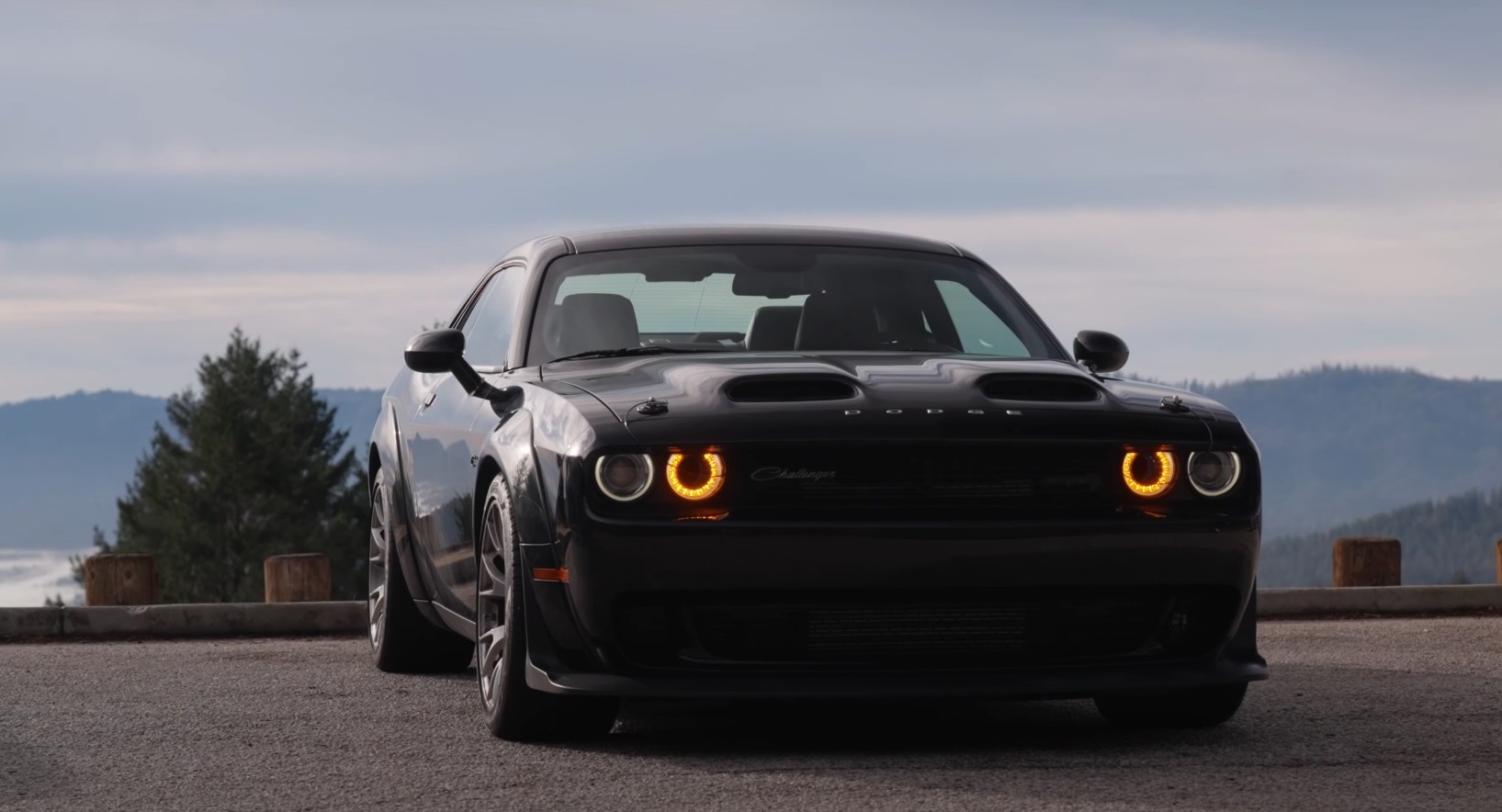
Few names command as much respect and evoke as much nostalgia as the Dodge Challenger. Born in 2008 amidst a landscape of shifting trends and evolving tastes, the Challenger emerged as a beacon of unapologetic power and timeless style.
From its inception, the Challenger captivated enthusiasts with its bold aesthetics and thunderous roar. With each passing year, Dodge unleashed new iterations, each more outrageous than the last. From the 425-horsepower SRT8 to the awe-inspiring Hellcat and Demon variants, the Challenger cemented its status as a legend in the automotive world.
As Dodge recently announced the end of production for this iconic muscle car, we now get to see what the company calls as the Last Call models one of which is the Challenger Black Ghost, a special-edition model that pays homage to the 1970 Dodge Challenger R/T SE owned by a Detroit police officer in the ’70s that became infamous for its street racing prowess.
The modern Black Ghost gets a supercharged 6.2-liter V8 with 807 horsepower and 707 pound-feet of torque. An eight-speed automatic transmission sends the power to the rear wheels, propelling the Challenger to 60 miles per hour in 4.6 seconds while covering a quarter-mile in 12.4 seconds at 121.2 mph.
Ollie Kew from Top Gear got the privilege to drive the Black Ghost and reflect on the remarkable journey and enduring legacy of the Dodge Challenger as it fades into the sunset.
For many years, the Swedish gambling market was characterized by a large demand and many restrictions that limited the supply. Many Swedes nowadays enjoy playing various casino games in their spare time. Since the late 1990s, there have been four land-based casinos in Sweden.
However, one casino hall closed a few years ago and two others currently face closure. This would potentially leave the Swedish market with only one single land-based casino – Casino Cosmopol in Stockholm’s capital.
Why are Swedish land-based casinos facing closure when gambling has become such a popular activity in Sweden?
Find out below as we take a closer look at the iconic Casino Cosmopol and its challenges in the Swedish gambling market.
Introducing Casino Cosmopol
The state authority Svenska Spel (Swedish Games) decided in 1999 to open 4 Casino Cosmopol gambling venues in Stockholm, Gothenburg, Sundsvall, and Malmö. Casino Cosmopol quickly established itself as a popular venue that effortlessly combined Swedish elegance and style.
The visually stunning casino venues were complemented by the inclusion of trendy restaurants and pubs as extra components of entertainment.
However, only four land-based casinos are a remarkably low number of gambling venues given the popularity of gambling among Swedes and the comparatively large geographic distances in Sweden, which extends more than 1000 miles from south to north.
However, Casino Cosmopol in Sundsvall closed in 2020 due to low profitability. In January 2024, Svenska Spel announced that it also intends to close the casino venues in Gothenburg and Malmö due to sluggish profitability.
Poker tables at the Casino Cosmopol in Stockholm, Sweden.
Swedish Land-Based Casinos: Mainly a Weekend Activity
The Casino Cosmopol venues were originally meant to be open throughout the week. However, the casino management increasingly discovered that the revenue from visiting clients was mainly concentrated to the weekends.
Due to local cultural and social factors, visiting gambling venues in Sweden is mainly viewed as an activity on the weekend. This gradually forced the iconic casino to limit its weekend opening hours. This further reinforced the trend of limited accessibility.
Playing cards in Stockholm
Online Casinos Dominate the Swedish Market
Even at its peak, Casino Cosmopol only had four physical venues, even though Sweden is geographically larger than the UK and Germany. The large geographic distances meant that many Swedish gambling fans could not visit the few available land-based venues.
The decline of Swedish land-based gambling venues is mainly attributed to the rise of high-quality online casinos that became available in the past two decades. The number of online gambling sites has exploded in recent years. Researching and comparing differences between various sites can be a quite time-consuming endeavor. A far easier way for casino fans is to choose from a list of online casinos recommended by experts. This is a time-efficient way to quickly find a quality gambling site.
Online Gambling Sites are Accessible 24/7
Land-based casinos in Sweden and elsewhere often have limited opening hours. By contrast, online gambling sites offer almost limitless accessibility 24/7 to any player above the legal age of 18. While Casino Cosmopol Stockholm mainly serves clients in the Swedish capital metropolis area, online casinos are available for virtually all Swedish gambling fans with an Internet connection.
Mobile Casinos Offer Convenient Smartphone Entertainment
Mobile casinos have emerged in tandem with the explosion of the smartphone market. The Swedish tech-savvy market was early to embrace this technological trend.
Mobile casinos have greatly democratized the gambling market and made casino games available 24/7. Furthermore, mobile casinos enable Swedes to enjoy casino entertainment regardless of whether they happen to be home or during travels.
Large and Varied Online Entertainment
The online casino market offers a far larger and more varied entertainment range than even the largest land-based casinos cannot match. There are today literally thousands of casino games available online, such as slots, poker, jackpots and blackjack.
This is particularly true for slot games that are easy to play and come with so many themes that are compatible with the preferences of most players.
Online Casinos Offer Various Bonus Promotions
Many online casinos have resulted in stiff competition in the digital gambling market. Consequently, many online casinos have devoted considerable resources and effort to offering various bonus promotions not available in land-based gambling venues such as Casino Cosmopol.
These online bonuses are usually offered to clients who make a deposit.
The most common bonus types are:
Welcome bonus – designed to attract new clients
Reload bonus – similar to welcome bonus and offered to existing customers
VIP offers – exclusive bonus only offered to VIP players
Free spin bonus – offers extra spins while laying slot games
No Deposit bonus – bonus that is offered without any deposit requirement
Free Online Casino Entertainment
Most serious gambling sites offer free-play game options. This enables beginners to try out different casino games for free before making any deposit. This is an advantage compared to land-based casinos, which do not offer any free entertainment.
The free-play gaming option is also attractive for individuals who mainly view casino games as entertainment without expecting to win real money.
Swedish Online Casinos Offer Safe Entertainment
In January 2019, Sweden passed a new casino legislation that focuses on safe and responsible gaming. Swedish casino licenses are only awarded to gambling sites that live up to high-quality requirements. This includes a strong focus on responsible gaming.
Swedish online casinos are therefore legally required to offer deposit and loss limit tools that reduce the risk of unhealthy gambling habits. In addition, online casinos offer secure and user-friendly payment options such as credit cards and electronic wallets.
As an extra bonus, all profits from Swedish online casinos are 100% tax-free for Swedish players.
In sum, Swedish online casinos offer a safe and seamless entertainment experience around the clock. Established online casinos also offer qualified customer support that is usually available 24/7 via convenient live chat functions.
Gambling Sites Emulate Land-Based Casinos
Online casinos have become more sophisticated and increasingly emulate land-based casino experiences. For example, live casinos online with real dealers offer a Las Vegas experience to anyone with an Internet connection.
The growing inclusion of virtual reality (VR) and augmented reality (AR) technologies has further closed the gambling experience gap between online casinos and land-based casinos.
Could Casino Cosmopol be the Last Land-Based Casino in Sweden?
Casino Cosmopol in Stockholm could soon become the only land-based casino in Sweden. Decreasing profitability and the rise of online casinos have led to the decline of traditional casino halls in Sweden. Online casinos offer unparalleled access 24/7 and flexibility through mobile devices.
Furthermore, online casinos offer various bonus promotions, vast entertainment, including free-play options and a safe gambling environment.
I’m sure you’ve had similar experiences I had whilst traveling. You’re in a certain place and a fellow traveler, or a local, tip you off on a little-known beach, bar or accommodation. Great travel tips from other travelers or locals always add something special to our travels. That was the inspiration for Travel Dudes.
Is this Water Damage on our Living Room Slide Covered?
RV Water Damage is a scary thought, especially if you are full time in your RV like we are. After watching the news about Hurricane’s crippling Florida it got us thinking about Water Damage.
Hurricane Sandy took our home in New Jersey back in 2012. We also had friends and family in Florida that suffered severe water damage from Hurricane Ian. We know first hand the destruction a Hurricane can produce.
But not all water damage is from Hurricane’s. Sometimes it’s a broken Hot Water Heater, or a burst pipe. What about a leaky roof? Fittings come loose all the time while you are driving down the road.
Or even a human error like connecting your fresh water line to the black tank flush! So we called our insurance agent and asked a lot of questions. Questions that we probably should have asked before we started this adventure. Now we’d like to share that information with you.
Comprehensive Coverage
Under your insurance policy is a subheading called Comprehensive. The comprehensive portion of your policy is what covers the cost of repairs and replacement for damage from a non-collision incident. So, this is where coverage comes from for hurricane’s. Because it isn’t a collision, but is an incident, your insurance company should cover it. This will include any water damage caused by said hurricane.
Other examples of things covered under this portion of your policy are theft, or vandalism. But we’re focusing on water damage. If there is an non-collision incident that has caused your water damage, it will be covered under the comprehensive portion of your policy. If a deer decides to have a fight with your camper and stabs his antler into your hot water heater, it would covered here.
Collision Coverage
Unlike the Comprehensive coverage, this is specific to collision incidents. Obviously, accidents happen. Unfortunately, we see them on the road all too often. Having collision coverage is required if your RV is financed. But it’s also where the money will come from for any repairs that needed from an accident. At the same time, there are some collision incidents that would cover water damage on your RV.
If you damaged a slide when you accidently hit a tree backing into your site, water could potentially start coming in through the seals. Because this incident happened while you were driving and a collision occurred, this should be covered by your collision policy.
Slider Seal Conditioner
RV Water Damage From Other Issues
Alright, so we’ve covered comprehensive and collision water damage. But what about when the water damage is from a burst pipe? How about if your roof starts leaking? Our insurance representative told us NO. These are not things that are covered. We have a Full Time RV Policy with Progressive Insurance. When you own a home, you can purchase Flood Insurance to cover these items. But when we asked if we could purchase Flood Insurance for our RV, we were also told No. Even though it’s our home.
Here’s the thing… Purchasing flood insurance for a home is easier. The insurance company brings up the FEMA map for flood risk in your area and quotes you a price. However, your RV is mobile. Because the insurance company can’t determine the risk factor they won’t write you a policy. You could literally bring your RV anywhere. Even though a burst pipe would be covered under a Flood Insurance policy, it covers more than just burst pipes.
What Can You Do?
To our knowledge, there is nothing you are going to be able to do to have these types of water damage covered by your insurance carrier. If your RV is still under any kind of warranty, and the damage is due to a defect, it may be covered there. Unfortunately, our human error situations, like connecting your fresh water to the wrong place, isn’t covered. However, you should check out my article on Warranty vs Insurance because even your warranty coverage may deny it.
RV Roof Sealant
The bottom line is you need to do everything possible in the preventative maintenance department. You should have a heated hose or heat tape connected to your spigot. Or disconnect your hose on cold nights. Flush your hot water heater regularly. Clean your refrigerator periodically to prevent ice build up. Check and maintain your roof religiously. All of these things are important. Especially if your rig is a little older. Water damage is a bitch. Doing risk mitigation will save you money for those non-covered emergencies.
Write to us and please let us know if you have had any experience with these issues being covered by your insurance carrier.
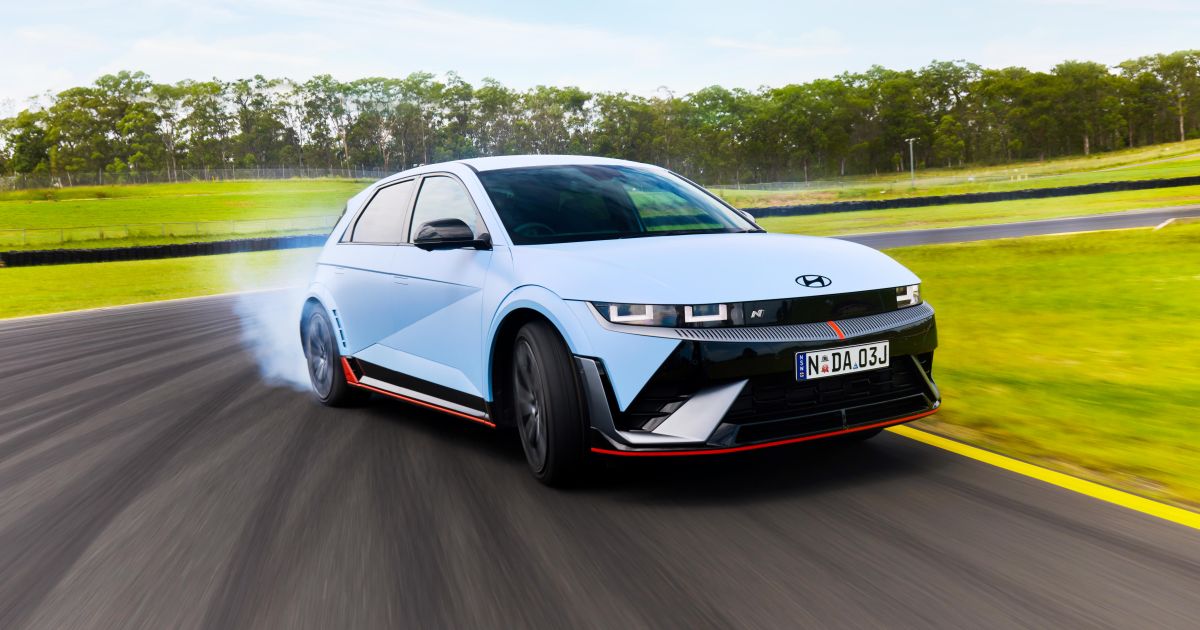
Hyundai’s go-fast N products have made a name for themselves being fast, fun and attainable.
But when you throw the 2024 Hyundai Ioniq 5 N into the mix – priced from an eye-watering $111,000 before on-roads – the attainable part of that recipe is thrown out the window for a lot of people.
So what’s its purpose? Well, for starters it’s the first all-electric Hyundai N car. And, it’s a proper showcase of what the brand’s engineers can do with the Hyundai Group’s E-GMP dedicated electric architecture and componentry.
The Ioniq 5 N is like no other production Hyundai before it, either. Zero to 100km/h takes just 3.4 seconds in its most aggressive N Grin Boost setting, and top speed is rated at 260km/h. Even more, it boasts a whopping 478kW and 770Nm.
That’s even more than Kia’s manic EV6 GT, which is based on the same underpinnings – Kia’s version offers 430kW and 740Nm, which is just under the Ioniq 5 N’s outputs when it’s not in N Grin Boost mode. Beyond its straight-line performance, the Ioniq 5 N is also making bold claims about track ability which is a key pillar of the N brand.
So to test the company’s claims, we attended the Australian media launch in New South Wales, testing Hyundai’s new flagship on road and on track. How did it fare? Read on to find out.
How does the Hyundai Ioniq 5 compare?
View a detailed breakdown of the Hyundai Ioniq 5 against similarly sized vehicles.
Hyundai
Ioniq 5
How much does the Hyundai Ioniq 5 N cost?
The Ioniq 5 N sits at the top of the tree, commanding a near $30,000 premium over the next most expensive variant.
2024 Hyundai Ioniq 5 pricing:
2024 Hyundai Ioniq 5 Standard Range RWD
2024 Hyundai Ioniq 5 Extended Range RWD
Base: $71,000 (+$500)
Dynamiq: $76,000
Epiq: $79,500
2024 Hyundai Ioniq 5 Extended Range AWD
Dynamiq: $80,500
Epiq: $84,000
2024 Hyundai Ioniq 5 N: $111,000
Price excludes on-road costs
To see how the Ioniq 5 shapes up against its rivals, check out our comparisons tool.
What is the Hyundai Ioniq 5 N like on the inside?
The revised interior of the Ioniq 5 N previews upcoming revisions for the standard car – as revealed earlier this week.
Compared to the standard Ioniq 5, the N has a more conventional dashboard and console design and also debuts the Hyundai-Kia ccNC dual 12.3-inch displays for the driver’s cluster and infotainment system.
This means there’s the latest generation of Bluelink connected and remote services, wireless Apple CarPlay and Android Auto, as well as the latest UX design which has been seen in the likes of the Kona and Kia Sorento.
It’s a great system with net-based satellite navigation to bolster available mapping from a connected smartphone, as well as over-the-air (OTA) software updates and a cleaner and more upmarket interface.
The Ioniq 5 N also features the first N instrument cluster layout in the brand’s electric range, and the configurable central tacho dial looks really cool, almost Lamborghini like. I much prefer virtual gauges as opposed to the line bar displays in earlier E-GMP products.
Up front there are N Light bucket seats which look and feel racy thanks to their integrated headrests and illuminated N logos, as well as the combination leather and Alcantara trim.
Even better, the front seats are heated and ventilated with three-stage controls. That certainly makes up for the manual adjustment, which while not an issue for me is a sticking point for some expecting some more luxuries.
There’s otherwise heaps of storage even with the removal of a movable centre console, including a gripped open smartphone charging slot and plenty of nooks and crannies to keep your trinkets secure when having a crack.
You also get USB-C charging ports now, which are faster charging than the USB-A ones in the pre-update Ioniq 5 currently on sale. You can use smartphone mirroring via cable if you wish, too.
Despite the N’s driver focus, the rear seat remains a practical space if you have some co-drivers coming with you for a spirited blat.
Head and leg room are still very good for taller adults like 6’1 me (the massive 3000mm wheelbase will do that) though the sporty front seats will obstruct forward view for your rear passengers – something to note if you have nausea-prone kiddies.
Speaking of the kiddies, the Ioniq 5 N retains its outboard ISOFIX anchors and top tether points, meaning this track-capable electric express can also ferry around your precious little ones.
Other amenities include pillar-mounted rear air vents, a fold-down centre armrest with cupholders, bottle holders in the doors, and even a vehicle-to-load (V2L) connector with domestic three-pin outlet under the rear seat.
The Ioniq 5 N offers 480 litres of cargo volume with the rear seats in place, expanding to 1362L with them folded. That’s just under 50L less than non-N versions, and there’s no additional ‘frunk’ storage like other variants.
Like most EVs, the Ioniq 5 N makes do with a tyre mobility kit in lieu of a space saver spare.
What’s under the bonnet?
The Ioniq 5 N is packing some serious e-firepower.
Model
Ioniq 5 N
Front electric motor power
166kW (175kW with N Grin Boost)
Front electric motor torque
350Nm (370Nm with N Grin Boost)
Rear electric motor power
282kW (370kW with N Grin Boost)
Rear electric motor torque
390Nm (400Nm with N Grin Boost)
System power
448kW (478kW with N Grin Boost)
System torque
740Nm (770Nm with N Grin Boost)
Battery
84kWh li-ion
Driven Wheels
All-wheel drive
Range (claimed)
448km (WLTP)
0-100km/h sprint time
3.5 seconds (3.4s with N Grin Boost)
Top Speed
260km/h
Weight
2230kg (tare)
Energy consumption (claimed)
21.2kWh/100km
How does the Hyundai Ioniq 5 N drive?
Day one was on-road, so let’s start with that.
Leaving our hotel in Blacktown, NSW, firing up the Ioniq 5 N with its synthesised engine sounds was laughter-inducing. A whole line of these things suddenly started a chorus of fake revs to the redline.
There are eight interior speakers and two exterior ones to play the sounds, which makes it more than just an in-car experience. You can choose from three profiles as well, ranging from an airy jet fighter-like sound to a note that’s modelled off the i30 N’s vocal turbocharged petrol engine.
I know it sounds stupid, but it’s a charming detail that you have to experience to appreciate. Silence is apart of the EV experience, yes, but that doesn’t mean petrol heads converting to electric power don’t want some aural drama.
For some this may still be a gimmick, but props to Hyundai for trying something different – there’s more we’ll get onto in a bit.
Our road drive took us through Blacktown and out towards Laguna in regional NSW. We drove through suburban environments, freeways, B-roads and the like.
I was so enamoured by the N Custom mode with its simulated gearshifts, engine revs and engine sound that I did the bulk of my drive in this mode. You can ask my co-driver, I couldn’t wipe the smile off my face.
Performance is plentiful as you’d expect, with 740Nm at your disposal from standstill. For reference, that’s the sort of twist you get out of a twin-turbo Mercedes-AMG V8.
It fires off the line if you stab the throttle, pinning you in your seat and you can almost feel your stomach hit your throat. You’ll beat just about any other car in the traffic light drag race – unless you come up against a hypercar.
You don’t really need this kind of performance in everyday scenarios, but the inner boy racer in me definitely enjoyed zipping through urban streets and roundabouts.
If this firmer N Mode settings get a bit bouncy and the augmented drivetrain sounds droney, then you can par it all back by pressing the steering-mounted drive mode button into Eco or Normal modes and drive this like any other Hyundai Ioniq 5.
At a cruise in town or on the highway, the electric N quietly scoots along and still retains a swift level of performance for overtaking or zipping out from a slip lane. Road and wind noise are fairly well suppressed but those grippy Pirelli P Zero sports tyres – specifically developed for this car, mind you – can produce a bit of road roar on coarser blacktop.
Each mode sees adjustments to the suspension, throttle and steering calibrations too, ranging from firm to light and assisted. It’s never too loose or too harsh in my opinion, even in N mode, but the wide range of adjustability is something we celebrate about VW Group products, for example.
I did find the Highway Driving Assist (HDA) system would make the odd error during our stint on the Pacific Highway, at one point drifting into the next lane on a curve that really wasn’t all that sharp. It’s not something I experienced in the Kia EV9 or the Genesis G70 Shooting Brake, so it could be an isolated incident.
Once we hit the winding back roads towards Laguna, I was able to test out the Ioniq 5 N’s hillclimb capabilities.
The high-speed and twisty roads into the hills are the Ioniq 5 N’s hunting ground. It gives it plenty of space to stretch its legs, and there’s so much grip that you can corner with confidence in this 2230kg (tare) hulking beast.
With a torque vectoring function up front and an electronic limited slip differential (E-LSD) at the rear, the Ioniq 5 N turns in quickly and neatly, then blasts you out of corners with its mighty dual-motor drivetrian.
Really, it’s quicker than you’re able to utilise legally on Australian public roads – blink and you’ve eclipsed 100km/h.
I used the B-road blat as an opportunity to really try out the N e-Shift function in performance driving, which simulates the shifts of the brand’s eight-speed DCT used in the i30 N.
This adds a more conventional point of engagement with the vehicle, and the way it jolts between shifts is really convincing to the point you might occasionally forget you’re driving an EV. If there was a criticism, that feeling of engine braking as you downshift wasn’t really replicated – but this is a fairly small thing.
It’s otherwise really good fun to rifle through the gears and watch the virtual tacho needle swing towards the fantasy redline. There are even shift light, audible pops and cracks on upshifts and overrun – it’s just silly, but in the best way.
Even set to its harshest setup, the Ioniq 5 N never felt too firm on the poorer surfaces of the Great North Road, and strikes the same sort of delicate balance you’d expect of a benchmark performance model. Comparisons to the likes of the Audi e-tron GT and Porsche Taycan were thrown around by journalists on the event, and that’s a massive compliment.
Only if you came in too hot could you really feel all of the Ioniq 5 N’s heft, as a sudden correction or change of direction would cause it to shift quite noticeably and upset the balance somewhat. Even then, it’s very impressive for what it is.
Day two was all about the track – so we headed to Eastern Creek Raceway at Sydney Motorsport Park.
Uninhibited by public speed limits, the circuit setting gave us the chance to fully unleash the Ioniq 5 N. We used the GP Circuit, which is a 3.93km route that includes long straights, sweeping curves and some tighter hairpins.
After getting some pointers from Hyundai’s TCR champion, Josh Buchan, I had a proper crack at a series of laps. This thing really flies, only starting to run out of momentum as you see the speedo eclipse 215km/h on the main straight.
It holds on admirably through higher speed corners, though on the odd occasion you can feel its weight illicit some understeer, and if you hit the throttle hard too early out of an apex the back might kick out.
Even so, it’s all very controllable and even for someone not a seasoned track driver like myself, the Ioniq 5 N instills a lot of confidence to push on and wring its neck – it basically begs you for it.
I didn’t try out the N Drift Optimiser, which manages torque distribution to maintain the perfect sideways slide. Nor did I try out the Left Foot Braking or N Pedal functions, the latter offering one-pedal driving for “pro driver style weight transfer and turn in”
Even after numerous track sessions – which were one out lap, two or three hot laps, then one in lap – the brakes didn’t appear to fade noticeably – those beefy 400mm front rotors with four-piston calipers and 360mm rears are pretty beefy, mind you. The P Zero tyres also held up very well for grip. I did hear, though, that a drift session the previous day for B-roll had chewed up a set of rears pretty quickly.
But really props to Hyundai for coming up with an electric performance car that emulates a combustion engined performance and track experience in a way that’s fun and objectively capable. The brand’s reps openly said their N cars are more about fun and smiles than outright lap times, and this definitely achieves that.
It makes me wonder if a future Hyundai N EV that’s a little smaller and lighter could make it to production, it would be almost unstoppable with all the Ioniq 5 N’s cool gadgetry on board. Even a lower and sleeker Ioniq 6 N could be a more focused weapon – and the RN22e rolling lab concept is proof something like that is well on the way.
What do you get?
Ioniq 5 N highlights:
275/31 R21 Pirelli P Zero HN tyres
21-inch forged wheels with aero inserts
400mm ventilated front rotors with N brake calipers
360mm ventilated rear rotors
Electronic Control Suspension (ECS)
Electronic limited-slip differential (E-LSD)
Launch control
Keyless entry, start
Power tailgate
Rear privacy glass
Rain-sensing wipers
Heated, power-folding mirrors
LED headlights
Automatic high-beam
Remote Smart Parking Assistant 2
Semi-automatic parking, controlled via key fob
12.3-inch digital instrument cluster
12.3-inch touchscreen infotainment system
Wireless Apple CarPlay, Android Auto
Satellite navigation
Bluelink connected services
Alcantara and leather upholstery
N Light Seats with manual adjustment
Heated front seats
Ventilated front seats
Metal pedals
Metal scuff plates
Ambient lighting
8-speaker Bose sound system
Head-up display
Wireless phone charger
USB-C charging ports
Digital rear-view mirror incl. electrochromic function
Dual-zone climate control
Heat pump
A Vision Roof – or fixed panoramic glass roof – is a $2000 option.
Is the Hyundai Ioniq 5 N safe?
While the standard Hyundai Ioniq 5 has a five-star ANCAP safety rating, the N is unrated for now.
The Ioniq 5 N is backed by a five-year, unlimited-kilometre vehicle warranty and an eight-year, 160,000km battery warranty.
Servicing is required every 24 months or 30,000km, whichever comes first. The first three services are capped at $625 each.
While we didn’t do a proper range and charging test on the launch, and therefore unable to give you real-world efficiency figures and range projections, using this car in the intended way will make it hard to hit that 448km claim.
That said, we were seeing low to mid-20kWh/100km from the trip computer during more sedate sections of driving, making Hyundai’s 21.2kWh efficiency claim seem accurate.
Further, the company claims the Ioniq 5 N’s larger 84kWh lithium-ion battery can be charged from 10 to 80 per cent in around 70 minutes with a 50kW DC charger, or 18 minutes at its maximum 350kW rate. At 7kW via AC charging, you’re looking at 10 hours 50 minutes.
CarExpert’s Take on the Hyundai Ioniq 5 N
I thought the EV6 GT was great, but this is on another level.
Hyundai N’s three pillars are Corner Rascal, Racetrack Capability and Everyday Sportscar. Just like the i20 N, i30 N and Kona N before it, the Ioniq 5 N delivers.
You probably won’t be beating a Porsche Taycan Turbo’s lap time, nor will it substitute for a similarly priced track-capable ICE in terms of pure engagement and noise; but far out, the Koreans have done a bloody good job.
I can imagine in a world where ICE for the masses is long gone, it’ll be cars like the Ioniq 5 N that will be a beautiful throwback to what performance motoring was like “back in my day”.
Even today, in 2024, it’s proof that petrol heads don’t need to be afraid about electric cars or the combustion engine and fossil fuels one day becoming the minority – or even extinct. I didn’t want to stop driving this thing, whether we were on the road or on the track.
It’s a great evolution of the ‘hot hatch’ formula, even if it’s more of a crossover. It’s silly fast and fun to drive, comfortable and practical enough to daily, while offering zero local emissions, usable driving range (if with a measured right foot), as well as fast to charge.
There’s also so much customisation on offer, moreso than any other N before it. It really allows you to make your car your own, as well as offer that Jekyll and Hyde split personality that great hot hatches are loved for. The options are almost limitless.
If it means anything, I would really consider one if I had the cash. Few electric cars have made made me feel like this one has.
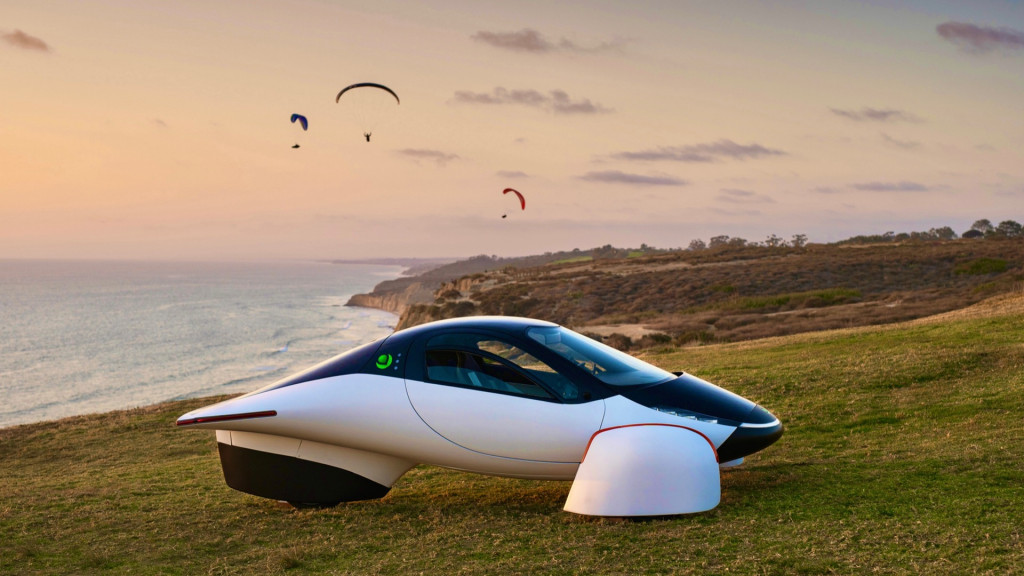
Startup vehicle maker Aptera said it has begun production-intent builds on the body for its three-wheel solar EV, although the timeline for actual deliveries might not be quite as bright as it sounds
In a video address accompanying the update, CEO Steve Fambro noted that Aptera chose Italy’s CPC Group for its “incredible ability” to stand up a carbon-fiber body production line in as little as nine months after reaching funding goals.
Then it said something surprising: It’s still not there.
“The start of production for Launch Edition vehicles requires additional capital, and we plan to share delivery timeline details as soon as we can,” explained Fambro.
That appears to contradict what the company had said earlier in February, when it clearly laid out that the completion of its Accelerator Program, a type of crowdfunding that also assured one of the first 2,000 build slots for the vehicle, would be enough to “fund the initial phases of production.”
Aptera Launch Edition core specs
No Aptera deliveries in 2024?
Putting those pieces together, Aptera effectively announced that it won’t produce its vehicles in 2024. That pushes back a production start once again, this time likely into 2025.
Green Car Reports reached out to Aptera after the update and hasn’t yet heard back, but will update this story with more precise information from Aptera if this update language has been misread.
Aptera announced the agreement with Italy’s CPC Group in November 2022 and in January 2023 revealed the initial Launch Edition version of the EV. By October 2023 it reported that with some manufacturing equipment acquired, it was getting closer to production.
Aptera Sol alpha prototype
Aptera design changes coming
The company’s update also noted that some vehicle design changes are coming. “Leading up to the start of production, we will continue to refine our vehicle design to ensure efficiency and cost-effectiveness,” the company said.
“We want you to know that changes to our vehicle design are taken very seriously, and only made if they require significantly less capital, including research and development and tooling cost,” explained Fambro. “A production plan that requires less capital reduces risk for our shareholders and allows Aptera to get to market more quickly. Once updated supply agreements are inked, we will share more information.”
Aptera app – solar charging
Tracking solar miles via Aptera app
In an update last week, Aptera also provided a first look at its owner app, which will allow drivers to precondition the cabin. It also allows drivers to see the solar output of their vehicle while they’re away from it.
Korean battery partner CTNS has made sample battery modules, with a first run of production-intent battery packs yet to come. The firm also said that it will provide more information on the battery management soon.
At CPC in Italy they’re working on assembling chassis and suspension components with assembly jigs. Eventually high-volume robots will support automated assembly.
Aptera crash modeling 1
Aptera crash modeling 2
It also teased, for the first time, a crash simulation for the body structure and said it can’t wait to compare them to the production-intent build.
The Launch Edition was revealed in January 2023 with a 4.0-second 0-60 mph acceleration, a 42-kwh battery pack that would provide a range of up to 400 miles, and a solar system that can provide 700 watts of continuous power good for 40 miles of range per day, according to the company. Aptera announced its use of the Tesla NACS port even before last year’s wave of American-market EV brands switching charging standards.
Some very fast EV chargers land in the middle of Manhattan. Aptera once again says it needs more money. And raw materials and innovation could lead to a plunge in EV battery prices—and EV prices—analysts predict. This and more, here at Green Car Reports.
EV battery prices are due to drop dramatically this year and next, according to a new analysis from Goldman Sachs. Much of that 40% EV battery cost drop could carry over to pricing—leading to price parity with gasoline models sooner, without subsidies.
A New York–based EV charging startup called Gravity claims to be rolling out the fastest EV chargers in the U.S. The new network claims greater charging power at the connector than Tesla Superchargers, and it says its DC hardware is bidirectional-charging-ready and takes up the space of a Level 2 AC charger. And its first location in Manhattan is managed so as not to require grid upgrades for the 24-stall installation.
According to its latest update, the startup vehicle maker Aptera revealed it still needs additional capital to start production of its solar EV—even the Launch Edition model. That appears to contradict what the company said earlier in February, when it declared its latest crowdfunding run would assure enough to “fund the initial phases of production,” and it likely pushes the arrival date of the vehicle into 2025.
In late February this year, Volvo Car Malaysia (VCM) updated the C40 Recharge for the 2024 model year, which sees improvements to the electric vehicle’s powertrain as well as kit list. Pricing for the locally-assembled (CKD) SUV remains the same at RM288,888 on-the-road without insurance, but if you order a C40 by March 31, 2024, you’ll get to enjoy a RM10,000 rebate.
As far as improvements go, the 2024 C40 now offers 100 km more range than before at 550 km following the WLTP standard. This is thanks to a new battery with an increased gross energy capacity of 82 kWh (79 kWh usable), which is an upgrade from the previous 78 kWh (75 kWh usable). The maximum DC fast charging capacity also gets a bump to 200 kW from 150 kW that enables the battery to get from a 10-80% state of charge in just 27 minutes.
The revised C40 continues have a dual-motor setup, but the electric motor on the front axle is now rated at 159 PS (157 hp or 117 kW) while the rear unit outputs 249 PS (245 hp or 183 kW) – this should promote a more rear-biased handling balance. With this configuration, the total system output is 408 PS (402 hp or 300 kW) and 670 Nm of torque, the latter being 10 Nm more than before, although the 0-100 km/h time remains unchanged at 4.7 seconds.
Other new items for 2024 include 19-inch aero-optimised five-spoke black diamond cut alloy wheels as well as Pixel LED headlamps with matrix technology (each cluster has 84 individual LEDs) and an adaptive high beam function – this replaces the previous reflector LEDs.
The C40 is offered in five colours, with Vapour Grey joining the existing Onyx Black, Crystal White, Fjord Blue and Sage Green. With each purchase, you’ll get a complimentary five-year Digital Services subscription for access to Google Assistant, Google Maps, Google Play Store and Volvo Cars app remote functions. Also included are a five-year, unlimited-mileage warranty; an eight-year/160,000-km battery warranty; a five-year/100,000 km free service package and five years of roadside assistance.
This is a story that was a long time coming… In fact, it comes all the way from TAG Heuer maybe 10 years ago. While various titles in the group have indeed scored interviews with Bulgari CEO Jean-Christophe Babin since 2013, WOW has not got one since at least 2016 (at least not in the era of this editor, who never had one in any of his previous roles and companies – Ed). Given that WOW has recently managed to interview the CEO of every LVMH watchmaking brand (from Hublot to TAG Heuer), it was particularly galling that Babin eluded us. Well, no more because we finally did it and thus achieved the LVMH Grand Slam of CEO interviews.
Seriously though, Babin represents one of the last of the old-school watch and jewellery bosses, yet is not at all married to tradition. Indeed, he often zigs when you think he will zag, as they say. We, and no doubt you too, recall very well when Babin announced Bulgari’s ultra-thin watch challenge in BaselWorld, probably in 2013 or 2014. It was a deeply astonishing move from a man who had only just moved over from TAG Heuer, where he had been CEO since 2000. The seeds for this had already been laid at the brand he would lead from then right up to the present because the Octo Finissimo had debuted in 2012 and the Serpenti was already successful. On the boldest frontier yet, Bulgari had already jumped into home furnishing and the hospitality business by Babin’s era.
Octo Finissino CarbonGold Automatic
Born in France but described consistently (by his own team and himself) as Italian at heart, Babin differs from his peers in that he never inserts himself into the conversation. That is true from the design language down to communication about the brand’s identity; Babin is pretty clear about what he wants for Bulgari (one consistent identity across all the areas it operates in) and he knows he has the right team to deliver. In fact, the team he built at Bulgari is what he cites first when asked about his legacy – he singles out Vice President for Marketing and Communications Laura Burdese in particular because she helps him with what Bulgari calls One-Brand Elevation, which is that aforementioned strategy of keeping the brand consistent in all areas.
As a veteran of the trade, Babin does speak his mind – unlike many Swiss brand executives, he can and does regularly mention his competition by name, right down to the product level. All of this is on the record, of course, as you will see. Babin is also unafraid to make bold claims – boldness is central to the Italian identity of Bulgari after all. When he initially lauded the ultra-thin achievements of Bulgari in watchmaking, he was taking the fight to some pretty big players and Bulgari had no experience in this arena. The results speak for themselves there, although Babin is adamant that the idea was not really to have a go at world records or grab headlines.
With that, we will let Babin take it away, with a salvo fired almost from the start…
Creating the Serpenti Misteriosi, which is one version of the most wearble and popular Bulgari collections, The Serpenti
How was Geneva Watch Days for you?
As you know, this is the fourth Geneva Watch Days in a row. We started during (the COVID-19 pandemic lockdown) because we felt the need for a show to replace BaselWorld (now defunct) and SIHH (now Watches and Wonders, and transformed that year into a digital-only event). Geneva Watch Days was the first physical event for the watch and jewellery trade that year (although the larger component was likely still the digital version because people still could not travel).
And this year, it is bigger than ever with 40 brands; this is a large number of brands for a new show! Not only do we have the support of Geneva (the city and the Canton), but we now have the full support of the FHH on the ground the FHH is the organiser of Watches and Wonders – Ed. So more than ever, we are the official Geneva watch fair! And it is not even just a watch fair any longer; it has become a watch forum. By that, I mean that part of the entire fair is dedicated by the brands to forums and symposiums. Yes, the brands are here to introduce novelties but a huge amount of time is also (invested) in communicating (in the format of a forum, panel discussion and so on). Bulgari had a great symposium with Wei Koh (of Revolution) on the topic of brand builders. I participated in another one with Georges Kern (of Breitling) and Max Busser (of MB&F) on the future of retail. So, there are a lot of activities at Geneva Watch Days, not forgetting also an auction to benefit the Geneva watchmaking school.
I mentioned 40 brands earlier but really there are many more taking advantage of this big gathering (of ours) to organise their own events. There are probably another 20 to 25 (non-exhibitors) organising such events (during Geneva Watch Days), and this makes it one of the most important watch fairs on the global calendar.
So Geneva Watch Days is here to stay then…
Well, you know, I was at BaselWorld for many, many years – first with TAG Heuer and then with Bulgari. I visited the SIHH in Geneva virtually every year too, driven by curiosity. At the end of the day, even before things came to a head, I was very skeptical of the formats and concepts of those fairs but not because I do not like or believe in watch fairs (per se). So, 30 to 40 years ago, the approach was very clear and logical. With advancing technology; evolving consumptions habits; new clients (of different markets and types); and digital media consumption, it was all getting a bit old fashioned… not to mention prohibitively expensive.
So I was planning to withdraw from BaselWorld anyway and then came COVID-19, which accelerated things; since I did not like the historical format of the fairs, some friends and I who shared the same vision decided to start something new. Without COVID, we would have started this anyway, maybe in 2021 or 2022, but (like I said, things got accelerated). It was the worst possible time…there were lockdowns…we had to move the date three times… But in the end, in August of 2020, we made it (even though the world was far from back to normal).
It was a success, confirming that our philosophy and the pillars of our new concept were much more in tune with time than (the old fairs), and this is why Watches and Wonders does not like us so much… Obviously it is always painful to see a small group of medium sized brands organizing a fair quite easily for very little cost while getting the support of authorities who never gave their support to the bigger conventional fairs that are very costly…
Babin with his watchmaking executive team, Fabrizio Buonamassa, Product Creation Executive Director, and Antoine Pin, Managing Director
Things have changed a lot in watchmaking over the course of your career. How have things changed for you personally, from your time at TAG Heuer to your present role in Bulgari?
First of all, Bulgari is like a group, you know, because we are operating in many different areas. Bulgari is a small luxury group compared with LVMH, of course, to which we belong, but we are operating in jewelry, in watches, in hospitality, in fragrances, in accessories, in bags… TAG Heuer is primarily a watchmaker, although it was obviously successful in eyewear too. We made some inroads into luxury mobile phones but TAG Heuer was and is a watchmaker. Forever.
So, the first difference is that I have to be much more agile, mentally, to switch from one category to another. This is because Bulgari is competing against different brands in different categories. This competition is driven by different factors; client expectations are different from category to category and therefore I need the agility to jump from the one to the other while keeping a very strict frame (of reference encompassing all aspects) so that eventually for the client, there is one brand only, even though it is in multiple categories. To achieve this, I have defined – in a very explicit way – that Bulgari is primarily a magnificent Roman jeweller, and that everything else we would do would be connected to being Roman and being a jeweller.
Creating the Serpenti Misteriosi, which is one version of the most wearble and popular Bulgari collections, The Serpenti
This means that we are the Roman jeweler of time; the Roman jeweller of precious skins; of olfactive emotions (for fragrances); and of hospitality for the hotels (and so on). So everything is done with the same obsessive attention for perfection, for beauty, for detail, for excellence of ideals. This is the thread (connecting all the categories) that I’m responsible for because I don’t have an artistic director responsible for overall brand consistency and creativity. I am the one making sure all the businesses converge with the mission. Together with my Marketing Vice President Laura (Burdese), we ensure that out of our diversity, the consumer and client perception is that there is one brand only. Ideally, it is the most desirable experience in luxury you can get worldwide (in watchmaking, to cite the novelties of Geneva Watch Days, this is much like the rose gold bridges paired with platinum micro- rotors marking the calibres BVL138 and BVL305 that power the Octo Finissimo CarbonGold Automatic and the Perpetual Calendar). So, we are on our way. It is not yet achieved because, you know, it is a very ambitious goal. But this is the vision, and this vision drives us.
Given the amazing reputation Bulgari has as a jeweller – reports on LVMH consistently opine that Bulgari’s jewellery business is bigger than all of LVMH’s watch business, but correct me if I am mistaken-
No, no, I won’t correct you!
Two executives of the Serpenti Misteriosi high jewellery watches, both powered by the manufacture micro-calibre Piccolissimo that debuted at Geneva Watch Days 2023
Ok! So why focus on all these other areas? Why put all this effort into making Octo Finissimo the thinnest watch in the world, over 10 years and across complications?
Well, first, you know, the watch market is quite a big one and we have a relatively small share. We are an important player, but no brand has a commanding share, except Rolex.
Obviously, when the market is fragmented, it is often easier to get market share, provided you are creative and consistent, with a qualitative approach. We spent a lot of effort on micro mechanical engineering with the Finissimo, yes, but also in the Piccolissimo for ladies (which later resulted in some powerful models in the Serpenti range, which is Bulgari’s biggest-selling line)… This is to say that making ultra-thin watches was never for the sake of beating world records. It was to execute our vision of style for men; the vision was the ultimate masculine contemporary elegance.
In ready-to-wear, we call it slim fit. And so, as gentlemen indulged in slim fit, they needed a slim watch because otherwise there is a mismatch. This was the genesis of the ultra-thin Octo Finissimo! The slim fit style obliged us to reinvent the mechanical movement in order to make it compatible with the aesthetic vision. And we have been so successful in this that we have the ultra-thin record in every category…you name it, we have it!
The technical storage or access is strictly necessary for the legitimate purpose of enabling the use of a specific service explicitly requested by the subscriber or user, or for the sole purpose of carrying out the transmission of a communication over an electronic communications network.
Preferences
The technical storage or access is necessary for the legitimate purpose of storing preferences that are not requested by the subscriber or user.
Statistics
The technical storage or access that is used exclusively for statistical purposes.The technical storage or access that is used exclusively for anonymous statistical purposes. Without a subpoena, voluntary compliance on the part of your Internet Service Provider, or additional records from a third party, information stored or retrieved for this purpose alone cannot usually be used to identify you.
Marketing
The technical storage or access is required to create user profiles to send advertising, or to track the user on a website or across several websites for similar marketing purposes.