Throughout our home, we mix elements to create a sort of “boho mid-century modern” look! Be sure also to check out our Main Bedroom and living room!
When designing our guest room, the main thing I had in mind was that I wanted lots of light to create calming energy.
I absolutely can’t stand clutter or having too much “stuff” in the bedroom. Though both the main and guest rooms are simple in design, there’s not much else I would add!
There’s sophistication in the simplicity.
Without further ado, here is our boho, mid-century modern guest bedroom!
About Our Favorite Green Mattresses
As we’ve been slowly furnishing our new home, the importance of choosing local, sustainable, and green has been a top priority. When we started researching mattresses, we were SHOCKED that many are full of harmful chemicals.
I never knew that many mattresses and the materials they are made from literally release toxins while you sleep. And they say the average person spends 1/3 of their life in bed!
We went with an Avocado Mattress in all bedrooms (including our Main Bedroom and the crib in our baby’s nursery), as their natural mattresses are 100% certified organic, use low emissions, and are made right here in California.
It’s the healthiest, most squishy, comfy, soft-as-a-cloud mattress I’ve ever slept on!
According to my Thai cooking guide, there are three seasons for weather in Thailand: hot, very hot and fricken hot (she used somewhat spicier words). At this minute, I believe I am in the latter category. After a long-haul flight from Europe and a late-night Bangkok to Chiang Mai flight, I arrived tired and still, somehow, buzzing with excitement. After a long, cold winter, I was so ready for a few days of sun on my skin and heat in my bones. Four days in northern Thailand was my remedy.
I woke gently to the sounds of birds chirping and then somewhat abruptly to the harsh crow of a rooster. I looked over at my phone – it was 8 am, and I was already feeling the sweat bead over my brow. Excellent, I thought to myself, I could feel myself thawing already. Throwing on an easy, flowing (aka sweat-wicking) dress, I wandered the bustling streets in search of a morning coffee. On the way back to the hotel, I felt a bounce in my step as I sipped on the dewy condensation-covered cup. I couldn’t decide if it was the ice-cold caffeine or the fact that it only cost me a negligible $1.45 USD, which had me feeling a little extra peppy this morning. Either way, I was dreamily awaiting everything I had planned for the four days in this concrete jungle paradise.
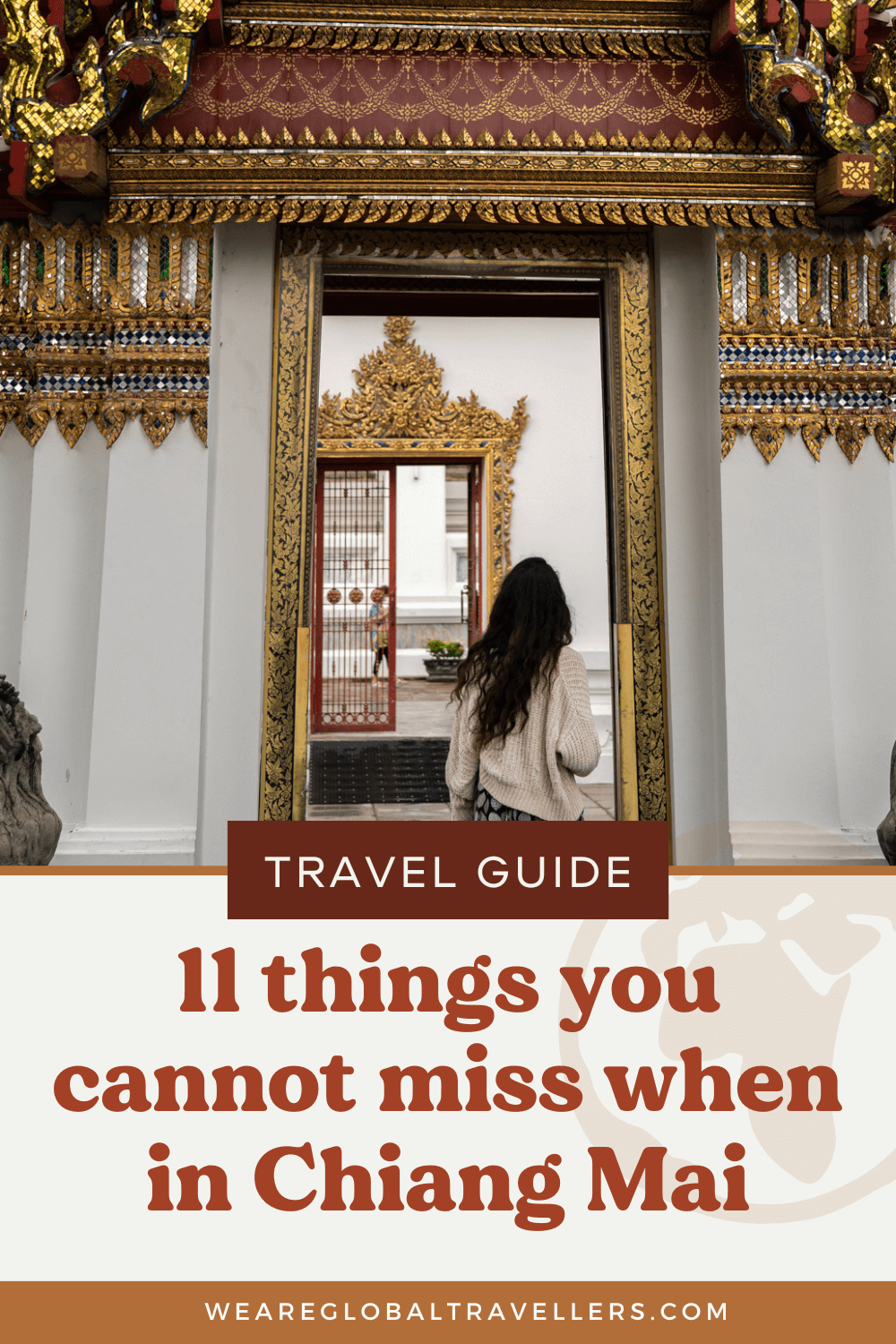
If you are planning a trip to Chiang Mai, Thailand and are looking for iconic Chiang Mai things to do to inspire your itinerary for Chiang Mai, I have you covered with this guide to the best things to do in Chiang Mai.
Whether you are smitten with street markets, excited to discover Thailand’s growing coffee culture, want to explore the ancient gold-trimmed temples and visit a Chiang Mai elephant sanctuary or taste your way through four-course cooking classes, Chiang Mai is a sensory explosion that you simply must experience for yourself. In the meantime, let me give you a taste of what to expect with my top tips for choosing Chiang Mai hotels, the cost of travelling around Chiang Mai, as well as the best things to do in Chiang Mai.
Other travel guides you might find useful…
explore UK TRAVEL GUIDES on THE blog here
Where to stay in Chiang Mai
Before we discuss the best things to do in Chiang Mai, let’s tuck into where to stay and the best places to find accommodation in Chiang Mai.
Chiang Mai Nimman
During my short four-day adventure to this bustling northern city, I stayed in two starkly different neighborhoods. The first was close to the airport in the Chiang Mai Nimman neighborhood. This area was filled with local eateries (no tourist tax here!) and was great for experiencing a more local way of living. However, it was around 30 min walk to the Old City center. This did not bother me in the slightest, as I ended up spending the two days exploring the local food and sleeping off the jet lag by the pool. If you did want to stay here and make your way into the city, be sure to add transport to your budget.
Old Town
The second area we stayed was in Old Town, just east of the Old City walls. This area was significantly more touristy and busy, but it was still possible to find cheap eats and places to stay. In fact, we found a little hole-in-the-wall back-street hotel where we bartered to pay only 600 Baht a night (around 17 USD). Despite the hustle and bustle, this area is hands down the perfect location to explore the city on foot.
Cost of travelling in Chiang Mai
One of the perks of travelling to Thailand (and south-east Asia in general) is to enjoy the cheaper experiences and food. Diving into the cuisine here in Chiang Mai is one of the best things to do in Chiang Mai – without a doubt! But how much does everything cost exactly? Well, below, I have included a list of the average cost of food and experiences during my time in Chiang Mai*.
Iced Coffee – 50 Baht ($1.50 USD)
Sidestreet restaurant lunch for two – 150 Baht ($4.5 USD)
High-end dinner for two – 500 Baht ($14 USD)
Chiang Mai 3 star hotel per night – 600 Baht ($17 USD)
Chiang Mai 5 star hotel per night – 1000 Baht ($30 USD)
Taxi to and from the airport – 250 Baht ($7 USD)
Thai massage – 300 Baht ($9 USD)
Cooking class – 800 Baht per person ($23 USD)
*Information accurate as of May 2023
Getting around Chiang Mai
Overall, when exploring a new city, I love to walk most places. And if you stay in Old Town, much of Chiang Mai is very walkable. However, it’s good to have a few other options if the weather gets too hot or you are planning an adventure to the foothills a little out of the city.
I know what you may be thinking – Túk-túks, right? They are, after all, the very iconic ‘south-east Asia transport’. So much so that when I arrived, I was a little shocked to be picked up from the airport in an oh-so-normal car. When we enquired about taking a ride in these iconic open-air scooters, I discovered they were more for the experience than actually being an effective (or affordable) transport method. In lieu of a túk-túk, there are a few options for getting around Chiang Mai:
Ride in a ‘rót daang’ – This translates literally to mean ‘red truck’ (these are also referred to as Songthaew). These trucks feature an open seat plan and easy access from an open door in the back. I rode in one of these to my cooking class and saw plenty around town during my four days. These can start at around 20-30 Baht for a short ride and are a great ride-share version of a taxi.
Maxim App – From my experience, if you have a local sim, the best and cheapest way to get around is using the Maxim app. This service is similar to Uber and ordinarily comes out cheaper than a taxi or other pickup service (e.g. from our hotel in Old Town, the taxi would have been around 250 Baht, but with Maxim, we paid around 70 Baht).
Okay let’s dive into the best things to do in Chiang Mai! You ready?
So what are the best things to do in Chiang Mai? Let’s dive in.
1. Eat traditional Thai food
If nothing else, Chiang Mai knows good food. So, of course, one of the best things to do in Chiang Mai is to sample the incredibly fresh cuisine. Whether you’re a noodle fanatic obsessed with a Pad Se Ew, love the spice and flavour of a curry, or can’t look past the sweet and salty pairing of mango sticky rice, Chiang Mai is bound to please.
However, with this being a country with a compromised water source and minimal restaurant health standards, it’s important to be diligent when choosing places to eat. Some of the best advice we were given was to look at each place and see if the locals eat there. If there are a few locals, chances are it will be good (and safe!).
2. Visit a Temple/’Wat’
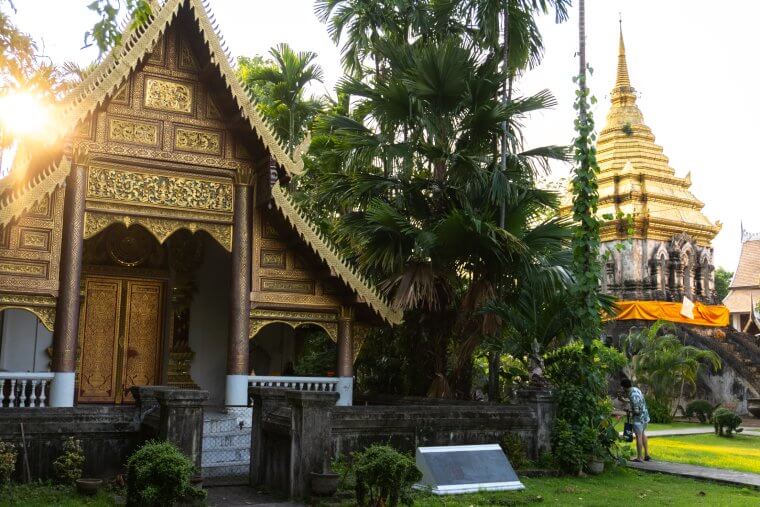
Aside from the food, Chiang Mai is overflowing with ancient beauty and stunning temples. When you enter the Old City walls, it feels like there is a temple (‘Wat’) on every corner. Some of the most iconic temples include:
Wat Phra Sing – A popular temple amongst the local Thai people
Wat Chiang Man – The oldest temple in Chiang Mai
Wat Si Suphan – The ‘Silver Temple’ built primarily using silver
Wat Prah That – A stunning temple on the outskirts of the city offering unmatched views of the city.
3. Get a traditional Thai massage
After a long day exploring in the sweltering heat, there is no better way to end the day than with a traditional Thai massage. Can we included that as a best thing to do in Chiang Mai? I think so – there’s no massage like it! Be warned – a traditional Thai massage is unlike a regular ‘relaxation’ massage. The best way I can describe it is that it feels like a competitive wrestling match with a tiny and strong human pulling and twisting at your body in ways you may not have imagined it could twist.
And yet, despite being so different, it is still incredibly good and (in my experience) gives a longer-lasting sense of relaxation— an essential must-do on any itinerary for Chiang Mai.
4. Stroll through the markets
There are plenty of great markets to explore in Chiang Mai, and wandering these chaotic sidestreet pop-ups is a must-do on any itinerary for Chiang Mai. Some of the top markets to check out include:
Night Bazaar (night market) – this iconic night market is found on Chang Klan Rd
Warorot Market – one of Chiang Mai’s oldest markets
Chang Puak Gate Market – is considered one of the best street food markets in the city
Top tip: If you are hoping to test your stomach at a street market and want to avoid any chance of food poisoning, be sure to choose more permanent stalls. If someone is whipping up a spread from a scooter, you may want to keep walking.
Strolling the markets is one of the best things to do in Chiang Mai if you’re a foodie and love tasting new flavours and spices – this will get your senses going!
explore ACTIVE TRAVEL on THE blog here
5. Try the coffee
One thing that surprised me about Chiang Mai was its thriving coffee scene. As an Australian travelling abroad, finding those cafe gems like home can sometimes be hard, but in Chiang Mai, great coffee was in surplus. After stumbling upon many beautiful cafes with pretty incredible coffee, I did some digging. Turns out, unbeknownst to me, Chiang Mai is known as the coffee capital of Thailand. Best of all, there is no reason not to at just 50 Baht ($2 USD) per coffee!
6. Have clothes tailor-made
Have you ever felt like clothes never quite fit you right?
Or maybe you have a special occasion coming up that you want to have something uniquely tailored?
Thailand is known for their cost-effective and quick tailor-made clothes, making this one of the best things to do in Chiang Mai.
My partner and I were gearing up to attend a vegas themed wedding, and so my partner decided to have a suit made for the occasion. For 3000 Baht (85 USD), he got tailor-made pants and a jazzy-looking shirt – all made within 24 hours!
7. Take a Thai Chiang Mai cooking class
When I was a kid, my dad would take me to a Thai restaurant at least once a month. From a young age, I learnt to appreciate the tender flavours of green curry and to do my best not to devour the Pad Se Ew immediately. When I had begun planning this trip, I knew I wanted to learn how to cook some of these childhood favourites in a Thai cooking class.
After doing a little research, I stumbled upon a highly-rated Chiang Mai cooking class offered by Thai Akha Kitchen. This Chiang Mai cooking class was everything I could have imagined and more! The class began first thing in the morning at 8 am, where we were picked up in a rót daang and delivered to the markets near the south gate of the Old City. Here we grabbed some of the fresh ingredients for the class, and the guide showed us some traditional Thai food. When we finished, we made our way to the kitchen. The eight people in the class each got their own cooking station, and over the course of the four hours, we cooked (and devoured) two entrees, two mains and mango sticky rice for dessert.
The food at the Chiang Mai cooking class was the best I had ever tasted – even as good as many of the Chiang Mai Thai restaurants I had frequented these past few days. I could hardly believe my hands had helped create such flavoursome dishes. For just 800 Baht per person (around $23 USD), it was worth every penny and easily one of my top things to do in Chiang Mai – a must-do on any itinerary for Chiang Mai.
explore ROAD TRIPS on THE blog here
8. Other great things to do in Chiang Mai, Thailand
I had only a short time in Chiang Mai, so I decided to stick to the city limits. However, there are so many great things to see outside the city. Some other popular activities and experiences to add to your itinerary for Chiang Mai include:
Go to a Chiang Mai elephant sanctuary
Visiting elephants in Thailand has definitely gotten a bad rep over the years, but they are not all bad. If meeting an elephant has been on your bucket list for a while, visiting a Chiang Mai elephant sanctuary is one of the best places to do just that. Just be sure to research that it is run ethically and enjoy these peaceful creatures from a distance (and be sure to say no to any offers for back riding to keep these creatures safe).
Fly to Bangkok for a day to explore the city
When I had finished my 4-day Chiang Mai itinerary, I made my way to the Chiang Mai airport to fly to Bangkok for the day before flying out of the country. This airport has a train that goes directly into the city, where you can see top attractions such as the giant Buddha and more.
Stay at one of the top Chiang Mai resorts
If there were an occasion to act like a queen/king for a day, it would be in Chiang Mai. Why not treat yourself to a spa day at one of the top Chiang Mai resorts or a 5 star Chiang Mai hotel? Sit by the pool, get a massage, and order great Thai food, all without leaving the comfort of your hotel (and for a fraction of the price anywhere else in the world!).
Visit Wat Phra That at Doi Suthep National Park
This ‘temple on the hill’ is best known for its stunning design and for the unmatched 360° views of Chiang Mai and its surroundings. There are also plenty of other stunning attractions to explore in the park, including the Huay Kaew Waterfall and Bhubing Palace.
Are there any other things to do in Chiang Mai or other top experiences that should be on an itinerary for Chiang Mai? Are there any Chiang Mai hotels or Chiang Mai Thai restaurants you would recommend? As always, happy adventuring.
What are your favourite things to do in Chiang Mai?
Anything you’d add to this Chiang Mai travel guide?
Love as always and happy adventuring…
Did you find this post helpful? I’d love you to share it for me.
Edinburgh is enchanting. The capital of Scotland, it’s a historic, moody city with centuries-old buildings, winding cobblestone streets, and an imposing castle that looms above the Old Town.
While there is a ton to see and do here (including lots of eerie ghost tours), the city is actually fairly compact. Everything you’re going to want to see is generally within walking distance. For that reason, all of the hotels below are centrally located so you never have to go far to see the sights.
Here’s my list of the best hotels in Edinburgh:
1. Stay Central Hotel
Just three minutes from the popular Royal Mile, this three-star property is located in a historic 17th-century building that’s been completely modernized. The interior is covered with funky, arty décor that includes lots of distinctive artwork and colorful touches. I like that the rooms are bright, clean, and spacious. The beds are super comfy and rooms include a flat-screen TV, desk, tea/coffee maker, and rain shower (the showers have great pressure too). There’s also a hearty complimentary breakfast that has lots of options, including meat, eggs, fresh fruit, and vegetarian fare.
This stylish five-star hotel offers modern luxury apartments, making it the perfect choice for groups or travelers who simply need more space. It’s located in the Old Town right near the Royal Mile so it’s super close to everything. Their Deluxe rooms feature Scandi-chic décor with a minimalist flair, including lots of space and natural light. There’s a complete kitchen in each apartment, in addition to a washer and dryer. Rooms also include a TV, Wi-Fi, a coffee/tea maker, a desk, and super comfortable beds. Breakfast, which can be included in the price, offers a lot of variety, including lots of local specialties.
This four-star hotel is clean and modern, with spacious rooms and super comfortable beds. Located in New Town, it’s just a quick 15-minute walk to the Royal Mile. There’s a gym and bar on-site and a full English breakfast is served each morning (which can be included in the price). The rooms here are on the smaller end, but I didn’t want for any extra space. The beds are soft and rooms also include flatscreen TVs and free Wi-Fi. Just note that, while the bathrooms are bright and well-maintained, they don’t offer a lot of privacy. They are essentially part of the room and not really divided from the sleeping space.
An ornate and lavish five-star property, this luxe hotel boasts beautiful rooms bedecked with antique furniture and historic designs. It’s a stately hotel that makes you feel like you’re an aristocrat at the turn of the 20th century. The restaurant and dining area, where you can enjoy a delicious breakfast each morning, features massive opulent pillars and super high ceilings. There’s also a bar and gym on-site, and a spa and wellness center with a relaxing sauna. The rooms are equally elegant too, with wonderfully plush beds that are comfortable and roomy. Rooms also include a flatscreen TV, coffee/tea maker, and free Wi-Fi. The bathrooms, while not large, are beautifully designed and well-lit. The hotel is just a short 8-minute walk to the Royal Mile.
This boutique townhouse hotel in a quiet residential area is just a five-minute drive from the Royal Mile. It’s located in the Newington suburb, making it a great choice for travelers who want a quieter stay away from the main tourist area. It’s a stylish four-star space and the rooms all have original Georgian features (some even have four-poster beds). The décor is a little dated, but the rooms are spacious and airy. The bathrooms are also large and well-maintained. There’s a simple breakfast buffet offered each morning, and the friendly staff really go out of their way to make you feel welcome. There’s even parking available if you have a vehicle.
This uber-luxurious, five-star hotel is wildly lavish. I really loved the ornate décor. It’s super unique, both regal and colorful with an aristocratic flair. All the rooms have antique furnishings that will make you feel like you’re staying in a Renaissance palace. Rooms also have flatscreen TVs, minibars, free Wi-Fi, and a coffee/tea maker. Plush bathrobes are included as well.
The on-site restaurant hosts a posh afternoon tea and there’s a delicious breakfast spread included every morning. The hotel is just south of the famed Arthur’s Seat and has free parking too. Personally, I think it’s the perfect choice for a luxe retreat or romantic getaway.
Brimming with cozy pubs, world-class whisky, and home to a sprawling UNESCO Old Town, Edinburgh is a city perfect for weekend getaways and week-long stays. It’s a city with historic charm and character, and one of my favorite places to visit in Europe. And by choosing one of the hotels above, you’ll ensure that you have a great stay!
Get Your In-Depth Budget Guide to Europe!
My detailed 200+ page guidebook is made for budget travelers like you! It cuts out the fluff found in other guides and gets straight to the practical information you need to travel while in Europe. It has suggested itineraries, budgets, ways to save money, on and off the beaten path things to see and do, non-touristy restaurants, markets, bars, safety tips, and much more! Click here to learn more and get your copy today.
Book Your Trip to Edinburgh: Logistical Tips and Tricks
Book Your Flight Use Skyscanner to find a cheap flight. They are my favorite search engine because they search websites and airlines around the globe so you always know no stone is left unturned.
Book Your Accommodation You can book your hostel with Hostelworld as they have the biggest inventory and best deals. If you want to stay somewhere other than a hostel, use Booking.com as they consistently return the cheapest rates for guesthouses and cheap hotels.
Don’t Forget Travel Insurance Travel insurance protects you against illness, injury, theft, and cancellations. It’s comprehensive protection in case anything goes wrong. I never go on a trip without it as I’ve had to use it many times in the past. My favorite companies that offer the best service and value are:
Looking for the Best Companies to Save Money With? Check out my resource page for the best companies to use when you travel. I list all the ones I use to save money when I’m on the road. They will save you money when you travel too.
California-based Scarbo Vintage—the company behind Ken Block’s Hoonipigasus Pikes Peak race car—is back with a road-legal off-road race truck. Called the SV Rover, the truck made its public debut at the F.A.T. International Ice Race in Aspen, Colorado.
Though the styling is reminiscent of a classic Land Rover, underneath it’s completely bespoke. The bodywork is made from aluminum and carbon fiber, and the powertrain options are unlike anything available for Land Rovers of old.
Scarbo Vintage SV Rover
Customers can choose between a mid-mounted supercharged V-8 producing 1,100 hp and connected to an 8-speed paddle-shifted automatic transmission, or a 1,005-hp electric powertrain energized by a 75-kwh battery pack. Whether the powertrain is gasoline or electric, power is routed to all four wheels through a transfer case with high and low ranges, and the truck has front and rear locking differentials.
Inboard pushrod front and rear air suspension setups allow for 30 inches of wheel travel, according to Scarbo Vintage, along with height and valving adjustments. The SV Rover features 40-inch tires mounted on 20-inch wheels, with four-wheel steering and a braking system consisting of Brembo 6-piston calipers and 15.7-inch carbon-ceramic rotors.
Scarbo Vintage SV Rover
An Alcantara-lined cabin has a 12.3-inch digital instrument cluster, a 12.8-inch main display, and minimal convenience features that include automatic climate control, power door locks, and power windows. The two-seat vehicle also has a rear cargo area behind the engine compartment.
The “standard price” for an SV Rover is $1.5 million, but Scarbo Vintage notes that all vehicles are built to order, so the price of specific builds will vary depending on how customers spec their vehicles.
In today’s fast-paced world, the question of commute distance has become a pivotal consideration for many when weighing job opportunities. While a few extra miles might seem trivial on paper, in practice, those miles can translate into hours spent on the road, impacting not only one’s wallet but also their well-being.
How Far Is Too Far To Drive To Work?
The road trip expert says a 20 to 40-mile commute is an acceptable distance to commute to work. However, if the commute interferes with your daily life or well-being, it may be too far for you. The decision to accept or decline a job based on commute isn’t just about counting miles. It’s a multifaceted dilemma that encompasses financial costs, health implications, and personal preferences.
In this article, we’ll delve deep into the intricacies of commuting, providing insights and guidance to help you make an informed decision. From understanding the impacts of your commute to evaluating the tangible and intangible costs of those daily miles, we’ll learn what constitutes a reasonable commute to work.
What Is Your Ideal Distance To Commute To Work?
The ideal commute is different for everyone. It’s important to consider your personal limits and the demands of your job. The miles, the time it takes, and the mode of transportation should be considered when deciding. And the reality of the drive can be significantly altered by traffic. A 20-mile drive on a highway may be easier than a 10-mile drive through congested streets.
A 30-minute commute may seem short, but it’s important to assess its impact on daily life.
How Can You Decide If A Commute Is Worth It?
When job hunting, consider more than salary and title. Weigh the job’s tangible and intangible benefits against the commute. Will the professional growth and networking opportunities offset the commute? Personal and family needs must also be considered. Longer commutes could mean less time with loved ones. Think about long-term goals when deciding on your commute. A longer commute now could benefit you in the future.
How Far Does An Average American Commute To Work?
On average, an American worker commutes about 16 miles one way to their place of employment. That translates to about 32 miles round trip daily. This statistic, while seemingly straightforward, can vary significantly based on several factors like urban vs. rural settings, traffic, and the availability of public transportation. For instance, in densely populated cities the average commute distance might be shorter, but the time spent could be longer due to congestion.
Conversely, in rural areas, workers might travel longer distances at faster speeds due to less traffic. Understanding these averages and extremes provides context for individual decisions and offers a benchmark against which one can measure their own commute.
Check Out Some of Our Other Car-Related Guides:
What Is An Extreme Commute?
When it comes to commuting, the term “excessive” can be subjective. For some, a 10-mile drive might feel lengthy, while others might be accustomed to a 50-mile journey. However, most experts and surveys suggest that a commute exceeding 90 minutes one way is generally considered “excessive” for most people. Such long durations can increase stress and fatigue and decrease quality of life.
What Are The Impacts of Commuting?
Long commutes can affect us in several ways. For starters, they can also take a toll on our health. Extended periods of sitting can lead to issues like back pain and poor posture. The mental strain of commuting is also undeniable. Daily battles with traffic can lead to increased levels of stress and anxiety, disrupt sleep patterns, and eat into personal time.
In essence, while a commute might be seen as just a part of the workday, its ripple effects can permeate various facets of one’s life, from health to daily routines.
Financial Considerations of Commuting
Direct Costs:
Gas: The primary expense for most commuters. Costs can vary based on fuel prices, vehicle fuel efficiency, and the length of the commute.
Vehicle Maintenance: Regular commutes can increase the frequency of oil changes, tire replacements, and other routine maintenance.
Tolls: Depending on the route, toll roads can add a significant expense to daily commutes.
Hidden Costs:
Reduced Personal Time: Time spent commuting is time away from personal activities, which can have an indirect financial impact, such as the need for convenience services or missed opportunities.
Potential Health Costs: Extended commutes can lead to health issues like back pain or stress, resulting in medical expenses or therapy.
Wear and Tear on the Vehicle: Beyond regular maintenance, the increased mileage can lead to more frequent major repairs or reduce the vehicle’s resale value.
Personal Preferences, Flexibility, and Employer Expectations
When it comes to commuting, individual preferences, work flexibility, and employer expectations play significant roles in shaping one’s decision. Here’s a closer look at these factors:
Personal Tolerance: Commuting is a deeply personal experience. While some might find a 30-minute drive manageable, others consider it a hassle. Recognizing and respecting your limits regarding time spent on the road is essential.
Flexibility: The modern workplace is evolving, with many employers now offering options like remote work days or flexible hours. Such arrangements can significantly reduce the strain of a lengthy commute, making a farther workplace more accessible.
Employer Expectations: Legally, there’s no set limit to how far an employer can expect you to travel for work. However, ethical considerations come into play, especially if the commute challenges work-life balance or personal well-being. It’s crucial to communicate with potential employers about commute expectations and any accommodations that might be available.
Strategies for a More Bearable Commute
Surviving a long commute to work requires a blend of preparation and adaptation. Here are two strategies to transform your journey from a tedious chore into a more enjoyable experience:
Audiobooks and Podcasts: Utilize your drive time by diving into a captivating audiobook or catching up on podcasts. Not only does this make the journey feel shorter, but it also allows you to learn or be entertained on the go.
Alternative Modes of Transportation: Consider switching up your commute routine. Public transit can offer a break from driving, allowing you to relax or even get some work done. Carpooling can reduce costs and provide company, while biking offers both health benefits and a fresh perspective on your route.
Wrapping It Up: How Far Is Too Far To Drive To Work?
Determining how far is too far to drive to work is not a one-size-fits-all answer. While statistics and general guidelines can provide a framework, the true answer lies in each individual’s unique circumstances and preferences. It’s essential to weigh the tangible costs, such as time and money, against the intangible ones, like stress and well-being. Remember to consider all facets, from health to financial implications.
Above all, recognize the importance of personal preference and individual circumstances in shaping the best decision for you.
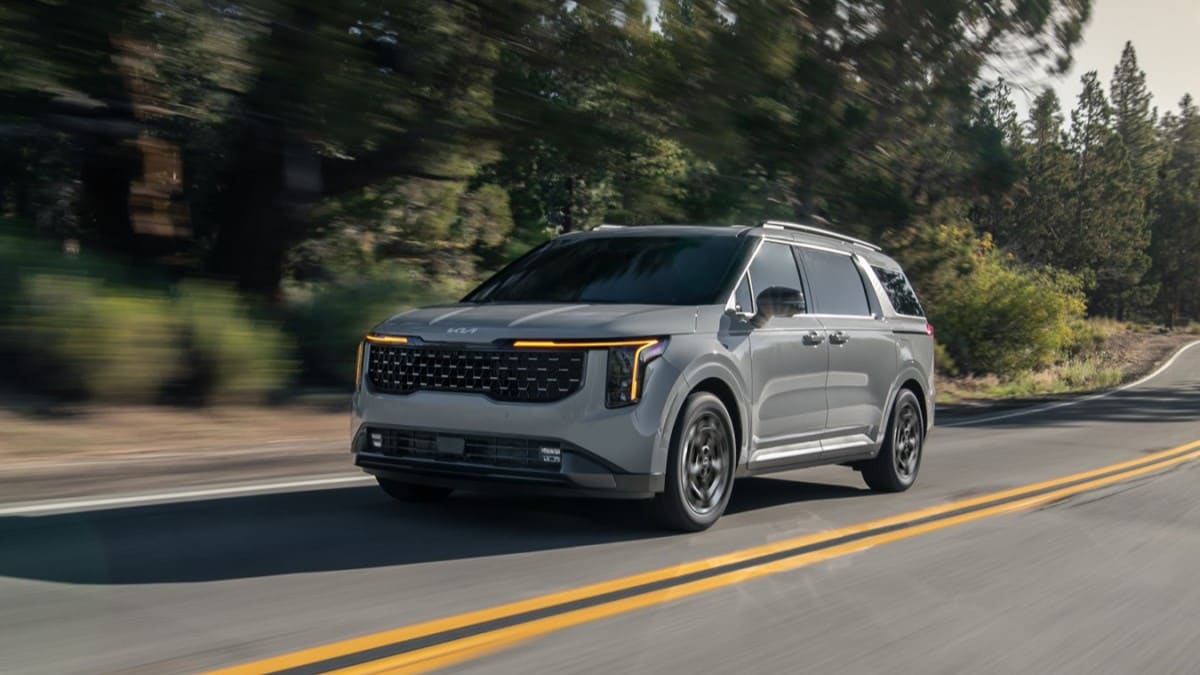
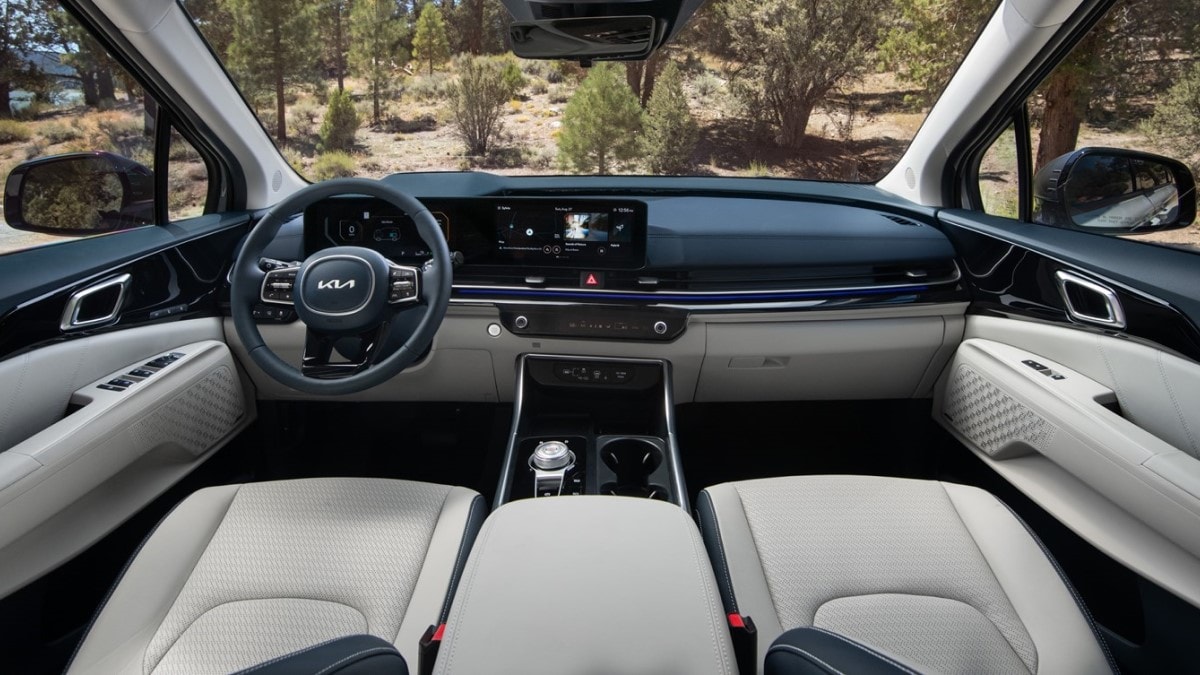
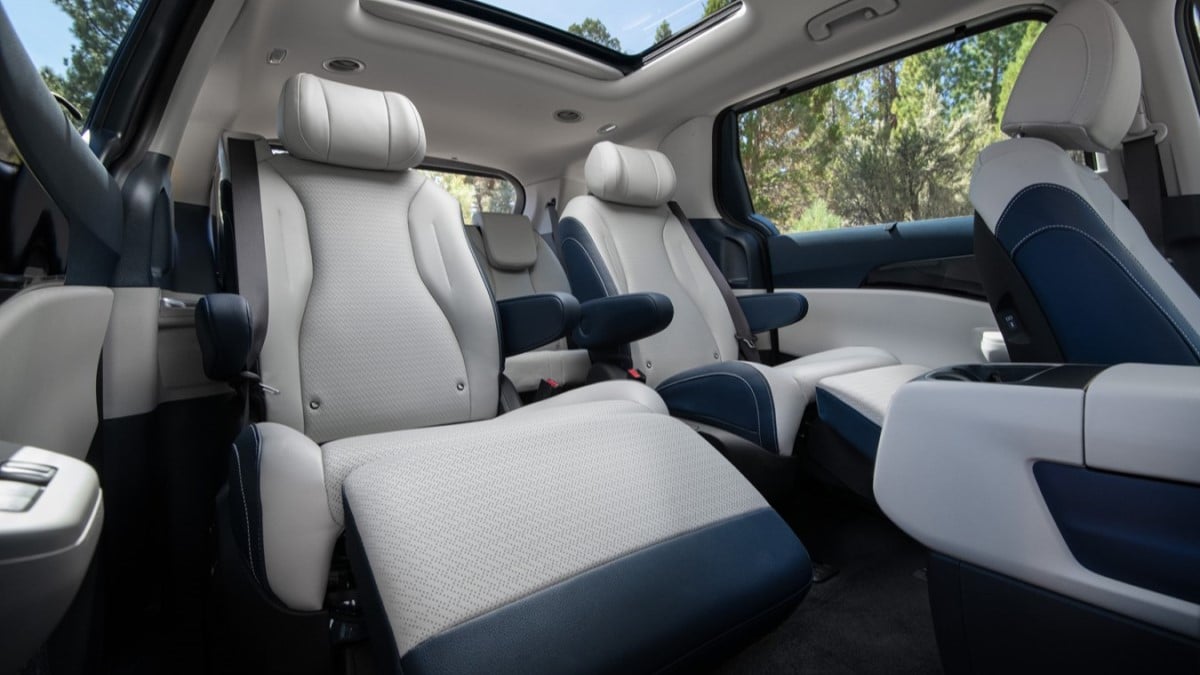
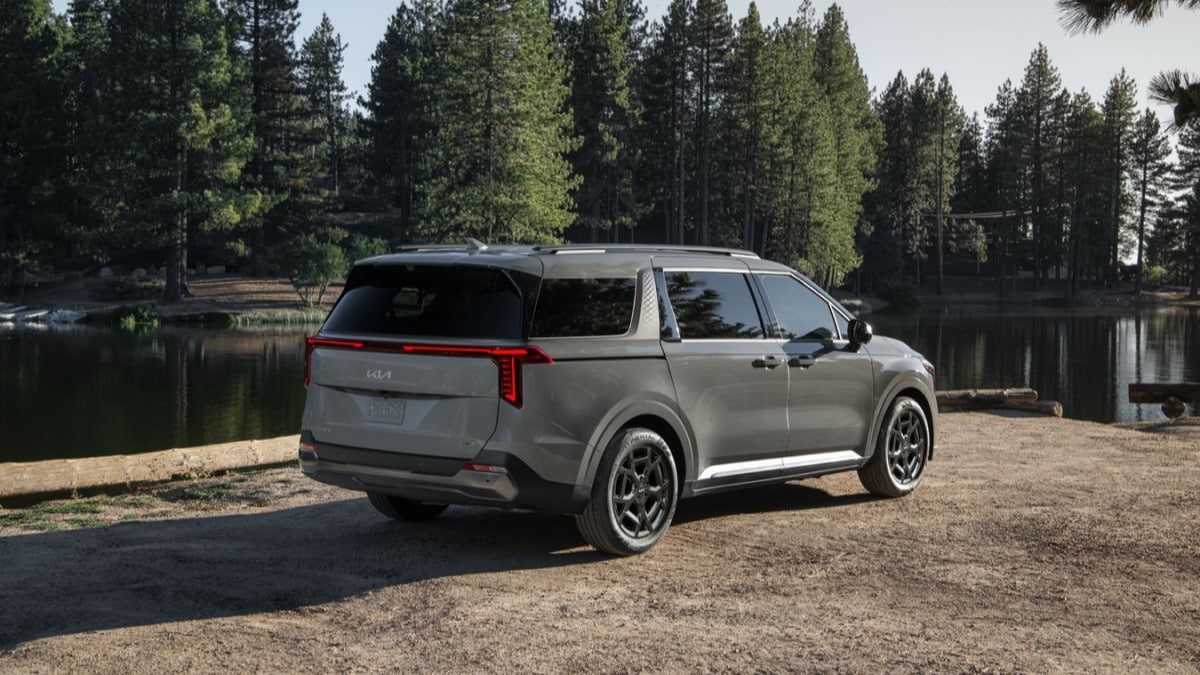
The Kia Carnival minivan consistently surprises us. It’s up against tough competition in the minivan class. But it impresses with rugged good looks, responsive handling for such a big vehicle, and a warranty that can protect the important parts until 2034.
But it’s long been lacking one thing the Toyota Sienna and Chrysler Pacifica offer — a hybrid powertrain. That’s about to change.
Kia revealed a refreshed 2025 Carnival this week, and the headline is hybrid power. Kia won’t make every minivan it builds that year a hybrid like Toyota and Chrysler do. But it will offer a fuel-sipping hybrid version — an important consideration for most families big enough to need a minivan.
The standard engine remains a 3.5-liter V6, making 290 horsepower. The hybrid setup gets 242 horses from the combination of a turbocharged 1.6-liter 4-cylinder engine and an electric motor. Both send power only to the front wheels — there’s no all-wheel drive (AWD) option on any Carnival.
Kia hasn’t revealed MPG figures. Or pricing, for that matter. The 2024 Carnival starts at $34,995 (including the mandatory $1,395 destination fee).
The Carnival retains its unique slammed SUV look but gets a new grille and more complex lighting with Kia’s new signature amber-colored “star map” linear look. New, more geometric wheel designs will be offered, too.
Inside, changes are subtle. An optional package puts the 12.3-inch driver’s instrument screen and matching 12.3-inch infotainment screen together in one curved housing for a high-tech look. An optional head-up display projects navigation directions and other driving info directly in the driver’s vision.
A brilliant hidden gem — seatbelt buckles include built-in lights, making them easier to fasten in the dark. Why hasn’t anyone thought of that before?
Most economic news has been good early in 2024, but the market is still challenging for those looking for a car loan.
The Dealertrack Auto Credit Total Loan Index tracks how difficult it is to qualify for all types of car loans. It fell 1% in January, reaching its lowest level since August 2020. Kelley Blue Book’s parent company, Cox Automotive, publishes the index.
Credit was harder to find at banks, credit unions, and captive lenders at dealerships last month than it was a year ago.
Fewer loans were approved, and lenders asked for shorter loan terms (which raises the cost of monthly payments). Down payments remained steady.
The Conference Board Consumer Confidence Index increased by 6.3% in January, powered by views of the present situation jumping 9.6% and to the highest level since March 2020. Consumer confidence was up 8.3% year over year. Despite the good news, plans to purchase a vehicle in the next six months declined to the lowest level since April and were down year-over-year.
Lotus last fall revealed its first sedan since the Carlton of the early 1990s in the form of the Emeya electric vehicle.
It’s due to enter production later this year at a plant in Wuhan, China, and Lotus last week announced it has signed off on the car’s development.
The gestation period lasted more than three years. It saw prototypes travel across 15 countries and two continents, and to famous racetracks including the Nürburgring. The cars also tested in extreme conditions, including temperatures ranging from as as low as -40 degrees F to as high as 104 degrees F.
Even in such harsh conditions, the prototypes not only had to maintain driving performance, but their battery’s charging system and thermal management system were also put to the test.
Lotus Emeya
The tests also resulted in some nuanced changes made to the car. For example, a Snow mode was developed for the head-up display, which turns the display blue to help the driver to see information more easily against a white background.
The Emeya is coming with a 102-kwh battery and up to 905 hp, making it a potential rival to cars like the Porsche Taycan and Tesla Model S Plaid. While Lotus has confirmed the related Eletre SUV will go on sale in the U.S. in 2024, the automaker hasn’t said whether the Emeya will reach local showrooms. However, the car debuted last fall in New York City, hinting strongly at the possibility.
Lotus is saving full details on the Emeya until closer to the market launch. However, the automaker has given some performance estimates, including a 0-62 mph time of 2.8 seconds and a top speed of 159 mph. The range will be similar to what’s delivered by the Eletre, Lotus said. The SUV with a bigger 112-kwh battery is estimated at up to 373 miles using the WLTP test cycle used overseas, a figure that will likely be closer to 300 miles when using the stricter EPA test cycle.
Enjoy my content? An easy way to say thanks is to make your purchases through the affiliate links in this blog post. We get a small commission with no added cost to you. I also have a virtual tip jar if you want to provide direct support for our work. THANK YOU!
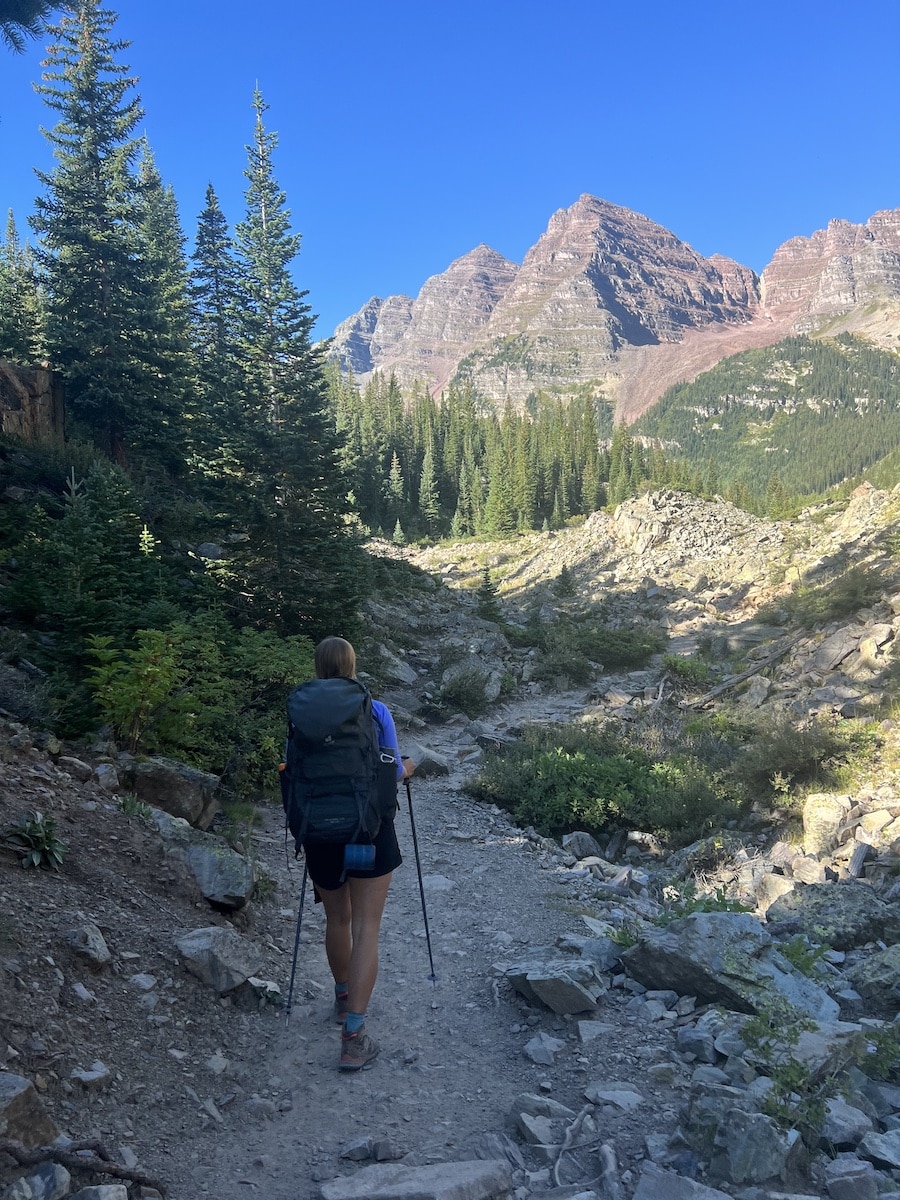
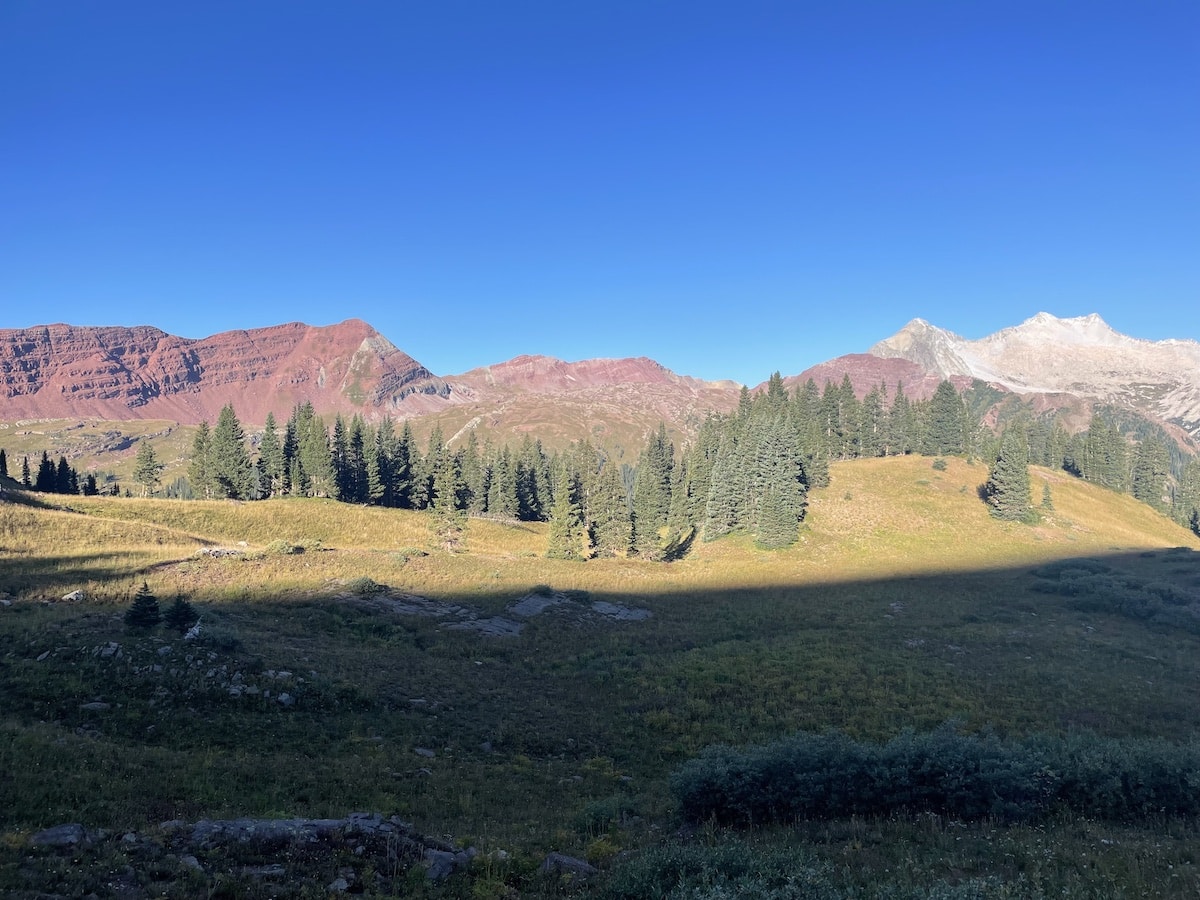
When you search on Google for images of Colorado, many of those breathtaking, iconic photos of mountain peaks surrounded by alpine lakes and wildflowers are of the Maroon Bells near Aspen. It is no wonder that many people wish to experience this magic for themselves, making the Four Pass Loop one of the most popular Colorado hiking trails.
The famous Four Pass Loop trail spans 26 miles. As the name implies, this circuit includes four mountain passes (West Maroon – 12,500 feet; Frigid Air – 12,415 feet; Trail Rider -12,420 feet; Buckskin – 12,500 feet). Due to the high elevation and rocky terrain, this route is considered challenging.
As someone who had previously tried backpacking only once before, I knew this would be an ambitious adventure for my first multi-night backpacking trip. However, I had lived and hiked in Colorado for five years, so I eagerly accepted my friend’s invitation to push my limits and accompany her on this 3-day excursion.
The Four Pass Loop trail remains one of my most treasured Colorado hiking experiences. It is the perfect backpacking trip for anyone who is looking for scenic views and is willing to challenge themselves. In this post, I share everything you need to know about hiking the iconic Four Pass Loop.
Download my FREE Outdoor Trip Planning Toolkit
Enter your email to get access to printable PDF packing checklists, itineraries, and more.
Important Reminder: As it goes in all of the destinations we share, please practice good trail etiquette and remember to Leave No Trace. This means packing out all of your garbage (including toilet paper), being respectful to others, and following the established rules.
Four Pass Loop Stats & FAQs
The Four Pass Loop is how it sounds – a loop trail where you summit four mountain passes above 12,000 feet. It is in the Maroon Bells-Snowmass Wilderness near Crested Butte and Aspen, Colorado.
Trail Basics
Total Distance: 26 miles
Elevation Gain: 7,752 feet
PermitsNeeded: Yes
Days: 3-4
Difficulty: Challenging
Dogs allowed: Yes
Cell service: No
Map: AllTrails
How long is the Four Pass Loop trail?
While there is some discrepancy on the exact distance, the Four Pass Loop is about 26 miles, with some saying slightly more or less. There are multiple starting and ending points, but many hikers begin and end their hike at the Maroon Scenic Area on the Aspen side.
How long does it take to hike the Four Pass Loop?
I chose to do it in 3 days, but I recommend 4 days. The most common itineraries are 3 days/2 nights or 4 days/3 nights. I chose to do it in 3 days, but I recommend 4 days as explained further below.
It largely depends on your physical fitness, how much time your schedule allows, your desire to add on optional excursions to Geneva Lake and Willow Lake, and the type of experience you would like to have.
How difficult is the Four Pass Loop trail?
The Four Pass Loop is considered a challenging hike. There are steep switchbacks to climb and descend on the mountain passes and a total of 7,752 feet in elevation gain.
With most of the Maroon Bells Four Pass Loop being over 10,000 feet, you also want to give yourself plenty of time to adjust to the high elevation. Make sure you know the signs of altitude sickness and have a plan in case you or someone in your group experiences this.
There are also long stretches of sun exposure, so remember to bring sun protection.
The experience and the views are certainly worth it, though! Just know your physical capabilities and adequately prepare for this trip.
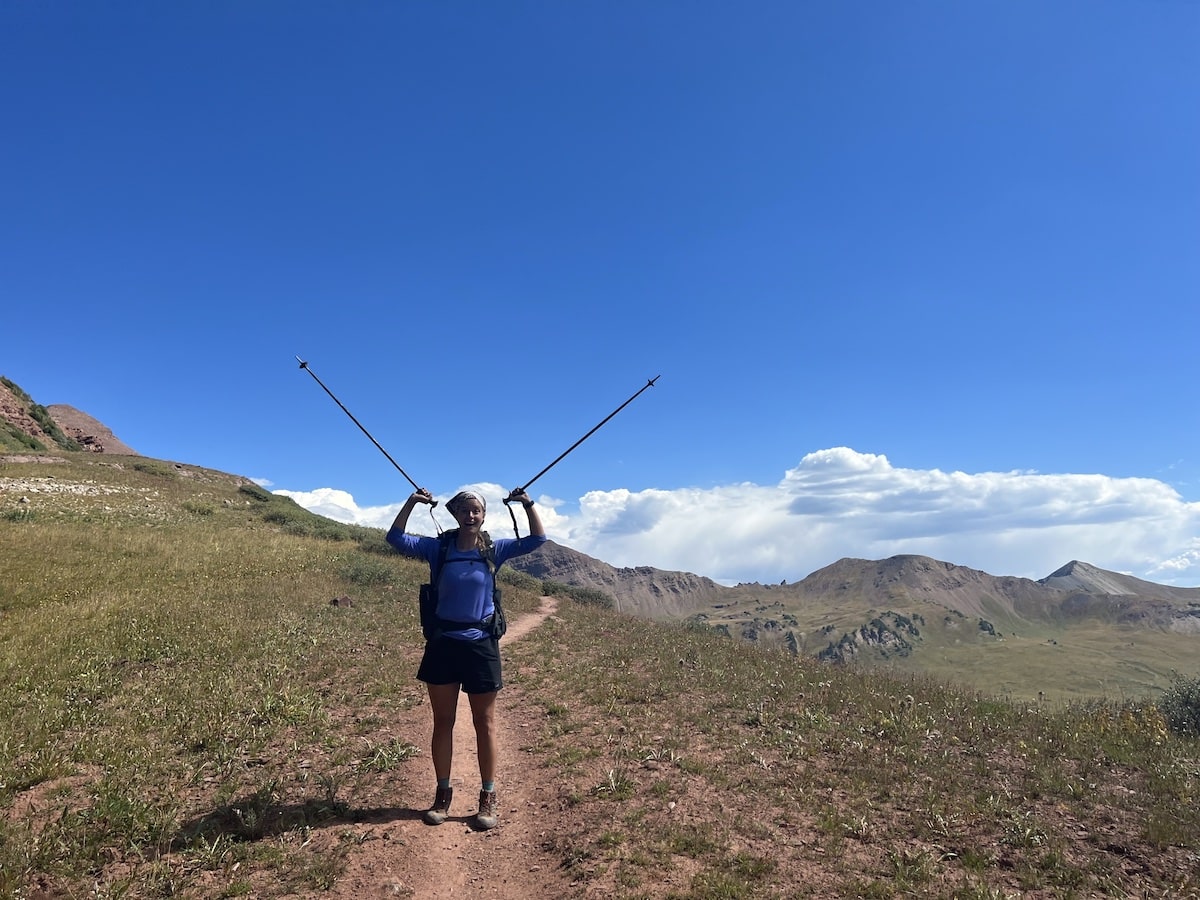
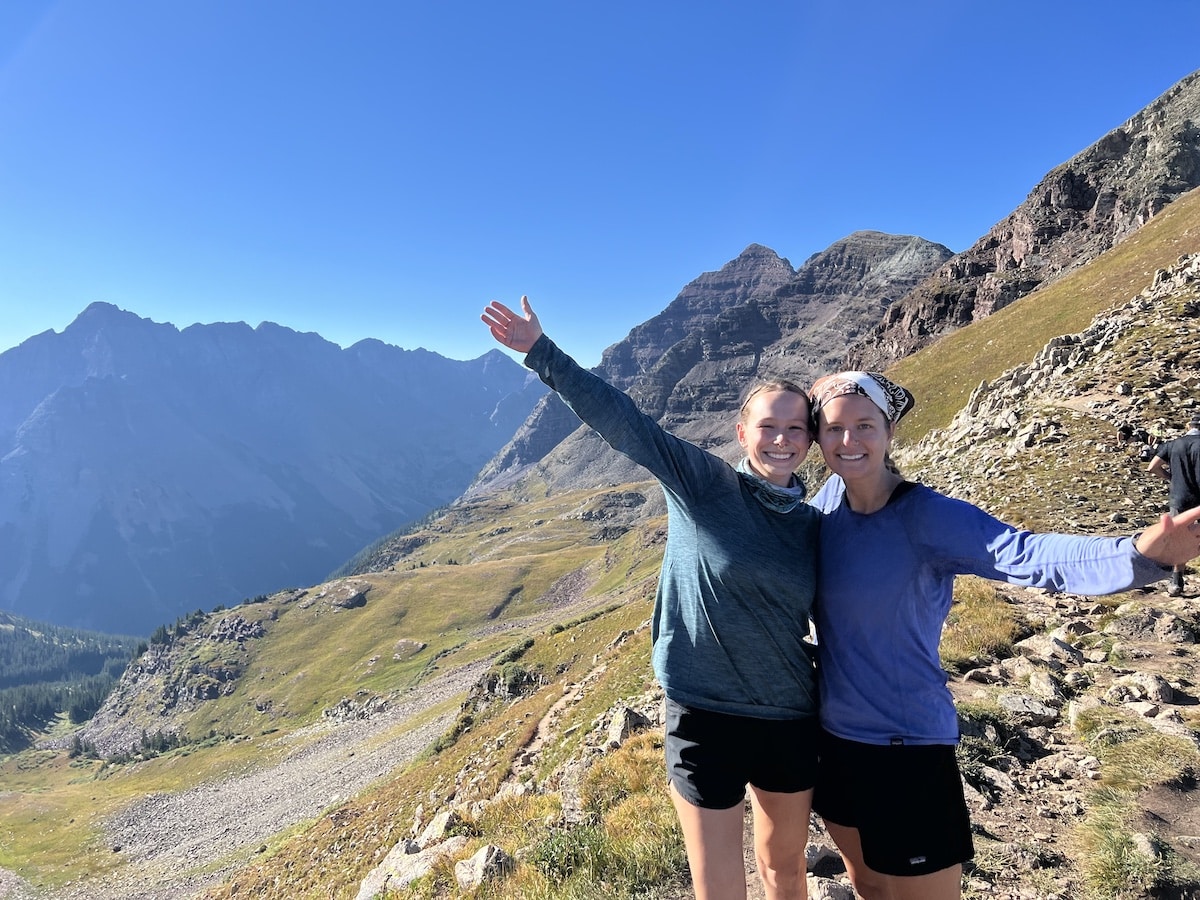
Celebrating at the top of Frigid Air Pass (12,415 feet)
Is the Four Pass Loop remote?
It is considered a remote wilderness backpacking trip. However, the Four Pass Loop trail is popular among hikers and trail runners, so you are bound to encounter other people.
The weather is unpredictable and quickly changes at high elevations. Be sure to pack for all conditions.
Are there bears on the Four Pass Loop?
The trail is in black bear country. As a result, you must use a bear canister or Ursack. To protect people and bears, anyone camping without an approved bear-resistant container will receive a ticket and be required to leave.
Is the Four Pass Loop well-marked?
Yes, the Four Pass Loop is well-marked, but it is still possible to get lost in the wilderness, especially in snowy conditions.
I recommend bringing a compass and a copy of the Four Pass Loop map. You should also make sure you’re familiar with how to read a topo map and basic wilderness navigation techniques.
The trail is well-marked and clear to follow
What direction should I hike the Four Pass Loop?
If you begin at the Maroon Scenic Area (as I recommend), you will hike for about 1.5 miles from the parking lot/shuttle drop-off area before you reach the fork in the trail to hike the loop clockwise or counterclockwise.
I decided to hike the Four Pass Loop clockwise from the Maroon Scenic Area and recommend going this way. The views get better each day, and the view of Snowmass Lake as you descend Trail Rider Pass is incredible.
If you complete this trip in 3 days, you will also get to knock out two mountain passes on the first day, making the other two days a little more manageable.
Both directions are equally challenging, and the total elevation gain/loss is nearly identical. If you find the incline uphill more difficult, clockwise is slightly easier.
The elevation gain for West Maroon Pass is less intense than the elevation gain for Buckskin Pass if you were to go counterclockwise. However, if the descent is hard on your knees, you may want to consider going counterclockwise for that same reason.
Do I need hiking permits for the Four Pass Loop?
As of 2023, you must purchase Maroon Bells-Snowmass Wilderness Overnight Permits on Recreation.gov to spend the night on the trail. You must reserve these ahead of time and print them to bring with you on your trip, as you cannot purchase permits at the ranger station.
Before your trip, you will need to decide which direction you will go (clockwise vs. counterclockwise), plan your itinerary ahead of time (see the next section), determine where you will camp each night of your trip within the designated areas in the overnight permit zone, and reserve your permits accordingly.
You also must reserve a parking permit or shuttle transportation from the Aspen Highlands parking garage.
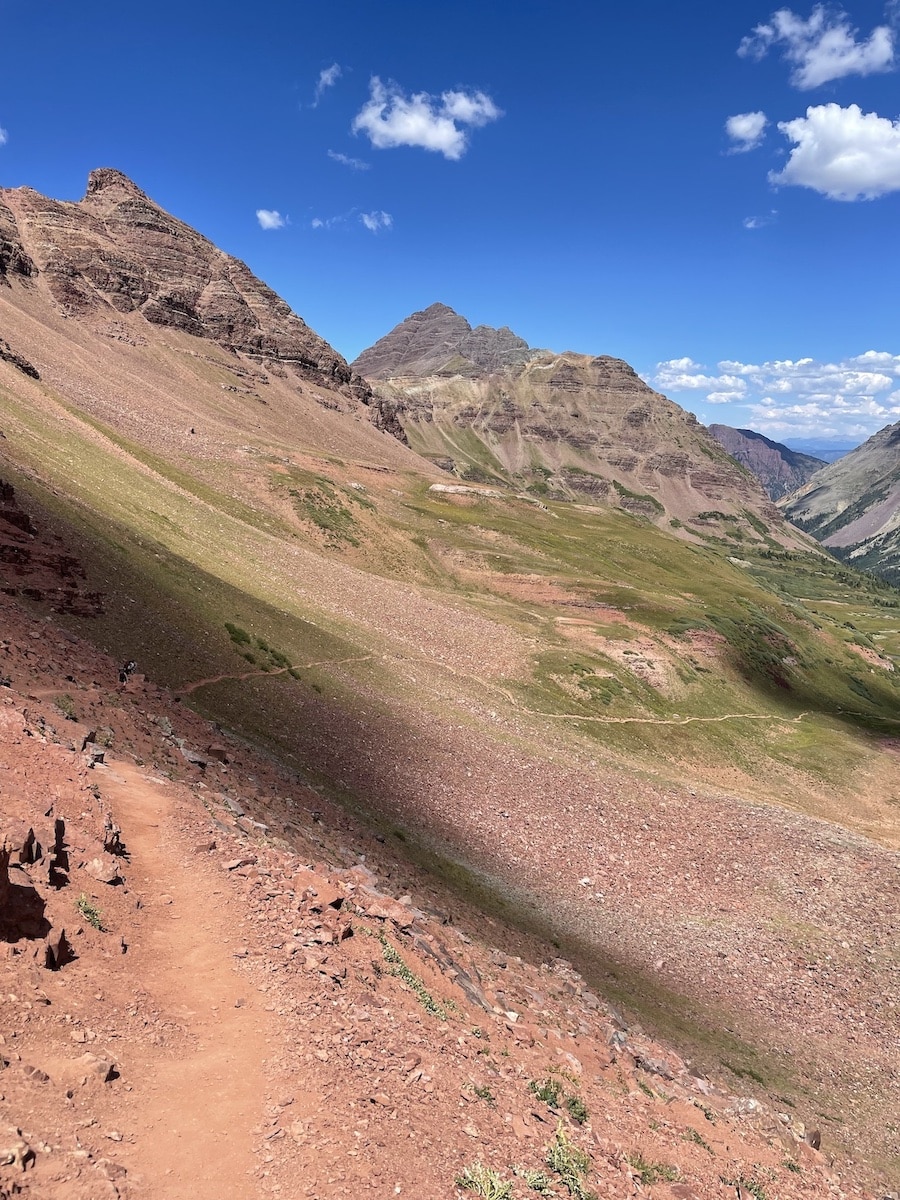
The view of the descent of Trail Rider Pass when heading clockwise from Aspen
How many people can I bring with me on my permit?
Most of the Four Pass Loop campsite permits for each zone are only for groups with 1-4 people. A select number of large group permits of 5-10 people are available for Crater, Maroon, Snowmass Lake, and North Fork.
If you cannot secure a large group site, you will need to have someone else from your group try to reserve a second permit (and camp at a different site) if you plan on going with a group of more than four people.
What is the water availability on the Four Pass Loop?
There are numerous small creeks and springs along the trail for filling your water; however, you must bring a water filtration system to purify your water before drinking.
I recommend filtering your water at your campsite with a water filtration system to have 3-4 liters of water in a reservoir at all times.
Since the availability of some water sources can vary depending on the season and conditions, read recent reports before your trip to plan your water refill stops.
Sections without water
Between West Maroon Pass and North Fork Zone: Before starting the ascent of West Maroon Pass, refill your water for two mountain passes (West Maroon and Frigid Air). Another option is to take a detour into the East Fork Zone after descending West Maroon Pass to refill in the East Fork South Fork Crystal River. There is water a couple of miles into the North Fork Zone.
Between Trail Rider Pass and Snowmass Lake: There is a small lake before you begin the ascent of Trail Rider Pass where I recommend refilling your water. You cannot fill your water again until hiking several miles to Snowmass Lake.
Between Snowmass Creek and West Maroon Creek: The final stretch without water access occurs once you pass the campsites along Snowmass Creek in the Upper Snowmass Zone. You will not find water on the trail again until you descend Buckskin Pass and encounter West Maroon Creek.
Always fill your water before starting the ascent of a mountain pass
Best time of year to hike the Four Pass Loop
Although permits are issued and required year-round, the best time to hike the Four Pass Loop trail and visit the Maroon Bells-Snowmass Wilderness is July through September for the best weather conditions. I completed the loop in early September and had perfect conditions (sunny skies, not too hot or cold).
While there is a risk of summer thunderstorms with the majority of the hike being above treeline, I recommend planning your trip in July, August, or September for personal safety and the best chance of pleasant backpacking conditions.
Since the overnight wilderness permits are good for 7 nights, you could always adjust your trip slightly based on the forecast as needed.
Snow dangers
Since this trail sits at such a high altitude in the Rocky Mountains, the rest of the year presents unique risks. The Four Pass Loop trail, including campsites and mountain passes, tends to be covered in snow from the beginning of October through the end of June.
Route finding: It may be difficult to determine where the trail continues.
Inaccessible trailheads: You may not be able to drive to the trailhead.
Avalanches: There is always a risk of avalanches in the mountainous backcountry, especially in the winter and spring.
Average temperatures and precipitation along the Four Pass Loop / Source: Weather WX
Four Pass Loop Itinerary Options
Backpacking the Four Pass Loop requires a fair amount of preparation. You must obtain overnight campsite permits for each night of your trip, make a parking or shuttle reservation, and pack the necessary gear.
I will dive into everything you need to know about planning your Four Pass Loop backpacking trip below.
Where to start the Four Pass Loop
Before you select an itinerary, you must decide if it makes more sense for you to start the loop in Crested Butte or Aspen. There are a couple of minor differences if you decide to start in Crested Butte versus Aspen.
If you park at the East Fork trailhead in Crested Butte, you do not need a parking permit or shuttle reservation; however, you will need to drive up a rough dirt road. You will also miss out on seeing Maroon Lake in the Maroon Scenic Area (unless you add on the extra 3 miles).
If you are driving from Denver, it is more convenient to start the hike in Aspen, as it will save you two hours of driving time.
From Salt Lake City, the East Fork trailhead in Crested Butte is only 20 more minutes of driving time than the Aspen Highlands starting point, making both options equally convenient. The only reason I might recommend starting in Crested Butte rather than Aspen is so you do not have to pay for a parking permit or shuttle.
I started the Four Pass Loop in Aspen after driving from the Denver area
Choosing an itinerary
Before you purchase your overnight wilderness camping permits, you need to decide where you will begin your trip (Aspen/Maroon Scenic Area or Crested Butte/East Fork), which direction you will travel through the loop (clockwise or counterclockwise), and how many nights you intend to stay.
Most people complete the Four Pass Loop in 3-4 days. Due to schedule restrictions, I had to complete the loop in 3 days, resulting in long days of hiking with little time for relaxing or adding optional extensions.
If I were to do this hike again, I would follow the 4-day itinerary. This allows you to hike at a leisurely pace, hike one mountain pass per day, and account for any unexpected afternoon thunderstorms.
Here are four different Four Pass Loop itineraries, two for going clockwise from Aspen/Maroon Scenic Area, and two for going counterclockwise from Crested Butte/East Fork.
3-day itinerary (starting in Aspen; clockwise)
This is the itinerary I followed.
Day 1: Maroon Lake to North Fork Zone/Fravert Basin (10 miles; 2 passes)
Day 2: North Fork Zone/Fravert Basin to Upper Snowmass Zone (9 miles; 1 pass)
Day 3:Upper Snowmass Zone back to Maroon Lake (7 miles; 1 pass)
4-day itinerary (starting in Aspen; clockwise)
Day 1:Maroon Lake to East Fork Zone (7 miles; 1 pass)
Day 2: East Fork Zone to Geneva Lake Zone (7 miles; 1 pass)
Day 3: Geneva Lake Zone to Upper Snowmass Zone (5 miles; 1 pass)
Day 4: Upper Snowmass Zone back to Maroon Lake (7 miles; 1 pass)
3-day itinerary (starting in Crested Butte; counterclockwise)
Day 1: East Fork to Snowmass Lake Zone (14 miles; 2 passes)
Day 2: Snowmass Lake Zone to North Fork Zone/Fravert Basin (7 miles; 1 pass)
Day 3: North Fork Zone/Fravert Basin back to East Fork (5 miles; 1 pass)
4-day itinerary (starting in Crested Butte; counterclockwise)
Day 1: East Fork to Crater Zone (6.5 miles; 1 pass)
Day 2: Crater Zone to Snowmass Lake Zone (7.5 miles; 1 pass)
Day 3: Snowmass Lake Zone to North Fork Zone/Fravert Basin (7 miles; 1 pass)
Day 4: North Fork Zone/Fravert Basin back to East Fork (5 miles; 1 pass)
This sign marks the split to go clockwise or counterclockwise when hiking from the Maroon Scenic Area
Day hikes and overnight options
If you want to experience the Maroon Bells Four Pass Loop but don’t have time to do the whole thing, here are a few alternative options.
Day hike from Crested Butte to Aspen on the West Maroon Trail: It is a 10.3-mile, point-to-point hike with an elevation gain of 2,250 feet. You will summit one of the iconic four passes, West Maroon Pass. You can complete it in a single day and start in Crested Butte or Aspen. However, you must arrange a means of transportation to drop you off and pick you up.
Camp overnight at Snowmass Lake: If you have only one night to camp, I recommend reserving an overnight permit for the Snowmass Lake Zone and hiking 8.3 miles from the Maroon Scenic Area to Snowmass Lake. You will summit Buckskin Pass on your way to the lake. It is an out-and-back hike in which you will return to the Maroon Scenic Area the following day.
Day hike to Crater Lake: At 3.5 miles, this out-and-back hike makes for a moderate day hike. Starting in the Maroon Scenic Area, you will see Maroon Lake and Crater Lake. It is perfect for someone who wants to experience the beauty of the Maroon Bells-Snowmass Wilderness without climbing one of the four mountain passes or staying the night.
Navigating the Four Pass Loop Trail
The Four Pass Loop trail is well-marked, and if you plan your trip between July to September, you will see plenty of people along the trail. It is a popular trail for day hikes, backpacking trips, and trail runs.
However, I recommend bringing a hard copy of a map of the area and a compass. I have heard stories of people accidentally wandering off the trail and ending up on the cliff face of a mountain pass.
You can purchase a Colorado Maroon Bells-Snowmass Wilderness Map. This map also notes water sources along the route so you can plan where you will fill/filter your water while hiking.
As of 2023, you must obtain wilderness permits to camp overnight on the Four Pass Loop. You must plan your trip to ensure you reserve the correct permits.
Four Pass Loop permits FAQ
7 campsite permit zones
The Four Pass Loop campsites are divided into seven zones as follows. They are listed below in the order you encounter them when hiking clockwise from Aspen.
Crater Zone: 11 groups/night; 10 campsites of 1-4 people, Campsite #7 is 5-10 people; Camp only in designated campsites
Maroon Zone: 17 groups/night; 16 permits of 1-4 people, 1 permit of 5-10 people
East Fork Zone: 9 groups/night; 9 permits of 1-4 people
North Fork Zone: 19 groups/night; 17 permits of 1-4 people, 2 permits of 5-10 people
Geneva Lake Zone: 8 groups/night; 8 permits of 1-4 people; I suggest these designated campsites around Geneva Lake
Snowmass Lake Zone: 15 groups/night; 13 permits of 1-4 people, 2 permits of 5-10 people
Upper Snowmass Zone: 7 groups/night; 7 permits of 1-4 people
Overnight camping zones on the Four Pass Loop / Source: USDA Forest Service
Important Permit Dates
These are the permit release dates for 2024.
February 15, 2024: Overnight permits for April 1-July 31, 2024 are available for advanced reservation at 8am Mountain Time
June 15, 2024: Overnight permits for August 1-November 30, 2024 are available for advanced reservation at 8am Mountain Time
October 15, 2024: Overnight permits for December 1-March 31, 2024 are available for advanced reservation at 8am Mountain Time
I highly recommend camping in the Snowmass Lake Zone if you have the option due to the views
Four Pass Loop Parking and Shuttle Reservations
In addition to advanced preparation for the camping permits, you must figure out your parking situation ahead of time. Since you can start the hike in either Aspen via the Maroon Scenic Area or Crested Butte via East Fork, I have included the parking information for each.
Aspen/Maroon Scenic Area
The Maroon Scenic Area is the most popular spot for starting the Four Pass Loop trail. If you plan to begin/end your backpacking trip here between May 15-October 31, you must reserve either a parking or shuttle reservation, or arrange a drop off.
If you have additional questions about Maroon Bells parking and shuttle reservations, call 970-930-6442 or email info@visitmaroonbells.com.
A Snowmass Wilderness sign you see along the trail when starting in Aspen
Parking at Maroon Scenic Area
The price to park is $10/vehicle. Except for the evening parking time mentioned below, you must plan to arrive before 8:00 AM on the day of your parking reservation between May 26-October 22.
There are four different parking times you can reserve depending on if you are hiking the entire loop, the length of your day hike, and the time of day you want to visit.
Day Visit Parking: If you want to park for 1 day between 12:00 AM – 4:30 PM. I recommend this reservation if you want to day hike to Maroon Lake or Crater Lake.
Evening Parking: If you want to park for 1 evening between 5:00 PM – 12:00 AM. I recommend this reservation if you want to catch a sunset and/or stargaze at Maroon Lake or Crater Lake.
24-Hour Parking: If you want to park for 24 hours between Midnight – Midnight. I recommend this reservation if you want to do a longer day hike to West Maroon Pass or Buckskin Pass.
Overnight Parking2-Nights: If you want to park for 60 hours (starting at 6:00 AM on the day of your reservation and ending at 6:00 PM on the final day). If you are hiking the entire Four Pass Loop, you will need this reservation. If you are spending 3-4 nights on the trail, you will need to pay for two of the Overnight Parking passes and reserve them consecutively.
Drop offs at Maroon Scenic Area
You might consider having someone drop you off in the Maroon Scenic Area if you are doing a day hike from Aspen to Crested Butte on the West Maroon Trail.
You may have a private vehicle drop you off between 6:00 AM to 8:00 AM without a parking reservation. Commercial drop offs are not allowed.
Shuttle to Maroon Scenic Area
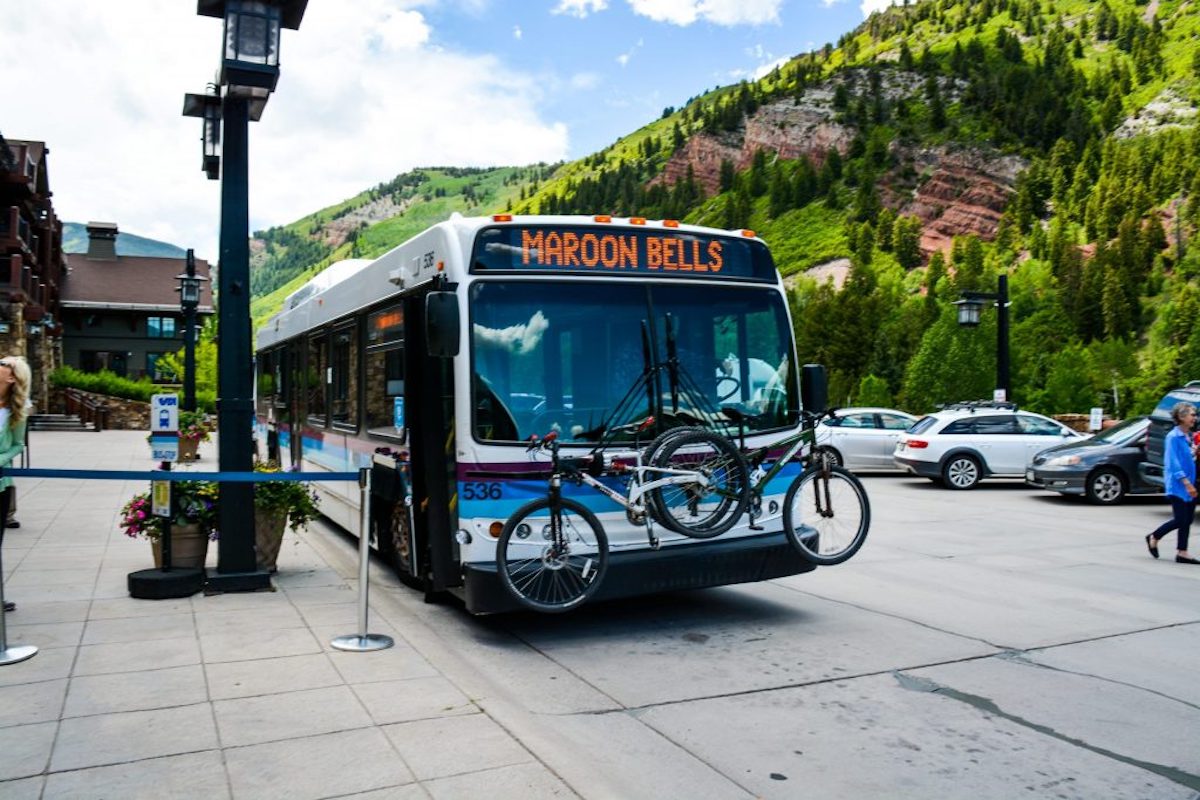
When I backpacked the Four Pass Loop, I took the shuttle. Here are some important things to note about the shuttle.
Dates: The shuttle from Aspen Highlands to Maroon Lake runs from May 26-October 22.
Times: The first shuttle leaves at 7:00 AM, and the last outgoing shuttle departs at 3:00 PM. The final return shuttle departs from Maroon Lake at 5:00 PM.
Costs: The shuttle costs $16 for adults, $10 for seniors over 65, and $10 for children under 12.
Reservations: You can reserve the shuttle here during the time it operates. I booked my shuttle a couple of weeks in advance, but you can reserve it as soon as you book your permits just to be safe. The early shuttle times between 7:00 AM to 10:00 AM tend to sell out the fastest.
Helpful Tip
Free parking for the shuttle
If taking the shuttle, you can park for free at the Brush Creek Park & Ride in Aspen. There is a free shuttle service from here to Aspen Highlands. I did not know I could do this for my trip and paid $40/day to park my vehicle at the Aspen Highlands parking garage.
The shuttle that transports hikers from Aspen Highlands to the Maroon Scenic Area / Source: RFTA
Crested Butte/East Fork
You do not need a permit to park at the East Fork trailhead. You can park overnight for free. This parking area is about 45 minutes from the town of Crested Butte, and you will find it on the right after passing Emerald Lake.
It is a large dirt lot with lots of parking spaces. There are reports of the road being rough; however, if you drive carefully over the potholes, it is doable in any vehicle and does not require 4-wheel drive.
Bearfoot Theory founder Kristen drove this road in her Sprinter Van back in 2019. The biggest issue she experienced is the road is quite narrow in a couple of places with room for only one larger car at a time.
My Four Pass Loop Trip Report
I hiked the Four Pass Loop in 3 days during the first weekend of September 2022. Hikers can follow this same itinerary by purchasing the overnight permits noted in the description for each day. Below is my detailed trip report.
Day 1: Maroon Scenic Area to North Fork Zone / Fravert Basin
Day 1 Trail Basics
Distance: 10 miles
Mountain Passes: 2
Elevation Gain: 3,567 feet
Elevation Loss:2,199 feet
Permit: North Fork Zone
Difficulty: Hard
Getting to the trailhead
I departed Fort Collins, Colorado early on September 3, 2022 to begin the 4-hour drive to Aspen. I stopped at a cafe for a quick breakfast in Aspen before heading to the parking garage to park my car and catch the shuttle.
Upon arriving at the Aspen Highlands parking garage, I organized my backpacking gear with my friend in the parking lot. Once I had divvied up the supplies, I waited at the desk for the 8:00 AM shuttle tickets I had reserved, then boarded the shuttle to the Maroon Scenic Area.
The shuttle driver provided an interesting commentary with facts about the Maroon Bells-Snowmass Wilderness during the 25-minute drive.
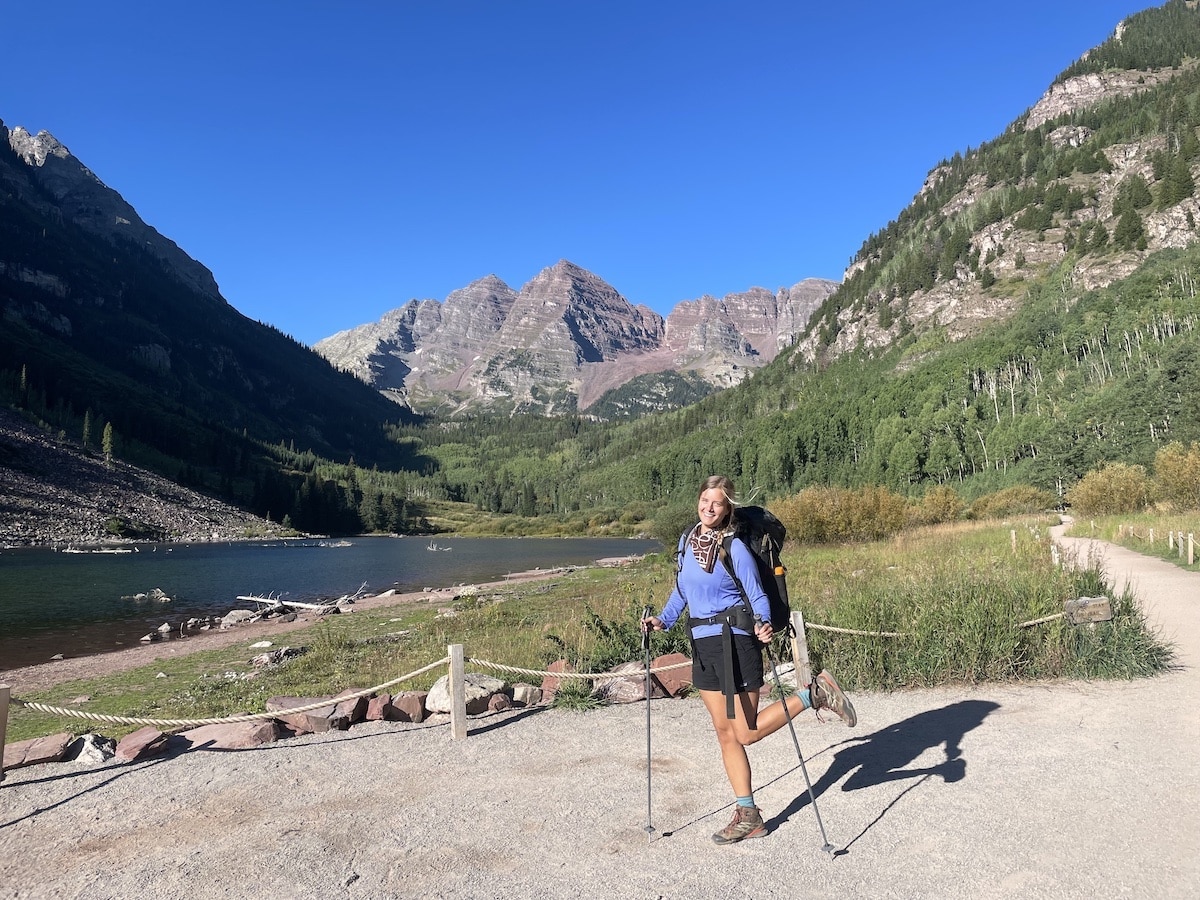
Upon arriving at the Maroon Scenic Area, I used the restroom facilities. I took photos at the iconic Maroon Lake before setting off on the trail.
Posing in front of Maroon Lake on the first day of my journey
Hiking the trail
I hiked at a steady incline for a little over 1.5 miles. My fresh legs and adrenaline made this first stretch pass quickly.
Before I knew it, I reached the wooden signs that mark the fork to decide whether to continue clockwise or counterclockwise. Since I had planned the itinerary and campsites to hike the loop clockwise, I followed the sign pointing toward Crater Lake.
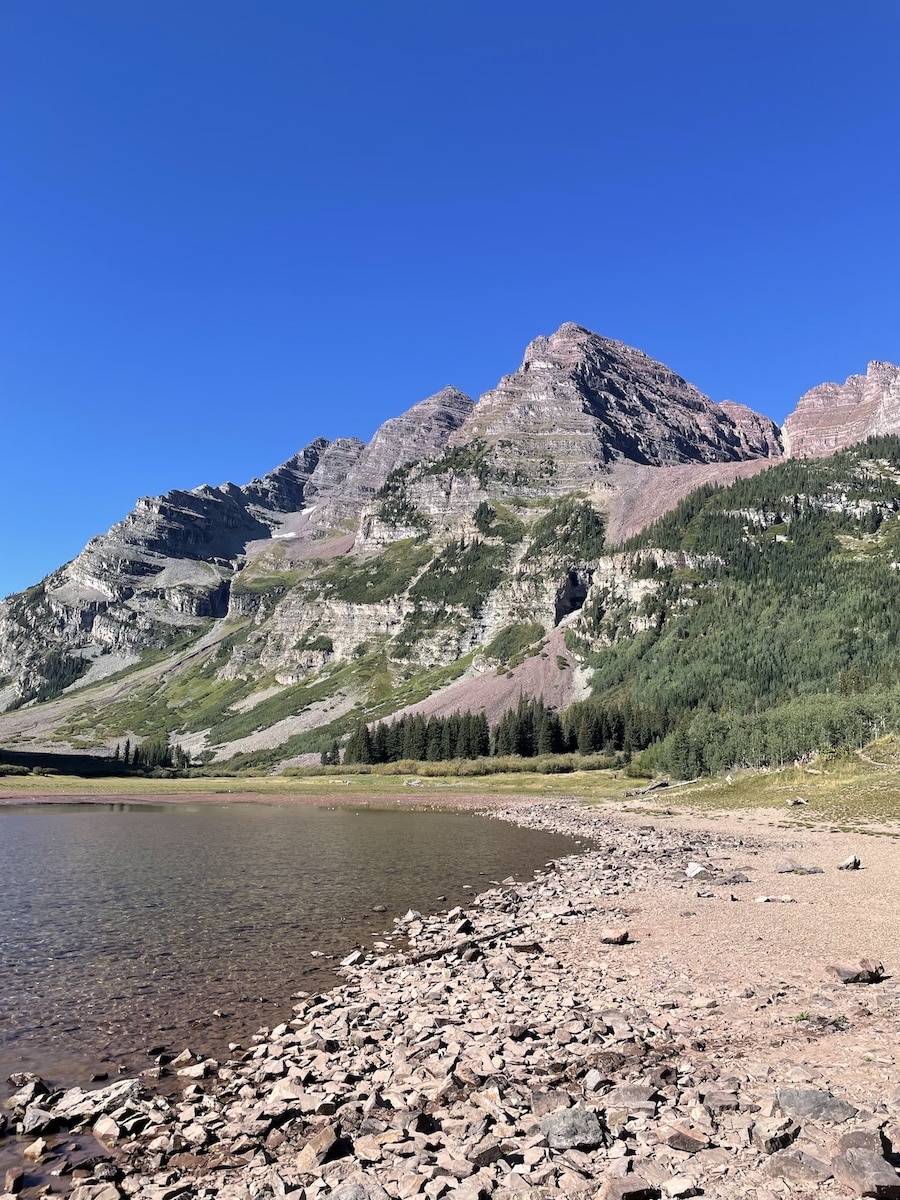
I reached Crater Lake around 9:30 AM and stopped again for some photos. This scenic lake is surrounded by the iconic peaks of the Maroon Bells and beautiful aspen trees.
Many people choose this at their ending point for a day hike; however, it was just the start of my journey.
The stunning views of the Maroon Bells from Crater Lake
I hiked uphill on the rocky trail in the sun, stopping only once for a 20-minute break in a spot with shade to eat lunch. I would have liked to stop and rest more, but I knew I had many miles to cover on that first day.
While hiking to West Maroon Pass, I enjoyed the views of the green grass, remaining wildflowers, and green aspen trees that were just starting to turn yellow around us. This section of the Four Pass Loop follows West Maroon Creek, so there were ample opportunities to refill my water as needed.
The trail was clearly marked, and I interacted with many encouraging backpackers. After four hours, I reached the summit of West Maroon Pass.
West Maroon Pass
Although it felt difficult at the time, West Maroon Pass was probably the easiest pass I climbed out of the four mountain passes in the loop. The incline was steady and manageable.
From Crater Lake to the top of West Maroon Pass, you gain 2,367 feet of elevation over 4.3 miles. I enjoyed the vast views of the Maroon Bells wilderness at the summit.
The descent was challenging, as the rock scree was loose and slippery. I felt thankful for my trekking poles and grippy hiking boots!
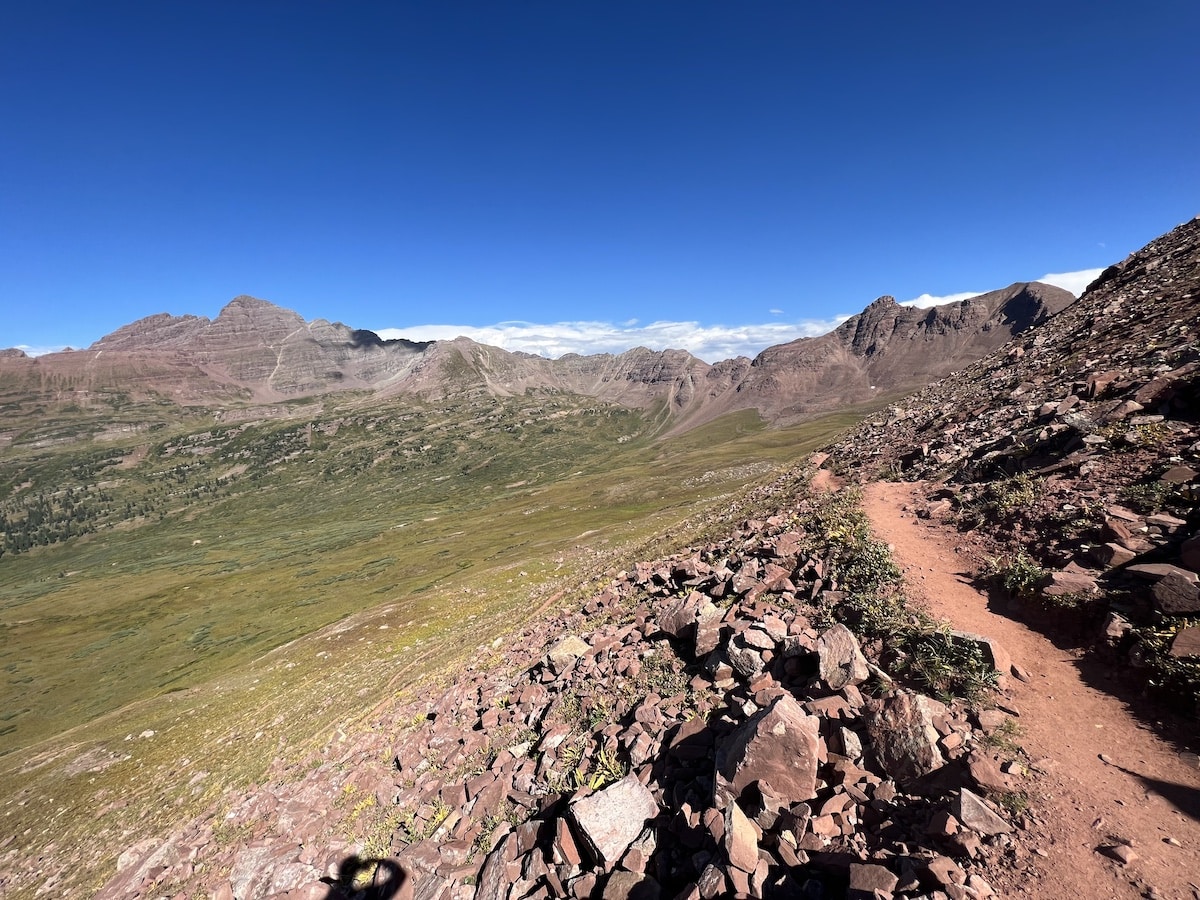
Views of the Maroon Bells from the top of West Maroon Pass
Frigid Air Pass
Two hours after I reached the summit of West Maroon Pass, I found myself on the top of Frigid Air Pass. Although the ascent of Frigid Air was relatively short, it was extremely steep.
You gain almost 500 feet of elevation in half of a mile while hiking above 12,000 feet. I needed to stop for frequent breaks to catch my breath before taking a few more steps.
As I descended Frigid Air Pass around 3:30 PM, I felt exhausted and desperate to find a camping spot to settle in for the night.
I thought I would find a campsite relatively quickly; however, it took about two hours after I had reached the top of Frigid Air Pass before I found a place to set up camp. This was due to a lack of dispersed campsites at the southern tip of the North Fork Zone.
I found a spot in Fravert Basin along the Crystal River and ensured I was 70 steps away from the water. I set up my tent around 5:30 PM, made dinner, and fell asleep shortly afterward to prepare for another long and scenic day of hiking.
Descending Frigid Air Pass to find my first campsite of the trip
Day 2: North Fork Zone / Fravert Basin to Upper Snowmass Zone
Day 2 Trail Basics
Distance: 9 miles
Mountain Passes: 1
Elevation Gain: 2,142 feet
Elevation Loss:1,569 feet
Permit: Upper Snowmass Zone
Difficulty: Hard
Hiking in Fravert Basin
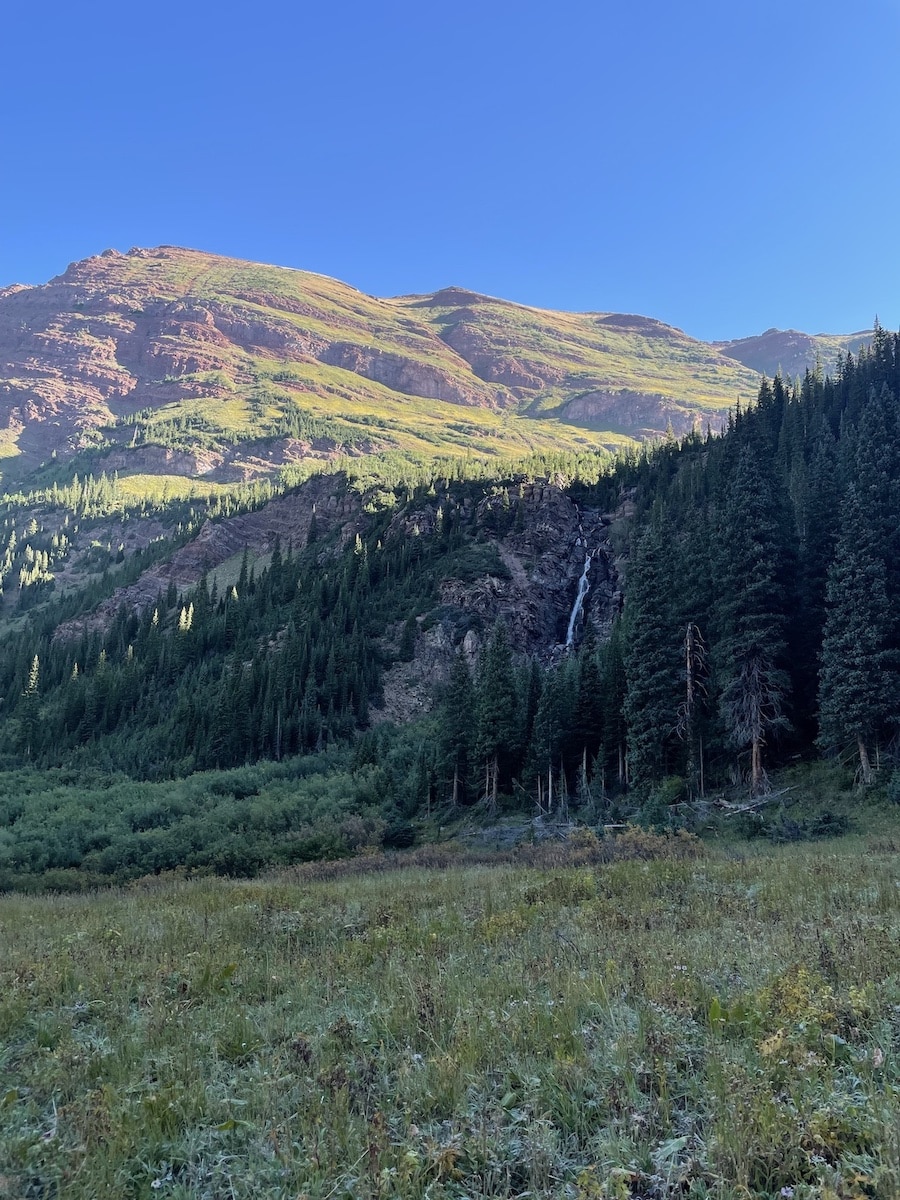
On the second day, I departed my campsite around 7:30 AM and set out on the trail. I enjoyed walking through Fravert Basin, which features forests, natural creeks, and waterfalls.
I also appreciated the comfort of the shade and the cushion of the pine needles beneath my feet while hiking that morning.
Admiring the view of a waterfall from the trail in Fravert Basin
After hiking a few miles, I also reached the first (and only) water crossing where I needed to change into my hiking sandals. The water was low and only about 6 inches deep, but I did not want to risk hiking the rest of day in wet socks and boots.
I could have added two miles to my day to see Geneva Lake before ascending Trail Rider Pass. However, since I felt tired from the previous day and knew I had another long day ahead, I decided not to.
I stopped for a quick lunch at a small body of water before starting the ascent of Trail Rider Pass.
Trail Rider Pass
I remember the ascent to Trail Rider Pass feeling long and steep, and I moved slowly. To distract my brain and help pass the time on the trail, I struck up a conversation with a solo female hiker.
After telling her where I had camped last night, she told me that she had camped a few miles further into the forest of Fravert Basin in the North Fork Zone. She awoke to moose surrounding her campsite that morning! Although I did not see any wildlife on the loop, it was fun to hear about her experience and see her photos.
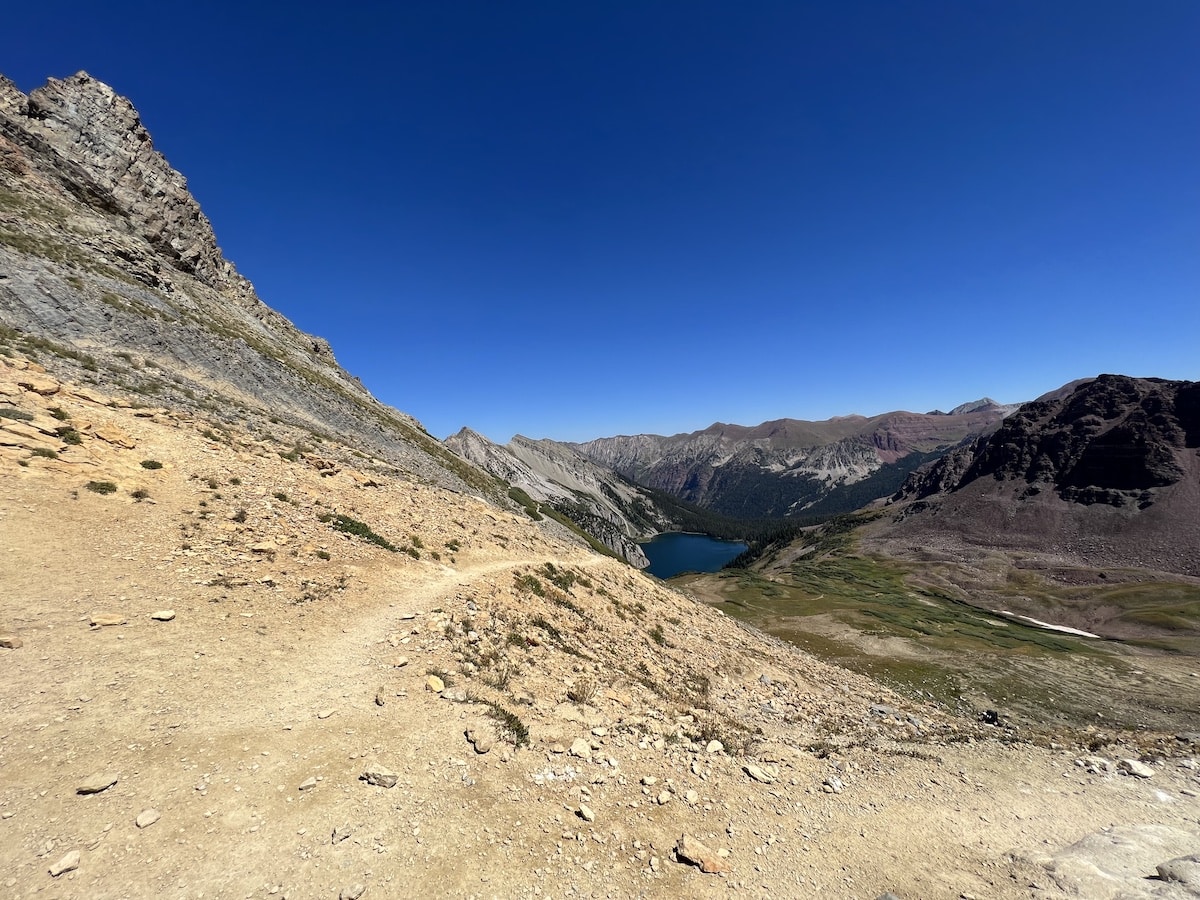
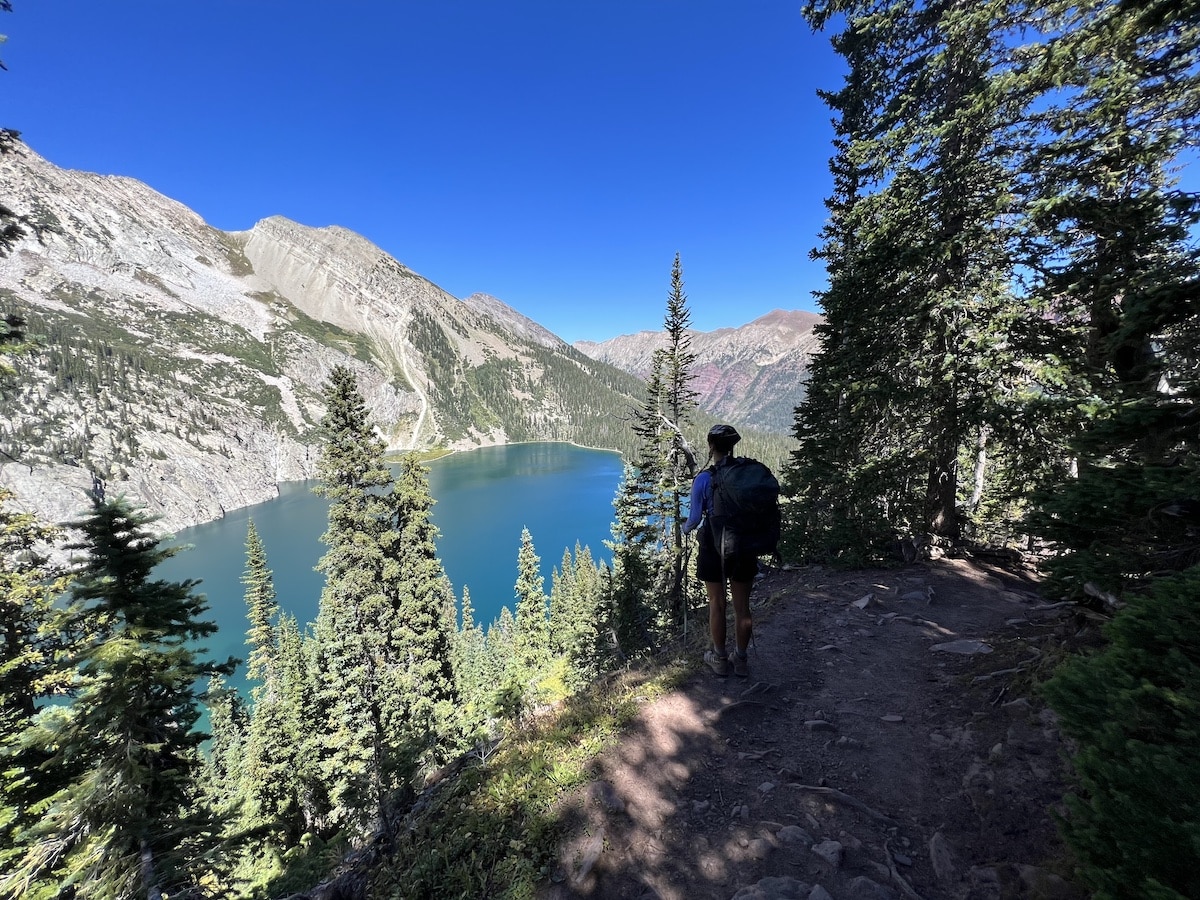
Around noon, I reached the summit of Trail Rider Pass. It was my favorite pass of the entire trip because I could see the beautiful blue water of Snowmass Lake.
The gorgeous water views plus the smooth descent from the top of Trail Rider Pass down to Snowmass Lake made it my favorite stretch of the Four Pass Loop trail.
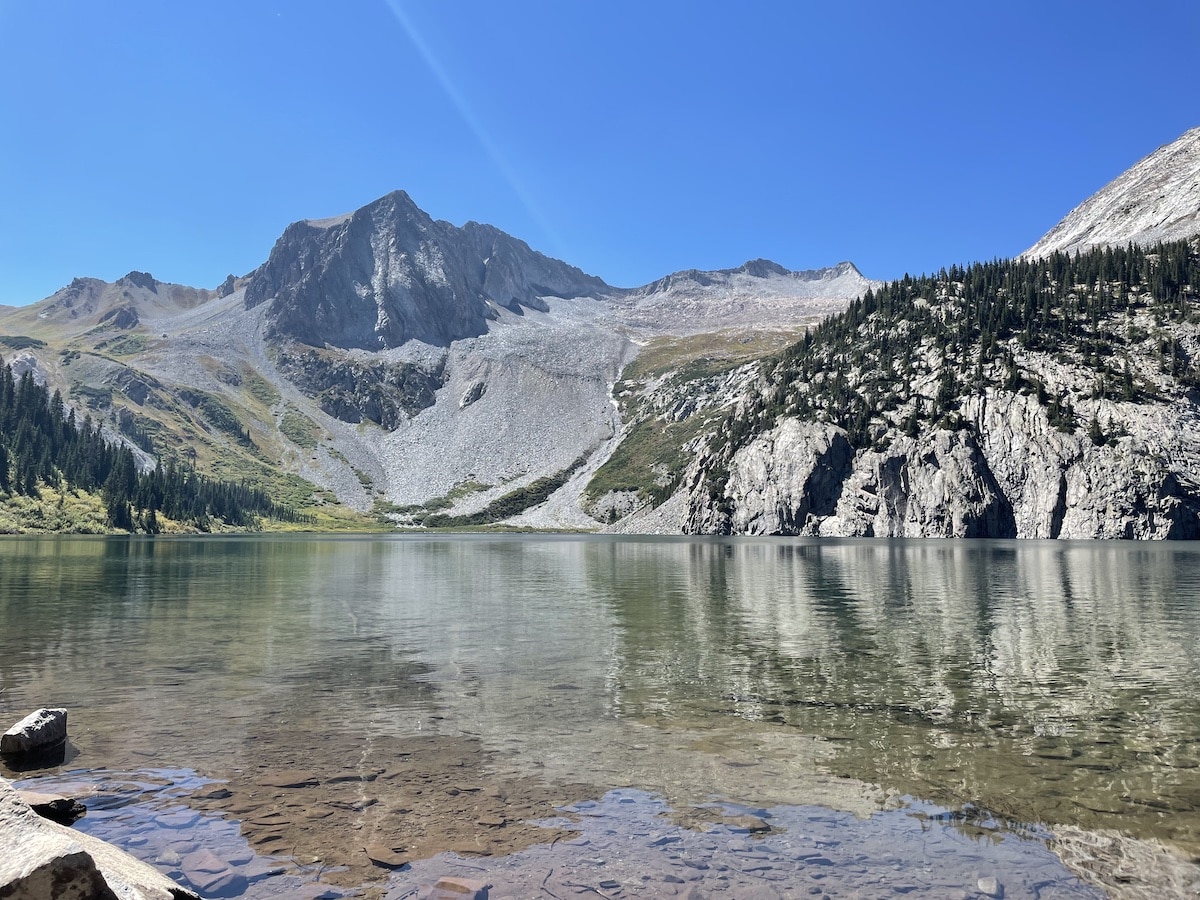
The deep blue water of Snowmass Lake from the top of Trail Rider Pass
Snowmass Lake
I reached Snowmass Lake around 2:00 PM and stopped to eat a snack, rest my legs, and watch people swim in the cool water.
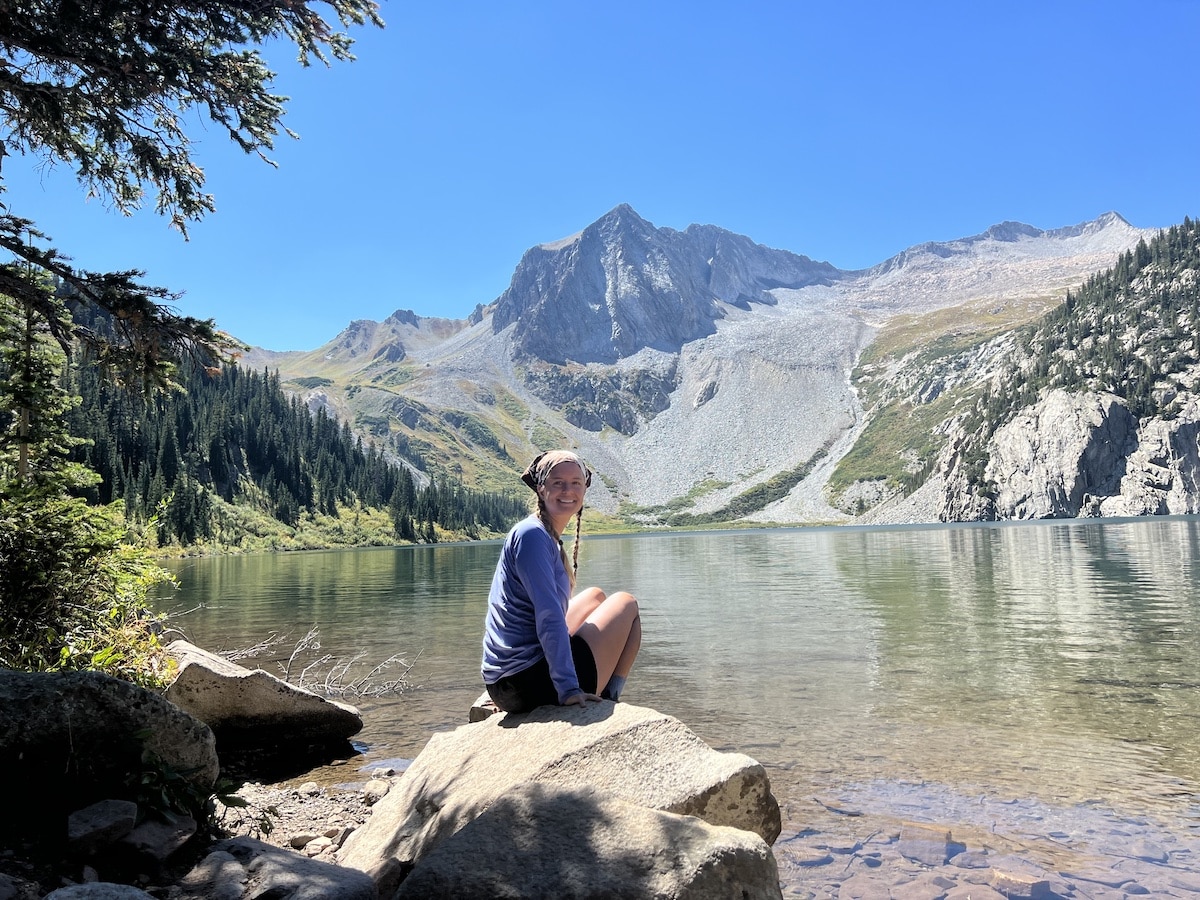
Snowmass Lake remains one of my favorite alpine lakes of all time. I wish I could have camped at this lake, but it would have made for a long last day of hiking.
After enjoying the lake for about half an hour, I continued to the Upper Snowmass Zone and found a campsite near Snowmass Creek. I set up camp around 5:00 PM, napped, made dinner, and fell asleep around 7:00 PM.
Relaxing in the sun on a rock at Snowmass Lake
Day 3: Upper Snowmass Zone to Maroon Scenic Area
Day 3 Trail Basics
Distance: 7 miles
Mountain Passes: 1
Elevation Gain: 1,589 feet
Elevation Loss:2,867 feet
Permit: N/A
Difficulty: Hard
On my final day on the Four Pass Loop, I awoke and departed my campsite around 7:00 AM. I enjoyed watching the sunrise light up the surrounding mountain peaks as I hiked through the forest to Buckskin Pass.
Buckskin Pass
The ascent of Buckskin Pass featured numerous steep switchbacks. After a slow and steady climb, I reached the summit around 9:00 AM.
I took a short break to take photos and admire the views from the top of the final pass of the loop.
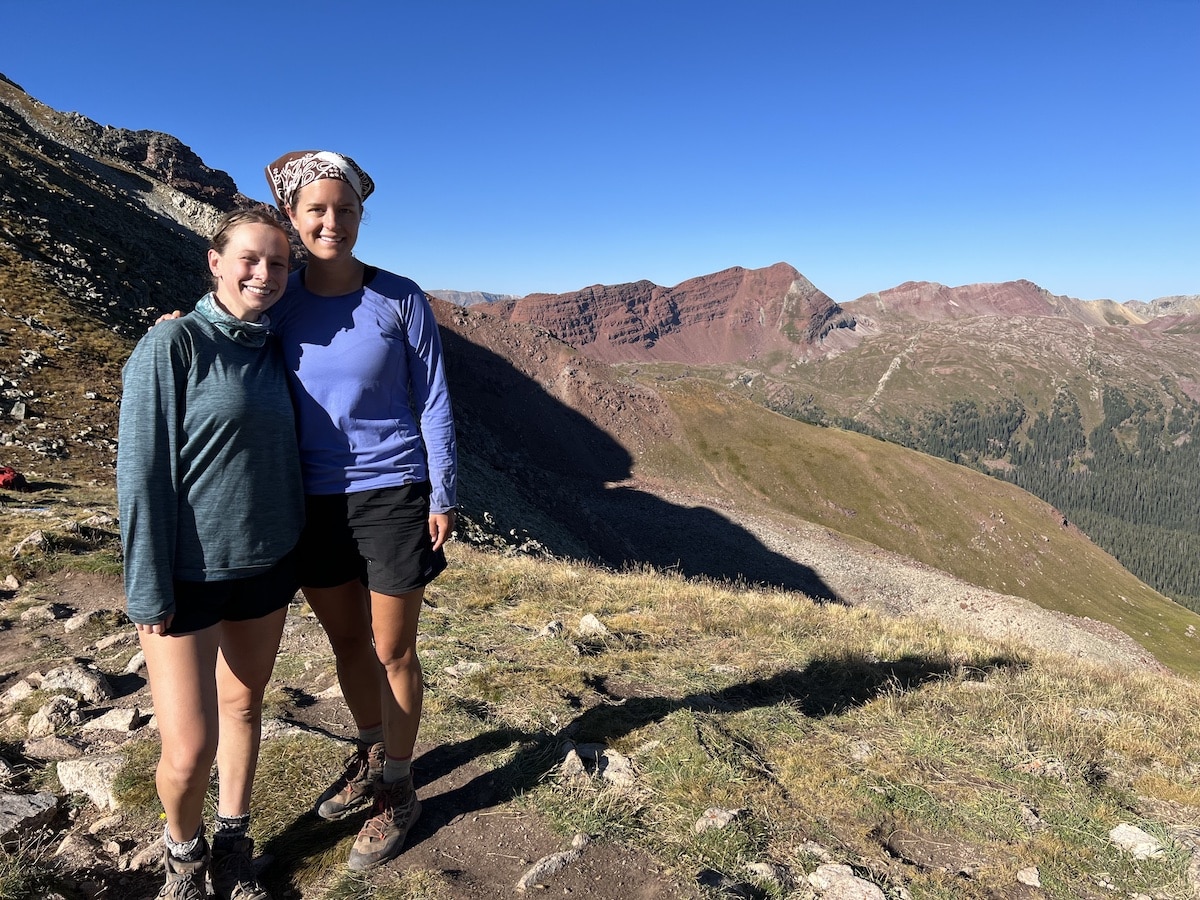
Smiling with my friend on our final mountain pass of the loop – Buckskin Pass
The miles between the top of Buckskin Pass to the Maroon Scenic Area seemed to last forever. I admired the changing aspen trees around me but felt tired from the long days of carrying my heavy pack.
In my rush to finish, I slipped once and got a small cut on my hand. Unfortunately, I also got stung by a bee!
I arrived at the parking lot to catch the shuttle just before noon.
When I returned to the Aspen Highlands parking garage, I called my husband to tell him about my adventure. I grabbed a celebratory lunch with my friend at a restaurant in Aspen before hitting the road back to Fort Collins.
Helpful Tip
Camp at Willow Lake if time allows
Once you descend Buckskin Pass, there is an optional trail to see Willow Lake. The hike to Willow Lake adds 7 miles (and another steep climb) to the total hike. I decided not to do this extension; however, I have heard it is a secret gem with fewer people than the rest of the Four Pass Loop trail. If you have another night to spare, you could add on this lake (it is not in a permit zone and does not require an overnight permit to camp there).
Views of the Maroon Bells during the ascent of Buckskin Pass
Tips for Backpacking the Four Pass Loop
Here are some of my personal recommendations and things I wish I had known before backpacking the Four Pass Loop. Use these tips to help you know what to expect on the trail and plan your trip accordingly.
Plan for an early start on day 1: I recommend starting as early as possible on your first day to beat the heat. However, if an easy start is not possible for you, you may want to add on an extra night at the start of your trip and secure an overnight permit to camp near your starting point (Crater Zone if starting in Aspen or East Fork Zone if starting in Crested Butte).
Campfires are not allowed in most areas: Campfires are prohibited at designated sites in Crater Lake and anywhere above 10,800 feet in the Maroon Bells-Snowmass Wilderness (including Snowmass Lake).
There are no toilets: There are no toilets along the Four Pass Loop. Plan to bring toilet paper and human waste bags (WAG bags) or a trowel to dig a hole six to eight inches deep and at least 200 feet from water, campsites, and trails. To brush up on Leave No Trace, read this post on how to properly poop outdoors.
Choose campsites close to water sources: If you pick campsites with access to water nearby, you can start each day with a full reservoir of 3-4 liters of water before you hit the trails. For this reason, I camped near the Crystal River in the North Fork Zone on my first night and Snowmass Creek in the Upper Snowmass Zone on the second night.
Four Pass Loop Backpacking Gear
Start with this 3-day backpacking checklist. I also recommend some specific pieces of gear below that you should consider for your Four Pass Loop backpacking trip.
Even if you plan to complete this trail in the summer, weather conditions may change unexpectedly at high elevations. It is crucial to prepare for all elements and cool evenings.
Admiring the blue water of Snowmass Lake
Looking for more backpacking trails? Check out some more of our favorite routes:
Save this post to Pinterest
Would you hike the Maroon Bells Four Pass Loop Trail? Please share your comments, questions, or stories from the trail in the comment section below.
Every country needs to own the production of their own intelligence, NVIDIA founder and CEO Jensen Huang told attendees Monday at the World Governments Summit in Dubai.
Huang, who spoke as part of a fireside chat with the UAE’s Minister of AI, His Excellency Omar Al Olama, described sovereign AI — which emphasizes a country’s ownership over its data and the intelligence it produces — as an enormous opportunity for the world’s leaders.
“It codifies your culture, your society’s intelligence, your common sense, your history – you own your own data,” Huang told Al Olama during their conversation, a highlight of an event attended by more than 4,000 delegates from 150 countries.
“We completely subscribe to that vision,” Al Olama said. “That’s why the UAE is moving aggressively on creating large language models and mobilizing compute.”
Huang’s appearance in the UAE comes as the Gulf State is moving rapidly to transform itself from an energy powerhouse into a global information technology hub.
Dubai is the latest stop for Huang in a global tour that has included meetings with leaders in Canada, France, India, Japan, Malaysia, Singapore and Vietnam over the past six months. The Middle East is poised to reap significant benefits from AI, with PwC projecting a $320 billion boost to the region’s economy by 2030.
At Monday’s summit, Huang urged leaders not to be “mystified” by AI. AI’s unprecedented ability to take directions from ordinary humans makes it critical for countries to embrace AI, infusing it with local languages and expertise.
In response to Al Olama’s question about how he might approach AI if he were the leader of a developing nation, Huang emphasized the importance of building infrastructure.
“It’s not that costly, it is also not that hard,” Huang said. “The first thing that I would do, of course, is I would codify the language, the data of your culture into your own large language model.”
And as AI and accelerated computing has developed, NVIDIA GPUs have become a platform for one innovation after another.
“NVIDIA GPU is the only platform that’s available to everybody on any platform,” Huang said. “This ubiquity has not only democratized AI but facilitated a wave of innovation that spans from cloud computing to autonomous systems and beyond.
All of this promises to unleash new kinds of innovations that go beyond what’s traditionally been thought of as information technology.
Huang even countered advice offered by many visionaries over the years who urged young people to study computer science in order to compete in the information age. No longer.
“In fact, it’s almost exactly the opposite,” Huang said. “It is our job to create computing technologies that nobody has to program and that the programming language is human: everybody in the world is now a programmer — that is the miracle.”
In a move that further underscores the regional momentum behind AI, Moro Hub, a subsidiary of Digital DEWA, the digital arm of the Dubai Electricity and Water Authority, focused on providing cloud services, cybersecurity and smart city solutions, announced Monday it has agreed to build a green data center with NVIDIA.
In addition to the fireside chat, the summit featured panels on smart mobility, sustainable development and more, showcasing the latest in AI advancements. Later in the evening, Huang and Al Olama took the stage at the ‘Get Inspired’ ecosystem event, organized by the UAE’s AI Office, featuring 280 attendees including developers, start-ups, and others.
The technical storage or access is strictly necessary for the legitimate purpose of enabling the use of a specific service explicitly requested by the subscriber or user, or for the sole purpose of carrying out the transmission of a communication over an electronic communications network.
Preferences
The technical storage or access is necessary for the legitimate purpose of storing preferences that are not requested by the subscriber or user.
Statistics
The technical storage or access that is used exclusively for statistical purposes.The technical storage or access that is used exclusively for anonymous statistical purposes. Without a subpoena, voluntary compliance on the part of your Internet Service Provider, or additional records from a third party, information stored or retrieved for this purpose alone cannot usually be used to identify you.
Marketing
The technical storage or access is required to create user profiles to send advertising, or to track the user on a website or across several websites for similar marketing purposes.