“Electric muscle car.” The phrase earns more comments and emails than almost any other we routinely write about.
To purists, it’s a contradiction — muscle cars smell like gasoline and sound like rage. They can’t be electric.
To others, it’s a promise — electric cars are better at the kind of monstrous-torque, drag-strip performance that muscle cars are made for. They can be muscle cars.
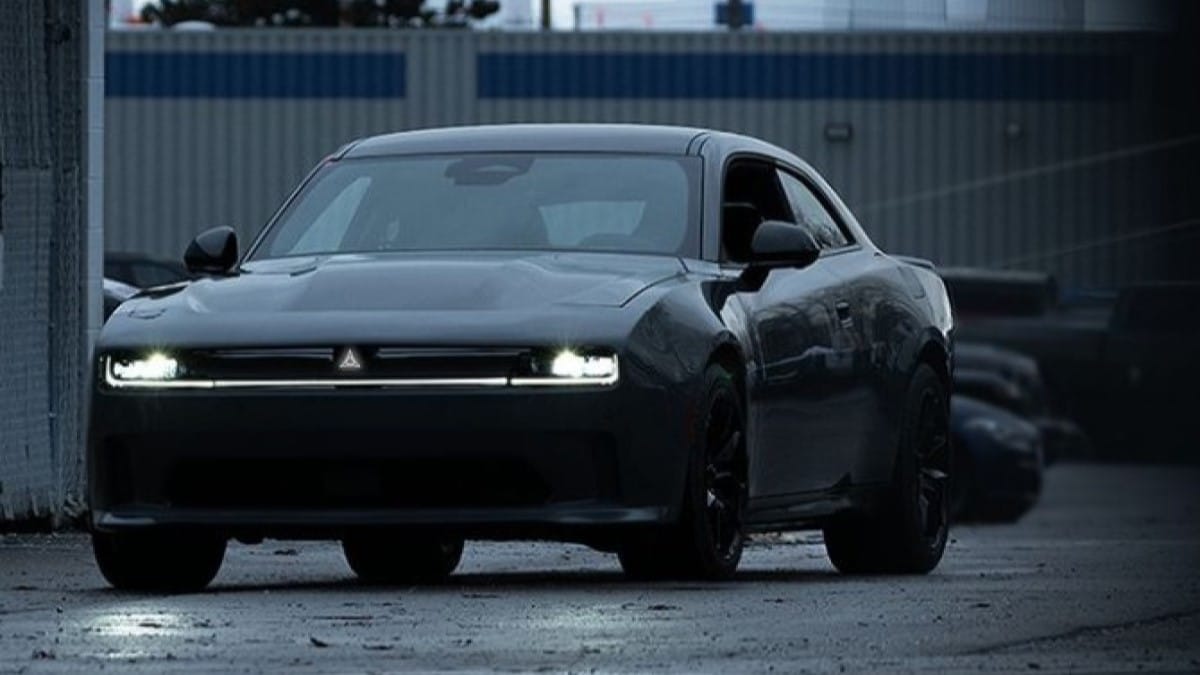
The debate will intensify in one month. Dodge will debut the production version of its upcoming electric muscle car, the Charger Daytona, on March 5. Dodge revealed the news at last week’s J.D. Power Auto Summit in Las Vegas.
It Looks the Part
What, exactly, is an electric muscle car?
Matt McAlear, senior vice president of Dodge/SRT sales and marketing, told trade publication Automotive News that for Dodge it’s about aesthetics and speed. “We’re not going for the lowest drag coefficient. We’re not going for the highest mileage,” he said.
Dodge revealed the Charger Daytona more than a year ago as a concept car. Recent shots released to the media reveal little has changed since that first unveiling.
It has the proportions of a classic Dodge muscle car, with a blunt front end and broad rear fenders. But that’s partly an illusion, and McAlear’s statements are partly marketing-speak. The car actually has a sleek nose (as if Dodge was going for the lowest drag coefficient), hidden by a faux-boxy front fascia that conceals a front wing.
It also uses a mock exhaust sound. McAlear promises it’s “just as loud as today’s Hellcat.” But electric motors are nearly silent. The noise comes from air pumped through organ-like pipes sculpted to create a snarling sound.
ButIs “Electric Muscle” Possible?
It may seem like a costume, but the car will likely have the performance to back up its muscled looks. Electric vehicles (EVs) are capable of raw speed that shocks (pun kind of intended) gasoline purists. There are 5-seater electric sedans with sub-2-second zero-to-60 times.
How is that possible? Because of the nature of electric motors.
Gasoline engines build torque over time. Engineers work to cut that time as short as possible. But the torque curve governed muscle car engineering for decades.
Electric engines start at peak torque. That enables faster acceleration and is the reason Kia can sell you an electric family SUV with a quarter-mile-time that rivals those of supercars in earlier eras.
Some Automakers Sell Cars. Dodge Also Sells an Image.
Can Dodge sell the fans it calls “the brotherhood of muscle” on the electric era? McAlear is betting on it. Dodge understands it sells a lifestyle more than a thing made of metal.
“We’re not building a commodity, we’re building personas,” he said.
Convincing the faithful that persona can exist in a high-tech, electric form may be one of the automotive industry’s toughest challenges. But Dodge will begin trying in 30 days.
The company may have a backup plan if the brotherhood isn’t ready immediately. Rumors suggest the Charger Daytona may also be available with a turbocharged 6-cylinder engine, though no one seems sure whether Dodge will reveal it that way at first.
Students will work closely with the Frank Stephenson Design team to futureproof design techniques and safeguard prospective talent. PDE is a collaborative programme with the University of Glasgow, James Watt School of Engineering.
GSA held an event celebrating the partnership, which saw lecturers, students, stakeholders and the Frank Stephenson Design team interacting within an immersive design seminar to showcase the benefits of sketching, the art of hand drawing and promote a repertoire of sketching skills from brain to hand.
Creative Director Frank Stephenson, gave a speech to the wider GSA community. Giving an overview of his latest ‘Learn to Sketch with Frank’ programme and why, in an era of CAD, AI and graphic design, it’s important to maximise and utilise the pen and paper approach.
Frank and Frank Stephenson Design’s Lead Designer, Euan, also gave students a sketching masterclass during their visit to GSA.
‘Learn to Sketch with Frank’ is an immersive online design course that teaches Frank’s key principles of creative sketching, and blends theory with practical techniques and interactive videos. It was launched by Frank Stephenson at the end of 2023. The course promises to open minds and stimulate creativity, and communicates the invaluable lessons that Frank has garnered over the years.
At the event, Frank introduced his sketching legacy, the ‘Learn to sketch with Frank’ course, and students at GSA took part in a ‘Mars design sprint’.
Official Statements
Craig Whittet, Head of Department PDE, highlighted the value of the collaboration: “What an opportunity for PDE! Working with FSD highlights the value of externalising ideas through sketching and the immediacy that this brings to discussions is critical to the design process. The potential future careers of the students were also explored through discussions with PDE grad and FSD lead designer Euan McPherson. It’s always a proud moment for the dept when we see the difference that our grads make and the experiences that we may well benefit from.”
Creative Director at Frank Stephenson Design, Frank Stephenson, said: “Frank Stephenson Design is thrilled to be teaming up with GSA and working with such talented students on the future of design. Sketching is a core requirement of design, imperative in my industry, and it’s so important to me that the human touch isn’t lost to AI and computers. We’re excited for this opportunity to futureproof design talent and work with such gifted students.”
The BMW Z4 is among the great driver’s cars of the current era.
It’s fast enough to satisfy any enthusiast but not chase speed records. You could outrun it in a sprint to 60 mph in a M5 sedan.
Instead, the Z4 is all about crisp handling and top-down driving pleasure. Two-seat roadsters are for drivers who want to enjoy feeling like Ayrton Senna now and then on a winding road but don’t need bragging rights.
The Z4 has long been an outstanding driver’s car — the Miata for the luxury set — except for one crucial omission. The current generation lacks a manual transmission option.
The kind of driver who dreams of a pretty little two-seater ragtop often imagines a third pedal as part of the package.
It’s finally coming.
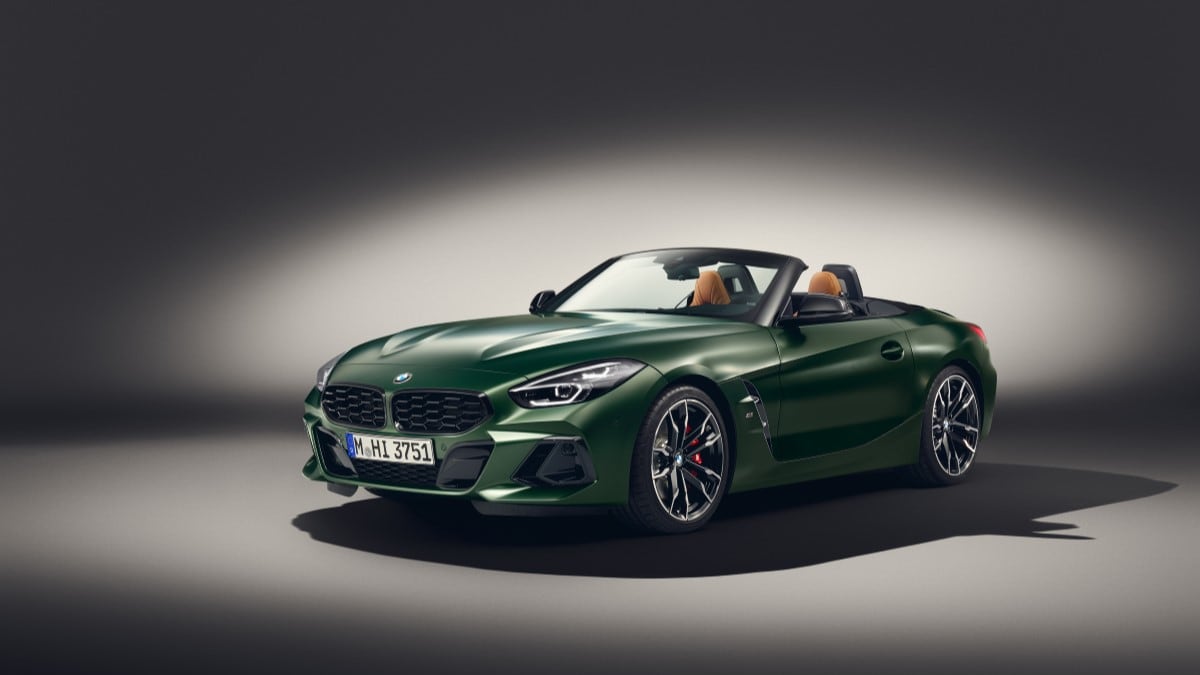
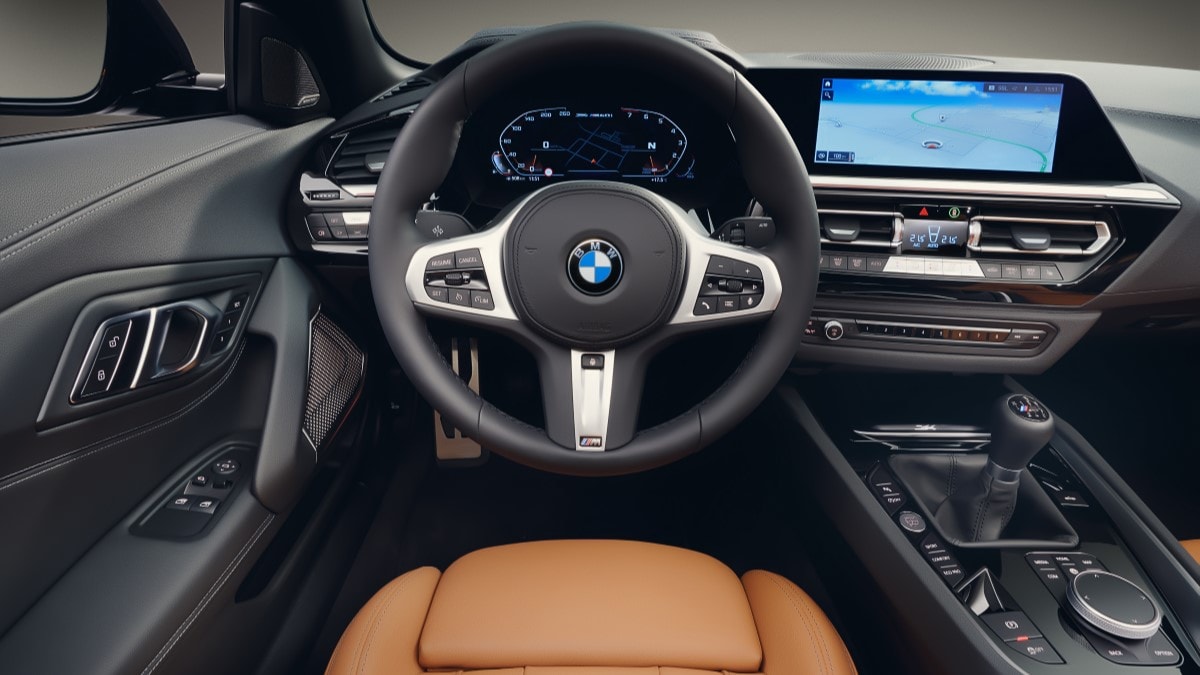
“Fans of driving pleasure in its purest form can look forward to a new arrival from BMW crafted especially for them: the 2025 BMW Z4 M40i is available for the very first time with a 6-speed manual gearbox,” BMW has announced.
Toyota Went First
The move has been rumored for some time. Oddly, Toyota sells its own version of the Z4. The GR Supra sport coupe is a BMW Z4 under the skin. Toyota remakes the body to turn it into a hardtop coupe but changes little else.
True story — pair your phone to the current GR Supra, and your phone will identify it as a BMW Z4.
It’s available only on the Z4 M40i trim level, in a special “handschalter” edition. The M40i gets a 3.0-liter turbocharged inline 6-cylinder engine, an adaptive suspension, and stronger brakes. The handschalter adds “a retuned chassis and mixed-size M light-alloy wheels measuring 19 inches at the front axle and 20 inches at the rear.”
BMW says the manual option will add $3,500 to the Z4’s price. BMW hasn’t released 2025 pricing yet, so we don’t know what to add that sum to. The 2024 M40i on dealer lots today starts at $66,295 (including a $995 destination charge).
Six-speed versions also get “Extended Shadowline black high-gloss exterior trim on the exterior mirror caps, badging, and specially designed flaps for managing the airflow around the rear wheel arches, as well as red calipers for the M Sport brakes.”
We’ll have to test it, but we expect the manual to make the Z4 what it should have been.
Audi has taken the wraps off one of its most anticipated estates/station wagons – the RS 6 Avant GT. It is a limited edition version of the RS 6 and the most hardcore version to date.
The Audi RS 6 Avant GT takes inspiration from the legendary Audi 90 quattro IMSA GTO race car from 1989. Its design is based on the RS 6 GTO concept that was created by 12 apprentices, with support from Audi Design, over a 6-month period.
The RS 6 Avant GT features a massive Singleframe grille with vertical blades and a front splitter. It has a redesigned carbon fibre hood, and carbon fenders and rides on 22-inch 6-spoke wheels painted in white. At the rear, the car gets a functional diffuser and a distinct double wing.
The RS 6 Avant GT has a black interior with red and copper highlights. It is equipped with RS bucket seats in a leather-Dinamica combination and the “RS 6 GT” lettering.
Powering the RS 6 Avant GT is the familiar 4.0-liter twin-turbo V8 engine paired with an 8-speed automatic gearbox. It has been tuned to produce 630 hp and 627 lb-ft of torque. That’s 30 hp and 37 lb-ft more than the standard RS 6. Audi claims a 0-62 mph time of 3.3 seconds and a top speed of 190 mph.
The RS 6 Avant GT features Audi’s Quattro all-wheel-drive system and the latest version of the locking centre differential that splits power to the front and rear axle in a 40:60 ratio. Also, for the first time, Audi is offering adjustable coilover suspension as standard. It lowers the ride height by 10 mm compared to the RS 6. Other changes include a higher spring rate, triple-adjustable dampers and stiffer stabilizers. The RS 6 GT rides on Continental Sport Contact 7 tires and is equipped with carbon ceramic brake discs.
The Audi RS 6 Avant GT is limited to 660 units and prices start at almost €220,000. Deliveries will begin in Q2 2024.
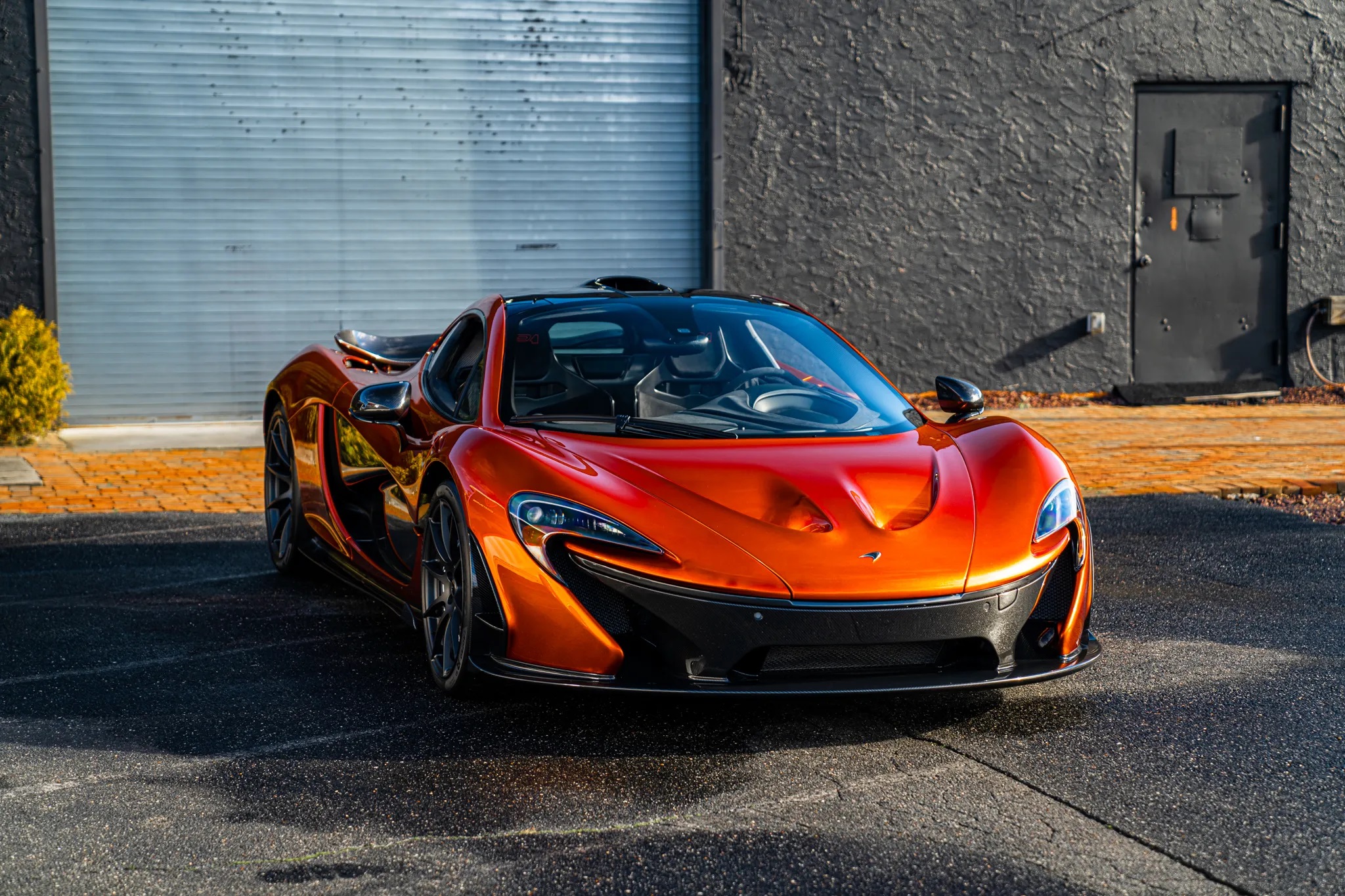
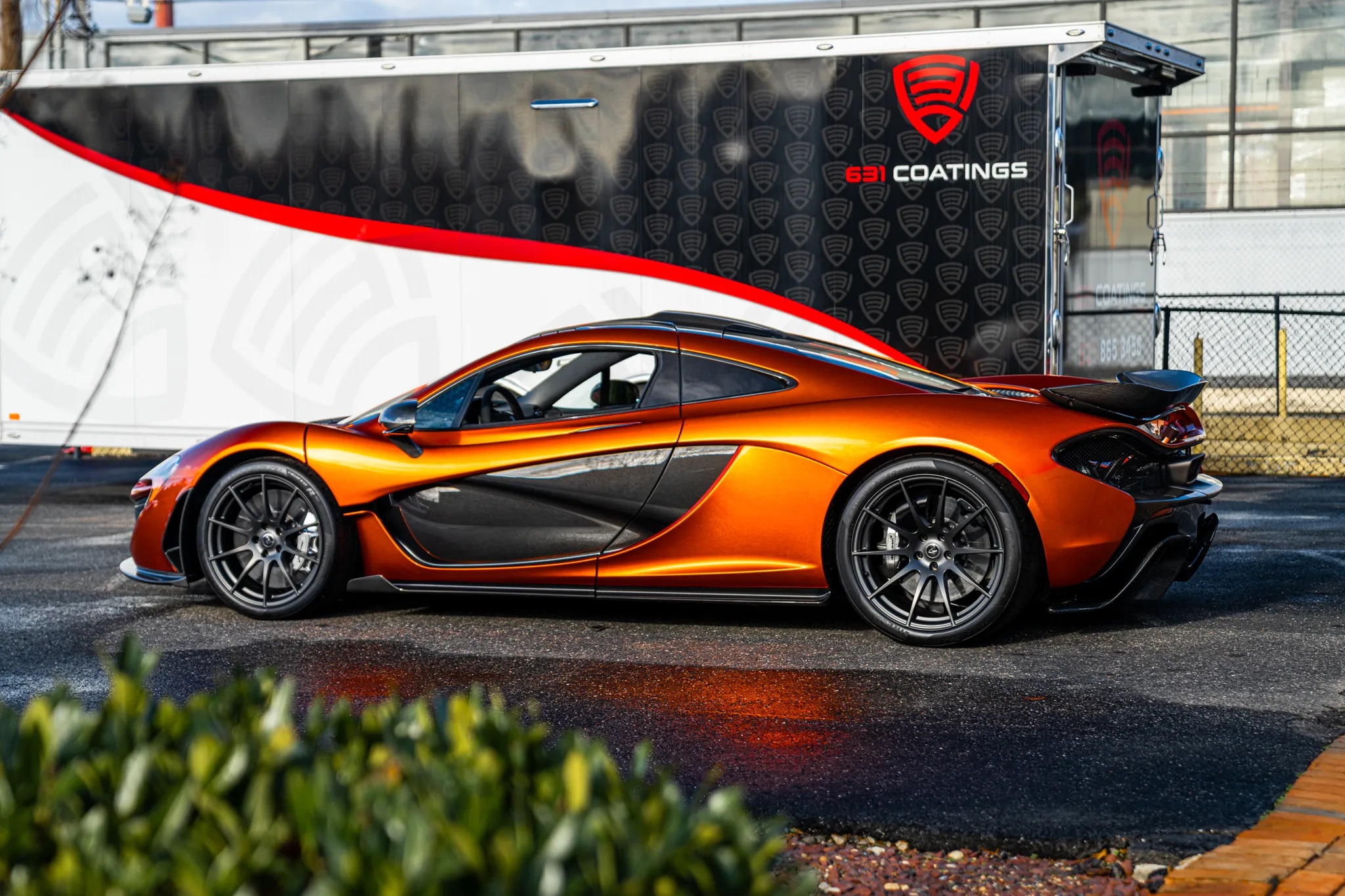
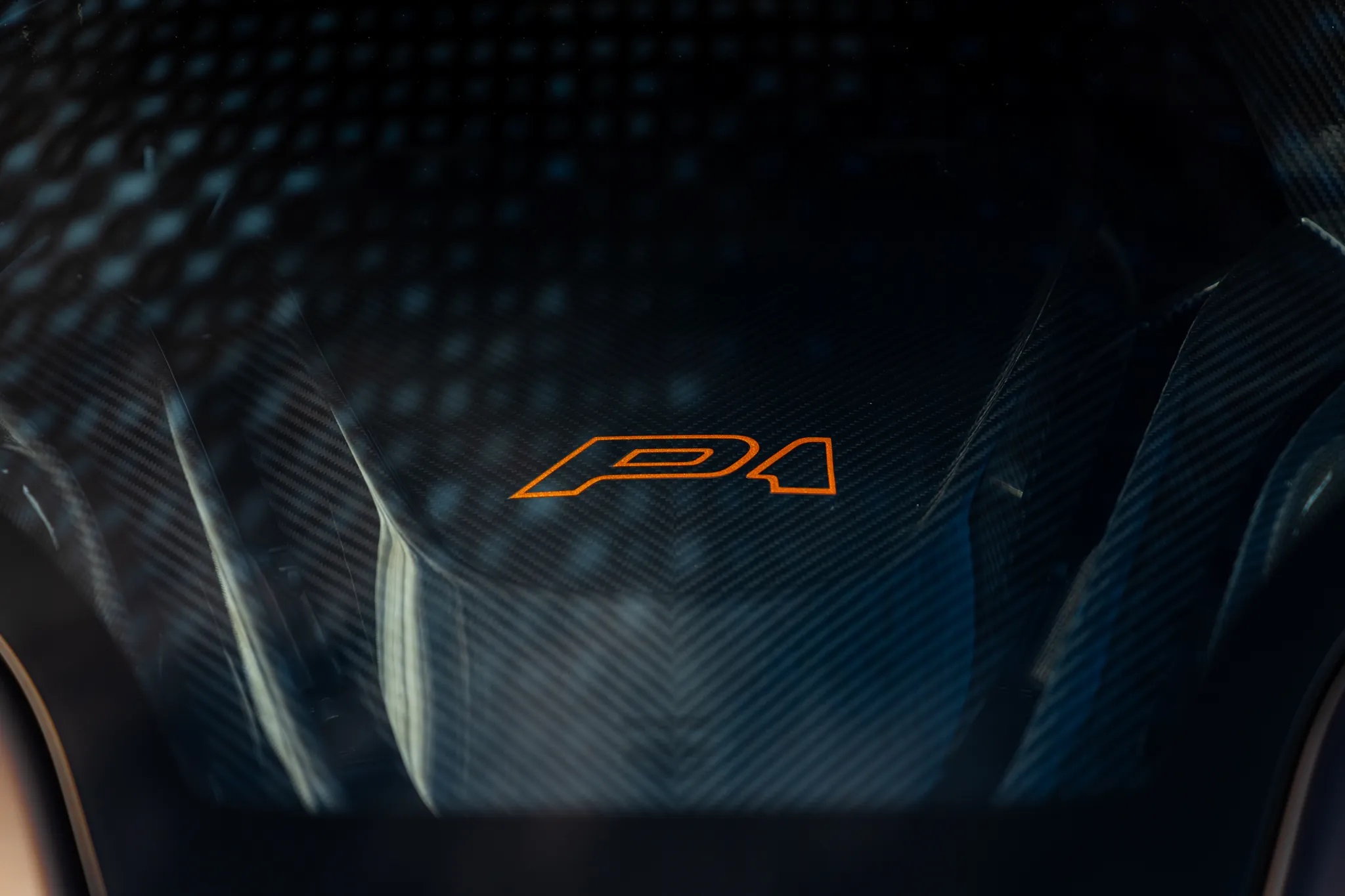
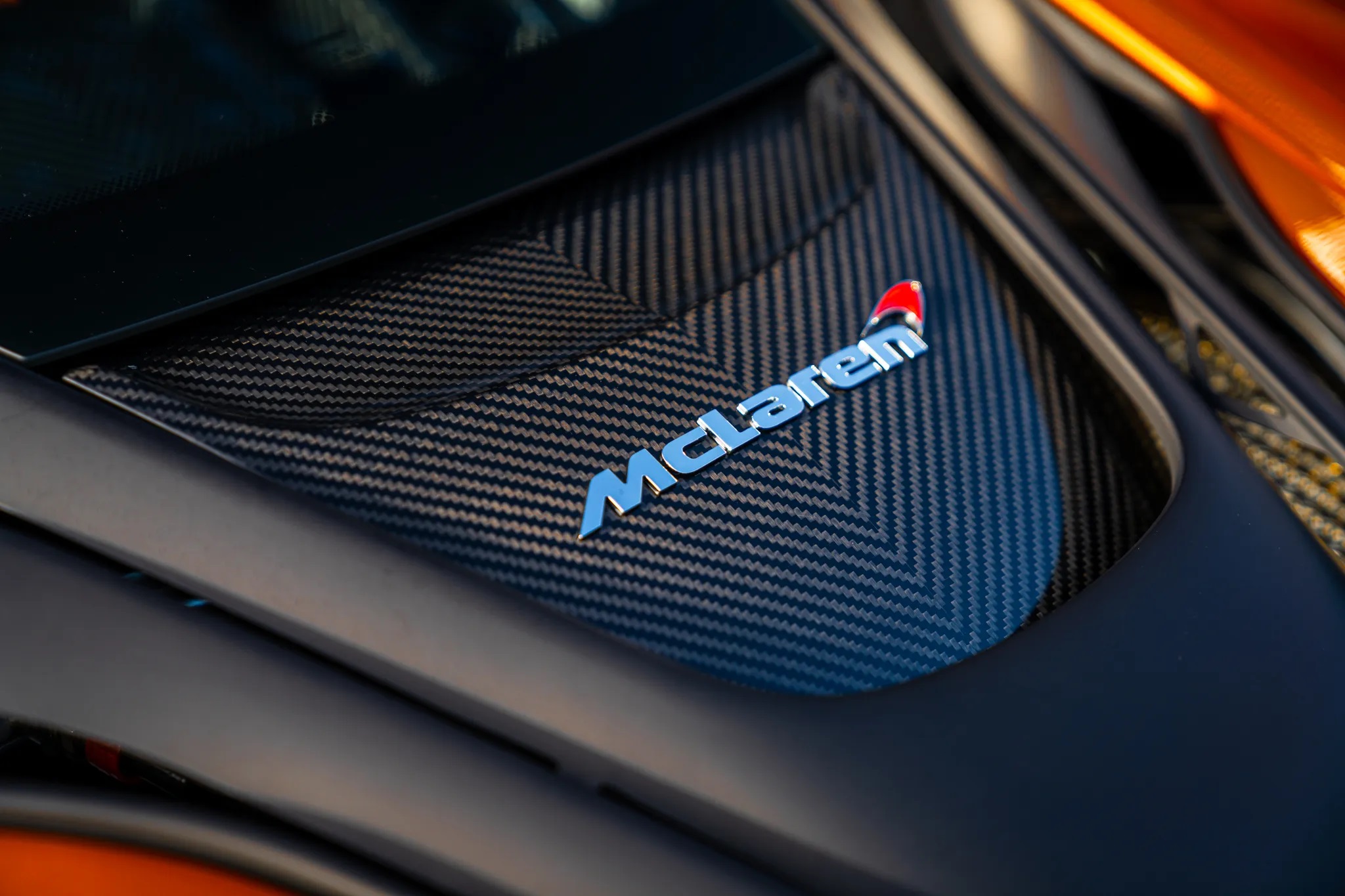
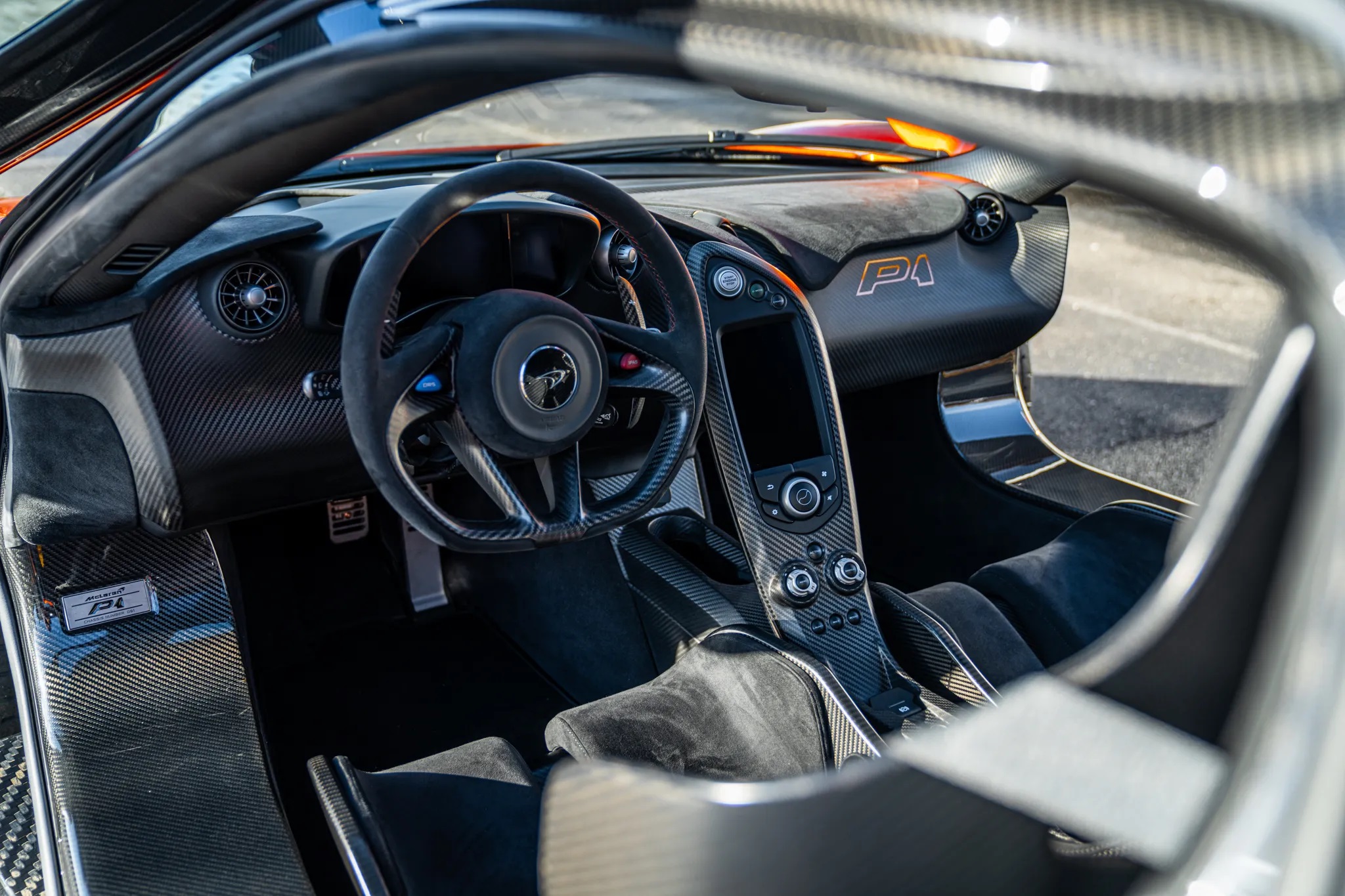
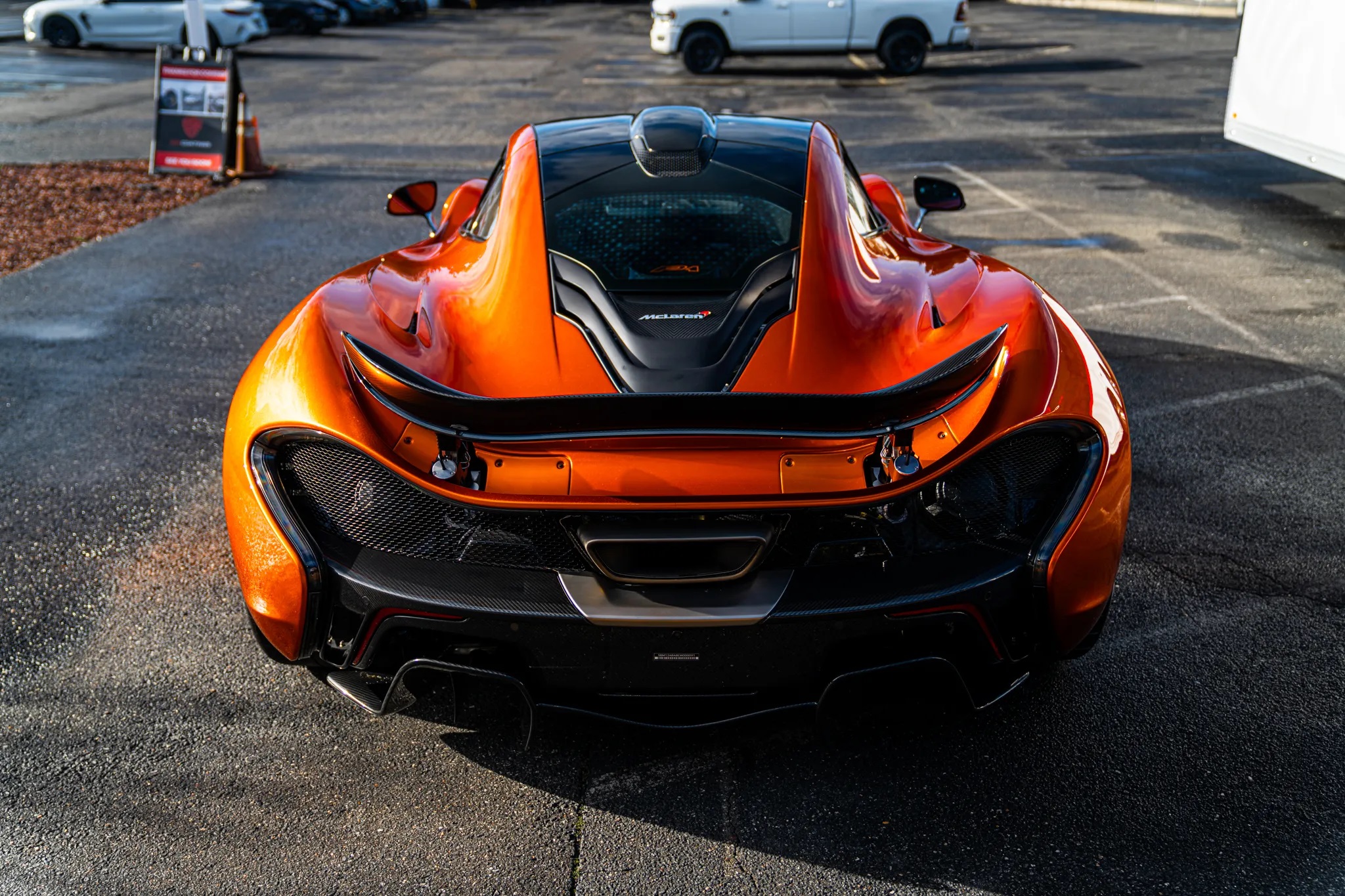
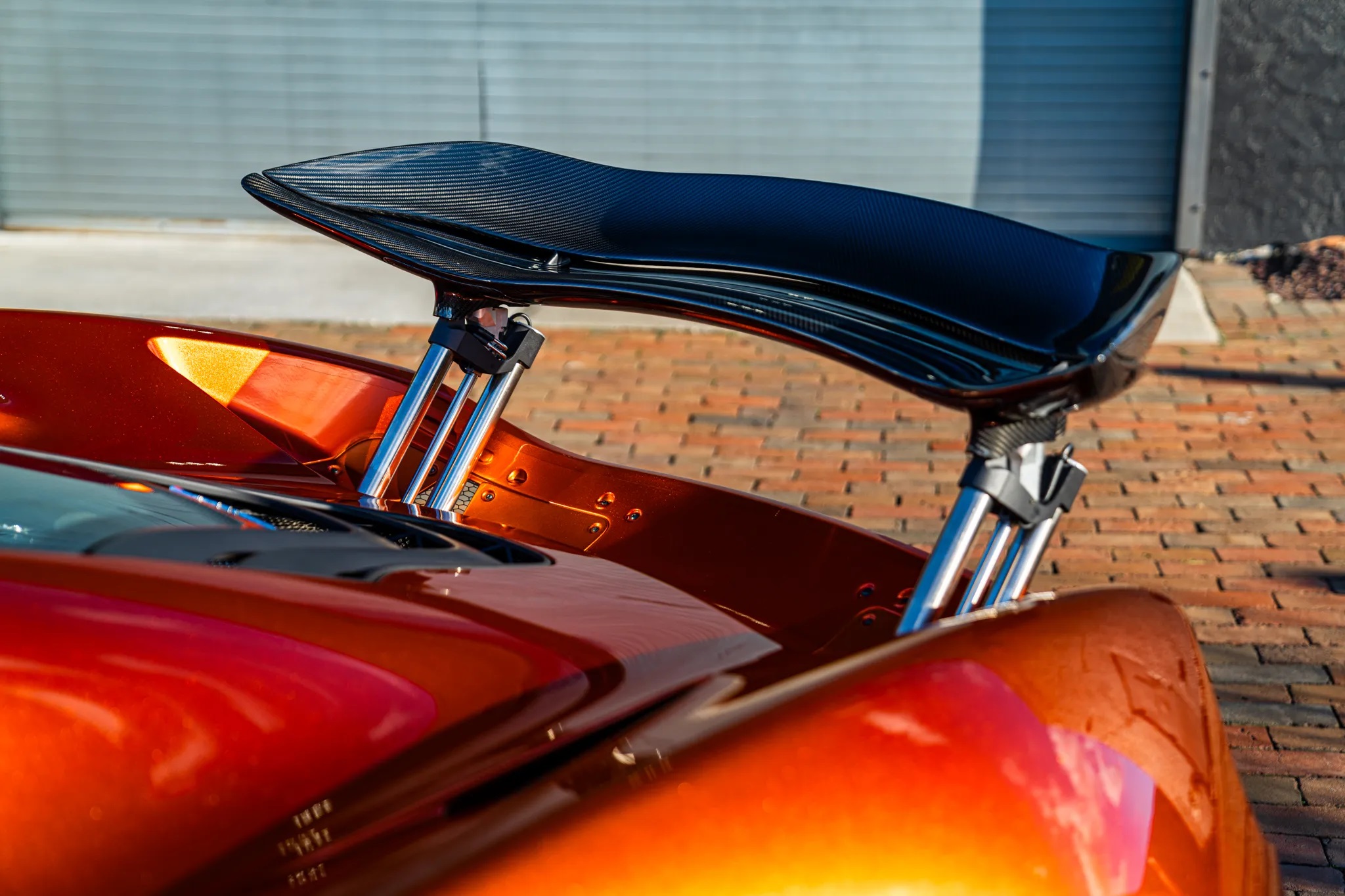
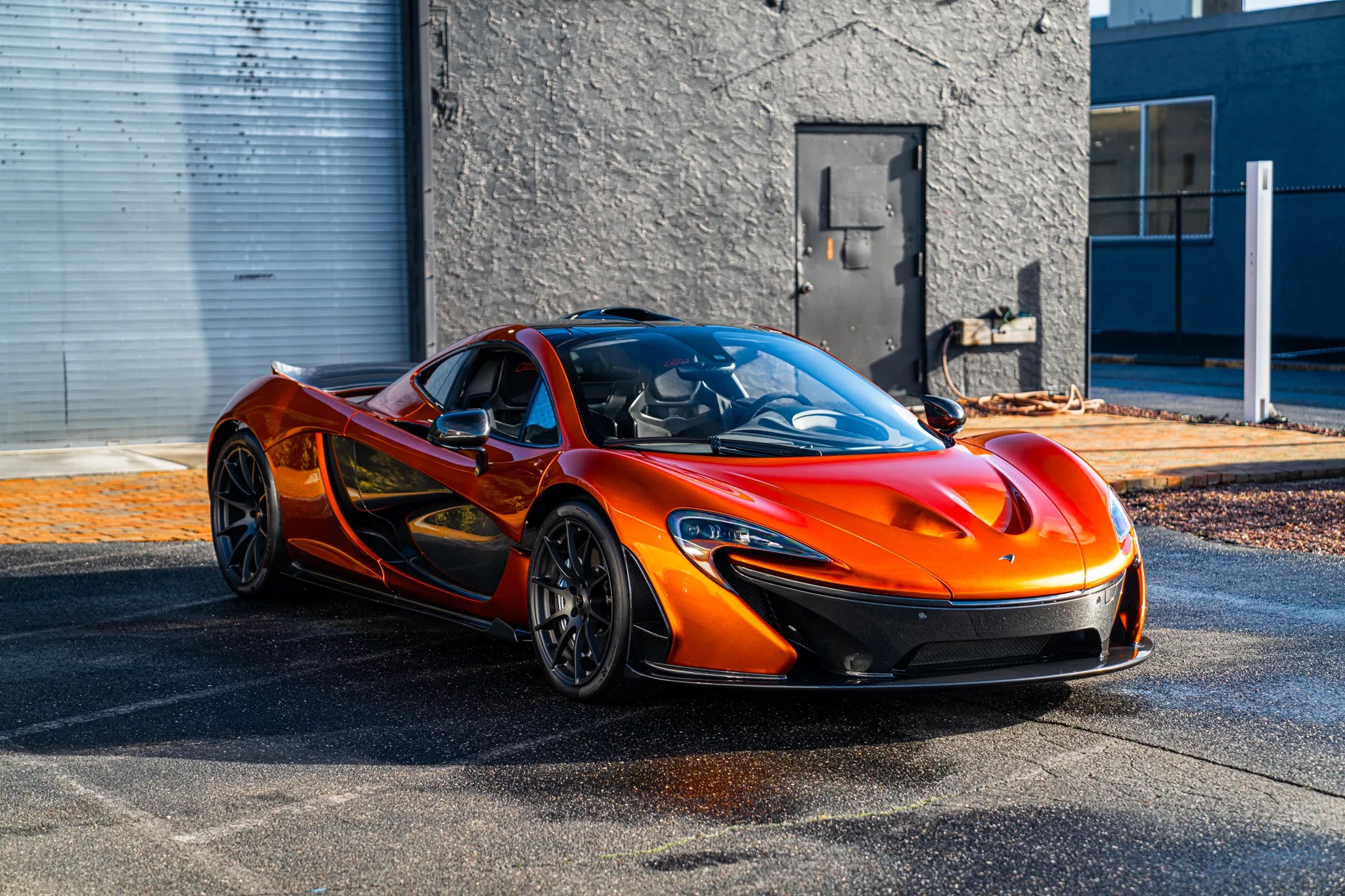
In 2013, McLaren revealed their P1 supercar as their first hybrid-drive system. The car shares much with the MP4-12C, but employs a kinetic energy recovery system (KERS) in place of the starter motor. P1’s chassis is derived from the MP4-12C’s with hydraulic springing that can lower 50mm in race mode. The rear wing is also deployed in race mode that can be used to as an air brake during braking.
Despite being fully performance oriented, the P1 includes heated seats, a stereo, air conditioning and all the amenities of a high-end road car. The initial price of the P1 was steep, with a 2013 P1 Coupe in the US costing $1,350,000, offering a single trim level with unique styling details like gold heat shields in the engine bay, a tribute to its predecessor, the McLaren F1.
The P1’s exclusivity was maintained, limited to just 375 units, all reserved by November 2013, shortly after order books opened in October. Around 75% of new P1s underwent exclusive customization through McLaren’s MSO division, elevating the average order price to approximately $1.6 million.
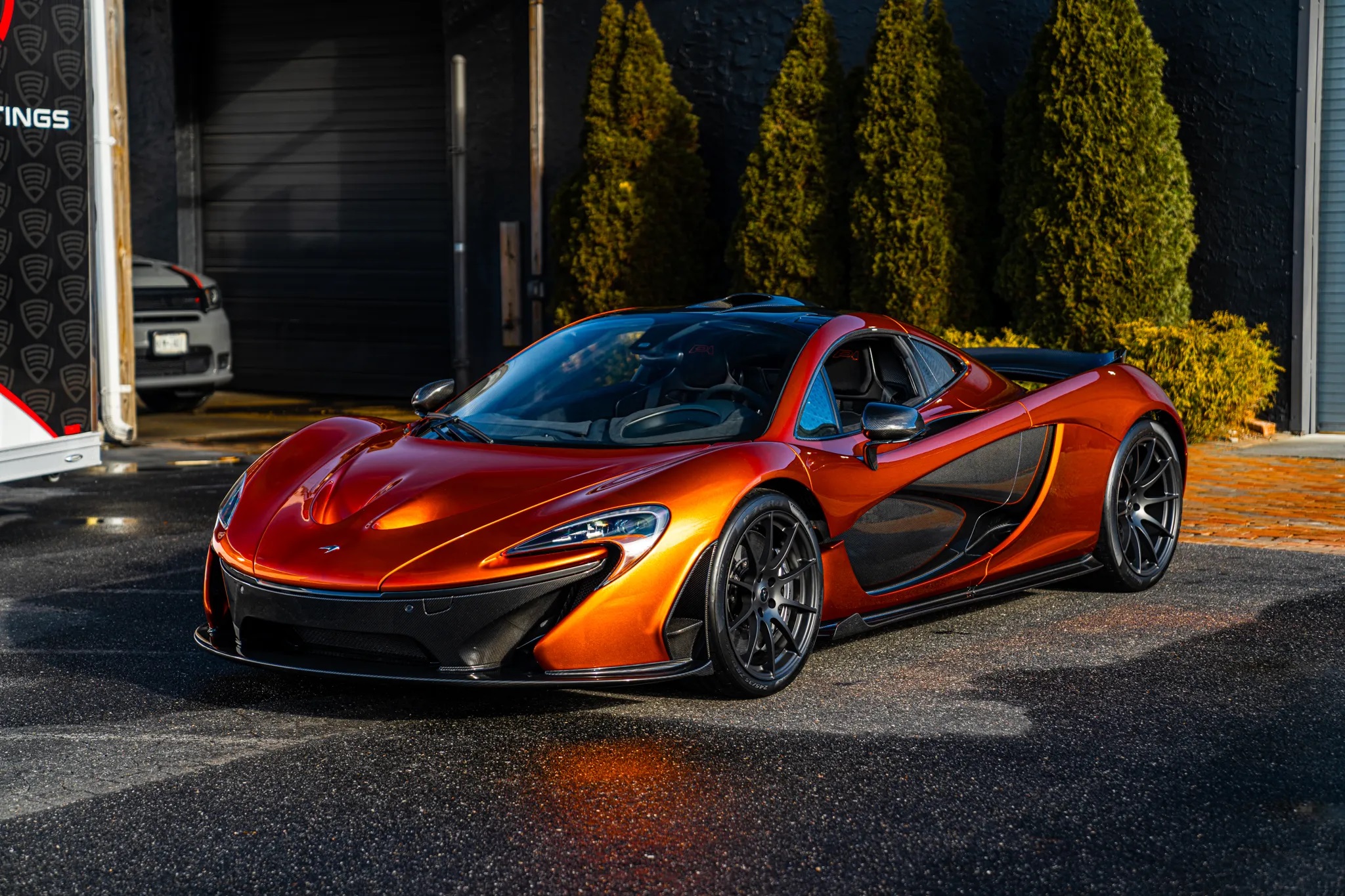
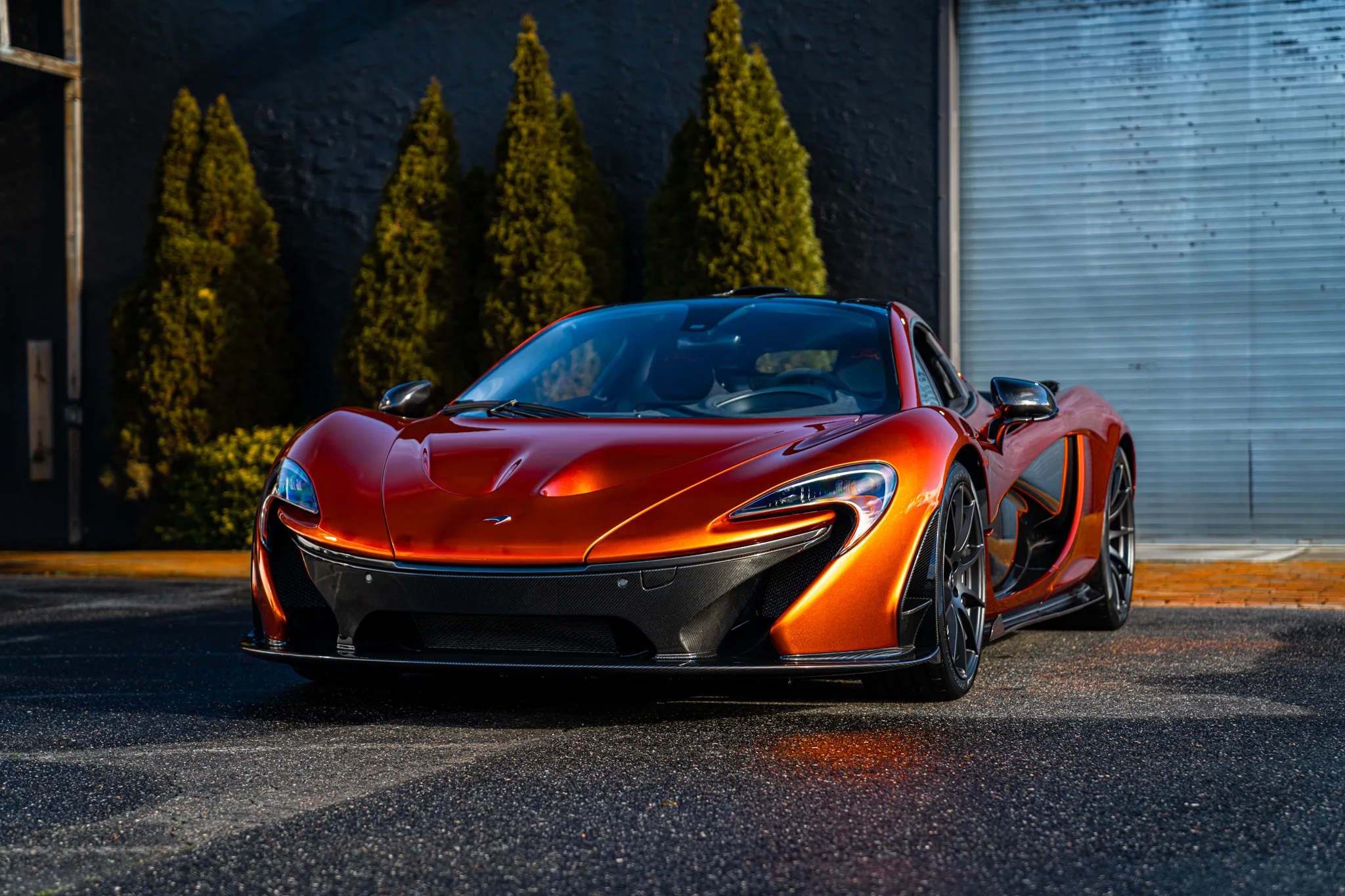
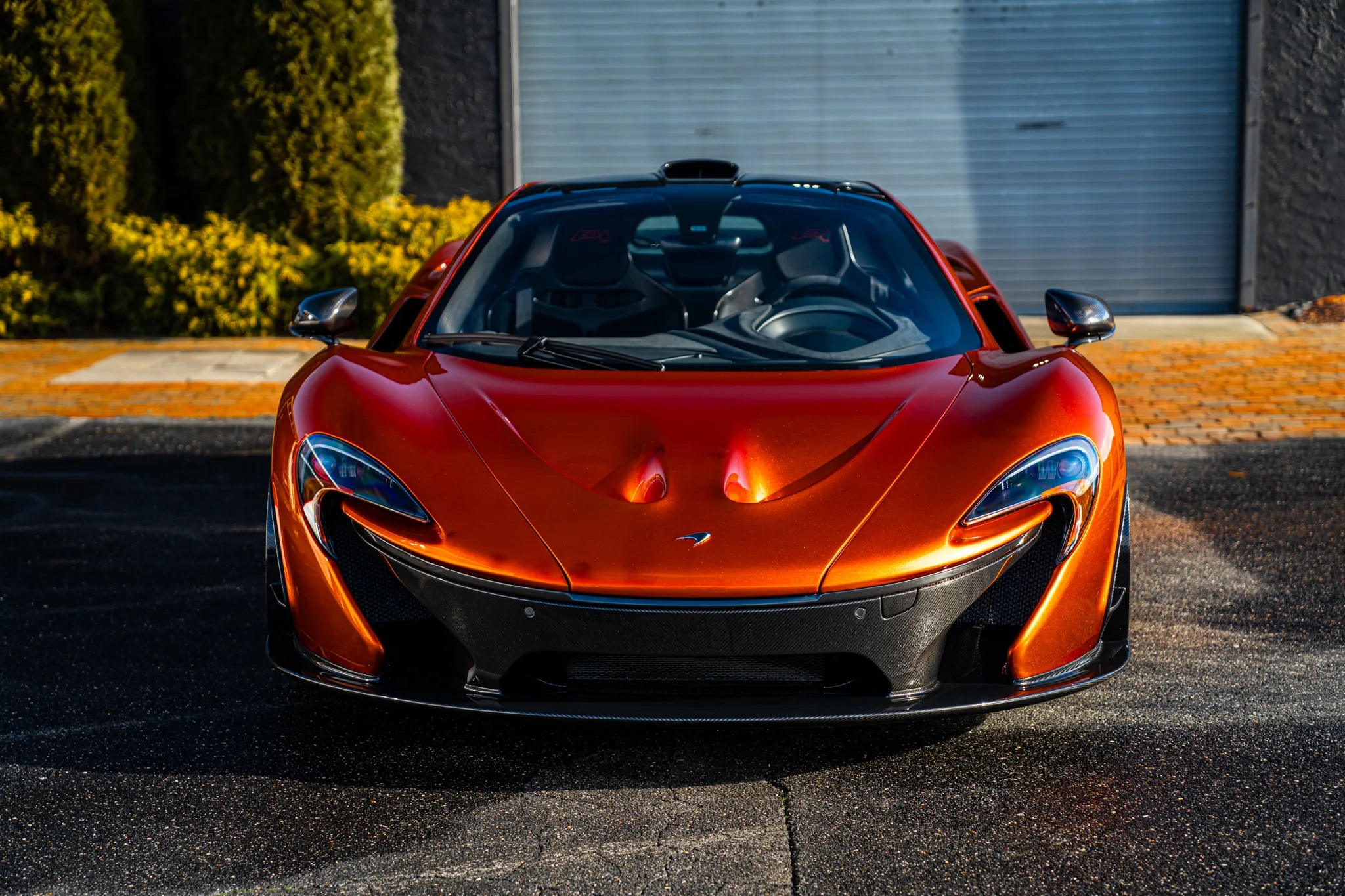
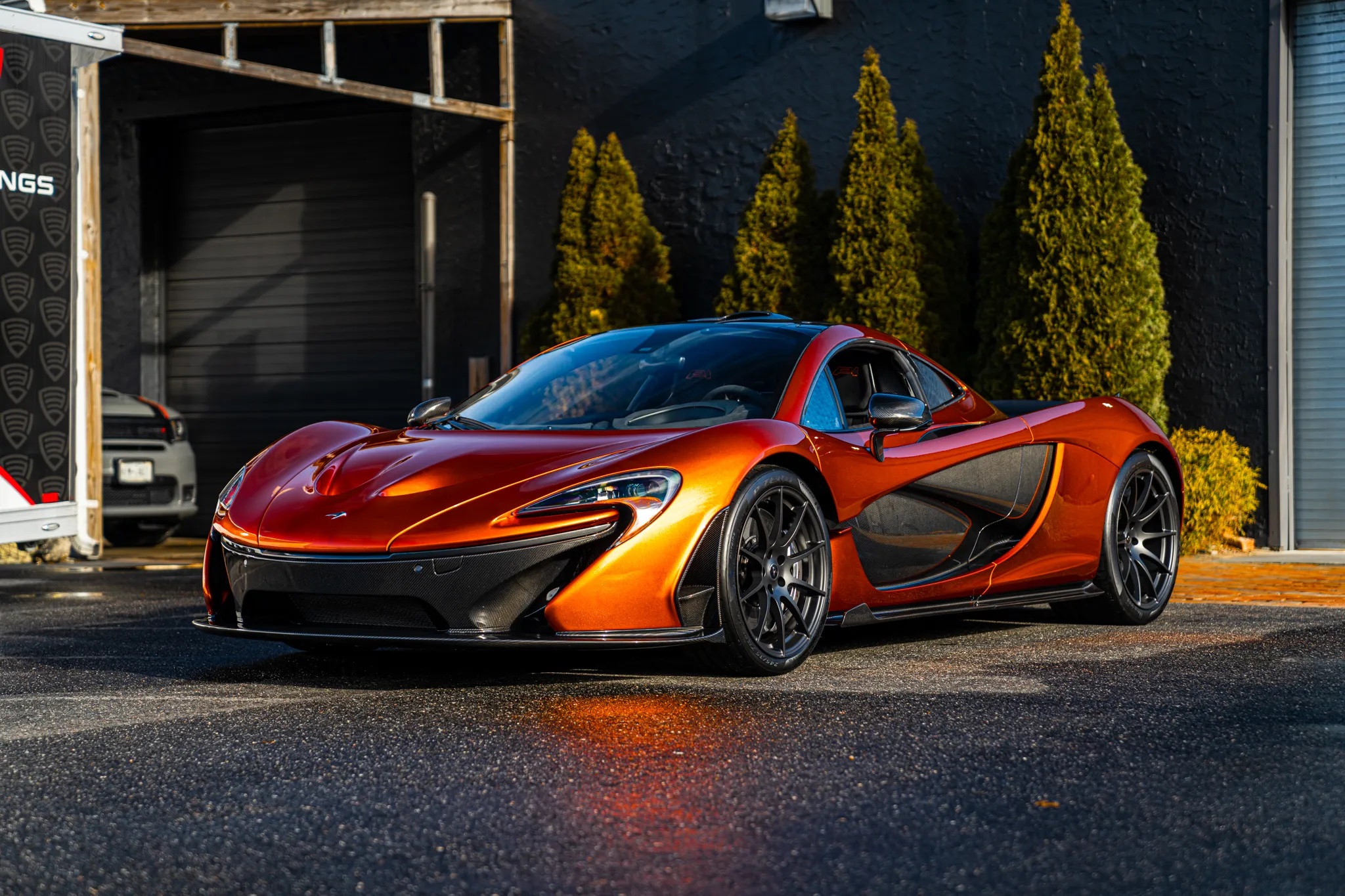
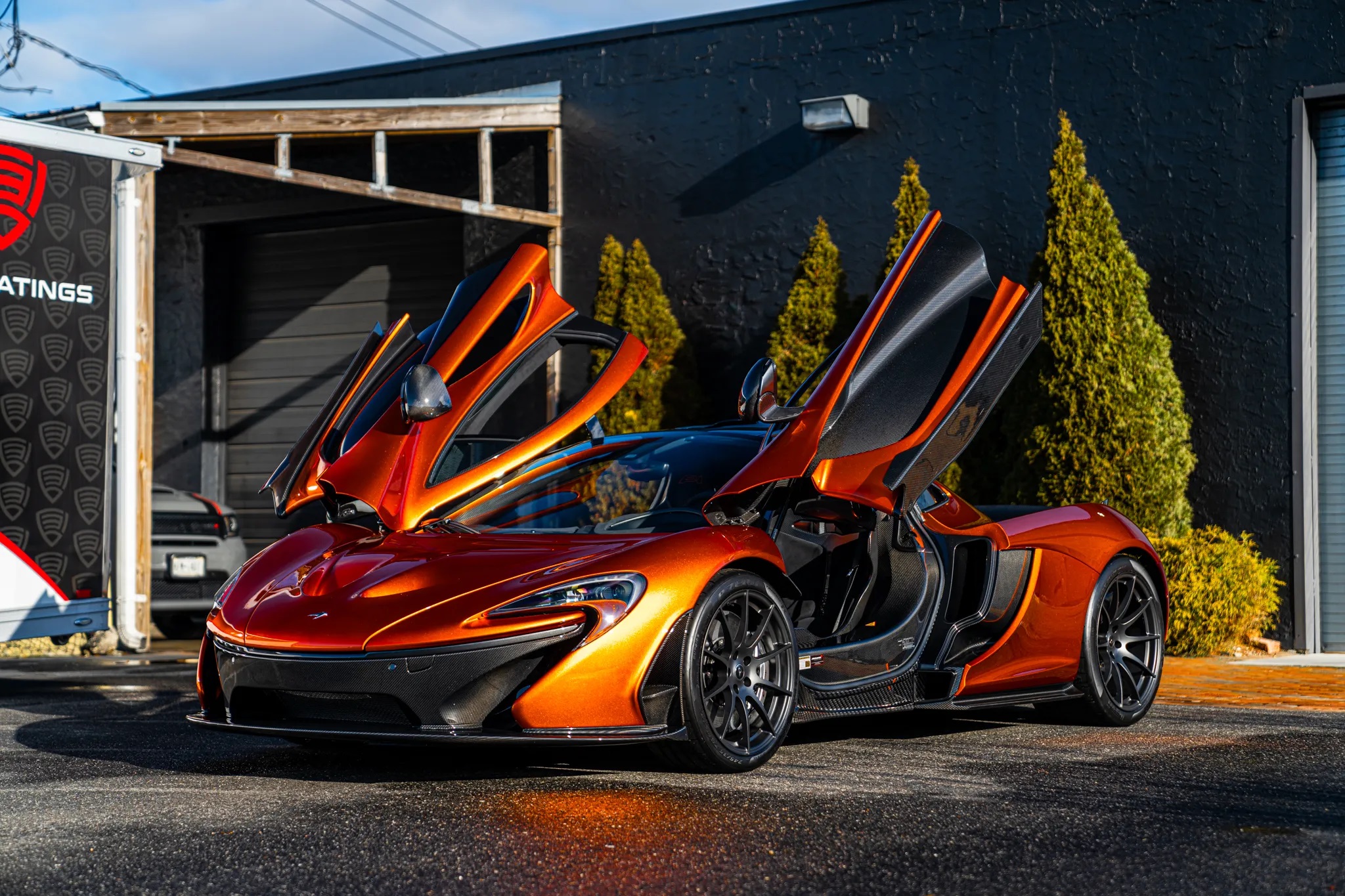
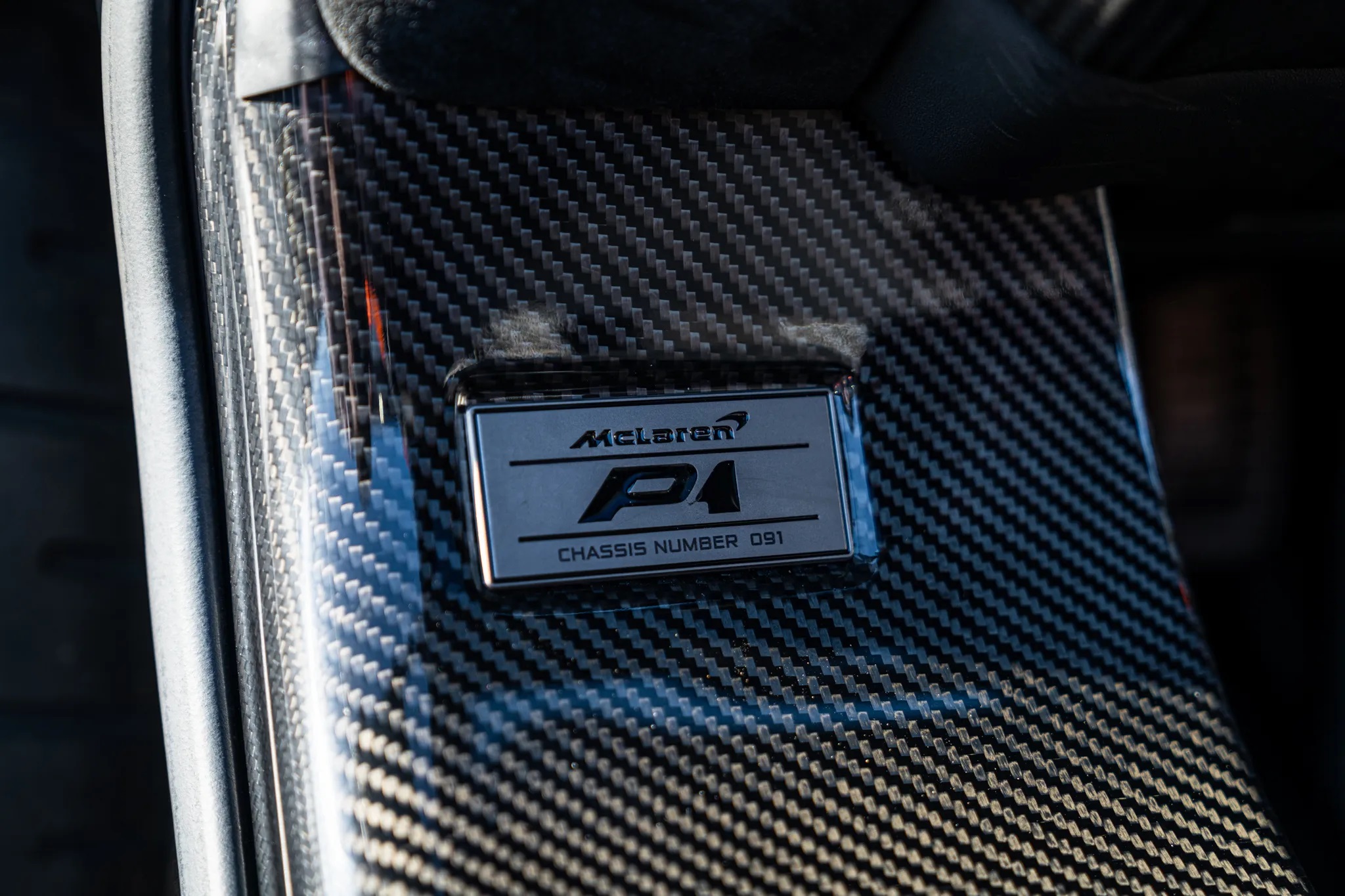
This particular McLaren P1, currently available on Bring A Trailer, presents a rare opportunity to own of the most coveted modern hypercars today. This 2014 McLaren P1, finished in MSO Volcanic Orange Coarse with black Alcantara upholstery is 91st example among the limited production run of 375.
Originally delivered to McLaren Newport Beach in California, this model boasts an array of features such as carbon-ceramic brakes, electro-hydraulic rack-and-pinion steering, a 4.7-kWh lithium-ion battery pack, active aerodynamics, an extendable rear wing, European-market taillights, a reverse camera, carbon-fiber Senna seats, dual-zone climate control, and navigation.
The P1 is powered by a 3.8-liter twin-turbo V8 hybrid engine that generates 903 hp and 664 lb-ft of torque, paired with a 7-speed dual-clutch transmission that drives the rear wheels. According to McLaren’s performance figures, the P1 can accelerate from 0-62 mph in 2.8 seconds and has a top speed of 217 mph.
Don’t miss this rare chance to become the next owner of this this superbly and eye-catching example of a McLaren P1 before the auction closes in a couple of hours, so head over to Bring A Trailer now and get a bid in now before this one gets away from you.
If you’ve ever dreamed of embarking on a quintessential African safari, you’ve probably found yourself at a crossroads, deciding between the rolling grasslands of Kenya and the untamed wilderness of Tanzania.
It’s like choosing between two incredible flavors of the same exotic dish, isn’t it?
Both countries offer some of the most spectacular wildlife experiences on the planet.
But which is best: the Tanzania vs. Kenya safari?
In Kenya, imagine yourself in the legendary Masai Mara, witnessing the Great Migration in a once-in-a-lifetime spectacle as millions of wildebeest and zebra make their epic journey across the Mara River. Kenya offers the dramatic, postcard-perfect savanna experiences coupled with the vibrant cultures that color the country’s rich tapestry.
Meanwhile, Tanzania invites you into its own natural theater with the vast Serengeti, echoing the migrations of Kenya, but with a backdrop of the raw, imposing beauty of the Ngorongoro Crater and the chance to trek up the mythical Mount Kilimanjaro. Tanzania often feels more like the road less traveled, where the landscapes are untamed, and the wildlife roams free, away from the clicking shutters of the safari circuit.
Whichever you choose, you’re in for the adventure of a lifetime, filled with heart-stopping encounters and moments of sheer awe that only the African wilderness can offer. Let’s dive in and explore what sets these two safari giants apart and help you choose your next big adventure.
Grab your binoculars and your sense of wonder – Africa awaits!
Here is an overview:
An elephant and Impalas in the grassland at dusk.
Choosing between Kenya and Tanzania for an African safari ultimately depends on your preferences, interests, and timing.
Both countries offer incredible wildlife experiences and diverse landscapes. But…
Tanzania generally has larger populations of elephants and big cats, while Kenya’s parks are more compact.
Kenya’s arid zones offer unique desert specialists, while Tanzania is renowned for its forest animals, including chimpanzees and various primate species.
Kenya and Tanzania feature diverse landscapes ranging from savannas to forests.
Kenya is known for its Masai Mara National Reserve, which hosts the Great Migration from July to September.
Tanzania’s Serengeti National Park is where the migration primarily takes place from October through July or August.
Tanzania also offers opportunities to explore its lush forests and diverse ecosystems.
Antelope at sunset in Kenya.
Accessibility and Infrastructure
Both countries have well-established tourism infrastructures and professional safari operators.
Kenya’s parks are often more accessible and compact, with shorter distances between them.
Tanzania’s vast expanses may require longer travel times between parks, but it offers more opportunities for remote and off-the-beaten-path experiences.
Timing
If witnessing the Great Migration is a priority, your choice may depend on the timing of your visit. The migration occurs primarily in the Serengeti, Tanzania, from October through July or August, and in Kenya’s Masai Mara during the rest of the year.
Ultimately, whether you choose a Kenya vs. Tanzania safari, you’re likely to have an unforgettable experience.
Consider your priorities, the timing of your trip, and the specific wildlife or landscapes you wish to encounter when making your decision.
Both countries offer world-class safari experiences that showcase Africa’s natural wonders and wildlife diversity.
Indeed, the movements of wildlife, especially during events like the Great Migration, can be unpredictable and influenced by various factors such as weather patterns, food availability, and other environmental conditions. While there are general patterns and trends for migration in specific areas like the Serengeti and Masai Mara, the exact timing and locations can vary from year to year.
Nature’s rhythms aren’t bound by strict calendars, and wildlife doesn’t adhere to schedules. Therefore, even though there are typical migration seasons, the exact timing and routes can fluctuate. This unpredictability adds to the allure and excitement of embarking on a safari adventure, as each experience is unique and can offer unexpected encounters with wildlife in their natural habitats.
Safari guides and operators are skilled at reading the signs of nature and tracking animal movements, which enhances the chances of witnessing remarkable wildlife spectacles.
However, visitors should embrace the spontaneity and inherent unpredictability of wildlife viewing, understanding that nature operates on its own timeline. Flexibility and a spirit of adventure are essential when exploring the wilderness of Kenya, Tanzania, and other safari destinations.
Zebras grassing in Tanzania.
Tanzania vs. Kenya Safari: More Tips To Help You Decide
Here are a few more differences between a safari in Tanzania vs. Kenya.
Great Migration and Wildlife
Tanzania typically hosts the Great Migration for more months of the year, while Kenya is known for offering the best river-crossing scenes during the migration.
Both countries offer unparalleled wildlife viewing experiences, with vast herds of grazing mammals and predators roaming their savannah grasslands.
Scenery and Landscapes
Kenya and Tanzania both feature stunning landscapes, with Kenya boasting attractions like Mount Kenya, the Aberdares, Rift Valley lakes, and northern deserts. At the same time, Tanzania offers iconic landmarks such as Mount Kilimanjaro, Mount Meru, the Crater Highlands, and lush rainforests in places like Gombe and Mahale Mountains National Parks.
Accommodation Options
Both countries offer excellent accommodation options across various budgets, including hotels, guesthouses, lodges, and tented camps.
Kenya’s growing community and private conservancy accommodations, especially in the Masai Mara and Laikipia Plateau, provide intimate and exclusive safari experiences.
Desert and Forest Exploration
Kenya’s northern deserts and semi-arid regions offer unique landscapes and wildlife habitats, while Tanzania’s lush rainforests and western regions are ideal for forest exploration and primate sightings.
Tour Example – Wildebeest Migration Crossing Mara River
Here’s an example of a tour that’ll take you over the Mara River to witness the Great Wildebeest Migration.
Day 1: From Arusha to Serengeti National Park (North)
In the morning, you will be collected from your hotel in Arusha and driven to the Serengeti National Park (North). The drive takes approximately 6 hours, including stops for lunch and game viewing along the way. Once inside the park, a game drive will take you to your camp or lodge for dinner and overnight.
Days 2-4: Exploring Serengeti National Park (North)
You have three full days to explore and observe the famous wildebeest migration in the northern part of the Serengeti National Park. Your experienced guide will ensure you visit prime locations depending on these magnificent animals’ locations. Morning and evening game drives offer the best opportunity to see wildlife at its most active. Return to the camp/lodge at midday for lunch and relaxation. Enjoy a stunning sunset game drive before returning to the camp/lodge for dinner and overnight.
Day 5: Return from Serengeti National Park (North) to Arusha
After breakfast at your camp/lodge, it is time to check out and make your way back to Arusha. As you leave the park gates, there is still an opportunity for a final game drive while enjoying a picnic lunch en route. You can expect to arrive in Arusha in the late afternoon when our driver will drop you off at either your hotel or the airport for your departure.
Note: This itinerary can be tailored to your specific interests and budget by including any special requests or additional activities/accommodation.
Keep in mind, that as this is a natural occurrence, the timing of the wildebeest migration cannot be guaranteed with absolute certainty.
Ultimately, whether you choose Kenya or Tanzania for your safari adventure depends on your specific interests, preferences, and the experiences you seek.
Both countries offer diverse wildlife, breathtaking scenery, and exceptional opportunities for memorable safari experiences.
At Gowitos Safaris, We Believe That Tourism Is Not Only A Way To Experience The Beauty Of Tanzania, But Also An Important Way To Support The Local Economy And Preserve The Country’s Natural And Cultural Heritage. By Visiting Tanzania And Experiencing Its Beauty Firsthand, You Are Contributing To The Growth And Development Of Local Communities, And Helping To Protect The Country’s Unique Wildlife And Landscapes.
Porsche’s debut electric vehicle, the Taycan, is about to be updated. Due this spring, the updated model will bring fresh styling, more range, and a new performance flagship that’s almost as potent on the racetrack as the Rimac Nevera electric hypercar.
The Lincoln Aviator is a solid pick for buyers seeking a roomy midsize SUV with a luxurious cabin. An updated model goes on sale this summer and Lincoln has revealed all the details.
Red Bull Racing’s RB17 hypercar set for a reveal later this year will pack a naturally aspirated V-10 instead of a previously announced twin-turbocharged V-8. According to the man designing the car, Red Bull star aerodynamicist Adrian Newey, the V-10 was chosen over the force-fed V-8 because of the better sound it makes.
You’ll find these stories and more in today’s car news, right here at Motor Authority.
2025 Porsche Taycan lands this spring, tops 360 miles in testing
2025 Lincoln Aviator receives fresh look and tech
Red Bull RB17 hypercar packs V-10 with 15,000-rpm rev limit
Tesla recalls nearly 2.2M cars for too small of a font size
McDonald’s Hamburglar is hitting the road in the Burgercuda
More than a third of US EVs are sold in California
Dodge Charger’s electric successor to debut March 5
Redesigned 2024 GMC Acadia costs at least $5,800 more
VW developing own AI products
Most Ford EV drivers will get Tesla charge-port adapters for free
In true road trip fashion, for our winter vacation we drove to Park City from San Diego with a stop in Las Vegasto break the drive. The transition from coast to canyons is spectacular – for this journey, I gazed out the window more than at my phone. Driving to a destination will always be my first choice. There’s nothing like packing your car, filling your tank, and hitting the road. Park City, is a great winter destination that appeals to everyone. Historic Main Street is lined with art galleries, shops, and restaurants to explore when you find yourself off the slopes. The locals are super friendly, further adding to the draw of this colorful town. Below are some places to check out while you’re in town. You can also read about our past visit to this popular ski spot here which offers additional recommendations on what to do on your next visit.
Ski in/out of The Canyons from this five-star resort designed with luxurious lodge decor. In fact, it is the only luxury hotel in the area that provides direct access to the lifts. The suites are spacious with multiple bathrooms and a large kitchen, and they even have full-sized laundry and drying machines in the room. Make sure to be available at 5:00 pm for the decadent hot chocolate bar and set time aside for S’mores fun at one of the multiple fire pits dispersed throughout the property.
A thirty-minute moonlit horse-drawn sleigh ride through the snow magically celebrates winter. The company has two meeting spots, we chose Stein Eriksen Lodge to enjoy apres ski amidst the festive holiday decor at theTroll Hallen Lounge and dipped into their white cheddar and stout fondue before our coachman beckoned us.
Did you know that Park City Ski Resort is the largest in the USA? For world-class skiing, look no further. Offering 348 trails to both skiers and snowboarders of all levels, this mountain doesn’t disappoint.
A ride up the funicular at the St. Regis is a must when in the area. Enjoy the striking views as you climb up to the hotel’s main building and enjoy a bite at Rime (we particularly loved the lobster rolls).
Small plates made for sharing along with the implementation of only seasonal ingredients throughout each dish make this an excellent dinner destination. The food is fresh, creative, and delicious. They do a great job with their craft cocktails too. This is my favorite restaurant in Park City.
pros: seasonal American cuisine at its best
cons: reservations are difficult during peak season so plan in advance
must order: the oysters, sweet chili gaze cauliflower, the octopus with salsa verde and grilled shishitos
Our visit to Twisted Fern in 2021 was a more memorable one than our recent reservation. This well-reviewed restaurant missed the mark upon our second visit although the pan-seared Utah Elk was a big hit.
pros: locally sourced seasonal ingredients with a well-balanced menu that appeals to most diets
cons: the blue corn crepe stuffed with mushrooms and potato filling was served cold and the Nashville hot maitake sandwich was overly fried
must order: the pan-seared Utah Elk
This whimsical shop is a Park City landmark serving breakfast all day long along with ice cream, candy, and quirky novelty items.
Coffee and empanadas are the draws of this adorable cafe located right off Main Street. You’ll have plenty of space to sprawl as you sip on your creamy latte.
Located in the Waldorf Astoria, this fine dining, yet unpretentious, restaurant makes spectacular handcrafted cocktails and solid dishes in a beautifully lit environment.
pros: attractive ambiance, separate vegetarian menu
must order: the mezcal old fashioned with notes of chocolate, the 72-hour wagyu short rib, and the butternut squash bisque with spiced creme fraiche and roasted hazelnuts
I truly love the freedom that comes with driving – go where you wish, at your own pace, stop when you’d like, or just keep on cruising… all the while looking out your window and getting lost in the beauty of the landscapes that comprise our spectacular country. So far we’ve racked up 800 glorious stretches of miles and are ready to earn some more. Off we go to our next stop…Jackson, WY!
A new study underscores the potential of AI and accelerated computing to deliver energy efficiency and combat climate change, efforts in which NVIDIA has long been deeply engaged.
The study, called “Rethinking Concerns About AI’s Energy Use,” provides a well-researched examination into how AI can — and in many cases already does — play a large role in addressing these critical needs.
Citing dozens of sources, the study from the Information Technology and Innovation Foundation (ITIF), a Washington-based think tank focused on science and technology policy, calls for governments to accelerate adoption of AI as a significant new tool to drive energy efficiency across many industries.
AI can help “reduce carbon emissions, support clean energy technologies, and address climate change,” it said.
How AI Drives Energy Efficiency
The report documents ways machine learning is already helping many sectors reduce their impact on the environment.
For example, it noted:
Farmers are using AI to lessen their use of fertilizer and water.
Utilities are adopting it to make the electric grid more efficient.
Logistics operations use it to optimize delivery routes, reducing the fuel consumption of their fleets.
Factories are deploying it to reduce waste and increase energy efficiency.
In these and many other ways, the study argues that AI advances energy efficiency. So, it calls on policymakers “to ensure AI is part of the solution, not part of the problem, when it comes to the environment.”
It also recommends adopting AI broadly across government agencies to “help the public sector reduce carbon emissions through more efficient digital services, smart cities and buildings, intelligent transportation systems, and other AI-enabled efficiencies.”
Reviewing the Data on AI
The study’s author, Daniel Castro, saw in current predictions about AI a repeat of exaggerated forecasts that emerged during the rise of the internet more than two decades ago.
Daniel Castro
“People extrapolate from early studies, but don’t consider all the important variables including improvements you see over time in digitalization like energy efficiency,” said Castro, who leads ITIF’s Center for Data Innovation.
“The danger is policymakers could miss the big picture and hold back beneficial uses of AI that are having positive impacts, especially in regulated areas like healthcare,” he said.
“For example, we’ve had electronic health records since the 1980s, but it took focused government investments to get them deployed,” he added. “Now AI brings big opportunities for decarbonization across the government and the economy.”
Optimizing Efficiency Across Data Centers
Data centers of every size have a part to play in maximizing their energy efficiency with AI and accelerated computing.
For instance, NVIDIA’s AI-based weather-prediction model, FourCastNet, is about 45,000x faster and consumes 12,000x less energy to produce a forecast than current techniques. That promises efficiency boosts for supercomputers around the world that run continuously to provide regional forecasts, Bjorn Stevens, director of the Max Planck Institute for Meteorology, said in a blog.
Overall, data centers could save a whopping 19 terawatt-hours of electricity a year if all AI, high performance computing and networking offloads were run on GPU and DPU accelerators instead of CPUs, according to NVIDIA’s calculations. That’s the equivalent of the energy consumption of 2.9 million passenger cars driven for a year.
Last year, the U.S. Department of Energy’s lead facility for open science documented its advances with accelerated computing.
Using NVIDIA A100 Tensor Core GPUs, energy efficiency improved 5x on average across four key scientific applications in tests at the National Energy Research Scientific Computing Center. An application for weather forecasting logged gains of nearly 10x.
The energy efficiency of GPUs has increased dramatically over time.
AI, Accelerated Computing Advance Climate Science
The combination of accelerated computing and AI is creating new scientific instruments to help understand and combat climate change.
In 2021, NVIDIA announced Earth-2, an initiative to build a digital twin of Earth on a supercomputer capable of simulating climate on a global scale. It’s among a handful of similarly ambitious efforts around the world.
An example is Destination Earth, a pan-European project to create digital twins of the planet, that’s using accelerated computing, AI and “collaboration on an unprecedented scale,” said the project’s leader, Peter Bauer, a veteran with more than 20 years at Europe’s top weather-forecasting center.
Experts in the utility sector agree AI is key to advancing sustainability.
“AI will play a crucial role maintaining stability for an electric grid that’s becoming exponentially more complex with large numbers of low-capacity, variable generation sources like wind and solar coming online, and two-way power flowing into and out of houses,” said Jeremy Renshaw, a senior program manager at the Electric Power Research Institute, an independent nonprofit that collaborates with more than 450 companies in 45 countries, in a blog.
Learn more about sustainable computing as well as NVIDIA’s commitment to use 100% renewable energy starting in fiscal year 2025. And watch the video below for more on how AI is accelerating efforts to combat climate change.
Volvo Cars is showcasing the potential of electric platforms and its next-generation electric vehicles with the Concept Recharge. The five-door SUV’s dedicated EV architecture enables the hood and roofline to be lower than current SUVs – thanks to its floor-mounted battery modules – while the longer wheelbase and minimal overhangs amplify space within the cabin. Highlights include the modern interpretation of the Thors hammer headlamps, which open to reveal a set of high-definition units that better illuminate the road at night; the recessed and lit diagonal and iron mark logo that provide a unique DRG signature to its grille-less face, and the sustainable materials that feature in the four-seat interior. Volvo design director Robin Page calls the Recharge concept “a new type of vehicle” but its aesthetic and functionality match those of Volvo’s traditionally boxy wagons, albeit one with a lowered roofline, higher ground clearance and larger interior volume.
The technical storage or access is strictly necessary for the legitimate purpose of enabling the use of a specific service explicitly requested by the subscriber or user, or for the sole purpose of carrying out the transmission of a communication over an electronic communications network.
Preferences
The technical storage or access is necessary for the legitimate purpose of storing preferences that are not requested by the subscriber or user.
Statistics
The technical storage or access that is used exclusively for statistical purposes.The technical storage or access that is used exclusively for anonymous statistical purposes. Without a subpoena, voluntary compliance on the part of your Internet Service Provider, or additional records from a third party, information stored or retrieved for this purpose alone cannot usually be used to identify you.
Marketing
The technical storage or access is required to create user profiles to send advertising, or to track the user on a website or across several websites for similar marketing purposes.