The automaker is “researching sports cars in the EV era,” Mibe said. That’s not exactly confirmation of a production electric sports car, but Mibe said development work is “steadily proceeding,” adding that “at the R&D center, we have a sports car.”
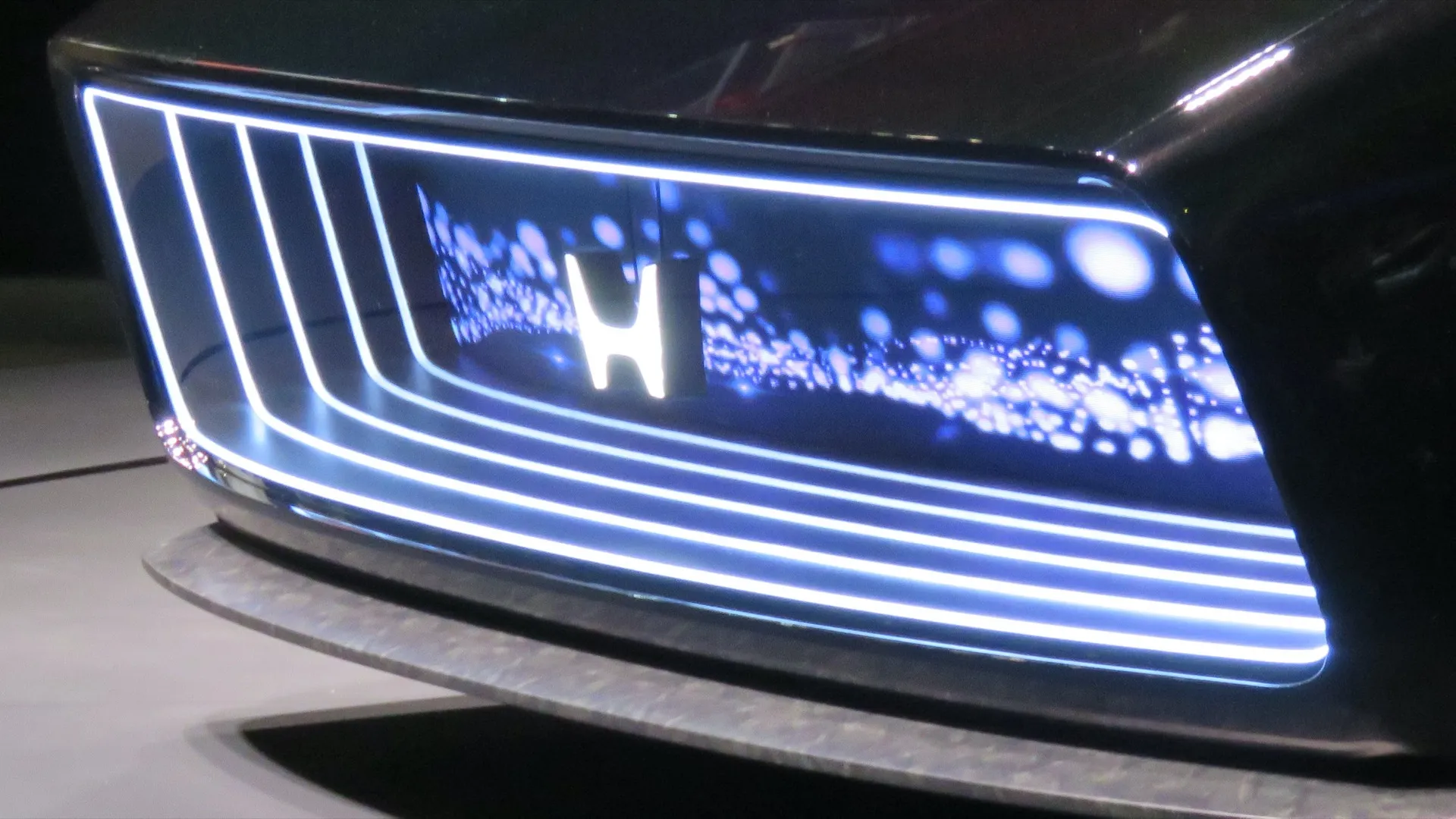
Acura Electric Vision Design concept
Honda is also analyzing potential competitors, Mibe said. The automaker isn’t looking to copy existing sports cars, though, as any potential performance EV will “have a completely different taste” from any performance car Honda has launched so far, Mibe said.
The EV development program could be the foundation for an all-electric replacement for the Acura NSX, something Honda has hinted at before. In 2021, the head of Acura promised that another NSX will arrive eventually, and that an EV would be a logical progression from the gasoline first-generation NSX and the hybrid second-generation model.
Honda 0 Saloon concept
Honda in 2022 teased two electric sports cars, one of which looked like a potential NSX replacement. Last year it offered another preview of a potential electric NSX with the Acura Electric Vision Design concept. NSX badging or not, an electric sports car would likely use underpinnings from the Honda 0 Series EVs rolling out from 2026, starting with an electric sedan for North America previewed by a CES 2024 concept car.
Meanwhile, rival Toyota may be working on its own electric sports car. The automaker unveiled a concept called by FT-Se at the 2023 Tokyo auto show. Company chairman and former CEO Akio Toyoda said a few months prior that he was personally involved in development of an electric sports car, claiming Toyota was working on features like a manual transmission and simulated engine sounds to increase driver involvement.
The Proton S70 was launched towards the end of last year, bringing a new sedan model to the brand’s line-up, and has collected some 1,200 bookings as of its launch at the end of November 2023.
Healthy demand is in order for the sedan, though what about those who would like something of a similar size but which is more utilitarian? There already has been the Arena, otherwise known as the Jumbuck in markets such as Australia. Here, visual rendering whiz Theophilus Chin has given his take on what an S70-based ute could look like.
Starting at the rear of the Arena, which is the business end of any ute – Theophilus has looked to the wider Geely group for inventory, taking the tailgate and tail lamp assembly from the unibody Radar RD6 pick-up truck. ‘Proton’ lettering on the Arena rendition takes the place of Radar branding on the real-life model that offers its design elements, and the Arena similarly gets a faux diffuser beneath its rear bumper.
Moving along its cargo tray, the panel sculpting that is slightly squared on the Radar RD6 is substituted with the more conventionally rounded set from the S70 sedan, and in staying true to the Arena’s original form, this S70-based rendition is also made in a two-door, single-cab layout.
Further towards the front, Theophilus’ Arena rendition essentially carries over the front end of the S70, and in doing so, also mirrors the parallel between the Arena and the Wira, with which the real-life ute shares its frontal styling. Theoretically, shared underpinnings could mean that an S70-based ute would possibly bring the same powertrain choices offered on the sedan.
Speaking of which, the S70 in real life, being based on the Geely Emgrand, takes on the Geely BMA platform which brings it the powertrain from the Proton X50. Whereas the Emgrand gets a 1.5L naturally aspirated engine and CVT combination in other markets, the S70 in Malaysia is specified with a 1.5L port-injected three-cylinder engine with 150 PS and 226 Nm, paired with a dual-clutch transmission, and so that would, in theory, be the natural powerplant for this Arena.
Now, for that question – how many of you would buy one?
Welcome to my digital nomad guide to living in Ho Chi Minh City. I spent a glorious 6-weeks working remotely from this vibrant Vietnamese city and loved my time there. It’s such a spirited and lively place filled with color, culture, and great coworking spaces.
I left the UK over two years ago and currently travel the world as a digital nomad. I’ve worked remotely in dozens of countries but my trip to Ho Chi Minh was my first venture East. I quickly fell in love with all things Vietnam, to the extent that I’ve already planned my next trip to the northern city of Hanoi.
Ho Chi Minh is one of the best cities to base yourself for remote working. Whether you’re seeking a dedicated workspace equipped with all the usual office amenities or simply wish to understand what life as a digital nomad might be like in Ho Chi Minh, I’ve got you covered. Let’s dive in and get started.
About Ho Chi Minh City
Ho Chi Minh, formerly known as Saigon, is a bustling metropolis. It’s filled with an energy that never seems to diminish and a pulsating vibe that attracts people from all around the world. While the official name change to Ho Chi Minh took place in 1976 after the Vietnam War, many locals still commonly refer to it by its former name.
With a population of 9.3 million people, it’s the most populous city in Vietnam. Ho Chi Minh is widely recognized as the economic powerhouse of Vietnam. It’s a major center for commerce, finance, and trade, and serves as a hub for business.
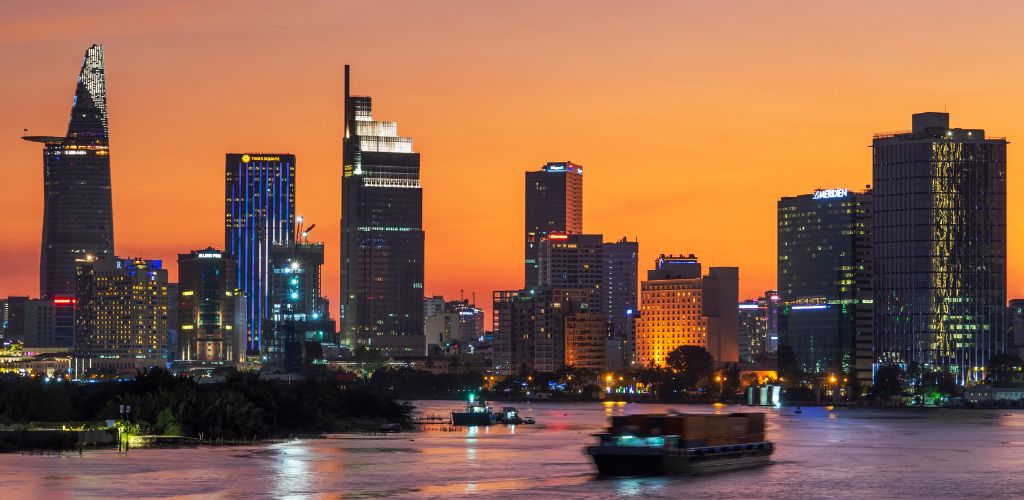
The stunning skyline of HCMC offers a glimpse into the financial successes of the city with huge skyscrapers that dominate the view. The juxtaposition between the locals selling fruit from roadside shacks and evident poverty can at times be startling, but it creates a tapestry of culture for travelers who will find everything they could want in a city.
For me, I’ll forever remember Ho Chi Minh for the motorbikes. My travel insurance strictly forbade riding one and after 10 seconds in the city, you will see why! Official stats put the number at 7.6 million motorbikes, but I’ve heard unofficially that it’s closer to 10 million! The traffic on the roads is a spectacle to witness, and it’s something I never quite acclimated to.
Digital Nomad in Ho Chi Minh: Personal Experience
Working remotely from a coffee shop in HCMC
I loved being a digital nomad in Ho Chi Minh City. I managed to secure a 3-week house sit which meant my accommodation costs were really low for my 45-day stay. It enhanced my overall experience and gave me a good home base to work from. If you’re interested in house sitting, check out my 8 expert tips for landing a house sitting job.
I sometimes like to venture out for some different scenery on work days and found that WiFi is available pretty much everywhere. I even managed to pick up free access while sitting on the beach in Vung Tau recently – the true digital nomad’s dream! Bars, restaurants, cafes, and even some public areas have good free internet access.
It was also easy to find affordable coworking spaces. There’s a real digital nomad scene and the prices are very cheap. I’ll be going into more depth on a few of my favorite spots later. Great coffee houses with outstanding coffee for cheap prices are abundant and are a great option for remote working.
The cost of living in Ho Chi Minh was another massive benefit for me as a digital nomad. Accommodation outside of my house sit was cheap and getting around and food shopping was both easy and affordable with the local ride-share app Grab.
Is Ho Chi Minh City Safe?
Safety is generally not a significant concern for visitors to the city. That being said, you should always exercise standard precautions, such as safeguarding digital devices and being aware of your surroundings. Overall, HCMC is a welcoming and secure destination for travelers and anyone seeking the digital nomad lifestyle.
Petty crimes like pickpocketing can and do occur, especially in crowded areas and busy tourist hotspots. I recommend that travelers remain vigilant at all times and secure their belongings as well as they would anywhere else.
Violent crimes are rare, and the local population is known for its hospitality. By conscientiously following basic safety guidelines and being aware of local customs, everyone can enjoy their time in Ho Chi Minh without major safety concerns.
Best Areas to Live in Ho Chi Minh City
Ho Chi Minh sprawls across a vast urban landscape, divided into numerous districts. Each has its unique characteristics, attractions, and cultural elements. Below, I’ve outlined the 5 best areas to live whilst working as a digital nomad in HCMC.
The streets are a mesmerizing blend of motorbikes, street vendors, and the constant hum of activity. Living in District 1 means proximity to lively areas such as Bui Vien Street, where bustling nightlife and a diverse range of bars, clubs, and street food stalls are at every turn.
The famous Ben Thanh Market is another fun/chaotic experience. The mass of stalls sell everything from traditional textiles to local delicacies. As the central business and commercial hub, District 1 also hosts numerous upscale hotels, shopping malls, and coworking spaces.
2. District 2 (Quận 2)
District 2 has evolved into an expat haven and an escape for those seeking a slightly more laid-back HCMC lifestyle. Characterized by its spacious residential homes, international schools, and a growing number of Western-style amenities, this district stands out for visitors.
Expat-friendly restaurants, cafes, and supermarkets cater to the diverse community that calls District 2 home. It’s a welcoming tourist hotspot, that has some fantastic happy hours to be discovered! District 2’s appeal is amplified by some lush greenery and peaceful waterfront views, providing a stark contrast to the bustling streets of District 1.
The expat nature of D2 means numerous co-working spaces and tranquil worker-friendly cafes are easy to find. I had the luxury of living between D1 and D2 during my house sit and got to experience both in equal measure. It was a great way to fully experience both districts in more depth.
3. Binh Thanh District (Quận Bình Thạnh)
Located to the northeast of D1, Binh Thanh District offers an amazing blend of tradition and rapid urban development. Historically an industrial area, Binh Thanh has undergone significant transformation, with modern condominiums and high-rises which have created a stunning skyline alongside remnants of its industrial past.
The Saigon River lines the district, providing picturesque views. Binh Thanh District is increasingly becoming a sought-after residential area due to its central location and diverse international amenities.
Binh Thanh is an ideal option for digital nomads seeking modern facilities in an ever-modernizing setting, with the cultural gems of Saigon’s past all within easy reach.
4. District 3 (Quận 3)
District 3 is a beautiful place to situate yourself. It’s where French colonial history mixes with the culture of local Vietnamese life. D3 is revered for its picturesque tree-lined streets and well-preserved colonial villas.
Predominantly a residential area D3 has an authentic atmosphere with glimpses into the normal daily routines of local people. On the other hand, The Box Market offers a contemporary twist on traditional HCMC street markets. The comfortably laid out and manageable selection of stalls sells everything from local cuisine to designer clothes – all from local vendors.
Although the amount of co-working spaces is lower in D3, they do exist. Many cafes and coffee shops with excellent free WiFi are easily accessible in the area.
5. District 7 (Quận 7).
District 7, also referred to as Phu My Hung, is a modern urban development on the southern side of Ho Chi Minh City. It’s a well-planned district that contrasts the city’s historic features with many contemporary elements and has an attractive international appeal.
The star attraction of District 7 is Phu My Hung New City Center, an area featuring wide boulevards, landscaped parks, and modern skyscrapers. The Crescent Mall, an iconic shopping destination, has a mix of high-end shops and diverse fine dining options. It’s also a great spot for remote working.
D7’s Crescent Lake is a popular recreation and relaxation spot and provides a serene escape with waterfront promenades and jogging paths.
How to Find Accommodation in Ho Chi Minh City
The view from my house sit apartment balcony.
There are plenty of great accommodation options for people working remotely in Ho Chi Minh City. Here are a few of the best places to find them;
1. Booking.com: I’ve been using Booking.com for years and despite numerous other options on the market, it remains my go-to travel website. The perks and savings of attaining a Genius Level 3 membership can be pretty substantial. The option to cancel for free and book without payment is of great benefit to digital nomads like myself.
2. Airbnb: Another great option with thousands of listings for all budgets in Ho Chi Minh is Airbnb. I always recommend adjusting budgets to lower amounts to find cheaper options that might not come up on the first search. Many properties offer huge discounts on month-long stays.
3. Trusted Housesitters: I landed a 3-week HCMC housesit thanks to Trusted Housesitters. It’s my top choice for house and pet sitting, it always has thousands of properties seeking sitters. While Asia is emerging as a developing market for house sits, opportunities do arise, and I’m living proof that they can be secured. Use discount code GOATS20 for 20% off!
4. Workaway: If you’re up for exchanging a little of your time for a spot of teaching English, for example, you can land free accommodation with Workaway. Food is frequently included, and I’ve had some of my most memorable experiences around the world using volunteer placement sites like this.
Cost of Living in Ho Chi Minh City
The cost of living in Ho Chi Minh City is significantly lower compared to many other countries I’ve worked from remotely. I’ve categorized some everyday expenses below and will give you an insight into my typical experience with each.
Restaurants and Groceries
There’s a big difference in what you’ll spend on food in Ho Chi Minh compared to say the UK or the USA. Although high-end bars and restaurants can still be expensive, there are so many cheap food options available that digital nomads can easily eat a good meal for around $2-$5pp.
Grocery shopping is a fun experience in Vietnam – the big supermarkets hand out so many tasters! The biggest savings are found in the price of things like meat, eggs, certain fruits, and vegetables. 2 decent size chicken breasts cost $3 and 10 eggs are around $1.
Prices for Western cheese, wine, and various non-dairy milks are fairly consistent with the costs I’ve seen elsewhere in the world. The deli counters are great places to pick up affordable lunches. Set Sushi plates and salad/meat combos are always available and cost around $1-$2.
Accommodation Costs
The range of accommodation in Ho Chi Minh is quite impressive; there’s something for every budget. While booking my stay I found some fantastic-looking hotels and apartments for as little as $20/night. But during the same search, I found similar options for $300/night. The reason for the price disparity is unclear so it’s definitely worth taking some time to do your own research and make your own comparisons.
Booking.com and Airbnb have a huge range of options. I was able to secure my first few nights in the city at a central apartment complex with a rooftop pool and gym included for $50/night.
In my final week, I moved out of the city toward Vung Tau Beach and paid $120 for a week. Again, it was a great apartment in a beautiful complex with a rooftop infinity pool and gym included. My advice is to shop around, read reviews, and snap up the bargains when you find them.
Transportation Costs in Ho Chi Minh City
Grab is pretty much all you’ll need for getting around in Ho Chi Minh City. It’s like Uber and is reliable, safe, and super cheap. It’s an app-based service fully translated into English and as user-friendly as any ride-share app on the market.
Short journeys will cost around $1-$2, my 30-minute journey from the airport cost less than $10. If you dare, you can also book a Grab moped to come and pick you up, and this is usually half the price of a car. They thankfully bring a helmet for you to wear, but only 1 person can ride with the driver.
Grab also offers a food and grocery delivery service. The service charge and delivery fees are very low and again $2 will get you a decent lunch. I also joined Grab Unlimited which had a 2-month free trial and was cancelable anytime. It saves you around 10% on all journeys and pretty much eradicates most food delivery fees.
SIM Cards and Data
There are several SIM cards and Data plans available for tourists. I purchased a SIM from an official Vinaphone store during my first few days in Ho Chi Minh. Although you’ll find WiFi at even the most quaint of cafes, I recommend you get a data SIM, if only for booking a Grab when out and about.
I researched the prices and went in prepared, but they offered me a completely different set of costs and plans once I was there. Therefore, I won’t break down the tourist SIM options, of which there are many, for you here but rather tell you what I paid.
I received 6 GB of data plus calls and texts to Vietnam numbers for 160,000 VND which is around $5. It lasted a month, was activated immediately in the shop, and worked great for me. I did see and hear of people haggling with prices and plans but for $5 a month, I was more than content.
Money Saving Tips for Ho Chi Minh
Eat and drink at local restaurants and cafes. You’ll expect to pay around $2-$5 per meal and the food is good.
Though taxis are not overly expensive, you’ll save money over a month’s stay using Grab.
Airbnb hosts usually offer terrific discounts on longer stays. This can amount to hundreds of dollars for a single trip.
Booking.com’s Genius Membership Program has some amazing savings that include discounts, room upgrades, free airport taxis, and complimentary breakfasts.
Sign up for a house sitting site like Trusted Housesitters and use the filters to search for stays in Ho Chi Minh City.
Haggle for pretty much everything. Bargaining is a common practice in Vietnam, especially in the marketplaces.
Coworking Spaces in Ho Chi Minh and WiFi Speed
There’s a big digital nomad culture in Ho Chi Minh and I enjoyed working at numerous different spots during my stay. Some great options are available across the various districts. You’ll find everything from consistent and quiet working environments to energizing and motivating creative spaces.
1. Sharespace
If you mean business while in Ho Chi Minh City and want the full hot desk experience, I recommend Sharespace. With all the comforts of a modern office, high-speed internet, and multiple locations around the city, Sharespace is a one-and-done solution for those in need of regular and reliable office facilities.
They offer a host of options and prices to suit every digital nomad’s budget. Basic packages are around $15 and include everything a remote worker could need to get the job done, including free coffee!
2. The Hive
With 3 locations in Ho Chi Minh, including a convenient base in D2 for those staying outside of the city center, The Hive is an excellent option for anyone living in HCMC as a digital nomad.
Their daily rates start at 190,000 VND (around $8) and includes everything you need to complete a good solid shift on the laptop. The Hive’s monthly 24/7 access membership costs around $90 and offers access to a pool; meaning you can take regular dips between conference calls – bliss!
3. Hello World Saigon
If you fancy being in the heart of D1’s pulsating financial district while you work, Hello World Saigon may be the coworking space for you. Here, you’ll be working steps from the beautiful Saigon River and in the immediate presence of the towering Landmark 81 building.
This modern, comfortable, and well-equipped environment is a great choice for any kind of digital nomad. It was a place where I spent more than a few afternoons working away. The very affordable day rate of around $8 includes coffee, water, and business-hour access.
Best Cafes to Work From in Ho Chi Minh
In addition to the many official coworking options available, Ho Chi Minh is home to many cafes with excellent WiFi and comfortable spaces for digital nomads. The cafe culture is huge and you won’t have to travel far to find a good coffee shop in HCMC. Here are a couple of my favorite spots for working in;
Beenthere Cafe: A bright, spacious, and comfortable cafe with outstanding coffee, reliable, fast WiFi, and friendly staff.
The Coffee House: A sleek and professional environment with an atmosphere that makes for a very inviting place to work.
Highlands Coffee @ Landmark 81: A huge chain of coffee shops that offers very affordable and varied coffee options, and free WiFi for all customers. Highlands are everywhere in HCMC, but the branch at Landmark 81 is a great spot.
Activities and Things To Do in Ho Chi Minh
We don’t just travel to Ho Chi Minh to work, right? There are so many cool things to do in the city once you’ve ticked off your tasks for the day. Here are a few of the great activities that make HCMC such a captivating place to work remotely.
1. War Remnants Museum
One of the many aircraft and military remnants of the Vietnam War
As museums go, the War Remnants Museum has to be one of my all-time favorites. Situated in the heart of D1 is a bunch of memorabilia left over from the Vietnam War. You can see a lot of it from the street, but with tickets priced at around $1.50pp, it’s worth every cent.
On top of numerous intact military aircraft such as helicopters, jets, missiles, and heavy artillery, 3 floors of exhibition rooms showcase many horrific aspects of the Vietnam/America conflict. Be warned, some parts are shocking to look at and act as a harsh reminder of the devastation of war.
2. Ben Thanh Market
As a right of passage, everyone should visit Ben Thanh Market at least once during a trip to Ho Chi Minh. It’s a chaotic and fun experience to be embraced and enjoyed.
Too many stalls to count sell everything from clothing and fabrics to watches and peanuts. If you want it, you will likely find it in Ben Thanh Market. Don’t forget to haggle – it’s an acceptable approach to shopping in Vietnam marketplaces. I was told to immediately halve whatever the stated price is and keep lowering my offer until they cave!
3. Landmark 81
It’s impossible to miss the Landmark 81 building during a trip to Ho Chi Minh. It’s not only the tallest building in the city, but it’s also the tallest in Vietnam. It lights up beautifully every night at 6 pm and is a stunning and iconic symbol.
You can take an elevator to the top for a small fee of around $10. Alternatively, there’s a bar on the 75th and 76th floors that has a free elevator and undoubtedly the best views in the city. Aim to arrive at 5.30 pm so you can sit with a cocktail as the sun goes down and the Landmark lights up.
4. Craft Beer Bars
This was a free craft beer because I wore a red hat on Christmas Eve!
If you love craft beer then Ho Chi Minh has got you covered. The explosion in the craft beer industry has not escaped Vietnam and there are some great bars to be found all across the city. Prices are a little more expensive compared to local beers but it’s still much more affordable for a great pint than anywhere I’ve ever visited in the UK or the US.
The Heart of Darkness and Belgo are two outstanding breweries and craft beer bars that I frequented many times. Belgo offers a 2-for-1 happy hour every day from 3 pm-6 pm on its draft beers. The food in the Heart of Darkness is outstanding. Be warned, the Macho Nachos are a party platter big enough for 8 people. I saw an American couple learn this the hard way.
5. Binh Quoi 1 Tourist Village
I was a little put off by the name ‘Tourist Village’ at first too, but don’t be deterred. Binh Quoi is a beautiful and tranquil setting and a great place to visit. The free-to-visit park is a reflection of the Mekong Delta with stunning water features, river views, wooden bridges, and amazing flower arrangements and gardens.
On weekend evenings the park offers a huge buffet. For around $12 visitors can feast on a mixture of fish, barbecued meats, vegetables, rice, and noodle dishes, in addition to many other traditional delicacies from dozens of different stalls. All in the tranquil setting of Binh Quoi.
Weather in Ho Chi Minh
Ho Chi Minh City has a tropical climate marked by distinct wet and dry seasons. Average temperatures range from 22 to 34 degrees Celsius (72 to 94 degrees Fahrenheit) year-round. The dry season, from December to April brings pleasant and sunny weather, while the wet season, from May to November, has much heavier rainfall, high humidity, and occasional tropical storms.
During the wet season, Ho Chi Minh City encounters monsoon rains, especially in June, July, and August. The humidity levels rise and can create a sweltering atmosphere. Brief but intense afternoon downpours are common but they do provide some light relief from the heat.
I visited Ho Chi Minh City during the dry winter months of December and January. It was comfortably warm, had minimal rain, and the humidity was completely manageable. It allowed me to comfortably explore all the city’s cultural sites, lively street scenes, and delicious cuisine without the intense tropical heat and heavy rainfall.
Pros and Cons of Living in Ho Chi Minh
If you’re planning to spend some time in Ho Chi Minh as a digital nomad, consider first these pros and cons;
Pros of Living in Ho Chi Minh
Cheap cost of living: Everything from accommodation, food, drink, and transportation is significantly cheaper in HCMC than in many other countries I’ve visited.
Ample Coworking Space: A big digital nomad culture means that there are plenty of spaces to affordably base yourself for remote working.
Great Coffee: There’s a huge cafe culture and many places that offer reliable WiFi and comfortable working environments for a digital nomad living in Ho Chi Minh City.
Friendly People: Locals and expats alike are welcoming of visitors and HCMC has a friendly inviting feel.
Great Social Scene: Outside of working hours, digital nomads can enjoy the fantastic bar and restaurant scene that is prominent throughout the city.
Cons of Living in Ho Chi Minh City
Language Barrier: Although many Ho Chi Minh residents do speak English, it’s not uncommon to interact with locals who do not speak anything but their native tongue.
Different Culture: Traditions, cultures, and cuisines are considerably different in HCMC and could be challenging for anyone used to home comforts.
Pollution: With so many mopeds and vehicles on the busy streets, Ho Chi Minh has a significant amount of smog which may affect those with asthma or similar respiratory conditions.
Traffic: The roads can be pretty crazy. Whether driving, in a taxi, or walking as a pedestrian, visitors should take all caution and remain vigilant when out and about.
Time Difference: HCMC is 7 hours ahead of the UK and 12-15 hours ahead of the USA, which can require efficient scheduling and lead to some strange meeting times!
Digital Nomad Visa for Ho Chi Minh
There isn’t currently a specific visa for digital nomads in Vietnam. Visitors from the UK and 12 other countries can enjoy 45 days without the need to apply for a visa. For a small fee, before arriving, visitors can apply for an E-Visa online and stay for up to 90 days.
Visitors from the USA must attain a visa. This can be done online before arriving or at international airports on arrival. A fee of $17 – $65 is payable depending on the length and number of entries required per visa. Canadian visitors must also follow a similar process, click here for more info.
All passports must have at least 6 months of validity, be in an acceptable condition, and have two blank pages for visa stamps.
In Conclusion
I can’t speak highly enough about my time in Vietnam and I hope that’s come across in my digital nomad guide to Ho Chi Minh. It’s a truly magnificent place in which to base yourself as a remote worker for so many reasons.
From the ample coffee shops and cafes to the fully equipped and readily available coworking spaces, digital nomads won’t have any issues finding some ideal spots to work from. With all the benefits of a metropolitan city on tap too, it’s a great place to perfect your work-life balance.
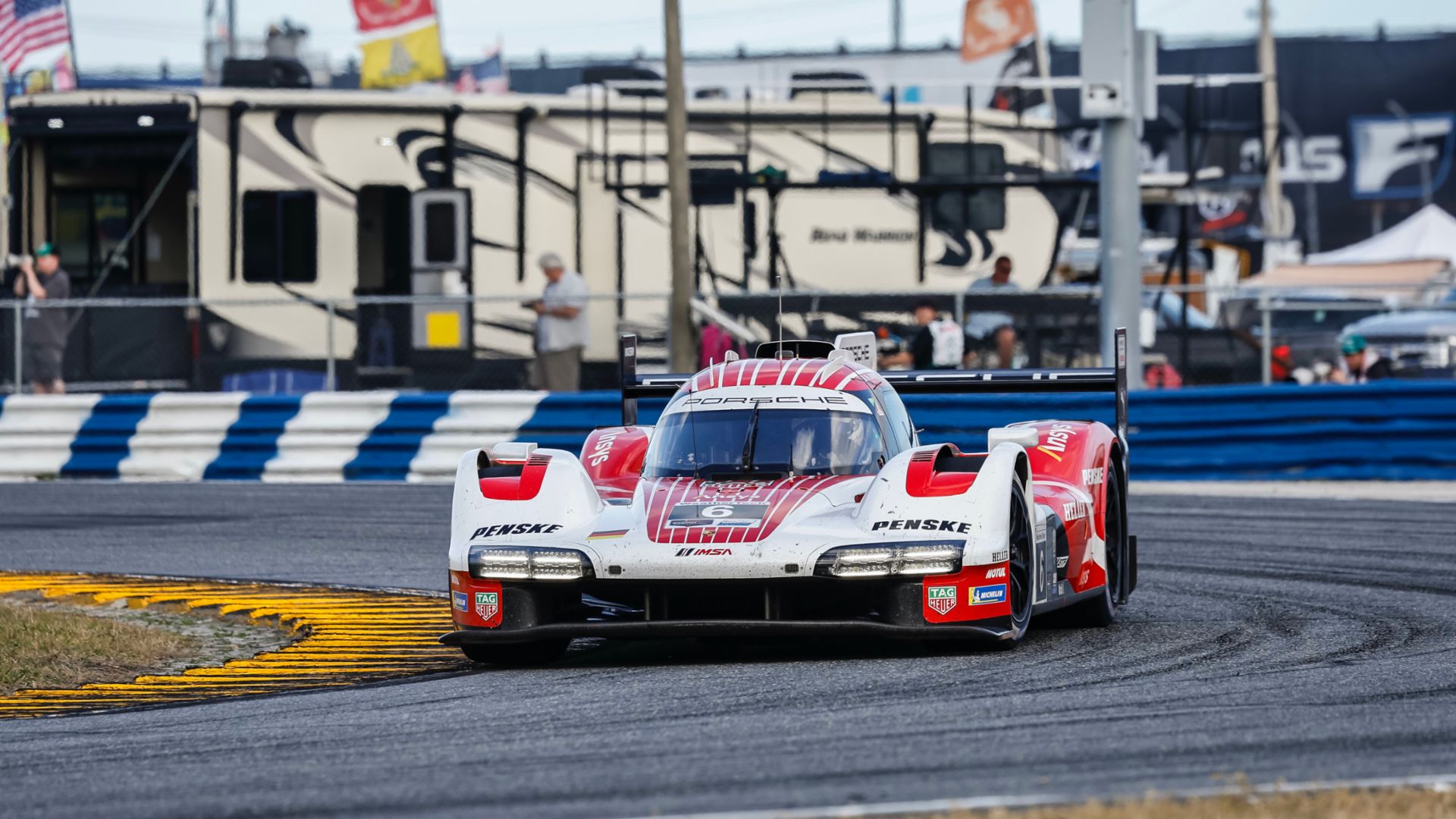
Porsche kicked off the 2024 IMSA SportsCar Championship with a record 19th win at the 24 Hours of Daytona, also commercially known as the Rolex 24 At Daytona.
The winning car was the No. 7 Porsche 963 of Porsche Penske Motorsports, driven by Felipe Nasr, Dane Cameron, Matt Campbell, and 2023 Indianapolis 500 winner Josef Newgarden.
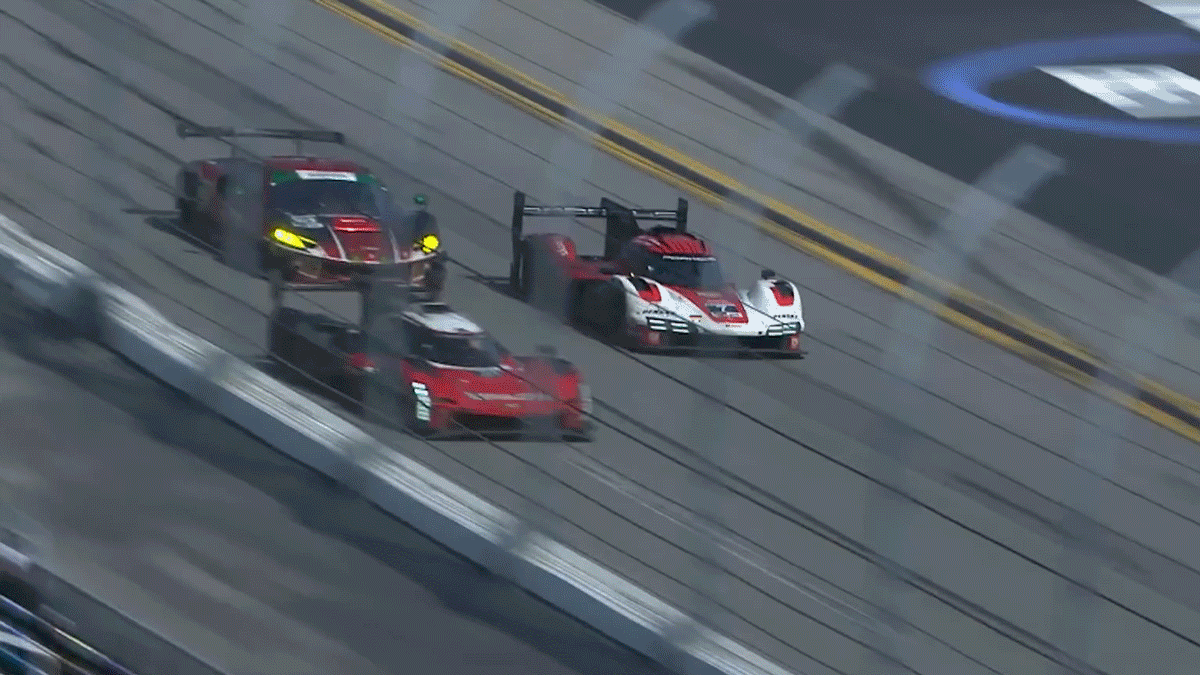
This was Porsche’s first overall Daytona win since 2003 and the first for the 963, which was Porsche’s entry in the revived GTP (Grand Touring Prototype) class that debuted for 2023. After 15 caution periods, the 24-hour race was decided in the final 32 minutes with a duel between the No. 7 Porsche and the No. 31 Cadillac V-Series.R team consisting of Pipo Derani, Jack Aitken, and Tom Blomqvist, which finished second.
2024 24 Hours of Daytona
The final step on the podium was taken by Jordan Taylor, Louis Deletraz, Colton Herta, and 2009 Formula 1 champion Jenson Button in the No. 40 Acura ARX-06 of Wayne Taylor Racing.
Moving down the classes, the No. 18 Oreca LMP2 07 of Era Motorsports finished ninth overall, taking the LMP2 crown with drivers Dwight Merriman, Ryan Dalziel, Connor Zilisch, and Christian Rasmussen.
The big story in the GT production-based classes was the debut of the Ford Mustang GT3, but it had difficulties of the factory-backed cars entered in the race. The No. 65 failed to finish while the No. 64 finished seven laps down, sixth in the GTD Pro class.
2024 24 Hours of Daytona
The GTD Pro win went to the No. 62 Ferrari 296 GT3 of privateer team Risi Competizione, driven by Daniel Serra, Davide Rigon, Alessandro Pier Guidi, and James Calado. It was the first Daytona class win for the stalwart team, which has been competing in sports car racing since 1998.
In the GTD class, Daniel Morad, Philip Ellis, Russell Ward, and Indy Dontje took the class win in the No. 57 Winward Racing Mercedes-AMG GT3.
The 2024 IMSA season continues Mar. 13 with the 12 Hours of Sebring.
The Lamborghini STO, standing for “Super Trofeo Omologata,” marks the end of the Huracan era. Priced at £260,000 for the base model and easily surpassing £330,000 with additional specifications, the STO is positioned as a halo model, replacing the beloved Performante.
Drawing inspiration from the Super Trofeo race car, the STO boasts a stripped-down, race-focused design. Its interior is characterized by bare carbon elements, providing a raw and immersive driving experience. Despite lacking traditional amenities like a rear window and boot, the STO aims to captivate enthusiasts with its pure driving thrill.
The heart of the STO is a 5.2-liter V10 engine, producing 631 brake horsepower. While this may seem modest compared to some rivals, the STO distinguishes itself with a design philosophy rooted in the Super Trofeo’s race DNA. The car’s magnesium wheels, carbon fiber bodywork, and a thinner windscreen contribute to a weight reduction of 43 kilograms, making it 43 kilograms lighter than its predecessor.
On the other side of the spectrum, we have the Porsche 911 GT3, known for its precision, aerodynamics, and a heritage deeply rooted in motorsport. Priced competitively, the GT3 offers a balance between track performance and everyday usability.
The GT3 features a naturally aspirated four-liter flat-six engine, delivering a linear power delivery that enthusiasts appreciate on both tracks and roads. Aerodynamic improvements, such as a rear diffuser generating four times more downforce than its predecessor, contribute to the GT3’s exceptional track performance.
The car’s seven-speed PDK gearbox receives acclaim for its seamless and fast shifts. Porsche’s commitment to heritage and passion is evident in the GT3’s development, ensuring a connection to the brand’s storied history in motorsport.
For a more in-depth comparison between these two track-focused supercars from Lamborghini and Porsche, watch this video from Supercar Driver on YouTube as they take them for a drive.
When we imagine a country that adopts the bigger is better stance, the majority of us will default to the ‘Merican way of life.
This is home to the Big Mac after all. A country whose love affair with the V8 motor dates all the way back to 1914. And, if you’ve ever driven between California and Las Vegas, you’ll know it also boasts the world’s largest thermometer. Obviously.
Clearly, the attitude of excess isn’t one usually associated with a country like Japan. Its capital city – Tokyo – remains one of the most densely populated areas in the world, cramming 38 million residents into just 13,000 square kilometres.
To give that a bit more perspective, New York manages 19 million people in a similarly sized area. But what about Texas? Try 30 million across a state that’s actually 1.8 times larger than the entire country of Japan.
Big cars obviously exist in Japan and have done for many years. Look back to 1995, and you’ll see Toyota released the Mega Cruiser – essentially a Hummer H1 run through Google Translate. While its original use was for the Japanese military, that didn’t stop Toyota making 3,000 road-going versions too, despite the Mega Cruiser being almost twice as wide (and long) as a typical kei car.
If we’re talking legendary Toyota 4x4s however, there’s one model whose following transcends way beyond its country of origin. One which has quite literally been a global backbone providing aid, supplies and access to some of the most remote parts of the world beyond its use as a family vehicle or off-roader. The one and only Land Cruiser.
As the saying goes, ‘If you want to go into the Outback, take a Land Rover. But if you want to come back out again, make sure it’s a Land Cruiser.’
For the last 73 years, Toyota has produced a variation of the Land Cruiser with an estimated 10 million units sold worldwide. That might not sound like much compared to Ford’s F150, but the Land Cruiser has found its way into no fewer than 170 countries, which might just be a record in itself.
The Land Cruiser story is one which really deserves multiple Speedhunters posts, because its history goes far beyond anything I could ever do justice. So, for the sake of this story and the Land Cruiser in question, we’ll focus on one of the most widely recognized generations – the FJ60, aka 60-series.
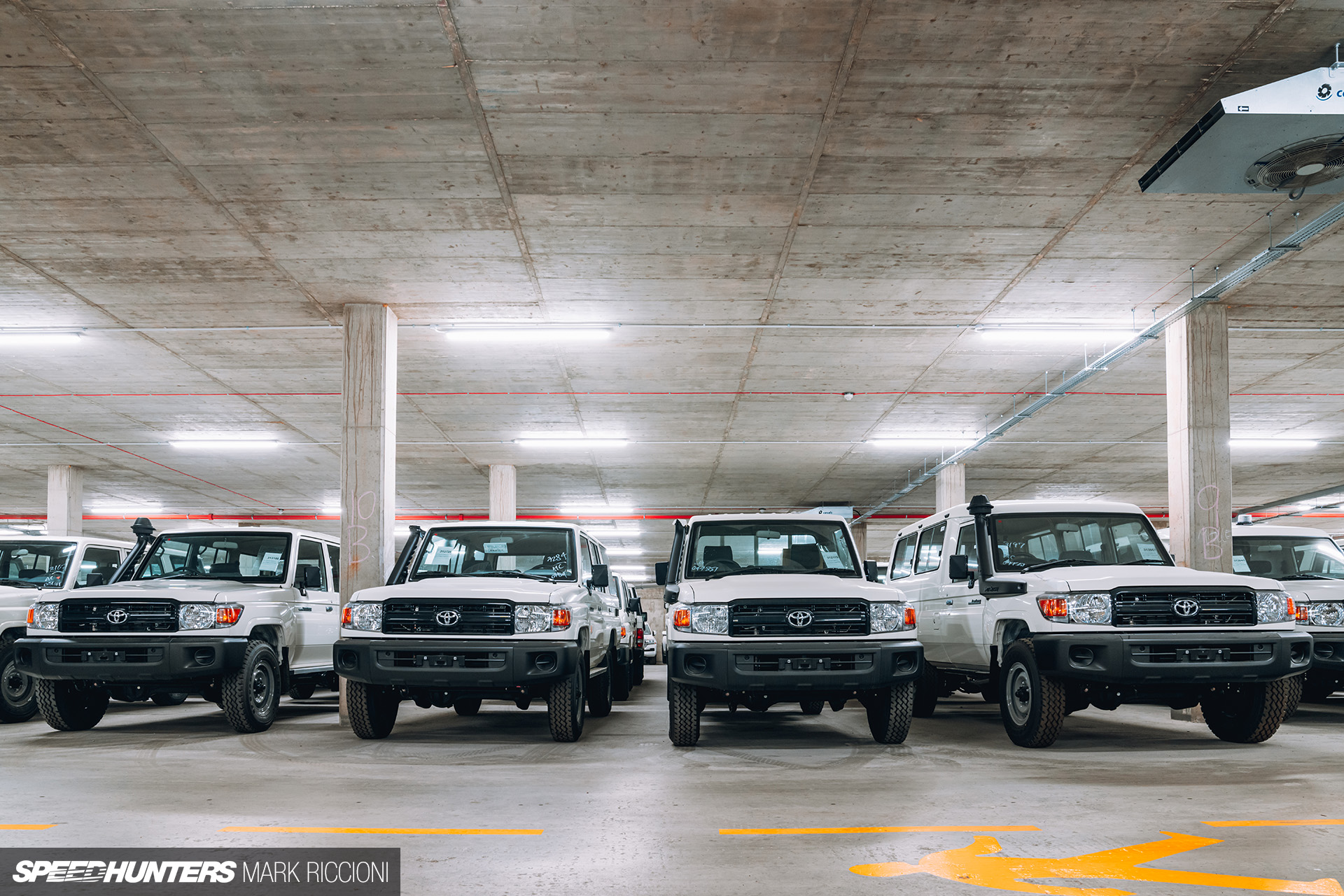
Produced between 1980 and 1992, the FJ60 was designed to be a rugged off-roader but with more emphasis on comfort and features to compete better within the emerging SUV market of the time. No longer did Toyota need to create just a capable 4×4 because in 1984, production of the infamous 70-series began (pictured above). And while it received the odd facelift, fundamentally that generation has been the same for nearly 40 years. The reason? Well, the 70-series became the go-to choice for NGOs (non-government organisations) and various humanitarian outfits like the United Nations.
One of the ideas being that – regardless of production year – a 70-series Land Cruiser could be repaired quickly and easily no matter where in the world it is, often using parts taken from other 70-series, irrespective of age. Some may call it basic, but with minimal electrics to go wrong and Toyota’s famed reliability, it takes the term ‘dependable’ to a whole new level.
Unfortunately, that versatility and durability has meant the 70-series often gets used for some slightly non-humanitarian things, like sporting an anti-aircraft gun on its pickup bed while somewhere a bit sandy.
And while the 70-series was doing it’s bit for humanitarian aid, the more ‘luxury’ 60-series – and subsequent generations after – then built a gigantic cult following all around the world making it the ultimate adventure 4×4. Stylish, tough, and in recent years easily retrofitted with anything from a roof tent to a full-blown awning and pop-out accommodation.
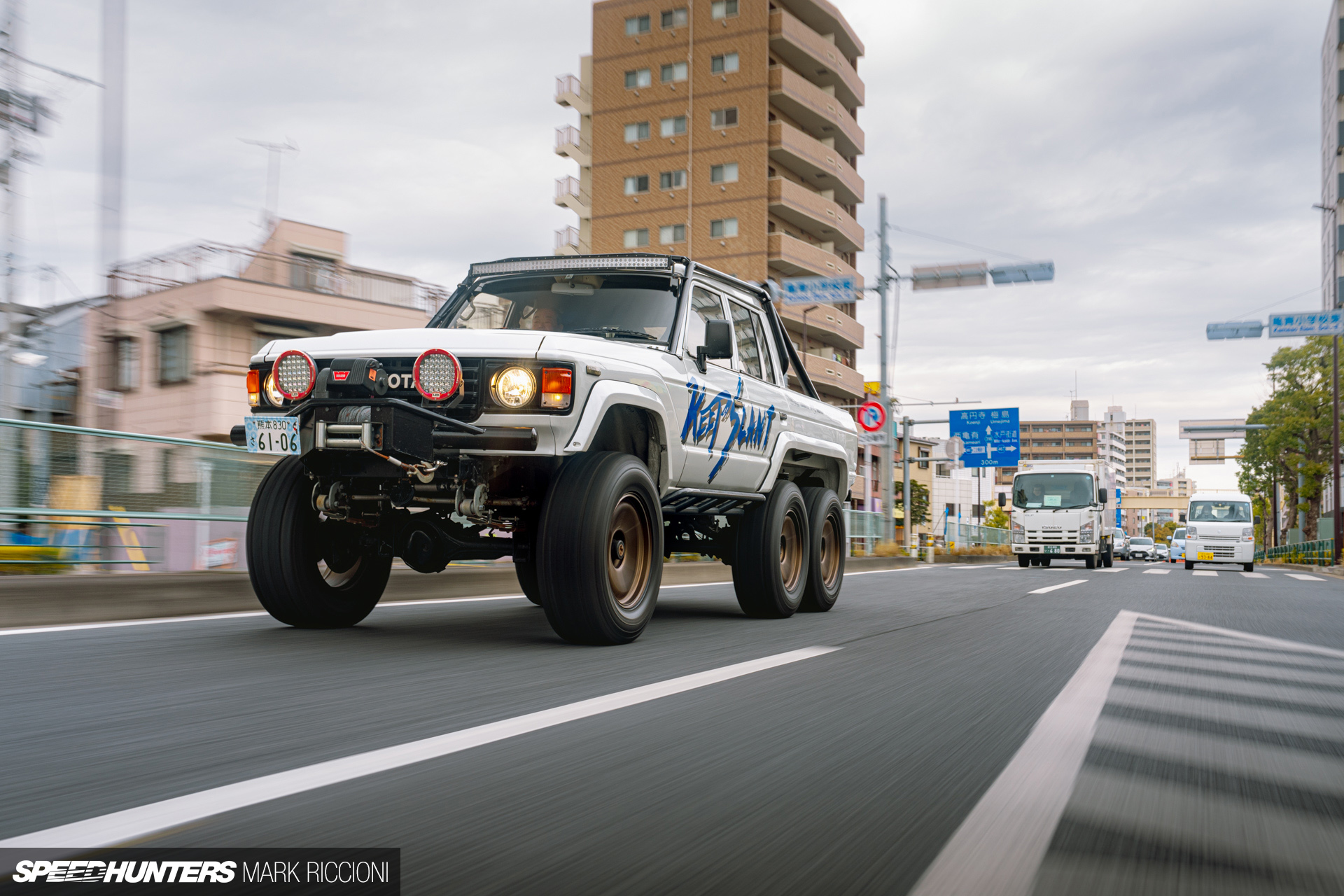
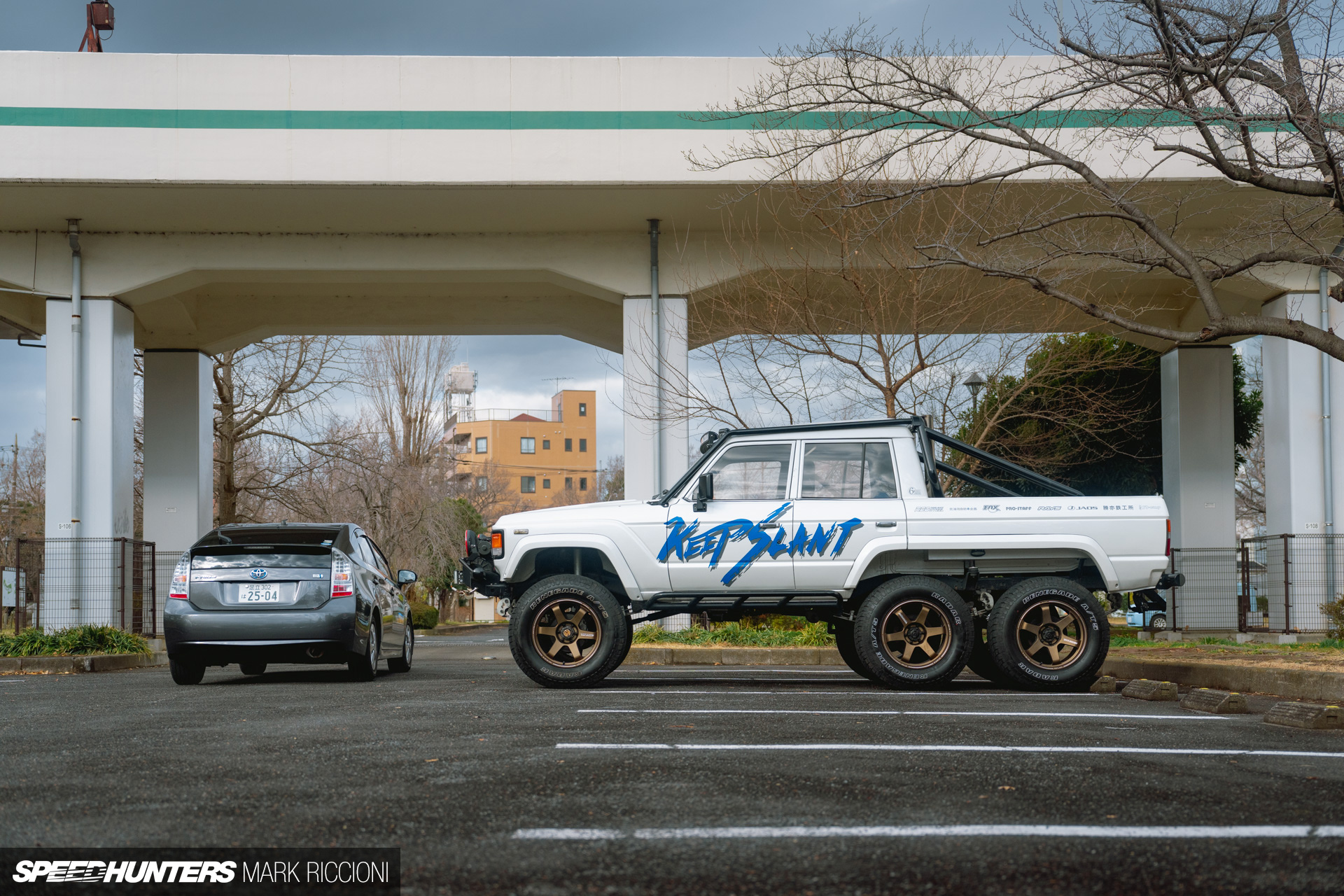
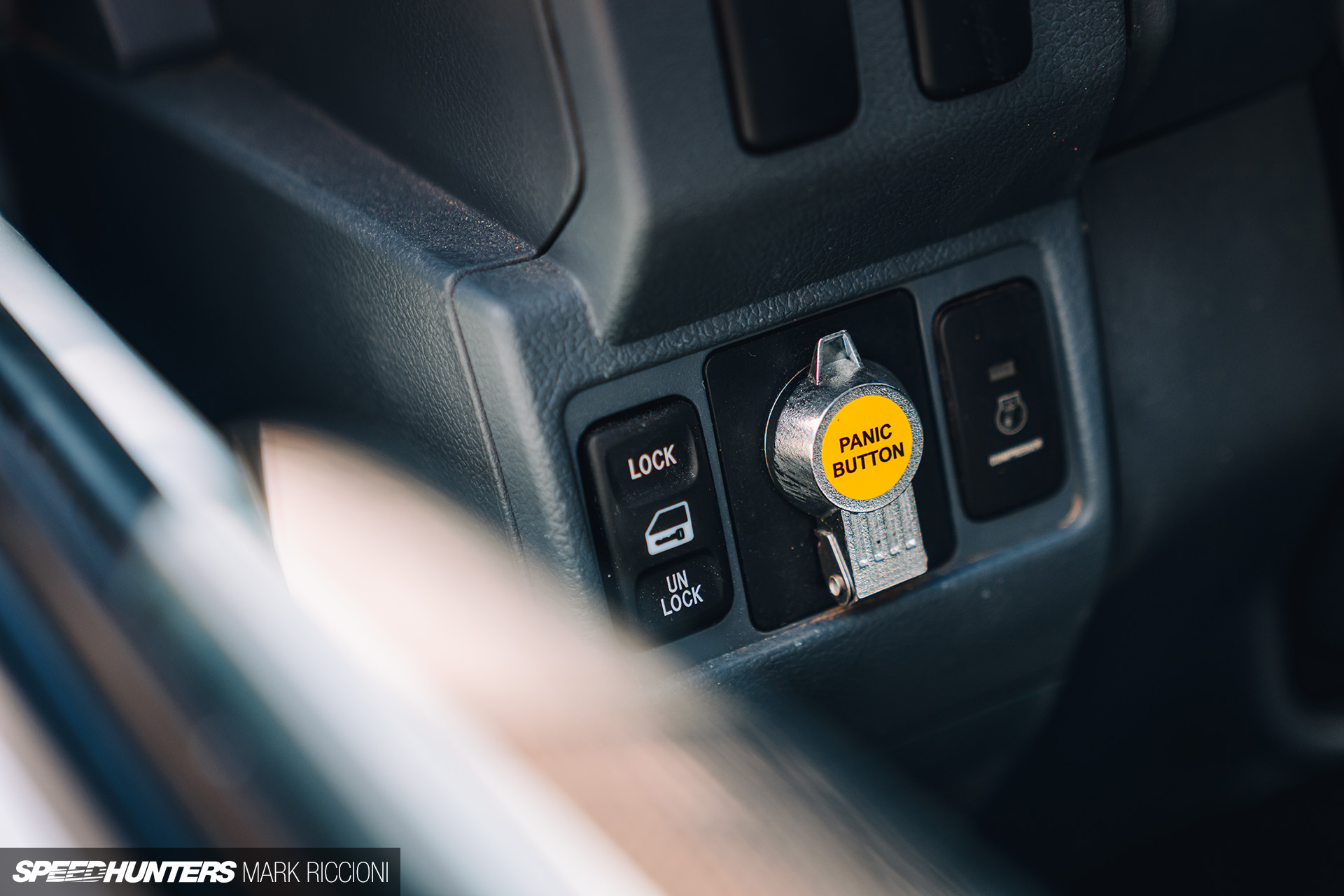
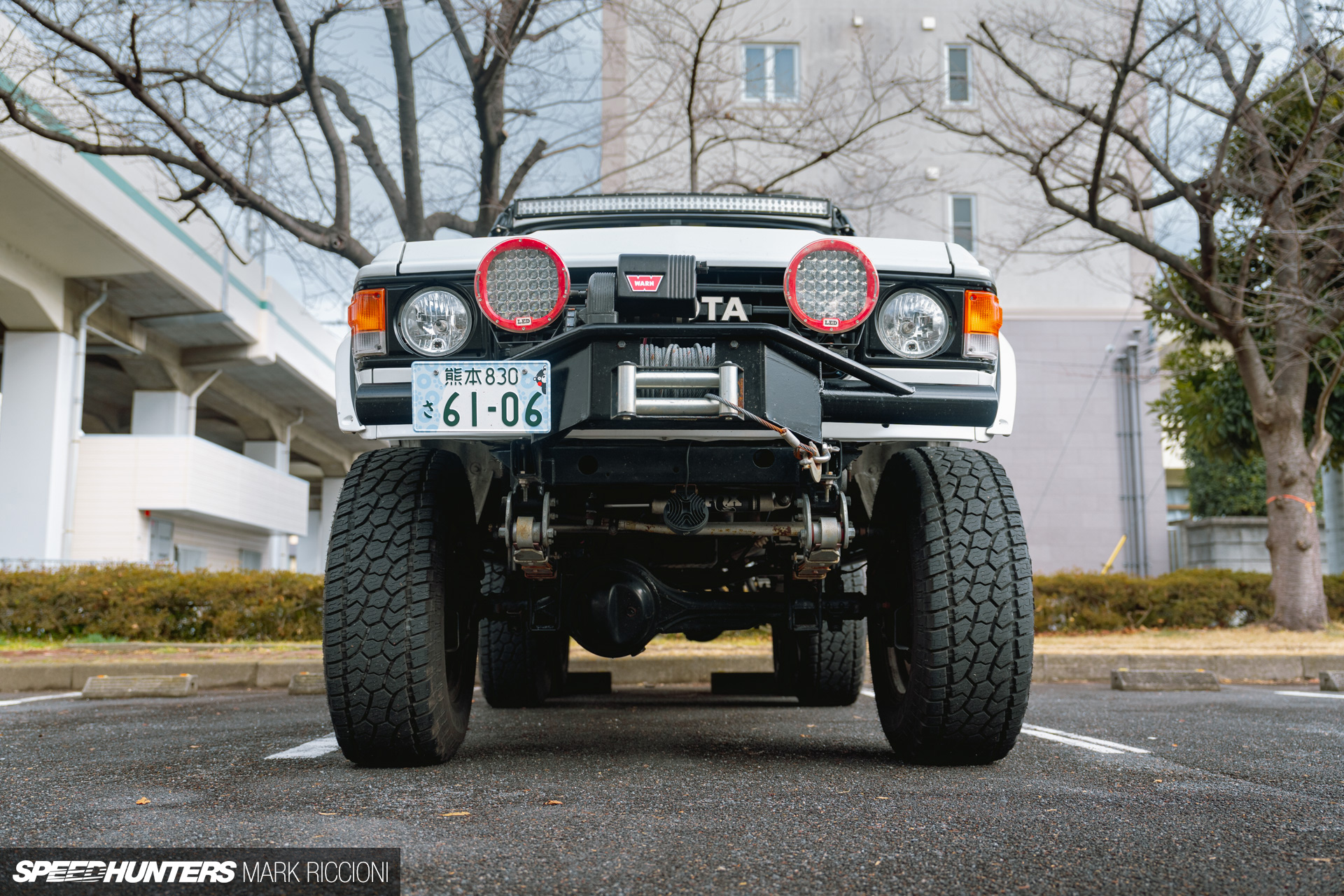
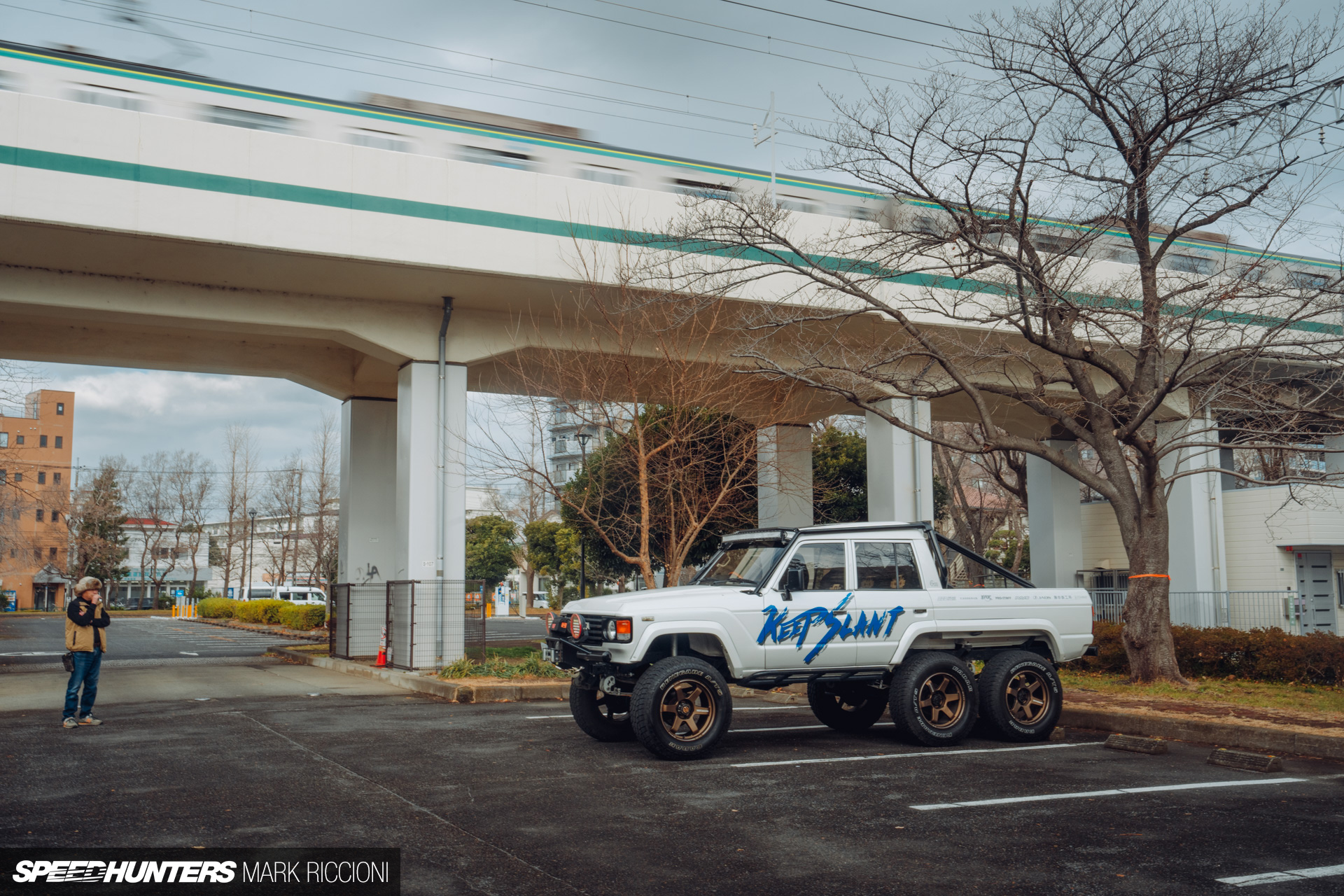
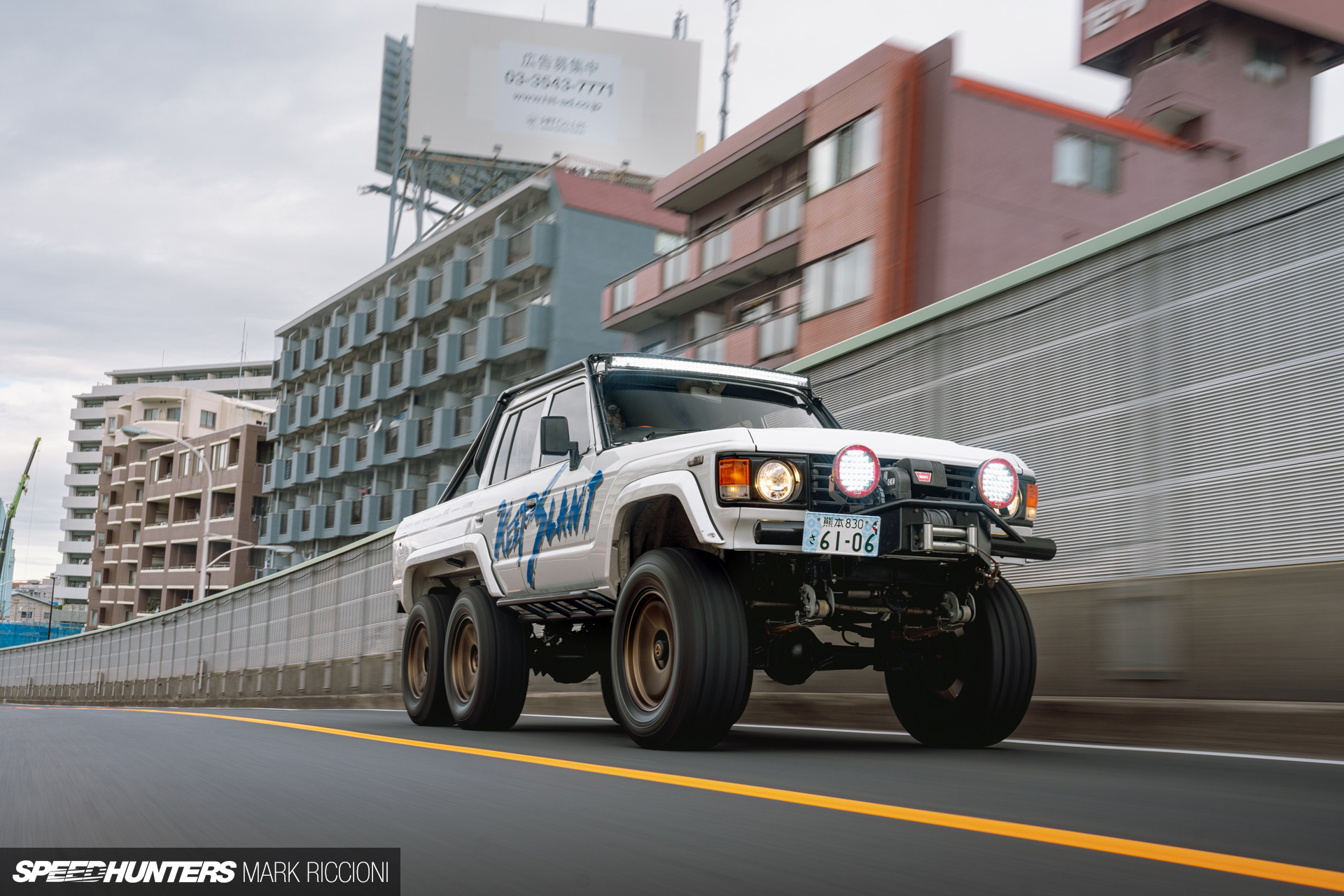
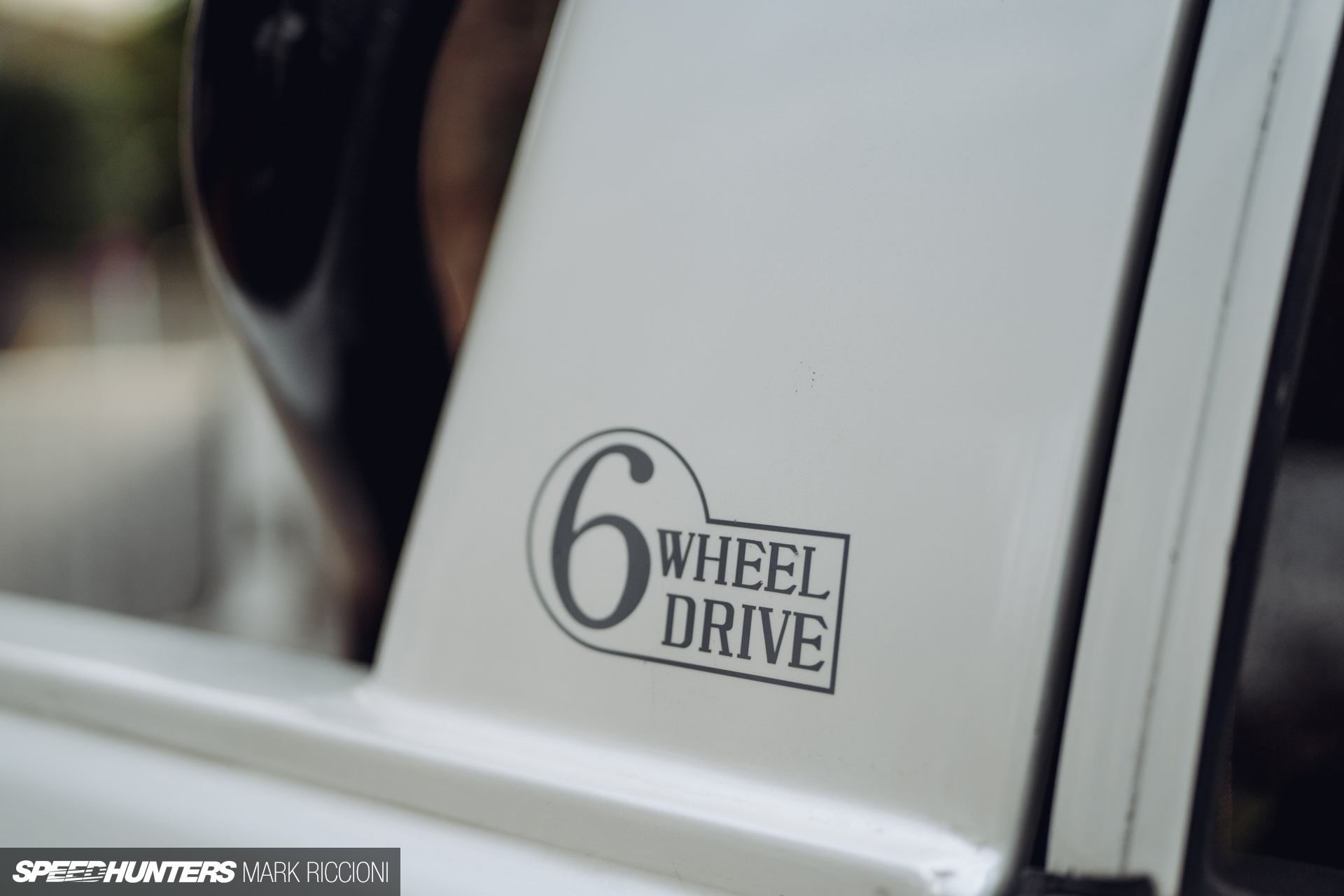
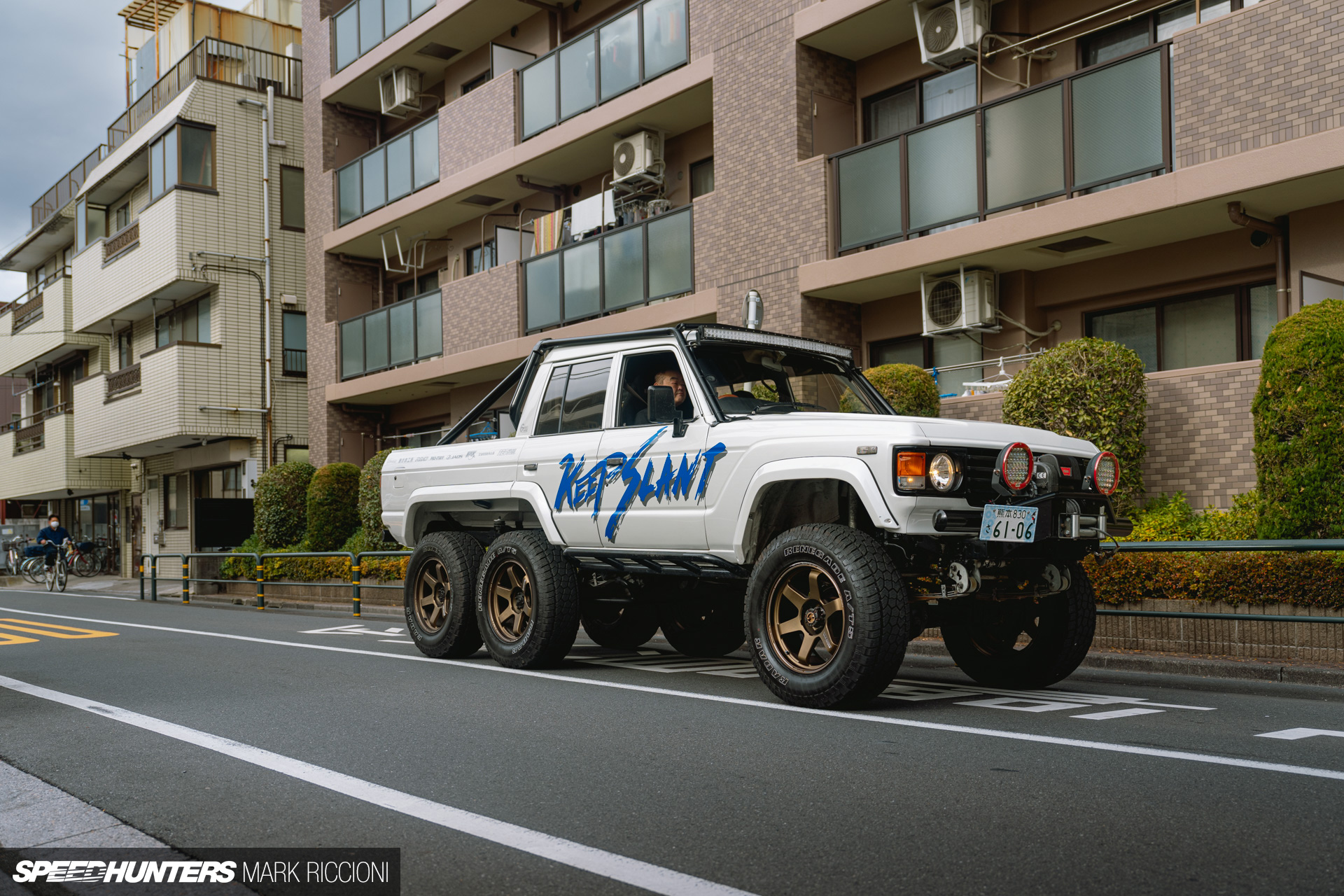
And, when a car becomes a cult classic with enthusiasts, it leaves the door wide open for a little more interpretation too. Something Yukata Kasaho has taken advantage of by converting one of the world’s best 4x4s into a genuine 6×6 monster, complete with locking diffs and roof-stacked exhausts.
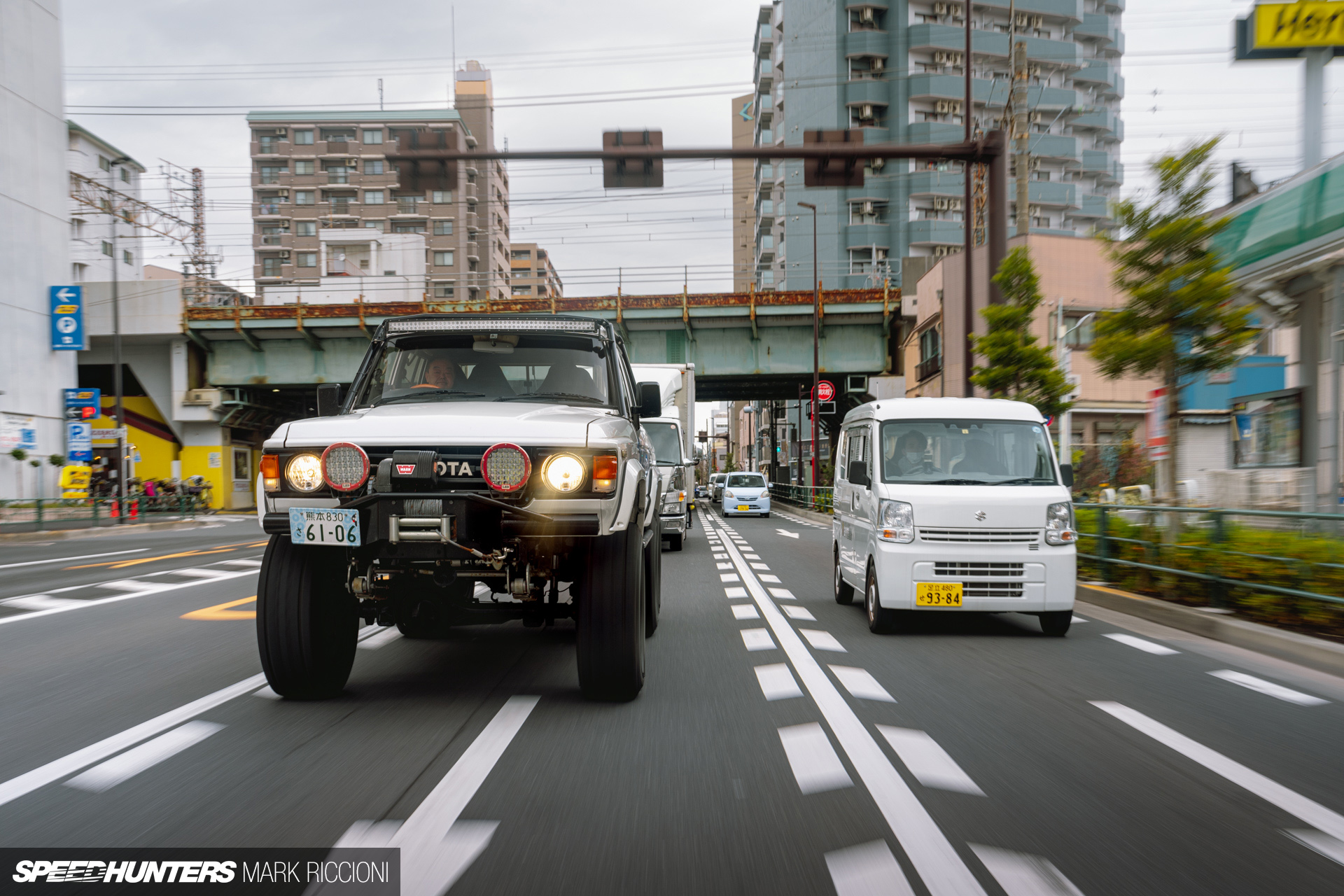
Now put that in the backdrop of Tokyo and the result is a car so outrageous that even the most reserved Japanese motorist will crick their neck for a cheeky look. What possesses a man to create this kind of lunacy… and where can we get one too?
“I first fell in love with the Land Cruiser back when I was at school,” Kasaho-san explains. “I remember seeing some of the elders drive them and thinking, ‘wow, that car looks cool!’ So, when I got older, I knew I would one day own one.”
Understandably, this wouldn’t be an isolated incident. In the years after leaving school, Kasaho-san bought and modified a range of different 4x4s which inevitably led to him starting his own business focused on upgrading them. That business – known as Keep Slant – is still going strong today, with Kasaho-san’s specialties being leaf springs and lift kits that he designs and engineers himself.
Here lies the foundations for a perfect storm. An enthusiast obsessed with Land Cruisers – whose business focuses on modifying them for all kinds of use – decides it’s time to promote said business with an eye-catching build. What could possibly happen next?
“Being a Land Cruiser fan for so long, you get to meet many other enthusiasts and see many other cool builds,” Kasaho-san adds. “The 60-series Land Cruiser has always been my favourite generation. It is iconic around the world, and because they are very simple it is easy to modify for different off-road use.”
“I began to wonder, ‘what has not really been done with the 60-series?’ It would need to be something that could not be produced from the factory; something which requires a skilled specialist to achieve and not produced on a large scale.”
The only thing more dangerous than a wild idea is finding a skilled team or individual willing to make it a reality. In this case, it’d be the mad scientists at Neosteel – a 4×4 specialist located all the way down in Kumamoto, Japan. Bespoke fabrication is Neosteel’s bread and butter, ranging from simple overland creations to those rock-crawling monsters with full exoskeletons. And if you’ve ever dealt with a fabricator before, you’ll know the way to their heart is by challenging them to create something they’ve never built before.
“Truthfully, the idea for 6×6 came from Tatsuya Kuwata of Neosteel,” Kasaho-san points out. “I wanted to do something unique that I could use to promote products like the leaf spring kits, but Kuwata-san always had the dream of building a 6×6! I thought the idea was crazy, but I loved it. Plus, because of his excitement, I knew Kuwata-san would not stop until it was complete and functional.”
For Kuwata-san at Neosteel, builds like the 6×6 60-series are what keep him awake at night for all the right reasons. Just like Kasaho-san, his background and introduction into the world of Land Cruisers spans multiple decades – 25 years in fact – after embracing total freedom in his twenties by exploring the mountains most weekends in various 4x4s.
“I work on all kinds of off-road vehicles, but the Land Cruiser really impresses me the most,” Kuwata-san explains. “I knew Kasaho-san for a long time before the project. It was a dream of mine to build a genuine 6×6 vehicle for many years, around the time Mercedes unveiled the G 63 AMG 6×6 back in 2013.”
“Kasaho-san wanted to incorporate leaf springs into the build because of his business, which added a lot of challenges to the build. Japan is a country with strict car safety standards, so we ended up creating different variations to retain the use of leaf springs correctly. In the end, we did manage to get a solution that worked including all three axles being controlled independently too.”
Kuwata-san didn’t share too much information into the full extent of fabrication – not helped by my lack of Japanese – but was keen to point out the use of a Suzuki Jimny transfer box to join the additional axle to the rest of the drivetrain, allowing it to be engaged and disengaged along with the locking differentials too. All-in-all, the project has taken nearly four years from start to finish, but it’s far from a show car.
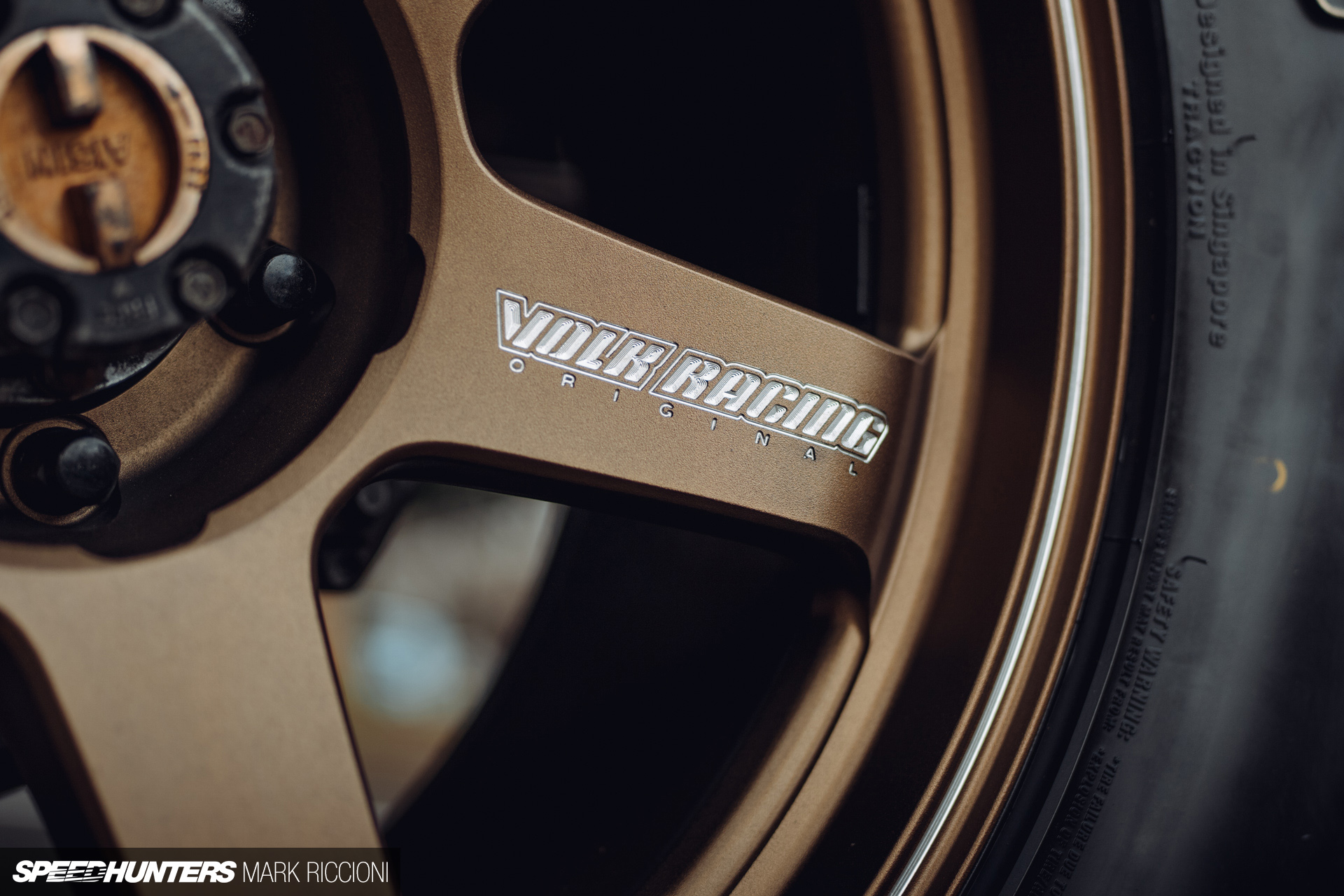
Make no mistake, the addition of six 20×9-inch RAYS Volk Racing TE37s does add a certain ‘show’ element to the Land Cruiser, but Kasaho-san hasn’t shied away from using it – the scars from rock crawling is apparent on several of the wheels.
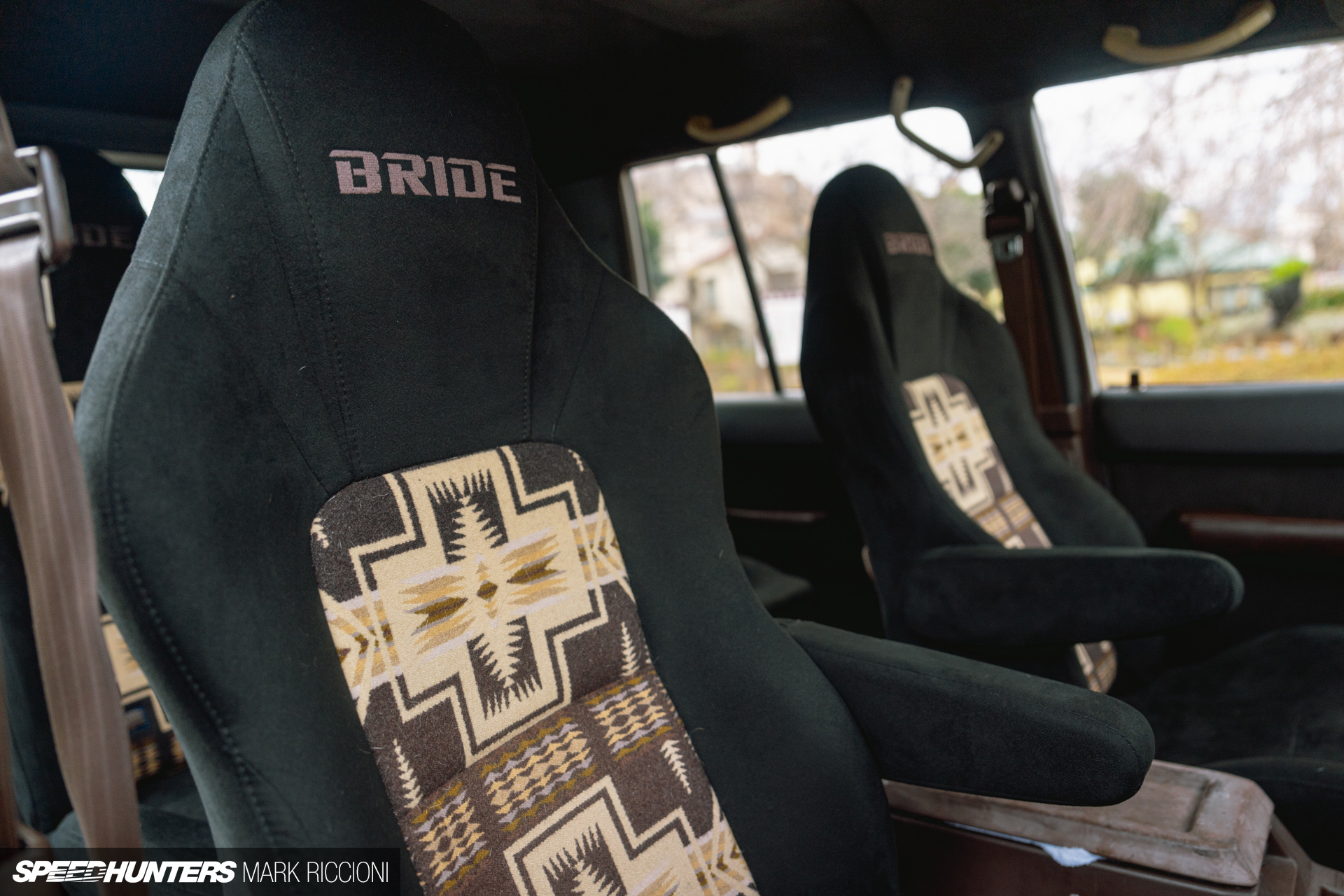
It’s a similar story inside. Bride front seats combined with a Navajo pattern wouldn’t be your first choice in any Land Cruiser, but aside from being stylish as hell they add a certain level of comfort to the otherwise ‘uncompromised’ ride.
“The goal was to create an eye-catching 60-series which also remained a genuine off-roader,” adds Kasaho-san. “It is more than just a demo car for my business and the work of Neosteel; it is a car I continue to use most days and enjoy with friends during expeditions.”
“In Japan, it is unusual to see such a big vehicle especially with six wheels. But the Land Cruiser is an icon to many people here, and to see such a vehicle modified in an unusual way brings myself – and many other people – happiness. That is what I love most about car culture.”
Arguably, a stay selection can alter the course of any holiday. This hypothesis is one that Bali-goers are all too familiar with. Frequent flyers to the island typically oscillate between three neighbourhoods: the secluded haven of Ubud, busy indie Canggu and the standard, prime beachfront properties of Seminyak. While the former two locations have risen in popularity for an alternative taste of the island, Seminyak’s status has endured for its vicinity to the Bali mainstays like beach clubs and prime dining destinations. Choosing between different variations of milieux would mean narrowing one’s intended holiday outcomes, a task of weighing different pleasures which has proved difficult time and again.
To cope, many often select between extremes: between the island’s cultures of serenity and partying. Others attempt to cram the full spectrum through exhausting itineraries, leaving little time to be spent enjoying the facilities offered in Bali’s many luxurious accommodations. Hotel Indigo Bali Seminyak Beach offers a reprieve in the form of a well-balanced compromise. On entering its grounds — conveniently located in the heart of Seminyak — a Bali-native Pohon Pule tree greets guests. A sacred tree, the centrepiece branches toward the sky, directing gazes toward the ample sunlight let in by the lobby’s open-ceiling concept. This greeting is no gimmick. While many other neighbouring properties have emphasised an alignment with gentrified, commercialised modernity, the first Hotel Indigo in a resort location chooses to lead with a Seminyak-forward narrative.
The Secret Garden Pool. Photo: Hotel Indigo
Expertly, Hotel Indigo Bali Seminyak Beach weaves elements of spirituality and heritage into its architecture, interiors and overarching hospitality ethos. Its emphasis on local influence reverberates across the hotel’s layout, informed by proportions of traditional pavilions and constructed using heritage materials and patterns. In nearly every feature within the 4.8-hectare property, guests will find some iteration of Hotel Indigo’s commitment to the Seminyak way. Beyond just the to-be-expected daybeds, all 270 rooms on the property enjoy bathrooms crafted in the image of modern spas, tiled with Balinese fabric-inspired floral motifs. On a more luxuriant note, 19 private villas are available, fashioned to include private pools and whirlpools catering to both sun-seeking travellers and parties who have touched down to decompress.
Day beds abounding. Photo: Hotel Indigo
The Hotel Indigo chain operates on a philosophy of drawing inspiration from the environment it has settled in. This is immediately apparent upon laying eyes on the property. Yet, what Hotel Indigo Bali Seminyak Beach excels at is its undercurrent of environment-influenced hospitality. Brimming with intricacies that justify the Intercontinental Hotel Group (IHG)’s continued legacy in the industry, the hotel is rigorous in exalting the Balinese people’s signature cordiality. Complimentary stocked mini-bars pale in comparison to its 24-hour amenities: namely, an extensive in-room dining service and a Health Club fitted with wellness programmes and equipment to give even the most exclusive of gyms a run for their money. The star of Hotel Indigo Bali Seminyak Beach, however, is the vast culinary and beverage ventures led by hospitality veteran Jonathan Byrne.
As any hotel aficionado would know, the finishing touch of any stay is the perfect meal to wrap it all up. Byrne spearheads eight wining and dining concepts, each offering a distinctive carte du jour. Especially notable is SugarSand, now revitalised to architecturally render a Japanese take on jukungs, or Balinese boats. The Japanese izakaya concept is contemporary, yet still maintains the intended Seminyak spirit. Local ingredients shape up an eclectic menu that comprises wagyu gyozas, katsu sandwiches and a fine selection of sushi which foreground a heavy-hitting cocktail menu crafted by what the team terms as “Balixologists”. A delightful ending note to round out any stay, the dining concepts are reflective of the careful precision with which Hotel Indigo Bali Seminyak Beach executes its own version of IHG hospitality.
A destination in its own right, Hotel Indigo Seminyak Beach functions as an all-in-one — a temptation to idly squander one’s time within the boundless estate and unending displays of Balinese cordiality. Head to Hotel Indigo Bali Seminyak Beach’s website to learn more about the exciting new resort.
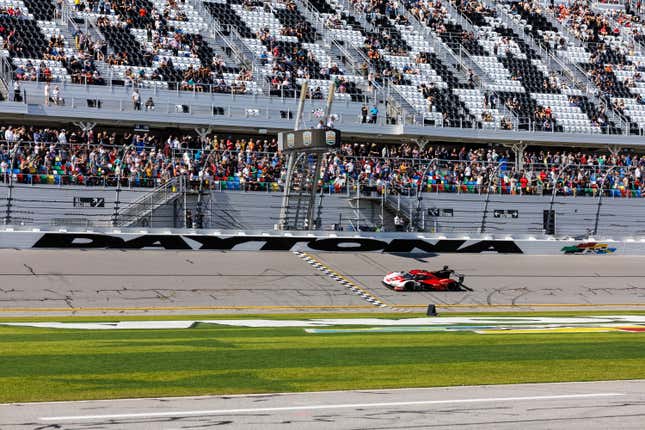
This year’s Rolex 24 at Daytona concluded with a thrilling half-hour head-to-head duel. Felipe Nasr, behind the wheel of the No. 7 Penske Porsche 963, was the first to cross the finish line after 23 hours and 58 minutes. Yes, the 24-hour race was finished in under 24 hours. While the premature finish likely didn’t impact the result, many are questioning why race officials at IMSA’s watchmaker-backed endurance classic seemingly couldn’t tell the time.
I Need A Manual Car Thats Fun And Powerful | WCSYB?
Update – Monday Jan 29, 2024 5:00 p.m. EST: IMSA released a statement on the 2024 Rolex 24 at Daytona finish:
Due to an officiating error in race control, IMSA inadvertently announced and subsequently displayed the white flag with under three minutes remaining in the race. At the end of the lap, the race-leading No. 7 GTP car then received the checkered flag with 1 minute, 35.277 seconds still remaining, ending the race short of the planned 24 hours by effectively one lap.
Based on Article 49 of the 2024 IMSA Sporting Regulations and Standard Supplementary Regulations, should the checkered flag be inadvertently or otherwise displayed before the leading car completes the scheduled number of laps or before the prescribed time has been completed, the race is nevertheless deemed ended when the flag is displayed.
To set the scene, the Rolex 24 often goes down to the wire despite the IMSA season opener’s ridiculous length. The race of attrition typically features full-course cautions throughout its duration to recover stranded cars out on track. Damaged vehicles are allowed to be towed back to the garages, sort of like a video game reset. More importantly, the field of competitors is bunched up behind the pace car for the restart.
The race’s final caution came when the No. 12 Vasser Sullivan Racing Lexus RC F burst into flames while exiting the pit lane. Team owner Jimmy Vasser told broadcasters that he believed that a plenum fire was the cause. Before the caution, Tom Blomqvist was able to put the No. 31 Whelen Engineering Cadillac V-Series.R ahead of Nasr’s Porsche with a pass through the tri-oval. However, Penske jumped Nasr back to the lead with a quicker pit stop.
The race restarted with just over 30 minutes left. Nasr was not only able to hold off Blomqvist, he was able to stretch the gap out to over a second. As the crowd prepared themselves for one last nerve-wracking lap, the race suddenly ended. The TV scoring bug ticked over from “2 Laps To Go” directly to “Checkered,” signaling the finish. The official in the flag stand overlooking the finish line waved the checkered flag. It was all over.
Photo : James Gilbert ( Getty Images )
Now, it’s time to tear up some tinfoil hats. Yes, the victory ended historic droughts for Penske and Porsche. It was the team’s first win at the event since 1969. Porsche’s last overall victory in the Rolex 24 was in 2010 with Action Express Racing.
Of the baseless rumors circulating online, the most prominent conspiracy theory is that IMSA ended the race early because the Porsche was going to run out of fuel. The No. 7 Porsche and the No. 31 Cadillac, run by Action Express, made the final stops at the same time. Publicly available telemetry also showed that both cars had five percent of usable energy left, enough to complete another lap easily. Lastly, Action Express is owned by IMSA Chairman Jim France. Any rational conspiracy would have the race prolonged to give the No. 31 Cadillac a better chance at the win.
We reached out to IMSA and we will add an update when we receive their official statement, but the early finish seems like an honest mistake. I tend to lean on Hanlon’s razor, “Never attribute to malice that which is adequately explained by stupidity.” Miscommunications and mistakes happen in sports officiation in every competition under the sun. Racing is definitely not exempt.
We drove the 2024 Alfa Romeo Stelvio and found the luxury crossover SUV has aged with grace. Despite debuting six years ago, the Stelvio’s design has stood the test of time while its front seats are among the most comfortable in any small crossover on sale today. Technology isn’t this crossover’s strong suit, but driving dynamics make up for the dated infotainment system.
The refreshed Aston Martin Vantage continued its strip-tease campaign ahead of the car’s debut on Feb. 12. An image revealing the car’s strong character lines, update mirror housings, and flared rear fenders teased a more muscular Aston.
Jeep added a 35-inch tire option to the two-door Wrangler for the first time. The Xtreme 35 Tire Package joins the lineup after previously only being available on the four-door Wrangler. The larger tire option will only be available on Rubicon and Willys models, which means a 2.0-liter turbo-4 under the hood.
You’ll find these stories and more in today’s car news, right here at Motor Authority.
For nearly two decades the CX-9 has served as the flagship of Mazda’s swelling SUV lineup. It has continued to evolve and improve and provide the most comfort and seating for growing families. This year marks the end of the CX-9 and the debut of the new CX-90. What’s different about the CX-90 that separates it from it’s predecessor? A lot.
For starters, the design is blockier, stockier and more rugged looking. It lacks the design excitement of the CX-30 and the new CX-50. There are no swoopy lines to the design. No vents or swollen fenders. With the tasteful use of chrome accents and a better balance of design, the CX-90 looks more refined, more high-end than the pedestrian looking CX-9 it replaces. It looks like a much more expensive vehicle than it really is. In the competitive SUV market, standing out as more refined is a good thing.
There are mechanical improvements under the sheet metal as well. Gone is the overworked turbocharged four-cylinder that always felt so underpowered hooked to an automatic 6-speed transmission. The CX-90 sports a turbocharged 3.3L Inline-six that either makes 280 hp/332 lb-ft of torque or 340 hp/369 lb-ft depending on which model you spring for. This power is distributed through an 8-speed automatic transmission for more efficiency. Mazda gave us an example with the stronger motor in it and we were impressed with the increased power and torque. In typical Mazda fashion, you still won’t win any drag races with it but you’ll have excellent mid-range passing power while driving and that’s arguably more important than low-end grunt.
Mileage with each engine is roughly the same: 28 freeway, 24 city, 25 average. These are pretty close to the numbers we experienced as well.
The ride was solid, confident, and comfortable. Mazda engineers have done a good job of tuning the suspension to absorb the potholes and freeway expansion joints. The steering was intuitive and allowed for a tighter turning radius that we expected.
The brakes were easily modulated and intuitive. They did a great job of slowing and stopping the heavy car without issue.
Inside was where the real improvement were. Our model had seating for seven with captains chairs for the middle row and a third-row seating setup in the far back. All the seats could be folded flat to provide huge cargo carrying volume. Our top-of-the-line model had color-blocked white leather seats and a white leather dash combined with black carpeting. It really looked sharp. The control layout was simply and straightforward.
The CX-90 also benefits from additional sound reduction. The ride in the CX-90 was quiet with little wind or tire noise, alllowing you hear phone calls or the great stereo system better.
Mazda has done an excellent job of improving their top-end SUV. The name change from -9 to -90 suggests Mazda has added more value and more refinement, more creature comforts, more power, etc to their new car. They have. The name change accurately reflects what a big jump this is and we think people will prefer it over the CX-90 by a considerable margin.
The technical storage or access is strictly necessary for the legitimate purpose of enabling the use of a specific service explicitly requested by the subscriber or user, or for the sole purpose of carrying out the transmission of a communication over an electronic communications network.
Preferences
The technical storage or access is necessary for the legitimate purpose of storing preferences that are not requested by the subscriber or user.
Statistics
The technical storage or access that is used exclusively for statistical purposes.The technical storage or access that is used exclusively for anonymous statistical purposes. Without a subpoena, voluntary compliance on the part of your Internet Service Provider, or additional records from a third party, information stored or retrieved for this purpose alone cannot usually be used to identify you.
Marketing
The technical storage or access is required to create user profiles to send advertising, or to track the user on a website or across several websites for similar marketing purposes.