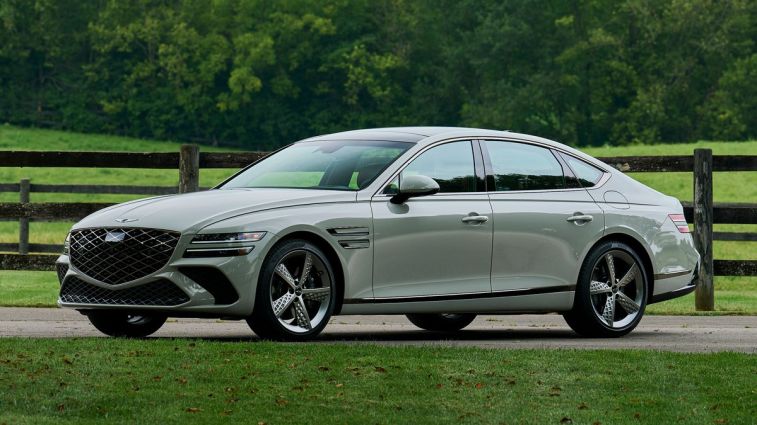
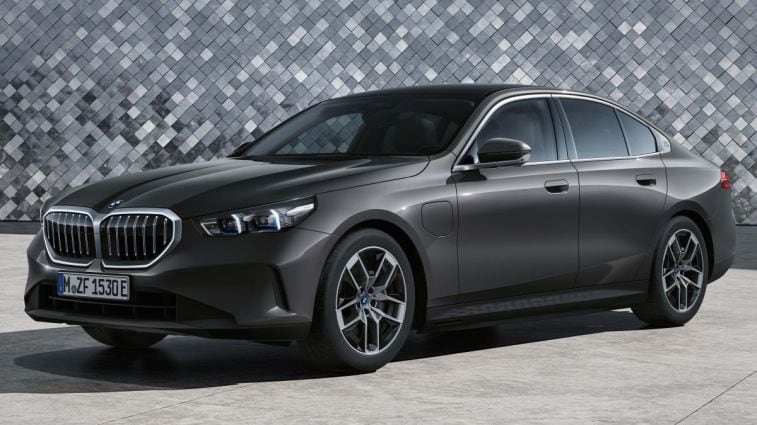
Rivian plans to quickly catch up with rivals in the area of self-driving technology
Rivian expects to have an eyes-off self-driving system ready as soon as 2026, a technology only Mercedes offers at present
Rivian is open to offering some of its technology to other automakers
Rivian plans major updates to its automated driving technology in the near future, its CEO, RJ Scaringe, has revealed.
Speaking at the opening of a Rivian store in San Francisco on Jan. 23, Scaringe said Rivian is working on technology that will enable supervised hands-free driving later this year, and eyes-off driving as soon as 2026. He said it’s a technology the company is “hyper-focused” on, Reuters reported.
Many automakers already offer supervised hands-free driving, which ranks at Level 2 on the SAE scale of self-driving capability, as they still require the driver to monitor and be ready to take back control at any time. Leading systems include General Motors’ Super Cruise, Ford’s BlueCruise, and Tesla’s Full Self-Driving (Supervised).
The next ranking, Level 3, refers to vehicles where the driver can take their eyes off the road but still needs to be ready to regain control at any moment. Mercedes is the only automaker with a Level 3 system currently available, known as Drive Pilot. However, the system is severely limited in the conditions under which it can operate. It is also only available for use on certain highways in California and Nevada due to regulatory constraints. GM and Stellantis have also announced plans to introduce Level 3 systems.
Rivian CEO and founder RJ Scaringe
Rivian already offers some automated driver-assist features on its latest R1T and R1S models, grouped in a suite known as the Rivian Autonomy Platform. These features can provide alerts and execute evasive maneuvers, such as steering adjustments and emergency braking, but they do not take full control of the vehicle.
Some of the technology Rivian is developing may also be implemented in vehicles from other brands. Speaking with Reuters at the San Francisco store opening, Rivian Chief Software Officer Wassym Bensaid said the software joint venture between Rivian and Volkswagen Group, established late last year, is already in talks with other automakers about supplying some of its software and electrical architecture technologies.
The joint venture is tasked with developing and supplying electrical architecture and software systems, including features such as network hardware and software stacks that enable vehicles to be updated over the air throughout their lifecycle—a concept known in the industry as a software-defined vehicle. The joint venture’s technology stands out due to its reduced wiring and component count, which helps to lower vehicle weight and streamline production. The first vehicle to use the joint venture’s technology will be Rivian’s R2 compact crossover, due in 2026. VW Group has stated that some Volkswagen models will likely be among the first to adopt the new systems, followed by models from Audi and VW Group’s new Scout EV brand.
This latest news comes shortly after Rivian secured a $6.6 billion Department of Energy loan this month, which the company plans to use for a second vehicle plant to be located close to Atlanta, Georgia.
Planning a Cornwall road trip? Want a map and itinerary to help guide your route and decide what to visit? No worries- I’ve shared my Cornish itinerary ideas here for 5, 7 10 or longer days, as well as 40 of the best places to visit in Cornwall- with a map!
Don’t forget to download your FREE Cornwall road trip planner below (complete with map and itinerary ideas)
*We work hard to make this the best motorhome travel blog and road trip website possible, full of helpful content for you. The website is supported by our readers, so if you buy through links on this site we may earn a commission- at no extra cost to you. All opinions remain our own.
If you find this post useful, you can also treat us to a coffee – we promise to enjoy it while creating more useful content like this- we might even indulge in a biscuit (or two!)
Why plan a Cornwall Road Trip?
Cornwall is one of my favourite places in England to road trip around.
The combination of Cornish coast, beautiful beaches, cute villages, history, incredible scenery and delicious cream teas is just too much to resist.
I was lucky enough to be based in Cornwall when I was stationed there in the Navy- so there are some secret places on this itinerary which you don’t often hear about until you live there… ssssh!
Here are some of my favourite places to visit in Cornwall, along with my suggested Cornwall road trip itinerary and a handy Map of Cornwall so you can plan your own trip!
Cornwall Road Trip Itinerary- where to start
Like anywhere, planning a road trip to Cornwall takes a little time and research. There are so many beautiful places to visit in Cornwall (as you will see below) that if you only have a week to visit, you’ll need to plan your itinerary carefully.
My suggestion is to not try and do too much. I spent 7 days in Cornwall with my motorhome, which made it easy to move around from place to place and explore. If you’re going to be staying in one area, I highly recommend hiring a car or a campervan, to make it easier to explore the Cornish roads.
Much of Cornwall is quite remote and public transport can be hit and miss, so having your own vehicle will make things much easier.
I recommend Europcar and Booking.com
NOTE: This is a HUGE Itinerary and post- over 4000 words! If you would like, you can download it:
Cornwall Road trip Itinerary for 7-10 days
We spent a week in Cornwall during October; (“we” being two adults and teenage girl. We travelled in my motorhome, using campsites and wild parking wherever possible.
Here’s the Cornish itinerary I did:
Day 1- Mevagissey.
Day 2- Falmouth and Pendennis Castle
Day 3- St Michael’s Mount (although I had horrible weather, so I carried on to Land’s End instead of stopping. Stayed at Sennen Campsite
Day 4- Land’s End/ Sennen, back to St Michael’s Mount and Minack Theatre
Day 5- St Ives, Newquay, Perranporth and Boscastle. Parked at Tintagel Car Park overnight
Day 6- Tintagel Castle and Merlin’s Cave. Don’t forget St Nectan’s Glen if you have time.
Day 7- Bude Beach
NOTE: I visited Cornwall, back then with my teenager, who loves road trips, which means we did a lot of driving around. If you’re visiting Cornwall with younger kids, you might want to add more stops and cover less ground.
Cornwall trip planner for 5 days or a long weekend
You can easily enjoy a road trip around Cornwall for 5 days, or even a weekend. Just pick and choose your itinerary wisely and remember you won’t be able to drive as fast as usual due to the tiny Cornish roads, so plan accordingly and don’t take on too much.
Here’s a map of the places I visited in Cornwall during my 7 day Road Trip. I didn’t visit all the places listed below in one week- there’s far too many, but at least that gives you an excuse to some back again!
Hopefully, this map helps you plan your Cornwall travel and decide where to stay along the way.
Cornwall Road Trip Map & Itinerary of best places to visit
Common Cornwall Road Trip Itinerary questions:
These are questions I and many other people have asked:
How long does it take to drive around Cornwall?
Like anywhere, your Cornwall road trip can be as long or short as you make it. The coastal road of Cornwall, from the Cornish border near Plymouth, stopping at St Austell, Falmouth, Lands End, St Ives and Bude, is about 200miles (320km) and you could possibly do it in a weekend if you didn’t sleep or stop very much.
Don’t forget, Cornish roads are NOT motorways- you will not be driving at 70mph. Heck, you’ll be lucky if you do a regular 30mph. So 200 miles on the Cornish coast will take you a lot longer than you expect!
Cornwall Trip Planner- How many days do you need in Cornwall?
I highly recommend going for as long as you can! Depending on where you are travelling to or where else you’re including in your England road trip, it can take a while to reach Cornwall, so at least a long weekend but ideally a week to really make the most of it!
How far is it from London to Cornwall?
The distance from London to Cornwall is about 250 miles (depending on starting and stopping point) and will take you about 4 and a half hours to drive on a clear traffic day.
TOP TIP: DO NOT TRY TO TRAVEL TO CORNWALL ON A BANK HOLIDAY! Or on the first day of a school holiday. Seriously- the roads are tiny, busy and sloooooow. You will regret all your life’s choices. Go earlier, later or ideally avoid the school holidays all together.
What is the best time to visit Cornwall?
There are plenty of good times to visit Cornwall, away from the busiest months of July and August. Personally, I love May, June and September- it’s also one of the best places to visit in Europe in Autumn.
Where to stay in Cornwall
Of course, what you include in your itinerary is up to you (and where you’re going to stay.) If you’re visiting Cornwall in the school holidays, I recommend choosing and booking your accommodation first, and THEN creating an itinerary for travel around the area which suits you. You can pick and choose from the ideas below as you wish.
Of course, there are a HUGE range of places to stay in Cornwall, from exclusive hotels with breathtaking views of the Cornish coastline, to cheaper B and Bs and AirBnBs.
Campsites in Cornwall
If you’re travelling by motorhome, campervan or car with tent, there are plenty of GREAT campsites to enjoy. Again, many of them are incredibly popular, so book as far in advance as possible.
I used Brit Stops and also stayed at Sennen Campsite (close to Lands End). For the rest of the time I found motorhome parking places as I travelled and stayed off-grid as much as possible.
Planning a road trip? You might find these useful:
Best places to visit in Cornwall- 40+ ideas for you
Below, you’ll find 40+ places I love to visit in Cornwall, for different reasons. I’ve included many on the Cornish coast, as I love the beaches in Cornwall, but there’s plenty away from the crowds too.
So, in now particular order, here are some of my favourite places in Cornwall:
The BEST things to do in Cornwall, England in winter or summer. Beautiful beaches, Tintagel Castle, St Ives, Newquay and some SECRET places to see you’ve never heard of before! Plan your visit to Cornwall here- with a map and itinerary guide to help you have the best Cornish trip ever!
Historical & Famous Places to see in Cornwall
Cornwall is a land full of history. From Pirates and smugglers, to beautiful houses, castles and lighthouses, there are some incredible places to visit in Cornwall. Here are a few of my favourites:
Land’s End
You can’t go all the way to Cornwall and NOT go to Land’s End. It’s a long way to drive, I know, but such a beautiful place- and it’s the furthest west you can get on mainland England. Next stop- America!
There’s plenty of parking, as well as toilet facilities, cafes and trinket shops.
I love the fact that the year is changed on the Land’s End post so it always shows the year in your photos!
Cornwall Road Trip places to see- Land’s End in Cornwall.
Tintagel Castle and Merlin’s Cave
Tintagel Castle and Merlin’s Cave were one of the highlights of my roadtrip to Cornwall. I was so lucky with the weather- especially in October half-term- but just LOOK at the colour of that water.
Tintagel Castle is part of English Heritage, which you can join HERE for only a few pounds a month (it also gives you free access to famous places like Stonehenge (I saw the most INCREDIBLE sunrise at Stonehenge ever- see it here)
Best places to visit in Cornwall- Tintagel Castle and Merlin’s Cave
St Michael’s Mount
St Michaels’ Mount is on the south coast of Cornwall- and well worth a visit. It’s on an island and is actually a twin to Mont St Michel (one of the most historic places to visit in France!)
You can walk out to the castle and back at low tide- just be careful about the tides as the water flows in very fast. If it’s not low tide, there’s a boat which you can take to get out and back.
Best places to see in Cornwall- St Michael’s Mount
I flew the travel drone out over the sea and got some spectacular shots of the castle in the sunshine.
The Minack Theatre
The Minack Theatre is unlike anywhere else I’ve ever been- an open-air theatre carved into the cliff.
I’ll be honest, I didn’t know what to expect and when I saw the motorhome parking was at the bottom of the cliff, I was so close to not bothering. But boy am I glad I did!! It’s SPECTACULAR- and so unique- definitely one of the best places to visit in Cornwall.
The Theatre is still a working theatre, and people travel from miles around to view a play there- if you’d like to do the same, make sure you book up well in advance as it’s very popular!
When shows aren’t scheduled, you can walk around the theatre and seating, have a picnic, take advantage of the cafe and enjoy the views.
Things to do in Cornwall- Minack Theatre- Cornwall’s Outdoor Theatre
Restomel Castle
Restormel Castle is a 13th Century Castle built in a circle which is in remarkably good condition! Open from April-October, it’s a beautiful place for a picnic, with stunning views over the surrounding countryside.
Cotehele
Cotehele is one of my favourite National Trust properties. It’s a medieval house with some Tudor additions- and it’s really beautiful. There is also Cotehele Quay which has ‘Shamrock’, a Victorian sailing barge, and a beautiful tearoom right on the river. If you have time, be sure to add this stop to your Cornwall Road Trip itinerary.
Lanhydrock
This is a breath-taking Victorian country house. Seriously, there aren’t many estates left like this one. It’s another National Trust property, with plenty of activities taking place throughout the year.
Jamaica Inn- worth a road trip to Cornwall!
Cornwall’s most famous smuggling pub. Located high up on Bodmin Moor and made famous by Daphne du Maurier, Jamaica Inn has been there for over 300 years, welcoming weary travellers. Apparently, it’s haunted too- so I’ll let you decide if you want to stay in one of its 36 bedrooms! There is also a museum and a restaurant.
Pretty villages & towns to visit in Cornwall
You can’t visit Cornwall on a road trip without driving through at least one beautiful stone village. They’re EVERYWHERE. However, if you want some help with your Cornwall trip planning, here are a few of my favourites:
Boscastle
It’s hard to believe that this beautiful village is one of the main gathering for witches in the UK, but it’s true. It has a great witch museum, which is touristy in parts but really interesting in others.
Boscastle has endured horrendous floods twice in the last few years, with the worst being in August 2004. Waters reached over 2m deep in some places- you can see the markers on the buildings as you walk around. It’s incredible that no-one died.
My favourites were the ice cream and the incredible pottery factory, which sold some beautiful and unique pieces.
Boscastle- definitely a place to visit in Cornwall
Newquay
Cornish road trips should always include Newquay. It’s beautiful and has one of the best surfing beaches in the UK. Although that has almost become a problem- it has become a mecca for Stag and Hen parties, as well as surfers and teenagers.
All these happy visitors give it a great party atmosphere and the nightlife is lively, but it is VERY touristy and sometimes can be far too crowded (although in fairness the same can now be said for many other parts of Cornwall too.)
Still there is a huge amount of accommodation options, from posh hotels to large houses for parties. See the latest deals here:
Beautiful places to visit in Cornwall- Newquay Harbour
St Ives
St Ives is one of the best summer holiday destinations in the UK– beautiful, quaint and with a couple of incredible white sandy beaches- possibly the best in Cornwall. However, it also has the downsides you expect from a Cornish town- it’s a NIGHTMARE to park and gets incredibly busy in the summer.
There is a park and ride on the top of a hill (which tolerates motorhomes during the day but doesn’t encourage them). Don’t expect to be able to park near the beach unless you get there first thing in the morning; even then I think there is now a waiting limit on the parking of a few hours.
Still, it’s definitely worth a visit- the harbour and the beaches alone are worth the effort.
Cornwall Road Trip Guide- St Ives
If you do get the option to stay in St Ives for a couple of days, here are some great options for you:
Other activities to do in St Ives:
Tate St. Ives
If you like museums, the Tate St Ives art museum is well worth a look. Even if you don’t the views from the gallery are spectacular or you could always enjoy an ice cream and sun yourself on the beach for a few hours!
Barbara Hepworth Sculpture Museum St Ives
If you haven’t heard of her, no judgement- I hadn’t either! But her sculptures are beautiful. This museum is small, but interesting if you enjoy crazy sculptures in the garden… (don’t we all??!!)
Newquay or St Ives- which is better?
Many people wonder whether they should visit Newquay or St Ives. The answer is: it depends on what you want.
St Ives is more ‘arty’ and general has a quieter crowd. Newquay is party town- lots of stag and hen parties and more families and a younger, surfer crowd.
Both places are ‘cool’ in their own way, but one is more overtly loud and proud than the other.
Tintagel
Tintagel village is famous for being the home of King Arthur’s Tintagel Castle and Merlin’s cave, but there is so much more to it than that.
The village is built from built Cornish stone and is full of cute houses, shops and delicious tea rooms (as is most of Cornwall!) There are also a couple of decent pubs too, including the Cornishman Inn which has a pub garden and serves great food.
Don’t miss King Arthur’s Great Halls in the village itself (the stained glass window is incredible) and the fitter of you must make the walk up to St Materiana’s Church, which stands proudly on the headland overlooking the Castle and the breathtaking views out to sea.
Talking of sea views, if you’d like to stay in Tintagel for a night, head to the Camelot Hotel. This building looks impressive, the decor is opulent and the views from the bedrooms are insane. Well worth the (pretty steep!) price.
Tintagel Post Office- one of the oldest buildings in Tintagel
Mevagissey
My Mother-in-law used to talk about Mevagissey all the time- it was one of her favourite places in Cornwall. And honestly, it’s one of mine now.
It’s VERY touristy, and some of the shops are crazy expensive, but it’s such a beautiful village with a cute harbour and DELICIOUS pasties. (Most places in Cornwall have delicious pasties, but these seemed to be even better. Or maybe I was just hungry!) Again, here are some of the best places to stay in and near Mevagissey.
Ferry from Mevagissey to Fowey
This is a lovely way to see more of the coastline from the water and is a great trip on a calm, sunny day (I wouldn’t advise it if the weather is bad- being on that sea in a storm can be miserable- I speak from experience!!)
You can take a ferry from Megavissey to Fowey, which takes about 40 minutes and runs daily from April- September, weather permitting. As of JAN 2025 costs for the ferry are:
Adult: £10 one-way — £17 return
Child: £7 one-way — £10 return
Bikes: £10
Well-behaved dogs go free. Foldable pushchairs can be taken on board.
Mevagissey- impossible to pronounce, but worth a visit anyway!
Falmouth
I love Falmouth. It’s one of my favourite places in Cornwall. Falmouth is a big city, but everything feels very ‘seaside resort’ and relaxed.
It’s the third deepest natural harbour in the world and there’s so much history to explore- if you get a chance, visit the area for at least a couple of days so you can try to see everything. There are plenty of wonderful hotels and guesthouses if you don’t have a van or tent- have a look at the latest deals here:
Your Cornwall Road Trip should definitely include a castle or three!
Pendennis Castle
Positioned on the headland with impressive views, this castle is well worth a visit (although possibly not if you’ve already been to St. Michael’s Mount- it’s not got the same ‘wow’ factor.)
Having said that, this castle was very important in both World Wars and there are exhibitions which are pretty interesting. It’s run by the English Heritage, so worth becoming a member. Find out more HERE
National Maritime Museum
This museum now has 3 floors and 12 exhibitions, so it’s not for the faint-hearted or as a quick ‘looksee’, but if you are at all interested in the sea, naval history, the history of the boat or want to sail model boats on the lake inside, it might be just the place.
Take a ferry ride
This is one of my favourite ways to explore any harbour- and Falmouth has several great options. My personal favourite is St Mawes- Falmouth ferry, which passes some beautiful parts of the harbour, including Pendennis Castle and St Mawes Castle. You might even see some dolphins! More info can be found HERE
Sunsets in Cornwall are Spectacular!
Skinners Brewery
In Truro, just outside Falmouth, you’ll find Skinners Brewery– an award-winning producer of pale ales and bitter. You can book a tour, enjoy an evening of live music, or just sample some of their famous brews!
Places of Nature to visit in Cornwall
Any good Cornwall itinerary should include plenty of time to enjoy some of the ‘great outdoors’. Cornwall is a county made for being outdoors- from beautiful beaches to the wildness of the moors, and everything in between. Some of the best things to do in Cornwall involve getting out and about in nature.
The Lost Gardens of Heligan
Near Mevagissey is a real-life secret garden- the Lost Gardens of Heligan. It was literally found 25 years ago through a secret door, which led to the entire estate being renovated and is now open to the public.
The play areas and outdoor attractions are mostly seasonal, but many parts are still open over winter.
A giant green grass head awaits you in Cornwall!
Visit The Lizard… (but only if you have time on your Cornwall Road Trip)
the Lizard is the most southerly point in the UK and it’s beautiful if you catch it on a nice day. There are some lovely Cornish coastal walks and the wildlife is stunning. But then, that’s true of most of Cornwall.
As a ex-Naval aircrew who used to be based down in RNAS Culdrose, I get quite excited by the Lizard (I did all the navigation training using the Lizard as a reference point!)
But honestly, if you’re going to any of the other cliffs on your Cornwall Road Trip, it’s probably not worth your time unless you REALLY want to visit the most southerly point in the UK. The Lizard is a National Trust property- click here to find out more.
A road trip to Cornwall- photos of the sea are mandatory
Secret places to visit in Cornwall
St Nectans Glen
St Nectans Glen is one of the most beautiful waterfalls in Europe. It’s near Tintagel Castle, so you can tie the two in together for a great day out.
This breathtaking series of waterfalls is nestled into a secret gorge and the whole area looks like something out of a fairytale.
To get there, you walk along a path through beautiful woodlands, often following the path of the river, before suddenly arriving in front of the magnificent St Nectan’s Kieve- the main waterfall.
St Nectan’s Kieve is 60ft high and falls through a hole in the rock. It used to be a basin, but the water eventually eroded it into what you see today.
Many people are unaware of the existence of St Nectan’s Glen- so it’s a lot less crowded and ‘touristy’ than other places in the area- especially in summer, although it’s open most of the year.
For the best experience, arrive early in the morning and try to be first on the trail so you can experience St Nectan’s Kieve by yourself (and get the best photos!)
Climb Brown Willy- Cornwall’s highest point
Who wouldn’t want to climb Brown Willy…..?!?!?! (oh go on, I know you’re smiling at that one! I couldn’t resist putting this just before the fertility hole below…..!! )
It’s Cornwall’s highest point, which I know isn’t saying much, but it’s a nice stretch of the legs on a summer’s day and the views from the top are magnificent.
WHY oh why do people pile stones on top of each other?? Never fear- you can see stone piles on your trip to Cornwall.
Men-an-Tol stone at Morvah- a bit of magic on your Cornwall trip
This is one of those fun things that is STILL on the list, as I didn’t get a chance during this visit. This stone is thought to be from the Bronze Age, making it around 3,500 years old.
There are actually 4 stones in the area, but only one has the hole through the middle. Passing through this hole is said to aid fertility, both for women wanting children and farmers wanting crops… who am I to argue??!
Anyone seen Outlander?? Maybe you shouldn’t touch this…!
Places to see in Cornwall
Eden Project
The Eden Project is one of the most family-friendly things to do in Cornwall– kids of all ages love it.
There are different sections showcasing jungle, desert and other diverse nature settings. But there is also a zip line (I love ziplines!) Also, big bands regularly play there (think Blondie, Bryan Adams, Muse and Tom Jones!)
You can visit giant balls of bubble wrap on your Cornwall Road trip!!
Dozmary Pool
This is said to be the pool where the lady of the lake resides. Apparently, it was here that King Arthur received his sword, Excalibur. The pool was once thought to be bottomless, but sadly it’s become much shallower in recent years. In 1976 it dried up completely!! Still, for anyone interested in Arthurian myths and legends, it’s a nice addition to your Cornwall road trip.
Bodmin Moor
Bodmin Moor is definitely the stuff of legends. Wet, windy and wild, it’s the highest part of Cornwall, and if you can catch it on a good day it’s spectacular.
In 1983, a report was given to the police of a ‘wild beast’ said to be haunting the moor, with ‘sharp teeth like those of a leopard’. Those reports still continue today- don’t say I didn’t warn you…
A man stares gloomily out over Bodmin Moor, looking for a crazed beast or a ghost…
Golitha Falls
While you’re at Bodmin Moor, visit the nearby Golitha Falls. If this isn’t a place which can convince you of fairies and magic, nothing will!
Bedruthan Steps
Apparently, a giant used to use these steps as a shortcut across the bay… (hmmm, now where have I heard that before!?? Oh yes, at Giant’s Causeway on my Ireland road trip) Whether you believe in legends or not, this bay is STUNNING with clear turquoise waters and soft sands. Just beware- getting down to it takes some effort, which is why it stays fairly quiet, even in high summer.
Best Beaches in Cornwall
Some of the best places to visit in Cornwall are the beautiful beaches. And they also house some of the best things to do! Beachlife in Cornwall is literally a way of life for many, from surfers to beach combers (and, of course, pirates and smugglers!) You’ll enjoy many sea views on your Cornwall trip, but try to make time for a visit to a beach- or at least a walk on one of the many Cornish coastal paths.
Bude- Cornwall’s best surfing beach?
Bude is right on the border between Devon and Cornwall and is on the North Coast, which is the best side for surfing if that’s what you’re looking for.
The nightlife is much more relaxed than at Newquay and there are plenty of outdoor activities to keep you busy, including a sea pool cut into the rock at Summerleaze Beach. Bude has twice been voted best UK Coastal destination– so it does get busy during the summer. If you have time, combine a trip to Bude with a North Devon road trip and enjoy more of the incredible beaches and coastline.
A girl walks on a beach in Cornwall, silently begging for the photographer to hurry up as she’s FREEZING!
Porth Joke- Cornwall’s best secret beach?
Talking of beautiful Cornish beaches, here’s a secret gem not many people know about.
This tiny cove has incredibly soft sand and, most importantly, is relatively quiet throughout the year- despite the popularity of Newquay only a short distance away.
I was recommended to add Porth Joke to the Cornwall road trip itinerary as somewhere to get away from the people- even in high summer.
The beach is a short walk from the car park and there are no toilets, cafes or other facilities, which is probably why it remains so empty all year round, but it’s definitely worth the effort.
It’s sheltered on 3 sides, so you’re fairly well protected from the wind, but you can still enjoy some of the famous surf. It’s quite shallow, so safe for swimming or snorkelling (but please be aware of rip tides which are common all along this coastline- don’t let children go too far offshore.)
There is no shade, so I highly recommend taking a parasol if you’re going to spend the day (and you are definitely going to want to spend the day!)
Bring a cooler with lots of drinks and food (yes, you’ll need to carry it from the car) and settle down to do nothing but listen to the surf, paddle, poke at rock pools and watch the sunset. Sheer magic.
Porth Joke beach in Cornwall
Perranporth Beach
Beautiful beach with lots of sand, and a great arch for your Instagram photos. I love it because of this cool arch, the gorgeous sand and the fact that it’s dog-friendly all year around.
A hole in a rock. What more could you want from your Cornwall Road Trip itinerary??
Nanjizal Beach- Song of the Sea Cave
This is one of the prettiest coves in all of Cornwall. There are caves and even a waterfall to enjoy as you head to the beach. Directions can be found HERE
Lusty Glaze Beach
I couldn’t not include a beach with a name like Lusty Glaze Beach!! This beach near Newquay is privately owned but you can visit for free. The high cliffs give it some great protection and it offers a huge variety of activities including climbing, abseiling, a restaurant and a creche!
Dogs are banned from May-September. The beach can be accessed at low tide by walking around the headland, or reached by many, many steps (368 apparently!), so plan accordingly!
Fun Activities to do in Cornwall
There are plenty of fun things to do in Cornwall- some more energetic than others! I’ve already included some of the best places to visit on your Cornwall trip, but here are a couple of other fun activities that you can add to your Cornwall trip planner.
Zipwire at Adrenalin Quarry near Liskeard
I love ziplines and this one looks AMAZING!! It zips you 490m across a quarry, over a lake and through/ over various vegetation, at speeds of up to 40mph.
There are twin zip-wires, so you can race your friend! Apparently, they’ve had riders as young as 3 and as old as 90- sign me up!! At Adrenalin Quarry, there is also a wipeout Aqua Park, coasteering, a giant swing and axe throwing!
If any Road Trip doesn’t include something death-defying, I consider it a failure. Anyone else??
Surfing
Surfing is one of the most popular outdoor activities in Cornwall- and there are PLENTY of places to get involved. You want to head to the north coast for the better beaches and waves, and if you’re visiting in school holidays I’d recommend booking in advance.
For a fantastic beach with surfing, visit Westward Ho! (yes, the exclamation mark is part of the name). This is one of the safest beaches in Cornwall, and there’s plenty of places to eat, facilities, play areas and surf schools- perfect for some outdoor exercise to keep fit on your road trip!
Fun things to do in Cornwall- go surfing!
Silly Surfing for Charity
Every June for one weekend only, Porthmeor Beach (next to St Ives) becomes…well… a bit silly! Surfers dress up in fancy dress and surf; there’s an open-air cinema, as well as many other attractions.
Tickets for the open cinema and other events sell out in advance, so if you’re planning to go please book early. All proceeds currently go to the charity Surfers against Sewage. Porthmeor also has the open cinema at other times throughout the year- you can find out more HERE
Watch silver ball hurling at St Columb Major
I’m a sucker for bizarre and crazy things (like these bizarre European traditions and events!) but this may be the craziest yet. It happens once a year in early February and…well… I’m really not sure I can explain the rules.
Shopkeepers barricade their doors and windows and thousands of spectators flock to watch fully-grown men fight for a ball and try to get it…somewhere. The ‘pitch’ is about 20 square miles, making it the largest pitch for any ball game in the world. Now there’s a fact for the pub quiz!
Fun Places to visit with kids in Cornwall
Here are some ideas for places to take kids (both young and old!) when visiting Cornwall!
Newquay Zoo and animal wildlife park
Like most zoos, it’s a great place to bring the whole family and has a wide range of animals. A current list can be found on their website HERE
Lappa Valley Steam Railway
I’m a sucker for a good steam railway, but honestly, this one is more geared towards younger children. However, there’s also crazy golf, canoeing and playparks, so it’s a great day out to get them exhausted!
Pirates Quest
This is an indoor attraction, which can come in VERY handy in Cornwall (seriously, go prepared for rain.) This exhibition is an hour-long history of piracy, depicted by real-life actors and interactions. It’s only seasonal, so check if it’s open on their website HERE
Flambards Theme Park
One for the kids or a rainy day, but this theme park will put a smile on anyone’s face. There are rides, exhibitions and indoor attractions- perfect whatever the weather!
Places to visit in Cornwall- Flambards Theme Park
Travelling with kids? You might find these useful:
Cornwall Road Trip Tips
To really make the most of your Cornish road trip travels, you’ll need several things:
A Vehicle. Personally, I love travelling by motorhome. If you don’t have your own, you can always hire a motorhome or campervan to give yourself more flexibility for your trip. If not, hire a car and use hotels. I recommend Europcar and Booking.com
I highly recommend joining the National Trust and English Heritage– even if it’s just for a month if you’re visiting from abroad. They will save you a lot of money if you visit more than one property and the money goes to a great cause- protecting our Nation’s heritage.
Lastly, don’t forget that there aren’t any motorways in Cornwall. The roads are small and can be very (very!) busy, especially in summer. Plan accordingly and don’t expect to be driving at 70mph anywhere. The weather can also turn quickly, going from warm and sunny to raining and foggy. Be prepared for all eventualities, whatever the weather forecast may say!!
Most of all, enjoy your Cornwall Road Trip! It’s a stunning part of the world and I hope you have an amazing time. Let me know how you get on.
Planning a road trip? You might find these useful:
Want to save this list for later? Here’s the pin. Enjoyed this post? I’d love it if you shared it on Facebook, Twitter or Pinterest. Thank you!
Last update on 2025-01-24 / Affiliate links / Images from Amazon Product Advertising API
Even if you don’t care about pollution causing climate change, there’s no denying that it hurts air quality, and gas-powered cars are a big part of that problem in cities. As a result, countries around the world that care about their citizens being able to breathe have introduced congestion policies to limit the number of gas-powered cars in particularly crowded areas. Of course, business owners love to claim charging people to drive into the city will ruin them financially, but a recent study from the UK’s Centre for Cities found that restricting automobile traffic doesn’t hurt businesses at all.
It’s Time To Discontinue The Model S | Jalopinions
London expanded its ultra-low emissions zone back in 2023, and as usual, business owners freaked out. They were going to lose all their customers, and the lack of revenue would drive them to bankruptcy, they said. Using credit card transaction data from around the city, Centre for Cities found there was a small dip in spending right after the expanded ULEZ went into effect, but data from previous years shows that may have been a seasonal change, not the result of drivers having to pay to enter those parts of the city. Ultimately, the study came to the conclusion that “there was no above–expected negative spending effect caused by ULEZ’s expansion.”
That doesn’t necessarily mean no businesses were negatively affected at all. If you owned a business in the zone selling objects that are too large to fit on the train before, for example, the new rules could be a problem. Overall, though, it seems the foot and bike traffic made up for any customers who chose not to shop in the city because of the congestion charge, and it’s another piece of evidence that congestion charges don’t hurt businesses.
What London’s expanded ULEZ has done, however, is help clean up the city’s air quality even faster than expected. That’s a big deal in a city known for having the worst air quality in the country. In a press release, the British government said:
The report shows that London’s air quality at the roadside is continuing to improve at a faster rate than the average for the rest of England. In 2014, the gap in nitrogen dioxide (NO2) levels between London and the rest of England was 20 µg/m3, whereas now it is less than 5 µg/m3. The expansion brought five million more Londoners into the ULEZ, and today’s report shows that outer London – which has historically had worse air quality than the rest of England average – now has levels of pollution much closer to levels in the rest of the country.
Even in the short six-month timeframe covered by the report, roadside NO2 concentrations in outer London have dropped by up to 4.4 per cent compared to what would have been expected without the London-wide expansion of the scheme. Given the size of outer London, every percent makes a huge difference.
…
Today’s preliminary data reveals significant progress, with a further report expected in early 2025 which will examine the first full year of the London-wide ULEZ expansion. The one-year report will be supported by an independent advisory group of experts and provide an even more comprehensive analysis of the air quality and traffic impacts of the scheme.
Cleaner air, quieter and more enjoyable neighborhoods, a more interconnected community and a lower risk of being run over? That sounds like a pretty great deal to us. Sounds like good things are ahead for Manhattan, too, now that it’s implemented congestion pricing of its own.
“Yellowstone” aired its last episode ever on Dec. 15, though we’re sure there are plenty of spinoffs to come. But while you wait to see which characters or Dutton ancestors get their own series, why not take a trip to a real-life ranch that’s way easier to get to than rural Montana? And don’t worry — there are still cowboy vibes aplenty.
Tucked away in Northern California’s Lost Sierra region sits Greenhorn Ranch. The all-inclusive dude ranch is less than an hour and a half drive from Reno, Nevada, and has invited travelers to get in touch with their inner cowpoke for more than six decades. It’s the ideal, within-reach dupe for the Dutton homestead. Sprawling out over 608 picturesque acres, the property invites guests to explore the land by hiking, biking, or with a horse for the full effect.
“Greenhorn Ranch is a rare gem [that’s] still untouched by the bustle of modern life,” Peter Derbonne, the owner of the ranch, said to Travel + Leisure. “From our all-inclusive hospitality and diverse activities to the stunning natural beauty that surrounds us, Greenhorn Ranch provides the perfect balance of adventure and tranquility. It’s a place where families create traditions, friends become family, and every visit feels like coming home.”
Benches around a fire pit at Greenhorn Ranch in Northern California.
Kyle Anthony/Courtesy of Greenhorn Ranch
Guests can have their pick of accommodations, which range from the property’s renovated rustic cabins, cozy lodge rooms, or a refurbished Airstream trailer. To start and end the day, visitors can dig into gourmet grub created by the ranch’s on-site chef, Brian Doyle; his dishes are meant to evoke the spirit of the West and involve plenty of prime cuts and fresh fish. After dinner, head to The Saloon for whiskey, cocktails, line dancing, and country music.
“At Greenhorn Ranch, we hope our guests leave with a deep sense of connection — connection to nature, to loved ones, and to themselves. Our goal is to provide a place where guests can unplug, unwind, and rediscover the simple joys of life,” Derbonne said. “Whether it’s the thrill of riding a horse across our sprawling acres, the serenity of casting a line in our fishing pond, or the camaraderie found around a campfire at The Saloon, we want every guest to take home cherished memories, a sense of adventure, and a renewed spirit.”
The ranch is open seasonally from May through October, so make your reservations and start rewatching all of “Yellowstone” now to prepare for your visit.
Throughout the 1990s, Ferrari faced various challenges, including lackluster sales and criticism for inadequate engineering. The Ferrari lineup during the 1980s and 1990s required significant improvement, as models like the 412, Mondial, 348, and even the F50 deviated considerably from the brand’s storied heritage.
However, this period wasn’t entirely bleak—models like the Testarossa and the F40 were well-received and continue to appreciate in value.
When Luca di Montezemolo became Ferrari’s president in 1991, he aimed to restore Ferrari’s reputation as a leader in both Formula 1 and exotic sports cars. His strategy centered on introducing the all-new 360 Modena.
The 360 Modena became Montezemolo’s benchmark vehicle to revitalize Ferrari’s declining sales. As the first V8-powered car developed entirely under his leadership, the 360 had to meet ambitious goals: it needed to be larger, more refined, lighter, and faster than its predecessor, the Ferrari F355.
Nearly two decades after its debut, the Ferrari 360 Modena remains an excellent choice for those looking to own their first Ferrari. Its design still feels contemporary, rivaling the appearance of modern Ferraris, and it can be purchased at a price lower than a brand-new BMW M3.
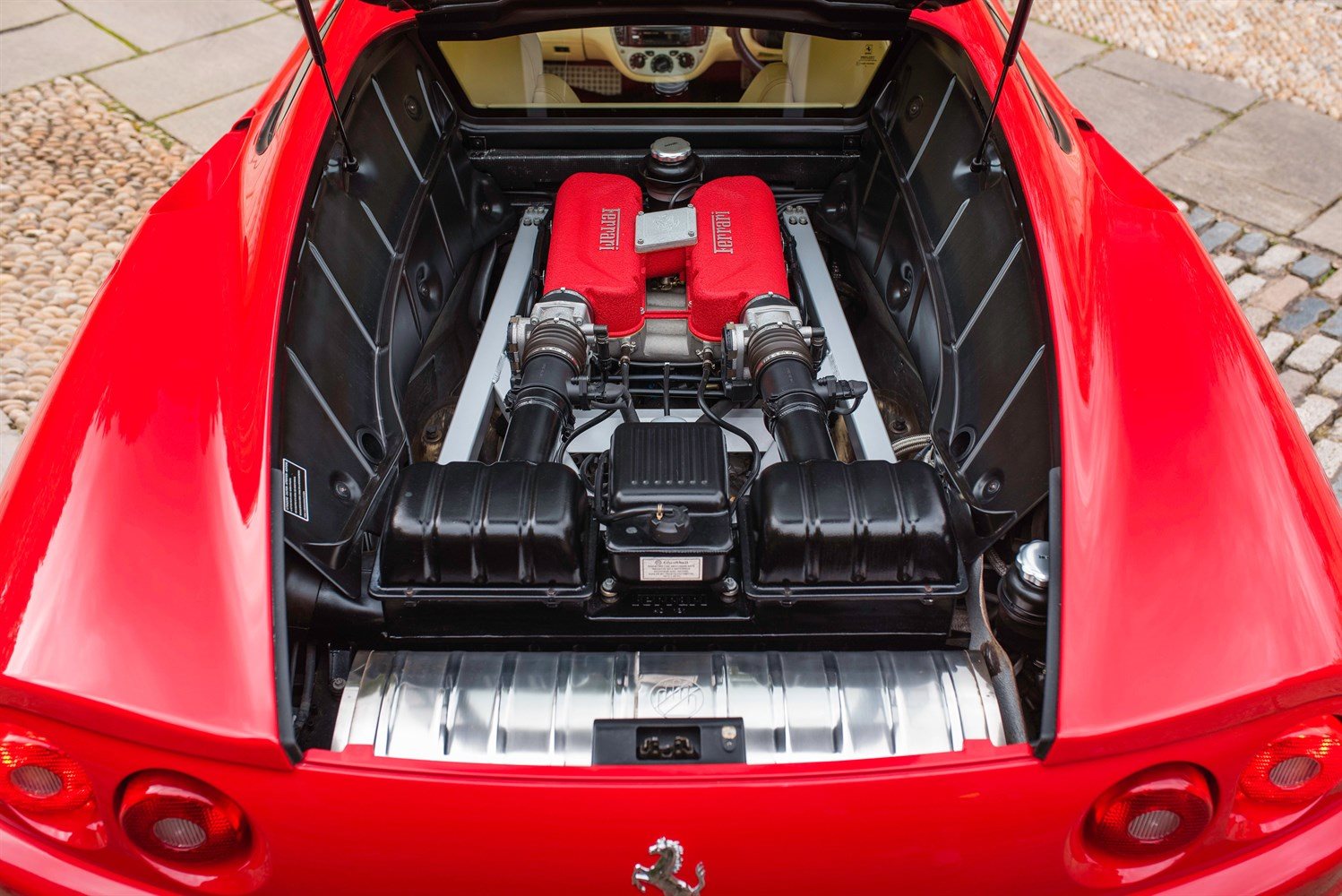
The mid-engine Ferrari 360 Modena was powered by a 3.6-liter V8 producing 400 hp, paired with either a six-speed manual or an F1-style electrohydraulic transmission. While its V8 may be considered modest by today’s performance standards, the 360 Modena is anything but slow. Its legendary exhaust note is widely regarded as one of the greatest ever.
The car accelerates from 0 to 60 mph in just under 4.4 seconds and has a top speed of approximately 186 mph. Montezemolo’s goal was to create a more reliable, user-friendly exotic sports car that could still outperform the F355 on Ferrari’s test track—and the 360 Modena delivered beyond expectations.
Unlike earlier Ferraris from the 1980s and 1990s, the 360 Modena featured extensive use of aluminum, making it 130 pounds lighter and 64% more rigid than the steel-framed F355. On the design front, Pininfarina was tasked with the 360’s styling and worked closely with Ferrari to incorporate Formula 1 engineering into the road car. As a result, the 360 Modena generated nearly 400 pounds of downforce at 180 mph, showcasing its advanced aerodynamics.
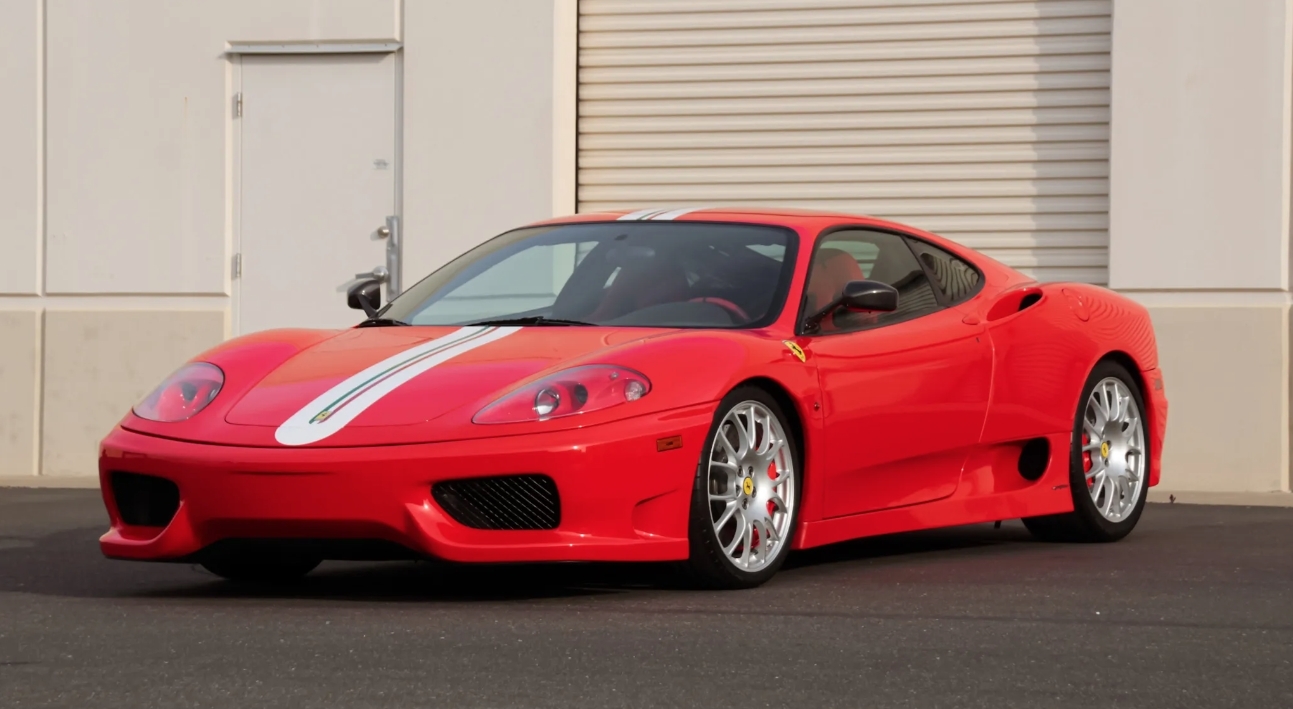
The 360 lineup was further enhanced with the introduction of the 360 Challenge Stradale, a track-focused variant that elevated the Modena’s performance. Inspired by Ferrari’s one-make racing series, the Challenge Stradale shed weight through extensive use of carbon fiber, stripped-down interiors, and lighter components.
It also received upgraded aerodynamics, sharper suspension tuning, and a more aggressive exhaust system, producing an even rawer driving experience. With its 425 hp engine and reduced weight, the Challenge Stradale was not only faster around a track but also a collector’s dream, embodying the spirit of Ferrari’s racing heritage.
Throughout its production, the Ferrari 360 Modena faced tough competition from high-performance rivals. The Lamborghini Gallardo, with its V10 engine and all-wheel drive, was a key contender, offering a more aggressive demeanor.
The Porsche 911 Turbo (996 generation) delivered a blend of understated styling, everyday usability, and bulletproof reliability. Despite these strong competitors, the 360 Modena’s Formula 1-inspired engineering, exhilarating driving dynamics, and iconic Italian styling helped it carve out a unique position in the market.
Driving Experience
There has never been a Ferrari that you could jump into and drive so easily before. The 360 Modena allows you to not worry about driving to the local grocery store because the usability it is relaxing compared to other models. After driving both the 360 Modena and the F430, I can tell you the 360 is more enjoyable in daily traffic and for canyon cruises while the F430 is more brute force. They both produce a lovely symphony from their V8s.
For the ultimate driving experience, the 360 Modena must be driven in Sport Mode which makes quite a few radical changes. For one, the already quick F1 Transmission upshifts even quicker, to the tune of 150 milliseconds. Downshifts are also enhanced with automatic throttle blipping for seamless downshifts. It can be a little clunky at times, but that is understandable as single-clutch transmissions all exhibit the same characteristics.
The ASR (traction control) system prevents wheel slipping by adjusting the engine management and rear brakes independently. On the other hand, Sport Mode allows for more wheel slip. You can, however, fully disable the ASR but do so at your own discretion.
The Ferrari 360 Modena comes with active suspension that adjust the dampers based on speed, acceleration, and braking. Normal mode focuses on comfort and stability, while Sport Mode makes the ride noticeably firmer, which of course is better suited for aggressive driving.
For the cars that are fitted with the optional Factory Sports Exhaust, the ECU is programmed to open the exhaust bypass valves at a lower RPM in Sport Mode.
Hopping into the cockpit, you will immediately notice the exceptional craftsmanship that Italy is known for. The leather hides stretch in all the right places and are held tight by beautiful contrast stitching. If you are expecting the latest technological advancements like Bluetooth or SAT NAV, this car will certainly disappoint.
While new Ferraris have LCD screens built into the gauge cluster and Mannetino switches on the steering wheel, the 360 has nothing more than radio and AC controls. Driving is the core of the essence of the 360 Modena.
The mid-engine layout is nicely balanced so turns and sweeping corners are where the 360 shines at. With a curb weight of just under 3,300 lbs, the 360 Modena is agile and although there is a bit of understeer, the 400 HP is enough to induce oversteer when needed. On the straights, the 360 will pick up speed in the higher range of the powerband while howling to an 8500 RPM redline. The brakes are supplied from none other than Brembo so you can expect the 330mm steel disc brakes to stop on a dime.
Driving a 360 will make you feel like an F1 driver and while not the fastest Ferrari, it is still very enjoyable. Every little input or adjustment you make is near instantaneous, making you feel one with the car. That is what makes a Ferrari, a Ferrari.
The 360 Modena is quite simply built for both worlds; your daily commute to the office and the track or canyon on the weekend.
Model Changes (Breakdown by Year)
1999 Ferrari 360 Modena
In 1999, Ferrari introduced the 360 Modena Coupe, marking a significant milestone in the brand’s history. The 360 debuted with an all-aluminum space frame, a first for Ferrari, which reduced weight and increased rigidity compared to its predecessor, the F355.
Powered by a 3.6-liter V8 engine producing 400 hp and 275 lb-ft of torque, the Modena offered impressive performance, achieving 0–60 mph in 4.4 seconds and a top speed of 186 mph.
Aerodynamic advancements allowed the car to generate nearly 400 pounds of downforce at high speeds. Customers could choose between a 6-speed gated manual transmission or Ferrari’s F1 electrohydraulic automatic transmission.
Styled by Pininfarina, the 360 featured a sleek design with a distinctive glass rear deck that showcased the engine. Its launch year, 1999 focused entirely on introducing this groundbreaking new platform.
2000 Ferrari 360 Modena
In 2000, the Ferrari 360 entered its first full year of production, highlighted by the introduction of the 360 Spider, the first convertible Ferrari to feature a fully automatic retractable soft-top. To maintain structural rigidity, the Spider’s chassis was reinforced, resulting in a slight weight increase over the coupe. Aerodynamic adjustments ensured smooth airflow despite the absence of a fixed roof.
This year also saw Ferrari expanding production to meet growing global demand, along with the introduction of new exterior and interior color options, providing greater customization for customers.
In 2000, the Ferrari 360 Modena Coupe had a starting price of approximately $138,225, while the 360 Modena F1 Coupe, equipped with the electrohydraulic transmission, started at around $147,725.
2001 Ferrari 360 Modena
In 2001, Ferrari focused on refining the 360 lineup rather than introducing new models. Key updates included minor improvements to the F1 transmission, resulting in smoother and faster gear changes, and an updated ECU that enhanced throttle response while ensuring compliance with emissions standards.
Ferrari also introduced new optional accessories, such as custom luggage and additional wheel designs, to provide more personalization options for buyers.
In 2001, the Ferrari 360 Modena Coupe had a starting price of approximately $143,270, while the 360 Modena F1 Coupe, equipped with the electrohydraulic transmission, started at around $154,550. The 360 Spider began at $160,125, with the Spider F1 variant priced higher at approximately $171,185.
2002 Ferrari 360 Modena
In 2002, Ferrari focused on mid-cycle enhancements for the 360 lineup rather than introducing new models.
One of the key updates was further refinement of the F1 transmission, addressing early reliability concerns and providing smoother, more precise gear changes. These improvements enhanced the driving experience for those opting for the electrohydraulic transmission.
Additional updates included minor tweaks to the suspension, which improved ride comfort while maintaining the car’s sharp handling characteristics.
In 2002, the Ferrari 360 Modena Coupe had a starting price of approximately $140,615, while the 360 Modena F1 Coupe started at around $141,965. The 360 Spider and 360 Spider F1 were priced similarly, with starting prices of approximately $182,220.
2003 Ferrari 360 Modena
In 2003, Ferrari introduced the 360 Challenge Stradale, a high-performance, track-focused version of the 360 Modena inspired by the 360 Challenge race car.
This variant underwent significant weight reduction, shedding 240 pounds through the use of carbon fiber, lightweight materials, and simplified interiors. Its 3.6-liter V8 engine was tuned to deliver 425 hp, while aerodynamic enhancements, including a new rear diffuser and modified bumpers, improved downforce and stability.
The Challenge Stradale also featured standard carbon-ceramic brakes, a groundbreaking addition for Ferrari road cars, and revised suspension tuning for sharper handling on the track.
The interior of the Challenge Stradale was simplified to reflect its track-focused nature. Standard features included carbon-fiber racing seats with Alcantara upholstery, a material chosen for its lightweight and durability. Sound insulation was removed, exposing the raw mechanical symphony of the V8 engine, while leather and luxury materials were replaced with carbon fiber and aluminum accents.
The door panels were also constructed from lightweight materials, and pull straps replaced traditional handles to save weight.
Limited to fewer than 1,300 units, the Challenge Stradale became a collector’s favorite exclusivity.
The standard Ferrari 360 models also saw updates in 2003, though less dramatic than the changes made to the Challenge Stradale. Minor interior refinements improved fit and finish and Ferrari upgraded the cooling systems to ensure better performance during demanding driving conditions.
In 2003, the Ferrari 360 Modena Coupe had a starting price of approximately $143,860, while the 360 Modena F1 Coupe began at around $154,090. The 360 Spider and 360 Spider F1 were priced similarly, with starting prices of approximately $165,986. The starting price for the 360 Challenge Stradale was approximately $190,000.
2004 Ferrari 360 Modena
In 2004, Ferrari continued to refine the 360 lineup, focusing on enhancing the driving experience and personalization options. The F1 transmission received updates to improve reliability and provide faster, smoother shifts, further addressing feedback from earlier models.
Ferrari expanded the customization options for the 360 Modena and Spider, giving buyers more ways to personalize their cars. Exterior choices included a variety of classic and exclusive paint colors, Scuderia Ferrari shields, multiple wheel designs, and customizable brake calipers.
Inside, customers could choose from bold leather shades, contrasting stitching, carbon-fiber trim, and optional racing bucket seats with carbon-fiber shells for a performance-oriented aesthetic. For those wanting more exclusivity, Ferrari’s Carrozzeria Scaglietti Program offered bespoke options such as unique paint finishes and custom interior materials.
Also, the 360 Challenge Stradale reached the final year of its production run in 2004.
2005 Ferrari 360 Modena
In 2005, Ferrari marked the final production year of the 360 series, including the Modena, Spider, and Challenge race cars, as the company prepared to introduce the Ferrari F430.
No major updates were made during this year.
Ferrari 360 Modena Common Problems
It’s important to remember that Ferrari is still a relatively small car manufacturer, with each car hand-built and made to order. Like other Italian carmakers such as Maserati (before Chrysler’s influence) and Lamborghini (prior to Audi’s ownership), Ferraris have their unique quirks. For instance, it’s not unusual to encounter random Check Engine Light warnings—this is simply part of the charm and complexity of finely crafted, hand-built sports cars.
However, owning a Ferrari doesn’t guarantee that the previous owner maintained it properly, even if they had the financial means to do so. This is why a Pre-Purchase Inspection (PPI) is absolutely essential when considering any exotic car purchase. Despite its reputation and craftsmanship, the Ferrari 360 Modena is no exception and comes with its own set of known issues. Here’s a breakdown of common problems to be aware of:
Variator and Left Bank Tensioner: The variator is responsible for controlling the 360’s variable exhaust timing and is located on the end of the exhaust cam. If it fails, it can lead to severe engine damage. Fortunately, after 2001, all Ferrari 360 Modenas were equipped with updated variators from the factory. Additionally, Ferrari issued a factory recall campaign to address this issue. If a seller claims this fix has been completed, you can verify it by contacting a Ferrari dealer with the car’s VIN. If the recall wasn’t performed, repairing this out of pocket can cost upwards of $4,000.
Motor Mount and Frame Brackets: The motor mount frame bracket, which connects the motor mount to the frame, is prone to cracking on 1999 models. From 2000 onward, Ferrari updated this part to resolve the issue. While the bracket itself is small, installation is labor-intensive, with repair costs averaging around $1,000. Early 360 models also experienced quick wear on their motor mounts, which should be replaced with the updated version. New motor mounts cost about $300 each, with installation adding another $300.
F1 Hydraulic Pump Relay: Most 360 Modenas, except for late-production models, came with an underrated relay for the F1 transmission’s hydraulic pump. If the relay fails, the pump can overwork itself and burn out. Fortunately, the fix is straightforward—upgrading to a 50-amp relay, which costs around $200. Alternatively, opting for a 6-speed manual transmission eliminates this issue entirely.
Transmission Mounts: All Ferrari 360 Modenas are prone to transmission mount wear over time. A common upgrade to address this issue is replacing the mounts with those from the Ferrari F430, which are more durable and have a significantly longer lifespan. The upgraded parts cost around $200, but installation can add up to approximately $700.
Pre-Catalytic Converters: Models produced from 2000 onward were equipped with pre-catalytic converters (pre-cats), which can occasionally fail by breaking apart and potentially being sucked into the engine. While this is a rare issue, it can have catastrophic consequences if it occurs. A seasoned technician should inspect the condition of the pre-cats during routine maintenance or a pre-purchase inspection. Note that 1999 models did not have pre-cats, eliminating this concern for early production cars.
Interior Wear: Although not a mechanical problem, prolonged exposure to sunlight can cause significant interior wear in the Ferrari 360 Modena. Leather surfaces are prone to drying out and splitting at the seams if not properly maintained, while plastic buttons are infamous for becoming sticky or showing signs of wear over time. Proper care and garage storage can mitigate these issues.
F1 Transmission Software: Early Ferrari 360s with VINs below 124875 were equipped with a problematic version of the TCU (Transmission Control Unit) software that led to premature clutch wear. Dealers can confirm the software version on a specific car, and some owners opt to upgrade to the more aggressive Challenge Stradale TCU tune, which improves shift performance and reduces wear.
Electrical Issues: The 360 is known for occasional electrical problems, often due to poor grounding associated with its aluminum chassis. Common issues include repeated battery failures and instrument panel illumination faults. Fortunately, panel lighting can be repaired relatively inexpensively, avoiding the need for costly replacements.
Shifter Bushings: For those fortunate enough to own a manual-transmission 360, worn shifter bushings can be an issue. This wear can make gear changes feel stiff or imprecise. Replacing the bushings resolves this problem, restoring smooth shifting.
Ball Joints: Early 360 models experienced ball joint failures, particularly in cars that were rarely driven and allowed to sit idle for long periods. Ferrari does not sell ball joints as individual parts, but affordable aftermarket options are widely available to resolve this issue without breaking the bank. Regular use and proper maintenance can help prevent premature failure.
Recalls
2000 to 2004 Ferrari 360 Modena and Spider Vehicles
Certain vehicles experienced potential oil leaks in the hydraulic steering delivery pipe from the pump to the steering rack, which could lead to a gradual reduction of assisted steering function. Dealers replaced the steering delivery hoses to resolve the issue.
2000 to 2002 Ferrari 360 Modena and Spider Vehicles
Some vehicles had roll-over fuel shut-off float valves that could fracture, potentially resulting in fuel leakage. Dealers inspected and replaced the faulty valves to prevent leaks.
2000 to 2004 Ferrari 360 Modena and Spider Vehicles
Fuel Vapor Leak (Recall no: R/2006/084)
Certain vehicles were found to have defects in the fuel system components that could cause fuel vapor leaks. Dealers inspected and repaired the fuel system to address the issue.
1999 to 2000 Ferrari 360 Modena and Spider Vehicles
Engine Oil Filter Leak (Recall no: R/2001/098)
The engine oil filter in some vehicles was prone to leakage, potentially leading to engine damage or fire hazards. Dealers replaced the oil filters and ensured proper installation to prevent leaks.
1999 Ferrari 360 Modena and Spider Vehicles
Air Bag Electrical Control Unit Fixation Screws (Recall no: R/2000/018)
In some vehicles, the airbag electrical control unit fixation screws were of insufficient length, which could affect airbag deployment. Dealers replaced the screws with appropriately sized ones to ensure proper airbag function.
2004 Ferrari 360 Challenge Stradale Vehicles
Wheel Securing Bolts (Recall no: 04V184000)
Certain vehicles were found to have improperly manufactured wheel-securing bolts, which could potentially break and result in loss of vehicle control. Dealers replaced all affected bolts to ensure safety.
Maintenance and Cost of Ownership
Service costs for the Ferrari 360 Modena are surprisingly reasonable, especially for an exotic car of its caliber. While maintaining a Ferrari will never be as inexpensive as servicing a typical commuter car, the 360 is known for being more accessible in terms of upkeep compared to its predecessors. Like most exotic vehicles, Ferrari recommends servicing the car annually, regardless of how many miles you drive it. Regular maintenance is crucial not only to keep the car running smoothly but also to preserve its value and performance over time.
Here are the key service items every 360 Modena owner should be aware of, including routine checks, potential issues to monitor, and major maintenance milestones. Staying proactive with these ensures the car continues to deliver the performance and reliability Ferrari owners expect.
1,200-Mile Running-In Service
Engine Oil and Filter Change
Rear Differential Oil Change
Transmission Fluid Check
Deactivation of Running-In Check
Every 10,000 Miles or 12 Months
Engine Oil and Filter Change
Every 20,000 Miles or 24 Months
Engine Oil and Filter Change
Ventilation Microfilter Replacement
Brake Fluid Change
Every 30,000 Miles or 36 Months
Engine Oil and Filter Change
Engine Air Filter Replacement
Spark Plug Replacement
Rear Differential Fluid Service
Every 40,000 Miles or 48 Months
Every 50,000 Miles or 60 Months
Engine Oil and Filter Change
Transmission Fluid Service
Rear Differential Oil Change
Brake Fluid Change
Every 60,000 Miles or 72 Months
Engine Oil and Filter Change
Spark Plug Replacement
Engine Air Filter Replacement
Vehicle Check and Software Update
In summary, a minor service for the Ferrari 360 Modena, which primarily includes fluid replacements, will cost around $1,000. A full service, which combines fluid replacement with timing belt maintenance, can cost upwards of $3,000. If you’re considering a 360 that hasn’t been serviced within the last two years, proceed with caution, as neglected maintenance can lead to costly issues down the road.
Here is a rough estimate of typical service costs associated with the Ferrari 360 Modena:
Oil Change – An oil change typically costs between $250 and $350 at an independent shop and $300 to $400 at a dealership. This service is recommended annually to maintain engine health.
Minor Service – Minor services include an oil change, fluid replacements (power steering, brake, and transmission), and a full inspection. These are recommended annually. At a dealership, minor services cost between $1,000 and $1,200, while independent shops may charge between $800 and $1,000.
Major Service – Major services include a timing belt replacement, full fluid replacement, and a comprehensive inspection. Ferrari recommends performing this service every three years or 18,000 miles. Costs range from $2,500 to $3,200 at independent shops and $3,000 to $4,000 at dealerships.
Tires – A full set of high-performance tires, such as Michelin Pilot Sport 4S, costs between $1,200 and $1,500 at independent shops and $1,800 to $2,200 at dealerships. High-performance tires are essential for maintaining optimal grip and handling.
Brakes – Replacing brake pads and rotors on all four corners costs between $1,500 and $2,000 at independent shops and $2,500 to $3,000 at dealerships. Since the Ferrari 360 uses standard steel rotors, aftermarket options are widely available and reduce costs compared to carbon-ceramic systems.
Timing Belt – Ferrari recommends replacing the timing belts on the 360 Modena every three years or approximately every 18,000 miles, whichever comes first. The timing belt is a critical component of the engine, responsible for synchronizing the camshafts and crankshaft to ensure precise valve timing. Failure to replace the belt within the recommended interval can result in catastrophic engine damage, as a snapped or severely worn belt could lead to bent valves, damaged pistons, and costly repairs.
The cost for this service typically runs around $1,500, including parts and labor. This price may vary slightly depending on whether you use a dealership or an independent Ferrari specialist.
Clutch – Clutch replacements cost approximately $4,000 to $5,000 at independent shops and $5,000 to $6,500 at dealerships. Clutch wear depends on driving habits and transmission type, with F1-equipped models typically requiring replacements more frequently than manual models.
In summary, a minor service for the Ferrari 360 Modena typically costs around $1,000, focusing primarily on fluid replacements. A full service, which includes both fluid replacements and the critical timing belt service, can cost upwards of $3,000. If you’re considering a 360 that hasn’t received proper servicing in the past two years, it’s important to proceed with caution, as neglected maintenance can lead to costly repairs and potential long-term issues.
Options List
As with all Ferraris, the 360 Modena offered extensive customization options, allowing buyers to tailor their car to their exact preferences—though often at a significant cost. For those concerned about resale value, selecting the right options is crucial, as certain features not only retain value but can also enhance the car’s desirability and market price.
While the signature Rosso Corsa red paint was the most popular choice, Ferrari offered buyers the option to paint their 360 in virtually any color for an additional fee.
This level of individualization extended to the interior, where nearly every surface, from the seats to the stitching and piping, could be customized in a variety of colors. Even details like the brake calipers could be personalized to match or contrast with the car’s overall aesthetic.
There were three seat options offered: Standard, Daytona, and Sport. Standard seats were, as the name suggests, basic in both comfort and visual appeal. Daytona seats added extra side bolsters and featured perforated inserts, often in contrasting colors, offering a more premium look and enhanced support.
Sport seats, on the other hand, were lightweight carbon-fiber shells designed specifically for racing. They sat lower, had less padding, and were available only with manual adjustments. In contrast, Standard and Daytona seats could be adjusted manually or with a six-way electric system, providing a balance between luxury and functionality.
From an exterior standpoint, the optional front and rear Challenge Grilles, inspired by the Challenge Stradale and Challenge race car, added a bold contrast to the car’s design.
Beyond aesthetics, these grilles served a functional purpose by improving engine cooling. Buyers could also opt for 18-inch five-spoke modular wheels made of alloy aluminum. While these wheels provided a striking appearance compared to the standard factory wheels, they were slightly heavier.
For audiophiles, Ferrari offered an optional Hi-Fi sound system and a 6-disc CD changer. However, many owners likely prioritized the sound of the engine or chose to invest in an aftermarket exhaust system instead.
Ferrari’s extensive customization program allowed buyers to create a car that truly reflected their personality. From bespoke paint colors to tailored interiors and functional enhancements, the Ferrari 360 Modena provided a level of personalization that set it apart in the exotic car world. Here is a complete list of all available options and their pricing, showcasing the incredible range of choices for this iconic model.
2000 Ferrari 360 Modena window sticker
Key Options
Custom exterior paint options, including bespoke colors.
Front and rear Challenge Grilles for improved cooling and contrast.
18-inch five-spoke modular alloy wheels.
Hi-Fi sound system with 6-disc CD changer.
Three seat options: Standard, Daytona, and Sport seats with carbon-fiber shells
Ferrari 360 Modena and 360 Challenge Stradale Price and Values
The Best Ferrari 360 Modena to Buy
Some enthusiasts may argue about which model year of the Ferrari 360 Modena is the best, but two years stand out for particular reasons: 1999 and 2002. While every Ferrari 360 Modena is unique, all models from 1999 to 2005 share the same engine and drivetrain. However, the rarity of certain configurations has significantly influenced their desirability.
Approximately 80% of all 360s were sold with the F1 transmission, making the 6-speed manual variants far less common and highly sought after in today’s market. These manual cars often command a premium due to their increasing desirability. While we personally prefer the 6-speed manual for its engaging driving experience, the F1 transmission can be an excellent option if it has been updated to the 2003+ or Challenge Stradale TCU software.
The 1999 360 Modena has a unique advantage: it lacks precats, eliminating a potential problem found in later models. Additionally, most 1999 cars on the market have had the variator issue addressed under the recall. If a 1999 car has been well-maintained, there’s no reason to overlook it.
While the TCU on earlier F1 cars cannot be upgraded via software, the module itself can be replaced with the 2003+ version for improved performance. As always, the best choice for this model year would be a 6-speed manual, if you can find one. Clean and well-optioned 1999 models generally sell in the low $60,000 range, making them an attractive option for enthusiasts.
By 2002, most of the significant issues with the Ferrari 360 Modena had been resolved at the factory. However, as mentioned earlier, if a 1999–2001 car has had all necessary fixes documented, there’s little to no mechanical advantage to choosing a 2002 or newer model. The decision ultimately depends on the car’s individual history and condition.
When buying a Ferrari 360 Modena, the right car boils down to your preferred options and colors. The majority of 360s on the market are finished in Rosso Corsa (red), making it a safe and popular choice. Certain options, such as Daytona or Sport Seats, Ferrari fender shields, Challenge Grilles, and even the factory sunroof, can enhance resale value and appeal.
Service history is one of the most critical factors to consider when shopping for a 360. Proper documentation demonstrates the previous owner’s efforts to maintain the car, including addressing factory recall campaigns. Always prioritize cars with a complete and verifiable service history.
Finally, don’t assume that lower mileage automatically makes a car better. Higher mileage cars are often better sorted mechanically because they’ve been driven regularly, reducing the likelihood of dry-rotted or seized components. Issues are more likely to have surfaced and been resolved, making these cars potentially more reliable than their low-mileage counterparts. Bad news for the previous owner can be good news for you if those repairs have already been addressed.
Conclusion
The Ferrari 360 Modena is arguably the best entry-level Ferrari for $100,000+, combining usability, reliability, and a breathtaking engine note to create one of the most enjoyable and accessible models in Ferrari’s lineup. By Ferrari standards, these cars are relatively inexpensive, making them an attractive option for first-time buyers.
It competes directly with the Lamborghini Gallardo and the Porsche 911 (996 generation), both of which offer unique advantages. The Gallardo, with its V10 power and all-wheel drive, provides a more aggressive demeanor, while the 996-generation 911 Turbo offers unparalleled everyday usability and reliability with its twin-turbocharged flat-six engine and all-wheel drive.
Despite these strong competitors, the Ferrari 360 Modena stands out for its combination of Italian flair, Formula 1-inspired engineering, and timeless design, making it a highly desirable choice in the exotic car market.
However, this affordability often attracts owners who may not be prepared to invest in proper, timely maintenance. For this reason, it’s crucial to prioritize a car with a full and well-documented service history, even if it comes at a premium. Think of it as the price of admission to the prestigious prancing horse club.
My advice for purchasing a 360—or any Ferrari—is simple: do your homework, buy the best example you can afford, and always have the car inspected by a shop that knows the model inside and out. The cost of repairing a poorly maintained 360 can easily exceed 25% of the purchase price, turning a dream car into a financial nightmare. Taking the time to thoroughly research, inspect, and verify the car’s condition before purchase will ensure that you get the most out of this iconic Italian masterpiece while avoiding costly surprises.
Car Hacking Shortcuts
Buy the right year and model. Focus on 2002 or newer models, as they came with updated variators, pre-cats, and F1 transmission improvements.
Prioritize options that hold value. Cars equipped with Daytona seats, Challenge Grilles, and Scuderia Ferrari shields tend to retain or even increase their resale value.
Look for well-optioned examples in desirable colors like Rosso Corsa, Nero, or Giallo Modena.
Go manual transmission cars as they command a premium and are more sought after by collectors. They also avoid the F1 transmission’s higher clutch wear and potential hydraulic pump issues, saving you money in the long run.
Ensure the car has a comprehensive maintenance record, including timing belt changes every three years and clutch wear percentage readings for F1 models. A car with spotty service history can lead to expensive surprises.
Leverage pre-purchase inspections (PPI). A PPI from a Ferrari specialist can uncover hidden issues, such as suspension wear, engine leaks, or electrical faults, saving you from costly repairs after purchase.
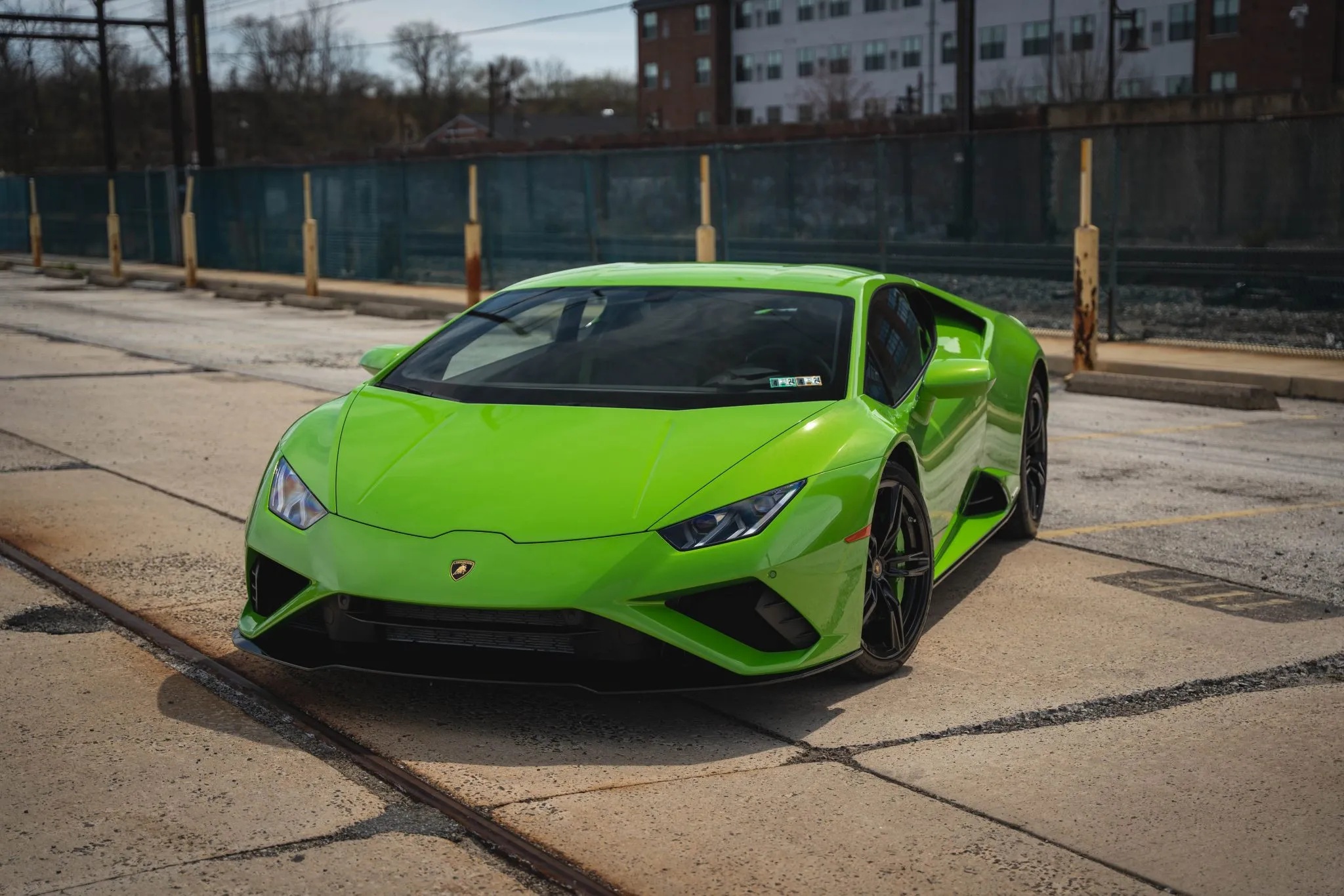
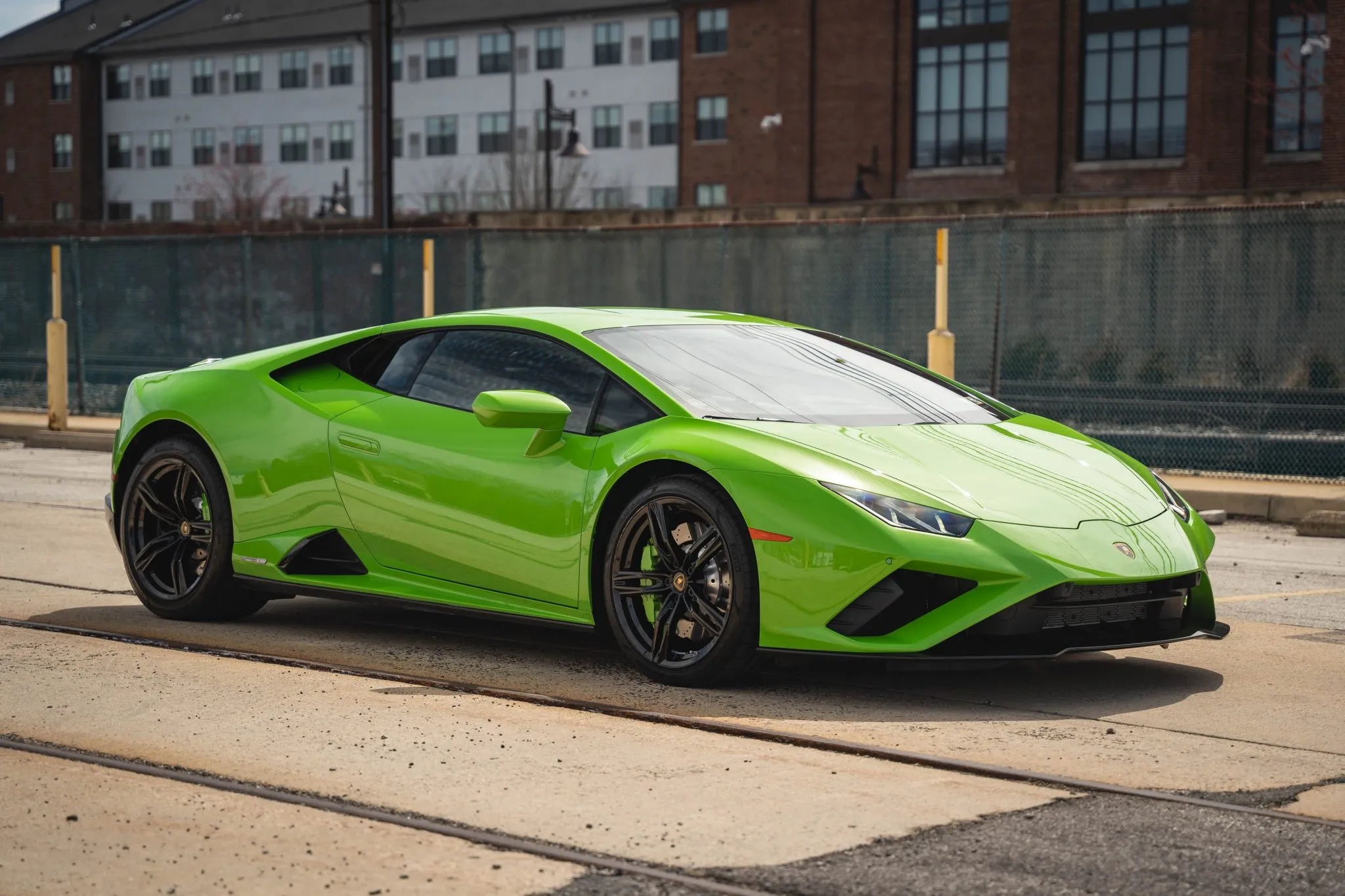
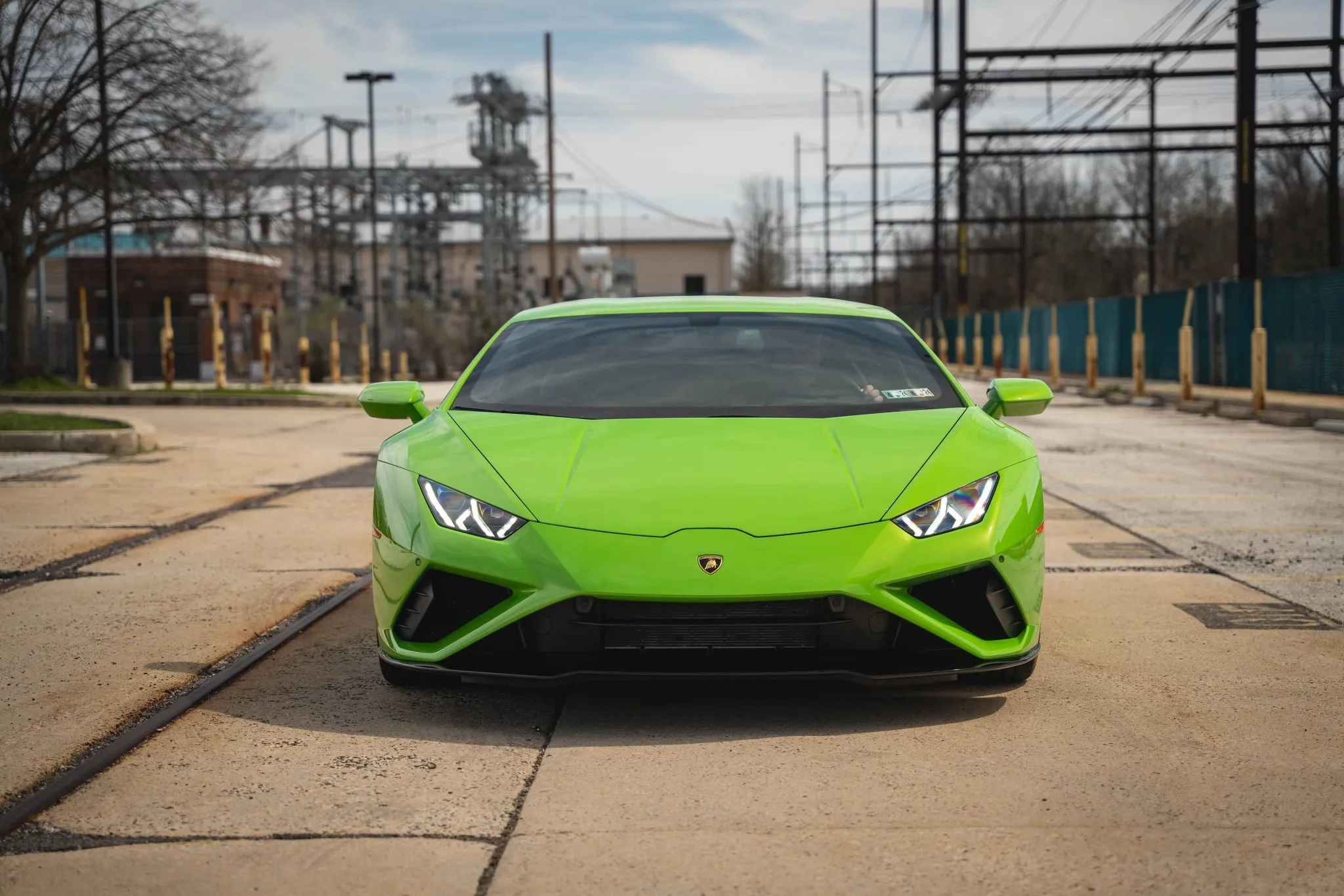
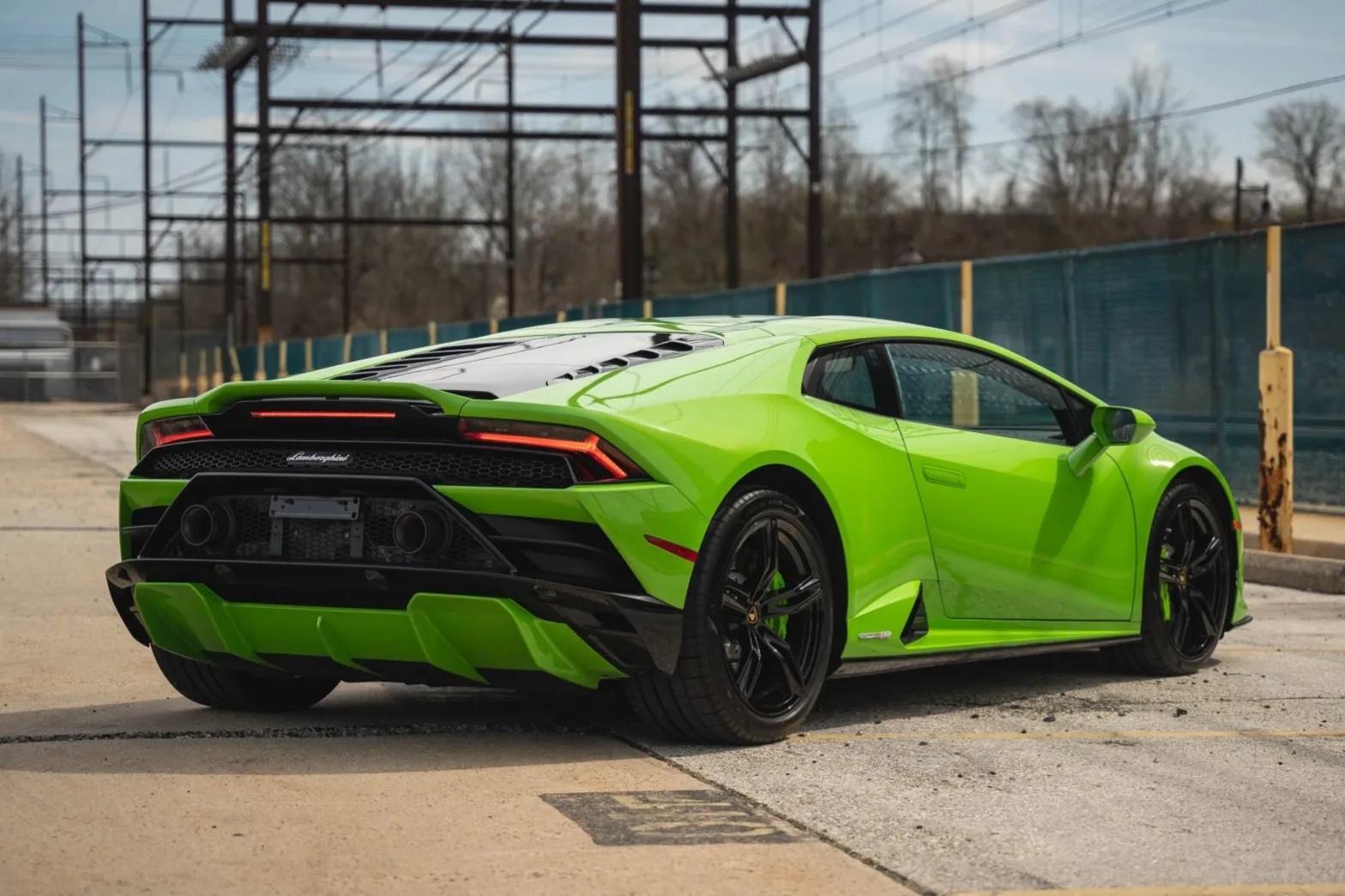
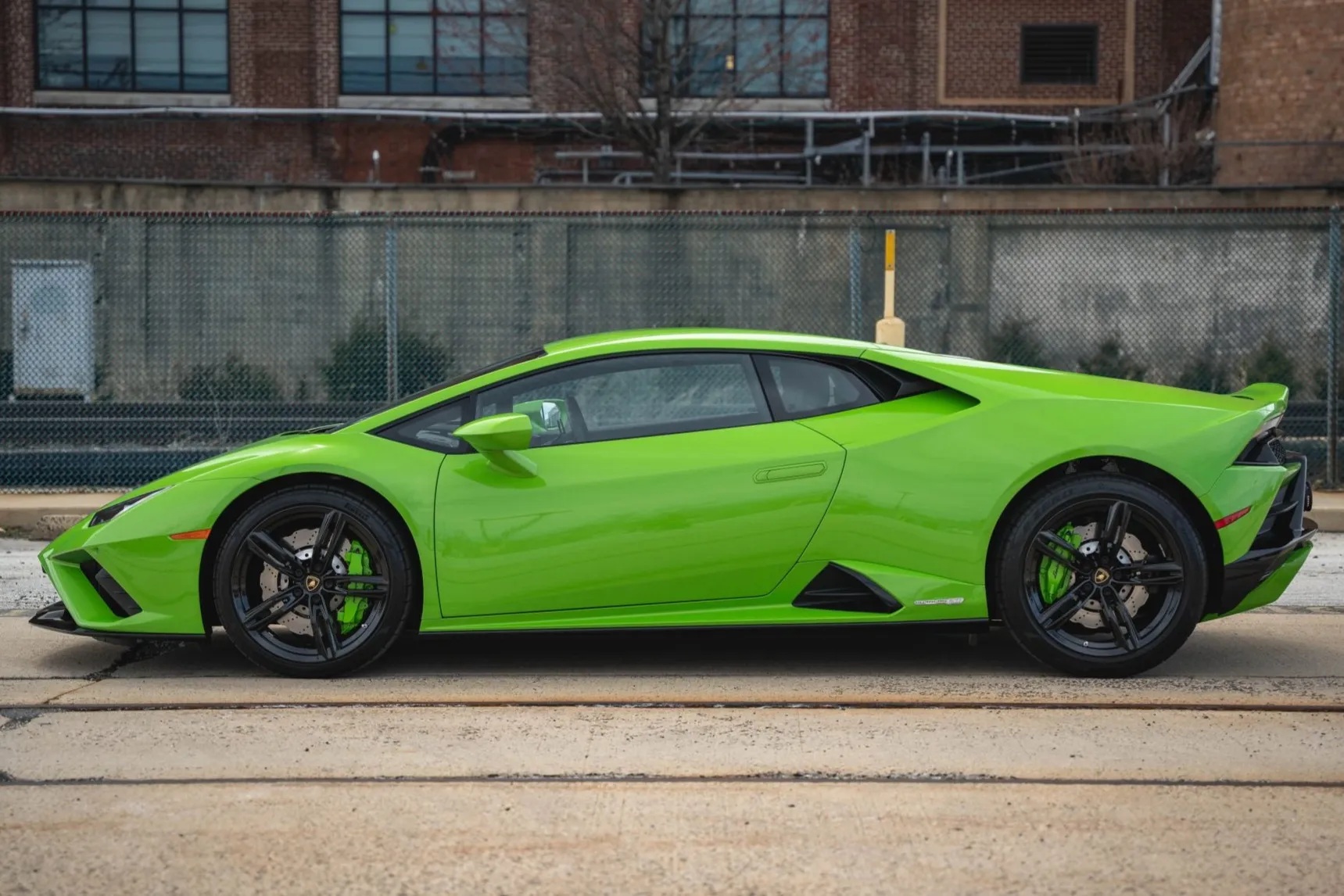
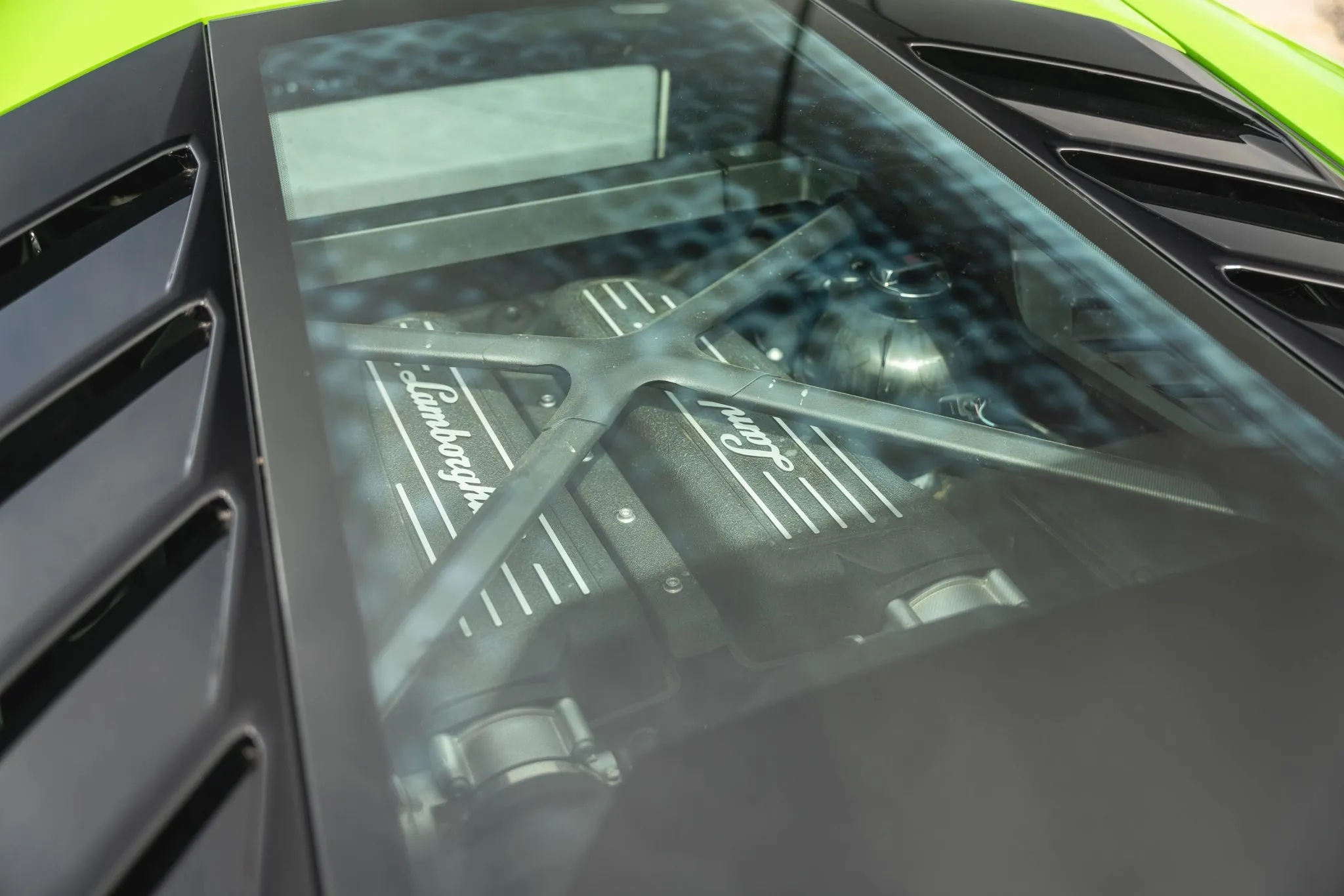
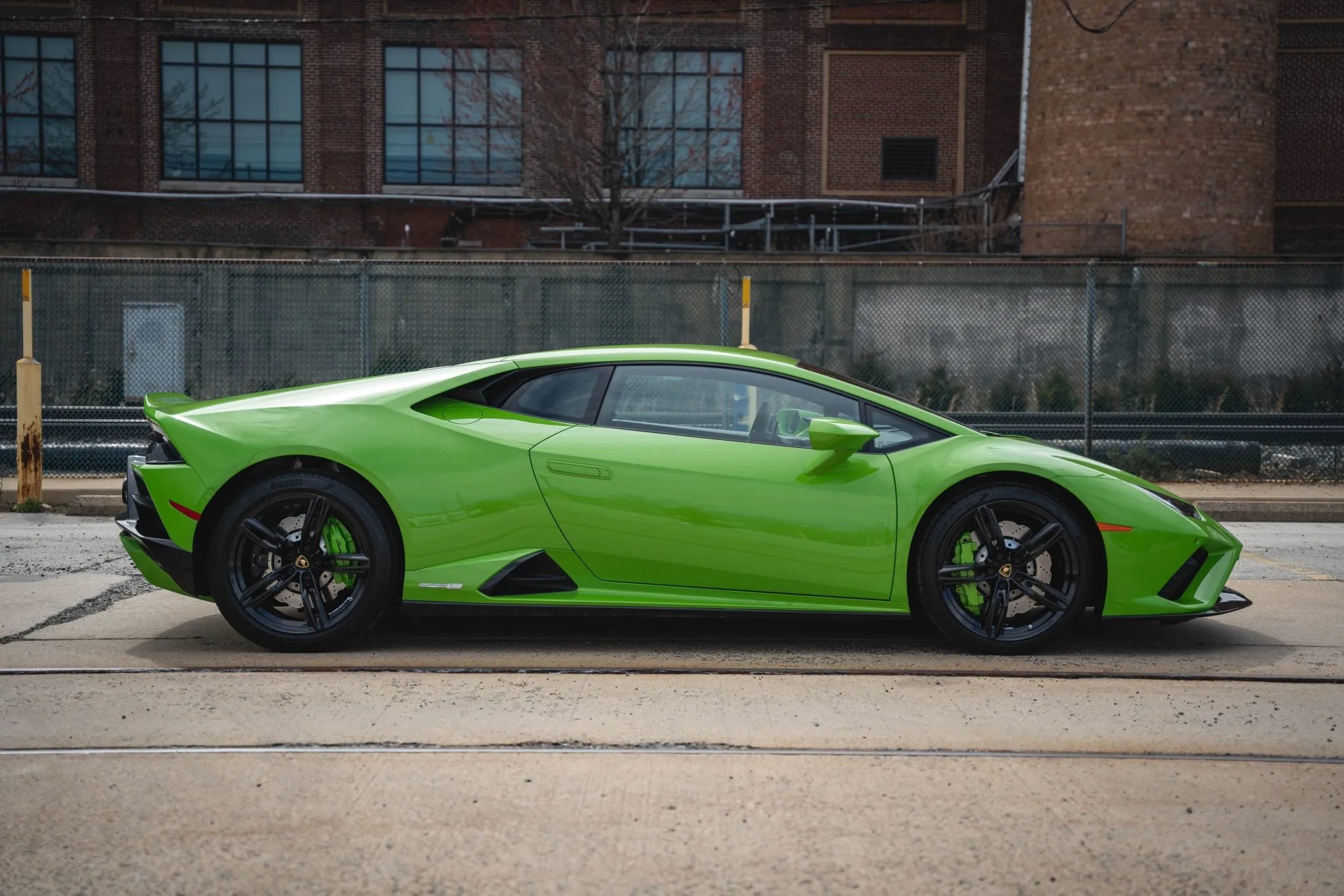
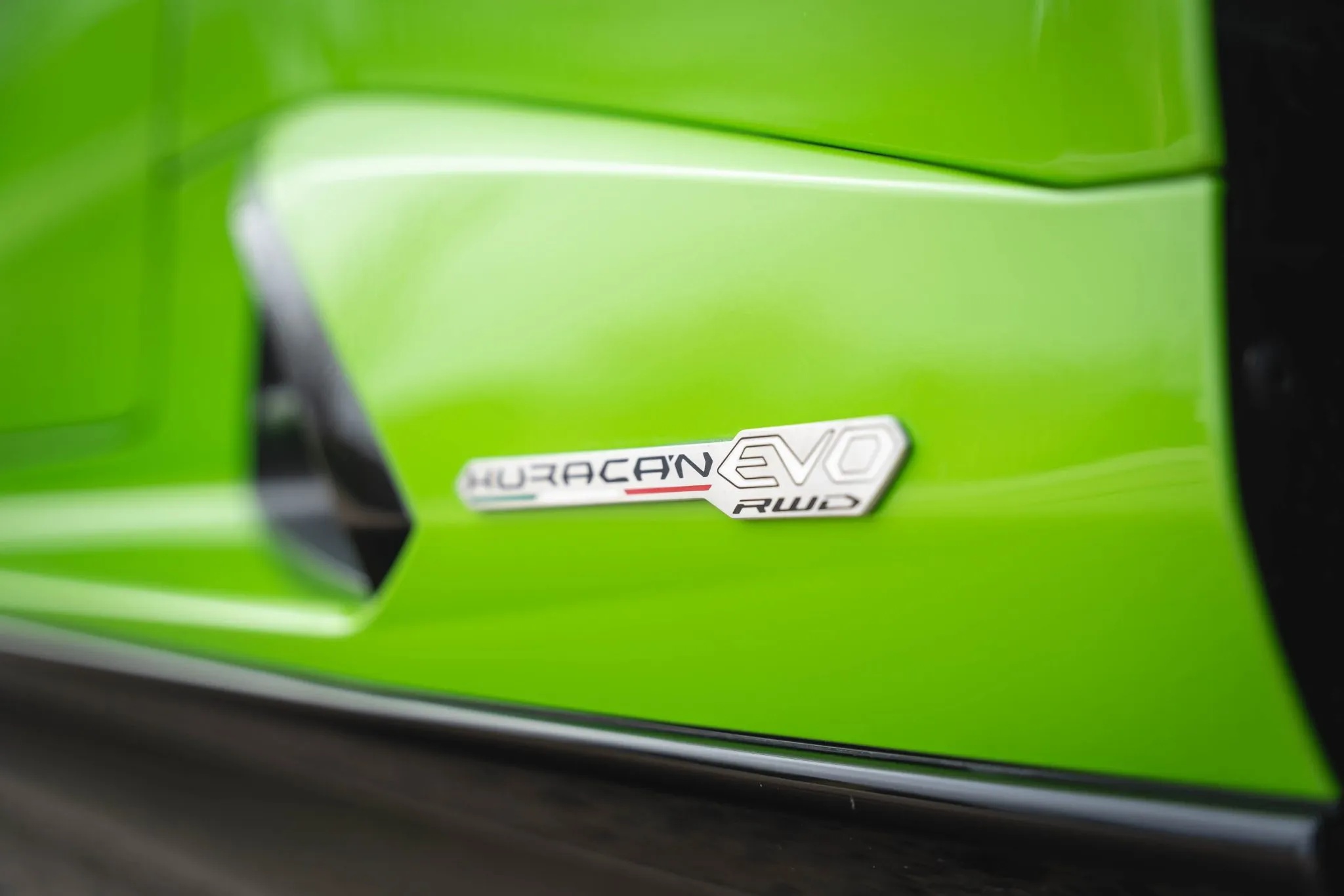
The Huracán EVO Rear-Wheel Drive (RWD) is a driver-focused supercar delivering 610 hp at 8,000 rpm and 560 Nm of torque at 6,500 rpm. Weighing just 1,389 kg, it accelerates from 0 to 100 km/h in 3.3 seconds, reaching a top speed of 325 km/h. Designed for pure driving pleasure rather than lap records, the Huracán EVO RWD features a unique exterior design and a rear-wheel-drive setup that prioritizes instinctive control.
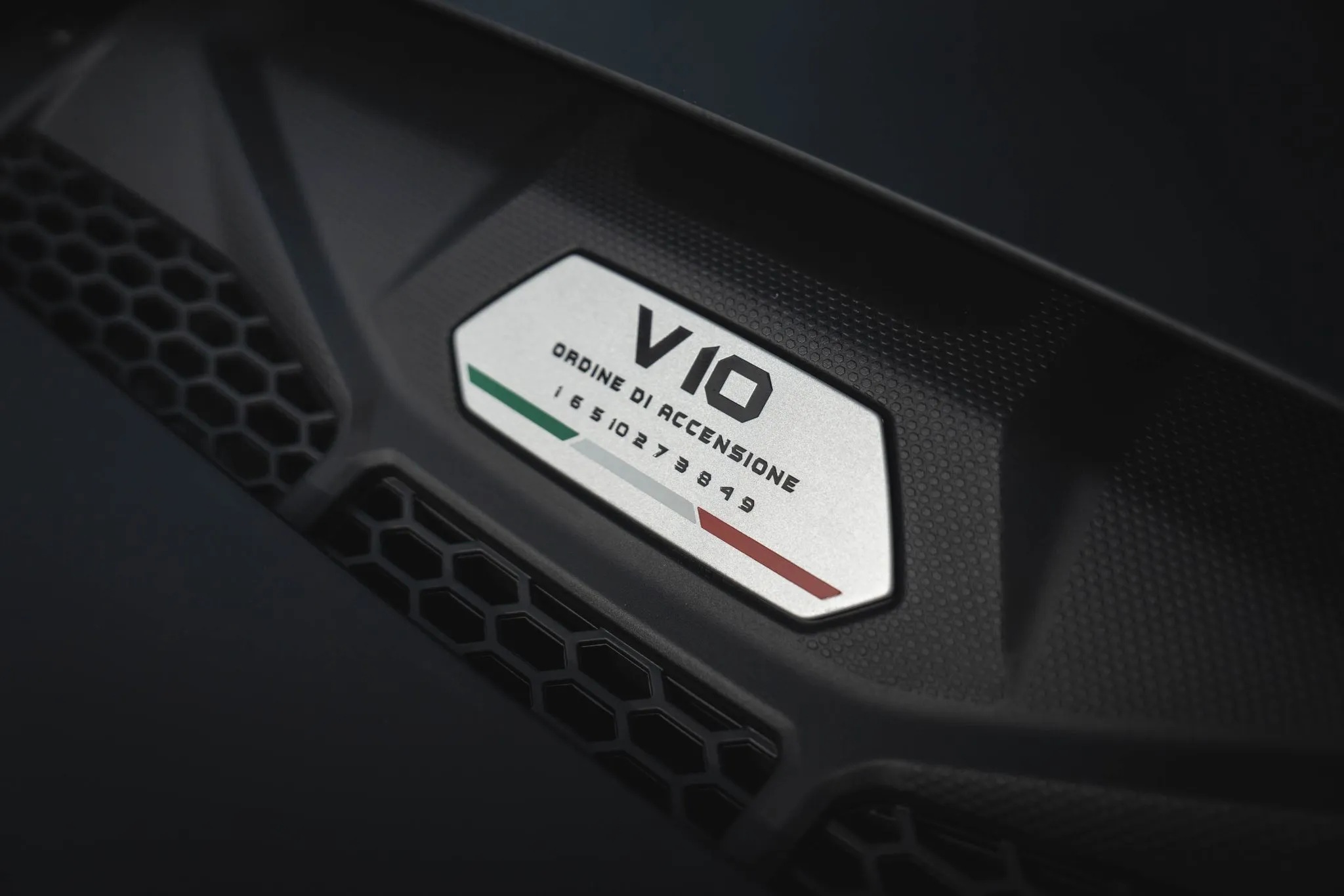
The naturally aspirated V10 engine pairs with a specially calibrated Performance Traction Control System (P-TCS) to deliver optimal grip and controlled torque, even during drifting. Its hybrid aluminum and carbon fiber chassis contributes to a 2.28 kg/hp power-to-weight ratio, with a 40/60 front-to-rear weight distribution. The car’s double wishbone suspension and Lamborghini Dynamic Steering enhance handling, while the seven-speed dual-clutch gearbox ensures rapid shifts.
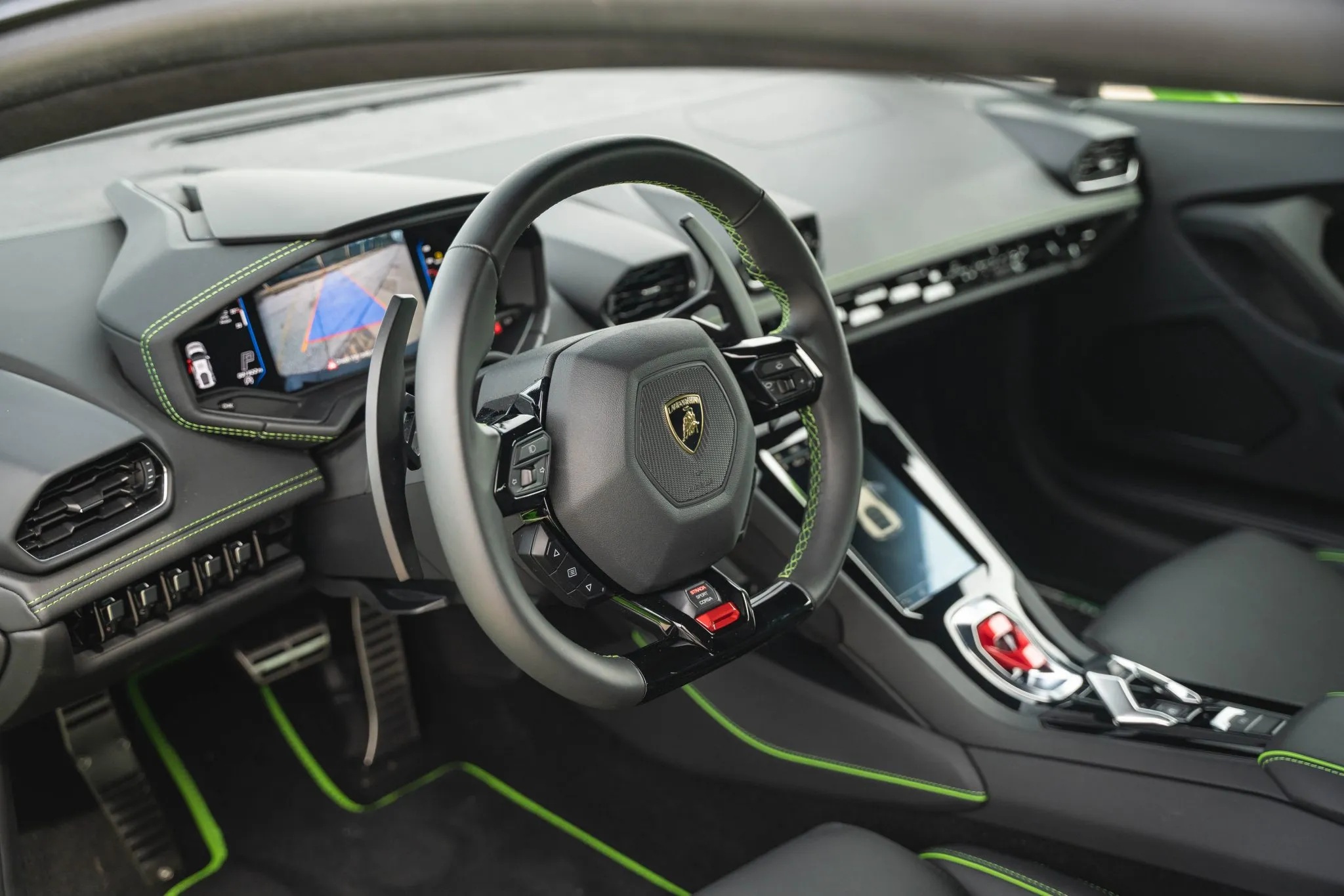
Visually, the Huracán EVO RWD sports a new front splitter, larger air intakes, and a unique rear diffuser in high-gloss black. Inside, an 8.4-inch touchscreen controls vehicle functions, connectivity, and Apple CarPlay. Standard 19-inch rims with Pirelli P Zero tires can be upgraded to 20-inch wheels with carbon-ceramic brakes for enhanced performance.
Image: Botto (2023) Leap Into Chromatic Absurdity.
For several years now, the idea of Artificial Intelligence (AI) has been either perceived as a looming threat to society’s workforce or as a godsend solution to a limitless future. In the world of art, the latest AI development is a little bit of both. Created in 2021 by German artist Mario Klingemann and software collective, ElevenYellow, Botto is a “decentralised autonomous artist” that has made waves in the tech and art communities by generating digital artworks that have fetched millions at auctions.
For centuries, the process of creating art has been viewed as an inherently human endeavour, driven by individual genius, emotional depth, and personal expression. Yet as AI algorithms like Botto gain prominence in the art market, the very concept of what art is — and who can create it — is evolving. Botto’s success in the art industry not only raises questions about creativity, but also about ownership, authenticity, and the future of the art industry itself.
A New Kind of “Artist“
Image: Botto (2021-22) Asymmetrical Liberation.
Like most AI systems, Botto’s image generation is stimulated by prompts. Each week, Botto creates approximately 70,000 images each week, using machine learning algorithms that analyse and synthesise data from art history, including surrealism, cubism, and impressionism. Out of the thousands, 350 are presented to the DAO — Botto’s “decentralised autonomous organisation,” which comprises 5,000 community members, who vote on which image should be minted as an NFT and auctioned to the highest bidder. The sale proceeds are shared between the voters and Botto’s treasury, fueling the AI’s ongoing creative process.
This very process is what sets Botto apart from other AI systems. Its status as a decentralised artist allows the creation process to be driven by both the machine and its human community — and this mission, so far, is a commitment that the DAO does not want to stray away from. While the AI itself generates the images, the human participants of the DAO exert significant influence by selecting the pieces they deem worthy of auction. As Simon Hudson, Botto’s operator, explained to CNBC, “You have to participate to help train Botto.”
Hudson further explains that Botto’s purpose is both a bid for recognition as an artist and a pathway to success in any form. Whether commercially or culturally, Hudson views an artist’s success by impact, and Botto has already subverted expectations by stripping away barriers of entry within the art community.
READ MORE: Artificial Intelligence In The Real World
The Value of AI Art
Image: Botto (2022-23) Tension and Motion.
Already, the financial success of Botto’s artworks is undeniable. According to Wired, the AI artist has generated over USD 4 million in sales, in which one had fetched upwards of USD 1 million at auction. At an October 2024 auction, CNBC reported that two Botto pieces sold for a combined total of USD 276,000 at Sotheby’s — a signal that Botto’s creative output had gained legitimacy in the eyes of art collectors and investors alike. These sales also raise a critical question: what is the true value of AI-generated art?
Many critics argue that AI cannot create art with the emotional depth or intentionality that human artists can. Writing for The New Yorker, American science fiction writer Ted Chiang argues that AI art does not have value because AI fundamentally cannot make art. Chiang writes that “art is something that results from making choices,” a seemingly human form of processing. Machines, on the other hand, do not make choices. Instead, they make predictions, based on existing data. This aligns with a traditional view of art — that it must be a reflection of human experiences and consciousness, and that machines are incapable of producing meaningful work because they lack emotions.
Image: Botto (2023) Life’s Delicate Balance.
However, supporters of AI art have argued that the value of art (whether AI or not) lies in its process, not in the emotions behind it. In a response to Chiang’s New Yorker essay, Matteo Wong wrote in The Atlantic that “how a model connects words, images, and knowledge bases across space and time could be the subject of art, even a medium in itself.” Wong concludes that the artistic process is never limited to a single artist, even if it seems so on the surface. Instead, it involves “societies and industries, and yes, technologies.” Hudson and Klingemann’s view is similar to Wong’s — they hope that Botto will change the way in which art is valued. Hudson calls this a “meaning-making process,” where humans guide the machine, and the machine, in turn, mirrors human creativity.
In many ways, Botto embodies a new vision for art, where the process of making art becomes just as important as the final piece. The rise of AI artists like Botto could signal the end of the “solitary” artist archetype, instead ushering in a future where collaboration between humans and machines shapes the very fabric of art.
READ MORE: The Metaverse Mirage: Why the Hype Is Fading
AI Art and Ownership
Image: Botto (2023) Historic Political Plowig.
Botto’s success also challenges the notion of ownership in the art industry. By democratising the process of art creation, Botto and the DAO open up new avenues for participation in the art world, allowing anyone to vote on the direction of the artwork. Naturally, this raises questions on authorship: Who owns the artwork? Is it the human creators who designed the algorithms? The community members who voted on the images? Or is it the machine itself, which executed the creative process?
The reality is that there is no definitive answer. Currently, generative AI and its works are evaluated on a case-by-case basis. Author and illustrator Harry Woodgate told The Guardian “These programs rely entirely on the pirated intellectual property of countless working artists, photographers, illustrators, and other rights holders.” While this issue runs rampant, the increasing use of AI is allowing more systems to be put in place. An article by Reuters suggests that ownership claims on AI artwork should be “handled in a manner similar to materials covered by open source or creative commons license.” Elsewhere, there are efforts to accept AI as a tool for creativity, rather than demonise it. For instance, Getty Images, which sued London-based company Stability AI in 2023, has now embraced the technology. Its latest generative AI tool lets users create images that are based on Getty’s library of photos and images. Getty CEO Craig Peters told AP News that revenue from the AI images would be shared with creators and contributors whose work the AI was based on.
Image: Botto (2023-24) Waters on Lone Territory.
This is similar to how Botto works, where members who actively participate are also given “Botto tokens,” which give them voting rights on the AI’s output. In this way, the DAO members are not just passive consumers of art; they are integral to the creation process, actively participating in collective decision-making. Botto represents a future of art that is not confined to the traditional boundaries of ownership and creativity. It is an art ecosystem that exists in a digital, decentralised space, where community-driven decisions shape the direction of the work. In fact, the DAO model reflects the way many digital communities function today, where collaboration and shared ownership are valued over individual authority.
Art in the New Era
Image: Botto (2024) Confluence of Gathered Thoughts.
While the debate around AI in art is far from settled, the success of Botto signifies a broader acceptance of technology as a legitimate medium of artistic expression. By combining machine learning algorithms with the input of a collective community, Botto is reshaping the very process of art-making and challenging the traditional system that is associated with the art market. Whether Botto’s success is a current fad or the beginning of a lasting shift toward technology remains to be seen. In the end, the rise of AI in the art world is yet another philosophical revolution, which grapples with the same questions that have plagued the industry since the beginning: What is the true nature of art, and who gets to create it? Botto is not the first disruptor in the art world and it certainly will not be the last.
For more on the latest in culture and business reads, click here.
Anyone considering a new midsize luxury sedan would be wise to put the 2025 Genesis G80 and 2025 BMW 5 Series on their list of test drives. They’re both packed with comfort and safety features, plus they have a higher degree of agility than larger, heavier luxury SUVs. This generation of G80 hails from the 2021 model year, though Genesis has made a number of improvements since then. For example, rear-wheel steering became optional on the 2022 model to further sharpen overall maneuverability. And there’s been another revamp for 2025.
Meanwhile, this generation of 5 Series was all-new for the 2024 model year. It sports a chiseled exterior, a cutting-edge dashboard design, and even its own gaming system called AirConsole.
To get to know them better, let’s explore the highlights of the Genesis G80 and BMW 5 Series.
2025 Genesis G80
Pricing for the 2025 Genesis G80 starts at $58,350, including the destination charge. This second generation of G80 launched for 2021, so it was time for a mid-cycle refresh. The exterior design has been spruced up, along with a few changes in the cabin — the most dramatic being the super-large 27-inch OLED display. The headlights, grille and front air intakes receive minor tweaks. Crucially, Genesis has reinstated physical controls in the center console for volume, tuning, and temperature adjustment. Wireless Apple CarPlay/Android Auto becomes standard, the infotainment system is capable of over-the-air updates, USB-C ports replace USB-A, the Digital Key feature is now compatible with Apple iPhones, a fingerprint reader becomes available, and the 360-degree camera system (in Sport Prestige trim) has a screen capture function — owners can access this remotely to check on their car’s surroundings. The previous Lexicon audio system is replaced by a Bang & Olufsen setup. The cabin also gains 64-color ambient lighting set into more places.
Genesis G80 Highlights
Standard all-wheel drive: Every G80 comes with traction-enhancing all-wheel drive.
Class-leading warranty: This could be the deciding factor for luxury car shoppers who don’t want luxury-level repair bills down the road. The G80 has a 5-year/60,000-mile bumper-to-bumper warranty, along with 10 years/100,000 miles of powertrain coverage. Genesis also includes three years or 36,000 miles of free scheduled maintenance (which, we should point out, is matched by BMW).
Highway Driving Assist 2: This partially automated highway driving assistance system is in all Genesis G80 models. It employs adaptive cruise control and lane-keeping assistance to maintain a safe distance to vehicles ahead and the vehicle’s position in a given lane. While it’s not an entirely hands-free system like some others, we’ve found it great for long trips.
Roasty, toasty interior: If you’re extremely susceptible to the cold, this car’s for you. Heated front seats, a heated steering wheel, and heated second-row seats are standard.
Read our Genesis G80 Expert Review or see 2025 Genesis G80 models for sale near you.
2025 BMW 5 Series
2024 model shown
The 2025 5 Series starts at $59,375, including the destination charge. Trim levels are 530i, 530i xDrive, 540i xDrive, 550e xDrive (plug-in hybrid), plus high-performance M5 versions of the sedan and a wagon (the M5 Touring). An all-electric version called the i5 is also available, which we review separately. This is the eighth generation of BMW’s long-running midsize sedan, a sharp contrast to the relatively new Genesis G80. Heated front seats become standard this year.
BMW 5 Series Highlights
Curved infotainment display: One peek inside the 2025 5 Series, and it’s clear BMW was serious about crafting a sleek and futuristic interior. The dashboard features a digital instrument cluster and a 14.3-inch infotainment touchscreen. The system offers intuitive voice commands, wireless smartphone connectivity, and over-the-air updates.
Efficient engine choices: A strong and fuel-efficient 255-horsepower turbocharged 2.0-liter 4-cylinder engine, plus an 8-speed automatic transmission, serve as the drivetrain in the base 530i. Rear-wheel drive is standard, all-wheel drive is optional. While the 530i doesn’t have headline-grabbing horsepower, acceleration is impressive, and fuel economy is a laudable 31 mpg combined — 7 mpg better than the Genesis G80’s best. To be fair, the 375-hp turbo 3.0-liter inline-6 found in the 540i xDrive is extremely entertaining. All-wheel drive is standard here, and this posh sedan needs only 4.4 seconds to accelerate from a standstill to 60 mph.
AirConsole: Yes, you can go gaming in a new 5 Series. The AirConsole gaming system projects a display on the infotainment screen, and occupants use their smartphones as controllers. At least 20 titles are available, with more on the way. Don’t worry — AirConsole can only be used when the car is parked.
Trunk space: The 5 Series is the better pick for buyers who need a big trunk. It has 18.4 cubic feet of cargo volume, about five cubic feet more than the Genesis G80.
Read our BMW 5 Series Expert Review or see 2025 BMW 5 Series models for sale near you.
Similarities
The Genesis G80 and BMW 5 Series are closely matched in terms of their driving dynamics, well-executed interiors, and great all-weather capability thanks to the availability of all-wheel drive.
Pricing
New 2025 Genesis G80 Prices
New 2025 BMW 5 Series Prices
The Kelley Blue Book Fair Purchase Price for any individual used vehicle can vary greatly according to mileage, condition, location, and other factors.
The prices here reflect what buyers are currently paying for vehicles and vehicles in typical condition when purchasing from a dealership.
These prices are updated weekly. The manufacturer’s suggested retail price (MSRP) quoted includes the destination fee, but does not include tax, license, document fees, and options.
Specifications
2025 Genesis G80
2025 BMW 5 Series
Popular Powertrains
Engine
Turbocharged 2.5-liter 4-cyl.
Turbocharged 2.0-liter 4-cyl.
Horsepower
300 hp @ 5,800 rpm
255 hp @ 4,700 rpm
Torque
311 lb-ft @ 1,650 rpm
295 lb-ft @ 1,600 rpm
Transmission
8-speed automatic
8-speed automatic
Fuel economy MPG
20 city/29 highway/24 combined
28 city/35 highway/31 combined
Also Available
Twin-turbo 3.5-liter V6
Turbo 3.0-liter 6-cylinder, AWD
Specs
Basic Warranty
5 years/60,000 miles
4 years/50,000 miles
Powertrain Warranty
10 years/100,000 miles
4 years/50,000 miles
NHTSA Overall Safety
5 stars
Not rated
Max Seating Capacity
5
5
Wheelbase
118.5 inches
117.9 inches
Overall Length
196.7 inches
199.2 inches
Width
75.8 inches
74.8 inches
Height
57.7 inches
59.6 inches
Turning Diameter
38.1 feet
N/A
Headroom, Front
41.1 inches
39.1 inches
Headroom, Rear
38.2 inches
39.1 inches
Legroom, Front
42.2 inches
41.3 inches
Legroom, Rear
38.7 inches
37.0 inches
Shoulder Room, Front
58.3 inches
59.2 inches
Shoulder Room, Rear
57.1 inches
56.7 inches
Cargo Volume
13.1 cubic feet
18.4 cubic feet
Conclusion
We’re big fans of how the Genesis G80 looks and drives. It also has a lower base price and more extensive warranty coverage.
Yet this new 5 Series has raised the bar in terms of technology, performance, efficiency, and advanced driver aids. We think it’s smart to test-drive each.
The first Ferretti Yachts 940 was launched in Cattolica, on the east coast of Italy, with the unit sold in the domestic market and set to remain in the country. Ferretti Group’s Cattolica facility is dedicated to the larger Ferretti Yachts models and located about 100m inland, which requires each completed boat to be wheeled along the streets and down to a travel-lift at the local marina.
The model features an overall length of 95ft 1in (28.97m) and a beam of 22ft 3in (6.78m). The first unit is fitted with twin 2,000mhp MAN V12 engines, which are expected to provide a top speed of 25 knots and a cruising speed of 21 knots.
Design wise, the model is another collaboration between Filippo Salvetti for exterior styling, IdeaeItalia for interiors, Ferretti Group’s Strategic Product Committee chaired by Piero Ferrari, and its Engineering Department.
The first Ferretti Yachts 940 is launched at a nearby marina
Like the flagship Ferretti Yachts 1000, the 940 features a master suite forward on the main deck and four lower-deck guest cabins, including one with sliding beds.
On the first unit, the cockpit is furnished with freestanding furniture and a glass parapet, allowing guests to oversee family and friends on the swim platform and in the water. Large sliding glass doors open to an almost 30sqm saloon, with hull one finished in IdeaeItalia’s Classic mood, focused on “warm, earthy elements”.
Furniture on hull one includes an L-shaped sofa facing a storage unit and sliding TV, plus a centrally positioned dining table seating eight, while a sliding glass door providing direct access to the starboard walkway is among options.
The first Ferretti Yachts 940 will be based in Italy
Forward, the full-beam owner’s suite takes advantage of the widebody hull concept. The first unit features prized Silver Roots marble for the desktop on the starboard side, on the forward bulkhead and in the bathroom. The full-beam en-suite bathroom is in the bow. The main-deck hallway also leads to a raised pilot house featuring a single-piece windscreen for better visibility.
Outdoor areas include a foredeck with a large sunpad, C-shaped sofa and a table. The expansive flybridge offers a clear aft deck and a long seating and dining area to port, while to starboard is an outdoor galley and bar with stools, plus a twin-seat helm station.
For supercar fans around the world, owning a Ferrari is a lifetime achievement. The Italian marque’s rich history, groundbreaking performance, and unparalleled style make it one of the most sought-after luxury vehicle producers in the world.
If you’re considering purchasing a Ferrari in 2025, this guide will walk you through everything you need to know, from choosing the right model to navigating the buying process.
Ferraris are not just cars; they are an experience. Each model is meticulously crafted, blending cutting-edge technology with timeless design. Driving a Ferrari is synonymous with prestige, power, and passion. Moreover, Ferrari vehicles often hold their value remarkably well, making them a wise investment for collectors and enthusiasts alike.
Whether you’re after the exhilaration of a high-performance engine or a piece of automotive art, Ferrari offers something uniquely special.
Key Considerations When Buying a Ferrari
New vs. pre-owned
One of the first decisions you’ll need to make is whether to buy a brand-new Ferrari or a pre-owned one.
Purchasing directly from an authorised dealer ensures you get the latest technology and a factory warranty. New Ferraris also offer customisation options to make the car uniquely yours.
A used Ferrari can be a cost-effective way to enter the world of Ferrari ownership. However, it’s crucial to carefully inspect the vehicle’s history, maintenance records, and mileage. Certified Pre-Owned (CPO) programs through authorised dealers provide added peace of mind.
Choose the right model
Ferrari offers a diverse lineup, catering to various driving preferences and lifestyles. Here are some popular options to consider:
Ferrari 296 GTB: A plug-in hybrid supercar that blends efficiency with performance.
Ferrari Roma: A grand touring car with a sleek and modern design.
Ferrari SF90 Stradale: A cutting-edge hybrid hypercar with unparalleled power.
Ferrari Purosangue: Ferrari’s first-ever SUV, designed for luxury and practicality without sacrificing performance.
Do your research and test-drive several models to find the one that aligns with your preferences and needs.
Set a Realistic Budget
Ferraris are premium vehicles with a price tag to match. Entry-level models like the Ferrari Roma start at around $250,000, while limited-edition hypercars can cost several million dollars. Additionally, consider ongoing costs such as insurance, maintenance, and fuel.
Inspect Maintenance and Ownership History
If you’re buying a used Ferrari, carefully review the vehicle’s maintenance records. Regular servicing at authorised Ferrari service centres is critical for maintaining performance and value. Avoid vehicles with a history of neglect or significant accidents.
Where to Buy a Ferrari in 2025
Authorised Ferrari Dealerships
Buying from an authorised dealership ensures authenticity and access to Ferrari’s official warranty programs. Dealerships also offer financing options and expert guidance.
Online Platforms
Reputable online platforms offer a wide selection of Ferraris for sale. These platforms provide detailed listings, and high-quality images, and often include vehicle history reports. Online auctions are another way to acquire a Ferrari, often at competitive prices.
Private Sellers
Purchasing from a private seller can be more affordable, but it comes with additional risks. Always arrange for an independent inspection and verify the vehicle’s history before committing.
Tips for First-Time Ferrari Buyers
Get Pre-Approved Financing: Securing financing beforehand simplifies the buying process. Many financial institutions and speciality lenders offer loans tailored for luxury vehicles.
Join the Ferrari Community: Engage with local Ferrari clubs or forums to learn from experienced owners. These communities can provide valuable insights and recommendations.
Understand Depreciation: While Ferraris generally retain their value well, some models depreciate faster than others. Limited-edition or rare models tend to appreciate over time, making them better investments.
Plan for Ownership Costs: Beyond the initial purchase price, account for expenses such as regular servicing, tyres, and potential repairs. Ferrari ownership is rewarding, but it requires a commitment to maintenance.
Consider Resale Value: If you plan to sell your Ferrari in the future, choose a model and specification that are likely to appeal to other buyers.
The Future of Ferrari Ownership
As we move further into the era of electric and hybrid vehicles, Ferrari continues to innovate while staying true to its heritage. The brand’s commitment to sustainability is evident in models like the 296 GTB and SF90 Stradale, which combine electrification with high performance.
Ferrari’s ongoing evolution ensures that owning one of these iconic cars remains a thrilling and exclusive experience. With more options available than ever before, 2025 is an excellent time to join the ranks of Ferrari owners.
Buying a Ferrari is a dream for many, and with the right knowledge, it can become a reality. Whether you’re drawn to a brand-new model or a pre-owned classic, there are numerous options to suit different budgets and preferences. Explore listings to find your perfect Ferrari for sale and embark on an unforgettable journey of luxury and performance.
The technical storage or access is strictly necessary for the legitimate purpose of enabling the use of a specific service explicitly requested by the subscriber or user, or for the sole purpose of carrying out the transmission of a communication over an electronic communications network.
Preferences
The technical storage or access is necessary for the legitimate purpose of storing preferences that are not requested by the subscriber or user.
Statistics
The technical storage or access that is used exclusively for statistical purposes.The technical storage or access that is used exclusively for anonymous statistical purposes. Without a subpoena, voluntary compliance on the part of your Internet Service Provider, or additional records from a third party, information stored or retrieved for this purpose alone cannot usually be used to identify you.
Marketing
The technical storage or access is required to create user profiles to send advertising, or to track the user on a website or across several websites for similar marketing purposes.



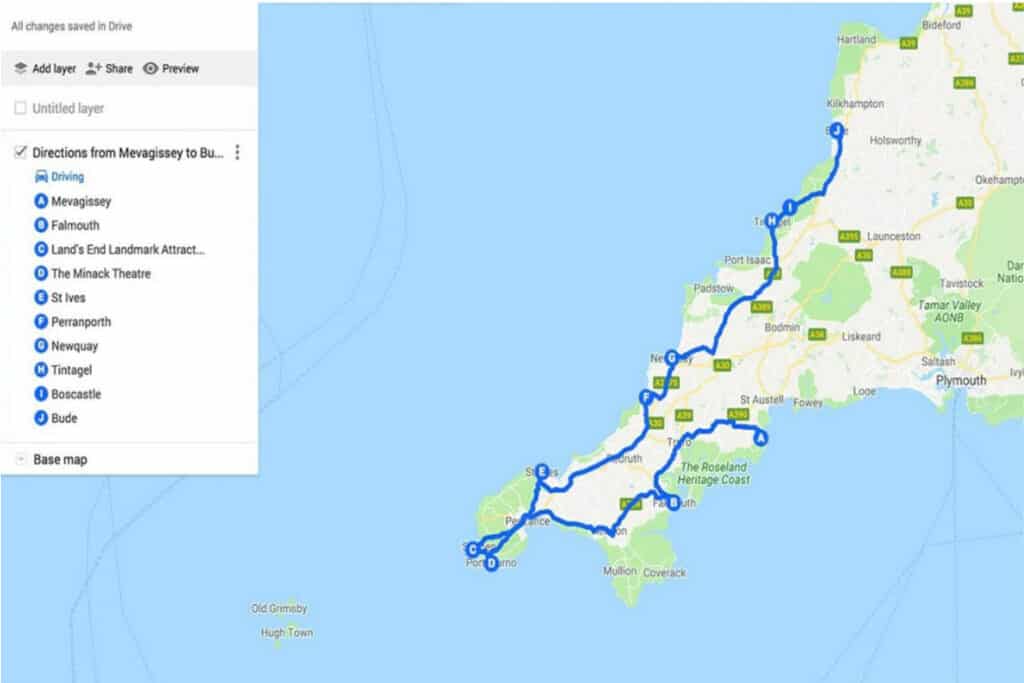

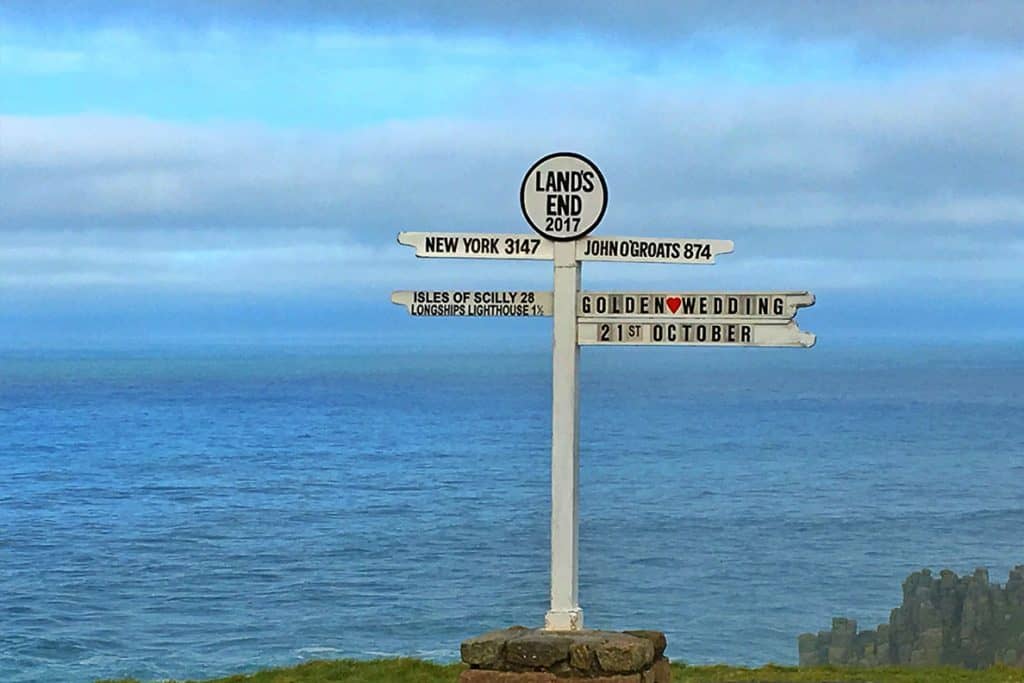
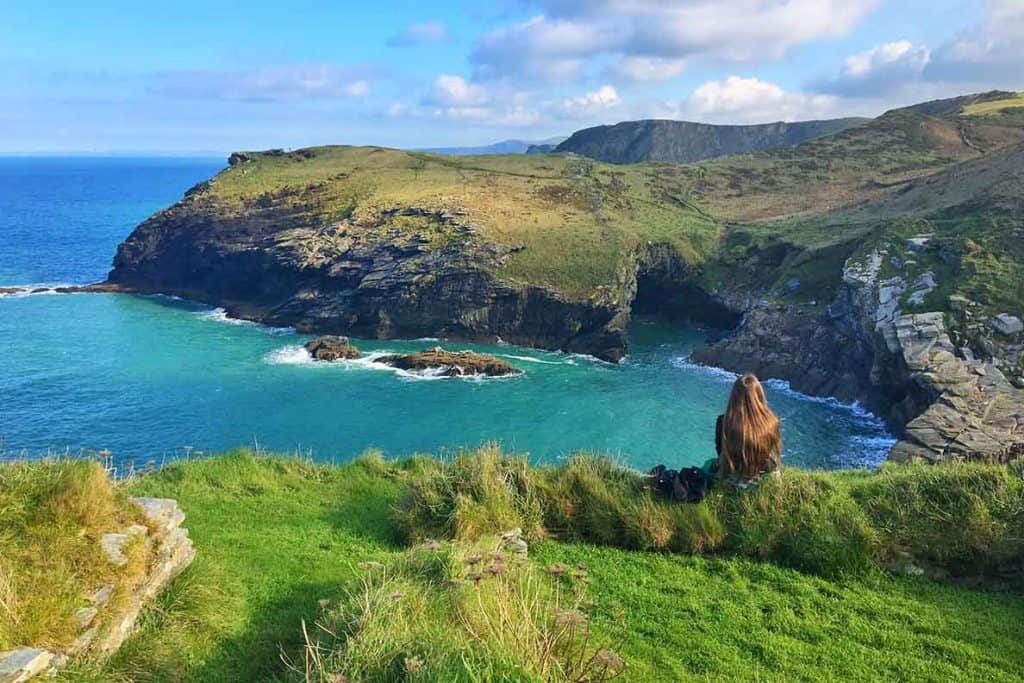

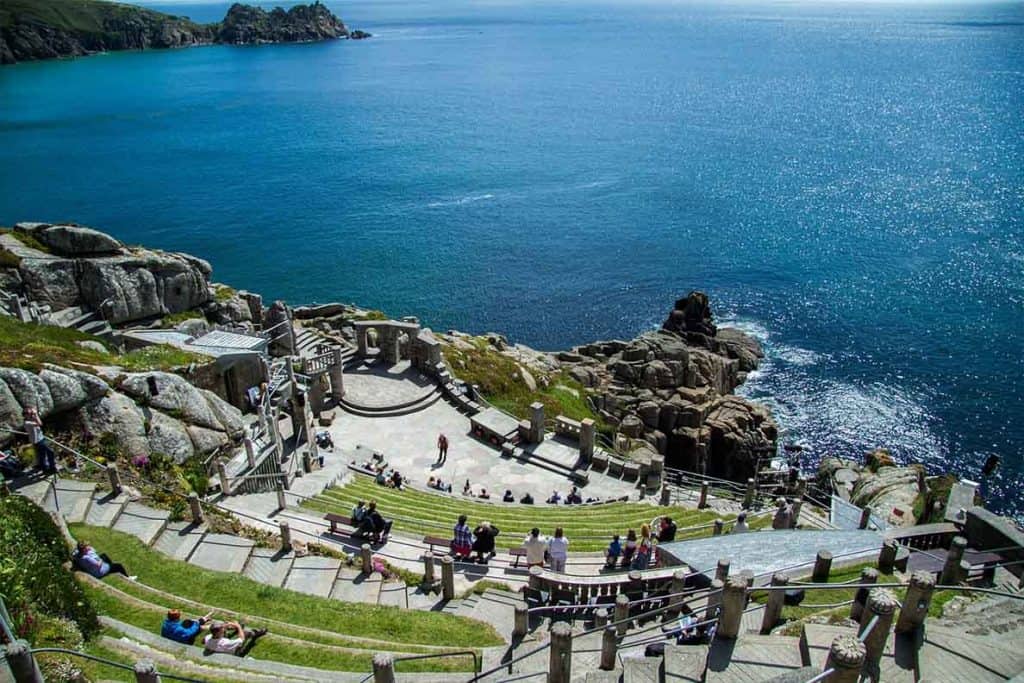
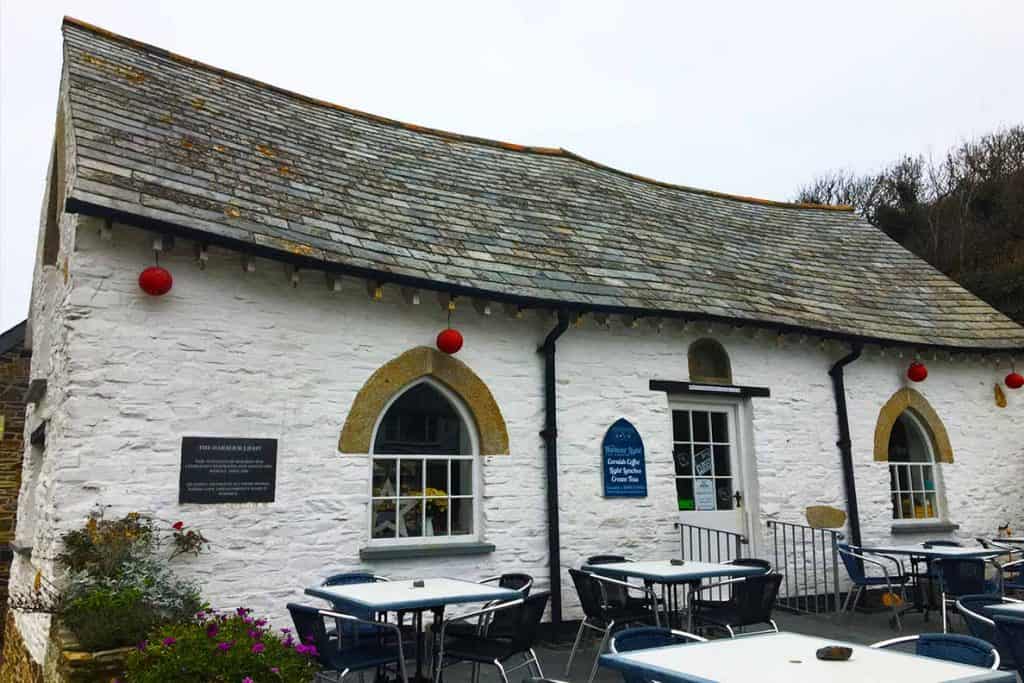
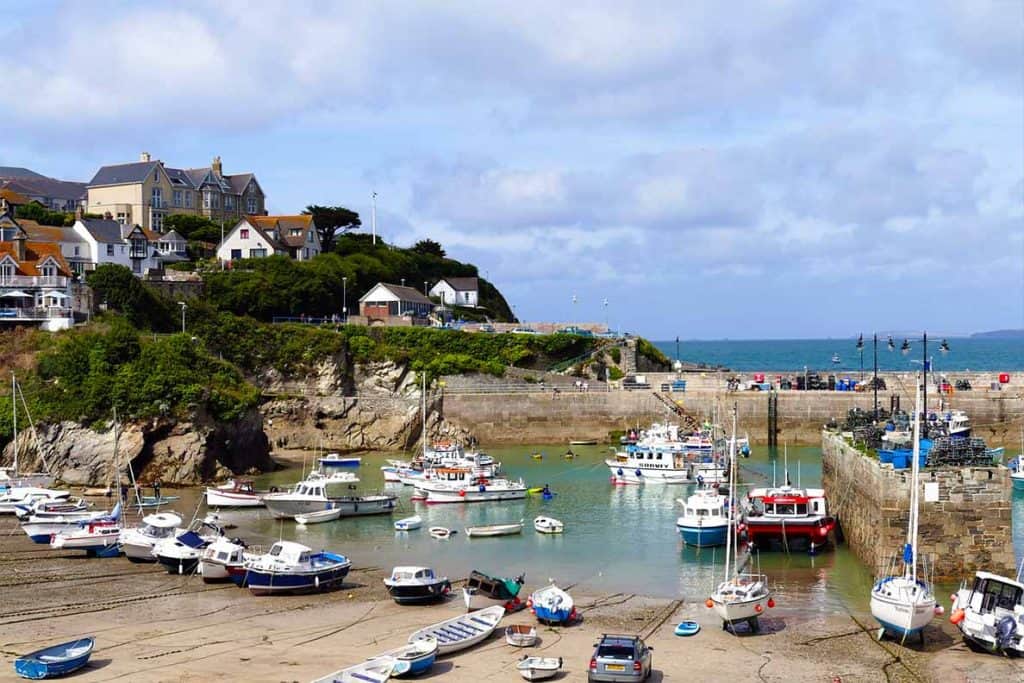


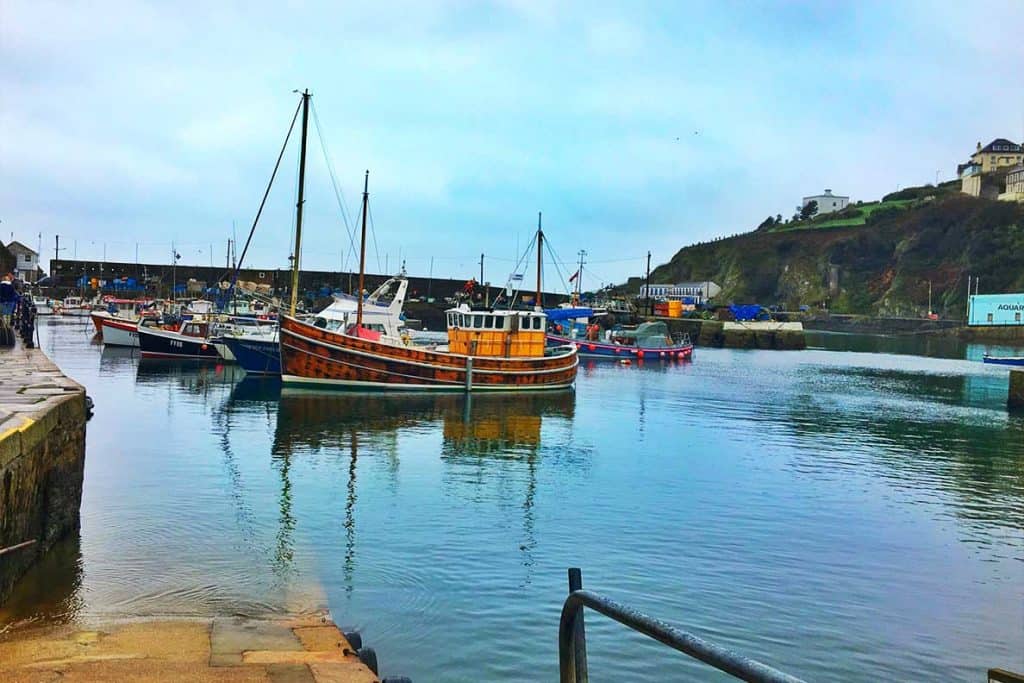



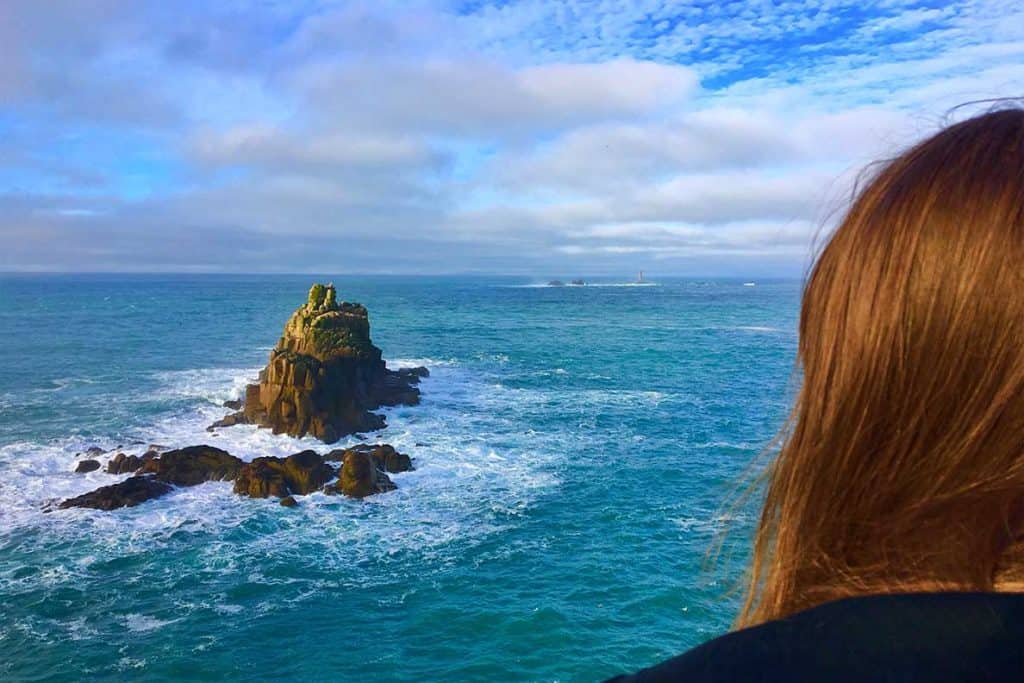
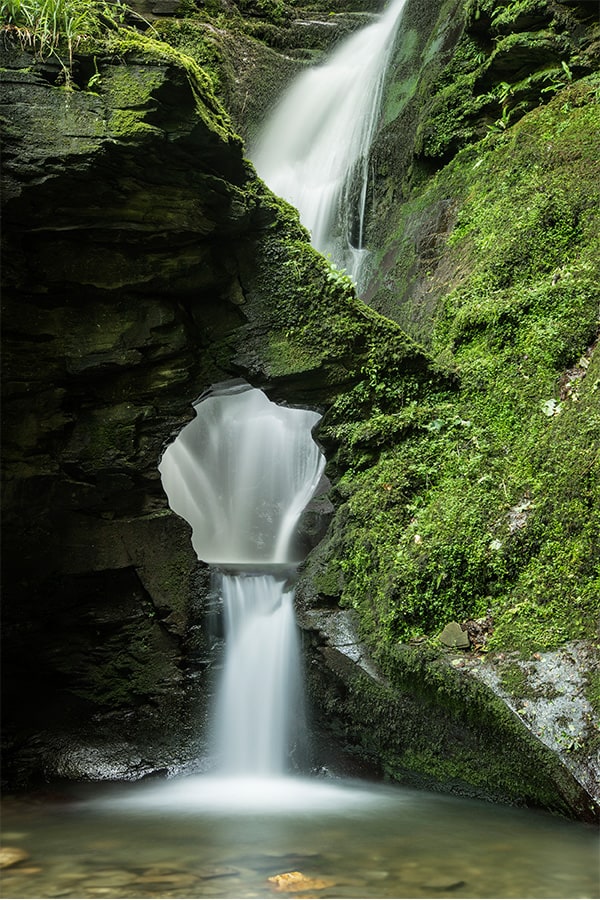
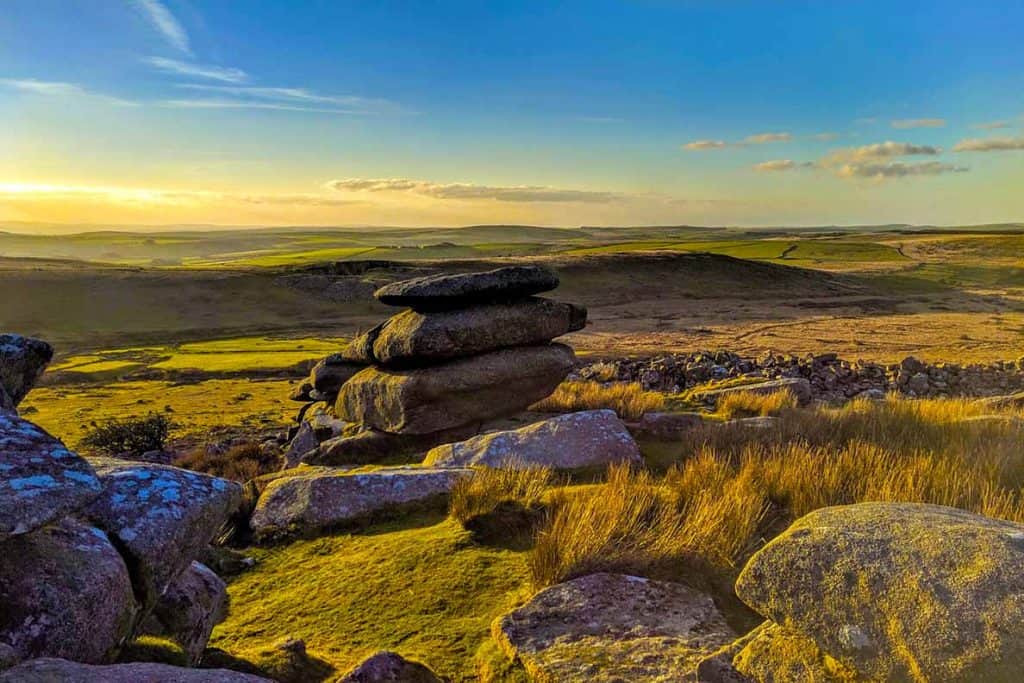

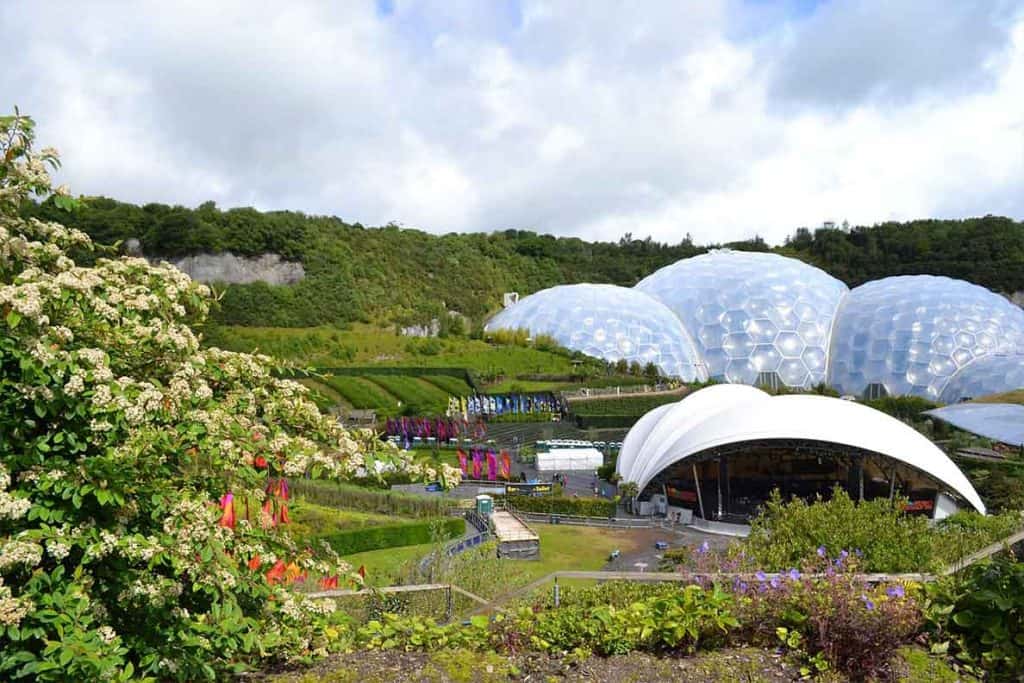








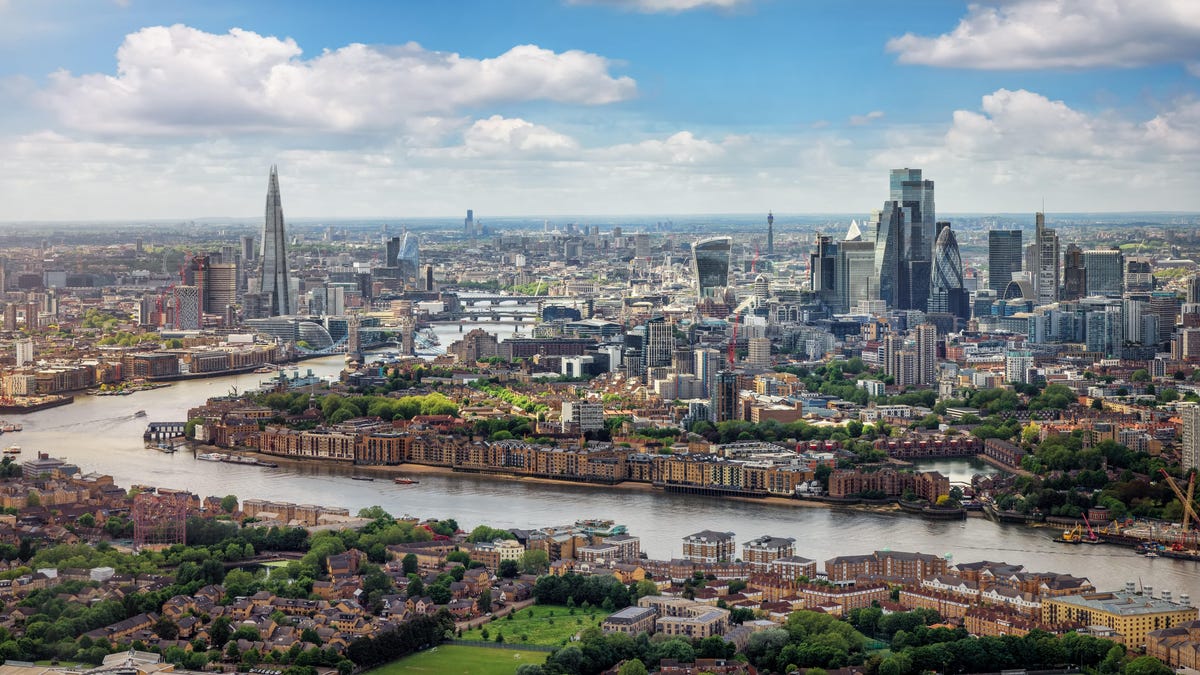
:max_bytes(150000):strip_icc()/TAL-horses-greenhorn-ranch-california-GREENHORNRNHC0125-475f10d5d34944d599ac57024400f04c.jpg "Greenhorn Ranch Is the Perfect ‘Yellowstone’ Dupe")
:max_bytes(150000):strip_icc():format(jpeg)/TAL-horses-greenhorn-ranch-california-GREENHORNRNHC0125-475f10d5d34944d599ac57024400f04c.jpg)